Archive for category Suffrage Stories

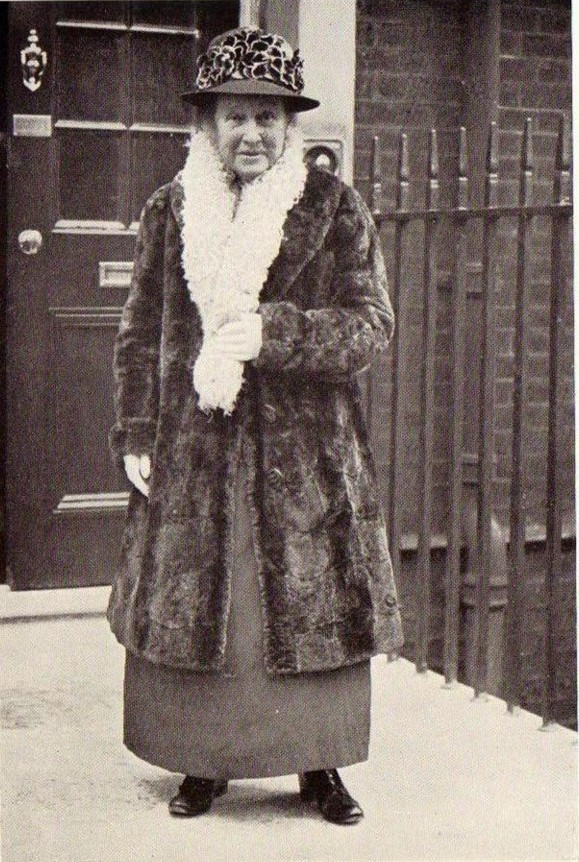
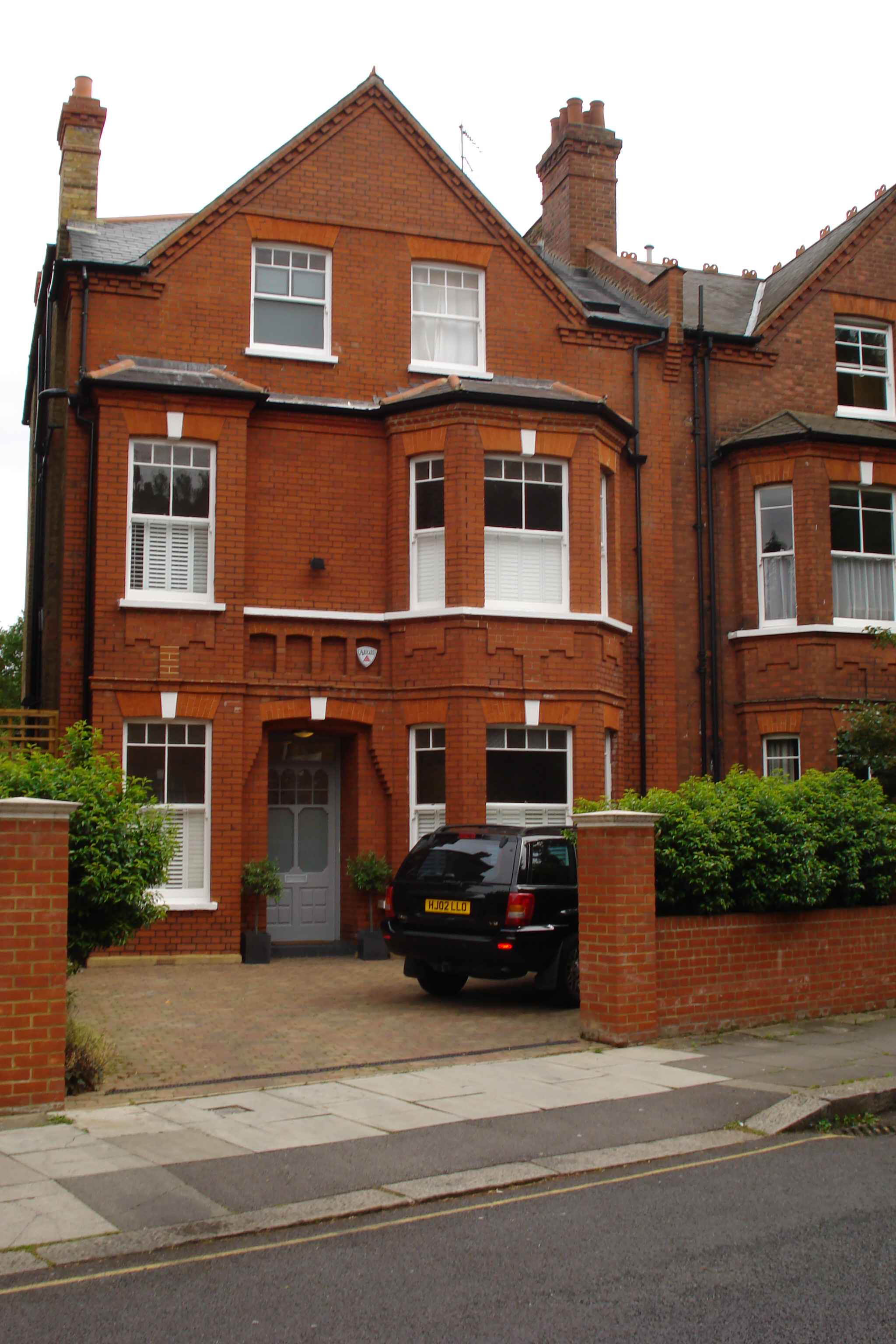
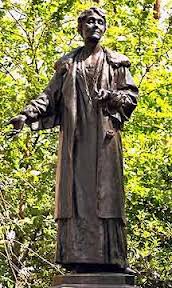
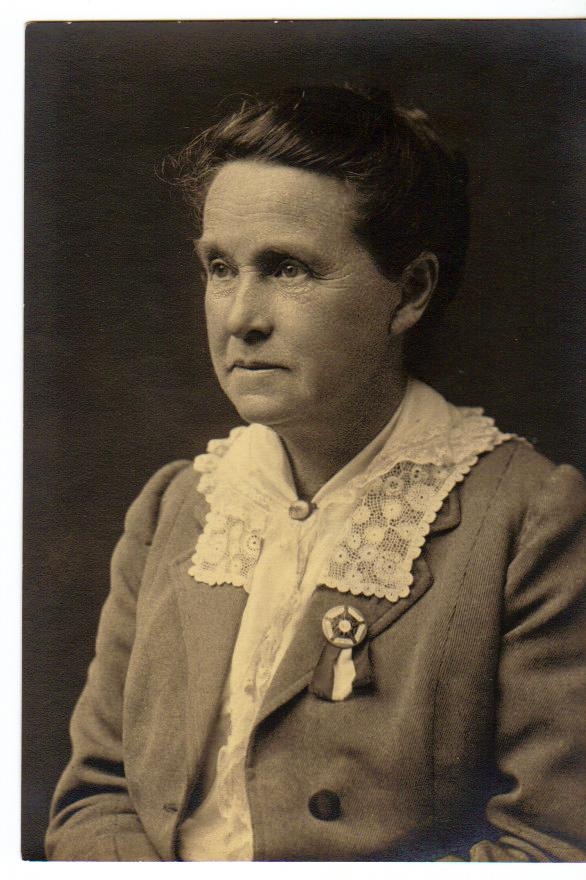
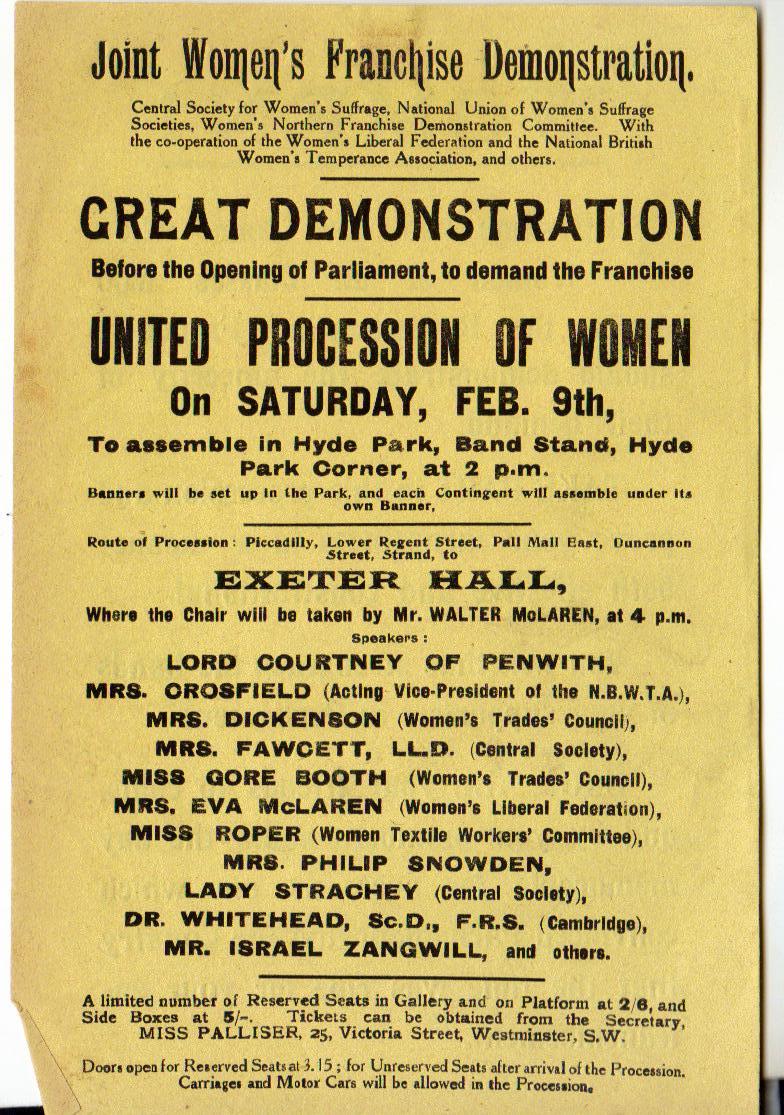
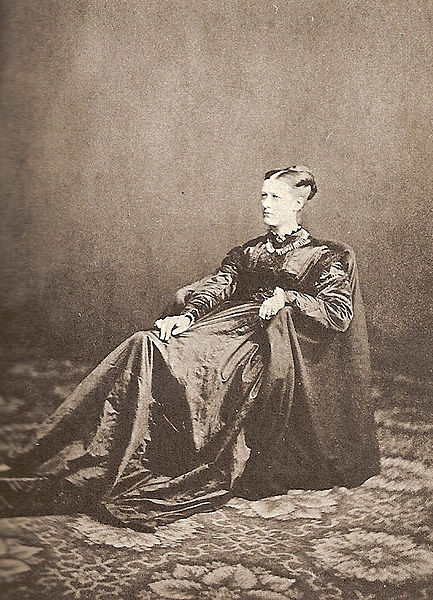
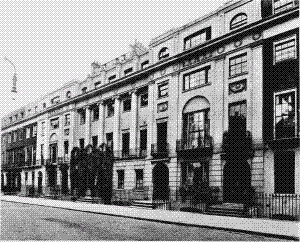
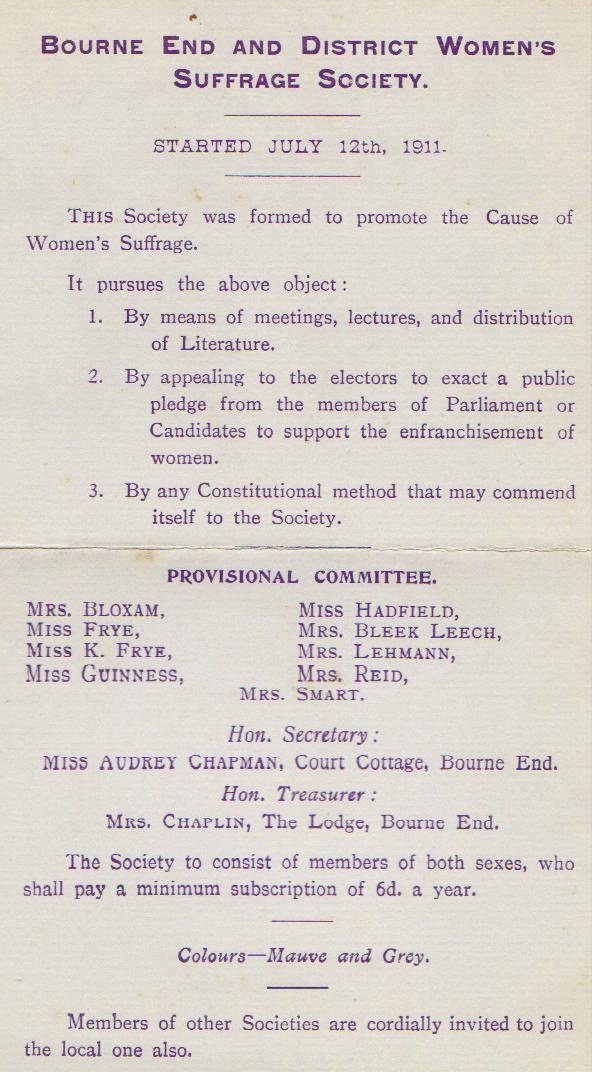
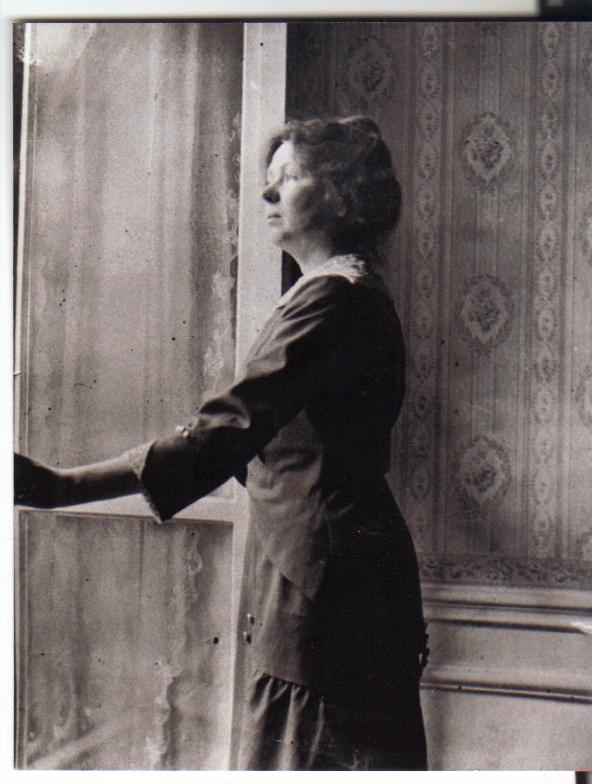
Suffrage Stories/Walks: Anne Cobden Sanderson And 15 Upper Mall, Hammersmith

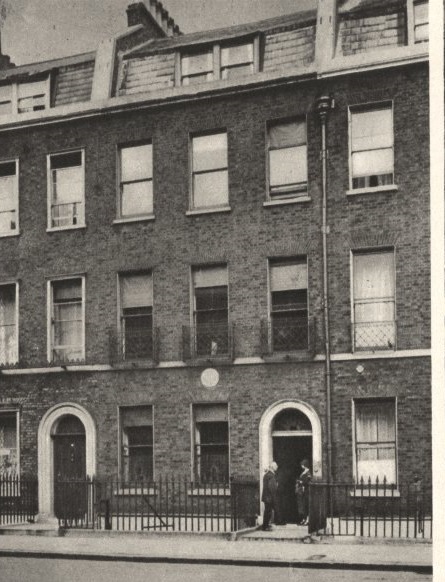
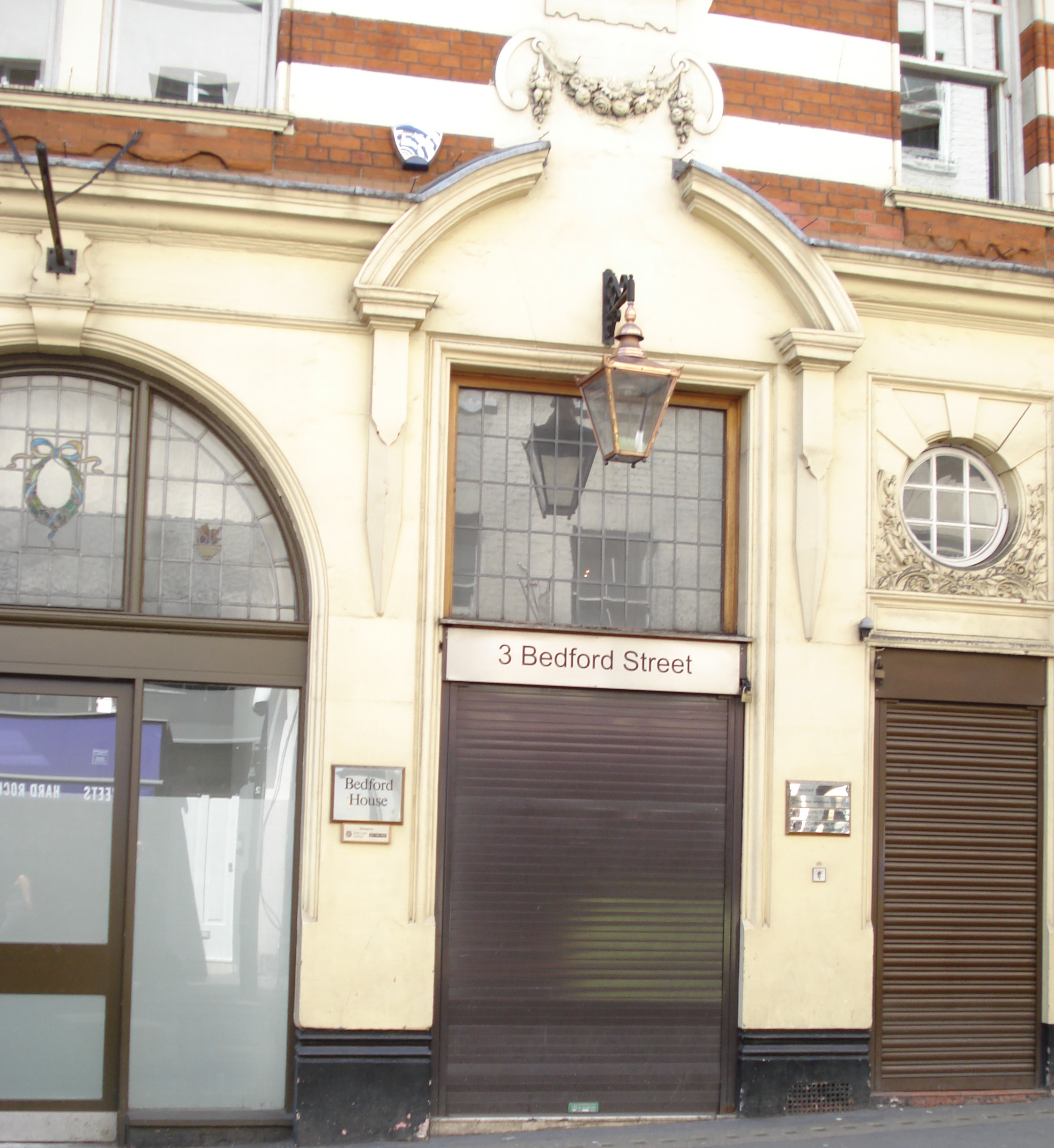
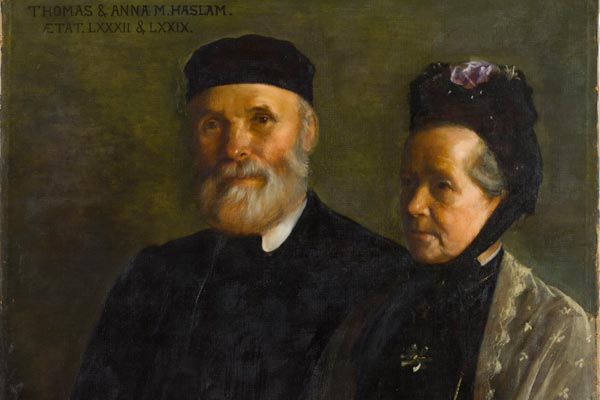
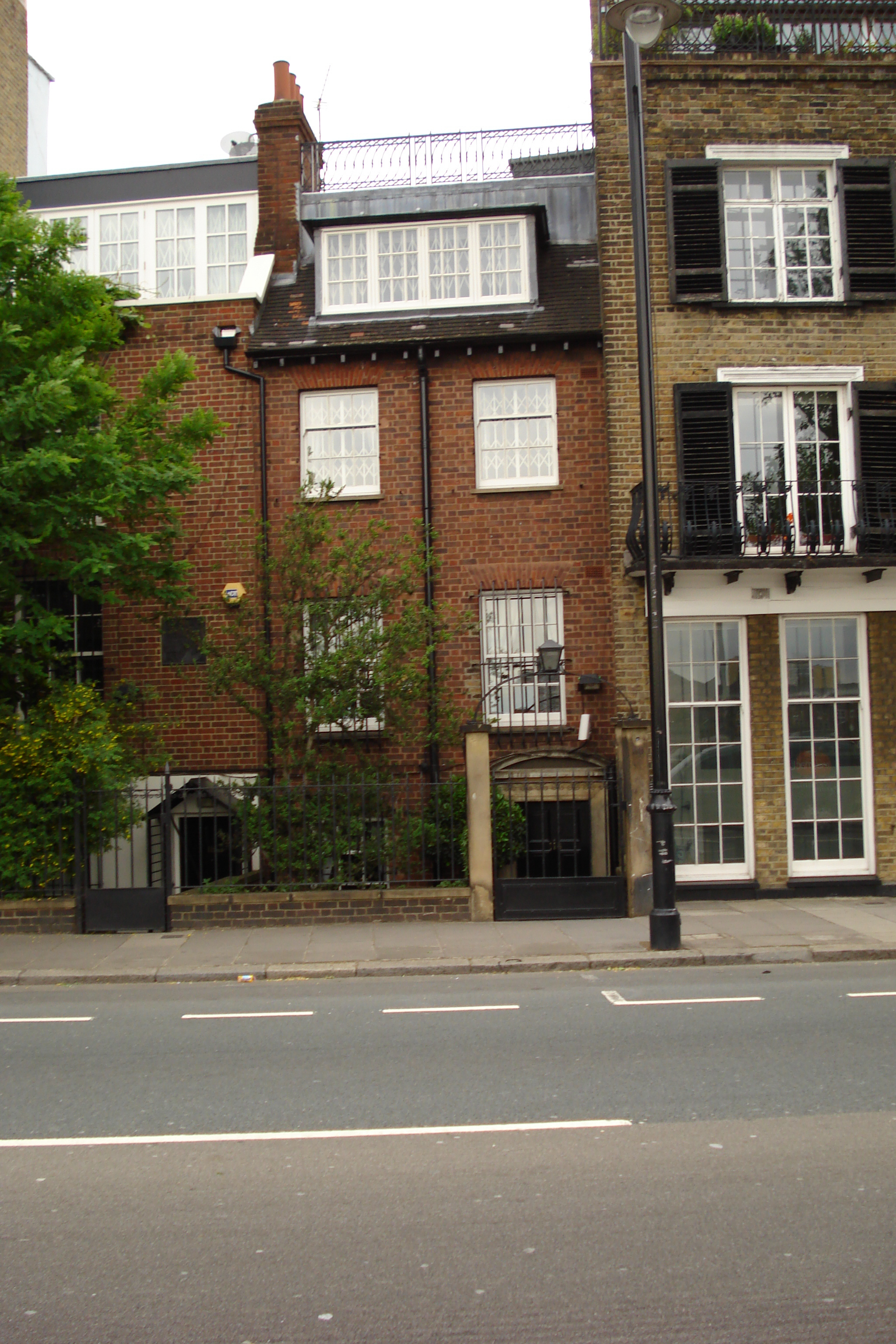
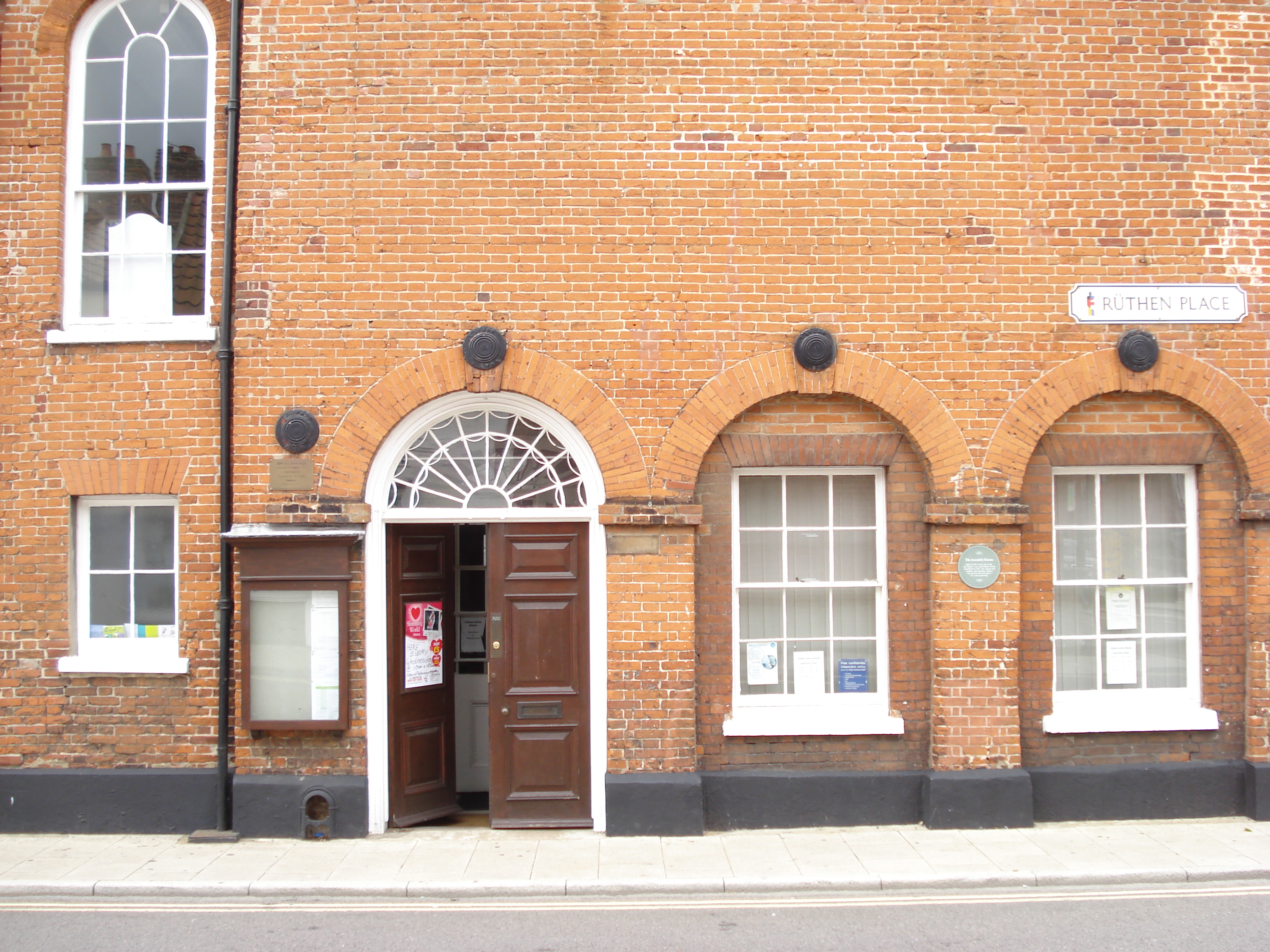
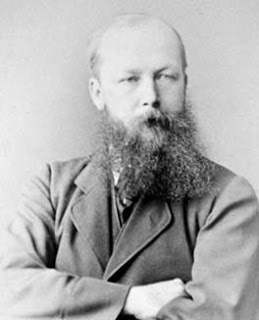
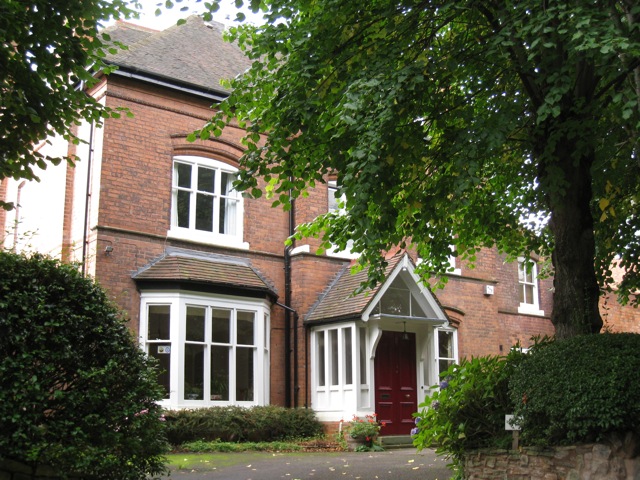
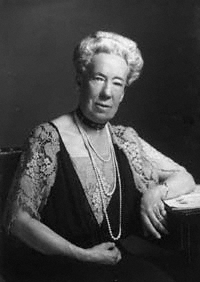
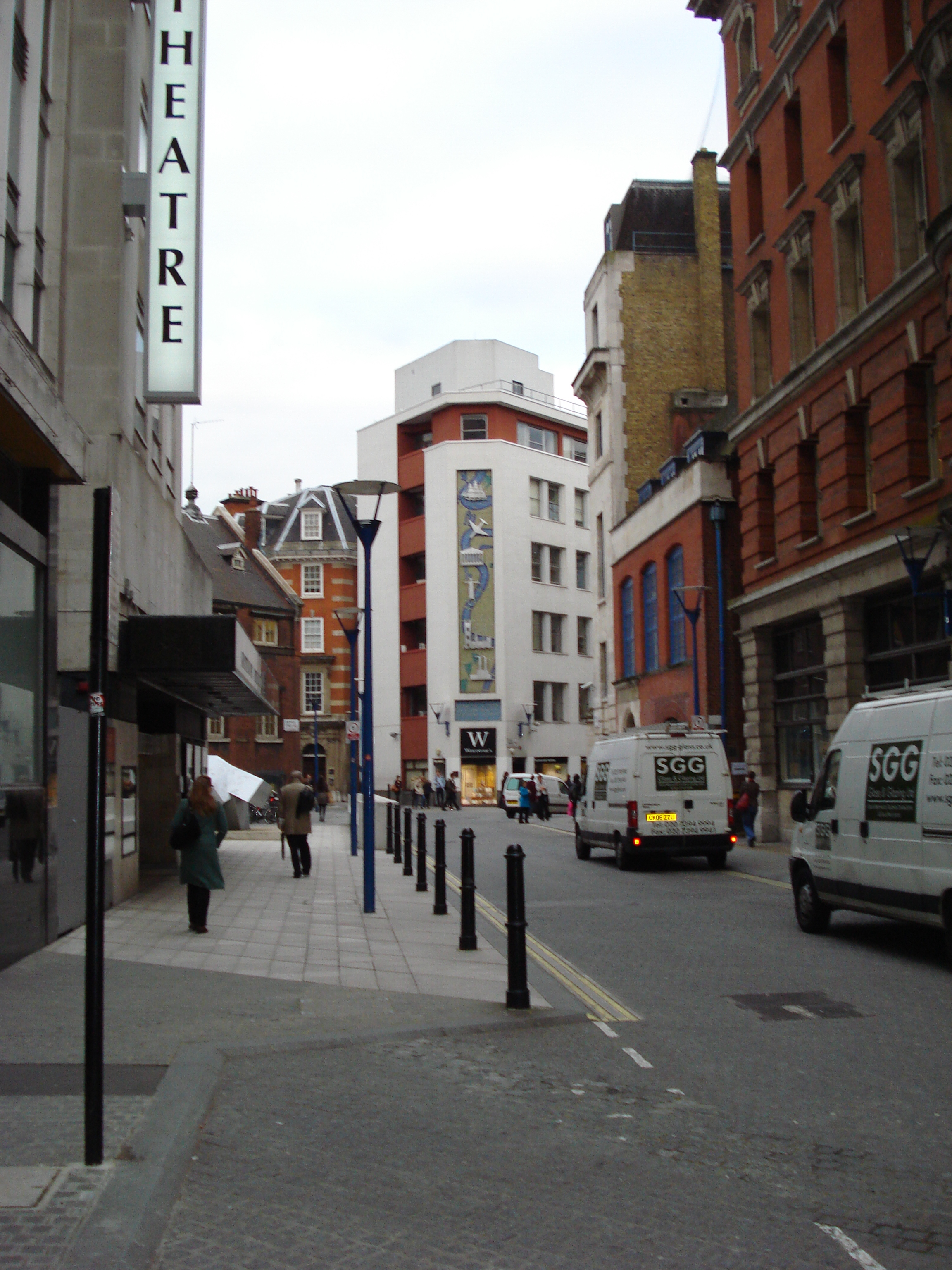
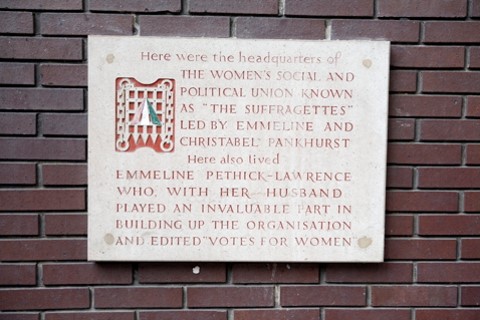
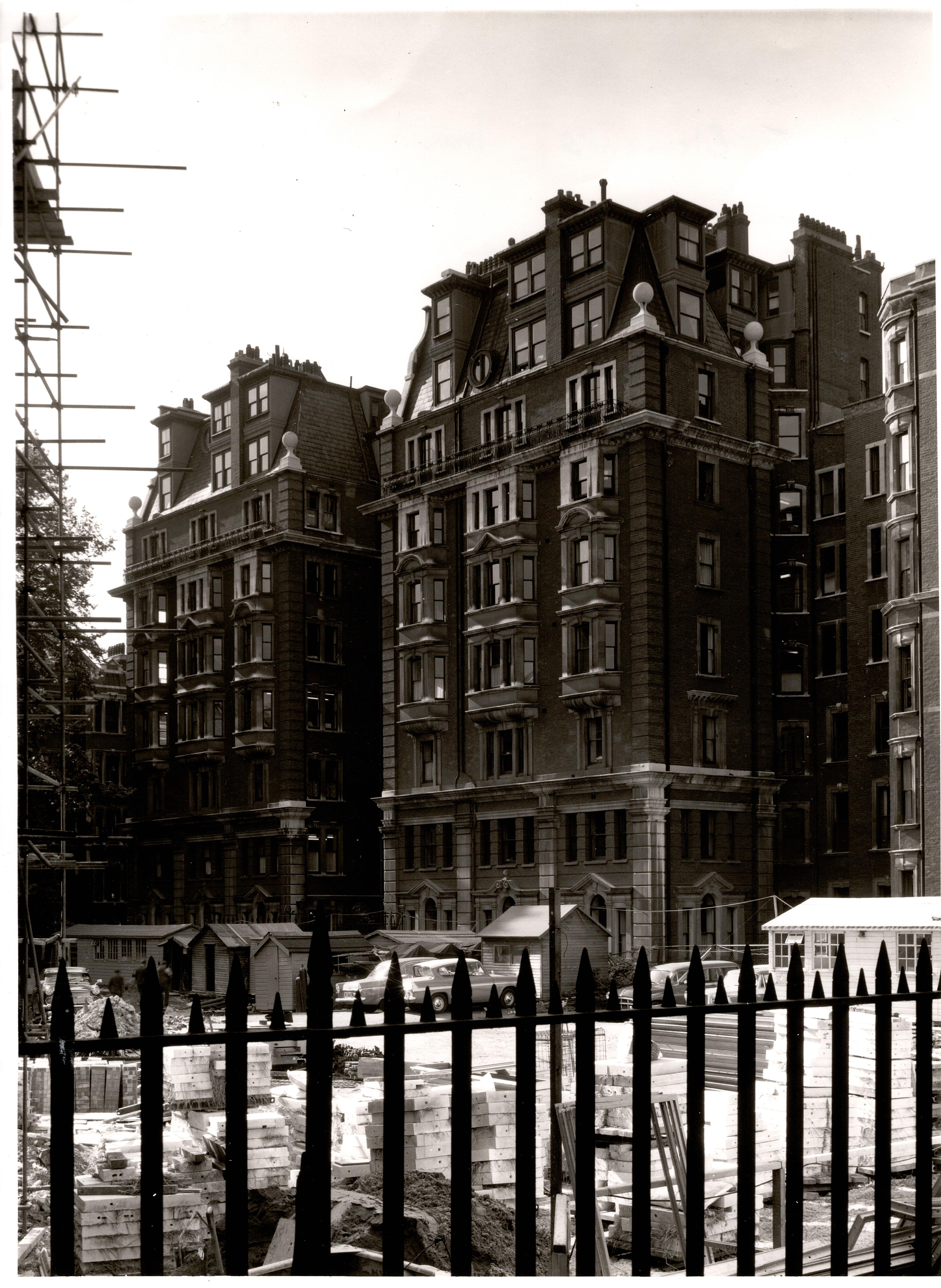
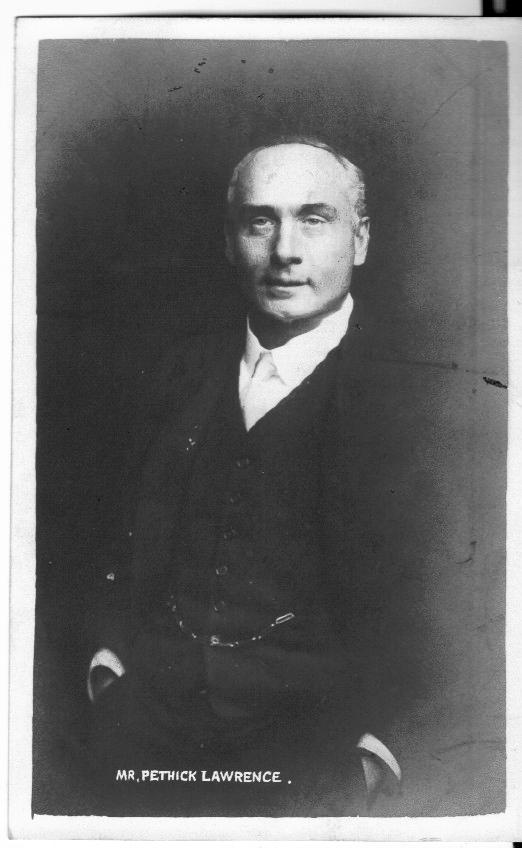
One day last week, while thunder raged outside, I spent some time researching an archive at the William Morris Society premises in Upper Mall, Hammersmith. Just before I left I remembered that close by was the home of Thomas and Anne Cobden Sanderson – the former a renowned Arts and Crafts bookbinder and the latter a campaigner for women’s suffrage, constitutional in the 19th and militant in the 20th century.

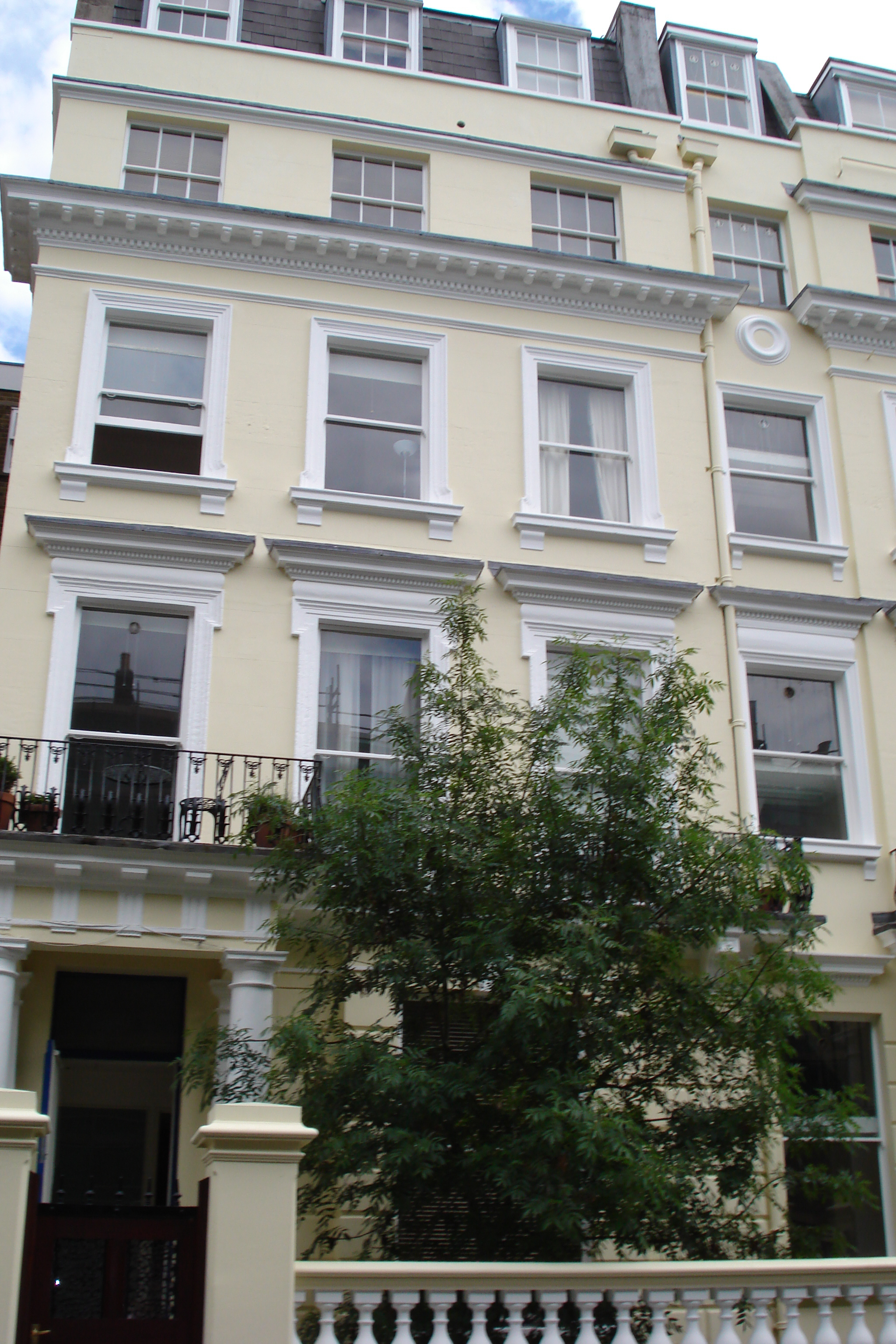
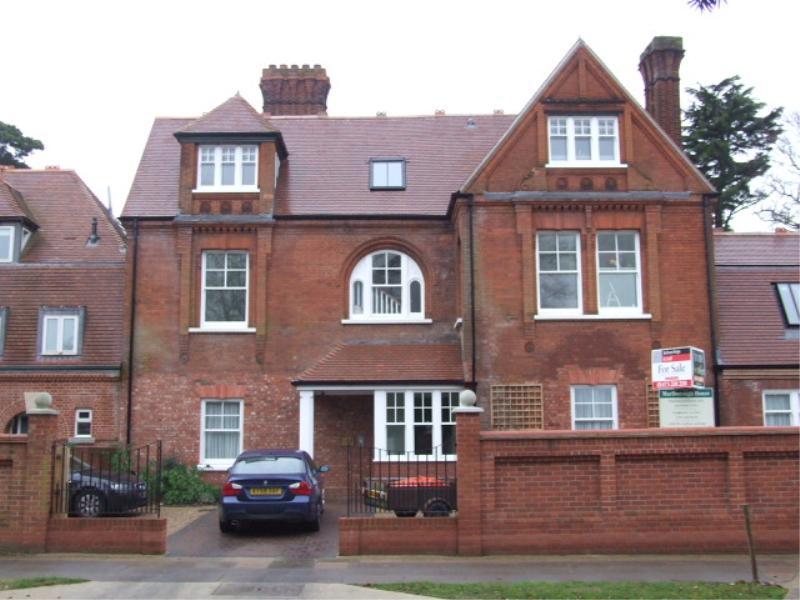
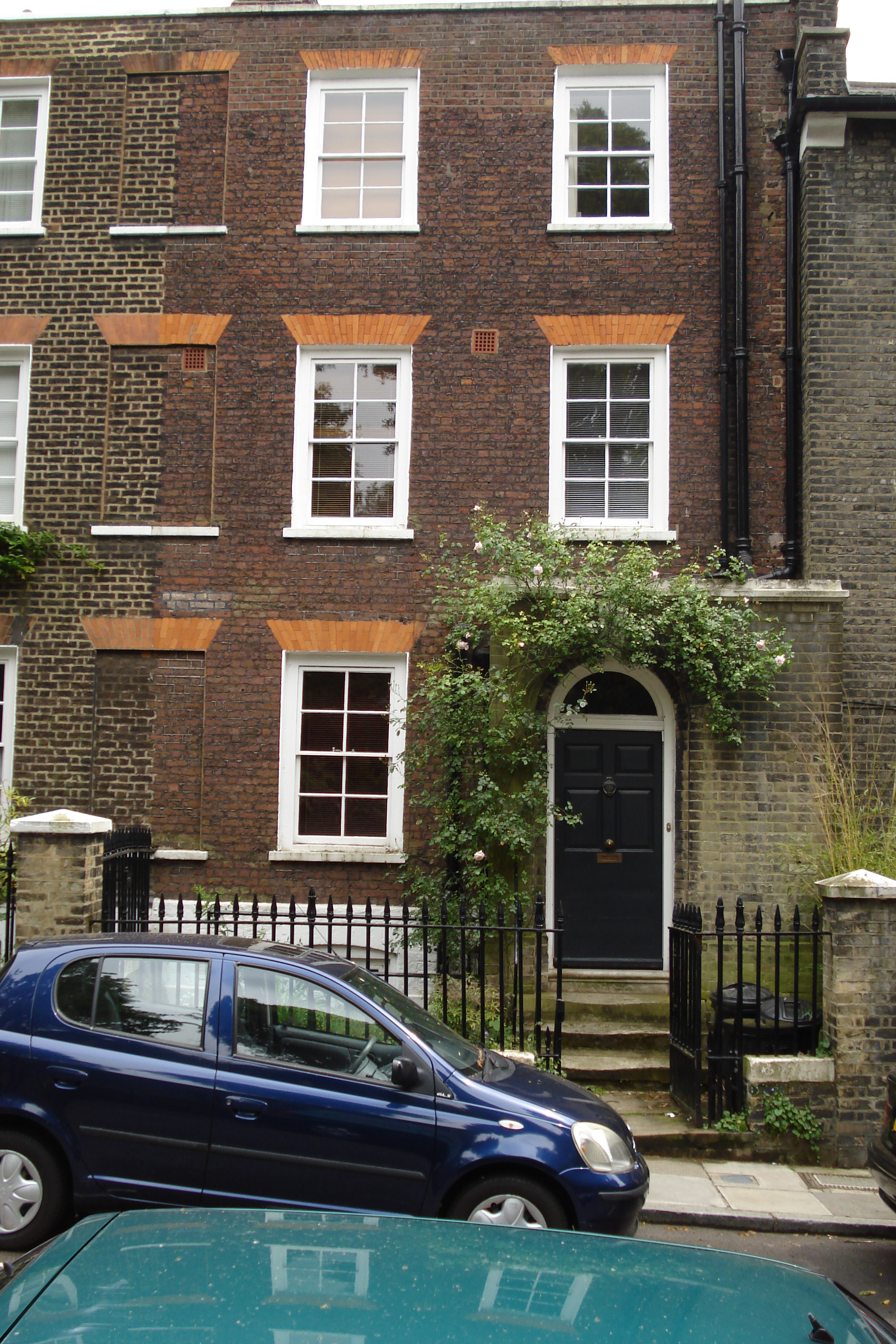
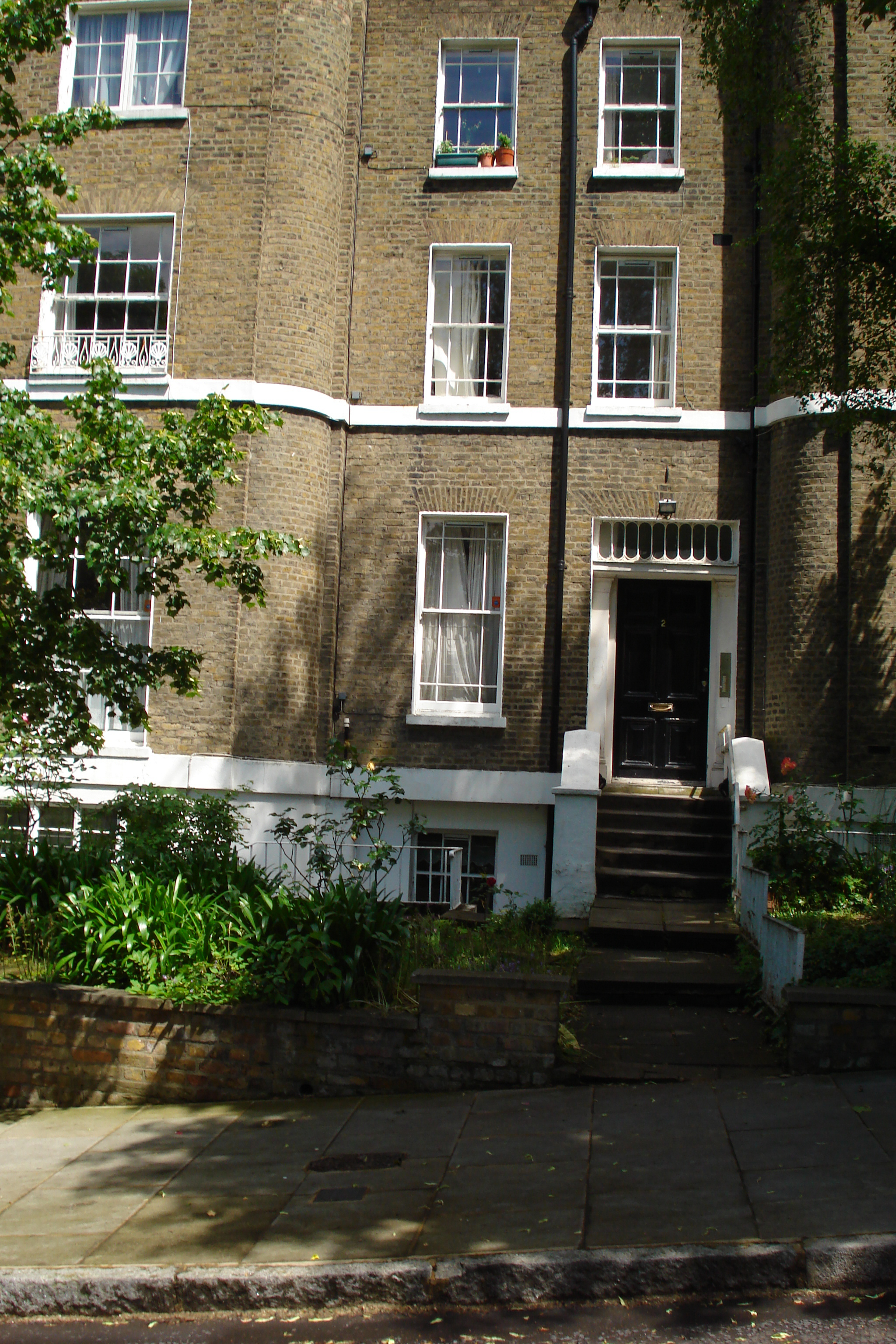
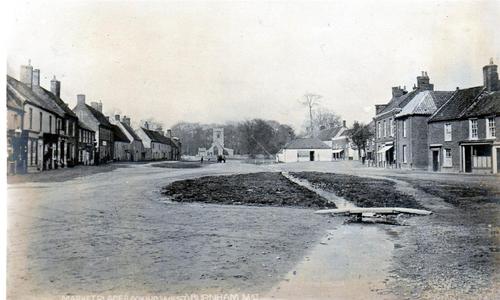
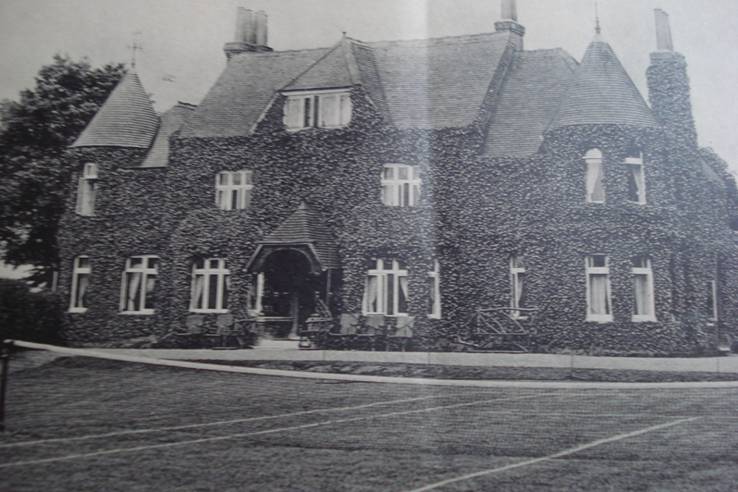
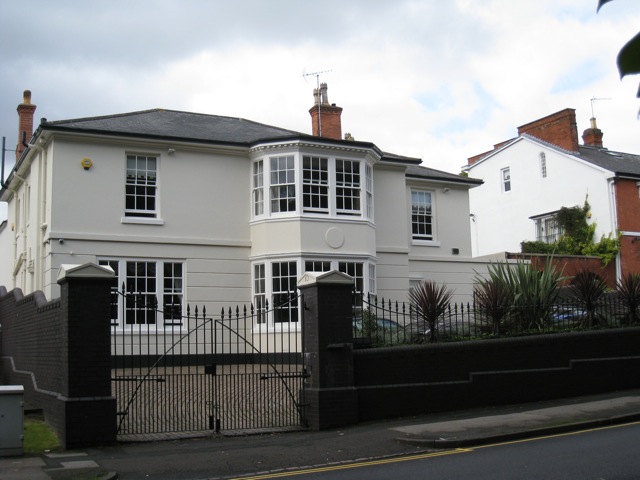
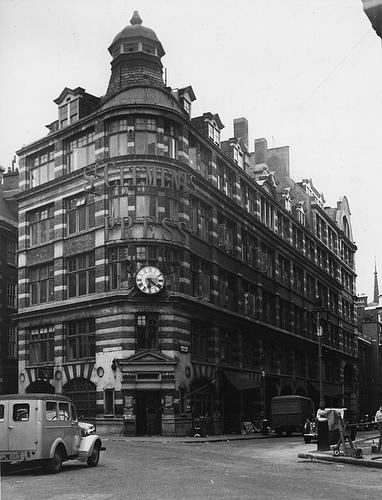
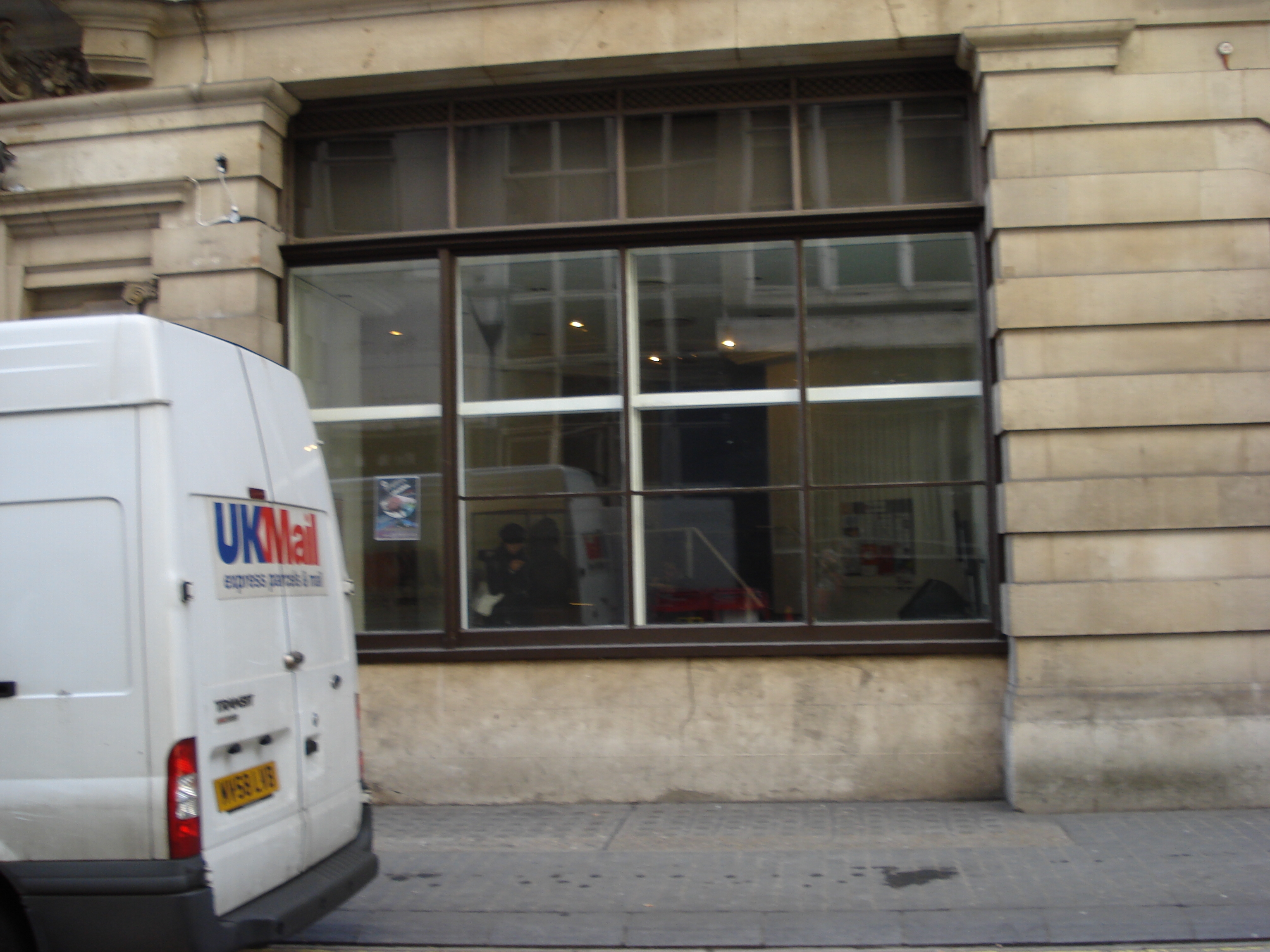
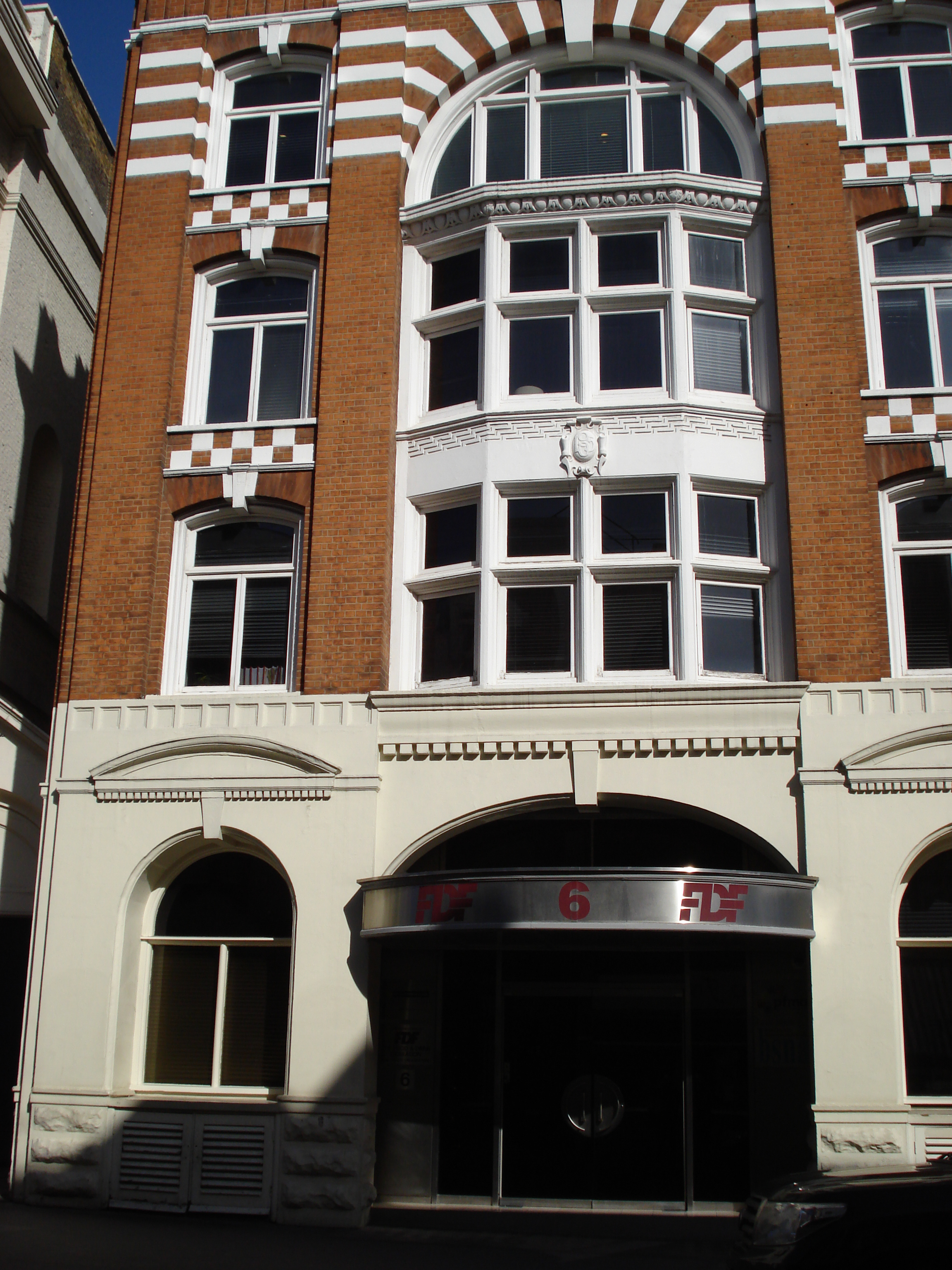
Dove PressThe rain had stopped by the time I emerged from the William Morris basement, but the sky was lowering and the Thames was high and rushing fast the other side of the embankment wall as I walked towards the alley onto which the Cobden Sandersons’ house fronts. Passing the Dove – the pub which gave its name to the Doves Bindery and later the Doves Press – I came to 15 Upper Mall and the gate through which so many radical worthies have passed.

Dove Press 2


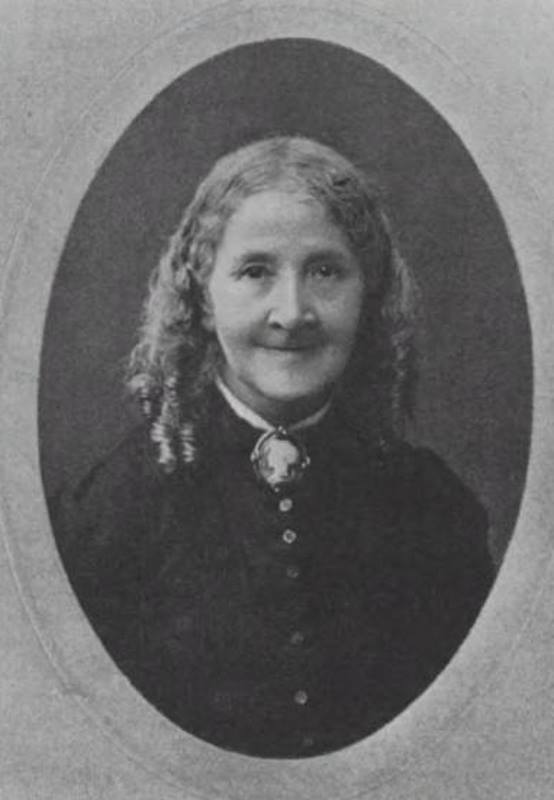
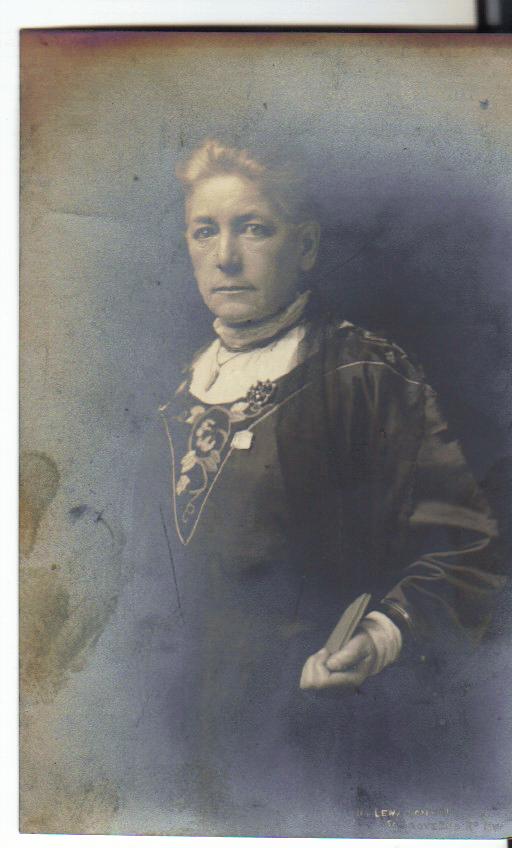
Anne Cobden Sanderson was born in 1853 into a leading Liberal family – her father was Richard Cobden, founder of the Anti-Corn Law League – but by the end of the 19th century she had joined the Independent Labour party.

She supported the women’s suffrage cause from an early age but, in 1906, after Annie Kenney and the Women’s Social and Political Union had arrived in London, she joined the militants. She received her first term of imprisonment – two months – in October 1906 after organising a protest meeting in the Lobby of the House of Commons. At her trial she declaimed that ‘I am a law breaker because I want to be a law maker’.

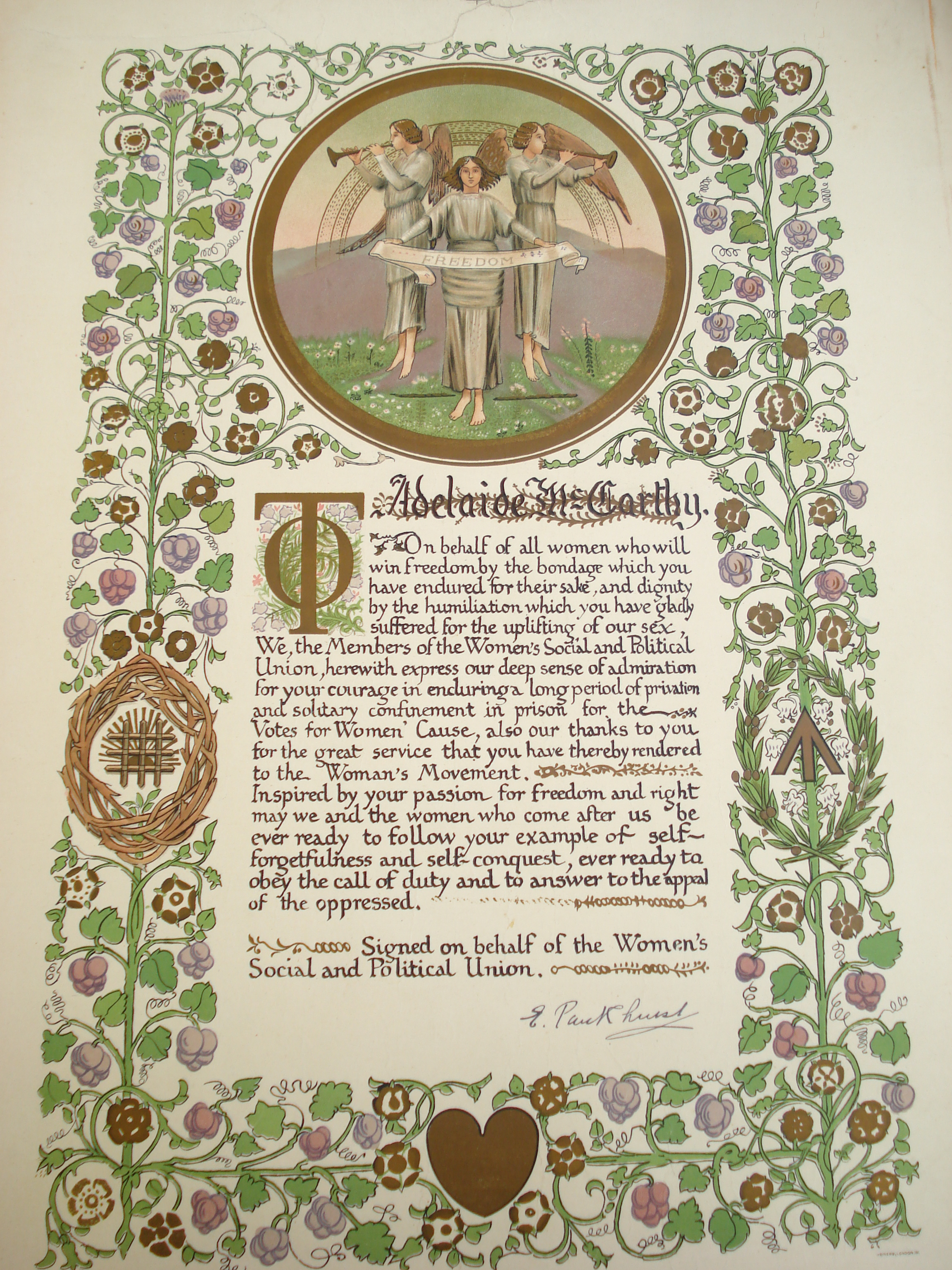
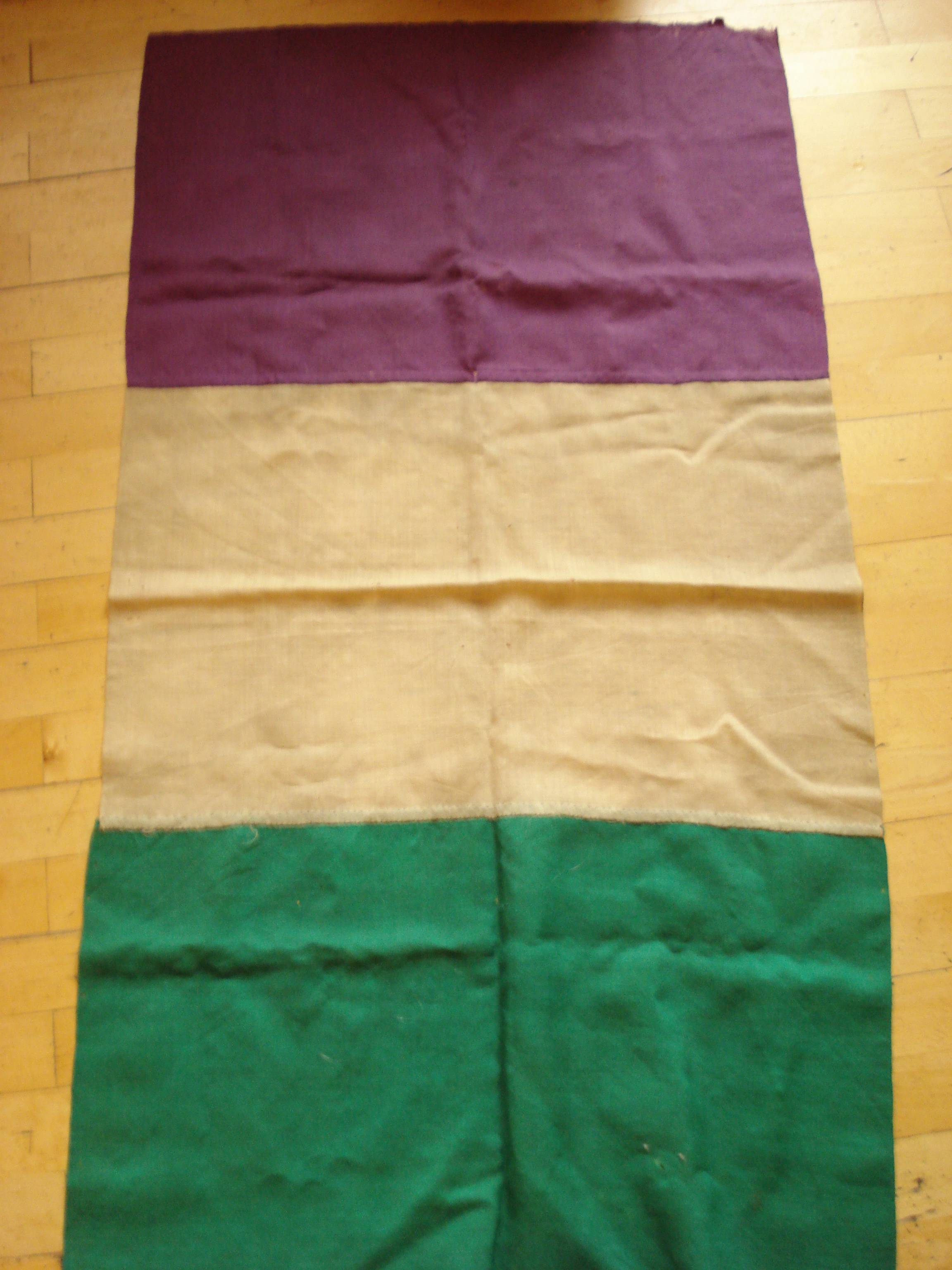
However in 1907, perhaps dismayed by Pankhurst autocracy, Anne joined Charlotte Despard in the breakaway Women’s Freedom League. In January 1909 she and her husband did, however, present Emmeline Pankhurst  with an address written on white vellum in purple and green ink and bound by the Doves Bindery to celebrate her release from prison.

Anne Cobden Sanderson proved to be one of the WFL’s most tireless campaigners, speaking at outdoor meetings and continuing to take part in militant protests.

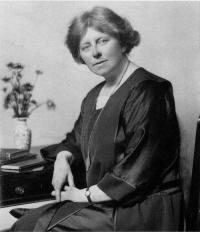
Mrs Cobden Sanderson and Mrs Despard

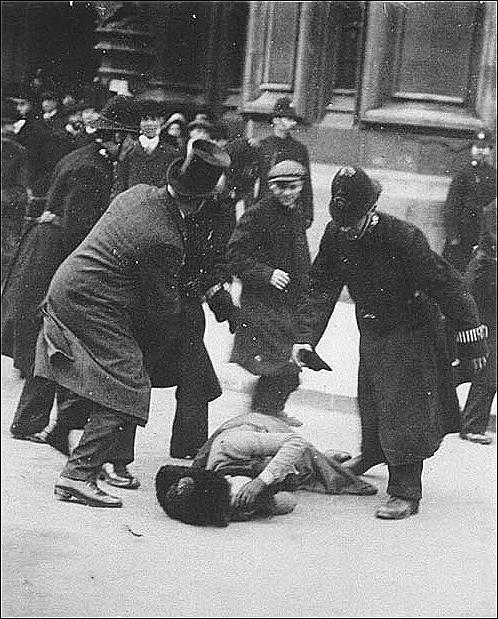
She was arrested in August 1909 while picketing the door of No 10 Downing Street in order to present a petition to Asquith. During the ‘Black Friday’ demonstration in Parliament Square in November 1910 Winston Churchill, who knew Anne Cobden Sanderson well, encountering her during the fracas called a policeman and ordered, ‘Drive that woman away’!’. The structure of society must indeed have seemed perilously close to crumbling when such an action was deemed necessary against a friend of one’s family and erstwhile hostess.

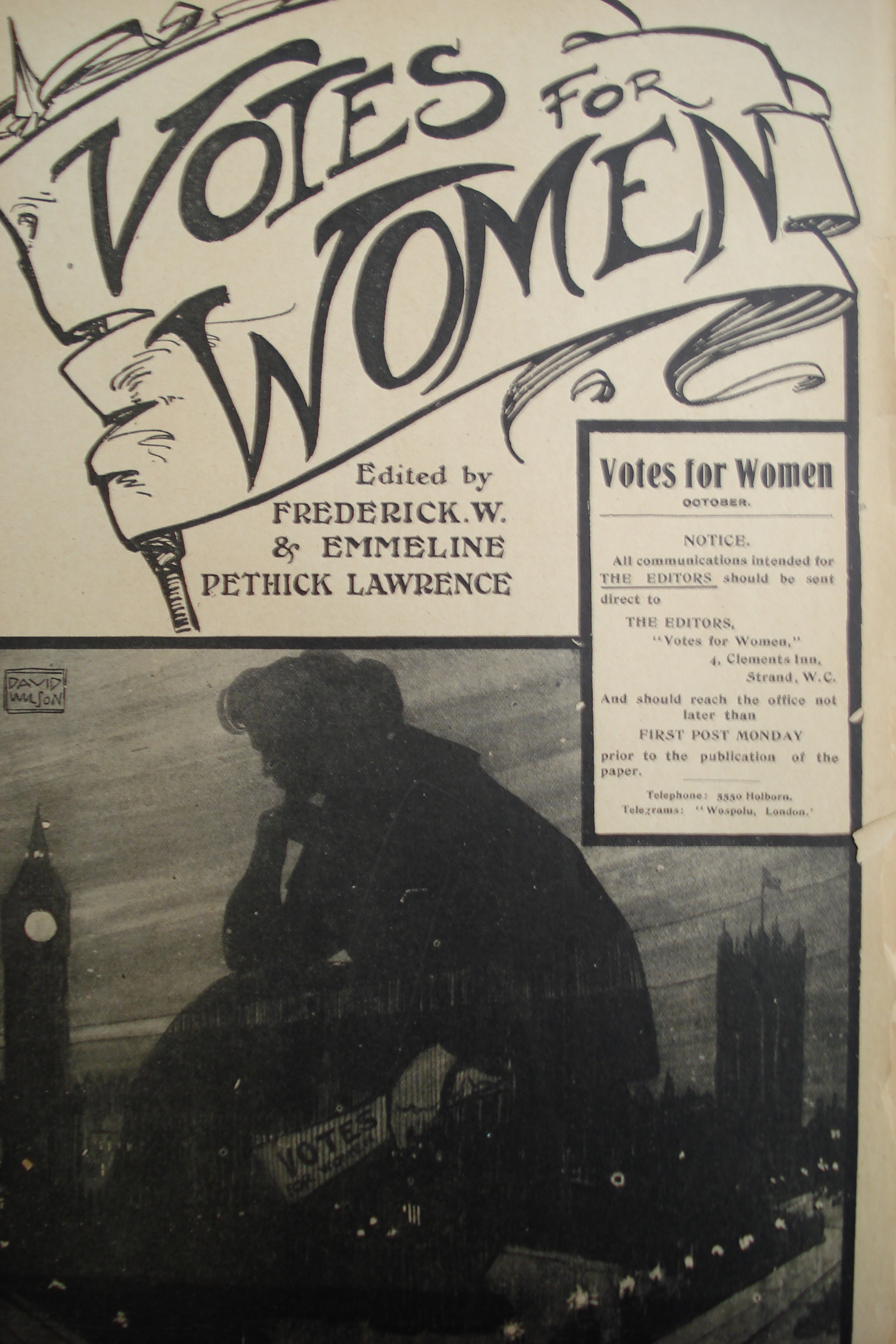
Anne Cobden Sanderson continued to campaign for women’s causes for the rest of her life – and in the 1918 General Election supported Charlotte Despard when she stood as the Labour candidate for North Battersea. In 1926 she was present, a few days before she died, at a dinner given to celebrate the silver wedding anniversary of Frederick and Emmeline Pethick Lawrence.

Copyright

All the articles on Woman and Her Sphere are my copyright. An article may not be reproduced in any medium without my permission and full acknowledgement. You are welcome to cite or quote from an article provided you give full acknowledgement.


, , ,

Leave a comment

Suffrage Stories: Helen Watts And The Mystery Of The Unclaimed Trunk

In May I attended a very interesting seminar – ‘”I am a part of all who I have met”: Why Social Networks Mattered for Suffragette Militancy‘ – given at the Institute of Historical Research by Dr Gemma Edwards of Manchester University. In the course of this Gemma demonstrated how social network theory could be used to re-construct the networks that formed around individual suffragettes and how these networks could then be analysed to demonstrate the subject’s primary relationships and the influences likely to have been exerted on and by them. For an illuminating article by Gemma on the subject see here.

For her paper at the IHR Gemma concentrated on two known suffragettes – Mary Blathwayt and Helen Watts – and related that she had a particular connection with the latter because it was thanks to her own father that papers relating to Helen Watts’ suffragette activities are now held in Nottinghamshire Archives. I little realised when I sat there reading through the Watts’ papers in the late 1990s that they had such a romantic past (or at least romantic to an historical detective).

For, Gemma explained, in the 1980s her father, a Bristol history teacher, had set project work for his class and that one pupil had chosen as her subject the local women’s suffrage movement. She had then been sufficiently enterprising as to place an advertisement in a local paper asking for any new information. Rather amazingly a reply was received from a worker at Avonmouth Docks to say that a quantity of suffrage-related papers were held in a trunk that lay, apparently unclaimed, in a warehouse. The papers related to the suffrage activity of Nottingham-based Helen Kirkpatrick Watts. Gemma’s father was permitted to borrow and photocopy them, subsequently depositing the copies in the Nottinghamshire Archives.

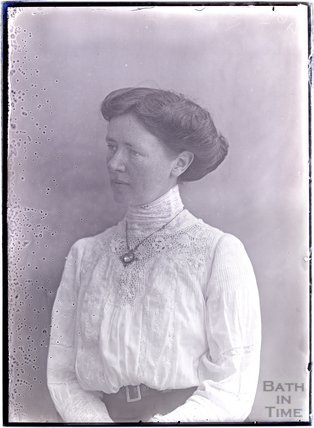
Helen Watts photographed by Col Blathwayt (photo courtesy of Bath In Time website)

Helen Watts photographed by Col Blathwayt (photo courtesy of Bath In Time website)

Knowing nothing of this rather bizarre provenance I duly wrote an entry on Helen Watts for The Women’s Suffrage Movement: a reference guide, recounting her suffragette life. I discovered, from an issue of Calling All Women, the newsletter published by the Suffragette Fellowship, that Helen had emigrated to Canada – to Vancouver – in 1965, the wording suggesting that this was a permanent move. I did like to anchor my subjects’ earthly existence with firm birth and death dates but in those pre-internet days I assumed that was as far as I could follow her – having no way then of discovering dates of death in Canada.

However, after Gemma’s seminar I pondered on the mystery of how the trunk could have lain apparently abandoned at Avonmouth. Even though she had flown to Canada and organised for her belonging to have followed her by sea Helen Watts would surely have been on tenterhooks to ensure their safe arrival. Thus it seemed doubtful that the trunk could have failed to leave Avonmouth in 1965.

In the days of my Reference Guide research all tracking of births, marriages and deaths had to be done by working through the hefty volumes held in the Family Record Office and its predecessors. Now, however, I can sit at my computer and at a click find dates in a second. So it was that, after Gemma’s talk, I entered details for Helen Watts and discovered that she had not died in Canada but in England – in Chilcompton, Somerset, aged 91 – on 18 August 1972 . Her permanent address at the time was 36 York Avenue, Hove. Her ’emigration’ had clearly not been permanent. However, one of her sisters, Ethelinda, a teacher, does seem to have taken up permanent residence in Canada, and in 1965 it was presumably Helen’s intention to live with her. Ethelinda Watts died in Vancouver three months after Helen – in November 1972.

Helen Watts' suffragette memorabilia (courtesy of Christie's website)

Helen Watts’ suffragette memorabilia (courtesy of Christie’s website)

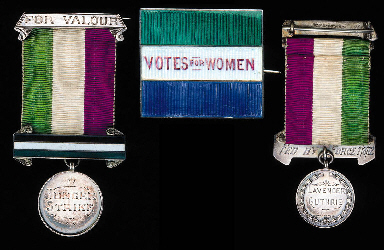
My suggestion is, therefore, that the trunk had actually completed its return journey from Canada when it lay forgotten at Avonmouth. Possibly by then Helen Watts was too infirm to keep track of her possessions – however treasured. It is not known what has happened to the trunk and the originals of the papers – perhaps Helen Watts’ wider family (Nevile Watts has numerous descendants) were eventually made aware of them. What must have been her most valuable suffragette mementoes – her hunger-strike medal and Holloway brooch – did resurface – for they were sold at auction in London in 1999. However it is more than likely that Helen Watts carried such an iconic item with her on her journey home rather than consigning it to the trunk.

A little more investigation revealed something more of Helen Watts’ life after her brief and dramatic involvement with the Women’s Social and Political Union than was available when I wrote her Reference Guide biography. By 1911 she had left Nottingham and was living with her brother, Nevile, in Chilcompton in Somerset. He had rebelled in his own way against his family’s Anglican tradition (Helen and Nevile’s father was vicar of Lenton, on the outskirts of Nottingham), was now a classics teacher at Downside College, a renowned Roman Catholic school, and later converted to Roman Catholicism.  You can read a short autobiographical article by Nevile Watts here.

Nevile Watts married, fathered five sons, published several books and continued to live in Chilcompton. Helen probably remained in the area for some years – possibly joined by her other sister, Alice. Certainly in the 1950s the ‘Misses Watts’ are listed in the phone book as living at Crosslands, Wells Road, Chilcompton.

The moral of this tale is that papers related to the suffrage movement can turn up in the most unexpected places. If you come across any do let me know…

Copyright

All the articles on Woman and Her Sphere are my copyright. An article may not be reproduced in any medium without my permission and full acknowledgement. You are welcome to cite or quote from an article provided you give full acknowledgement.


, , , ,

Leave a comment

Suffrage Stories: Two New Exhibitions

Last week I visited two small exhibitions – both centring on the theme of ‘Campaigning’.

The first was a temporary exhibition (alas, it ends tomorrow, Friday 22 May, so hurry to catch it) – Blackguards in Bonnets – at the impressive Jewish Museum in Camden Town. This tells the story of the involvement of Jewish women and men in the struggle for emancipation. It centres particularly on the 20th-century campaign for women’s suffrage in which many members of the Jewish community took leading roles.

Israel Zangwill with

Israel Zangwill at the WSPU’s June 1908 demonstration with, on the far left, Emmeline Pethick Lawrence and on his right Christabel Pankhurst

The writer, Israel Zangwill, a noted speaker on behalf of the movement, is represented by this image. In March 1912 Kate Frye attended a meeting addressed by him and wrote of it in her diary:

‘”I turned to Mrs Mansel, just before he finished, saying ‘Doesn’t he make one think of – and isn’t he like – Spring’” That word concluded his speech, and it was like the Spring in its freshness and gaiety, life and hope, and so deliciously witty. I have never heard a large audience laugh so quickly and as gladly as this audience, the response was almost before the spoken word, in fact there was not a dull flash of the eye all the evening.’

Also on display are a number of items that related to the involvement in the WSPU and Jewish League for Women’s Suffrage campaigns of the wealthy Lowy family. Henrietta Lowy and four of her daughters had joined the WSPU in 1908.

76 Holland Park - once the Lowys' home - and one from which they were all absent on Census Night, 1911

76 Holland Park – once the Lowys’ home – and one from which they were all absent on Census Night, 1911, following the WSPU boycott call

Here, too, you can see Gertrude Lowy’s hunger-strike medal. She was imprisoned after taking part in the March 1912 window-smashing raid.

Lowy hunger strikeBut it wasn’t only wealthy members of the established Jewish community whom suffrage campaigners were keen to convert to their cause. In the autumn of 1913 the New Constitutional Society for Women’s Suffrage took their message down to the sweatshops of Whitechapel.

Yiddish - query - leafletThis leaflet, printed in Yiddish, was saved by Kate Frye from the quantity she delivered and is on display, together with her diary open at the entry for 27 September 1913, in which she describes a tea party the NCS gave for the local woman and girls, writing:

‘I chatted and handed round. The girls were so nice – nearly all Jewesses. The pitiful tales they tell of the sweated work is awful – and they are so intelligent – and quite well dressed. The Jews are an example to the gentile in that way.’

Later in the week I went to the LSE Library to view their new exhibition space – and the first exhibition to be shown in it.

The theme is ‘Campaigning’ – covering the suffrage movement (a slight nod to male enfranchisement with the greater emphasis placed on the women’s campaign), Liberations – Gay and Female – and campaigns for Peace. One wall of the exhibition space allows for the display of images, moving on a loop – with space in front devoted to a static display of CND badges, a couple of 19th-century documents, an Artists’ Suffrage League poster and a ‘Votes for Women’ scarf. These advertise, as it were, the themes of the three types of campaign.

This poster - focussing on the plight of the unenfranchised woman graduate - should appeal to at least 50% of LSE students. For my post on the artist see here

This poster – focussing on the plight of the unenfranchised woman graduate – should appeal to at least 50% of LSE students. For my post on the artist see here

In the centre of the space is a single display case in which neatly chosen documents highlight the different ways in which the campaigns were organised – and, most importantly in my eyes, stresses the rifts and divisions that are a sine qua non, it would appear, of all pressure groups.

Although small, the exhibition makes its points very well. They stick in the mind. It’s presumably intended to catch the eye of LSE students as they pass in and out of the Library entrance and is not intended to deliver in-depth information. Small and simple is no bad thing.

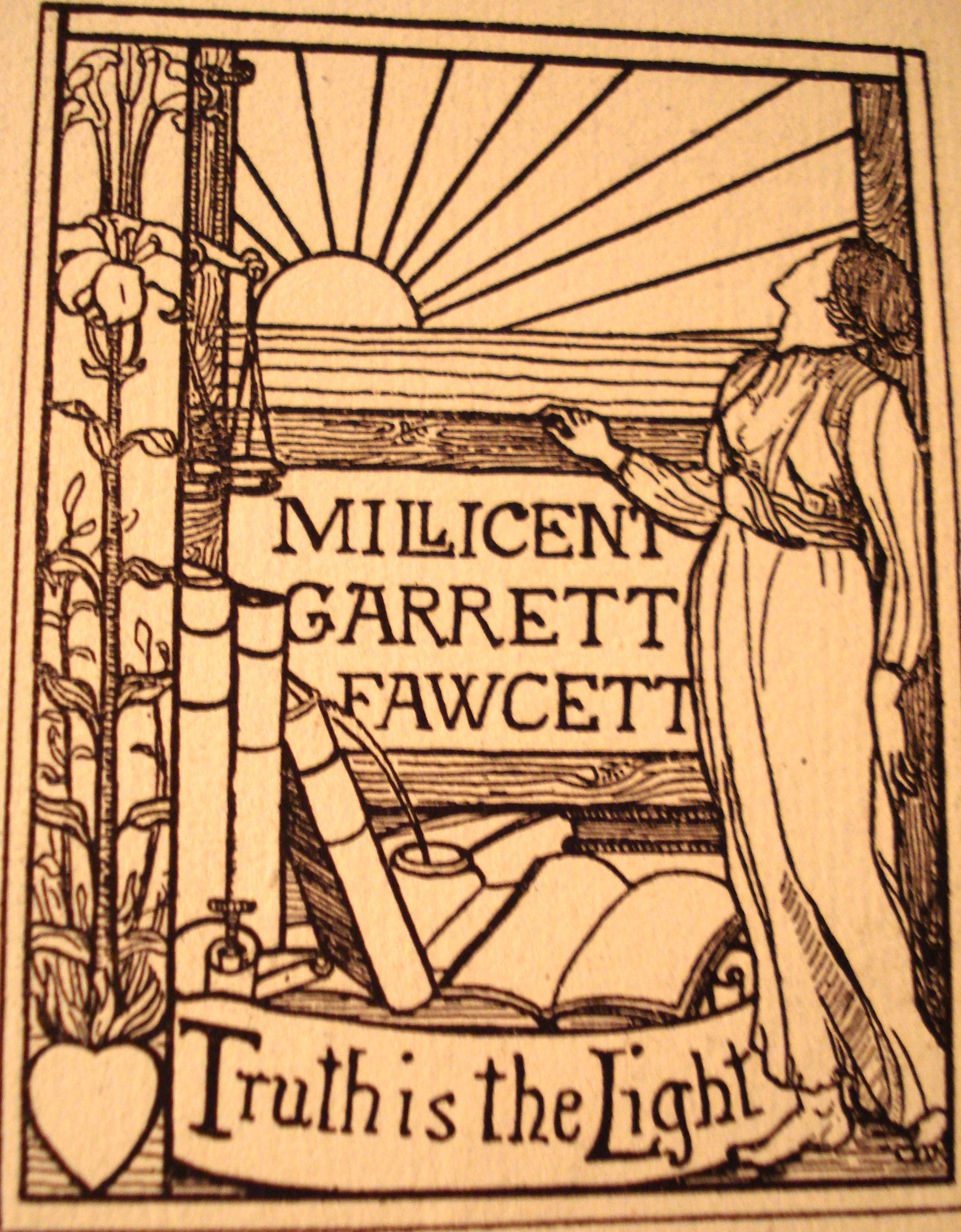
But, oh dear, I did wish that some acknowledgement of Millicent Fawcett and the National Union of Women’s Suffrage Societies had been included in the display. ‘Suffrage’ yet again was only represented by Mrs Pankhurst and the WSPU, whereas the Women’s Library@LSE contains a wealth of material inherited from the NUWSS. As I viewed ‘Campaigning’ it occurred to me that it would be rather a good idea if a future exhibition could, in the same simple manner, by making reference to the NUWSS and the Women’s Freedom League (and, perhaps, some of the smaller societies), demonstrate that the women’s suffrage campaign was more complicated and multifaceted than it is popularly presented.

Copyright

All the articles on Woman and Her Sphere are my copyright. An article may not be reproduced in any medium without my permission and full acknowledgement. You are welcome to cite or quote from an article provided you give full acknowledgement.

, , , ,

Leave a comment

Suffrage Stories: The 1866 Petition: The Aldeburgh Connection

In a previous post I recorded something of how the 1866 women’s suffrage petition came into being. Comprising 1499 names, it was presented to John Stuart Mill, MP for Westminster, by Emily Davies and Elizabeth Garrett.

Names on the printed form of the petition are listed in alphabetical order, usually accompanied by some form of geographical address. Reading through it one notes that, while some towns have mustered only one or two signatures, others have attracted many more.

That a clutch of signatories to the petition lived in Aldeburgh, a small coastal town (1991 inhabitants in 1871) in Suffolk, had everything to do with the fact that Elizabeth Garrett LSA was one of the principal organizers of the petition. Aldeburgh was home to her family, her father, Newson Garrett, a driving force in its development. 

Elizabeth Garrett c 1866 (courtesy of Wellcome Images)

Elizabeth Garrett c 1866 (courtesy of Wellcome Images)

Just a few months earlier Elizabeth Garrett had qualified as a doctor, the first woman to do so in Britain, and signed from her London home, 20 Upper Berkeley Street, the premises of her nascent practice and the headquarters of the petition committee. She ensured that the women of Aldeburgh, her home town, were canvassed.  It is likely that it was her younger sisters, Agnes and Millicent, both too young to sign, who took petition forms round to their neighbours.

Aldeburgh Town StepsI have extracted the Aldeburgh names from the petition and below give such details as can now be gleaned of these women, none of whom, as far as I can tell, ever again took part in any political protest.

BEGBIE, MRS HAMILTON

Anna Eliza Begbie (courtesy of Ancestry.co.uk website)

Anna Eliza Begbie (courtesy of Ancestry.co.uk website)

She was Anna Eliza Begbie, née Swiney (1839-1915). She married Mars Hamilton Begbie in Cheltenham in 1858; despite his warlike name he had been ordained. By 1866 they were living in Aldeburgh where, according to the Cambridge Alumni List he was headmaster from 1865 to 1869 of ‘Aldborough School’ – a grammar school. They lived at Crespigny House, a late-18th-century mansion.

Although Anna Eliza Begbie doesn’t appear to have taken any further part in the suffrage campaign, it was surely a subject of discussion among her extended family after her brother, John, married in 1871. His wife, [Rosa] Frances Swiney, who lived in Cheltenham, was an influential campaigner for suffrage – and for Theosophy – in the late 19th and early 20th centuries.

CRESY, MRS THEODORE GRANT [or Cressy]

She was born Hannah Jane Spencer (1837 -1896) in Wrotham, Kent. She married Theodore Grant Cresy, a surgeon, in 1859 and by the time she signed the petition was the mother of 4 sons; another was born four months later. The family lived in Aldeburgh from 1860 – 1868. During their time in Aldeburgh (1860-1868) the family lived at The Uplands, the house that had been the Garretts’ first home after they returned from London when Elizabeth was a young girl.

Uplands House, which carries two blue plaques - one for Elizabeth Garrett Anderson and the other for Millicent Fawcett. One plaque can just be glimpsed in the photo

Uplands House, which carries two blue plaques – one for Elizabeth Garrett Anderson and the other for Millicent Fawcett. One plaque can just be glimpsed in the photo

Hannah Cresy’s mother-in-law, Eliza Cresy [or Cressy], who lived at Riverhead in Kent, and her sister-in-law, Mary Cresy, who lived in Norwood, also signed the petition, suggesting that the organizers had asked for names of family members likely to be sympathetic to the petition.

CULVER, MRS HENRY

Probably a misreading of ‘Mrs Henry Calver’. She was Mary Anne (1819-?). who lived with her husband, a plumber, painter and glazier master, in the High Street.

DANCE, MARGARET

Something of a mystery – I can’t find any trace of a Margaret Dance, whether in Aldeburgh or elsewhere. However the signature may have been that of Mary E Dance, daughter of James Dance, Aldeburgh’s parish clerk. It is entirely possible that her signature was mis-transcribed as ‘Margaret’ and she would have been just old enough to sign.

DOWLER, MRS H.T.

There is, however, no doubt about this signatory. She was Frances Harriett Emma Dowler (1812-1899), wife of Henry Turner Dowler, who for 35 years was Aldeburgh’s vicar.  The couple had married in 1838. In her autobiography Millicent Fawcett describes how Newson Garrett  frequently engaged in very public quarrels with Dowler who besides being vicar was also the town bailiff and a capital burgess. On these occasions Garrett would insist that his family attended church services at the dissenting chapel rather than at Dowler’s church. Relations with Mrs Dowler were unaffected by these rows.

In May 1867 the Rev Dowler performed the wedding service at marriage of Millicent Garrett and Henry Fawcett.

GARRARD, MRS WILLIAM

She was Mary Anne (née Knights) (1819-1870), wife of William Garrard, brewer, maltster and secretary to the Aldeburgh gas company – one of Newson Garrett’s pet projects. In the 1840s William Garrard had been known as ‘the Ipswich Chartist’ and was one of the founders of the Ipswich Working Men’s Association. In the 1860s the couple lived on Church Hill in Aldeburgh.

GARRETT, MRS NEWSON

Louisa and Newson Garrett in old age

Louisa and Newson Garrett in old age

She was Louisa Garrett (nee Dunnell) ( 1814-1903), wife to Newson Garrett and mother to Louisa (later Smith), Elizabeth (later Garrett Anderson), Newson, Edmund, Alice (later Cowell), Agnes, Millicent (later Fawcett), Samuel, Josephine (later Salmon), and George (another son died in infancy). Although Louisa Garrett was of a far more conservative temperament than her husband she was always supportive of her daughters’ enterprises. She had initially opposed Elizabeth’s desire to become a doctor but, having come round to the idea, was the weekly recipient of letters telling of, at first, the difficulties encountered and later of the success in the medical world achieved as her daughter developed her practice and set up her hospital. Louisa would have signed the petition in the family home, Alde House.

 GARRETT, MRS E.  Snape Bridge

She was Gertrude Mary Littlewood (c1840-1924) who had married Elizabeth Garrett’s brother, Edmund, in 1862. Unlike his brother, Samuel, Edmund Garrett was not supportive of women’s advancement. In fact he opposed the suggestion that his sister Alice might work in the family business’s counting house. Edmund Garrett and his wife were then living in a house built by Newson Garret next to his maltings at Snape. At the moment (May 2015) it’s for sale – see here for details.

 GARRETT, MRS N.D. Calcutta

She was Kate Bruff, who in 1860 had married Elizabeth’s brother, Newson. He was the black sheep of the Garrett family – at this time he was serving with the army in India – a man whose enterprises (unlike those of his sisters) always went awry.  Kate’s father, Peter Bruff, was a civil engineer who was involved in several of Newson Garrett (senior)’s plans for improving Aldeburgh. Newson (junior’s) sisters were always rather sorry for Kate.

Despite being so close to Elizabeth Garrett Anderson and Millicent Fawcett, none of this  clutch of Aldeburgh-based Garrett women took any further part in the suffrage campaign.

GREEN, HARRIET

She was probably Harriet Green (b 1824) a widow living at Beach Cottage.  She is listed in the 1869 Aldeburgh trade directory as being a lodging house keeper.

HAWKESWORTH, MRS WALTER

She was Florence, the daughter of the Rev Dowler, who in 1865 had married John Walter Hawkesworth.

HELE, MRS FENWICK

She was Harriet Shute (1838-1907) who had married Nicholas Fenwick Hele in 1859. She gave birth to her third daughter, Ida, a couple of months after signing the petition. Her husband was a surgeon and the author of Notes and Jottings About Aldeburgh,  In 1866 the family lived in Aldeburgh’s High Street. Harriet continued to live in the town after her husband’s death in 1892 – but died in 1907 at St Johns, Newfoundland.

HUNT, MRS

She could have been either Harriet Hunt (1806- 1884), wife of William Hunt, or Cecilia Hunt (1824- 1868), wife of Edward Hunt. Both men were boat builders. Perhaps the younger woman is the more likely candidate.

JAMES, MRS RHODES

She was Caroline James, a widow by the time she signed the petition. She lived with several servants in a large late-18th-century house in Victoria Road – Wyndham House. She was the grandmother of M.R. James, the author of many Suffolk-based ghost stories.

KERSEY, SARAH, ELIZABETH AND MARIA

Sarah Kersey (1811-1886) in 1865 had a lodging house in the High Street. Maria and Elizabeth were her younger sisters. All three were unmarried.

MANNALL, SARAH

Sarah Mannall (1797-1869) was the wife of John Mannall. He had run the Crown and Castle Hotel in Orford for many years before eventually handing it over to his daughter and son-in-law

MARTIN, MRS

Crag Path, Aldeburgh. Brudenell Terrace, the row of tall houses on left, were built by Newson Garrett . Their red-brick gloom has now been transformed by pastel paints

Crag Path, Aldeburgh. Brudenell Terrace, the row of tall houses on left, were built by Newson Garrett . Their red-brick gloom has now been transformed by pastel paints

She was probably Mrs Mary Anne Martin, who in 1865 ran a ladies’ school in a house in Brudenell Terrace.

THELLUSSON, MRS

She was Henrietta Vernon-Wentworth who in 1859 had married Arthur Bethell Thellusson. She died in 1873 – on the same day as one of her young daughters. She had seven children and by the time she signed the petition she had already lost two infant daughters and was to lose another three months before her own death. The family lived at Thellusson Lodge. I seem to remember that Millicent Fawcett described the Thellussons as the ‘aristocracy of Aldeburgh’; for the local canvassers for the petition it must have been something of a coup to have Henrietta Thellusson’s signature on the petition.

WOODWARD, SUSANNAH

Alas, I can find no clue at all  as to who this final Aldeburgh signatory to the petition could have been.

After having made this initial bid for emancipation it doesn’t appear that the women of Aldeburgh could be tempted to join the suffrage campaign that followed. During the remainder of the 19th century there is no record of a suffrage meeting being held in the town – described by one contemporary Suffolk author as lying in this ‘quiet, grave, sleepy, Conservative region’. 

You can read much more about Elizabeth Garrett Anderson and Millicent Fawcett in Elizabeth Crawford, Enterprising Women: the Garretts and their circlepublished by Francis Boutle.

Elizabeth Crawford, The Women’s Suffrage Movement: a regional survey, published by Routledge, surveys the entire suffrage campaign in Suffolk – and in the rest of England, Scotland, Wales and Ireland.


Copyright

All the articles on Woman and Her Sphere are my copyright. An article may not be reproduced in any medium without my permission and full acknowledgement. You are welcome to cite or quote from an article provided you give full acknowledgement.

, , ,

Leave a comment

Suffrage Stories: The 1866 Petition: J.S. Mill And The South Hackney Connection

In a previous post that I wrote about the 1866 women’s suffrage petition I recorded something of how the petition came into being and investigated the connections that had led an erstwhile near neighbour of mine, Fanny Maughan of Goswell Road, to be a signatory. I deduced that Fanny – or I suppose more especially her husband – were members of a working-class circle supportive of John Stuart Mill who, as MP for Westminster, was to present the petition in Parliament.

Over the years I have researched many of the names on the petition – and thought I’d bring to your attention three other women who caught my eye simply because they lived in another place I know well – south Hackney.

For instance, why was Mrs John Plummer of 4 Homer Terrace, Hackney Wick a signatory to the petition? And who was she?

Mary Ann Jenkinson had been born in Kettering c 1839 and as a young woman earned her living as a milliner. In 1860 she married John Plummer, who worked in a staymaking factory in the town. He had been born in London, an illness in infancy rendering him deaf and lame. His family had been too poor to provide him with any education; he had educated himself. After moving with his family to Kettering he made a name locally as a labourr campaigner and versifier and in 1859 published his first book, Freedom of Labour.

By 1866 the Plummers had moved to London, to Homer Terrace in south Hackney, at the east end of Victoria Park, close to Hackney Wick. In the 1871 census John Plummer described himself as a ‘newspaper editor’; he worked on a wide range of magazines, almanacs, and trade journals and founded the London Figaro.

Political economy was John Plummer’s principal interest and for some years he had been in touch with John Stuart Mill, who in 1862 described him as one of the ‘most inspiring examples of mental cultivation and high principle in a self-instructed working man.’

Therefore it is not at all surprising that in June 1866 Mary Ann Plummer was approached by Mill’s step-daughter, Helen Taylor, and asked to add her signature to the petition – as well as any she could obtain from her friends. (See LSE Archive Mill/Taylor Papers/13 ff 242 for a letter from Mary Ann Plummer to Helen Taylor, 5 June 1866).

At this time – as well as involvement with the suffrage – John Plummer was leading a campaign, supported by Mill, to preserve and extend Victoria Park – in particular to prevent the erection of a large gas works at the Hackney Wick end.

Working alongside Plummer on the Victoria Park Preservation Committee was George Dornbusch, of 11 Grove Villas, South Hackney, whose wife and daughter also signed the suffrage petition.

George Dornbusch (photo courtesy of Ancestry website)

George Dornbusch (photo courtesy of Ancestry website)

George Dornbusch was a native of Trieste and had been described by George Holyoake as ‘a fugitive German communist’. He had arrived in England from Hamburg in 1845 and became a leading figure in the early vegetarian movement in London, naming his house in Malvern Road, Dalston – ‘Vegetarian Cottage’. He lived there with his first wife, Amalie, who was also involved with the vegetarian movement (see Gregory Of  Victorians and Vegetarians: The Victorian Movement in Victorian Britain).  Dornbusch, who was described by Richard Cobden as ‘a most unsafe and excitable person’ was also an activist in the anti-vaccination and the peace movements.

In 1863 Dornbusch was a member of the general committee of the Emancipation Society – along with John Stuart Mill, P.A. Taylor, Dr Richard Pankhurst and many others who were shortly to support the emancipation of women – as well as of slaves.

By 1866 Dornbusch had moved from Dalston to Grove Villas, Hackney Wick and by 1870 he was a vestryman in Homerton Ward.

The Mrs George Dornbusch who signed the 1866 petition was not Amalie but Emma, 20 years Dornbusch’s junior, who in 1861 had been his housekeeper. I presume that Amalie had died although I haven’t found a record of her death – nor can I find any trace of his marriage to Emma. Ada, who also signed the petition, was Dornbusch’s  daughter by Amalie.

Although there is no evidence that Emma or Ada Dornbusch continued to be active in the suffrage movement after 1866, George Dornbusch did give his support – as a member of the National Society for Women’s Suffrage in 1867 and 1868 and of the Central Committee of the National Society for Women’s Suffrage in 1871/72 shortly before his death in 1873.He is buried in Abney Park Cemetery.

In 1880 Emma Dornbusch remarried. Her new husband, George Tompsitt, was an Australian shipper ten years her junior and in 1881 they sailed to Australia, together with their young son, George, and Ernest and Conrad Dornbusch, the sons from Emma’s first marriage. Emma kept a delightful diary of the voyage which was published as a pamphlet in Melbourne on their arrival. She died in 1890, in Queanbeyan, New South Wales.

Ada Dornbusch married in 1878 and continued to live in south Hackney with her husband, William Beurle, a dealer in precious stones. She had three children and died in 1909.

There are two other women from Grove Villas whose names are on the petiton – Mrs C.A. Dawson and Mrs A. Young, who both give number 4 as their address. The latter was probably Mary, the wife of Alexander Young, a retired baker and confectioner, who the 1871 census shows living at number 7.

Mary Ann Plummer had taken Helen Taylor’s request seriously and had approached likely signatories amongst her friends in her immediate south Hackney neighbourhood. There were other Hackney women who also signed the petition – but the little group of working-class women, living at the east end of Victoria Park, are linked by their close association with John Stuart Mill.

In 1879 John and Mary Ann Plummer and their family emigrated to Australia, where he enjoyed a successful career as a journalist, continuing to support labour reform. He died in 1914, survived by Mary Ann.

Copyright

All the articles on Woman and Her Sphere are my copyright. An article may not be reproduced in any medium without my permission and full acknowledgement. You are welcome to cite or quote from an article provided you give full acknowledgement.

, , , ,

5 Comments

Suffrage Stories: Christabel, The Ballot Box And That Hat

Christabel ballot 1909

Pretend you are taking a GCSE paper. One of questions states that this picture shows Christabel Pankhurst casting her first parliamentary vote. You have to decide whether this statement is true or false.

What clues might you find to point you in the right direction?

Actually there is one so glaring that I am amazed that it can be overlooked. Have a look at her attire.

Q.When were women of Christabel’s age able to vote for the first time?

A. December 1918.

Q. Does that dress and hat look like an outfit suitable for going to the ballot in December of any year?

A. Hardly.

Q. Are the hat and dress of a style worn in 1918?

A. Most definitely not.

Q. So – if not 1918 when might that flowing gown and flower-bedecked bonnet have been in the mainstream of fashion?

A. Spring 1909.

Yes, that is the correct answer.

In fact the photograph shows Christabel casting a vote in a ballot box that was one of the main features of the WSPU Fair at the Prince’s Skating Rink, Knightsbridge, that ran between 13-26 May 1909. As Votes for Women, 23 April 1909, stated ‘A unique feature of the Exhibition.. will be the polling booth which will occupy one of the corners of the great hall. At this booth women as well as men will cast their votes upon many of the most interesting questions of the day.’ And that is what we see Christabel doing.

And as for that hat? It does strike one as a little incongruous. She isn’t usually seen in anything so maidenly frivolous. And so it is interesting to know that the hat was a gift to her from Frederick Pethick-Lawrence. Moreover when, in the late 1950s, after Christabel’s death, he came to prepare her autobiographical manuscript for publication (Unshackled:the story of how we won the vote)  it was a photograph of her wearing his hat that he used for the frontispiece.

I have been amazed how this photograph, described as Christabel casting her first parliamentary vote, has been tweeted and retweeted. It was even used in Amanda Vickery’s ‘Suffragettes Forever’ BBC 2 programme to accompany the voice over telling us that women first voted in December 1918. How this thoughtless use of an incorrect image (by no means the only one) jarred.

Click here to see what Christabel looked like as she campaigned in Smethwick in late 1918 – for she was, of course, both a candidate and a voter. She is centre left in the photo – and you’ll be relieved to see that she is sensibly dressed – complete with muff – to combat the winter chill.

Copyright

All the articles on Woman and Her Sphere are my copyright. An article may not be reproduced in any medium without my permission and full acknowledgement. You are welcome to cite or quote from an article provided you give full acknowledgement.


, ,

1 Comment

Suffrage Stories: ‘Home Art Decorator’ To The Queen – And The ‘Human Letter’

For some time I have been meaning to investigate Charlotte Robinson, ‘Home Art Decorator’ to Queen Victoria, mention of whom I came across years ago while researching the interior design career of Rhoda and Agnes Garrett. Now that I have done so, I’ve discovered, as an added bonus, her family link with one of the WSPU’s more imaginative publicity stunts.


Charlotte RobinsonCharlotte Robinson was born c 1859 in Settle in Yorkshire, one of the younger children in the large family of a Yorkshire solicitor. He died in 1870, leaving an estate of c £20,000. A later biographical piece about Charlotte noted that she (as presumably were all the children) was left a share of his property and it was this that gave her the freedom to develop a career.

By 1871 Charlotte had been sent as a boarder to a small school in Bolton but was later moved to the rather more prestigious Queen’s College in London. Education complete she returned home for a time  – the 1881 census finds her living with her brother, William, a solicitor, in Keighley. She then spent some time travelling abroad.

Emily Faithfull Emily Faithfull

For some of that time, certainly in 1883, Charlotte was travelling in America with Emily Faithfull  –  described on the manifest of the ship on which they travelled to New York as ‘Secretary’. You can read a very interesting article about Emily Faithfull here. It would seem, from remarks recorded by Emily that she had met Charlotte when the latter was still a pupil at Queen’s College.

Emily Faithfull was, of course, a fierce advocate of work for middle-class women so it’s unsurprising that, when interviewed in the 1890s for Manchester Faces and Places,  Charlotte described how on her return from her travels ‘she resolved to invest her money in a business which she could control herself instead of returning to the usual round of gaieties, varied by intermittent charitable enterprises.’ The journalist then elaborated –  ‘Having always been interested in decorative art, friends who knew her marvellous deftness of touch and infallible sense of colour, strongly advised her to turn these special gifts to account.’

In an interview that appeared in the Women’s Penny Paper, 9 February 1889, Charlotte went into more detail. ‘The idea of house decoration as a profession came to me while travelling through America. I was much struck with the interiors of some of the magnificent houses to which I was invited in some of the principal cities between New York and San Francisco, and on my return to England began to supplement previous artistic study. My first professional business was in furnishing houses, now I decorate them through, as well as working in conjunction with my sister, Mrs McClelland, who presides over the studio from which come the beautiful friezes you have just been admiring.’ So that is how Charlotte Robinson came to become a ‘house decorator.

She was setting up in the house decoration business ten years after the trail had been blazed for women by Agnes and Rhoda Garrett and, like them, she stressed the necessity of undergoing a training. However, although we know that the Garretts were pupils of the architect John Brydon, I’ve been unable to discover where or with whom Charlotte Robinson trained. All that is revealed in the Manchester Faces  interview is that she ‘went through the necessary course of study and thoroughly qualified herself for the work.’ As Emily Faithfull put it in a later article Charlotte studied ‘house decoration from hearth tiles to frieze painting’.

According to Emily Faithfull, Charlotte Robinson  first went into business in London. This must, I think, have been immediately on their return from America – and was probably by way of dipping a toe in the water. But very soon – probably in late 1884/early 1885 – the two women moved to Manchester and, as Emily wrote, ‘regardless of that bugbear which terrifies most women – she [Charlotte] put up her own name over the door.’

That door gave entrance to 20 South King Street, in the central Manchester shopping district, the premises serving primarily as a shop. It would seem from other remarks that Charlotte’s design work was done at home – 10 Plymouth Grove – the house she shared with Emily Faithfull. By 1886 a part of 20 South King Street had been given over to a ‘Typewriting Office’, run by a Miss Giles. As the Manchester Courier remarked when reporting this ‘Doubtless the typewriter will soon become as popular here as in America’. One can imagine that this was a development of which Emily Faithfull was fully supportive.

It is clear from every description that Charlotte Robinson’s ideas of interior design were the antithesis of those of Rhoda and Agnes Garrett. It is impossible to imagine the latter displaying mirrors such as one to be found in Charlotte Robinson’s establishment – for on it was painted ‘a pool fringed with rushes in which a wild duck and her brood were swimming, while the old mallard was taking wing to enjoy the pleasures of the world beyond – after his kind – leaving to the mother the care of the little fluffy yellow ducks, whose very feathers seemed to move with the passing wind’. (Manchester Courier, 6 February 1885).

Items such as this were produced not in Manchester but in London, in the studio of Charlotte’s sister, Mrs McClelland (33 Warwick Avenue, Paddington). Epsey McClelland was twelve years older than Charlotte – in the 1891 census she is described as a widow, a ‘decorative artist’, living with her daughter at the Warwick Avenue address. In an article on ‘Ladies as Shopkeepers’, reprinted in Pall Mall Gazette, (23 December 1887), Emily Faithfull extolled Charlotte’s taste –  ‘Her furniture designs are simple and unique; she has dainty and quaint arrangements for cosy nooks and odd corners, and has good reason to be proud of the work of the artists employed in in the studio over which her clever sister, Mrs McClelland is the presiding genius.’

In 1887 Charlotte Robinson took stands at two exhibitions. In Saltaire in June she showed  ‘..beautiful painted screens, brackets, plaques, a corner cabinet richly decorated with painted flowers and an excellently painted frieze.’ (Leeds Mercury 3 June 1887).

Of the Manchester Jubilee Exhibition, June/July 1887, the Cabinet Maker and Art Furnisher wrote:- ‘Miss Charlotte Robinson showed a frieze, corner sideboard, overmantel, draught screen, fire screens, Tuckaway tables, and other knickknacks, all, more or less decorated with the light and fanciful painting for which she had made a name.  It is in some aspects too “pretty” for our taste, but it is none the less skilful.  This lady is happy in the sprightly woodwork forming the  foundation of her paintings.  The corner sideboard is particularly pleasing.’

We can get a clearer picture of the ‘light and fanciful painting’ from a description given of Charlotte’s stand at the Glasgow Exhibition the following year. ‘Visitors to this stand ought to note the billet-doux writing table, a facsimile of that purchased by the Princess of Wales, and invented and patented by Miss Robinson. Beside this is the ‘Interloper’ chair purchased by the Countess of Rosebery. Both are painted with white French enamel, and decorated with blue tom tits. There are two friezes, specially designed for drawing rooms bearing groups of roses and chrysanthemums and one for a smoking room, with a design of wild ducks in flight.’ (Glasgow Herald 25 May 1888).

Blue tom tits for the ladies and wild ducks for the gentlemen – an aesthetic very different from that of the Garretts, whom Sir Hubert Parry commended – writing in his diary while staying in their house – ‘The quiet and soothing colour of the walls and decoration and the admirable taste of all things acts upon the mind in the most comforting manner. I was quite excised of the vulgar idea that everything ought to be light & gaudy & covered with gilt in London.

In late 1888 Charlotte received the accolade of being appointed ‘Home Art Decorator’ to Queen Victoria. Over 20 years earlier Emily Faithfull had been appointed publisher and printer in ordinary to the Queen, her brushes with scandal having apparently done nothing to dent her reputation in the eyes of the royal family.  On 9 October 1889 the Leeds Mercury reported that  ‘Miss Charlotte Robinson has had the honour of submitting to her Majesty some dessert d’oyleys painted on silk, from sketches taken near Palé as mementoes of Her Majesty’s visit to Wales’ and, as we have seen the Princess of Wales had already bought one of her writing tables’.

By October 1888 business was sufficiently prosperous for Charlotte to open a London showroom – in Mayfair – at 20 Brook Street – and in the same month was appointed as editor of ‘the decorative department’ on the magazine, The Queen, in succession to Mrs Talbot Coke. She was now in a position both to dictate taste and to supply the means of achieving it. She held her position on The Queen for the rest of her life. A small measure of this power was the fact that in an advertisement a Gloucester furnishing store, Messrs Matthews, regularly mentioned that their stock was approved by the leading Art Critics of the Day – such as Charlotte Robinson, Mrs Talbot Coke and Mrs Panton.

The interview given to the journalist from the Women’s Penny Paper took place in the Brook Street showroom, among the ‘cream coloured music racks, dainty billet doux tables, LouisSeize screens etc which provide an artistic public with useful as well as beautiful wedding and birthday gifts’. Charlotte commented that ‘I spend a great deal of time in Manchester, where I have a large business to control, and much is taken up in travelling “back and forth” as we say in the north, between the various houses I have to decorate and furnish in London and the country.Through The Queen I have to advise about houses in every part of the world.’

However for all the reports of how busy she was with her commissions –  ‘She can drape a room in less time than it takes most people to think of it’ – there is no information now available to tell us who her clients were or which were the houses she decorated. In the case of the Garretts I was able, from a variety of sources, to piece together a short list of their clients, but I can find no trace at all of Charlotte Robinson’s private clients. There is mention that in in June 1892 she was commissioned to decorate a hotel being erected in Manchester for the Manchester, Sheffield and Lincolnshire Railway, that she did some work for Cunard, and that she was called upon to redecorate the Lord Mayor’s Parlour in Manchester Town Hall.  The latter is a superbly Gothic creation and certainly no place for tom tits and wild ducks.

Emily Faithfull died in 1895, leaving all her property to Charlotte.  In her will, which had been written in 1893, she wrote that’ I feel sure that any loving members of my family, who may survive me, will appreciate my desire that the few possessions I have should be retained for the exclusive use, and as the absolute property, of my beloved friend Charlotte Robinson, as some little indication of my gratitude for the countless services for which I am indebted to her, as well as for the affectionate tenderness and care which made the last five years of my life the happiest I ever spent.’

After Emily’s death Charlotte Robinson continued to cut a dash in Manchester society. The local newspapers record her attendance at numerous balls and conversaziones – for instance, in July 1899 dressed in white brocaded silk and heliotrope velvet. On these occasions she is often in the company of Julia Dux, who lived close by in Plymouth Grove.

Charlotte Robinson’s career was brought to a premature end, however, by her death at home, in October 1901. She left £3100 – and the executors of her will were her sister, Epsey, and her niece Elspeth McClelland.

The latter, then aged 22, continued along the path that her aunt had, to a degree, forged and, with the changing times, was able to become more fully a professional and practise as an architect. You can read an account of her career here. and a 1905 article (issue 32, p, 114) about her in a Spanish architectural journal here She, like her aunt Charlotte, was clearly a woman of independent thinking and, not unsurprisingly, was swept into the Edwardian suffragette movement, achieving a certain notoriety in 1909 when she was one of the ‘Human Letters’ sent as a publicity stunt to 10 Downing Street. You can see a photograph here of Elspeth posing for the camera – with Daisy Solomon, her fellow ‘Letter’, on the left and Annie Kenney in support on the right. Under her married name – Mrs Elspeth Douglas Spencer – she has an entry in the Suffrage Annual and Woman’s Who’s Who.

Thus, by way of Charlotte Robinson’s ‘home art decoration’ , we can trace a line of endeavour that stretches from Emily Faithfull’s involvement in the 1860s with the Langham Place Group (middle-class women intent on improving work opportunities for their sisters) to a woman architect who, in  her short life, managed to design and build several houses – as well as giving birth to three children. It was, apparently, that third birth that in 1920 killed her – putting an end to another interesting career.

For more about the interior design work of Rhoda and Agnes Garrett see Enterprising Women: the Garretts and their circle, published by Francis Boutle.

Enterprising Women 1


Copyright

All the articles on Woman and Her Sphere are my copyright. An article may not be reproduced in any medium without my permission and full acknowledgement. You are welcome to cite or quote from an article provided you give full acknowledgement.


, ,

Leave a comment

Suffrage Stories: The Mysterious Mrs Alice Green, Emily Wilding Davison And Kitty Marion

In the Introduction to my The Women’s Suffrage Movement: a reference guide I wrote:

‘Although women may be “hidden from history” they are not, on the whole, hidden from the Registrar of Births, Marriages, and Deaths nor from the Principal Registry of the Family Division (in England and Wales) or the General Register Office in Scotland.’ 

However there is no getting away from the fact that, despite one’s best efforts, there are some women who resist all attempts at discovery. One such is the rather mysterious ‘Mrs Alice Green’ who we come across in the intertwined stories of Emily Wilding Davison and Kitty Marion.

For instance, in The Life and Death of Emily Wilding Davison (p 131-32)  Liz Stanley and Ann Morley tell us that for some months in 1913 Emily Davison was staying with Mrs Green at 133 Clapham Road. We  assume that it was from here that on 4 June she set out for the WSPU office and then the Derby. They also note The Suffragette (13 June 1913) as mentioning that a Mrs Green was at Emily’s bedside in the Epsom Cottage Hospital. However, although Stanley and Morley do so much to reveal other branches of Emily’s friendship network they pass Mrs Green by without comment.

And I’m not surprised –  because ‘Mrs Alice Green’ is more resistant than most to the historian’s intrusive gaze. But, lifting the dusty Victorian curtain, the earliest sighting I have of her is at the Dover Register Office on 11 June 1898 where, as ‘Alice Kellie’, spinster, 26 years old, she married Edward Basil Green. The couple each gave their address as 4 Eastbrook Place, Dover.

But who was ‘Alice Kellie’? From searching through all the resources of Ancestry and FindmyPast I could find no suitable candidate and was sufficiently intrigued to order a copy of the marriage certificate in the hope it might offer a clue. Well, the only extra information it gave me about ‘Alice Kellie’ was that she was the daughter of ‘James Kellie (deceased), boot (or book?) dealer’. That actually didn’t get me any further because I couldn’t find a trace in any census of a suitable James Kellie. Who is to know if Registrars are given the true facts? I can find sufficient evidence in my own family history to know that they often are not.

On the other hand I had no difficulty in uncovering the background of the bridegroom. Edward Basil Green had been born in 1873 in Folkestone, the youngest son of Samuel Richard Green ( 1837-1882),  a mechanical engineer, and the grandson of Edward Green, a Yorkshire ironmaster and founder of E. Green and Son. At the time of the marriage he would have been 25 years old – yet the certificate has his age as 27. The bride’s age is given as 26. If the bridegroom felt compelled to add a couple of years could this mean that the bride was perhaps rather older. Who’s to know!

What the marriage certificate did tell me was that no member from either family was there to witness the marriage. The certificate is signed by the wife of the Registrar and by either the wife or the daughter (they both had the same name) of the tobacconist whose shop was next to the Register Office. This lack of family support may be explained by the next sighting I have of the happy couple – as they became parents of a son (Edward Basil Green) on 27 August 1898. It looks as though Alice Kellie was about seven months pregnant when she married Edward Green.

And that is the last I time I catch sight of Alice Green before she appears 15 years or so later as a friend and supporter of Emily Wilding Davison. I cannot see that either she or her husband were on the electoral roll as inhabitants of 133 Clapham Road and, indeed, cannot spot them in London until they appear on the 1921 electoral roll (with their son) living at Powis Terrace in north Kensington. From 1930 until 1939 Alice and Basil (as her husband was known) continued to  live in this area – now at 13 Colville Mansions.

In the meantime Mrs Green, as well as supporting Emily Davison, had also helped Kitty Marion, being one of three (Dr Violet Jones and Mary Leigh were the others) who took her to Paris on 31 May 1914 to show Christabel Pankhurst the result of the treatment that she had suffered in prison. As Kitty Marion was on the run at the time as a ‘mouse’, Alice Green was taking something of a risk in accompanying her.

In 1915 Mrs Alice Green was secretary of the Emily Davison Club that Mary Leigh had formed to perpetuate their friend’s memory. In October 1915 Mrs Green was one of those who contributed towards Kitty Marion’s fare to the US – the party to bid her farewell was held at the Emily Davison Club. Meetings of the Club were held in 144 High Holborn, which housed the offices of the Women’s Freedom League and the WFL’s Minerva Cafe.  Over a period of years, from the 1920s until at least 1938, the Greens were also, with others, such as Charlotte Despard, Elizabeth Knight, Octavia Lewin, leaseholders of 144 High Holborn.

From her involvement with the suffrage movement I get the impression that Mrs Green was reasonably well off, although I cannot discover how her husband was employed. The family does not appear in the 1911 census – presumably they followed the WFL/WSPU boycott. As a mechanical engineer did he, perhaps, work for the family firm?

Any difficulties there may have been over the shotgun wedding had long since been forgotten. In 1923 Edward Basil Green was left £10,000 in the will of his uncle, Sir Edward Green, and many years later his son was the executor of the will of one of his Green aunts.

It’s not only Alice Green’s birth that is obscure, but, very surprisingly, I cannot even discover when she died. Her husband was living at Minehead when he died in 1958 – but probate was granted to a solicitor (and not, rather surprisingly, to his son) and I haven’t gone so far as to investigate his will.

The career of Alice and Basil Green’s son is rather easier to follow – he became chairman of Doulton, retiring in 1963. I wonder if his descendants have any information about ‘Mrs Alice Green’ – or are aware of the part she played in supporting two of the most militant of the suffragettes?


,

Leave a comment

Suffrage Stories/Suffrage Walks: The Suffragette Fellowship Memorial, Westminster

How many of you know – and have been to look at – this Memorial?Calling All Women 1971_0001

It is sited in Christchurch Gardens, a paved turning running from Victoria Street, Westminster, towards Caxton Hall and was commissioned by the Suffragette Fellowship to commemorate ‘ the courage and perseverance of all those men and women who in the long struggle for votes for women selflessly braved derision, opposition and ostracism, many enduring physical violence and suffering.’ The Memorial was unveiled in 1970, on 14 July, Emmeline Pankhurst’s official birthday .

I find it interesting that it took nearly 60 years from the time that the WSPU had, to all intents and purposes, disbanded for the survivors to commemorate with a piece of public art (rather than a plaque, of which there are several related to the suffrage movement) any others than the Pankhursts (that is, Emmeline and Christabel).

I am not aware of any documentation associated with the decision to commission Lorne McKean and Edwin Russell, the young (husband and wife) couple who designed the memorial, although I have noticed that in most citations it is Russell alone who is usually named as its sculptor. I have been in touch with Lorne McKean (Edwin Russell died in 2013) and she comments:

‘Edwin (my husband) and I worked on many of our sculptures together. Usually one of us took the leadership on a particular sculpture and in the case of the Suffragette memorial this was Edwin. I do recall that the actual idea that developed from just the idea of a shape more like a memorial grave stone to the S shaped scroll that you now see developed organically between us. We have always been really bad at signing things as it always seems to us the least relevant part of the work. But have grown to appreciate that it is interesting to others’.

I like the hint that the scroll design may have evolved from first  equating ‘memorial’ with ‘gravestone’.

However, the only other primary evidence I can show you of the event – and the thinking behind it -comes from the pages of the 1971 edition of Calling All Women, the Suffragette Fellowship Newsletter.

Suff Fellowship 2

Suff Fellowship 1

And yet…and yet….While the inside pages of the 1971 edition of Calling All Women were given over to reports of the unveiling of this new memorial – one intended to commemorate the involvement of all suffragettes – what was the image chosen for the cover? Yes, of course, Mrs Pankhurst. Once again, the power of her image – set so splendidly against the Palace of Westminster – had trumped that of the newcomer.

Calling All Women 1971_0002

It is as though, even at this late stage in the history of the suffragette movement, there was a force at work intent on proving that maxim put forward by Thomas Carlyle (incidentally one of Mrs Pankhurst’s favourite writers – and she wasn’t a great reader) that ‘the history of the world is but the biography of great men’ or, of course, women. This is not a sentiment that appeals to me and may explain why I have devoted so many years to uncovering the lives of those suffrage campaigners who were by no means great. It is just these women – and men – that the Suffragette Fellowship Memorial is there to commemorate.

So -pay a visit to Christchurch Gardens, think of your favourite non-famous suffragette – and contemplate.

See also this Parliament and Women in the 20th Century blog post.

Copyright

All the articles on Woman and Her Sphere and are my copyright. An article may not be reproduced in any medium without my permission and full acknowledgement. You are welcome to cite or quote from an article provided you give full acknowledgement.

, , , ,

4 Comments

Suffrage Stories/Women Artists: Caroline Watts And the ‘Bugler Girl’

watts bugler

This image of the ‘Bugler Girl’-  or ‘Clarion Girl’ – had a resonance for the suffrage campaign on both sides of the Atlantic.

The design was originally used on a poster to advertise the NUWSS spectacular procession of 13 June 1908. [For an article about the banners created for that occasion see here.]

The artist is known to be Caroline Watts but, as ever with the artists who contributed so much to the imagery of the suffrage campaign, I asked myself  -who was she? This is what I discovered.

Caroline Marsh Watts was born at Handsworth in 1868, a daughter of Robert Watts, a button manufacturer, and his wife Mary Maria. Caroline was the youngest child in the family of six children and her mother died, aged 36, a year or so after her birth. Robert Watts never remarried and their maternal grandmother moved into the household to help run the business and care for the children. In 1871 Robert Watts’ business, which he ran in partnership with John Shakespeare Manton, had 470 employees – with premises at the Regent Works, Regent Street and at Frederick Street, Birmingham.

By 1891 the family (Robert Watts, two of his daughters, Mary and Caroline, his mother-in-law and 4 year-old grandson) had moved south and were living at Ailsa Road, St Margaret’s Twickenham. Robert Watts had retired and Caroline was an art student – we know she studied at the Slade.

Robert Watts died in 1894, leaving something over £8000, and by 1901 Caroline had set up home with her sister Mary – and one servant – at 83 Charlwood Street, Pimlico. Mary was employed as a ‘compiler of indexes’ and Caroline was ‘an artist – painter’.

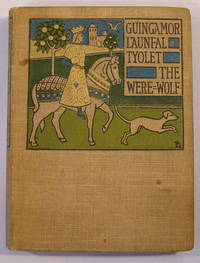
In fact, from at least 1899 Caroline had been commissioned as an illustrator for a series of translations of Arthurian and other romances. These were the work of the renowned folklorist Jessie L. Weston and the majority were published by the firm of David Nutt.

At the turn of the century the firm of David Nutt was run by Alfred Trubner Nutt, the son of the founder. Alfred Nutt was also president of the Folk-Lore Society – hence his interest in publishing texts such as those written by Jessie Weston. As these were so close to the publisher’s heart I imagine he took considerable care when selecting their illustrator and because Caroline Watts continued to receive commissions from Alfred Nutt I would think she must have become part of the publisher’s friendship circle. It may well have been through association with this firm that Caroline’s sister Mary developed her career as an indexer.

Illustrated by Caroline Watts and published by David Nutt in 1904

Illustrated by Caroline Watts and published by David Nutt in 1904

Nutt’s French wife, Marie. subscribed to NUWSS in 1906 and in February 1907 took part in the ‘Mud March’. After the tragic death of her husband (he drowned in the Seine while attempting to rescue his invalid son whose pony had bolted and run into the river; the son was saved by passers by) – Marie Nutt took over the running of the firm of David Nutt and in the next few years published many texts relevant to the women’s suffrage cause.

Such was the suffrage zeitgeist amongst London-based women artists at the time that Caroline Watts may have been drawn towards the NUWSS by any number of associations, but her connection with Marie Nutt is one clear thread.

It doesn’t take much imagination to recognise that Caroline Watt’s design for the ‘Bugler Girl’ is closely associated with the heroic images she was creating for commissions from Alfred Nutt.

The NUWSS was at pains to make clear that the militant imagery of the ‘Bugler Girl’ didn’t represent a violent organization. As a member of the NUWSS governing-council explained, ‘Our Bugler Girl carries her bugle and her banner; her sword is sheathed by her side; it is there, but not drawn, and if it were drawn, it would not be the sword of the flesh, but of the spirit. For ours is not a warfare against men, but against evil..’

The image, created as I mentioned, to advertise the June 1908 NUWSS procession was subsequently used – often in black and white rather than colour – on posters and flyers advertising NUWSS meetings and from November 1913 was used on the front page of the NUWSS paper, ‘The Common Cause’.  However such was the strength of the image that it also had a lease of life in the US.

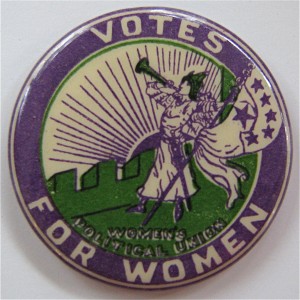
'Bugler Girl' Women's Political Union badge (image courtesy of Ken Florey's Woman Suffrage Memorabilia website)

‘Bugler Girl’ Women’s Political Union badge (image courtesy of Ken Florey’s Woman Suffrage Memorabilia website)

In his most useful and interesting book – Women’s Suffrage Memorabilia – Ken Florey reveals that Harriot Stanton Blatch, daughter of Elizabeth Stanton and a long-time resident in England, poached Caroline Watts’ ‘Bugler Girl’ design for use by the Women’s Political Union, the WSPU-inspired society she had founded on her return to the USA. Significantly the design was recoloured in purple, white and green (colours of course, borrowed from the WSPU) and became a well-known icon of the US women’s suffrage movement. [See here for more information from Ken Florey on the use of the design in the USA and here for a 2011 article about a contemporary reinterpretation of the image.]

Caroline Watts may well have produced other designs for the suffrage campaign but the only other that I can find reference to is held in the Artists’ Suffrage League archive in the Women’s Library@LSE. It is catalogued as ‘[Liberty] Original drawing, ink on paper, a woman freed from her chains, opening a door and looking out on to a sunrise; inscription below image “But little do or can the best of us:/That little is achieved through Liberty./Who, then, dares hold – emancipated thus -/His fellow shall continue bound? Robert Browning”. Signature bottom left “CM Watts‘”‘

I have been unable to discover much more about Caroline Watts’ life. In 1911, presumably an NUWSS supporter, she didn’t boycott the census, and can be found living with Mary, who was still indexing, at Hillcroft, Oakdene Road, Godalming. Caroline described herself as ‘Artist (Painter and Black and White Illustrator). I have been unable to find any trace of her work as a painter passing through the salerooms.By 1918 the sisters had moved to Middlehill Road, Colehill, Dorset, where Caroline died, aged 51, in 1919.

Copyright

All the articles on Woman and Her Sphere and are my copyright. An article may not be reproduced in any medium without my permission and full acknowledgement. You are welcome to cite or quote from an article provided you give full acknowledgement.

, , , , , ,

5 Comments

Suffrage Stories: An Army Of Banners – Designed For The NUWSS Suffrage Procession 13 June 1908

An Army of Banners


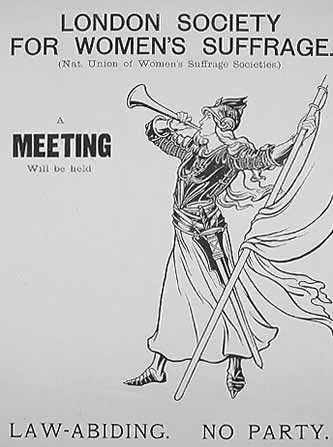
Army Banner Picture1In June 2008 I was invited by The Women’s Library to give a talk on suffrage banners to mark the 100th anniversary of the first of a new style of spectacular processions staged by the British women’s suffrage movement. For it was on the afternoon of Saturday 13 June 1908 that over 10,000 women belonging, in the main, to the National Union of Women’s Suffrage Societies processed through central London to the Albert Hall, where they held a rally.The image above was that used to publicise the procession.

The talk I gave was accompanied by a Powerpoint illustrating all the designs for the banners mentioned or, indeed, the banners themselves. Although, or copyright reasons, I am unable to insert these illustrations directly into this article I have provided links on which you can click to see them for yourselves.
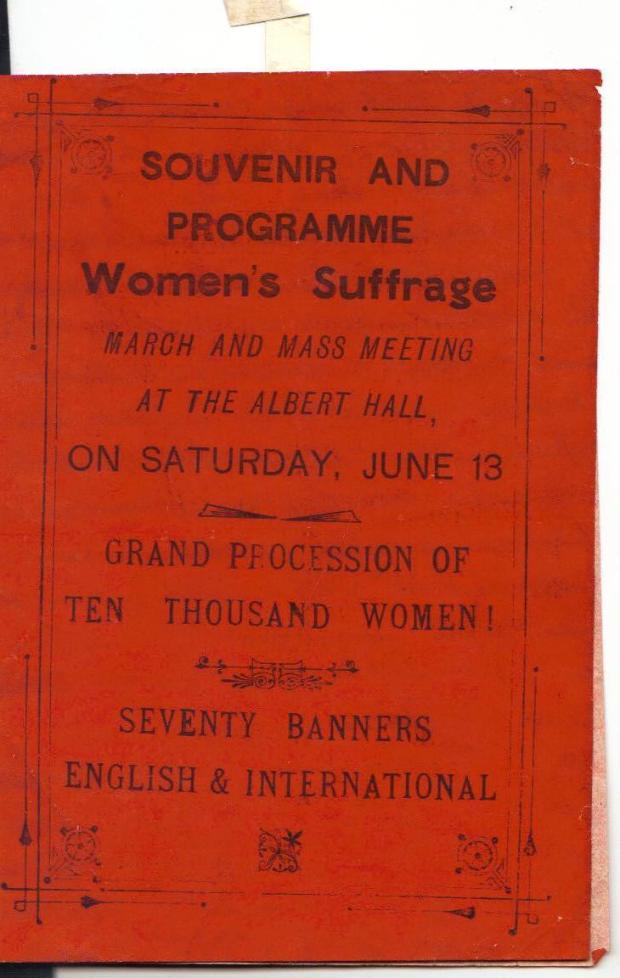
1908 ProcessionAnd what was the reason for the procession?

It was to draw the country’s – and the government’s -attention to the women’s demand that they should be given the vote – on the same terms as it was given to men.

Yet by 1908 the campaign was already 42 years old. Since 1866 thousands of meetings had been held in cities, towns, villages, and hamlets throughout the entire British Isles – from Orkney to Cornwall and from Dublin to Yarmouth. Some of these had been no more than small gatherings in cottages, others had been held in middle-class drawing rooms, in Mechanics’ Institutes, in market places and in church halls –  while many others had been held in the largest public halls of the largest cities of the land. Yet despite all this activity women had not achieved their goal.

At times they had thought they were coming close – when, for instance, a franchise bill managed to jump a few of the parliamentary hurdles. And 1908 was one of those times. In 1906 a Liberal government had been elected – and the suffragists, despite many past disappointments, always had higher hopes of the Liberals. And now, just a few months previously, in February 1908, a Liberal MP had introduced yet another women’s suffrage bill in Parliament – and it had actually passed its second reading – before being blocked. Another failure, of course, but this was the greatest progress that a suffrage bill had made since 1897. The leaders of the NUWSS thought that the time was ripe to capitalise on this quasi- success and show the country how well-organised and united women could be in publicising their claim to citizenship. Incidentally there was also a new prime minister to impress. Asquith had just taken office in April, succeeding the dying Campbell-Bannerman.

The image used on the advertising flyer for the procession was also used a little later on the badge given to those organising local NUWSS societies throughout the country. We can see that the bugler girl is calling her comrades to rally to the banner  – and it was banners that were recognised at the time – and are remembered today – as the most significant visual element of that procession a hundred years ago.

The journalist James Douglas, reporting for the Morning Leader put it rather well ‘They have recreated the beauty of blown silk and tossing embroidery. The procession was like a medieval festival, vivid with simple grandeur, alive with an ancient dignity.’

‘Blown silk and tossing embroidery’- a wonderful phrase – conjuring up an alluring image.. In fact a high wind that afternoon meant that the silk was certainly blown and the embroidery tossed.

And his observation that the procession was like a medieval festival – invoking concepts of ‘grandeur’ and of ‘ancient dignity’ – was just what the organisers were aiming for. The designer of the majority of the banners was Mary Lowndes, a successful professional artist, very much a product of the Arts and Crafts movement, who specialised in the designing of stained glass. A year later she put down on paper her thoughts on ‘Banners and Banner Making’, tracing women’s involvement in this craft right back to the ‘warrior maidens’ of a romanticized – if not an entirely  mythical – medieval past. She lamented the use in recent years of manufactured banners – the implication being that these were carried by male groups – both civil or military – but that ‘now into public life comes trooping the feminine; and with the feminine creature come the banners of past time’ She applauds what she calls ‘the new thing’ – writing that by this she means the ‘political societies started by women, managed by women and sustained by women. In their dire necessity they have started them; with their household wit they manage them; in their poverty, with ingenuity and many labours, they sustain them.’

The NUWSS had actually staged its first procession through the streets of London the previous year – in February 1907.  This had had a startling novelty value – it really was the first time that large numbers of middle-class women had taken to the streets. On that occasion, too, banners had played their part. However February was not a good month for a procession – it was not for nothing that the occasion acquired the soubriquet the ‘Mud March’(for more about the Mud March see here). To be fair – the timing of the procession had been chosen with a purpose – to coincide with the opening of parliament (which was then held in February). However the NUWSS organisers learned from their mistake and June was chosen as a more suitable season for their second public procession.
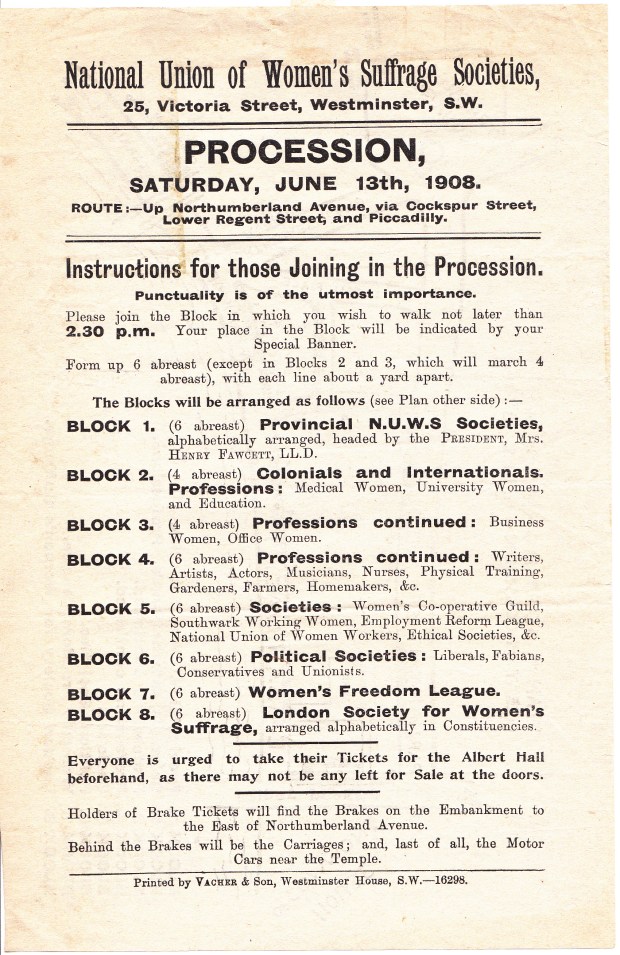
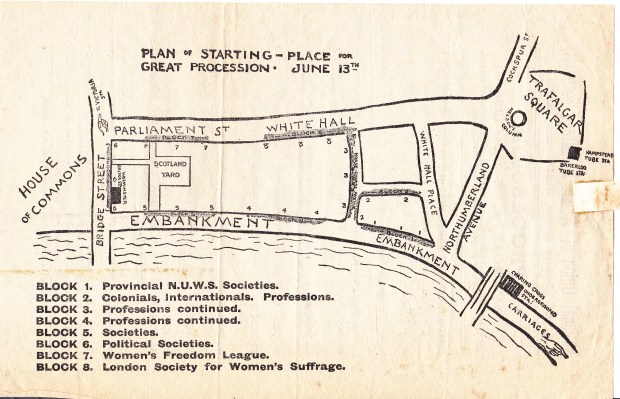
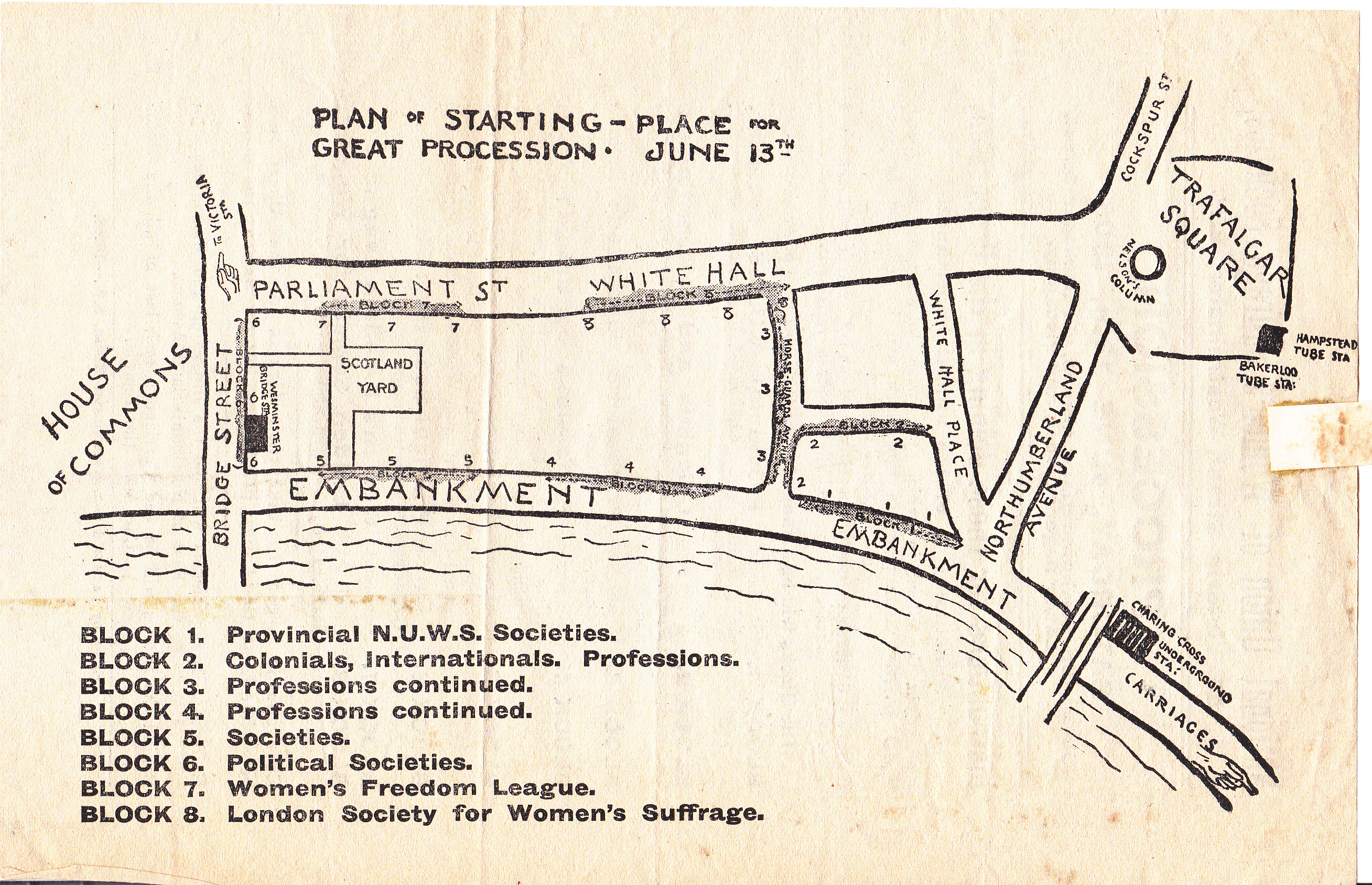
Instructions NUWSS procession June 1908

Instructions NUWSS procession June 1908 BackThis particular June Saturday was selected because the International Conference for Women’s Suffrage was about to be held in Amsterdam – it was starting on Monday 15 June. This meant that many important delegates from around the world were passing through London and were able to take part in the British demonstration. The other main suffrage organisation, the WSPU – the Women’s Social and Political Union – had chosen the following Sunday, 21 June, on which to stage their most ambitious rally yet – it was to be known as ‘Woman’s Sunday’– processions culminating in a rally in Hyde Park. The two events have sort of rolled into one in the popular memory – but the NUWSS procession was the first of the two. The WSPU, too, carried a brilliant display of banners – but most of theirs were made by commercial manufacturers and, sadly, none seems to have survived.

An announcement that the NUWSS procession was to take place on 13 June was made in a letter that appeared in the Times on 8 May. This was signed by leaders of the NUWSS, including Millicent Fawcett, the president. The letter stated that ‘Professional women, University women, women teachers, women artists, women musicians, women writers, women in business, nurses, members of political societies of all parties, women trades unionists, and co-operative women all have their own organizations and will be grouped in the procession under their own distinctive banners, which have been specially designed for the occasion by the Artists’ League for Women’s Suffrage.’ The letter then appealed both for funds to help pay for the banners and ‘for the personal support and presence in the procession of women who conscientiously hold that every kind of constitutional action should be taken in support of the rights they claim.’

So what was this Artists’ Suffrage League?

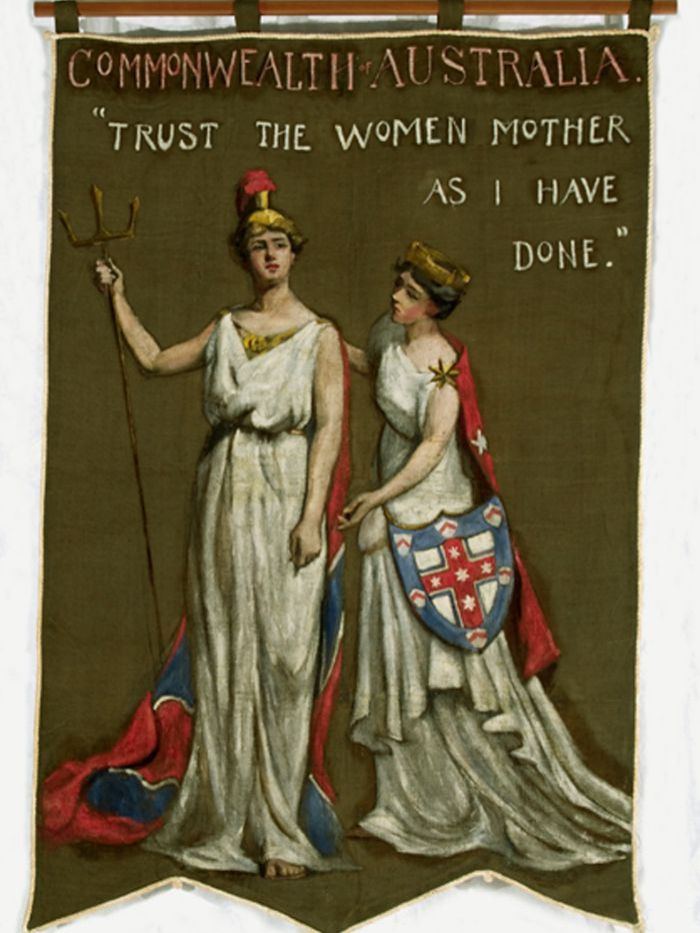
It had been founded in January 1907 by Mary Lowndes to involve professional women artists in preparations for the Mud March. Among the founding members were an Australian artist, Dora Meeson Coates, and Emily Ford, whose sister, Isabella, was a member of the procession’s organising committee. The Fords came from a Leeds Quaker family with a long history of involvement in the suffrage movement. Emily was by now living and working in a studio in Chelsea, a close neighbour of Dora Meeson Coates and of other women artists who supported the suffrage cause. The ASL’s secretary was Barbara Forbes, Mary Lowndes’ companion – and sister-in-law – who worked alongside her in her stained glass business.

The Artists’ Suffrage League representatives on the NUWSS committee organising the 13 June procession were Mary Lowndes and Mrs Christiana Herringham. In 1903 Mrs Herringham had been the originator of the National Arts Collection Fund, which made its first purchase of a painting in 1906. Ironically this was Velazquez Rokeby Venus, which in 1914 was to be badly damaged by the action of a militant suffragette, Mary Richardson (for more about this incident see here and here). Mrs Herringham had been a supporter of suffrage societies since at least 1889, and by 1907 was subscribing to both the NUWSS and the WSPU.

In a letter to the Times that appeared on the day of the procession, Millicent Fawcett noted that, besides Mary Lowndes and Emily Ford, other artists involved in the production of the banners included May Morris, daughter of William Morris, and Mrs Adrian Stokes – she was an Austrian artist, Marianne Stokes, who had been a friend of Millicent Fawcett for some years – for instance they were both staying with mutual friends at Zennor in Cornwall when the 1891 census was taken. From newspaper reports it would appear that ’80 ladies’ had been involved in the production of 70-80 embroidered banners that were made specifically for this procession – and that they had been working on them since the beginning of the year.

Amazingly – of the banners made by the Artists’ Suffrage League for this procession many are still in existence – most of them held in the Women’s Library@LSE, with another selection housed in the Museum of London. We are extremely fortunate in that not only have the banners themselves been preserved, but so have the original designs. For in the Women’s Library collection is the actual album in which Mary Lowndes sketched out her designs for the banners, the colours to be used indicated in watercolour, and, in many instances, with swatches of likely fabric also attached. However, the designs that were included in the album are not dated and one cannot assume that all necessarily relate to banners designed for the June 1908 procession. For instance the album contains a design for a banner for the Manchester Federation of the NUWSS– but the Federation didn’t come into existence until 1910.  So I have tried to be careful and to relate the designs to the reality of the banners as described in newspaper reports of the day. There are a few newspaper photographs of sections of the procession but, on the whole, they are not as helpful in identifying specific banners as are the words that accompanied them. The NUWSS missed a trick in that, unlike the WSPU the following week, they did not think of publishing photographs of the procession as postcards.

However the procession – and its banners – certainly did attract columns of newsprint – a good selection of which were carefully cut out and pasted up in another album kept by the Artists’ Suffrage League. In fact a leaflet was printed by the NUWSS containing extracts from the press reports specifically about the banners.

The ASL banners had been on display in Caxton Hall, Westminster, for a couple of days before the procession – and the press had been invited along to view them. The Daily Chronicle reporter had clearly got the message – writing that ‘the beauty of the needlework.. should convince the most sceptical that it is possible for a woman to use a needle even when she is also wanting a vote’.

It was not only the skill of the needlewomen that was remarked on. The Times was always rather loathe to give any credit to the suffrage cause, but was prompted – after its usual weasel words casting doubt as to whether the procession caused ‘great masses of the people to be deeply moved on the suffrage question’-, to admit that ‘in every other respect its success is beyond challenge. To begin with, the organization and stage-management were admirable, and would have reflected credit on the most experienced political agent. Nothing was left to chance or improvisation: and no circumstance that ingenuity or imagination could contrive was lacking to make the show imposing to the eye. Those taking part in the demonstration were all allotted their appointed stations, and every care had been taken to enable those stations to be found with the greatest ease.

It was 3 o’clock when the start was made. At the head was borne the banner of the NUWSS, on which was inscribed the legend ‘The franchise is the keystone of liberties’. Beneath the folds of this banner – which has not survived – marched Lady Frances Balfour and Mrs Henry Fawcett, wearing her cap and gown – the robes of her honorary doctorate from St Andrews University.

Then, as the Times, reported, came all the provincial detachments. The NUWSS could trace its descent from the first suffrage society that had been formed in 1866 – but by 1908 it had been transformed out of all recognition from this first, very tentative, incarnation. Through the 19th century local groups had been formed in towns and cities around the county, aligning themselves with the main societies – in London, Manchester, Bristol, Birmingham and Edinburgh.  In 1896 they all grouped together under the umbrella of the National Union of Women’s Suffrage Societies. The NUWSS had continued to develop and in 1907 had adopted a new constitution and strengthened its organisational structure. The provincial societies, although they had a measure of autonomy, were given strong leadership from the London headquarters. But it was the London Society, under the command of Philippa Strachey, that was responsible for the organisation of the procession – just as she had the Mud March the previous year.

It was important to the organisers that it should be made clear that the procession was representative of women of the entire country – which was why so much emphasis was given to indicate on the banners the names of the towns from which they came. As a convenient shorthand the designs for these banners used existing emblems associated with the town or region. The Westminster Gazette took the point, commenting that ‘Nothing like them for artistic skill, elegance and emblematic accuracy – to say nothing of their great number – has ever been seen in a public demonstration of this kind before.’

And the Scotsman reported, ‘The most remarkable feature of the procession was the great display of banners and bannerettes. It was said there were as many as 800 of them, and the designs and mottoes which they bore appeared to be almost as numerous. Many of them were effective works of art, and bore striking inscriptions’. Unfortunately few of these local, provincial, banners are amongst those that have survived. They would have been taken back to the home town and were certainly then used in many other local demonstrations – before, I suppose, eventually becoming damaged or forgotten. That is why it is so fortunate that we have Mary Lowndes’ original designs as a record of what has disappeared.

The provincial detachments processed in alphabetical order. First came Bath, then Birkenhead, Birmingham, Blackburn, and Bradford. Of these we have no record of either the design or the banners themselves – which were probably designed and made locally.

But then came Brighton. And I know that this Mary Lowndes design really was made up into the banner carried on the day – because it appears in a photograph published in the Daily Mirror. The dolphins were a long-established symbol of the town – appearing in the Brighton coat of arms and ‘In deo fidemus’ was certainly the town’s motto at the beginning of 20th century. The swatches attached to the album design, however, indicate that the colours used were dark and light green and gold – rather than blue that appears here

By 1908 the Brighton Society had over 350 members and as Brighton is close to London the society should have been able to produce a sizeable contingent of supporters to walk with their banner.

 I found this next design particularly interesting, referring as it does to the Bristol Women’s Reform Union  –not a name that will be very familiar even to close students of the suffrage movement – which is why it is rather exciting to see its existence given credence by this design. The society had been founded in the early 1900s by Anna Maria and Mary Priestman from Bristol – radical liberal, Quaker campaigners – whose involvement went back to the very first years of the suffrage movement. The Reform Union existed in parallel to the main suffrage society in Bristol, but aimed to set the question of the suffrage in the context of wider social reform. It finally amalgamated with the Bristol NUWSS society in 1909.
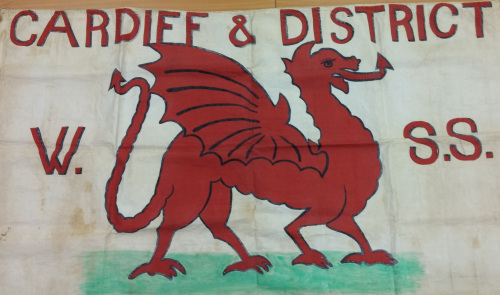
The Cardiff banner (courtesy of Cardiff University Special Collections and Archives).

The Cardiff banner (courtesy of Cardiff University Special Collections and Archives).

Next came Cardiff – one newspaper reporting that the ‘Dragon of Cardiff excited general attention’. There is no design for Cardiff in the Lowndes album it is more than likely that it was made by members of the newly-formed Cardiff and District Women’s Suffrage Society and is the one that has now (in 2016) been donated to the Special Archives and Collection of Cardiff University (for the full story see here).

Next came the women of Cheltenham. The town had over the years proved to be a very effective centre of the suffrage campaign in Gloucestershire. A fashionable spa, the town was attractive to single women of means. In 1907 the town had collected 900 signatures to the Women’s Franchise Declaration – another in the long series of mammoth petitions that had been presented to parliament. The Cheltenham banner has not survived – but a newspaper report does tells us that it bore the motto ‘Be Just and Fear Not’

 The design of this next banner – beneath which marched the women of East Anglia – had been, in part at least, suggested to Mary Lowndes by Millicent Fawcett – an East Anglian herself – whose hometown was Aldeburgh on the Suffolk coast  In her report of the procession that appeared in the Times on the big day, she particularly mentioned this banner – writing that it ‘shows the three crowns of the East Anglian St Edmund and a representation of the wolf traditionally associated with the miraculous preservation of the martyr’s head – and the motto – Non angeli, sed Angli’. Many of the elements – the three crowns and the wolf – are still in the coat of arms of Bury St Edmunds. The wording is the reverse of what Pope Gregory is reputed to have uttered when, in 573AD , he was shown some captive British children in Rome – that is ‘Not Angles, but Angels’ – the rewording is supposed to mean ‘Not angels, but Angles – that is, citizens.’ A nice hit at the ‘Angel in the House’
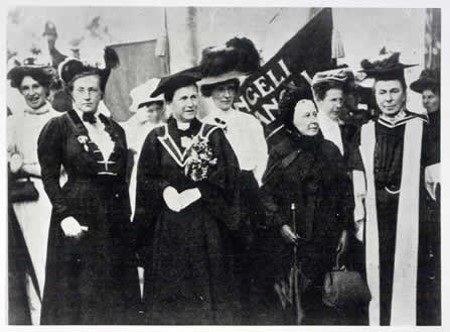
Army banner Picture5 And here is a photograph taken on the day – showing the banner with in front from left to right, Lady Frances Balfour, Millicent Fawcett, Emily Davies and Sophie Bryant, headmistress of North London Collegiate.

For the Mud March the previous year Millicent Fawcett had not worn academic dress –but it had been decided that today it would be worn –  to imbue the occasion with as much dignity as possible .  Next to her, with bonnet, bag and umbrella, is Emily Davies who, in 1866, with Elizabeth Garrett, had handed to John Stuart Mill the very first women’s suffrage petition. She was now 76 and yet was still to be around, in 1918, to cast her vote for the first time. One newspaper reported Emily Davies saying on 13 June ‘It is a great day for the movement, I would not have missed it for the world.’

Scotland was, of course, represented in the procession. Here is Mary Lowndes’ design for the banner – and here is the reality. The black and red, triple-towered castle is as it appeared at the time on the city of Edinburgh coat of arms – with the thistles added  to highlight Scotland’s commitment to the cause.

The next banner of which we have a record is that for Fleet, in Hampshire..I must admit that when I saw the design for this banner in the Lowndes album I was a little doubtful as to whether the town of Fleet would have mustered a contingent for this particular procession – there is no record of a suffrage society in the town at this time. But to my delight I came across a newspaper report that specifically mentioned this banner – which was made up, as shown, in yellow and orange – and with the motto as depicted – ’Delay of Justice is Injustice’ – an ancient proverbial concept – the wording put into this form by Walter Savage Landor. Because this Fleet banner was proved to be ‘right’ I have extrapolated from this that so are other Surrey and Hampshire ones the designs for which are in the Lowndes album

Thus Guildford is just such a one – depicting Guildford castle and two woolpacks – anciently the town’s staple trade– both of which feature on the Borough of Guildford coat of arms today.  A Guildford NUWSS society was definitely formed in 1909 but I don’t think that there was one in 1908. However this area of Surrey was the home of women who were not only committed suffragists – but who also had long association with the Arts and Crafts movement – and clearly the combination of suffrage and needlework was appealing. Christiana Herringham’s sister, Theodora Powell, was the secretary of the Godalming society formed in 1909 – and she was also instrumental in the founding of the Guildford society. The president of that was Mrs Mary Watts, widow of the artist, G.F. Watts
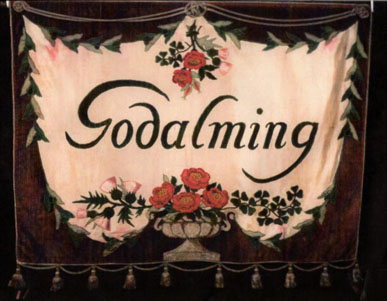
Godalming Women's Suffrage banner (image courtesy of Godalming Museum)

Godalming Women’s Suffrage banner (image courtesy of Godalming Museum)

By the way, a later Godalming banner was worked by Gertrude Jekyll and is now held in a local museum.

Next came the banner of Haslemere and Hindhead – a banner of which we know – although it is now lost – because it was described in the press reports

It bore what might appear the surprising motto:

‘Weaving fair and weaving free

England’s web of destiny’

At least one scholar has assumed that Haslemere – then a small sleepy Surrey town – could not have been associated with the weaving industry – and, as one can so easily do, made the assumption that a Lancashire name with a similar name must have been intended – but in 1908 Haslemere did support a weaving industry – of a sort. It was far removed from the dark satanic mills of Lancashire – but had been founded in 1894 as a branch of the Peasants Art Society – weaving cotton and linen. Haslemere was in fact a haven of an artistic community. By 1909 it, too, like Godalming and Guildford, had its own NUWSS society. The chairman was Mrs Isabel Hecht.

The next banner in the alphabetical procession was that of North Herts, which, according to the press report, ‘declared in black and white that it was undaunted’. To put it more prosaically the banner included the wording ‘North Herts’ and ‘Undaunted’. It had been known as the Hitchin Suffrage society – but became North Herts Women’s Suffrage Association, with Lord Lytton as its president – his sisters, Lady Betty Balfour and Lady Constance Lytton were also associated with the society, though Lady Constance was, of course, much more famous for her association with the WSPU. One of the secretaries of the Association, Mrs Edward Smithson, who lived in Hitchen, had been a founder member in the 1880s of the York Suffrage Society – an example of the dedication that many women, whose names are not now remembered, had given over decades to the suffrage cause.
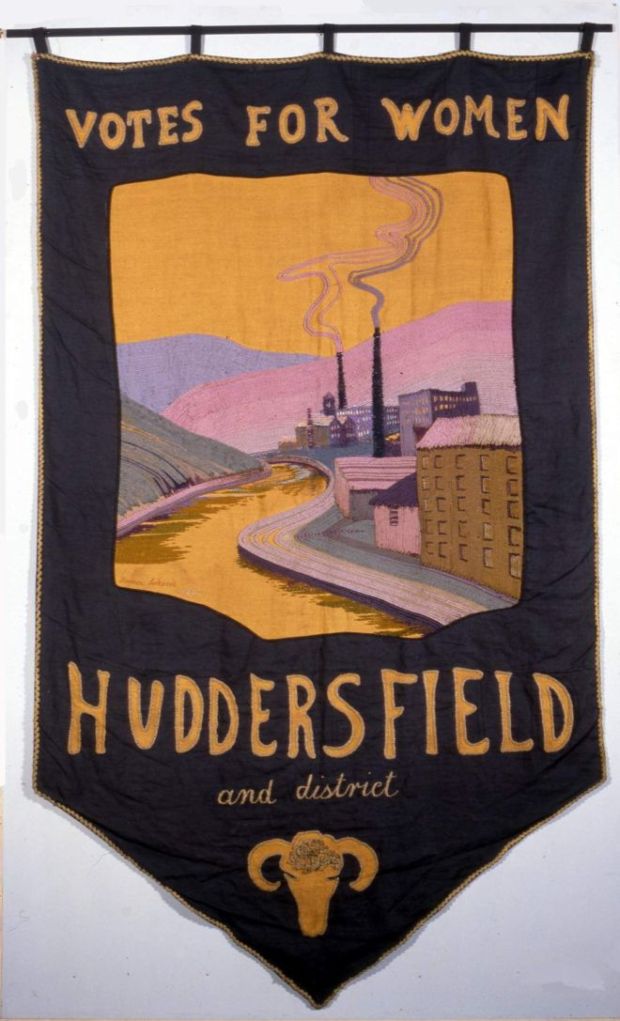
(Image courtesy of Kirlees Museums and Galleries)

(Image courtesy of Kirlees Museums and Galleries)

Next came Huddersfield. There is a Huddersfield banner still extant, held in the Tolson Museum in Huddersfield. It, too, is a work of art, designed and made by a local suffragist, Florence Lockwood – depicting local mills and with the motto ‘Votes for Women’. This wording might more usually be associated with the WSPU than with the NUWSS, but Florence Lockwood definitely gave the banner to the local NUWSS society. However I rather think that it post-dated 1908 – and was probably not the one carried in the 1908 procession

Hull’s banner, however, probably was – although it wasn’t singled out for mention in any newspaper report. In fact the Hull NUWSS society, which had been founded in 1904 by Dr Mary Murdoch, sent the largest contingent of any provincial society to walk in this suffrage procession. Local members subscribed over £100 to meet the expense of the trip and hired a special train for the occasion .The device of the three crowns is still used today on the city coat of arms

Keswick, too, had a banner in the procession – described as an ‘exquisitely painted view of Derwentwater’. In fact the Keswick society had two banners at its disposal – the one that Catherine Marshall, the young and energetic secretary of the society,  refers to at one point – with no further description – as ‘our banner’ and a private one lent by her cousin’s wife, Mrs John Marshall of Derwent Island. It is possible that it was to this one that the press report referred. The ‘our banner’ one is, I think, the one that still exists, with Catherine Marshall’s papers in the Cumbria Record Office.

A Kingston NUWSS society was formed in 1908 – here is the design for its banner. The swan seems to have been a fanciful device conjured up by Mary Lowndes– the Kingston coat of arms at the time sported three salmon – with no mention of a swan.

 The Sheffield Daily Telegraph commented particularly on the Leeds banner, noting ‘One device with the golden fleece bore the phrase ‘Leeds for Liberty’’ – so we can be certain that this banner was indeed carried in the procession. Leeds had a long history of involvement in the suffrage movement. The fleece, three stars and owls all derive from the Leeds coat of arms . ‘Leeds for Liberty’ certainly has a heartier ring to it than the city’s motto, which was (and is)  ‘Pro Rege et Lege’ (for King and the Law). Annotation on the design shows that the banner was 4ft 4” wide by 6ft 6in high. ‘With bamboo poles and cords complete £2. The lovely blue and gold strips are given by Mrs – Herringham. The owls are silver.’

Leicester, too, had a long history of involvement in the suffrage movement. By 1908 there had been a local suffrage society in the town for 36 years and here is Mary Lowndes’ design for their banner.

After Leicester came Liverpool. The Liverpool NUWSS society had taken its banner very seriously – commissioning a local artist to design it. It is a most impressive work of art – featuring a Liver bird and a galleon and carrying the message –  ‘Liverpool Women Demand the Vote’. The society had opened a shop in Bold St, one of Liverpool’s most fashionable thoroughfares, and in the days before the procession, displayed the banner there. On 13 June members of all Merseyside branches accompanied their banner to London, travelling on specially hired trains. The banner still exists – now in the care of Merseyside Museums.

The next design – that for a banner for Newcastle – highlights the difficulty of assigning a date to a design. Newcastle certainly had a banner in the June 1908 procession – but I am not convinced that it was this one, designed by Mary Lowndes. Newspaper reports of the June procession describe Newcastle’s banner as carrying the message, ‘Newcastle demands the Vote’ – perhaps along the lines of the Liverpool one. Needless to say the three castles do feature on the city’s coat of arms – of which red, white and black are the dominant colours. The design may have been changed, or used on another occasion.

Next came North Berwick. An attractive design – and the town’s coat of arms does includes the ferry boat. I haven’t come across a suffrage society specific to North Berwick, but there were clearly women from the town who were sympathizers.

Next came the banners of Nottingham and Oxford. We know that the members of the Oxford society cooperated with the Birmingham society to reserve seats on a special train and that 85 members travelled to London on the day, accompanied by their banner. Unfortunately, however, it doesn’t appear to have survived.

Portsmouth women, too, carried a banner – remarked on by the press for its motto, echoing Nelson, ‘Engage the enemy more closely’. It, too, has disappeared

We do, however, have a record of the design of Purley’s banner – although I don’t think Purley ever supported a suffrage society – but it presumably formed part of the Surrey coterie – its banner designed by Mary Lowndes. I must say that, although I have been able to decode most symbols on the banner designs, I couldn’t fathom out why this one should have what appeared to be shamrocks across the top. But they may, just possibly, be oak leaves – the Purley oaks – an ancient local landmark – feature in one version of an old coat of arms

Next in the alphabetical order came Reading. And there was a Reading banner – for newspaper reports mention that ‘A dozen women tugged at the ropes of the big banner of Reading to prevent it being blown over’. Alas it has vanished.

Likewise there was a banner for Redhill, and one for Sevenoaks, the latter carrying the motto, ‘What concerns all should have the consent of all’, and for Stratford-on-Avon. All have disappeared.

We do, however, have the design for the Walton banner – again part of the Surrey group.

The Warwick banner was designed by Mary Lowndes. I haven’t been able to establish that the motto has any significant relevance to the town. But it is a good strong message

 By way of contrast the West Dorset design in the album is very faint – the faintest of all. Whether or not it was made up I am not sure – nor whether it was carried in this procession – but it is evidence that even in that quiet rural area women suffragists were sufficiently stirred to request a banner to represent them.

The Woking banner carries the motto ‘In arduis fortitudo’- fortitude in adversity’. I think the design displays a degree of artistic licence – the town didn’t receive a coat of arms until 1930. An NUWSS society was formed in the town in 1910 – and of course the fact that one of its residents, Ethel Smyth, gave sanctuary to Emmeline Pankhurst when she was released from hunger striking, did ensure it some suffragette notoriety.

We know that contingents of supporters from Worcester and York – together with their banners – also took part in the procession – but neither banner has survived.

A large Irish contingent was also present – marching under at least one banner, which I have seen faintly in a newspaper photograph. And with the marchers were Thomas and Anna Maria Haslam, both of whom had been leaders of the campaign in Ireland since 1866 – and both of whom were now over 80. It is an indication of how seriously the procession was taken that, despite age and infirmity, they had made the effort to travel over from Dublin to take part in the procession.

The local societies were followed by a group of colonial and foreign representatives, many of whom, as I have already noted, were passing through London that weekend on their way to Amsterdam. It was, of course, thought appropriate that some women pioneers of countries other than England should be commemorated by this group.

Advance knowledge that this was to happen had irritated one correspondent to the Times, for, writing from Kensington on 10 June, ‘E.M. Thompson’ had declared, ‘A few days ago I found a youthful adherent of the suffragist cause industriously embroidering a woman’s name on a small bannerette intended for the great occasion. Neither she nor I had ever heard of this lady before, but my devoted young friend was quite satisfied with her task, and informed me that it was the name of an “American pioneer, now dead”. Personally I have no particular wish for a vote, but under any circumstances I should most emphatically refuse to march under an American banner in company with Russian, Hungarian and French women, to demand from the English government a vote to which I considered that I was entitled as an Englishwoman. It seems to me little short of impertinence for those who, up to the present, have failed to get votes in their own countries, to interfere with our home politics, and by swelling the size of the procession to help to give a wrong impression of the number of women in England in favour of the movement.’
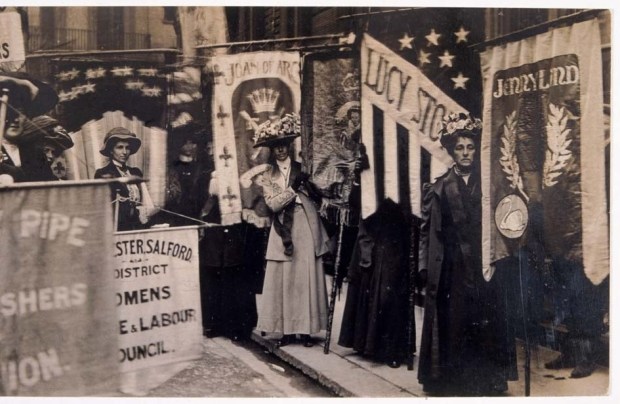
Army Banner Picture6 I wonder which of the ‘American pioneers, now dead’ was being commemorated in embroidery by that industrious young suffragist?  Banners had certainly been made to flaunt the names of Susan B Anthony, Lucy Stone and Elizabeth Cady Stanton. The two former banners are still held in the Women’s Library.

The Elizabeth Cady Stanton one, however, is not with them. It was assumed to be just missing – that is ‘missing’ in a general sense – like many other of the banners. However when undertaking this research, I discovered that in August 1908 this particular banner had been sent over to New York – sent by Elizabeth Cady Stanton’s daughter, Harriot Stanton Blatch, to whom it had been presented. She and her daughter, Mrs de Forest, had been present at the Albert Hall meeting on 13 June. As the New York Times reported ’The most gorgeous souvenir is the “Elizabeth Cady Stanton” banner of white velvet and purple satin that was used to decorate the Albert Hall. The name is embroidered in enormous letters in purple and green, the suffrage colours, and the whole mounted on a background of white velvet).’ As you can see from this report there was already some confusion as to what constituted suffrage colours. The purple, white and green combination was first used by the WSPU the following Sunday – for their Hyde Park rally. But there is no doubt that the Elizabeth Cady Stanton banner was carried in the NUWSS procession on 13 June.

Among those marching with the American contingent were women representing the Equality League of Self-Supporting Women of New York, the organisation founded by Harriot Stanton Blatch in 1906 – and which later changed its name to the Women’s Political Union. Also present were the niece of Susan B. Anthony and the Rev Anna Shaw, who was one of the speakers at the Albert Hall meeting. She specifically mentioned that she and her fellow Americans had not come to tell British lawgivers what to do for the women of this country – they could do that for themselves – but to extend to them the right hand of comradeship in the warfare which they were waging. A statement that was greeted, according to the newspaper report, by cheers.

Australian bannerThe Commonwealth of Australia was represented by a banner – painted rather than sewn – that had been designed by Dora Meeson Coates.  It bore the message ‘Trust the Women Mother As I Have Done ‘, a reference to the fact that Australia had granted women the vote 6 years preciously, in 1902. That banner was given by the Fawcett Library to the Australian government in 1998 and now hangs in Parliament House in Canberra.

As already noted there were delegates from other countries – such as Russia, Hungary and South Africa – in the procession, marching under the banner of the International Delegates – now held in The Women’s Library.

Reports suggest that the banner celebrating Marie Curie, then considered, at least by the women’s movement, as one of the foremost living scientists of the day, was carried by Frenchwomen. This is Mary Lowndes’ design for it.

After all the provincial societies came the Second Detachment –  comprising doctors and other women graduates. I always thought it rather touching that the printed leaflets setting out the arrangements for the day specifically mentioned that there would be robing rooms available at 18 & 19 Buckingham St, just off the Strand, and at the Albert Hall to allow some privacy for the arranging of academic dress.

This group clearly impressed the Times. Their reporter wrote ‘Next marched the women doctors, in caps and gowns, followed by the lady graduates of the Universities of the UK, most of whom were also in academic dress. A brave show they made’.
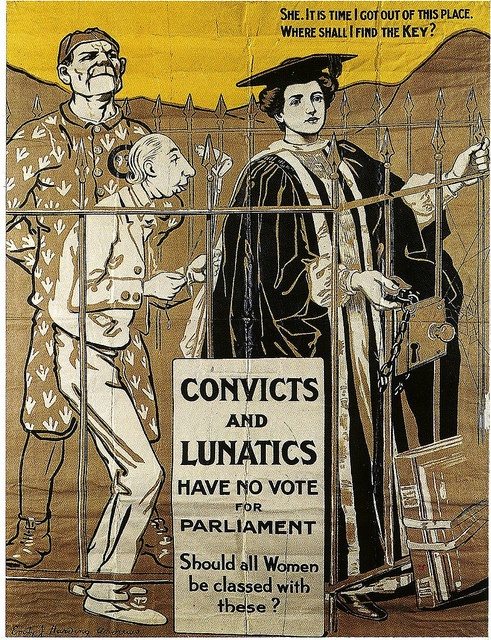
Harding lunaticsThe fact that women were now being granted academic degrees by many of Britain’s universities was often used in other propaganda material – such as this poster designed by Emily Harding Andrews. (For more information about this artist see here.)

The intention was, of course, to emphasise women’s suitability for citizenship – particularly when contrasted with those whom they considered less worthy examples of the male of the species.

The Liverpool Post and Mercury reported that ‘One of the most beautiful banners was the doctors’; it was of rich white silk, with the word ‘Medicine’ in gold letters across the top, a silver serpent embroidered in the centre, and a border of palest green on which were worked the rose, shamrock, and thistle.’ The banner is now missing – but, quite by accident, I did come across a photograph of it in one of the Women Library’s archival holdings [Vera Holme album 7VJH/5/2/14].

The leading women doctors of the day – Elizabeth Garrett Anderson and her sister-in-law, Mary Marshall, together with Flora Murray, Elizabeth Knight and Elizabeth Wilkes were among those walking in this section.

The doctors carried banners commemorating Elizabeth Blackwell, the first British woman to qualify as a doctor –  although she had had to do so in the US. This banner is now held in the Women’s Library collection. The letters and the symbol are appliquéd.  The symbolism is interesting. Instead of the rod of Asclepius (a snake entwined around rod – the symbol of the authority of medicine) here it is entwined around a lamp. The lamp was associated with the light of knowledge and might also be a version of the cup of Hygiea – the daughter of Asclepius – who was celebrated in her own right as a giver of health.

Another banner commemorates Edith Pechey Phipson, who had been a member of the first small group of women to qualify as doctors after Elizabeth Garrett. In 1906 she had represented Leeds at the International Women’s Suffrage Alliance conference at Copenhagen and had been one of the leaders of the Mud March in February 1907.  She had died just a couple of months before, on 14 April 1908, and this banner was obviously intended as a special tribute. Perhaps we could date its manufacture to the preceding two months.  It survives in the Women’s Library collection.

The profession of Education was represented by a specific banner.  The Sheffield Daily Telegraph helpfully described it, reporting that ‘Miss Philippa Fawcett has presented the education banner, with its device of an owl and a small boy climbing the ladder of learning’.  It has, however, disappeared

 But that carried by the Graduates of the University of London  – designed by Mary Lowndes – is now in the Museum of London collection.

Cambridge was represented by a particularly beautiful banner, now on permanent display in Newnham College. As a newspaper reported, ‘’The alumnae of Cambridge University, a detachment nearly 400 strong, were headed by the gorgeous banner of light blue silk which has been designed for the occasion,’ It was noted that these women didn’t wear academic dress – because the university still refused to grant them degrees – and would, of course, continue to do so for many more years. They did, however, as was reported, wear ‘on their shoulders favours of light blue ribbon’.  Mary Lowndes had designed the banner and, as executed, the words ‘Better is Wisdom Than Weapons of War’ (a quotation from Ecclesiastes) were added below the Cambridge device. The pale blue silk had been given by Mrs Herringham from a quantity of materials that she had brought back from her travels in India.

After the Cambridge brigade marched business women. There were:

Shorthand Writers.  The motto on their banner – designed by Mary Lowndes and held in the Women’s Library, is rather cleverly lifted from Robert Browning’s Asolando.  And then came the Office Workers – their banner now, I think,held  in the Museum of London. The Manchester Guardian described its device as, ‘Three black ravens bearing quills on a gold ground ‘

Next came a group of very active suffragists – the Women Writers’ Suffrage League -mustered under a striking banner that had already given rise to controversy,

This is the design in Mary Lowndes’ album. But the clerk to the Scriveners Company had written a letter, published in the Times on 12 June, saying that he had read that a banner bearing the arms of the Scriveners was to be carried and that any such banner certainly did not have the approval of his company. As it was, on the banner, as executed, WRITERS was substituted for SCRIVENERS. A letter from Mary Lowndes, published in the Times on 13 June, insisted that a black eagle upon a silver ground was certainly not the blazon of the Scriveners’ Company – but it would seem that the women had changed the associated wording at some point after the design was made.
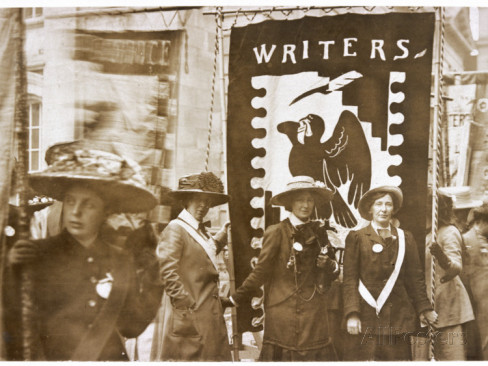
women writers bannerThe resulting banner, worked by Mrs Herringham, appliquéd in black and cream velvet, was given by Cicely Hamilton and Evelyn Sharp and was carried in the 1908 procession by them and by Sarah Grand, Beatrice Harraden and Elizabeth Robins. Cicely Hamilton wrote of the banner that it was ‘distinctive in black and white, impressive in velvet, and swelling, somewhat too proudly for comfort, in a gusty breeze’. This photograph was probably taken on a later occasion.  In 1908 among the other women marching behind this banner were Mrs Thomas Hardy and Flora Annie Steele. This banner is now in the Museum of London collection.

Beside the banner advertising their own society, members of the Women Writers’ Suffrage League carried with them another series of banners now held here in the Women’s Library – banners bearing such names as Jane Austen and Charlotte and Emily Bronte. The Sheffield Daily Telegraph particularly noted this one – writing ‘Names of famous women are emblazoned on some of the banners and ‘Emily Bronte and Charlotte Bronte’ are two which Yorkshire women will be pleased to see on a simple green banner’. The addition of a white rose stresses the women’s Yorkshire connection.

Others commemorated Fanny Burney and Maria Edgeworth. The Museum of London also now holds another two from this series – commemorating Elizabeth Barrett Browning and George Eliot.

After the writers came banners glorifying Great Women of the Past. This was an obvious theme – and one that was to be used in later processions and stagings – such as Cicely Hamilton’s ‘Pageant of Great Women’.

These banners have survived well. Most were designed by Mary Lowndes and all were made by members of the ASL. Of them the Sunday Times wrote ‘The new banners of the movement are wonderful. Many of the banners were designed to celebrate the memory of the great women of all ages, from Vashti, Boadicea and Joan of Arc down to Mrs Browning, George Eliot and Queen Victoria. It was an attempt to represent pictorially the Valhalla of womanhood…As the procession moved away it presented a vista made up of wonderful colours, and it reminded one somehow of a picturesquely clad mediaeval army, marching out with waving gonfalons to certain victory.’

Reports indicate that a banner to Vashti led this element of the procession – but no trace of it remains.

Next came Boadicea. This is Mary Lowndes design – the actual banner is now in the Museum of London collection. Boadicea was a popular heroine of the moment – the bronze statue of her riding her chariot beside Westminster Bridge, right opposite Parliament, had been erected just six years previously, in 1902. In December 1906 each guest at the banquet at the Savoy put on by the NUWSS for released WSPU prisoners had been given what was described as ‘an emblematic picture of Queen Boadicea driving in a chariot, carrying a banner with the message “Votes for Women”‘. And by the autumn of 1908 the WSPU was selling in its shops ‘Boadicea’ brooches.

Joan of Arc was another great heroine of the suffrage movement and the idea of the warrior maiden with God on her side was invoked by both the constitutional and militant societies. Joan’s own banner was loved by her ’40 times better than her sword’, wrote Mrs Fawcett in a short biographical essay on Joan published by the NUWSS. The title page of this biographical pamphlet carries the same emblem of the crown and the crossed swords as appears here on the banner. The motto is, of course, Joan’s own.

In 1909 Elsie Howey, a WSPU activist, dressed as Joan and rode on horseback to greet Emmeline Pethick-Lawrence on her release from prison. You can see a photograph of Elsie in that week’s issue of Votes for Women. In 1909 a Jeanne d’Arc Suffrage League was formed in New York and on 3 June 1913 Emily Wilding Davison is reputed to have stood before the statue of Joan that took pride of place at that year’s WSPU summer fair  -before setting off for Epsom and martyrdom. The statue had Joan’s words inscribed around the base – ‘Fight On, and God Will Give Victory’ and these were the words emblazoned on a banner carried at Emily’s funeral 11 days later. Perhaps unsurprisingly, in 1912 the Catholic Women’s Suffrage League’s banner, designed by Edith Craig, had St Joan as its motif and a few years later the society actually renamed itself the St Joan’s Social and Political Alliance. And, it was a version of Joan, uttering the words ‘At Last’, that the NUWSS used to greet the eventual attainment of partial suffrage in 1918. Images of Joan are to be found in the work of many women artists associated with the suffrage movement – Annie Swynnerton and Ernestine Mills spring to mind.

St Catherine of Siena, another woman visionary who combined piety with political involvement, also merited a banner Josephine Butler had written a biography of St Catherine in 1878. The banner was probably designed by Mary Lowndes and is held in the Women’s Library. Siena’s colours are black and white and the lily is symbolically associated with St Catherine

St Teresa’s banner, again designed by Mary Lowndes, is now in Museum of London. She featured also in Cicely Hamilton’s Pageant of Great Women  – as the only woman on whom the title ‘Doctor of the Church’ has ever been conferred.

The banner to a Scottish heroine, Black Agnes of Dunbar – is now in the collection of the Museum of Scotland in Chambers St, Edinburgh. Of it the Daily Telegraph wrote ‘ There was one flag which attracted much attention. It was carried in front of the Dunfermline deputation. On a yellow ground was the representation of a portcullis, and beneath the large letters “Black Agnes of Dunbar” were the lines reminiscent of the defence of Dunbar castle by the Countess of March nearly 6 centuries ago: “Came they early, came they late, They found Black Agnes at the gate”. The banner perhaps should be placed earlier – with the provincial societies – but it fits well here – alongside the banner to

Katherine Bar-Lass – Katherine Douglas – who tried to save King James I by putting her arm in place of a missing locking bar in a door. This event took place in Perth and it may be that this banner heralded the deputation from that town. The banner is now held in the Women’s Library collection.

There is no difficulty in explaining why Queen Elizabeth I should be commemorated among the Great Women with a magnificent banner. Indeed the queen was something of a favourite of Millicent Fawcett who, in August 1928, unveiled an ancient statue of the queen at St Dunstans in the West, Fleet Street, having worked with a campaign for its restoration. She even left money to ensure its upkeep. (For more about Millicent Fawcett and the statue of Queen Elizabeth see here.)

Millicent Fawcett had also championed Mary Wollstonecraft, whose reputation during the 19th century had never recovered from William Godwin’s memoir of her. Mrs Fawcett wrote a preface to an edition of Vindication of the Rights of Woman, published in 1891, the first for 40 years. Mary Wollstonecraft’s banner is held in the Women’s Library.

As is the rich and beautiful banner is to the astronomer Caroline Herschel, the discoverer of five new comets. Lady Caroline Gordon, the very elderly grand-daughter of Caroline’s brother, Sir William Herschel, had a letter published in the Times of 12 June 1908. She wrote ‘I observe that in the woman’s suffrage procession tomorrow it is intended to carry banners bearing, among others, the names of Caroline Herschel and Mary Somerville, thereby associating these honoured names with the cause. A more unfounded inference could hardly be drawn. My great aunt, Miss Herschel, never ceased during her very long life to insist on the fact that she was only her brother’s amanuensis, and it was the glory of her life to feel that she had a real work to do and a province all her own, which was to help him in his arduous labours, and keep worries and troubles from him. She sank herself and her own great and valuable discoveries entirely. All who knew Mrs Somerville (and I was one of them) can testify to the great humility and simplicity of mind which were her characteristics. Her work was done for work’s sake, not for any wish to show what a woman could do. Such a thought would be utterly distasteful to her. To think that the names of these two noble women should be paraded through the streets of London in such a cause as woman’s suffrage is very bitter to all of us who love and revere their memories’.

Here is Mary Somerville’s banner. On 15 June Millicent Fawcett replied in the Times (her letter was dated 13 June – she had taken the time and trouble on such a busy day to write it).‘May I be permitted to point out that suffragists believe that the names of “distinguished women who did noble work in their sphere” are in themselves an argument against relegating a whole sex to a lower political status than felons and idiots? This is quite independent of whether the particular distinguished women named on the banners were suffragists or not. The names of Joan of Arc and Queen Elizabeth are found on the banners. The inference is surely clear. Lady Gordon affirms that her distinguished great-aunt Caroline Herschel was no suffragist. No one in their senses would expect a German lady born in 1750 to be one. Her services to astronomy were well recognized in the scientific world of her time. Her extreme modesty gave an additional luster to her name. Her chief work in astronomy was undertaken and carried through after her brother’s death and it was for this that she was awarded the gold medal of the Royal Astronomical Society in 1828. Mrs Somerville’s case is quite different. She belongs to our own nation and to the modern world, and was an ardent suffragist. She wrote expressing her deep gratitude to JS Mill for raising the question of women’s suffrage in parliament. She signed parliamentary petitions again and again in favour of removing the political disabilities of women, and was a member from its foundation to the date of her death in 1872 of the London Society for promoting the movement.’

 Mary Kingsley, the  traveller and explorer, was another heroine who merited a banner, although no supporter of women’s suffrage.

The Elizabeth Fry banner was designed by Mary Lowndes and was, I know, donated by a Miss Prothero. Although I don’t know exactly who Miss Prothero was, I am sure there must be a Quaker connection. It is now in Museum of London collection. Josephine Butler had died only 18 months before the procession. Her banner is now held in the Women’s Library.

 Lydia Becker was very suitably represented by the pick and shovel of the pioneer.  She had worked for over 20 years at the suffrage coal face – organizing, devising, interviewing, writing, lobbying and speaking. Her banner, unfortunately, is one of the few of this series that is now missing, another being that commemorating a very Victorian heroine, Grace Darling, a figure who features in many of the suffrage pageants..

The final banner in the sequence, a rich riot of colour commemorating other pioneers  is held safely in the Women’s Library collection. The first four it lists are particularly related to Bristol.

After the Pioneers came the artists, the musicians and the actors. The beautiful banner made for the Artists’ Suffrage League itself is now in the Museum of London. Christiana Herringham helped to embroider it – with its motto ‘Alliance Not Defiance’, supplying silks for it that were among those she had brought back from India.

A banner bearing the heading ‘Music’, designed by Mary Lowndes, was given by ‘Mrs Dawes and worked by her and her daughters’ – but has now disappeared.

Jenny Lind’s banner, was carried in the procession by her daughter, Mrs Raymond Maude, who was described as ‘a striking figure in green and white, with a Tuscan hat’ [ I think a ‘Tuscan hat’ was a wide-brimmed straw hat]. The banner was designed by Mary Lowndes and is now held in the Women’s Library collecction.

Artists were represented by Mary Moser, who, with Anglica Kaufmann, was the first woman  to be elected to the Royal Academy. She was renowned as a flower painter –and was paid the enormous sum of £900 for the decorations, which notably featured roses, of a room she painted at Frogmore for Queen Charlotte. These decorations can still be seen – as can this banner, now in the Women’s Library collection.

Angelica Kauffman also had a banner– but it is now lost.

Sarah Siddons’ banner which was carried in this section of the procession is now held in the Museum of London.

As is the banner to ‘Victoria, Queen and Mother’ – which was carried in the procession of Maud Arncliffe –Sennet – who, I must say, I always think of as something of a self-publicist – an opinion not actually belied by finding that she had had, or caused to have had, a photograph taken of herself on the day, holding the banner – there is a copy of that postcard, too, in the Museum of London collection.

After the banners commemorating the heroines of the past came one celebrating Florence Nightingale – then still alive – a heroine in her own lifetime. The banner was carried by a contingent of hospital nurses, marching in their uniforms. The Daily Express  reported that ‘The Florence Nightingale banner received the greatest notice. It bore the word “Crimea”, and at the sight old soldiers saluted and bared their heads.’

As an added gloss I might mention that in June 1908 a bill to allow for the registration of qualified nurses was before parliament –it passed its second reading on 6 July and many leading suffragists, such as Millicent Fawcett, Isabella Ford, and Hertha Ayrton had signed a letter to the Times in support of the bill.

There followed also groups of women farmers and gymnasts, each with their own banner. Women gardeners carried a banner worked in earthy colours – green and brown,  with the device of a rake and a spade. All these now, unfortunately, are lost.

After the nurses came the Homemakers – we can see the banner here – although the photograph was probably taken on another occasion. As the Sheffield Daily Telegraph put it, ‘The sacred fire of the domestic hearth is pictured by the home workers, who ‘remember their homeless sisters, and demand the vote’. Another newspaper report describes this contingent as comprising ‘Housekeepers, cooks, kitchenmaids and general servants’ – and laments that they were not wearing their uniforms. Note also in the photograph the banners for Marylebone, Camberwell and North Kensington.

After the home makers – came working women – working women of all sorts, carrying a variety of banners. These would appear to be plainer than the Artists’ Suffrage League ones and were locally made.

After the working women came the Liberal women, who, as one newspaper reported, bore a banner announcing that they demanded the vote…as well as Conservatives, who were led by Lady Knightley of Fawsley, and by Fabians, whose banner, had been designed by May Morris, with the motto ‘Equal Opportunities for Men and Women.’.

Then came members of the Women’s Freedom League – the press particularly mentioned its leader, Mrs Despard, together with Teresa Billington-Greig and young Irene Miller,  The WFL banner was black and yellow, figured with a device of Holloway, where many of its members had recently been imprisoned, and with the inscription ‘Stone walls do not a prison make’. The WSPU, although not invited to take part, did supply a banner under their insignia – declaring ‘Salutation and Greeting. Success to the Cause’.

Finally, closing the long procession, came the hosts –  London Society of the NUWSS. This is the design for the society’s banner. The banner itself is now in the Museum of London collection

This section included detachments from the various London boroughs – such as Camberwell, Croydon, Chelsea and Holborn. The Daily Telegraph tells us that ‘The Holborn deputation was headed by a picture of some of the ancient shops opposite Holborn Bars, and the words “The old order changeth”.  Enfield’s banner survives and is now in the Museum of London – but we have no design for it so it probably was not one of Mary Lowndes’ creations.

This design for Wandsworth in the Mary Lowndes album has the initials ‘A.G.’ at the side – and I did wonder if these could possibly refer to Agnes Garrett – sister of Millicent Fawcett. It is by no means impossible that she was involved in the banner-making – given that her professional career had been devoted to the designing and making of furnishings. But I don’t know.

Wimbledon was a very committed suffrage stronghold – both of the NUWSS and of the WSPU – and both groups featured the windmill on their banners. Of the NUWSS one only this design survives – but the Women’s Library does hold the actual WSPU banner.

All in all the procession, which was accompanied by 15 brass and silver bands, – one reporter particularly mentioned that hearing the Marseilles being played in these circumstances quite brought a tear to his eye – and the Albert Hall rally that followed, were both deemed a great success. Afterwards a decision was made by the NUWSS to keep the banners together and tour them. It was realised that ‘undoubtedly we have here an opportunity of presenting an artistic feast of the first order under circumstances that make it in itself, and in all attendant conditions that may be grouped around it, a unique act of propaganda.’

They lent out the banners to the local societies, charging £3 10s for all 76 banners or £2 for half the number –with the express proviso that they were not to be used for what was termed ‘outdoor work’..

In 1908 exhibitions of the banners were held at Manchester, Cambridge, Birmingham, Liverpool, Camberwell, Glasgow and Edinburgh. Lady Frances Balfour opened those last two – and performed the honours again at Brighton in January and Fulham in March 1909. We can be sure that the local societies made the most of these occasions. I know that when the banner exhibition was held in December 1908 at the Glasgow Fine Art Institute it was accompanied by tea, a small string band and a pianola. The Society clearly expected a reasonable attendance, finding it worthwhile to buy in – to sell to visitors – 200 copies of the pamphlet describing the banners.

Thus not only did the banners allow suffragists to rally round as they were paraded through the streets but they also provided a focus for further conscious and fund-raising efforts that neatly combined a forceful political message with what been described, very eloquently, as the power of ‘the subversive stitch’.

P.S.

Kate Frye was a banner bearer – for North Kensington – in this procession – and you can read all about her experience on the day here.

Copyright

All the articles on Woman and Her Sphere and are my copyright. An article may not be reproduced in any medium without my permission and full acknowledgement. You are welcome to cite or quote from an article provided you give full acknowledgement.
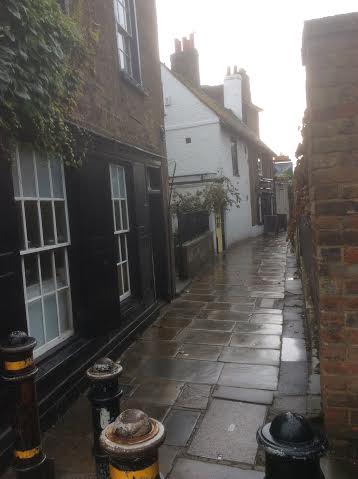
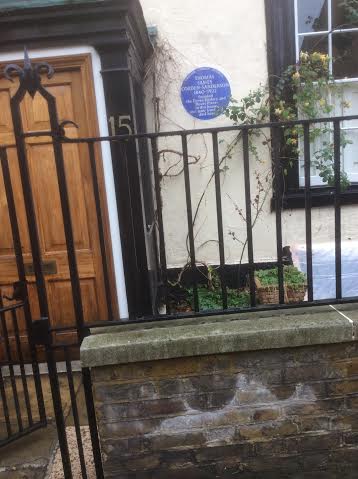
 

, , , ,

10 Comments

Suffrage Stories/Women Artists: Emily Jane Harding Andrews

Harding lunatics

Many of you familiar with the propaganda produced by the British women’s suffrage campaign will recognise this image, which was  printed by Weiners of Acton and published as a poster by the Artists’ Suffrage League. In The Spectacle of Women, Lisa Tickner dates it to c 1908; the catalogue of The Women’s Library@LSE to c 1912. I would tend to support the earlier date.

The artist is known to be Emily Jane Harding Andrews. But who was she? What can we discover of the life behind that image?

She was born Emily Jane Harding in 1851 at Clifton in Bristol, the eldest of the several children of Thomas Giles Harding (1827-1899), a commercial traveller, and his wife, Rosa Jane (nee May). Emily and her sister, Rosa Elizabeth Harding, were educated at Clifton Ladies’ College and in October 1868 both gained certificates of art in the second grade in a prize giving at the Bristol School of Art.

By 1871 the family had moved to London . They moved around the Kensington, Hammersmith, Shepherds Bush area but their first address was 21 Holland Road, Kensington. Emily clearly continued with her art studies. She exhibited portrait miniatures at the Royal Academy in 1877, 1897, 1898. Now in the National Portrait Gallery is a chalk portrait of Arthur Penrhyn Stanley (d 1881), dean of Westminster. Was this the work that she exhibited at the RA in 1877?

By the time the 1881 census was taken Emily was married to a fellow artist, Edward William Andrews – although I cannot find a record of the marriage. He was ten years older than her and had been born in Kidderminster. By the time he was 21 was describing himself on the census form as ‘Artist portrait painter’. The only paintings I can locate by him are copies of two portraits after Gainsborough – see here.

In 1881 Emily and her husband were living, with one servant, at 23 Iverson Road, west Hampstead. By 1891 they had moved to Chalcot Gardens, Hampstead, an area popular with artists, and now had no servant. In 1901, still fending for themselves, they were living in a flat in 95 Fitzjohn’s Avenue, Hampstead.

Through the 1880s and 1890s Emily produced illustrations for a series of books – mainly for children. They included Bright Pages for Children of All Ages, 1886, Helen Milman’s The Little Ladies, 1890, Merry Moments for Little Folks by Rose E May, published by Frederick Warne, 1893. Emily’s sister, Rosa (or Rose) had married Frederick Lamartine May, son of a well-known bookseller, and a relation on their mother’s side. She also provided the illustrations for Disagreeable Duke: a Christmas whimsicality for holiday boys and girls by Elinor Davenport-Adams, published by George Allen, 1894 and in the same year for Lullabies of Many Lands by the editor and translator Alma Strettell, 

Frontispiece from 'Slav Tales'

Frontispiece from ‘Slav Tales’


In 1896 Emily Harding (the name under which she then published her work) was both the translator (from the French) and the illustrator of  Fairy Tale of the Slav Peasants and Herdsman by  Alex Chodsko, published by George Allen.

Another of Emily Harding's illustrations from 'Slav Tales'

Another of Emily Harding’s illustrations from ‘Slav Tales’

I don’t know how Emily Harding Andrews made contact with the Artists’ Suffrage League, although it’s hardly surprising, moving as she did in artistic, bookselling and publishing circles. Besides the poster illustrated as the introduction to this article, Emily Harding Andrews designed another for the ASL – ‘Coming in with the Tide – Mrs Partington’ – and was on sufficiently close terms with Mary Lowndes, the ASL’s leading light, to propose a design for a Christmas card -sent with an informal note on the reverse. It can now be found in Mary Lownes’ ASL album in the Women’s Library@LSE.

A rough design by Emily Harding Andrews for a suffragette Christmas card. It was never issued Image courtesy of VADS)

A rough design by Emily Harding Andrews for a suffragette Christmas card. It was never issued Image courtesy of VADS)

Emily Harding Andrews' comments on the reverse of her draft design (Image courtesy of VADS)

Emily Harding Andrews’ comments on the reverse of her draft design (Image courtesy of VADS)


Although clearly supportive of the suffrage campaign, Emily Andrews, like Mary Lowndes, did not boycott the 1911 census. This shows us that – married for 31 years, with no children – she was living, aged 61, as a boarder at 15 Bank Place, Bayswater. She still described herself as an artist. Her husband, on the other hand, was enumerated in his one-room studio at 48 Fortune Green Road, Hampstead. Had they separated?

Edward Andrews died in 1915, while living at 1 Linden Gardens, Hornsey Lane. He left £160; his wife is not named as an executor.

I next find Emily Harding Andrews in 1918, living at 6 St George’s Square, Camden, at the same address as another artist of her generation, Julia Bracewell Folkard and an Elizabeth Folkard. However, this seems to have been Emily’s base for only a short time and I can find no further trace of her for another 17 years, until in August 1935, aged 85, she set sail for Sydney, Australia. On the passenger list her address is given as ‘South Street Mission, Hammersmith’, although in what capacity she was living there I cannot say.

Gertrude, one of Emily’s much younger sisters, had emigrated to Australia with her husband, Edward Nevill Parker, in the 1890s. He had died in 1931 and I suspect that, in her old age, Emily went out to join Gertrude for I next find her living at Illawa, Judd Street, Cronulla, Sutherland, NSW. Emily died in Sutherland in August 1940 and her ashes were scattered in Woronora Cemetery, which was also the last resting place of her sister and, years later, of a nephew.

This is only the briefest outline of a long life lived. I shall have to imagine all those decades of London days, of Emily living and working in a succession of studio flats, of visiting publishers, of struggling to gain commissions, of the brief flowering of interest in the suffrage campaign, of, perhaps, sinking with old age into penury and then, the last adventure, sailing to the other side of the world – to the heat and light of Australia.

Copyright

All the articles on Woman and Her Sphere and are my copyright. An article may not be reproduced in any medium without my permission and full acknowledgement. You are welcome to cite or quote from an article provided you give full acknowledgement.
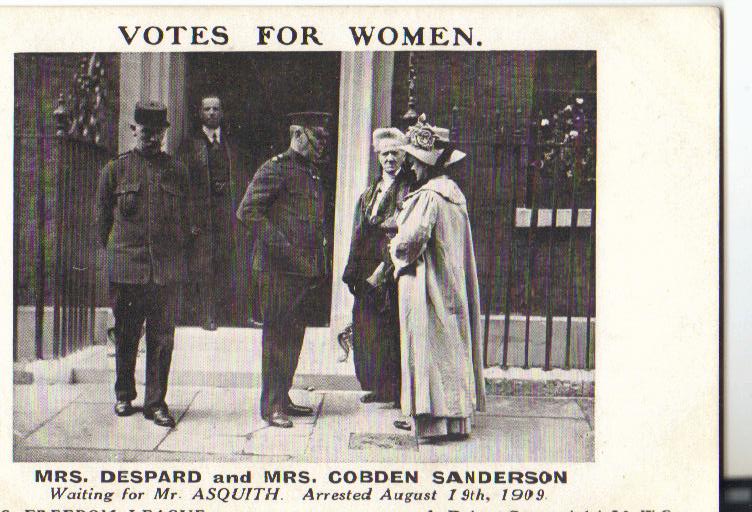


,

4 Comments

Suffrage Stories: Kitty Marion, Arson, A Route Taken – And A Touch Of Solipsism

On Sunday 2 November the Radio 3 Sunday Feature told – very briefly – the story of Kitty Marion, music-hall artiste, suffragette, and arsonist.

At the planning stage the producer was kind enough to invite me to contribute to the programme – with the brief to discuss something of Kitty’s suffragette activities. The  most notorious of these – or, at least, the most publicly known – was the burning down of the stadium at the Hurst Park racecourse at Molesey. This she did with the aid of an accomplice, Clara (Betty) Giveen. You can read how and why they acted as they did in –  Suffrage Stories: Kitty Marion, Emily Wilding Davison And Hurst Park

Hurst Park racecourse ran alongside the Thames just across the river from Hampton Court and although much of it was sold for redevelopment in the 1960s, the remaining open space and the layout of roads and fields have changed  little in the past 100 years, making it worthy of a visit for a spot of location radio. It was decided, therefore, that we should retrace the arsonists’ footsteps.

I offered to drive our little party  from central London to Molesey, a journey that I know like the back of my proverbial hand. For the road that leads down to Hampton Court passes the house on Twickenham Green where I grew up and which remained in my family for over 50 years.Moreover, during my schooldays I had made the journey between Twickenham Green and Hampton every day – for the first few years on that now all but forgotten vehicle, the trolley bus.

By way of a detour and for my younger readers - the 667 trolleybus en route from Twickenham to Hampton Court

By way of a detour and for my younger readers – the 667 trolleybus en route from Twickenham to Hampton Court

Now, in September 2014, our destination was Molesey Cricket Club, which lies, as it did in 1913, next to the erstwhile racecourse. In her unpublished autobiography Kitty mentions that, having left the road, she and Betty crossed a cricket field and so, leaving the cricket club car park, we made our way down a ditch (I with much less agility than my younger companions), through brambles and  into the open sunshine of Hurst Park.

Hurst Park pk cat 182


We looked over towards where the racecourse stadium had once stood and imagined the scene – as shown in this photograph –  revealed by the light of day on Monday 9 June 1913. The fire set by the two women had taken hold very quickly, rather taking them by surprise, and they, with the gas mains exploding, throwing up fountains of fire, they had fled the scene.

I was particularly interested in the next stage of Kitty and Betty’s night excursion. For a long time I had suspected that their journey on foot might have taken them past 15 The Green, Twickenham, but I had never before had occasion to research the matter. That their destination had been a house close to Kew Gardens Station was well known – but what roads had they taken to get there?

In fact the newspaper reports of their trial provide the answer. For they had been spotted at various points on their journey – the sight of two young(ish) women walking unaccompanied through the night had not gone unremarked. The first sighting – by a tramdriver – was at 12.45 am on the road between Hampton Court and Hampton and the second, most importantly, was at Fulwell, which lies between Hampton and Twickenham.

Twickenham Green c 1920s. The scene is still remarkably unchanged. No 15 is just out of the picture on the right - the house identical to the one on the right here. (Photo courtesy of Twickenham Museum)

Twickenham Green c 1920s. The scene is still remarkably unchanged. No 15 is just out of the picture on the right. The house is identical to the one shown on the right here. (Photo courtesy of Twickenham Museum)

So, there it was – a proof that satisfied me. For from Fulwell the direct route took them right past Twickenham Green – probably along the very pavement you see on the right of the above photograph.

Kitty and Betty continued through Twickenham Junction and East Twickenham, crossed over the river and  were next seen in Richmond at 2.50 am. Alerted to the fire, the police at Hampton Court had sent constables on bicycles to scour the roads. This clearly produced no immediate result but  telegraphic messages had also been sent out to all police stations which may be why, in the early hours of the morning, police in Richmond and Kew were on the look out for likely suffragette suspects.

Making no attempt to keep out of sight, Kitty and Betty were walking along Kew Road when, at the corner of Pagoda Avenue, they attracted the attention of a policeman . He followed them down to Lower Mortlake Road where, as they seemed to be lost, he questioned them. They then wandered through the streets, with the police constable following, until in the end he it was who pointed the way to their destination – West Park Road.

Police in this area may well have been on particular alert because suffragettes had recently damaged plants in the Kew Gardens orchid house  and had set the tea room alight.  A middle-aged, middle-class suffragette, Ella Stevenson, who lived in Cumberland Road, a few streets away from West Park Road, had in March been found guilty of putting phosphorous into the post box at post office in Richmond’s main street, George Street . Edwy Clayton, a scientific chemist whose home, ‘Glengariff’, in Kew Road Kitty and Betty had walked past – was at this very moment on trial at the Old Bailey on a charge of conspiracy connected with the Kew Gardens tea room and other WSPU arson attacks.

Thanks to the producer’s iPhone map, we were better equipped than Kitty and Betty and, weaving our way through the Kew streets, arrived with little difficulty at what had been their ‘safe house’. This in 1913 was the home of Dr Casey and his wife, Isabella, and daughter, Eileen. The two women were dedicated suffragettes and Mrs Casey’s action in allowing a key to her house to be in the possession of Kitty Marion, a woman she did not know, seems to have shocked the court at the subsequent trial even more than the arson itself.

Thanks  to the spontaneous kindness of the present owner we were able to record briefly inside the atmospheric Edwardian villa – noting original interior fittings – such as the fireplace with the overmantle mirror in which Kitty must surely have glanced as she and Betty waited for what they must have expected – the knock of a policeman on the door.

The knock of course did come, Kitty and Betty were tried, found guilty of arson and sentenced. Kitty went on hunger strike and was released under the Cat and Mouse Act on a couple of occasions. On the second she was taken to Nurse Pine’s Nursing Home at 9 Pembridge Gardens in Kensington (she mentions ‘Piney’ in her autobiography) from where, after a decoy was employed, she escaped.

Nurse Catherine Pine ran her nursing home in this large Kensington villa

Nurse Catherine Pine ran her nursing home in this large Kensington villa

From then until her re-arrest in January 1914 Kitty Marion was on the run, working, as she put it, to ‘communicate with the government’. It was a dangerous time.

Copyright

All the articles on Woman and Her Sphere and are my copyright. An article may not be reproduced in any medium without my permission and full acknowledgement. You are welcome to cite or quote from an article provided you give full acknowledgement.


, , , , , , ,

Leave a comment

Suffrage Stories: Mrs Pankhurst’s Headstone – And Its Sculptor

Brompton Cemetery - with Mrs Pankhurst's headstone

Brompton Cemetery – with Mrs Pankhurst’s headstone

Emmeline Pankhurst died, at the age of 69, in a Wimpole Street nursing home on 14 June 1928. On 18 June her funeral service was held in St John’s, Smith Square (a church in which, incidentally, there had, in early March 1914, been an explosion attributed to suffragette activity). Afterwards her coffin was taken to Brompton Cemetery for burial. Among the hundreds attending both ceremonies was Kate Parry Frye (now Mrs Collins). In her diary Kate described the day:

 Monday June 18th 1928  [London: Flat C, 57 Leinster Square]

Cloudy and a cold wind but the rain kept off. Two buses to Westminster and to St John’s Church Smith Square. Had no ticket but being very early before 10 – I was let in up in the Gallery of the Church and sat over the Chancel and in front of Mrs Pankhurst’s Coffin. The flowers were marvellous – most beautiful. A wonderful service but very sad – sad in itself and to see & feel us all so old and grey and ill. A bus to Brompton Cemetery an enormous crowd there. Followed the Coffin and saw the end –  then got away.

That occasion, fittingly enough, marked the end of Kate’s involvement with the women’s suffrage campaign.  Kate, whose years as an active suffragist are faithfully recorded in her diary (published as Campaigning for the Vote: Kate Parry Frye’s Suffrage Diary) made no mention in her diary of the passing a couple of weeks later – on 2 July – of the Representation of the People (Equal Franchise) Act.  It was as though, with the death of Emmeline Pankhurst, a chapter in her life had closed (though you can find out very much more about her life before and after suffrage in Kate Parry Frye: the long life of an Edwardian actress and suffragette).

I was thinking of Kate on a deliciously dank autumn morning last week when I found myself in the neighbourhood of Brompton Cemetery and thought I mustn’t let the opportunity pass to walk yet again in her footsteps. I had visited Mrs Pankhurst’s grave some years ago – but that was before I had encountered Kate Frye and before the day of the digital camera – or blogs. Now I imagined  Kate there, among the large number of women who crowded around on that windy way. Confined to the paths, most could have seen little of the ceremony.

DSC01354(1)I’m not sure that Kate returned to the Cemetery so doubt that she ever saw the headstone that was erected some time after Emmeline Pankhurst’s burial. The grave is easily found – on the left-hand of the central path, encountered soon after you’ve passed through the imposing North Lodge  (Old Brompton Road) entrance. It was also one of the very few graves at which flowers have recently been left. I suspect that such tributes are regularly made and, needless to say, as you will see from the photo, they are likely to approximate WSPU colours.

The tall headstone is sloping slightly – although perhaps not as much as my photography suggests!

As I quote in the entry on Emmeline Pankhurst in my The Women’s Suffrage Movement: a reference guide, the headstone was ‘designed by Julian P. Allan, whom Kitty Marshall described as “a clever girl”.’ When researching (in pre-internet days) for that book (published in 1999) I had neither the time nor, indeed, the resources to attempt to discover who this ‘clever girl’ was. Now a little digging has produced her intriguing story.

Julian Phelps Allan was born Eva Dorothy Allan in Hampshire in 1892 – so ‘the clever girl’ was actually 36 at the time of Emmeline Pankhurst’s death. After the registration of her birth we next catch sight of her nine months later as she sets sail with her mother (‘Mrs Allan’) and her brothers, 5-year-old Leonard and 3-year-old Cecil, bound for Belize. Well, of course I immediately wondered why they were making that journey and set out to explore all the various databases that might prove useful.

I slowly pieced the answer together. They were returning to British Honduras where Mr Allan – Gordon Allan (1856-?) – was surveyor-general. In 1885-6 he had published ‘A Plan of Belize’. Further research uncovered his marriage in 1884 in west London to Ada Phelps Richards, the eldest in the large family of a widowed brewer. Before taking over the family firm her father had been a civil engineer and Ada had been born in Brazil, presumably when he was engaged on some south American scheme. I suspect that Gordon Allan died in the 1890s in British Honduras because I next found his son, Cecil G. Allan (who had been born in British Honduras) in 1901 as a pupil at the London Orphanage Asylum at Watford. The criterion for admission to that establishment was that the pupil had to be fatherless – but not, apparently, motherless.

For in 1911 Ada Phelps Allan was still alive – a patient in the Merchant Taylors’ Convalescent Home for Ladies at Bognor. Indeed she did not die until 1944. In 1911 her daughter, Eva, was boarding in the home of carpenter and joiner at 40 Achilles Road, West Hampstead.  The census recorded her as ‘student at college’. Her landlady’s daughter was a student at Clark’s College so perhaps that was where Eva also was studying. It was an appropriate educational institution for a young woman of her background – and, probable lack of means – to attend. Clark’s very successfully trained young men and women to pass the Civil Service examinations.

I can imagine – though don’t know for certain – that Eva spent the following few years working efficiently in offices – until she became a member, during the First World War, of the Women’s Army Auxiliary Corps. She served as a ‘unit administrator’ – the equivalent of officer rank.

After the war she studied sculpture at the Westminster School of Art and then at the Royal Academy Schools. You can read an account of her work as a sculptor here. The commission for Mrs Pankhurst’s headstone came early in her career. Doubtless she moved in circles that overlapped with those of suffrage activists. It was also around this time that she dropped ‘Eva Dorothy’ in favour of the more androgynous ‘Julian Phelps’ (‘Phelps’ being her maternal grandfather’s second name – and  a name inherited by her mother and most of her mother’s siblings).

DSC01355


The headstone she made for Emmeline Pankhurst is of red sandstone, in the form of a Celtic cross. The  inscription is simple – ‘In Loving Memory of Emmeline Pankhurst wife of R.M. Pankhurst LLD At Rest June 14 1928.’ No mention of children, or a life’s work for women.

DSC01356

The shaft carries this somewhat enigmatic haloed figure.

DSC01357


The head of the cross shows what I take to be the hand of God reaching down from the heavens as two angels minister in some symbolic way.

I wonder how the commission was described in the brief to the sculptor?

See here for Julian Allan’s own – very different – memorial. I’m rather amazed to discover that she was actually still alive when I first came across her name –  researching The Reference Guide She died in 1996 – aged 103.

Copyright

All the articles on Woman and Her Sphere and are my copyright. An article may not be reproduced in any medium without my permission and full acknowledgement. You are welcome to cite or quote from an article provided you give full acknowledgement.
2 Comments

Kate Frye’s Diary: Talk at Wooburn Festival, 24 September 2014

Tomorrow – 24 September – I shall be presenting Kate Frye to the Wooburn Festival. I shall be talking about her life – from the age of Victoria to that of Elizabeth – in Bourne End and Berghers Hill – and describing her efforts to interest the area in ‘Votes for Women’.

Kate Frye cover

The talk will be illustrated with many photographs from Kate’s extensive archive and there will be an opportunity to look at other items of local interest from her collection that I will bring with me.

cover e-book

See here for full details of the talk – 7.30 pm at Bourne End Library.

Copies of Campaigning for the Vote will be on sale – signed if you wish!

For full details of both the Kate Frye books see here and here.


, , ,

Leave a comment

Suffrage Stories: The Women’s Freedom League Toy Factory At Hackney, 1915

We are familiar with the toy factory opened during the First World War by Sylvia Pankhurst’s East London Federation of Suffragettes at Bow in London’s East End, but how many of us know that another suffrage society, the Women’s Freedom League, operated a similar factory in Hackney?

The Toy Factory at Hackney run by the Women's Freedom League, 1914

The Toy Factory at Hackney run by the Women’s Freedom League, 1915

At the beginning of the First World War the WFL announced that, among the schemes prompted by the new situation, they had opened a toy factory ‘where girls and women have been trained to turn out perfectly finished and well-dressed dolls – the specialities being the Dombey boys and the Tipperary Twins.’

With the outbreak of war the various suffrage societies had recognised the need to provide employment for women put out of work as dress-making establishments suffered a sudden drop in demand. In the autumn of 1914  the thoughts of the women of the nation were, unsurprisingly, on other than on sartorial matters. The New Constitutional Society, for instance, hoped to help destitute dressmakers by opening a war-relief work-room , organised by Kate Frye (for details see  Campaigning for the Vote –  to see Romola Garai as Kate Frye in that work-room as realised by ITV see here ) .  The NCS opted to make clothes.

The ELFS and the WFL, however, decided to take advantage of the gap in the market that had opened now that toys could no longer be sourced from Germany, hitherto the main supplier of presents for British children.

But where in Hackney was the WFL toy factory?  It looks from the photograph as though it was located in a private house, probably comprising only a couple of rooms. This wasn’t a factory on the scale of Lesney – Hackney’s other – once-famed – toy maker. 

Update: Reading Jennie Churchill’s Women and War Work  I’ve discovered that the toy factory was in South Hackney…but have not yet pinpointed a road. Interestingly, the photograph at the head of this blog post came from a postcard album compiled by  Louisa Thompson-Price, who is named as a contributor to the chapter that mentions the WFL toy factory.

How long was the factory in production? Mrs Sarah Ann Mustard (1864-1936), of 48 Moresby, Upper Clapton, had been president of the Hackney branch of the WFL from about 1910 and it is she who described the work of the factory at a WFL meeting- in Mayfair – on 26 March 1915. However, the WFL’s newspaper,The Vote, then goes decidedly quiet on the factory and its products. It is especially curious that none of the reports of the many fund-raising bazaars makes any mention of Hackney-made toys for sale – nor does The Vote carry any small ads for its wares.

And yet the WFL had felt it worthwhile to ask Fleet Street photographer, Barratts, to come along to their ‘factory’ and take a photograph. This doesn’t seem to have been published in The Vote, but, fortunately, was issued as a postcard – allowing us a glimpse of one all- but- forgotten War Work effort with, in the background, an array of its products.

Copyright

All the articles on Woman and Her Sphere and are my copyright. An article may not be reproduced in any medium without my permission and full acknowledgement. You are welcome to cite or quote from an article provided you give full acknowledgement.
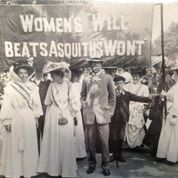


, , ,

1 Comment

Suffrage Stories: Bloomsbury Links in Life And Literature (Part 4)

For my first two posts on the links between ‘Bloomsbury’ and women’s suffrage see here and hereIn ‘Bloomsbury Links’ (Part 3) I mentioned that in 1916  Ray Strachey took over the post of parliamentary secretary to the National Union of Women’s Suffrage Societies and  moved to Westminster to be close to the NUWSS office. From 1916 until 1934  she was also chairman of the Women’s Service Bureau, which originated in the war work of the London Society for Women’s Service. In 1925, when the financial position of the latter society (now called the London Society for Women’s Service) was critical, funds were raised by the presentation at the Scala Theatre of two specially-staged charity performances of The Son of Heaven, a play written by Ray’s brother-in-law, Lytton Strachey.

The play – a’tragic melodrama’ -was set in China at the time of the 1900 Boxer Rebellion. It’s director was Alec Penrose, whose  (first) wife was the production’s wardrobe mistress, Ralph Partridge played ‘The Executioner’, Geoffrey Webb, later Slade professor of Fine Art at Cambridge, played ‘Wang Fu’ and Gerald Brennan was among the extras.  Gertrude Kingston -now elderly and a one-time member of the Actresses’ Franchise League, was the only ‘professional’ member of the cast.

The accompanying music was composed and conducted by William Walton – his first commission for the stage. Of it Constant Lambert (who played the timpany in the production’s orchestra) commented – ‘So great was [Walton’s] obsession with ragtime that he was unable to prevent some unmistakeable touches of Gershwin from entering the score!). The critic from The Stage described the music as ‘ambitious and decidedly heavy’.

Duncan Grant designed the costumes and sets. These included an Omega Workshop screen and a carpet designed by Vanessa Bell, who was also responsible for the cover of the programme.

Vanessa Bell, Original design for carpet for 'Son of Heaven' c 1924 (courtesy of Henry Sotheran Fine Prints)

Vanessa Bell, Original design for carpet for ‘Son of Heaven’ c 1924 (courtesy of Henry Sotheran Fine Prints)

Robert Medley, a painter and member of the cast, remembered the colours used –  ‘clear ochres and greys, offset by pinks, oranges and emerald greens’ (Frances Spalding, Duncan Grant). The costumes were painted in a decidedly Omega style by Duncan Grant and Vanessa Bell and proved all  too much for Gertrude Kingston. She refused to wear her costume and the designers were forced to dress her instead in a black brocade ‘Manchu’ robe belonging to Lady Strachey. All in all it seems to have been a rather entertaining venture, although I cannot tell you how much money it raised for the LSWS.

WomensServiceHseIn 1930, when the London and National Society for Women’s Service (as it had confusingly been renamed in 1926) wished to publicise not only its existence but also that of their new purpose-built hall , ‘Although very doubtful of success, Miss [Philippa] Strachey undertook to approach Virginia Woolf, to ask if she would be willing to give a talk on ‘Literature’. In the event Virginia Woolf did agree to speak and on the appointed evening, 21 January 1931, shared the platform with her new friend, Dame Ethel Smyth, who spoke on ‘Music’.

The hall, with a library, restaurant and offices, was part of Women’s Service House, the  LNSWS’s new Westminster premises. Millicent Fawcett laid the foundation stone on 29 April 1929, barely three months before her death; the hall was intended as her memorial – rather more useful than a statue  but, alas, without a statue’s popular appeal (on this bee in my bonnet see more here). Known as the Millicent Fawcett Hall, it still stands at 31 Marsham Street, now put to good use by Westminster School as its drama centre.

Back in January 1931 the sub-committee of the London Society responsible for arranging the  evening’s entertainment felt obliged to install a microphone for Mrs Woolf – at the cost of £8; there was no suggestion that Dame Ethel required amplification.

The speakers attracted one of the society’s largest audiences and Virginia Woolf received a review in The Woman’s Leader (now, incidentally, edited by a niece of Mrs Pankhurst): ‘She “was with us, but not of us”. Her eyes are on the stars, as though she listens to some far-off song – but a song of which even an audience of modern and practical minded young women can catch an echo when Mrs Woolf speaks.’

ThreeGuineasThe ‘song’ proved to be the genesis for Three Guineas, and it was to the LNSWS’s library, adjacent to the hall, and to its librarian, Vera Douie, that Virginia Woolf turned when seeking verification of the facts, gathered into footnotes, that fuelled the book’s anger.

The Library at Women’s Service House, 1924 © & source The Women's Library

The Library at Women’s Service House, 1924
© & source The Women’s Library

In March 1938, for instance, she wrote enquiring about peace organisations and the numbers of women involved in working for peace. Vera Douie sent her a full reply, enclosing Mrs Fawcett’s pamphlet on ‘What the Vote Has Done’. A couple of months later , in gratitude for the help she had received, Virginia Woolf offered to supply the library with any books, new or antiquarian that it required. The offer was gratefully accepted; in 1938, for example, Virginia Woolf gave to the library both volumes of the newly published Miss Weeton. Journal of a Governess, a text from which she had copied quotations into her Three Guineas Reading Notebook, and in July 1940 paid for two books by Mary Carpenter, Juvenile Delinquents (1853) and Our Convicts (1864), that had appeared in the catalogue of an antiquarian bookseller. Both the latter are still part of the Cavendish Bentinck collection in the Women’s Library@LSE – although the name of their donor is not noted in the catalogue entry.

On 26 March 1941 Vera Douie wrote to Mrs Woolf to say how much she had enjoyed reading her biography of Roger Fry and asking, in her usual delicate manner, for two more books. This time, however, her request was in vain. Virginia Woolf was dead by the time the letter was delivered to Monks’s House.

Copyright

All the articles on Woman and Her Sphere and are my copyright. An article may not be reproduced in any medium without my permission and full acknowledgement. You are welcome to cite or quote from an article provided you give full acknowledgement.
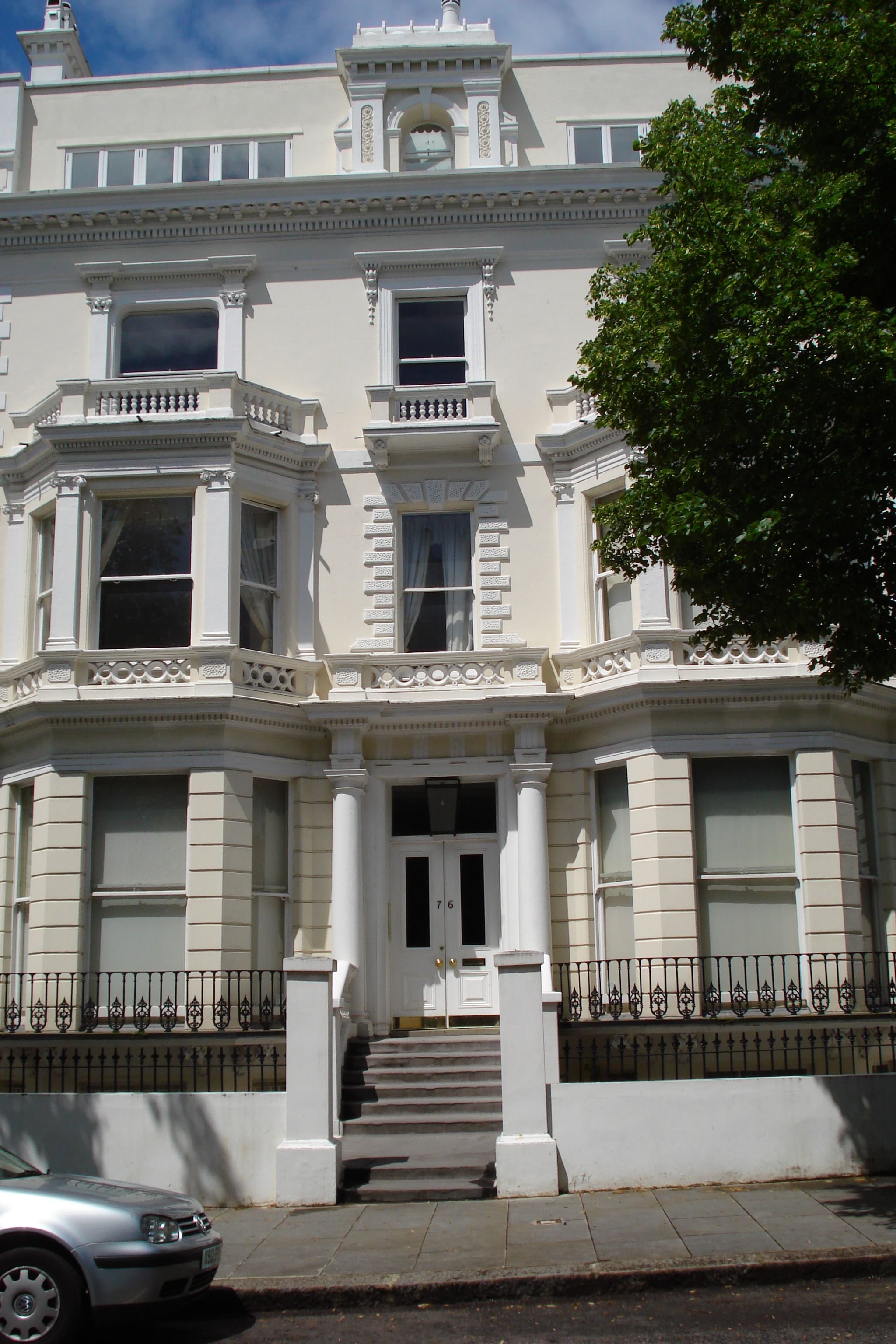
 

, , , , , , , , ,

Leave a comment

Suffrage Stories: ‘A Song Of Their Own’ – Ipswich Suffrage- And Ada Ridley In Particular

Song of their Own

I do enjoy reading studies of the work of local suffrage societies – and this is a good one.  Without over explaining the national campaign Joy Bounds neatly describes the particular work of Ipswich suffrage campaigners, setting their efforts in the wider context. Her research on Constance Andrews, the leading light of the Ipswich branch of the Women’s Freedom League,  is particularly welcome – and useful.

The delight of such studies is that names hitherto little known are brought to our attention. While it was outside the scope of Joy Bounds’ study to dwell in depth on the many individuals whom she highlights, it is now possible – in a blog such as this – to pick up the baton, as it were, and attempt to discover more about these women. Their engagement with the suffrage movement is, in a way, only an excuse.  I am still so curious about women’s lives.

In particular I am  interested in women who put their artistic skills to work for the suffrage cause and was keen therefore to discover more about the life of Ada Paul Ridley,who is mentioned in A Song of Their Own. She either designed or sewed (or perhaps  designed and helped sew) the banner (‘Be Just and Fear Not’) that the Ipswich contingent carried in the WSPU’s 1911 Coronation Procession. There is a suggestion that ‘her women’ worked it – I wonder who they were? The banner, alas, has long since disappeared.

Lisa Tickner includes Ada Ridley in her list of suffrage artists in an appendix to The Spectacle of Women, but mentions only her work on this banner and the fact that she had exhibited at the ‘London Salon’ in 1908. This was the first exhibition organized for the progressive Allied Artists’ Association Exhibition by Frank Rutter (a devout suffragist) – and held at the Albert Hall. I doubt that Ada Ridley was amongst the more progressive element, but she was keeping interesting company.

So who was Ada Ridley?

Well, she was born c 1864 and her sister, Elizabeth (Bessie), whom Joy Bounds mentions as also being  involved with Ipswich suffrage, was born in 1867. They were two of the four daughters (there were also two sons) of Albert Cowell Ridley, one of Ipswich’s leading businessmen. He was a wholesale druggist –  in partnership with Edward Grimwade (sometime mayor of Ipswich), trading as Grimwade, Ridley & Co. The firm’s premises were in Princes Street – and have long since made way for the iconic Willis building.

The Ridley family was non-conformist – Baptist. In the 1870s Albert Ridley was a member of the Ipswich Board of Guardians and in the 1880s, a Liberal,  was elected to the Ipswich Town Council.

Formerly Helenscote, 73 Henley Road, Ipswich

Formerly Helenscote, 73 Henley Road, Ipswich9

The Ridleys  lived at Helenscote, 73  Henley Road, Ipswich – a large, gabled house. (The house, now known as Marlborough House was until relatively recently The Marlborough Hotel, but is now divided into flats.)

In the 1870s Edward Grimwade and his family lived close by – at 1 Henley Road. In April 1871 Grimwade chaired a meeting in Ipswich at which Rhoda Garrett was the main speaker, with her cousin, Millicent Garrett Fawcett, and her uncle,  Newson Garrett, sitting beside her on the platform. The Ipswich Journal – not a supporter of the woman’s cause – gives a lengthy, somewhat jaundiced account of the meeting – but it is clear that it was actually rather successful.

Grimwade’s daughter, Harriet, became secretary of the Ipswich committee of the National Society for Women’s Suffrage that was set up in the wake of this meeting. This suffrage society doesn’t appear to have been very active – although Harriet Grimwade definitely was. She was a very active philanthropist as well as eventually, in 1883, being elected a member of the Ipswich School Board.  When she first stood for the School Board, in 1880, the Ipswich Journal  paid her the rather back-handed compliment of saying that it would be as well if she were not elected as it would be a pity to distract her from her all her charitable work.

There was no mention of Albert Ridley’s presence at the 1871 meeting- although he may well have been there.  In fact there was a direct Garrett/Ridley relationship. Millicent’s sister, Alice, was married to Herbert Cowell, a cousin of Albert Cowell Ridley (Herbert’s father was brother to Albert’s mother). Despite Herbert’s expressed distaste for the women’s movement, Alice more or less defied him to succeed her sister, Elizabeth Garrett Anderson, as the member of the London School Board for Marylebone. I imagine that Albert Ridley’s views on the Woman Question tended more towards those of Edward Grimwade than those of Herbert Cowell.

Whatever they were, Albert Ridley did ensure that Ada had a good education. She attended Ipswich High School for Girls and, while a pupil there, in 1879  passed the government examination in Freehand Drawing, taken at the Ipswich School of Science and Art , in 1880 she received the school prize for Needlework – a copy of In Memoriam – and in 1881 won a prize at the Art School (though still a pupil at the High School) for the best drawing of a plant. Her reward was to be given said plant – a begonia. In 1883 she matriculated from the High School –  in the first division (University of London) and in 1884  moved to  the Ipswich School of Science and Art, where she was awarded a first class certificate in Botany- Elementary Stage. Ada clearly remained close to Harriet Youngman, who was headmistress of the High School during the time she was there. When the 1901 census was taken Ada was staying with her as a visitor in the cottage near Saffron Walden to which she had moved on retiring as headmistress.

Although the only sightings I have of Ada during the next ten years are as a rather successful tennis player (mixed doubles matches at the Ipswich Lawn Tennis Club) and as a pianist at various local entertainments, she clearly maintained her interest in art, winning a second prize in a Studio  competition in 1894. In 1893 she was the judge of ‘Plain Needlework’ at an Industrial and Art Exhibition held at the Gainsborough House headquarters of the YWCA.

Albert Ridley died in 1896, leaving c £25,000 – out of which Ada and her siblings were each to receive £1000  immediately. Her mother died in 1916, leaving £14,000 – so I think we can assume that the family lived reasonably comfortably.

In April 1911 a service at Llanaber Church near Barmouth was held to dedicate reredos that Ada Ridley had helped carve. They had been designed in the Celtic Arts and Crafts style by John Dickson Batten, who was an illustrator and one of the early members of the Society of Painters in Tempera. The founder of this society was Christiana Herringham, a suffragist who in 1908 had helped embroider banners for the Artists’ Suffrage League and the Women Writers’ Suffrage League, as well as one for the Cambridge Suffrage Society. The Battens must have known Christiana Herringham and as in 1904 their Kensington home was at 16 Edwardes Square, they must have known Laurence Housman, who lived with his sister, Clemence, writer and artist, at 1 Pembroke Cottages, on the corner of the Square. It’s not too wild a guess to suppose that Ada Ridley was brought into this circle.

Anti-suffrage Alphabet (courtesy of UCL Library Services)

Anti-suffrage Alphabet (courtesy of UCL Library Services)

There is no doubt that by 1911 Ada most certainly was well acquainted with Laurence Housman  because in that year she was a contributor to a lovely book – An Anti Suffrage Alphabet – designed by Housman and which Leonora Tyson (of the Streatham WSPU) printed to order by hand. Earlier in the year, on census night (2 April), both Ada and Bessie Ridley had been absent from home. Their mother was enumerated at Helenscote with their unmarried brother and one of their nieces – but of her two resident daughters there was no trace. Were they spending the night at the Museum Rooms, taking part in the boycotting party that Joy Bounds describes so well?

But that is all I’ve been able to uncover. How did Ada spend the rest of her long life?  I can find no trace of any further involvement with either art or the woman’s cause. She seems such a capable woman that I can’t believe she sat at home doing nothing for the next 40 or so years. She died in Ipswich in 1958 – leaving c £17,000 -one of her executors being the niece who was staying in the house while her aunts were out gallivanting on census night.


Copyright

All the articles on Woman and Her Sphere and are my copyright. An article may not be reproduced in any medium without my permission and full acknowledgement. You are welcome to cite or quote from an article provided you give full acknowledgement.
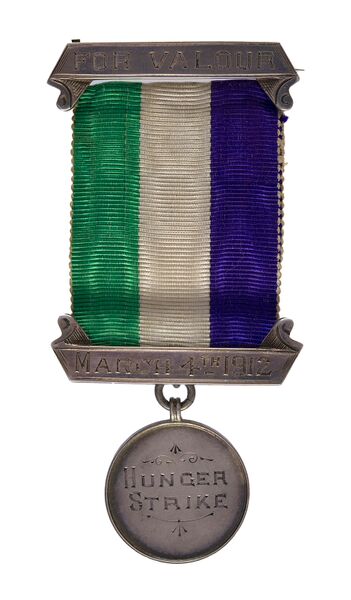


o

, , , , ,

1 Comment

Suffrage Stories: Bloomsbury Links (Part 3)

I have written two previous posts about the Bloomsbury Group and Women’s Suffrage – see here and here, the latter one dealing with the involvement of Lady Strachey and her children. In this third Bloomsbury post I describe something of the importance of one of her daughters-in-law – Ray Strachey.

Ray Strachey

Ray Strachey

In 1911 Lady Strachey’s son, Oliver,  married, as his second wife, Ray, the daughter of Mary Costelloe (later Mary Berenson) and granddaughter of Hannah Whitall Smith, a Philadelphian Quaker and feminist.

The Costelloes’ association with the Cause stretched well back into the 19th century. In 1889 both Mary Costelloe and her mother had signed the Declaration in Favour of Women’s Suffrage organized by the Central Committee of the National Society for Women’s Suffrage. In the 1890s Mary, with her parents, her husband, and her sister Alys (who was later to marry Bertrand Russell), subscribed to the Central National Society for Women’s Suffrage. In March 1890 Frank Costelloe, Ray’s father, was described as a ‘warm friend’ to the Women’s Franchise League. It is therefore not surprising to discover that Ray Costelloe while a student at Newnham (1905-08) was an active member of the Cambridge University Women’s Suffrage Society, probably to the detriment of her academic work.

In the summer of 1908 Ray and her friend Elinor Rendel conducted a suffrage caravan tour of the Lake District. While on this tour the young women stayed at Keswick, at Hawse End, the home of Frank and Caroline Marshall, who had founded the local branch of the NUWSS, and who were the uncle and aunt of Ray (later Garnett) and Frances (later Partridge).

Catherine Marshall

Catherine Marshall

The Marshalls’ daughter, Catherine, moved to London and became parliamentary secretary of the NUWSS, in 1912 masterminding that society’s alliance withe the Labour party. Through family association the suffrage campaign drew into is maw the least likely followers; Julia Strachey, Oliver’s daughter by his first marriage, led an NUWSS procession in Littlehampton on 19 July 1913.

By 1913 Ray Strachey was chairman of the LSWS and Philippa Strachey was its secretary, the two forming an extremely affectionate and close working relationship that lasted until Ray’s death in 1940. A fellow worker for the Cause described how Ray Strachey was ‘someone who takes up lost causes and then they are no longer lost’ and particularly remarked how Ray always sought Pippa’s advice.

In 1916 Ray Strachey succeeded Catherine Marshall as parliamentary secretary of the NUWSS and in this capacity was responsible for supervising the passage of the Reform Bill that in 1918 at last gave women (over 30) the vote. Ray moved her household from Bloomsbury to Marsham Street in Westminster in order to be close to the society’s office.

strachey the causeAfter the end of the First World War Ray Strachey was editor of The Common Cause and then of its successor, The Woman’s Leader, 1920-23, and acted as political private secretary to Lady Astor after the latter’s election as the first woman member of the House of Commons. Ray Strachey was the author The Cause (1928) which stood for very many years as the only history of the ‘constitutional’ suffrage movement, and of Women’s suffrage and Women’s service: the history of the London and National Society for Women’s Service, 1927.

In 1938 Virginia and Leonard Woolf’s Hogarth Press published Our Freedom and Its Results, a collection of essays edited by Ray Strachey, which charts the effect of women’s emancipation on politics, law, employment, morals and social life.

Copyright

All the articles on Woman and Her Sphere and are my copyright. An article may not be reproduced in any medium without my permission and full acknowledgement. You are welcome to cite or quote from an article provided you give full acknowledgement.
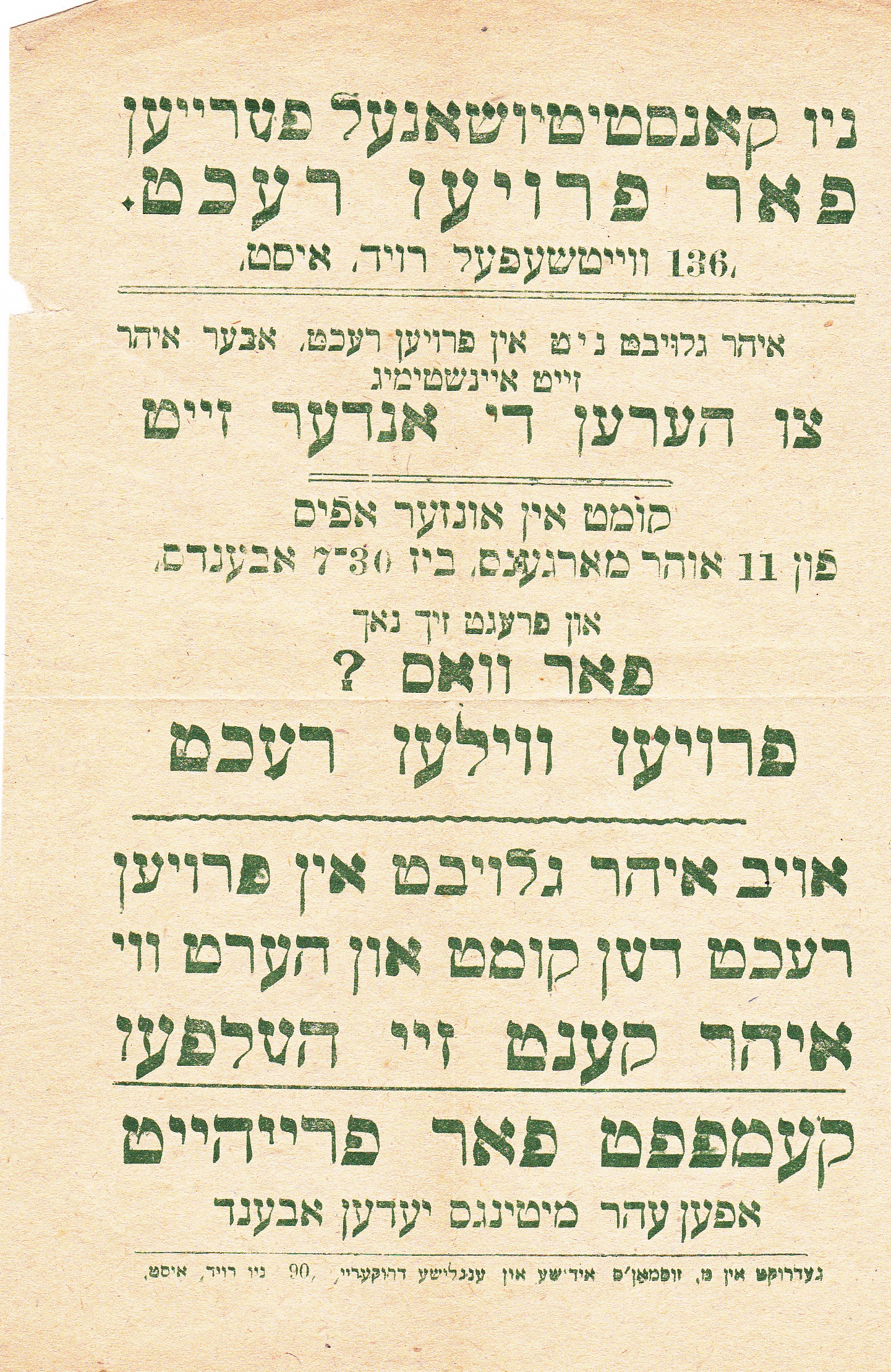
, , , , ,

Leave a comment

Suffrage Stories: 100 Years Ago Today – 17 July 1914: The National Portrait Gallery and Thomas Carlyle

One hundred years ago today – on 17 July 1914 – a suffragette, Margaret Gibb, who also went by the name of Ann Hunt, took a cleaver to a portrait of Thomas Carlyle that was hanging in the National Portrait Gallery. See the damaged portrait here.

Margaret Gibb was held by an attendant, charged and, on 21 July, sentenced to six months imprisonment. She was released on 27 July – presumably under the Cat and Mouse Act, having gone on hunger strike. See here for a surveillance picture of Margaret Gibb taken in the exercise yard at Holloway. On 31 August she was spotted again at the Gallery and, although the WSPU had called a halt to its campaign, was refused admission then – and in the future.

One hundred years later the NPG has  mounted al display case exhibition – in Room 31 –  showing something of the effect of WSPU militancy on the National Gallery and National Portrait Gallery. Margaret Gibb’s story is related and includes a comment to the effect that it was doubted that the picture’s attacker knew that Carlyle was a particular hero of Emmeline Pankhurst – an aperçu I remember making when referring to the damaged portrait in the entry on Emmeline Pankhurst’ in my The Women’s Suffrage Movement: a reference guide. I’d be rather thrilled if I was the originator of the comment – but I daresay others have thought of it independently. I was particularly struck by two small photographs of Mary Richardson in the display that date from 1918 and show her sitting, delicate and pretty, in a room neatly furnished with flowers and 18th-century furniture. This is an image far removed from the chopper-wielding attacker of the ‘Rokeby Venus’ – (see here for a post on Mary Richardson).

Christabel Pankhurst by Ethel Wright, 1909 (c) National Portrait Gallery, London; Supplied by The Public Catalogue Foundation

Christabel Pankhurst by Ethel Wright, 1909 (c) National Portrait Gallery, London; Supplied by The Public Catalogue Foundation

In the entrance – Room 30 – to the gallery that contains this display case the National Portrait Gallery has now hung the full-length  portrait of Christabel Pankhurst by Ethel Wright – opposite the Brackenbury portrait of her mother – Emmeline Pankhurst.  Christabel’s portrait, in which she is wearing a green dress – apparently a favourite colour – was painted in 1909 and first shown at the WSPU Skating Rink Exhibition. It was bought by Una Duval and remained in her family before being  bequeathed recently to the NPG.

Good as it is to raise the profile of the women’s suffrage campaign – all this attention on the WSPU only highlights for me the lack of attention given to the constitutional campaigners – those who worked for sixty years without wielding cleavers. So let me take the opportunity here of repeating my mantra  – and drawing attention to my post on the subject –  Make Millicent Fawcett Visible.

Copyright

All the articles on Woman and Her Sphere and are my copyright. An article may not be reproduced in any medium without my permission and full acknowledgement. You are welcome to cite or quote from an article provided you give full acknowledgement.
 

Kate Frye’s Diary: The Lead-Up To War: 17 July 1914


On 7 August 2014 ITV will publish an e-book, Kate Parry Frye: The Long Life of an Edwardian Actress and Suffragette.  Based on her prodigious diary, this is my account of Kate Frye’s life and is a tie-in with the forthcoming ITV series ‘The Great War: The People’s Story’. For details of the TV series and its accompanying books see here.

KateAs a lead-up to publication I thought I’d share with you some entries from Kate’s diary from the month before the outbreak of war. Through her day-to-day experience we can see how the war stole up on one Everywoman.

Kate was at this time 36 years old, living in a room at 49 Claverton Street in Pimlico and working in the Knightsbridge headquarters of the New Constitutional Society for Women’s Suffrage. It was now nine years since she had become engaged to (minor) actor John Collins. Her father died in March 1914 and her mother and sister, Agnes, now all but penniless, are living in rented rooms in Worthing. John has a room along Claverton Street, at number 11.

Friday July 17th 1914

John arrived unexpectedly early, before I was up, but I just let him in to hear the news – he has had a letter from Benson saying he would see him, so was off. I had received a letter from Mr Dingle saying he could not speak – so as soon as I was up I went off to the Men’s League at Westminster and saw someone there who called Mr McKillop in from an office next door, and he like a lamb said he would come to Isleworth in Mr Dingle’s place. I expected to have to rush round London.

So I walked up to the A.A. and found John just having lunch with a very pretty woman and joined them as I wanted to hear what Benson said, but it was a very short interview. John saw me to Charing Cross then went off to a meeting and I came back to Victoria and bought some food then came in and had a rest and fell asleep.

John came in at 5 and we had a meat tea and then off together, Bus to Victoria – train to Hammersmith – train to Isleworth arriving at 7.15 – at the Upper Square. There were hundreds of children ready to greet us, I got a friendly feeling and they were very good but a great nuisance. John went off to find the Lorry as it was not punctual, but he missed it and it arrived alright and I got it fixed up.

By the time the speakers, Miss Dransfield in the Chair, Mrs Merivale Mayer and Mr McKillop and Miss Fraser to help had arrived we were absolutely mobbed – and we got a huge gathering. The first Suffrage meeting of any kind which had been held in Isleworth.

Mrs Mayer as usual was very disagreeable when she arrived, but it was really such a magnificent meeting she was quite pleased at the end, and as usual she spoke splendidly and we quite got the people round.

Having settled up early well came away together – Mr McKillop left us from the train, we parted from Mrs M.M. at Hammersmith and Miss Fraser at Victoria.

John and I were starving and we went into a restaurant at Victoria. John had salmon and cucumber – at 11.15! It was a lovely day.

John Collins was ‘resting’ at the moment – as is clear from the amount of time he was able to devote this month to helping Kate with her suffrage work. He would have been very excited about the prospect of employment in Frank Benson’s Company. The A.A., where Kate surprised him lunching with ‘a very pretty women’, was the Actors’ Association, the club in Covent Garden to which they both belonged.

The Men’s League for Women’s Suffrage to whose office Kate went for help when her speaker had failed was at 136 St Stephen’s House on the Embankment. The massive building was demolished, apparently in the early 1990s. We have already met the obliging Mr McKillop, who had for some years earlier been librarian to the fledgling London School of Economics. Kate had warmed to him after he praised her public speaking.

Upper Square, Isleworth (image courtesy of Hounslow Local studies website)

Well, this must have been the site of Isleworth’s first ‘Votes for Women’ meeting – or, at least, the first of which Kate had heard tell. Presumably during her canvassing she had met with plenty of local people who would have given her this kind of information. By ‘fixing up’ the Lorry Kate meant that she decorated it with posters – inquisitive children were suffragettes’ constant companions.

Calra Merivale Mayer

You can read about Mrs Merivale Mayer in Campaigning for the Vote – suffice it to say that Kate found her a great trial and, I am sure, knew nothing of her somewhat scandalous history. If she had known she would doubtless have felt vindicated in her dislike for this most difficult of the New Constitutional Society’s speakers. But Kate gave credit where it was due and often commented, as she does here, that despite the ructions she caused Mrs Mayer was an excellent speaker.


Copyright

All the articles on Woman and Her Sphere and are my copyright. An article may not be reproduced in any medium without my permission and full acknowledgement. You are welcome to cite or quote from an article provided you give full acknowledgement.
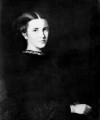
 

, , , ,

Leave a comment

Kate Frye’s Diary: The Lead-Up To War: 2 July 1914

On 7 August 2014 ITV will publish an e-book, Kate Parry Frye: The Long Life of an Edwardian Actress and Suffragette.  Based on her prodigious diary, this is my account of Kate Frye’s life and is a tie-in with the forthcoming ITV series ‘The Great War: The People’s Story’. For details of the TV series and its accompanying books see here.

KateAs a lead-up to publication I thought I’d share with you some entries from Kate’s diary from the month before the outbreak of war. She was at this time living in Claverton Street in Pimlico and working in the Knightsbridge headquarters of the New Constitutional Society for Women’s Suffrage. It was now nine years since she had become engaged to (minor) actor John Collins.

Thursday July 2nd 1914 

To office. Attended the Committee. To lunch at Harrods with Mrs Hartley, Alexandra [Wright] and Gladys [Wright] and Miss Bessie Hatton. Work at the office all afternoon. John arrived for me at 5.30pm. I left with him and we came back in a bus to Claverton Street.

I tidied myself and then by bus to Tottenham Court Road where we had a mysterious fish dinner. We liked the first half as we were extremely hungry and then it palled.

Then we strolled to the Scala Theatre and John got 2 dress circle seats for ‘La Dame aux Camelias’. Lydia Yavorska. Parts of it were a scream as all her things are, but she was very lovely in parts – and especially just at the end – she did look so dead. Some of the characters were vilely played. Ambrose Flower – he is rather winning – just like an Elenor Glynn [ sic] man – but just a prop for the dear Princess to fall up against – or on to. She looked a picture – but some of her frocks were hideous. Back by bus.’

The Scala Theatre was just behind Tottenham Road, on the corner of Charlotte and Tottenham streets. The theatre was only ten years old in 1914, built to the architect Frank Verity’s design in 1904 on the site of a series of older theatres. .

Kate doesn’t put the design of this production of ‘La Dame Aux Camelias’ in an artistic pigeon hole – but in the 15 July 1914 issue of  ‘Tatler’ it is described as ‘Futurist’. The article is titled ‘”Infernal Decorations or What Stripes and Squares a Love of Futurism is Leading Us.”‘ Perhaps it was the ‘stripes and squares’ that made some of the dresses appear ‘hideous’ in Kate’s eyes.

Lydia Yavorska

Kate refers to Lydia Yavorska (b. 1869) as ‘the dear Princess’ because the Russian-born actress had acquired by marriage the title Princess Bariatintsky.  Of her performance as Marguerite in this production ‘The Times’ critic wrote ‘she is not the actress to spare herself in the forcible delineation of the part’s emotion. Indeed her third act gave the opportunity for more tears and cries than we have ever heard or seen in a single act before.’ Kate had seen her playing Nora in ‘The Doll’s House’ on 30 March 1911 when she had described her as ‘a pretty creature and – in spite of her very broken English, excellent and so fascinating.’

‘La Dame Aux Camelias’ ran at the Scala from 22 June to 4 July 1914.

, , ,

Leave a comment

Suffrage Stories: What Links Charles Dickens, The Rokeby Venus And The Number 38 Bus?

Mary Richardson, c 1913 Mary Richardson, c 1913. This image of her was included in the sheet of ‘surveillance photographs’ of known suffragettes sent to museums and art galleries

I was asked the other day to speak briefly on Woman’s Hour about Mary Richardson, the suffragette who took a hatchet to the Velasquez painting, The Toilet of Venus  -known as The Rokeby Venus ,  while it was on display in the National Gallery in March 1914. Rokeby-Venus-slashed-close-up-426x365 You can listen to the resulting piece – which includes a clip from a 1957 Woman’s Hour interview with Mary Richardson – here.

Looking again at Mary Richardson’s story – as she tells it in her suffragette autobiography, Laugh a Defiance –  I was interested in a brief mention she made of the house from which she set out for the National Gallery on that fateful day – Tuesday 10 March 1914. It was a house  in which she had been given shelter when she was let out of Holloway the previous October under the terms of the ‘Cat and Mouse Act’,  after going on hunger strike. She continued to live there clandestinely – as a ‘mouse’ – evading the police.

As she tells it, this house in Doughty Street in Bloomsbury had once been the home of Charles Dickens but was now under the charge of a ‘Mrs Lyon’. Investigation reveals that in 1914  the house that was Dickens’ home from 1837-9 and is now the Charles Dickens Museum was, together with number 49, a boarding house run by a Miss Jane Lyons. J010106 Mary Richardson wrote that she knew immediately that it was to Dickens’ house that she had been brought. Indeed she would have, for as she left the motor car that had carried her from Holloway she would have seen this plaque, which had  been placed on the front of 48 Doughty Street by the LCC in 1903. Once settled into the boarding house doubtless she would have heard from Miss Lyons more about  the famous connection that gave cachet to the establishment.

Number 48 Doughty Street was acquired by the Dickens Fellowship in 1923 and opened as the Museum in 1925. Interestingly the Museum has quite recently acquired number 49 – so that the two houses are now interlinked as  they presumably were when Mary Richardson was given shelter in Miss Lyons’ boarding house. Charles dickens houseWhen Mary Richardson made her  acquaintance in 1914 Miss Lyons would have been 78 years old. She may well have been given the honorary title of ‘Mrs’ and it isn’t particularly surprising that Mary Richardson had, 40 years or so later, slightly misremembered her surname. The only information that Mary Richardson offers about ‘Mrs Lyon’ was that she had once been housekeeper to Benjamin Disraeli. Could that have been true?

Jane Lyons had been born in Plymouth in 1836, one of the eldest in a large family – of possibly 12 children. Her  father, Moses Lyons (who also gave his name on various censuses as ‘Lewis Lyons’ and ‘Morris Lyons’) was a licentiate of the Society of Apothecaries – that is, he was qualified as a doctor and practised as both a doctor and as a dentist. He had been born in Coventry c 1811;  his mother had been born in Russia. The family were probably Jewish in origin – although there is no evidence that they practised that religion. One sister, certainly, was married in a Congregational church. In 1871 the Lyons family was living in the Islington area of Birmingham and Jane Lyons worked with her mother and five of her sisters in the family’s stationers shop.

By 1881 Jane Lyons had come to London and on the night of the census, 3 April 1881, was living in a boarding house at 72 Gower Street in Bloomsbury, described as an ‘annuitant’. So it doesn’t appear that  she was Disraeli’s housekeeper at the time of his death –  which occurred 16 days after the census was taken. But I suppose it is not impossible that she was so employed at some time during the previous decade.

By 1891 Jane Lyons was housekeeper at ‘Brunswick House’, 56 Hunter Street, Bloomsbury.  Here lived 45 boarders – all women – most of whom were working – as teachers, typists, clerks, and artists.

48 Doughty Street - post 1903 48 Doughty Street – post 1903

Ten years later, in 1901, Jane Lyons was the proprietor of a ‘Private Hotel and Boarding House’ at 48 & 49 Doughty Street.  Here, on the day of the census, she had 24 boarders – all women – again clerks, teachers and typists (and a stockbroking nephew). By 1911 Miss Lyons’ clientele had slightly changed – now numbering a good half-dozen men among her boarders.

Miss Lyons, as a single woman running her own business, was very much the type of woman we might expect to support the ‘votes for women campaign’ – perhaps as a member of the Tax Resistance League. But from Mary Richardson’s evidence she went that bit further and gave active support to those who were evading the police. According to Mary, while she was living at number 48 Annie Kenney, who was also on the run, stayed for a time in Miss Lyons’ boarding house. I wish I knew more about Miss Lyons.

In Laugh a Defiance Mary Richardson relates that she had planned her attack on the RokebyVenus in advance – presumably while living under Miss Lyons’ roof. Indeed she states that she had sought approval from Christabel Pankurst for her plan. But never once in Laugh a Defiance  can I find any mention of the fact that since March 1912 Christabel had been living in Paris. Mary Richardson refers to her as though she were living close by, convenient for consultation. I find it difficult to believe that in those febrile months in 1914 Mary Richardson was in such close contact with Christabel. Did she, 40 years later, feel it necessary to justify her actions by implying that she was always ‘acting on orders’?

The sequence of events ran like this. Mrs Pankhurst was arrested in Glasgow during the evening of Monday 9 March – after something of a battle with the police at a meeting in the St Andrew’s Hall. Around her was a bodyguard of women –  one of whom was Mrs Lillian Dove-Willcox, with whom Mary Richardson was closely associated.

Lillian Dove-Willcox (photo courtesy Bath In Time website) Lillian Dove-Willcox (photo courtesy Bath In Time website)

After one of her hunger strikes Mary had recuperated at Lillian’s cottage in the Wye Valley and their friendship seems to have lasted all Mary’s life.  Symbol Songs, a collection of poems she published in 1916 contains  ”The Translation of the Love I Bear Lillian Dove’ – and it was Lillian (by now, after remarriage, Mrs Lillian Buckley) who wrote Mary’s obituary for the Suffragette Fellowship newsletter.   It wouldn’t surprise me that if the ‘Rokeby Venus’ plan had been shared with anyone, it had been shared with Lilian Dove-Willcox, who travelled back from Glasgow on the train in which Mrs Pankhurst was being escorted by the police.

However the train stopped at a station short of Euston and Mrs Pankhurst was taken off it and driven straight to Holloway in order to avoid the suffragette crowds that were awaiting her at the terminus. The news of her arrest was in the Tuesday morning papers. I don’t really want to add any (quite gratuitous) speculation to Mary Richardson’s already rather unreliable memoir, but I’m going to anyway.

Could Mary Richardson have seen Lilian Dove-Willcox early that Tuesday morning and  heard first-hand of the dramatic events in the St Andrew’s Hall? And dramatic they were. It was a violent scene – with clubs wielded by the women and a gun – loaded with blanks – fired by Janie Allan, a wealthy Scottish supporter. A report from the front line, made by a close friend, or even the knowledge that such a friend had been involved in such a battle could have been the real catalyst for choosing this day of all days for putting her plan into action.  Doughty Street is only a short distance from Euston. Although Mary Richardson says in a radio interview that she was in the National Gallery as early as 10 am, The Times report, Wednesday 11 March, mentions that she was there at 11 .

Mary Richardson is not explicit as to whether she had already purchased her weapon of choice – a butcher’s chopper – although she does state that she bought it in the Theobald’s Road – a main road close to Doughty Street .However, because, as she repeatedly explains, she fixed the chopper into her sleeve with a chain of safety pins (though I can’t quite work out how the first in the chain was attached to the chopper??) it seems unlikely that she would have undertaken this rather cumbersome exercise on her way to the National Gallery, suggesting that she had the chopper already primed, as it were, in her room in the boarding house.

In another BBC radio interview, broadcast on 23 April 1961 – click here to listen to it – Mary Richardson revealed that she had chosen the Rokeby Venus  because she hated women being used as nudes in paintings – she had seen the picture gloated over by men, and she ‘thought it sensuous’. In the 1957 Woman’s Hour interview she mentioned that she felt the painting was held in high regard because it was so financially valuable  (it had cost £45,000 when purchased in 1906), whereas Mrs Pankhurst’s life counted for nothing. Presumably she was unaware that it was a fellow suffragist, Christiana Herringham, who had been the driving force in the setting up of the National Art Collections Fund – the organization that bought the painting for the nation.

In the later interviews Mary Richardson doesn’t mention that Mrs Pankhurst had only just been rearrested – but tells the story as though Mrs Pankhurst had been held for a long time, on hunger strike,  in a damp underground cell in Holloway – and that her life was in danger. But, as we see, Mrs Pankhurst could have barely reached Holloway by the time Mary set out from number 48.richardson laugh a defianceI have mentioned that Mary Richardson’s Laugh a Defiance  is an unreliable memoir. At the most basic level the account she gives of her involvement in the suffragette campaign is not chronologically accurate – rather she presents a series of incidents, in each of which she takes a starring role. I have little doubt that the purpose of Laugh a Defiance was to raise funds.  It doesn’t appear that Mary Richardson was ever in full-time employment and, although she had presumably inherited some money from her family,  at the end of her life the income must have dwindled. At the time of her death in 1961 she was living in a single room – in Hastings. Obviously in order for such a book to sell it did have to be packed with dramatic incident.

I can find no reviews of the book in contemporary newspapers or magazines – or, to be accurate, in ones that are now digitized. The only quote used in its publicity by the publisher, Weidenfeld & Nicolson, was a remark by C.V. [Veronica] Wedgwood who on the radio programme, The Critics, described it as ‘A document – ingenious and absolutely genuine’. Well, yes, ‘ingenious’ is perhaps the word to describe Laugh a Defiance  for although Wedgwood was an historian she clearly had not interrogated the accuracy of the ‘document’.

Leaving aside quibbles about who did what, when or where, the book contains laughable examples of  ‘cod history’ – such as when Mary in Holloway describes her view onto what she describes as the site, in Elizabethan times, of the banqueting hall of the Earls of Warwick. Doubting very much that those Earls had ever had a London home in Parkhurst Road, Holloway, I did a little research to try to discover what had been in Mary Richardson’s mind. The answer: that when the prison was built in the mid-19th century the architect copied the design of the gatehouse from Warwick Castle. Such is the way that the most innocuous facts  become corrupted and I’m certain that Mary Richardson’s suffragette autobiography contains many more such elisions and half-truths.  Rubbed up and polished, they presented a dashing and easily digested history designed to appeal to the general reader.

I have always wondered what her fellow suffragettes made of Mary Richardson’s  Laugh a Defiance – and of her two broadcasts. The Suffragette Fellowship, the organization to which many former members of the WSPU and the Women’s Freedom League belonged, was by no means devoid of factional infighting. Certainly she appears to have felt quite at ease when, a couple of years after the book was published (but before the radio programmes were broadcast), she attended a Suffragette Fellowship reunion at Caxton Hall (you can watch her here on a Pathe newsreel as she shows her very distinctive hunger-strike medal to a policeman. I wonder if any comments were made about the accuracy of her recollections?

For instance, as far as I can discover,  no member of the WSPU ever mentioned that Mary Richardson was, as she claimed, at the Derby watching Emily Wilding Davison as she stepped into the path of the King’s horse. Why was such a valuable first-hand account not written up in The Suffragette  or Votes for Women? Why was she not called as a witness at the inquest? In her telling the expedition to Epsom was not clandestine –  rather she was following an order from Headquarters to go there to sell The Suffragette.  She doesn’t go so far as to say that she accompanied Emily Davison but somehow out of the seething Derby crowd – the hundreds of thousands that swarmed over Epsom Downs –  she was able to spot Emily and position herself at the opposite side of the track at Tattenham Corner. Exciting reading – but is it history?

However, Mary Richardson’s account in Laugh a Defiance of her attack on the Rokeby Venus  accords very accurately with the contemporary newspaper reports.  There was, of course, no need to dress up that drama – for she was (with Venus) undoubtedly the star of that particular episode.

As this is a blog post – not an academic article – I will allow myself another flight of fancy. I live not far from Doughty Street and am a regular passenger on the No 38 bus that runs along Theobalds Road.  By 1914 this bus route had been in operation for a couple of years and, unless Mary Richardson walked to the National Gallery, may well have carried her as far as Cambridge Circus, bringing her within striking distance, as it were, of the Gallery. It is these gossamer connections – the layers of history through which we pass – that continue to amuse me. If I were sufficiently fanciful I could link Mary Richardson and the Rokeby Venus  to both the number 38 bus, on which, incidentally, I travelled part of the way to my date with her in the Woman’s Hour studio, and to Charles Dickens, the shade of whose footstep she touched as she made her determined way over the threshold of 48 Doughty Street that March morning.

P.S. Coincidentally another nude, George Clausen’s Primavera,  attacked by Maude Kate Smith in the RA Summer Exhibition in 1914, was sold by Christies on 17 June 2014, the day after my Woman’s Hour piece – for £92,500. You can listen to Miss Smith describing how she attacked the painting in a recording held by the Women’s Library@LSE.

PPS Readers who have been kind enough to visit from the Persephone Books website and are of a ‘Persephone mind’ (although equipped with non-Persephone technology – ie an e-book reader) will, I hope, find a GOOD READ in the life of Kate Parry Frye – who was very much a ‘Persephone’ woman. Read all about her here.

Kate

, , , , , , ,

6 Comments

Suffrage Stories: Emily Wilding Davison: Centennial Celebrations

WHRThe Women’s History Review asked me to write a ‘Viewpoint’ about the 2013 100th anniversary commemoration of the death of Emily Wilding Davison.

EWD Funeral Procession Programme

The resulting article – ‘Emily Wilding Davison: centennial celebrations’ – is now available to read online at the WHR website. The first 50 viewers can access it free here. After the 50 viewings are exhausted, access, I’m afraid, is charged. But you can, of course, always read a print copy in your library!

EWD funeral


,

Leave a comment

Suffrage Stories/ Walks: The Actresses’ Franchise League – And Kate Frye

The Actresses’ Franchise League  was founded in December 1908. Its purpose was to stage propaganda plays, the majority of which were specially written by members, hold meetings, sell suffrage literature and give lectures. Kate Frye, who considered herself a professional actress, attended her first meeting of the AFL on 23 March 1909.

3 Bedford Street, Covent Garden

3 Bedford Street, Covent Garden

The venue for this first meeting, 3 Bedford Street, Covent Garden – just a few steps from The Strand – was very familiar to Kate. For on 11 December 1901 she had gone through that door and climbed the stairs to the studio and office near the top of the building where actor/manager Ben Greet ran his Acting Academy. There and then Kate had enrolled as a drama student. The story of her time at the Academy and her subsequent stage career is told in The Great War: The People’s Story – Kate Parry Frye: Edwardian actress and suffragette – which ITV will be publishing as an e-book in August to coincide with their The Great War: The People’s Story series.

3 Bedford st 6

Of that first AFL meeting Kate wrote in her diary:

‘Tuesday March 23rd 1909

[Afternoon] went by bus to Bedford Street, Strand – the old Ben Greet Academy Room where we used to rehearse – to the Actresses’ League for Women Franchise meeting. Who should be there but Miss [Ada]  Moore, who introduced me to Eva Moore and as she is going to be on our Dance Committee we shall meet again on Monday. She didn’t seem to like me much but I am used to treating all Suffrage women as merely women not little Queens. I had a long talk to Miss Moore who was charming as ever.

Eva Moore with her husband, H.V. Esmond

Eva Moore with her husband, H.V. Esmond


Kate had known Ada Moore quite well since the late 1890s – and was rather entranced by all the Moore sisters. During her time as a suffrage organizer, she often arranged meetings at which another Moore sister, Mrs Emily Pertwee, was the speaker. Eva Moore had obviously been a little too distant for Kate’s liking when they met on this occasion. She eventually resigned from the AFL after a play written for them by her husband, H.V. Esmond, was deemed too light-hearted for its propaganda purpose.

3 Bedford st 3

Although the lower half of the building appears to be empty at the moment – and a little sad – it’s not difficult to imagine the tyro actors and actresses – numbering among them Sybil Thorndike – climbing  the stairs to the top of the building to be put through their paces by Ben Greet. Or the members of the AFL  feeling at home in a building decorated with wreaths and swags.

3 Bedford st 8


3 Bedfford st 7

A month later – in April 1909 –  the AFL began to hold their meetings in the Criterion Restaurant. Kate was a regular attender at these meetings, often acted as a steward and faithfully recorded in her diary her impression of the occasions. For more about the AFL at the Criterion see here.

For more about Kate Frye and her involvement in the suffrage campaign see here.


, , , ,

Leave a comment

Suffrage Stories: Shoulder To Shoulder – Conference And Campaign


Shoulder -To-Shoulder: Female Suffrage, Second-Wave Feminism and feminist TV Drama in the 1970s.

shoulder-to-shoulder


I very much enjoyed attending this conference –Shoulder To Shoulder: Female Suffrage, Second-Wave Feminism and feminist TV Drama in the 1970s – which focussed on ‘Shoulder to Shoulder’,  the BBC’s 6-part series about the militant suffrage movement, broadcast in 1974.

The conference was held on 15 and 16 May 2014 at Birkbeck College’s School of Arts in Gordon Square. Who would think that behind the familiar early-19th-century facade of no 43 lies a state-of-the art cinema and gallery? It was a pleasure to be there.

And even more of a pleasure to be in the audience for a screening of one of the episodes from the series. The one selected was Episode 2 – ‘Annie Kenney’, written by Alan Plater, directed by Waris Hussein and starring Georgia Brown as Annie Kenney. This was the first time I had ever seen the production. I have long known of the series, have sold copies of Midge McKenzie’s ‘spin-off’ book, and have even sold copies of the Radio Times Special that was produced to accompany the series, and the tie-in issue of Radio Times in which Margaret Drabble interviewed three surviving suffragettes, Grace Roe, Leonora Cohen and Cicely Hale. But I have never seen the programmes – we didn’t have a television in the 1970s.

shouldertoshoulder1I was very impressed by the episode I saw – impressed by the script and by the production. From a 2014 perspective faces, dresses, sets etc  all look persuasively Edwardian – no hint, I think, of the 1970s.

The script, too, is pleasingly accurate. There was much discussion at the conference about the fact that the writers of the series were reflecting the Pankhursts’  view of suffragette history, centring the story around the characters of Emmeline, Christabel and Sylvia Pankhurst and Annie Kenney. Nevertheless they do not shirk from dealing with the politics of the campaign in considerable detail. Would any drama series nowadays bother (dare!) to discuss the nitty-gritty of the  ballot for private members’ bills – and actually mention the name ‘Bamford Slack’?

After the screening of the Annie Kenney episode we were privileged to be party to a reunion discussion between cast and crew of the series, chaired by Dame Joan Bakewell.  Sian Phillips, who played Emmeline Pankhurst, Patricia Quinn,(Christabel) and Angela Down (Sylvia) were joined by two of the series’ directors, Waris Hussein and Moira Armstrong, and Graham Benson, the programme’s production manager. All had given up their time to come along and reminisce about the making of the series. It’s always so interesting to listen to insiders talking – and remarkable that 40 years on so many details were recalled.

I particularly liked the fact that, because the budget allowed for so few extras, rather than attempting to show the battle in Parliament Square on ‘Black Friday’, the damage wrought on the suffragettes was, instead, hinted at by filming the detritus left on the ground, while  a voice-over intoned a dispassionate account (from a newspaper, think). Very much an example of  ‘less is more’.

One thing that became very clear was that cast, crew and audience were united in hoping that  Shoulder To Shoulder would be made available on a DVD. In my bookselling capacity I am often asked if I know where such a thing might be obtained – and the answer is that, not only has the series rarely been rebroadcast, but there is no DVD. You can find  the series on You Tube – but it really should be  commercially available, with added background, context, interviews etc.  Apart from the interest and enjoyment it would give to the general viewer, what an excellent teaching tool it would be!

Dr Janet McCabe of Birkbeck and Dr Vicky Ball of De Montfort University are planning to launch a campaign to persuade the BBC to produce a DVD of Shoulder To Shoulder. There will be a petition and, to coordinate the campaign, a Facebook page. But in the meantime, if you are interested in giving your support you can email Janet McCabe at jmccabe@bbk.ac.uk or Vicky Ball at vicky.ball@dmu.ac.uk.

Radio times 1

, ,

10 Comments

Suffrage Stories: 1911 Census: View House of Commons Talk – Vanishing For The Vote – The Suffragette Boycott

Vanishing for the Vote 1 001

A couple of months ago, to coincide with the publication of  Dr Jill Liddington’s latest book, Vanishing for the Vote, I was pleased to take part in a three-hander talk – with Jill and Prof Pat Thane – in the House of Commons – in which we discussed the suffragette boycott of the 1911 census. This talk was videoed and has now been uploaded to the Parliamentary YouTube channel. You can view it here.

Jill and I had together undertaken the initial research into the identities of those who had either made clear on their census forms that they were not prepared to answer the government’s questions or who had failed to be included on any census return. This work resulted in a jointly-written article in History Workshop Journal – see here to read it – and a talk I gave at a National Archives conference on the 1911 census  – which you can listen to here.  The details of 500 women protesters may be found in the Gazetteer that Jill and I compiled and which comprises the final section of Vanishing for the Vote.

, , ,

Leave a comment

Suffrage Stories: The 1866 Suffrage Petition – And The Geyser

PetitionBack in the days when the world was young, there was no internet, and antiquarian booksellers – as well as the layman/woman book-buyer – had to search their quarry among the stacks of brick and mortar bookshops, my time, when not engaged in child care, was spent touring London and the market towns of southern England in search of the books and ephemera with which I and my customers might resurrect the women that were famously ‘hidden from history’.

These days have long passed away – now we need only sit at home and search internet book-selling sites,  trawling through the print-on-demand dross in the increasingly forlorn hope of finding the odd nugget of treasure. The corollary, of course, is that there are now precious few brick and mortar bookshops selling second-hand/antiquarian books.

In those olden days I even thought it occasionally worthwhile to take a tour down Portobello Road on a Saturday morning, not something I have  done  for a long time, now that Portobello’s landlords are handing the antiques arcades over to fashion chain stores. But that particular Saturday-morning visit was memorable because it was in a bookselling alcove in the warrens that stretch behind Portobello Road that I came across one of the most interesting finds of my bookselling career – a copy of the pamphlet edition of the 1866 women’s suffrage petition.

The petition itself comprised  a long scroll onto which were pasted the signatures of the (circa) 1500 women who, in the spring of 1866,  were prepared to put their names to a request (it was certainly not yet a demand) that women who met the requisite  property qualifications , as set out in the Reform bill then under discussion, should be able to cast a parliamentary vote alongside men. The petition had been organised by a group of women who formed themselves into a small informal committee – among their number being Barbara Bodichon, Bessie Rayner Parkes, Elizabeth Garrett, and Emily Davies.  John Stuart Mill, for whom they had campaigned when he had contested – and won – the Westminster parliamentary seat the previous year, had agreed to present the petition.

Emily Davies was the businesswoman of the group and it was she who decided that the names of those who had signed the petition should be printed in pamphlet form and sent to  the weekly papers so that, as she wrote on 18 July 1866 to Helen Taylor (Mill’s step-daughter), ‘ in case they take any notice, they make know what they are commenting on.’  Copies of the petition pamphlet were also sent to members of the House of Commons and the House of Lords.

The copy of ‘my’ 1866 petition pamphlet is, as you see, addressed to Earl Cathcart –  the 3rd Earl, Alan Frederick Cathcart. I suspect he was not overly interested in the rights of women.

I did sell the pamphlet almost as soon as I found it but, before parting with it, had the sense to take a photocopy. That sounds nothing extraordinary, but back in those days photocopiers were not the casual desk accessory that they are today and in order to process the petition’s 38 pages I had to visit the machine in the local library. How glad I am that I bothered to do so. For having easy access to those 1500 names allowed me not only to build up the pattern of political and friendship networks supporting the suffrage campaign that lies at the heart of The Women’s Suffrage Movement: a reference guidebut also provided a starting-point for researching The Women’s Suffrage Movement: a regional survey, in which the part each region, county and town played in the campaign is detailed.

Some of the names on the petition are well-known, but it is the unknown that I find particularly interesting. For example, Fanny Maughan of 214 Goswell Road, London EC  attracted my attention because that address is a very close to where I live. Although Fanny’s house has long been swept away to make room for a high-rise housing estate, I wanted to know how her name might have come to be on one of those petition slips.

She was born Fanny Elizabeth Seamer in Hackney in 1838, when her family was living in Down Terrace, Clapton. Her father, a hairdresser, died when she was young and her mother remarried John King, a piano maker. The ‘new’ family lived in Bishopsgate and Fanny acquired half-brothers, one of whom was named John Lovett King.   In 1863 Fanny married Benjamin Waddy Maughan in Islington and three years later signed the women’s suffrage petition.

How did Fanny Maughan come within the orbit of the petition gatherers? Well, there is a tiny possible clue in her half-brother’s middle name, from which I would guess that her step-father was connected to the circle surrounding William Lovett, chartist and artisan radical. More to the point her father-in-law, John Maughan, born into a non-conformist (Wesleyan) family, became a friend of William Lovett, an associate of George Holyoake, and a member of the London Secular Society. The men in these circle were all supportive of John Stuart Mill – and the petition – and someone must have suggested that a visit should be made to 214 Goswell Road, to request Fanny Maughan’s signature.

Although Fanny Maughan has left no discernible trace other than that signature on the petition, we have good reason to think daily of her husband. For 1n 1868 Benjamin Waddy Maughan invented the first domestic water heater that did not rely on solid fuel. His invention – which he called The Geyser – used gas to provide a constant stream of hot water.

Maughan's geyser  By 1881 he and Fanny were living at Heydon House, Quarry Road, Hastings and Benjamin was described on the census as ‘Gas Engineer Fitter, employing 28 hands’. However, by 1887, when Fanny died, the couple were back living in Islington and Benjamin had a factory at Gloucester Road in Hackney, just off Hackney Road.

Alas, all did not go well for Benjamin Maughan and the 1911 census shows him, described as ‘formerly house painter’, as an inmate of the Islington Workhouse, with a note that he had become deaf when he was 63 years old. I cannot even with certainty find a record of his death. But how interesting that the geyser, an invention that, in time, did much to unshackle women from household chores, should have been so closely associated with the 1866 women’s suffrage petition. I sincerely hope that Fanny Maughan – and the cook and the housemaid that the family were able to afford in the 1880s – were able to benefit from Benjamin’s invention.

Copyright

All the articles on Woman and Her Sphere are my copyright. An article may not be reproduced in any medium without my permission and full acknowledgement. You are welcome to cite or quote from an article provided you give full acknowledgement.
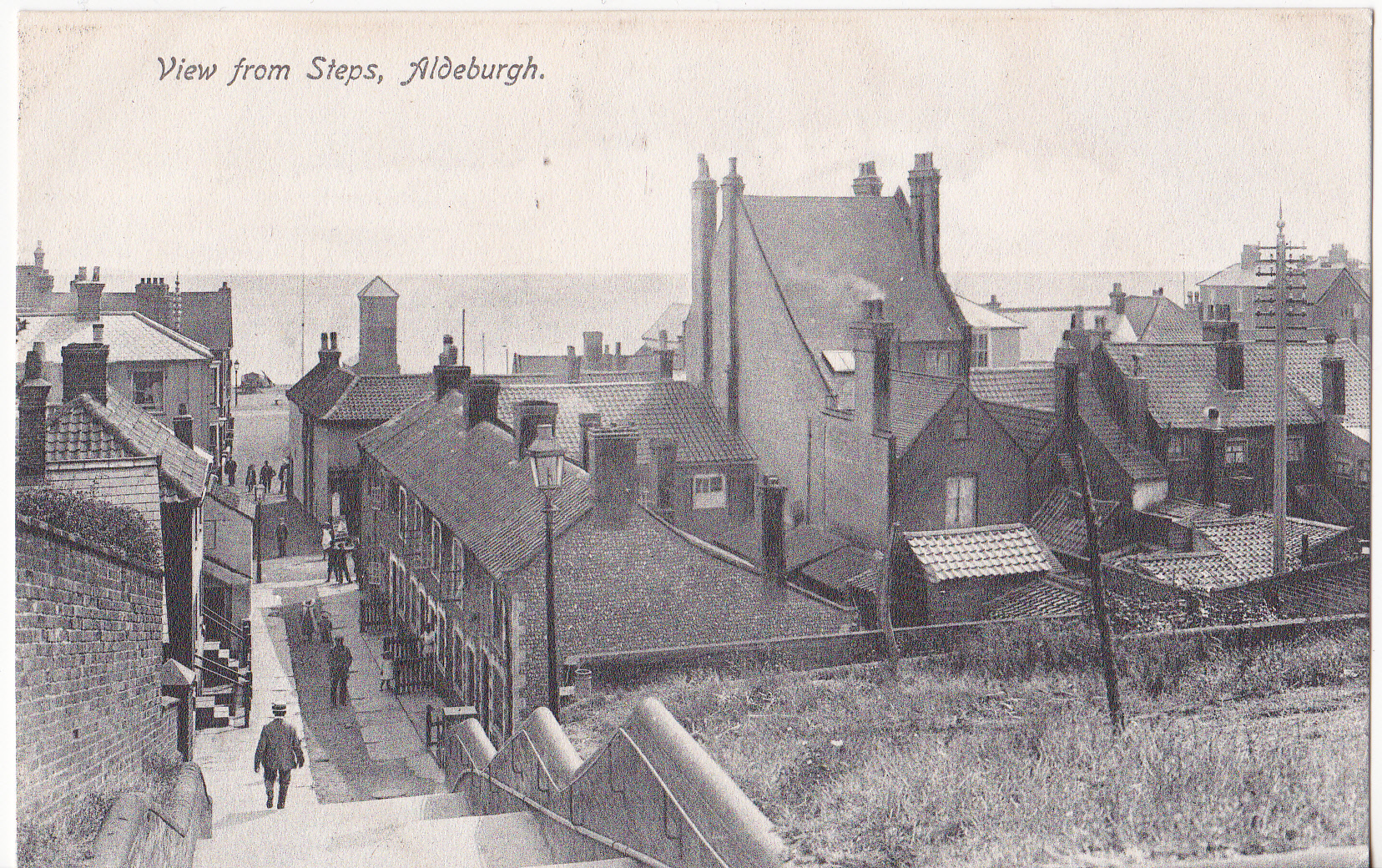
 

Ann Dingsdale also researches the 1866 petition –  access her thesis here and her blog here

, ,

1 Comment

Suffrage Stories: Five Reasons To Love Sally Heathcote Suffragette

I knew only of Mary Talbot as the author of the Costa-winning Dotter of Her Father’s Eyes when, a year ago, she got in touch, sending me PDFs of the bulk of Sally Heathcote Suffragette and asking what I thought of it.

I had no hesitation in deciding that Sally Heathcote Suffragette was a winner.

FrontCovercropped-211x300


1) Not only does the book tell the story of the militant suffrage movement with clarity and verve, but, most interestingly, approaches the narrative from an unfamiliar angle.  And I must say it is an angle that appeals to me. For Sally’s  story applauds the efforts of Frederick and Emmeline Pethick Lawrence, whose work for the cause has been overshadowed by the antics of the more headline-grabbing suffragettes. By not offering any resistance to their ousting from the WSPU by Emmeline and Christabel Pankhurst they have, until now, been consigned to the shadows.

The Pethick Lawrences were militant up to a point – they both went to prison – but they drew the line at bombings and fire-raising. Apart from the danger involved, they could see that this level of violence would only further antagonise both government and public.

Sally Heathcote  brings to the fore the social philanthropy – and socialism – that lay at the heart of the Pethick-Lawrences’ involvement in the suffrage cause and their support for pacifism during the First World War. They  effected ‘deeds’ – running the Maison Esperance, the Esperance Club and the Green Lady Hostel- as well as publishing ‘words’ – in the shape of the paper Votes for Women. You can read more about the Pethick-Lawrences’ work after their expulsion from the WSPU here.

2) I love the accuracy of Sally Heathcote – not only of the history, but of the visuals. For instance I was very taken by Kate Charlesworth’s drawing of the interior of Lincoln’s Inn House – as in the picture in the bottom frames here.

Metcalfe Woman's Effort_0001

Below is the interior of Lincoln’s Inn House in reality – a (rather blurry) photo I took in what is now a Bill’s Restaurant last summer. I just love the fact that the detailing of the staircase railing is so right.

Lincolns Inn House interior 2


I asked if either Kate or Mary had visited the building   – but no. We worked out that Bryan’s source had been this page in Votes for Women.

3) All the well-known suffrage scenes are captured brilliantly. You can see from Kate’s drawing of Christabel speaking in Trafalgar Square how her fresh-faced spontaneity had the power to entrance her audience.  And I do like the comment in the bottom right of the picture -there’s no doubt Emmeline Pethick-Lawrence’s prose was on occasion over-purpled.


Metcalfe Woman's Effort_0002


4) I love Sally because one page alone refers to two constituents of the suffrage campaign that have long appealed to me. The first is dear Elizabeth Wolstenholme Elmy, whose life-long efforts have until recently been sadly undervalued. I remember that when  the massively long text for my The Women’s Suffrage Movement: a reference guide was being copy-edited, the excellent editor did demur about the length of the entry on Mrs Elmy. However, I managed to convince him that she was really important and that back then, in 1999, very little had been written about her – so she was allowed her long entry. So I’m very pleased that Mary has taken notice of her. The postcard (and, of course, I’m very keen on real photographic postcards) shows her on Mrs Pankhurst’s platform during the 1908 Hyde Park rally. You can just see that Kate has drawn a hint of the bouquet that Mrs Elmy was carrying. Mrs E. mentioned in a letter that it was composed of ferns, purple lilies and lilies of the valley – the colours with which  Emmeline Pethick-Lawrence branded the WSPU for this grand occasion.

The second reference is to Maison Esperance – the dressmaking establishment set up by Emmeline Pethick-Lawrence to put her ideals into practice and provide her workers with good working conditions – such as an 8-hour day. I have always thought this a laudable and intriguing enterprise.  Alas, as Mary admits in another frame in the text, the experiment did not last long. Was the provision of good working conditions uneconomic? Or was it that the Maison’s garments did not flatter? Why did Emmeline, with her marketing skill, not get the Cara Delevingne or Alexa Chung of the day to be seen wearing them?   However, the associated girls’ club and the Green Lady Hostel at Littlehampton were successful.

Metcalfe Woman's Effort_0003


5) Finally, apart from everything else, I applaud the understated – but very pointed – message in the final frame.  Read the book – look at the pictures – and discover what this is.


Do have a look at Mary Talbot’s website to find out more about Sally Heathcote Suffragette  – about Mary and Bryan Talbot and Kate Charlesworth – and about associated conferences and book signings.

, , , ,

Leave a comment

Suffrage Stories: Anti-Suffrage Sneaks And Their Stealthy Stickering

Below is an item that I found in a postcard album compiled by Mrs Louisa Thomson Price, one of the leaders of the Women’s Freedom League.

Anti SuffrageMrs Thomson Price acquired this sticker at a ‘Anti-Suffrage campaign’ demonstration held on 16 July 1910 in Trafalgar Square  – during which men mingled with the crowd and stickered ‘well-known women suffragists’ with ‘Votes for Women Never’ slogans.  The Daily Telegraph, in describing the demonstration, particularly remarked on ‘the large number of suffragists and supporters of “votes for women” who were in attendance’,  commenting that ‘the militant Suffragists utilized the occasion as a great opportunity for doing propaganda work among the enemy.’

While Mrs Thomson Price declared that this stealthy stickering was ‘typical of the methods of the ‘Men’s League for Opposing Women’s Suffrage’, The Daily Telegraph reveals that ‘a most effective ending to the afternoon was the march past of the WSPU Drum and Fife Band playing ‘The Marseilles’. Well, that was certainly a more open spoiler.

This anti-suffrage demonstration was held a few days after the suffrage Conciliation Bill had passed its second reading in the House of Commons and  a week before the WSPU’s massive 23 July rally in Hyde Park.  The suffrage campaigners’ hopes were high -and the anti-suffragists were presumably just a little nervous. They need not have worried – for on the very day of the Hyde Park spectacular the prime minister, Asquith, informed Lord Lytton, chairman of the Conciliation Committee that the Conciliation Bill would progress no further than parliamentary session. It was yet another example of how difficult it was to get the political machine to change gear if those in the engine room were not minded to operate the levers.

Mrs Louisa Thomson Price (1864 -1926) was the daughter of a Tory military family but from an early age rebelled against their way of thinking and became a secularist and a Radical. In 1888 she married John Sansom, a member of the executive of the NSS.From c 1886  she worked as a journalist – as a political writer, then a very unusual area for women, and drew cartoons for a radical journal, ‘Political World’. She was a member of the Council of the Society of Women Journalists. After the death of her first husband, in 1907 she married George Thomson Price.

Louisa Thomson Price was an early member of the Women’s Freedom League, became a consultant editor of its paper, The Vote, and was a director of Minerva Publishing, publisher of the paper.  She took part in the WFL picket of the House of Commons and was very much in favour of this type of militancy. In her will she left £250 to the WFL. and £1000 to endow a Louisa Thomson Price bed at the Elizabeth Garrett Anderson Hospital.


, , ,

Leave a comment

Suffrage Stories: Words – As Well As Deeds

This article was published in the March 2003 issue of Antiquarian Book Review.

‘Deeds Not Words’ was Mrs Pankhurst’s motto. The slogan flourished in the early 20th century – it was even embroidered on a banner – a reaction to the apparently unproductive campaign for the enfranchisement of women that had already been waged for nearly 40 years.

Hammersmith deeds The debate as to whether the vote was won by the slow drip of reasoned argument or by the sharp crack of breaking glass is one that still occupies historians. Although it is the deeds of Mrs Pankhurst’s suffragettes – the spectacle of processions, the breaking of windows, the burning of houses and churches – that has coloured the popular perception of the suffrage campaign, without the ‘words’ that had over many years shaped the idea that women had an equal right with men to citizenship, the ‘deeds’ would have been committed in a vacuum. The women’s suffrage campaign was, during its entire 62 years, underpinned by ‘Literature’ in all its guises.

Works written in support of women’s enfranchisement had little difficulty in achieving publication. The instigators of the movement were members of the articulate radical middle class and were in close contact with communicators. A tentative beginning had been made in 1851 with Harriet Taylor’s article The Enfranchisement of Women, which, shortly after her marriage to John Stuart Mill, was published anonymously in the Westminster Review ( a journal of which Mill had in the past been editor). This was followed in 1855 by a pamphlet, The Right of Women to the Elective Franchise, written by Agnes Pochin, wife of a future Liberal MP, and published by John Chapman, that ‘Publisher of Liberalisms’.

Among the names of the 1500 women who signed the suffrage petition that Mill presented to parliament in June 1866 (marking the formal beginning of the campaign), were several with connections to the publishing or bookselling trades – including  Elspet Strahan, sister of Alexander Strahan, a liberal with a zeal for social reform and the publisher of the eponymous publishing house. He had recently launched the Contemporary Review, in which he published an article on ‘female suffrage’ in March 1867, written by Lydia Becker.

Lydia Becker

Lydia Becker – with books

Based in Manchester, Lydia Becker was to be the driving force behind the 19th-century campaign. Among other signatories to the petition were Louisa Farrah, wife of a radical publisher and bookseller (282 Strand, London); Eliza Embleton, a bookseller from Leeds (Burley Street);  the wife of James Renshaw Cooper, a radical Manchester bookseller (1 Bridge Street); and the wife and daughter (both named ‘Harriet’) of Edward Truelove, radical publisher and antiquarian bookseller (2240 Strand), who had been imprisoned for publishing Robert Owen’s Physiology in Relation to Morals. (See here for an interesting blog by Dr Tony Shaw about Truelove and his grave, on which the two Harriets both appear.)

Edward Truelove's grave in Highgate Cemetery. Photo courtesy Dr Tony Shaw

Edward Truelove’s grave in Highgate Cemetery. Photo courtesy Dr Tony Shaw

Once the campaign had been launched, ‘words’ in support of women’s enfranchisement multiplied rapidly. The societies that had formed to promote the cause published a plethora of pamphlets – one of the first, of which 4500 copies were distributed, was a reprinting of the speech made by Mill to Parliament during the debate on the second reform bill in May 1867.

The accounts of the earliest Enfranchisement of Women Committee show that in its first year of existence over £94 was spent on printing. This was set against receipts from the sale of pamphlets of only £6 11s. Political publishing was not a profitable business. In reality, political publishers who were prepared to put their imprint on books and journals to promote the woman’s cause were not so unworldly as to risk their money. A study of the ledgers of companies, such as Trubner and H.S. King, reveals that many of the suffrage publications, including Lydia Becker’s The Women’s Suffrage Journal, were published only on a commission basis.

Under this arrangement, the author or the society undertook all the risk of publication, while the publishers merely provided the service of printing, binding and distribution, for which they gave the book their imprint, charged a fee and took a percentage of sales. Publishers’ ledgers, where they have survived, provide an interesting keyhole through which to view the suffrage campaign. Lists of payments make it possible to identify an author who published anonymously, the print order for a  book, journal or pamphlet can give us an idea of the ambition of the author or society; and the number of pulped gives a reason why so many of the items are now extremely scarce – and expensive.

The suffrage campaign appeared to have made such considerable progress in its first years that Mill, a canny businessman as well as philosopher, felt the time was ripe to publish the work that he had first drafted in the early 1860s on ‘the woman question’. As he wrote in a letter to The Times on 9 April 1869: ‘It is not specially on the Suffrage question, but on all the questions relating to women’s domestic subordination and social disabilities, all of which it discusses more fully than has been done hitherto. I think it will be useful, and all the more, it is sure to be bitterly attacked’. Mill knew full well the publicity value of controversy.

John Stuart Mill remained a hero to the more constitutionally-minded elements in the suffrage campaign

John Stuart Mill remained a hero to the more constitutionally-minded elements in the suffrage campaign

The Subjection of Women was published by Longmans in May 1869, went into a second edition in the same year, and has remained ever since a central text of the women’s movement.

Helen Blackburn, Women's Suffrage, 1902

Helen Blackburn, Women’s Suffrage, 1902

It took until 1902 for the first history of the campaign to appear. Women’s Suffrage: a record of the women’s suffrage movement in the British Isles with biographical sketches of Miss Becker was painstakingly compiled by Helen Blackburn, who had for many years worked as secretary of the Central Committee for Women’s Suffrage.

The new force that emerged in 1903, Mrs Emmeline Pankhurst’s Women’s Social and Political Union, did not delay so long before giving itself a distinctive history. A series of articles written by Sylvia Pankhurst, daughter of Emmeline, as The History of the Suffrage Movement, appeared in the WSPU’s new paper, Votes for Women, starting in the first issue in October 1907 and concluding in September 1909.

Pankhurst SuffragetteThis history was, naturally, shaped to emphasise the Pankhursts’ centrality to the movement. Bibliophiles might like to note that the book that emerged from the articles, The Suffragette: the history of the women’s militant movement, was first published in America in 1911 by Sturgis & Walton and sheets where only then shipped back to Britain, where it was subsequently published by Gay & Hancock.

The publication in 1912 of Women’s Suffrage: a short history of a great movement (TC & EC Jack), written by Millicent Fawcett, did something to redress the balance. She had been involved with the campaign since its earliest days and since 1907 had been leader of those who described themselves as ‘law-abiding’ in contradistinction to the militants.

Metcalfe Woman's EffortAgnes Metcalfe’s Woman’s Effort: a chronicle of British Women’s Fifty Years Struggle for Citizenship (1865-1914), published in 1917, gives a detailed overview of the campaign, concentrating on the efforts of the militants.

womensvictoryaft00fawcuoft_0009

In 1920 Mrs Fawcett completed her history of the suffrage campaign, begun in A Short History, with another pithy summary of events that had led to the passing of the Representation of the People Act, 1918,  granting the vote to women over the age of 30.

All these books were bought (as ownership inscriptions found in them testify) by sympathisers to the cause, were part of the stock of the small lending libraries run by many of the local suffrage societies and also found their way into the public library systems and even into prison libraries. While imprisoned, suffragettes were able to read lives, such as those of Joan of Arc and Garibaldi, that they considered (by analogy) relevant to their cause – the cult of the ‘hero’ clearly appealed to those conscious of their role in history.

Daniel Maclise, John Francis Maguire

Daniel Maclise, John Francis Maguire

Alongside the polemics, the women’s suffrage campaign also provided a rich seam mined by writers of fiction. John Francis Maguire, MP for Cork and an active supporter of the woman’s cause, was the first, publishing in 1871, a year before his death, a three-decker, The Next Generation (Hurst & Blackett). The action was set in 1891, by which time the ‘Rights of Woman’ movement..was a wonderful success [and had] long since been accepted with satisfaction almost universal’. Eighty-nine women MPs sat in parliament and Mrs Bates was chancellor of the exchequer.

The following year, ‘Arthur Sketchley’ in Mrs Brown on Women’s Rights (George Routledge) worked what Maguire had correctly identified as a ‘fruitful theme’, and demonstrated that his comic heroine, Martha Brown, had already got the measure of ‘women’s sufferages’. Mrs Brown surveys her first suffrage meeting: ‘Why, surely no Members of Parlyment aint a-coming to sich a ‘ole as this; for I’d ‘eard Miss Snapley a-braggin’ as Professor Fairplay were a-goin’ to take up the question in the chair, along with a old lady in the name of Mill, and a good many more as all ‘oped to be in Parlyment afore they died.’

The subject also, of course, lent itself to melodrama as well as to comedy. Emily Spender published in 1871 a novel, Restored (Hurst & Blackett, 1871) dedicated to the leader of the Bath society for women’s suffrage, of which she herself was an active member. In the novel a wicked husband, repossessing his young wife, declaims ‘If you had read your Bible a bit more, and John Stuart Mill, a little less, you would have been a better woman, Frederica.’ [Incidentally Emily Spender, the great-aunt of Sir Stephen Spender, spent her later years in Italyand was the model for E.M. Forster’s ‘Miss Lavish’ in Room with a View.]

Throughout the 19th century, a stream of novels used support for, or antipathy to, the suffrage cause as a shorthand by which to delineate characters or to put plot machinery into gear. An indication that the campaign was losing its momentum at the end of the century may be surmised from the fact that between 1900 and 1906 no ‘suffrage’ novels were published.

Robins, The Convert. Photo courtesy of Lorne Bair

Robins, The Convert. Photo courtesy of Lorne Bair (click here to find a 1st US ed for sale)

However, in 1907, the year after the WSPU took its campaign to London, three novels appeared. The most famous of these is The Convert (Methuen) written by Elizabeth Robins, who was a keen supporter of the WSPU and based her scenes and personalities on activities of which she had been an eyewitness. Describing a suffrage rally in Trafalgar Square she drummed home the argument for the existence of the WSPU:

‘You’re in too big a hurry’, someone shouted, ‘All the Liberals want is a little time.’

‘Time! You seem not to know that the first petition in favour of giving us the Franchise was signed in 1866…We must try some other way. How did you working men get the suffrage?, we asked ourselves. Well, we turned to the records and we say. We don’t want to follow such a violent example. We would much rather not – but if that’s the only way we can make the country see we’re in earnest – we are prepared to show them.’

The Convert was in fact Elizabeth Robins’ novelisation of her play Votes for Women!,  written during the autumn of 1906 and  first staged at the Royal Court Theatre in April 1907. For Kate Parry Frye’s description of a visit to see the play on 16 April 1907 click here.

Elizabeth Robins, as author of 'Votes for Women!' featured on a card in 'The Game of the Suffragette'

Elizabeth Robins, as author of ‘Votes for Women!’, featured on a card in ‘The Game of the Suffragette’

In the years that followed, the real-life activities of the suffragettes were reflected by the derring-do of their fictional equivalents in a steady stream of novels. Novelists could now take their middle-class readers into places they might not previously have sought to enter – even the prison cell – and were given legitimate reason to describe the indignities that might be wrought on women’s bodies, whether through the horrors of force-feeding or at the hands of policemen in battle outside the House of Commons. A hero of one such tale (A. Mollwo, A Fair Suffragette) is racked by ‘the picture of [a] fragile, slender little body at the mercy of this yelling, excited crowd, torn first one way, then another, insulted by angry policemen, knocked under the feet of horses.’

Words describing the WSPU Deeds - from Kate Frye's diary

Words describing the WSPU Deeds – from Kate Frye’s diary

All in all, the wide range of  ‘suffrage’ literature published during the course of the campaign – histories, tracts, speeches, leaflets and novels – offers historians and collectors a fascinating lens through which to view not only the political battle in all its complication, but also the changing perception of the position of women that in the end was so necessary to the winning the vote.

, , , , , ,

Leave a comment

Suffrage Stories/Suffrage Collecting: WSPU Illuminated Address

Illuminated address presented to Adelaide McCarthy

Illuminated address presented to Adelaide McCarthy

Illuminated addresses such as this were first presented to WSPU prisoners on their release from Holloway in September 1908. 

The addresses, signed by Emmeline Pankhurst, were designed by Sylvia Pankhurst and incorporate the purple, white and green colours that the WSPU had adopted three months earlier, in June 1908. The ‘angel of freedom’ device was one that Sylvia was to use on other WSPU artefacts – a neat piece of WSPU ‘branding’.

As ever, the suffrage collector needs to be on guard against modern reproductions that pass as the original. As a dealer I was once offered what appeared to be the address presented to suffragette Clara Codd. However, always rather suspicious, my research quickly revealed it to be a copy sold, entirely legitimately, by Bath-in-Time (the gallery of Bath Central Library). I was told that the unfortunate person offering the address to me had bought it as the real thing from a (presumably) rather unscrupulous source. Caveat Emptor.


, , , ,

Leave a comment

Suffrage Stories:’We Believe That The Rousing Of The Irish People Had Best Be Left To Irish Women’

‘We believe that the rousing of the Irish people on this matter had best be left to Irish women’

This article is the text of a paper that I gave in 2003 at a conference held at Portsmouth University to mark the 100th anniversary of the founding of the WSPU. Eleven years later we are now approaching the 100th anniversary, on 25 May, of the passing of the Government of Ireland Act, the campaign for which had been so closely entwined with that for ‘Votes for Women’. In the circumstances it seems timely to remind my readers of the important – and complicated – part that Irish politics played in the women’s suffrage campaign.

In 2003 I had decided to devote the paper to the Irish suffrage campaign because, although the Irish Question and the British government’s attempts to deal with it, had a profound philosophical and a practical impact on the WSPU campaign both in Ireland and in mainland Britain, it is not a subject that is often given much consideration at English conferences.

The title of the paper – ‘We believe that the rousing of the Irish people on this matter had best be left to Irish women’ – is taken from an article published in The Irish Citizen of 14 September 1912. This was a Dublin suffrage paper, founded a few months earlier with financial help from the Frederick and Emmeline Pethick-Lawrences, still (if only for another month) leaders of the WSPU. The article was written either by Hanna Sheey Skeffington, the leader of the militant Irish suffrage society, the Irish Women’s Franchise League, or by her husband, Francis, the paper’s editor, and was prompted by what the paper described as the first public meeting held by the WSPU in Dublin, at which the speakers had included Sylvia Pankhurst and Georgina Brackenbury.

The article continued: ‘Many will regret that the campaign for women’s suffrage in Ireland was not left entirely in the hands of the Irish suffrage societies, which are sufficiently numerous and sufficiently varied in their appeal. But the advent of the WSPU might have been predicted from the moment when Mr Redmond and his party decided to import Mr Asquith into Ireland. That some of the English militants would follow their chief enemy might have been foreseen. We believe however that the rousing of the Irish people on this matter had best be left to Irish women, who understand the psychology of their countrymen as the ablest English advocate never can.’

I will take these several sentences as my text and use them to analyse the Irish suffrage campaign and the WSPU’s part in it.

‘Many will regret that the campaign for women’s suffrage in Ireland was not left entirely in the hands of the Irish suffrage societies, which are sufficiently numerous and sufficiently varied in their appeal’. And indeed they were. The suffrage campaign had begun in the 1860s in Ireland as it had in England, although its early development had been even more hesitant in Dublin than it had in London. The Irish suffragists were initially drawn from the Quaker circles that had been long involved in radical causes, such as the anti-slavery campaign. However those women in Ireland who signed the 1866 petition were not sufficiently motivated to found a suffrage society immediately.

Thomas and Anna Maria Haslam, portrait by Sarah Cecilia Harrison, courtesy of the Hugh Lane Gallery, Dublin

Thomas and Anna Maria Haslam, portrait by Sarah Cecilia Harrison, courtesy of the Hugh Lane Gallery, Dublin

There was a Dublin committee between 1870 and 1873 but the campaign stagnated until 1876 when a new Dublin society was founded by Anna Maria and Thomas Haslam. This Dublin society was, although in its way radical for Ireland, not particularly effective.

In 1871 a Belfast committee had been formed by the formidable Isabella Tod; a close ally of Lydia Becker – and, like the Haslams, a staunch Unionist.

Isabella TodThis society certainly gives the impression of having more drive than that in Dublin and Isabella Tod maintained closer contact with Manchester and London than did Mrs Haslam.  Although both societies were affiliated to the Central Committee in London, they suffered from being at a distance from the political engine. There was also the feeling that the Irish suffragists were doubly at a disadvantage, not only, as all women, were they lobbying for entry into a political system which, by its very nature, was the only source of the entrance ticket, but for entry to the political machine of what was considered by many in Ireland to be that of a colonial power.  Perhaps as a result, the suffrage societies in both the south and the north concentrated their efforts in the 1880s and 1890s on local emancipation, campaigning to gain for women the municipal franchise – because Ireland had not been included in the acts that enfranchised single and widowed women ratepayers in England and Scotland in 1869 and 1882 respectively. During the course of this campaign Mrs Haslam strongly objected to what she saw as English interference. However, reading between the lines, the London societies saw her work as rather ineffective and actually criticized one of her pamphlets as inaccurate. Between 1886 and 1895 the Dublin suffrage society appears to have published no reports and held no public meetings, considering that the state of the country was unfavourable to such activity. However, in 1897 both the Dublin and Belfast societies joined the new National Union of Women’s Suffrage Societies (NUWSS) and from 1903 both were drawn into the revived suffragist campaign.

In Dublin, as in Manchester and London, this revived campaign led to the formation of a new type of suffrage society, the Irish Women’s Franchise League, founded in 1908 by women who were Irish Nationalists, but who were prepared, until the vote was achieved, to put the women’s cause before that of Home Rule.

Margaret Cousins

Margaret Cousins

The IWFL established links with the WSPU and in 1909 Margaret Cousins, one of its co-founders, spent three weeks in Clement’s Inn learning tactics directly from the WSPU. Ireland had long had a symbolic importance to the Pankhurst family as it had to all radicals. In her autobiography Emmeline Pankhurst particularly singles out the effect that the fate of the Manchester Martyrs had on her (they were hanged in the 1860s for the accidental killing of a policeman during a Fenian riot),  noting that it was this that brought home to her that ‘justice and judgment lie often a world apart’. According to Sylvia Pankhurst, her father was ‘the first English Parliamentary candidate to pledge himself to Irish self-government when he stood at a by-election in Manchester in 1883’. Christabel made her first visit to Dublin in March 1910, returning again in October 1911 and Mrs Pankhurst toured Ireland in October 1910, returning again in April 1911. The Irish Citizen was, therefore, not entirely correct in calling the WSPU’s 1912 meeting its first in Dublin. While in Cork in October 1910 Mrs Pankhurst had inaugurated a new branch of the IWFL, indicating how closely at that stage the two societies were working. As for the north, Mary Gawthorpe had visited Belfast at about the time of Christabel’s first visit to Dublin.

Ireland did certainly support a variety of suffrage societies. Whereas in England, Scotland and Wales new local societies, whether militant or constitutional, tended to be formed as branches of one of the main national societies, in Ireland many localities sponsored their own individual society. Besides Mrs Haslam’s Dublin-based society, now known as the  Irish Women’s Suffrage and Local Government Association,  and the IWFL, there was, for instance, the Munster Franchise League in co Cork, the Irish Women’s Suffrage Society in Belfast and many separate, small suffrage societies in individual towns.

Indeed, by 1911 the proliferation of societies was such that it was considered sensible to found a Federation of Irishwomen’s Suffrage Societies. The Federation soon developed a synergy of its own, leading quickly to the formation of the Irish Reform League based in Dublin, and of a new Belfast Suffrage Society. Neither the IWSS, nor the IWSLGA nor the Irish Women’s Franchise League joined the Federation. The effect of the suffrage lobby in Ireland, small as it was, was further diluted by these divisions.

The Irish suffrage campaign had to all intents and purposes been left for 45 years in the hands of Irish societies – which, battling against even greater cultural and political difficulties than had the women of mainland Britain, eventually achieved the municipal franchise for women but could hardly have been said to have roused the Irish people.

‘But the advent of the WSPU might have been predicted from the moment when Mr Redmond and his party decided to import Mr Asquith into Ireland.’

At a parliamentary level, from the 1880s to the outbreak of the First World War, there was a synergy between the woman’s movement and the Irish movements – both unionist and nationalist. All were pressure groups attempting to influence the political machine – that is parliament and, increasingly, the cabinet – and each development in the campaign of one affected in some way that of the other. The Irish Question, in parliamentary arithmetical terms, was at this time crucial to the possibility of the suffrage campaign’s success. After the second 1910 election, in December, the 84 members of the Irish parliamentary party, led by John Redmond, held the balance of power in the House of Commons and, on the understanding that a Home Rule bill would be introduced, agreed to support the Liberal party. Now, indeed, Irish women suffragists for a time considered that they were in a strong position, with two chances of success. The first as a result of any national measure introduced by the imperial parliament – that is the Liberal government backed by the Irish party – and as Irishwomen, under a Home Rule bill. However it became clear that the Irish party – as a party – was not interested in supporting women’s suffrage. Irish Nationalist MPs, whatever their personal feelings, were not prepared to load, as they saw it, a Home Rule bill with another controversial question. Unwilling to jeopardize any Home Rule bill by risking their influence with Asquith, who, it was rumoured, threatened to resign if the Conciliation bill was passed. they reneged a second time in 1912.

Until then, close as the IWFL was to the WSPU, it had not been able to imitate the WSPU’s electoral tactic of urging those who did have a vote to use it in such a way as to prevent a government candidate from being elected, the tactic that in Britain was summed up in the slogan, ‘Keep the Liberal Out’. Ironically, this was a technique which had been first used by the Irish nationalists under Parnell in the 1880s and which the Pankhursts adopted early in the WSPU campaign.  Between 1908 and 1911 the IWFL’s task, as Margaret Cousins put it, was, rather, ‘to see that votes for women was incorporated in the Home Rule Bill for which Ireland was fighting.’  In early 1913, when it had became clear that neither the Liberal party nor the Irish Parliamentary party was prepared to include women in any Home Rule bill, the IWFL did adopt a policy of opposing the election of nationalist candidates. The conflict between nationalism and suffragism haunted the Irish suffrage campaign.

In June 1912, despite a large demonstration by Irishwomen in Dublin, the government ignored a resolution from the IWFL to amend the Home Rule bill by adopting as the basis for its franchise the local government register – which would, of course, have given many women the vote. This marked a watershed in the Irish campaign. The IWFL now adopted not only the WSPU’s by-election policy but also its militant tactics – Hanna Sheey Skeffington and others broke windows of government buildings in Dublin. For a previous post about two of these other women – Rosalind and Leila Cadiz (aka as ‘the Murphy sisters’) – and the pendants which they received to commemorate their efforts see here.

Hanna Sheehy-Skeffington

Hanna Sheehy Skeffington

Although several of these women had already been imprisoned in England after taking part in WSPU- organized deputations or window-smashing raids, this was the first time that acts of physical suffrage militancy had been carried out in Ireland. Four of the women received prison sentences. In court, from the dock, Hanna Sheey Skeffington shouted, ‘Remember Mr Asquith is coming in July’. Irish nationalists considered this visit to be an indication of the government’s imprimatur on the Home Rule bill and the popular press was clear that any demonstrations by suffragettes would be classed as anti-nationalist, and therefore ‘English’. You can see how complicated Irish political priorities and the perception of them could be.

‘That some of the English militants would follow their enemy might have been foreseen.’  Indeed the WSPU campaign was now brought, with a vengeance, to Ireland. The Prime Minister’s speech on the second reading of the Reform bill early in July made clear that his government had no intention of extending the franchise to women. Thus, within a few weeks, the suffrage campaigners had seen both the chances of enfranchisement that they had been nurturing– whether under the Home Rule bill (which had particularly interested the Irish suffragettes) and the Reform bill (of interest to all women) swept aside.  Three WSPU members, Mary Leigh, Jennie Baines and Gladys Evans (the first two had been members of the WSPU since the earliest days) followed Asquith to Dublin. It later became clear that they had done this of their own initiative. Emmeline was staying with Christabel in Paris at the time; but both, of course, gave their firm support to the expedition after the event.

On 18 July Mary Leigh threw a hatchet, to which a suffrage message was attached, into the carriage in which Asquith was travelling through the streets of Dublin with John Redmond and that evening Gladys Evans attempted to set fire to the Theatre Royal, in which he was to speak (for more about Gladys Evans see here). There had hitherto been no attempts at suffrage arson in Ireland.  Members of the IWFL  harried Asquith, but in no such spectacular manner and the 27 July issue of The Irish Citizen, while full of their activities, does not directly report the WSPU attacks, except to print a letter from Margaret Cousins stating that ‘the IWFL had no connection with or knowledge of the action of English suffragettes in Dublin’.

Although distancing themselves from the WSPU, disliking what they saw as English interference in Ireland, the IWFL prisoners did embark on a sympathetic hunger strike with the WSPU prisoners, who had received lengthy jail sentences with penal servitude.. The Irishwomen, however, were not forcibly fed, this procedure being only carried out in Irish prisons on English prisoners. Jennie Baines and Mary Leigh were both released, ill, the former after 12 days, the latter after five weeks; Gladys Evans endured the forcible feeding until 3 October, when she was released into the care of a member of the IWFL This incursion into the south of Ireland by WSPU militants was, however, a ‘one-off’,  –  as the Irish Citizen had suggested the opportunity of harrassing Asquith on Irish soil had been too good to miss.

We believe, however, that the rousing of the Irish people in this matter had best be left to Irish women, who understand the psychology of their countrymen as the ablest English advocate never can.

The first acts of suffrage militancy in Ulster were committed by Irish suffragettes on 16 November 1912 when windows were broken in the GPO in Belfast as a protest against the defeat of Philip Snowden’s amendment to include women in the third Home Rule Bill. Two IWFL members had, for the same reason, broken windows in the Custom House in Dublin. Two months later, on 28 January 1913, when it seemed likely that the second reading of this Home Rule bill would pass without an amendment including women in the franchise, Margaret Cousins and others again attacked the windows of a government building, this time of Dublin Castle.  The women were each sentenced to a month’s imprisonment and went on hunger strike until they were treated as political prisoners. It is noteworthy that all acts of suffrage militancy in Ireland by Irish suffragettes up to this time were reaction to the continued failure to include women in Home Rule bills rather than in the Reform bills with which women in the rest of Britain were concerned.

By the autumn of 1913 with the Home Rule bill assured, although women were still excluded from it, the focus of the Irish suffrage campaign moved from Dublin to Ulster, reflecting the growing importance of that arena in national politics. This stage of the campaign was, however, to be, in the main, waged by the WSPU. The IWFL appears to have blamed the various Ulster suffrage societies for not working sufficiently hard and thus allowing a vacuum into which the WSPU could slip. In early September 1913 Sir Edward Carson announced that if a Home Rule bill were passed, he would set up a separate provisional government in Ulster. Moreover, a letter, dated 10 September, from Sir Edward to the secretary of the Ulster Unionist Council intimated that the draft articles of this Provisional Government would include the franchise for women on the basis of the Local Government Register. Needless to say Carson had never before been considered as a politician sympathetic to the suffrage cause – and suffrage campaigners, while on the surface accepting it as something of a coup, certainly wished to see this statement clarified. The WSPU – with Dorothy Evans as its organiser -had arrived as a formal presence in Ulster very shortly before and their aim over the next few months was to get Carson to state in public that women would be enfranchised under any Ulster government. This he never did.

If the arrival of the WSPU did not put much fear into Carson it certainly threw the Belfast-based Irish Women’s Suffrage Society into confusion. Shortly after the arrival of the WSPU in Belfast, the IWSS passed a resolution to declare itself in favour of militancy – if you couldn’t beat them, join them. Matters became even more complicated as individual members of the older societies changed allegiance. In fact by 20 April 1914 so many members of the IWSS had joined the Belfast branch of the WSPU that the former society collapsed. The Irish Citizen continued with its objection to an English society bringing its campaign to Ireland.   However, although the WSPU tactics might be classed as ‘English’ they were now being carried out by Irishwomen. Despite this, the Irish Women’s Suffrage Federation, in completely disassociating all its constituent societies from any involvement in militancy, stated ‘The Northern Committee of the IWSF wish to place on record their disapproval of the policy of the WSPU in Ulster, and to explain the fact that the WSPU is an English association, and has no connection with any Irish suffrage organisation’.

It is clear why the WSPU thought Ulster a particularly suitable arena in which to employ its militant tactics. The suffragette campaign in the whole of the United Kingdom in that year before the outbreak of the First World War was set against the background of increasing militarism in Ulster. The Ulster Volunteer Force had been formed in January 1913, an illegal organisation, but with strong links to both the Orange Order and the British army. In retaliation nationalist Ireland raised the Irish Volunteers. In her editorials in The Suffragette, Christabel Pankhurst drew legitimacy for her campaign of terrorism from the success that threats of violence by the UVF were achieving in Ulster. The WSPU, like the UVF, and unlike the IWFL in Dublin, did not confine itself to threats against government property only. Houses, bowling pavilions, pillar boxes and railway stations were fired, culminating on 31 July 1914 in an explosion in Lisburn Cathedral, after which Dorothy Evans and three other women were arrested, imprisoned and went on hunger strike, only being released after the outbreak of war.

There was never much WSPU action in the south of Ireland, although branches were set up in Dublin and in Cork, the latter by Geraldine Lennox, then on the run as a ‘mouse , and Flora Drummond spoke in Cork and Dublin in February 1914.  Nor, it must be said, was there much activity at all in 1914 from the IWFL. The political agenda was, of course, now concentrated on Ulster but it has also been suggested that the IWFL kept a low profile because it did not wish to be associated with what was perceived to be the ‘English’ campaign in the north. The WSPU was not particularly interested in rousing the Irish people, but was more intent on using and increasing the turmoil in Ulster as a means of putting pressure on the political machine at Westminster. As Christabel later put it in Unshackled, ‘It was not that we were concerned to question or assert the moral justification of Ulster’s militancy, actual or prospective, but we did claim the same immunity from prosecution and imprisonment for militant women whose grievance was at least equal and whose militancy was far milder’

The WSPU intervention in Ireland had the effect, then, of diminishing, for a year from September 1913, the campaign that had been waged by the Irish suffrage societies. We have no way of knowing whether the militant campaign might have had some positive effect – it was, of course, called off in August 1914. Dorothy Evans then returned to England – although she remained a close friend and co-worker of Hanna Sheey-Skeffington. That militancy – Unionist militancy, that is – could have an effect on the Asquith government was made clear when the Home Rule bill – which received the Royal Assent on 18 August 1914 – excluded Ulster, although its enaction was postponed until the end of the war.

Throughout the years of war the Irish suffrage societies carried on the campaign in their various ways. They found it was to be no easier to wrest the vote from Irish politicians than it had been from the English. In fact the Irish parliamentary party tried hard to prevent the extension to Ireland of the 1918 Representation of the People Bill, by which the Westminster parliament gave the vote to women over 30.

The Sheey Skeffingtons were probably correct, in principle, in stating that the rousing of the Irish was best left to Irishwomen.  However, there is no escaping the fact that in the years before the First World War, because there were so many Irish suffrage societies that, because of the divisive nature of Irish society in general, were unable to pool their efforts, little success had been achieved in influencing either the Irish public or Irish politicians to give women the vote. The WSPU was not interested in the nuances of the Irish Question, but saw Ireland – specifically Ulster – as another battle ground on which to engage with the enemy. Christabel Pankhurst used the parallels of the Unionist and the suffragette campaigns to emphasise the injustice being done to women by the Asquith government.

Perhaps the incursion from England gave the Irish societies food for thought. It is certainly true that during the war years the Irish societies managed a greater degree of co-operation than heretofore.  For the December 1918 general election the IWFL co-operated with Sinn Fein to run two women candidates, Winifred Carney in Belfast – who was not successful – and Constance Markievicz, in Dublin, who, famously, was – the first woman MP elected to the British parliament, although she did not take her seat at Westminster.

Constance Markievicz, police photo on her arrest after the Easter Rising in Dublin in 1916.

Constance Markievicz, police photo on her arrest after the Easter Rising in Dublin in 1916.

In 1922, six years before women in Britain, Irishwomen over 21 were granted the vote, albeit reluctantly, by the Irish parliament. In the final stage of the Irish suffrage campaign it was most certainly the effort of Irishwomen, still led by Hanna Sheey Skeffington, that achieved the final victory.


Further reading: E. Crawford, The Women’s Suffrage Movement in Britain and Ireland: a regional survey, Routledge, 2008 (paperback).


Copyright

All the articles on Woman and Her Sphere and are my copyright. An article may not be reproduced in any medium without my permission and full acknowledgement. You are welcome to cite or quote from an article provided you give full acknowledgement.


, , , , , , ,

2 Comments

Suffrage Stories: Millicent Fawcett’s Bookplate

Here is Millicent Fawcett’s bookplate


MGF bookplate
Rather lovely, I think.

New Dawn, Aesthetic Lilies, Aesthetic Dress (not that Millicent, unlike Rhoda and Agnes Garrett, ever favoured such a style in reality) and the tools of her trade, the Scales of Justice, Books, Pen and Ink

Artist unknown

For those who have not yet seen Millicent at work at her desk in the drawing room of 2 Gower Street, click here

2 Comments

WALKS/Suffrage Stories: Millicent Fawcett and Queen Elizabeth I

Now that the Women’s Library Reading Room is open on the 4th floor of LSE Library, here is another idea  for those who might want to stretch their legs during their visit.

Why not take a gentle meander along Fleet Street and visit Queen Elizabeth I as she stands in her niche over what was the entrance to the Parochial School attached to the church of St Dunstans in the West? Not only is this thought to be the only surviving statue of the Queen carved in her lifetime, but she has a very close connection to Millicent Fawcett, in whose honour the Fawcett Library (as the Women’s Library was originally known) was named.

Statue of Queen Elizabeth I at St Dunstan's in the West Statue of Queen Elizabeth I at St Dunstan’s in the West

It is thought that the statue was carved in 1586. It then led a rather adventurous life before coming to rest in this niche on the facade of St Dunstans in the West when the church was rebuilt here in the 1830s. Nearly a century later it was in a dilapidated state and its restoration was financed by Dame Millicent Fawcett and her sister, Agnes Garrett, together with ‘Miss Jones of Lincoln’s Inn’ and Gwen John. The latter was not, as is sometimes stated, Gwen John the artist, but Gwen John, playwright and actress, author of a biography ‘Queen Elizabeth’ and a play ‘Gloriana’. Gwen John, whose real name was Gladys Jones, lived with Winifred Jones (‘Miss Jones’), presumably her sister, at 9 Old Square, Lincoln’s Inn. See here for National Portrait Gallery of this Gwen John.

Millicent Fawcett, c 1928 Millicent Fawcett, c 1928

In a rather neat sequence of events, on 28 June 1928 Dame Millicent Fawcett presided at the Annual General Meeting of the Society for the Protection of Ancient Buildings, at which the preservation of old churches was the topic of discussion, on 2 July the  Representation of the People (Equal Franchise) Act, for which she had been campaigning since 1866, became law, and on 31 July she unveiled the restored statue of Queen Elizabeth I. See the unveiling here, although Millicent Fawcett, modest as ever, cannot be seen. However the curtain she caused to be moved, moves. Which is sort of symbolic of the influence she exerted during her long life.

While the statue was undergoing restoration it was discovered that it had originally been coloured. So, the statue was repainted, following the original colours as closely as possible. The farthingale and corsage were white, the face was tinted a flesh colour and her crown was gilded.  Alas, this colouring is no longer obvious to the passer-by and the Queen has rather faded back into the facade of the building.

Millicent Fawcett died just a few days over a year after unveiling the statue and in her will left £700 towards its upkeep, although that fund may now have been exhausted and wound up.

If you wanted to pause, you could combine veneration of the Virgin Queen and thoughts of the venerable suffrage campaigner with a coffee from the stall that is now a permanent fixture just below her niche.

, , , , , ,

5 Comments

Suffrage Stories: 1911 Census: Vanishing For The Vote

TO BE PUBLISHED ON 6 MARCH 2014

Vanishing for the Vote 1 001

As readers of this blog will know, since 2009 I have been involved in research on the suffrage boycott of the 1911 census. With Dr Jill Liddington, I worked to uncover the women who followed the call to boycott the census. We studied the circumstances of those who did – and those who did not – refuse to complete the census form and produced, first, a paper for the Women’s History Network Conference, held in Oxford in September 2009, and then an article ,‘Women do not count, neither shall they be counted’: Suffrage, Citizenship and the Battle for the 1911 Census‘ published in the History Workshop Journal in 2011.

It was intended to develop this research into a book, but I decided to pursue other projects  – such as the setting up of the Elizabeth Garrett Anderson Gallery and writing Campaigning for the Vote: Kate Parry Frye’s Suffrage Diary as well, of course, as running my bookselling business,’ Woman and Her Sphere’ –  while Jill turned the census research into Vanishing for the Vote. 

I continued, however, to be very interested in uncovering 1911 census boycotters – and wondering about their lives –  and, at odd moments, wrote up my discoveries for the Woman and Her Sphere blog – and gave a paper, ‘No Vote No Census’ ,at the National Archives Conference on the 1911 census, held in the autumn of 2011. You can listen to it here.

Jill later asked me to help compile the extensive  Gazetteer of Suffragettes/Suffragists that constitutes the end section of Vanishing for the Vote.  This is  based on the original research we carried out, supplemented by details of many additional boycotters that prolonged acquaintance with the digitized census has now uncovered.

I am sure that all who are interested in the Edwardian suffrage campaign will be delighted to read Vanishing for the Vote – which takes us right into the lives of the women – and their families – who were prepared to defy the census enumerator in order to highlight their lack of citizenship.

Vanishing for the vote recounts what happened on one night, Sunday 2 April, 1911, when the Liberal government demanded every household comply with its census requirements. Suffragette organisations urged women, all still voteless, to boycott this census.

Many did. Some wrote ‘Votes for Women’ boldly across their schedules. Others hid in darkened houses or, in the case of Emily Wilding Davison, in a cupboard within the Houses of Parliament.

Yet many did not. Even some suffragettes who might be expected to boycott decided to comply – and completed a perfectly accurate schedule. Why?

Vanishing for the vote explores the ‘battle for the census’ arguments that raged across Edwardian England in spring 1911. It investigates why some committed campaigners decided against civil disobedience tactics, instead opting to provide the government with accurate data for its health and welfare reforms.

This book plunges the reader into the turbulent world of Edwardian politics, so vividly recorded on census night 1911. Based on a wealth of brand-new documentary evidence, it offers compelling reading for history scholars and general readers alike.

Sumptuously produced, with 50 illustrations and an invaluable Gazetteer of suffrage campaigners.

To be published by Manchester University Press:

Hardback £65

Paperback: £16.99

37 Lavender Gardens, Battersea -home of John Burns, minister in charge of the Census

37 Lavender Gardens, Battersea -home of John Burns, minister in charge of the Census

Burns' house is remarkably similar in style to that of Henry Nevinson and his wife, Margaret, at 4 Downside Crescent, Hampstead. However, although sharing a similar attitude to architecture, Burns and the Nevinsons were poles apart as regards the Census. While Henry Nevinson was in the thick of the Census parties in central London, Margaret spent the night in this house with a group of women, all of whom refused to give details to the enumerator.

Burns’ house is remarkably similar in style to that of Henry Nevinson and his wife, Margaret, at 4 Downside Crescent, Hampstead. However, although sharing a similar attitude to architecture, Burns and the Nevinsons were poles apart as regards the Census. While Henry Nevinson was in the thick of the Census Night fun in central London, Margaret spent the night in this house with a group of women, all of whom refused to give details to the enumerator. It was not a happy marriage.

32 Well Walk, Hampstead. 'Vanishing for the Vote' reveals something of the domestic argument that went on behind this front door on Census night between Jane Brailsford and her husband, Henry.

32 Well Walk, Hampstead. ‘Vanishing for the Vote’ reveals something of the domestic argument that went on behind this front door on Census night between Jane Brailsford and her husband, Henry. The Census had a knack of highlighting domestic disharmony.

118 Cheyne Walk, Chelsea, home of WSPU activist, Maud Joachim. The enumerator was handed out through this door a census form returned with 'Informaiton Refused'.

118 Cheyne Walk, Chelsea, home of WSPU activist, Maud Joachim. The census enumerator stood at this door and was refused all information

Clemence Housman resisted the Census as well as Tax. Her Census story is well told in 'Vanishing for the Vote'.

Clemence Housman resisted the Census as well as Tax. Her Census story is well told in ‘Vanishing for the Vote’.

2 Campden Hill Square, home of the Brackenbury family, later became known as 'Mouse Castle' when escaping suffragettes found shelter under its roof. On Census Night it was home to an estimate 25 women and one man.

2 Campden Hill Square, home of the Brackenbury family, later became known as ‘Mouse Castle’ when escaping suffragettes found shelter under its roof. On Census Night it was home to an estimated 25 women and one man.

, , , ,

Leave a comment

Suffrage Stories: The British Museum’s Hunger-Strike Medal And The 1911 Census Boycott

Rather belatedly you might think, I’ve just realised that the British Museum holds a hunger-strike medal.  It, together with a Holloway brooch (which rather oddly is the main image used to illustrate the item online), was awarded to ‘Joan Cather’. Her’s was not a name I recognised from previous suffrage research, so I immediately set about finding out something about her.

The first trace I came across for a woman of that name were a few entries on the London Electoral Register in the 1920s and ’30s. Thus, I discovered that a Joan Cather had been living in London, at 23 Upper Montagu Street, sharing the house with John Leonard Cather. Rather oddly, apart from her death in 1967, this Joan Cather hadn’t left any other trace.

So I turned to John Leonard Cather – looking first at his entry on the 1911 census. And, lo and behold, on his census form he had written ‘Conscientious scruples prevent me from rendering a return of the female occupants of this house for the purpose of assisting statistical tables which will be used as the basis for further vexatious legislation affecting women, & in which they have no voice. Should the Conciliation Committee bill be passed into law this session the additional details will be forthcoming.’

A note has been added ‘Two Females inserted in Summary Books by the Registrar being the probable number.’ One of these would doubtless have been his wife, Joan, and the other a female servant.

Clearly I had the right Cathers.

At this time they were living at ‘Red Cottage, Cavendish Road, Redhill’ and John Cather gave his occupation as ‘Motor Body Builder. Lieut Royal Navy (Retired)’. He had married Joan Waller (1882-1967) in 1908 and was clearly fully supportive of her involvement in the suffrage cause. Indeed, when the militant ‘Men’s Society for Women’s Rights’  was formed in 1912,’ Lieutenant Cather’, as he clearly liked to be known, was its honorary secretary. Ge was also by 1914 (and probably earlier) chairman of the Finance Committee of the Church League for Women’s Suffrage.

Joan Cather’s Hunger-strike Medal gives the date of the imprisonment that related to her hunger-strike as 4 March 1912 – which would indicate that she had taken part in that month’s WSPU window-smashing campaign. However, despite trawling through the relevant issues of Votes for Women, I haven’t yet managed to find a report of the damage she caused to merit this custodial sentence. Nor does her name appear on the Roll of Honour compiled by Suffragette Fellowship c 1960. It is possible that she was using an alias when she was sentenced. It would seem that the British Museum acquired the medal and brooch in 1975, seven years after the death of Joan Cather, but I’m not sure if it was given to the Museum by a family member or whether it was purchased. Perhaps I shall find out!

Copyright

All the articles on Woman and Her Sphere and are my copyright. An article may not be reproduced in any medium without my permission and full acknowledgement. You are welcome to cite or quote from an article provided you give full acknowledgement.

, , ,

5 Comments

Suffrage Stories: The 1911 Census: A Liverpool Boycott – Or John Burns Meets His Waterloo

As I have explained in previous posts, the militant suffrage societies, the Women’s Freedom League and the Women’s Social and Political Union, laid plans to boycott the 1911 census. They urged individual supporters to either refuse to complete their census form or to evade the enumerator by absenting themselves from home on census night. In order to provide shelter for such evaders some women offered ‘open house’ for Census Night.

One such woman was a Liverpool woman, Mrs Florence Hall, who, as Votes for Women reported in its 31 March 1911 issue, ‘would be opening her house – Glenamour, The Park, Waterloo, to Census Resisters’.

Scene of the Waterloo 1911 census boycott (courtesy of Rightmove website)

Scene of the Waterloo 1911 census boycott (courtesy of Rightmove website)

And that is what she did. The head of the household, Joseph Albert Hall, was at home on Census Night  but took part in the boycott, giving no details of his family and leaving the form unsigned.

The census form for ‘Glenamour’ was completed by the Enumerator who noted those present that night as: Joseph Albert Hall, 50 and his wife Florence N Hall, 45, and a daughter, also Florence N. Hall, 14,  together with 2 anonymous men and 9 anonymous women.

Florence Hall had written across the Census Form:

No Vote No Census. House full of evading & resisting suffragettes & male supporters of whom I decline to make any return or give any particulars’

The house, which still carries the name ‘Glenamour’ (now 65 Park Road, Waterloo) was – and is – a large, semi-detached house . On the Form the Enumerator set the number of s rooms (for the purpose of the Census) at 10 (unsurpisingly, it is now divided into flats).

The boycott of the census was by no means the only active contribution that Joseph and Florence Hall made to the ‘Votes for Women’ campaign –  I think we can take it as read that they were members of the Tax Resistance League.

Tax Resistance League postcard

The Women’s Freedom League paper,  The Vote, reported in its 9 November 1912 issue, that:

‘The goods of Mr. J.A. Hall, of “Glenamour,” on October 31, Waterloo-park, Lancashire, were sold for the second time  the first time had been in 1911] against distraint consequent on his refusal to pay income-tax on house property belonging to his wife. The goods were bought in by a friend for the amount of the tax and expenses.

Mrs. Hall, who attended the sale in the unavoidable absence of her husband, explained — by the courtesy of the auctioneer — to the large company of sympathisers present that this action was taken as the most practical and emphatic protest possible against the stupid and unjust action of the Revenue authorities who, despite the fact of the Married Woman’s Property Act under which she herself is liable for her own debts, had forced the issue under the Income Tax Act of 1842. This Act, whilst making the husband liable for the payment of any tax on his wife’s own income, leaves him absolutely without any power to obtain from her any information with regard to her income if she declines to disclose it.

Mrs. Hall emphasised the absurdity and unfairness of such an enactment, and said it was a matter for considerable surprise that, quite apart from the merits of the woman’s question, men had not bestirred themselves to force the Government to remedy this utterly impossible state of things and make women, if they could, pay this or any other tax whilst withholding from them the Parliamentary vote.’

It hasn’t been easy to find out much more about the Halls. I think Florence’s maiden name was ‘Nightingale’ – it’s rather startling just how many female ‘Nightingale’ children around the time of her birth – 1868 – were still being named for the heroine of the Crimea. Joseph Hall was born in Liverpool, the son of a cooper, and seems to have worked in export sales. The couple had been over to the US for some time at the end of the 19th century, returning in 1898. By that time they had one daughter (who may have been the one given the name ‘Florence’ on the census form, but whose real name was ‘Marjorie’). In 1901 the Halls were living in Leytonstone, now with a new-born son, Harold, who may have been one of the anonymous males enumerated ten years later in ‘Glenamour’.

The Halls  returned to the US in October 1913, but must have returned to Britain because I next come across them in 1921, travelling over to Los Angeles with Harold, who is now an engineer. By 1927 the Halls have quit these shores for good and are permanent residents in the US, living in Glen Avenue, Port Chester, Westchester Co, New York – which Street View shows me looks rather agreeable.

To listen to a talk I gave on the suffragette boycott at a National Archives conference on the 1911 census click here

Copyright

All the articles on Woman and Her Sphere and are my copyright. An article may not be reproduced in any medium without my permission and full acknowledgement. You are welcome to cite or quote from an article provided you give full acknowledgement.
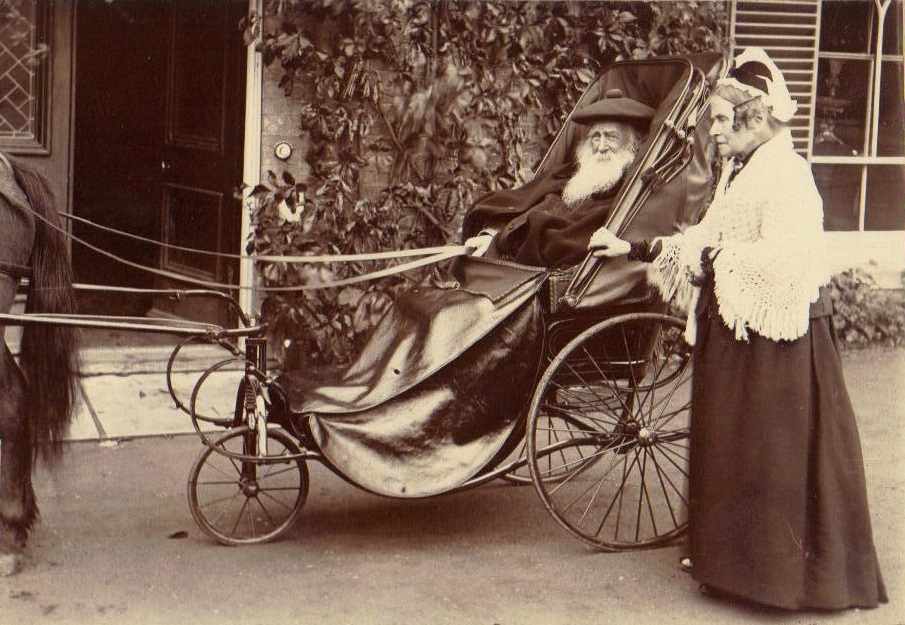
, ,

Leave a comment

Suffrage Stories: The 1911 Census: The Leicester Suffragettes’ Mass Evasion

As I have explained in previous posts, the militant suffrage societies, the Women’s Freedom League and the Women’s Social and Political Union, laid plans to boycott the 1911 census. They urged individual supporters to either refuse to complete their census form or to evade the enumerator by absenting themselves from home on census night.

In order to provide shelter for would-be evaders some local branches of the societies organised  ‘events’ – either in houses taken specially for the occasion or in the branch office.

In  Votes for Women, 24 March 1911, under the heading: ‘Some Country Arrangements’, the Leicester WSPU branch revealed their plan. ‘An all-night party is being arranged. Apply for all arrangements to Miss Dorothy Pethick, 14 Bowling Green Street, Leicester.

Dorothy Pethick, then the WSPU organizer in Leicester, was the sister of Mrs Emmeline Pethick Lawrence, one of the WSPU leaders. Kate Frye was to encounter her two years later, while campaigning at the Reading by-election in  October 1913 and described her (see Campaigning for the Vote ) as ‘very like her sister, Mrs P Lawrence and is very nice. Most compassionate’ –  ‘She went off dressed up to the nines to sell Votes [for Women].

Leicester WSPU Shop (courtesy of alicesuffragette.co.uk)

Leicester WSPU Shop – scene of the all-night party on the night on 2 April 1911 (courtesy of alicesuffragette.co.uk)

Dorothy Pethick did, indeed, organise an all-night party and I’ve recently managed to uncover the census form that George Cooper,  the local Registrar, completed for: ’14 Bowling Green Street Leicester – Suffragettes Office.’

He described how:

‘Suffragettes – about 20 – varying in age from 17 to 50. Most of these were people of no occupation – a doctor’s wife and daughter were amongst them.’

He appears to have taken matters further than any other Registrar and had spent some time inspecting:

‘Women’s Suffrage Society Report and Balance Sheet dated Wed 15 March 1911’

to come to the conclusion that:

‘Number of members in Leicester and Leicestershire 264

Number residing in sub district of south Leicester 93

Number accounted for on schedules 72

estimated number not enumerated 21

of which 13 females spent the night at 14 Bowling Green Lane

There were 33 females in and out of this building during the night.’

That is the most thorough contemporary assessment by a Registrar of a local WSPU census boycott that I’ve yet seen. He appears to have taken the trouble to check the names of those listed in the WSPU Report against the names of those who had completed census forms.

The ‘doctor’s wife and daughter’ mentioned by the Registrar will be Mrs Alice Pemberton Peake, wife of William Pemberton Peake, ‘medical practitioner’, who lived at 21 Oxford Street, Leicester. On census night he was at home with his daughter, Lily (aged 19) and son, Charles (aged 14) and one servant. He described himself as ‘married’, but of his wife and second daughter, Helena (aged 17), there is no trace. On 21 March Mrs Pemberton Peake had taken the chair at a WSPU meeting in Leicester.

Alice Hawkins was another WSPU member absent from home on census night – she’d doubtless joined the party at 14 Bowling Green Lane. Another WSPU member, Evelyn Carryer, had written ‘No Vote No Census’ across her form and gave no other details – other than writing ‘unenfranchised’ in the Disability Column – but it isn’t clear from this whether she had actually absented herself as well as making this written protest. More research might, by a process of elimination, build up a picture of the others of the  13 census evaders who spent the night at 14 Bowling Green Street on the night of 2 April 1911. The picture will, however, always be hazy. One hundred  years later it is well nigh impossible to place an evader with total certainty in any particular place. Although the boycott had little effect on national statistics, it certainly was successful in hiding from history the determined evader.

To listen to a talk I gave on the suffragette boycott at a National Archives conference on the 1911 census click here

Copyright

All the articles on Woman and Her Sphere and are my copyright. An article may not be reproduced in any medium without my permission and full acknowledgement. You are welcome to cite or quote from an article provided you give full acknowledgement.
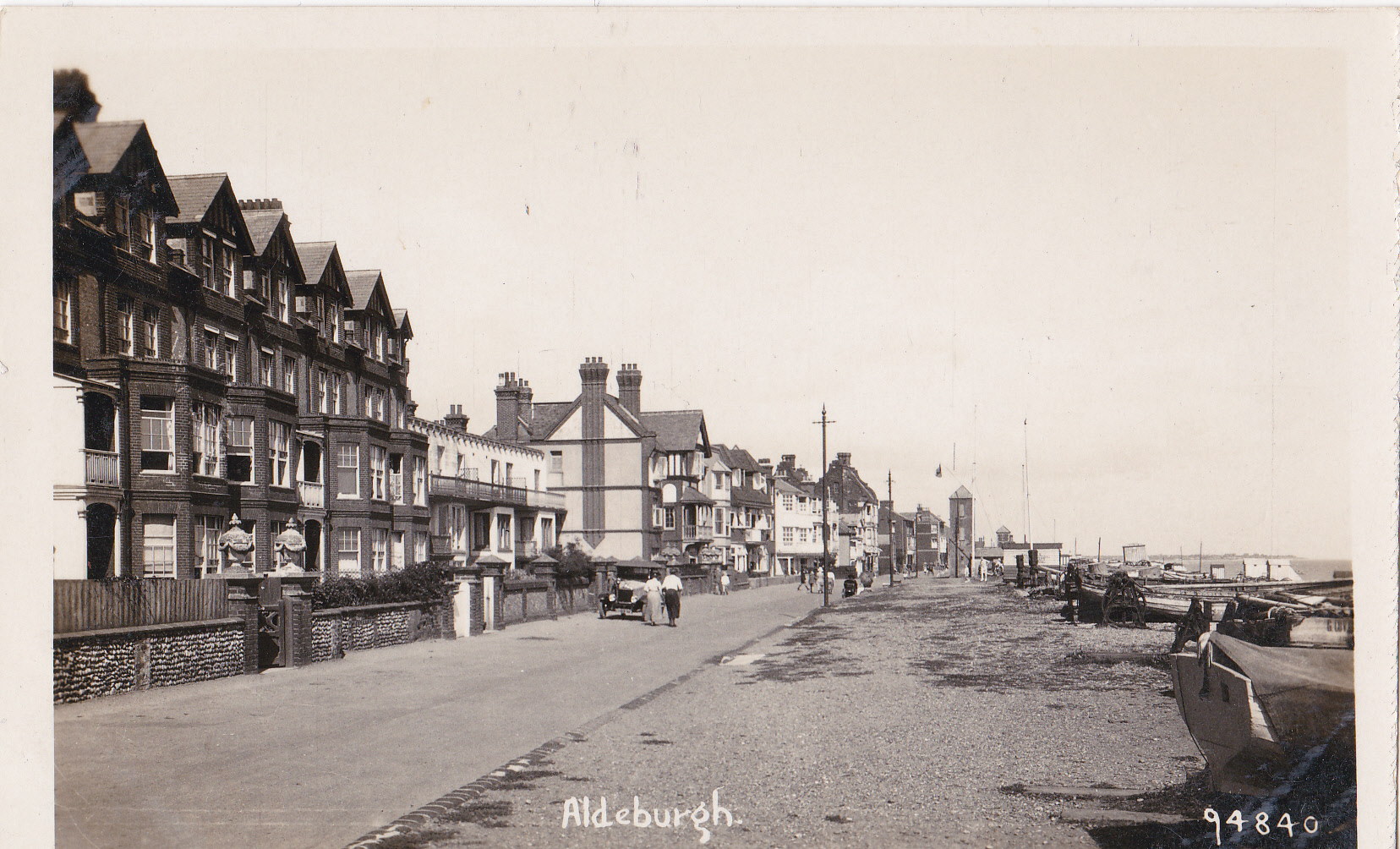
, , ,

Leave a comment

Suffrage Stories: The 1911 Census: The Bradford Boycotters

Mary Phillips

Mary Phillips

‘NO VOTE NO CENSUS Posterity will know how to judge the Government if it persists in bringing about the falsification of national statistics instead of acting on its own principles and making itself truly representational of the people.’ Mary Phillips

This is the statement that Mary Phillips, the Women’s Social and Political Union (WSPU) organizer, wrote across the census form issued for 68 Manningham Lane, Bradford – the WSPU’s office.

The Enumerator noted in his Census Summary Book that 68 Manningham Lane was ‘a Lock Up Shop no sleeping accommodation’. Nothwithstanding,  he recorded that Mary Phillips and 9 other females – suffragettes – had spent the night there – but that he was unable to obtain any information about them.

Mary Phillips had advertised in Votes for Women (31 March) the ‘At Home’ for Census Night – from 11pm on 2 April to noon on Monday 3 April – and I wonder if she was rather disappointed that she was supported by only 9 others. For what it is worth, there is no mention at all in the following week’s issue of the meeting planned for Wednesday 4 April in which members were to tell of ‘Where I spent Census Night’. Had Bradford, perhaps, not been that enthusiastic?

Manningham Lane, Bradford (image courtesy of Maggie Land Blanck)

Manningham Lane, Bradford (image courtesy
of Maggie Land Blanck)

To listen to a talk I gave on the suffragette boycott at a National Archives conference on the 1911 census click here

Copyright

All the articles on Woman and Her Sphere and are my copyright. An article may not be reproduced in any medium without my permission and full acknowledgement. You are welcome to cite or quote from an article provided you give full acknowledgement.
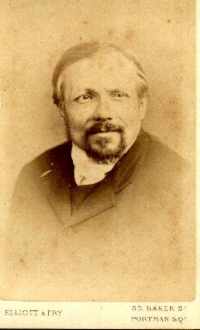
, , , , ,

Leave a comment

WALKS/Suffrage Stories: The London Opera House, Kingsway

Ever since the decision was made for the Women’s Library to move to LSE (now open as the Women’s Library @ LSE) I have been writing posts that draw attention to the many locations associated with the women’s movement in the area around Aldwych and the Strand. My hope is that researchers in the Women’s Library, when taking a break from their labours, will welcome some information that will allow them to see the surrounding area with fresh eyes.

Today I would like to direct your attention to the site between Portugal Street and Sardinia Street that now houses the Peacock Theatre. Many readers will have been to that theatre, rather oddly sited in the basement of a modern office-type block – if only to take younger members of the family to the annual Christmas treat of ‘The Snowman’. Have you ever wondered why there is a theatre there – in what is now a rather untheatrical area? The answer is related to the wonderful building in the photograph below. 

London Opera House, Kingsway. (Image courtesy of arthurlloyd.co.uk) London Opera House, Kingsway. (Image courtesy of arthurlloyd.co.uk)

The London Opera House, its rooftop adorned with figures representing Melody and Harmony, opened 102 years ago today – on 13 November 1911. It occupied an entire block of Kingsway, between Portugal Street and Sardinia Street, and was built for Oscar Hammerstein (Sr) , whose idea was that it should rival the Covent Garden Opera House. The building was opulent and enormous, capable of seating over 2600 people.

Its first season ran from its opening until March 1912, when there was then a hiatus. It was this lack of a follow-up season that, I think, accounts for the fact that on Friday 15 March it was available to be hired for a ‘Suffragists’ non-militant and non-party demonstration’ by the New Constitutional Society for Women’s Suffrage. Kate Frye was its organizer and in Campaigning for the Vote  you can read of her efforts, which included mustering the banners of the various suffrage societies – she collected that of the WSPU from Mrs Garrud’s gym – in order to decorate the auditorium. Eva Moore and May Whitty of the Actresses’ Franchise League were amongst the suffragists on the platform, very fitting in such a theatrical venue.

It was not the first time in its short life that the Opera House had held a suffragette meeting. The previous week, the police, on the hunt for Christabel Pankhurst who had given them the slip from nearby Clement’s Inn, searched the Opera House, where she was reported to be hiding. However the New York Times reported that all they found was ‘Oscar Hammerstein sitting alone in state at a big table in the vestibule, with a printed notice behind him reading “Subscriptions department for the Grand Opera Summer Season”.’ The reporter described how ‘Outside the Opera House were posters announcing tomorrow’s meeting’  ‘So you are a sympathiser’, said the correspondent to Mr Hammerstein. ‘I don’t know anything about it,’ he replied, ‘except that I let the opera house to them before they started on their stunts, and can’t break the contract, or else they might break up the opera house’.

The London Opera House was so well-placed in the middle of suffrage society territory – and right beside the Tea Cup Inn, a favourite haunt – that it was to be the venue for various other suffrage meetings.

Hammerstein’s Summer Season was his last at the London Opera House and in July he gave up and returned to America. The theatre re-opened in December, staging variety shows and showing films, but not before it had once again, on 4 November, been hired by the suffrage societies who held a joint meeting protesting at the proposed reform bill.

Pankhurst The War 001It was at the London Opera House on 8 September 1914 that Christabel re-appeared when her exile came to an end, beginning her speech by saying ‘It is very good to be back in one’s own country again, amongst one’s own friends’ – and ending by promising ‘[The war] will sweep away, it must and shall sweep away, the superstition, the narrowness, the jealousy, the suicidal folly which have made of our country two opposing camps – the enfranchised men in one, and the voteless women in the other’.

From 1917 -1940 the building became a cinema – the Stoll Picture House – but from 1942 to 1957 reverted to live theatre – before being demolished in 1958. Planning permission for the replacement building required the incorporation of a theatre – hence The Peacock.

Virginia Woolf BuildingThe  office block has now, I see, been taken over by King’s College, which is marching up Kingsway into LSE territory. It is now known as the ‘Virginia Woolf Building’. Which allows my imagination another suffrage spin – to visualise Mary Datchet returning down Kingsway from her suffrage society office in Russell Square to her flat near the Strand. She glances at the poster outside the London Opera House advertising a suffrage meeting (perhaps her society, the PDS, would have been taking part but perhaps, as it probably supported adult, rather than women’s suffrage, not). Little did she suspect that her creator’s name would 100 years later adorn its – rather less – opulent – successor.

The copy of Christabel Pankurst’s 8 September 1914 speech, The War, referred to above will be for sale in my next catalogue.

For much more about the London Opera House and its successors click here.

, , , , , , ,

1 Comment

Suffrage Stories: The 1911 Census: The Gillingham Suffragettes’ Boycott

Jezreel's Tower in 1906. (Courtesy of Medway Lines.com)

Jezreel’s Tower in 1906. (Courtesy of Medway Lines.com)

It was in a hall associated with the crazy folly that was Jezreel’s Tower that a band of Gillingham suffragettes amused themselves on the night of 2 April 1911 as they sought to evade the census enumerator.

The protest was arranged by Laura Ainsworth (for whose biographical details see her entry in my The Women’s Suffrage Movement: a reference guide), who had a couple of months earlier taken up her post as WSPU organizer in North Kent, charged with starting a campaign to cover Maidstone, Chatham, Gravesend and Sittingbourne. For a photo of Laura Ainsworth click here

Not long after her arrival the WSPU revealed that it planned to call on its members to boycott the national census – the point being that for this census the government had constructed a new set of questions directly relating to women’s fertility, with the intention of using the resulting statistics as a basis for future legislation. Suffragettes argued that the government could hardly expect them to co-operate when, without a parliamentary vote, they would have no control over any new laws affecting their work and welfare.

Laura Ainsworth called on the women of North Kent to join in this boycott, on 24 March announcing in Votes for Women that in order to provide a place for women to shelter so as to be absent from their own homes on the night of 2 April – and thereby not be counted by the enumerator there –  ‘A public hall has been taken and a social evening is being arranged. The hall will be open at 11.30 pm. Refreshments are being provided.’

The ‘public hall’ that was rented was the Dancing Academy run by 31-year-old Mrs Alice Ada Worrall in Jezreel Hall, Canterbury Street, Gillingham. Mrs Worrall and her husband, William, an engine fitter and nominal principal of the Dancing Academy, were safely at home (71 Duncan Road, Gillingham) with their three children on census night. Presumably they were not active WSPU supporters, merely happy to take an evening’s rent for their premises.

Jezreel's Hall, Canterbury Street. (Image courtesy of Medway Lines.com)

Jezreel’s Buildings, Canterbury Street, before their demolition in 2008. (Image courtesy of Medway Lines.com)

I’m sure a local Gillingham historian will be able to correct me if I’m wrong, but I assume that there was a hall – Jezreel’s Hall – within this block associated with the Tower and that was where the Dancing Academy was sited. I’ve come as near as I can to getting the information correct because (thanks to my new zippy computer and the complicated dance between two websites – Ancestry.com and Findmypast.com) I have at last uncovered the census form that was completed by the enumerator that night.

The address on the form is ‘Dancing Academy, Jezreel’s Hall, Canterbury Street. Gillingham’. The ‘Head of House’ is ‘Mr Worrall’.

The form is unsigned, presumably completed by the Registrar, who notes ‘Party of Suffragettes assembled in Dancing Academy – 40 in number 1 male and 39 females’.

The suffragettes may have intended for their boycott to escape totally the notice of the census authorities – even though we can be sure the latter were studying the pages of Votes for Women and would have known that something was planned in the area. However, as the Chatham, Rochester and Gillingham News reported on 8 April, the exuberance of the party caused so much noise that the police came to investigate. They then alerted the enumerator who was able to record the numbers present. It was the knowledge that such a form did exist that has been so tantalizing. Even though the Gillingham boycotters were not very successful in eluding the enumerator they have certainly foxed for a good long time this 1911 census detective.

You can read here a piece that BBC Kent put up on its website on the 100th anniversary of the census boycott back in 2011 and here a post written by a Chatham Grammar School for Girls pupil after a visit to the Medway Archives.  To listen to a talk I gave on the suffragette boycott at a National Archives conference on the 1911 census click here

Copyright

All the articles on Woman and Her Sphere and are my copyright. An article may not be reproduced in any medium without my permission and full acknowledgement. You are welcome to cite or quote from an article provided you give full acknowledgement.
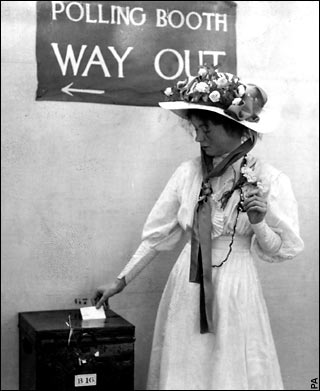
, , , , , ,

4 Comments

Suffrage Stories: The 1911 Census: More Birmingham Boycotters

John Burns, the suffragettes and the census boycott

Suffragette evaders of the 1911 census can be very difficult to uncover – that, of course, was their intention. It is well nigh impossible to identify individual evaders who, with their companions, took part in one of the organised mass evasions. However it is particularly tantalising when the organisers of a mass evasion publicised its whereabouts in the suffrage press and yet proof of the protest in the form of a group census form cannot be found. We can be sure that the authorities were studying Votes for Women and knew exactly where such gathering would take place.

Dorothy Evans (right) after she had left Birmingham to organize for the WSPU in Ulster

Dorothy Evans (right) after she had left Birmingham to organize for the WSPU in Ulster

One such is the mass evasion that took place in Birmingham. The WSPU organizers there, Dorothy Evans (for her biographical details see my Women’s Suffrage Movement: a reference guide) and Gladys Hazel (1880-1959, who had been a teacher at King Edward’s School, Handsworth, and was later to be a suffrage organizer in Bristol) entered fully into the spirit of the census boycott. By 17 March (as quoted in Votes for Women of that date) they were planning all-night entertainment -‘ a meeting, speeches, dancing and probably a play. There will be chalking parties at 6, baths at 7 and a second breakfast at 8. Evaders of the Census who attend these parties have been asked to apply for forms in order to return them with ‘No Vote No Census’ written across them.’

The following week Votes for Women divulged further information – Resisters were to assemble at the office at 11pm for the entertainments, the baths were to be had at Kent Street and the 8am breakfast at Lyons in New Street.

With all this information available, how was it that I couldn’t find a census form for the office – 97 John Bright Street – where the all-night meeting was to take place? Well, whether it’s due to my speedy new computer – or the experience that has accrued from four years of searching the census websites – I have just discovered the relevant document.

There it is: The cover reads:Name of Head of Family etc: Suffragists. Address: WSPU Committee Rooms, 97 John Bright St.

The form shows that of the 130 Suffragists who spent the night there 120 were female and 10 were male. The Superintendent Registrar wrote on the form ‘This schedule is filled in as per instructions received from General Office April 8th 1911’

Moreover I have also uncovered the individual census forms for Dorothy Evans and Gladys Hazel, left for them at their lodgings, 34 Harold Rd Edgbaston. They filled them out identically, quoting the rubric – ‘Votes for Women’ ‘No Vote No Census’ and the enumerator wrote on each – ‘Housekeeper informs me that Miss Evans (Miss Hazel) did not sleep at no 34 Harold Road on Sunday’.

At the terrace house – still there and still available to let – though the agents now aim for students as tenants rather than suffragettes – the women shared three rooms between them – while the landlord, Thomas Wilkes, his wife (presumably the housekeeper mentioned by the enumerator) and nephew had the run of the remaining six.

If only a fraction of the 130 Birmingham evaders filled in their census forms, as did Dorothy Evans and Gladys Evans, they should be somewhere on the census websites – if only we could track them down. However, without a name or an address, this is difficult – although not impossible. Perhaps those who took part in Fight for the Right – the short film about the Birmingham suffragettes – will be inspired to uncover these hidden suffragettes.

See also: Suffrage Stories: An Entire Birmingham College Boycotts the Census

Suffrage Stories: ‘From Frederick Street to Winson Green: the Birmingham Women’s Suffrage Campaign 

To listen to a talk I gave on the suffragette boycott at a National Archives conference on the 1911 census click here

Copyright

All the articles on Woman and Her Sphere and are my copyright. An article may not be reproduced in any medium without my permission and full acknowledgement. You are welcome to cite or quote from an article provided you give full acknowledgement.
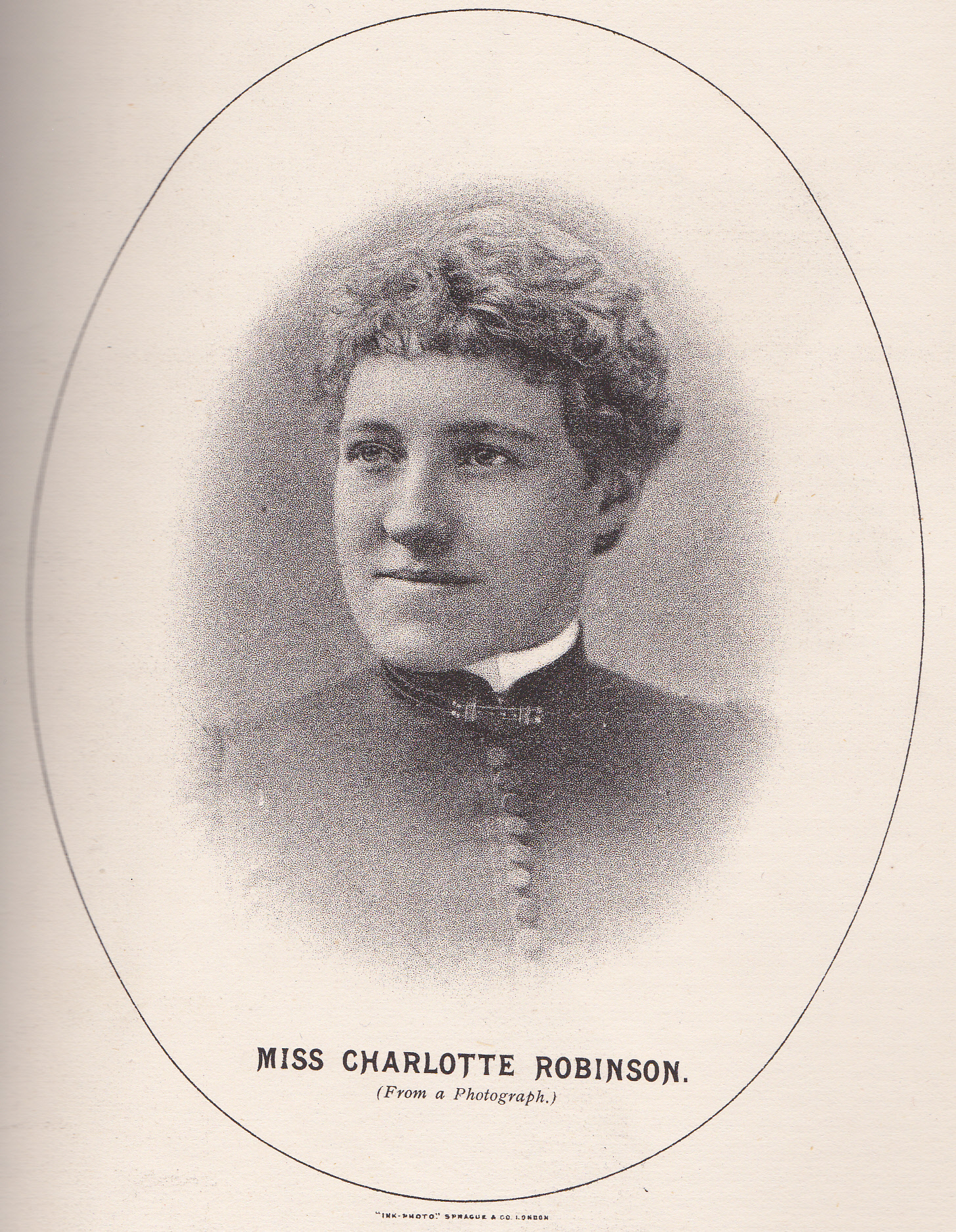
, ,

2 Comments

Kate Frye’s Suffrage Diary: Following In Kate’s Footsteps: Norfolk

It was in this  house, 65 Commercial Road, East Dereham, that on Thursday 16 March 1911 Kate Frye embarked on her career as an organizer for the New Constitutional Society for Women’s Suffrage

65 Commercial Road, East Dereham

65 Commercial Road, East Dereham

In 1911 this was the home of Mrs Alice West, a widow, who lived here with her young daughter, Hilda, and was able to accommodate at least two paying guests. Over the next couple of years Kate was to be a frequent lodger, describing the rooms on that first night as ‘So nice – comfortable and so clean and a fire in my room to unpack by.’

I was paying a flying visit to Norfolk (to view ‘Houghton Revisited’, the once-in-a-lifetime rehang of Walpole’s pictures at Houghton Hall) and took the opportunity to follow Kate Frye around Dereham, Fakenham and Burnham Market.  These were all places in which, between 1911 and 1913, she worked hard to spread the suffrage message.

During the several months that she spent, on and off, in Dereham, there were occasions when it was not possible for her to stay with Mrs West and she then took up residence around the corner from Commercial Road – at 63 Norwich Street, the home of another widow, Mrs Martha Cox. Kate gives the impression that this house was in a poorer condition and caused Mrs Cox, who was most well-meaning and attentive, a great deal of hard work to keep clean and in good order.

For instance, from Kate’s diary: ‘9 May 1912 I am really comfortable here, Mrs Cox is ever so good, too good and I hate to think of her work all day long in this rotten old house.’ I, therefore, wasn’t much surprised, as we walked down Norwich Street, to find that Mrs Cox’s house has been demolished.

Formerly the Dereham branch of the London and Provincial Bank

Formerly the Dereham branch of the London and Provincial Bank

On the day that Kate commented on Mrs Cox’s ‘rotten old house’, this is where she had spent the afternoon – in the apartment above this bank – then the London and Provincial. Here lived the most reliable suffrage sympathisers that Kate encountered in Dereham – the family of the bank manager, Charles Cory.  And, on that afternoon – 9 May 1912 – it was in their drawing room that Kate succeeded in setting up the Dereham branch of the New Constitutional Society. The Corys’ daughter, Violet, was honorary secretary. When compiling The Women’s Suffrage Movement: a reference guide I had wondered why this small Norfolk market town was one of the few places to boast a branch of the NCS.. Kate’s diary provides the answer.  It was to Dereham that she was sent and so it was here that she went to work. Why, out of the whole of England, Dereham was selected by the NCS still remains a mystery.

A year earlier, less than a week after arriving in Dereham, Kate organised her first public ‘Votes for Women’ meeting. It was held in Dereham’s 18th-century Assembly Rooms. On 22 March 1911 Kate wrote in her diary: ‘I was over at the hall at 7. We opened the doors at 7.20 and in very little time the place was full. I had to stand at the door and kept the youths and maidens out till the police officer arrived and then went up to sell Literature.

Entrance to the Assembly Rooms, Dereham

Entrance to the Assembly Rooms, Dereham

Here is the door outside which Kate stood that evening in March 1911.

Having formalised the presence of the NCS in Dereham by setting up its branch, Kate lost no time in arranging another public meeting. The evening of Wednesday 12 June 1912 turned out to be one of the most personally exciting she ever enjoyed – she certainly kept evidence of it and occasionally referred to it in diary entries many years later.

Assembly Rooms, Dereham - front view

Assembly Rooms, Dereham – front view

It was only by visiting the Assembly Rooms that I made proper sense of Kate’s description. Of that evening she remarks that ‘Miss Cory sold tickets downstairs and I was the doorkeeper and spoke to everyone coming in.’ I now realise that the main hall is upstairs – behind the windows in the first floor in this photograph. (A slimming club was using the hall when I visited and, in the circumstances, I didn’t like to take a photograph of the interior!). That evening Kate was probably stationed upstairs – welcoming the audience and waiting with bated breath for the arrival of the main speaker, the Rev Hugh Chapman. She had already met him at the station and taken him to the King’s Head in Norwich Street, where he was to stay, and had been swept off her feet (as she had in the past) by the apparent fervour of his greeting.

Chapman eventually arrived – brought along from the King’s Head by a fellow clergyman.. The two were friends –  the Rev Harold Davidson, rector of nearby Stiffkey, was to become notorious in later years when, after having been defrocked, he met his death at Skegness when a lion turned on him while he was performing as ‘Daniel in the Lion’s Den’. It would appear that Kate could spot a wrong ‘un, describing Davidson, after this one brief meeting, as ‘a frivolous clergyman with a frivolous wife and a beyond-all whopping frivolous young lady – destined for the stage – the whole party seemed quite mad.’ Clearly an apt summation. Anyway that was just the beginning of what was to be for Kate a memorable evening in Dereham.

A month previously – in May 1912 – Kate had lived for a few weeks in Fakenham, campaigning for the NCS at a by-election. She stayed in digs at 1 Carlton Villas, Queen’s Road – an address that I wasn’t able to identify with certainty when I visited. The 1911 census is not very helpful – the Queen’s Road enumerator having failed to give addresses on the cover of the forms in his area.

Queen's Road, Fakenham

Queen’s Road, Fakenham

But if I don’t know exactly where in Queen’s Road she stayed, I do know that she must have passed this jeweller’s shop – still here a hundred years later – as she walked to and from the centre of Fakenham each day.

W. Parker and Son, Norwich Street, Fakenham

W. Parker and Son, Norwich Street, Fakenham

The shop’s owner told me that the clock, too, has been there all that time -the only difference being that it now runs on a battery.

Dereham Church

Fakenham Church

On Sunday 19 May 1912, while lodging at Carlton Villas,  Kate wrote in her diary ‘Had a great scramble to get to Church by 11 o’clock but I did it. I always think Suffragettes look such heathens if no one goes. I was the only representative. ‘

A few days earlier Kate had made a recce visit to Burnham Market – finding it ‘Such a quaint pretty spot’. She did all the things that a good organiser should do – identifying a room available for hire, the name of the local policeman, the name of likely supporters etc. These included Mr Hammill, the local doctor, who lived in this lovely house, and whom she described as ‘political’.

Burnham House, Burnham Market

Burnham House, Burnham Market

Burnham House is just over the way from the Hoste Arms, where we stayed the night – most comfortably.

Hoste Arms, 2013

Hoste Arms, 2013

And It was in the Hoste Arms- on 23 May 1912 that Kate enjoyed a brief flirtation with a couple of Irish politicians – anti-Home Rulers. You can read more of this in a previous post – Campaigning for the Vote: Kate Wrestles With North Norfolk, 1912 and much more about Kate Frye in Campaigning for the Vote: Kate Parry Frye’s Suffrage Diary edited by Elizabeth Crawford. For a full description of the book click here Wrap-around paper covers, 226 pp, over 70 illustrations, all drawn from Kate Frye’s personal archive. ISBN 978 1903427 75 0 £14.99. Copies available from Francis Boutle Publishers, or from Elizabeth Crawford – e.crawford@sphere20.freeserve.co.uk  or from all good bookshops.  

Armed with Campaigning for the Vote you, too, can follow in Kate’s footsteps – not only in Norfolk, but also in London, Suffolk, Essex, Kent, Berkshire and Buckinghamshire.

'Campaigning for the Vote' - Front and back cover of wrappers
‘Campaigning for the Vote’ – Front and back cover of wrappers

, , , , , , , ,

2 Comments

WALKS: Mrs Ayres Purdie, Kingsway And (Alas) Covent Garden Tube Station

Ever since the decision was made for the Women’s Library to move to LSE (now open as the Women’s Library @ LSE) I have been writing posts that draw attention to the many locations associated with the women’s movement in the area around Aldwych and the Strand. My hope is that researchers in the Women’s Library, when taking a break from their labours, will welcome some information that will allow them to see the surrounding area with fresh eyes. Today I would like to direct your attention to Craven House – on the north-east side of Kingsway.

I had long thought that I must find out more about the rather intriguing life – and death – of the woman whom I knew to have been in business there, but the building has spent a long time under scaffolding and it was only when it recently re-emerged that I turned my attention to it.  To my pleasure – and rather to my relief – I then discovered that the research has already been undertaken. For Stephen Walker, of the Cardiff Business School, has published an excellent short study of the life of Mrs Ethel Ayres Purdie in Critical Perspectives in Accounting, vol 22, issue 1, 2011. I would most heartily commend this article to all those interested in practical suffragism. (I see that a copy of the journal is available for consultation in the LSE Library.)

Craven House, Kingsway

Craven House, Kingsway

It was in Craven House that around 1908 Mrs Ethel Ayres Purdie put up a brass plate to  indicate that her accountancy practice was open for business. A few months later, in May 1909,  she was elected a member of the London Association of Accountants and thus became the first woman in Britain to be admitted to an accountancy organisation. (The LAA is now subsumed in the Association of Chartered Certified Accountants, based close to the Women’s Library at 29 Lincoln’s Inn Fields.)

Rather as Elizabeth Garrett was able to qualify as a doctor only by finding and exploiting a fault-line in the medical educational system, so Mrs Ayres Purdie was only able to obtain membership of a professional organisation because the LAA was recently formed and not yet entrenched in tradition. It had been called into being in 1904 to address the needs of accountants debarred for one reason or another – such as the inability to serve a long period of articles – from the senior organisations. Mrs Ayres Purdie had, of course, on account of her sex, already been rejected by the senior, more prestigious, accountancy associations. In fact even the LAA rejected her on her first application, but  a few months later more enlightened elements persuaded the Association to accept her. Yet another barrier that convention had erected against working women had been breached and another, potentially lucrative, profession was now open to them.

Who was Mrs Ethel Ayres Purdie? 

She had been born Ethel Ayres in Islington in 1874. The 1881 census shows her, the elder daughter of Henry William Ayres, an ‘engineer toolmaker’, living at 14 Owen’s Row on the borders of Islington and Clerkenwell – coincidentally only a few doors away from where I live and where I am writing this piece. No 14 is long-since demolished and the space it occupied is now the site of City and Islington College. As was the case with all the houses in Owen’s Row, no 14 was in multi-occupation  – although the Ayres shared with only one other family (my own house, admittedly rather taller, was home  in 1881 to 16 people). By 1893 the Ayres had moved down the road to the more leafy surroundings of 15 Northampton Square, the central area of which had been recently re-designed (1885) by Fanny Wilkinson for the Metropolitan Public Gardens Association. (For much more about Fanny see Enterprising Women: the Garretts and their circle and here.)

Nos 8-18 Northampton Square (now demolished), photographed in 1953. Courtesy of British History Online, Survey of London vol 46

Nos 8-18 Northampton Square (now demolished), photographed in 1953. Courtesy of British History Online, Survey of London vol 46

After leaving school Ethel Ayres was employed in the Telegraph Department of the Post Office, just the kind of occupation to appeal to a lively, ambitious girl. of the skilled artisan class.

In 1897 she married Frank Sidney Purdie, who lived in Coptic Street, in the shadow of St George’s Bloomsbury, where the couple were married. Frank Purdie was the son of a silversmith and worked as a commercial traveller. He was probably then employed by his father but later became a traveller in educational supplies. The couple moved  out to Willesden – and when the 1901 census was taken were living at  Sellons Avenue with their first son, 3-month-old Harold Ayres Purdie. A second son, Desmond Tremeer Purdie (Tremeer was Ethel’s mother’s maiden name) was born in the autumn of 1902. A year later the family had moved to 11 St Alban’s Road, Harlesden.

Over the next four years, while caring for two young children and running her household, Ethel Ayres Purdie attended accountancy classes run by the Society of Arts, passing her final exam in 1906. By then she and Frank had left Harlesden and were living with her parents at 13 Stock Orchard Crescent, Lower Holloway. (This is evidenced in the London Local Electoral Register. On the night of the 1911 census Frank is at home with her parents – and there is no trace of Ethel, who was clearly evading the enumerator, presumably taking her young sons with her.) It may be that they moved specifically so that the children might have the care of their grandmother while their mother was studying.

Mrs Ayres Purdie certainly used 13 Stock Orchard Crescent as her first practice address before, very soon, becoming sufficiently confident of her professional future to rent an office (no 52) in Craven House. Kingsway had been formally opened in 1905 but building was slow to progress and the street was still lined with hoardings disguising unsold lots. Craven House was one of the first of the new – imposing – Kingsway buildings and by choosing to set up her office here Mrs Ayres Purdie was positioning herself at the heart of London’s most modern development. The choice of Kingsway may have also, of course,  been influenced by its proximity to many of the women’s organisations in which Mrs Ayres Purdie was now interested.

Having personally advanced the woman’s cause in her chosen line of work, she was clearly a woman sympathetic to the newly-energised suffrage movement. In fact she was able to both provide financial advice and to earn fees by supporting a range of women’s organisations. For instance she was financial adviser to the Women’s Social and Political Union and, later, to the East London Federation of Suffragettes, auditor to the Women’s Freedom League, to Minerva Publishing (the proprietor of the WFL paper, The Vote), and, from the First World War to 1920. of the International Women’s Suffrage Alliance. In addition she was a founder member and leading light of the Women’s Tax Resistance League, which held many of its early meetings in her Craven House office.

'The information given above is compiled for the Women's Tax Resistance League by Mrs Ethel Ayres Purdie, A.L.L.A., Income Tax Expert'

‘The information given above is compiled for the Women’s Tax Resistance League by Mrs Ethel Ayres Purdie, A.L.L.A., Income Tax Expert’

She wrote the text for several WTRL leaflets – including  No Vote No Tax. For it was in the realm of tax law and advice that Mrs Ayres Purdie excelled – fighting against the unfair treatment of married women in the British income tax system. All her battles are clearly set out in Stephen Walker’s comprehensive article and illustrate how imperative it was (and is) to augment political campaigning with concrete action. Thus Mrs Ayres Purdie brought cases to court to test the boundaries of tax law, as well as representing individual women who refused to pay tax while they were denied the parliamentary vote. She was the author of a play, Red-tape Comedy, published in The Vote in November 1912, which was based on the case she had conducted for Dr Alice Burns, a married woman doctor.

Women's Tax Resistance League badge

Women’s Tax Resistance League badge

Mrs Ayres Purdie advertised her services in suffrage-related papers such as The Common Cause ,The Vote, and The Englishwoman –  the only woman entitled under the Revenue Act 1903 to appear on behalf of clients before the Special Commissioners of Income Tax. She named this part of her practice ‘The Women Taxpayer’s Agency’ to make her area of expertise quite  explicit.Her practice was so successful that she was able to employ three or four clerks and In 1914  took on a female pupil who served five years’ of articles under her.

Women Tax Payers' Agency

After the WSPU window-smashing campaign of March 1912, which affected businesses in the area, Mrs Purdie’s landlord objected to the notice advertising the Agency that she displayed in a window  of Craven House but, rather than removing it, she merely moved her office across Kingsway to new premises in the most happily named, Hampden House (John Hampden being the ‘patron saint’ of tax resisters).

In 1914 she was personally involved in the case of Edwy Clayton, the scientist accused of producing explosives for the WSPU. Not that Mrs Ayres Purdie was a bomb maker – but she was accused of trying to help Clayton save some of his possessions and thereby deprive the Treasury of its dues – see The Times, 2 April 1914, for the delightfully intricate details of this trial. Amazingly enough she was acquitted. With the WSPU ensconced in Lincoln’s Inn House – very close by, on the same side of Kingsway – Mrs Ayres Purdie was conducting her business at the heart of militancy – both physically and metaphorically.

With the outbreak of war Mrs Purdie found new organisations to advise – for instance she was auditor to the Women’s Auxiliary force. In the post-war world she became auditor to the Association of Women Clerks and Secretaries, whom we have already encountered on a previous Walk, and In 1919 appeared in front of the Royal Commission on Income Tax to argue that the income tax system was not fair in its treatment of married women. She apparently told the Commissioners that, as the letters about her business that the tax authorities sent to Hampden House were addressed to her husband, they remained unopened as he did not visit the premises. She was reported as saying that ‘I have never yet made a return of my income, and no tax has ever been paid on it’. I must say I do find this rather extraordinary – surely the tax authorities were not so lax as to ignore this potential windfall? I wonder what was the repercussion of divulging this information to the Royal Commission?

In 1919 Ethel Ayres Purdie moved her office  further south down Kingsway, on the same side of the road, to no 84.  She and Frank had moved during the War from Stock Orchard Crescent to nearby Hillmarton Road (no 34).  Her father died in October 1922.

Gillespie Road Tube Station as it was in Mrs Ayres Purdie's day (now rebuilt and renamed Arsenal)

Gillespie Road Tube Station as it was in Mrs Ayres Purdie’s day (now rebuilt and renamed Arsenal)

On 21 February 1923 Mrs Ayres Purdie gave a lecture – ‘If I were Chancellor of the Exchequer’ – at the International Women’s Franchise Club in Grafton Street, Mayfair. But clearly all was not well. Barely three weeks later, around 16 March, there was an incident at Gillespie Road tube station (now Arsenal) when she had to be restrained from falling in front of a train. Gillespie Road is a station on the Piccadilly line -the line that she would have used to travel to her office – but not the nearest to her home. Holloway Road station, also on the Piccadilly line,  is very much closer to Hillmarton Road. This ‘incident’ was obviously not an aberration for ten days later, on 26 March, at Covent Garden station, the ‘work’ end of her Piccadilly line journey, Mrs Ayres Purdie, as her death certificate states, ‘jumped in front of a train’ and shortly afterwards died of her injuries at Charing Cross Hospital. An inquest was held on 29 March and a verdict of ‘Suicide while of unsound mind’ was recorded.

The inquest reports have been destroyed and the only information that can now be gleaned comes from newspapers.  The Evening Standard reported, 29 March 1923, that Frank Purdie had revealed that ‘his wife had been suffering from nervousness and insomnia, and feared that she was losing her mental power, and would be unable to carry on business’. The Daily merely commented that tube stations were an incitement to suicide.

Who can know what was in Ethel Ayres Purdie’s mind? There is no mention of a suicide note. Was ‘business’ to her so central to life that the possibility of ‘failing mental power’ would be a total disaster. Possibly.  She was only 48 years old, her mother was still living (d 1931) and her sons were in their very early 20s.

The Vote, 13 April 1923, devoted its front page to an obituary of Mrs Ayres Purdie – including the only photograph of her that I have seen – telling nothing of the cause of her death – only that it was ‘sudden’ and ‘to be deplored’ (but I think that what was meant that her death itself was deplored not its execution). In the general manner of such tributes the piece is relentlessly upbeat – describing her as having a ‘winsome, cheery personality’ (though one would have hoped that some of her fellow members of the WFL might have noticed that she had been less ‘cheery’ of late) and noting that she was a devoted mother and the “‘best of chums’ to her husband”.

Naturally one should not be purient but I could not help noticing that  barely two years later Ethel’s ‘chum’  remarried – choosing as his second wife a young woman (Muriel) who, aged 25, was only two years older than the elder of his sons.  However around this time the names of Frank and Muriel Purdie, together with that of Ethel’s son, Harold, are all listed together on the London local electoral register as occupiers of 84 Kingsway, Mrs Ayres Purdie’s former office, suggesting, perhaps, that the second marriage had not caused any family dissension. Life can be so much more surprising and shocking than a novel or a narrative history (suffrage or otherwise) that has all the players concentrating on the one goal little regarding the specifically personal factors that may, in reality, be overwhelming their thoughts.

Covent Garden tube

Copyright

All the articles on Woman and Her Sphere and are my copyright. An article may not be reproduced in any medium without my permission and full acknowledgement. You are welcome to cite or quote from an article provided you give full acknowledgement.

, , , , , , , , , ,

1 Comment

Suffrage Stories: Marjorie Hamilton: An Unknown Suffrage Artist

Procession-Pic-for-Clive2 I have long admired this image, created to advertise the 1911 ‘Women’s Coronation Procession’. This particular item was carefully laid by Kate Frye between the pages of her diary. She was proud to be marching that day in the Actresses’ Franchise League contingent.

However I have only just discovered the name of the artist of this appealing flyer was and have immediately set about trying to find out what I can about her.

The name was delivered to me by Ken Florey who, in his superb Women’s Suffrage Memorabilia: an illustrated Historical Study, mentions the image, naming the artist as ‘Marjorie Hamilton’. The US suffrage society, the Women’s Political Union, had clearly recognised an appealing design when they saw it and used it to advertise a meeting held by Mrs Pankhurst in New York’s Carnegie Hall (see Votes for Women, 5 January 1912). Marjorie Hamilton’s name doesn’t appears in Lisa Tickner’s Spectacle of Women – and I must admit that I had not come across it in my own researches into women suffrage artists.

However, now that I have looked into the matter, I see that on 9 June 1911, in the issue that immediately preceded the Procession, the cartoon that appears the front page of  Votes for Women was drawn by Marjorie Hamilton. Moreover, I actually hold a copy of the front page of this issue in my bookseller’s stock – I just hadn’t looked sufficiently closely at the image to notice the signature.

Front page of 9 June 1911 issue of 'Votes for Women'

Front page of 9 June 1911 issue of ‘Votes for Women’

To have been given this position on the front page of Votes for Women was, indeed, something of an accolade – the paper’s usual artist, ‘A Patriot’ [Alfred Pease], had made way for her. Marjorie Hamilton’s ‘cartoon’ is, in fact, an advertisement for the Procession, with the lead character in her drawing dressed in the same way as the suffragette on the flyer. The latter, however, makes a very much bolder impression – the image greatly strengthened by the use of colour.  While the Votes for Women front-page picture is signed with her full name –  that is, ‘Marjorie Hamilton’ – the flyer carries only initials –  but these do appear to read ‘MH’. When describing the artist responsible for the image on the cover of the lavish Programme produced for the occasion of the Procession, Votes for Women  is rather coy – referring to her only as ‘an artist member of the WSPU’.  So who was Marjorie Hamilton?

My research indicates that she was born in Derbyshire in 1882. Her father, Arthur Hamilton, was a banker – a partner in S.Smith & Co’s Bank, Derby. Her mother, Georgina (nee Stokes) had been born in South Africa.  Marjorie had a slightly younger sister, Vera, and in 1891 the family lived, presumably in considerable comfort, with three servants and a live-in (young) governess, at The Mount, Duffield Road, Derby. Ten years later, in 1901, the family was living above the bank premises at 7 Market Head, Market Place, Derby, along with six domestic servants and a bank clerk. However, less than a year later Arthur Hamilton, now described as of ‘The Grange’, Ewell, Surrey, died, leaving £10,800. It was in 1902 that Smith’s Bank lost its individual identity when it merged with the Union Bank of London.

Georgina Hamilton, with her daughters, may have moved to Canada c 1906. Certainly Marjorie noted on a subsequent Canadian immigration form that she had lived in Canada from 1906-1908. Her sister, Vera, married in Vancouver in 1908 and in 1911, when the Canadian census was taken, was living there with her mother, her husband and two young children. Even though she was a member of the WSPU, Marjorie Hamilton, luckily for us, did not boycott the 1911 UK census and can be found, describing herself as an ‘art student’, as a boarder at 4 Mills Buildings, Knightsbridge, an 18th-century court on the north side of Knightsbridge High Road, close to the Barracks. At this time Mills Buildings was a rather raffish address, although her fellow boarders all appear very respectable.

The census was taken on 2 April 1911 and it must have been very soon after, while Marjorie Hamilton was living here, that she was given the rather important ‘Coronation Procession’ commission. Marion Wallace-Dunlop and Edith Downing were in charge of the artistic design of the Procession, which was being executed at 12 Smith Street, Chelsea. Perhaps  it was they who spotted her talent for graphic design. Incidentally on the night of the 1911 census those resident at this address were Miss Dean, a 27-year-old artist’s model, together with a young secretary and a shop assistant whose surroundings, with 8 rooms, between the three of them, were rather more spacious than those of their neighbours. I wonder if they let out one or two of those 8 rooms to the WSPU? It is clear from the reports in Votes for Women that there was a great deal of activity going on at 12 Smith Street in May and June 1911.

Alas, however, that is about all I can discover of Marjorie Hamilton’s career as an artist – except that in 1913 she was advertising that she would be happy to take order for water-colour sketches of country homes.

I next catch sight of her in February 1917 at Liverpool, embarking on the SS Carmania for New York. Her address is given as ‘Cranleigh, Surrey’ and her occupation is ‘artist’. So, in the six years that had elapsed she had presumably had – or at least had attempted to pursue – art as a career.

I did wonder why, in the midst of a war that made Atlantic travel so dangerous, she was making this journey. And then I realised that her final destination was not New York but Victoria, British Columbia and that she must have been going out to be with her mother – who died a month or so after her arrival.

Another seven years go by until in 1924 I found her again, once more about to enter Canada. However this time it is not as an artist but as the prospective matron of the Waifs and Strays Society Receiving Home at 661 Huron Street, Toronto.  This was Elizabeth Rye House – a home to where girls were sent from England to be trained for domestic service. On the immigration form Marjorie Hamilton gave her present occupation as ‘matron’, which may, or may not, indicate that she had found that art did not pay and that she had to find an other means of earning her living.

And there the trail for the moment ends. I know that the Toronto home closed in 1931 – but don’t know if Marjorie Hamilton was still there then. Did she return to England – or remain in Canada. I know that her sister died in Sussex in 1943 – but can find no further trace of Marjorie.

And all this is what comes of wondering who was the artist responsible for a delightful purple, white and green flyer produced something over 100 years ago.

, , , , ,

2 Comments

Suffrage Stories: ‘Laura Grey’: Suffragettes, Sex-Poison And Suicide

Lavendar Guthrie's Hunger Strike Medal and Votes for Women brooch, photo courtesy of Christie's
Lavender Guthrie’s Hunger Strike Medal and Votes for Women brooch, photo courtesy of Christie’s.

On the morning of Monday 8 June 1914 – a year to the day after the death of Emily Wilding Davison – a young woman was found lying unconscious on the floor of her flat at 111 Jermyn Street, close to Piccadilly Circus. She was discovered by her charwoman, Mrs Spicer,who called the police. They in turn called a doctor, who spent some time attempting resuscitation. But the young woman could not be revived. She had taken an overdose of veronal, a barbiturate to which she had apparently become addicted. Around her were scattered seven empty veronal bottles and by the side of one of them were 23 loose tablets. She had left a suicide note, dated 5 June, addressed to her mother and signed with the initials ‘J.L.G.’, although the young woman was known to her landlord, charwoman and a circle of relatively recently acquired friends as ‘Laura Grey’.

The story revealed by the inquest was one that might be thought too contrived if one read it in a novel, or watched it unfold on stage or film. In it we find all the tropes that concerned British society at that most febrile of times in the summer of 1914.

Laura Grey’s death. caused a brief but spectacular newspaper sensation. In this case the ‘ruin’ of a well-brought-up young woman was associated not only with the familiar evils of drugs, the stage and night clubs but also with the exotic addition of the very topical phenomenon of window-smashing, imprisonment and hunger striking – all that denoted involvement in the militant suffragette movement. On the day that her death was first reported the newspapers were full of reports of police raids on suffragette hide-outs and of suffragette bombing, arson and a hatchet attack on a painting by Romney in the Birmingham Art Gallery.

‘Laura Grey”s real name was Joan Lavender Baillie Guthrie. She had been born in 1889 to a well-off young couple – her father doesn’t appear to have had employment as such, but was involved with the Volunteers, the territorial army of its day. He was Cambridge-educated but had been born in South Africa. During the Boer War he returned there as an officer in the Imperial Yeomanry, dying of enteric fever on 16 May 1900. His wife must have been alerted to his condition because she set sail for Cape Town on 5 May. I don’t know if she arrived before he died, but she returned to Southampton on 14 June having, presumably, seen him to this grave.

In December 1900 Mrs Baillie Guthrie with her two daughters (Lavender and Lilias, as they were known) set off for the Continent. I don’t know how long they spent abroad, but there is no trace of any of them in the 1901 UK census. Lavender apparently received a good education – she was reported to be a proficient student of Latin and Greek – but where and how this was acquired I don’t know.

Mrs Baillie Guthrie first appears on the London local electoral register in 1909 which may indicate that the family had only recently returned from living abroad. It was, anyway, about this time that Lavender Guthrie first joined the Women’s Social and Political Union. As her mother remarked at the inquest, ‘She was not quite a normal girl. She studied very hard, and had ideas of Socialism and of giving her life and her all to her more unfortunate sisters.’ A picture was being painted at the inquest of an unbalanced mind – that Lavender, when about 16 years old, had damaged her face with a chemical. Indeed, the doctor who tended to her when she was dying remarked on a scarring to her face. However, as set out in the inquest report, this episode is directly linked by her mother to Lavender’s desire to do good in the world.

Her mother also said that Lavender was an obedient daughter and, although a member of the WSPU from the age of 18, did not take part in any militant activity until 1911 when she was 21 and had reached the age of majority.

One other aspect of Lavender Guthrie’s character that was considered by her mother as not quite normal was that ‘she thought we were too luxurious in our life. All her life she had been a very good and spiritual-minded girl, and had not cared for any of the ordinary pleasures of life or enjoyments of life. All her ideal was to work, and work very hard.’ She said that Lavender had tried hard to find work to support herself but ‘she found that the wages of unskilled women labour would not support life.’ It was only when she was successful in getting employment on the stage that she was able to earn sufficient to enable her to leave home, apparently, at the end of 1912.

However, for some months in the early part of 1912 Lavender had had no need to seek work as she was  a prisoner in Holloway Gaol  She had taken part in the March 1912 WSPU-organised window-smashing campaign. and was sentenced to six months’ imprisonment for wilful damage. The window she had broken was that of Garrards, the famous jewellers, perhaps targeted it as a protest against the luxurious lifestyle that she abhorred.

In Holloway she went on hunger strike, was forcibly fed and was released after serving about four months. During this time Holloway was packed with suffragette prisoners – among them Emily Wilding Davison – and Lavender Guthrie would have known and been known to these most committed members of the WSPU.

While in Holloway Lavender Guthrie wrote the following poem that was subsequently published in Holloway Jingles, an anthology collected and published by the Glasgow branch of the WSPU. The dedicatee, ‘D.R.’ is thought to be Dorothea Rock. The poem has been singled out by literary critics as having more merit than most of the other ‘Jingles’. (Another poem in the anthology is by Emily Wilding Davison.)

To D.R.

Beyond the bars I see her move,

A mystery of blue and green,

As though across the prison yard

The spirit of the spring had been.

And as she lifts her hands to press

The happy sunshine of her hair,

From the grey ground the pigeons rise,

And rustle upwards in the air,

As though her two hands held a key

To set the imprisoned spirits free.

Listen here to an atmospheric setting by Eva Kendrick of this poem sung by the Northern Arizona University Women’s Choir. (I love it.)

To this suffragette’s autograph album Lavender Guthrie contributed a few lines from Robert Louis Stevenson – ‘The conditions of conquest are easy; we have only to hope a while, endure a while, believe always and never turn back’. Below her given name she added in brackets her stage and suffragette name – Laura Grey. It was the name she used when arrested. Like some other women – particularly of the middle class – she did not want her real name to appear in the papers in order not to embarrass her family. It is likely, therefore, that it was first as a suffragette soubriquet that Lavender adopted the name ‘Laura Grey’, which then gave her a ready-made stage name.

It seems that Lavender Guthrie suffered  from the after effects of forcible feeding and there is the suggestion that it was after her release that she discovered that veronal could ease the ‘neuralgia’ from which she now suffered. Her mother said that Lavender was ‘very ill’ after her release from prison.

Lyceum Theatre
Lyceum Theatre

Lavender’s first stage engagement was in the Lyceum Theatre’s Christmas 1912 pantomime – The Forty Thieves – doubtless an excellent vehicle for displaying the thinly-veiled flesh of the ‘pantomime girls’. At the time the Lyceum was renowned for staging the best pantomimes in London.

Now able to leave the comfort of her Kensington home,  ‘Laura Grey’ lived at first in rooms in Handel Mansions, Brunswick Square, Bloomsbury. Bloomsbury then had a rather louche reputation. However it was not long before she moved to the flat in Jermyn Street, close to the bright lights of Piccadilly. A couple of years earlier (when the 1911 census was taken) the tenant of the flat was a 24-year-old American ‘dancer (artistic) not in work’, who declared that she was married with one child. However neither husband or child was living with her and I feel that here, too, is a story of quiet desperation waiting to be uncovered.

There is no indication in the inquest report of the other shows in which Laura Grey was engaged (although there must have been at least one or two because the Lyceum was described as the first).  The coroner did not disguise the curl of his lip when he referred to her as a ‘pantomime girl’. As such she represented all that was meretricious and sleazy in the eyes of right-thinking people. Pantomime Girl, a novel by Annie Louise Daniells published in 1913 ,did not allow the central figure a happy ending – even if she was not actually forced, unlike poor Laura Grey, to suffer the ultimate wages of sin.

For not only did Laura Grey die, but she died pregnant. How much further could a young middle-class woman fall? The coroner had no trouble at all in revealing the cause  – her involvement with the suffragettes. He read in full the letter that accompanied the award of her hunger-strike medal, sent to Lavender Guthrie by Mrs Mabel Tuke of the WSPU,  and commented ‘Could anything be more calculated to upset the mind of a young girl than receiving this document and this travesty of a medal. The effect was quite clear. She leaves her home, her sister, her mother, for a garret in order to earn her own living and probably devote herself to this cause. She is next on the stage as a pantomime girl. Next we find her in the company of men frequenting night clubs and taking money from them. There is no more about the suffragist movement. The girl seems to have been absolutely degraded, and from then her whole history is one of drink, drugs, immorality, and death from her own hand.’

The jury duly returned a verdict of suicide during temporary insanity. However, this is just what Lavender Guthrie had anticipated. In the note she left for her mother she wrote ‘Of course the kindly Coroner will call it temporary insanity, but as a matter of fact I think this is about the sanest thing I have yet done. I am simply very, very tired of things in general.’ In fact her mother had been so worried about her that she had called in two women doctors – Dr Helen Boyle, who specialised in mental disorders, and Dr Louisa Garrett Anderson, who had actually been imprisoned in Holloway at the same time as Lavender – hoping that they would be able to certify her as insane. Their visit to Jermyn Street, accompanied by two nurses  -so certain were they, from what they had been told by Mrs Guthrie, that they would need to remove Lavender – had taken place on 26 May. The doctors, however, had not found Lavender suffering from any delusions that warranted restraint.

It is difficult to know exactly what Laura Grey’s  Jermyn Street life had been like. She left over £1000 in her will, although this money might not have been easily accessible. According to her mother, although she had initially refused to accept an allowance, by the time of her death she had agreed to receive an annual allowance of £100. Was she receiving money from men, as the Coroner suggested – or assumed? Who knows? Her mother noted at the inquest that she ‘lived in a very self-sacrificing manner, denying herself everything.’ However, it would appear that she must have spent at least some of her money on drink and drugs. When asked by the Coroner if she knew that her daughter ‘had taken to drink’, Mrs Guthrie gave the immortal reply, ‘I had heard of absinthe: I do not know whether that is drink’. Laura Grey’s regular consumption of veronal was evident from the bottles found in the flat. In the touching letter she left for her mother she wrote, ‘I have been taking veronal for the last six months practically every night. I only lied to you about it because I knew you would worry if I told you the truth’.

In this letter Laura Grey also writes, ‘During this last year I have met some very dear souls, both men and women. If you ever come across them and they speak to you of me give them a welcome for my sake, even though I may have met them in bad and immoral ways’. In July Mrs Guthrie wrote a short letter in the Daily Mail, in which she thanked those who had got in touch to sympathise at her loss – and there is a hint that among these may have been some of the ‘dear souls’ to whom Lavender refers. In which case it appears a rather generous letter.

The night clubs frequented by Laura Grey were named as the Astor Club (already defunct by 1914), the Mimosa, the Leicester and the Albert Rooms. They were all doubtless of a transient nature and have vanished leaving no discernible trace.  newspaper reported that ‘she generally wore evening dress at these resorts, but lately she appeared in costumes of the futurist fashion

Betty May (courtesy of Kirsty McKenzie Design Facebook Page)

Betty May, exotic dancer, good-time girl and another frequenter of Soho haunts, in her racy memoir – Tiger-Woman – published in 1929, places Laura Grey in the bohemian Cafe Royal, alongside many better known figures, such as the futurist painter C.R.W. Nevinson. ‘I knew her well’, Betty May writes, ‘and the night before she was found dead she came over to me in the Café and gave me a book she had promised to lend me. We had a long chat and she seemed quite cheerful. She was tall and slim, with a very fine forehead. At one time she had been a militant suffragette.’ Whether or not this charming scene actually did take place I don’t know. Betty May’s memoir doesn’t strike me as totally reliable, but the fact that she chooses to mention Laura Grey at all 15 years after her death is interesting. If Laura Grey was in the Cafe Royal the night before she died, that fact was not mentioned at the inquest. Indeed there was a suggestion in the press that she may have taken the veronal on the Friday night and lain undiscovered all weekend until Mrs Spicer arrived on Monday morning.

Cafe Royal, by Willian Orpen, 1912

Betty May also mentions, as another of the bohemian haunters of the Cafe Royal, both William Orpen, the painter of the above picture, and the poet, Anna Wickham who’ always dressed very severely, and had a deep voice that used to frighten me a great deal’.

Anna Wickham
Anna Wickham

Whether or not Anna Wickham actually knew Laura Grey she was sufficiently moved by her fate to write a poem, Laura Grey, that was published in the Daily Herald (a left-wing newspaper) on 16 June 1914.

And Anna Wickham was not the only member of the literati to be inspired to poetry by Laura Grey’s death. On 14 June 1914 Gilbert Cannan, poet and essayist, wrote to Lady Ottoline Morrell,  ‘these last days I have been haunted and most passionately moved the story of the girl, Laura Grey. Her unassailable spirit thrust deliberately through the worst of life has shone splendidly for me and I wrote this poem which I send to you now..’His biographer, Diana Farr, commented ‘ Here was a girl that Gilbert would have loved to cherish and the poem he sent to Ottoline called simply Laura Grey was his response to a story which moved him deeply.’

But there were many others who were moved in a different direction. The novelist, E. W. Hornung, the author of Raffles, a brother-in-law of Arthur Conan Doyle, and a Kensington friend of the Guthrie family, wrote a letter to The Times, published on 13 June as an Appreciation of ‘Laura Grey’. Referring to her throughout as Lavender Guthrie, he described her as ‘a beautiful and gentle creature: one both gracious and unaffected, indeed as great-hearted and noble-minded and sweet-tempered a girl as ever looked like a Greek goddess and carried herself like a queen.’

This paragon, this icon of young British womanhood, did however have one fault – ‘Erratic and wilful she no doubt had always been.’ It was this fault, ‘observable outside her family circle’, that had caused her to associate with the militant suffragettes, whose ‘methods and practices both inside and outside prison’ oozed ‘slow and subtle sex-poison.’ It was this that had robbed Lavender Guthrie of her ‘bloom’ – ‘the thirst for sensation had become a passion and the craze for revolt had become a disease’. For this he laid the blame firmly on the leaders of the WSPU.

All the newspapers were awash with letters about the case. A few were sympathetic to Laura Grey’s fate but most, like a correspondent to the Daily Express, saw her as the ‘Victim of the Furies’. And you will have no difficulty in guessing who these were.

For their part, the WSPU put its own particular spin on the sad story, declaring that Laura Grey had long left their ranks and it was because she was no longer a suffragette that she had fallen in with the wrong sort of people. Why were the names of the men which whom she had associated – particularly the father of the child she was expecting – not publicised? It was the Government and the attitudes of society that were responsible for Laura Grey’s death. In fact her ‘ruin’  ideally illustrated Christabel Pankhurst’s slogan of the last couple of years – ‘Votes for Women and Chastity for Men’.

It was certainly not a good moment for the WSPU to be associated with drug-taking, for at this very time – amongst all the other newspaper reports of suffragette mayhem – was the story – sensationalised in the popular press – that a solicitor’s clerk had been discovered attempting to smuggle a drug to Grace Roe, one of the WSPU leaders, now on hunger strike in Holloway. The drug was actually an emetic – enabling her to be sick after forcible feeding – not a barbiturate – but the man and, indeed, woman in the street, could now even more easily associate ‘drugs’ with ‘suffragettes’.

If only Laura Grey/Lavender Guthrie had been able to hold out for a couple more months might the war have made a difference to her situation? With the great change that British society was about to undergo, the birth of baby to yet another unmarried young woman might have felt of little less consequence in general, although doubtless still fraught in the particular. In her farewell letter to her mother she sent ‘My love to Lilias, and I hope she will be very happy and marry some decent man whose children you could be proud of’. This strikes me as the saddest sentence in a long, sad letter. Lilias never married. If Mrs Baillie Guthrie had wanted only grandchildren of which she could be proud, she was to be disappointed.

Nearly 100 years after the sad event, Lavender Guthrie’s suicide still has the power to shock. Although I had known of the case in a general way it was only a week ago, when going through cuttings accumulated by my diarist, Kate Parry Frye (for all about Kate Frye’s diary click here), that I came across a copy of Hornung’s letter to The Times. Kate had clipped it and neatly folded it and I doubt anybody else had looked at it until I opened it out last week. I have checked and, although she was in London at the time, Kate makes no mention of the case of Laura Grey in her diary – but it had obviously not gone unremarked.

In another neat leap through the century, Lavender Guthrie’s hunger-strike medal that I illustrate at the head of this post is now held in the collection of Ken Florey, who illustrates it beautifully in his  Women’s Suffrage Memorabilia: An Illustrated Historical Study. So, the very hunger-strike medal that in 1914 was in the Jermyn Street room as poor Lavender Guthrie took her overdose of veronal, was taken away by the police and then held up to such contempt and ridicule by the Coroner, is, a century later, the prized and treasured possession of a dedicated collector of suffragette memorabilia.

Copyright All the articles on Woman and Her Sphere and are my copyright. An article may not be reproduced in any medium without my permission and full acknowledgement. You are welcome to cite or quote from an article provided you give full acknowledgement.

, , , , , , , , , , , , , ,

5 Comments

Suffrage Stories: The Garretts And Their Circle: Make Millicent Fawcett Visible

Millicent Fawcett wearing a pendant given to her by the NUWSS in recognition of her service


Because of copyright issues, I don’t feel able to show you the  portrait of Mrs Pankhurst that hangs in the National Portrait Gallery. But I wonder how many of you know without looking  here which one I mean?

As I thought, a great many. That is doubtless because the portrait is on permanent display.

Mrs Pankhurst’s presence is also kept before us in the shape of her statue in Victoria Tower Gardens, right next to the House of Commons.Both of these images are not where they are by chance. Immediately after her death  former suffragettes determined to memorialise their leader in this time-honoured tradition – a portrait painted for the national collection and a statue erected in a prominent and relevant position.

Therefore, it’s unsurprising that Mrs Pankhurst is remembered.

But what of Mrs Millicent Fawcett, whose method of campaigning for the vote for women differed from that of Mrs Pankhurst, but who was in many ways the more effective politician. Indeed, it was she who finally delivered ‘votes for women’.

Mrs Fawcett has no statue. The National Portrait Gallery’s only painted portrait of Mrs Fawcett is this one by Ford Maddox Brown that depicts her as the tender young wife of Henry Fawcett, the blind politician. Incidentally this painting hangs, not in London, but in Bodelwydden Castle. UPDATE: the portrait was moved back to the main London gallery in 2018.

Tate Britain does hold this portrait of Millicent Fawcett, painted at the end of her life by her friend Annie Swynnerton. Mrs Fawcett is shown wearing academic dress, her honorary degree robes from St Andrews.

This painting is permanently in storage. It was shown at the Royal Academy in 1930 and, after being bought for the nation as a Chantrey Bequest purchase, has never been seen in public since.  When I was writing Enterprising Women  I arranged to see the painting in the Tate’s store. There was no difficulty – beyond making an appointment – in gaining access – but how very different from saying ‘hallo’ to Mrs Pankhurst every day, if one so chose, in the National Portrait Gallery.

Why can’t this portrait be brought out of storage and, if it doesn’t fit into the Tate Britain hanging policy, be transferred to the National Portrait Gallery where it would admirably complement Mrs Pankhurst?

Mrs Fawcett was not, of course, without staunch memorialising supporters. But, rather than a statue, they put their efforts into a building – Women’s Service House in Marsham Street, Westminster – and named the large hall inside for Mrs Fawcett. Financial exigency has long since separated the building from the women’s movement  (although we are thankful that it has been given a new lease of life by Westminster School). For many years Millicent Fawcett’s name was synonymous with the wonderful library that originated in Women’s Service House but was at the beginning of the 21st century given the much less resonant name of The Women’s Library.

However Mrs Fawcett’s lifelong work for the women’s cause is still commemorated in the vigorous efforts of The Fawcett Society. I am sure, sensible woman that she was, she would much rather that that was the case than that her portrait should hang in the National Portrait Gallery. And, yet, knowing how responsive the public is to the visual image, I do wish she might be allowed to share Mrs Pankhurst’s limelight.

Because it would be too ironic to devote a post to bemoaning the lack of visual representation of Mrs Fawcett, here she is, wearing an National Union of Women’s Suffrage Societies badge.

Millicent Fawcett c 1912

Millicent Fawcett c 1912

Read much more about Millicent Fawcett – and all the Garretts – in Enterprising Women: the Garretts and their circle

and when in London visit the Elizabeth Garrett Anderson Gallery.

UPDATE: And if there were to be a statue of a woman in Parliament Square (see here) to commemorate the women’s suffrage campaign, why should it not be of Millicent Fawcett?

MUCH LATER UPDATE: And there is now, of course, a remarkable statue of Millicent Fawcett now standing in Parliament Square, unveiled in 2018. So she is definitely becoming more visible.

, , , , ,

3 Comments

Suffrage Stories: Women’s Tax Resistance League Sale, Hampstead, May 1914

Mrs Thomson Price's goods being sold

The photograph above was taken on Monday 18 May 1914 at the sale in Hampstead of goods belonging to Mrs Louisa Thomson Price and others – all of whom had refused to pay their tax. ‘No Taxation Without Representation’ was the motto of the Tax Resistance League.

The Vote  (the paper of the Women’s Freedom League with which Mrs Thomson Price was closely associated) reported (22 May 1914) ‘At Hampstead on May 18 a large group of tax resisters had their goods sold at Fitzjohns Estate Auction Rooms. They were Mrs Thomson Price, Mrs and Miss Hicks, Mrs How Martyn , Mrs Milligan, Mrs Hartley, the Misses Collier, and the Misses Dawes Thompson. A procession with a band marched from Finchley Road station to the auction rooms at Swiss Cottage and after the sale an excellent meeting was held at the corner of the Avenue Road. From a gaily decorated wagonette speeches were made by Mrs Thomson Price, Mrs Nevinson and Mrs Kineton Parkes, explaining the reason of the protest.

Below is the note made by Louisa Thomson Price on the reverse of the photographic postcard.

Reverse of photo

Mrs Louisa Thomson Price was born Louisa Catherine Sowdon in 1864 and died in 1926. She was the daughter of a Tory military family but from an early age rebelled against their way of thinking and became a secularist and a Radical. She was impressed by Charles Bradlaugh of the National Secular Society. In 1888 she married John Samson, who was a member of the executive of the NSS. She worked as a journalist from c 1886 – as a political writer, then a very unusual area for women, and drew cartoons for a radical journal, ‘Political World’. She was a member of the Council of the Society of Women Journalists. After the death of her first husband, in 1907 she married George Thomson Price. She had no children from either marriage.

Louisa Thomson Price was an early member of the Women’s Freedom League, became a consultant editor of its paper, The Vote, and was a director of Minerva Publishing, publisher of the paper. She contributed a series of cartoons to The Vote, which were then produced as postcards. The ‘Jack Horner’ cartoon was also issued as a poster for, I think, the January 1910 General Election. Louisa Thomson Price took part in the WFL picket of the House of Commons and was very much in favour of this type of militancy. In her will she left £250 to the WFL. and £1000 to endow a Louisa Thomson Price bed at the Elizabeth Garrett Anderson Hospital.

I have a very rare suffrage artefact – a Women’s Freedom League postcard album once owned by Mrs Thomson Price -for sale in my catalogue 185.

, , ,

6 Comments

Suffrage Stories: New Post On No 10 Website & Other Suffrage Guest Blogging

In the past – very suffragette -month the following guest posts commissioned from me have appeared:

For the No 10 website: We Wanted to Wake Him Up: Lloyd George and Suffragette Militancey

For the OUP Blog: Why is Emily Wilding Davison remembered as the first suffragette martyr?

For the British Library Untold Lives Blog: Emily Wilding Davison: Perpetuating the Memory

I also took part in Clare Balding’s Secrets of a Suffragette (Channel 4 TV), can be heard talking about Kate Parry Frye and Emily Wilding Davison’s funeral procession on Parliamentary Radio, and took part in the ‘Women’s Rebellion’ programme in Michael Portillo’s Radio 4 series 1913: The Year Before. To listen to the last two  see under ‘Links’ – to the right.

, , , , ,

Leave a comment

Suffrage Stories: Mrs Frood, Topsham’s Suffragette/ist

Some time ago, when researching a talk,  ‘No Vote No Census’, that I gave in October 2011 conference on the 1911 census organised by the National Archives, I came across the boycotting census form of Mrs Frood of Topsham. Since then I have passed on this discovery to a researcher associated with Topsham Museum who has been able to link Mrs Frood directly to the 1913 Suffrage Pilgrimage, the 100th anniversary of which is being celebrated in Topsham today, 4 July 2013.

The 3 March 1911 edition of Votes for Women contains a letter from Mrs M.C. I. Frood of Station Road, Topsham,  in which she described how, early in the morning of the polling day for the last election (which must have been Dec 1910/Jan 1911),  she went out with a pot of ‘good, white oil paint’ [I like the fact that it was ‘good] and ‘printed on the inner edge of the pavement along which voters would pass on the way to the polling station ‘Taxation Without Representation is Tyranny’ and ‘Britons never, never, never shall be slaves. I also printed it along the brick wall of my field, which they also had to pass coming and going to and from the train. ..On the large doors of my field, near the same spot, I printed ‘No Votes No Taxes’. I find my field gate a useful place to stick cartoons and cuttings from Votes for Women.’

A month later Mrs Frood was one of those suffragettes who boycotted the 1911 census. Together with one of her daughters, her servant, Beatrice Hutchings and six unknown females, to whom she had clearly given boycotting shelter, she refused to fill in any details on her census form, writing across it ‘If I am intelligent enough to fill up this paper, I am intelligent enough to put a cross on a voting paper. No Vote No Census.’

The census enumerator, Mr.H. J. Baker, reported this act of civil disobedience to the Census Office and received a reply from its Secretary, Archer Bellingham, instructing him to fill out the form with the best information he could muster. Mr Baker then annotated the letter, quoting Mrs Frood as saying to him that she had had  a ‘house full’ of boycotters on census night – and ‘that I am therefore adding to Numbers 6’.  With this number revealed as an arbitrary choice of the enumerator, we can only speculate as to how many Topsham women spent the night at Little Broadway House in Station Road.

Although in 1911 it would appear that Mrs Frood, as a correspondent to Votes for Women, was a supporter of the WSPU, by 1913 she is listed in The Suffrage Annual and Women’s Who’s Who as secretary of the Topsham branch of the NUWSS. Perhaps she was one of those who were dismayed by the WSPU’s increasingly militant tactics. It was one thing to paint slogans (with ‘good’ paint’) on pavements and walls, but quite another to break windows and commit arson. So it was as a leading local NUWSS member that Mrs Frood took part in the Suffrage Pilgrimage in early July 1913.

Who was Mrs Frood?

Mrs Mary Catherine Isabella Frood (nee Campbell, c. 1856-1931) had been born of Scottish parentage in Canada and was living in New Zealand when, in 1878, she married James Nicholson Frood (d. 1913), an Irish-born doctor. She had five children, the first four, all daughters, born in New Zealand and the last, a son, born at sea c 1888 – presumably as the family was returning to England. One of her daughters, Hester, was successful as an artist. Although Mrs Frood actually died in London, her address was still in Topsham – 26 The Strand (Old Court House).

26 The Strand, Topsham. Photo courtesy of Derek Harper (geograph.co.uk)

26 The Strand, Topsham. Photo courtesy of Derek Harper (geograph.co.uk)

Where was Dr Frood in 1911?

Dr Frood was living with his family (whose name was misrendered as ‘Froud’) when the 1901 census was taken.  But where was he in 1911? The name on the cover of the census form had been written as ‘Dr Frood’, but this had been amended to ‘Mrs Frood’ and it is she who is shown as ‘Head of Household’. I can find no trace of James Frood elsewhere in the 1911 census, although he did not die until 1913, his death registered in the local area. Interestingly under the terms of his will probate was granted to the Public Trustee rather than to his wife or any other member of the family.

Where was Little Broadway House?

Thanks to Street View I can see Station Road and the pavement along which Mrs Frood painted her slogans. Thanks to Paul Tucker (see Comment below) who tells me that Little Broadway House is still there – the house with the overhanging upper window that I can see in Street View – although now divided into two.  Presumably the ground to its side was Mrs Frood’s field. So let’s take a moment to visualise  its gates – decorated with Votes for Women cartoon – a reminder to those walking past on their way to the station that one Topsham woman was prepared to do her bit to win  ‘votes for women’.

, , , ,

6 Comments

Suffrage Stories: Suffrage Sympathisers In Late-19th-Century Alton, Hampshire

While researching ‘women’s suffrage’ in the Hampshire Record Office, Anthony Brunning came across an interesting record of the 19th-century campaign. He has kindly given me permission to publish – below – the names of the Alton women who in 1894 signed the Special Appeal, organised in the hope of  convincing the government of the day that women were serious in their call for enfranchisement. The names were, mistakenly, excluded from the final total of 257,796. If anyone has any further information on any of the ladies listed, do let me know.

As the documents bearing the names included in the grand total were, apparently, returned to the various societies with which they were associated, Mrs Wickham’s collecting book is a rare survivor of one of the campaigns that belies the popularly-held view that the 19th-century women’s suffrage campaign lacked enterprise.

You can find details of the Special Appeal Committee in the entry of that name in my The Women’s Suffrage Movement: a reference guide. 

Alton Suffragists in 1894

by Anthony Brunning

Among the documents in the Wickham Family papers held by the Hampshire Record Office in Winchester is a Booklet for collecting signatures for an appeal to the House of Commons for an extension of Parliamentary Franchise to women. The booklet was produced by a Special Appeal Committee, formed for the purpose of collecting signatures, under the Chairmanship of Mrs Fawcett.[1] The signed books were to be returned to the Secretary at the Appeal Office (Albany Buildings, 47, Victoria Street, Westminster) by15 January 1894. A page at the end of the booklet states that “the booklet was to be returned to Mrs. Wickham, Binsted Wyke or Miss Julia Cameron, 47 Victoria St., Westminster.”

At the beginning of the booklet is the appeal:

AN APPEAL FROM WOMEN

Of all Parties and all Classes

To the Members of the House of commons

Gentlemen

Many of the women who sign this appeal differ in opinion on other political questions, but all are of one mind that the continued denial of the franchise to women while it is at the same time being gradually extended amongst men is at once unjust and inexpedient.

In our homes it fosters the impression that women’s opinion of questions of public interest is of no value to the nation, while the fact of women having no vote lessens the representative character of the House of Commons.

In the factory and workshop it places power to restrict women’s work in the hands of men who are working alongside of women whom they too often treat as rivals rather than as fellow-workers.

In Parliament it prevents men from realizing how one-sided are many of the laws affecting women.

We therefore earnestly beg you to support any well-considered measure for the extension of the Parliamentary franchise to women.

Each page had two tear off slips in which ladies could signify their consent to the Appeal.  Each slip had line for signing their Christian and surname, stating their title (Mrs., Miss, or other), give an address and record the name of the Parliamentary constituency in which they lived. Above the tear-off slips were three directives: “N.B. ― All Women over 18 may sign. Each must sign for herself. No one may sign twice.” Each slip began with the statement “I have read the Appeal from Women and desire that my name be added.” The booklet contained twenty-five pages of slips with serrations between them.

Thirty of the ladies who signed came from Alton, two from Binsted 4 miles east by north from Alton and one from East Worldham, 2 miles south-east of Alton. All lived with the Eastern Division of Hants (Petersfield).

Name Title Address
Sophia Emma Wickham Mrs Binsted Wyke, Alton
Eleonore Clements Mrs Binsted Wyke, Alton
Maria Hall Mrs The Manor House, Alton
Ethel M. Hall Miss The Manor House, Alton
Edith Turner Mrs Wey House, Alton, Hants
Emma Isabel Redding Mrs High St., Alton
Mabel E. Trimmond Miss The Parmont, Alton
M. L. Bedding Miss High St., Alton, Hants
Eliza Little Mrs High Street, Alton, Hants
Louisa Trimbrell Mrs High Street, Alton, Hants
M. Conduit Mrs Regent House, Alton, Hants
E. M. Green Miss Regent House, Alton, Hants
Elizabeth J, Castle Mrs High St., Alton
L. Eleanor Faith Miss High St., Alton
Gertrude E. Burrell Mrs Brooklands, Alton
Theodosia Hanson Miss Alton, Hants
Mildred E. Trimmer Miss The Pavement, Alton, Hants
Helen Mary Hall Mrs Brook House, Alton, Hants
Ellen Osborn Miss RosebankSchool, Alton, Hants
Emily Piggott Mrs West End, Alton, Hants
Louisa Dyer Mrs Ivy House, Alton, Hants
Alice M. Dyer Miss Ivy House, Alton, Hants
Bessie Farthing Mrs Westfield, Alton
Florence C. Farthing Miss Westfield, Alton
Bertha Leslie Mrs Alton, Hants
Annie Laura Dyer Mrs Hill House, Alton
Mary Hanna Petar Miss Weybourne, Alton, Hants
Selina Petar Miss Weybourne, Alton, Hants
H. Katie Wilkman Mrs Alton, Hants
Frances J. Chalcraft Mrs Anstey Lodge, Alton, Hants
Millicent Chalcraft Miss Anstey, Alton, Hants
Katharine S. Fell Mrs Worldham Rectory, Alton, Hants
Annie Moule Mrs High Street, Alton

On the inside back cover the collector of signatures was ask to sign, giving name and address in testimony of the authenticity of the contents.

Mrs Sophia Emma Wickham, 60,[2] was the wife of William Wickham, esq, chairman of the County Magistrates for Alton Petty Sessional Division, who according to the 1891 Census was ‘living on his own means and a magistrate’.[3] Katharine Fell, 49, was the wife of Reverend George Hunter Fell, 72, vicar of East and West Worldham.[4]

The booklet is interesting in that it gives an indication that there was a women working for extension of the franchise to women in Alton and district in 1893 and that by mischance it was not sent to Central Office. It may be possible to identify the ladies using the 1891 Census and Kelly’s Directory for Hampshire.

Source:

Hampshire Record Office HRO 38M49/D9/29. Printed booklet, ‘Women’s Suffrage: An appeal from women’ belonging to Sophia Wickham, 1894.


[1]    The Committee was composed of: President: Mrs. Fawcett. Treasurer: Mrs. Frank Morrison. Members: The Lady Frances Balfour, Miss Balfour, Miss Helen Blackburn, Mrs. Leonard Courtney, The Lady Knightley, Mrs. Eva McLaren, Mrs. Massingberd, Miss Mordan, Mrs. Wynford Philipps, Mrs. Broadley Reid, The Lady Henry Somerset, Mrs. T. Taylor (Chipchase), Miss Vernon. Secretary: Miss Julia Cameron.

[2]    Age given after the names is the age in 1893 calculated from the age given in the census consulted.

[3]    Kelly’s Directory of Hampshire and the Isle of Wight, 1895, 28. TNA: PRO RG12/952/24/2. Binsted, Hants.

[4]    Kelly’s Directory of Hampshire and the Isle of Wight, 1895, 574. TNA PRO RG11/1247/74/14. East Worldham, Hants.

, , , ,

Leave a comment

Suffrage Stories: Bloomsbury Links (Part 2)

In 1907 it was Philippa Strachey, sister of Lytton, who, as secretary of the London Society for Women’s Suffrage, organised the first large-scale London street procession of women prepared to risk ignominy by making  of themselves a public spectacle. Thus, in heavy rain, on 9 February 1907 Lady Strachey, Philippa’s mother, walked at the head of ‘The Mud March’, a soubriquet earned from the state of the streets  (see here for Kate Frye’s experiences that day).

Flyer advertising the NUWSS 'Mud March'

Flyer advertising the NUWSS ‘Mud March’

On 5 February John Maynard Keynes had written to Philippa Strachey, ‘I hear that you may want hired roughs next Saturday. If I can be of any use I am at your service after 1 o’clock’. He kept to his word and acted as chief steward at Exeter Hall in the Strand where, at the end of their march, the suffragists rallied for speeches from, among others, Lady Strachey. Keynes had long been exposed to the workings of the women’s suffrage campaign; his mother was a practical exponent of ‘women’s rights’ and his father, a close friend of Henry Fawcett, had in 1888 been auditor of the Cambridge Women’s Suffrage Association. This influence had permeated sufficiently for Keynes, in 1912, to demur at the inscription of ‘Votes for Women: IDT’ on a bas-relief by Eric Gill depicting a copulating couple, in which the woman was on top. ‘IDT’ was Gill’s way of making light of the issue as the letters stood for ‘I Don’t Think’. Keynes wanted to buy this work but only did so after Gill agreed to remove the inscription.

Lady Strachey

Lady Strachey

Lady Strachey had been an early supporter of the women’s suffrage campaign, having in 1867 signed one of the first petitions in favour of women’s suffrage, probably that presented by John Stuart Mill on behalf of the Edinburgh Society. From 1901 she had been a regular subscriber to the Central Society for Women’s Suffrage, as was her husband. A week after the Mud March Lady Strachey was present at Caxton Hall on the occasion of a WSPU ‘Women’s Parliament’, a meeting that ended in chaos and arrests. Elizabeth Robins, actress and suffragette, afterwards wrote to Lady Strachey, ‘I looked for you during the later evening and was very relieved that you were not to be seen, for the fact was that the police grew very violent as the hours went on…’

Lady Strachey also deployed her pen in aid of the Cause, writing, between 1907 and 1909, a number of pamphlets for the National Union of Women’s Suffrage Societies, including Reduced to the Absurd, a series of humorous syllogisms (such word-play being a Strachey speciality) and, around 1910 supplying the words for several rollicking songs, which  were published by the LSWS as Women’s Suffrage Songs. In 1909 Lady Strachey became a member of the editorial committee of a newly-founded feminist journal, The Englishwoman, which was in effect an NUWSS attempt to provide a forum for serious feminist discussion. Grant HandicappedOne of Lady Strachey’s co-founders of The Englishwoman was Mary Lowndes, a stained glass artist and chairman of the Artists’ Suffrage League, a society devoted to publishing suffrage propaganda. The ASL each year ran a competition for the design of a poster; Duncan Grant, nephew to Lady Strachey, was the competition’s joint winner, sharing a prize of £4, in the autumn of 1909. He had previously submitted a design, unsuccessfully, for the 1907 competition but was encouraged to try again. It may have been that a weakness in conveying the suffrage message had been responsible for his failure in 1907 because in 1909 Barbara Forbes, Lowndes’ companion and the secretary of the ASL, took the trouble to give him the subject for his design. In its final rendition the poster was described in the NUWSS weekly paper, The Common Cause, 4 November 1909, as depicting ‘a stalwart Grace Darling type struggling in the trough of a heavy sea with only a pair of sculls, while a nonchalant young man in flannels glides gaily by, with a wind inflating his saile – the vote -[treating] with good temper a subject which often causes bitterness’. The Houses of Parliament loom on the horizon as the goal of both vessels. By an interesting coincidence the winner of the ASL’s competition in 1908, with a poster ‘What’s Sauce for the Gander is Sauce for the Goose’ had been Mary Sargent Florence, whose daughter, Alix, was in 1920 to marry James Strachey, Lady Strachey’s youngest son.

The Tax Resistance League logo - as seen on this banner - was designed by Mary Sargant Forence

The Tax Resistance League logo – as seen on this banner – was designed by Mary Sargant Forence

Mary Sargent Florence was a leading light of the Tax Resistance League, designing their badge and banner, and  in 1912 and 1914, putting principle into practice,  refused to pay her taxes, and had goods distrained and sold.

The next ‘ Suffrage Stories: Bloomsbury Links’  post will discuss the life and work of Ray Strachey – a Strachey-by-marriage.

, , , ,

1 Comment

Suffrage Stories: Emily Wilding Davison or Harold Hewitt?

Emily Davison at the Derby 4 June 1913 or Harold Hewitt at Ascot 20 June 1913 Emily Davison at the Derby 4 June 1913 or Harold Hewitt at Ascot 20 June 1913

For many years, since I acquired this photograph, I had thought it showed Emily Davison lying on the Derby racetrack on 4 June 1913, tended by policemen.

However, it has just been suggested to me that it in fact shows Harold Hewitt who, at Ascot just over two weeks later ran in front of the racing horses, with a ‘suffragist’ flag in one hand and a fully-loaded revolver in the other,  in what was deemed a ‘copycat’ action. For details of the event and Hewitt’s action see Lesley Gray’s blog.

Although I have no firm evidence one way or the other, I am minded to believe that the photograph is of Hewitt. There is little to go on but the narrow belt and slanting side pocket do indicate trousers rather than a skirt. Hewitt was, apparently, wearing a loose Norfolk-type jacket which may well be the one in the picture. The filmed images of Emily Davison with which we are now so well acquainted do indicate a rather fuller skirt – with petticoats.

In addition to the information given in Lesley’s blog, I can tell you that Harold Charles Hewitt, who had a Cambridge degree, came from a family with a large estate at Hope End in Herefordshire had lived for lengthy periods of time in Canada and Switzerland and in 1913  was, apparently, planning to go and farm in Africa.

The night before Ascot he had stayed at a hotel in Hart Street, Bloomsbury (perhaps the Kingsley Hotel, right next to St George’s where Emily Davison’s memorial service had been held on 14 June). He had, according to the report in The Times, been present at Emily Davison’s ‘funeral’ -although whether in the church or taking part in the procession is not made clear. The newspaper reports concentrate on his interest in anti-vivisection and apparent hatred of horse races rather than on any particular suffrage sympathies. Tenants at Hope End who knew Hewitt reported that ‘he had always been eccentric on religious matters’.

Harold Hewitt died in 1961 aged c 86, a comparatively wealthy man, the head injury he sustained at Ascot in 1911 having done little to shorten his long life.

, , ,

Leave a comment

Collecting Suffrage: 14 June 1913 Emily Wilding Davison’s Funeral Programme: Updated

Official Programme for Emily WIlding Davison’s Funeral Procession

I published this post last October, before the extent of interest in the 100th anniversary celebrations of the event commemorated in this 4-pp pamphlet had become clear. I am relieved to report that no suspicious flurry of spurious Emily Davison-related items has appeared on the market. Although the main text of this post is as it first appeared I have updated it with two extra scans of the inside and back cover of the programme. They were made merely for my own research purposes some time before I had a visually-sophisticated blog audience to amuse – so – apologies for their appearance – but I think you will find the details of interest.

For the last 100 years the strange death of Emily Wilding Davison has transfixed the public. It is likely to be the one thing that the ‘man – or woman – in the street’ knows about the suffragette movement. Bizarrely the last seconds of her conscious life are still with us –growing in impact as the internet allows everyone to view footage of film that was in the past relatively difficult to access.  In this piece by Andrew Marr the BBC has worked its wonders on the Pathé News original, allowing us to see details that the passing years had blurred. I have always wondered if it was by chance that she chose to position herself alongside a section of the Derby racecourse that was in full view of the film camera. The camera was mounted on a stand and would have been clearly visible. However the camera was, presumably, positioned there in order to capture pictures of the horses entering the final straight and Emily Davison may have chosen to be there for the very same reason. You will now have had the opportunity of viewing the enhanced footage of the film broadcast by Channel 4 in Clare Balding’s Secrets of a Suffragette.

All material related to Emily Wilding Davison’s funeral is scarce – and very collectable – however one of the scarcest is the 4-page ‘Official Programme, Timetable and Route of the Funeral Procession, Saturday June 14th 1913.

I must say that I do find it rather odd that this item should be so very scarce for, as you can see from film and photographs,  the streets of London were packed on the day. The hordes must have failed to arm themselves with the Programme or, if they did, to have then discarded it.

Inside pages of the programme for Emily Davison's funeral procession

Inside pages of the programme for Emily Davison’s funeral procession

In Campaigning for the Vote, Kate Frye, who followed the procession through Piccadilly to Bloomsbury and then on to Kings Cross, in her long diary entry comments on the vastness of the crowd. But even she, who was an inveterate hoarder of suffrage memorabilia, does not seem to have acquired  a copy of the Funeral Procession Programme. The result is that, in nearly 30 years of dealing in suffrage artefacts,  I have only seen one copy of this item for sale. In fact, if a spate of them were now to hit the market, I shall be very suspicious!

Back cover of the Emily Davison funeral procession

Back cover of the Emily Davison funeral procession

Leave a comment

WALKS/Suffrage Stories: The International Suffrage Shop

Another in my series documenting the places  that would once have been so familiar to both suffragettes and suffragists in the area surrounding the new home of the Women’s Library @ LSE. The main sites once occupied by the International Suffrage Shop have long since been swept away but, as a devotée of  books and bookselling,  I would like to ensure that this brave venture is commemorated.

In 1910 the International Suffrage Shop was  opened by the actress, Sime Seruya in a room on the third floor of 31 Bedford Street, Covent Garden,  lent to her by Edith Craig. In March 1911 the shop moved to spacious new premises – 15 Adam Street – on the south side of the Strand, not far from where Virago ran a bookshop, with which I was associated, in Southampton Street in the late 1980s. (Incidentally, the Virago Bookshop, along with the late-lamented Silver Moon and Sister Write’s in Islington – the latter’s premises now, ironically, a Cook Shop – represented a brief flowering of interest in women-oriented reading material of which the Persephone Bookshop in Lamb’s Conduit Street is now, I think,  the only surviving bricks and mortar representative – at least in London.)

The International Suffrage Shop was described as ‘The Only Feminist Bookshop’ and had on  sale all kinds of feminist as well as general literature, modern plays on social questions, art and children’s books, pictorial posters, badges and newspapers, photographs and postcards.

The shop also acted as a publisher for Cicely Hamilton’s Pageant of Great Women and Margaret Nevinson’s In the Workhouse and its logo is to be found on the (rare) photographs, published separately, of the leading characters – such as Ellen Terry – who took part in the original pageant.

The ISS had a large room – complete with ‘a picture lamp and sheet’ that could be let out for meetings and, positioned so centrally, was a useful place for assignations. For instance, Kate Parry Frye arranged to meet some friends there on the afternoon of 21 November 1911, before going, first, to have tea at the cafe in the Cecil Hotel and then on to a window-smashing demonstration in Parliament Square.

Kate Frye's copy of the flyer for the ISS Benefit Performance of 'The Coronation'

Kate Frye’s copy of the flyer for the ISS Benefit Performance of ‘The Coronation’

Alas it was as difficult then as it is now to make a living through book selling and the International Suffrage Shop was always in financial difficulties. Kate Frye played a leading, if silent, part in Christopher St John’s  banned play, The Coronation, published by the ISS and staged by Edith Craig in January 1912 as a Benefit Performance in aid of the shop. A long description of the occasion can be found in Campaigning for the Vote.

As the WSPU campaign became more physically militant the International Suffrage  Shop, which boasted two very large plate-glass windows, became a prime target for retaliation. Helena Swanwick described how when, one evening, she was attending a meeting at the shop medical students broke in and threw books about. The police, apparently, would do nothing to help. On at least one occasion one of the shop’s windows was broken.

When the Strand was widened in mid-1913 the shop had to move and certainly by the time it was forced to close in April 1918, threatened with bankruptcy, its address was 5 Duke Street, Adelphi (then off Villiers Street). In 1913 it would appear that the original founders had relinquished their connection and that it had been taken over by Miss Adeline West Trim, who had been in charge of the Book-Selling Department from the beginning and had managed to keep the shop open throughout the First World War and who, alas, died soon after, in 1920 aged barely 50.

For other posts in this series see:

Where and What Was the Aldwych Skating Rink ?

Where And What Was Clement’s Inn ?

The St Clement’s Press

Where And What Was the ‘Votes For Women Fellowhip?’

Campaigning for the Vote: Kate Parry Frye’s Suffrage Diary edited by Elizabeth Crawford

For a full description of the book click here

Wrap-around paper covers, 226 pp, over 70 illustrations, all drawn from Kate Frye’s personal archive.

ISBN 978 1903427 75 0

£14.99

Copies available from Francis Boutle Publishers, or from Elizabeth Crawford – e.crawford@sphere20.freeserve.co.uk, from all good bookshops – especially Foyle’s, London Review Bookshop, Persephone Bookshop, British Library Bookshop, Daunt Books, The National Archives Bookshop and Newham Bookshop. Also online – especially recommend very favourable price offered by Foyle’s Online (and they pay all taxes!)


Campaigning for the Vote cover‘Campaigning for the Vote’ – Front and back cover of wrappers

, , , , , , ,

4 Comments

Suffrage Stories: Parliamentary Radio Interviews Recorded At The Emily Wilding Davison Event In The House Of Commons, Tuesday 4 June 2013

Alison McGovern MP5 June 2013

100 years since Emily Wilding Davison, the Suffragette died Parliament pays tribute to her

Westminster has paid tribute to the Suffragette Emily Wilding Davison 100 years after she was knocked down by the King’s Horse at Epsom races.

Kate Frye Cover“Parliament and Votes for Women” The Speaker’s Advisory Committee on Works of Art and Parliament Week, paid tribute to Emily with a special tour of the places in Westminster Emily and others targeted with her Suffrage militant activities.

Boni Sones, our Executive Producer, spoke to the Labour MP Alison McGovern, Elizabeth Crawford, the suffragette historian, and Irene Cockroft, of the Bourne Hall Museum in Ewell, Surrey. All had their own Emily stories, including an eye witness account of Emily’s funeral procession from Kate Frye.

Listen to the interview…

Download this interview (.mp3 format, file size: 14.5MB) Iright click and then click on ‘open link in new tab’ button/

, ,

1 Comment

Suffrage Stories: Kitty Marion, Emily Wilding Davison And Hurst Park

Emily Wilding Davison died in Epsom Hospital during the afternoon of Sunday 8 June. However, by the previous evening a plan was already afoot to commemorate, if not yet her death, at least her action at the Derby.

Kitty Marion

Kitty Marion

In a previous post I explained that Kitty Marion, one-time music-hall artiste – by 1913 a full-time militant suffragette, wrote in her unpublished autobiography that Emily Davison, on the eve of the Derby had given her a purse containing a sovereign, ‘for munitions’. She went on to say that ‘the following Sunday, when unaware of her death, Betty Giveen and I made good use of the ‘munitions’ Emily had paid for.’ It transpired that  ‘some one living in the vicinity of Hurst Park race course [had] suggested to Clara [aka ‘Betty’] Giveen and me that the Grand Stand there would make a most appropriate beacon, not only as the usual protest but, in honour of our Comrade’s daring deed for which she paid with her life.’

Whether or not Kitty Marion’s story of Emily’s purse and the sovereign is true (I am horribly suspicious of post-event stories that place an autobiographer in the centre of a dramatic scene – cf Mary Richardson) there is no doubt that, on the evening of 8 June, Kitty Marion and Betty Giveen set out for the Hurst Park stadium at Molesey (near Hampton Court), apparently equipped with their ‘munitions’  – a gallon of oil and fire lighters -together with a piece of candle to ignite the oil-soaked material they was to be used as a wick. In the event the ‘fuse’ ignited far too quickly – an hour was supposed to elapse before the blaze started – and the women had to depart in haste. The stadium was gutted.

The women had difficulty, hampered by their skirts, but with the aid of a piece of old carpet they had brought along, in clambering over the fence that  surrounded the grounds and it interests me that in her autobiography (admittedly written many years later)  Kitty Marion specifically comments ‘We both regretted that there was no movie camera to immortalise the comedy of it.’  If the power of the ‘movie cameras’ was in their mind on 8 June, it makes Emily Davison’s positioning of herself at Epsom on 4 June all the more convincing. Movies were by 1913 firmly embedded in the contemporary mindset.

The mistake made over the setting of the fuse rather bears out my contention that  fires, once started, are not easy to control. Suffragette arsonists – as any other fireraiser, male or female – could never be certain that they would not cause injury to themselves or others. They were lucky.

Leaving the stadium ablaze, Kitty and Betty then walked from Molesey to Kew – to the home of Dr and Mrs Casey (and of their militantly WSPU daughter, Eileen) at 25 West Park Road, Kew. [The house is a typical Edwardian semi; I have often walked past it on my way from Kew Gardens station to the National Archives.]  Kitty writes that Mrs Casey,  after meeting her and Betty had invited them to stay at her house. Mrs Casey confirmed this meeting in her trial evidence, reporting that she had met Kitty, for the first time, at the WSPU Summer Fair on the evening of 7 June. Presumably in handing to them a latch key to the house so that they could enter during the night without waking the household, Mrs Casey was aware that they were likely to have committed some law-breaking act and had not, as the defence claimed, been attending a party.

During the course of the 7 June meeting Mrs Casey had told Kitty which room in her house would be free for them and in her evidence said that on the morning of Monday 9 June  ‘she saw Miss Marion with Miss Giveen asleep in a top room’. The report continues, ‘witness opened the door and said “It’s time to get up for breakfast.”‘

Apparently, however, the house was being watched by police and Kitty and Betty were soon arrested there. They had, in fact, encountered a policeman in the early hours of the morning close to Kew station as they were trying to work out the exact location of West Park Road. The newspaper evidence appears to indicate that the police were watching the Caseys’ house, which, if true, would seem to indicate that far more research needs to be done on the deployment of police surveillance against WSPU sympathisers.

On Tuesday 10 June Kitty and Betty were charged at Richmond court and released on bail of £2000 each on sureties partly offered by two wealthy WSPU supporters, Mrs Williams and Mrs Potts.

Although Betty Giveen, who was from Birmingham, had from 4 June been lodging at 7 Great Ormond Street in Holborn and Kitty had digs at 86 Kennington Road, Lambeth, in  court they both named 118 King Henry’s Road, Hampstead, the home of the WSPU Hampstead secretaries, the Misses Collier, as an address that would find them. That evening Kitty Marion returned once again to the Empress Rooms and the WSPU  Summer Fair, where a wreath dedicated to the memory of Emily Davison now rested against the statue of St Joan.

The trial of Kitty Marion and Betty Giveen was held at Guilford on 3 July. Both the newspaper reports and Kitty Marion’s autobiography  record, as Kitty put it, ‘great astonishment at the Freemasonary among suffragettes, for one to trust a mere acquaintance who had never previously been to her house, with a latch key and to bring another, an utter stranger. Neither court nor counsels could grasp the idea’. ‘She was a Suffragette’, said Mrs Casey, ‘that was quite good enough for us. We trust anyone who is a Suffragette.’

Kitty Marion was sentenced to three years’ penal servitude and immediately went on a hunger-and-thirst strike. For much more about Kitty Marion (and Eileen Casey) read their entries in my The Women’s Suffrage Movement: a reference guide.  There is an interesting blog post about Eileen Casey and her mother, Mrs Isabella Casey, on the National Archives website.


, , , , , ,

1 Comment

Suffrage Stories: June 2013

In case readers of Woman and Her Sphere haven’t had enough Emily Wilding Davison here is a piece I was commissioned to write for the OUP blog. Or, to be exact, this is the piece I chose to write, having been commissioned to write something about Emily Davison.

OUP Blog Why is Emily Davison the first suffragette martyr?

Do readers have any views? Do you think I’m too cynical?

And here is a link to one programme in what sounds like an interesting series to be broadcast in the 1.45 slot (15-min programmes) for 2 weeks starting on Monday 10 June. The second programme, Tuesday 11 June, is devoted, I think, to the suffrage movement. I was interviewed at length, but have no idea how the material has been edited!


, , ,

Leave a comment

Suffrage Stories: Emily Wilding Davison and Kate Frye – Derby Day 1913

The memorial brooch to Emily Davison that Mary Leigh kept all her life

The memorial brooch to Emily Davison that Mary Leigh kept all her life, I can’t explain the scribbles!

In yesterday’s post I explained that on the evening of 3 June 1913 Emily Davison went to Kensington, to the WSPU Summer Fair. I think it likely that the idea of doing ‘something’ next day at the Derby only crystallised during the course of that evening or night.

For, the next morning, Emily travelled into town from 133 Clapham Road, where we believe she was staying with her friend, Mrs Alice Green, in order to visit WSPU headquarters in Kingsway and acquire two WSPU flags. The journey she would have followed involved travelling on the City and South London Railway (now the Northern line) to Bank, changing there to the Central line and exiting at British Museum, a station long since incorporated into Holborn station. From there it was a short walk to WSPU headquarters at Lincoln’s Inn House.

A WSPU flag

A WSPU flag

If she had planned in advance to travel to Epsom that day, Emily would surely have picked up the flags earlier. It would have been much easier to travel from Clapham to Victoria, without making a detour into Holborn. As it was it would appear that she rolled up the flags, which are made from quite heavy woollen material, pinned them inside the back of her coat (according to the police report) and set off for Victoria.

Victoria Station

Victoria Station

As I have explained in an earlier post, at Victoria it is more than likely that the only ticket Emily could buy, whether she wanted it or not, was a special Derby Day  excursion return – at the not inconsiderable price of 8 shillings.  The one she travelled took her to Epsom Downs station, close to the Grandstand, but quite a distance from Tattenham Corner. She may have arrived around the middle of the day, possibly in time for the first race.

The Derby began at 3.01pm. As the horses approached Tattenham Corner a mere 4 seconds elapsed between Emily Davison ducking under the rails and being knocked flying by Anmer. The horse got to his feet and the crowd rushed forward to surround Emily Davison and Herbert Jones, the jockey.

The main witness, a policeman, Frank Bunn, who was standing near to the point where Emily went under the rail,  made clear at the inquest that there was no identification of  Emily until after she was admitted to Epsom Cottage Hospital. The identification may have come from the marking on a handkerchief in her pocket. Here is the complete inventory of Emily’s possessions, as noted by Frank Bunn.

  • ‘On her jacket being removed I found 2 Suffragette flags, 1½ yards long by ¾ yards wide, each consisting of green, white and purple stripes, folded up and pinned to the back of her jacket, on the inside.
  • On person, 1 purse containing 3/8¾d.,
  • 1 return half railway ticket from Epsom Race Course to Victoria No 0315,
  • 8 ½d stamps,
  • 1 helper’s pass for Suffragette Summer Festival, Empress Rooms, High Street, Kensington for 4th June 1913,
  • 1 race card,
  • some envelopes and writing paper,
  • 1 handkerchief Emily Davison Mrs. E.W.D 8 88.
  • 2 postal order counterfoils No. 790/435593 for 2/6, ‘crossed’ written in ink thereon, one 20H/924704 for 7/6 E.Gore 1/4/13 written in ink thereon,
  • one insurance ticket dated May 10th 1913 on G.E. railway to and from New Oxford Street,
  • 1 key,
  • 1 small memo book’

Some of these items survive in the collection of the Women’s Library @ LSE

As she lay on the racecourse, Emily Davison was tended by Mrs Catherine Warburg, a member of the wealthy banking family, a woman with, the inquest reported, some nursing experience. The Warburgs’ had an estate nearby in Surrey and,  quite incidentally, one of Mrs Warburg’s sons, Edmund, was to become an eminent botanist.

While Herbert Jones was carried into the racecourse ambulance, Emily had to rely  on the goodwill of a race goer and was taken to Epsom hospital in the car of Johann Faber, who lived at nearby Ewell and, among his other activities, was the Danish consul general in London.

The reverse of Mary Leigh's Emily WIlding Davison brooch, annotated, characteristically,  in Mary's handwriting

The reverse of Mary Leigh’s Emily WIlding Davison brooch, annotated, characteristically, in Mary’s handwriting

There is no contemporary evidence to suggest that Emily Davison was accompanied to Epsom by anybody else. Mary Richardson, another militant suffragette, claimed, both in her autobiography and in a BBC interview, to have been standing near Emily and to have seen her dash onto the race track. However, I do not believe this. She wrote the book- and recorded the interview – in 1953, forty years after that Derby Day. She was impoverished and to create some hype placed herself at the scene of every major suffragette drama. This is, I feel, a pity as the parts of the book which can be tied to historical fact do have power, but in 1953 (as, perhaps, now) the public only wanted drama from the suffragettes. If she had really been close at Epsom on 4 June 1913 she would surely have written about this – or it would have been reported – in The Suffragette, even if not called as a witness at the inquest. Moreover she rather gilds the lily by claiming to be at the Derby to sell copies of The Suffragette, a paper that, at this very time, the Home Office was not permitting to be sold. I cannot imagine that the masses of police manning the Derby would have allowed Mary Richardson to ply her wares. But such is the power of the media that careful reasoning is always trumped by the easy soundbite.

Kate Frye coverIf we do not know what Mary Richardson was really doing for the Cause on Derby Day, there is no doubt what Emily Davison was doing and, indeed, what Kate Frye, another stalwart campaigner, working at this time in Fakenham, Norfolk, as organizer for the New Constitutional Society for Women’s Suffrage, was up to.

Kate’s diary entry for 4 June 1913 tells us that she was unsuccessful in her search for a chairwoman for a meeting (the reason often given was that whichever local worthy she approached did not want in any way to be associated with the militant suffragettes, even though the NCS was, as its name suggests, a constitutional society) and spent some hours walking round the town, canvassing for members. A thankless task and, of course, hardly the stuff of drama.

She ends the day’s entry with ‘My good landlady talks more than I need but she seems to like me and as she has never had a lady lodger before I must make a good impression.’ So, in her own way, Kate was breaking boundaries on that day 100 years ago. I am sure we are all grateful that, as women, we are not barred as lodgers. Presumably in previous years that ‘kind landlady’ had turned women away, doubtless worrying that they would give her house a bad reputation. My point being that revolutions require a succession of infinitely small changes – as well as the grand gesture.

, , , ,

5 Comments

Suffrage Stories: Emily Wilding Davison On The Eve Of The Derby 1913

On Tuesday  3 June 1913  Emily Davison was present at the Suffragette Summer Fair, held in the  Empress Rooms, on the north side of Kensington High Street, just  west of Kensington Palace.  

Advertising the 'All in a Summer Fair, June 1913

Advertising the ‘All in a Garden Fair’, June 1913

The WSPU’s fund-raising  ‘All In a Garden Fair’ saw the hired room transformed into  ‘a beautiful rose garden under an Italian sky’, lined with pergolas wreathed in pink rambling roses. In the centre of the hall was an illuminated fountain, which was  set in a grass lawn, surrounded by clipped box trees and garden seats. This verdant scene was surrounded by stalls  selling WSPU merchandise and all kinds of  goods donated by members. The Ladies’ Aeolian Orchestra and the Actresses’ Franchise League contributed live performances. A centrepiece of the Fair was a statue of Joan of Arc, who had come to prominence with her beatification in 1909 and by 1913 was very much a symbolic heroine to  suffragettes.

Emily Davison’s biographer, Gertrude Colmore, reported that Emily attended the Fair with her ‘Comrade’, Mary Leigh, and that ‘Saluting, she stood there, reading the words upon the pedestal,  “Fight on, and God will give victory”‘ These , reportedly Joan of Arc’s last words, were those that were to appear all too soon on banners draped on Emily Davison’s grave.

Kitty Marion

Kitty Marion

Another suffragette who places herself with Emily Davison at the Fair was Kitty Marion, music hall artiste and militant suffragette. In her unpublished autobiography she states that, with Emily Davison, she was among a group of friends who discussed the possibility of making a protest the next day at Epsom.  As she remembered it nothing was decided but. ‘Before we parted that night, Emily gave me a tiny green chamois purse containing a sovereign for “‘munitions I might need soon”‘.  We have only Kitty Marion’s word that Emily Davison made this cryptic comment to which, of course, she then gives her own interpretation; I shall publish a post in a few days time recounting What Kitty Did Next.  Did  Emily Davison, who we know was by no means well off and with no employment,  on the evening before the Derby really give away the large sum of a sovereign (£1 then, worth about £65 today). It doesn’t seem very likely, but, if she did, what could she have meant by it?

For, although Emily Davison is not known to have undertaken any militant acts since the end of 1912 (other than mistakenly taking a horsewhip to a man she mistook for Lloyd George) Kitty Marion most certainly had.  While standing talking on 3 June at the ‘All in a Garden Fair’, it was with the knowledge that in the course of the previous few weeks she  she had been responsible for setting fire to at least three houses – the latest, from the evidence of her scrapbook, being a house in Folkestone on 17 May. One of these houses, severely damaged on 15 April, was ‘Levetleigh’, the Hastings home of an MP.  In addition she had set fire to a succession of stationary railway carriages  in places such as Teddington, around London’s outer suburbs.

So, as the women stood together ‘under the Italian sky’, at least one of them had, metaphorically and, probably, literally, traces of paraffin on her hands. It is difficult to believe that Emily Davison was not aware of the arsonists in her circle and that for all the the ‘beautiful rose garden’ that surrounded them and the girls in virginal white standing outside the Empress Rooms inviting passers-by to step in, the atmosphere within the group was not increasingly febrile. For reasons that I will put forward in tomorrow’s post, I think it was in the course of this evening – and not before – that Emily Davison made up her mind to take the train the next day to Epsom – and the Derby.


, , ,

4 Comments

Suffrage Stories: Emily Wilding Davison And That Return Ticket

Emily Wilding Davison

Emily Wilding Davison, wearing a WSPU’ Boadicea’,  brooch, her ‘Holloway’ brooch and her hunger-strike medal. The latter was buried with her.

Ever since 1988, when  the Women’s Library@LSE  (or, as it was then, the Fawcett Library) was given, by descendants of Rose Lamartine Yates, items that had belonged to Emily Wilding Davison, the fact that amongst these was her return ticket, issued on 4 June for travel between Victoria Station and Epsom Race Course, has been considered important in assessing whether or not she intended to act in such a way as to harm herself. Click here to view an image of the ticket,  an item in a digital exhibition launched to mark the 100th anniversary of Emily Davison’s death.

The argument was, in essence, that if Emily Davison had a return ticket she intended to return. However, no contemporary report, either at the inquest, in newspapers or in the memoirs of her friends, made such a deduction. The first occasion on which this theory was put forward, as far as I can discover, was  in a 1988 Guardian article celebrating the gift to the Fawcett Library.

Some while ago I decided that this lack of contemporary comment required further investigation and that in order to determine what message the ticket carried it was necessary to look more closely at the workings of pre-First World War rail routes between London and Epsom, in particular the arrangements that were in place on 4 June 1913.  Experience has taught me that a lack of awareness of just such quotidian details can often lead historians astray. Thus, before attempting to interpret Emily Davison’s motive on Derby Day, it is necessary to understand the detail that shaped her day.

I quickly realised that, as Derby Day has dwindled in importance – no longer the epitome of a wonderful day out for Londoners – so has an appreciation of the logistics that 100 years ago brought hundreds of  thousands of  Londoners, of all social classes, by carriage, car and, most importantly, by train to Epsom. For Derby Day in 1913 was still the Derby Day of William Powell Frith’s painting and of the wonderfully descriptive scenes depicted by George Moore in Esther Waters, almost a national holiday, racing augmented by funfairs and sideshows. For instance, on 4 June 1913  many London theatres cancelled their matinees, knowing that their audiences would be elsewhere.

First I researched the route that Emily Davison had taken. From newspaper advertisements placed by the train companies in the Manchester Guardian and the Times I saw that on Derby Day virtually all the usual train services were suspended and special trains ran to the three Epsom stations – Epsom Town, Epsom Downs and Tattenham Corner.

Plaque showing map of L B & S C Railway system at Victoria Station

Plaque showing map of L B & S C Railway system at Victoria Station

Each of these stations was linked to a different rail company. Emily Davison’s ticket was issued from Victoria Station. I discovered that the only company that ran trains from Victoria was the London, Brighton and South Coast Railway, the rather circuitous route taken by the line ending at Epsom Downs station.

Each of the rail companies advertised the virtues of its Epsom station – so, while the Charing Cross/London Bridge line trumpeted Tattenham Corner as the only station on the race course (and, indeed, at this time trains only travelled to that station on race days), the L B & S C Railway claimed Epsom Downs as the station nearest the Grandstand – and described it as the ‘Racecourse Station’. The return ticket gives the route for return as ‘Epsom Race Course to Victoria’.

On Derby Day 1913 all the companies put on special excursion trains. The L B & S C ran ‘cheap trains’ from Victoria up until 9.38 am and after that – between 10.15 am and 1.38 pm – put on 17 ‘fast trains’. The cost of Emily Davison’s ticket – 8s 6d  ‘with no particular class of carriage guaranteed’ – does not seem cheap. In 1913 the WSPU paid its organizers £2 10s a week – and Emily did not even have the luxury of such employment; the 2013 equivalent of the ticket price is over £40.The advertisements do not give much detail about prices.  No ‘8/6 ticket’ is mentioned, but the ‘ Pullman Limited’ Non-Stop train that left Victoria at 12.15 cost 12/6 (return) and another Derby Day ‘Special Through Train’ from Willesden cost 6/6 so I would conclude that Emily Davison caught one of the ‘fast trains’ from Victoria to Epsom Downs.

Epsom Downs station on Derby Day, 1907 (image courtesy of Nick Catford's 'Disused Stations' website)

Epsom Downs station, packed with trains, on Derby Day, 1907 (image courtesy of Nick Catford’s ‘Disused Stations’ website)

The advertised arrangements for Derby Day stress, as I have mentioned, that certain ordinary services to Epsom were suspended and others were altered. A reading of the advertisement would strongly suggest that it was not possible, on Derby Day, to buy any ticket from Victoria to Epsom Downs other than one that included a return element. The L B & S C Railway concentrated on running only ‘excursion’ trains on Derby Day, intent on transporting the hordes looking forward to this highlight in the holiday calendar, and that these tickets were, of necessity, ‘return’.

My feeling is that the explanation for no contemporary comment being made of the fact that Emily Davison had bought a return ticket – quite an expensive ticket – was that her contemporaries would have recognised that Derby Day excursion tickets were by their very nature ‘return’. On that day railway companies operating between London and Epsom  had a captive market and made the most of it.

Moreover, even if  Emily Davison had not expected to be injured at Epsom, she could hardly have been certain of returning to London that day. If, when she bought her ticket, she was then intending to step onto the race course and cause disruption to the Derby she would surely have known that, at the very least, she would to be arrested. I would suggest that the fact that she had notepaper, envelopes and stamps in her pockets (she does not appear to have been carrying any kind of bag) might indicate that she had thought it would be likely that she would need to write a letter or two that day, possibly from a police cell.

I would suggest that it does not seem likely that, impoverished as she was, Emily Davison, with the expectation of, at the least, detention, would have spent so much on a return ticket if she had not been compelled to do so.

COPYRIGHT

All articles on womanandhersphere.com are my copyright.

, , , ,

5 Comments

Clare Balding’s Secrets Of A Suffragette: Channel 4 Sunday 26 May 8pm

Balding press release

, , ,

1 Comment

Suffrage Stories: Bloomsbury Links in Life And Literature

Night and DayIn Night and Day, set in 1910, Virginia Woolf writes explicitly of the  suffrage campaign. She places the office of her suffrage society, the ‘S.G.S.’, in the heart of Bloomsbury, in Russell Square. Mary Datchet works there (‘From ten to six every day’) in an office on the top-floor of a large house ‘which had once been lived in by a great city merchant and his family’. When Mary Datchet is found ‘lost, apparently, in admiration of the large hotel across the square’, she could in fact have been looking at not one but two  imposing hotels – the Russell and the Imperial.

A house with just such a view, number 23, on the north-western corner of the square, belonged to Sir Alexander Rendel, grandfather of Ellie Rendel, close friend of Ray Strachey. Although by 1910 the offices of the main women’s suffrage societies were in real life based either in Westminster, where Ray Strachey was busy working for the National Union of Women’s Suffrage Societies, or around the Strand, Russell Square had indeed, in the later years of the 19th century, been a centre of the  movement. The northern corner of the Hotel Russell (perhaps the very hotel on which Mary Datchet’s gaze rested) had replaced 8 Russell Square, where Dr Richard Pankhurst, his wife Emmeline, and their young family had lived from 1888 to 1893.

Women's Franchise LeagueIt was here, in the 1890s, that the Pankhursts’ art-furnished double drawing room had provided a useful gathering place  for conferences of the Women’s Franchise League, a society aimed at winning the vote for women. The most lavish of these conferences, held over three days in December 1891, was illustrated in the Graphic and reproduced 40 years later in Our Mothers (ed. Alan Bott & Irene Clepahane),  a book owned by Virginia Woolf and consulted by her when writing Three Guineas.

Elizabeth Wolstenholme Elmy photographed c 1906

Elizabeth Wolstenholme Elmy photographed c 1906

The chief founder of the Women’s Franchise League was Mrs Elizabeth Wolstenholme Elmy, one of the 19th-century’s most active workers for the women’s Cause. Virginia Woolf’s father, Leslie Stephen, was in touch with Mrs Elmy on at least one occasion, for it is she he thanks for the information he used when compiling the entry for the Dictionary of National Biography on her brother, Joseph Wolstenholme.

The latter was, until his death in 1891, an intimate of the Stephen household; the two men had met at Cambridge where, before an unfortunate marriage, Wolstenholme had been a fellow of Christ’s College. Noel Annan describes a dinner in Wolstnholme’s rooms at Christs’ at which Leslie Stephen took issue with the opinions held by his dining companions. He accused them of ‘drivelling radicalism’ and joked: ‘to give women votes – why, it might save the Church of England for a quarter of a century’.

There were many reasons for objecting to the vote for women but Joseph Wolstenholme was not to be swayed. In 1870 he and two other fro Cambridge subscribed to the Manchester National Society for Women’s Suffrage, the most radical of the women’s suffrage societies, founded by his sister in 1865.

Joseph Wolstenholme

Joseph Wolstenholme

Whatever differences they might have had on such subjects, Leslie Stephen remained an affectionate friend, inviting Joseph Wolstenholme to share the Stephen holiday each summer in Cornwall and reminiscing about these visits in the Mausoleum Book in which he alludes to Wolstenholme’s ‘Bohemian tastes and heterodox opinions’. Quentin Bell has suggested that the character of Augustus Carmichael in To the Lighthouse  was based on that of Joseph Wolstenholme. Carmichael and Wolstenholme certainly shared a taste for opium. Carmichael does not, however, reveal his opinion on women’s suffrage.

Virginia Woolf with her parents at Talland House, Cornwall, in 1892. Alas, the 'Woolly One' would be holidaying with them no more

Virginia Woolf with her parents at Talland House, Cornwall, in 1892. Alas, the ‘Woolly One’ would be holidaying with them no more

Virginia Woolf included memories of ‘The Woolly One’ (as Wolstenholme was fondly known to the young Stephens) in A Sketch of the Past  and mentions in 22 Hyde Park Gate, that George Duckworth thought ‘old Mr Wolstenholme not one of the “nice people”‘.

So we can recognise that, as Mary Datchet’s eyes gazed across Russell Square from the S.G.S. office, threads of association   spooled forth linking her and her creator to two of the most influential activists for women’s suffrage. It would be a mistake, however, to identify the ‘S.G.S.’, the acronym never elucidated, with a women’s suffrage society.

In 1910 Virginia Stephen offered her services to the People’s Suffrage Federation (P.S.F.), a society formed in October 1909  to promote adult (not merely female) suffrage and to remove the property basis as the qualification for citizenship.

To her friend and teacher, Janet Case, Virginia wrote in a letter dated 1 January 1910: ‘I don’t know anything about the question. Perhaps you could send me a pamphlet, or give me the address of the office …You impressed me so much the other night with the wrongness of the present state of affairs that I feel that action is necessary.’

Mecklenburgh Square, bloomsbury

Mecklenburgh Square, Bloomsbury

So it was that Virginia Stephen spent a short time working in an office in Mecklenburgh Square, addressing envelopes for the P.S.F., while absorbing details that were to be transported across Bloomsbury to the office of the S.G.S.  As the adult suffrage for which the P.S.F. was committed was also known as ‘universal suffrage’, perhaps we could unravel the initials of Mary Datchet’s society and reconstruct them as ‘The Society for General Suffrage’.


Hotel Russell

Hotel Russell

All things pass away and, as Mrs Pankhurst’s double drawing room made way for the terracotta splendour of the Hotel Russell, so the ‘Virginia Woolf Burger and Pasta Bar’ that at the beginning of the 21st century nestled in the hotel’s northern corner where once the members of the Women’s Franchise League held earnest debate, is, alas,  no more.  How suitable, then, that the hotel’s new dining room is named ‘Tempus’, with Night following  Day in the diurnal rhythm that sweeps us onward while Mary Datchet still stands, ‘lost in admiration’, gazing out across Russell Square.

, , , , , , ,

5 Comments

Suffrage Stories/Campaigning for the Vote: Selfridge’s and Suffragettes


The Suffrage Annual and Women's Who's Who

The Suffrage Annual and Women’s Who’s Who

Selfridge’s opened its glamorous, purpose-built store in Oxford Street on 15 March 1909 and Kate Frye, an ever curious shopper, paid her first visit there on 29 March. (For Kate’s published suffrage activities see here.)

In the morning Kate attended a meeting of the Dance Committee of which she, along with the actress Eva Moore, was a member – they were organising a fund-raising dance for the New Constitutional Society for Women’s Suffrage. Then she met her fiance, John Collins, and, together, they went along to inspect Selfridge’s.

‘We had some lunch there and did the roof and tried to make ourselves giddy – it was lovely up there. Then we systematically did the shop beginning with the top. We had 2d of gramophone each and generally played about and it was 4.30 by the time we had finished. It is a wonderful building but there is nothing in the goods to especially attract. The place was packed and a good many people were buying.’

Kate was, of course, a keen suffrage sympathiser and, although she may not, on that first visit, have appreciated it, Selfridge’s was to be generally supportive of the suffrage cause.  For four years later, advertising itself as ‘Selfridge and Co: The Modern Woman’s Club-Store’ on the book’s purple cover, Selfridge’s put its stamp on what is now one of the most useful research tools available to suffrage historians.

The Suffrage Annual and Women’s Who’s Who, published in 1913,  contains irreplaceable details about women involved in the suffrage campaign – both militants and constitutionalists. It is likely that  Selfridge’s underwrote much of the expense of producing it for, as you see, besides its cover advertisement, the store took running advertisements along the foot of every page.

It is reported, but I have yet to verify, that on occasion Selfridge’s dressed their windows in the purple, white and green colours of the WSPU and even flew the WSPU purple, white and green flag from the store’s flagpole.

Gladys Evans

Gladys Evans (photo courtesy of Ward Skinner)

However, one clear link between Selfridge’s and the suffragettes is this woman, Gladys Evans, the daughter of  a man, now dead, who had owned the British weekly magazine Vanity Fair –a very influential ‘society’ paper  ( not to be confused with the Conde Naste magazine which in 1914 adopted the name). Gladys joined Selfridge’s in 1908 in preparation for the opening of the new store and worked there for over a year before leaving to take over a WSPU shop. In 1911 she emigrated to Canada, where a sister had settled, but returned in March 1912 after learning of the arrests of Mrs Pankhurst and Mr and Mrs Pethick Lawrence.

Firmly back on the WSPU warpath, in July 1912 Gladys went over to Dublin where Asquith was on a formal visit and, with other suffragettes, Mary Leigh and Jennie Baines, set fire to a theatre – empty at the time – but the one in which Asquith was due to speak that evening. Gladys Evans was given a long prison sentence, went on hunger strike and was forcibly fed for 58 days.

There was a good deal of lobbying to get her and her companions given the status of political prisoners – which would have allowed them better conditions. One of those who wrote on Gladys’ behalf was Selfridge’s staff manager, Mr Best. and 253 of the store’s employees signed a Memorial sent to the Lord Lieutenant of Ireland pleading for a remission of Gladys Evans’ sentence – see Votes for Women, 6 September 1912. Apparently, even Mr Selfridge himself was sympathetic, though reluctant to put pen to paper in Gladys’ support because, as an American, he thought it might look as though he were trying to interfere in matters that didn’t concern him. Gladys and Mary Leigh were eventually returned to England, where they promptly gave the police the slip and went on the run.

For most of her later life Gladys Evans lived in the US, dying at the age of 90 in Los Angeles. Evans’ family history relates that Gladys gave all her suffragette papers to the New York Public Library. I have not, however, been able to find a listing for them. That might be a research project for an interested New Yorker.

Selfridge’s suffrage sympathies may have stood the store in good stead when the WSPU went on its window-smashing campaigns in November 1911 and March 1912.  Many department stores- even those which, like Swan and Edgar, were regular advertisers in Votes for Women – were targeted. But Selfridge’s  windows – 21 in all, of which 12 contained the largest sheets of plate glass in the world – escaped unscathed.

Sarah Bennet, photographed by Lena Connell

Sarah Bennet, photographed by Lena Connell

However in February 1913, in protest against the fact that the government had been withdrawn the proposed Franchise Bill, Sarah Benett, one-time treasurer of the Women’s Freedom League, was sentenced to six month’s imprisonment after breaking one of these windows.  Incidentally, Sarah Benett in 1916 sent a donation to Maud Arncliffe Sennett towards the expense of employing Gladys Evans as an organizer for the Northern Men’s Federation for Women’s Suffrage.

Copyright

All the articles on Woman and Her Sphere are my copyright. An article may not be reproduced in any medium without my permission and full acknowledgement. You are welcome to cite or quote from an article provided you give full acknowledgement

, , , , ,

2 Comments

Suffrage Stories: The 1911 Census: A Bristol Boycotter

H.M. T Lehmann, Hon. Sec (pro tem) of the Bristol branch of the Men’s Political Union for Women’s Enfranchisement. As recorded in the Suffrage Annual and Woman’s Who’s Who (1913)

There is no end to the interesting family histories one unearths while digging into the suffrage boycott of the 1911 census.

I recorded in the Women’s Suffrage Movement: a reference guide  that  in 1913 a certain ‘H.M. T Lehmann’ was the honorary  secretary (pro tem) of the Bristol branch of the Men’s Political Union for Women’s Enfranchisement and that his address was ‘Rock Mount, Shirehampton’. As a child I lived in Bristol very close to Shirehampton, so this address stayed with me and I thought that when I had an idle moment I would investigate this 3-initialled man about whom I knew nothing.

When I came to look at the census return for ‘Rock Mount’ I was very interested to discover that, although there was no mention on the form of ‘H.M.T’ Lehmann – the householder,  Caroline Edith Lehmann, was a census boycotter. She wrote firmly across the form:  ‘Being an unrepresented ratepayer I refuse to give any information respecting myself or my household for the benefit of an Un-Liberal government. C.E. Lehmann. ‘ But who were Caroline Edith and H.M. T. Lehmann? Their names, as far as I know, appear nowhere else in suffrage history.

Well, it took some untangling – but here goes.

Caroline Edith Mayne was born in 1859 in Kidderminster, daughter of a former captain in the 10th Dragoons In 1883 she married John Harold Watson, a minor Kidderminster industrialist, with whom she  had 2 daughters, Hilda and Joyce. Ten years later, in 1893, Watson filed a petition for divorce against her, citing a Weston-super-Mare pharmacist, Henry Ruck. The petition goes into considerable detail, describing adultery committed in 1888 and 1893 – and presumably at times in between – at various addresses -in Weston Super-Mare,   particularly at 5 Royal Crescent where Caroline Watson was staying. The decree nisi was given in 1895. Ruck’s wife divorced him for desertion in 1895. While the Watson divorce case was being heard Caroline was only allowed access to her children once a week – at her mother’s Kidderminster house. It is clear that her husband was trying to prevent her having any access at all and after the divorce the two daughters remained in Kidderminster with their father. I wonder how often they saw their mother in later life?  Neither married.

In November 1897 in London – at 41 Burlington Road, Paddington – Caroline gave birth to a son – Heinz Maurice Talbot Lehmann. On his birth certificate his father is given as Ernst Lehmann, journalist, and his mother as Caroline Edith Lehmann, late Watson, formerly Mayne. The couple had been married in April 1896 in London – with Caroline’s name given as ‘Edith Lillie Watson’.

Four years later, when the 1901 census was taken, mother and son, who was now known as ‘Henry’ rather than ‘Heinz’, were living at Ramsbury Road, St Albans. Caroline Lehmann is described as married, but there is no trace on the census of Ernst Lehmann either here or elsewhere in England. The fact that his son’s name has been anglicized may indicate that by now Ernst was removed from the household. I think that, as Ernest Lewis, he died in Kensington in 1927.

At some point between 1901 and 1911 mother and son moved to Shirehampton, on the outskirts of Bristol, to a house in Station Road that went under the name, variously, of  ‘Rockmount’ or ‘Rock Mount’. In 1911 the census enumerator was informed that Henry Lehmann was a pupil at Clifton College. Caroline was to remain living in Shirehampton for the rest of her long life. Her later address was Talbot Cottage, 27 Grove Leaze.

Caroline Lehmann’s interesting marital history and the separation from her two daughters may well have coloured her views on ‘votes for women’. How could they not? Certainly by 1910 she was an active member of the Women’s Social and Political Union. In that November she was part of a Bristol delegation arrested when Mrs Pankhurst led a deputation to Downing Street in the aftermath of the ‘Black Friday’ violence in Parliament Square. In 1911, as we have seen, she followed the WSPU call to boycott the census.

Then, on 2 March 1912, Caroline travelled to London to take part in the WSPU’s window-smashing campaign on 4 March. Her diary for this period survives – describing a few suffrage meetings in Bristol (including one organised by the Labour party), followed by the journey to London with about 16 other Bath and Bristol WSPU members, including Victoria Simmonds (later Lidiard). She described how she felt a little fearful.  On 3 March she went to the house of Mrs Beatrice Sanders in Battersea to hear details of the next day’s demo.

Caroline Lehmann threw her stones at a basement window in the Home Office – she was then dragged to Cannon Row police station – where she met up with Victoria Simmonds who was also being charged. Caroline described how she had managed to get rid of one of the number of stones she was carrying on her way to the police station – and then tried to drop the rest under the table. She described how she felt the greatest happiness in having done her bit – saying that while she was waiting to do her deed in Whitehall she kept in mind the horrors of the White Slave Traffic. The arrested suffragettes in that police station were all bailed out at 11pm by Frederick Pethick-Lawrence, a prominent supporter of the WSPU. Caroline was not tried under her own name – but is doubtless ‘Caroline Maurice’ who appeared at Bow Street on Sat 9 March. (Maurice was her son’s second name).

Caroline’s diary then describes prison life in great detail- a day by day description. She had managed to smuggle her knitting, a book, and notepaper and pencils hidden in her bloomers – to keep her occupied in her cell. She describes the games of football played by the younger suffragettes – the ball was a vest stuffed with fibre taken from mattresses. She joined in the hunger strike but was not forcibly fed before the Home Office gave in and allowed them Rule 243A privileges.

Had Caroline encouraged her son to take up the position as ‘hon sec pro tem’ of Bristol’s Men Political Union? He was barely 16 in 1913 but, from what I have learned of his subsequent career, would certainly have been ‘up’ for anything that might set him in opposition to the establishment.

Henry Lehmann joined the army in October 1914. His military record states that he was 19 but he was, of course, actually  only 17. I wonder if he consulted his mother before taking this step? I rather doubt it.  On 17 December 1915, at the grand old age of 18 and 1 month, Henry Lehmann, now a 2nd lieutenant in the 3rd Essex Regiment, gained his Aero Club Aviator’s certificate. He qualified while flying a Maurice Farman biplane. His address at this time was 192 Redland Road, Bristol. The Royal Aero Club album containing his 1915 photograph can be accessed by subscribers to Ancestry.com. While serving with the Royal Flying Corps, he was awarded the Military Cross.

In 1917 Henry married and with his wife, Joyce, had two daughters – Yvonne and [Bridget] Margaret. The couple divorced in 1925, with Joyce being given custody of children. Matters had obviously become rather desperate as Joyce forewent maintenance on condition that Henry had no communication with her.

In January 1928 Joyce Lehmann was living in Malvern with her younger daughter, working as  secretary to Malvern Ladies’  College, having left the elder daughter, Yvonne, in Shirehampton in the care of her mother-in-law, with whom she clearly had a rapport despite the divorce. Henry Lehmann arrived one day at the school and, posing as a ‘Major Brown’ asked to see Mrs Lehmann.  Despite this trick, Joyce Lehmann felt compelled to agree to her ex-husband’s request to take their daughter for a walk. She was clearly fearful that he would cause a scene and  jeopardise her position at the school.

Henry did not return young Margaret at the due time and Joyce Lehmann was forced to institute court proceedings.  After an Interpol search Margaret  was discovered two weeks later, enrolled in a boarding school at Lille, and returned to her mother.

Henry Lehmann had an exotic post-First World War flying career, on occasion wing-walking with a flying circus and working as an advisor the the Chinese Nationalist air force. The latter position resulted in questions being asked in the House of Commons.

Clearly a man of parts, in 1940, while based in Sydney, Australia, Henry designed and built a sailing yacht, the  Escapee,  which, classed as a ‘tall ship’, is still sailing in the 21st century.

Lehmann later emigrated to Canada, flying with the Canadian Royal Air Force and as a commercial pilot – and died in 1956, the same year as his mother.

Anyway, all this is what comes of wondering who was the ‘hon sec pro tem’ of the Bristol branch of the Men’s Political Union for Women’s Enfranchisement. Alas, I am unable to use images of Caroline Lehmann and her diary in order to enliven the story – but perhaps readers may consider it quite lively enough without

Copyright

All the articles on Woman and Her Sphere and are my copyright. An article may not be reproduced in any medium without my permission and full acknowledgement. You are welcome to cite or quote from an article provided you give full acknowledgement.
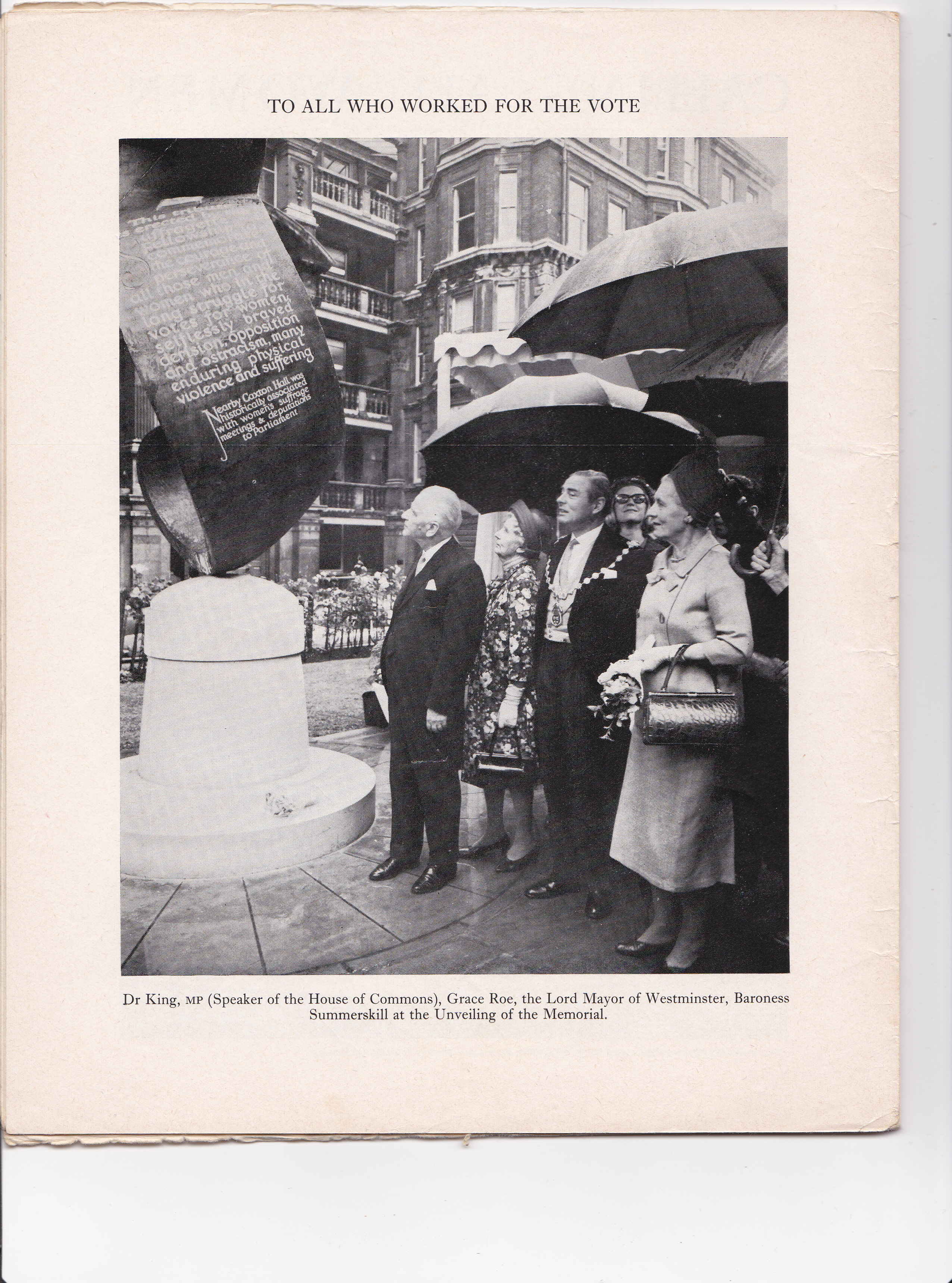
, , , ,

5 Comments

Suffrage Stories: Mrs Alice Singer, Miss Edith New And The Suffragette Doll

The arrival of the first issue of the admirable Swindon Heritage  magazine has reminded me of a slight connection I had some years ago with an interesting object created by Edith New – the subject of one of its articles.

Feature on Edith New in Swindon Heritage magazine

It was in 2006 that I was approached by a BBC TV producer planning a spin-off of the Antiques Roadshow -to be called the  Antiques Roadshow Greatest Finds. The idea was that they would take a few of the more intriguing items that had been brought to Roadshows in the previous year and research and discuss them in greater depth. The item that was brought to my attention was a Suffragette Doll. My research into its history and that of the woman who had owned it proved utterly fascinating. In addition I had a most enjoyable couple of days making the film that developed from the research.

I am only sorry that I do not have a photograph of the doll, which was dressed as a suffragette in prison uniform. Items such as this may occasionally appear on ebay or at auction but it is not that difficult to ‘forge’ a Suffragette Doll and what one needs is provenance, linking it to its original owner. This ‘Roadshow’ doll was just such a treasure – handed down through a family. What is more to my great pleasure I was able to discover more of the original owner, Mrs Alice Singer, than, when given the commission, I thought would be possible.  For, like Kate Frye (the subject of my latest book, Campaigning for the Vote).   Mrs Singer had kept a diary which, although a very much more sketchy affair than Kate’s, did reveal a good deal of her involvement with the Women’s Social and Political Union. The diary is now held in Israel by a branch of the family, but they were kind enough to let me have a look at it for the purpose of researching the programme.

Mrs Alice Singer (1873-1955) was born Alice Emma Isabel Isaac, the eldest of three daughters of Stephen Hart Isaac (1850-1877) and his wife Sime Seruya Isaac. Sime Seruya was of Portuguese extraction, although she was living in London when they married in 1872 at Bayswater Synagogue. At this time, and presumably later, when Alice was born, Stephen Isaac was working as the assistant manager of a coal mine at Colwick in Nottinghamshire. When he married he was living at Colwick Hall with his uncle, Saul Isaac, who was the lessee of the mine. Saul Isaac, was at this time MP for Nottingham (1874-80).

When Stephen Isaac died, aged 26, (at 31 Warrington Crescent, Paddington) on 2 January 1877, he was a widower. His death certificate shows that he had been ill for c. 9 months, probably with TB. His wife had died in Lisbon on 4 September 1876, a week after the birth of her third child. It is possible that they were in Lisbon for the sake of Stephen’s health. Lisbon was a place favoured by those suffering from TB. The fact that Sime had family there would have been an obvious attraction.

The three young girls, Alice, Daisy and Sime Seruya Isaac (who was now more than 6 months old) were left under the guardianship of their grandfather, Samuel Isaac, although Sime was brought up by her Portuguese grandparents. Alice, therefore, was orphaned by the time she was 4 years old.  She lived at Warrington Crescent until her marriage, I think. [NB across the road, at no 2 Warrington Crescent, there is a plaque to Alan Turing.  Interestingly –  and the ghosts pile up in London – that was also the address in 1866 of  Louisa Garrett Smith (eldest sister of Millicent Garrett Fawcett and Elizabeth Garrett Anderson) the very first secretary of the first London women’s suffrage society.]

Samuel Isaac was an army contractor – his firm was the largest European supporter of the southern (Confederate) states during the American Civil War – and failed on the fall of the Confederacy. After a while he became the main promoter of the Mersey Tunnel, which he was responsible for building.

Samuel (1812-86) and his wife, Emma (nee Hart), with the 2 elder girls, continued living at 31 Warrington Crescent until at least 1881. By 1886, when Samuel died, they were living at 29 Warrington Crescent. [Warrington Crescent, north of Paddington, was a smart address – houses were then new, large and italianate]. In 1891 Sime Seruya Isaac was boarding at a school at Kew. She went on to become an actress – a leading member of the Actresses’ Franchise League and one of the founders of the International Suffrage Shop.

Alice was educated at home by a governess and in 1895 married Julius Singer (1870-1926), son of Simeon and Charlotte Singer. In 1899 her sister, Daisy, married Julius’ brother, David.

Simeon Singer (1846-1906) was a leading light in the Jewish establishment in England, minister of the New West End Synagogue, St Petersburgh Place, Bayswater, from 1878 until his death. He was the translator and editor of the Authorized Daily Prayer Book, still the standard prayer book of Orthodox Jews in Britain. He is clearly still, a hundred years after his death, a strongly felt presence in the synagogue. Julius had four brothers and a sister and the family was clearly at the heart of Anglo-Jewry. Julius died in 1926 (18 Reynolds Close, Golders Green). During the course of the diary Alice is definitely anti-religion – of any kind.

When the census was taken in 1901 Alice and Julius Singer were living at Darby Green Farm, Darby Green, Yateley, Hampshire, which Alice had bought in 1900. Julius was described as a ‘wine and spirit merchant’. However, around 1908 his work seems to have involved the tea industry in some way –probably Lyons – and by then the family had moved to London. In 1911 they were living at 18 Reynolds Close, Golders Green where, on the day of the census, only two servants were at home. There is no trace elsewhere of the Singers – were they evading the enumerator to join in the suffragette boycott of the census?

In 1906 Alice and Julius appear to have been Conservative supporters. In later life Alice lamented that she wished she had been brought up in Fabian circles and, like her sister, Sime, moved dramatically to the Left. She visited Russia in the 1930s. She was keen to use women doctors (Dr Honor Bone) and opticians (Amy Sheppard – who worked at the Elizabeth Garrett Anderson Hospital for Women). She was keen on passing fads – such as vegetarianism, psychology etc – which clearly infuriated her children!

Alice Singer joined the WSPU after attending one of their meetings on 18 February 1907 and by November was prepared to give some time to the cause, addressing envelopes in the office at Clement’s Inn. A week later, when she and her husband attended a WSPU rally in the Queen’s Hall, Julius bought a copy of the new card game – ‘Suffragette’. for my post about this game click here.  At the end of the month the Singers took the momentous decision to adopt a child – being themselves still childless. In the casual fashion typical of the time a girl, Mary, was found for them by Mrs Ernestine Mills, a fellow suffragist.  (For an example of Ernestine’s work as a jeweller, see here).  The Singers were on very friendly terms with the Ernestine and her husband, on occasion staying with them at their Dorset home at Studland.

The Singers continued to be involved members of the WSPU, Alice’s activities only briefly curtailed in 1909 by a long-awaited pregnancy. Emmeline Christabel Kenney Singer (known as ‘Christabel) was born on 10 December. A studio photograph, taken by Lena Connell, is still held by the family, showing Alice with Mary and Christabel. Baby Christabel has a WSPU badge pinned to the hem of her frock.

It was in 1908/9 that Alice Singer bought the Suffragette Doll – presumably at a WSPU fund-raising event. Remarkably in a diary entry of 1931 she reveals that she had met again, at a Suffragette party, the maker of the doll – Miss Edith New. It was such luck that she chose to put this connection on paper – such an ephemeral link but one that gives the doll such an excellent provenance.

WSPU Breakfast celebrating the release of Edith New and Mary Leigh from Holloway Prison, held at the Queen’s Hall on 22 August 1908 (courtesy of LSE Library)

 On 22 August 1908 Alice Singer had attended the WSPU breakfast honouring Edith New and Mary Leigh on their release from Holloway. For much more about Edith New do read the Spring 2013 edition of ‘Swindon Heritage’ – and in her entry in my The Women’s Suffrage Movement: a reference guide

There is a strong Antiques Roadshow connection linking Edith New and Alice Singer’s Suffragette Doll – for in 2011 a quantity of Edith’s suffragette memorabilia, now held in the Swindon Heritage Centre (see http://www.swindonheritage.com),  was brought to the Roadshow when it visited Swindon. Coincidentally it was the Roadshow expert Hilary Kay who discussed this collection, as she had the Suffragette Doll a few years earlier.

In March 1912 Alice Singer was arrested after taking part in the WSPU window-smashing campaign. When arrested she had a hammer in her hand and when charged said of the windows, ‘I thought it was only one, they seemed like marble, not going to break.’ Alice had chosen to break three windows in the West Strand Telegraph Office, close to Trafalgar Square. Her family thought it appropriate that she, essentially law abiding and a respecter of property, should have chosen quasi-official premises, rather than privately-owned property.

Alice  was remanded in Holloway  until she appeared in court on 13 March. By now the Singers were living in Golders Green and a solicitor was organised by Mrs Lilian Hicks to represent the Hampstead women. Alice was charged under the Malicious Damage to Property Act and in court declared, ‘I only did it as a political protest. I admit I did it, but not for malice. I plead not guilty to malice.’ She agreed to be bound over – that is, not to commit any other such acts – for 12 months. Only one other woman also agreed to be bound over – all the other women (over 100 had been arrested) were sentenced to prison – their sentences varying but some repeat offenders getting as long as six months. Most of the other women were either single or with older families. Christabel was only 2 years old and I imagine Alice could not contemplate being away from home – in prison – for any length of time. The diary does not reveal any guilt at not opting for imprisonment.

Julius was very supportive while Alice was in prison – he visited her – but was kept waiting for 2 hours before seeing her for a short time ‘We forgot all we really wished to say in the fluster of the time limit and presence of wardresses..’

Alice Singer continued to work actively for the WSPU, in 1913 becoming treasurer of the Hendon and Golders Green branch. In November 1918 she was at last able to cast  her first  parliamentary vote – ‘I recorded for Mrs Edith How-Martyn for the new constituency of Hendon’. Edith How-Martyn, who had been a leader of the Women’s Freedom League, was standing as a Labour candidate but was unsuccessful.

The Suffragette Doll, treasured by Alice’s descendants, is silent testimony to her involvement in the ‘votes for women’ campaign and her indirect connection to Edith New, Swindon’s own suffragette.

Copyright

All the articles on Woman and Her Sphere are my copyright. An article may not be reproduced in any medium without my permission and full acknowledgement. You are welcome to cite or quote from an article provided you give full acknowledgement.
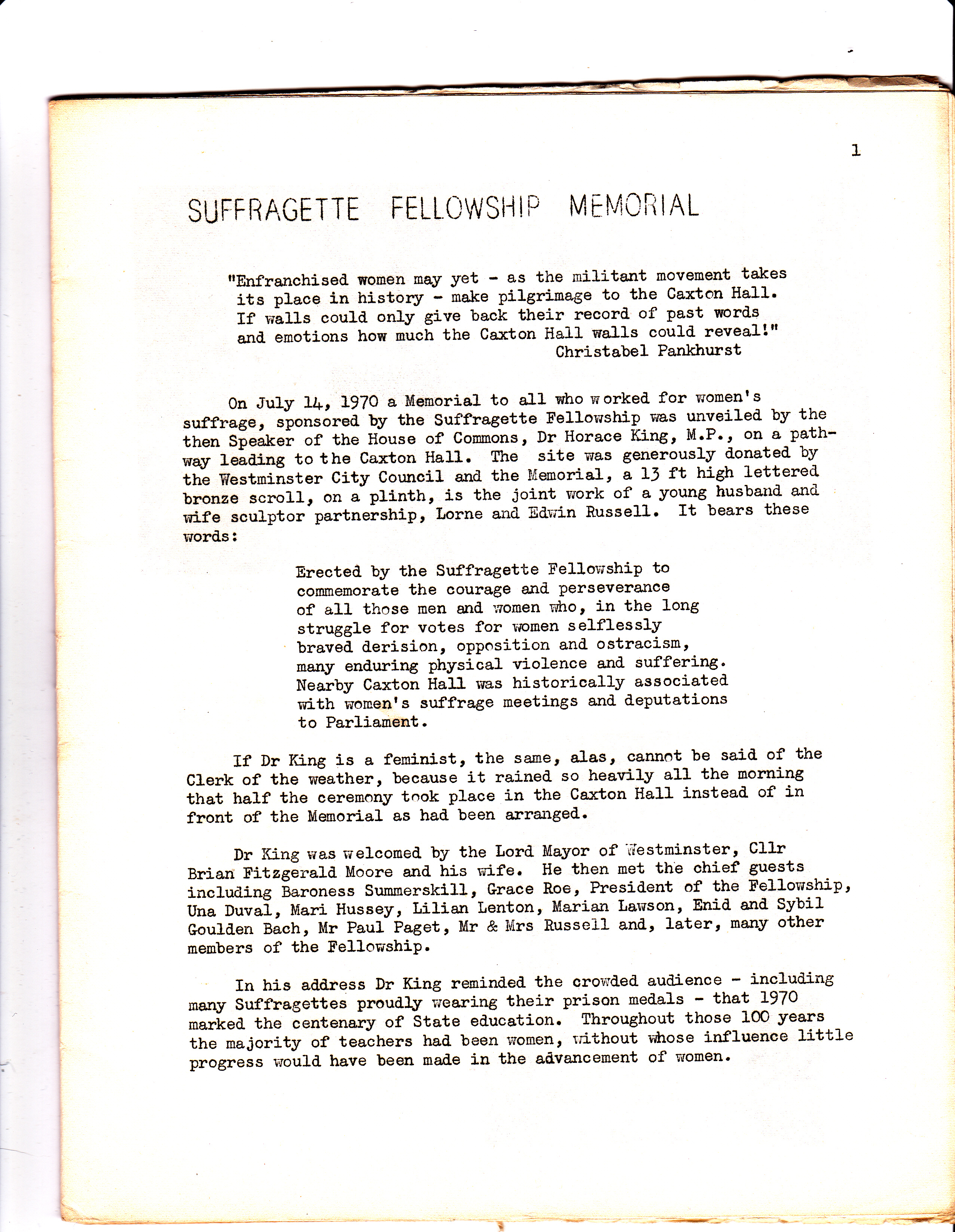
, , , ,

7 Comments

WALKS/Suffrage Stories: The Raid On WSPU Headquarters, 30 April 1913

On 30 April 1913  WSPU headquarters at Lincoln’s Inn House in Kingsway were subjected to their first police raid.  See here for a photograph (Museum of London) showing a subsequent raid in progress. 

Lincoln's Inn House 2013, former headquarters of the WSPU

Lincoln’s Inn House 2013, former headquarters of the WSPU

The WSPU had moved into the imposing new office building during the summer of 1912 – vacating their previous quarters in Clements Inn which had been very much Pethick-Lawrence territory. The geographical separation heralded the political separation that occurred in October 1912 when the Pethick-Lawrences were dismissed from the WSPU.

The elegant and imposing entrance hall of Lincoln’s Inn House -through which both suffragettes and police once purposefully made their way –  and its mezzanine floor – is now a ‘Bill’s Restaurant‘. I doubt that the bones of the space – the pillars, the stair case and the ironwork – have changed much in the last century and it is not difficult to imagine – as one sits eating one’s ice cream on a warm summer’s morning – the shades of our foremothers going about their business here.

Lincolns Inn House interior 2

Lincolns Inn House interior 3The police raid was one element in the increasing Home Office crackdown on the WSPU which had begun in February 1913 when, on the day after a house being built for Lloyd George had been damaged by a suffragette bomb,  Mrs Pankhurst declared,’For all that has been done in the past I accept full responsibility. I have advised, I have incited, I have conspired.’ The speech was seized on by the Home Office as the opportunity for which they had been waiting to arrest Mrs Pankhurst. She was charged with procuring or inciting women to commit offences contrary to the Malicious Injuries to Property Act and on 2 April was found guilty and sentenced to three years’ imprisonment. She immediately went on hunger strike. See here for the article on this episode commissioned from me for the No 10 website.

WSPU poster protesting against the 'Cat and Mouse' Act

WSPU poster protesting against the ‘Cat and Mouse’ Act

It was no coincidence that a day later the bill that was to become known as the ‘Catand Mouse Act’ received its Second Reading in Parliament. The passage of this Bill demonstrates how quickly Parliament could move when the Government was determined to act, for the Bill rapidly became an Act, receiving its Royal Assent on 25 April.

At the beginning of April both Annie Kenney and Flora Drummond were also arrested, the Home Office invoking obscure statutes to ensure that they would appear before the courts. A few days later managers of halls were encouraged by the Home Office no longer to let to the WSPU, who were also proscribed from holding meetings in public parks.

This is the context in which  the raid on Lincoln’s Inn House should be seen. The chief office organizers, Harriet Kerr, Beatrice Sanders, Rachel Barrett, Agnes Lake and Flora Drummond were arrested and were to spend most of May in front of the Bow Street magistrate, Mr Curtis Bennett. The police, under the command of Inspector Quinn of Scotland Yard, loaded a pantechnicon with WSPU papers seized from Lincoln’s Inn House, papers, incidentally, which were never returned. I must say I lament their loss as they would most certainly have shed more factual light on the workings of the WSPU  – Emmeline Pethick Lawrence had been a very business-like manager. In their absence the WSPU story has had to rely to a great extent on hindsight memories and the information culled from Votes for Women  and The Suffragette, sources biased in a way that business letter, receipts and account books are not.

As part of their campaign to cut off WSPU funding, the Home Office intended to trawl through the records seized in order to discover the names of WSPU subscribers and then prosecute them for supporting an organization that encouraged its members to damage property. This plan was never put into practice. The Home Office did, however, prosecute the printer of the WSPU paper, The Suffragette, driving the paper underground but never preventing its publication. On 2 May the Home Office asked the General Post Office to cut off all telephone communication with Lincoln’s Inn House; but the GPO replied that it was not entitled to do so.

These attempts at suppressing the WSPU  had, as might have been predicted, the effect of creating a void that was filled by even more extreme words and deeds. Between February and April there were over 30 arson attacks ascribed to the ‘work’ of suffragettes, as well as many lesser attacks – on golf courses, letter boxes etc.  Moreover, when combined with the publicity given to Mrs Pankhurst’s successive hunger strikes, it is unsurprising that matters reached a crisis point – at the Derby on 4 June 1913.

A year later the police again raided Lincoln’s Inn House, arresting Grace Roe. Christabel Pankhurst’s chief deputy, seen here being marched out of the building. Nearly a century later the rusticated stonework is still the same –  a’ Bill’s’ menu now substituted for The Suffragette  poster.

grace roe


, ,

1 Comment

Campaigning For The Vote: Kate Wrestles With North Norfolk, 1912

Kate Frye cover In early summer 1912 Kate Frye was in Norfolk, based in East Dereham, organizing the ‘votes for women’ campaign for the New Constitutional Society for Women’s Suffrage in Norfolk. In May the sitting MP for the Northwestern Division of Norfolk died and a by-election was called. Kate hurried to Hunstanton to organise the NCS campaign – rather at a disadvantage vis a vis the other suffrage societies, the WSPU and the NUWSS, both of which had many more organisers, money, and, above all, cars at their disposal to cover the constituency. But Kate did her best. For example:

On 28 May she hired a motor for 22/- from Johnson’s Garage in Hunstanton to take the Society’s speakers, Miss McGowan, Mrs Chapman (the Society’s president)  and Mr Lloyd (supposedly an Australian although she began to have her doubts) to Burnham Market. Tuesday May 28th 1912 [lodging in Hunstanton at Palace House, Westgate] Had a lot of writing to do in the morning and had to go out to make arrangements and then a great rush to get something to eat and off to Burnham Market at mid-day. I took the Literature to the Hotel, left it here and ordered tea – then I canvassed hard and walked all the way to Burnham Overy.

Hoste Arms, 2013

Hoste Arms, 2013

Came [back to Burnham Market] to Hoste Arms Hotel – found one of my Irish friends [these were Irish political organisers also in the area campaigning for the by-election]  still there- the younger married one- at least the other was married too – but I gathered he was separated from his wife. My friend greeted me quite tenderly – we met as old friends – there were two other Irishmen – Anti Home Rulers and two Liberals – a young coming-on Politician – quite nice looking – and an older man who, I was told afterwards, was Mr Ouithwaite – a candidate somewhere. We all had tea and eggs and Suffrage discussions – Mr Ouithwaite was quite violent – but I really had him every time – quite a roar went up at some some my answers – I enjoyed that tea party immensely. I think we all did – Mr Ouithwaite least of all, perhaps, but I felt I was scoring – and as only the two odd Irishmen were inclined for Votes for Women I had no help. No 1 Irish was not so rabid though.

Burnham Market, 1912

Burnham Market, 1912

I only got to the Schools just in time to have the doors open and let the crowd in – no policeman there so the boys had to go – it looked like a rowdy meeting from the first. The place was pretty full when the car arrived – Miss McGowan with Mrs Chapman and Mr Lloyd. Miss McGowan took the Chair – and they were fairly quiet while she spoke – but directly Mrs Chapman got up the trouble began. No one could hear her – she was feeling so dreadfully ill with a feverish cold – she must have had a miserable evening and I felt so sorry for her – and the people were so insolent. I went and stood right at the back amongst the rowdies and it was a lively evening – and so stuffy. Mr Lloyd (from Australia) stood on a Chair and bellowed – ‘Oh men of England’ over and over again – he tried his best and was cheery but not much of what he shouted could be heard. I took a collection – which was brave I think – but I felt I had to do something. I was so disappointed and we drove off amidst groans. A very Liberal place – but the boys were the mischief – once in they wouldn’t quiet. We motored back to Hunstanton – left Mrs Chapman at the ‘Golden Lion’ – then Mr Lloyd at the Temperance Hotel in our road – then home. The WSPU had been holding a meeting in the Town Hall and Miss Mansell had been down to help Steward – but only about 100 people turned up – some said 50 – so they had an open air afterwards as Mrs Massy and Mrs Haverfield were there. That was just over so we three tramped off to Roberts Room where Mr Hemmerde [the Liberal candidate] was speaking – a small room but well filled. He was just answering questions put to him by our lively friend Mr Lloyd – so when the people came out we gave away our handbills. ‘ Campaigning for the Vote: Kate Parry Frye’s Suffrage Diary edited by Elizabeth Crawford For a full description of the book click here Wrap-around paper covers, 226 pp, over 70 illustrations, all drawn from Kate Frye’s personal archive. ISBN 978 1903427 75 0 £14.99 Copies available from Francis Boutle Publishers, or from Elizabeth Crawford – e.crawford@sphere20.freeserve.co.uk  or from all good bookshops.  

'Campaigning for the Vote' - Front and back cover of wrappers
‘Campaigning for the Vote’ – Front and back cover of wrappers

, , , , , , ,

Leave a comment

Campaigning For The Vote: Kate Converts Bourne End, Buckinghamshire

Kate Frye cover‘The Plat’ at Bourne End in Buckinghamshire had been the Frye family’s country house since the late 1880s.  

The Plat, Bourne End

The Plat, Bourne End

The house was right on the River and teas were served on its lawns during the annual Bourne End Regatta.

Bourne End Regatta

Bourne End Regatta

Kate’s father, Frederick Frye, had been an influential figure in the neighbourhood but by 1911 had lost control of his business and the family finances were in dire straits. In order to earn her keep Kate now took employment as a paid organiser for the New Constitutional Society for Women’s Suffrage. She spent much of the time working away from home but in the autumn of 1911 did succeed in launching the  Bourne End and District Women’s Suffrage Society.

Thursday October 19th 1911 [Bourne End: The Plat]

So hot – very foggy and dull, some rain but fortunately it didn’t keep on. Agnes and I walked up to Mrs Bleek-Leech’s at Lindenhurst  as she was most kindly having the first meeting of the Bourne End and District Women’s Suffrage Society. It was such a success – about 50 people present. Miss Dove [headmistress of Wycombe Abbey School] was going to take the Chair but in her absence Daddie did so. Mrs Cecil Chapman [president of the New Constitutional Society] came to speak. She spoke for an hour and was most stirring. Mrs Graham from Henley also somehow got there and spoke for a few minutes on the sweated workers at Reading. Mrs Smart proposed a Vote of Thanks all round. Then tea. Mrs Leech had arranged it all most beautifully and was quite charming about it. I was as busy as a bee, of course. A good bit rested on me but I was delighted at the success. Mrs Chapman must have touched her hearers’ hearts and although we only made 10 or so members. People said that they had never heard suffrage before but were so interested they promised to come on Dec 15th. Every one was pleased. We stayed last finishing up things. Then after supper accounts for the 3 Suffrage Papers and the Standard.

Bourne End and District Society

Campaigning for the Vote: Kate Parry Frye’s Suffrage Diary edited by Elizabeth Crawford


For a full description of the book click here


Wrap-around paper covers, 226 pp, over 70 illustrations, all drawn from Kate Frye’s personal archive.


ISBN 978 1903427 75 0

£14.99


Copies available from Francis Boutle Publishers, or from Elizabeth Crawford – e.crawford@sphere20.freeserve.co.uk

 or from all good bookshops.


'Campaigning for the Vote' - Front and back cover of wrappers
‘Campaigning for the Vote’ – Front and back cover of wrappers


, , ,

Leave a comment

Suffrage Stories: Arson at Tunbridge Wells, April 1913

The Nevill Pavilion, Tunbridge Wells on the morning of 11 April 1913

The Nevill Pavilion, Tunbridge Wells, on the morning of 11 April 1913

On Friday 11 April 1913 Percy Lankester, one of Tunbridge Wells’ leading photographers, forsook his studio at 38 High Street and,  on a day as cold as that 100 years later, set off with his camera for the Nevill Cricket Ground, a brisk 15 minute walk away.

He was on his way to photograph a scene very different from his usual views of the elegant and harmonious streets of Tunbridge Wells. For what he recorded, from several different angles, was the all-but destruction of the cricket pavilion – and the complete destruction of the club’s archives. Percy Lankester published his photographs of the ruined Nevill Pavilion as postcards, souvenirs of one incident in Tunbridge Well’s history.

The arson attack was ascribed to the action of militant suffragettes – although no-one was ever held responsible. With Mrs Pankhurst on hunger strike in prison, April 1913 saw an intensifying in the WSPU campaign of protest – with arson becoming an increasingly popular weapon. The Nevill Pavilion was one of the first casualties in this new stage in the long fight for ‘votes for women’.

The above photograph  is one of the  postcards published by Percy Lankester- and I have it in stock at the moment. It has never been posted and – 100 years old – is in fine condition and, a crisp and clear image, is a tribute to Mr Lankester’s photographic skills. NOW SOLD

Other arson attacks -on churches, houses, railway stations etc – were recorded in other localities by other photographers – who then issued the result, as did Mr Lankester, on a photographic postcard. Such scenes make an interesting sub-genre for the collector of suffragette postcards.


, ,

Leave a comment

Suffrage Stories: Where Did Christabel Pankhurst Live In Paris?

In early March 1912, after members of the WSPU had launched a window-smashing campaign in the West End of London, the Home Office determined to hold their leaders accountable and immediately arrested Emmeline Pankhurst and Frederick and Emmeline Pethick-Lawrence.  Christabel Pankhurst, however, nimbly escaped over the English Channel to the safety of Paris.

9 rue Roy

9 rue Roy

9 Rue Roy, now the Hotel Saint Augustin, is where she took refuge and where she lived for well over a year. It would appear that she rented an apartment in the building – perhaps not then functioning as an hotel.

Here we see Christabel photographed in her room, looking out of the window – perhaps one of those in my photograph. Not that there was much to see – Rue Roy is a narrow,  somewhat nondescript little street, a turning off the Boulevard Haussmann. But this district, still relatively recently developed, was a usefully central and anonymous location in which a fugitive might take up residence. Did Christabel avail herself of the nearby Metro station in Place Saint Augustin?

Christabel looking out of the window at 9 Rue Roy

Christabel looking out of the window at 9 Rue Roy

Place Saint Augustin

Place Saint Augustin

Christabel could not have taken  with her much in the way of personal possessions (though one imagines she perhaps did not regret being forced to acquire a suitably Parisian wardrobe) – but she did arrive well-armed with useful introductions. A mere four or five days after her arrival she was visiting the salon of Winaretta Singer, Princesse de Polignac – an entrée arranged through the good offices of Ethel Smyth, the Princesse’s sometime lover.

Princesse de Polignac's music room (courtesy of The Blue Lantern blogspot)

Princesse de Polignac’s music room (courtesy of The Blue Lantern blogspot)

It was in these glamorous surroundings that Annie Kenney, on her first visit to Paris, was asked to meet Christabel.  One would love to know more – but in her posthumous memoir, Unshackled, Christabel is distinctly discreet as to how her time in Paris was spent. Or, indeed, how her prolonged sojourn there was financed; she did no work – in the conventional sense – during the two and a half years that she lived in Paris until the outbreak of war in August 1914 made it safe for her to return to England.

11 Avenue de la Grande Armee - on right

11 Avenue de la Grande Armee – on right

Indeed, after the French had refused to extradite her, by the autumn of 1913 Christabel had moved to a rather more central – and presumably more expensive – Parisian address -11 Avenue de la Grande Armeé, later -crossing the Avenue to live at a flat at no. 8. It was from here, in the very heart of Paris, that she conducted the last frenetic months of the WSPU campaign.

Number 8 Avenue de la Grande Armee

Number 8 Avenue de la Grande Armee – across the road from number 11

and a stone's throw from the Arc de Triomphe

and a stone’s throw from the Arc de Triomphe

All the articles on Woman and Her Sphere and are my copyright. An article may not be reproduced in any medium without my permission and full acknowledgement. You are welcome to cite or quote from an article provided you give full acknowledgement.
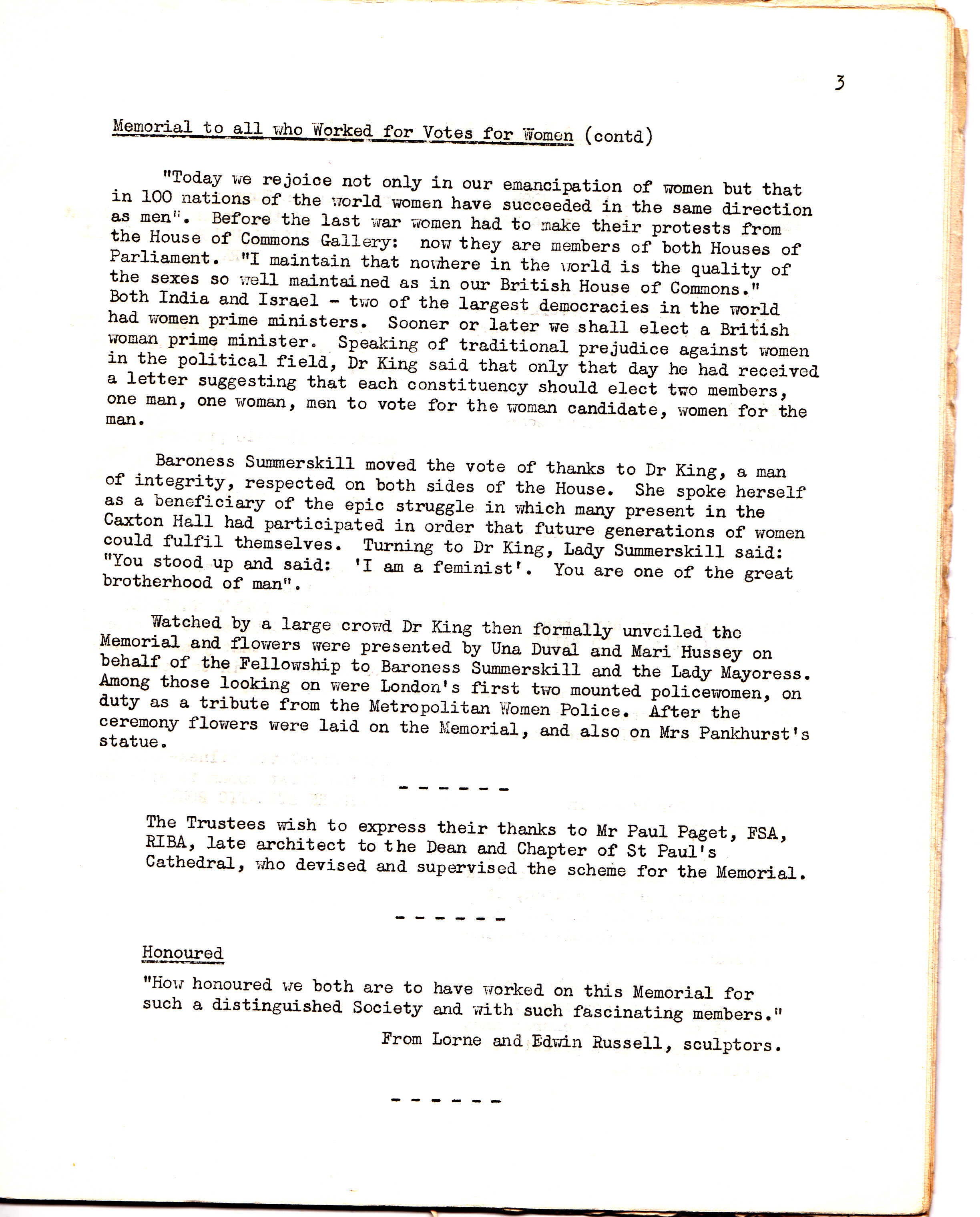
, , , , , ,

2 Comments

Suffrage Stories: An Entire Birmingham College Boycotts The 1911 Census

Rhoda Anstey (1865-1936) [courtesy of ConnectingHistories)

Rhoda Anstey (1865-1936) [courtesy of ConnectingHistories)

When researching the suffragette boycott of the 1911 census it is no surprise to find individuals in households – or, in the case of all-female households, all the members – refusing to give information to the enumerator. 

Moreover one can discover instances of mass- evasion, such as those in Manchester and Portsmouth, which were instigated by the local WSPU organiser. It is, however,  more unusual to find that an entire institution has absented itself from the census – but that is what happened in the case of the Anstey College of Physical Education. The College occupied a large house on the long Chester Road in Edrington, on the outskirts of Birmingham. All the Chester Road houses were then unnumberd, each having its own name – such as ‘Davos, ‘Glen Mor’ or ‘Westbourne’ – and it has taken some determined hunting  but I have now managed to locate the census form issued to the College’s Principal, Rhoda Anstey. She gave no answers to the government’s questions but wrote across the form:

No Vote No Census! I protest against the injustice done to women rate-payers by the continued refusal of the government to give them the vote, and hereby refuse to fill in the census forms for my household.’ Rhoda Anstey, Principal of Anstey College. Note ‘If the Conciliation Bill passes the 3rd Reading on 5 May I undertake to give the information desired.’

On the form the Registrar noted in red ink that: ‘From the information obtained from several sources it is estimated that on the night of April 2nd 40 females slept on the premises and this number has been enumerated. ‘

Rhoda Anstey, theosophist, vegetarian and tax resister, had taken a contingent of her students to London on 19 June 1910 to take part in the grand procession organised by the WSPU in London and for the next few years actively supported the WSPU, advertising regularly in Votes for Women. Some of  the College’s former students are likely to have been members of the Gymnastic Teachers’ Suffrage Society which had been founded in 1908. I presume that the 40 females enumerated on the night of 2 April included students at the College; I wonder if Miss Anstey enquired as to whether or not they wished to be enumerated?

For further information about Rhoda Anstey and her College click here

To listen to a talk I gave on the suffragette boycott at a National Archives conference on the 1911 census click here

, , ,

Leave a comment

Suffrage Stories: Devon Suffragists


NUWSS South-West branch of the Pilgrimage photographed in 1913 as they set off from Land's End

NUWSS South-West branch of the Pilgrimage photographed in 1913 

In the summer of 1913, in the aftermath of Emily Wilding Davison’s spectacular funeral procession,  while  WSPU members were reading in the pages of The Suffragette details of Mrs Pankhurst’s successive hunger strikes, numerous reports of increasingly dangerous suffragette militancy, and  Christabel Pankhurst’s denunciation of prostitution and venereal disease (eventually published as The Great Scourge), the constitutional suffragists, the National Union of Women’s Suffrage Societies, were planning a ‘Woman’s Suffrage Pilgrimage’.

The Pilgrimage was intended to act as  a counter to suffragette militancy, to create a spectacle demonstrating that women, while disciplined, were also law-abiding. The air of spirituality that had surrounded Emily Davison’s coffin was paralleled  by the consciousness-raising intent of the Pilgrimage. It is interesting to note that the model, which had been enacted the previous autumn when a small group of women had journeyed from Edinburgh to London, was known as the ‘Women’s March’. By mid-1913 the mood had changed – the women were no longer marchers, they were pilgrims.

In my Women’s Suffrage Movement: a reference guide  I give an account of the various strands of the Pilgrimage, which, beginning at various distant points in England, approached London along eight main routes.

Now, to mark the centenary of the Pilgrimage, the Dreadnought South West Association is planning to tour a new play, ‘Oxygen’, playing at many of the stopping places of the south-west route of the Pilgrimage, which began at Land’s End on 19 June. One of those involved in planning the Pilgrimage commemoration is Dr Julia Neville, details of whose latest book are given below.

vivajuanitaViva Juanita: 
Juanita Phillips: Champion for Change in East Devon between the wars
by Julia Neville

‘”Juanita Maxwell Phillips, OBE (1880 – 1966) was eleven times Mayor of Honiton, Alderman and Freeman of the Borough, Devon County Councillor and County Alderman, JP and OBE. Her extraordinary story – from Chile to Honiton, from suffragette to pillar of the establishment, from amateur dramatics to theatre impresario – was uncovered in 2009 by the Senior Council for Honiton. It was brought to life in Honiton in newspaper articles, presentations, commemorative events, and a Honiton Players production, Viva Juanita! Now this fascinating illustrated book tells her story in words and pictures.”

For details of how to buy Viva Juanita see here


While being generally interested in NUWSS activities, I have an interest slightly more personal  in the Devon  branch because for some years before 1913, its secretary was Miss Jessie Montgomery, who was also a mover in establishing the college that eventually became Exeter University. When I arrived as a student I was among the first intake at a hall of residence that went by what seemed the rather cumbersome name of ‘Jessie Montgomery House’. We were never told who this Jessie Montgomery was – or had been – and I must say I never inquired – although I do remember being rather pleased when I could give her some reality, after coming across a commemorative plaque to her in Exeter Cathedral. Anyway, Miss Montgomery is now once more history –  I see that ‘her’ hall of residence, along with others on that campus, have now been demolished.  Sic transit…

, , , , , ,

1 Comment

Suffrage Stories: ‘From Frederick Street to Winson Green’: The Birmingham Women’s Suffrage Campaign

On 13 October 2008 I gave the following talk in King’s Norton, Birmingham. It was part of a series of lectures to commemorate the restoration of the Old Grammar School and the Saracen’s Head, which in 2004 had won the BBC’ ‘Restoration’ television series.


I chose the title ‘From Frederick Street to Winson Green’ because it is interesting to trace the growth of the women’s suffrage movement in Birmingham through the streets and buildings in which the men and women of the city conducted their campaign. We will see that this campaign moved slowly from a domestic environment, from the villas (particularly the drawing rooms) of its main protagonists – into the public buildings and then the streets of Birmingham. And it was in Winson Green, the city’s castellated jail, that in 1909 the campaign which had begun 43 years earlier, took on a completely different and very much more dangerous aspect, that for which it has become notorious, when it was in there that suffragettes were forcibly fed for the first time in Britain.Winson Green


But to begin at the beginning – it is worth bearing in mind that the campaign for women’s enfranchisement was just one among many in which liberal-minded men and women of the mid-19th century were interested. The campaigns for, example, land reform, anti-vaccination, compulsory education, early closing, and the Sunday opening of museums and art galleries were ones to which equal attention was devoted by their adherents. In 1866 the country was aware that parliamentary reform was in the air. It was over 30 years since the last attempt at reform and those who had industrialised Britain were determined that their exclusion from the franchise should be remedied.  John Bright, who from 1858 had been Birmingham’s Radical MP, was at the forefront of this agitation. It was not, however, around Bright, who, unlike the rest of his remarkable family, was never in favour of giving any women the vote, but around another Radical MP, John Stuart Mill,  that the campaign to include women in this potentially enlarged electorate was to centre. When Mill was elected to the Westminster seat in 1865 it was on a manifesto that included women as a category in a proposed enlarged franchise

A year later, in June 1866, he presented to Parliament a petition, signed by 1499 women, asking that the vote should be given to women on the same terms as it was given to men. This did not, of course, mean that all women should have a vote – any more than it meant all men – the capacity to vote was still to be determined by a property qualification. This petition includes only three names definitely from the Birmingham area – one woman lived at King’s Heath and two in Hockley. None of these women played any significant part in the ensuing campaign and it is likely that they were each asked to give their signature by a friend or relation from outside the area. There was clearly not yet an existing ‘feminist network’ in Birmingham, although this situation was soon to be remedied by the arrival at  10 Chad Road,

10 Chad Road (with thanks to Carole McKeown)

10 Chad Road (with thanks to Carole McKeown)

Edgbaston in c. 1867 of William Taylor and his young family. He was a member of a family that was closely involved both by business and marriage with the Courtaulds, manufacturers in Essex of that most eminently Victorian material – crape. Courtauld and Taylor fortunes were built on the backs, literally, of mourning Britons. William’s brother, Peter Alfred Taylor, was the very wealthy and very radical MP for Leicester. P.A. Taylor’s wife, Clementia, had been very active in the campaign to abolish slavery – as well as in numerous other radical causes – and was a member of the committee that organised that first women’s suffrage petition.  William Taylor’s wife, Caroline, had signed the petition while they were living in Bridgwater. The family was Unitarian (as were so many others of their fellow campaigners of this period) and William is described in the 1871 census as an iron merchant and manufacturer.

The 1867 Reform Bill, when passed, did not, of course, include women in the enlarged franchise and groups of men and women in London and Manchester slowly formed themselves into the nuclei of a continuing campaign to put further petitions before parliament.  At the time this was seen as the correct way in which to exert pressure on parliament; methods were to change over the years.

A committee of this National Society for Women’s Suffrage was formed in Birmingham on 21 April 1868 ‘in accordance with the request of Mrs P. Taylor, the Secretary of the London Suffrage Society, who had urged Mrs William Taylor, of Birmingham, and Miss Johnson to take up the matter’.  A month later the committee held its first public meeting at the Exchange Rooms in New Street. William and Caroline Taylor were from the first members of the Birmingham executive committee and in 1868 Caroline was its treasurer.  The first secretary was Mary Johnson, who had already been subscribing to the main London suffrage society in 1867.  She lived with her parents, George and Fanny Johnson, at 90 Wheeley’s Road in Edgbaston.  George Johnson is described in the 1871 census as an Independent minister. Lydia Becker, who was secretary of the very influential women’s suffrage society in Manchester, acted as Mary Johnson’s mentor, giving her guidance in setting up and running the society.

However in 1870 after her marriage, Mary Johnsonmoved to West Bromwich and was succeeded as secretary by Eliza Mary Sturge who lived at 17 Frederick Street (long ago renamed ‘Frederick Road’).  She was the 28-year-old daughter of Charles Sturge, alderman of the city, brother of Joseph Sturge. The latter was by then dead, but very much alive in the Birmingham municipal memory. In the 1820s he had been one of the most vociferous campaigners against slavery and had been secretary of the Birmingham Anti-Slavery Society – even going out to the West Indies to inspect conditions there for himself. In the 1840s Joseph Sturge had been a leading campaigner in favour of the repeal of the Corn Laws, had throughout his life been an ardent supporter of free trade, peace and temperance, an advocate of manhood suffrage, founder of the Complete Suffrage Union, but, like John Bright, was not prepared to include women in any proposed enlarged franchise.

Sturge statue

Sturge statue

After his death, in 1862 a fountain and statue had been dedicated to his memory at Five Ways, in Edgbaston  and it is still there, despite all the road alterations. His brother, Charles, who worked in business with him as a corn merchant, was also involved in Joseph’s philanthropic endeavours but, unlike him gave practical, financial, support to the women’s suffrage movement. In 1871 he lived with his two daughters, Eliza and Maria, at 17 Frederick Street and it was from her home that Eliza conducted the business of the Birmingham Women’s Suffrage Society. The Sturges were Quakers and were related to the Clark family – the Quaker shoe makers – of Street in Somerset, who with other Sturge cousins were influential in the Bristol women’s suffrage society.

Having taken over the role of secretary in Birmingham, Eliza quickly became an active speaker in the suffrage cause. It was the policy of the suffrage societies around the country to attempt to influence both the existing, male, electorate and the women of the country by holding public meetings, using both local and imported speakers to lay out the arguments for women’s right to a vote in pithy speeches. In December 1871 there had been such a meeting in Birmingham, held in the Masonic Hall and described as crowded and highly successful.

Millicent Fawcett

Millicent Fawcett

Millicent Garrett Fawcett came from London to speak at it. Eliza Sturge herself also took to the road as a suffrage speaker.  In 1872, for instance, she was a speaker at suffrage meetings in both Bristol and Rochdale.  A speech she gave on 6 December that year at BirminghamTown Hall was reprinted as a pamphlet. In the course of this speech she mentions that ‘I know that I can go and return from public meetings alone at night without experiencing the slightest difficulty or annoyance’, which says something about the streets of Birmingham at the time and gives us an idea of how Eliza Sturge occupied her evenings! Millicent Garrett Fawcett was again a speaker and her speech was also reprinted. In it she made the point that ‘I can scarcely imagine that the Birmingham politicians, who took so prominent part in the reform agitation for the extension of the suffrage to working men, can be blind to the patent fact that all the most convincing arguments used during that agitation in favour of admitting the working classes to representation apply with equal cogency to the case of women.’  In 1873, very soon after women became eligible to stand, Eliza Sturge was elected as a member of the Birmingham School Board, of which Joseph Chamberlain was then the chairman. She was a Liberal supporter but in the 1870s despaired at the Liberal Party’s lack of interest in the woman’s cause.

As well as holding public meetings, members of the Birmingham society also undertook personal canvassing and the distribution of pamphlets in some of the wards of the city. However they were always at this time hampered by a lack of funds. At the beginning of the 1870s the society had a subscribing membership of about 30 and had only slightly increased its numbers by the end of the decade. The society’s annual reports are notably brief in comparison with those of, for instance, the Manchester or Edinburgh societies,  But in March 1873 the society did manage to move its affairs out of Frederick St and into an office in central Birmingham, at 4 Broad Street Corner and spent £3 13s on its furnishing.

In 1872, the executive committee of the society also included the  Rev Henry Crosskey and his wife, who, like the Taylors, were also recent arrivals in Birmingham. He was a Unitarian minister and had previously been living in Glasgow.

Church of the Messiah

Church of the Messiah

In Birmingham he became minister of the congregation of the  Church of the Messiah in Broad Street, a large Gothic building which reflected, as Pevsner put it, ‘the importance of Unitarians in Birmingham in the second half of the 19th century’. Under Crosskey the Church of the Messiah became an intellectual centre, a place where ideas about society were openly and critically discussed. Crosskey had long been associated with such radical causes as the Young Italy movement (Garibaldi and Mazzini were heroes to all the early supporters of women’s suffrage) and in Birmingham found a comrade in George Dawson, another independent nonconformist minister. Dawson had been a Baptist but in 1847 had opened his own church, the Church of the Saviour, in the middle of the city. His congregation included many people – Kenricks, Martineaus and Chamberlains -who were to become influential in the civic life of Birmingham. Dawson’s message was that the church should eschew fixed creeds and work towards the greater good, urging citizens to give all their talents for the service of the city. Dawson, thus, was a promoter of the ‘civic gospel’ that led Birmingham, in the 1870s and 1880s, to acquire the reputation for being the best-governed city in the world. Dawson had as early as the 1840s made clear that he was concerned about the position of women in society. It is unsurprising, therefore, to discover that his wife was also a member of the executive committee of the suffrage society at this time.

By 1878 Eliza Sturge had moved with her father and sister to Bewdley, from where, for a time she continued to act as secretary to the suffrage society. But by 1885 the honorary secretaryship had been taken over by Catherine Osler, who was finally to retire, as president of the society, 35 years later in 1920. As Catherine Courtauld Taylor, daughter of William and Caroline Taylor of 10 Chad Road, she had subscribed 1/- to the Birmingham Women’s Suffrage Society when it was founded in 1868; she was then 14. In 1873 she had married, in Crosskey’s Church of the Messiah, Alfred Clarkson Osler, a member of the wealthy Birmingham family of glass manufacturers.  From both their families Catherine and Alfred Osler inherited a radical liberal tradition and from about 1884 Catherine was president of the Birmingham Women’s Liberal Association.   All 4 of their children were to become active in the women’s suffrage movement. With increasing prosperity the Oslers moved to a large house in Edgbaston, ‘Fallowfields’, in Norfolk Road, the scene of a plethora of drawing-room meetings at which the question of women’s suffrage was discussed.

Mrs Osler (c) Birmingham Museums and Art Gallery, Supplied by the Public Catalogue Foundation

Mrs Osler (c) Birmingham Museums and Art Gallery, Supplied by the Public Catalogue Foundation

When Catherine Osler became secretary of the suffrage society her unmarried sister, Edith, became treasurer. It will have become clear that the 19th-century suffrage campaign in Birmingham, as in the rest of the country, was very much a middle-class affair – indeed very much an Edgbaston affair.  With the vote firmly allied to a property qualification, it would only be householders and ratepayers who would benefit from any extension of the vote. There were, however, even within the middle-class pro-suffragists, degrees of liberalism. The 19th-century campaign split in 1888 along the lines of the split in the Liberal Party over Home Rule for Ireland. In Birmingham, as in the country at large, Joseph Chamberlain was one of the most prominent of the Liberal Unionists (those against Home Rule); the Oslers, unlike most of the Birmingham industrial families, who followed Chamberlain, were members of the more radical wing – followers of Gladstone in supporting Home Rule. This schism was reflected in a split in the national suffrage society so that for most of the 1890s the suffrage movement rather lost its focus, although individual members and societies were extremely active.

In 1892 Birmingham was chosen as the venue for a national conference organized by one of the splinter societies, the Women’s Emancipation Union, perhaps the most radical of these societies, with an agenda that demanded equality with men in every aspect of life. Although it is doubtful that Catherine Osler was actually a member of this society she did chair one session of this conference and proposed a resolution supporting the inclusion of women in any reformed scheme of local government. One of the leading members of the Women’s Emancipation Union was an interesting Birmingham woman. She was Caroline Smith, the sister of  George Jacob Holyoake, Chartist and secularist, the last man in England to be sentenced on a charge of atheism.  They were the eldest children in a large family, living in the 1820s in comparative poverty at 1 Inge Street in central Birmingham. As a child George Holyoake worked as a whitesmith alongside his father in the Eagle Foundry.  Their mother had a small home workshop making horn buttons, before being put out of work by the growth of larger manufacturers. The Holyoakes were obviously an able family. However nothing is known about Caroline’s early life except that at some point she married a William Benjamin Smith, who had been born in Kings Norton around 1822. When the 1871 census was taken they were living at 19 Carpenter Road, Edgbaston. Although the Smiths’ house has now disappeared, it was presumably not unlike those that do remain – that is to say a large stucco Regency villa – a far cry from the house cum workshop in Inge Street where Caroline grew up. She was a member of the executive committee of the Birmingham Women’s Suffrage Society in 1885 but had clearly been attracted to the more radical movement and by 1892 was the national treasurer of the Women’s Emancipation Union.

It was doubtless its central position in the country that made Birmingham a popular venue for national conferences because again it was here, in 1896, that the main suffrage societies made a concerted effort to regroup.  It was proposed that past differences be put aside and that they should unite as the National Union of Women’s Suffrage Societies, it being recognised that, after 30 years of campaigning – and the goal little nearer achievement – there was a need to present a common front from the centre. Although no parliamentary bill in favour of women’s suffrage was presented between 1897 and 1904 the suffrage movement did benefit from a more effective central organisation and this enthusiasm permeated down to the local societies.  In October 1900 the minutes of the Birmingham society record that one of its best ever drawing-room meetings had been held in a private house at which 100 ladies were present and 26 new members enrolled. In 1902 the annual meeting of the Birmingham society – held in the Grand Hotel – was addressed by Sir Oliver Lodge, principal of Birmingham University. His speech was published as a pamphlet‘ so that today we can read that he thought, ‘The vote itself is a trivial affair, but its artificial withholding is a gratuitous insult: I am not surprised that the arbitrary withholding on that small function is one that galls out of all proportion to its importance. I recognize the desirability of doing away with artificial obstacles, and giving to everyone a clear field and an equal chance – a fair share in education, an open entrance to the professions, and a fair and reasonable opportunity of service in every direction.’

By this time Catherine Osler had become president of the Birmingham society and in 1903-4, with help from paid organizers (the movement was definitely moving away from involvement on a purely voluntary basis), she had supervised the opening of new branches in Coventry, Warwick, Redditch, and Leamington.  At this time the Birmingham Women’s Suffrage Society thought it advisable to undertake work among working women, as was being done in Lancashire among the women textile workers. The Birmingham society began with the women chain makers of Cradley, paying for an organizer to go around from yard to yard, talking to the women about the suffrage issue.

Women chainmakers at Cradley Heath

Women chainmakers at Cradley Heath

In early 1904 they conducted another campaign amongst the Cradley nail makers.  During 1907 the society held 30 meetings in Birmingham and the surrounding district and in 1908 drew in £8 6s 3d in subscriptions – making it the second largest society (after London) in England.

The increasing activity of the Birmingham Women’s Suffrage Society was not only due to better central organization but doubtless owed something to the impetus provided by the arrival on the suffrage scene of a new ginger group. This was the Women’s Social and Political Union, which had been founded in October 1903 in Manchester by Mrs Emmeline Pankhurst, but which had only really begun to make an impact with the arrest and imprisonment in October 1905 (in Manchester) of Mrs Pankhurst’s eldest daughter, Christabel, and of Annie Kenney on charges of obstructing the police.

The WSPU determined to win the vote by what they termed ‘militant methods’, that is, in order to bring pressure to bear on the Cabinet they were prepared to do more than hold orderly public meetings and present petitions to parliament through MPs.  The political process itself had evolved since the 1860s; it was clear that individual members of parliament had little real power (that now resided in the Cabinet) and that no bill in favour of women’s suffrage would have a chance of passing into law unless it was presented as a government measure. What actually were ‘militant methods’ was never clearly defined by the WSPU –  members more or less set their own limits, and that militancy escalated as the years passed. Initially WSPU strategy was to hold large meetings at the beginning of each session of parliament in a hall, such as Caxton Hall, close to the House of Commons, and for a deputation, often led by Mrs Pankhurst herself, to attempt to present a petition to the Prime Minister, who would invariably refuse to see them. The police would attempt to prevent them reaching Parliament and brawling would ensue.

Mrs Pankhurst arrested while leading a deputation to Parliament

Mrs Pankhurst arrested while leading a deputation to Parliament

This all attracted marvellous publicity, in a way in which drawing-room meetings in Edgbaston never had. The WSPU provided newspapers with ‘news’, that is, spectacle that was recorded in the photographs that had only lately superseded the engravings with which newspapers had been illustrated, and with the kind of  behaviour that, because it was considered ‘extreme’, was, therefore, ‘news’.

Although the WSPU opened branches around the country it was increasingly autocratically controlled from Clement’s Inn, its London centre, by the Pankhursts and their fellow leaders, Emmeline and Frederick Pethick-Lawrence. The WSPU did not, like the NUWSS societies, foster local centres run by local women, Instead organizers were appointed by Clement’s Inn to the main cities and were expected to work to orders. These organizers were moved frequently around in order that they might not develop too close local attachments.

The Pankhursts’ autocratic system was not put in place without difficulty.  In the autumn 1907 one group, which perhaps might be roughly characterized as a more left-wing element, broke away from the WSPU. When first founded in Manchester the WSPU had drawn support from the local Labour party and women had been drawn into it through their interest in furthering the cause of Labour as well as of women.  When it became clear that, as well as forbidding any democracy within their own society, the Pankhursts were not interested in supporting the Labour party at parliamentary elections, a group, under the leadership of  Charlotte Despard, withdrew and formed the Women’s Freedom League.

Thus in Edwardian Britain there were three main suffrage groupings, the National Union of Women’s Suffrage Societies, which sought the vote using constitutional methods, the Women’s Social and Political Union that employed militant methods, and the Women’s Freedom League that was prepared to use militant methods against the political process (such as attacking the ballot box and picketing parliament) but would not countenance harm to people or property. Interestingly, although by 1913 the WFL had 59 branches, it only had two in the West Midlands, in Wolverhampton and the Potteries, and never supported a branch in Birmingham, although on occasion, during general election campaigns, for instance, WFL speakers, such as its leader, Charlotte Despard, did come to speak in Birmingham.

Emma Sproson

Emma Sproson

The most active member of the WFL in the West Midlands was Emma Sproson, who had been a member of the WSPU in 1906, but joined the WFL after the 1907 split. She was a keen supporter of the Labour Party. Mrs Pankhurst had stayed with Emma Sproson when she visited Wolverhampton in 1906 to speak to local members of the Labour Party.

In keeping with their practice, by November 1907 the WSPU had appointed as their organizer in Birmingham Annie Kenney’s younger sister, Nell, who was based at 22 Belgrave Road, Edgbaston. She had worked from the age of 10 in an Oldham mill, until forced by ill health to leave and become a shop assistant. Now in her mid- twenties she set about organizing Birmingham. She calmly notes in her report for the WSPU newspaper, Votes for Women, in November 1907, ‘I am visiting most of the influential people in Birmingham and surrounding districts’. She was also holding a series of drawing-room, open-air and factory-gate meetings, besides addressing different religious societies and women’s co-operative guilds. She notes that ‘Our meetings are being run on strictly economical lines. The outdoor meetings are being advertised by chalking the pavements or ringing the bell, and the audiences so far have been orderly and sympathetic’. On 20 November 1907 a well-publicized WSPU meeting was held at Birmingham Town Hall, with both Mrs Pankhurst and Mrs Pethick-Lawrence as speakers, and Christabel Pankhurst taking the chair.   Regular, women-only meetings were held at this time on Thursdays at the Bristol Street Schools. In February 1908 a contingent of women travelled from Birmingham to London to take part in what was called ‘The Women’s Parliament’, a meeting held in Caxton Hall on the occasion of the opening of a new session of the ‘the men’s parliament’. In the ensuing fracas four women from Birmingham were among the 50 or so arrested and subsequently sent to Holloway.

Mrs Pankhurst arrested while leading a deputation to Parliament

Mrs Pankhurst arrested while leading a deputation to Parliament

Another Birmingham woman was arrested the next day while taking part in the deputation led by Mrs Pankhurst that attempted to approach the House of Commons.

In June 1908 the WSPU organized an extravagant demonstration in Hyde Park to which women from all over the country came. Birmingham was on the line from Wolverhampton along which travelled on the day a Special Train bringing Birmingham supporters to take part in the rally. Tickets for the train cost seven shillings return and could be bought from Stanford and Mann, booksellers in New Street, from James Pass’s music warehouse at 48 Cherry Street, or from Combridge at 4 and 5 New Street.  The train left Birmingham at quarter to eight in the morning. When they got off the train at Euston the women lined up with thousands of others to process to Hyde Park.

One of the main speakers in Hyde Park, with her own platform from which to address the vast crowds, was Gladice Keevil,

Gladice Keevil

Gladice Keevil

considered one of the prettiest and most effective of WSPU speakers. She was a Londoner and was then 24 years old – she had already spent six weeks that year in Holloway. The Daily News report of the Hyde Park rally singled her out : ‘Miss Keevil was a particularly striking figure.  Robed in flowing white muslin, her lithe figure swaying to every changing expression, and the animated face that smiled and scolded beneath the black straw hat and waving white ostrich feather, was the centre of one of the densest crowds’, showing that then, as now, it is the messenger rather than the message that captures the attention of the reporter. It was around this time that Gladice Keevil came to Birmingham, appointed WSPU National Organizer in the Midlands.  She had already played her part in the conducting of the WSPU campaign at a by-election in Wolverhampton in May.  WSPU election policy was to oppose the government (that is the Liberal) candidate in order, as they hoped, to bring pressure to bear on the government. At this Wolverhampton election the Liberal retained his seat with a majority of only eight (reduced from over 2800); the WSPU of course claimed that it was their campaign that had produced this close call. By the end of October 1908 Gladice Keevil had opened a WSPU office in Birmingham at 14 Ethel Street, which was to act as the headquarters for the Midlands. Evening At Homes were held there at 7.30 on Tuesdays, presumably attracting women who were working during the day,  while afternoon

Edgbaston Assembly Rooms

Edgbaston Assembly Rooms

meetings were held for the leisured at the Edgbaston Assembly Rooms.  Working closely with Gladice Keevil at this time was Bertha Ryland, the daughter of Mrs Alice Ryland, of 19 Hermitage Road,

Hermitage Road (thanks to Carole McKeown)

19 Hermitage Road (thanks to Carole McKeown)

Edgbaston, who in the mid 1870s had been a member of the executive committee of the Birmingham Women’s Suffrage Society and who had, with her daughter, transferred allegiance The Birmingham WSPU took its campaign into the Bourneville works and reported that many of the girls there wore the  WSPU ‘Votes for Women’ badges. In February 1909 Christabel Pankhurst was the speaker at a meeting at the Town Hall and, as Votes for Women reported, ‘received an ovation the like of which no woman has ever experienced in Birmingham’.

A month later Mrs Pankhurst addressed a reception at the Midland Hotel, and a month after that Mrs Pethick-Lawrence led another Town Hall meeting.  Birmingham was certainly not allowed to forget the women’s Familiar names appear in the list of WSPU activists; Miss Mathews and Miss Saxelby, for instance, have the same surnames as married women members of the 19th-century suffrage society, presumably attracted by the opportunity of more direct action offered by the WSPU. Catherine Osler’s daughters, Nellie and Dorothy, remained active members of the constitutional society and their brother, Julian was by this time a member of the Men’s League for Women’s Suffrage, the male counterpart of the NUWSS. Their other brother, John, was running the London side of the glass business and his wife was secretary of the Hampstead NUWSS society.

Gladice Keevil had introduced plenty of amusement for the young women of Birmingham; they could join the Votes for Women Corps and take to the street, standing in the gutter and attempt to persuade passers by to buy the WSPU newspaper. Again this activity seems to have been aimed at the leisured because quarter to 12 on a Friday morning was the rendevous time for the Corps to meet.   Those sufficiently active could join the Cycling Scouts who, covering a 10-mile radius around Birmingham, took the suffrage message to out of the way places.  There was also a Midlands WSPU horse-drawn caravan which in the summer toured the surrounding countryside. 

Throughout the spring of 1909 there was also rather more sedentary activity that could be dedicated to the cause; the WSPU held in London a vast fund-raising bazaar, to which each district was encouraged to contribute goods for sale. The Midland group supported two stalls, one presided over by Mrs Kerwood, who had been one of the WSPU prisoners in March 1908, and the other by Mrs Gertrude Howey of Malvern, who had donated the campaigning caravan and whose daughter, Elsie, was one of the most active of the younger WSPU members. Women were encouraged to come from all over the country to visit the  Exhibition, which was beautifully decorated by Sylvia Pankhurst, another of that remarkable family.  Parties came down from Birmingham for the occasion on special excursion tickets. Birmingham women jewellers, including a Miss Myers and Annie Steen (of Woodfield Cottage, Woodfield Road, King’s Heath) contributed jewellery for sale on the Midland stall.  Annie Steen was a regular advertizer in the pages of Votes for Women. In the 1901 census she had been described as an Art Teacher living at Mayfield Road, Kings Norton. Some of this jewellery would have been rendered with enamelling or stones in the WSPU ‘colours’; Annie Steen advertised in October 1909 ‘Handwrought jewellery in gold and silver set with stones in the colours’.  Emmeline Pethick-Lawrence had introduced the colours, purple, white, and green, as ‘favours’ to be worn at the Hyde Park rally the previous year and WSPU branding had taken off in Birmingham. In a May 1909 report Gladice Keevil reminded members that hats, ties etc in the colours could be obtained from Romney, a milliner at 150 Broad Street and noted that one member was having the colours introduced into her wedding in every possible way, including the bouquets and the cake. Besides supplying jewellery to the cause Annie Steen also volunteered her drawing room for WSPU At Homes. Such meetings were also held at this time in the Women’s Hospital and in Queen’s College.

Mary Leigh in her uniform as leader of the WSPU Fife and Drum Band

Mary Leigh in her uniform as leader of the WSPU Fife and Drum Band

Birmingham hit the headlines in September 1909 when suffragettes (as WSPU members had been nicknamed in order to be differentiated from members of the non-militant societies, the suffragists) dramatically interrupted a meeting that Asquith was attempting to hold in the Bingley Hall. Birmingham had tried to protect itself against any likely outrage; nine-foot high barricades had lined the station platform and the main streets along which the prime minister had travelled. However one intrepid suffragette had penetrated the defence and had reached the roof of the hall, from where she proceeded to hurl down slates to the ground. The five suffragettes, only one of whom (Evelyn Hilda Burkitt, a secretary  who lived at 214 Wellington Road, Perry Barr) was native to Birmingham, were arrested.  Four were sentenced to three months’ imprisonment and the fifth, Mary Leigh, who was regarded as a repeat offender, was sentenced to four months’ imprisonment with hard labour in Winson Green. There they went on hunger strike. Mary Leigh had used the tactic, both in Holloway and in Walton jail, Liverpool, and on both occasions had starved herself out of prison before the end of her sentence. However by late September the Home Office, whose officials had been giving advice to the prison medical officers, decided that enough was enough and Winson Green staff were instructed to institute a regime of forcible or, as the Home Office preferred to call it, ‘artificial’ feeding.

The minutes of the Prison Visiting Committee for this period make interesting reading.  Unlike the issues of Votes for Women in which the suffragettes told their story, the Committee minutes give a dispassionate account of the procedure, recording that attempts were first made to feed Mary Leigh with a spoon, and when she resisted, resort was made to feeding by a nasal tube, but that by the end of the month she was taking food from a feeding cup.  The WSPU brought a case on her behalf against the Home Office and the Governor of Winson Green, to the effect that a prisoner had a right to refuse such ‘treatment’ as feeding, However, the Lord Chief Justice eventually ruled that it was a medical officer’s duty to prevent prisoners committing suicide. A statement made by Mary Leigh, ‘Forcible Feeding in Prison’, based on her experiences in Winson Green, was published by the WSPU. The Birmingham WSPU did what they could to capitalise on the prison’s notoriety; parades were organised to march around outside, the women singing to offer encouragement to the inmates, I have seen a postcard sent at the time by a certain Arthur Lewis, who wrote to his correspondent No doubt you have heard of the Birmingham suffragettes being forcibly fed in the prison.. It is occurring only about 3 minutes walk from our house and nearly every night the suffragettes who are at liberty ride to the prison in sometimes wagonettes and sometimes a fruitier’s cart and blow bugles. There are always some policemen there and do not let the conveyance stop. One suffragette Mrs Leigh was released yesterday, Saturday.’ Indeed Much had been made of the release of Mrs Leigh who was taken to the Ethel Street office in a cab and then straight to a nursing home.

The sight, as it were, of the Liberal government forcibly feeding suffrage prisoners was too much for Catherine Osler and at the end of the year she resigned as president of the Birmingham Women’s Liberal Association, a position she had held for most of her adult life. She did not, however, condone militancy, as she made clear in a pamphlet, ‘Why Women Need the Vote’.

By January 1910, when the general election that resulted from the House of Lord’s rejection of Lloyd George’s budget was held, Gladice Keevil had been moved on from Birmingham to Exeter, a very marginal Liberal seat, which went, with an equally small majority to the Conservatives; obviously Gladice’s winning ways were thought an essential tool in this aspect of the campaign. Liberalism was presumably too entrenched in Birmingham for it to be thought worth more than the usual measure of campaigning. The new organiser was Dorothy Evans and a new office, which stayed open until 8 in the evening, was opened at 33 Paradise Street. Throughout 1910, with the Liberal government dependent on a greatly reduced majority, the WSPU put militancy on hold, taking at face value Asquith’s assurance that if a reform bill were to be introduced the government would make the question of a women’s suffrage amendment open to a free vote. Activity therefore in the country concentrated on keeping the issue in front of the electorate.  Bertha Ryland and Hilda Burkitt were still active WSPU workers, attracting a range of high- profile WSPU speakers to Birmingham. Through the pages of Votes for Women the minutiae of the campaign can be traced; it certainly involved an incredible amount of organisation.  By the end of the year the WSPU activists were even able to employ electricity to advertize a meeting at which Mrs Pankhurst was speaking in the Town Hall; lanterns were ‘fitted with electric light which shone through’ throwing up the words ‘Mrs Pankhurst, Town Hall, November 15’ and were carried around the streets.  The lanterns had been made by members of the local Men’s Political Union – the WSPU’s male counterpart.  Women might agitate for the vote but they obviously didn’t mess with electricity.

The Birmingham NUWSS society had reopened an office c 1908 at 10 Easy Row – it was apparent that they had been without a central office for several years. Catherine Osler had by now an extremely competent secretary to run the society – Mrs Florence Carol Ring. I have been unable to find out anything about Mrs Ring – perhaps some local researcher can – but believe she was a most efficient organizer.  A notebook in the Archives is labelled ‘Town Hall Meetings: Method of organizing and procedure’ and is full of the most detailed notes of how to organize and advertize the suffrage society’s meetings. All the items are costed and this notebook highlights the orderliness and forward planning that went into NUWSS meetings in this period.

In the summer of 1910 the country’s NUWSS and WSPU societies jointly staged in London a grand rally, wonderfully decorated with banners. There would have been trainloads of participants from Birmingham.

MRs Aubrey Dowson (ed), The Women's Suffrage Cookery Boook

MRs Aubrey Dowson (ed), The Women’s Suffrage Cookery Boook

The Birmingham Women’s Suffrage Society was behind the production of one of the NUWSS’s most appealing fund-raising projects, the Women’s Suffrage Cookery Book, edited by Mrs Aubrey Dowson, whose husband was a nephew of Catherine Osler. The recipes were gathered from suffragists all over the country – the first in the book, for Egg Croquettes is from Mrs Julian Osler, Catherine’s daughter-in-law.

The suffrage peace came to an end in November 1910 when it was announced that parliament was to be dissolved  without women being any closer to getting the vote. This was not the outcome for which the suffrage societies, both constitutional and militant, had been working; the WSPU put in place prepared plans for a deputation to the House of Commons.  This met with firm police resistance in Parliament Square.

'Black Friday', Parliament Square, November 1911

‘Black Friday’, Parliament Square, November 1910

Women were assaulted and the occasion went down in suffrage history as ‘Black Friday’.  Dorothy Evans was among the women arrested but, because the Home Office realised that the occasion would be used as a wonderful source of propaganda by the WSPU, no charges were brought against her or any of the many others.  However women who, a couple of days later, protested about the Parliament Square debacle by throwing stones at government offices, were arrested and charged.  One of these, who was sentenced to two weeks’ imprisonment, was a Mrs Pattie Hall, who although originally from Manchester, where she and her husband had been very close associates of the Pankhursts in their Labour Party days, now lived in Edgbaston, at 56 Hagley Road.  Her young daughter, Nellie, had taken part the previous year in the parades outside Winson Green and was to remain a supporter of Mrs Pankhurst until the latter’s death.  A wonderful collection of Nellie Hall’s suffrage papers and ephemera (including a  suffragette tea service and  her hunger strike medal) is on loan to the Birmingham Museum.   By mid 1911 the WSPU office had moved again – to 97 John Bright Street.

In April 1911 some members of the Birmingham WSPU joined in the boycott called on the census. One of these was Mrs Ethel Adair Impey, a Quaker,  of Cropthorne, Middletonhall Road, King’s Norton. She was described on the census form, filled in by the registrar, as a ‘Suffragette, Information Refused’. In fact  information was refused not only by her, but also by her husband, her son, her servant and about 6 nameless females.

In November 1911 after yet another long period of truce, Asquith announced that the government planned to introduce a manhood suffrage bill, which might, if the House of Commons desired, be amended to include women. An unlikelihood. This was the signal for women to take to the streets in London with stones, breaking more windows of government offices. Amongst the many arrested was Bertha Brewster, a young Birmingham woman whose mother had also long been a suffrage supporter. She was sentenced to 21 days’ imprisonment and on her release, with other Birmingham prisoners, she was given a hero’s welcome, in a room in Queen’s College, by the local WSPU. Dorothy Evans was among the many women arrested in London in March 1912 after smashing windows in the West End; Mrs Pankhurst had told the WSPU that ‘the argument of the broken pane of glass is the most valuable argument in modern politics’.  Dorothy Evans was sentenced to two month’s imprisonment and a Miss Grew took over as organizer in Birmingham. Because there were too many suffragette prisoners to be accommodated in Holloway many were farmed out to prisons around the country.  Twenty-five ordinary prisoners were moved from Winson Green in order to make way for suffragettes, who then went on hunger strike and were forcibly fed.  Miss Grew organized members to go each night to stand outside the prison and cheer them on.

The prisoners appear to have made the most of their incarceration. They produced a hand-written, illustrated magazine, entitled The Hammerer’s Magazine – ‘for private circulation only’, its cover showing a hammer striking a pane of glass. One of the sketches, drawn on toilet paper, shows the 25 suffragettes in two rows seated on chairs, backs to the artist, with the prison gallery above, one warder at the front and another on the first-floor gallery. This is quite an important sketch, giving a rare view of life inside Winson Green..

The best poem in the magazine is probably one entitled ‘Winson Green in April & May 1912’ which appears to be written on the back of a Robertson’s Golden Shred marmalade wrapper! It begins:

Cling, clang of prison keys,

Slam bang of doors,

Wash slosh – Monday morn,

Water on the floors –

Tramp, tramp of prison feet,

Ring, rang of bells,

Clash smash of prison bars,

Suffragettes in cells.

Among the women imprisoned at this time was Maude Kate Smith from Birmingham, with whom Professor Brian Harrison recorded an excellent interview now held in the Women’s Library.  Besides giving very graphic detail of her experience of forcible feeding, during the course of the interview Miss Smith reveals that there were plans afoot to blow up a Birmingham canal – for during 1912 and 1913 WSPU militancy escalated  as the government’s intractability became more apparent.

10179254_b~Automatic-Suffragette-Exterminating-Pillar-Box-a-Comment-on-Militant-Suffragettes-PostersPillar boxes were fired – here is one comical comments on this method of militancy. More seriously, property (always at least intended to be empty) was also targeted. The actions of the government contributed towards what might now be seen as ‘terrorism’. In April 1913 parliament passed ‘The Cat and Mouse Act’, by which  women prisoners who were being forcibly fed were to be released for a few days to recover their health and were required to return to prison to resume their sentence. Most of those released – the mice – did not bother to return to prison and in many instances the police did not bother to look for them.  This ‘underground’ life did, however, have a momentum of its own. Mice, already branded as criminals, thought nothing of repeating their acts of arson (or, as they called it, ‘work’) and much of the damage, which was really quite extensive, was carried out by a dedicated few,  travelling around the country, given shelter by well wishers.

For instance, on Christmas Day 1913 one young suffragette, Lilian Lenton, who had been arrested on a charge of setting fire to a house in Cheltenham, was released from prison after going on a hunger-and-thirst-strike – into the care of Mrs Edith Impey of King’s Norton.  In April 1913 suffragettes were suspected of setting fire to a boathouse in Handsworth Park.  In the same month the Morning Post reported that the suffragettes had planned to set fire to the Old Grammar School at Kings Norton, but had changed their minds when they saw its beauty. In June 1913 a house in Solihull was destroyed and in July one in Perry Bar and another in Selly Park was set on fire.  Nellie Hall was charged on suspicion of having been involved with this last arson attack; she had been caught on 13 July after throwing a brick at Asquith’s car when he visited Birmingham and was sentenced to three weeks’ imprisonment. In October 1913 two local railway stations -Northfield  (not far from here) and

Hagley Road Station c 1913

Hagley Road Station c 1913

Hagley Road were fired and in February 1914 Northfield Library  was destroyed – the damage was estimated at £1000 – and on the same day a bomb exploded at Moor Hall Green. Soon after there were several other serious arson attempts in Birmingham; two houses and two cricket pavilions were set alight  – at Smethick and Harborne. The slogan left at Harborne was ‘Down with sport, up with fair play for women’ – and there was a fire on the Midland railway at Kings Norton. .In March 1914 the Cathedral was defaced by suffrage slogans – including  ‘Stop Forcible Feeding’ –which were daubed on much of its interior in white enamel paint. ‘Votes for Women’ was painted across the middle of the Burne- Jones window. On the vestry door was painted ‘The clergy must rise on our behalf’  Edgbaston Parish Church and St Stephen’s Selly Hill were also attacked.

On 17 May a grandstand at Bromford Bridge racecourse was destroyed and on 8 June Bertha Ryland, cleaver in hand, slashed a picture, ‘Master Thornhill’ by Romney, in Birmingham Art Gallery . She carried a letter giving an explanation of her conduct, saying ‘I attack this work of art deliberately as a protest against the government’s criminal injustice in denying women the vote, and also against the government’s brutal injustice in imprisoning, forcibly feeding, and drugging suffragist militants, while allowing Ulster militants to go free..’ The gallery was immediately closed for six weeks. After that it was not open after 5 in the afternoon and was closed all day Sunday; presumably the level of security had to be increased and the gallery could not afford to open for so many hours. A rule of ‘No muffs, wrist-bags or sticks’ was subsequently enforced.. Bertha Ryland, the presumably gently-nurtured daughter of Edgbaston (whose mother had 30 years earlier been intent on bringing art to the working-classes), had already spent a week in Holloway in November 1911 and, after taking part in the March 1912 window-smashing campaign in London, had been sentenced to six months’ imprisonment. She had spent four months in Winson Green prison, had gone on hunger strike and been forcibly fed.

Bertha Ryland's WSPU hunger-strike medal (together with her Coronation medal) courtesy of Christie's

Bertha Ryland’s WSPU hunger-strike medal (together with her Coronation medal) courtesy of Christie’s

After her arrest in the Art Gallery she went on hunger strike while held on remand.  She then accepted bail, was too ill to stand trial at the July assizes, and still had not been sentenced when war broke out.  She suffered permanent kidney damage as a result of her treatment in prison.

With Mrs Pankhurst in and out of prison under the Cat and Mouse Act and Christabel based in  Paris, to where she had fled to escape the police, the WSPU leadership was

Christabel Pankhurst relaxing in France

Christabel Pankhurst relaxing in France

increasingly out of touch with day-to-day reality and the campaign was ricocheting out of control. It is my contention that the WSPU was only saved from real disaster by the outbreak of war. The Pankhursts then dropped all suffrage activity and rallied to the flag leaving many, but by no means all, of their supporters dumbfounded. Some of the latter group founded the United Suffragists, to carry on campaigning.  In 1915 Bertha Brewster founded a Birmingham branch of the United Suffragists, with an office at 15 New Street.

The NUWSS had, of course, eschewed all the pre-war violence and concentrated on spectacle and politicking. The constitutional or ‘law-abiding’, as they termed themselves, societies had organised themselves into Federations to concentrate their efforts.   Birmingham played a leading part in the Midlands (West) Federation and in June 1913 joined with the other societies in The Pilgrimage, a grand attempt to bring a dignified campaign to the country and the prime minister.   The Birmingham society travelled along the route that brought pilgrims, with cockleshell badges pinned to their hats, from Carlisle to London. On 14 July 1913 the Birmingham Daily Mail carried a report of the arrival of the pilgrims in Birmingham. ‘At 5 o’clock a strong contingent of the Birmingham Women’s Suffrage Society marched from Easy Row to meet the pilgrims who had started early in the afternoon from Wolverhampton. At Great King St, Hockley, the visitors were joined by the local suffragists, and a procession was formed, headed by the Baskerville Band. Banners bearing the legends ‘Law Abiding’ and ‘By Reason, Not Force’ were prominently displayed’. The pilgrims that passed through Birmingham would have been among those who continued on to Oxford.

As far as politics was concerned, the NUWSS entered into an electoral alliance with the Labour party in order to support Labour candidates at by-elections and thereby subject Liberal candidates to rather more opposition that the usual lone Conservative – that is, they were prepared to turn by-elections into three-cornered fights.  Catherine Osler supported the national executive in this, although by no means all local societies did.  Birmingham was still radical. By 1913 the society had enrolled 1600 ‘Friends of Women’s Suffrage’, mainly working-class women who could not afford to pay the annual membership fee but were prepared to sign pledges of support.  The society at this time suggested founding ‘Women’s Study Circles’ at which working women could meet in each others homes to discuss the suffrage issue; Mrs Osler’s pamphlet ‘Why Women need the Vote’ was one of the suggested texts, as was John Stuart Mill’s Subjection of Women. At this time the Society had over 700 full members.

Unlike the WSPU, the NUWSS societies carried on campaigning during the First World War, as well as supporting the war effort. There was a split in the NUWSS; a majority of its committee wished to withdraw this support and to join in a Women’s Peace Conference to be held at The Hague and it was in Birmingham in June 1915 that at a national conference this move was defeated.

Whether it was because of women’s contribution to the war effort, matters were at last reaching a resolution. In March 1917 Catherine Osler presided over a meeting held in the Midland Institute in support of the move to include women in the proposed Electoral Bill.  When the first installment of enfranchisement (that is, to women over the age of 30) was granted in 1918 the NUWSS’s work was ostensibly finished.  Catherine Osler was in the chair at the meeting in which the proposed amalgamation of the Birmingham Women’s Suffrage Society and the local branch of the National Union of Women Workers (‘workers’ in this usage were not working-class women but women workers in a cause – in a 19th-century sense – philanthropists).  The amalgamated society became the Birmingham Society for Equal Citizenship. Catherine Osler, radical to the end, was keen that the lack of representatives of women’s labour organizations on the new body should be rectified, suggesting that the Women’s Co-operative Guild should be given three representatives.  She finally resigned as president in 1920; a portrait of her was commissioned and was presented to the ArtGallery (see above).    The surplus of the money raised to pay for the portrait was used to fund a scholarship in her name at Birmingham University, to allow women graduates to read for a postgraduate degree in the Faculty of Arts.  It is still awarded from time until very recently.

As well as all this activity from the two main suffrage societies, Birmingham also had other smaller but active suffrage groups.  In 1913 the Birmingham branch of the Church League for Women’s Suffrage operated from the home of Miss Griffiths at 34 Harborne Road, Edgbaston; that of the Conservative and Unionist Women’s Franchise Association from the home of Miss Adams at 56 Carlyle Road, Edgbaston, the Birmingham branch of the Men’s League for Women’s Suffrage was run by Mr Evans from 382 Moseley Road, and that of the Friends League for Women’s Suffrage from the home of Miss Joyce at 12 Frederick Road, Edgbaston (a few doors from where Eliza Sturge, also a Quaker, had campaigned nearly 45 years previously).

Mrs Margery Corbett Ashby

Mrs Margery Corbett Ashby

At the 1918 general election, the first at which women (albeit only those over 30 years of age) could both vote and stand as candidates, the main attention was focused on Smethwick where  Christabel Pankhurst stood as a coalition candidate; she was defeated. At that election Birmingham’s first woman candidate (at Ladywood) was  Mrs Margery Corbett Ashby, who stood as a Liberal, again unsuccessfully. The Women’s Library archive includes a 1975 interview with Dame Margery, as she had then become, in which she says that the idea of her standing against a Chamberlain in Birmingham was greeted by her family with hoots of laughter. She goes on to say that she didn’t have ‘the faintest idea of getting in – which would have been very inconvenient – but did so in order to get people used to the idea of a woman standing. That she did as well as other Liberal candidates around. And her candidature was greeted with surprise but with no ridicule.

Dame Elizabeth Cadbury

Dame Elizabeth Cadbury

The first woman to stand as a candidate for King’s Norton’s at a general election – in 1923 – was Elizabeth Cadbury, widow, by then, of George Cadbury, the chocolate manufacturer. She was a Liberal and was also unsuccessful. She lived at Manor House, Northfield, and was a city councillor for Kings Norton from 1919 to 1924. In 1928, 60 years after Birmingham’s campaign had been launched at the meeting in the Exchange Rooms, New Street, all women were given the vote on the same terms as men. However Birmingham did not have a woman MP until after the Second World War – with Mrs Edith Wills elected as Labour member for Duddeston in 1945 and Mrs Edith Pitt (Conservative) elected for Edgbaston in 1953 – the culmination of the campaign that had begun in 1866 with a mere three Birmingham names on that very first ‘women’s suffrage’ petition.

See also:

Birmingham Stories: Votes for Women

Fight for the Right: the Birmingham Suffragettes

Suffragette Acts in Birmingham: Parliament UK

Suffragettes in Handsworth

Birmingham Archives and Heritage

, , ,

6 Comments

Suffrage Stories: Radio 4 ‘Document’: Votes For Victorian Women

On Monday, 18 March 2013 Radio 4 broadcast, in the series ‘Document, an interesting programme to which I made a small contribution. Below is the description of the programme that appears on the BBC website.  The programme is available  on iPlayer for a year – that is until March 2014 – click here to listen.

‘Votes for Victorian Women

Duration: 
28 minutes
First broadcast:

 Monday 18 March 2013

Popular history tells us that women did not get the vote until 1918.

Though they could technically vote in local elections before that, many historians have argued that in practice they had no vote until the 1860s at the earliest. And evidence that they ever did vote has proved almost impossible to find.

But now a poll book, discovered in a box of papers in a local record office, clearly shows 25 women voting in elections for important local posts in Lichfield in 1843.

In this week’s Document, the historian Sarah Richardson follows the trail of these women, to reveal a picture of Victorian women’s involvement in politics which challenges many of our assumptions.

She discovers that they represented a surprising cross-section of society – old and young, poor and prosperous – and attempts to trace their descendants today.

She finds out how, when even universal manhood suffrage was seen as a radical, dangerous idea, these women may have been just a few of many more who could vote at a local level.

Coronation Procession 1911: The Historical Pageant

Coronation Procession 1911: The Historical Pageant

And she explores how, decades later, campaigners for Votes for Women at the Westminster level had to contend with this complex legacy.’

[Left – the photograph that Sarah and I are looking at when discussing the way in which 20th-century suffrage campaigners were keen to legitimise their claim to the franchise by looking to the power, occasionally electoral, exercised by women in the past.]

, , , , , , , ,

Leave a comment

Kate Frye’s Suffrage Diary: ‘Campaigning for the Vote’ Is Here

Kate Frye coverHere is the front cover of Campaigning for the Vote: Kate Parry Frye’s Suffrage Diary –   published by Francis Boutle Publishers

The key points about the book are:

  •  Drawn from a new primary source, Campaigning for the Vote tells, in her own words, the efforts of Kate Frye, a working suffragist, to convert the men and women of England to the cause of women’s suffrage. The detailed diary Kate kept all her life (1878-1959) has been edited to cover 1911-1915, years she spent as a paid organiser for the New Constitutional Society for Women’s Suffrage.
  • No other diary gives such an extensive account of the working life of a suffragist, one who had an eye for the grand tableau – such as following Emily Wilding Davison’s cortége through the London streets – as well as the minutiae of producing an advertisement for a village meeting.
  • With Kate for company we can experience the reality of the ‘votes for women’ campaign as, day after day, in London and in the provinces, she knocks on doors, arranges meetings, trembles on platforms, speaks from carts in market squares, village greens, and seaside piers, enduring indifference, incivility and even the threat of firecrackers under her skirt.
  • Kate’s words bring to life the world of the itinerant organiser – a world of train journeys, of complicated luggage conveyance, of hotels – and hotel flirtations – , of boarding houses, of landladies, and of the ‘quaintness’ of fellow boarders. This was not a world to which she was born, for her years as an organiser were played out against the catastrophic loss of family money and enforced departure from a much-loved home. Before 1911 Kate had had the luxury of giving her time as a volunteer to the suffrage cause; now she depended on it for her keep.
  • Kate Frye gives us the fullest account to date of the workings of the previously shadowy New Constitutional Society for Women’s Suffrage. She writes at length of her fellow workers, never refraining from discussing their egos and foibles.
  • After the outbreak of war in August 1914 Kate continued to work for some time at the society’s headquarter, helping to organize its war effort, while allowing us to experience her reality of life in war-time London.
  • Campaigning for the Vote is over 200pp long and contains over 70 illustrations, all drawn from Kate Frye’s personal archive. ISBN 978 1903427 75 0 £14.99
  • Advance orders may be placed either with me or with the publisher – or with any good bookshop.

'Campaigning for the Vote' - Front and back cover of wrappers

‘Campaigning for the Vote’ – Front and back cover of wrappers

, , , , ,

Leave a comment

Kate Frye’s Suffrage Diary: ‘Votes for Women!’ At The Royal Court, April 1907

Kate Frye photographed in costume for her part in J. M. Barrie’s ‘Quality Street’ – on tour in 1903

Kate Frye, besides being a life-long diarist, had a life-long devotion to the theatre, for a few years at the beginning of the 20th century even putting herself on the stage. However, on this afternoon in April 1907, it is her experience as a theatre-goer that she records. Her growing interest in women’s suffrage, which had been instigated by her new friends, Alexandra and Gladys Wright, was stimulated by a visit to the Royal Court Theatre to see Votes for Women!  – a play by the American actress and author, Elizabeth Robins.

‘Tuesday April 16th 1907 [London: 25 Arundel Gardens, North Kensington]

..Changed my dress before lunch. Agnes and I had to leave at a quarter to two and went up to Notting Hill Gate. There met Mrs Wright, Alexandra and Gladys. They had asked us to join them in a theatre party to see ‘Votes for Women’ at The Court – but Mrs Wright told us it was her party and wouldn’t let us pay for a thing. They took us first-class to Sloane Square and in the Dress Circle – second row right – in the centre – to see the piece. It was a most enjoyable and interesting afternoon. I loved the piece – it is quite fine – most cleverly written and the characters are so well drawn. Needless to say the acting was perfection as it generally is at the Court Theatre and the second act – the meeting in Trafalgar Square – ought to draw the whole of London. I was besides myself with excitement over it – so were the Wrights – we all loved it. It was a jolly afternoon – and most awfully kind of them to take us like that. Gladys was very keen to know if it would have any effect on people. I can’t tell – people are not so easily influenced, I fear, except in isolated cases. I wanted to know what the men were thinking of it.

Miss Wynne Matthison was fine – really great, I thought – as Vida. Dorothy Minto was good and I liked Jean Sterling Mackinlay.  Aubrey Smith was just the man for the part and played it well. Lewis Casson, Holman Clark were good too and Edmund Gwenn was fine and so amusing as a ‘Labour Member’. Miss Maud Milton, Miss Frances Ivor, Miss Gertrude Burnett and Agnes Thomas all played well and added to the complete success of the piece. The papers have not done it credit, I think – they have only seen the novelty of the idea and situations – not the cleverness in writing and construction. It was pouring when we came out. Mrs Wright took us to a tea shop and gave us tea and then we all came home by train together.’

Votes for Women! (n.b. the exclamation mark that Kate omitted) was first performed on 9 April 1907, directed by Granville Barker. The title had been changed from more the rather more anodyne ‘The Friend of Woman’.  The Pankhursts were in the audience on the first night.

Nearly 100 years later, on 19 March 2003, Samantha Ellis wrote a most interesting piece on the play and its production for guardian.co.uk. See here for the whole article.

She notes that, like Kate, the critics loved the second act,

‘which had 40 actors, a plastercast base of Nelson’s Column and two huge ‘Votes for Women’ banners. For the Sketch it was “the finest stage crowd scene that has been seen for years”; to the Observer, it was “a marvel of verisimilitude akin to that which might be achieved by a joint use of megaphone and cinematograph”. Beerbohm, writing in the Saturday Review, felt that Dorothy Minto, playing one of the speakers, “caught exactly the spirit of her part – the blithe spirit of the budding platformist”. The Illustrated London News praised Agnes Thomas, playing a speaker identified in the script only as “A Working Woman”, for having “just the rasping Cockney tones, the termagant attitude, that are required” but carped: “There never were such speeches in Trafalgar Square.”

Edith Wynne Matthison

The play’s heroine, Vida Levering, a militant with a mysterious past, who may have been based on Christabel Pankhurst, was played by doe-eyed Edith Wynne-Matthison. Her casting affronted some reviewers; the Times’s critic sniffed, “The cause would make much more headway than it does if all its advocates were as fair to look upon and as beautifully dressed as Miss Wynne-Matthison,” and wondered: “Why, by the way, does Miss Levering take such care to make the best of her good looks and pretty figure and wear such charming frocks? Is it to please other women?”

He also cast doubt on the play’s polemical power: “Whether … the cause Miss Robins has at heart is likely to be advanced by hanging it on to other questions of seduction, abortion, and infanticide is perhaps doubtful.” He was not the only one to dislike the plot, in which Vida is revealed as the quintessential fallen woman, who hates men because an ex-lover forced her to have an abortion. Beerbohm claimed that he “yawned outright” when the ex-lover’s perfidy was revealed by the creaky device of a dropped handkerchief.

At the final plot twist, “when the ex-lover became a born-again suffragette”, even the Stage’s critic became distressed: “Except to those who have the Cause at heart … this might have seemed a rather lame and impotent conclusion.” For the Illustrated London News’s critic, the “play proper [was] not so interesting; its melodramatic story … [was] far too long and … far too thin”. But the suffragettes did not care. Robins gave them a quarter of her royalties, and in 1909 the play was staged in New York and Rome, selling the feminist message far beyond London. It also converted its leading lady, Edith Wynne-Matthison, to the cause; she and Robins founded the Actresses’ Franchise League in 1908 “ensuring that men like the Times’s critic could never again imply that suffragettes could not be glamorous”. ‘

Elizabeth Robins

As far as I remember Kate Frye, although she became a member of the Actresses’ Franchise League very soon after it was founded and was very proud to walk with the AFL in the 1911 Coronation Procession, makes no mention of seeing any of the short plays written to be performed by members of the suffrage societies. Some of these plays – such as How The Vote Was Won by Cicely Hamilton and Christopher St John – have been collected in The Methuen Drama Book of Suffrage Plays, edited by actress and researcher Naomi Paxton, recently published by Bloomsbury. See here for details.

Kate Frye did, however, have a starring – if silent – role in the first production, directed by Edith Craig, of Christopher St John’s controversial play, The Coronation. You can  read her full diary entries relating that experience in 

Campaigning for the Vote: Kate Parry Frye’s Suffrage Diary edited by Elizabeth Crawford

For a full description of the book click here

Wrap-around paper covers, 226 pp, over 70 illustrations, all drawn from Kate Frye’s personal archive.

ISBN 978 1903427 75 0

Copies available from Francis Boutle Publishers, or from Elizabeth Crawford – elizabeth.crawford2017@outlook.com  (£14.99 +UK postage £3. Please ask for international postage cost), or from all good bookshops.

‘Campaigning for the Vote’ – Front and back cover of wrappers

For much more about Kate Frye’s life as an actress see Kate Parry Frye: the long life of an Edwardian actress and suffragette  by Elizabeth Crawford  for details see here

, , , , , , ,

Leave a comment

Suffrage Stories: Kate Frye’s Suffrage Diary, The Royal Albert Hall, And The Importance of Gas

photo 4The Royal Albert Hall was the scene of many grand suffrage occasions – organised by both the constitutional and the militant suffrage societies. The management of the Hall has recognised this by supporting its archivists in mounting a small display relating to its suffrage past. The display may be viewed by anyone with a ticket to an event in the hall.

Researchers use the primary sources available and Suzanne Keyte, Project Archivist at the Royal Albert Hall, has mined what is known as the Hall’s  ‘Gas Book’ to recreate a list of occasions on which the Hall was rented for suffrage-related meetings. The ‘Gas Book’ records the amount of cubic feet used each time the Hall was let for a concert or a political or a religious meeting and, with certain provisos, can be used as an  indication of the size of the audience.

Kate Frye witnessed several grand suffrage occasions in the Hall. Here she describes an evening stewarding for the London Society for Women’s Suffrage at a Mass Meeting of suffrage societies in support of the Conciliation Bill

Albert HallSaturday November 12th 1910

I sat and sewed a red, green and white scarf for the evening. We had tea at 4.15 and I had a rush to dress and take Mickie [her dog] out and get off by soon after 5 o’clock. I was due at the Albert Hall at 5.30. Was given a job to do till 6.30 – or rather before – when we all went to our posts. Mine was Balcony – selling of programmes and ‘Common Causes’ [the NUWSS newspaper]  & helping with the collections. The hall looked lovely – the banners were so beautifully arranged – but it wasn’t so full as I should have liked. The W.S.P.U. had a crowded meeting on Thursday and collected £8,000. Wonderful people one simply cannot hear from the Balcony. Mrs Swanwick was the only one I could really hear – her elocution is marvellous. It was so interesting seeing all the Societies – but [ie except for] the W.S.P.U. there – such lots of colours & badges – and I got very chatsome to some of my companions upstairs from the different societies.Albert Hall 1

When the meeting was nearly over I went down to the hall & tried to sell ‘Common Cause’. Old Major General Sir Alfred Turner, who was sporting around with Adeline Bourne, bought one of me with a beam and a handful of coin – he is a joke. It had come on to pour with rain and the Wrights insisted on bringing me as far as their place in their Taxi which was kind. ‘

The Hall’s  ‘Gas Book’ shows that for this meeting the NUWSS consumed – and were charged for – 47,800 cubic feet of gas.  On this November night one imagines that it would have been necessary to have lit all the Hall’s lamps. In fact,  on 19 March 1908, when Kate Frye attended the first WSPU meeting to be held in the Albert Hall, that night’s gas consumption had been very similar- 46,800 cubic feet (click here to see Kate’s description of that meeting). From this idiosyncratic source we can deduce that the NUWSS did not lag behind the WSPU in ensuring that their evening meetings were brilliantly lit, even though, from Kate’s account, they were not necessarily able to muster as large an audience.

There was something to be said for staging meetings in the Albert Hall on summer evenings. For at the meeting held there that marked the finale to the NUWSS’s procession through London on 13 June 1908, gas consumption was only 16,000 cubic feet.  We know when the meeting started because Kate Frye carefully noted in her diary that, after marching from the Embankment in the rearguard position which the Kensington branch had been allotted, she reached the Albert Hall at 5.10, just as the meeting was about to begin.  Clearly less artificial illumination was required for a meeting held on an early evening in summer than for one in the winter, thereby reducing at least one element of the cost. (See here for the entry from Kate’s diary describing the procession).

Suzanne Keyte has identified c 30 suffrage meetings that were held at the Royal Albert Hall. By June 1913, however, after pressure had been exerted on hall owners throughout the country, the management of the Hall decided that they would refuse the WSPU any further lettings. What was in effect their last  meeting had taken place a couple of months earlier, on 10 April.

Campaigning for the Vote: Kate Parry Frye’s Suffrage Diary edited by Elizabeth Crawford

For a full description of the book click here

Wrap-around paper covers, 226 pp, over 70 illustrations, all drawn from Kate Frye’s personal archive.

ISBN 978 1903427 75 0

Copies available from Francis Boutle Publishers, or from Elizabeth Crawford – e.crawford@sphere20.freeserve.co.uk  (£14.99 +UK postage £3. Please ask for international postage cost), or from all good bookshops. In stock at London Review of Books Bookshop, Foyles, National Archives Bookshop.

'Campaigning for the Vote' - Front and back cover of wrappers
‘Campaigning for the Vote’ – Front and back cover of wrappers


, , , ,

Leave a comment

Suffrage Stories/Suffragette Jewellery: Mary Leigh’s Emily Wilding Davison Brooch

EWD brooch frontThis circular brooch, containing a photograph of Emily Wilding Davison in academic dress, formerly belonged to her friend and champion, Mary Leigh. The photograph of Emily Wilding Davison (for the photographer/publisher of the postcard see here) is rather worn and has a little ink scribble on it – though what the intention – if any – of this is, I cannot say.

The photo is held in the brooch frame by a card showing  Sylvia Pankhurst’s WSPU design, in purple, white and green, of ‘the sower’. This may originally been a component in a WSPU badge.  Written on it in capital letters, in Mary Leigh’s idiosyncratic style, is ‘LIBERTY. NO SURRENDER. E.W.D.’.Reverse of EWD brooch

This is a piece that, unlike so much else on the market, clearly merits the description ‘suffragette jewellery’.  I do not think that this commemoration photo of Emily Wilding Davison was issued by the WSPU in this particular style of circular brooch, but suspect that Mary Leigh herself put the photo in it. The brooch is edged with alternating little pink and white stones. It is worth noting that Mary Leigh, even with her close acquaintance with WSPU imagery and branding, did not bother to select or commission a brooch with stones reflecting more closely the WSPU colours.

, , , ,

7 Comments

Suffrage Stories: Mrs Evelina Haverfield And The Campaigning Raincoat

Advertisement from 'Votes for Women'

Advertisement from ‘Votes for Women’, 1912

In 1912 Mrs Evelina Haverfield gave her imprimatur to the ‘Omne Tempus’ Raincoat – ‘The Ideal Coat for Town, Country or Campaigning’.  As Kate Frye records in Campaigning for the Vote  (my forthcoming edition of her diary), the suffrage organiser was forced to contend with all weathers as she tramped from door to door, canvassing for support for her society. On a typical wind-lashed and rain-soaked day she then had the prospect of returning to dank digs, to a room that offered few facilities for drying a sodden, mud-splashed skirt. A coat – suitable for ‘all times’ –  guaranteed by the manufacturers to keep out the rain – was a very necessary requirement for the suffrage campaigner. Kate, in fact, favoured Aquascutum; Mrs Haverfield put her faith in Samuel Brothers.

Evelina Haverfield (1867-1920) was the younger daughter of 3rd Baron Abinger. An adept sportswoman, she married young and  had two sons. After his early death she remarried and for two years during the Boer War was with her second husband in South Africa, where she set up a retirement camp for horses left to die on the veldt. By 1908, with the second husband no longer on the scene, she was a suffragette, a member of – and generous benefactor to – the Women’s Social and Political Union. She was particularly keen on appearing on horseback – riding astride in suffragette processions – often with Vera Holme, with whom she formed a life-time partnership.

Mrs Haverfield’s collaboration with Samuel Brothers of Ludgate Hill was clearly very suitable. The manufacturers of the ‘Omne Tempus’ were – and are still – military tailors. During the First World War Mrs Haverfield,  was one of the founders of, first, the Women’s Emergency Corps and then the Women’s Volunteer Reserve, a militaristic organisation, the members of which sported khaki uniforms and felt hats. She was commandant of the WVR and the writer Christopher St John described her as looking ‘every inch a soldier in her khaki uniform, in spite of the short skirt which she had to wear over her well-cut riding breeches’. See here for Mrs Haverfield’s defence of the WVS uniform as ‘useful and sensible’ and her dismissal of much current fashion as ‘ridiculous and preposterous’.

WVS uniform - from Imperial War Museum Women's War Work Collection courtesy of Gale Learning

WVS uniform – from Imperial War Museum ‘Women’s War Work Collection’, courtesy of Gale Learning

I wonder if the WVS uniform  (for details see here) – modelled on male military attire and certainly made in London – was manufactured by Samuels Brothers? It did initially excite a great deal of controversy- see here, for instance – but as the war wore on lost the power to shock. Indeed, ‘civilian’ fashion was soon influenced with, as the Daily Graphic (7 June 1915) put it,  ‘military touches charmingly introduced’.

From 1915 Mrs Haverfield, with Vera Holme, promoted the Serbian cause, both in that country and in England. She was working in Serbia in 1920 when she contracted pneumonia and died.

For more information see the entries on Evelina Haverfield and Vera Holme in Crawford, The Women’s Suffrage Movement: a reference guide.

, , , , ,

1 Comment

Suffrage Stories: The WSPU Photographer, DORA And The Nazis

If you care to look at the  entry ‘Photographs and Photography’ in my Women’s Suffrage Movement: a reference guide’ – you will discover that F. Kehrnhahn & Co of Bexleyheath were the publishers of a variety of  real photographic postcards depicting key WSPU occasions.  For instance, see here the firm’s picture of WSPU members tricked out in 18th-century attire, designed by Sylvia Pankhurst, as they (wo)manned their stall at the 1911 Christmas Fair. 

But who was ‘F. Kehrnhahn’, whose name sat a little incongruously alongside ‘Bexleyheath’? The answer is another intriguing ‘Suffrage Story’.

Ferdinand Louis Kehrhahn was born in Birkenhead in 1883, christened at Tranmere, Cheshire, in 1884 and by 1911 was living with his parents and younger brother, Frederick, at 303 Broadway, Bexleyheath. His father, a watchmaker, had been born in Germany and his mother in Sheffield. On the census form Ferdinand described himself as a ‘Traveller & Photographer’ and Frederick as a ‘Photo Postcard Producer’.

Hampstead by F. Kehrhahn Hampstead by F. Kehrhahn

The brothers, as one might expect, produced a great number of topographical postcards showing scenes in Kent and in London and, at some point, had made contact with the WSPU. I note in my book a number of WSPU occasions – and a number of individual WSPU members –  photographed by F. Kehrhahn. I now realise that this was probably something more than a purely commercial arrangement and that there may have been a real coincidence of sympathy between the Bexleyheath photographer and the militant wing of the suffrage movement.

For I have now discovered that during the First World War Ferdinand Kerhahn was an internee. From 1916 he spent some time  in the Islington internment camp, which was housed in a former workhouse. The vast majority of the inmates – c 700 – were,  according to Hansard (20 Dec 1916),  alien enemies, but, in addition, the camp held 39 British subjects and 7 alien friends, held there under the Defence of the Realm Act. Presumably Kehrhahn, who had been born in Birkenhead, was one of those 39 British subjects.

But how had he fallen foul of DORA? The answer lay in his membership of the radical ‘anti-war’ wing of the British Socialist party. In November 1916 he managed to escape from internment and reached New York before being arrested and returned, c April 1917, to Brixton prison [see Hansard 29 Nov 1917].

In the inter-war period Kerhahn, who had now changed his name to ‘Kerran’, was a leading member of the Communist Party, working alongside such former suffragettes as Sylvia Pankhurst, Dora Montefiore and Helen Crawfurd. Apparently, although I have not verified this, before the outbreak of the Second World War Ferdinand Kerran was working in Germany, helping Jews to escape and listed by the Gestapo as an enemy of the Nazis.

And so, when, on the suffrage trail, you view pictures of maidens in mob caps standing by their stalls ready to sell gewgaws for the Cause, your eye should travel back through the camera into the mind of the photographer where, biding its time, was the desire that capitalism should be overthrown.

Ferdinand Kerran, who had married Lily Chris in 1919, died in Hampstead in 1949.

, , , , , , ,

Leave a comment

Suffrage Stories: Alison Neilans Cleans The Stove

Alison NeilansAnother in the Women’s Freedom League ironic series – c 1910 – of ‘Suffragettes At Home’. Here Alison Neilans, then about 26 years old, is seen cleaning her gas cooker. 

The gas stove may have been in the kitchen/scullery attached to the 4 rooms  she shared with her mother and brother at 37 Caversham Road, Kentish Town. (Not that she was there on the night of the 1911 census – she was, rather, enumerated by the police walking with a couple of companions down Hampstead Road in a boycotting attempt.)  Or perhaps it photographed in somebody else’s kitchen – borrowed for this propaganda purpose. Who knows.

Moreover, as ‘Mrs Joseph McCabe Bathing Her Baby’ (the previous card in the series about which I posted), was rather more subverting than the ostensibly homely depiction of a suffragette  mother and her son when one realised that the child was the product of her marriage to an ex-Catholic priest, that the erstwhile ‘Brother Anthony’ was now a rampant aetheist, and that she herself was a secularist – so I would like to think that more can be read into this photograph of Alison Neilans.

The fact that she is photographed engaged in an act of cleaning might be taken as an allusion to the act of sabotage she performed at the 1909 Bermondsey by-election when she poured liquid into the ballot boxes. Is this photograph not saying ‘I may have dirtied and destroyed voting papers in the man’s sphere of the polling station but in the woman’s sphere I am relentless in my  cleansing’? For, from 1917, Alison Neilans devoted her life to ‘Moral and Social Hygiene’ – as Secretary of the Association of Moral and Social Hygiene and editor of its journal.

By the way, I do have a number of leaflets/pamphlets etc associated with Alison Neilans in stock at the moment

, , , ,

2 Comments

Suffrage Stories: Mrs Joseph McCabe Bathing her Baby

Mrs McCabeThis card was one of several published by the Women’s Freedom League in 1910 in an ironical series ‘Suffragettes At Home’ – a tongue-in-the cheek riposte to those who castigated suffragettes as being unwomanly.

Mrs Joseph McCabe was born Beatrice Alice Lee in Leicester in 1880, one of several children of William Lee, a framework knitter and, most importantly, a member of the Leicester Secular Society.  For it was doubtless through the Lee family’s association with that Society that in 1899 Beatrice Lee, at barely 19 years old, came to  marry Joseph McCabe. The latter was then 32 years old and had already experienced an adventurous religious life – having, at about the time Beatrice was born, entered the Franciscan order and in 1890 having been ordained as a Roman Catholic priest. By 1896, however, he had lost his faith, left the priesthood and begun a career as a writer and thinker on freethought. From 1898-99 he was secretary of the Leicester Secular Society.

In 1911 the family was living in north London, at 16 Elm Grove, Cricklewood. On 2 April, when the census was taken, Joseph was away in Wales, presumably on a lecture tour, leaving Beatrice at home with her four children. Although we must assume – in that she allowed herself to be promoted in the WFL card – that she was a member of the Women’s Freedom League she did not evade the census enumerator when he left the form with her at 16 Elm Grove. She completed it, describing herself as ‘mother, nurse and housekeeper also cook’. Besides the 4 children and the 17-year-old domestic help she lists the other members of the household – the cat ‘Diddie’ (neutered), 5 rabbits: ‘Brownie’, ‘Toodles’, ‘Baby’, ‘Biskie’ and ‘Bunkie’, and 3 goldfishes ‘no name’.

Across the form she added the following protest:

‘I wish to register in the strongest possible terms, my utter detestation of, and indignation at, having thrust upon me in the absence of my husband, the duties and responsibilities of citizenship, when neither I nor any single member of my sex is allowed to exercise the most elementary right of a citizen. I would also protest against the insult especially to mothers in describing their valuable services as ‘”only” domestic’.

Joseph McCabe was a keen supporter of women’s suffrage – particularly speaking for the Women’s Freedom League. In 1917 Beatrice McCabe was the hon secretary of the Hendon Women’s Franchise Society, which was affiliated to the United Suffragists.  The McCabes were then living at 49 Bridge Lane, Hendon, but separated in 1925; Joseph was notoriously difficult. Beatrice died in 1960.

So that is the story that underpins ‘Mrs Joseph McCabe Bathing her Baby’ –  that chubby-cheeked chap being  Ernest (1909-1988).

, , , , ,

4 Comments

Suffrage Stories: Beware! A Warning to Suffragists by Cicely Hamilton (The End)

Cicely Hamilton wrote the words – the sketches were supplied leading suffrage artists: Mary Lowndes, Dora Meeson Coates, C. Hedley Charlton – and the ‘Rhyme Book’ was published by the Artists’ Suffrage League, 1909.

I will reproduce this delicious work in a series of posts – a few pages at a time – for your amusement and edification.

Final instalment:

, , , , ,

Leave a comment

Suffrage Stories: Beware! A Warning to Suffragists by Cicely Hamilton (6)

Cicely Hamilton wrote the words – the sketches were supplied leading suffrage artists: Mary Lowndes, Dora Meeson Coates, C. Hedley Charlton – and the ‘Rhyme Book’ was published by the Artists’ Suffrage League, 1909.

I will reproduce this delicious work in a series of posts – a few pages at a time – for your amusement and edification.

Instalment 6:

, , , , , ,

Leave a comment

Suffrage Stories: Beware! A Warning to Suffragists by Cicely Hamilton (5)

Cicely Hamilton wrote the words – the sketches were supplied leading suffrage artists: Mary Lowndes, Dora Meeson Coates, C. Hedley Charlton – and the ‘Rhyme Book’ was published by the Artists’ Suffrage League, 1909.

I will reproduce this delicious work in a series of posts – a few pages at a time – for your amusement and edification.

Instalment 5:

, , , ,

Leave a comment

Suffrage Stories: Beware! A Warning to Suffragists by Cicely Hamilton (4)

Cicely Hamilton wrote the words – the sketches were supplied leading suffrage artists: Mary Lowndes, Dora Meeson Coates, C. Hedley Charlton – and the ‘Rhyme Book’ was published by the Artists’ Suffrage League, 1908.

I will reproduce this delicious work in a series of posts – a few pages at a time – for your amusement and edification.

Instalment 4:

, , , , ,

Leave a comment

Suffrage Stories: Beware! A Warning to Suffragists by Cicely Hamilton (3)


Cicely Hamilton wrote the words – the sketches were supplied leading suffrage artists: Mary Lowndes, Dora Meeson Coates, C. Hedley Charlton – and the ‘Rhyme Book’ was published by the Artists’ Suffrage League, 1908.

I will reproduce this delicious work in a series of posts – a few pages at a time – for your amusement and edification.

Instalment 3:

, , , , ,

Leave a comment

Suffrage Stories: Beware! A Warning to Suffragists by Cicely Hamilton (2)

Cicely Hamilton wrote the words – the sketches were supplied by leading suffrage artists: Mary Lowndes, Dora Meeson Coates and C. Hedley Charlton – and the ‘Rhyme Book’ was published by the Artists’ Suffrage League, 1908.

I will reproduce this delicious work in a series of posts – a few pages at a time – for your amusement and edification.

Instalment 2:


, , , , ,

Leave a comment

Suffrage Stories: Beware! A Warning to Suffragists by Cicely Hamilton

 Cicely Hamilton wrote the words – the sketches were supplied by

      leading suffrage artists: Mary Lowndes, Dora Meeson Coates and

       C. Hedley Charlton – and the ‘Rhyme Book’ was published by the           

       Artists’ Suffrage League, 1908.

I will reproduce this delicious work in a series of posts – a few pages at a time       – for your amusement and edification.


Instalment 1:


, , , , ,

Leave a comment

WALKS/Suffrage Stories: Where And What Was ‘The Votes For Women Fellowship’?

Red Lion Court. The site (on the left) of the offices of the Votes for Women Fellowship

To mark the very welcome co-operation planned for the future between the Women’s Library and the London School of Economics the next few ‘Suffrage Stories’ will demonstrate the past importance to the women’s movement of streets and buildings in the vicinity of  Houghton Street.

In previous posts I described how the Women’s Social and Political Union came to have its offices in Clement’s Inn and to have its campaign publicised in the weekly paper owned and edited by Frederick and Emmeline Pethick-Lawrence – Votes for Women – which was printed close by at the St Clement’s Press  In October 1912 the Pethick-Lawrences, who had been recuperating abroad after enduring a term of hunger-striking imprisonment, returned to England to be told by Emmeline and Christabel Pankhurst that they, as Emmeline Pethick-Lawrence herself put it, had ‘no further use for them’. In her autobiography Emmeline Pethick-Lawrence records that she never saw or heard from Emmeline Pankhurst again.

During the Pethick-Lawrences’ absence Mrs Pankhurst had moved the WSPU from Clement’s Inn to Lincoln’s Inn House on Kingsway (about which I will write in a later post). In fact I rather think, from studying the relevant rate book, that the WSPU may actually have been evicted from Clement’s Inn. After their expulsion from the WSPU the Pethick-Lawrences took back their paper, Votes for Women, and continued to publish it, on their own account, from a new office. Again, it may have been that after their imprisonment they were no longer welcome to the Clement’s Inn  management company.

For whatever reason, the Pethick-Lawrences moved a little to the east of Clement’s Inn and set up office in 4-7 Red Lion Court, one of the quaint passages off the north side of Fleet Street. Despite the redevelopment that has swept away their office, the narrow court is still atmospheric. The office was close to Votes for Women‘s new printer in Whitefriars Street, off the south side of Fleet Street. The first issue of Votes for Women published from this address was that of 25 October 1912.

In addition, in Red Lion Court, on 1 November 1912, the Pethick-Lawrences made their paper the centre of another suffrage society, the Votes for Women Fellowship. This group, made up of former members of the WSPU who were no longer in sympathy with the Pankhursts’ tactics, aimed to promote the paper and its policies rather than stand as a new militant organisation. In Emmeline Pethick-Lawrence’s words the Fellowship was ‘giving full expression to the awakened militant spirit of womanhood, that they should associated themselves in various plans for carrying the message far and wide, until in every town and village of this land women realise that they are a living part of a spiritually militant sisterhood that is at war under the triple banner of liberty, compassion, and purity against every form of evil dominance. (Votes for Women, 8 November 1912). The Fellowship’s emblem was of a lady with a lamp and its motto was ‘To spread the Light’.

Without the backing of the WSPU, Votes for Women had a greatly diminished circulation and in 1914 the Pethick-Lawrences gave the paper to the newly-founded United Suffragists. Although there was an overlap of membership, it would be a mistake to construe the United Suffragists as a direct descendant of the Votes for Women Fellowship. Despite being for most of the time in dire financial straits, Votes for Women continued to be published throughout the First World War only ceasing publication in February 1918 when the vote was (partially) won.

, , , , ,

Leave a comment

WALKS/Suffrage Stories: St Clement’s Press

St Clement’s Press, c. 1959, courtesy of LSE Library

To mark the very welcome co-operation planned for the future between the Women’s Library and the London School of Economics the next few ‘Suffrage Stories’ will demonstrate the past importance to the women’s movement of streets and buildings in the vicinity of  Houghton Street.

In the last ‘Suffrage Story’ I described why and how, from the autumn of 1906, the Women’s Social and Political Union came to have its offices at Clement’s Inn, a few hundred yards from the London School of Economics which, since 1902, had taken up residence in premises in Clare Market and Houghton Street.

In the previous post I also mentioned that Frederick Pethick Lawrence had had some experience as a newspaper proprietor and editor. It was, therefore,  natural that he and his wife, Emmeline, should consider it useful for the suffrage society with which they were now so closely associated to have its own proselytizing organ. This would both broadcast the aims and actions of the WSPU  and serve as a point of focus for its swiftly expanding membership.

The first issue of ‘Votes for Women’

The first issue of Votes for Women, as the new paper was unequivocally named, appeared on 16 October  1907. It was financed and edited by Emmeline and Frederick Pethick Lawrence and published from the WSPU office at 4 Clement’s Inn.

The Pethick Lawrences had not had to look far for a printer for their new paper. Housed in ‘Newspaper Buildings’, at the junction of Clare Market and Portugal Street, opposite the end of Clement’s Inn Passage (now St Clement’s Lane), the late-19th-century bulk of  St Clement’s Press towered over the maze of narrow streets bounded by the Strand and the swathe of  Kingsway, still a raw building site.  The Press had begun business in 1889 and was to be printer to a variety of other organisations sympathetic to the suffrage cause – from 1909, for instance, responsible for the Anti-Vivisectionist Review.

Votes for Women was published monthly until April 1908, after which it took on a larger format and became a weekly. This increase in frequency and size was a direct reflection of the WSPU’s great success in attracting members and creating interest in its campaign. By early 1910 Votes for Women had a weekly print run of c. 30,000 copies.

Grace Chappelow, a WSPU member from Essex, selling ‘Votes for Women’. Courtesy of Chelmsford Museum

The paper was sold in newsagents but also by members of the WSPU who were prepared to stand in the gutter (to stand on the pavement counted as obstruction) and sell it to passers by.  St Clement’s not only printed Votes for Women but also a variety of posters to advertise the paper – such as this one, held in the Women’s Library collection.

This arrangement continued for three and a half years until March 1912. At the beginning of that month WSPU members embarked on a dramatic window-smashing campaign, attacking shops and offices in London’s West End. As a result Emmeline Pankhurst and Frederick and Emmeline Pethick Lawrence were all arrested on the charge of conspiracy to commit criminal damage.  Christabel Pankhurst escaped from Clement’s Inn and fled to Paris. The first issue of Votes for Women to be issued after the arrests – the number for 8 March –  appeared with blanks in the text. There was a note on the front page:”The Editors who are responsible for “Votes for Women” in the absence of Mr and Mrs Pethick Lawrence beg to inform their readers that the blank spaces in this week’s issue do not represent lack of interesting matter for publication, but mark the suppression by the printers of articles, comments, and historical facts considered by them to be of an inflammatory nature.’

Whether it was because the temporary editors considered it impossible to continue working with a printer who felt unable to print all the material supplied, or whether  it was that St Clement’s Press declined to be associated with a publication that might bring them into direct conflict with the law – for whatever reason the 15 March 1912 and subsequent issues of Votes for Women were no longer printed by the St Clement’s Press but by Walbrook & Co of 14 & 15 Whitefriars Street, off Fleet Street.

After the Pethick Lawrences were ousted from the WSPU in the autumn of 1912 they retained ownership of Votes for Women, still printed by Walbrook,  making the paper the focus of their new organisation, the Votes for Women Fellowship.  I will discuss this organisation in a subsequent post.

The Economists’ Bookshop, viewed from Kingsway

The site of the St Clement’s Press was occupied by Waterstone’s Economists’ Bookshop, very much an LSE institution – now itself history.

, , , , , , , , ,

3 Comments

WALKS/Suffrage Stories: Where And What Was Clements Inn?

To mark the very welcome co-operation that now exists between the Women’s Library and the London School of Economics the next few ‘Suffrage Stories’ will demonstrate the past importance to the women’s movement of streets and buildings in the vicinity of  Houghton Street.

In previous posts I have described the Tea Cup Inn, which was in Portugal Street in the building which, for the time being at least, houses the LSE Chaplaincy, and the Aldwych Skating Rink, in which the WSPU organized its grand 1911 census boycott meeting. In the latter post I remarked that, all but abutting onto the back of the Skating Rink, were the offices of the WSPU at 3 & 4 Clement’s Inn.

A commemorative plaque, placed on a building now occupied by LSE. marks the site, citing the words of Christabel Pankhurst:  ”Clement’s Inn, our headquarters, was a hive seething with activity… As department was added to department, Clement’s Inn seemed always to have one more room to offer.’ [9 February 1907]

But what was ‘Clements Inn’?

The history of the late-19th-century Clement’s Inn buildings are surprisingly sketchy – although I daresay that archival research would uncover more detail. In its original incarnation Clement’s Inn had been one of the original Inns of Chancery, but its purpose and its buildings were swept away sometime during the second half of the 19th century. The exact date of its removal is vague; Pevsner merely puts it between 1868 and 1891, presumably meaning that it was demolished in stages. Suffice it to say that towards the end of the 19th century – probably in the 1880s – large blocks designed for both office and residential use were built on the site of the old Inn.  They stretched in a line, just west of the Royal Courts of Justice – and on the west side of Clements Inn Passage –  north from the Strand up to Clare Market. These blocks were given the name ‘Clement’s Inn’ and  housed a medley of solicitors, architects, chartered accountants, surveyors, publishers and even, at 5 & 6 the Uruguayan Legation and Consulate. The southern-most blocks were numbered ‘1 & 2 Clement’s Inn’ and were still standing in 1977. By then the more northerly blocks  – 3 & 4 – had already been demolished.

Clement’s Inn c 1970 (Courtesy LSE Library)

Extraordinary as it seems, photographs of the exterior of 3 & 4 Clement’s Inn seem all but non-existent, the one above one of very few I’ve been able to track down.

The photograph shows the Clement’s Inn buildings to have been rather imposing –  five storeys high, rising in places to seven. They were built of brick – presumably once red, doubtless very quickly blackened in the London atmosphere, with facings of stone around the windows and doors. Detailing was gothic, doubtless a nod to the adjacent  Royal College of Justice buildings. The ‘look’ was not unlike that of nearby Old Square, Lincolns Inn, where in later years Frederick and Emmeline Pethick-Lawrence, who are specifically noted on the WSPU plaque, had a flat.

Frederick Pethick Lawrence, photographed at a time when he was living and working in Clement’s Inn

For it was entirely due to the Pethick Lawrences that the WSPU office came to be sited at 3 & 4 Clement’s Inn. Frederick Pethick Lawrence first appears on the London electoral register at  3 & 4 Clement’s Inn in 1904. He and Emmeline – they had married in 1901 -were living in what is termed in the rate book as ‘a residential suite’ – to differentiate this type of apartment from the offices that were also available for rent. The apartments were serviced; the Clement’s Inn  building included a servants’ hall, servants’ dormitories and a kitchen in which meals were cooked for delivery to the tenants. This, I would imagine, was a style of living that entirely suited the Pethick Lawrences whose many interests surely precluded any time for domesticity.

The Pethick Lawrences had presumably chosen Clement’s Inn as their London address – they did also have a house in Surrey – because it was close to the office, at 19 St Bride Street,  of The Echo, a newspaper bought by Frederick Pethick Lawrence c 1902. It had been a Liberal paper – with a bias towards the Liberal Unionist section of the party- but, under Pethick Lawrence was re-directed towards the Labour movement, with Ramsay MacDonald among its contributors. However The Echo ran at a loss and in 1905 Pethick Lawrence closed it and  in May launched a new monthly publication, the Labour Record and Review. Pethick Lawrence was also the publisher of the Reformers’ Yearbook (called, before 1905, the Labour Annual and Reformers’ Yearbook). In the 1905 edition of the Yearbook, printed from information supplied in 1904, the ‘Directory of Useful Addresses’ lists the ‘Women’s Union’ , the secretary of which is Mrs Rachel Scott of Woodbine, Flixton, Manchester.  This was the recently formed Women’s Social and Political Union. Its founders, Mrs E. Pankhurst and Miss C Pankhurst, of  62 Nelson St, Manchester, are also listed as ‘Useful’.

Emmeline Pethick Lawrence

In her autobiography Emmeline Pethick Lawrence records that it was from her roof garden in Clement’s Inn that in January 1906 she saw the general election results ‘as they were thrown by a lantern-slide on the elevated-whitened board in the Strand’. This new technology was displaying a Liberal landslide. But it was, however, the success of Keir Hardie and the Labour Party that particularly pleased the Pethick Lawrences.  A month later Hardie introduced Emmeline Pethic -Lawrence to Emmeline Pankhurst as ‘a practical and useful colleague who could develop in London the new society she had founded in Manchester’ – the WSPU.

Later that year the embryonic London campaign, which had been spearheaded by Annie Kenney and which for several months had held its business meetings around kitchen tables in various hospitable London homes, was given office premises by Frederick Pethick Lawrence in 3 & 4 Clement’s Inn. In the relevant rate book the WSPU is shown as taking up its tenancy at Michaelmas (29 September) 1906 in rooms 68,69 and 70.

This apartment was separate from number 119 shared jointly by the Pethick Lawrences; Frederick had given Emmeline the luxury of ‘a room of her own’.

Early WSPU meeting, Clement’s Inn, 1907 (courtesy of LSE Library)

When, in July 1906, Christabel Pankhurst came to London, after gaining her first-class law degree in Manchester, she lived with the Pethick Lawrences – perhaps in Emmeline’s separate apartment. The rate books show that over the years the Pethick Lawrences occupied several different sets of rooms, the quantities and configuration varying from year to year.

When, in October 1908, warrants were issued for the arrest of Christabel and Emmeline Pankhurst after the WSPU had urged Londoners to ‘Rush the House of Commons’, the pair were photographed hiding from the police on Emmeline Pethick Lawrence’s roof terrace.

Emmeline and Christabel Pankhurst photographed on Clement’s Inn roof terrace, 1908 (courtesy of LSE Library)

After ensuring that their evasion had been captured on camera, they then went downstairs and were photographed in the course of being arrested by Inspector Jarvis.

Arrested by Inspector Jarvis, 1908

Other WSPU offices were photographed on other occasions. Here is Mrs Pankhurst’s. Note the pictures, posters, flowers, and mantlepiece items.

Mrs Emmeline Pankhurst and Mrs Mabel Tuke photographed in Mrs Pankhurst’s office in Clements Inn

This ‘seething hive of activity’ is pictured in at least one contemporary novel. For in Ann Veronica, published in 1909, H.G. Wells furnishes the offices of the Woman’s Bond of Freedom – the  suffrage society that sweeps his heroine off her feet and into prison – with  ‘notice boards bearing clusters of newspaper slips, three or four posters of monster meetings..and a series of announcements in purple copying ink, and in one corner …a pile of banners’. Wells had no need to rely on photographs for his information; during the years when the WSPU was working from Clement’s Inn, it was doing so in close physical proximity to the Fabian Society, of which Wells was a leading member and which had been responsible for the founding of the LSE.  Knowing from the rate book that the WSPU’s basement office was next door to that of the Fabian Society, it requires little stretch of the imagination to envisage Wells finding a reason to combine a visit to one with a brief sortie into the other, the result being good  ‘copy’ for his novel.

It would be surprising if there had not been some tension between the two offices – the one campaigning for votes for some, not all, women while the other backed the cause of adult suffrage. For although, when they agreed to support the WSPU, the Pethick Lawrences were still committed to the Labour cause,  as the women’s suffrage campaign developed its tactics changed and the association with Labour was considered by the Pankhursts no longer to be advantageous.  Despite this, there were many connections between the WSPU, the Labour Party and the Fabian Society. For instance, Beatrice Sanders, working from an office in Clement’s Inn as  financial secretary to the WSPU, was the wife of William Sanders, a Fabian Society lecturer, LCC alderman and Labour parliamentary candidate. Mrs Sanders was herself a member of the Fabian Women’s Group.  However, William Sanders was one of what Wells termed the  ‘Old Gang’ that ranged itself against him when he attempted to reform the Fabian Society and, in retaliation, probably took Sanders as his prototype for ‘Alderman Dunstable’ in Ann Veronica. Wells certainly found plenty to mock in the WSPU and its activities and, unsurprisingly, although Ann Veronica was listed among ‘Books Received’ in the WSPU newspaper, Votes for Women, it never received the accolade of a review.

A very powerful propaganda tool for the WSPU, Votes for Women was brought to life each week in a building even closer to Houghton Street than Clement’s Inn and will be the subject of the next of my ‘Suffrage Stories’.

Copyright All the articles on Woman and Her Sphere and are my copyright. An article may not be reproduced in any medium without my permission and full acknowledgement. You are welcome to cite or quote from an article provided you give full acknowledgement.

, , , , , , , , , , ,

7 Comments

Suffrage Stories: Suffragettes and Tea Rooms: Suffragette Tea from Suffragette China

WSPU china – ‘Angel of Freedom’ design, 1909

A week of posts on ‘Suffragettes and Tea Rooms’ cannot end without looking at the tea rooms that the suffragette societies themselves ran – in their shops and at their fund-raising bazaars – and the china they commissioned in which to serve that tea .

The best known of the fund-raising events is probably the WSPU exhibition held at the Prince’s Skating Rink at Knightsbridge in May 1909. There the tea room was run by Mrs Henrietta Lowy, with help from her four daughters and another young upper-class suffragette, Una Dugdale. In the spirit of exuberance and professionalism that marked this the first of the WSPU’s fund-raising bazaars, a decision was taken – presumably reasonably well in advance of the Exhibition – to commission a Staffordshire pottery – H.M. Williamson of Longton – to make the china from which the tea would be served in the Exhibition’s Tea Room.

The white china has strikingly clean, straight lines, rimmed in dark green and with angular green handles. The shape is, I am sure, a Williamson standard – but how very different the WSPU pieces look from, say, Williamson’s Rosary design–in which pink and grey ribbons and roses are applied to the same shape and every edge is gilded. In contrast, the WSPU china design is pared back, almost stark.

It is more than likely that, from the range offered by Williamson, Sylvia Pankhurst chose this shape, keeping the design simple so that the ‘angel of freedom’ motif that she had designed specifically for the Exhibition should be shown to best effect. Each piece of the tea service carries this motif; behind the angel and accompanying banner and trumpet, are the initials ‘WSPU’ set against dark prison bars, surrounded by thistle, shamrock, rose – and dangling chains. At the end of the Exhibition, the china – tea pots, cups, saucers, tea plates,  sugar bowls etc – was offered for sale, made up into sets of 22 pieces. Many years ago, early in my ephemera-dealing days I bought – and, of course, immediately sold – a comprehensive service. Although I have subsequently sold individual pieces of the china, I have never again seen such a complete set. Ah well.

Pieces of this design are held in archives such as the Museum of London and the Women’s Library – but one variation design is not, as far as I know, represented in any public collection.

This cup – its design based on Sylvia Pankhurst’s ‘portcullis’ motif which, used on the WSPU’s ‘Holloway brooch’, can be dated to the spring of 1909 – came from a collection that also contained items of the ‘angel of freedom’ china. I bought this wonderful haul some years ago at auction and, although the provenance was not divulged by the auctioneer, I am pretty sure that the china had once been belonged to Mrs Rose Lamartine Yates who held fund-raising teas for the Wimbledon WSPU on the lawn of Dorset Hall, her 18th-century Merton house. This  ‘portcullis’ cup does not carry any maker’s mark but, as the shape is identical to the Williamson pieces, I think we can be pretty certain that they probably also made this. As, in the early 19th-century, when women set their tea trays with ‘anti-slavery’ china, so in  the early 20th, suffragettes who bought these tea services  could – like Mrs Lamartine Yates – use them as propaganda tools -promoting the movement, most elegantly, in a bid to convert their ‘anti’ neighbours.

 I have only ever had in stock – and that only fleetingly – this cup and saucer (see left), part of the third identifiable range of WSPU-commissioned china. I believe, however, that the People’s Palace in Glasgow holds a similar two pieces . They formed part of the Scottish version of the Prince’s Rink tea service, commissioned from the Diamond China Co, another Longton pottery, for use at the refreshment stall at the Scottish WSPU Exhibition held in Glasgow at the end of April 1910. Here the ‘angel of freedom’ is allied, on white china, with the Scottish thistle, handpainted, in purple and green, inside transfer outlines. After the exhibition this china, too, was sold  – Votes for Women, 18 May 1910, noting that ‘a breakfast set for two, 11s; small tea set 15s , whole tea set £2, or pieces may be had singly’. It will hardly surprise readers to learn that WSPU china – now so very rare – commands a very high price.  But what a wonderful addition a piece would make to any suffrage collection.

Although the china they used was probably more basic, some of the shops and offices run by both suffragette and suffragist societies offered their members – and the general public – a tea room. For instance, the Birmingham NUWSS office at 10 Easy Row included a shop at which tea could be taken and suffrage papers read. And the Glasgow WFL shop, at 302 Sauchiehall Street, as befitting the city  in which Miss Cranston perfected the art of the tea room, served tea in its ‘artistic hall’, decorated in the WFL colours. (By the way, when in Glasgow do not fail to visit the De Luxe Room in The Willow Tea Rooms, also on Sauchiehall Street, originally designed by Charles Rennie Mackintosh for Miss Cranston  – it may be a reconstruction, but it’s lovely).

As a final thought, the WSPU not only sold their own china, but also their own tea – much advertised in Votes for Women. Unfortunately, the only reference I have ever come across to anyone buying the tea was an aside by Mary Blathwayt, who noted in her diary that she had had to return a bag that was ‘off’ to the Bath WSPU shop. But I am sure that merely reflects the fact that the hundreds of satisfied customers had no need to comment and I will end this sequence of posts by conjuring up the image of a WSPU tea party, cucumber sandwiches sitting delicately on the elegant  WSPU plates, as the assembled company receive WSPU tea into their WSPU cups from the WSPU pot. How, then, could the ensuing conversation be of anything other than ‘Votes for Women’?

, , , , , , , , ,

3 Comments

Suffrage Stories: Suffragettes and Tea Rooms: From ‘Sheltered Anonymity’ to Sites of Protest

Advertisement for Alan’s Tea Rooms in ‘Votes for Women’.

Last week’s posts on ‘Suffragettes and Tea Rooms’ were based on the research I had done for the item that aired on Woman’s Hour on 4 September. The posts gave details of a few of the London tea rooms and restaurants – – some of them vegetarian – that we know were favoured by suffragettes. I had been curious to know more about the reality – the geographical position and the look of the interiors – of the cafes whose names are scattered through the columns of the suffragette newspapers. I had wondered ‘Why were suffragettes attracted to one place rather than another?’ ‘Whose businesses were they?’ – and hope that in last week’s posts I have, at least partially, answered these questions. In the absence of any other information, I was pleasantly surprised by how much detail could be gleaned from such superficially dull sources as rate books and the files of liquidated companies. I now have a much clearer image in my mind – as I walk around London – of the places in which militant activity was discussed – and indeed practised – by suffragettes a hundred years ago.

Corner of Alan’s Tea Rooms – as pictured in ‘The Idler’, 1910

For political movements need sheltering spaces – of all sizes – in which those involved can exchange views. In the 19th century women could attend the hundreds of formal suffrage meetings and conscious-raising talks that were held in Britain’s town halls and assembly halls – or, if suitably couth,  the ‘drawing-room’ meetings held in the houses of the better-off. But until the late 1880s there were very few places outside the home in which respectable women could congregate – for refreshment  – to meet their friends – or to discuss politics. The coffee houses, chop houses, ale houses and public houses that had for centuries enabled men to congregate, do business and eat and drink – had been socially barred to respectable women. It was only towards the end of the century that middle-class women were able to move independently– without any vestige of social censure – out of the home and around the streets of the metropolis.  One practical element lining the path to freedom was a new type of business – the café, tea room or restaurant designed with women in mind. These were places that women could visit – either alone or in company – where their presence was not seen as an invitation to molestation –  where they could eat and drink – and, most importantly, use the lavatory –  without breaking any social taboos.

Kate Frye – suffrage organizer and frequenter of restaurants and tea rooms

That there were indeed still taboos around the presence of a woman in some places of public refreshment, even as late as 1911, is evident in one of the entries from Kate Frye’s diary. (My edition of her suffrage diary, Campaigning for the Vote, will be published in the autumn). She is staying in a hotel in a small Norfolk market town, while organising meetings for a suffrage society. :

22 March 1911 ‘Came in, had my lunch [in the hotel dining room] in company with four motorists. It is funny the way men come in here and, seeing me, shoot out again and I hear whispered conversations outside on the landing with the waitress. Then they come in very subdued and make conversation one to another and try not to look at me. Awfully funny – they might never have seen a woman before – but I suppose it does seem a strange place to find one.’

For, by the 1900s, the situation in larger towns and cities had changed. When not out organising meetings in the provinces, Kate lived and worked in London and there she paid daily visits to cafes, restaurants and tea rooms where she never felt out of place. Aimed particularly at the woman shopper – or woman clerical worker – here she could feel comfortable – both physically and mentally. Some of the cafes were part of chains – such as the ABC, founded in the 1880s, and Lyons in 1894. For a rare photograph of a Lyons interior – dating from the 1920s -see here.  These chains catered for upper-working-class and lower- middle-class women who could enter their premises with equanimity and sit in sheltered anonymity at separate tables – and be served, not by waiters, but by waitresses. Kate Frye, belonging to a slightly higher strata of society, favoured rather smarter chain restaurants – such as Slaters’ – or tea rooms such as Fullers’. However it was in a Lyons tea room close to Parliament Square that she sat on the evening of 21 November 1911 with a group of suffragettes who were poised to embark on the smashing of the windows of government offices.

And quite apart from the chains, the first decade of the 20thcentury saw a proliferation of small refreshment rooms – ‘Tea Rooms’ – that were even more closely aimed at a female clientele. These were likely to be run  – as were Alan’s Tea Rooms and the Tea

Advertisement for The Tea Cup Inn in ‘Votes for Women’.

Cup Inn – by a woman or a couple of women friends – and allowed women, who may have had no training in anything other than ‘home responsibilities’, the possibility of running a business, while at the same time allowing other women the ability to enjoy the freedom of moving around the city – or town – by providing a space in which they could pause for refreshment.

As we have seen, a few London tea rooms and restaurants were particularly favoured by suffragettes – as, similarly, were they in provincial towns. In Newcastle, Fenwick’s cafe was the venue of choice of the group of women, including Dr Ethel Bentham and Lisbeth Simm, set up the ‘Drawing-Room Cafe’ meetings where women could meet to discuss discuss politics. In Nottingham  the WSPU held meetings at Morley’s Cafe, a teetotal establishment, originally opened to provide an alternative to the pub. In Edinburgh the Cafe Vegetaria was particularly favoured by the local Women’s Freedom League society – and it was on its premises on the night of 2 April 1911 that suffragettes gathered – as they did at the vegetarian Gardenia in London – to evade the census enumerator

A year later, however, although so popular with women, tea rooms were not immune from the effects of the 1 March 1912 WSPU window-smashing campaign. Two ABC shops were attacked – one in The Strand and one in Bond Street – here is the photographic evidence.

When, from the end of 1913, the WSPU campaign became ever more desperate, the tea rooms and restaurants that women had made their own themselves became sites of protest. On December 20th a suffragette dining at the vegetarian, suffrage-sympathising,  Eustace Miles restaurant was able to make a long speech castigating the government’s treatment of suffragette prisoners – and was, so The Suffragette reported,  listened to with eager attention, while her companion distributed leaflets. And althougb the management did eventually ask the speaker to stop she was allowed to continue with her ‘meeting’ and, afterwards, to remain in the restaurant. However, most cafes were not so amenable. When, on the same day, at Fullers’ in Regent Street, a woman began to address the crowded restaurant from the gallery and her two companions showered down leaflets, they were very quickly asked to leave. The newspaper report reveals that the subject of the woman’s address was a comparison of the treatment by the government of Sir Edward Carson and Ulster rebels with that meted on suffragettes. A few days later, when another interruption took place at Fullers’, the management had their answering tactic in place; the orchestra immediately struck up to drown out the speaker.

Soon after, The Suffragette reported an incident at a Lyons Corner House when a woman rose and spoke for a few moments – amid both applause and criticism. When two uniformed Lyons men tried to drag her roughly from the building they met with determined opposition and she finally left, the paper reported, with quiet dignity- escorted to the exit –to murmurs of  ‘Isn’t she plucky’.

These protests carried on all through the spring and summer of 1914. Although similar interruptions were made in churches and theatres, it is singularly apposite that customers in tea rooms and restaurants, as they ate their lunch or tea, should have had their attention drawn to the forcible feeding of suffragette prisoners. In fact one of the very last militant action came at the end of July 1914 when women interrupted lunch at the Criterion Restaurant, imploring customers to attend a meeting to be held by Mrs Pankhurst in Holland Park. That, I think, was the final WSPU rally, before the outbreak of war in early August put an end to militancy.

Even as restaurants came under attack there were still some establishments that felt it worthwhile to advertise in The Suffragette.  One such was one I had not come across before – Molinari’s Restaurant at 25 Frith Street in Soho., which advertised (January 1914) that they would ‘donate 5 % of their takings to the Cause for suffragists who wear the badge.’  Molinari’s was still advertising in suffrage papers in 1915 and I was amused to discover that in the 1920s the Home Office reported that its proprietor, Angelo Molinari, was the proprietor of ‘doubtful’ restaurants – suspected of running brothels in upstairs rooms.  Thus, although the credentials of such suffrage-sympathising refreshment rooms as Alan’s Tea Rooms, the Eustace Miles and the Gardenia are beyond reproach, there were always those commercial operators prepared to take advantage of trusting suffragettes. I suspect, though, that the atmosphere of Molinari’s was not that of Alan’s Tea Rooms Angelo Molinari was not often called to donate any percentage of their profits to the Cause.

.Here is link to Woman’s Hour ‘Suffragettes and Tea Rooms’ item aired on 4 September. It begins at c 27 mins – and is available for 2 more days only.


, , , , ,

Leave a comment

WALKS/Suffrage Stories: Suffragettes and Tea Rooms: The Eustace Miles Restaurant – and the Tea Cup Inn

The Gardenia Restaurant, subject of yesterday’s post, was by no means the only vegetarian restaurant favoured by suffragettes. Close by, at 40-42 Chandos Place, at the western end of Covent Garden, was the rather more famous – and successful – Eustace Miles Restaurant.

Eustace Miles was a Cambridge-educated health guru – a real tennis player – prolific author – and vegetarian. He opened the restaurant, with his wife, Hallie, – as a ‘Food Reform’ restaurant – in May 1906, a few months after their marriage. Among the restaurant’s  shareholders were his close friend, the writer E.F. Benson, the headmaster of Eton, Bernard Shaw and his wife, Dr Helen Wilson, a Sheffield-based doctor and suffragist, and Mrs Ennis Richmond, a suffragette who ran West Heath, a progressive school in Hampstead.

Ellen Terry’s daughter, Edith Craig, who lived nearby in Bedford Street, sold Votes for Women from a pitch outside the Eustace Miles. It was a sensible spot to choose; vegetariansm and suffragism went hand in hand for those whom H.G. Wells characterized – caricatured – in Ann Veronica  as ‘a small but energetic minority, the Children of Light’, for whom ‘ everything…was  “working up”.. “coming on” – ‘the Higher Thought, the Simple Life, Socialism, Humanitarianism’.

Opening just as the WSPU arrived in London, the Eustace Miles grew up alongside the suffragette movement. In March 1907 the WSPU chose it as the venue for a breakfast celebrating the release from Holloway of the prisoners who had been arrested when taking part in the deputation from the first Women’s Parliament. Similar breakfasts were also held there– including, a year later, one for women who had taken part in the pantechnicon raid on Parliament. (another suffragette episode hijacked by Wells for use in Ann Veronica – see my article, The Woman’s Bond of Freedom’: H.G. Wells, Ann Veronica and the suffragettes, published in the 2011 edition of The Wellsian, the journal of the H.G. Wells Society.)

Comic card – one of a series – poking gentle fun at the ‘Simple Life’ suffragettes

As with Alan’s Tea Rooms and the Gardenia, so the Eustace Miles had a space to rent – an offer taken up, on occasion, by those giving women-related talks. The Eustace Miles, however, went one better than the other two, offering their ‘Simple Life’ audiences ‘ozonized air’ to breathe as they listened to, for example in 1912, Miss Hoskyns-Abrahall lecture on ‘The Religion of the Great Mother’, to the accompaniment of a lantern show operated by Vera Holme. In January 1910 the Men’s Political Union for Women’s Enfranchisement held its inaugural meeting at the Eustace Miles – the owner surely being a member of the MPU –  and in October 1914 it was the venue for committee meetings of the  United Suffragists.

The Eustace Miles was by all accounts an attractive place in which to lunch or dine; Kate Frye – by no stretch of the imagination a vegetarian – often ate there – as readers of my Campaigning for the Vote: Kate Parry Frye’s Suffrage Diary  will discover. The restaurant did very well during the First World War – when meatless cookery was more or less a necessity – staying in business for over 30 years.

Alas, Hallie Miles’ Untold Tales of Wartime London, the source of the words spoken by Alison Steadman in The Great War: The People’s Story, is out-of-print.  But for much more about the life and times of Kate Frye do read  Kate Parry Frye: the long life of an Edwardian actress and suffragette. In this I tell the whole story of Kate – and of John Collins, her soldier husband. For details see here. I hope you will find it a Good Read.


Teacup Inn

While not specifically a vegetarian café, the Teacup Inn, much frequented by suffragettes, made sure that its vegetarian credentials were mentioned in its advertisements in the WSPU paper, Votes for Women –  ‘Dainty luncheons and Afternoon teas at moderate charges. Home cookery. Vegeterian dishes and sandwiches. Entirely staffed and managed by women.’ The café was opened in January 1910 in Bank Buildings, Portugal Street, just off Kingsway, in a new building in area that was, as I have stressed in recent posts, still under development

The Tea Cup Inn occupied a ground-floor shop and basement in the building – then, as it name suggests – mainly given over to a bank – and now occupied by the Chaplaincy of LSE. In this photograph, taken c 1915, I am sure, after peering at it with a magnifying glass, that a sign ‘Tea Cup Inn’ is visible,  hanging just above the smart open-topped car.

The site today of the Tea Cup inn

When it opened its owners were Mrs Alice Mary Hansell (c 1859-1923) and Miss Marion Shallard. However Miss Shallard quickly disappears and the rate books from then on show Mrs Hansell as sole proprietor. She had been born in Yorkshire, was about 52, and long a childless widow when she opened the café. Her husband, a traveller for a coal factor, had died in 1897, leaving only £87. I do not know what Mrs Hansell was doing  in the intervening years – the 1901 shows her a visitor, with ‘no occupation, in a household in the Lake District..

Once the cafe was opened – certainly by April 1910- Mrs Hansell lost no time in advertising the Tea Cup Inn in Votes for Women – taking care to mention its proximity to the WSPU office in Clement’s Inn. In 1912 the WSPU  moved to Lincoln’s Inn House in Kingsway, making the Teacup Inn probably the nearest place of refreshment. I am pretty certain that Mrs Hansell was a member of the WSPU; in 1909 someone of that name advertised in Votes for Women a cottage to let in Henley, but I have not been able to find conclusive evidence. Unfortunately I cannot trace her on the 1911 census – perhaps this is an indication that she was taking part in the boycott, but it may just be that her name has been mistranscribed. After the 1912 Peth-Pank split, the Teacup Inn advertised at least once in the Pankhurst paper, The Suffragette – in June 1914 – stressing: ‘Kitchens open for inspection’.

Across Portugal Street, the Tea Cup Inn faced the London Opera House (now the site of the Peacock Theatre).  This theatre had opened in November 1911 and, again, handily situated for the WSPU office, was the scene of many suffrage meetings. One can imagine that the Tea Cup Inn may well have benefited from the thirsts engendered by a rousing rally.

Mrs Hansell continued running the Tea Cup Inn until her death in 1923. Her estate amounted to £2098 – which might suggest that, as her husband had left so little, she had made some money from her business. It would be good to think so.

More ‘Suffragettes and Tea Rooms’ posts to come….

Here is the link to Woman’s Hour (4 Sept) podcast that includes the item on ‘Suffragettes and Tea Rooms’ (starts c 27 mins).

, , , , , , ,

5 Comments

WALKS/Suffrage Stories: Suffragettes and Tea Rooms: The Gardenia Restaurant

6 Catherine Street – home of the Gardenia Restaurant c 1908-13

The Gardenia Restaurant, at 6 Catherine Street, Covent Garden – off the north-western curve of the Aldwych – was, between c 1908 and 1913, a vegetarian cafe much frequented by suffragettes. Unlike Alan’s Tea Rooms – in Oxford Street – and the Criterion – at Piccadilly Circus – the Gardenia was situated in the heart of militant suffrage territory. The Women’s Freedom League headquarters lay just south of the Strand in Robert Street and those of the WSPU just to the east of Aldwych in Clement’s Inn.

The Gardenia was opened c 1908 by Thomas Smith, a young man from Morpeth, who lived with his wife and two children in rooms above the restaurant. By early 1910 it would seem that the Gardenia was in some financial difficulty because it was then formed into a limited company with three additional directors. Two of these were from the Newcastle area – and were presumably known to Smith. One was Herbert Joseph Armstrong – a chartered accountant. The other, the major shareholder, was Godfrey Hastings, a photographer from Tynemouth, a member of a Quaker family, educated at Ackworth, the Quaker boarding school in Yorkshire. The third director was Richard James, who published – and sold – temperance and vegetarian books from the Central Temperance Rooms in Paternoster Row. It would, therefore, seem safe to deduce that those running the Gardenia were advocates of vegetarianism and temperance in particular –   and of social reform in general.

As I emphasise in my post on the part played by the Aldwych Skating Rink in the 1911 census boycott, this area of London was undergoing extensive redevelopment at the beginning of the 20th century.  No 6 Catherine Street, a tall, rather dramatic, building, had been erected in 1905 and it is likely that the Gardenia was one of its first tenants. Its frontage of stone-banded red brick echoes that used in the construction of no 2 – which was designed in 1902 by the editor of the Builder, as offices for the journal. By now this corner of Covent Garden was taking on a rather Arts and Craftsy look – making it just the place for a vegetarian restuarant.

Unlike the Criterion – or even Alan’s Tea Rooms – I have been unable to find any image to tell us what the interior of the Gardenia looked like. However the file in the National Archives giving details of  the 1913 winding up of the company does contain a list of the company’s assets – including the restaurant’s fittings. From this I think it would be safe to say that the general impression of the interior was of mahogany and mirrors. – long mahogany serving counters and quantities of  mirrors. The rooms were lit with electroliers – some four-branched and others three. Customers sat at tables, marble-topped on metal stands – rather like those used today by Pizza Express.

Having noted that the Gardenia’s financial situation was somewhat precarious, one imagines that the company’s directors would have been keen to develop a niche clientele to boost passing trade. And so it was; the company accounts reveal  that they hired out upper rooms in the building to societies whoe interests would seem to coincide with their own – for instance, to the Syndicalists, to a Vegetarian Club, to the National Union of Shop Assistants, and to the University Fabian Society.

The militant suffrage societies also figure regularly in the Gardenia’s accounts as customers for the hired rooms. In her autobiography, My Own Story, Mrs Pankhurst refers to the Gardenia as a place where many WSPU breakfasts and teas were held – and the accounts show specific hirings of rooms by the WFL (for instance,7 March 1912, 5 guineas). In fact the Gardenia seems to have been a particular favourite with the WFL, which did its best to advertise the delights of the restaurant. The Gardenia was included in The Vote Directory –the WFL newspaper’s list of recommended retailers – and was written up in the 6 May 1911 issue when – in the course of a suffragists’ shopping day – the author has tea at the Gardenia – ’a fragrant cup of tea and some cress sandwiches made with Hovis bread’ – [Hovis was also advertised in The Vote]’ –reporting that ‘she would eat no other.’In 1912 the WFL rented a room in the Gardenia in which to hold its weekly discussions – on such subjects as ‘Jane Eyre and its relation to the Woman’s Movement’ and Mrs Brownlow on ‘Local Government’ and on 17 February 1912 three of the Gardenia’s floors were hired by the WFL for a fundraising sit-down supper, with dancing and performances by the Actresses’ Franchise League.

It was doubtless no hardship for suffragettes to attend such suppers; a vegetarian restaurant would have been particularly popular with suffragettes – many of whom had embraced this cause – and the associated anti-vivesectionist campaign – along with that of women’s rights. For Leah Leneman’s excellent article on the subject –  ‘The Awakened Instinct; vegetarianism and the women’s suffrage movement in Britain’ – see here.

For its part the Gardenia management was clearly committed to the suffragette cause over and above its use as a source of income. The directors were prepared on occasion, to turn a blind eye to the use to which the WSPU put its rooms.  Thus, on 2 April 1911 –  census night – the Gardenia’s management allowed the restaurant to be used by suffragettes attempting to evade the enumerator. One census schedule for 6 Catherine Street shows Thomas Smith, the manager, in his flat there that night with his wife and two children, together with the restaurant manageress, two waitresses, a male chef, female cook, a male baker and a kitchen maid. But a separate Gardenia schedule, completed by the Census Office from information supplied by the police,  shows that the restaurant was packed with 200 women and 30 men. These defiant evaders had moved to the Gardenia at c 3.30 am for breakfast, having spent the earlier part of the night in the Aldwych Skating Rink.

A year later the Gardenia again played its part in a dramatic WSPU publicity campaign when, on the night of 4 March 1912, women taking part in a WSPU-organinised window-smashing campaign gathered there. In her autobiography Mrs Pankhurst notes that the police thought that about 150 women went to the Gardenia that evening, arriving in twos and threes from a large meeting at the London Pavilion at Piccadilly Circus. They were followed to the restaurant by a number of detectives who then waited around outside in Catherine Street And what was it that the women were doing in the Gardenia?

At the ensuing trial Miss Jessie McPherson, a still-room maid, testifed that on the following day, 5 March, she found a dozen on so stones – on one of which was written ‘Votes for Women’ – lying in a grate in a big room on the second-floor. Godfrey Hastings, the Gardenia’s major shareholder, gave evidence that the room had been engaged by the WSPU for the afternoon and evening of 29 February and 1 and 4 March – at a charge of 45 shillings on each occasion.

The evidence pointed to the Gardenia as the WSPU’s ammunition arming station.  Once they had received their supply of stones, the suffragettes led the police a merry dance.

One policeman testified that he followed Miss Wolff van Sandau and Miss Katie Mills as they left the Gardenia, went to an ironmonger’ shop in Covent Garden and then walked to Westminster, along Victoria Street to the Howick Street Post Office, where the former broke a window with a hammer and the latter with stones. It transpired in court that it was at the Covent Garden ironmongers, with the policeman in tow, that they had bought the hammer.

Another policeman reported that on 4 March he waited outside the Gardenia Restaurant for three women [Nellie Crocker, Miss Roberts and Miss Taylor]. When they emerged he followed along the Strand, to Charing Cross and then on District Line to Royal Court Theatre. A few minutes after the performance began they left and went along to 9 King’s Road – a post office – where they smashed the plate glass windows with three hammers.

Another policeman followed Elizabeth Thompson and another woman from the Gardenia to Parliament Square,where Miss Thompson threw a stone at a window of Home Office.

There does not appear to have been any legal repercussions for the Gardenia but, sadly,  despite support from the suffrage movement, the business could not be made to pay and the restaurant closed in March 1913.

However 6 Catherine Street today still has a primary connection to the food trade – as the home of the Food and Drink Federation. The FDF were very generous in allowing access to their building in order to record a section of the Woman’s Hour item on ‘Suffragettes and Tea Rooms’ in the rooms where the WSPU plotted their militancy over tea and brown rice.

See also here, here, here, and here

, , , , , ,

2 Comments

WALKS/Suffrage Stories: Suffragettes and Tea Rooms: The Criterion Restaurant, Kate Frye, and the Actresses’ Franchise League

Criterion Restaurant and Piccadilly Circus c 1910

The glamorous Criterion Restaurant lies at the heart of theatreland, facing onto Piccadilly Circus. Owned by Spiers and Pond, it had been built, together with the adjoining theatre, in 1874 and during the last century and a quarter has undergone many changes – although now restored to glory. Before the First World War Spiers and Pond’s empire encompassed railway refreshment rooms as well as other large London restaurants, such as the Holborn, at the north end of Kingsway, the setting for many breakfasts held by the WSPU to celebrate the release of their prisoners from Holloway.

The Criterion today

Although the Criterion has now only one restaurant – on the ground floor – in its Edwardian heyday it offered many more spaces – not only in which to dine – but also for hire; the Victoria Hall and the Grand Hall, on the first floor, were two such spaces. The Grand Hall, magnificently decorated, ran across the front of the building, overlooking Piccadilly Circus. The lavish interiors were very much a hallmark of the Spiers and Pond establishments –  renowned especially for the high standard of their ladies’ cloakrooms – a point, I would imagine, our suffagists and suffragettes would have appreciated.

The Actresses’ Franchise League was founded at the end of 1908 and by the spring of 1909 began to hold its meetings at the Criterion, which was conveniently placed so as to allow its members to spend the afternoon listening to rousing speeches and yet be close at hand to give their own performances in the evening. By all accounts the meetings were extremely well attended, the AFL having no trouble in filling either of the two main halls.

Kate Frye on tour in J.M. Barrie’s ‘Quality Street’.

Kate Frye (whose post-1911 suffrage diary, Campaigning for the Vote, is published by Francis Boutle ), was a proud member of the AFL, having spent two or three years treading the boards of provincial theatres. Her diary entries allow us to eavesdrop on some of those Criterion meetings.

‘Friday April 2nd 1909

Out at 2 o’clock – bus to Piccadilly Cicus and to the Actresses’ Franchise League meeting at the Criterion Restaurant. Miss Eva Moore was receiving and gave me a gracious handshake and Ada Moore was there. Also Eve, Mr Stanger [a sympathetic Liberal MP] and Miss [Frances] Sterling I heard speak. Lady Strachey was in the Chair and Lady Grove had spoken. I also heard Miss [Lillah] McCarthy, the Treasurer, speak and Miss Adeline Bourne, the Secretary, and I went up and spoke to Mr Stanger after the meeting.. His wife was also there. It was a huge meeting – no end of the profession there and they seemed enthusiastic but I have never got much faith in them. …

Friday February 4th 1910

Started off about 1.45 for the Victoria Hall Criterion Restaurant – went by bus. We went early as we wanted a good seat to see Miss  Pankhurst. The place was packed before they began at 3 o’clock. Miss Granville took the chair and Miss Adeline Bourne as Secretary and Miss Maud Hoffman as Treasurer spoke in a more or less business-like fashion and Lt Col Sir something Turner spoke – an old dodderer. I could hardly keep my face straight he looked in such a loving fashion at the ladies but of course the thing of the afternoon was Christabel Pankhurst. She is a little wonder. So young and girlish looking – I suppose she is only 22 or 23 with such a charming way with her. She spoke very nicely too. It was not a brilliant speech but she was suiting herself to her audience I have no doubt – but it was so sincere and so fair. I have only heard her once before – at the Albert Hall – and one cannot judge like that – so I am glad to have been at such close quarters with her. She is not really pretty – has a crooked mouth and bad chin but her eyes are nice and she has a pretty forehead. Her hair was very untidy and I think would suit her so much better done low than on top in an ugly little knob. But though so faulty her face lights up so when she speaks and she has such a charming way with her that is very superior to mere prettiness….

Friday November 4th 1910

A bitterly cold day –had lunch then left at 1.15 – took a bus to Oxford Circus and went to steward at The Actresses’ Franchise League meeting at The Grand Hall Criterion. It was great fun.. A Mrs Fagan was in the Chair, Lady Constance Lytton, Mrs Pertwee , Mr Cecil Chapman and Mr M Campbell-Johnston were the speakers.. Then, amongst the audience, Hilda Fletcher – an old Ben Greet companion – the girl who helped me with the Banner at the second march and I chatted to lots of people – made 17/6 and had great fun. Two old gentlemen who were very taken with the Actresses and attending their first Suffrage meeting were most amusing.

Friday December 16th 1910

Changed my dress – at 2.15 bus to Oxford Circus and walked to the Criterion – to the Birthday Tea of the Actresses’ Franchise League. It was packed – a huge success. Eva Moore recited, Bertha Moore and daughter sang.’

The Criterion was used by women’s societies other than those campaigning for suffrage. Here is a photograph of a Women Writers’ Dinner held in the Grand Hall in 1900.  Of the suffrage societies, it would seem that the AFL was the most regular user of the Criterion, although in April 1909 the WSPU held a breakfast there for released prisoners and in February 1910 and June 1911 the Women Writers’ Suffrage League held meetings in the Victoria Hall.  It is interesting to note that on 26 October 1911, when the International Women’s Franchise Club held a dinner at the Criterion, a vegetarian option was chosen by a fairly high proportion of the guests –  25 out of the 130 who attended.

Although the suffrage sympathisers who attended such meetings  were overwhelmingly middle class, one would like to  imagine  (as one can in a blog) that, through their association with, perhaps, the AFL, less well-off women would have had the opportunity to luxuriate in the splendid surroundings of the Criterion, enjoy a wash and brush up in the opulent Ladies’, and fill up on the tea that brought the afternoon to a close.

Based on her  diary, I published Campaigning for the Vote: Kate Parry Frye’s suffrage diary. This is now out of print. The complete collection of Kate’s diaries is now held by Royal Holloway College Archive.

, , , , , ,

2 Comments

WALKS/Suffrage Stories: Suffragettes and Tearooms: Alan’s Tearooms

A corner of Alan’s Tea Rooms, as illustrated in ‘The Idler’, 1910.

One of the London tearooms most popular with suffragettes and suffragists was Alan’s Tea rooms at 263 Oxford Street. In my Women’s Suffrage Movement: a reference guide,I suggested that the owner, ‘Mr Alan Liddle’, while not charging the rent of the room for such meetings, doubtless made his profit from the sale of the accompanying tea and buns, conjuring up the image in my mind of a suave male entrepreneur cashing in on the need of campaigners for a safe haven in which to meet in Central London. How mistaken I was.

What I did not then realize, and my researches have only recently revealed, was that the owner was not ‘Mr Alan Liddle’, but ‘Miss Marguerite Alan Liddle’ (1873-1946), the daughter of a Shropshire solicitor. It would seem that she chose to be known by her second, presumably a family, name, signing her will, for example, as ‘M. Alan Liddle’.  She does not seem to have taken a direct part in the suffrage movement, but certainly did lend her support, first advertising in the WSPU newspaper, Votes for Women, in, I think, the issue of 31 December 1908.. However, a little research has revealed that she was the sister of Helen Gordon Liddle (note, again, the use of a family name, in this case their mother’s maiden name) who was an active member of the Women’s Social and Political Union. Helen was the author of The Prisoner, one of the more sought-after suffragette memoirs, describing the month she spent in Strangeways prison, Manchester, in October and November 1909.

Although her sister, Alan, already knew of the WSPU and Votes for Women, Helen writes that she herself only became aware of the WSPU in February 1909 when she read about a deputation to Parliament led by Mrs Pethick-Lawrence. In June 1909 she was a member of one of the deputations sent to the Prime Minister and was arrested – but not prosecuted. She wrote ‘my time was not my own to give absolutely to the WSPU’ –she was a teacher of music and singing – but she did spend three weeks in Edinburgh in September helping to prepare for grand demonstration there. In October she protested at a Cabinet Minister’s meeting in Manchester and was ejected. The next night, 20 October, women were excluded from the meeting – so she broke a post office window in protest, for which she was sentenced to one month’s imprisonment with hard labour in the third division. Her companion in this was Emily Wilding Davison, whose will she had witnessed earlier that day. In her book she states that she wanted to describe the atmosphere of prison and its effect upon a prisoner who is forcibly fed. So, while Alan Liddle was advertising her luncheons etc in Votes for Women her sister was on hunger strike in Strangeways.

Alan Liddle had opened the Tea Room in November 1907 in a building on the south side of Oxford Street, very slightly to the west of  Oxford Circus, and, as was mentioned in advertisements, ‘three doors away from Jays’. This was a large fashion store on the south-western quadrant of Oxford Circus, the site now occupied by a Benetton store. So, as a business, it was certainly very centrally placed, its only drawback being that it was not on street level but on the first floor. Presumably customers entered through a door to one side of the shop front (which was the dry cleaners Achille Serre) and went up a staircase – which might be thought of as something of a deterrent as there was a wealth of competition from other cafes, tea rooms and restaurants around.

For instance, there was a Liptons refreshment room at no 265-7, another restaurant at 269, a Lyons tea room at nos 277-81 and an ABC at no 283. So I am imagining that Alan Liddle felt the necessity to carve out a niche market – to attract customers through the door and up the stairs – over and above any passing trade – who might find it easier to enter one of the larger, ground-floor cafes close by. And I imagine that the niche market she aimed at was ‘the suffragette’.

I don’t know what Marguerite Liddle did before setting up the teashop – when she was 34 – or who was in her friendship circles.  In 1911, unlike her sister, Helen, she did complete a census return. This shows her, a ‘proprietoress of tea rooms’, living at 8a Holland St, Kensington as a lodger in the apartment of Miss Emilie Chapman, a nurse. She ran the tearooms until about 1916.

Besides suffragettes, she also sought to attract women out clothes shopping in the West End – the obvious clientele. In 1910 the ‘Vanity Pages’ of The Idler, a popular magazine, edited by Jerome K. Jerome, Mrs Edward Talbot, while discussing clothes shopping in Conduit St and New Bond St , wrote ‘We then had the nicest little luncheon, with the comforting knowledge that everything was homemade, at Alan’s Tea Rooms (263 Oxford St) for the modest sum of 1/6.We send you a sketch and a menu, so you can see for yourself. The rooms are charmingly decorated; one is set apart for smoking, while another, which is large and sunny, can be hired for At Homes and meetings. You can lunch, also, for a shilling, and for afternoon tea Alan’s popularity is undoubted.’

I was curious to know what Alan’s Tea Room looked like and managed to find a photograph of that block of Oxford Street -now redeveloped -that revealed that the red brick building was probably built in the 1860s. The first-floor room looking over Oxford Street had a semi-circular arcaded window – rather Venetian in style. It was an amazing piece of luck that Mrs Talbot accompanied her piece in The Idler with a small line drawing of a corner of Alan’s Tea Rooms. So we can see that the room had a ceiling cornice above a frieze of garlands. The walls were probably papered with a small-patterned wallpaper. There was a plain, early-19thc-style fireplace and panelling under the window. The windows were draped with two sets of curtains. One was a set of short – to the sill – lightweight material ones – and then, over these, there were heavy drapes – probably velvet- looped back at the sides. There was a vase of flowers on the mantelpiece and a picture over it. The furniture was sort of arts and crafts. The tea table, covered with a table cloth, shown is of the ‘gipsy’type – typically Edwardian – with slightly splayed legs. The chairs were high stick-backs – perhaps with rush seats. The Luncheon menu (for one shilling) was:

Puree aux haricots

Madras Curry

Boiled Chicken and Bacon

Potatoes and Cauliflower

Chocolate Cream

Fruit

Mushroom Toast

Café Noir

Advertisements revealed that luncheons cost 1s or 1s 6d (served between 12 and 2.30) and Teas were set at 4d, 6d and 1s. Mention was made of the food being home-made – so perhaps we can assume that there was a kitchen on the premises – and that Alan employed a cook – as well, probably, as at least one waitress?

In another 1910 issue of The Idler there was another ‘editorial’ piece in The Vanity Pages:

‘Hostess [ie the questioner, who as asked for suggestion of a place in central London to hold an ‘At Home’]. I’m always pleased to be of any help if I can, in your case I know of the very place you want. At Alan’s Tea rooms, 263 Oxford St, there is a nice room available for at Homes. It is large, sunny and charmingly furnished, and can be hired at a moderate figure.’

This would have been the room hired by suffrage societies – for whom, as I have mentioned, it was advertised that no charge was made. And the societies did take advantage of the offer. The Tax Resistance League held its first members’ conference there on 14 November 1910, the Catholic Women’s Suffrage Society its inaugural meeting in March 1911, the Forward Cymric Union –a militant Welsh suffrage society– held monthly meetings (c 1912) at Alan’s, attracting 50 to its first meeting. Visits of individual women to the Tea Room are, of course, very much more elusive to pinpoint – though we do know that on 26 July 1913, at the end of the NUWSS Suffrage Pilgrimage, Margory Lees and her companions went there for dinner.

Alan Liddle ran her Tea Rooms for about nine years – probably until 1916 – providing pleasant surroundings and home-cooked food to members of both wings of the suffrage campaign.

, ,

4 Comments

WALKS/Suffrage Stories: The Suffragette 1911 Census Boycott: Where and What Was the Aldwych Skating Rink?

Roller skating was one of Edwardian Britain’s ‘crazes’ – to be enjoyed, as this comic card shows us, by all the family. One could, of course, as I did as a child in the 1950s, roller skate in the streets, but in the years before the First World War entrepreneurs hoping to cash in on the craze ventured to erect roller skating rinks in towns the length and breadth of Britain.

While I am sure that many individual suffragettes and suffragists enjoyed a spin around their local rink, there was one episode of suffragette history that centred on a specific London roller skating rink. For on census night 1911 – 2 April – it was at the Aldwych Skating Rink that the militant suffrage societies – the Women’s Social and Political Union and the Women’s Freedom League, together with related societies such as the Tax Resistance League – urged their supporters to muster. Here, out of their homes, they would escape detailed enumeration.

When interviewed in the 1970s by Sir Brian Harrison (Women’s Library  8 SUF/B/024)Marie Lawson, an important figure in the Women’s Freedom League, remembered that ‘We formed immediately a census resistance group – women who said ‘we don’t count; we won’t be counted’ – that they would stay out somehow – out of a house or roof during the period when you had to be recorded. Our group took the Aldwych skating rink for the night – we hired it. Nobody was supposed to be sleeping there. We had roller skates and we spent the night on roller skates and there was no-one to declare us and when we went away in the morning we were very weary, very tired with our roller skating but we felt we had done the government out of so many names on the census resistance. It wasn’t very useful really but it was something to do. We used to grab at every little thing, you know, that we could make a protest about. It was advertising really.’

So it was that, after a late-evening rally in Trafalgar Square,  the suffragettes promenaded down the Strand to the Aldwych where it was estimated by the Census Office that 500 women and 70 men gathered at the Skating Rink. Although the numbers were recorded, the identity of most of that 570 is lost – only those whose names are mentioned in the Votes for Women report (7 April 1911) can be placed there with certainty. These included Mrs Pankhurst, Ethel Smyth and, among members of the Actresses’ Franchise League who provided the entertainment,  Decima Moore and her sister, Ada, Adeline Bourne, Winifred Mayo, Inez Bensusan, Rosa Leo, Sidney Keith, Miss Laing and Natalia de Meix. Emmeline Pethick-Lawrence was also there. She certainly did her bit to disrupt the census, being enumerated in three separate places- once in her Clement’s Inn flat, once in her Surrey country cottage and, again, here at the Aldwych. By way of contrast, no trace of a census paper for Christabel Pankhurst has been found – but she was there in the Skating Rink, bringing the entertainments to a rousing conclusion at 3.30 am.

Here is Decima Moore photographed that night inside the Skating Rink. I am pretty certain that she is captured doing her party piece -Laurence Housman’s  ‘Women This and Women That’. In the photograph we can see, behind the audience and the NWSPU ‘No Vote No Census’ banner, the walls of the skating rink – rather bare as one might expect. ‘What kind of structure was it?’, I wondered and, moreover, ‘where was it?’  ‘Aldwych’ was a rather vague address.

I discovered that the Aldwych Skating Rink was first listed in the rate books in 1911, provisionally numbered 10 Aldwych. The Kingsway/Aldwych area that to us today looks so solidly Edwardian was, in 1911, still in a state of flux.

Looking up Kingsway from the Aldwych, 1905

Kingsway had been driven through – it was formally opened in 1905 – and the curve of the Aldwych formed, but it was not until well into the 1920s that all the plots were  sold and developed. Thus, from the rate book, I could see that no 10 Aldwych was surrounded by vacant lots enclosed in advertising hoardings, the hoarding company paying a rent for their advertisements.

But I was still unclear as to precisely where no 10 was. However, the rate book came to the rescue, recording that on one side of no 10 the lot was owned by the London County Council and was ‘used for advertising station on frontage line from Houghton Street to roller skating rink. On its other side –provisionally numbered no 8 – was an advertising station north-east on the frontage line east of the roller skating rink. So this seemed to establish that the skating rink was on the north-east curve of Aldwych, to the east of Houghton Street. Clement’s Inn, the WSPU headquarters, virtually abutted the rear of the plot. What more suitable venue to book for such an evening than this, probably the nearest large hall?

The owner of the skating rink was Edward Johnson Wilson who had formed his company, ‘Rinkeries’, in 1909. In 1911 the company also ran ‘ideal skating palaces’ on the Holloway Road, as well as in Exeter, Plymouth and St Leonards.  Like many other roller-skating rink companies, whose liquidations, as recorded in the London Gazette, are a sad testament to so many lost hopes, ‘Rinkeries’ does not appear to have been very successful; Edward Wilson was doubtless glad of the windfall of a night’s rent from the WSPU.

But I still did not know what the skating rink looked like. It is difficult now to conjure up the appearance of that Aldwych curve before the arrival of the imperial solidity of the buildings we see today. From looking at contemporary photographs of Kingsway, dominated by empty plots and high advertising hoardings, I could imagine that the area must have felt strange and impermanent. The old higgledy-piggledy rookery streets around Holywell Street and Houghton Street – that many of the suffragettes would have remembered – had been swept away, but the new order had not yet arrived. In this aerial photograph, probably taken c 1918 after the completion of Australia House (in the centre foreground), the Aldwych Skating Rink would have been – and perhaps still was – one of the low buildings in the bottom right of the picture.

But in 1911 the southern side of the road had not been developed at all. With few buildings to throw out light, the area was doubtless rather dark. What kind of building was it that the suffragettes waited outside that night – surrounded by, in effect, a building site – while posses of hooligans attempted to storm the rink’s doors?

I have not been able to locate a photograph, but, as luck would have it, I found the answer in the ‘Rinkeries’ file in the National Archives – its presence there a consequence of the company’s eventual liquidation. There, as a heading to ‘Rinkeries’ notepaper, was an engraving of the Aldwych Skating Rink. I could now see that it comprised four linked, gabled structures –chalet-type – single storey. The effect, for all the panache of many flying union flags, was somewhat temporary – as it was no doubt in reality. What a contrast to its successors.

During the First World War the Aldwych Skating Rink was used as a clearing house for Belgian refugees. This  watercolour, in the Imperial War Museum collection, shows the building after it was hit in a Zeppelin raid on 13 October 1915.  The church in the background is St Clement Danes. The Rink must have been swept away by the end of the war, to make way for the monumental buildings that still occupy the central section of that Aldwych curve. It takes an effort to reimagine its former appearance – but to do so helps us to enter the 1911 worldview of the census evaders.

To listen to a talk I gave on the suffragette boycott at a National Archives conference on the 1911 census click here

Copyright

All the articles on Woman and Her Sphere and are my copyright. An article may not be reproduced in any medium without my permission and full acknowledgement. You are welcome to cite or quote from an article provided you give full acknowledgement.

, , , , , ,

3 Comments