womanandhersphere

Unknown's avatar

This user hasn't shared any biographical information

Homepage: https://womanandhersphere.wordpress.com

Suffrage Stories/Suffrage Walks: The Suffragette Fellowship Memorial, Westminster

How many of you know – and have been to look at – this Memorial?Calling All Women 1971_0001

It is sited in Christchurch Gardens, a paved turning running from Victoria Street, Westminster, towards Caxton Hall and was commissioned by the Suffragette Fellowship to commemorate ‘ the courage and perseverance of all those men and women who in the long struggle for votes for women selflessly braved derision, opposition and ostracism, many enduring physical violence and suffering.’ The Memorial was unveiled in 1970, on 14 July, Emmeline Pankhurst’s official birthday .

I find it interesting that it took nearly 60 years from the time that the WSPU had, to all intents and purposes, disbanded for the survivors to commemorate with a piece of public art (rather than a plaque, of which there are several related to the suffrage movement) any others than the Pankhursts (that is, Emmeline and Christabel).

I am not aware of any documentation associated with the decision to commission Lorne McKean and Edwin Russell, the young (husband and wife) couple who designed the memorial, although I have noticed that in most citations it is Russell alone who is usually named as its sculptor. I have been in touch with Lorne McKean (Edwin Russell died in 2013) and she comments:

‘Edwin (my husband) and I worked on many of our sculptures together. Usually one of us took the leadership on a particular sculpture and in the case of the Suffragette memorial this was Edwin. I do recall that the actual idea that developed from just the idea of a shape more like a memorial grave stone to the S shaped scroll that you now see developed organically between us. We have always been really bad at signing things as it always seems to us the least relevant part of the work. But have grown to appreciate that it is interesting to others’.

I like the hint that the scroll design may have evolved from first  equating ‘memorial’ with ‘gravestone’.

However, the only other primary evidence I can show you of the event – and the thinking behind it -comes from the pages of the 1971 edition of Calling All Women, the Suffragette Fellowship Newsletter.

Suff Fellowship 2

Suff Fellowship 1

And yet…and yet….While the inside pages of the 1971 edition of Calling All Women were given over to reports of the unveiling of this new memorial – one intended to commemorate the involvement of all suffragettes – what was the image chosen for the cover? Yes, of course, Mrs Pankhurst. Once again, the power of her image – set so splendidly against the Palace of Westminster – had trumped that of the newcomer.

Calling All Women 1971_0002

It is as though, even at this late stage in the history of the suffragette movement, there was a force at work intent on proving that maxim put forward by Thomas Carlyle (incidentally one of Mrs Pankhurst’s favourite writers – and she wasn’t a great reader) that ‘the history of the world is but the biography of great men’ or, of course, women. This is not a sentiment that appeals to me and may explain why I have devoted so many years to uncovering the lives of those suffrage campaigners who were by no means great. It is just these women – and men – that the Suffragette Fellowship Memorial is there to commemorate.

So -pay a visit to Christchurch Gardens, think of your favourite non-famous suffragette – and contemplate.

See also this Parliament and Women in the 20th Century blog post.

Copyright

All the articles on Woman and Her Sphere and are my copyright. An article may not be reproduced in any medium without my permission and full acknowledgement. You are welcome to cite or quote from an article provided you give full acknowledgement.

, , , ,

4 Comments

Kate Frye’s Diary: Christmas 1914: 25 December

Kate is spending Christmas with her mother and sister in digs at 58 Portland Road, Hove. This is their first Christmas since the death of Kate’s father, Frederick Frye, and very different from the glorious festivities that they enjoyed in the days of wealth and plenty. John Collins, Kate’s fiancé, is in the Army, stationed at Shoeburyness. They are to be married at All Saints Hove on 9 January 1915. Miss Green, who lives in Warwick Avenue, London, and is very well-off, is a very keen and active supporter of the New Constitutional Society for Women’s Suffrage.

Kate c. Christmas 1914

Kate c. Christmas 1914

Friday December 25th 1914 – Christmas Day

Called at 7 – and off to All Saints Hove for Communion at 8. Such a gorgeous Church – like a small Cathedral – I am glad its a nice Church.

Back again and Mother and I had breakfast together – then leaving dear love [Kate’s little dog – aka ‘Mickie’] for Miss Miles to look after the 3 of us to morning service. Agnes came back for Mickie and Mother and I went on the Parade and met Agnes coming back. In at 1.20 to a Christmas Dinner of hot Roast Beef and a weird pudding pretending to be a Christmas Plum.

The meal was brought to a sudden close by my opening one of the parcels which had arrived in the morning by post. I didn’t know the writing but it was a registered parcel and I found a pair of silver Table Napkin rings from Miss Green for a wedding present. We had so laughed about wedding presents of such a nature that we roared with laughter and I went on reading her letter aloud and then as it was so sad burst into tears. She had once been going to be married on the 4th January but her man had died. Really it was most pathetic. So then we quieted down and sat over the fire and read our letters etc. Nothing from John – when last I heard he was preparing for a Christmas present from the Germans. Dover has already had one – a bomb dropped from an Aeroplane but it fell into a garden and did no damage.

We had a quiet day and my cold came on with great violence and I felt very tired and seedy altogether and not at all Christmassy. I have had £10 from Aunt Agnes [Gilbey] for a wedding present and £7 from Constance [her cousin, daughter of Aunt Agnes] for Christmas and wedding. Mother has given me 5 shillings and Mickie a sponge bag and Agnes a little Jewel Box. Last year this time our Christmas was over  – John was on the point of departure. I wonder how Daddie is enjoying his Christmas – I hope his is a peaceful one.

All Saints Hove - postcard from Kate's archive

All Saints Hove  1914 – postcard from Kate’s archive

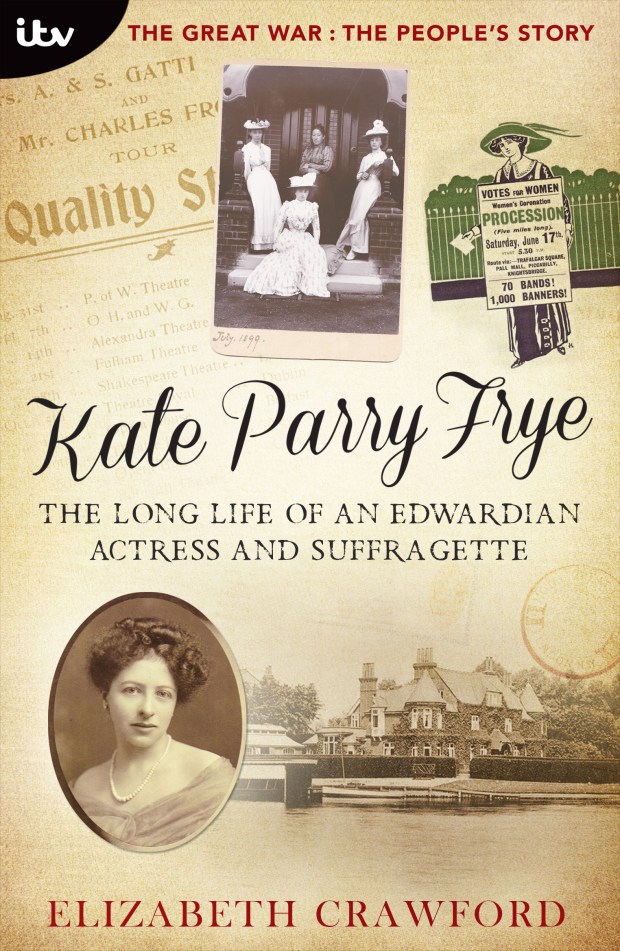
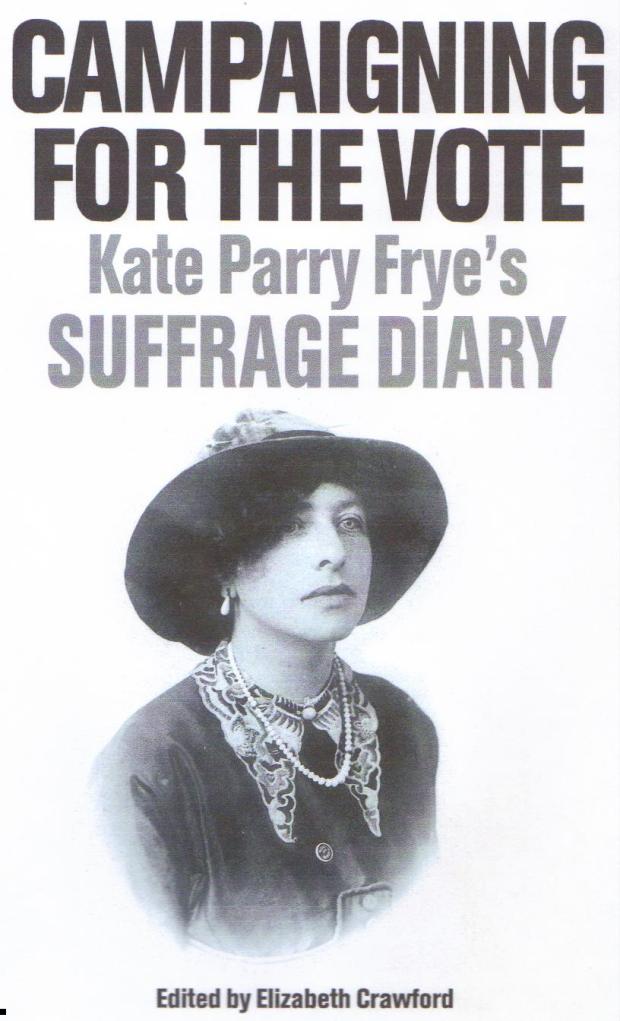
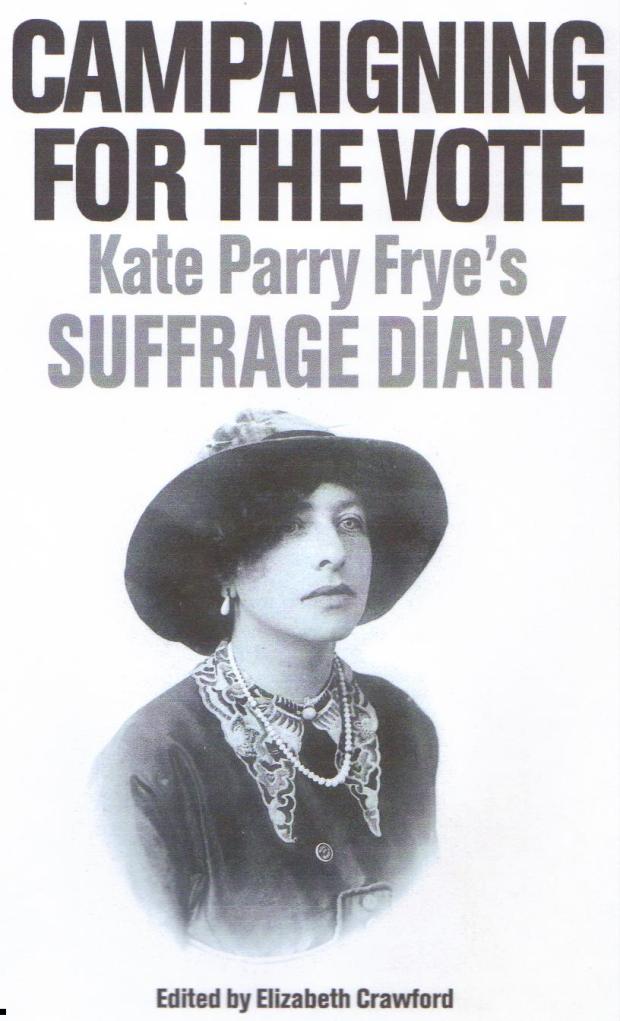
For much more about Kate’s life – as told in her biography, based entirely on her own diary, – see here. I rather think you might find it an enthralling Christmas read.

cover e-book

Copyright

All the articles on Woman and Her Sphere and are my copyright. An article may not be reproduced in any medium without my permission and full acknowledgement. You are welcome to cite or quote from an article provided you give full acknowledgement.

, ,

Leave a comment

Kate Frye’s Diary: Christmas 1914: 24 December 1914

Kate  is beginning her Christmas holiday. ‘Young Bernard Shaw’ was the son of her cousin, Agnes Shaw (née Gilbey) Shaw. Almost exactly a year later another of Agnes’s sons, Arthur, was killed in France; he was only 19.

The purchases that, with diffidence, Kate showed her mother, were modest items of clothing – mainly underwear – that she had put together as her trousseau. She felt rather guilty about spending money on herself.


Kate c. Christmas 1914

Kate c. Christmas 1914

Thursday December 24th 1914

Up 7.30. Breakfast 8.30 and packed up by 9.30. Off soon after in a Taxi for Victoria and the 10.15 train to Hove. A crowded carriage – otherwise a comfortable journey only so saddened by seeing in the Roll of Honour killed in action young Bernard Shaw – Agnes’s second boy – 21 years old. Such a radiant young life ended and done with and what a heart ache for Agnes. Got a porter to bring my luggage and walked to 58 Portland Road. It was a lovely day though wet under foot. Agnes [her sister] and I took dear love [her little dog] just to see the sea after I had seen my baggage in – my room is messy and bitterly cold.

We sat over the fire all afternoon. Agnes went out after tea and I unpacked and showed Mother my purchases – I was a little diffident – but it went very well. Then Agnes had to see them. Then to a little needlework. Very tired and bed early. It’s a queer sort of Christmas.

KateFor much more about Kate’s life – as told in her biography, based entirely on her own diary, – see here. I rather think you might find it an enthralling Christmas read.

Copyright

All the articles on Woman and Her Sphere and are my copyright. An article may not be reproduced in any medium without my permission and full acknowledgement. You are welcome to cite or quote from an article provided you give full acknowledgement.

, ,

Leave a comment

Kate Frye’s Diary: Christmas 1914: 23 December

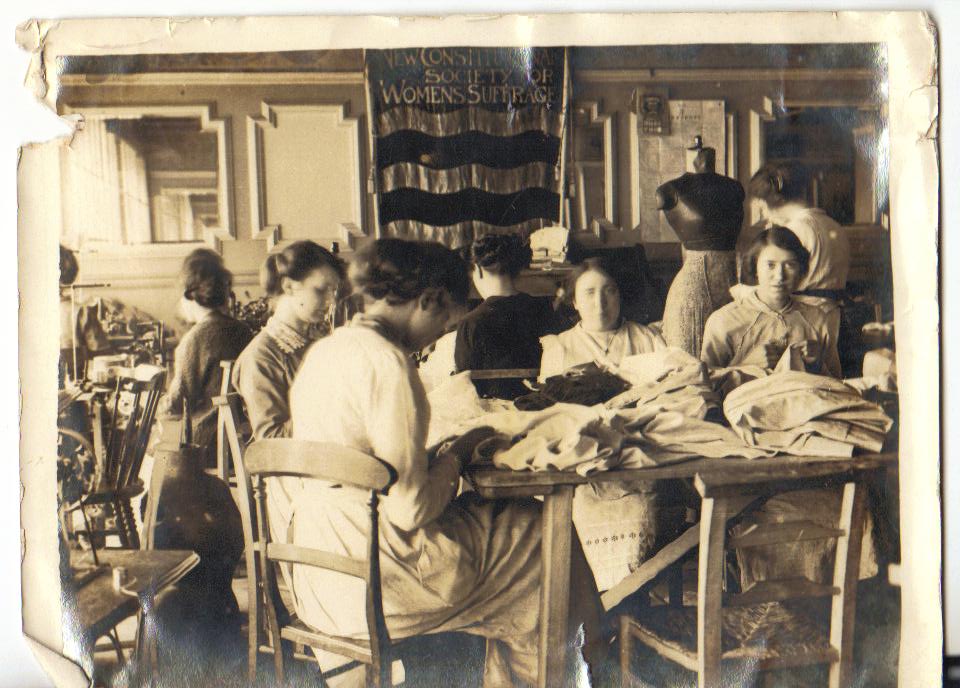
Kate is working at the New Constitutional Society for Women’s Suffrage office in Knightsbridge, superintending the workroom that the society had set up to give employment to women dressmakers thrown out of work by the outbreak of war and the drop in demand for finery. She and John, her fiancé of many years, had at long last decided to get married. The chosen date was to be 9 January 1915, Kate’s birthday. At this time she was living in digs in Pimlico.

Kate c. Christmas 1914

Kate c. Christmas 1914

 Wednesday 23 December 1914

A real busy day at the office getting everything tidied and straightforward for my holiday. Had quite a surprise first thing by a presentation of an Ink Pot from all the girls – so really nice of them. They had given Miss Grey a flower stand – it’s most awfully generous of them. I told Miss Grey later on that I was going to get married and she was very interested and full of good wishes.

Miss Simeon left at lunch time and Gladys who had not come till about 11.30 left at 3.30 – so although I had accepted an invitation to tea up in the Work Room I had to give it up, but they brought mine down – a cup of cocoa and a lots of Scotch cakes made by Miss Grey. The girls were crazy with excitement all day. I had a thorough clear out and tidy up of everything – then locked up – at 5 o’clock. Had such a queer feeling as I came away – like locking my old self within – because probably my old self never will return – if I am married by then it will be so different.

I was rather tired but ate my supper – made up a big fire and started to pack up – had not finished before midnight.

New Constitutional Society Workroom

For much more about Kate’s life – as told in her e-book biography – see here -only £1.19 to download from Amazon . I rather think you might find it an enthralling Christmas read.

Copyright

All the articles on Woman and Her Sphere and are my copyright. An article may not be reproduced in any medium without my permission and full acknowledgement. You are welcome to cite or quote from an article provided you give full acknowledgement.

, ,

Leave a comment

Suffrage Stories/Women Artists: Caroline Watts And the ‘Bugler Girl’

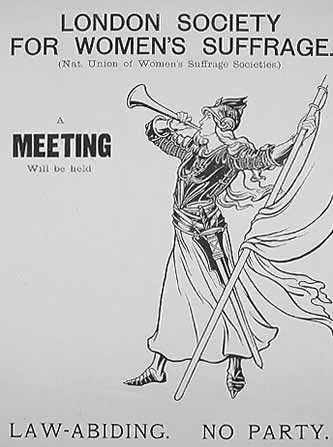
watts bugler

This image of the ‘Bugler Girl’-  or ‘Clarion Girl’ – had a resonance for the suffrage campaign on both sides of the Atlantic.

The design was originally used on a poster to advertise the NUWSS spectacular procession of 13 June 1908. [For an article about the banners created for that occasion see here.]

The artist is known to be Caroline Watts but, as ever with the artists who contributed so much to the imagery of the suffrage campaign, I asked myself  -who was she? This is what I discovered.

Caroline Marsh Watts was born at Handsworth in 1868, a daughter of Robert Watts, a button manufacturer, and his wife Mary Maria. Caroline was the youngest child in the family of six children and her mother died, aged 36, a year or so after her birth. Robert Watts never remarried and their maternal grandmother moved into the household to help run the business and care for the children. In 1871 Robert Watts’ business, which he ran in partnership with John Shakespeare Manton, had 470 employees – with premises at the Regent Works, Regent Street and at Frederick Street, Birmingham.

By 1891 the family (Robert Watts, two of his daughters, Mary and Caroline, his mother-in-law and 4 year-old grandson) had moved south and were living at Ailsa Road, St Margaret’s Twickenham. Robert Watts had retired and Caroline was an art student – we know she studied at the Slade.

Robert Watts died in 1894, leaving something over £8000, and by 1901 Caroline had set up home with her sister Mary – and one servant – at 83 Charlwood Street, Pimlico. Mary was employed as a ‘compiler of indexes’ and Caroline was ‘an artist – painter’.

In fact, from at least 1899 Caroline had been commissioned as an illustrator for a series of translations of Arthurian and other romances. These were the work of the renowned folklorist Jessie L. Weston and the majority were published by the firm of David Nutt.

At the turn of the century the firm of David Nutt was run by Alfred Trubner Nutt, the son of the founder. Alfred Nutt was also president of the Folk-Lore Society – hence his interest in publishing texts such as those written by Jessie Weston. As these were so close to the publisher’s heart I imagine he took considerable care when selecting their illustrator and because Caroline Watts continued to receive commissions from Alfred Nutt I would think she must have become part of the publisher’s friendship circle. It may well have been through association with this firm that Caroline’s sister Mary developed her career as an indexer.

Illustrated by Caroline Watts and published by David Nutt in 1904

Illustrated by Caroline Watts and published by David Nutt in 1904

Nutt’s French wife, Marie. subscribed to NUWSS in 1906 and in February 1907 took part in the ‘Mud March’. After the tragic death of her husband (he drowned in the Seine while attempting to rescue his invalid son whose pony had bolted and run into the river; the son was saved by passers by) – Marie Nutt took over the running of the firm of David Nutt and in the next few years published many texts relevant to the women’s suffrage cause.

Such was the suffrage zeitgeist amongst London-based women artists at the time that Caroline Watts may have been drawn towards the NUWSS by any number of associations, but her connection with Marie Nutt is one clear thread.

It doesn’t take much imagination to recognise that Caroline Watt’s design for the ‘Bugler Girl’ is closely associated with the heroic images she was creating for commissions from Alfred Nutt.

The NUWSS was at pains to make clear that the militant imagery of the ‘Bugler Girl’ didn’t represent a violent organization. As a member of the NUWSS governing-council explained, ‘Our Bugler Girl carries her bugle and her banner; her sword is sheathed by her side; it is there, but not drawn, and if it were drawn, it would not be the sword of the flesh, but of the spirit. For ours is not a warfare against men, but against evil..’

The image, created as I mentioned, to advertise the June 1908 NUWSS procession was subsequently used – often in black and white rather than colour – on posters and flyers advertising NUWSS meetings and from November 1913 was used on the front page of the NUWSS paper, ‘The Common Cause’.  However such was the strength of the image that it also had a lease of life in the US.

'Bugler Girl' Women's Political Union badge (image courtesy of Ken Florey's Woman Suffrage Memorabilia website)

‘Bugler Girl’ Women’s Political Union badge (image courtesy of Ken Florey’s Woman Suffrage Memorabilia website)

In his most useful and interesting book – Women’s Suffrage Memorabilia – Ken Florey reveals that Harriot Stanton Blatch, daughter of Elizabeth Stanton and a long-time resident in England, poached Caroline Watts’ ‘Bugler Girl’ design for use by the Women’s Political Union, the WSPU-inspired society she had founded on her return to the USA. Significantly the design was recoloured in purple, white and green (colours of course, borrowed from the WSPU) and became a well-known icon of the US women’s suffrage movement. [See here for more information from Ken Florey on the use of the design in the USA and here for a 2011 article about a contemporary reinterpretation of the image.]

Caroline Watts may well have produced other designs for the suffrage campaign but the only other that I can find reference to is held in the Artists’ Suffrage League archive in the Women’s Library@LSE. It is catalogued as ‘[Liberty] Original drawing, ink on paper, a woman freed from her chains, opening a door and looking out on to a sunrise; inscription below image “But little do or can the best of us:/That little is achieved through Liberty./Who, then, dares hold – emancipated thus -/His fellow shall continue bound? Robert Browning”. Signature bottom left “CM Watts‘”‘

I have been unable to discover much more about Caroline Watts’ life. In 1911, presumably an NUWSS supporter, she didn’t boycott the census, and can be found living with Mary, who was still indexing, at Hillcroft, Oakdene Road, Godalming. Caroline described herself as ‘Artist (Painter and Black and White Illustrator). I have been unable to find any trace of her work as a painter passing through the salerooms.By 1918 the sisters had moved to Middlehill Road, Colehill, Dorset, where Caroline died, aged 51, in 1919.

Copyright

All the articles on Woman and Her Sphere and are my copyright. An article may not be reproduced in any medium without my permission and full acknowledgement. You are welcome to cite or quote from an article provided you give full acknowledgement.

, , , , , ,

5 Comments

Suffrage Stories: An Army Of Banners – Designed For The NUWSS Suffrage Procession 13 June 1908

An Army of Banners


Army Banner Picture1In June 2008 I was invited by The Women’s Library to give a talk on suffrage banners to mark the 100th anniversary of the first of a new style of spectacular processions staged by the British women’s suffrage movement. For it was on the afternoon of Saturday 13 June 1908 that over 10,000 women belonging, in the main, to the National Union of Women’s Suffrage Societies processed through central London to the Albert Hall, where they held a rally.The image above was that used to publicise the procession.

The talk I gave was accompanied by a Powerpoint illustrating all the designs for the banners mentioned or, indeed, the banners themselves. Although, or copyright reasons, I am unable to insert these illustrations directly into this article I have provided links on which you can click to see them for yourselves.
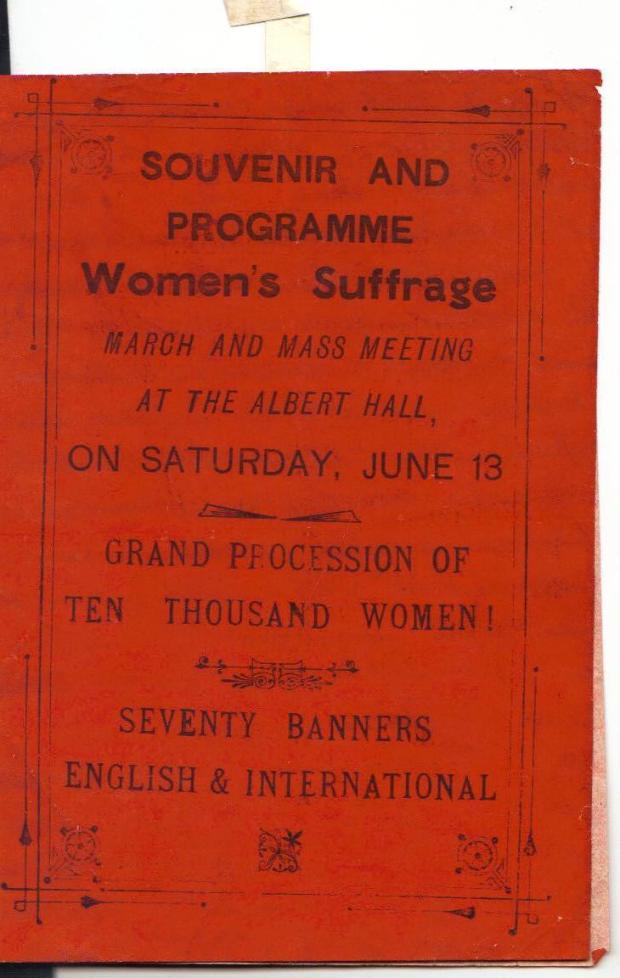
1908 ProcessionAnd what was the reason for the procession?

It was to draw the country’s – and the government’s -attention to the women’s demand that they should be given the vote – on the same terms as it was given to men.

Yet by 1908 the campaign was already 42 years old. Since 1866 thousands of meetings had been held in cities, towns, villages, and hamlets throughout the entire British Isles – from Orkney to Cornwall and from Dublin to Yarmouth. Some of these had been no more than small gatherings in cottages, others had been held in middle-class drawing rooms, in Mechanics’ Institutes, in market places and in church halls –  while many others had been held in the largest public halls of the largest cities of the land. Yet despite all this activity women had not achieved their goal.

At times they had thought they were coming close – when, for instance, a franchise bill managed to jump a few of the parliamentary hurdles. And 1908 was one of those times. In 1906 a Liberal government had been elected – and the suffragists, despite many past disappointments, always had higher hopes of the Liberals. And now, just a few months previously, in February 1908, a Liberal MP had introduced yet another women’s suffrage bill in Parliament – and it had actually passed its second reading – before being blocked. Another failure, of course, but this was the greatest progress that a suffrage bill had made since 1897. The leaders of the NUWSS thought that the time was ripe to capitalise on this quasi- success and show the country how well-organised and united women could be in publicising their claim to citizenship. Incidentally there was also a new prime minister to impress. Asquith had just taken office in April, succeeding the dying Campbell-Bannerman.

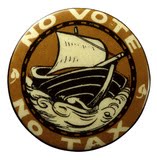
The image used on the advertising flyer for the procession was also used a little later on the badge given to those organising local NUWSS societies throughout the country. We can see that the bugler girl is calling her comrades to rally to the banner  – and it was banners that were recognised at the time – and are remembered today – as the most significant visual element of that procession a hundred years ago.

The journalist James Douglas, reporting for the Morning Leader put it rather well ‘They have recreated the beauty of blown silk and tossing embroidery. The procession was like a medieval festival, vivid with simple grandeur, alive with an ancient dignity.’

‘Blown silk and tossing embroidery’- a wonderful phrase – conjuring up an alluring image.. In fact a high wind that afternoon meant that the silk was certainly blown and the embroidery tossed.

And his observation that the procession was like a medieval festival – invoking concepts of ‘grandeur’ and of ‘ancient dignity’ – was just what the organisers were aiming for. The designer of the majority of the banners was Mary Lowndes, a successful professional artist, very much a product of the Arts and Crafts movement, who specialised in the designing of stained glass. A year later she put down on paper her thoughts on ‘Banners and Banner Making’, tracing women’s involvement in this craft right back to the ‘warrior maidens’ of a romanticized – if not an entirely  mythical – medieval past. She lamented the use in recent years of manufactured banners – the implication being that these were carried by male groups – both civil or military – but that ‘now into public life comes trooping the feminine; and with the feminine creature come the banners of past time’ She applauds what she calls ‘the new thing’ – writing that by this she means the ‘political societies started by women, managed by women and sustained by women. In their dire necessity they have started them; with their household wit they manage them; in their poverty, with ingenuity and many labours, they sustain them.’

The NUWSS had actually staged its first procession through the streets of London the previous year – in February 1907.  This had had a startling novelty value – it really was the first time that large numbers of middle-class women had taken to the streets. On that occasion, too, banners had played their part. However February was not a good month for a procession – it was not for nothing that the occasion acquired the soubriquet the ‘Mud March’(for more about the Mud March see here). To be fair – the timing of the procession had been chosen with a purpose – to coincide with the opening of parliament (which was then held in February). However the NUWSS organisers learned from their mistake and June was chosen as a more suitable season for their second public procession.
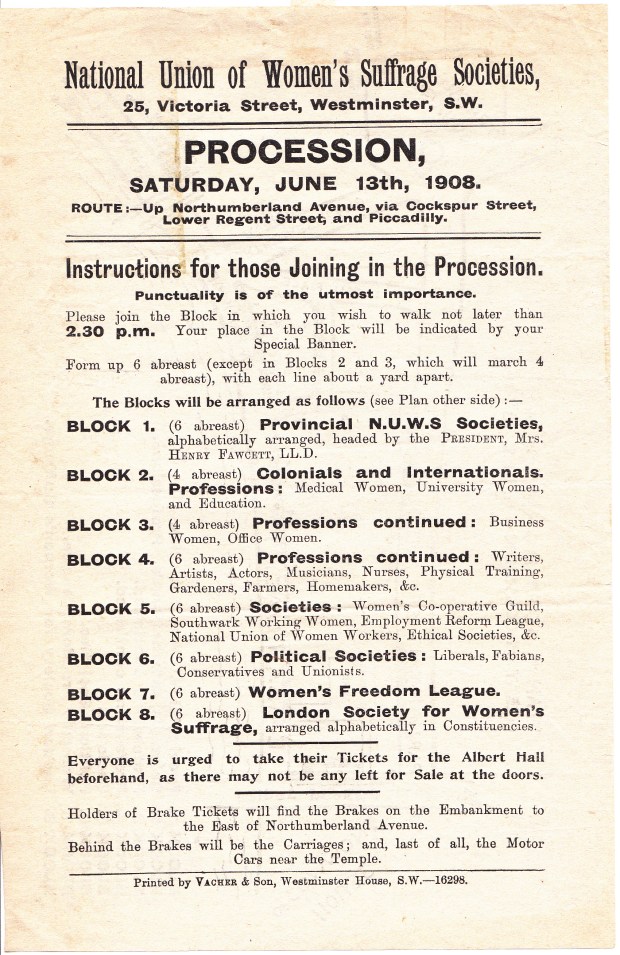
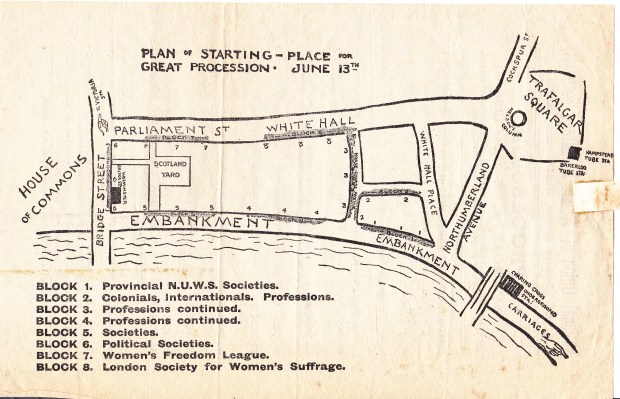
Instructions NUWSS procession June 1908

Instructions NUWSS procession June 1908 BackThis particular June Saturday was selected because the International Conference for Women’s Suffrage was about to be held in Amsterdam – it was starting on Monday 15 June. This meant that many important delegates from around the world were passing through London and were able to take part in the British demonstration. The other main suffrage organisation, the WSPU – the Women’s Social and Political Union – had chosen the following Sunday, 21 June, on which to stage their most ambitious rally yet – it was to be known as ‘Woman’s Sunday’– processions culminating in a rally in Hyde Park. The two events have sort of rolled into one in the popular memory – but the NUWSS procession was the first of the two. The WSPU, too, carried a brilliant display of banners – but most of theirs were made by commercial manufacturers and, sadly, none seems to have survived.

An announcement that the NUWSS procession was to take place on 13 June was made in a letter that appeared in the Times on 8 May. This was signed by leaders of the NUWSS, including Millicent Fawcett, the president. The letter stated that ‘Professional women, University women, women teachers, women artists, women musicians, women writers, women in business, nurses, members of political societies of all parties, women trades unionists, and co-operative women all have their own organizations and will be grouped in the procession under their own distinctive banners, which have been specially designed for the occasion by the Artists’ League for Women’s Suffrage.’ The letter then appealed both for funds to help pay for the banners and ‘for the personal support and presence in the procession of women who conscientiously hold that every kind of constitutional action should be taken in support of the rights they claim.’

So what was this Artists’ Suffrage League?

It had been founded in January 1907 by Mary Lowndes to involve professional women artists in preparations for the Mud March. Among the founding members were an Australian artist, Dora Meeson Coates, and Emily Ford, whose sister, Isabella, was a member of the procession’s organising committee. The Fords came from a Leeds Quaker family with a long history of involvement in the suffrage movement. Emily was by now living and working in a studio in Chelsea, a close neighbour of Dora Meeson Coates and of other women artists who supported the suffrage cause. The ASL’s secretary was Barbara Forbes, Mary Lowndes’ companion – and sister-in-law – who worked alongside her in her stained glass business.

The Artists’ Suffrage League representatives on the NUWSS committee organising the 13 June procession were Mary Lowndes and Mrs Christiana Herringham. In 1903 Mrs Herringham had been the originator of the National Arts Collection Fund, which made its first purchase of a painting in 1906. Ironically this was Velazquez Rokeby Venus, which in 1914 was to be badly damaged by the action of a militant suffragette, Mary Richardson (for more about this incident see here and here). Mrs Herringham had been a supporter of suffrage societies since at least 1889, and by 1907 was subscribing to both the NUWSS and the WSPU.

In a letter to the Times that appeared on the day of the procession, Millicent Fawcett noted that, besides Mary Lowndes and Emily Ford, other artists involved in the production of the banners included May Morris, daughter of William Morris, and Mrs Adrian Stokes – she was an Austrian artist, Marianne Stokes, who had been a friend of Millicent Fawcett for some years – for instance they were both staying with mutual friends at Zennor in Cornwall when the 1891 census was taken. From newspaper reports it would appear that ’80 ladies’ had been involved in the production of 70-80 embroidered banners that were made specifically for this procession – and that they had been working on them since the beginning of the year.

Amazingly – of the banners made by the Artists’ Suffrage League for this procession many are still in existence – most of them held in the Women’s Library@LSE, with another selection housed in the Museum of London. We are extremely fortunate in that not only have the banners themselves been preserved, but so have the original designs. For in the Women’s Library collection is the actual album in which Mary Lowndes sketched out her designs for the banners, the colours to be used indicated in watercolour, and, in many instances, with swatches of likely fabric also attached. However, the designs that were included in the album are not dated and one cannot assume that all necessarily relate to banners designed for the June 1908 procession. For instance the album contains a design for a banner for the Manchester Federation of the NUWSS– but the Federation didn’t come into existence until 1910.  So I have tried to be careful and to relate the designs to the reality of the banners as described in newspaper reports of the day. There are a few newspaper photographs of sections of the procession but, on the whole, they are not as helpful in identifying specific banners as are the words that accompanied them. The NUWSS missed a trick in that, unlike the WSPU the following week, they did not think of publishing photographs of the procession as postcards.

However the procession – and its banners – certainly did attract columns of newsprint – a good selection of which were carefully cut out and pasted up in another album kept by the Artists’ Suffrage League. In fact a leaflet was printed by the NUWSS containing extracts from the press reports specifically about the banners.

The ASL banners had been on display in Caxton Hall, Westminster, for a couple of days before the procession – and the press had been invited along to view them. The Daily Chronicle reporter had clearly got the message – writing that ‘the beauty of the needlework.. should convince the most sceptical that it is possible for a woman to use a needle even when she is also wanting a vote’.

It was not only the skill of the needlewomen that was remarked on. The Times was always rather loathe to give any credit to the suffrage cause, but was prompted – after its usual weasel words casting doubt as to whether the procession caused ‘great masses of the people to be deeply moved on the suffrage question’-, to admit that ‘in every other respect its success is beyond challenge. To begin with, the organization and stage-management were admirable, and would have reflected credit on the most experienced political agent. Nothing was left to chance or improvisation: and no circumstance that ingenuity or imagination could contrive was lacking to make the show imposing to the eye. Those taking part in the demonstration were all allotted their appointed stations, and every care had been taken to enable those stations to be found with the greatest ease.

It was 3 o’clock when the start was made. At the head was borne the banner of the NUWSS, on which was inscribed the legend ‘The franchise is the keystone of liberties’. Beneath the folds of this banner – which has not survived – marched Lady Frances Balfour and Mrs Henry Fawcett, wearing her cap and gown – the robes of her honorary doctorate from St Andrews University.

Then, as the Times, reported, came all the provincial detachments. The NUWSS could trace its descent from the first suffrage society that had been formed in 1866 – but by 1908 it had been transformed out of all recognition from this first, very tentative, incarnation. Through the 19th century local groups had been formed in towns and cities around the county, aligning themselves with the main societies – in London, Manchester, Bristol, Birmingham and Edinburgh.  In 1896 they all grouped together under the umbrella of the National Union of Women’s Suffrage Societies. The NUWSS had continued to develop and in 1907 had adopted a new constitution and strengthened its organisational structure. The provincial societies, although they had a measure of autonomy, were given strong leadership from the London headquarters. But it was the London Society, under the command of Philippa Strachey, that was responsible for the organisation of the procession – just as she had the Mud March the previous year.

It was important to the organisers that it should be made clear that the procession was representative of women of the entire country – which was why so much emphasis was given to indicate on the banners the names of the towns from which they came. As a convenient shorthand the designs for these banners used existing emblems associated with the town or region. The Westminster Gazette took the point, commenting that ‘Nothing like them for artistic skill, elegance and emblematic accuracy – to say nothing of their great number – has ever been seen in a public demonstration of this kind before.’

And the Scotsman reported, ‘The most remarkable feature of the procession was the great display of banners and bannerettes. It was said there were as many as 800 of them, and the designs and mottoes which they bore appeared to be almost as numerous. Many of them were effective works of art, and bore striking inscriptions’. Unfortunately few of these local, provincial, banners are amongst those that have survived. They would have been taken back to the home town and were certainly then used in many other local demonstrations – before, I suppose, eventually becoming damaged or forgotten. That is why it is so fortunate that we have Mary Lowndes’ original designs as a record of what has disappeared.

The provincial detachments processed in alphabetical order. First came Bath, then Birkenhead, Birmingham, Blackburn, and Bradford. Of these we have no record of either the design or the banners themselves – which were probably designed and made locally.

But then came Brighton. And I know that this Mary Lowndes design really was made up into the banner carried on the day – because it appears in a photograph published in the Daily Mirror. The dolphins were a long-established symbol of the town – appearing in the Brighton coat of arms and ‘In deo fidemus’ was certainly the town’s motto at the beginning of 20th century. The swatches attached to the album design, however, indicate that the colours used were dark and light green and gold – rather than blue that appears here

By 1908 the Brighton Society had over 350 members and as Brighton is close to London the society should have been able to produce a sizeable contingent of supporters to walk with their banner.

 I found this next design particularly interesting, referring as it does to the Bristol Women’s Reform Union  –not a name that will be very familiar even to close students of the suffrage movement – which is why it is rather exciting to see its existence given credence by this design. The society had been founded in the early 1900s by Anna Maria and Mary Priestman from Bristol – radical liberal, Quaker campaigners – whose involvement went back to the very first years of the suffrage movement. The Reform Union existed in parallel to the main suffrage society in Bristol, but aimed to set the question of the suffrage in the context of wider social reform. It finally amalgamated with the Bristol NUWSS society in 1909.
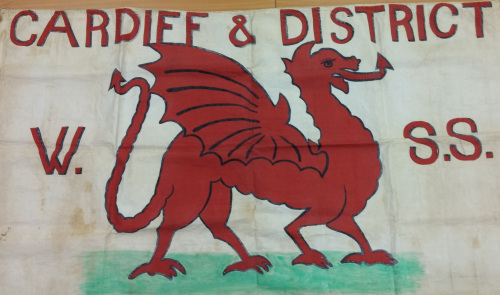
The Cardiff banner (courtesy of Cardiff University Special Collections and Archives).

The Cardiff banner (courtesy of Cardiff University Special Collections and Archives).

Next came Cardiff – one newspaper reporting that the ‘Dragon of Cardiff excited general attention’. There is no design for Cardiff in the Lowndes album it is more than likely that it was made by members of the newly-formed Cardiff and District Women’s Suffrage Society and is the one that has now (in 2016) been donated to the Special Archives and Collection of Cardiff University (for the full story see here).

Next came the women of Cheltenham. The town had over the years proved to be a very effective centre of the suffrage campaign in Gloucestershire. A fashionable spa, the town was attractive to single women of means. In 1907 the town had collected 900 signatures to the Women’s Franchise Declaration – another in the long series of mammoth petitions that had been presented to parliament. The Cheltenham banner has not survived – but a newspaper report does tells us that it bore the motto ‘Be Just and Fear Not’

 The design of this next banner – beneath which marched the women of East Anglia – had been, in part at least, suggested to Mary Lowndes by Millicent Fawcett – an East Anglian herself – whose hometown was Aldeburgh on the Suffolk coast  In her report of the procession that appeared in the Times on the big day, she particularly mentioned this banner – writing that it ‘shows the three crowns of the East Anglian St Edmund and a representation of the wolf traditionally associated with the miraculous preservation of the martyr’s head – and the motto – Non angeli, sed Angli’. Many of the elements – the three crowns and the wolf – are still in the coat of arms of Bury St Edmunds. The wording is the reverse of what Pope Gregory is reputed to have uttered when, in 573AD , he was shown some captive British children in Rome – that is ‘Not Angles, but Angels’ – the rewording is supposed to mean ‘Not angels, but Angles – that is, citizens.’ A nice hit at the ‘Angel in the House’
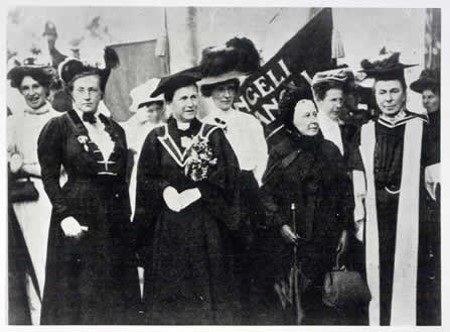
Army banner Picture5 And here is a photograph taken on the day – showing the banner with in front from left to right, Lady Frances Balfour, Millicent Fawcett, Emily Davies and Sophie Bryant, headmistress of North London Collegiate.

For the Mud March the previous year Millicent Fawcett had not worn academic dress –but it had been decided that today it would be worn –  to imbue the occasion with as much dignity as possible .  Next to her, with bonnet, bag and umbrella, is Emily Davies who, in 1866, with Elizabeth Garrett, had handed to John Stuart Mill the very first women’s suffrage petition. She was now 76 and yet was still to be around, in 1918, to cast her vote for the first time. One newspaper reported Emily Davies saying on 13 June ‘It is a great day for the movement, I would not have missed it for the world.’

Scotland was, of course, represented in the procession. Here is Mary Lowndes’ design for the banner – and here is the reality. The black and red, triple-towered castle is as it appeared at the time on the city of Edinburgh coat of arms – with the thistles added  to highlight Scotland’s commitment to the cause.

The next banner of which we have a record is that for Fleet, in Hampshire..I must admit that when I saw the design for this banner in the Lowndes album I was a little doubtful as to whether the town of Fleet would have mustered a contingent for this particular procession – there is no record of a suffrage society in the town at this time. But to my delight I came across a newspaper report that specifically mentioned this banner – which was made up, as shown, in yellow and orange – and with the motto as depicted – ’Delay of Justice is Injustice’ – an ancient proverbial concept – the wording put into this form by Walter Savage Landor. Because this Fleet banner was proved to be ‘right’ I have extrapolated from this that so are other Surrey and Hampshire ones the designs for which are in the Lowndes album

Thus Guildford is just such a one – depicting Guildford castle and two woolpacks – anciently the town’s staple trade– both of which feature on the Borough of Guildford coat of arms today.  A Guildford NUWSS society was definitely formed in 1909 but I don’t think that there was one in 1908. However this area of Surrey was the home of women who were not only committed suffragists – but who also had long association with the Arts and Crafts movement – and clearly the combination of suffrage and needlework was appealing. Christiana Herringham’s sister, Theodora Powell, was the secretary of the Godalming society formed in 1909 – and she was also instrumental in the founding of the Guildford society. The president of that was Mrs Mary Watts, widow of the artist, G.F. Watts
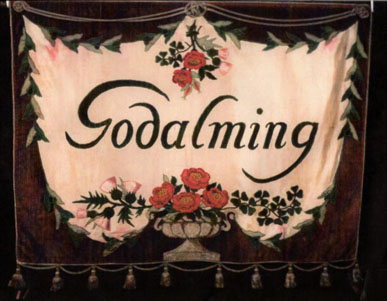
Godalming Women's Suffrage banner (image courtesy of Godalming Museum)

Godalming Women’s Suffrage banner (image courtesy of Godalming Museum)

By the way, a later Godalming banner was worked by Gertrude Jekyll and is now held in a local museum.

Next came the banner of Haslemere and Hindhead – a banner of which we know – although it is now lost – because it was described in the press reports

It bore what might appear the surprising motto:

‘Weaving fair and weaving free

England’s web of destiny’

At least one scholar has assumed that Haslemere – then a small sleepy Surrey town – could not have been associated with the weaving industry – and, as one can so easily do, made the assumption that a Lancashire name with a similar name must have been intended – but in 1908 Haslemere did support a weaving industry – of a sort. It was far removed from the dark satanic mills of Lancashire – but had been founded in 1894 as a branch of the Peasants Art Society – weaving cotton and linen. Haslemere was in fact a haven of an artistic community. By 1909 it, too, like Godalming and Guildford, had its own NUWSS society. The chairman was Mrs Isabel Hecht.

The next banner in the alphabetical procession was that of North Herts, which, according to the press report, ‘declared in black and white that it was undaunted’. To put it more prosaically the banner included the wording ‘North Herts’ and ‘Undaunted’. It had been known as the Hitchin Suffrage society – but became North Herts Women’s Suffrage Association, with Lord Lytton as its president – his sisters, Lady Betty Balfour and Lady Constance Lytton were also associated with the society, though Lady Constance was, of course, much more famous for her association with the WSPU. One of the secretaries of the Association, Mrs Edward Smithson, who lived in Hitchen, had been a founder member in the 1880s of the York Suffrage Society – an example of the dedication that many women, whose names are not now remembered, had given over decades to the suffrage cause.
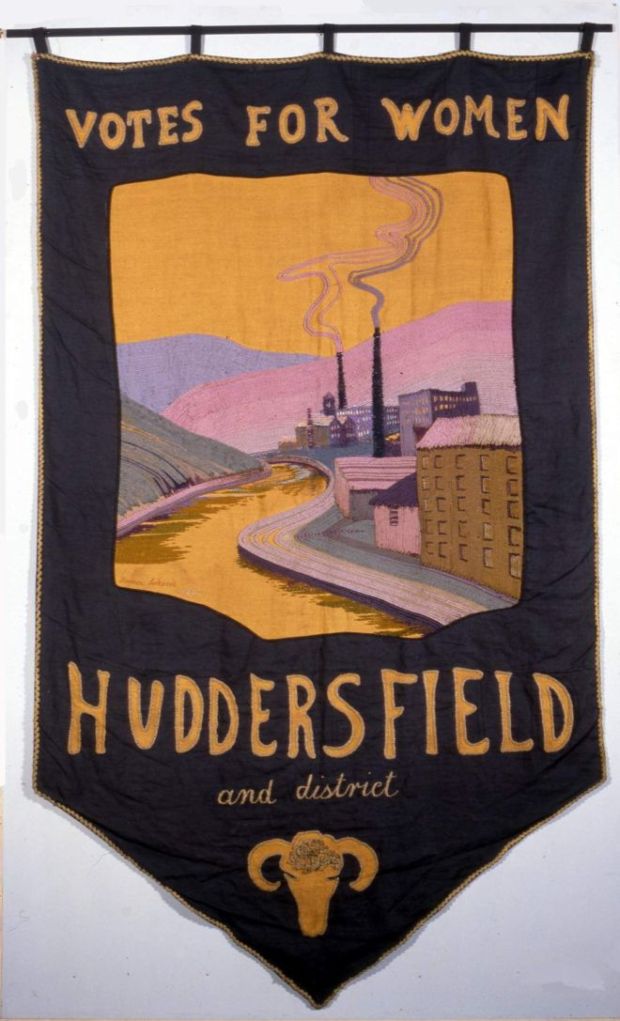
(Image courtesy of Kirlees Museums and Galleries)

(Image courtesy of Kirlees Museums and Galleries)

Next came Huddersfield. There is a Huddersfield banner still extant, held in the Tolson Museum in Huddersfield. It, too, is a work of art, designed and made by a local suffragist, Florence Lockwood – depicting local mills and with the motto ‘Votes for Women’. This wording might more usually be associated with the WSPU than with the NUWSS, but Florence Lockwood definitely gave the banner to the local NUWSS society. However I rather think that it post-dated 1908 – and was probably not the one carried in the 1908 procession

Hull’s banner, however, probably was – although it wasn’t singled out for mention in any newspaper report. In fact the Hull NUWSS society, which had been founded in 1904 by Dr Mary Murdoch, sent the largest contingent of any provincial society to walk in this suffrage procession. Local members subscribed over £100 to meet the expense of the trip and hired a special train for the occasion .The device of the three crowns is still used today on the city coat of arms

Keswick, too, had a banner in the procession – described as an ‘exquisitely painted view of Derwentwater’. In fact the Keswick society had two banners at its disposal – the one that Catherine Marshall, the young and energetic secretary of the society,  refers to at one point – with no further description – as ‘our banner’ and a private one lent by her cousin’s wife, Mrs John Marshall of Derwent Island. It is possible that it was to this one that the press report referred. The ‘our banner’ one is, I think, the one that still exists, with Catherine Marshall’s papers in the Cumbria Record Office.

A Kingston NUWSS society was formed in 1908 – here is the design for its banner. The swan seems to have been a fanciful device conjured up by Mary Lowndes– the Kingston coat of arms at the time sported three salmon – with no mention of a swan.

 The Sheffield Daily Telegraph commented particularly on the Leeds banner, noting ‘One device with the golden fleece bore the phrase ‘Leeds for Liberty’’ – so we can be certain that this banner was indeed carried in the procession. Leeds had a long history of involvement in the suffrage movement. The fleece, three stars and owls all derive from the Leeds coat of arms . ‘Leeds for Liberty’ certainly has a heartier ring to it than the city’s motto, which was (and is)  ‘Pro Rege et Lege’ (for King and the Law). Annotation on the design shows that the banner was 4ft 4” wide by 6ft 6in high. ‘With bamboo poles and cords complete £2. The lovely blue and gold strips are given by Mrs – Herringham. The owls are silver.’

Leicester, too, had a long history of involvement in the suffrage movement. By 1908 there had been a local suffrage society in the town for 36 years and here is Mary Lowndes’ design for their banner.

After Leicester came Liverpool. The Liverpool NUWSS society had taken its banner very seriously – commissioning a local artist to design it. It is a most impressive work of art – featuring a Liver bird and a galleon and carrying the message –  ‘Liverpool Women Demand the Vote’. The society had opened a shop in Bold St, one of Liverpool’s most fashionable thoroughfares, and in the days before the procession, displayed the banner there. On 13 June members of all Merseyside branches accompanied their banner to London, travelling on specially hired trains. The banner still exists – now in the care of Merseyside Museums.

The next design – that for a banner for Newcastle – highlights the difficulty of assigning a date to a design. Newcastle certainly had a banner in the June 1908 procession – but I am not convinced that it was this one, designed by Mary Lowndes. Newspaper reports of the June procession describe Newcastle’s banner as carrying the message, ‘Newcastle demands the Vote’ – perhaps along the lines of the Liverpool one. Needless to say the three castles do feature on the city’s coat of arms – of which red, white and black are the dominant colours. The design may have been changed, or used on another occasion.

Next came North Berwick. An attractive design – and the town’s coat of arms does includes the ferry boat. I haven’t come across a suffrage society specific to North Berwick, but there were clearly women from the town who were sympathizers.

Next came the banners of Nottingham and Oxford. We know that the members of the Oxford society cooperated with the Birmingham society to reserve seats on a special train and that 85 members travelled to London on the day, accompanied by their banner. Unfortunately, however, it doesn’t appear to have survived.

Portsmouth women, too, carried a banner – remarked on by the press for its motto, echoing Nelson, ‘Engage the enemy more closely’. It, too, has disappeared

We do, however, have a record of the design of Purley’s banner – although I don’t think Purley ever supported a suffrage society – but it presumably formed part of the Surrey coterie – its banner designed by Mary Lowndes. I must say that, although I have been able to decode most symbols on the banner designs, I couldn’t fathom out why this one should have what appeared to be shamrocks across the top. But they may, just possibly, be oak leaves – the Purley oaks – an ancient local landmark – feature in one version of an old coat of arms

Next in the alphabetical order came Reading. And there was a Reading banner – for newspaper reports mention that ‘A dozen women tugged at the ropes of the big banner of Reading to prevent it being blown over’. Alas it has vanished.

Likewise there was a banner for Redhill, and one for Sevenoaks, the latter carrying the motto, ‘What concerns all should have the consent of all’, and for Stratford-on-Avon. All have disappeared.

We do, however, have the design for the Walton banner – again part of the Surrey group.

The Warwick banner was designed by Mary Lowndes. I haven’t been able to establish that the motto has any significant relevance to the town. But it is a good strong message

 By way of contrast the West Dorset design in the album is very faint – the faintest of all. Whether or not it was made up I am not sure – nor whether it was carried in this procession – but it is evidence that even in that quiet rural area women suffragists were sufficiently stirred to request a banner to represent them.

The Woking banner carries the motto ‘In arduis fortitudo’- fortitude in adversity’. I think the design displays a degree of artistic licence – the town didn’t receive a coat of arms until 1930. An NUWSS society was formed in the town in 1910 – and of course the fact that one of its residents, Ethel Smyth, gave sanctuary to Emmeline Pankhurst when she was released from hunger striking, did ensure it some suffragette notoriety.

We know that contingents of supporters from Worcester and York – together with their banners – also took part in the procession – but neither banner has survived.

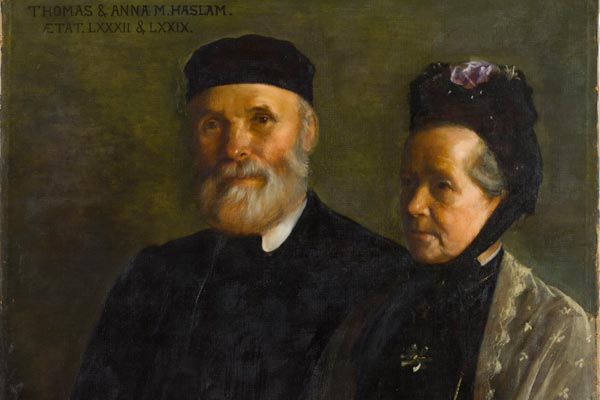
A large Irish contingent was also present – marching under at least one banner, which I have seen faintly in a newspaper photograph. And with the marchers were Thomas and Anna Maria Haslam, both of whom had been leaders of the campaign in Ireland since 1866 – and both of whom were now over 80. It is an indication of how seriously the procession was taken that, despite age and infirmity, they had made the effort to travel over from Dublin to take part in the procession.

The local societies were followed by a group of colonial and foreign representatives, many of whom, as I have already noted, were passing through London that weekend on their way to Amsterdam. It was, of course, thought appropriate that some women pioneers of countries other than England should be commemorated by this group.

Advance knowledge that this was to happen had irritated one correspondent to the Times, for, writing from Kensington on 10 June, ‘E.M. Thompson’ had declared, ‘A few days ago I found a youthful adherent of the suffragist cause industriously embroidering a woman’s name on a small bannerette intended for the great occasion. Neither she nor I had ever heard of this lady before, but my devoted young friend was quite satisfied with her task, and informed me that it was the name of an “American pioneer, now dead”. Personally I have no particular wish for a vote, but under any circumstances I should most emphatically refuse to march under an American banner in company with Russian, Hungarian and French women, to demand from the English government a vote to which I considered that I was entitled as an Englishwoman. It seems to me little short of impertinence for those who, up to the present, have failed to get votes in their own countries, to interfere with our home politics, and by swelling the size of the procession to help to give a wrong impression of the number of women in England in favour of the movement.’
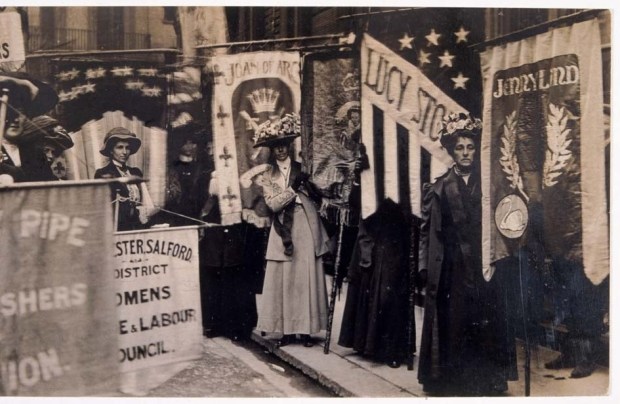
Army Banner Picture6 I wonder which of the ‘American pioneers, now dead’ was being commemorated in embroidery by that industrious young suffragist?  Banners had certainly been made to flaunt the names of Susan B Anthony, Lucy Stone and Elizabeth Cady Stanton. The two former banners are still held in the Women’s Library.

The Elizabeth Cady Stanton one, however, is not with them. It was assumed to be just missing – that is ‘missing’ in a general sense – like many other of the banners. However when undertaking this research, I discovered that in August 1908 this particular banner had been sent over to New York – sent by Elizabeth Cady Stanton’s daughter, Harriot Stanton Blatch, to whom it had been presented. She and her daughter, Mrs de Forest, had been present at the Albert Hall meeting on 13 June. As the New York Times reported ’The most gorgeous souvenir is the “Elizabeth Cady Stanton” banner of white velvet and purple satin that was used to decorate the Albert Hall. The name is embroidered in enormous letters in purple and green, the suffrage colours, and the whole mounted on a background of white velvet).’ As you can see from this report there was already some confusion as to what constituted suffrage colours. The purple, white and green combination was first used by the WSPU the following Sunday – for their Hyde Park rally. But there is no doubt that the Elizabeth Cady Stanton banner was carried in the NUWSS procession on 13 June.

Among those marching with the American contingent were women representing the Equality League of Self-Supporting Women of New York, the organisation founded by Harriot Stanton Blatch in 1906 – and which later changed its name to the Women’s Political Union. Also present were the niece of Susan B. Anthony and the Rev Anna Shaw, who was one of the speakers at the Albert Hall meeting. She specifically mentioned that she and her fellow Americans had not come to tell British lawgivers what to do for the women of this country – they could do that for themselves – but to extend to them the right hand of comradeship in the warfare which they were waging. A statement that was greeted, according to the newspaper report, by cheers.

Australian bannerThe Commonwealth of Australia was represented by a banner – painted rather than sewn – that had been designed by Dora Meeson Coates.  It bore the message ‘Trust the Women Mother As I Have Done ‘, a reference to the fact that Australia had granted women the vote 6 years preciously, in 1902. That banner was given by the Fawcett Library to the Australian government in 1998 and now hangs in Parliament House in Canberra.

As already noted there were delegates from other countries – such as Russia, Hungary and South Africa – in the procession, marching under the banner of the International Delegates – now held in The Women’s Library.

Reports suggest that the banner celebrating Marie Curie, then considered, at least by the women’s movement, as one of the foremost living scientists of the day, was carried by Frenchwomen. This is Mary Lowndes’ design for it.

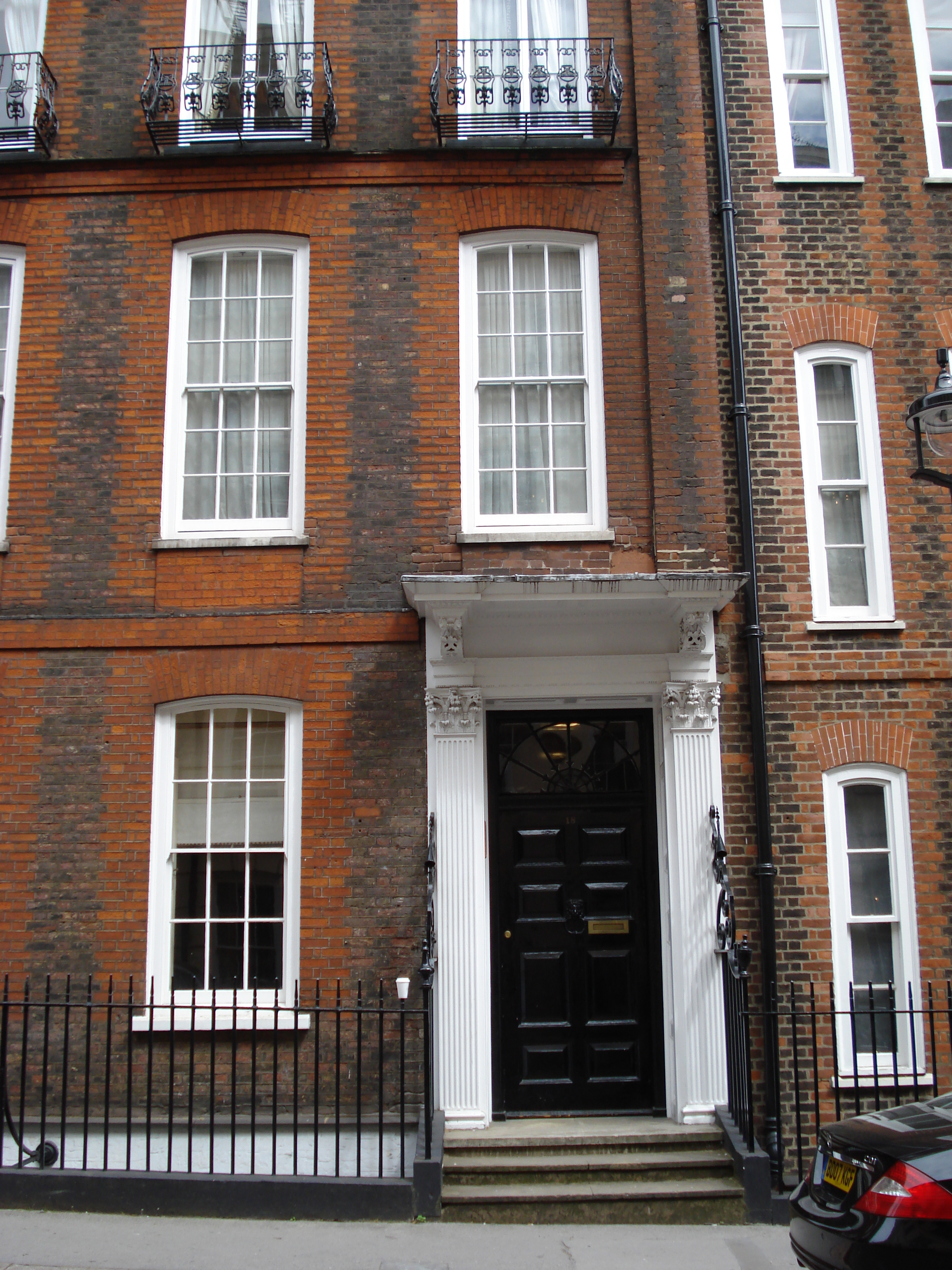
After all the provincial societies came the Second Detachment –  comprising doctors and other women graduates. I always thought it rather touching that the printed leaflets setting out the arrangements for the day specifically mentioned that there would be robing rooms available at 18 & 19 Buckingham St, just off the Strand, and at the Albert Hall to allow some privacy for the arranging of academic dress.

This group clearly impressed the Times. Their reporter wrote ‘Next marched the women doctors, in caps and gowns, followed by the lady graduates of the Universities of the UK, most of whom were also in academic dress. A brave show they made’.
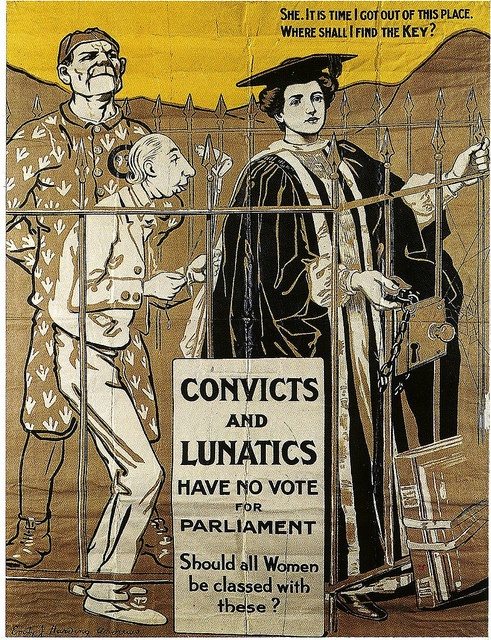
Harding lunaticsThe fact that women were now being granted academic degrees by many of Britain’s universities was often used in other propaganda material – such as this poster designed by Emily Harding Andrews. (For more information about this artist see here.)

The intention was, of course, to emphasise women’s suitability for citizenship – particularly when contrasted with those whom they considered less worthy examples of the male of the species.

The Liverpool Post and Mercury reported that ‘One of the most beautiful banners was the doctors’; it was of rich white silk, with the word ‘Medicine’ in gold letters across the top, a silver serpent embroidered in the centre, and a border of palest green on which were worked the rose, shamrock, and thistle.’ The banner is now missing – but, quite by accident, I did come across a photograph of it in one of the Women Library’s archival holdings [Vera Holme album 7VJH/5/2/14].

The leading women doctors of the day – Elizabeth Garrett Anderson and her sister-in-law, Mary Marshall, together with Flora Murray, Elizabeth Knight and Elizabeth Wilkes were among those walking in this section.

The doctors carried banners commemorating Elizabeth Blackwell, the first British woman to qualify as a doctor –  although she had had to do so in the US. This banner is now held in the Women’s Library collection. The letters and the symbol are appliquéd.  The symbolism is interesting. Instead of the rod of Asclepius (a snake entwined around rod – the symbol of the authority of medicine) here it is entwined around a lamp. The lamp was associated with the light of knowledge and might also be a version of the cup of Hygiea – the daughter of Asclepius – who was celebrated in her own right as a giver of health.

Another banner commemorates Edith Pechey Phipson, who had been a member of the first small group of women to qualify as doctors after Elizabeth Garrett. In 1906 she had represented Leeds at the International Women’s Suffrage Alliance conference at Copenhagen and had been one of the leaders of the Mud March in February 1907.  She had died just a couple of months before, on 14 April 1908, and this banner was obviously intended as a special tribute. Perhaps we could date its manufacture to the preceding two months.  It survives in the Women’s Library collection.

The profession of Education was represented by a specific banner.  The Sheffield Daily Telegraph helpfully described it, reporting that ‘Miss Philippa Fawcett has presented the education banner, with its device of an owl and a small boy climbing the ladder of learning’.  It has, however, disappeared

 But that carried by the Graduates of the University of London  – designed by Mary Lowndes – is now in the Museum of London collection.

Cambridge was represented by a particularly beautiful banner, now on permanent display in Newnham College. As a newspaper reported, ‘’The alumnae of Cambridge University, a detachment nearly 400 strong, were headed by the gorgeous banner of light blue silk which has been designed for the occasion,’ It was noted that these women didn’t wear academic dress – because the university still refused to grant them degrees – and would, of course, continue to do so for many more years. They did, however, as was reported, wear ‘on their shoulders favours of light blue ribbon’.  Mary Lowndes had designed the banner and, as executed, the words ‘Better is Wisdom Than Weapons of War’ (a quotation from Ecclesiastes) were added below the Cambridge device. The pale blue silk had been given by Mrs Herringham from a quantity of materials that she had brought back from her travels in India.

After the Cambridge brigade marched business women. There were:

Shorthand Writers.  The motto on their banner – designed by Mary Lowndes and held in the Women’s Library, is rather cleverly lifted from Robert Browning’s Asolando.  And then came the Office Workers – their banner now, I think,held  in the Museum of London. The Manchester Guardian described its device as, ‘Three black ravens bearing quills on a gold ground ‘

Next came a group of very active suffragists – the Women Writers’ Suffrage League -mustered under a striking banner that had already given rise to controversy,

This is the design in Mary Lowndes’ album. But the clerk to the Scriveners Company had written a letter, published in the Times on 12 June, saying that he had read that a banner bearing the arms of the Scriveners was to be carried and that any such banner certainly did not have the approval of his company. As it was, on the banner, as executed, WRITERS was substituted for SCRIVENERS. A letter from Mary Lowndes, published in the Times on 13 June, insisted that a black eagle upon a silver ground was certainly not the blazon of the Scriveners’ Company – but it would seem that the women had changed the associated wording at some point after the design was made.
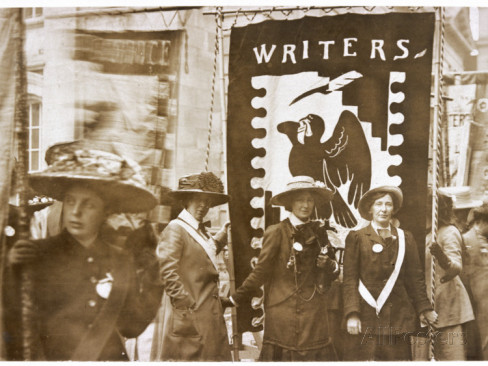
women writers bannerThe resulting banner, worked by Mrs Herringham, appliquéd in black and cream velvet, was given by Cicely Hamilton and Evelyn Sharp and was carried in the 1908 procession by them and by Sarah Grand, Beatrice Harraden and Elizabeth Robins. Cicely Hamilton wrote of the banner that it was ‘distinctive in black and white, impressive in velvet, and swelling, somewhat too proudly for comfort, in a gusty breeze’. This photograph was probably taken on a later occasion.  In 1908 among the other women marching behind this banner were Mrs Thomas Hardy and Flora Annie Steele. This banner is now in the Museum of London collection.

Beside the banner advertising their own society, members of the Women Writers’ Suffrage League carried with them another series of banners now held here in the Women’s Library – banners bearing such names as Jane Austen and Charlotte and Emily Bronte. The Sheffield Daily Telegraph particularly noted this one – writing ‘Names of famous women are emblazoned on some of the banners and ‘Emily Bronte and Charlotte Bronte’ are two which Yorkshire women will be pleased to see on a simple green banner’. The addition of a white rose stresses the women’s Yorkshire connection.

Others commemorated Fanny Burney and Maria Edgeworth. The Museum of London also now holds another two from this series – commemorating Elizabeth Barrett Browning and George Eliot.

After the writers came banners glorifying Great Women of the Past. This was an obvious theme – and one that was to be used in later processions and stagings – such as Cicely Hamilton’s ‘Pageant of Great Women’.

These banners have survived well. Most were designed by Mary Lowndes and all were made by members of the ASL. Of them the Sunday Times wrote ‘The new banners of the movement are wonderful. Many of the banners were designed to celebrate the memory of the great women of all ages, from Vashti, Boadicea and Joan of Arc down to Mrs Browning, George Eliot and Queen Victoria. It was an attempt to represent pictorially the Valhalla of womanhood…As the procession moved away it presented a vista made up of wonderful colours, and it reminded one somehow of a picturesquely clad mediaeval army, marching out with waving gonfalons to certain victory.’

Reports indicate that a banner to Vashti led this element of the procession – but no trace of it remains.

Next came Boadicea. This is Mary Lowndes design – the actual banner is now in the Museum of London collection. Boadicea was a popular heroine of the moment – the bronze statue of her riding her chariot beside Westminster Bridge, right opposite Parliament, had been erected just six years previously, in 1902. In December 1906 each guest at the banquet at the Savoy put on by the NUWSS for released WSPU prisoners had been given what was described as ‘an emblematic picture of Queen Boadicea driving in a chariot, carrying a banner with the message “Votes for Women”‘. And by the autumn of 1908 the WSPU was selling in its shops ‘Boadicea’ brooches.

Joan of Arc was another great heroine of the suffrage movement and the idea of the warrior maiden with God on her side was invoked by both the constitutional and militant societies. Joan’s own banner was loved by her ’40 times better than her sword’, wrote Mrs Fawcett in a short biographical essay on Joan published by the NUWSS. The title page of this biographical pamphlet carries the same emblem of the crown and the crossed swords as appears here on the banner. The motto is, of course, Joan’s own.

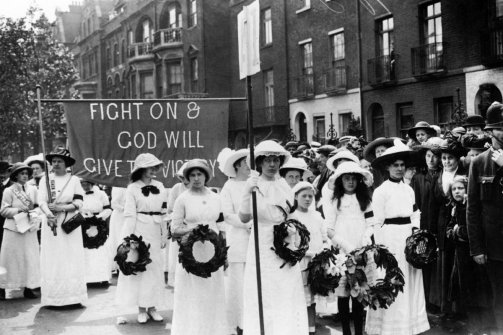
In 1909 Elsie Howey, a WSPU activist, dressed as Joan and rode on horseback to greet Emmeline Pethick-Lawrence on her release from prison. You can see a photograph of Elsie in that week’s issue of Votes for Women. In 1909 a Jeanne d’Arc Suffrage League was formed in New York and on 3 June 1913 Emily Wilding Davison is reputed to have stood before the statue of Joan that took pride of place at that year’s WSPU summer fair  -before setting off for Epsom and martyrdom. The statue had Joan’s words inscribed around the base – ‘Fight On, and God Will Give Victory’ and these were the words emblazoned on a banner carried at Emily’s funeral 11 days later. Perhaps unsurprisingly, in 1912 the Catholic Women’s Suffrage League’s banner, designed by Edith Craig, had St Joan as its motif and a few years later the society actually renamed itself the St Joan’s Social and Political Alliance. And, it was a version of Joan, uttering the words ‘At Last’, that the NUWSS used to greet the eventual attainment of partial suffrage in 1918. Images of Joan are to be found in the work of many women artists associated with the suffrage movement – Annie Swynnerton and Ernestine Mills spring to mind.

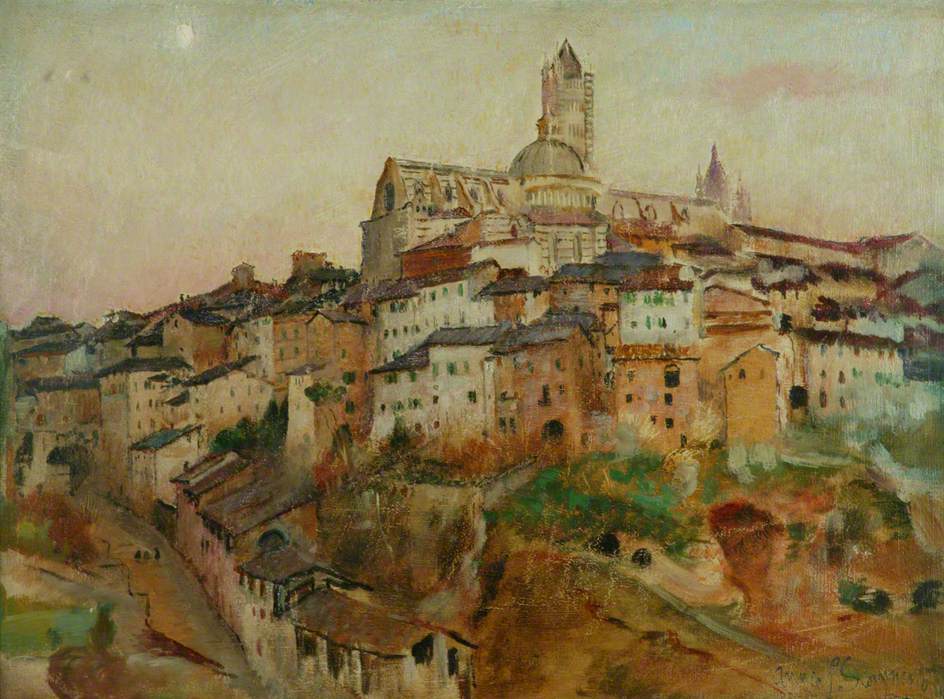
St Catherine of Siena, another woman visionary who combined piety with political involvement, also merited a banner Josephine Butler had written a biography of St Catherine in 1878. The banner was probably designed by Mary Lowndes and is held in the Women’s Library. Siena’s colours are black and white and the lily is symbolically associated with St Catherine

St Teresa’s banner, again designed by Mary Lowndes, is now in Museum of London. She featured also in Cicely Hamilton’s Pageant of Great Women  – as the only woman on whom the title ‘Doctor of the Church’ has ever been conferred.

The banner to a Scottish heroine, Black Agnes of Dunbar – is now in the collection of the Museum of Scotland in Chambers St, Edinburgh. Of it the Daily Telegraph wrote ‘ There was one flag which attracted much attention. It was carried in front of the Dunfermline deputation. On a yellow ground was the representation of a portcullis, and beneath the large letters “Black Agnes of Dunbar” were the lines reminiscent of the defence of Dunbar castle by the Countess of March nearly 6 centuries ago: “Came they early, came they late, They found Black Agnes at the gate”. The banner perhaps should be placed earlier – with the provincial societies – but it fits well here – alongside the banner to

Katherine Bar-Lass – Katherine Douglas – who tried to save King James I by putting her arm in place of a missing locking bar in a door. This event took place in Perth and it may be that this banner heralded the deputation from that town. The banner is now held in the Women’s Library collection.

There is no difficulty in explaining why Queen Elizabeth I should be commemorated among the Great Women with a magnificent banner. Indeed the queen was something of a favourite of Millicent Fawcett who, in August 1928, unveiled an ancient statue of the queen at St Dunstans in the West, Fleet Street, having worked with a campaign for its restoration. She even left money to ensure its upkeep. (For more about Millicent Fawcett and the statue of Queen Elizabeth see here.)

Millicent Fawcett had also championed Mary Wollstonecraft, whose reputation during the 19th century had never recovered from William Godwin’s memoir of her. Mrs Fawcett wrote a preface to an edition of Vindication of the Rights of Woman, published in 1891, the first for 40 years. Mary Wollstonecraft’s banner is held in the Women’s Library.

As is the rich and beautiful banner is to the astronomer Caroline Herschel, the discoverer of five new comets. Lady Caroline Gordon, the very elderly grand-daughter of Caroline’s brother, Sir William Herschel, had a letter published in the Times of 12 June 1908. She wrote ‘I observe that in the woman’s suffrage procession tomorrow it is intended to carry banners bearing, among others, the names of Caroline Herschel and Mary Somerville, thereby associating these honoured names with the cause. A more unfounded inference could hardly be drawn. My great aunt, Miss Herschel, never ceased during her very long life to insist on the fact that she was only her brother’s amanuensis, and it was the glory of her life to feel that she had a real work to do and a province all her own, which was to help him in his arduous labours, and keep worries and troubles from him. She sank herself and her own great and valuable discoveries entirely. All who knew Mrs Somerville (and I was one of them) can testify to the great humility and simplicity of mind which were her characteristics. Her work was done for work’s sake, not for any wish to show what a woman could do. Such a thought would be utterly distasteful to her. To think that the names of these two noble women should be paraded through the streets of London in such a cause as woman’s suffrage is very bitter to all of us who love and revere their memories’.

Here is Mary Somerville’s banner. On 15 June Millicent Fawcett replied in the Times (her letter was dated 13 June – she had taken the time and trouble on such a busy day to write it).‘May I be permitted to point out that suffragists believe that the names of “distinguished women who did noble work in their sphere” are in themselves an argument against relegating a whole sex to a lower political status than felons and idiots? This is quite independent of whether the particular distinguished women named on the banners were suffragists or not. The names of Joan of Arc and Queen Elizabeth are found on the banners. The inference is surely clear. Lady Gordon affirms that her distinguished great-aunt Caroline Herschel was no suffragist. No one in their senses would expect a German lady born in 1750 to be one. Her services to astronomy were well recognized in the scientific world of her time. Her extreme modesty gave an additional luster to her name. Her chief work in astronomy was undertaken and carried through after her brother’s death and it was for this that she was awarded the gold medal of the Royal Astronomical Society in 1828. Mrs Somerville’s case is quite different. She belongs to our own nation and to the modern world, and was an ardent suffragist. She wrote expressing her deep gratitude to JS Mill for raising the question of women’s suffrage in parliament. She signed parliamentary petitions again and again in favour of removing the political disabilities of women, and was a member from its foundation to the date of her death in 1872 of the London Society for promoting the movement.’

 Mary Kingsley, the  traveller and explorer, was another heroine who merited a banner, although no supporter of women’s suffrage.

The Elizabeth Fry banner was designed by Mary Lowndes and was, I know, donated by a Miss Prothero. Although I don’t know exactly who Miss Prothero was, I am sure there must be a Quaker connection. It is now in Museum of London collection. Josephine Butler had died only 18 months before the procession. Her banner is now held in the Women’s Library.

 Lydia Becker was very suitably represented by the pick and shovel of the pioneer.  She had worked for over 20 years at the suffrage coal face – organizing, devising, interviewing, writing, lobbying and speaking. Her banner, unfortunately, is one of the few of this series that is now missing, another being that commemorating a very Victorian heroine, Grace Darling, a figure who features in many of the suffrage pageants..

The final banner in the sequence, a rich riot of colour commemorating other pioneers  is held safely in the Women’s Library collection. The first four it lists are particularly related to Bristol.

After the Pioneers came the artists, the musicians and the actors. The beautiful banner made for the Artists’ Suffrage League itself is now in the Museum of London. Christiana Herringham helped to embroider it – with its motto ‘Alliance Not Defiance’, supplying silks for it that were among those she had brought back from India.

A banner bearing the heading ‘Music’, designed by Mary Lowndes, was given by ‘Mrs Dawes and worked by her and her daughters’ – but has now disappeared.

Jenny Lind’s banner, was carried in the procession by her daughter, Mrs Raymond Maude, who was described as ‘a striking figure in green and white, with a Tuscan hat’ [ I think a ‘Tuscan hat’ was a wide-brimmed straw hat]. The banner was designed by Mary Lowndes and is now held in the Women’s Library collecction.

Artists were represented by Mary Moser, who, with Anglica Kaufmann, was the first woman  to be elected to the Royal Academy. She was renowned as a flower painter –and was paid the enormous sum of £900 for the decorations, which notably featured roses, of a room she painted at Frogmore for Queen Charlotte. These decorations can still be seen – as can this banner, now in the Women’s Library collection.

Angelica Kauffman also had a banner– but it is now lost.

Sarah Siddons’ banner which was carried in this section of the procession is now held in the Museum of London.

As is the banner to ‘Victoria, Queen and Mother’ – which was carried in the procession of Maud Arncliffe –Sennet – who, I must say, I always think of as something of a self-publicist – an opinion not actually belied by finding that she had had, or caused to have had, a photograph taken of herself on the day, holding the banner – there is a copy of that postcard, too, in the Museum of London collection.

After the banners commemorating the heroines of the past came one celebrating Florence Nightingale – then still alive – a heroine in her own lifetime. The banner was carried by a contingent of hospital nurses, marching in their uniforms. The Daily Express  reported that ‘The Florence Nightingale banner received the greatest notice. It bore the word “Crimea”, and at the sight old soldiers saluted and bared their heads.’

As an added gloss I might mention that in June 1908 a bill to allow for the registration of qualified nurses was before parliament –it passed its second reading on 6 July and many leading suffragists, such as Millicent Fawcett, Isabella Ford, and Hertha Ayrton had signed a letter to the Times in support of the bill.

There followed also groups of women farmers and gymnasts, each with their own banner. Women gardeners carried a banner worked in earthy colours – green and brown,  with the device of a rake and a spade. All these now, unfortunately, are lost.

After the nurses came the Homemakers – we can see the banner here – although the photograph was probably taken on another occasion. As the Sheffield Daily Telegraph put it, ‘The sacred fire of the domestic hearth is pictured by the home workers, who ‘remember their homeless sisters, and demand the vote’. Another newspaper report describes this contingent as comprising ‘Housekeepers, cooks, kitchenmaids and general servants’ – and laments that they were not wearing their uniforms. Note also in the photograph the banners for Marylebone, Camberwell and North Kensington.

After the home makers – came working women – working women of all sorts, carrying a variety of banners. These would appear to be plainer than the Artists’ Suffrage League ones and were locally made.

After the working women came the Liberal women, who, as one newspaper reported, bore a banner announcing that they demanded the vote…as well as Conservatives, who were led by Lady Knightley of Fawsley, and by Fabians, whose banner, had been designed by May Morris, with the motto ‘Equal Opportunities for Men and Women.’.

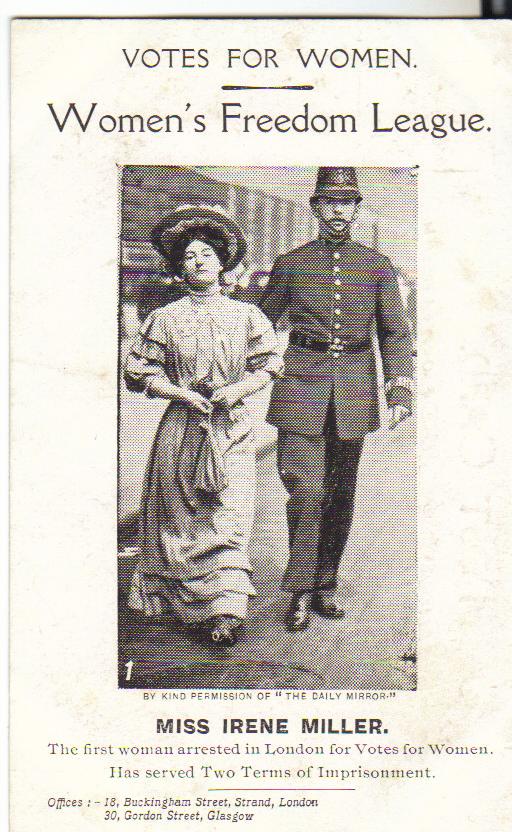
Then came members of the Women’s Freedom League – the press particularly mentioned its leader, Mrs Despard, together with Teresa Billington-Greig and young Irene Miller,  The WFL banner was black and yellow, figured with a device of Holloway, where many of its members had recently been imprisoned, and with the inscription ‘Stone walls do not a prison make’. The WSPU, although not invited to take part, did supply a banner under their insignia – declaring ‘Salutation and Greeting. Success to the Cause’.

Finally, closing the long procession, came the hosts –  London Society of the NUWSS. This is the design for the society’s banner. The banner itself is now in the Museum of London collection

This section included detachments from the various London boroughs – such as Camberwell, Croydon, Chelsea and Holborn. The Daily Telegraph tells us that ‘The Holborn deputation was headed by a picture of some of the ancient shops opposite Holborn Bars, and the words “The old order changeth”.  Enfield’s banner survives and is now in the Museum of London – but we have no design for it so it probably was not one of Mary Lowndes’ creations.

This design for Wandsworth in the Mary Lowndes album has the initials ‘A.G.’ at the side – and I did wonder if these could possibly refer to Agnes Garrett – sister of Millicent Fawcett. It is by no means impossible that she was involved in the banner-making – given that her professional career had been devoted to the designing and making of furnishings. But I don’t know.

Wimbledon was a very committed suffrage stronghold – both of the NUWSS and of the WSPU – and both groups featured the windmill on their banners. Of the NUWSS one only this design survives – but the Women’s Library does hold the actual WSPU banner.

All in all the procession, which was accompanied by 15 brass and silver bands, – one reporter particularly mentioned that hearing the Marseilles being played in these circumstances quite brought a tear to his eye – and the Albert Hall rally that followed, were both deemed a great success. Afterwards a decision was made by the NUWSS to keep the banners together and tour them. It was realised that ‘undoubtedly we have here an opportunity of presenting an artistic feast of the first order under circumstances that make it in itself, and in all attendant conditions that may be grouped around it, a unique act of propaganda.’

They lent out the banners to the local societies, charging £3 10s for all 76 banners or £2 for half the number –with the express proviso that they were not to be used for what was termed ‘outdoor work’..

In 1908 exhibitions of the banners were held at Manchester, Cambridge, Birmingham, Liverpool, Camberwell, Glasgow and Edinburgh. Lady Frances Balfour opened those last two – and performed the honours again at Brighton in January and Fulham in March 1909. We can be sure that the local societies made the most of these occasions. I know that when the banner exhibition was held in December 1908 at the Glasgow Fine Art Institute it was accompanied by tea, a small string band and a pianola. The Society clearly expected a reasonable attendance, finding it worthwhile to buy in – to sell to visitors – 200 copies of the pamphlet describing the banners.

Thus not only did the banners allow suffragists to rally round as they were paraded through the streets but they also provided a focus for further conscious and fund-raising efforts that neatly combined a forceful political message with what been described, very eloquently, as the power of ‘the subversive stitch’.

P.S.

Kate Frye was a banner bearer – for North Kensington – in this procession – and you can read all about her experience on the day here.

Copyright

All the articles on Woman and Her Sphere and are my copyright. An article may not be reproduced in any medium without my permission and full acknowledgement. You are welcome to cite or quote from an article provided you give full acknowledgement.


, , , ,

10 Comments

Suffrage Stories/Women Artists: Emily Jane Harding Andrews

Harding lunatics

Many of you familiar with the propaganda produced by the British women’s suffrage campaign will recognise this image, which was  printed by Weiners of Acton and published as a poster by the Artists’ Suffrage League. In The Spectacle of Women, Lisa Tickner dates it to c 1908; the catalogue of The Women’s Library@LSE to c 1912. I would tend to support the earlier date.

The artist is known to be Emily Jane Harding Andrews. But who was she? What can we discover of the life behind that image?

She was born Emily Jane Harding in 1851 at Clifton in Bristol, the eldest of the several children of Thomas Giles Harding (1827-1899), a commercial traveller, and his wife, Rosa Jane (nee May). Emily and her sister, Rosa Elizabeth Harding, were educated at Clifton Ladies’ College and in October 1868 both gained certificates of art in the second grade in a prize giving at the Bristol School of Art.

By 1871 the family had moved to London . They moved around the Kensington, Hammersmith, Shepherds Bush area but their first address was 21 Holland Road, Kensington. Emily clearly continued with her art studies. She exhibited portrait miniatures at the Royal Academy in 1877, 1897, 1898. Now in the National Portrait Gallery is a chalk portrait of Arthur Penrhyn Stanley (d 1881), dean of Westminster. Was this the work that she exhibited at the RA in 1877?

By the time the 1881 census was taken Emily was married to a fellow artist, Edward William Andrews – although I cannot find a record of the marriage. He was ten years older than her and had been born in Kidderminster. By the time he was 21 was describing himself on the census form as ‘Artist portrait painter’. The only paintings I can locate by him are copies of two portraits after Gainsborough – see here.

In 1881 Emily and her husband were living, with one servant, at 23 Iverson Road, west Hampstead. By 1891 they had moved to Chalcot Gardens, Hampstead, an area popular with artists, and now had no servant. In 1901, still fending for themselves, they were living in a flat in 95 Fitzjohn’s Avenue, Hampstead.

Through the 1880s and 1890s Emily produced illustrations for a series of books – mainly for children. They included Bright Pages for Children of All Ages, 1886, Helen Milman’s The Little Ladies, 1890, Merry Moments for Little Folks by Rose E May, published by Frederick Warne, 1893. Emily’s sister, Rosa (or Rose) had married Frederick Lamartine May, son of a well-known bookseller, and a relation on their mother’s side. She also provided the illustrations for Disagreeable Duke: a Christmas whimsicality for holiday boys and girls by Elinor Davenport-Adams, published by George Allen, 1894 and in the same year for Lullabies of Many Lands by the editor and translator Alma Strettell, 

Frontispiece from 'Slav Tales'

Frontispiece from ‘Slav Tales’


In 1896 Emily Harding (the name under which she then published her work) was both the translator (from the French) and the illustrator of  Fairy Tale of the Slav Peasants and Herdsman by  Alex Chodsko, published by George Allen.

Another of Emily Harding's illustrations from 'Slav Tales'

Another of Emily Harding’s illustrations from ‘Slav Tales’

I don’t know how Emily Harding Andrews made contact with the Artists’ Suffrage League, although it’s hardly surprising, moving as she did in artistic, bookselling and publishing circles. Besides the poster illustrated as the introduction to this article, Emily Harding Andrews designed another for the ASL – ‘Coming in with the Tide – Mrs Partington’ – and was on sufficiently close terms with Mary Lowndes, the ASL’s leading light, to propose a design for a Christmas card -sent with an informal note on the reverse. It can now be found in Mary Lownes’ ASL album in the Women’s Library@LSE.

A rough design by Emily Harding Andrews for a suffragette Christmas card. It was never issued Image courtesy of VADS)

A rough design by Emily Harding Andrews for a suffragette Christmas card. It was never issued Image courtesy of VADS)

Emily Harding Andrews' comments on the reverse of her draft design (Image courtesy of VADS)

Emily Harding Andrews’ comments on the reverse of her draft design (Image courtesy of VADS)


Although clearly supportive of the suffrage campaign, Emily Andrews, like Mary Lowndes, did not boycott the 1911 census. This shows us that – married for 31 years, with no children – she was living, aged 61, as a boarder at 15 Bank Place, Bayswater. She still described herself as an artist. Her husband, on the other hand, was enumerated in his one-room studio at 48 Fortune Green Road, Hampstead. Had they separated?

Edward Andrews died in 1915, while living at 1 Linden Gardens, Hornsey Lane. He left £160; his wife is not named as an executor.

I next find Emily Harding Andrews in 1918, living at 6 St George’s Square, Camden, at the same address as another artist of her generation, Julia Bracewell Folkard and an Elizabeth Folkard. However, this seems to have been Emily’s base for only a short time and I can find no further trace of her for another 17 years, until in August 1935, aged 85, she set sail for Sydney, Australia. On the passenger list her address is given as ‘South Street Mission, Hammersmith’, although in what capacity she was living there I cannot say.

Gertrude, one of Emily’s much younger sisters, had emigrated to Australia with her husband, Edward Nevill Parker, in the 1890s. He had died in 1931 and I suspect that, in her old age, Emily went out to join Gertrude for I next find her living at Illawa, Judd Street, Cronulla, Sutherland, NSW. Emily died in Sutherland in August 1940 and her ashes were scattered in Woronora Cemetery, which was also the last resting place of her sister and, years later, of a nephew.

This is only the briefest outline of a long life lived. I shall have to imagine all those decades of London days, of Emily living and working in a succession of studio flats, of visiting publishers, of struggling to gain commissions, of the brief flowering of interest in the suffrage campaign, of, perhaps, sinking with old age into penury and then, the last adventure, sailing to the other side of the world – to the heat and light of Australia.

Copyright

All the articles on Woman and Her Sphere and are my copyright. An article may not be reproduced in any medium without my permission and full acknowledgement. You are welcome to cite or quote from an article provided you give full acknowledgement.


,

4 Comments

Women Artists: ‘Painting Days At School of Art Are Perfect Bliss’ (1892-1914)

I originally gave this paper at the Women’s History Network Conference, Southampton, September 2005

 ‘Painting Days at School of Art are perfect bliss: the manuscript diary (1892-1914) of Sarah Madeleine Martineau, art student and craft worker’.

This paper is based on the manuscript diary of Sarah Madeleine Martineau, the first entry in which is for 1 January 1892 and the last for 25 January 1914. I bought the diaries a few years ago, at the time giving them merely a cursory glance and registering only that the world they depicted was one that appealed. At odd intervals I have undertaken some research into the life and work of Sarah Madeleine Martineau and now think that what the diaries reveal is of some general interest.

the Martineaus' house at 122 King's Avenue would have been very similar to this, no 103. (Image courtesy of  Ideal Homes: A History of the South-East London Suburbs)

The Martineaus’ house at 122 King’s Avenue would have been very similar to this, no 104. (Image courtesy of Ideal Homes: A History of the South-East London Suburbs)

She was born in London at 4 South Road (later 122 King’s Avenue), Clapham Park, on 2 May 1872, the final child in the family of David Martineau, the senior partner in a firm of sugar refiners and a leading Clapham Liberal. David Martineau’s grandfather was a brother to the father of Harriet Martineau and Dr James Martineau. In 1856 David and his wife, Sarah, settled in South Road, in leafy Clapham Park. The Martineaus’ house and its immediate neighbours have been demolished, making way for tower blocks, but it was then quite new, was large, double-fronted and detached, set well back from the road, with stabling, and grounds ample enough to include a tennis court.

The Martineaus were Unitarians and with another South London family, the Nettlefolds of Streatham Grove, Norwood, were pillars of the Unitarian church in Effra Road, Brixton. The Martineau family comprised four sons and four daughters, the eldest child, Daisy, being 16 years older than Madeleine. Of the Martineaus’ sons, two married Nettlefold sisters; Unitarians tended to stick together. Although enjoying an active social life the younger Martineau daughters do not seem to have attended many formal parties or dances. Of the daughters only Daisy married; Lillie, Lucy and Lena (such were the diminutives by which they were known) probably lived together in the family home, certainly until the 1940s, and then either together, or near each other, in south London, for the rest of their long lives. At the 1891 census besides members of the immediate family there were also living in the house a cook, a parlour maid, two house maids and a 20-year old cousin, Charles Worthington. Lena possibly had a tenderesse for Charlie; she always mentions any little attention she received from him, but in 1895 he died suddenly – the relevant entry reads: ‘Charlie, the sweetest man that ever lived is dead. He died on Christmas day..’

David Martineau’s sister, Mary, who lived close by with their mother, can be spotted as a member of many of the women’s causes of the day, for instance signing the 1889 Declaration in Favour of Women’s Suffrage. Lena Martineau and her sister Lucy, who was three years older, had been boarders at Roedean school in Sussex, which, recently founded, was much favoured by the daughters of the wealthy non-conformist middle class. When Lena begins her diary in an exercise book in January 1892 one of the first entries relates that Barbara Shore Smith, who had been a contemporary at Roedean, had come to stay and in May 1892 Lena and Lucy went to visit Barbara, then at Girton, staying in lodgings near the college. Lena must have been well aware of all the feminist causes of the day, but, although writing her diary through the years of the main suffrage activity, makes no comment whatsoever on any aspect of the woman question. It must also be mentioned that in the entire 22 years covered by the diary she only mentions one book. On 23 February 1893 she wrote, ‘Have been reading a book called ‘Mona Maclean, medical student’, & think it splendid.’

Perhaps Lena was uninterested in the written word but her free-thinking, prosperous, well-educated family set great store by art.  Lucy and Lena were clearly given every encouragement to practise any aspect of art in which they were interested. Thus apart from visiting friends, playing tennis, taking what seem exceptionally long walks and bicycle rides, and helping with bazaars and garden parties, Lena seems to have been fully occupied with attending art classes and visiting galleries. There were prominent role models very close to home. The two daughters of Dr James Martineau, Gertrude and Edith, together with their sister-in-law, Clara Martineau, were all working artists, exhibiting regularly at the Royal Academy and at the Dudley Gallery. Their work now sells well – a watercolour by Edith Martineau sold for over £3,500 in 2005. The Martineaus were committed visitors to art galleries. For instance in the diary’s first year, on 22 April, Lena wrote, ‘Lucy and I met Papa at the private view of the Old Water Colours. It was very hot and full, but a good many very nice pictures.’ I am afraid that Lena’s criticism of the art that she took such care to see rarely rises above this level of comment.

In her new diary on Friday 8 January 1892 Lena Martineau wrote: ‘Art School began again on Monday, but we did not go till Tues. I have a side view of the girl so shall soon have done it..’  The Art School that she and Lucy attended was Clapham Art School, in Vernon Road, Clapham High Street, which had been founded in 1885 and was associated with the Government Schools at South Kensington – students were expected to take the Government examinations. In January 1892 Lena was taking drawing and painting classes, which she very much enjoyed, writing on 3 February ‘Joy! Mr Nightingale [the headmaster] told me that I am to begin painting my next head’ and on 21 February the entry that gave this paper its title ‘Painting days at School of Art are perfect bliss!’. In May she sat exams in the Life and Antique – ‘Given the choice of faun or the discobolus, we did the latter’. In July she heard that she had passed the exams, both 2nd class.

After a summer break, some of which was spent sketching in Wales, Lena returned in October to Clapham Art School. Her entry adds, ‘Found that Miss Pemberton is working there now’.

Sophie Pemberton

Sophie Pemberton

From the context it would appear that Lena already knew Sophie Pemberton, a Canadian artist, just three years older, who had already studied in Paris at the Academie Julien. Her father was the first surveyor general for Vancouver Island and Sophie was living in Alexandra House in Kensington, which had been built to house women music and art students and to where she often invited Lena for tea. It was – and remains, though much altered – a rather glamorous hostel, replete with terracotta panels and intricate Doulton tiles and picture panels.

In May Lena took Life and Still-life exams. Of the latter she wrote ‘the group was a top hat and two oranges on green baize!. Got home in time for some tennis’. On the 29th there was the recurrence of a problem that plagued the art school, ‘I went to the Art School but finding no model returned – & had my hair cut.’  I suspect that Clapham School of Art did not meet Sophie Pemberton’s standards because she instigated a move to Westminster School of Art in Tufton Street, Dean’s Yard, where, by October, she, Lucy and Lena were enrolled. As with the Clapham School, Westminster followed the South Kensington regime. It is worth noting that Lena chose to attend such a school, where the syllabus was geared to an examination system, rather than one of the many art schools established to cater for the ‘ladies’ market.

Of Mr Loudan, the principal instructor at Westminster and a portrait and genre painter, Lena remarked ‘Very squashing, makes me scrape out but does not say much’. On 7 December she wrote ‘Today Mr Loudan was very crushing to me’. However she persevered happily, the following March reporting that  ‘Our new model on Monday was a boy and on Thursday Mr Loudan praised me for better colouring and came twice to me’.  That May she again sat the Life and Antique exam. All this intermingled with much gallery visiting; Venetian pictures at the New Gallery, a visit to Herkomer’s studio to see the work of some of his Bushey students (‘Very good some of them’.), and to the Guildhall (‘splendid exhibition’). She returned to Westminster Art School in October and on the 4th recorded ‘Lucy and I went to town today for the summer sketch criticisms at school of art. Mr Loudan presented me with £3, as third prize for the year’s composition sketches. Delightful surprise..’

In the autumn of 1897 Lena and Lucy travelled over to Park Walk, Chelsea, to visit the complex of the Stanley Studios, where Sophie Pemberton was based. Sophie’s star was on the ascendant; that year she had exhibited for the first time at the Royal Academy summer exhibition. Unfortunately there was no studio available there, and with Ethel Le Rossignol, a school friend with whom they proposed to share and who much later became a practitioner of spirit-channeled art, Lucy and Lena embarked on a search.  By the end of November they had found a studio, at a rent of £35 a year – and were very pleased with it. They had fun arranging to move in, buying things with which to decorate, including a new stove and oriental rugs. Lena hired models and also arranged for family and friends to sit for her. The studio gave the sisters an opportunity to invite round their friends, in a way they probably did not do at home. On 6 March ‘Barbara Nightingale came to tea at studio yesterday’. [Barbara Nightingale was the same person as Barbara Shore-Smith – there had been a change of family name.] In April Lucy had a picture accepted by the Royal Academy, Lena describes the subject as being 3 parrots; the exhibition catalogue gives it the title ‘Red, White and Blue’. The picture was sold to a Captain B for 7 guineas.

In 1899 and 1900 Lena continued working from the studio, concentrating on pictures to submit to the Royal Academy. However they were all rejected or crowded out. In the summers, with Lucy and Ethel Le Rossignol, she took sketching lessons from professional artists, the first year in Mayfield in Sussex and the next summer at Brockham Green in Surrey. In November 1900 she returned to the Westminster Art School, taking lessons in modelling from life.

She also began to learn metal repoussé, possibly at the Westminster School – her diary is not entirely clear on the point. Lena was following the spirit of the times. There had in the last five years been a definite upsurge of interest in craft work. Lena, however, quickly gave up this class in order to attend a modelling design class at St John’s School of Art and Science at New Cross, where a Mr Miller and a Miss Jean Milne, who had been fellow students at Westminster, were master and assistant mistress. Lena placed the receipt for the course (10/- for the term ending 12 April) between the pages of her diary and began modelling a door knocker.

However, for whatever reason, at the end of the term she did not continue at New Cross, but went over to Chelsea to investigate the modelling class at the South West Polytechnic in Manresa Road. She duly joined that class and ‘settled to join the handicraft studio for metal repousse on Tuesday afternoons’. In May she sat a Modelling Design exam, which she passed 1st class, and a Life exam and was awarded a book prize in the National Competition work at South Kensington for her ‘head of Papa’. The National Competition was run by the Science and Art Department of the Committee of the Council on Education and several thousand students from art schools around the country competed for the prizes.

In October Lena began classes again, taking a modelling life class at the Manresa Road Polytechnic and one in modelling design at St John’s. She was also doing metal work, perhaps at the polytechnic. I think she must have given up her studio some time before this and in November (1902) when she decided to make a commitment to metal work and bought a muffle furnace, she made her workshop at home in the harness room. In December she went over to Whitechapel to the Sir John Cass Institute ‘as I think of going there for metal work and design after Christmas’. The Sir John Cass Institute had only opened the previous June so Lena was obviously well aware of developments in the field of craft education. She then left the St John School of Art at New Cross and in January 1903 ‘started work at the Sir John Cass Technical Institute’. The head of the Arts and Crafts Department was Richard Llewellyn Rathbone, Harold Stabler was teacher of drawing and design, Gilbert Bayes was teacher of modelling, and there were also teachers of jewellery and enamelling.

Lena took the enamelling class on Tuesday evenings, jewellery on Wednesdays and design on Fridays. During the day on Tuesdays she still attended modelling classes at the Polytechnic.

'Walberswick Marshes' by Bertram Priestman (courtesy of BBC - Your Paintings)

‘Walberswick Marshes’ by Bertram Priestman (courtesy of BBC – Your Paintings)

She continued with these classes until the end of the summer term and then went to Walberswick with Lucy to take sketching lessons from Bertram Priestman. She returned to the Cass in October and found that Jean Milne was also now working there. Among her fellow students were Violet and Frances Ramsay and Thalia How. She attended the Cass for all three terms that year and returned to Walberswick in September for two more weeks of sketching with Bertram Priestman.

When she returned to the Cass in October 1904 she learned that she had received a book prize for a figure she had sent up to the National Competition. She once again rented a studio, this time in Tachbrook Street. Lena was now established in her jewellery making; a pendant she had made was given to Barbara Nightingale as a wedding present as she embarked for India to marry  ‘a Mr Stephens’. In her studio she began modelling a bust of her father and began another happy round of studio teas; Jean Milne and Thalia Howe were among the guests. She continued at the Cass throughout 1905, receiving a prize for metal work at the end of the year.

Catalogue of the Arts and Crafts Exhibition, 1906

Catalogue of the Arts and Crafts Exhibition, 1906

In January 1906 she had at least two pendants accepted for the Arts and Crafts Exhibition at the Grafton Galleries. One of her pieces was described in the Exhibition catalogue as a necklace and enamel pendant and was priced at £2 12s 6d. There was increasing organization in her area of the art world and in April she notes the first meeting of the Sir John Cass Arts and Crafts Society and in May that she had ‘applied to join a new club called the United Arts Club.’ The Studio reported that as ‘it is hoped the club will become a recognised medium for effecting sales, it was of importance to establish at the outset the standard of work which will entitle members to the privilege of having their work included in the quarterly exhibitions’. Lena was accepted as a member.

In June the Sir John Cass Arts and Crafts Society held its first exhibition and Lena noted in her diary ‘One of mine is to be photoed for the Art Journal’. In fact the December 1906 issue of the Art Journal includes both a silver necklace and a copper and enamel candlestick by Madeleine Martineau. Among the other pieces photographed were a copper tea caddy by Jean Milne, a pendant each by Thalia How and Violet Ramsay and a brooch and a necklace by Harold Stabler.

In November 1907 at the Cass annual show Lena exhibited two jewel cases and a metal fruit dish with a figure pedestal.  In December she received a prize from the Cass Institute, the book selected being a copy of Lewis Day’s Enamelling. In May 1908 she ‘took up a case of jewellery to agents for Liverpool exhibition’, in November she was exhibiting at the Sir John Cass society show and also sent a case of jewellery to a show in Cambridge. At the end of the month she ‘took a case of jewellery to the United Arts Club and another to the Lyceum Club’. From the Cambridge show she received a first class certificate.

She does not mention if any items were sold from these exhibitions. In February 1906 she had noted that a ‘pendant I sent to show at Alderley Edge has 2nd prize and is sold to Katherine Greg’ and that from the Cass show in November 1907  ‘one thing of mine was bought, a copper clasp’. In February 1909 came her first commission. The relevant entry reads ‘I have been to Club today to meet lady who wishes for a gold medal to be made for the poets club to award the best poem’. The lady was a Mrs Higginbotham and the Club was the United Arts. Lena began the medal on 11 April and delivered it two months later. She had not been working at it all this time; she had enjoyed a two-week holiday in Italy. However on 20 July she received ‘ a rude letter from Mrs Higginbothom this morning refusing to take the medal, and saying it is not worth more than 15/- to a guinea!. Tho all 18ct gold with pearls and enamel.’ Lena reported the matter to the Club who arranged for her to make an appointment to speak to Mrs Higginbotham in person.

Harold Stabler

Harold Stabler

However Harold Stabler advised her not to go but to write. The matter ended with Mrs Higginbotham returning the medal to her. There is no mention of her ever receiving another commission. She kept busy in the autumn, exhibiting jewellery at an exhibition in Dresden and at the Cass society’s annual show.

In January 1910 she took a case of jewellery and an epergne to the New Gallery for display at the Arts and Crafts Exhibition and two cases of jewellery to the Society of Women Artists. She is noted as an exhibitor in the catalogues of both exhibitions. Her work shown at the Arts and Crafts Exhibition included a gold pendant and chain, entitled ‘ St Cecilia’; a gold necklace, a gold enamelled pendant and a gold necklace with tourmalines. For what it is worth it so happens that in the copy of the catalogue held by the British Library Lena Martineau’s pieces have been annotated in the margin in pencil. There are very few other markings – Cobden Sanderson’s books are so marked – and the impression is that the holder of the catalogue walking around the exhibition had approved of her pieces. There is no indication, however, of whom this visitor was.

In February 1911 she won 1st prize in the competition organised by the Studio for the design for a necklace pendant . The prize was 3 guineas – and, of course, her name was published in the magazine. In June when the Studio reported on an exhibition organised by the Sir John Cass Arts and Crafts Society it mentioned that ‘the jewellery included a dainty gold necklace by Miss Martineau’. Then on 24 November her father died. For whatever reason after this she made very few diary entries and the diary ends, at the bottom of the final page of the book, on 19 March 1914. I do not know if she carried on with her diary beyond the final 1914 entry. Until November 1911 entries had been made quite regularly and contain far more detail than I have been able to include in this paper.

Moreover, in the few 1913 and 1914 entries she makes no mention of any artistic endeavour. However, a (February, I think) 1914 article in the Studio ,‘Some Examples of Modern English Jewellery’, is illustrated with what the magazine says is ‘a small selection of recent work by artists whose productions are familiar to exhibition visitors’. Among the artists so recognized was S. Madeleine Martineau, with an ‘enamelled gold pendant with four pears, wreath and bird repousse’.

Lena's pendant - second row far right - illustrated in 'The Studio', 1914

Lena’s pendant – second row far right – illustrated in ‘The Studio’, 1914

As the Studio describes the work illustrated in the article as ‘recent’ it is likely that this piece was less than three years old, – that it was in fact made in the period after the last mention in her diary of her jewellery work. However, when the next Arts and Crafts Exhibition was held in 1916 Lena Martineau was not an exhibitor, although Violet and Frances Ramsay, Jean Milne and Thalia How all were. This would seem to be reasonably definite proof that she was by then no longer part of the arts and crafts scene.

But life has odd quirks. It was because the bird piece had been photographed for the Studio that when it was bought c. 1973, as part of a collection, by a dealer specialising in art nouveau jewellery, he was able to identify its maker. As Lena Martineau only died in 1972 – aged over 100 – my surmise is that the piece, along with others in the same collection, had remained with her all her life and had formed part of her estate. Once the dealer was able to identify this piece, others in the same collection were attributed to her.

Lena's bird pendant as illustrated in V. Becker, 'Art Nouveau Jewelry', 1985

Lena’s bird pendant  – top left – as illustrated in V. Becker, ‘Art Nouveau Jewelry’, 1985

Around the same time, interest in arts and crafts and art nouveau jewellery was developing, and two books by Vivienne Becker, Art Nouveau Jewelry and Antique and Twentieth Jewellery: a guide for collectors, drew on this art nouveau dealer’s stock of photographs for illustrations. A few facts about Lena Martineau’s life were surmised, mostly incorrectly.

It is not my contention that Lena was a feminist icon, a forgotten heroine. What is interesting about the life revealed in the diary is its very ordinariness. She had no struggle to receive her art education; her family backed her in her attendance at classes, in renting studios, and by sitting for her. Her diary reveals how much freedom a young woman – 20 when it opens – had in following her inclinations in this direction. There is nothing in her diary to suggest that she felt thwarted or discontented in any way. Moreover, whether or not she deserves the accolade, Sarah Madeleine Martineau has now entered the canon as an arts and crafts jeweller, the presumption being, merely because she is included, that her work was exceptional. However, in reality it is only because it has been possible to identify a little of her work – although that certainly is because she was considered by her contemporaries (except for Mrs Higginbotham) as being more than competent – that she has received this measure of recognition. Her diary gives a fascinating glimpse into the life behind the pendants.
Sarah Madeleine’s Manuscript Diary is now held in the collection of The Women’s Library@LSE.

 Copyright

All the articles on Woman and Her Sphere and are my copyright. An article may not be reproduced in any medium without my permission and full acknowledgement. You are welcome to cite or quote from an article provided you give full acknowledgement.


, , , , , ,

Leave a comment

Kate Frye’s Diary: Armistice 1918 And Remembrance Days 1928 and 1956


John Collins

John Collins

For the latter part of the First World War Kate Parry Collins (nee Frye) lived in a cottage in the tiny Buckinghamshire hamlet of Berghers Hill – on tenterhooks for news of her husband, John, who had been fighting in France since the end of 1916. He was awarded the Military Cross for bravery during the Battle of Arras – and, to Kate’s great relief, came through the war unscathed. We can imagine the emotion that lay behind the following entry in her daily diary.

Monday November 11th 1918 [Berghers Hill]

I was thinking and wondering every inch of the morning, and could not settle to anything. Was cleaning a collection of shoes about 11.30 in my room, the windows were open – I sat up and listened. Boom-Boom-Boom – then a Hooter and then I thought it time to bestir myself and went in to Agnes [her sister] then downstairs to Kathleen [the daily maid] and out to listen to the various sounds proclaiming that the Armistice has been signed. And thank God for our many and great mercies. Mother was down the hill and had called at the Manor House – the news was all over the green [Wooburn Green] and soon up here – and the remarks of the hill were marvellous. As soon as I could settle to anything I sat me down and wrote to John. Is he safe, and will he really be spared to come home to me?

[She eventually manages to buy a copy of the Daily Telegraph] ‘Yes, the glorious news, as announced ‘Surrender of Germany’ Armistice signed at 5 a.m. Cease fire at 11 a.m. The D.T. has news of Abdication of the Kaiser and Crown Prince, and flight to Holland. The whole of Germany is seething with revolution. It seems as if it will be a second Russia.

Kate snapped shopping in London in the 1920s

Kate snapped by a street photographer while shopping in London in the 1920s

Ten years later, Kate and John were living in a tiny north Kensington flat. For the past three years, at 11 o’clock on Remembrance Day,  they usually visited the Royal Artillery memorial at Hyde Park Corner – John having been a member of the RA. But on this special 10th anniversary of the Armistice they planned to join in the main London celebration. Kate was determined that she would have a Sunday free from domestic chores in order to dedicate herself to remembrance.

Saturday November 10th  1928 [Leinster Square, London]

A great day of preparation so as to be free for Remembrance tomorrow. So John went out for me and did the rest of the shopping and I first did the usual housework and a bit extra then dinner at 5.30. Shoulder of lamb, onion sauce, potatoes, sprouts, apple crowdies and a large one for tomorrow. Then cleared away, washed up, put all ready for the morning and scrubbed the kitchen. Sat down rather broken – but determined to wake at 7 tomorrow.

Sunday November 11th  1928

I woke at 7.30 and up straightway and J and I both up to breakfast. Up – washed breakfast and off. Train to Westminster – a packed tram and an impossible place – such a crowd. I jumped on a bus to get out of it. fortunately it took us to Charing Cross. We tried Whitehall from top – no good. I was afraid of the crowd – so eventually just off by Whitehall Court and heard the singing and the last post – a marvellous two minutes silence. A rest in the Club – then an hour and a quarter pilgrimage to pass the Cenotaph – again most wonderful. Came on to rain so made for Lyons for lunch in Victoria Street. Then to go through the Abbey past the Tomb [of the Unknown Warrior] and for the 3 o’clock service.


Kate in bed - headphones at the ready

Kate in bed – headphones at the ready

Home by bus, raining still – the queue [stretching] from Trafalgar Square. Our dinner – frightfully tired. Service on wireless. Bed – then Albert Hall meeting in bed with one earphone each up to 11pm. A really wonderful day of Remembrance.

Twenty-eight years later, after several years of caring for John at home as he became increasingly afflicted with dementia, Kate was finally forced to allow him to be admitted to the local asylum. They did not have sufficient money to pay nursing-home fees. She recorded the following entry in her diary on the first Remembrance Day after he was lost to her.

11th November 1956 [Hill Top, Berghers Hill]

To Cenotaph at Wooburn. I sat and wept – but tried to pull myself out of the tears. But so sad without John here with me. Remembering all the 11 o’clocks we had heard together.

KateTo discover more about the entirety of Kate’s life – her upbringing, her involvement with the suffrage movement, her marriage, her London flats, her life in a Buckinghamshire hamlet, her love of the theatre, her times as an actress, her efforts as a writer, her life on the Home Front during two world wars, her involvement with politics – and her view of the world from the 1890s until October 1958  – do read the e-book, Kate Parry Frye: the long life of an Edwardian actress and suffragette published by ITV as a tie-in with their series ‘The Great War: The People’s Story’. It can be downloaded from  from iTunes – http://bit.ly/PSeBKPFITVal. or  from Amazon.

I’d love to hear what you think of Kate and the life she lived. 

To read in detail about Kate’s involvement in the women’s suffrage campaign – in a beautifully-produced, highly illustrated, conventional paper book – see  Campaigning for the Vote: Kate Parry Frye’s Suffrage Diary.

Copyright

All the articles on Woman and Her Sphere and are my copyright. An article may not be reproduced in any medium without my permission and full acknowledgement. You are welcome to cite or quote from an article provided you give full acknowledgement.
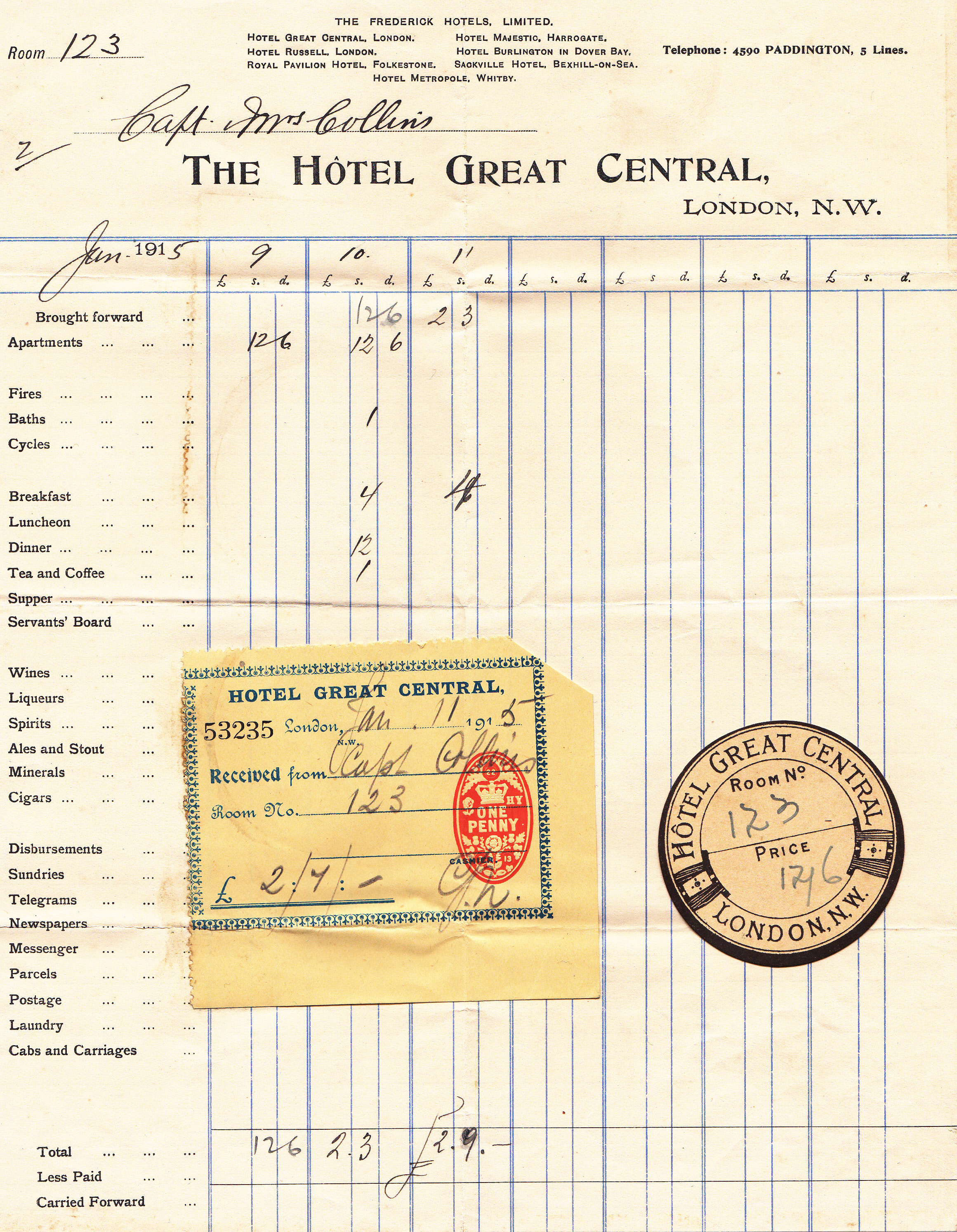
1 Comment

Suffrage Stories: Kitty Marion, Arson, A Route Taken – And A Touch Of Solipsism

On Sunday 2 November the Radio 3 Sunday Feature told – very briefly – the story of Kitty Marion, music-hall artiste, suffragette, and arsonist.

At the planning stage the producer was kind enough to invite me to contribute to the programme – with the brief to discuss something of Kitty’s suffragette activities. The  most notorious of these – or, at least, the most publicly known – was the burning down of the stadium at the Hurst Park racecourse at Molesey. This she did with the aid of an accomplice, Clara (Betty) Giveen. You can read how and why they acted as they did in –  Suffrage Stories: Kitty Marion, Emily Wilding Davison And Hurst Park

Hurst Park racecourse ran alongside the Thames just across the river from Hampton Court and although much of it was sold for redevelopment in the 1960s, the remaining open space and the layout of roads and fields have changed  little in the past 100 years, making it worthy of a visit for a spot of location radio. It was decided, therefore, that we should retrace the arsonists’ footsteps.

I offered to drive our little party  from central London to Molesey, a journey that I know like the back of my proverbial hand. For the road that leads down to Hampton Court passes the house on Twickenham Green where I grew up and which remained in my family for over 50 years.Moreover, during my schooldays I had made the journey between Twickenham Green and Hampton every day – for the first few years on that now all but forgotten vehicle, the trolley bus.

By way of a detour and for my younger readers - the 667 trolleybus en route from Twickenham to Hampton Court

By way of a detour and for my younger readers – the 667 trolleybus en route from Twickenham to Hampton Court

Now, in September 2014, our destination was Molesey Cricket Club, which lies, as it did in 1913, next to the erstwhile racecourse. In her unpublished autobiography Kitty mentions that, having left the road, she and Betty crossed a cricket field and so, leaving the cricket club car park, we made our way down a ditch (I with much less agility than my younger companions), through brambles and  into the open sunshine of Hurst Park.

Hurst Park pk cat 182


We looked over towards where the racecourse stadium had once stood and imagined the scene – as shown in this photograph –  revealed by the light of day on Monday 9 June 1913. The fire set by the two women had taken hold very quickly, rather taking them by surprise, and they, with the gas mains exploding, throwing up fountains of fire, they had fled the scene.

I was particularly interested in the next stage of Kitty and Betty’s night excursion. For a long time I had suspected that their journey on foot might have taken them past 15 The Green, Twickenham, but I had never before had occasion to research the matter. That their destination had been a house close to Kew Gardens Station was well known – but what roads had they taken to get there?

In fact the newspaper reports of their trial provide the answer. For they had been spotted at various points on their journey – the sight of two young(ish) women walking unaccompanied through the night had not gone unremarked. The first sighting – by a tramdriver – was at 12.45 am on the road between Hampton Court and Hampton and the second, most importantly, was at Fulwell, which lies between Hampton and Twickenham.

Twickenham Green c 1920s. The scene is still remarkably unchanged. No 15 is just out of the picture on the right - the house identical to the one on the right here. (Photo courtesy of Twickenham Museum)

Twickenham Green c 1920s. The scene is still remarkably unchanged. No 15 is just out of the picture on the right. The house is identical to the one shown on the right here. (Photo courtesy of Twickenham Museum)

So, there it was – a proof that satisfied me. For from Fulwell the direct route took them right past Twickenham Green – probably along the very pavement you see on the right of the above photograph.

Kitty and Betty continued through Twickenham Junction and East Twickenham, crossed over the river and  were next seen in Richmond at 2.50 am. Alerted to the fire, the police at Hampton Court had sent constables on bicycles to scour the roads. This clearly produced no immediate result but  telegraphic messages had also been sent out to all police stations which may be why, in the early hours of the morning, police in Richmond and Kew were on the look out for likely suffragette suspects.

Making no attempt to keep out of sight, Kitty and Betty were walking along Kew Road when, at the corner of Pagoda Avenue, they attracted the attention of a policeman . He followed them down to Lower Mortlake Road where, as they seemed to be lost, he questioned them. They then wandered through the streets, with the police constable following, until in the end he it was who pointed the way to their destination – West Park Road.

Police in this area may well have been on particular alert because suffragettes had recently damaged plants in the Kew Gardens orchid house  and had set the tea room alight.  A middle-aged, middle-class suffragette, Ella Stevenson, who lived in Cumberland Road, a few streets away from West Park Road, had in March been found guilty of putting phosphorous into the post box at post office in Richmond’s main street, George Street . Edwy Clayton, a scientific chemist whose home, ‘Glengariff’, in Kew Road Kitty and Betty had walked past – was at this very moment on trial at the Old Bailey on a charge of conspiracy connected with the Kew Gardens tea room and other WSPU arson attacks.

Thanks to the producer’s iPhone map, we were better equipped than Kitty and Betty and, weaving our way through the Kew streets, arrived with little difficulty at what had been their ‘safe house’. This in 1913 was the home of Dr Casey and his wife, Isabella, and daughter, Eileen. The two women were dedicated suffragettes and Mrs Casey’s action in allowing a key to her house to be in the possession of Kitty Marion, a woman she did not know, seems to have shocked the court at the subsequent trial even more than the arson itself.

Thanks  to the spontaneous kindness of the present owner we were able to record briefly inside the atmospheric Edwardian villa – noting original interior fittings – such as the fireplace with the overmantle mirror in which Kitty must surely have glanced as she and Betty waited for what they must have expected – the knock of a policeman on the door.

The knock of course did come, Kitty and Betty were tried, found guilty of arson and sentenced. Kitty went on hunger strike and was released under the Cat and Mouse Act on a couple of occasions. On the second she was taken to Nurse Pine’s Nursing Home at 9 Pembridge Gardens in Kensington (she mentions ‘Piney’ in her autobiography) from where, after a decoy was employed, she escaped.

Nurse Catherine Pine ran her nursing home in this large Kensington villa

Nurse Catherine Pine ran her nursing home in this large Kensington villa

From then until her re-arrest in January 1914 Kitty Marion was on the run, working, as she put it, to ‘communicate with the government’. It was a dangerous time.

Copyright

All the articles on Woman and Her Sphere and are my copyright. An article may not be reproduced in any medium without my permission and full acknowledgement. You are welcome to cite or quote from an article provided you give full acknowledgement.
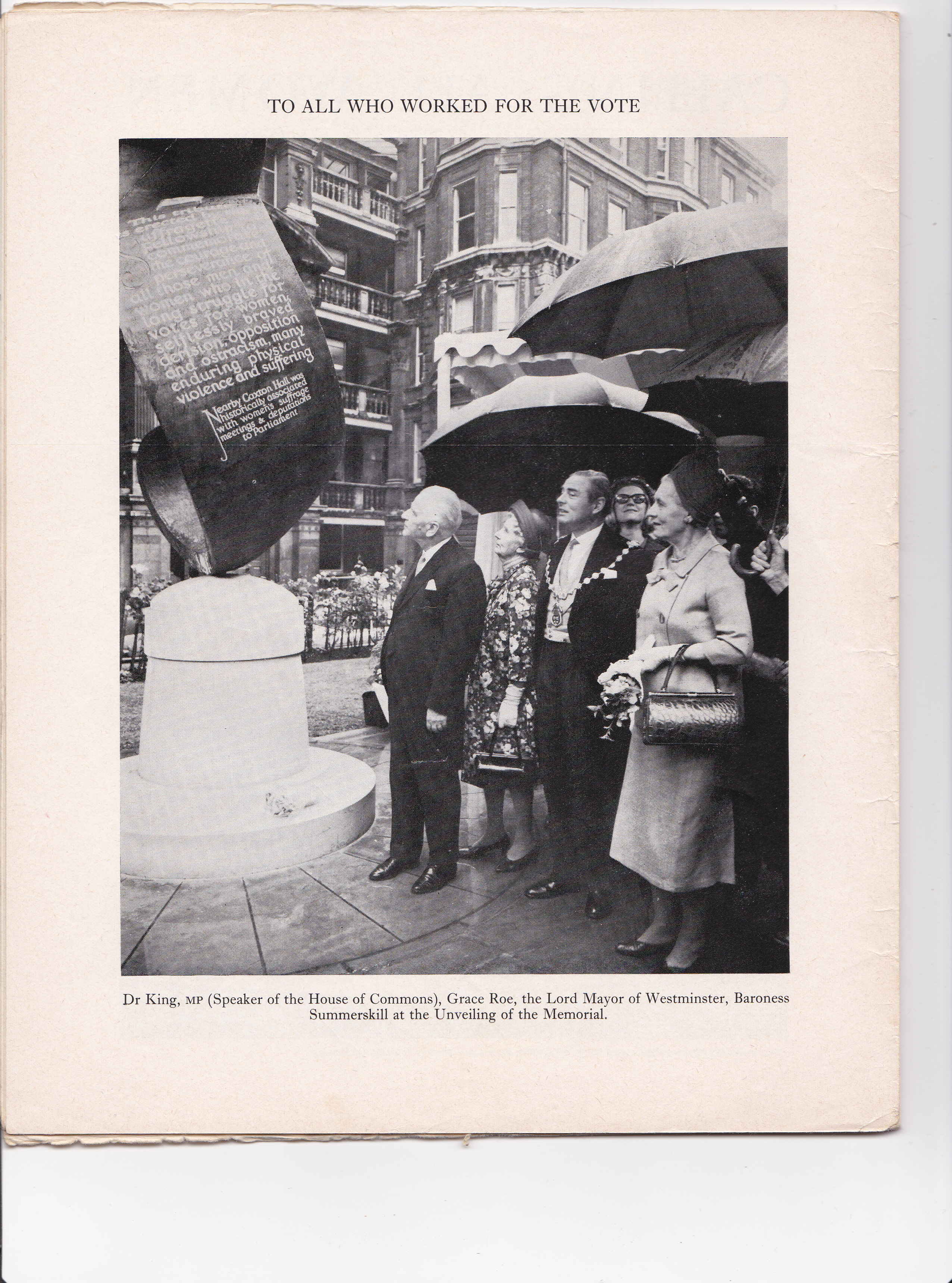


, , , , , , ,

Leave a comment

Suffrage Stories: Mrs Pankhurst’s Headstone – And Its Sculptor

Brompton Cemetery - with Mrs Pankhurst's headstone

Brompton Cemetery – with Mrs Pankhurst’s headstone

Emmeline Pankhurst died, at the age of 69, in a Wimpole Street nursing home on 14 June 1928. On 18 June her funeral service was held in St John’s, Smith Square (a church in which, incidentally, there had, in early March 1914, been an explosion attributed to suffragette activity). Afterwards her coffin was taken to Brompton Cemetery for burial. Among the hundreds attending both ceremonies was Kate Parry Frye (now Mrs Collins). In her diary Kate described the day:

 Monday June 18th 1928  [London: Flat C, 57 Leinster Square]

Cloudy and a cold wind but the rain kept off. Two buses to Westminster and to St John’s Church Smith Square. Had no ticket but being very early before 10 – I was let in up in the Gallery of the Church and sat over the Chancel and in front of Mrs Pankhurst’s Coffin. The flowers were marvellous – most beautiful. A wonderful service but very sad – sad in itself and to see & feel us all so old and grey and ill. A bus to Brompton Cemetery an enormous crowd there. Followed the Coffin and saw the end –  then got away.

That occasion, fittingly enough, marked the end of Kate’s involvement with the women’s suffrage campaign.  Kate, whose years as an active suffragist are faithfully recorded in her diary (published as Campaigning for the Vote: Kate Parry Frye’s Suffrage Diary) made no mention in her diary of the passing a couple of weeks later – on 2 July – of the Representation of the People (Equal Franchise) Act.  It was as though, with the death of Emmeline Pankhurst, a chapter in her life had closed (though you can find out very much more about her life before and after suffrage in Kate Parry Frye: the long life of an Edwardian actress and suffragette).

I was thinking of Kate on a deliciously dank autumn morning last week when I found myself in the neighbourhood of Brompton Cemetery and thought I mustn’t let the opportunity pass to walk yet again in her footsteps. I had visited Mrs Pankhurst’s grave some years ago – but that was before I had encountered Kate Frye and before the day of the digital camera – or blogs. Now I imagined  Kate there, among the large number of women who crowded around on that windy way. Confined to the paths, most could have seen little of the ceremony.

DSC01354(1)I’m not sure that Kate returned to the Cemetery so doubt that she ever saw the headstone that was erected some time after Emmeline Pankhurst’s burial. The grave is easily found – on the left-hand of the central path, encountered soon after you’ve passed through the imposing North Lodge  (Old Brompton Road) entrance. It was also one of the very few graves at which flowers have recently been left. I suspect that such tributes are regularly made and, needless to say, as you will see from the photo, they are likely to approximate WSPU colours.

The tall headstone is sloping slightly – although perhaps not as much as my photography suggests!

As I quote in the entry on Emmeline Pankhurst in my The Women’s Suffrage Movement: a reference guide, the headstone was ‘designed by Julian P. Allan, whom Kitty Marshall described as “a clever girl”.’ When researching (in pre-internet days) for that book (published in 1999) I had neither the time nor, indeed, the resources to attempt to discover who this ‘clever girl’ was. Now a little digging has produced her intriguing story.

Julian Phelps Allan was born Eva Dorothy Allan in Hampshire in 1892 – so ‘the clever girl’ was actually 36 at the time of Emmeline Pankhurst’s death. After the registration of her birth we next catch sight of her nine months later as she sets sail with her mother (‘Mrs Allan’) and her brothers, 5-year-old Leonard and 3-year-old Cecil, bound for Belize. Well, of course I immediately wondered why they were making that journey and set out to explore all the various databases that might prove useful.

I slowly pieced the answer together. They were returning to British Honduras where Mr Allan – Gordon Allan (1856-?) – was surveyor-general. In 1885-6 he had published ‘A Plan of Belize’. Further research uncovered his marriage in 1884 in west London to Ada Phelps Richards, the eldest in the large family of a widowed brewer. Before taking over the family firm her father had been a civil engineer and Ada had been born in Brazil, presumably when he was engaged on some south American scheme. I suspect that Gordon Allan died in the 1890s in British Honduras because I next found his son, Cecil G. Allan (who had been born in British Honduras) in 1901 as a pupil at the London Orphanage Asylum at Watford. The criterion for admission to that establishment was that the pupil had to be fatherless – but not, apparently, motherless.

For in 1911 Ada Phelps Allan was still alive – a patient in the Merchant Taylors’ Convalescent Home for Ladies at Bognor. Indeed she did not die until 1944. In 1911 her daughter, Eva, was boarding in the home of carpenter and joiner at 40 Achilles Road, West Hampstead.  The census recorded her as ‘student at college’. Her landlady’s daughter was a student at Clark’s College so perhaps that was where Eva also was studying. It was an appropriate educational institution for a young woman of her background – and, probable lack of means – to attend. Clark’s very successfully trained young men and women to pass the Civil Service examinations.

I can imagine – though don’t know for certain – that Eva spent the following few years working efficiently in offices – until she became a member, during the First World War, of the Women’s Army Auxiliary Corps. She served as a ‘unit administrator’ – the equivalent of officer rank.

After the war she studied sculpture at the Westminster School of Art and then at the Royal Academy Schools. You can read an account of her work as a sculptor here. The commission for Mrs Pankhurst’s headstone came early in her career. Doubtless she moved in circles that overlapped with those of suffrage activists. It was also around this time that she dropped ‘Eva Dorothy’ in favour of the more androgynous ‘Julian Phelps’ (‘Phelps’ being her maternal grandfather’s second name – and  a name inherited by her mother and most of her mother’s siblings).

DSC01355


The headstone she made for Emmeline Pankhurst is of red sandstone, in the form of a Celtic cross. The  inscription is simple – ‘In Loving Memory of Emmeline Pankhurst wife of R.M. Pankhurst LLD At Rest June 14 1928.’ No mention of children, or a life’s work for women.

DSC01356

The shaft carries this somewhat enigmatic haloed figure.

DSC01357


The head of the cross shows what I take to be the hand of God reaching down from the heavens as two angels minister in some symbolic way.

I wonder how the commission was described in the brief to the sculptor?

See here for Julian Allan’s own – very different – memorial. I’m rather amazed to discover that she was actually still alive when I first came across her name –  researching The Reference Guide She died in 1996 – aged 103.

Copyright

All the articles on Woman and Her Sphere and are my copyright. An article may not be reproduced in any medium without my permission and full acknowledgement. You are welcome to cite or quote from an article provided you give full acknowledgement.
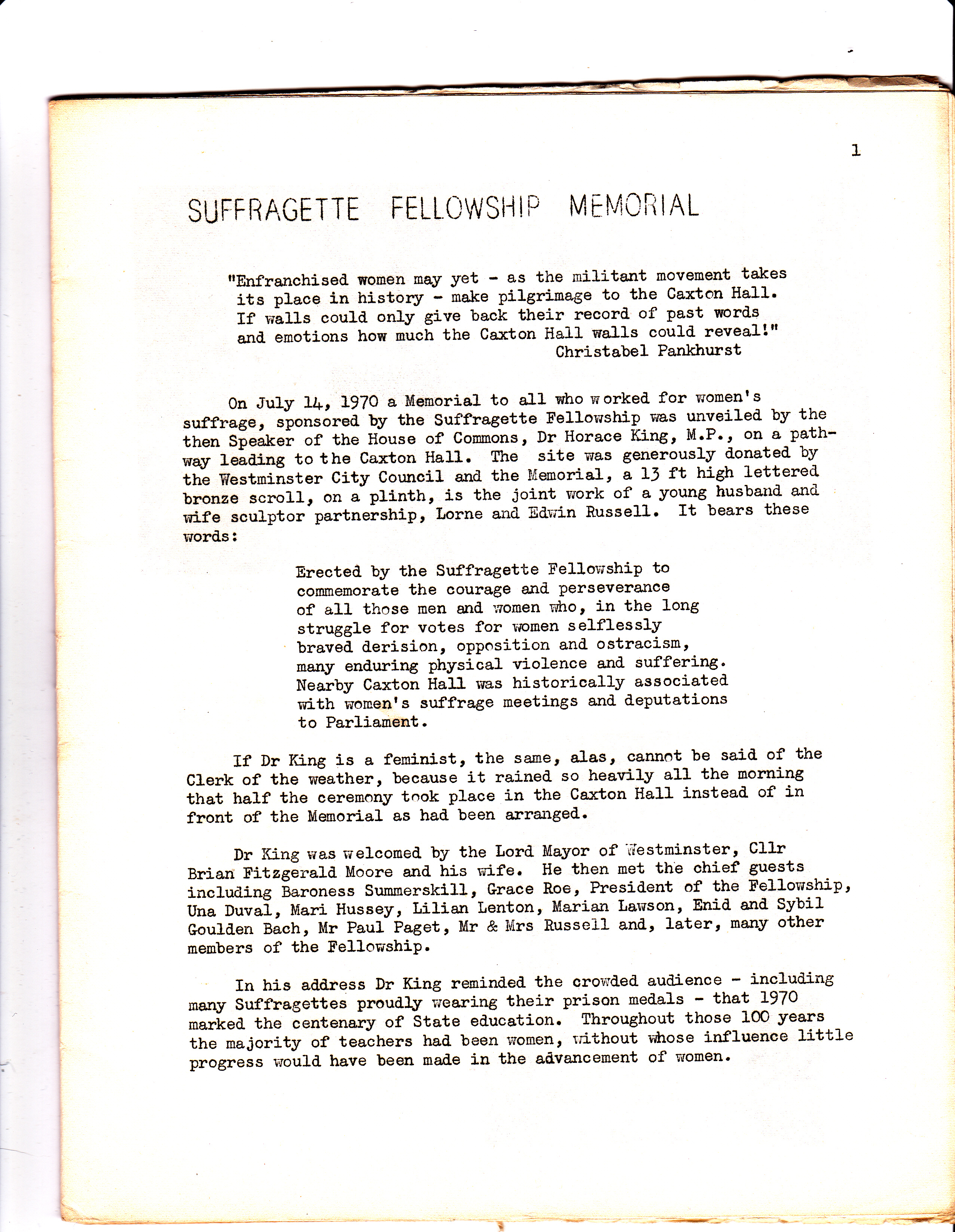
2 Comments

Kate Frye’s Diary: Talk at Wooburn Festival, 24 September 2014

Tomorrow – 24 September – I shall be presenting Kate Frye to the Wooburn Festival. I shall be talking about her life – from the age of Victoria to that of Elizabeth – in Bourne End and Berghers Hill – and describing her efforts to interest the area in ‘Votes for Women’.

Kate Frye cover

The talk will be illustrated with many photographs from Kate’s extensive archive and there will be an opportunity to look at other items of local interest from her collection that I will bring with me.

cover e-book

See here for full details of the talk – 7.30 pm at Bourne End Library.

Copies of Campaigning for the Vote will be on sale – signed if you wish!

For full details of both the Kate Frye books see here and here.


, , ,

Leave a comment

Suffrage Stories: The Women’s Freedom League Toy Factory At Hackney, 1915

We are familiar with the toy factory opened during the First World War by Sylvia Pankhurst’s East London Federation of Suffragettes at Bow in London’s East End, but how many of us know that another suffrage society, the Women’s Freedom League, operated a similar factory in Hackney?

The Toy Factory at Hackney run by the Women's Freedom League, 1914

The Toy Factory at Hackney run by the Women’s Freedom League, 1915

At the beginning of the First World War the WFL announced that, among the schemes prompted by the new situation, they had opened a toy factory ‘where girls and women have been trained to turn out perfectly finished and well-dressed dolls – the specialities being the Dombey boys and the Tipperary Twins.’

With the outbreak of war the various suffrage societies had recognised the need to provide employment for women put out of work as dress-making establishments suffered a sudden drop in demand. In the autumn of 1914  the thoughts of the women of the nation were, unsurprisingly, on other than on sartorial matters. The New Constitutional Society, for instance, hoped to help destitute dressmakers by opening a war-relief work-room , organised by Kate Frye (for details see  Campaigning for the Vote –  to see Romola Garai as Kate Frye in that work-room as realised by ITV see here ) .  The NCS opted to make clothes.

The ELFS and the WFL, however, decided to take advantage of the gap in the market that had opened now that toys could no longer be sourced from Germany, hitherto the main supplier of presents for British children.

But where in Hackney was the WFL toy factory?  It looks from the photograph as though it was located in a private house, probably comprising only a couple of rooms. This wasn’t a factory on the scale of Lesney – Hackney’s other – once-famed – toy maker. 

Update: Reading Jennie Churchill’s Women and War Work  I’ve discovered that the toy factory was in South Hackney…but have not yet pinpointed a road. Interestingly, the photograph at the head of this blog post came from a postcard album compiled by  Louisa Thompson-Price, who is named as a contributor to the chapter that mentions the WFL toy factory.

How long was the factory in production? Mrs Sarah Ann Mustard (1864-1936), of 48 Moresby, Upper Clapton, had been president of the Hackney branch of the WFL from about 1910 and it is she who described the work of the factory at a WFL meeting- in Mayfair – on 26 March 1915. However, the WFL’s newspaper,The Vote, then goes decidedly quiet on the factory and its products. It is especially curious that none of the reports of the many fund-raising bazaars makes any mention of Hackney-made toys for sale – nor does The Vote carry any small ads for its wares.

And yet the WFL had felt it worthwhile to ask Fleet Street photographer, Barratts, to come along to their ‘factory’ and take a photograph. This doesn’t seem to have been published in The Vote, but, fortunately, was issued as a postcard – allowing us a glimpse of one all- but- forgotten War Work effort with, in the background, an array of its products.

Copyright

All the articles on Woman and Her Sphere and are my copyright. An article may not be reproduced in any medium without my permission and full acknowledgement. You are welcome to cite or quote from an article provided you give full acknowledgement.
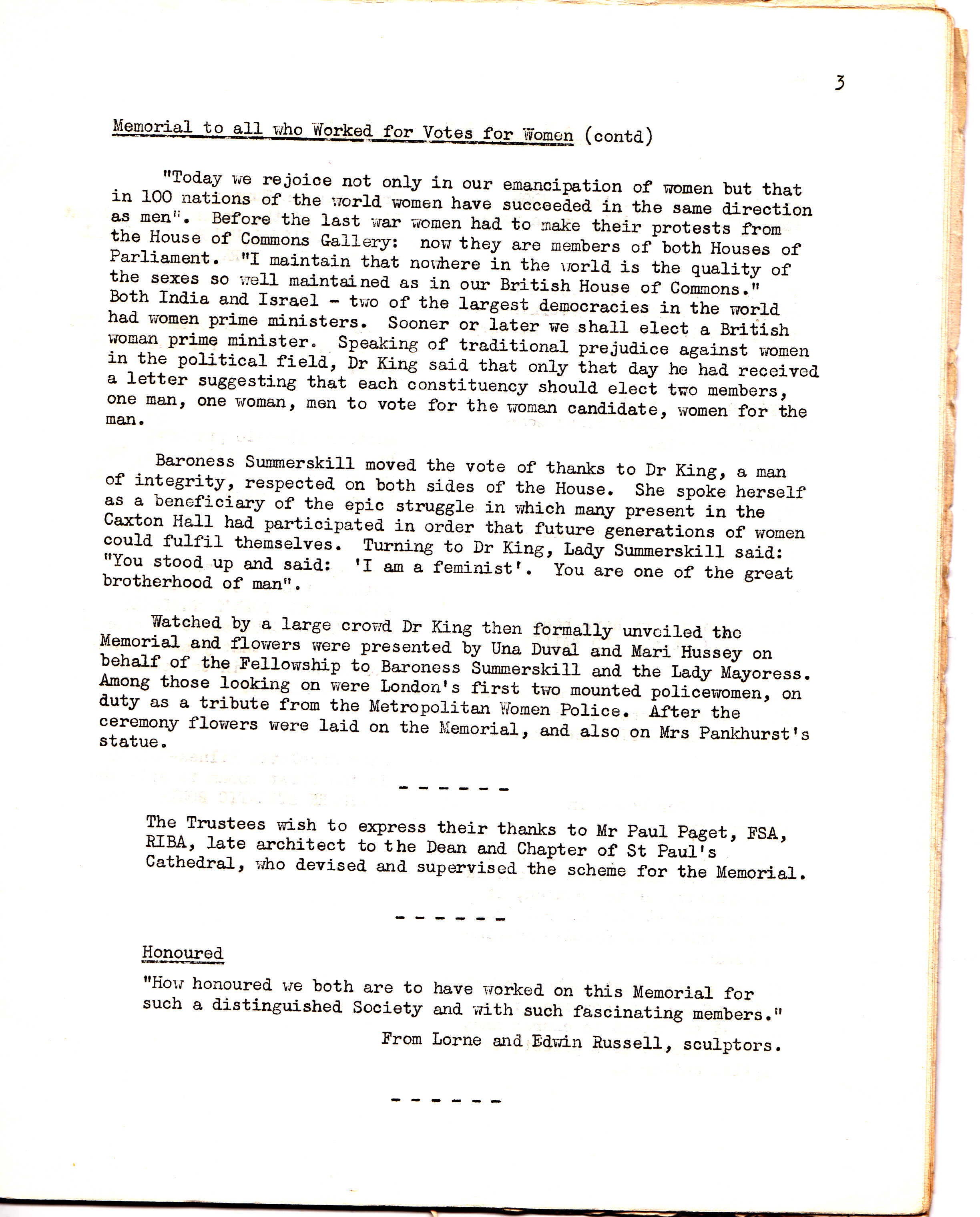


, , ,

1 Comment

First World War – And Wars Before: Tracing Your Service Women Ancestors

This week I’m busy packing up books and ephemera to take on Friday to the Women’s History Network Conference – held this year at the University of Worcester. In this First World War centennial year Home Fronts: Gender, War and Conflict  is the Conference theme – see here for details.

I usually have a small  selection of ‘Women and the First World War’ material in my catalogues  (latest is  Number 185 – see here)  – and often when cataloguing spend time poring over photographs trying to identify the uniforms worn by young women of that period as they pose in studios or are photographed in camps or hospital wards – checking them against a variety of ad hoc sources.

Ingham


This rather pleasurable occupation will now become much easier – by consulting a fascinating book that comprehensively covers all the branches of the Services open to women.

In Tracing Your Service Women Ancestors Mary Ingham takes as her starting point the early 19th century – for it was then that the Army began to employ schoolmistresses to educate the children of the soldiers stationed in garrisons across the Empire . For this one service she cites holdings at The National Archives, National Army Museum, Adjutant General’s Corps Museum, British Library, Westminster College Archives and gives details of several printed sources.

VAD

She then covers in considerable detail all the nursing and medical services attached to the various branches of the armed services – from the Crimean War onwards. I must say I’m rather taken with the work in the First World War of the Almeric Paget Massage Corps, the honorary secretary of which was a niece of Charlotte Despard. And I know that I if I’d been a VAD I’d have been completely stymied by the instructions on how to pin on my nursing cap. However I’m sure many a period drama wardrobe mistress has welcomed such a diagram as is reproduced in the book. Flowing – and so fetching – that cap must have enticed many a young woman to join the Voluntary Aid Detachment. If we are looking now for details of the service of any one such woman Mary Ingham directs us to  a variety of archival sources.

Members of the WRNS and WRAF at Warsash Air Station 1918 (courtesy of RAF Museum website)

Members of the WRNS and WRAF at Warsash Air Station 1918 (courtesy of RAF Museum website)

The book then details the work of the Women’s Auxiliary services – and the WRNS, the WRAF, the Women’s Forage Corps and the Women’s Land Army.

Mary Ingham gives full and most helpful information on how to access the relevant records for all the services and, most usefully, lets us know when records are not available – or do not include as much information as we might expect. This kind of knowledge – doubtless accrued painfully  – is so useful in managing expectations. We don’t waste our time on wild goose chases – Mary has done the chasing for us.

I am sure that academic researchers and family historians alike will find Tracing Your Service Women Ancestors  both interesting and useful. And it’s packed with illustrations. More information may be found at Mary Ingham’s website.

Copyright

All the articles on Woman and Her Sphere and are my copyright. An article may not be reproduced in any medium without my permission and full acknowledgement. You are welcome to cite or quote from an article provided you give full acknowledgement.

,

1 Comment

Suffrage Stories: Bloomsbury Links in Life And Literature (Part 4)

For my first two posts on the links between ‘Bloomsbury’ and women’s suffrage see here and hereIn ‘Bloomsbury Links’ (Part 3) I mentioned that in 1916  Ray Strachey took over the post of parliamentary secretary to the National Union of Women’s Suffrage Societies and  moved to Westminster to be close to the NUWSS office. From 1916 until 1934  she was also chairman of the Women’s Service Bureau, which originated in the war work of the London Society for Women’s Service. In 1925, when the financial position of the latter society (now called the London Society for Women’s Service) was critical, funds were raised by the presentation at the Scala Theatre of two specially-staged charity performances of The Son of Heaven, a play written by Ray’s brother-in-law, Lytton Strachey.

The play – a’tragic melodrama’ -was set in China at the time of the 1900 Boxer Rebellion. It’s director was Alec Penrose, whose  (first) wife was the production’s wardrobe mistress, Ralph Partridge played ‘The Executioner’, Geoffrey Webb, later Slade professor of Fine Art at Cambridge, played ‘Wang Fu’ and Gerald Brennan was among the extras.  Gertrude Kingston -now elderly and a one-time member of the Actresses’ Franchise League, was the only ‘professional’ member of the cast.

The accompanying music was composed and conducted by William Walton – his first commission for the stage. Of it Constant Lambert (who played the timpany in the production’s orchestra) commented – ‘So great was [Walton’s] obsession with ragtime that he was unable to prevent some unmistakeable touches of Gershwin from entering the score!). The critic from The Stage described the music as ‘ambitious and decidedly heavy’.

Duncan Grant designed the costumes and sets. These included an Omega Workshop screen and a carpet designed by Vanessa Bell, who was also responsible for the cover of the programme.

Vanessa Bell, Original design for carpet for 'Son of Heaven' c 1924 (courtesy of Henry Sotheran Fine Prints)

Vanessa Bell, Original design for carpet for ‘Son of Heaven’ c 1924 (courtesy of Henry Sotheran Fine Prints)

Robert Medley, a painter and member of the cast, remembered the colours used –  ‘clear ochres and greys, offset by pinks, oranges and emerald greens’ (Frances Spalding, Duncan Grant). The costumes were painted in a decidedly Omega style by Duncan Grant and Vanessa Bell and proved all  too much for Gertrude Kingston. She refused to wear her costume and the designers were forced to dress her instead in a black brocade ‘Manchu’ robe belonging to Lady Strachey. All in all it seems to have been a rather entertaining venture, although I cannot tell you how much money it raised for the LSWS.

WomensServiceHseIn 1930, when the London and National Society for Women’s Service (as it had confusingly been renamed in 1926) wished to publicise not only its existence but also that of their new purpose-built hall , ‘Although very doubtful of success, Miss [Philippa] Strachey undertook to approach Virginia Woolf, to ask if she would be willing to give a talk on ‘Literature’. In the event Virginia Woolf did agree to speak and on the appointed evening, 21 January 1931, shared the platform with her new friend, Dame Ethel Smyth, who spoke on ‘Music’.

The hall, with a library, restaurant and offices, was part of Women’s Service House, the  LNSWS’s new Westminster premises. Millicent Fawcett laid the foundation stone on 29 April 1929, barely three months before her death; the hall was intended as her memorial – rather more useful than a statue  but, alas, without a statue’s popular appeal (on this bee in my bonnet see more here). Known as the Millicent Fawcett Hall, it still stands at 31 Marsham Street, now put to good use by Westminster School as its drama centre.

Back in January 1931 the sub-committee of the London Society responsible for arranging the  evening’s entertainment felt obliged to install a microphone for Mrs Woolf – at the cost of £8; there was no suggestion that Dame Ethel required amplification.

The speakers attracted one of the society’s largest audiences and Virginia Woolf received a review in The Woman’s Leader (now, incidentally, edited by a niece of Mrs Pankhurst): ‘She “was with us, but not of us”. Her eyes are on the stars, as though she listens to some far-off song – but a song of which even an audience of modern and practical minded young women can catch an echo when Mrs Woolf speaks.’

ThreeGuineasThe ‘song’ proved to be the genesis for Three Guineas, and it was to the LNSWS’s library, adjacent to the hall, and to its librarian, Vera Douie, that Virginia Woolf turned when seeking verification of the facts, gathered into footnotes, that fuelled the book’s anger.

The Library at Women’s Service House, 1924 © & source The Women's Library

The Library at Women’s Service House, 1924
© & source The Women’s Library

In March 1938, for instance, she wrote enquiring about peace organisations and the numbers of women involved in working for peace. Vera Douie sent her a full reply, enclosing Mrs Fawcett’s pamphlet on ‘What the Vote Has Done’. A couple of months later , in gratitude for the help she had received, Virginia Woolf offered to supply the library with any books, new or antiquarian that it required. The offer was gratefully accepted; in 1938, for example, Virginia Woolf gave to the library both volumes of the newly published Miss Weeton. Journal of a Governess, a text from which she had copied quotations into her Three Guineas Reading Notebook, and in July 1940 paid for two books by Mary Carpenter, Juvenile Delinquents (1853) and Our Convicts (1864), that had appeared in the catalogue of an antiquarian bookseller. Both the latter are still part of the Cavendish Bentinck collection in the Women’s Library@LSE – although the name of their donor is not noted in the catalogue entry.

On 26 March 1941 Vera Douie wrote to Mrs Woolf to say how much she had enjoyed reading her biography of Roger Fry and asking, in her usual delicate manner, for two more books. This time, however, her request was in vain. Virginia Woolf was dead by the time the letter was delivered to Monks’s House.

Copyright

All the articles on Woman and Her Sphere and are my copyright. An article may not be reproduced in any medium without my permission and full acknowledgement. You are welcome to cite or quote from an article provided you give full acknowledgement.
 

, , , , , , , , ,

Leave a comment

Suffrage Stories: ‘A Song Of Their Own’ – Ipswich Suffrage- And Ada Ridley In Particular

Song of their Own

I do enjoy reading studies of the work of local suffrage societies – and this is a good one.  Without over explaining the national campaign Joy Bounds neatly describes the particular work of Ipswich suffrage campaigners, setting their efforts in the wider context. Her research on Constance Andrews, the leading light of the Ipswich branch of the Women’s Freedom League,  is particularly welcome – and useful.

The delight of such studies is that names hitherto little known are brought to our attention. While it was outside the scope of Joy Bounds’ study to dwell in depth on the many individuals whom she highlights, it is now possible – in a blog such as this – to pick up the baton, as it were, and attempt to discover more about these women. Their engagement with the suffrage movement is, in a way, only an excuse.  I am still so curious about women’s lives.

In particular I am  interested in women who put their artistic skills to work for the suffrage cause and was keen therefore to discover more about the life of Ada Paul Ridley,who is mentioned in A Song of Their Own. She either designed or sewed (or perhaps  designed and helped sew) the banner (‘Be Just and Fear Not’) that the Ipswich contingent carried in the WSPU’s 1911 Coronation Procession. There is a suggestion that ‘her women’ worked it – I wonder who they were? The banner, alas, has long since disappeared.

Lisa Tickner includes Ada Ridley in her list of suffrage artists in an appendix to The Spectacle of Women, but mentions only her work on this banner and the fact that she had exhibited at the ‘London Salon’ in 1908. This was the first exhibition organized for the progressive Allied Artists’ Association Exhibition by Frank Rutter (a devout suffragist) – and held at the Albert Hall. I doubt that Ada Ridley was amongst the more progressive element, but she was keeping interesting company.

So who was Ada Ridley?

Well, she was born c 1864 and her sister, Elizabeth (Bessie), whom Joy Bounds mentions as also being  involved with Ipswich suffrage, was born in 1867. They were two of the four daughters (there were also two sons) of Albert Cowell Ridley, one of Ipswich’s leading businessmen. He was a wholesale druggist –  in partnership with Edward Grimwade (sometime mayor of Ipswich), trading as Grimwade, Ridley & Co. The firm’s premises were in Princes Street – and have long since made way for the iconic Willis building.

The Ridley family was non-conformist – Baptist. In the 1870s Albert Ridley was a member of the Ipswich Board of Guardians and in the 1880s, a Liberal,  was elected to the Ipswich Town Council.

Formerly Helenscote, 73 Henley Road, Ipswich

Formerly Helenscote, 73 Henley Road, Ipswich9

The Ridleys  lived at Helenscote, 73  Henley Road, Ipswich – a large, gabled house. (The house, now known as Marlborough House was until relatively recently The Marlborough Hotel, but is now divided into flats.)

In the 1870s Edward Grimwade and his family lived close by – at 1 Henley Road. In April 1871 Grimwade chaired a meeting in Ipswich at which Rhoda Garrett was the main speaker, with her cousin, Millicent Garrett Fawcett, and her uncle,  Newson Garrett, sitting beside her on the platform. The Ipswich Journal – not a supporter of the woman’s cause – gives a lengthy, somewhat jaundiced account of the meeting – but it is clear that it was actually rather successful.

Grimwade’s daughter, Harriet, became secretary of the Ipswich committee of the National Society for Women’s Suffrage that was set up in the wake of this meeting. This suffrage society doesn’t appear to have been very active – although Harriet Grimwade definitely was. She was a very active philanthropist as well as eventually, in 1883, being elected a member of the Ipswich School Board.  When she first stood for the School Board, in 1880, the Ipswich Journal  paid her the rather back-handed compliment of saying that it would be as well if she were not elected as it would be a pity to distract her from her all her charitable work.

There was no mention of Albert Ridley’s presence at the 1871 meeting- although he may well have been there.  In fact there was a direct Garrett/Ridley relationship. Millicent’s sister, Alice, was married to Herbert Cowell, a cousin of Albert Cowell Ridley (Herbert’s father was brother to Albert’s mother). Despite Herbert’s expressed distaste for the women’s movement, Alice more or less defied him to succeed her sister, Elizabeth Garrett Anderson, as the member of the London School Board for Marylebone. I imagine that Albert Ridley’s views on the Woman Question tended more towards those of Edward Grimwade than those of Herbert Cowell.

Whatever they were, Albert Ridley did ensure that Ada had a good education. She attended Ipswich High School for Girls and, while a pupil there, in 1879  passed the government examination in Freehand Drawing, taken at the Ipswich School of Science and Art , in 1880 she received the school prize for Needlework – a copy of In Memoriam – and in 1881 won a prize at the Art School (though still a pupil at the High School) for the best drawing of a plant. Her reward was to be given said plant – a begonia. In 1883 she matriculated from the High School –  in the first division (University of London) and in 1884  moved to  the Ipswich School of Science and Art, where she was awarded a first class certificate in Botany- Elementary Stage. Ada clearly remained close to Harriet Youngman, who was headmistress of the High School during the time she was there. When the 1901 census was taken Ada was staying with her as a visitor in the cottage near Saffron Walden to which she had moved on retiring as headmistress.

Although the only sightings I have of Ada during the next ten years are as a rather successful tennis player (mixed doubles matches at the Ipswich Lawn Tennis Club) and as a pianist at various local entertainments, she clearly maintained her interest in art, winning a second prize in a Studio  competition in 1894. In 1893 she was the judge of ‘Plain Needlework’ at an Industrial and Art Exhibition held at the Gainsborough House headquarters of the YWCA.

Albert Ridley died in 1896, leaving c £25,000 – out of which Ada and her siblings were each to receive £1000  immediately. Her mother died in 1916, leaving £14,000 – so I think we can assume that the family lived reasonably comfortably.

In April 1911 a service at Llanaber Church near Barmouth was held to dedicate reredos that Ada Ridley had helped carve. They had been designed in the Celtic Arts and Crafts style by John Dickson Batten, who was an illustrator and one of the early members of the Society of Painters in Tempera. The founder of this society was Christiana Herringham, a suffragist who in 1908 had helped embroider banners for the Artists’ Suffrage League and the Women Writers’ Suffrage League, as well as one for the Cambridge Suffrage Society. The Battens must have known Christiana Herringham and as in 1904 their Kensington home was at 16 Edwardes Square, they must have known Laurence Housman, who lived with his sister, Clemence, writer and artist, at 1 Pembroke Cottages, on the corner of the Square. It’s not too wild a guess to suppose that Ada Ridley was brought into this circle.

Anti-suffrage Alphabet (courtesy of UCL Library Services)

Anti-suffrage Alphabet (courtesy of UCL Library Services)

There is no doubt that by 1911 Ada most certainly was well acquainted with Laurence Housman  because in that year she was a contributor to a lovely book – An Anti Suffrage Alphabet – designed by Housman and which Leonora Tyson (of the Streatham WSPU) printed to order by hand. Earlier in the year, on census night (2 April), both Ada and Bessie Ridley had been absent from home. Their mother was enumerated at Helenscote with their unmarried brother and one of their nieces – but of her two resident daughters there was no trace. Were they spending the night at the Museum Rooms, taking part in the boycotting party that Joy Bounds describes so well?

But that is all I’ve been able to uncover. How did Ada spend the rest of her long life?  I can find no trace of any further involvement with either art or the woman’s cause. She seems such a capable woman that I can’t believe she sat at home doing nothing for the next 40 or so years. She died in Ipswich in 1958 – leaving c £17,000 -one of her executors being the niece who was staying in the house while her aunts were out gallivanting on census night.


Copyright

All the articles on Woman and Her Sphere and are my copyright. An article may not be reproduced in any medium without my permission and full acknowledgement. You are welcome to cite or quote from an article provided you give full acknowledgement.


o

, , , , ,

1 Comment

Suffrage Stories: Bloomsbury Links (Part 3)

I have written two previous posts about the Bloomsbury Group and Women’s Suffrage – see here and here, the latter one dealing with the involvement of Lady Strachey and her children. In this third Bloomsbury post I describe something of the importance of one of her daughters-in-law – Ray Strachey.

Ray Strachey

Ray Strachey

In 1911 Lady Strachey’s son, Oliver,  married, as his second wife, Ray, the daughter of Mary Costelloe (later Mary Berenson) and granddaughter of Hannah Whitall Smith, a Philadelphian Quaker and feminist.

The Costelloes’ association with the Cause stretched well back into the 19th century. In 1889 both Mary Costelloe and her mother had signed the Declaration in Favour of Women’s Suffrage organized by the Central Committee of the National Society for Women’s Suffrage. In the 1890s Mary, with her parents, her husband, and her sister Alys (who was later to marry Bertrand Russell), subscribed to the Central National Society for Women’s Suffrage. In March 1890 Frank Costelloe, Ray’s father, was described as a ‘warm friend’ to the Women’s Franchise League. It is therefore not surprising to discover that Ray Costelloe while a student at Newnham (1905-08) was an active member of the Cambridge University Women’s Suffrage Society, probably to the detriment of her academic work.

In the summer of 1908 Ray and her friend Elinor Rendel conducted a suffrage caravan tour of the Lake District. While on this tour the young women stayed at Keswick, at Hawse End, the home of Frank and Caroline Marshall, who had founded the local branch of the NUWSS, and who were the uncle and aunt of Ray (later Garnett) and Frances (later Partridge).

Catherine Marshall

Catherine Marshall

The Marshalls’ daughter, Catherine, moved to London and became parliamentary secretary of the NUWSS, in 1912 masterminding that society’s alliance withe the Labour party. Through family association the suffrage campaign drew into is maw the least likely followers; Julia Strachey, Oliver’s daughter by his first marriage, led an NUWSS procession in Littlehampton on 19 July 1913.

By 1913 Ray Strachey was chairman of the LSWS and Philippa Strachey was its secretary, the two forming an extremely affectionate and close working relationship that lasted until Ray’s death in 1940. A fellow worker for the Cause described how Ray Strachey was ‘someone who takes up lost causes and then they are no longer lost’ and particularly remarked how Ray always sought Pippa’s advice.

In 1916 Ray Strachey succeeded Catherine Marshall as parliamentary secretary of the NUWSS and in this capacity was responsible for supervising the passage of the Reform Bill that in 1918 at last gave women (over 30) the vote. Ray moved her household from Bloomsbury to Marsham Street in Westminster in order to be close to the society’s office.

strachey the causeAfter the end of the First World War Ray Strachey was editor of The Common Cause and then of its successor, The Woman’s Leader, 1920-23, and acted as political private secretary to Lady Astor after the latter’s election as the first woman member of the House of Commons. Ray Strachey was the author The Cause (1928) which stood for very many years as the only history of the ‘constitutional’ suffrage movement, and of Women’s suffrage and Women’s service: the history of the London and National Society for Women’s Service, 1927.

In 1938 Virginia and Leonard Woolf’s Hogarth Press published Our Freedom and Its Results, a collection of essays edited by Ray Strachey, which charts the effect of women’s emancipation on politics, law, employment, morals and social life.

Copyright

All the articles on Woman and Her Sphere and are my copyright. An article may not be reproduced in any medium without my permission and full acknowledgement. You are welcome to cite or quote from an article provided you give full acknowledgement.
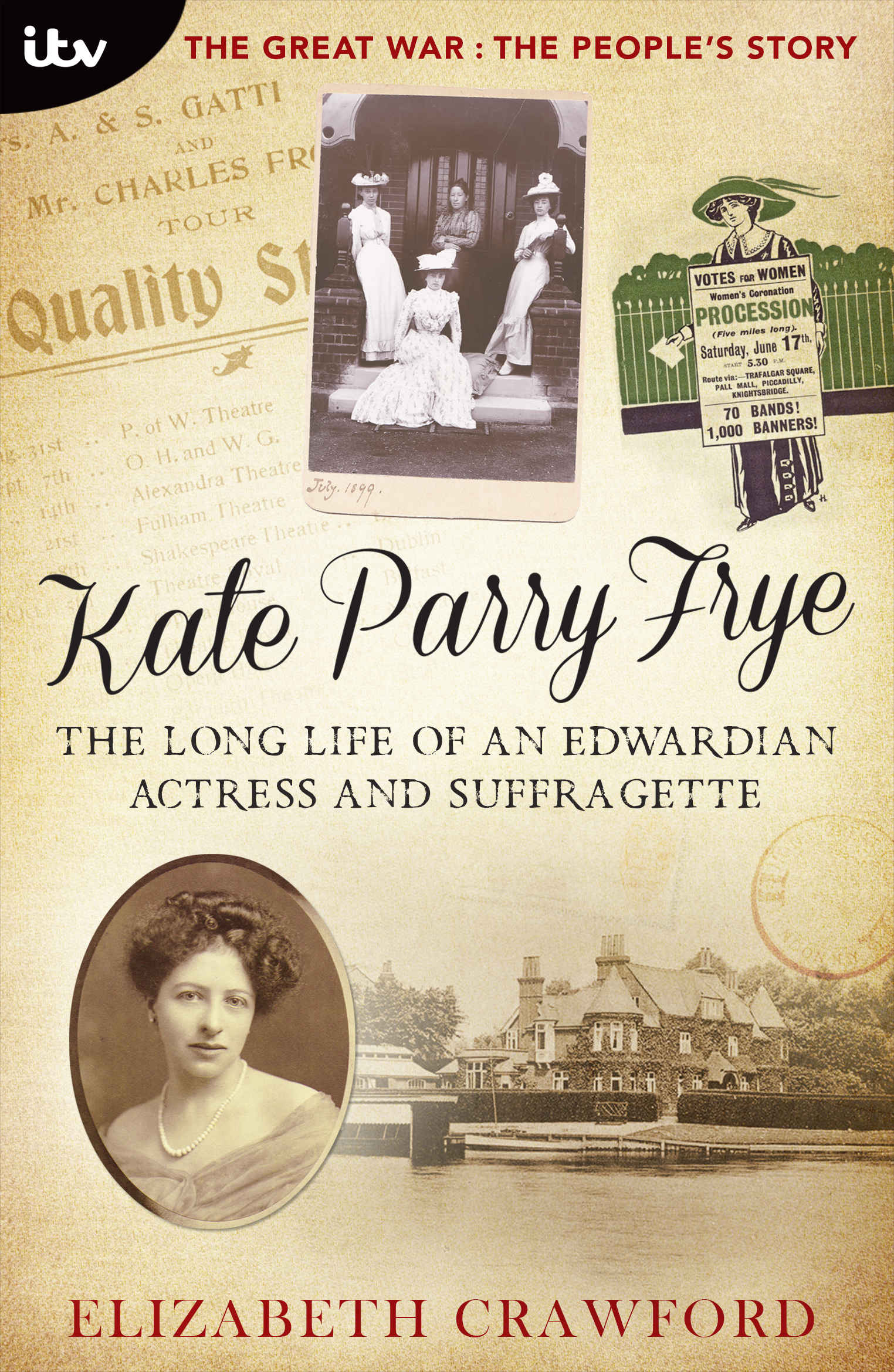
, , , , ,

Leave a comment

Kate Frye’s Diary: What Was Kate Doing One Hundred Years Ago Today – The Day She Appears On Our TV Screens?

Tonight Kate Parry Frye – in the guise of Romola Garai – appears on our television screens (Sunday 17 August, ITV at 9pm). What was she doing on this day 100 years ago?

Kate was still on holiday from her work with the New Constitutional Society for Women’s Suffrage, spending the time with her sister and mother in their rented rooms at 10 Milton Street, Worthing. However, this was no summer idyll such as the Fryes had enjoyed in days gone by. Then they had rented a large house and travelled down from London with their four servants, to spend a season by the sea. Now that they were virtually penniless, these rented rooms were all they could call home. In the life of Kate and, more tragically in that of  her sister, we see the jarring disconnect when young women, brought up to a life where marriage was to be their only trade, are left with insufficient money to support their social position and expectations. As such Kate’s life story is very much a tale of its time.

Monday August 17th 1914

Gorgeous day. Up and at house work. Out 12.30-  just to the shops. Wrote all the afternoon  and after tea to 6. Papers full of interest. Preparing for the biggest battle in the World’s History. There is no doubt the English have landed over there. I hear from John most days – that he is very busy but not a word of what his work is. Mickie [her Pomeranian] and I went out after tea. Agnes still a bit limp.

John Collins, Kate’s fiancé, who had long been an officer in the Territorial Army, had already been recalled to his barracks at Shoeburyness – leaving his engagement with a touring repertory theatre company. Kate’s sister, Agnes, at the first hint of the European trouble had taken to her bed, prostrate. Kate, a would-be playwright, was busy writing – although exactly what she was writing at this time she doesn’t divulge. On her death forty-five years later she left behind a box of unpublished scripts – and one that was published. She  hoped one day to achieve fame and fortune. As it was she would soon be back at work at her suffrage society’s headquarters – with a new role as organizer of their War Work Work Room.

Work Room set up by the New Constitutional Society for Women's Suffrage - of which Kate was in charge. Note the NCS flag in the background - the only image of it that survives

Work Room set up by the New Constitutional Society for Women’s Suffrage – of which Kate was in charge. Note the NCS flag in the background.

Kate

To discover more about the entirety of Kate’s life – her upbringing, her involvement with the suffrage movement, her marriage, her London flats, her life in a Buckinghamshire hamlet, her love of the theatre, her times as an actress, her efforts as a writer, her life on the Home Front during two world wars, her involvement with politics – and her view of the world from the 1890s until October 1958  – download the e-book – £4.99 – from iTunes – http://bit.ly/PSeBKPFITVal. or  £4.99 from Amazon.

I’d love to hear what you think of Kate and the life she lived. 

To read in detail about Kate’s involvement in the women’s suffrage campaign – in a beautifully-produced, highly illustrated, conventional paper book – see  Campaigning for the Vote: Kate Parry Frye’s Suffrage Diary.

Copyright

All the articles on Woman and Her Sphere and are my copyright. An article may not be reproduced in any medium without my permission and full acknowledgement. You are welcome to cite or quote from an article provided you give full acknowledgement.
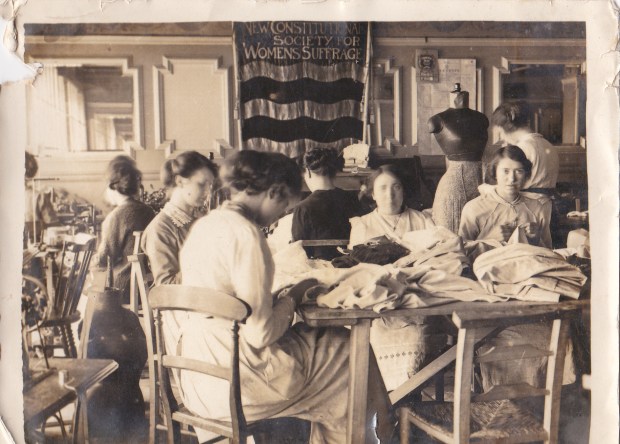
, , , , , , , , , ,

Leave a comment

NOW PUBLISHED: Kate Parry Frye: The Long Life Of An Edwardian Actress And Suffragette

Kate

Based on her prodigious diary, this e-book is my account of Kate Frye’s life and is a tie-in with the  ITV series ‘The Great War: The People’s Story’, in which Romola Garai plays Kate. For details of the TV series and its accompanying books see here. Kate appeared in the second episode – which you can now watch here.

To discover more about the entirety of Kate’s life – her upbringing, her involvement with the suffrage movement, her London flats, her life in a Buckinghamshire hamlet, her love of the theatre, her times as an actress, her efforts as a writer, her life on the Home Front during two world wars, her involvement with politics – and her view of the world from the 1890s until October 1958  – download the e-book from iTunes – http://bit.ly/PSeBKPFITVal. or  from Amazon .

Writing up her diary in her miserable rented room in Worthing on 7 August 1914 Kate could not have thought – even in her wildest dreams – and she certainly did on occasion allow herself wild dreams of fame – that one hundred years later YOU would be able to read her life story.

It is something of a fairytale – from the discovery of the boxes of wringing-wet diaries in a north London cellar to the publication of Kate’s story, now available for the World to read at the click of a mouse.  It is a dream realised, not only for the Kate I have got to know so well and who through her diary entries makes us privy to her hopes, but also for myself. To be given the chance to resurrect the story of an ‘ordinary’ woman (though she most certainly was not ordinary to herself) is the culmination of a lifetime of biographical reading.  Moreover it is ‘hidden lives’ -such as Kate’s – that have been of abiding interest.

There is a certain fitness that at a time when the major publishing conglomerates tend, for safety’s sake, to concentrate on the lives of those whose names are already known – for whom a market already exists – that it is a television company, ITV, that is taking a bow at a venture and allowing you to read the life of an ordinary woman. Kate, I am sure, would have been most interested to watch The Great War: the People’s Story. For her entire life she was entranced by the telling of tales – in novels, on the stage, on film, on radio and, in her latter years, on television and it so happens that the one play she succeeded in getting published was set on the Western Front – in the final hour of the Great War.

When editing Kate’s suffrage years as Campaigning for the Vote: Kate Parry Frye’s suffrage diary I did briefly debate (and did so at much greater length in a post – Kate Frye and the Problem of the Diarist’s Multiple Roles)  the ethics of mining a diary and presenting only one aspect of the subject’s life. I have now been able to reconcile any doubts I might have had. Kate’s suffrage diary undoubtedly adds to our understanding of the suffrage campaign and it is now with considerable satisfaction that I am able to present to you Kate’s life in its entirety.

Coincidentally yesterday I spotted a new blog review of Campaigning for the Vote that not only gives a delightfully long review of that book – but also reveals that the writer is longing to know more about Kate and – at the last moment – is pleased to have just downloaded the e-book and begin a deeper acquaintance.

Copyright

All the articles on Woman and Her Sphere and are my copyright. An article may not be reproduced in any medium without my permission and full acknowledgement. You are welcome to cite or quote from an article provided you give full acknowledgement.
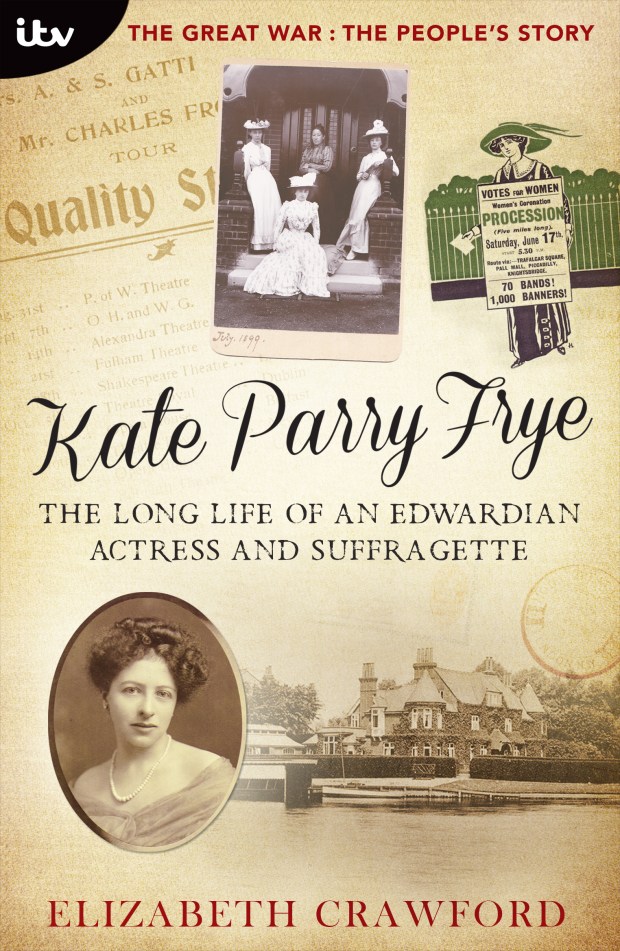
2 Comments

Kate Frye’s Diary: War: 7 August 1914

TODAY’S THE DAY ITV is publishing  Kate Parry Frye: The Long Life of an Edwardian Actress and Suffragette.  Based on her prodigious diary, this e-book is my account of Kate Frye’s life and is a tie-in with the forthcoming ITV series ‘The Great War: The People’s Story’, in which Romola Garai plays Kate. For details of the TV series and its accompanying books see here. The first episode of the series can be seen on ITV at 9pm on Sunday 10 August – I think Kate makes her entrance in Episode 2 – 17 August.

Leading up to publication I’ve shared with you some entries from Kate’s diary from the month before the outbreak of war. Today’s in the last in this series. Writing up her diary in her miserable rented room in Worthing on 7 August 1914 Kate could not have thought – even in her wildest dreams – and she certainly did on occasion allow herself wild dreams of fame – that one hundred years later YOU would be able to read her life story.

To discover more about the entirety of Kate’s life – her upbringing, her involvement with the suffrage movement, her London flats, her life in a Buckinghamshire hamlet, her love of the theatre, her times as an actress, her efforts as a writer, her life on the Home Front during two world wars, her involvement with politics – and her view of the world from the 1890s until October 1958  – download the e-book – £4.99 – from iTunes – http://bit.ly/PSeBKPFITVal. It will also be available  -today –  any moment now – on Amazon.


Kate

Through her day-to-day experience as recorded in her diary we can see how the war stole up on one Everywoman. Kate Frye was at this time 36 years old, living in a room at 49 Claverton Street in Pimlico and working in the Knightsbridge headquarters of the New Constitutional Society for Women’s Suffrage. It was now nine years since she had become engaged to (minor) actor John Collins. Her father died in March 1914 and her mother and sister, Agnes, now all but penniless, are living in rented rooms in Worthing. For the previous few weeks Kate’s fiancé, John Collins, had been renting  a room in another house in Claverton Street but he has now left for the West Country, to take up a position with a touring repertory company. Kate is feeling rather bereft – but has now begun her summer holiday, staying with her mother and sister in Worthing.

‘Friday August 7th 1914

News of British steamer – the Queen Amphion – having been sunk by a German mine – some of them saved, but many including some German prisoners blown to bits. Nothing else official. Rumours of course of all kinds – some to make one’s heart ache. But the admiration of the World for plucky Belgium. A lovely day. Up and did my room – our landlady is so disorganized it is the only way of getting it done before night. Jobs.

Mother went out and did the shopping then I took Mickie out to the Beach 12.30 to 1. Had a Telegram from John when I got in asking me to meet him in London tomorrow. So after lunch I went off to find out about trains and send the answer – telling him to let me know where to meet.

Then on the Parade for a miserable walk until 4.45. Jobs in the evening and sat talking to Agnes. Mother out in the evening. I did not go but sat upstairs. Agnes still in bed and very weak. I felt dead tired. After supper there was a wild rumour so I rushed out to get a later paper. The Germans have asked for an Armistice at Liege. It says they have 25,000 dead and wounded. It seems impossible. The wonderful German army. There could only be an excuse for the Kaiser taking his country to War, and that would be that his army is invincible – that nothing could vanquish it and that he is prepared to conquer Europe. If not the man must be a fool.’ 

And with that decisive opinion we take our leave of Kate – at least for the time being.

To read in detail about Kate’s involvement in the women’s suffrage campaign – in a beautifully-produced, highly illustrated, conventional paper book – see  Campaigning for the Vote: Kate Parry Frye’s Suffrage Diary.

Copyright

All the articles on Woman and Her Sphere and are my copyright. An article may not be reproduced in any medium without my permission and full acknowledgement. You are welcome to cite or quote from an article provided you give full acknowledgement.


Leave a comment

Kate Frye’s Diary: War: 6 August 1914

Tomorrow – 7 August 2014 – ITV will publish an e-book, Kate Parry Frye: The Long Life of an Edwardian Actress and Suffragette.  Based on her prodigious diary, this is my account of Kate Frye’s life and is a tie-in with the forthcoming ITV series ‘The Great War: The People’s Story’, in which Romola Garai plays Kate. For details of the TV series and its accompanying books see here.

To discover more about the entirety of Kate’s life – her upbringing, her involvement with the suffrage movement, her marriage, her London flats, her life in a Buckinghamshire hamlet, her love of the theatre, her times as an actress, her efforts as a writer, her life on the Home Front during two world wars, her involvement with politics – and her view of the world from the 1890s until October 1958  – download the e-book – £4.99 – from iTunes – http://bit.ly/PSeBKPFITVal. or  £4.99 from Amazon.

KateAs a lead-up to publication I thought I’d share with you some entries from Kate’s diary from the month before the outbreak of war. Through her day-to-day experience we can see how the war stole up on one Everywoman. Kate was at this time 36 years old, living in a room at 49 Claverton Street in Pimlico and working in the Knightsbridge headquarters of the New Constitutional Society for Women’s Suffrage. It was now nine years since she had become engaged to (minor) actor John Collins. Her father died in March 1914 and her mother and sister, Agnes, now all but penniless, are living in rented rooms in Worthing. For the previous few weeks Kate’s fiancé, John Collins, had been renting  a room in another house in Claverton Street but he has now left for the West Country, to take up a position with a touring repertory company. Kate is feeling rather bereft – but has now begun her summer holiday, staying with her mother and sister in Worthing.

Thursday August 6th 1914

A fearful wind all day. Up late and household jobs seeing after Agnes etc – out at 12 with dear love, bought a paper and sat in a shelter reading it until 1. There is very little official news, but I think there is no doubt they are arranging for an expeditionary force to go to help France and Belgium. Germany seems ruthlessly violating every treaty that was made and will soon end by not having a single friend in Europe or elsewhere. The Belgians area making a most spirited and heroic defence of their forts – and so far the Germans have had a set back which could never have calculated upon. They thought the Belgians would let them calmly walk through their country to attack France. A nice sense of honour  they must have got themselves. We have the sinking of a German mine layer to our credit.

The reading of the paper and rushing out for the latest Editions has become a vice with me, but I can’t keep away from them. Read in the afternoon, and who should arrive but Stella Richardson at 3.30 till 4.45 and had tea with us. But I felt in no mood for her with her cheap opinions. I am afraid I flared out at her. Agnes was of course in bed all day, said she felt a bit better.

I had a card from John – he has his orders – has to report himself at Shoeburyness on Sunday. Oh dear!!! A letter from Constance full of War news – their men being called up – the younger generation volunteering etc – and Jack Gilbey off to the front. That pretty gay young lad. What a responsibility the Kaiser has taken upon himself to be sure. Oh if only someone could get at him and his precious son and do for them. John thinks banishment to Bacup the best punishment – we want to get him here and hammer him all over beginning with his feet. I have heard someone suggest cutting his head off and making it into sausages for the Germans to eat – and that she would willingly turn the handle. I wonder what history will make of him?

John's card_0001

Johns's card, written on Wed 4 Aug and posted on 5 August from Exeter, where he was playing with a touring theatre company

Johns’s card, written on Wed 4 August and posted on 5 August from Exeter, where he was playing with a touring theatre company

It was ironic that Stella Richardson should choose this moment to call. She was very much a representative of the ‘gay and reckless’ life that Kate had once enjoyed. You will be able to read about Stella – and her husband – and their relationship with Kate – in Kate Parry Frye: the long life of an Edwardian actress and suffragette.

Kate’s diary is certainly a faithful record of events. On the Today programme this morning a naval historian mentioned the sinking of that mine layer as being one of the first naval actions of the War.Moreover,  I think it’s interesting that on a day such as this – with no knowledge of what lies ahead (perhaps, despite what John predicts, the war will be over by Christmas) – that Kate thinks, however fleetingly, in terms of the Kaiser’s place in history. While concerning herself with the quotidian, she is well able to appreciate that hers is but one moment in time. It is this self-awareness that gives the diary a measure of importance as a document of social history.

Copyright

All the articles on Woman and Her Sphere and are my copyright. An article may not be reproduced in any medium without my permission and full acknowledgement. You are welcome to cite or quote from an article provided you give full acknowledgement.
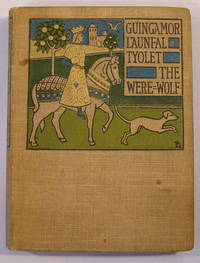
 

Leave a comment

Kate Frye’s Diary: War: 5 August 1914

On 7 August 2014 ITV will publish an e-book, Kate Parry Frye: The Long Life of an Edwardian Actress and Suffragette.  Based on her prodigious diary, this is my account of Kate Frye’s life and is a tie-in with the forthcoming ITV series ‘The Great War: The People’s Story’, in which Romola Garai plays Kate. For details of the TV series and its accompanying books see here.

For ITunes preview of the book see here.

KateAs a lead-up to publication I thought I’d share with you some entries from Kate’s diary from the month before the outbreak of war. Through her day-to-day experience we can see how the war stole up on one Everywoman. Kate was at this time 36 years old, living in a room at 49 Claverton Street in Pimlico and working in the Knightsbridge headquarters of the New Constitutional Society for Women’s Suffrage. It was now nine years since she had become engaged to (minor) actor John Collins. Her father died in March 1914 and her mother and sister, Agnes, now all but penniless, are living in rented rooms in Worthing. For the previous few weeks Kate’s fiancé, John Collins, had been renting  a room in another house in Claverton Street but he has now left for the West Country, to take up a position with a touring repertory company. Kate is feeling rather bereft – but has now begun her summer holiday, staying with her mother and sister in Worthing.

‘Wednesday 5th August 1914

Agnes in bed. I had slept in the dark hole and had a fearful night with the cats tramping in and out and fighting in the garden. I tidied Agnes and the doctor – Dr Hudson – came soon after 10. He didn’t say much but keep her in bed – no solid food – probably catarrh of the stomach and a chill – some inflammation. He was nice.

I had begun to think Mother would not have a comfortable journey to Wooburn as the government has taken over all railways and so many men are travelling to join their regiments – all reserves and Territorials called out – and she didn’t feel inclined to go with Agnes so seedy. I went up to the station to inquire and found as far as they knew trains were running fairly smoothly but they could not guarantee anything.

So I came back and she decided not to go – so Mick and I went off again to send a Telegram to Constance. They would not change a £5 note at the Post Office. Wrote some letters and then read all afternoon. A stroll in the evening – feeling utterly miserable. Heard again from John – has not had his orders yet but they must be on their way. England Mobilizing!!! What a thought. Could get to nothing that required concentration of thought – so greased Dear Love all the evening. A strange occupation with England going to War – but like life.’

Copyright

All the articles on Woman and Her Sphere and are my copyright. An article may not be reproduced in any medium without my permission and full acknowledgement. You are welcome to cite or quote from an article provided you give full acknowledgement.
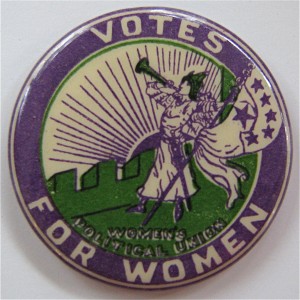
Leave a comment

Kate Frye’s Diary: War: 4 August 1914: And What The War Held For My Family

On 7 August 2014 ITV will publish an e-book, Kate Parry Frye: The Long Life of an Edwardian Actress and Suffragette.  Based on her prodigious diary, this is my account of Kate Frye’s life and is a tie-in with the forthcoming ITV series ‘The Great War: The People’s Story’, in which Romola Garai plays Kate. For details of the TV series and its accompanying books see here.

To discover more about the entirety of Kate’s life – her upbringing, her involvement with the suffrage movement, her marriage, her London flats, her life in a Buckinghamshire hamlet, her love of the theatre, her times as an actress, her efforts as a writer, her life on the Home Front during two world wars, her involvement with politics – and her view of the world from the 1890s until October 1958  – download the e-book – £4.99 – from iTunes – http://bit.ly/PSeBKPFITVal. or  £4.99 from Amazon.

Kate Frye c 1906

As a lead-up to publication I thought I’d share with you some entries from Kate’s diary from the month before the outbreak of war. Through her day-to-day experience we can see how the war stole up on one Everywoman. Kate was at this time 36 years old, living in a room at 49 Claverton Street in Pimlico and working in the Knightsbridge headquarters of the New Constitutional Society for Women’s Suffrage. It was now nine years since she had become engaged to (minor) actor John Collins. Her father died in March 1914 and her mother and sister, Agnes, now all but penniless, are living in rented rooms in Worthing. For the previous few weeks Kate’s fiancé, John Collins, had been renting  a room in another house in Claverton Street but he has now left for the West Country, to take up a position with a touring repertory company. Kate is feeling rather bereft – but has now begun her summer holiday, staying with her mother and sister in Worthing.

Tuesday August 4th 1914

A beautiful day as regards weather. Well it is settled England is to go in with France to protect her and Belgium. What a slap in the face for Germany !!! And as Italy won’t fight with Germany and Austria that is another set back. Germany expects to be allowed to walk over anywhere just as she pleases. What a brutal country – and what a Kaiser!!!

A letter from John from Exeter saying he is expecting a letter every minute giving him instructions to join his Unit. He writes in very low spirits. I think South Africa was enough for him. Agnes said she felt very ill – so I got up and arranged the room and got her up to my room and Mother went out for the doctor. He wasn’t in so she left a note. Agnes seemed better and not so low spirited when I had her in a cheerful room, but oh dear I don’t want the work of it. I feel so tired myself and disagreeable and overwrought I want to shriek.

I went out 12 to 1 with ‘Dear Love’. Read papers all the afternoon, writing and needlework in the evening waiting for the doctor – then as he didn’t come I went round and asked him to come early tomorrow morning if not tonight. He was still out so did not turn up.

This entry from Kate’s diary speaks for itself. That the day’s events – both national and domestic -have left her tired, disagreeable and overwrought seems entirely natural. Who wouldn’t want to shriek?

But what of those who did not keep diaries? Perhaps I’ll take the opportunity on this commemorative day to tell briefly how the War affected one other small family.

My mother, Christmas 1914. On the reverse of this postcard is written 'With Best Wishes for a Merry Xmas From Meg, Tom and the 'Wee Un'.

My mother, Christmas 1914. On the reverse of this postcard is written ‘With Best Wishes for a Merry Xmas From Meg, Tom and the ‘Wee Un’.

On 4 August 1914 my mother, Margaret Wallace, born on 5 October 1913, was one day short of ten months old. She was living with her parents in Edinburgh where her father, Thomas Wallace, was a cashier in a brewery. On 2 December 1915, a couple of months after her second birthday, he joined up, aged 27.  He qualified as a signaller and telephonist (First class signalling certificate )with the Royal Garrison Artillery, was mobilized on 17 August 1916, setting sail from Plymouth for France.

Thomas Livingston Wallace

Thomas Livingston Wallace

He served in France  until November 1917 when the 289th Siege Battery was redeployed  to northern Italy. I have read 289 Siege Battery’s War Diary (held in the National Archives -WO 95/4205 289) which covers the period from Dec 1917 to May 1918 and gives a very interesting picture of army life up in the mountains above Vicenza. The officers seem to have enjoyed reasonably regular short breaks, allowing them visits to Rome.

Thomas Wallace’s army record seems uneventful. On 22 March 1918 he was admonished by the C.O. for turning up 85 minutes late to 9pm Roll Call, so I hope he had been having some fun. I doubt he ever got to Rome. On 19 April he was awarded First Class Proficiency Pay of ‘6d per diem’ and on 17 May was sent on a ‘Pigeon Course’ at General Headquarters, rejoining his Battery a week later. Three weeks later,  on 15 June, during the first day of the battle of Asiago he was killed. Army records show that his effects – comprising photos, 21shillings, metal wrist watch (broken) and signaller’s certificate – were returned to his widow, my grandmother.

The story handed down in the family ran something along the lines that, as a signaller, Thomas Wallace had been alerted to the fact that the Austrians were about to make a surprise attack, that communications had been disrupted and that he was relaying this information by travelling down the Line in person when he was killed. One is naturally very wary of ‘family’ stories, knowing full well how they get corrupted in the telling  but in records held in the National Archives, I did read, in a report of the battle of 15 June,

“289 Siege battery detached and section from them to engage suitable targets among the enemy’s advancing infantry

10.15 Runner and motor cyclists used because lines cut to brigade headquarters

Casualties in Brigade: 1 officer and 4 other ranks killed.’

The report of course doesn’t name the ‘other ranks’ but I wondered if Gunner Thomas Wallace was not one of those men.

He is buried at Magnaboschi Cemetery, a lovely tranquil spot, which when we visited some years ago we approached on foot through meadows. A fair proportion of the men buried in this small cemetery were also killed on 15 June 1918. The War Graves Commission information for Thomas Wallace is correct, whereas that created by the War Office is careless enough to have him killed in France. It just shows that one should never trust even the most official of records without corroborating evidence. Some years ago I did manage to get his entry corrected in the Roll of Honour of the Royal Garrison Artillery, contained in Scottish National War Memorial in Edinburgh Castle. Wasn’t it just typical, I thought, when you know something about anything ‘They’ would get it wrong.


Thomas WallaceThat cemetery was a world away from the life my grandmother knew – the villages and small towns of Fife. I doubt she ever saw a photograph of his grave. She never seemed to recover from his death. Life on a war widow’s pension was a struggle. She kept all the letters he sent from the War – and when I was about 12 years old I was allowed to read one or two. I particularly remember one that described his crossing of the Lombardy Plain on the way to Italy. Alas, those letters disappeared around the time of her death in a nursing home in the early 1960s.

My widowed grandmother, with my mother and her brother, in the doorway of their Falkland cottage

My widowed grandmother, with my mother and her brother, in the doorway of their Falkland cottage

Like so many other children of their generation my mother and her brother, who was born in December 1917, grew up without a father. That was all they had ever known.

My mother in her University of St Andrews graduation gown

My mother in her University of St Andrews graduation gown

What were that young couple saying to each other as they discussed the news of War in their Edinburgh tenement  on 4 August 1914?  Until now they had surely been more content with life than had Kate Frye. Did they sense the cataclysm awaiting them? Alas, however well one may understand the situation of those close by ties of blood, without a written record it is impossible to know them in the way that a diarist – such as Kate – has determined that we should know her. It is  Kate’s mood that I feel still reverberating this centennial Fourth of August.


Incidentally, although Thomas Wallace may not have seen much more of Italy than the Lombardy Plain and the Dolomites, one of his great-granddaughters is now exceptionally well-acquainted with Rome – find her at Understanding Rome. Isn’t it remarkable the pattern Life makes?

For more about Kate Frye see Campaigning for the Vote: Kate Parry Frye’s Suffrage Diary.

Copyright

All the articles on Woman and Her Sphere and are my copyright. An article may not be reproduced in any medium without my permission and full acknowledgement. You are welcome to cite or quote from an article provided you give full acknowledgement.
, , ,

1 Comment

Kate Frye’s Diary: The Lead-Up To War: 3 August 1914

On 7 August 2014 ITV will publish an e-book, Kate Parry Frye: The Long Life of an Edwardian Actress and Suffragette.  Based on her prodigious diary, this is my account of Kate Frye’s life and is a tie-in with the forthcoming ITV series ‘The Great War: The People’s Story’, in which Romola Garai plays Kate. 

To discover more about the entirety of Kate’s life – her upbringing, her involvement with the suffrage movement, her marriage, her London flats, her life in a Buckinghamshire hamlet, her love of the theatre, her times as an actress, her efforts as a writer, her life on the Home Front during two world wars, her involvement with politics – and her view of the world from the 1890s until October 1958  – download the e-book – £4.99 – from iTunes – http://bit.ly/PSeBKPFITVal. or  £4.99 from Amazon.

KateAs a lead-up to publication I thought I’d share with you some entries from Kate’s diary from the month before the outbreak of war. Through her day-to-day experience we can see how the war stole up on one Everywoman. Kate was at this time 36 years old, living in a room at 49 Claverton Street in Pimlico and working in the Knightsbridge headquarters of the New Constitutional Society for Women’s Suffrage. It was now nine years since she had become engaged to (minor) actor John Collins. Her father died in March 1914 and her mother and sister, Agnes, now all but penniless, are living in rented rooms in Worthing. For the previous few weeks Kate’s fiancé, John Collins, had been renting  a room in another house in Claverton Street but he has now left for the West Country, to take up a position with a touring repertory company. Kate is feeling rather bereft.

Kate has just begun her summer holiday – staying with her mother and sister in their rented rooms in Worthing.

Monday August 3rd 1914

I think the Blackest Bank Holiday that the world has ever known. What an appalling day – the most dire and awful depressio over everyone – like a pall shutting out the idea of holiday – jollity, sunshine and air – everything dead and dumb and yet one’s nerves turned up to a frightful pitch.

A European War and England must be drawn in. It is all rushing upon us now – a huge welter of realisation of what we are in for – what our navy means to us, and what the machines of death will bring to innocent men and their wives and families.

I am all for peace – always for peace, war is too repulsive, but I am for the honour of England too – and come what may we must link ourselves with France and help keep off the aggressive – brutal – nation that is at her doors. What an awful day. I shall never forget it.

Agnes in bed very seedy in that miserable dark hole of a room – would not even have the blind up all day. I went out in the morning and evening for strolls – not a smile on the face of anyone one met – simply a grim, hard, and quiet manner, but terror at our hearts. What will the war mean towards us?

Read the papers all the afternoon. The Bank Holidays are to continue for 3 more days to let the staff get things into order and issue £1 & 10/- notes to make up for the shortage of gold. Some people are getting panic stricken – taking out their money. Then some people are buying up huge quantities of food stuffs and stocking their houses as for a siege. How mean and beastly of them – the people with money trying to get some advantage over the poor who cannot hoard – and of course creating an artificial demand and raising prices needlessly. One lady bought 18 hams – besides a huge amount of other goods – some people giving orders of £75. I hope their foodstuffs will be chasing them round the house before they can eat it. 

Travellers are getting stranded in Austria and Germany where they are mobilizing and using the railways for that purpose so that people cannot get home. Oh dear – oh dear. It’s awful.

I did not go out after tea but greased Mickie’s skin for 2 hours. He is in an awful state. I brought a small pot of my stock of grease when we left the Plat last September.

Well, Kate’s words speak for themselves. Hers was the experience of most of Britain – a month ago she would never have dreamed that the country was about to enter a European War. Then, on 3 July,after a morning of canvassing for ‘votes for women’ in Peckham,  she and John had pottered down to Worthing for a short weekend-break.  As unremarkable a couple of days by the seaside as one could imagine. Here she was in Worthing again – and the world she had known was turning upside down.

Worthing Parade, 1914

Worthing Parade, 1914

Do look at this article on Worthing History  to read about the enticing range of entertainments Worthing had to offer on that Bank Holiday Monday while Agnes, typically, lay in her ‘dark hole of a room.’ Kate, although she may not have gone to listen to the illuminated concert on the Parade, at least went out to sample Worthing’s mood and when at home soaked up what information there was in the papers. Knowing  how near to penury her family now  was, we can recognise why she took a very personal interest in the reported selfishness of the wealthy.

NOW PUBLISHED (7 August) Kate Parry Frye: the long life of an Edwardian actress and suffragette download the e-book – £4.99 – from iTunes – http://bit.ly/PSeBKPFITVal. or  £5. 14 from Amazon.

See also Campaigning for the Vote: Kate Parry Frye’s Suffrage Diary.

Copyright

All the articles on Woman and Her Sphere and are my copyright. An article may not be reproduced in any medium without my permission and full acknowledgement. You are welcome to cite or quote from an article provided you give full acknowledgement.

Leave a comment

Kate Frye’s Diary: The Lead-Up To War: 2 August 1914

On 7 August 2014 ITV will publish an e-book, Kate Parry Frye: The Long Life of an Edwardian Actress and Suffragette.  Based on her prodigious diary, this is my account of Kate Frye’s life and is a tie-in with the forthcoming ITV series ‘The Great War: The People’s Story’, in which Romola Garai plays Kate. 

To discover more about the entirety of Kate’s life – her upbringing, her involvement with the suffrage movement, her marriage, her London flats, her life in a Buckinghamshire hamlet, her love of the theatre, her times as an actress, her efforts as a writer, her life on the Home Front during two world wars, her involvement with politics – and her view of the world from the 1890s until October 1958  – download the e-book – £4.99 – from iTunes – http://bit.ly/PSeBKPFITVal. or  £4.99 from Amazon.

KateAs a lead-up to publication I thought I’d share with you some entries from Kate’s diary from the month before the outbreak of war. Through her day-to-day experience we can see how the war stole up on one Everywoman. Kate was at this time 36 years old, living in a room at 49 Claverton Street in Pimlico and working in the Knightsbridge headquarters of the New Constitutional Society for Women’s Suffrage. It was now nine years since she had become engaged to (minor) actor John Collins. Her father died in March 1914 and her mother and sister, Agnes, now all but penniless, are living in rented rooms in Worthing. For the previous few weeks Kate’s fiancé, John Collins, had been renting  a room in another house in Claverton Street but he has now left for the West Country, to take up a position with a touring repertory company. Kate is feeling rather bereft.

Kate has just begun her summer holiday – staying with her mother and sister in their rented rooms in Worthing.

Sunday August 2nd 1914

Not out all day as furious wind, everything jangling and banging. I felt seedy and got up late. Agnes too was very queer – says she knows she is going to be ill. Read and dozed in the afternoon and did some writing in the evening.

Germany has declared war against Russia for interfering against Austria over Servia – and against France!!! Goodness alone knows why unless this is what she has been preparing for and planning for years. England must be drawn in – I don’t see in honour what else we can do. John may be called to a Fort at any minute. Oh the whole idea frightens me.

John Collins

John Collins

John Collins, had been involved with the army all his life, despite being the most un-warlike of men. The Collins family had long  been leading members of Knaresborough (Yorkshire) society. John’s father, however, had been a younger son, had not inherited any family wealth and had gone into the army, becoming a colonel.  In 1900, after a brief spell as a student at Cambridge, John had served out in South Africa as a private  with the Yeomanry Field Hospital, Bearers Company during the Boer War.  Ever since returning he had worked in the theatre while continuing as a member of, first, a Volunteer brigade and then as an assiduous member of the Territorial Army. His theatrical career had been punctuated by length periods spent at training camps – on Salisbury Plain and at coastal forts such as Shoeburyness. So we can see why the thought of war caused Kate a particular fear.

See also Campaigning for the Vote: Kate Parry Frye’s Suffrage Diary.

Copyright

All the articles on Woman and Her Sphere and are my copyright. An article may not be reproduced in any medium without my permission and full acknowledgement. You are welcome to cite or quote from an article provided you give full acknowledgement.

,

Leave a comment

Kate Frye’s Diary: The Lead-Up To War: 1 August 1914

On 7 August 2014 ITV will publish an e-book, Kate Parry Frye: The Long Life of an Edwardian Actress and Suffragette.  Based on her prodigious diary, this is my account of Kate Frye’s life and is a tie-in with the forthcoming ITV series ‘The Great War: The People’s Story’, in which Romola Garai plays Kate. 

To discover more about the entirety of Kate’s life – her upbringing, her involvement with the suffrage movement, her marriage, her London flats, her life in a Buckinghamshire hamlet, her love of the theatre, her times as an actress, her efforts as a writer, her life on the Home Front during two world wars, her involvement with politics – and her view of the world from the 1890s until October 1958  – download the e-book – £4.99 – from iTunes – http://bit.ly/PSeBKPFITVal. or  £4.99 from Amazon.

KateAs a lead-up to publication I thought I’d share with you some entries from Kate’s diary from the month before the outbreak of war. Through her day-to-day experience we can see how the war stole up on one Everywoman. Kate was at this time 36 years old, living in a room at 49 Claverton Street in Pimlico and working in the Knightsbridge headquarters of the New Constitutional Society for Women’s Suffrage. It was now nine years since she had become engaged to (minor) actor John Collins. Her father died in March 1914 and her mother and sister, Agnes, now all but penniless, are living in rented rooms in Worthing. For the previous few weeks Kate’s fiancé, John Collins, had been renting  a room in another house in Claverton Street but he has now left for the West Country, to take up a position with a touring repertory company. Kate is feeling rather bereft.

Kate has just begun her summer holiday – staying with her mother and sister in their rented rooms in Worthing.

Saturday August 1st 1914

Very warm. Up late. Agnes, Mickie and I to the Beach 12 to 1. Work in the afternoon. Rain in the evening so I went out by myself to the Library. But I can’t read – there is too much in the papers, and all this uncertainty makes one restless.

This must be one of the shortest entries in Kate’s entire life-time of diaries. As such, as she says ,it is an indication of the impossibility of concentrating on anything other than the hitherto inconceivable fact that a European war would not now be averted. It was merely a matter of waiting to see which countries would be involved.

Kate with Mickie in happier days - at The Plat

Kate with Mickie in happier days – beside the river Thames at The Plat, Bourne End

See also Campaigning for the Vote: Kate Parry Frye’s Suffrage Diary.

Copyright

All the articles on Woman and Her Sphere and are my copyright. An article may not be reproduced in any medium without my permission and full acknowledgement. You are welcome to cite or quote from an article provided you give full acknowledgement.
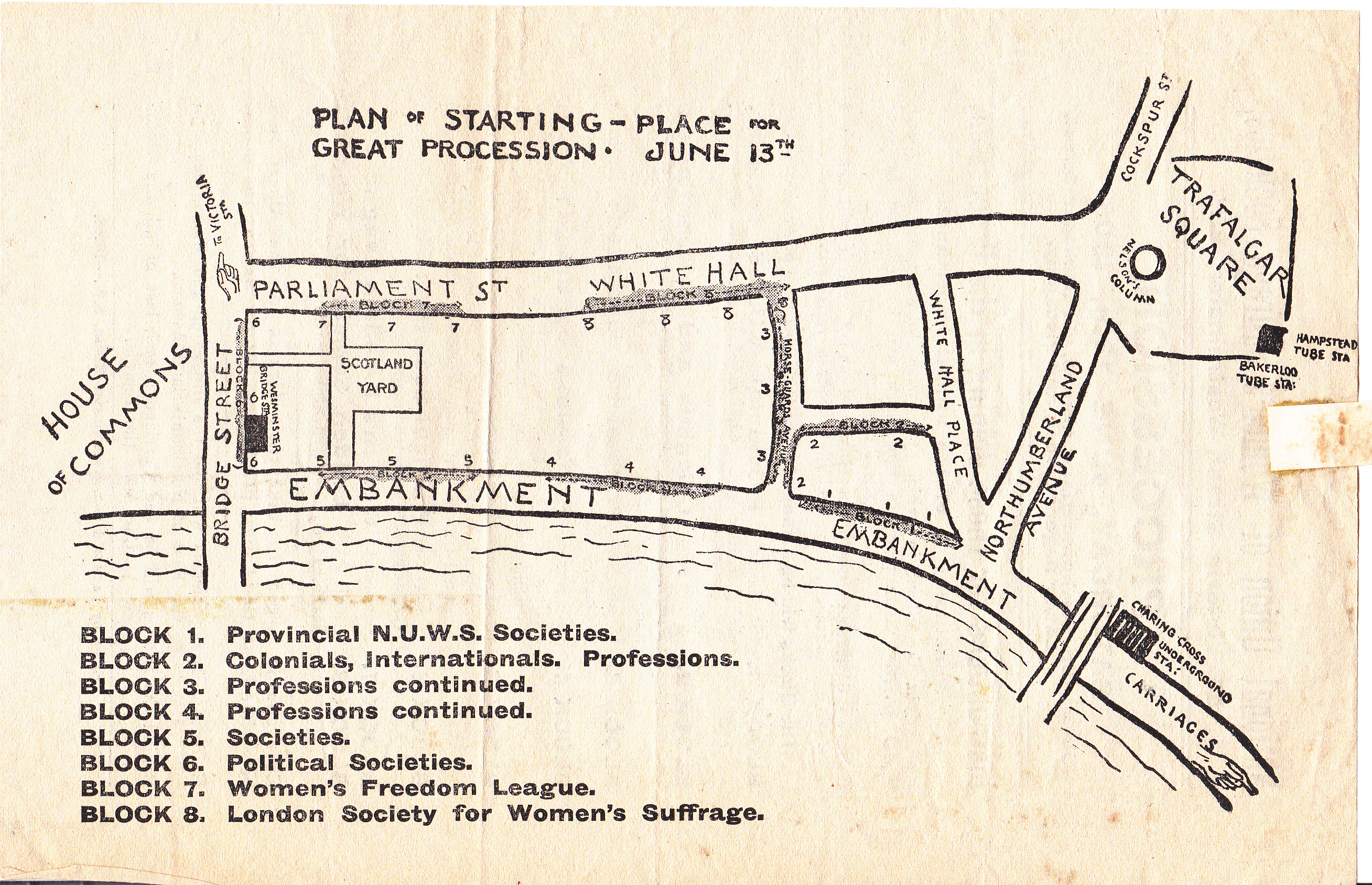
,

Leave a comment

Kate Frye’s Diary: The Lead-Up To War: 31 July 1914

On 7 August 2014 ITV will publish an e-book, Kate Parry Frye: The Long Life of an Edwardian Actress and Suffragette.  Based on her prodigious diary, this is my account of Kate Frye’s life and is a tie-in with the forthcoming ITV series ‘The Great War: The People’s Story’, in which Romola Garai plays Kate.

To discover more about the entirety of Kate’s life – her upbringing, her involvement with the suffrage movement, her marriage, her London flats, her life in a Buckinghamshire hamlet, her love of the theatre, her times as an actress, her efforts as a writer, her life on the Home Front during two world wars, her involvement with politics – and her view of the world from the 1890s until October 1958  – download the e-book – £4.99 – from iTunes – http://bit.ly/PSeBKPFITVal. or  £4.99 from Amazon.

KateAs a lead-up to publication I thought I’d share with you some entries from Kate’s diary from the month before the outbreak of war. Through her day-to-day experience we can see how the war stole up on one Everywoman. Kate was at this time 36 years old, living in a room at 49 Claverton Street in Pimlico and working in the Knightsbridge headquarters of the New Constitutional Society for Women’s Suffrage. It was now nine years since she had become engaged to (minor) actor John Collins. Her father died in March 1914 and her mother and sister, Agnes, now all but penniless, are living in rented rooms in Worthing. For the previous few weeks Kate’s fiancé, John Collins, had been renting  a room in another house in Claverton Street but he has now left for the West Country, to take up a position with a touring repertory company. Kate is feeling rather bereft.

Kate has just begun her summer holiday – staying with her mother and sister in their rented rooms in Worthing.

Friday July 31st 1914

Up late – felt very weary. Mother very upset and twitchy. Her depression is because we had had letters from the Lawyer about the old man’s affairs and it seems years ago he borrowed £500 from Aunt Agnes and since 1911 has paid no interest. It’s too appalling – no wonder she is upset. Surely we know the worst now – can there be any more of these horrors. It does indeed make life miserable. We could never hope to pay it off – and considering we are living on Aunt Agnes’ bounty what would be the good.

Mickie and I went and sat on the beach 11 to 1. Writing all the afternoon. Agnes and I out in the evening. Quite cool.

Frederick Frye, Kate’s father, had died four months ago. During his lifetime, even when he had lost his business and the family homes, he refused to discuss  financial affairs with his womenfolk. His wife and elder daughter were probably temperamentally unsuited to dealing with such matters, but Kate would have very much preferred to have known what was going on. As it was, ever since about 1900, they had been admonished to cut back on spending on dresses and on outings to the theatre – but had no awareness whatsoever of the dreadful state of the family finances. The fact that Frye had borrowed money from her sister – and had long ago abandoned all pretence of even paying interest on it – clearly was an appalling blow to Kate’s mother. It says a great deal for Agnes Gilbey’s generosity that they only found out about the loan from their lawyer. Aunt Agnes herself  had never mentioned it and had, indeed, offered her sister, Jenny Frye, a generous allowance when she was left destitute after her husband’s death.

This family gloom eclipsed for today any mention of the war situation in Kate’s diary. ‘Mickie’, her little dog, and ‘writing’ (I wonder what it was she was writing?) offered the only consolations.

See also Campaigning for the Vote: Kate Parry Frye’s Suffrage Diary.

Copyright

All the articles on Woman and Her Sphere and are my copyright. An article may not be reproduced in any medium without my permission and full acknowledgement. You are welcome to cite or quote from an article provided you give full acknowledgement.


Leave a comment

Kate Frye’s Diary: The Lead-Up To War: 30 July 1914

On 7 August 2014 ITV will publish an e-book, Kate Parry Frye: The Long Life of an Edwardian Actress and Suffragette.  Based on her prodigious diary, this is my account of Kate Frye’s life and is a tie-in with the forthcoming ITV series ‘The Great War: The People’s Story’, in which Romola Garai plays Kate. 

To discover more about the entirety of Kate’s life – her upbringing, her involvement with the suffrage movement, her marriage, her London flats, her life in a Buckinghamshire hamlet, her love of the theatre, her times as an actress, her efforts as a writer, her life on the Home Front during two world wars, her involvement with politics – and her view of the world from the 1890s until October 1958  – download the e-book – £4.99 – from iTunes – http://bit.ly/PSeBKPFITVal. or  £4.99 from Amazon.

KateAs a lead-up to publication I thought I’d share with you some entries from Kate’s diary from the month before the outbreak of war. Through her day-to-day experience we can see how the war stole up on one Everywoman. Kate was at this time 36 years old, living in a room at 49 Claverton Street in Pimlico and working in the Knightsbridge headquarters of the New Constitutional Society for Women’s Suffrage. It was now nine years since she had become engaged to (minor) actor John Collins. Her father died in March 1914 and her mother and sister, Agnes, now all but penniless, are living in rented rooms in Worthing. For the previous few weeks Kate’s fiancé, John Collins, had been renting  a room in another house in Claverton Street but he has now left for the West Country, to take up a position with a touring repertory company. Kate is feeling rather bereft.

Thursday July 30th 1914

The holiday that I have longed for – from the point of view of rest but know that I shall not enjoy from the point of  view of enjoyment – has come at last. It is years since I have had a holiday free from some anxiety that I can’t believe in this one much.

Up at 7. Breakfast at 8 and my man came for the luggage and got a Taxi and I left here at 9.30 – parting from the Misses Heffer in great friendliness. At Victoria it was a pandemonium. I don’t know what was the matter with the station – it couldn’t be all the holiday traffic, but I had to fight to get a Porter and to get my luggage put in the train – and we were 20 minutes late in reaching Worthing.

The journey seemed short as I had bought no end of papers to read of the Crisis – it is becoming too awfully serious for words. Home politics are clean out of it at this moment – everyone’s interest is fixed further afield. Fancy a European War at this period of our so-called civilization.

Mother met me at Worthing station looking most depressed – oh dear I am so tired of it. Agnes not well to start with. I arranged with a porter to bring my things and walked up with Mother to 10 Milton Street. ‘Dear love’ raced up the road – he was ever so pleased. Agnes does not look well. Mother is going to Wooburn on Wednesday so I am to have her room to save 2 moves. We had lunch and sat and talked. Tea at 4 then I unpacked a little bit – it’s an awful muddle being in anyone else’s room. The three of us then took a walk, supper and bed. I feel utterly tired and depressed.

Well, as Kate guessed – she – and the rest of Britain – had not picked the right year if they wanted  a quiet summer holiday untroubled by anxiety. The pandemonium at Victoria was an indication that, with the crisis in Europe mounting, people had found a sudden necessity to travel. Holiday makers from the Continent , of whom Kate had mentioned a couple of weeks ago that there appeared to be many more in London than usual, were cutting short their stay in Britain and returning home.

Waving good-bye to soldiers returning to the Front, Victoria Station 1915

Waving good-bye to soldiers returning to the Front, Victoria Station 1915. All too soon scenes such as this would be the daily routine at Victoria.

Kate had been born in 1878 and during her lifetime had  known  a Europe in the main at peace. I don’t think there was a mention in her 1913 diary of the troubles in the distant Balkans – she had been far too caught up in the suffrage struggle at home.  In the days when the Fryes were still prosperous she had spent long, languid holidays at spas in Germany and Austria  – how difficult it must have been to contemplate – at least initially -that the people she had met there were likely now to be ‘the enemy’. The war that had involved her generation had been fought in far-off South Africa  – a rather more suitably exotic stage on which to mount the clash of arms.

In the meantime it was back to the gloom of family life – such of it as remained – in rented rooms in Worthing. The ‘holiday’ element merely meant that for a month or so Kate didn’t have to go into the Office each day – or canvass for ‘Votes for Women’ around London. She obviously wasn’t expecting much in the way of pleasure – but at least would be with ‘Dear love’ – aka as ‘Mickie -, her beloved Pomeranian.

See also Campaigning for the Vote: Kate Parry Frye’s Suffrage Diary.

Copyright

All the articles on Woman and Her Sphere and are my copyright. An article may not be reproduced in any medium without my permission and full acknowledgement. You are welcome to cite or quote from an article provided you give full acknowledgement.
,

5 Comments

Kate Frye’s Diary: The Lead-Up To War: 29 July 1914

On 7 August 2014 ITV will publish an e-book, Kate Parry Frye: The Long Life of an Edwardian Actress and Suffragette.  Based on her prodigious diary, this is my account of Kate Frye’s life and is a tie-in with the forthcoming ITV series ‘The Great War: The People’s Story’. 

To discover more about the entirety of Kate’s life – her upbringing, her involvement with the suffrage movement, her marriage, her London flats, her life in a Buckinghamshire hamlet, her love of the theatre, her times as an actress, her efforts as a writer, her life on the Home Front during two world wars, her involvement with politics – and her view of the world from the 1890s until October 1958  – download the e-book – £4.99 – from iTunes – http://bit.ly/PSeBKPFITVal. or  £4.99 from Amazon.


KateAs a lead-up to publication I thought I’d share with you some entries from Kate’s diary from the month before the outbreak of war. Through her day-to-day experience we can see how the war stole up on one Everywoman. Kate was at this time 36 years old, living in a room at 49 Claverton Street in Pimlico and working in the Knightsbridge headquarters of the New Constitutional Society for Women’s Suffrage. It was now nine years since she had become engaged to (minor) actor John Collins. Her father died in March 1914 and her mother and sister, Agnes, now all but penniless, are living in rented rooms in Worthing. For the previous few weeks Kate’s fiancé, John Collins, had been renting  a room in another house in Claverton Street but he has now left for the West Country, to take up a position with a touring repertory company. Kate is feeling rather bereft.

Wednesday July 29th 1914

A busy morning of packing and cleaning and washing. I had ordered a chop so had my meal in – and [went]  out at 3. Took a coat and skirt to try and sell but no one would have it – so had to take it to the Office. Gladys was there – very important and bad tempered. How she snapped at me. Mrs Chapman came in and she was discussing the grave crisis of the War. The area is spreading. She is going to Austria – and Alexandra and Gladys too – to the Tyrol – but they will never get there if things develop.

Had tea and said good-bye to Miss Burnaby who is leaving the staff as she had a very good appointment elsewhere – and good-bye to Miss Simeon and Gladys. It seems so final somehow. I could wish I wasn’t going back. I have grown so sick of the work. In saying good-bye to Gladys she said to me ‘Please don’t make a speech’ in such a rude, aggressive manner. I tried to turn it off by saying if I were doing so it was because I had had so much practice lately, and she said ‘Oh, Yes. Mr McKillop has been in today singing your praises – saying how well you speak that you ought to be made to speak, and what a splendid organiser you are, and what a wonderful person altogether.’ So I suppose that was the trouble. I got my salary and holiday cheque and made off.

Bus to Whiteleys and shopped, tried to get rid of coat and skirt – bus to Oxford Street and strolled all round the British Museum as I remembered a shop buying off me once. No good – so I enjoyed the curio and picture shops. Walked down to the Strand – had a vile meal at Slaters there – walked to Trafalgar Square and got my 24 Pimlico bus back at 9 o’clock. I wonder when I shall stroll about London again. Finished my packing and then to bed.

How Kate must have disliked lugging an old coat and skirt around London all day – in the vain hope of selling them for a shilling or two. Especially having listened to others in the Office making plans for the kind of continental holiday she had once enjoyed – and never would again.

Kate had already had considerable experience of selling garments belonging to members of her family to a variety of ‘old clo” women – usually around Kensington – as well as jewellery – and even her parents’ old false teeth – so I imagine she had become rather inured to the associated humiliation. By ‘strolled around the British Museum’ she means, of course, the streets around the BM, rather than the Museum itself. Bloomsbury was then a centre for curio shops, second-hand bookshops and picture dealers and picture framers. It still is, to a certain extent, if one blanks out the tatty souvenir shops.

And the number 24 is still the bus that runs from Trafalgar Square to Pimlico.

See also Campaigning for the Vote: Kate Parry Frye’s Suffrage Diary.

Copyright

All the articles on Woman and Her Sphere and are my copyright. An article may not be reproduced in any medium without my permission and full acknowledgement. You are welcome to cite or quote from an article provided you give full acknowledgement.


Leave a comment

Kate Frye’s Diary: The Lead-Up To War: 28 July 1914

On 7 August 2014 ITV will publish an e-book, Kate Parry Frye: The Long Life of an Edwardian Actress and Suffragette.  Based on her prodigious diary, this is my account of Kate Frye’s life and is a tie-in with the forthcoming ITV series ‘The Great War: The People’s Story’. 

To discover more about the entirety of Kate’s life – her upbringing, her involvement with the suffrage movement, her marriage, her London flats, her life in a Buckinghamshire hamlet, her love of the theatre, her times as an actress, her efforts as a writer, her life on the Home Front during two world wars, her involvement with politics – and her view of the world from the 1890s until October 1958  – download the e-book – £4.99 – from iTunes – http://bit.ly/PSeBKPFITVal. or  £4.99 from Amazon.

KateAs a lead-up to publication I thought I’d share with you some entries from Kate’s diary from the month before the outbreak of war. Through her day-to-day experience we can see how the war stole up on one Everywoman. Kate was at this time 36 years old, living in a room at 49 Claverton Street in Pimlico and working in the Knightsbridge headquarters of the New Constitutional Society for Women’s Suffrage. It was now nine years since she had become engaged to (minor) actor John Collins. Her father died in March 1914 and her mother and sister, Agnes, now all but penniless, are living in rented rooms in Worthing. For the previous few weeks Kate’s fiancé, John Collins, had been renting  a room in another house in Claverton Street but he has now left for the West Country, to take up a position with a touring repertory company. Kate is feeling rather bereft.

Tuesday July 28th 1914

Jobs of writing and tidying. Out at 2. Lunch at Slaters. Then to Office to work until 5.30. Bus to Victoria – shopping on my way back and a little unfurnished room hunting. Found some very nices ones in a respectable house in Charlwood Place. In 7.30. Meal at 8. Writing till bed at 10.30

A nondescript day – no mention of what she was reading in the newspaper of trouble in Ireland and Europe. But interesting to learn that Kate was contemplating taking an unfurnished room – something more permanent than her Claverton Street digs. All the furniture she possessed was in storage at Whiteleys. She had saved what she considered belonged to her from being auctioned the previous year when the family home, The Plat, and all its contents went under the hammer. In her diary she lovingly listed these few chairs, rugs, bookcases etc. It was little enough – but she longed to have a home of her own and her own furniture about her. Charlwood Place looks very appealing – and could almost be considered Belgravia rather than Pimlico – which would certainly have appealed to Kate. On occasion she had felt unable to reveal that she lived in Pimlico – then a rather declassé area.

See also Campaigning for the Vote: Kate Parry Frye’s Suffrage Diary. Copyright

All the articles on Woman and Her Sphere and are my copyright. An article may not be reproduced in any medium without my permission and full acknowledgement. You are welcome to cite or quote from an article provided you give full acknowledgement.


Leave a comment

Kate Frye’s Diary: The Lead-Up To War: 27 July 1914

On 7 August 2014 ITV published an e-book, Kate Parry Frye: The Long Life of an Edwardian Actress and Suffragette.  Based on her prodigious diary, this is my account of Kate Frye’s life and is a tie-in with the  ITV series ‘The Great War: The People’s Story’. For details of the TV series and its accompanying books see here.

As a lead-up to publication I shared some entries from Kate’s diary from the month before the outbreak of war. Through her day-to-day experience we can see how the war stole up on one Everywoman. Kate was at this time 36 years old, living in a room at 49 Claverton Street in Pimlico and working in the Knightsbridge headquarters of the New Constitutional Society for Women’s Suffrage. It was now nine years since she had become engaged to (minor) actor John Collins. Her father died in March 1914 and her mother and sister, Agnes, now all but penniless, are living in rented rooms in Worthing. For the previous few weeks Kate’s fiancé, John Collins, had been renting  a room in another house in Claverton Street but he has now left for the West Country, to take up a position with a touring repertory company. Kate is feeling rather bereft.

Monday July 27th 1914 [Kate has been staying for the weekend at the Kennels, a house in which her aunt Agnes Gilbey was living on the Gilbey estate at Wooburn]

Breakfast 8.30. Put my things together, had a talk to Mrs Wootten on the Telephone at The Plat then with Constance walked to the Manor Farm and she showed me all over it. It is a dream of a place, and the garden is perfect. Then she saw me off by the 11 o’clock train to Paddington.

At Maidenhead Mrs Burls was seeing her daughter Olga and ‘Emma Murry’ off and they got in my carriage – she recognised me so I had to chat. I was very absorbed in the paper. Great and serious news – a terrible conflict between the Nationalist Volunteers in Dublin and the Police – 3 shot dead and many wounded. Will this mean an Election? Things seem really serious in Ireland – and then the even more serious continental news.

By underground to Victoria and bus to Claverton St. Just unpacked my things and then bust to Victoria – lunch at Slaters and met Mrs Chapman at 3 o’clock and we went to Peckham together canvassing. We kept on until about 5.30 – having the usual sort of experiences – then tea together in an ABC and I saw Mrs Chapman off. I did some more canvassing, then bought an evening paper and went into a Lyons and ate a macaroon to read it. There is going to be serious war and Russia and Germany are beginning to fall out now. Oh dear.

To the Triangle at 7.45 – and our meeting at 8. I took the Chair and Miss Hawley and Miss D’Oyly were the speakers. I got the names of 10 sympathisers and we had  a nice meeting but did not keep it going so long as ususal. I was back home at 10.15. had some supper of a kind and then to bed.

The significance of looking around the Wooburn Manor Farm lay in the fact that Aunt Agnes Gilbey, together with her unmarried daughter, Constance, and her widowed daughter, Katie Finch-Smith, were soon to move into this house on their estate – and remain there for the remainder of their lives. Olga Burls who sat with Kate in her railway carriage on the way back to London was then about 17 years old and, with the middle name ‘Gilbey’, was in some way related to the family. I can only guess that ‘Emma Murry, whose name was put in quotes by Kate,’ was a dog – unless, of course, she was a maid!

As we can see Kate was still – just – marginally more concerned about events in Ireland, which might trigger a General Election and thereby disrupt her planned holiday break,  than with war preparations in Europe. And, of course, Peckham still needed to hear the message – ‘Votes for Women’.

See also Campaigning for the Vote: Kate Parry Frye’s Suffrage Diary.

Copyright

All the articles on Woman and Her Sphere and are my copyright. An article may not be reproduced in any medium without my permission and full acknowledgement. You are welcome to cite or quote from an article provided you give full acknowledgement.
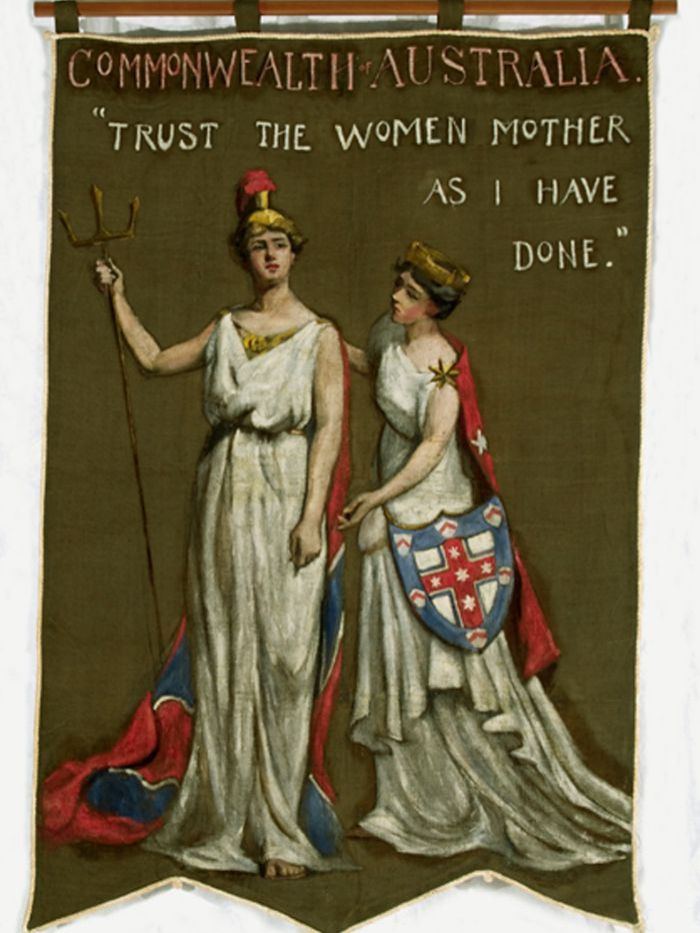
, ,

Leave a comment

Kate Frye’s Diary: The Lead-Up To War: 26 July 1914

On 7 August 2014 ITV will publish an e-book, Kate Parry Frye: The Long Life of an Edwardian Actress and Suffragette.  Based on her prodigious diary, this is my account of Kate Frye’s life and is a tie-in with the forthcoming ITV series ‘The Great War: The People’s Story’. For details of the TV series and its accompanying books see here.

KateAs a lead-up to publication I thought I’d share with you some entries from Kate’s diary from the month before the outbreak of war. Through her day-to-day experience we can see how the war stole up on one Everywoman. Kate was at this time 36 years old, living in a room at 49 Claverton Street in Pimlico and working in the Knightsbridge headquarters of the New Constitutional Society for Women’s Suffrage. It was now nine years since she had become engaged to (minor) actor John Collins. Her father died in March 1914 and her mother and sister, Agnes, now all but penniless, are living in rented rooms in Worthing. For the previous few weeks Kate’s fiancé, John Collins, had been renting  a room in another house in Claverton Street but he has now left for the West Country, to take up a position with a touring repertory company. Kate is feeling rather bereft.

Sunday, 26th July 1914 [Kate is staying for the weekend at the Kennels, a house in which her aunt Agnes Gilbey was living on the Gilbey estate at Wooburn]

A cold and showery day. I had a beautiful bath and was down to breakfast. Constance of course had been to Church but as she was not ‘feeling her best’ much to her annoyance she could not go to morning service. Aunt Agnes came downstairs and said she felt better. She stayed up until after supper. We had a fire in the drawing-room it was so chilly.

I wrote letters and chatted all the morning. Gilbert, Edith and their 3 daughters came to luncheon. A most uninteresting party – really Edith is a block. She never wrote to Mother when Daddie died – or referred to it in any way. She is horrible. Gilbert brought the news that the Stock exchange was in an awful way yesterday – in a state of collapse over the War rumours. Things are so allied nowadays that I suppose Servia and Austria make a panic everywhere – in case England is drawn in too. The ‘Chalklands’ family went off about 3.

I got ready and we went for a stroll all around the garden and on the hill. The valley did look lovely – the silver thread of the Thames running through it madee me very sad too – I cried a little. Then I sat out of doors until tea was ready, and just as we had started tea Newman’s Jack [that is Jack Gilbey, son of Newman Gilbey] – now a full blown Lieutenant and one of his younger brothers Frank arrived on a Motor Cycle. He has ridden from Aldershot and fetched his brother from Beaumont [Jesuit boarding school then at Old Windsor, Berkshire]  and came on to tea with his grandmother. They are most fascinating boys – Jack is a dear and so amusing. How well I remember the 3 in the old days Harry, Jack and Charlie. Charlie is now engaged to Lettice Watney. It seems simply absurd – she may be only a year or so older, but in type and character she seems a middle aged woman. What strange marriages they make.

After the two boys had gone Constance and I hurried off to evening service at the Parish Church. Mr Unsworth preached but was not very interesting. Back and changed for supper, when I had 2 goes of everything to make up, as I told them, for going supperless tomorrow. Bed at 10.10. They really have been more than kind and though I dreaded coming I have enjoyed myself.

The description of Constance ‘not feeling her best’ – inside Kate’s inverted commas – was probably a euphemism for ‘having her period’. In Kate Parry Frye: the long life of an Edwardian actress and suffragette  I do discuss the blight that menstruation appeared to cast over the lives of Kate’s circle – but I’ve not previously come across it as a reason for not being able to go to Morning Service. Unless, of course, when 11 o’clock came Constance was actually feeling unwell.

Gilbert and Edith Gilbey lived at ‘Chalklands’, a house at Bourne End that was subsequently owned by the writer Edgar Wallace. At this stage their family comprised three daughters (one of whom, Brenda, was to become too keen a supporter of Hitler for Kate’s liking at the beginning of the Second World War), to which a son was added in 1917.  All three of Newman Gilbey’s sons, Harry, Jack and Charlie, were fortunate enough to survive the coming war – although there were casualties among their cousins, including two of the sons of Gilbert and Newman’s sister, Agnes Shaw.

A few years earlier Lettice Watney had helped Kate organize a dance in aid of funds for the London Society for Women’s Suffrage –  in the days when Kate was still a volunteer for the Cause. Lettice was exactly a year older than Charlie Gilbey; they were married in June 1915. Lettice’s ancestry is inextricably linked, back through several generations, with the Gilbey and Gold families

Gilbey - Gold wedding


In April 1892 Kate and Agnes Frye were bridesmaids at this double Gilbey/Gold wedding . Agnes, carrying yellow roses, was among Mary’s bridesmaids – Kate was among Lizzie’s bridesmaids, who were themed with pink roses.  As Agnes remarked of a Blyth/Gold marriage in 1897  ‘Are they all going to marry each other?’ I can see that this phenomenon continues down until the present day.   Kate Parry Frye: the long life of an Edwardian actress and suffragette describes the way, for good and ill, the lives of the Frye family were intertwined with that of the Gilbeys.

See also Campaigning for the Vote: Kate Parry Frye’s Suffrage Diary.

Copyright

All the articles on Woman and Her Sphere and are my copyright. An article may not be reproduced in any medium without my permission and full acknowledgement. You are welcome to cite or quote from an article provided you give full acknowledgement.
 

,

Leave a comment

Kate Frye’s Diary: The Lead-Up To War: 25 July 1914

On 7 August 2014 ITV will publish an e-book, Kate Parry Frye: The Long Life of an Edwardian Actress and Suffragette.  Based on her prodigious diary, this is my account of Kate Frye’s life and is a tie-in with the forthcoming ITV series ‘The Great War: The People’s Story’. For details of the TV series and its accompanying books see here.

Kate

As a lead-up to publication I thought I’d share with you some entries from Kate’s diary from the month before the outbreak of war. Through her day-to-day experience we can see how the war stole up on one Everywoman.

Kate was at this time 36 years old, living in a room at 49 Claverton Street in Pimlico and working in the Knightsbridge headquarters of the New Constitutional Society for Women’s Suffrage. It was now nine years since she had become engaged to (minor) actor John Collins. Her father died in March 1914 and her mother and sister, Agnes, now all but penniless, are living in rented rooms in Worthing.

For the previous few weeks Kate’s fiancé, John Collins, had been renting  a room in another house in Claverton Street but he has now left for the West Country, to take up a position with a touring repertory company. Kate is feeling rather bereft.

Saturday July 25th 1914

Up and packed – and put my things in order and left with a cardboard Dress Box as my luggage at 12.15. To Victoria by bus and to Praed Street by train – had some lunch at Lyons and then to Paddington for the 2 o’clock train to Wooburn. Met Mr Woodward – he knew me and came up and spoke to me – it is years since we met. He had not heard of Daddie’s death.

I felt so awful going to the old place – I just glued my eyes to the window – I couldn’t help it – when we came to Winter Hill and Cock Marsh and the river and then the train stopped on the Bridge and I saw the dear old ‘Plat’. It was a gorgeous day, but a very high wind and the river was lashing about and the trees swaying and there stood the house. It really seems utterly grotesque that it should be all as it is – that the others live in poky lodging and I exist on £2 per week in a dreary London Bedsitting room – sometimes it seems it cannot be.

I saw Pratt on Bourne End platform and some of the old porters but most of the faces were new and the riff raff on the Platform was the usual holiday season tripper crew. Then on to Wooburn where Constance met me with the Victoria and took me for a lovely drive before going to the Kennels. The country looks too fair for words – and the Harvest is very forward. Aunt Agnes and Constance alone at the Kennels – and Aunt Agnes in bed as she does not feel very well. I went up to see her and she was ever so cheery and bright. Then Constance and I went in the garden and I had a feed of fruit – then a wander through the woods – back and another chat with Aunt Agnes.

Changed for dinner and then a chat to Constance until ten and then bed. She sees less narrow than she did. Of course I could not speak of my work – that is Taboo – but I mentioned one or two facts concerning it – that if, as seems possible, we are in for a General Election I shall not get off next week for my holiday etc and there didn’t seems quite such a stiffening. But perhaps someone she respects has come out for Suffrage – or is it the Bishop of Kensington? I shall be sorry if I can’t get away for a rest – it won’t be a real holiday, not a success I feel sure cooped up with Mother and Agnes at Worthing and all the nagging that goes on between them – but I don’t feel I can go on with this work without a break. I have grown to loathe it.

I suppose if an Election comes I shall go through with it but I shall much fear a collapse – and fought on the Irish Question we shan’t get a look in – shan’t be listened to. Now there seems such European complications – Austria and Servia. Perhaps our domestic parliamentary quarrels will have to take a second place. The papers seem full of rumours of trouble here and elsewhere.


Bourne End Regatta 1911 - showing the railway bridge in the background and the grounds of The Plat on the left

Bourne End Regatta 1911 – showing the railway bridge in the background on which Kate’s train halted and the grounds of The Plat on the left

It is rather fitting that Kate should make her first mention of the gathering clouds over Europe – as well as the situation in Ireland – on the day on which she returns to the scene of the ‘gay and reckless’ days of her childhood and youth. When the Fryes were living in The Plat, their house beside the river Thames at Bourne End in Buckinghamshire, it had seemed inconceivable the life should not carry on along the primrose path. But here was Kate looking down on The Plat and its grounds from her train, drawn to a halt on the railway bridge over the Thames, knowing that what had once seemed impossible had happened – her family was homeless and penniless. Perhaps the knowledge that catastrophes like this could happen made her more able to realise that something might occur  to push ‘our domestic parliamentary quarrels’ into second place.

These thoughts were going through Kate’s mind as she re-entered the world she had lost – the world of the wealthy Gilbey family. For she was on her way to spend the weekend with her aunt, Agnes Gilbey, and her cousin Constance, who were living at this time at the Kennels – one of the Gilbey homes on their Wooburn estate, a short distance from Bourne End. Here life ticked on as it always had – cocooned and comfortable – fuelled by the income from the extremely successful Gilbey wine and spirits empire.

As Kate says, she knew it didn’t really do to talk about her suffrage work even with Constance, who was her own age and a friend of her youth. Although – in what were to prove the final days of the pre-war suffrage movement – Kate did think she discerned a slight broadening of Constance’s sympathy in this regard. You can see from this how outré the   idea of ‘votes for women’ could still seem to some youngish women – despite or perhaps because of – all the campaigning, militant and non-militant, of the last few years. But, whatever her views on this, Constance was throughout her life to prove a good friend to Kate.

See also Campaigning for the Vote: Kate Parry Frye’s Suffrage Diary.

Copyright

All the articles on Woman and Her Sphere and are my copyright. An article may not be reproduced in any medium without my permission and full acknowledgement. You are welcome to cite or quote from an article provided you give full acknowledgement.
 

Leave a comment

Kate Frye’s Diary: The Lead-Up To War: 24 July 1914

On 7 August 2014 ITV will publish an e-book, Kate Parry Frye: The Long Life of an Edwardian Actress and Suffragette.  Based on her prodigious diary, this is my account of Kate Frye’s life and is a tie-in with the forthcoming ITV series ‘The Great War: The People’s Story’. For details of the TV series and its accompanying books see here. KateAs a lead-up to publication I thought I’d share with you some entries from Kate’s diary from the month before the outbreak of war. Through her day-to-day experience we can see how the war stole up on one Everywoman. Kate was at this time 36 years old, living in a room at 49 Claverton Street in Pimlico and working in the Knightsbridge headquarters of the New Constitutional Society for Women’s Suffrage. It was now nine years since she had become engaged to (minor) actor John Collins. Her father died in March 1914 and her mother and sister, Agnes, now all but penniless, are living in rented rooms in Worthing. For the previous few weeks Kate’s fiancé, John Collins, had been renting  a room in another house in Claverton Street but he has now left for the West Country, to take up a position with a touring repertory company. Kate is feeling rather bereft.

Friday July 24th 1914 Felt rotten. Up late. Jobs and writing but practically gave myself a holiday. It was a very heavy day. I had ordered a chop to come in so ate my dinner within. Had tea and then out – but rather late as I had waited to see if we were in for  thunderstorm. Some supper at Lyons at Charing Cross – then to Covent Garden and up in the gallery to hear Charpentier’s ‘Louise’. It had already commenced but I found a seat near the door-  the Russian Opera at Drury Lane must have made a huge difference to Covent Garden. Edvina was singing as Louise. I was disappointed at first but I think it improves immensely as it goes along and the end is fine and so splendidly acted – it made one feel wrought up. It is a very elaborate opera. I heard Ruby Heye [sic – I can’t really make out this name] – Ivan’s friend – in a small part and if she was the girl I picked out she was good. Not in until 12.15.

Louise Edvina (image courtesy of Past Tense Vancouver Histories website)

Louise Edvina (image courtesy of Past Tense Vancouver Histories website)

Louise Edvina was a Canadian soprano, the first to perform in London as ‘Louise’ in Charpentier’s eponymous opera. As Kate hints, the Drury Lane Theatre season of Russian opera and ballet rather eclipsed the Covent Garden Opera House offerings. Among the wonders of the 1914 Russian season were ‘Boris Gudonov’ with Chaliapin, ‘Prince Igor’, ‘Coq-d’Or and ‘Daphnis and Chloe’. ‘Ivan’ was Ivan Phillipowski, a young pianist whom Kate had met when they shared digs in Dover in 1913. Ivan was then in his late teens – very much younger than Kate – but he appears to have been rather smitten with her – or so Kate confided to her diary. Ivan was to have a  successful musical career and in the inter-war years Kate occasionally went to his concerts. Or, at least she went when she could do so without her husband knowing. John was clearly rather jealous.

See also Campaigning for the Vote: Kate Parry Frye’s Suffrage Diary. Copyright

All the articles on Woman and Her Sphere and are my copyright. An article may not be reproduced in any medium without my permission and full acknowledgement. You are welcome to cite or quote from an article provided you give full acknowledgement.

, ,

Leave a comment

Kate Frye’s Diary: The Lead-Up To War: 23 July 1914

On 7 August 2014 ITV will publish an e-book, Kate Parry Frye: The Long Life of an Edwardian Actress and Suffragette.  Based on her prodigious diary, this is my account of Kate Frye’s life and is a tie-in with the forthcoming ITV series ‘The Great War: The People’s Story’. For details of the TV series and its accompanying books see here.

KateAs a lead-up to publication I thought I’d share with you some entries from Kate’s diary from the month before the outbreak of war. Through her day-to-day experience we can see how the war stole up on one Everywoman.

Kate was at this time 36 years old, living in a room at 49 Claverton Street in Pimlico and working in the Knightsbridge headquarters of the New Constitutional Society for Women’s Suffrage. It was now nine years since she had become engaged to (minor) actor John Collins. Her father died in March 1914 and her mother and sister, Agnes, now all but penniless, are living in rented rooms in Worthing.

For the previous few weeks Kate’s fiancé, John Collins, had been renting  a room in another house in Claverton Street but he has now left for the West Country, to take up a position with a touring repertory company. Kate is feeling rather bereft.

‘Thursday July 23rd 1914

To Office to attend the Committee for the last time as we break up next week. It was simply awful – Alexandra Wright lost her temper before everyone and made a scene. And then Miss McGowan lost hers and was frantic and Gladys was very rude to her. I felt like walking downstairs and away, but I made myself go back and I gripped Ailie [Alexandra] by the arm and did what I could to soothe her.

Everyone left but Mrs Hartley- she is very good with everyone and we four went out to lunch at Harrods together. But it was all most sickening. Came back and worked in the office until 6 o’clock and did some packing up there. Bus to Victoria – shopped and walked down. Rested till my meal at 8 o’clock and afterwards some writing.’

Well, from my pretty extensive reading of the minutes of suffrage societies I can say that such scenes were not at all infrequent. Of course usually we can only glimpse the atmosphere in the committee room from the wording and tone of minutes of a meeting. Here we have it unglossed. This was a fight – but about what, heaven knows.

Mrs Hartley, who appears here as a peace-maker but about whom Kate can sometimes be quite sharp, has an interesting history. She was born Beatrice Julia Sichel in Timperley, Cheshire, in 1857 – daughter of Julius Sichel, a merchant and Austrian vice-consul, and his wife, Matilda Britannia (nee Lloyd).  Beatrice Sichel was orphaned after her mother died in 1872 and her father in 1874 – at Dinard. She was then adopted as her daughter by Eliza Lynn Linton, the novelist., and in 1880, at Hampstead, married Lion Hertz, who had been born in the Netherlands though a British subject. They had three children and, although I can find no record of Lion Hertz’s death in Britain, in the 1891 census Beatrice Hertz is described as a widow. By 1898 Mrs Hertz had changed/anglicized her surname – and those of her children – to ‘Hartley’. She had been hon secretary of the Hampstead branch of the London Society for Women’s Suffrage before defecting to help form the New Constitutional Society for Women’s Suffrage.

the_Gentle_Art_of_Cookery_coverMrs Hartley’s daughter, Olga, was co-author with Mrs Hilda Leyell of the rather influential The Gentle Art of Cookery (one of the re-issues of which I remember being delighted to receive as a Christmas present many, many years ago), was associated with her in ‘Culpeppers’, the chain of herbalist shops- as well as publishing at least a couple of novels. I’ve often wondered what cookery books Kate possessed when she had to start cooking in earnest after the end of the First World War. I wonder if the New Constitutional Society – and vegetarian – connection persuaded her to buy this book.

The war was to cast its shadow over Mrs Hartley – as Kate reveals in her diary  entry for 30 November  1918 – ‘Mrs Hartley’s son Lynn was killed a month or two back. Poor woman and that is a tragedy indeed, she was simply devoted to him. Poor Mrs Hartley’.

See also Campaigning for the Vote: Kate Parry Frye’s Suffrage Diary.

Copyright

All the articles on Woman and Her Sphere and are my copyright. An article may not be reproduced in any medium without my permission and full acknowledgement. You are welcome to cite or quote from an article provided you give full acknowledgement.

, , , ,

Leave a comment

Kate Frye’s Diary: The Lead-Up To War: 22 July 1914


On 7 August 2014 ITV will publish an e-book, Kate Parry Frye: The Long Life of an Edwardian Actress and Suffragette.  Based on her prodigious diary, this is my account of Kate Frye’s life and is a tie-in with the forthcoming ITV series ‘The Great War: The People’s Story’. For details of the TV series and its accompanying books see here.

KateAs a lead-up to publication I thought I’d share with you some entries from Kate’s diary from the month before the outbreak of war. Through her day-to-day experience we can see how the war stole up on one Everywoman.

Kate was at this time 36 years old, living in a room at 49 Claverton Street in Pimlico and working in the Knightsbridge headquarters of the New Constitutional Society for Women’s Suffrage. It was now nine years since she had become engaged to (minor) actor John Collins. Her father died in March 1914 and her mother and sister, Agnes, now all but penniless, are living in rented rooms in Worthing.

For the previous few weeks Kate’s fiancé, John Collins, had been renting  a room in another house in Claverton Street but he has now left for the West Country, to take up a position with a touring repertory company. Kate is feeling rather bereft.

‘Wednesday July 22nd 1914

To meet Miss Jerningham at 11 at Victoria and with her to Peckham by Train and we canvassed until 1.30 and then had lunch together at Newmans. Back as far as Victoria and I did some shopping and got in at 3.30. Tea at 4.30 after a rest.

Changed and then bus to Victoria and train to Praed Street and to see Miss Lockyer. I had telephoned to her yesterday as I have been meaning to go for weeks. It poured with rain, but cleared up just as I got there. She was very pleasant and seemed glad to see me, but she is very flithered [sic]. Told me all about the Frank Whiteley Divorce case which is to come on and the reasons for it – all very terrible but it never seemed likely to be a success. She was a horrid little woman.

Then at 7 to Pembridge Crescent to have dinner with Alexandra and Gladys. Mr Wright was in to the meal but I did not see him afterwards. Both the girls rather miserable –  the cottage or rather the Mother at Hythe does not seem a success.’


‘Newmans’, which may have had branches in both Peckham and Brixton, was, I think, a provisions dealer – with a shop that also incorporated a cafe. It may have been similar to the shops in the chain – Leverett & Frye – operated from the 1870s by Kate’s father. At least one of the Leverett & Frye stores – the one in Charlotte Street in London – had included a cafe.

William Whitelely 'the Universal Provider' on board the Fryes' launch on the Thames in the good.old days

William Whitelely ‘the Universal Provider’ on board the Fryes’ launch on the Thames in the good.old days( Imaage from my Kate Parry Frye collection)

Miss Lockyer had been ‘lady housekeeper’ to William Whiteley, ‘the Universal Provider’. He had been the owner of Whiteley’s department store in Westbourne Grove before he was gunned down outside his office in 1907. Kate’s father had been a  friend of Whiteley and for a time the families had been close. In their teens Kate and her sister were often paired up – at dinners and at outings to Ascot – with Frank Whiteley and his brother, Will. As she grew older, however, Kate professed to lose interest in them, thinking them too ‘shoppy’, although still enjoying the occasional whirl through London in Frank’s car. Frank had married in 1904 but in 1914 had filed for divorce, citing the cause as his wife’s misconduct with Capt Lancelot Gladwin. The settlement of the divorce case was reported in newspapers on 1 August 1914 and Ethel Whiteley and Gladwin married in October. The ‘horrid little woman’ was, of course, the transgressing Mrs Whiteley, not Miss Lockyer.

Kate had known Gladys and Alexandra Wright since 1906, when they all campaigned for the Liberals at the General Election. it was thanks to them that she was working for the New Constitutional Society for Women’s Suffrage. Their parents seem to have lived rather separate lives. The girls and Mrs Wright often rented houses in the Hythe area for extended periods, but I don’t think they were joined there by Mr Wright. You can read much more about Alexandra and Gladys in Campaigning for the Vote: Kate Parry Frye’s Suffrage Diary.

Copyright

All the articles on Woman and Her Sphere and are my copyright. An article may not be reproduced in any medium without my permission and full acknowledgement. You are welcome to cite or quote from an article provided you give full acknowledgement.


, , ,

Leave a comment

Kate Frye’s Diary: The Lead-Up To War: 21 July 1914

On 7 August 2014 ITV will publish an e-book, Kate Parry Frye: The Long Life of an Edwardian Actress and Suffragette.  Based on her prodigious diary, this is my account of Kate Frye’s life and is a tie-in with the forthcoming ITV series ‘The Great War: The People’s Story’. For details of the TV series and its accompanying books see here.

KateAs a lead-up to publication I thought I’d share with you some entries from Kate’s diary from the month before the outbreak of war. Through her day-to-day experience we can see how the war stole up on one Everywoman.

Kate was at this time 36 years old, living in a room at 49 Claverton Street in Pimlico and working in the Knightsbridge headquarters of the New Constitutional Society for Women’s Suffrage. It was now nine years since she had become engaged to (minor) actor John Collins. Her father died in March 1914 and her mother and sister, Agnes, now all but penniless, are living in rented rooms in Worthing.

For the previous few weeks Kate’s fiancé, John Collins, had been renting  a room in another house in Claverton Street but he has now left for the West Country, to take up a position with a touring repertory company. Kate is feeling rather bereft.

Tuesday July 21st 1914

A very close day. Up late and did lots of jobs. Out 1.30 – lunch at Slaters and then to the Office where I worked until 5.30. Walked to Hyde Park Corner, then a bus to Victoria. Shopped and walked from there.

Started writing, dinner at 8 and more writing again. It does seem strange without John. He was arrived safely at Weston.

A most uncharacteristically short diary entry. A sultry day in London, uneventful hours at the Office. I’m sure we all know days like this .Working at the New Constitutional Society for Women’s Suffrage headquarters did not involve such a variety of thrills and spills as Kate had enjoyed/endured while organizing for them in the provinces. With the outbreak of war, however, life in the NCS Office would soon be very different – with Kate playing a leading role.

But I’m glad that this evening, back in her lonely room in Claverton Street, Kate felt sufficiently energized to begin some ‘writing’. Not letters, I think – she may have been making a start on a new play.

See also  Campaigning for the Vote: Kate Parry Frye’s Suffrage Diary.

Copyright

All the articles on Woman and Her Sphere and are my copyright. An article may not be reproduced in any medium without my permission and full acknowledgement. You are welcome to cite or quote from an article provided you give full acknowledgement.

Leave a comment

Kate Frye’s Diary: The Lead-Up To War: 20 July 1914

On 7 August 2014 ITV will publish an e-book, Kate Parry Frye: The Long Life of an Edwardian Actress and Suffragette.  Based on her prodigious diary, this is my account of Kate Frye’s life and is a tie-in with the forthcoming ITV series ‘The Great War: The People’s Story’. For details of the TV series and its accompanying books see here.

KateAs a lead-up to publication I thought I’d share with you some entries from Kate’s diary from the month before the outbreak of war. Through her day-to-day experience we can see how the war stole up on one Everywoman.

Kate was at this time 36 years old, living in a room at 49 Claverton Street in Pimlico and working in the Knightsbridge headquarters of the New Constitutional Society for Women’s Suffrage. It was now nine years since she had become engaged to (minor) actor John Collins. Her father died in March 1914 and her mother and sister, Agnes, now all but penniless, are living in rented rooms in Worthing. John has a room along Claverton Street, at number 11.

Monday 20th July 1914

Woke up at 6 and thought of John and then went to sleep again. Called at 8. Breakfast at 9 and then slept on until 10.30 when I realised I had not breakfasted – so got up and recooked the egg and dressed and went out at 2 o’clock. Had some lunch and did some shopping – in at 3.30 – had a rest and went to sleep again.

Tea at 6 – and then off to Peckham for the open-air meeting. Self in Chair and Mrs Kerr as speaker. We finished at 10.15. Home soon after 11. We did not have quite such a big crowd as usual. I was bitterly tired.

Well, life certainly does seem dreary for Kate without John.

As yet Kate, who was a keen reader of newspapers, has not commented on events in Europe or in Ireland- and nor does she mention details of the increasingly militant WSPU campaign. For instance, on 14 July an attempt was made to burn down Cocken House, owned by Lord Durham, on 15 July the Secretary for Scotland was attacked with a dog whip, on this very Monday suffragettes interrupted a service in Perth Cathedral protesting against forcible feeding of suffragettes in Perth Prison, and on 17 July a WSPU member had attacked Thomas Carlyle’s portrait in the National Portrait Gallery (see my post about the current NPG exhibition commemorating this here). It was against this background that the New Constitutional Society for Women’s Suffrage continued with its strategy of holding open-air meetings in the hope of  converting the inhabitants of south London to the idea of ‘Votes for Women’.

See also  Campaigning for the Vote: Kate Parry Frye’s Suffrage Diary.

Copyright

All the articles on Woman and Her Sphere and are my copyright. An article may not be reproduced in any medium without my permission and full acknowledgement. You are welcome to cite or quote from an article provided you give full acknowledgement.

,

Leave a comment

Kate Frye’s Diary: The Lead-Up To War: 19 July 1914

On 7 August 2014 ITV will publish an e-book, Kate Parry Frye: The Long Life of an Edwardian Actress and Suffragette.  Based on her prodigious diary, this is my account of Kate Frye’s life and is a tie-in with the forthcoming ITV series ‘The Great War: The People’s Story’. For details of the TV series and its accompanying books see here.

KateAs a lead-up to publication I thought I’d share with you some entries from Kate’s diary from the month before the outbreak of war. Through her day-to-day experience we can see how the war stole up on one Everywoman.

Kate was at this time 36 years old, living in a room at 49 Claverton Street in Pimlico and working in the Knightsbridge headquarters of the New Constitutional Society for Women’s Suffrage. It was now nine years since she had become engaged to (minor) actor John Collins. Her father died in March 1914 and her mother and sister, Agnes, now all but penniless, are living in rented rooms in Worthing. John has a room along Claverton Street, at number 11.

Sunday July 19th 1914

Slept until late. John came in early to fetch his things and then did his packing and made his arrangements and did not come until 12.30. We sent by bus to Charing Cross and had lunch at Appenrodts in the Strand.

Then a bus to Hampstead Heath. It looked very threatening and we had one shwoer, then it cleared off and we were able to wander and sit about – there were couples sitting and lying at every turn. It really is a most beautiful place. We wandered about and came to Spaniards Road so found our way to the Old Bull and Bush where we had a 1/- tea amd sat in the garden and watched people being photographed. It wasn’t very nice.

Then by Tube to Covent Garden and to the London Opera House to a meeting of the Theatrical folk called together by Mr Poel to consider the way of getting the Shakespeare Tercentenary Festival to come off in 1915 into the hands of the Profession. Stewart Headlam – very old now, was in the Chair. Mr Poel spoke, Mr Mulholland, Miss Horniman and Miss Lena Ashwell. It was a very small gathering in front. John and I were practically first in the theatre and sat in the front row – one was admitted on one’s performance card. Very few people of any note were there. It seemed strange to be figuring at a theatrical meeting again – but I always feel to belong more to that than anything and I do agree with Mr Poel that Shakespeare was an actor and wrote essentially for the stage and that we should claim him as one of us.

The meeting began at 8 and was not over until past 10. We walked to the Corner House – such a dense throng of people about the streets it was difficult to get along. I have never walked through Leicester Square before on a Sunday night – it is horrible. So as they close early Sundays we had to make a hasty meal of sandwiches. Walked to the Bus and only got one as far as Victoria and walked from there.

Said good-bye as John is due at rehearsal at 12 o’clock tomorrow at Weston-super-Mare and his cab is ordered for 6 am. He was miserable at saying good-bye. I should like to go and see him act for a week during my holiday. I mean to go if I can, but my plans never come off. Otherwise we are not due to meet until Christmas. He has signed on with the Alexander Marsh Repertory company for another year at the old salary £3 per week. It is splendid experience but if they are all as awful as he says they are he may get into some bad ways. I wonder if he can act. I have enjoyed having him here these three weeks – he is very cheery but I have often felt too tired to be nice. I have tried to give him a good time – the three weeks has slipped by.

He waited to see me upstairs and I waved from the window, and he walked backwards down the middle of the road. Then I shed a few tears. it’s all very miserable.

The Old Bull and Bush (Image courtesy of pubshistory.com website)

The Old Bull and Bush (Image courtesy of pubshistory.com website)

This really was a holiday for Kate and John -a wander on Hampstead Heath was such a typical London thing to do, but I don’t ever remember them going there before – and is fittingly poignant in retrospect as John’s farewell to peace-time London.  The garden behind the pub was dotted with tables and chairs where they sat to eat their 1/- (one shilling) tea.

William Poel, by Alfred Aaron Wolmark, 1907, Royal Shakespeare Company Collection, the artist's estate; (c) Mrs Diana S. Hall; Supplied by The Public Catalogue Foundation

William Poel, by Alfred Aaron Wolmark, 1907, Royal Shakespeare Company Collection, the artist’s estate; (c) Mrs Diana S. Hall; Supplied by The Public Catalogue Foundation

The tercentenary of Shakespeare’s birth actually fell in 1916. This gathering of the ‘Profession’ was probably in response to a meeting held in July by ‘ a group of distinguished men’ headed by Lord Bryce, president of the British Academy. It looks as though the ‘Profession’ felt it was being excluded from the commemoration plans and wanted to make its own mark. William Poel had founded the Elizabeth Stage Society in 1895 and as an actor and theatrical manager was particularly devoted to staging Shakespeare. Kate had had several brushes with him at the beginning of her theatrical career. Stewart Headlam was a leading clergyman – who, among his many activities, was involved with the London Shakespeare League, Annie Horniman and Lena Ashwell both ran their own theatre companies.

Throughout their lives John and Kate were devoted Shakespearean – and you will be able to read about their continuing involvement with the theatre in Kate Parry Frye: the long life of an Edwardian actress and sufffragette. In the 1920s John worked with the William Bridges-Adams company at the old wooden Shakespeare Memorial Theatre in Stratford-upon-Avon and even in the mid-1950s. well into their old age,  John and Kate were still making expeditions to Stratford to see productions starring the new generation of actors – Richard Burton, Anthony Quayle, Michael Redgrave and Peggy Ashcroft.

You can read my post about the London Opera House (which was in Kingsway) and the suffragette movement here.

Presumably John’s interview with Frank Benson a couple of days earlier had come to nothing and he had decided to tour again with the Alexander Marsh Repertory Company – which specialized in Shakespearean productions. It was, as Kate said, ‘good experience’ – but it was now over 10 years since he started in the theatre.

See also  Campaigning for the Vote: Kate Parry Frye’s Suffrage Diary.

Copyright

All the articles on Woman and Her Sphere and are my copyright. An article may not be reproduced in any medium without my permission and full acknowledgement. You are welcome to cite or quote from an article provided you give full acknowledgement.

, ,

Leave a comment

Kate Frye’s Diary: The Lead-Up To War: 18 July 1914


On 7 August 2014 ITV will publish an e-book, Kate Parry Frye: The Long Life of an Edwardian Actress and Suffragette.  Based on her prodigious diary, this is my account of Kate Frye’s life and is a tie-in with the forthcoming ITV series ‘The Great War: The People’s Story’. For details of the TV series and its accompanying books see here.

KateAs a lead-up to publication I thought I’d share with you some entries from Kate’s diary from the month before the outbreak of war. Through her day-to-day experience we can see how the war stole up on one Everywoman.

Kate was at this time 36 years old, living in a room at 49 Claverton Street in Pimlico and working in the Knightsbridge headquarters of the New Constitutional Society for Women’s Suffrage. It was now nine years since she had become engaged to (minor) actor John Collins. Her father died in March 1914 and her mother and sister, Agnes, now all but penniless, are living in rented rooms in Worthing. John has a room along Claverton Street, at number 11.

Saturday 18 July 1914

Very tired – and struck work. Up late. John in about 12 and both went out at 12.15. Bus to Charing Cross – lunch off salad at Eustace Miles.

Then we tried to get in ‘The Belle of New York’ on John’s card – no good – so we wandered about and eventually got in ‘The Palace’ to see the Revue ‘The Passing Show’. I was so glad as I wanted to see Elsie Janis. She is clever -something quite out of the way, the real thing in talent and a beautiful dancer. The revue was funny in parts but a mad sort of affair – Arthur Playfair and Basil Hallam.

We walked to Piccadilly coming out – had tea at Lyons and then by bus to Earls Court to the Spanish Exhibition. A much commoner affair than the White City – like a Fair in parts but we enjoyed it. Had a good dinner which made us feel better and did a few side shows. The Spanish singing and dancing in the Empress Hall was too awful  – we were in fits. Stayed until just upon 12 – then a train to Victoria and walked down. Nearly one o’clock when I got in. I was very tired but not unhealthy – very different to last week and I had enjoyed the outing.

Eustace Miles’ Restaurant was the best-known vegetarian restaurant in London – see my post on the Eustace Miles Restaurant and Suffragettes. Incidentally Hallie Miles, Eustace’s wife, is one of the diarists who, with Kate, features in the forthcoming ITV series ‘The Great War: The People’s Story’. So, as we think of Kate and John eating their salad at this restaurant 100 years ago today, we can ponder on the gossamer strands of coincidence that intertwine to place them both in a television programme in 2014.

‘The Belle of New York’ had been all the rage in the late 1890s and in her late teens Kate had loved to dance routines from the show – especially if she had an admiring audience.

song sheet cover for ‘You’re Here and I’m Here’ words by Harry B. Smith, music by Jerome D. Kern sung by Elsie Janis and Basil Hallam in Alfred Butt’s production of the revue The Passing Show, Palace Theatre, London, 20 April 1914 (photo: Foulsham & Banfield, London, 1914; published by Francis, Day & Hunter, London, and T.B. Harms & Francis, Day & Hunter, New York, 1914) (Image and caption courtesy of footlightNotes.tumblr.com

song sheet cover for ‘You’re Here and I’m Here’
words by Harry B. Smith, music by Jerome D. Kern
sung by Elsie Janis and Basil Hallam
in Alfred Butt’s production of the revue
The Passing Show, Palace Theatre, London, 20 April 1914
(photo: Foulsham & Banfield, London, 1914;
published by Francis, Day & Hunter, London, and
T.B. Harms & Francis, Day & Hunter, New York, 1914) (Image and caption courtesy of footlightNotes.tumblr.com)

‘The Passing Show’ had opened in April at the Palace Theatre in Shaftesbury Avenue. It was while playing in it that American-born Elsie Janis (1889-1956) and Basil Hallam met and fell in love.  However the War, now barely three weeks away, was soon to kill Hallam. In 1916, during the Battle of the Somme, he hurtled to his death from an observation balloon when his parachute failed. Elsie Janis worked throughout the War, entertaining British and American troops.

Poster for the Anglo-Spanish Exhibition (image courtesy of Swann Galleries, NY)

Poster for the Anglo-Spanish Exhibition (image courtesy of Swann Galleries, NY and Artvalue.com)

The Anglo-Spanish Exhibition was subtitled  ‘Sunny Spain’. A newspaper reported that ‘Spanish music and song will be a feature of the open-air entertainments’  and that ‘In the Empress Hall will be found realistic reproductions of Spanish cities, Spanish cathedrals, Spanish villages and pleasure resorts’  This was the nearest Kate was ever to come to Spain.  The Exhibition closed at midnight – so Kate and John had spent the whole evening there, staying until the very end.

Copyright

All the articles on Woman and Her Sphere and are my copyright. An article may not be reproduced in any medium without my permission and full acknowledgement. You are welcome to cite or quote from an article provided you give full acknowledgement.
, ,

Leave a comment

Suffrage Stories: 100 Years Ago Today – 17 July 1914: The National Portrait Gallery and Thomas Carlyle

One hundred years ago today – on 17 July 1914 – a suffragette, Margaret Gibb, who also went by the name of Ann Hunt, took a cleaver to a portrait of Thomas Carlyle that was hanging in the National Portrait Gallery. See the damaged portrait here.

Margaret Gibb was held by an attendant, charged and, on 21 July, sentenced to six months imprisonment. She was released on 27 July – presumably under the Cat and Mouse Act, having gone on hunger strike. See here for a surveillance picture of Margaret Gibb taken in the exercise yard at Holloway. On 31 August she was spotted again at the Gallery and, although the WSPU had called a halt to its campaign, was refused admission then – and in the future.

One hundred years later the NPG has  mounted al display case exhibition – in Room 31 –  showing something of the effect of WSPU militancy on the National Gallery and National Portrait Gallery. Margaret Gibb’s story is related and includes a comment to the effect that it was doubted that the picture’s attacker knew that Carlyle was a particular hero of Emmeline Pankhurst – an aperçu I remember making when referring to the damaged portrait in the entry on Emmeline Pankhurst’ in my The Women’s Suffrage Movement: a reference guide. I’d be rather thrilled if I was the originator of the comment – but I daresay others have thought of it independently. I was particularly struck by two small photographs of Mary Richardson in the display that date from 1918 and show her sitting, delicate and pretty, in a room neatly furnished with flowers and 18th-century furniture. This is an image far removed from the chopper-wielding attacker of the ‘Rokeby Venus’ – (see here for a post on Mary Richardson).

Christabel Pankhurst by Ethel Wright, 1909 (c) National Portrait Gallery, London; Supplied by The Public Catalogue Foundation

Christabel Pankhurst by Ethel Wright, 1909 (c) National Portrait Gallery, London; Supplied by The Public Catalogue Foundation

In the entrance – Room 30 – to the gallery that contains this display case the National Portrait Gallery has now hung the full-length  portrait of Christabel Pankhurst by Ethel Wright – opposite the Brackenbury portrait of her mother – Emmeline Pankhurst.  Christabel’s portrait, in which she is wearing a green dress – apparently a favourite colour – was painted in 1909 and first shown at the WSPU Skating Rink Exhibition. It was bought by Una Duval and remained in her family before being  bequeathed recently to the NPG.

Good as it is to raise the profile of the women’s suffrage campaign – all this attention on the WSPU only highlights for me the lack of attention given to the constitutional campaigners – those who worked for sixty years without wielding cleavers. So let me take the opportunity here of repeating my mantra  – and drawing attention to my post on the subject –  Make Millicent Fawcett Visible.

Copyright

All the articles on Woman and Her Sphere and are my copyright. An article may not be reproduced in any medium without my permission and full acknowledgement. You are welcome to cite or quote from an article provided you give full acknowledgement.
 

Kate Frye’s Diary: The Lead-Up To War: 17 July 1914


On 7 August 2014 ITV will publish an e-book, Kate Parry Frye: The Long Life of an Edwardian Actress and Suffragette.  Based on her prodigious diary, this is my account of Kate Frye’s life and is a tie-in with the forthcoming ITV series ‘The Great War: The People’s Story’. For details of the TV series and its accompanying books see here.

KateAs a lead-up to publication I thought I’d share with you some entries from Kate’s diary from the month before the outbreak of war. Through her day-to-day experience we can see how the war stole up on one Everywoman.

Kate was at this time 36 years old, living in a room at 49 Claverton Street in Pimlico and working in the Knightsbridge headquarters of the New Constitutional Society for Women’s Suffrage. It was now nine years since she had become engaged to (minor) actor John Collins. Her father died in March 1914 and her mother and sister, Agnes, now all but penniless, are living in rented rooms in Worthing. John has a room along Claverton Street, at number 11.

Friday July 17th 1914

John arrived unexpectedly early, before I was up, but I just let him in to hear the news – he has had a letter from Benson saying he would see him, so was off. I had received a letter from Mr Dingle saying he could not speak – so as soon as I was up I went off to the Men’s League at Westminster and saw someone there who called Mr McKillop in from an office next door, and he like a lamb said he would come to Isleworth in Mr Dingle’s place. I expected to have to rush round London.

So I walked up to the A.A. and found John just having lunch with a very pretty woman and joined them as I wanted to hear what Benson said, but it was a very short interview. John saw me to Charing Cross then went off to a meeting and I came back to Victoria and bought some food then came in and had a rest and fell asleep.

John came in at 5 and we had a meat tea and then off together, Bus to Victoria – train to Hammersmith – train to Isleworth arriving at 7.15 – at the Upper Square. There were hundreds of children ready to greet us, I got a friendly feeling and they were very good but a great nuisance. John went off to find the Lorry as it was not punctual, but he missed it and it arrived alright and I got it fixed up.

By the time the speakers, Miss Dransfield in the Chair, Mrs Merivale Mayer and Mr McKillop and Miss Fraser to help had arrived we were absolutely mobbed – and we got a huge gathering. The first Suffrage meeting of any kind which had been held in Isleworth.

Mrs Mayer as usual was very disagreeable when she arrived, but it was really such a magnificent meeting she was quite pleased at the end, and as usual she spoke splendidly and we quite got the people round.

Having settled up early well came away together – Mr McKillop left us from the train, we parted from Mrs M.M. at Hammersmith and Miss Fraser at Victoria.

John and I were starving and we went into a restaurant at Victoria. John had salmon and cucumber – at 11.15! It was a lovely day.

John Collins was ‘resting’ at the moment – as is clear from the amount of time he was able to devote this month to helping Kate with her suffrage work. He would have been very excited about the prospect of employment in Frank Benson’s Company. The A.A., where Kate surprised him lunching with ‘a very pretty women’, was the Actors’ Association, the club in Covent Garden to which they both belonged.

The Men’s League for Women’s Suffrage to whose office Kate went for help when her speaker had failed was at 136 St Stephen’s House on the Embankment. The massive building was demolished, apparently in the early 1990s. We have already met the obliging Mr McKillop, who had for some years earlier been librarian to the fledgling London School of Economics. Kate had warmed to him after he praised her public speaking.

Upper Square, Isleworth (image courtesy of Hounslow Local studies website)

Well, this must have been the site of Isleworth’s first ‘Votes for Women’ meeting – or, at least, the first of which Kate had heard tell. Presumably during her canvassing she had met with plenty of local people who would have given her this kind of information. By ‘fixing up’ the Lorry Kate meant that she decorated it with posters – inquisitive children were suffragettes’ constant companions.

Calra Merivale Mayer

You can read about Mrs Merivale Mayer in Campaigning for the Vote – suffice it to say that Kate found her a great trial and, I am sure, knew nothing of her somewhat scandalous history. If she had known she would doubtless have felt vindicated in her dislike for this most difficult of the New Constitutional Society’s speakers. But Kate gave credit where it was due and often commented, as she does here, that despite the ructions she caused Mrs Mayer was an excellent speaker.


Copyright

All the articles on Woman and Her Sphere and are my copyright. An article may not be reproduced in any medium without my permission and full acknowledgement. You are welcome to cite or quote from an article provided you give full acknowledgement.
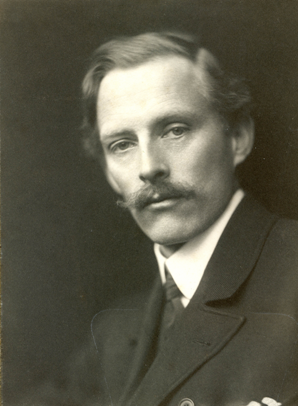
 

, , , ,

Leave a comment

Kate Frye’s Diary: The Lead-Up To War: 17 July 1914


On 7 August 2014 ITV will publish an e-book, Kate Parry Frye: The Long Life of an Edwardian Actress and Suffragette.  Based on her prodigious diary, this is my account of Kate Frye’s life and is a tie-in with the forthcoming ITV series ‘The Great War: The People’s Story’. For details of the TV series and its accompanying books see here.

KateAs a lead-up to publication I thought I’d share with you some entries from Kate’s diary from the month before the outbreak of war. Through her day-to-day experience we can see how the war stole up on one Everywoman.

Kate was at this time 36 years old, living in a room at 49 Claverton Street in Pimlico and working in the Knightsbridge headquarters of the New Constitutional Society for Women’s Suffrage. It was now nine years since she had become engaged to (minor) actor John Collins. Her father died in March 1914 and her mother and sister, Agnes, now all but penniless, are living in rented rooms in Worthing. John has a room along Claverton Street, at number 11.

Friday July 17th 1914

John arrived unexpectedly early, before I was up, but I just let him in to hear the news – he has had a letter from Benson saying he would see him, so was off. I had received a letter from Mr Dingle saying he could not speak – so as soon as I was up I went off to the Men’s League at Westminster and saw someone there who called Mr McKillop in from an office next door, and he like a lamb said he would come to Isleworth in Mr Dingle’s place. I expected to have to rush round London.

So I walked up to the A.A. and found John just having lunch with a very pretty woman and joined them as I wanted to hear what Benson said, but it was a very short interview. John saw me to Charing Cross then went off to a meeting and I came back to Victoria and bought some food then came in and had a rest and fell asleep.

John came in at 5 and we had a meat tea and then off together, Bus to Victoria – train to Hammersmith – train to Isleworth arriving at 7.15 – at the Upper Square. There were hundreds of children ready to greet us, I got a friendly feeling and they were very good but a great nuisance. John went off to find the Lorry as it was not punctual, but he missed it and it arrived alright and I got it fixed up.

By the time the speakers, Miss Dransfield in the Chair, Mrs Merivale Mayer and Mr McKillop and Miss Fraser to help had arrived we were absolutely mobbed – and we got a huge gathering. The first Suffrage meeting of any kind which had been held in Isleworth.

Mrs Mayer as usual was very disagreeable when she arrived, but it was really such a magnificent meeting she was quite pleased at the end, and as usual she spoke splendidly and we quite got the people round.

Having settled up early well came away together – Mr McKillop left us from the train, we parted from Mrs M.M. at Hammersmith and Miss Fraser at Victoria.

John and I were starving and we went into a restaurant at Victoria. John had salmon and cucumber – at 11.15! It was a lovely day.

John Collins was ‘resting’ at the moment – as is clear from the amount of time he was able to devote this month to helping Kate with her suffrage work. He would have been very excited about the prospect of employment in Frank Benson’s Company. The A.A., where Kate surprised him lunching with ‘a very pretty women’, was the Actors’ Association, the club in Covent Garden to which they both belonged.

The Men’s League for Women’s Suffrage to whose office Kate went for help when her speaker had failed was at 136 St Stephen’s House on the Embankment. The massive building was demolished, apparently in the early 1990s. We have already met the obliging Mr McKillop, who had for some years earlier been librarian to the fledgling London School of Economics. Kate had warmed to him after he praised her public speaking.

Upper Square, Isleworth (image courtesy of Hounslow Local studies website)

Upper Square, Isleworth (image courtesy of Hounslow Local studies website)

Well, this must have been the site of Isleworth’s first ‘Votes for Women’ meeting – or, at least, the first of which Kate had heard tell. Presumably during her canvassing she had met with plenty of local people who would have given her this kind of information. By ‘fixing up’ the Lorry Kate meant that she decorated it with posters – inquisitive children were suffragettes’ constant companions.

Calra Merivale Mayer

Clara Merivale Mayer

You can read about Mrs Merivale Mayer in Campaigning for the Vote – suffice it to say that Kate found her a great trial and, I am sure, knew nothing of her somewhat scandalous history. If she had known she would doubtless have felt vindicated in her dislike for this most difficult of the New Constitutional Society’s speakers. But Kate gave credit where it was due and often commented, as she does here, that despite the ructions she caused Mrs Mayer was an excellent speaker.


Copyright

All the articles on Woman and Her Sphere and are my copyright. An article may not be reproduced in any medium without my permission and full acknowledgement. You are welcome to cite or quote from an article provided you give full acknowledgement.

, ,

Leave a comment

Kate Frye’s Diary: The Lead-Up To War: 16 July 1914

On 7 August 2014 ITV will publish an e-book, Kate Parry Frye: The Long Life of an Edwardian Actress and Suffragette.  Based on her prodigious diary, this is my account of Kate Frye’s life and is a tie-in with the forthcoming ITV series ‘The Great War: The People’s Story’. For details of the TV series and its accompanying books see here.

KateAs a lead-up to publication I thought I’d share with you some entries from Kate’s diary from the month before the outbreak of war. Through her day-to-day experience we can see how the war stole up on one Everywoman.

Kate was at this time 36 years old, living in a room at 49 Claverton Street in Pimlico and working in the Knightsbridge headquarters of the New Constitutional Society for Women’s Suffrage. It was now nine years since she had become engaged to (minor) actor John Collins. Her father died in March 1914 and her mother and sister, Agnes, now all but penniless, are living in rented rooms in Worthing. John has a room along Claverton Street, at number 11.

Thursday July 16th 1914

Jobs and writing. John in in the morning. Out together at 1.30 and lunch at Slaters. Bus to the Office and John went in with a message and then joined me at the Tube and we went to Hammersmith and then train to Isleworth and we bill distributed until 6. It was very hot and we both got so tired. John was quite exhausted – says he couldn’t do my work. We got the Townsfolk – the Brewery people and the Pears soap people so did it thoroughly – 1000 handbills.

Then train to Hammersmith and just caught a nonstop train to Victoria and rushed in to change. Got in 7.45 – and was out again at 8 in my best and we went as hard as we could to the Shaftesbury Theatre to see ‘The Cinema Star’. Had Dress Circle seats. We were about 10 minutes late, but really we had enough. It is rot and there is very little real fun. It is a long time since I saw a London Musical comedy. I don’t think they improve. Miss Ward and Miss Cicely Courtneidge were the stars.

Supper at the Corner House. I felt deadly tired. All the world is now mad over prize fighting – Gunboat Smith v Carpentier. It was a sort of Mafeking night. We caught the 12.10 train from Charing Cross. Had to walk from Victoria and got in at 12.45.


Image courtesy of London Borough of Hounslow website

Image courtesy of London Borough of Hounslow website

Kate and John presumably stood at the Pears Soap factory gates, handing out handbills advertising the ‘Votes for Women’ meeting the New Constitutional Society was holding the next day in  Upper Square, Isleworth. The brewery they also canvassed was probably the Isleworth Brewery in St John’s Road.

”The Cinema Star’ had opened on 4 June and starred Jack Hulbert and Fay Compton as well as Cicely Courtneidge and Dorothy Ward.  The Shaftesbury Theatre was owned by Cicely Courtneidge’s father. With Harry Graham, Jack Hulbert had adapted the play from a German comic opera, ‘Die Kino-Konigin’, and it played very successfully, despite Kate’s verdict of ‘rot’, until the outbreak when anti-German sentiment resulted in its abrupt closure. Cicely Courtneidge and Jack Hulbert married in 1916.

Carpentier and Gunboat Smith (image courtesy of boxingshots.tumblr.com)

Carpentier (left) and Gunboat Smith fighting on 16 July 1914 (image courtesy of boxingshots.tumblr.com)

The American boxer, Gunboat Smith, had that evening fought the French champion, Georges Carpentier, at Olympia for the ‘White World Heavyweight Championship’. Smith was disqualified in the sixth round. Kate had good reason to describe street celebrations as ‘a sort of Mafeking night’. She had been in the Criterion Theatre on 18 May 1900 – when the relief of Mafeking was announced during an interval. By the time she left the theatre the streets of London were, as she put it, ‘alive with revelry’. You will be able to read all about Kate’s early life in the forthcoming e-book.

See also  Campaigning for the Vote: Kate Parry Frye’s Suffrage Diary.

Copyright

All the articles on Woman and Her Sphere and are my copyright. An article may not be reproduced in any medium without my permission and full acknowledgement. You are welcome to cite or quote from an article provided you give full acknowledgement.
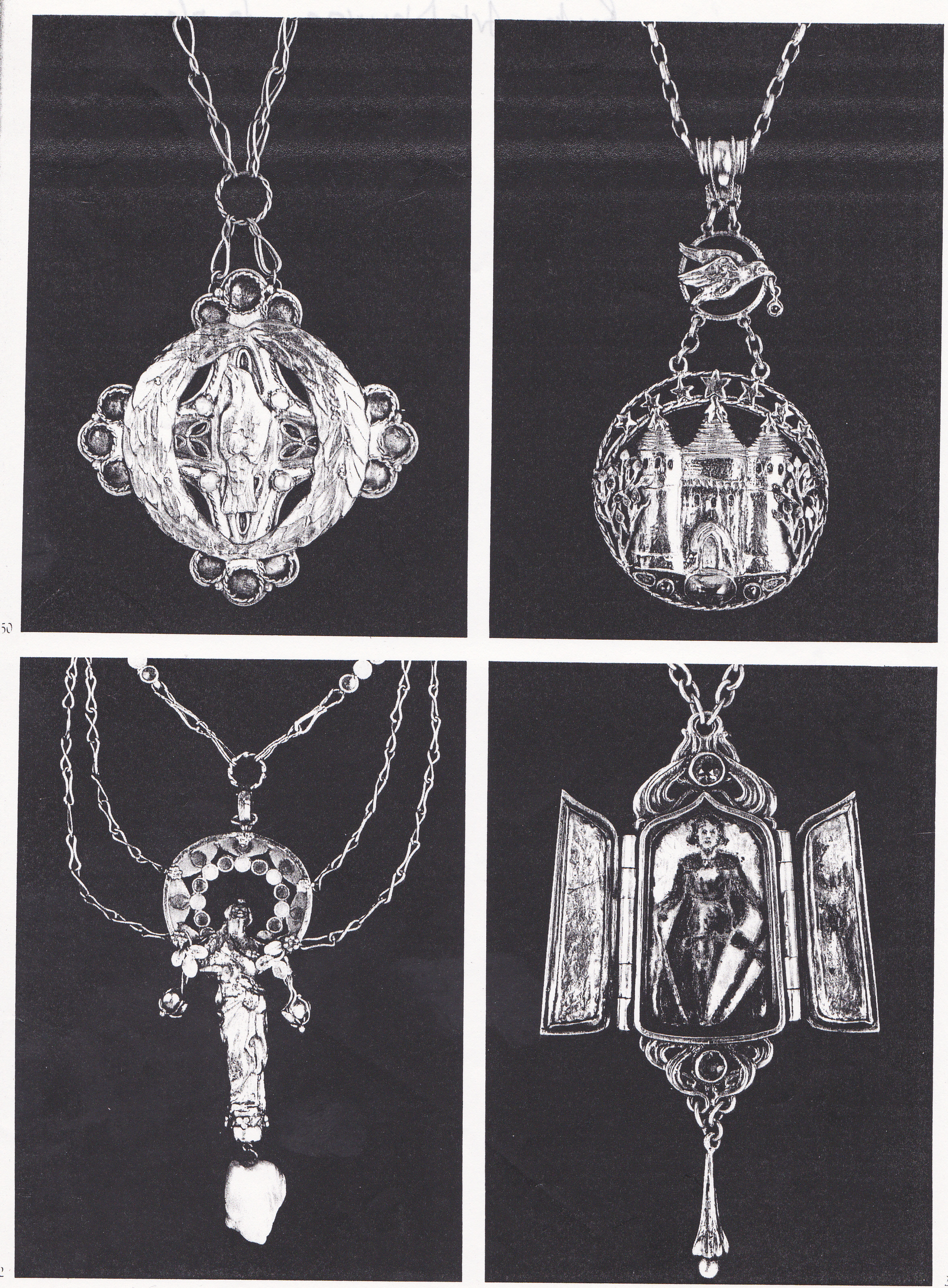
, , , ,

Leave a comment

Kate Frye’s Diary: The Lead-Up To War: 15 July 1914


On 7 August 2014 ITV will publish an e-book, Kate Parry Frye: The Long Life of an Edwardian Actress and Suffragette.  Based on her prodigious diary, this is my account of Kate Frye’s life and is a tie-in with the forthcoming ITV series ‘The Great War: The People’s Story’. For details of the TV series and its accompanying books see here.

KateAs a lead-up to publication I thought I’d share with you some entries from Kate’s diary from the month before the outbreak of war. Through her day-to-day experience we can see how the war stole up on one Everywoman.

Kate was at this time 36 years old, living in a room at 49 Claverton Street in Pimlico and working in the Knightsbridge headquarters of the New Constitutional Society for Women’s Suffrage. It was now nine years since she had become engaged to (minor) actor John Collins. Her father died in March 1914 and her mother and sister, Agnes, now all but penniless, are living in rented rooms in Worthing. John has a room along Claverton Street, at number 11.

 Wednesday July 15th 1914

Writing in the morning. John in at 11.30. Jobs. Out 1. Lunch together at Slaters. Coming out we met one of John’s Brother Officers when he was in the Field Artillery – Mr Graham. I have not seen him since the day we met at Burnham but he remembered me instantly. ‘Why, we went yachting’, he said. He is very nice looking.

Then John saw me off at Victoria for Lordship Lane – and though we asked two officials the train dashed on and landed at Crystal Palace. I was mad. Had to wait some time to get back – then a long walk to find Mrs Melling 75 Underhill Road and the meeting was half over. Miss McGowan had organised it and I had asked some of my new Peckham People and wanted to go to see them and because the Rev Hugh [Chapman] was down to speak – but I felt I was not going to meet him and he was not there. Ill and has had to go away. Miss McGowan was in the Chair, Mrs Chapman speaking. A very fine meeting, about 50 people there, but very few would join.

It started to pour with rain, but I had my coat and flew for a train and when I got out near home it was stopping a bit.

John was watching for me and came in with me while I tidied myself. He had changed. Then bus to Charing Cross – walked to the Popular had dinner and then to the St James’s Theatre to see ‘An Ideal Husband’. George Alexander not in it, and some one else playing Phyllis Neilson Terry’s part. It was a most cruel and awful performance – vilely and atrociously produced and most of them were in fits of laughter.

As for the play I could hardly sit it out – such Anti-suffrage old fashioned twaddle – as for the last act – tosh. I rose up and tramped out before the curtain fell. If I had paid for my seat I should have fussed. We were simply prancing with disgust. I never did like Oscar Wilde, but this play is the limit. Back by bus from the usual spot.


John Collins had, as a very young man, fought in the Boer War and ever since, as well as being an actor, had been a member of the Territorial Army – hence Kate’s mention of a ‘Brother Officer’. It was now not long before he would be involved in another war.

The New Constitutional Society for Women’s Suffrage was clearly concentrating a good deal of its effort at this time on wooing the inhabitants of Peckham and East Dulwich. Kate had organized an open-air meeting in the centre of Peckham a couple of days ago – today’s was what was termed a ‘drawing-room meeting’ – in the home of a sympathiser. The Rev Hugh Chapman, whom Kate was keen not to miss, was the brother-in-law of the NCS president and was the vicar of the Queen’s Chapel of the Savoy. Kate was somewhat enamoured of him. For full details of her past – somewhat surreal – encounters with him see Campaigning for the Vote: Kate Parry Frye’s Suffrage Diary.

Programme for the 1914 production of 'The Ideal Husband' (courtesy of oscarwildesociety,co.uk)

Programme for the 1914 production of ‘The Ideal Husband’ (courtesy of oscarwildesociety,co.uk)

The St James’s Theatre was in King Street, off St James’s Square, and in 1914 was owned and managed by Sir George Alexander. ‘An Ideal Husband’opened on 14 May 1914 and  closed on 24 July. The critics were rather more sympathetic to the production than was Kate. But then most were probably not suffragists! As Kate remarked, at least she – and, presumably, John – had not had to pay for their tickets. As members of the Profession they usually received complimentary tickets whenever they asked for them which, given that they were both addicted to theatre-going and  relatively impecunious, was just as well.


Copyright

All the articles on Woman and Her Sphere and are my copyright. An article may not be reproduced in any medium without my permission and full acknowledgement. You are welcome to cite or quote from an article provided you give full acknowledgement.

, ,

Leave a comment

Kate Frye’s Diary: The Lead-Up To War: 14 July 1914


On 7 August 2014 ITV will publish an e-book, Kate Parry Frye: The Long Life of an Edwardian Actress and Suffragette.  Based on her prodigious diary, this is my account of Kate Frye’s life and is a tie-in with the forthcoming ITV series ‘The Great War: The People’s Story’. For details of the TV series and its accompanying books see here.

KateAs a lead-up to publication I thought I’d share with you some entries from Kate’s diary from the month before the outbreak of war. Through her day-to-day experience we can see how the war stole up on one Everywoman.

Kate was at this time 36 years old, living in a room at 49 Claverton Street in Pimlico and working in the Knightsbridge headquarters of the New Constitutional Society for Women’s Suffrage. It was now nine years since she had become engaged to (minor) actor John Collins. Her father died in March 1914 and her mother and sister, Agnes, now all but penniless, are living in rented rooms in Worthing. John has a room along Claverton Street, at number 11.

Tuesday July 14th 1914

Felt much better. what a relief – I was bubbling over with the joy of life. John came in before I  had finished dressing but as I had to go out I left him at work on his Typewriter finishing something for the afternoon, and I went off to the Office, taking my dress for the afternoon with me.

Helped arrange things for the afternoon – and John came and he helped. Then when I could get away I changed and he and I went out to lunch and then back at 2.15 for the Summer Sale and Tea at the [ew].C[onstitutional] Hall. His work was to raffle signed photographs and mine to tie up parcels. But I never tied up one – the Palmist failed and I had to Palm – I hated it, but I really had quite a good time. Miss Lena Ashwell opened the Sale and though there did not seem many people we made quite a lot of money.

Mr Grein came straight from the Haymarket Theatre and the first Public Performance of ‘Ghosts’ as it has now been Licensed and had his hand read. But it was really very funny as he seemed to want to talk more about me – told me to go and see him – gave me his card, and said he liked my ‘eye’.

Gladys [Wright] was quite put about, ‘of course you will be leaving us now’ etc. She is quaint. But I do think the vain little man took rather a fancy to me and I imagine he is always on the look out for people likely to do him credit. I played up rather a game with him, but he quite took it all in. John was awfully upset.

John and I had tea together, and I think he enjoyed himself – he wore a new suit which was quite a success. We left soon as we could – rushed home and just tidied ourselves but no time for much – then out – no time for dinner – but straight to the Haymarket Theatre – Balcony stalls to see ‘Driven’. I enjoyed it immensely – beautifully produced and Alexandra Carlisle looking a perfect picture and greatly improved in her art and Owen Nares a fine actor – simply delightful in a most difficult part. Aubrey Smith as usual but good. The last act is idiotic, of course. John and I are certainly leading the gay and reckless life.

To supper at the Corner House. Waited for the last bus, but must just have missed it. Then found we had missed the last to Victoria – so made for the Underground. It had started to pour with rain by then and John in his new suit. We just caught the last train 12.20 and had to walk from Victoria, but fortunately the rain had not reached this district.

Burberry shop, Knightsbridge. The offices of the NCS were inside this building

Burberry shop, Knightsbridge. The offices of the NCS were on the ground floor inside this building. An arcade originally ran through – with the entrance just about where the bus is in this photo. Off the arcade were a number of small shops and offices

The New Constitutional Society’s Hall was close to their Office, inside Park Mansions Arcade in Knightsbridge. This is now the site of the Burberry Menswear Department (see ‘Campaigning for the Vote: Kate Frye and Knightsbridge’  ). Kate had developed her skill as a Palmist in her youth – in lieu of the more conventional accomplishments expected of a young woman – such as piano playing, singing, or reciting. In her early involvement with the women’s suffrage movement she had often, as a volunteer, provided palm-reading entertainment at bazaars and dances. (See ‘Palmist at the Women’s Freedom League Fair).

Lena ashwell

Lena Ashwell was a leading member of the Actresses’ Franchise League and, over the years had opened many a suffrage bazaar and fair.  A month from now she would be the instigator of the Women’s Theatre Camps Entertainments and of the Women’s Emergency Corps.

J. T. Grein - a photograph taken in 1898

J. T. Grein – a photograph taken in 1898

On Sunday 26 April 1914 Kate had been in charge of the box office  at the Court Theatre (later the Royal Court) when J.T. Grein staged a private performance of Ibsen’s ‘Ghosts’ as a fund-raising event for the New Constitutional Society for Women’s Suffrage. This, of course, was before the Lord Chamberlain had removed his censorship of it by, as Kate explains, granting the play a performance Licence. Dutch-born Grein was a champion of European theatre.

‘Driven’, on the other hand, was a rather English comedy by E. Temple Thurston. The play’s run at the Haymarket came to an abrupt end at the outbreak of war – but in December was staged on Broadway, with Alexandra Carlisle again in the cast. The producer was Charles Frohman, with whose company Kate had had her first professional engagement ten years or so previously.

See also Campaigning for the Vote: Kate Parry Frye’s Suffrage Diary.

Copyright

All the articles on Woman and Her Sphere and are my copyright. An article may not be reproduced in any medium without my permission and full acknowledgement. You are welcome to cite or quote from an article provided you give full acknowledgement.
, , , , , , , , , ,

Leave a comment

Kate Frye’s Diary: The Lead-Up To War: 13 July 1914


On 7 August 2014 ITV published an e-book, Kate Parry Frye: The Long Life of an Edwardian Actress and Suffragette.  Based on her prodigious diary, this is my account of Kate Frye’s life and is a tie-in with the forthcoming ITV series ‘The Great War: The People’s Story’. For details of the TV series and its accompanying books see here.

As a lead-up to publication I thought I’d share with you some entries from Kate’s diary from the month before the outbreak of war. Through her day-to-day experience we can see how the war stole up on one Everywoman.

Kate Frye, suffrage organizer, 1913

Kate was at this time 36 years old, living in a room at 49 Claverton Street in Pimlico and working in the Knightsbridge headquarters of the New Constitutional Society for Women’s Suffrage. It was now nine years since she had become engaged to (minor) actor John Collins. Her father died in March 1914 and her mother and sister, Agnes, now all but penniless, are living in rented rooms in Worthing. John has a room along Claverton Street, at number 11.

Monday July 13th 1914

Up late. Letters all the morning. John came in and sat with me. Lunch together at Slaters, then I met Mrs Chapman and we went together to Peckham and canvassed. We had tea together and I saw her off about 5.30.

Then I wandered about and John met me at the corner of Rye Lane at 6. He had not had tea so I went with him to have some – then we strolled on the Rye and to the Triangle at 7.30. Had to take the Chair and, as Miss Feddon had not turned up at 8.15, I went on as long as I could as Miss D ‘Oyly was the only other speaker.

But Miss Feddon arrived and held the crowd for a long time. I had not wanted to speak before John, but as I had to I did it. He said he was surprised how well I did it – no hesitating and he heard one man in the crowd say ‘That’s the one I like to hear, she comes straight to the point.’

Miss D’Oyly went off early but Miss Feddon returned with us and we 3 went into a restaurant at Victoria and had some supper than we walked back and we saw her to Chichester Street. She is a nice woman but overwrought with militancy. The things that are going on are too awful, it is enough to wring anyone’s heart and mind.

I had felt really ill in the morning and feared a collapse, but I started on my white Liver Tabloids and they seemed to act by the evening. I felt decidedly better  Not in until 12 o’clock.

peckham1913b

 Perhaps Kate and John met at this corner – where Hanover Park meets Rye Lane? Probably not, but Williamsons looks a handy place to have some tea here. (Image courtesy of Transpontine website)

[Constance] Marguerite Fedden (1879-1962) came from a wealthy Bristol family and at this time was principal of a College of Housecraft and Domestic Science, 4 Chichester Street, Pimlico.  During the First World War she worked as a VAD nurse at Salonika. From Kate’s remarks she clearly was very troubled by the pitch of aggression that had now  been reached in the struggle between the militant suffragettes –  the WSPU – and the government.

A few days previously Mrs Pankhurst had yet again been arrested and  had immediately undergone a hunger and thirst strike. She was then released on a four-day licence, under the terms of the ‘Cat and Mouse’ Act. She was soon to be rearrested.

Other leading members of the WSPU, such as Flora Drummond, Annie Kenney and Norah Dacre Fox, were also under constant threat of rearrest after failing to comply with the terms of their licence. In May and June the number of arson and bomb attacks had escalated throughout the country and already in July there had been explosions at Rosslyn Chapel in Edinburgh and, on the day previous to this entry, at St John’s Westminster.

See also Campaigning for the Vote: Kate Parry Frye’s Suffrage Diary.

Copyright

All the articles on Woman and Her Sphere and are my copyright. An article may not be reproduced in any medium without my permission and full acknowledgement. You are welcome to cite or quote from an article provided you give full acknowledgement.
 

,

Leave a comment

Kate Frye’s Diary: The Lead-Up To War: 12 July 1914


On 7 August 2014 ITV published an e-book, Kate Parry Frye: The Long Life of an Edwardian Actress and Suffragette.  Based on her prodigious diary, this is my account of Kate Frye’s life and was a tie-in with the ITV series ‘The Great War: The People’s Story’. For details of the TV series and its accompanying books see here.

Kate Parry Frye, organiser for the New Constitutional Society for Women’s Suffrage, 1913

As a lead-up to publication I shared some entries from Kate’s diary from the month before the outbreak of war. Through her day-to-day experience we can see how the war stole up on one Everywoman.

Kate was at this time 36 years old, living in a room at 49 Claverton Street in Pimlico and working in the Knightsbridge headquarters of the New Constitutional Society for Women’s Suffrage. It was now nine years since she had become engaged to (minor) actor John Collins. Her father died in March 1914 and her mother and sister, Agnes, now all but penniless, are living in rented rooms in Worthing. John has a room along Claverton Street, at number 11.

Sunday July 12th 1914

It simply came down in sheets. I had a rest and got up late. John came in at 12 – we had meant to go into the country but it was awful and so tiring as there was thunder in the air and every now and again it seemed most oppressive. We went out at 1.30 – bus to Trafalgar Square.

We did not know where to go so dashed in a restaurant in the Haymarket – very expensive and full of smart people – so, as we were anything but smart, it was rather awful. However we had a very good lunch and bore our shabbiness with as much of an air as we could.

It was still pouring when we came out so there was nothing for it but to come back. John did some typing and then we had tea – and went out again at 6. Walked all along the Embankment and over on the other side by St Thomas’ Hospital. The Houses of Parliament do look lovely from there. Over Westminster Bridge and we sat in the Charing Cross Embankment Gardens until 9 when we were turned out.

Then to Appenrodts in the Strand for some supper and a very delicious salad. Back by bus. Not in till 11.30.


The view that Kate had of the Houses of Parliament. A colour photograph taken in the evening in 1914 (Courtesy of the National Army Museum/BBC News websites)

The view that Kate had of the Houses of Parliament. A colour photograph taken in the evening in 1914 (Courtesy of the National Army Museum/BBC News websites)

Kate and John’s 12 July 1914 is the epitome of a peaceful, rather boring, London Sunday. I daresay we’ve all spent a day like this. The kind of day when it rains and rains and then clears up for a watery sunlit evening. Neither Kate or John had cooking facilities in the room – hence the regular eating out.


Appenrodt's flagship restaurant at 1 Coventry Street, London (courtesy of CardCow.com)

Appenrodt’s flagship restaurant at 1 Coventry Street, London (courtesy of CardCow.com)

Hermann Appenrodt had come to London in 1886 from Germany and had launched a very successful chain of delicatessens and restaurants. In 1914 he had three branches in the Strand. Appenrodt also had a branch in Paris which, a little over a month after Kate and John had enjoyed this Sunday supper, wa sto be badly damaged by an anti-German mob.


Copyright

All the articles on Woman and Her Sphere and are my copyright. An article may not be reproduced in any medium without my permission and full acknowledgement. You are welcome to cite or quote from an article provided you give full acknowledgement.
,

Leave a comment

Kate Frye’s Diary: The Lead-Up To War: 11 July 1914

On 7 August 2014 ITV will publish an e-book, Kate Parry Frye: The Long Life of an Edwardian Actress and Suffragette.  Based on her prodigious diary, this is my account of Kate Frye’s life and is a tie-in with the forthcoming ITV series ‘The Great War: The People’s Story’. For details of the TV series and its accompanying books see here.

KateAs a lead-up to publication I thought I’d share with you some entries from Kate’s diary from the month before the outbreak of war. Through her day-to-day experience we can see how the war stole up on one Everywoman.

Kate was at this time 36 years old, living in a room at 49 Claverton Street in Pimlico and working in the Knightsbridge headquarters of the New Constitutional Society for Women’s Suffrage. It was now nine years since she had become engaged to (minor) actor John Collins. Her father died in March 1914 and her mother and sister, Agnes, now all but penniless, are living in rented rooms in Worthing. John has a room along Claverton Street, at number 11.

Saturday July 11th 1914

I was most frightfully tired – really felt very seedy. Up late – then John came in, and we went out together and had some lunch in Lyons, but it was so nasty we did not get nourished. To the Duke of York’s Theatre by bus and Stalls to see ‘The Land of Promise’ which we enjoyed immensely.

The first act was real, the others impossible but the whole thing charming and so beautifully produced and acted. Irene Vanbrugh and Godfrey Tearle quite delightful both of them. It was quite like a professional matinee – nearly all pros. Gladys Cooper in a box – I don’t think her pretty and such a mean silly little face.

No end of people we knew and suddenly someone came up and spoke to me. For the moment I couldn’t remember and then the voice – Miss Mabel Wynne, the great fat girl in ‘Quality Street’ and grown quite slim. She knew me at once she said. I haven’t seen her since those days. She has been on the stage ever since, is very shoppy, and no nearer getting to London. Irene Vanbrugh got quite an ovation after every act – she is a brainy actress.

John and I went to the A.A. and there was Miss Wynne again – so we had a chat over tea. Then John and I by tube to the White City and there we strolled about. I was dead tired and had the rat horribly until we had some dinner when I revived a bit but felt anything but lively and walked about in rather a dead fashion.

We did not try many side shows and they were failures. Bostocks Zoo – heaps of performing lions but all very sad. We missed most of it as we went there last but we saw the poor dears fed. We also saw some wonderful racing on a miniature motor track, but John was seized with a panic fear so we came out.

It was really a most amusing evening there as the Eton and Harrow match had been played – Eton winning and all the boys, mothers  and fathers, cousins and uncles were there. It was a crush and crowd, all the side shows packed, crowds waiting for everything and so much real typical English excitement – not only amongst the young folks,  but even Mas and Pas, and all decorated with light blue.

It was a scene on the Witching Waves – they collared the whole corner and in the end had to stop it and get a policeman!!! How the boys enjoyed the joke. It made me feel very old to be walking round in that mournful manner in the midst of all that fun. We did not leave until 12 – got a train to Victoria and then had to walk. Oh I was tired.

Irene Vanbrugh (1872-1949)

Irene Vanbrugh (1872-1949)

‘The Land of Promise’ was a three-act comedy about life on the Canadian prairie written for Irene Vanbrugh by  Somerset Maugham. Kate had actually appeared alongside Godfrey Tearle- for one performance only – in Christopher St John’s censored play, ‘The Coronation’ [see Campaigning for the Vote: Kate Parry Frye’s Suffrage Diary pages 88-89]. Kate had met Mabel Wynne while touring in J.M. Barrie’s ‘Quality Street’ in 1903/4 – in the early days of  her stage career. Mabel had played the part of ‘Patty, a cheeky servant’.

The ‘A.A.’ was the Actors’ Association – a club – with premises at 10 King Street, Covent Garden.

Poster for the Anglo-American Exhibition, 1914

Poster for the Anglo-American Exhibition, 1914

After the theatre Kate and John went to the Anglo-American Exhibition, which had opened on 14 May, to celebrate a century of peace between Britain and America. Until 1908 this area at Shepherds Bush had been farmland before becoming first the site of the Franco-British Exhibition and then of the Olympics. The sideshows ‘such as made Coney Island one of the merriest spots in America’, as one newspaper report put it, were very much a feature of the exhibition.

Kate was very much an animal lover – hence her qualms about the ‘heaps of performing lions’. A little over a month later newspapers reported that  ‘Three healthy medium-sized elephants have been requisitioned from Bostock’s Zoo at the White City by the military authorities. It is presumed they will be used for heavy draught purposes. At the end of the war the elephants will be returned to the menagarie.’ I wonder what happened to those elephants?

The Eton and Harrow match clearly engaged the public in a way we can scarcely now imagine. Kate was not exaggerating the rumpus caused by the ‘rag’, as it was described between the rival supporters. On the following Monday morning the Daily Gazette Middlesborough reported that   ‘To clear up the traces of Saturday nights’ Eton and Harrow revels at the Anglo-American exhibition took until after midnight on Sunday and thiry wagons were needed to remove the litter of paper streamers and other debris.’  The ‘Witching Waves’, which according to Kate bore the brunt of the revelry, was one of the Coney Island sideshows . When the Prince of Wales had visited the Exhibition it had been difficult to remove him from ‘the little cars that navigate the rolling, heaving platform called ‘Witching Waves’.

The Witching Waves ride - an early type of bumper car ride (courtesy of gaping Hole Media Blog)

The Witching Waves ride – an early type of bumper car ride (courtesy of Gaping Hole Media Blog)

The Anglo-American Exhibition was brought to a premature end by the outbreak of war.


Copyright

All the articles on Woman and Her Sphere and are my copyright. An article may not be reproduced in any medium without my permission and full acknowledgement. You are welcome to cite or quote from an article provided you give full acknowledgement.

, , , , ,

Leave a comment

Kate Frye’s Diary: The Lead-Up To War: 10 July 1914


On 7 August 2014 ITV will publish an e-book, Kate Parry Frye: The Long Life of an Edwardian Actress and Suffragette.  Based on her prodigious diary, this is my account of Kate Frye’s life and is a tie-in with the forthcoming ITV series ‘The Great War: The People’s Story’. For details of the TV series and its accompanying books see here.

KateAs a lead-up to publication I thought I’d share with you some entries from Kate’s diary from the month before the outbreak of war. Through her day-to-day experience we can see how the war stole up on one Everywoman.

Kate was at this time 36 years old, living in a room at 49 Claverton Street in Pimlico and working in the Knightsbridge headquarters of the New Constitutional Society for Women’s Suffrage. It was now nine years since she had become engaged to (minor) actor John Collins. Her father died in March 1914 and her mother and sister, Agnes, now all but penniless, are living in rented rooms in Worthing. John has a room along Claverton Street, at number 11.

Friday July 10th 1914

Slept until 9. dressed after breakfast. Wrote letters at 11. A very hot day. Had letter from Kathie in answer to mine of good wishes – speaking in glowing terms of her engagement. I am glad she is happy.

John and I went out to lunch at Slaters. Then we both went to Office for the Banner and Leaflets. By bus to Hammersmith and train [to] Hounslow where we got rid of the rest of the thousand handbills. Had tea at 5.30.

To Broadway at 7.15 and the Lorry arrived at 7.30 and we decorated it, getting an enormous crowd of children round.

Then the speakers Mrs Kerr and Mr McKillop arrived and Mr Fox in the Chair. Miss Raynsford Jackson and Miss Arber came down to help with giving out notices. We had a huge crowd and ours was the first open air meeting ever held in Hounslow.

The people were a bit troublesome at first but came round wonderfully. We had a little passing trouble with tin trumpets and a gramophone but I managed to quell it and we really had a magnificent meeting.

John and I waited just to pay up and we came to Victoria by train from Heston Hounslow. Went into Rinaldo’s for supper. It would have been quite nice only there was the most awful drunken man there making a scene.

We walked down. Got in at 12 o’clock. A great relief to me to have the meeting over.

Hounslow Broadway c 1912 courtesy of postcardsthenand now.blogspot.com)

Hounslow Broadway c 1912 (courtesy of postcardsthenand now.blogspot.com)

Here, on The Broadway, Kate organized Hounslow’s first ever open-air ‘Votes for Women’ meeting. Her main speakers were Mrs Barbara Kerr, whose sister, Louisa Raynsford Jackson, we have already met, and John McKillop. The latter had, until 1909, been secretary to the London School of Economics and its first (part-time) librarian – but was now secretary to an MP. His wife, Margaret, was a lecturer in chemistry in King’s College, London, Woman’s Department. Interruptions from tin trumpets and gramophones were par for the course. At least there weren’t any vegetable or firework throwers – such as Kate had had to contend with on previous occasions. Inquisitive children were a suffrage organizer’s constant companions.

Rinaldo’s was an Italian restaurant at 15 Wilton Road, just opposite Victoria Station. in his Gourmet Guide to London (1914), Lieut-Gen Nathaniel Newnham-Davies describes the interior of Rinaldo’s – ‘Its walls a pleasant grey with decorations in high relief on the upper part, and on the stained glass of the skylight are paintings of game and fruit. Baskets of ferns in the shape of boats hang from the roof and there are always bunches of roses on the tables.’ Before setting up his own restaurant Rinaldo had worked at the Savoy – and The Gourmet Guide reported,  his restaurant attracted an aristocratic clientele. Alas that one drunk should have spoiled Kate’s pleasure. She had been entirely used to dining out in the best London restaurants in her younger days when her father appeared the epitome of prosperity – but that was now a vanished era.

A menu for a dinner at the Cafe Royal during the Fryes' glory days

A menu for a dinner at the Cafe Royal – enjoyed during the Fryes’ glory days

See also Campaigning for the Vote: Kate Parry Frye’s Suffrage Diary.

Copyright

All the articles on Woman and Her Sphere and are my copyright. An article may not be reproduced in any medium without my permission and full acknowledgement. You are welcome to cite or quote from an article provided you give full acknowledgement.
 

, ,

Leave a comment

Kate Frye’s Diary: The Lead-Up To War: 9 July 1914

On 7 August 2014 ITV published an e-book, Kate Parry Frye: The Long Life of an Edwardian Actress and Suffragette.  Based on her prodigious diary, this is my account of Kate Frye’s life and was a tie-in with an ITV series ‘The Great War: The People’s Story’. For details of the TV series and its accompanying books see here.

Kate Frye, suffrage organizer, 1913

Back in 2014, as a lead-up to publication, I sharee with you some entries from Kate’s diary from the month before the outbreak of war. Through her day-to-day experience we can see how the war stole up on one Everywoman.

Kate was at this time 36 years old, living in a room at 49 Claverton Street in Pimlico and working in the Knightsbridge headquarters of the New Constitutional Society for Women’s Suffrage. It was now nine years since she had become engaged to (minor) actor John Collins. Her father died in March 1914 and her mother and sister, Agnes, now all but penniless, are living in rented rooms in Worthing. John has a room along Claverton Street, at number 11.

‘Thursday July 9th 1914

Hard at writing from 10 to 1. John came in and we went out together to lunch at Victoria. Then I went off to Hounslow by train and canvassed all up and down both sides of the High Street and all over the place, and at 6 o’clock at Parke Davis Dye works as the people came out.

Then a train back to Hounslow and train to Victoria and bus. In at 7.30. J. was watching at his window and saw me get out of the bus and came in with me and waited until 9 – when he was very good and went off and got supper by himself. I was so dead beat I felt I could not turn out again so ate some bread and cheese and fell into bed.’

Was Kate canvassing these shops on 9 July 1914? (Image courtesy Local Studies, Houslow Library Services)

Was Kate canvassing these shops on 9 July 1914? (Image courtesy Local Studies, Houslow Library Services)

Kate’s canvassing in Hounslow was for the purpose of drumming up attendance of a ‘Votes for Women’ meeting she is to hold tomorrow in the Broadway.

As WSPU militancy became even more intense the New Constitutional Society for Women’s Suffrage held to its principle of campaigning in a democratic manner. This may now be thought boring – failing to provide news fodder for the press then and for bloggers now – but it was non-militant political lobbying that in the end won women the vote.

In the few days previous to 9 July 1914  WSPU supporters had, besides continuing with their campaign of arson, concentrated their attention increasingly on the King and the Church. A  portrait of the King by Sir John Lavery had been damaged in the Royal Scottish Academy and a few days earlier when the King had visited Nottingham a well-known suffragette had been arrested carrying a suitcase containing bomb-making equipment. On 1 July there had been a disturbance during the enthronement of the new Bishop of Bristol and on 5 July Mrs Dacre Fox had interrupted the Bishop of London during a Westminster Abbey service – asking him to prevent forcible feeding. She was a prisoner on the run, who had been released from prison under the Cat and Mouse Act, and was promptly re-arrested outside the Abbey.

Kate must surely have a taken a bus to the Parke Davis dye works, which was quite a way down the Staines Road. [The site at 581 Staines Road, long ago rebuilt by Parke Davis, is now used by the Home Office as an immigration centre.] Kate was well used to standing at factory gates handing out handbills – hoping to entice the workers to her meetings. We shall see tomorrow how successful her canvass had been.

See also Campaigning for the Vote: Kate Parry Frye’s Suffrage Diary.

, , ,

1 Comment

Kate Frye’s Diary: The Lead-Up To War: 8 July 1914


On 7 August 2014 ITV will publish an e-book, Kate Parry Frye: The Long Life of an Edwardian Actress and Suffragette.  Based on her prodigious diary, this is my account of Kate Frye’s life and is a tie-in with the forthcoming ITV series ‘The Great War: The People’s Story’. For details of the TV series and its accompanying books see here.

KateAs a lead-up to publication I thought I’d share with you some entries from Kate’s diary from the month before the outbreak of war. Through her day-to-day experience we can see how the war stole up on one Everywoman.

Kate was at this time 36 years old, living in Claverton Street in Pimlico and working in the Knightsbridge headquarters of the New Constitutional Society for Women’s Suffrage. It was now nine years since she had become engaged to (minor) actor John Collins. Her father died in March 1914 and her mother and sister, Agnes, now all but penniless, are living in rented rooms in Worthing.

Wednesday July 8th 1914 [Claverton Street]

Had a letter from home in the morning, with the news of Kathie Ellis’s engagement to Mr Hucks, the brother of Norah’s husband, and who has only been a widower for a year and has 7 children all under about 12 years of age. She is a brave woman. She writes most cheerfully so I suppose she is pleased.

It poured with rain early, but though showery it cleared up in time for me to meet Mrs Heath at Victoria at 11 and go with her to Peckham where we canvassed until 1.30. She returned to town and I had lunch then rode all the way to Hounslow by bus. It rained at first so I had to go inside – for an hour to Putney, then I had an hour outside.

I had to go to the Police, arrange about the Lorry etc – then back from Heston Hounslow to Victoria – and a bus home. Got in at 6.

Wrote letters until 7 – dressed, called in for John at no. eleven. We went by bus to Oxford Street where we hurriedly ate a sandwich then walked to the Kingsway Theatre and sat in the Stalls to see ‘The Great Adventure’. I had seen it before, but I was most anxious for John to do so, and he loved it. I think it a most gorgeous play, gloriously acted – Ainley is perfection. Miss Wish Wynne was out of it, but the girl who played her part was excellent.

We walked down the Strand in search of supper and went in to the Cabin – and had a most villainous meal. I could hardly touch mine – and plates etc were filthy and there were some most appalling looking foreign people in the place.

We just caught the 12 o’clock bus from Trafalgar Square. I was dead tired and so glad of bed.’

Kathie [Kathleen] Ellis (1882-1963) was one of the two daughters of Frank Ellis of Bishops Stortford, who, like Kate, was related by marriage to the Gilbey family – the firm that dominated the wine and spirit trade . Kate and Kathie had been close, although not bosom, friends since childhood. William Hucks’ first wife, Ethel, had died in spring 1913, aged only 34.

In her diary entry for 30 June 1913 Kate remarked  ‘the death of Mrs Willie Hucks at the birth of her eighth child. And no wonder – she has only been married about 10 years and was never a giant of strength. Poor thing – done to death – and what will those seven little mites do without her?’

Well, the answer to that rhetorical question was that Kathie Ellis became their stepmother. Hucks was an ‘engineer and distiller’ – one of the Gilbey/Blyth circle.

By 1914 the buses on which Kate travelled would have been powered by engines – rather than horses. The tops, however, were still uncovered – hence her need to take shelter from the rain by travelling inside. As a rule, ever since she was young, Kate had much preferred to travel on the top – even at a time when it was not considered appropriate for a girl or young woman to do so.

‘The Great Adventure’ was a play by Arnold Bennett, which had opened at the Kingsway Theatre, directed by Granville Barker, in March 1913. The actor Henry Ainley was one of Kate’s favourites.

Henry Ainley (courtesy of Cyranos.ch website)

Henry Ainley (courtesy of Cyranos.ch website)

The Cabin restaurant where Kate had her ‘villainous’ meal this evening was on the north side of the Strand, just to the west of Wellington Street. It was one of small chain. The unusually large number of foreign tourists in London that summer was particularly remarked, not only by Kate but also by the press. Knowing Kate, who was the epitome of Englishness, by ‘appalling looking’ she probably meant loud and extravagantly dressed.

See also Campaigning for the Vote: Kate Parry Frye’s Suffrage Diary.

,

Leave a comment

Kate Frye’s Diary: The Lead-Up To War: 7 July 1914

On 7 August 2014 ITV will publish an e-book, Kate Parry Frye: The Long Life of an Edwardian Actress and Suffragette.  Based on her prodigious diary, this is my account of Kate Frye’s life and is a tie-in with the forthcoming ITV series ‘The Great War: The People’s Story’. For details of the TV series and its accompanying books see here.

KateAs a lead-up to publication I thought I’d share with you some entries from Kate’s diary from the month before the outbreak of war. Through her day-to-day experience we can see how the war stole up on one Everywoman.

Kate was at this time 36 years old, living in Claverton Street in Pimlico and working in the Knightsbridge headquarters of the New Constitutional Society for Women’s Suffrage. It was now nine years since she had become engaged to (minor) actor John Collins. Her father died in March 1914 and her mother and sister, Agnes, now all but penniless, are living in rented rooms in Worthing.

Kate is back in Claverton Street, after a weekend in Worthing. Although she is a keen reader of newspapers, by the end of the first week of July she has made no comment on the events in Sarajevo.

‘Tuesday July 7th 1914

Writing. John in at 11.30 and out together at 1 and to Slaters for lunch. I can’t keep him out so it doesn’t seem any use trying. He is as absolutely devoted as ever – seems to care for nothing or nobody but me – it’s extraordinary and had now been going on eleven years with undiminished fervour. Poor dear I wish I could make him happy.

After lunch we proceeded to get to Isleworth but quite lost ourselves as we went by train from Victoria to Spring Grove then walked a long way to the Main Road and then had to take a bus. Then I had to visit the Police about the meeting and get a lorry which took about 2 hours and found Mr Rix had got the wrong information – that there is no Green but the meeting must be held in the Upper Square and the thousand hand bills will have to be altered. John says that organising is far harder work than the Stage.

Back by train to Hammersmith – tube to Knightsbridge and to the office at 4.45. ..I left with John at 6 o’clock.

We rushed home and changed, then a bus to Charing Cross, a sandwich and to the Criterion Theatre to see ‘A Scrap of Paper’. We were both bored, it wan’t particularly interesting as a revival – not played well and the play is rotten. Nancy Price was poor. I feel sure I saw Mrs Kendal in it. I seemed to remember how she did certain bits, with what art – she was wonderful. I think we were both tired and aching for a meal.

We went to the Corner House and had supper and just caught the last Pimlico bus. In at 12.15. John had Dress Circle seats given him – so we were very luxuriously treated. I was tired by the end of things.’

The beauty of Kate’s diary – from the point of view of studying the work of a suffrage organiser  –  is that it doesn’t cover up all the tediousness involved in running a ‘Votes for Women’ campaign. Kate does not gloss over the mishaps that – like here at Isleworth- will require someone to alter by hand a 1000 printed handbills. Amongst the collection of ephemera that she left I have similar flyers – with additions or alterations made in her own handwriting. This is not the view of the suffrage campaign that you will glean from reading published accounts – such as in the suffrage newspapers. This is real life. See also Campaigning for the Vote: Kate Parry Frye’s Suffrage Diary.

‘A Scrap of Paper’ , a ‘comic drama’ adapted from a French play by the Victorian playwright John Palgrave Simpson, had first been staged in 1861. Mrs (Madge) Kendal, a renowned Victorian actress and theatre manager, had indeed,  back in the 1880s/90s, played in ‘A Scrap of Paper’ and Kate was certainly correct in remembering having seen such a production.

The Lyons Corner House in Coventry Street. The Criterion Theatre is just out of view in the left of the photo. This picture dates from many years after Kate's July 1914 visit - but gives us an orientation on her world

The Lyons Corner House in Coventry Street. The Criterion Theatre is just out of view in the left of the photo. This picture dates from many years after Kate’s July 1914 visit – but gives us an orientation on her world

‘Slaters’ and the ‘Corner House’ were both chains of restaurants for diners of modest means. The Corner House restaurants were part of the chain run by Lyons that opened in 1909. It was doubtless in the one in Coventry Street, a quick dash across the road from the Criterion Theatre, that Kate and John had for their longed-for supper this evening.


, , ,

Leave a comment

Kate Frye’s Diary: The Lead-Up To War: 6 July 1914

On 7 August 2014 ITV will publish an e-book, Kate Parry Frye: The Long Life of an Edwardian Actress and Suffragette.  Based on her prodigious diary, this is my account of Kate Frye’s life and is a tie-in with the forthcoming ITV series ‘The Great War: The People’s Story’. For details of the TV series and its accompanying books see here.

KateAs a lead-up to publication I thought I’d share with you some entries from Kate’s diary from the month before the outbreak of war. Through her day-to-day experience we can see how the war stole up on one Everywoman.

Kate was at this time 36 years old, living in Claverton Street in Pimlico and working in the Knightsbridge headquarters of the New Constitutional Society for Women’s Suffrage. It was now nine years since she had become engaged to (minor) actor John Collins. Her father died in March 1914 and her mother and sister, Agnes, now all but penniless, are living in rented rooms in Worthing. John and Kate have joined them there this weekend.

  ‘Monday July 6th 1914

The  Marine Parade, Worthing, c 1914 (courtesy of excellent Sussex PhotoHistory website)

The Marine Parade, Worthing, c 1914 (courtesy of excellent Sussex PhotoHistory website)

Windy, rain early and then it cleared up. All 4 out to the shops and Parade and John photographed us on the Beach. Lunch at 1 o’clock, but no bus turned up for the train we had arranged – so we walked to the station and carried our things and caught the next train – 3.5 – had to change at Brighton – it was very crowded.

[Back in London] I came in and unpacked finding all serene at Claverton Street – then John came in and saw me in the Peckham train at 7 o’clock. He wanted to come but I couldn’t let him – he will get bored of suffrage.

We had rather a peculiar meeting – only myself, Miss Raynsford Jackson – not much good in the open air – and Mrs Fox from Hounslow who made the crowd shout and I had to get up in the end and smooth down. I had to speak again at some length.

Miss R.J and I came back in the train. I got out at the Embankment and walked from there. In at 10.30. Bread and cheese and ham with tomatoes which I had brought up from Worthing. then bed. felt very tired.’

As a paid employee of the New Constitutional Society for Women’s Suffrage, Kate was kept busy organising ‘Votes for Women’ meetings in the London suburbs. This one at Peckham was, as Kate tells us, held in the early evening in the open-air.

Louisa Raynsford Jackson was c 56 years old – and a volunteer speaker for the NCS. Her sister, Mrs Barbara Kerr, who lived in the wealthy enclave of The Boltons in Kensington, was one of the NCS’ leading supporters.  Their father had been a prosperous Blackburn textile manufacturer, whose house, Clayton Grange, had been burned down by cotton workers in 1878, during riots protesting against a 10% cut in wages.

\one side of the mug  (shown on the left) commemorates the burning down of the Raynsford Jacksons' house in 1878 (courtesy of the BBC website and Blackburn Museum)

One side of the mug (shown on the left) commemorates the burning down of the Raynsford Jacksons’ house in 1878 (courtesy of the BBC website and Blackburn Museum)

Years later Mrs Barbara Kerr inquired in Blackburn if any one could find for her one of these mugs.

See also Campaigning for the Vote: Kate Parry Frye’s Suffrage Diary

Leave a comment

Kate Frye’s Diary: The Lead-Up To War: 5 July 1914

On 7 August 2014 ITV will publish an e-book, Kate Parry Frye: The Long Life of an Edwardian Actress and Suffragette.  Based on her prodigious diary, this is my account of Kate Frye’s life and is a tie-in with the forthcoming ITV series ‘The Great War: The People’s Story’. For details of the TV series and its accompanying books see here.

KateAs a lead-up to publication I thought I’d share with you some entries from Kate’s diary from the month before the outbreak of war. Through her day-to-day experience we can see how the war stole up on one Everywoman.

Kate was at this time 36 years old, living in Claverton Street in Pimlico and working in the Knightsbridge headquarters of the New Constitutional Society for Women’s Suffrage. It was now nine years since she had become engaged to (minor) actor John Collins. Her father died in March 1914 and her mother and sister, Agnes, now all but penniless, are living in rented rooms in Worthing. John and Kate have joined them there this weekend.

‘Sunday July 5th 1914

I felt very rotten from natural causes so did not mind the rain and the wet – it poured nearly all day. I came down late – then brushed Mickie, slept on the sofa in the afternoon, some writing in the evening, and Agnes, John and I went for a stroll about 6.30. Very grey and quite cold. What a change from last week.’

By ‘natural causes’ Kate, as you might guess, meant that she was suffering with her period. In Kate Parry Frye: Edwardian actress and suffragette  I discuss the way that menstruation affected Kate and her close companions.

Kate with Mickie. Photographed on the riverside at Bourne End, with The Plat, which until 1913 was her home, in the background

Kate with Mickie. Photographed on the riverside at Bourne End, with The Plat, which until 1913 was her home, in the background

Mickie was Kate’s dog – a Pomeranian – a type that required a good deal of grooming. Mickie was a ‘theatrical’ dog, acquired by Kate and John in 1904 to appear in the opening scene of a play they were touring. Mickie was adored.

Coincidentally, when Sylvia Pankhurst visited her sister in her Parisian exile in early 1914  she mentioned that during their interview Christabel was nursing a small Pomeranian.

Kate always had some ‘writing’ on the go. If she was not busy with her diary, there were always letters – and stories and plays – all but one of which were unpublished – to keep her occupied.


See also Campaigning for the Vote: Kate Parry Frye’s Suffrage Diary


Leave a comment

Kate Frye’s Diary: The Lead-Up To War: 4 July 1914

On 7 August 2014 ITV will publish an e-book, Kate Parry Frye: The Long Life of an Edwardian Actress and Suffragette.  Based on her prodigious diary, this is my account of Kate Frye’s life and is a tie-in with the forthcoming ITV series ‘The Great War: The People’s Story’. For details of the TV series and its accompanying books see here.

KateAs a lead-up to publication I thought I’d share with you some entries from Kate’s diary from the month before the outbreak of war. Through her day-to-day experience we can see how the war stole up on one Everywoman.

Kate was at this time 36 years old, living in Claverton Street in Pimlico and working in the Knightsbridge headquarters of the New Constitutional Society for Women’s Suffrage. It was now nine years since she had become engaged to (minor) actor John Collins. Her father died in March 1914 and her mother and sister, Agnes, now all but penniless, are living in rented rooms in Worthing. John and Kate have joined them there this weekend.

Saturday July 4th 1914

We 3 had breakfast at 9 and John and I out at 10.30. We sat on the Beach all the morning. [In the evening] On the Pier and saw the performance by the Pierrot Troupe. It made Mother laugh so was a success.

We were not in till 10.15 when we had a large supper.’

Worthing Pier, 1914 (courtesy of  Worthing History website)

Worthing Pier, 1914 (courtesy of Worthing History website)

Worthing Pier had reopened barely a month before Kate’s visit- on 29 May 1914 – after it had been badly damaged during a storm at Easter 1913.

These pierrots were playing at Hastings - but, who knows, they may also have had an engagement on Worthing Pier. (Courtesy of pascoeandcompany.co

These pierrots were playing at Hastings – but, who knows, they may also have had an engagement on Worthing Pier. (Courtesy of pascoeandcompany.com)


See also Campaigning for the Vote: Kate Parry Frye’s Suffrage Diary


2 Comments

Kate Frye’s Diary: The Lead-Up To War: 3 July 1914

On 7 August 2014 ITV will publish an e-book, Kate Parry Frye: The Long Life of an Edwardian Actress and Suffragette.  Based on her prodigious diary, this is my account of Kate Frye’s life and is a tie-in with the forthcoming ITV series ‘The Great War: The People’s Story’. For details of the TV series and its accompanying books see here.

Kate Frye, suffrage organizer, 1913


As a lead-up to publication I thought I’d share with you some entries from Kate’s diary from the month before the outbreak of war. She was at this time living in Claverton Street in Pimlico and working in the Knightsbridge headquarters of the New Constitutional Society for Women’s Suffrage. It was now nine years since she had become engaged to (minor) actor John Collins. Her father died in March 1914 and her mother and sister, Agnes, now all but penniless, are living in rented rooms in Worthing.

Friday July 3rd 1914

It poured early and then drizzled. John with me to Victoria where I was to meet Miss Arber at 11. Together to Peckham where we canvassed [for the New Constitutional Society for Women’s Suffrage]. I was quite glad of a coat I had taken for the rain. We had lunch together and back to Victoria.

I came straight in by bus and packed up my things. John arrived at 4 – he had been about all day so I sent him off to pack and then met him at no 11 [Claverton Street, Pimlico] with my luggage and we took a bus to Victoria and caught the 4.30 train to Worthing.

We toiled to Milton St with our luggage – they were surprised to see us so early. Agnes looks better, but Mother looks so ill, I think, and seems quiet and depressed. John has a bedroom at the end of the road. It is ever so cold here.

Joseph Chamberlain

It was in the day’s paper – the death of Joseph Chamberlain. He has been a name only for many years – but I can remember him as a great power – before his Tariff Reform days and the consequent breaking up after the disappointment of defeats.’

Kate (and her father, who had been a Liberal MP in the 1890s, did not support Joseph Chamberlain’s Liberal Unionists. For a  post describing how Kate campaigned for the Progressive Liberal candidate at the 1907 LCC election see here.


See also Campaigning for the Vote: Kate Parry Frye’s Suffrage Diary


, ,

Leave a comment

Kate Frye’s Diary: The Lead-Up To War: 2 July 1914

On 7 August 2014 ITV will publish an e-book, Kate Parry Frye: The Long Life of an Edwardian Actress and Suffragette.  Based on her prodigious diary, this is my account of Kate Frye’s life and is a tie-in with the forthcoming ITV series ‘The Great War: The People’s Story’. For details of the TV series and its accompanying books see here.

KateAs a lead-up to publication I thought I’d share with you some entries from Kate’s diary from the month before the outbreak of war. She was at this time living in Claverton Street in Pimlico and working in the Knightsbridge headquarters of the New Constitutional Society for Women’s Suffrage. It was now nine years since she had become engaged to (minor) actor John Collins.

Thursday July 2nd 1914 

To office. Attended the Committee. To lunch at Harrods with Mrs Hartley, Alexandra [Wright] and Gladys [Wright] and Miss Bessie Hatton. Work at the office all afternoon. John arrived for me at 5.30pm. I left with him and we came back in a bus to Claverton Street.

I tidied myself and then by bus to Tottenham Court Road where we had a mysterious fish dinner. We liked the first half as we were extremely hungry and then it palled.

Then we strolled to the Scala Theatre and John got 2 dress circle seats for ‘La Dame aux Camelias’. Lydia Yavorska. Parts of it were a scream as all her things are, but she was very lovely in parts – and especially just at the end – she did look so dead. Some of the characters were vilely played. Ambrose Flower – he is rather winning – just like an Elenor Glynn [ sic] man – but just a prop for the dear Princess to fall up against – or on to. She looked a picture – but some of her frocks were hideous. Back by bus.’

The Scala Theatre was just behind Tottenham Road, on the corner of Charlotte and Tottenham streets. The theatre was only ten years old in 1914, built to the architect Frank Verity’s design in 1904 on the site of a series of older theatres. .

Kate doesn’t put the design of this production of ‘La Dame Aux Camelias’ in an artistic pigeon hole – but in the 15 July 1914 issue of  ‘Tatler’ it is described as ‘Futurist’. The article is titled ‘”Infernal Decorations or What Stripes and Squares a Love of Futurism is Leading Us.”‘ Perhaps it was the ‘stripes and squares’ that made some of the dresses appear ‘hideous’ in Kate’s eyes.

Lydia Yavorska

Kate refers to Lydia Yavorska (b. 1869) as ‘the dear Princess’ because the Russian-born actress had acquired by marriage the title Princess Bariatintsky.  Of her performance as Marguerite in this production ‘The Times’ critic wrote ‘she is not the actress to spare herself in the forcible delineation of the part’s emotion. Indeed her third act gave the opportunity for more tears and cries than we have ever heard or seen in a single act before.’ Kate had seen her playing Nora in ‘The Doll’s House’ on 30 March 1911 when she had described her as ‘a pretty creature and – in spite of her very broken English, excellent and so fascinating.’

‘La Dame Aux Camelias’ ran at the Scala from 22 June to 4 July 1914.

, , ,

Leave a comment

Kate Frye’s Diary: Coming Soon: Kate Frye On Both The Small – And Even Smaller – Screens


ITV have issued this press release which includes mention of my forthcoming e-book, to be published by ITV, Kate Parry Frye: the long life of an Edwardian actress and suffragette.

ITV marks First World War centenary by telling the people’s story in partnership with Imperial War Museums

The extraordinary stories of ordinary people whose lives were transformed during the First World War will be told in their own words in a landmark new series for ITV, made in partnership with Imperial War Museums

Marking the centenary of the outbreak of the war in 1914, the experiences of men and women, young and old, from across Britain and the social classes that divided society at the time, are vividly brought to life in 4×60 series The Great War: The People’s Story, produced by Shiver [ITV Studios].

As part of ITV’s partnership with IWM, a book accompanying the series will also be published as well as three e-books. In addition to its partnership with IWM, ITV is also announcing two other programmes to mark the First World War centenary.

With narration from Olivia Colman, The Great War: The People’s Story tells the real-life stories of soldiers, from privates to officers, their wives and girlfriends left behind, and people from Britain’s villages and cities.  They are portrayed by a cast of actors including Alison Steadman, Daniel Mays, Claire Foy, Brian Cox, Romola Garai, MyAnna Buring and Matthew McNulty, who speak their words as they were written in their diaries and letters.

These moving accounts, revealing their intimate thoughts and feelings offer a raw insight into the profound impact of being caught up in a conflict that would change their lives – and Britain – forever.  Sourced from archives and libraries across the country, selected in partnership with Imperial War Museums, which provided much of the material, and brought to life by actors – each story conveys the hopes, fears, heroism and tragedies of countless ordinary British people…  made all the more powerful by the fact that every word is real.

Diane Lees, Director General of IWM, said: “IWM is pleased to have worked in partnership with ITV on the development of The People’s Story – The Great War. The Imperial War Museum was established while the First World War was still being fought, to ensure future generations would remember those who contributed during the conflict. This series, featuring a number of people whose diaries and letters are held in the museum’s archives, gives an insight into some of the experiences and innermost thoughts of individuals from the time. Now that the war is out of living memory, it is up to our generation to ensure that their stories are and continue to be told – the stories of ordinary people living through extraordinary times.”

Richard Klein, ITV Director of Factual, said: “This programme gives the stage to the authentic voice of the British people as they endured over four years of the greatest violence in human history. The diaries, letters and memoirs of privates and officers, wives and mothers, working class and the well-to-do all brilliantly and emotionally document the journey from the patriotism and positivity at the start of war to the gradual understanding of the deadly and mind-shattering realities of modern warfare to the final days of simple endurance and exhaustion. This is a beautifully composed portrait of a country during a war that changed everything for everyone.”

Ollie Tait, Executive Producer of The Great War: The People’s Story for Shiver added: “Alongside the heartbreak and horror of war, Britain was changing at an amazing pace for everyone and there is something hugely powerful about reliving this through the people who never thought their voices would be heard. We really wanted ‘The People’s Story’ to be a world apart from the usual approach to the First World War and to make it about us, to bring to life the treasured letters that are tucked away in attics across the nation.”

ITV Studios Global Entertainment (ITVS GE) and Imperial War Museums have signed a deal with Random House for The Great War: The People’s Story, a hardback non-fiction book to accompany the TV series. Written by Izzy Charman, the TV series producer, and published in partnership with Imperial War Museums, the book provides a narrative of the war years as seen through the eyes of the people featured in the show. The book will be available from 31st July.

ITVS GE will also be publishing three e-books based on three of the individuals in the TV series. Written by daughter Pamela Campbell, Reg Evans DCM – A Hero’s War In His Own Words is about a young soldier who was one of the first people to undergo facial surgery in Britain after a gunshot wound to the face. In Alan Lloyd – The Lost Generation, Izzy Charman tells the story of the just-married officer, a member of the privileged Lloyds banking family, who died in battle. Author Elizabeth Crawford explores the story of a working suffragette in Kate Parry Frye – The Long Life of an Edwardian Actress and Suffragette whose suffrage society turned to war work. All three e-books will be available from 31st July.

  • Press contact: 

grant.cunningham@itv.com

************************************************************************************

Romola Garai plays Kate Parry Frye in The Great War: The People’s Story.

Pic 1 Kate Jan 1906I tell the whole story of Kate’s life (1878-1959) – based on her own outstanding diaries – in Kate Parry Frye: The Long Life of an Edwardian Actress and Suffragette to be published by ITV as an e-book on 7 August 2014.

Kate’s years as the organizer for a suffrage society are told in Campaigning for the Vote: Kate Parry Frye’s Suffrage Diary, published by Francis Boutle in 2013.

Kate Frye cover

, , , ,

Leave a comment

Mariana Starke: Toxophilia – And Then To Italy, 1791

1791 was a most important year in the life of Mariana Starke. 

We last met her in January of that year when, with her friend and patron, Mrs Crespigny, she attended her play, The Widow of Malabar,  on the first night of its second season at the Theatre Royal Covent Garden.

Mrs Crespigny’s diary reveals that during the next few months she and Mariana met frequently – sometimes in Camberwell and sometimes in Epsom. Among their circle were the family of Henry Martin, who had become Comptroller of the Navy in 1790 and the news of whose baronetage Mrs Crespigny noted in her diary on 21 June 1791.

The Martins had at one time lived at Ashtead, a short distance down the Dorking Road from the Starkes’ Hylands House, but were probably now resident at Little Farm, near Tooting. ‘Miss Martin’ – presumably the eldest of his four daughters – was frequently included in parties to the theatre and opera and Mrs Crespigny mentions dining with Mrs Martin, together with Mariana, on 4 April, a day she described as ‘the first shooting day at Epsom’.

Mrs Crespigny’s diary relates that she and Mariana next met in Camberwell on 2 May – when they were joined by ‘Thomas on his matrimonial business’. This ‘Thomas’, I am sure, refers to the Rev Joseph Thomas for, on 6 May, ‘Miss Parkhurst dined and slept here’. Mellicent Parkhurst, Mariana’s very close friend and co-author, was soon to marry the Rev Thomas. I cannot, though, explain why the Rev Thomas was discussing ‘matrimonial business’ – apparently in Mellicent’s absence – with the inhabitants of Grove House. On 7 May, after dinner, Mariana and Mellicent returned to Epsom.

Mariana was back at Grove House on 24 May and on the 25th Mrs Crespigny notes that she ‘gave my first archery party’. Mrs Crespigny was a keen archer – for excellent articles about this aspect of her life see  A toxophilite – Mary de Crespigny née Clarke (1749 – 1812) and, for another much older article, here.

After John Emes & Robert Smirke To His Royal Highness George Prince of Wales This Plate representing a Meeting of The Society of Royal British Archers in Gwersyllt Park, Denbighshire, aquatint by Cornelis Apostool, [Siltzer p.335], 1794, John Emes. The scene illustrates the popularity of the Royal British Archers, or Royal Toxophilite Society, amongst women (albeit only of a high social standing) as one of the few sports in which they compete at all, let alone on equal terms. The original painting is in the British Museum, the landscape being the work of Robert Emes, who also published the print, while the figures were painted by Robert Smirke. Retrieved from http://www.bloomsburyauctions.com/detail/13420/1154.0. Image and caption courtesy of A toxophilite - Mary de Crespigny née Clarke (1749 - 1812) see http://ayfamilyhistory.blogspot.co.uk/

After John Emes & Robert Smirke To His Royal Highness George Prince of Wales This Plate representing a Meeting of The Society of Royal British Archers in Gwersyllt Park, Denbighshire, aquatint by Cornelis Apostool, [Siltzer p.335], 1794, John Emes. The scene illustrates the popularity of the Royal British Archers, or Royal Toxophilite Society, amongst women (albeit only of a high social standing) as one of the few sports in which they compete at all, let alone on equal terms. The original painting is in the British Museum, the landscape being the work of Robert Emes, who also published the print, while the figures were painted by Robert Smirke. Retrieved from http://www.bloomsburyauctions.com/detail/13420/1154.0. Image and caption courtesy of A toxophilite – Mary de Crespigny née Clarke (1749 – 1812) see http://ayfamilyhistory.blogspot.co.uk/

Mariana was at Grove House to enjoy that first archery party and on Friday 27 May accompanied Mrs Crespigny to Blackheath.  This day, the diary records, was ‘The great anniversary of the archers at Blackheath. We all went  – in my uniform. Miss Starke went home afterwards.’ Anecdotes of Archery describes that ‘grand meeting’ on Blackheath, which was attended by a good number of ‘Societies of Archers’, including such groups as the Surrey Bowmen, the Kentish Bowmen and the Woodmen of Arden. The report also records that ‘Numbers of women were likewise dressed in the uniforms of the societies.’ I am sure Mariana would have very much enjoyed donning a uniform. Did she draw a bow?

On Monday 21 August Mrs Crespigny spent the night at Hylands House after a day of archery in the course of which she presented the Surrey Bowmen with a silver arrow as a prize for a competition.

St Martin's Church 1807 Drawn by J Nixon, Engraved by S Rawle Image courtesy of Surrey Libraries and is held in the Epsom & Ewell Local And Family History Centre. Image courtesy Epsom and Ewell History Explorer website

St Martin’s Church 1807
Drawn by J Nixon, Engraved by S Rawle
Image courtesy of Surrey Libraries and is held in the
Epsom & Ewell Local And Family History Centre. Image courtesy Epsom and Ewell History Explorer website

On  19 September 1791 Mrs Crespigny met Mariana in town. Although she makes no entry in clear script, surely both she and Mariana were in attendance three days later at St Martin’s Church in Epsom when, on 22 September, Mellicent Parkhurst married the Rev Thomas? The Rev Jonathan Boucher conducted the ceremony and the witnesses were Mellicent’s father, John Parkhurst, and her half-sister, Susanna Altham. I note that in the entry in the parish register the Rev Joseph Thomas is described as ‘of Camberwell’ – which may explain why he was discussing wedding plans in Grove House a few months earlier. I mention that Mrs Crespigny made no entry in clear script because large sections of her diary are written in shorthand and I haven’t checked whether there is such any such passage for that date.

Mrs Crespigny saw Mariana on several occasions in October. On 17th she slept at Hylands House after attending an archery match at Epsom and on the 22nd Mrs Starke, Mariana and Louisa arrived at Grove House for a short visit.

However, the atmosphere over these few days seems to have been less than calm. On  23rd October Mariana and Mary Crespigny had words -though quite what it was about is difficult now to ascertain. The diary entry appears to read ‘Miss S was very unkind to me relative to the grog and the Bow  – and said things that hurt me. I was very ill in consequence.’

The following day, Monday 24 October, Mrs Crespigny records that she ‘Had a sad day with the distress of Mr Browning  & Miss Louisa’ This may, perhaps, be explained by the next-day’s entry – Wednesday 25 October Mr & Mrs Starke & Misses Starke  & Scott, who I parted with to oblige them, set off for Nice.

”Scott’ was a woman, a maid or nurse, who until now had been in Mrs Crespigny’s employ and to whom, on her departure with the Starkes, she gave a guinea. That the Starke family was setting out for the south of France late in the autumn and despite the state of turmoil in that country would indicate that the state of health of Louisa Starke certainly – and probably also both her mother and father – had become increasingly critical. All were suffering from tuberculosis.

As early as 1779/1780 Mrs Starke, discussing her ill-health in a letter to Mrs William Hayley, had commented that ‘an hour’s talking would produce a spitting of blood’. In an April 1781 letter to William Hayley Mariana mentioned that they had been staying at Brighthelmstone for the previous two months on account of her mother’s health. The sea air was, of course, considered efficacious for pulmonary complaints. In a letter of 1787 or 1788 Mrs Starke mentioned that she and Louisa had spent a few weeks at Brighthelmstone, leaving her husband and Mariana at Hylands House.

In the Introduction to the 1815 edition of Letters from Italy (which is the one I have to hand) Mariana writes that she hopes the work will be of use ‘to those of my compatriots who, in consequence of pulmonary complaints, are compelled to exchange their native soil for the renovating sun of Italy’ and mentions that her observations on health are ‘the result of seven years’ experience; during which period my time and thoughts were chiefly occupied by endeavours to mitigate the sufferings of those most dear to me.’ Alas, little of the time abroad was devoted to nursing her sister Louisa, who, aged just 20, died at Nice on 18 April 1792, barely six months after leaving England. Had Mrs Crespigny’s comment on 24 October 1791 about ‘the distress of Mr Browning and Miss Louisa’ been a comment on a romance thwarted by her illness?

Having buried Louisa in Nice the Starke party – which Mariana describes in Letters from Italy as four in number (comprising, presumably, herself, her mother and father and ‘Scott’)- set out for Italy. In Letter 1, dated Nice, September 1792, Mariana writes that they undertook the journey over the Alps to Turin at the end of May.

On 3 November 1791 Mrs de Crespigny had noted in her diary that Mr and Mrs Starke and party had arrived at Calais and on 3 December that she had received ‘letters from Lyons’. Were those from Mariana?

I wondered briefly if Mrs Crespigny could have been the recipient of the originals of the Letters on which Mariana eventually based her book? It is the kind of role a close friend and patroness might fulfil but I must swiftly state that I have seen no evidence whatsoever to suggest that this was so. Indeed, perhaps rather surprisingly, I have come across no mention of Mrs Crespigny in any of Mariana’s manuscript letters that I have read.

The dedication in the 1815 edition of Letters from Italy is to Mellicent Thomas ‘as a small testimony of gratitude for her great kindness in having corrected th epress, and aided, by her deep and extensive classical knowledge, the labours of The Author’. Mariana would surely have acknowledged any specific interest taken in her work by the woman to whom she had made such a fulsome dedication in The Poor Soldier.

However, it is Mrs Crespigny we must thank (or at least those of us who follow the life of Mariana Starke in intimate detail must thank) for alerting us to the exact date when the Starkes’ coach swept out of the gates of Hylands House, taking Mariana to Italy and her destiny.

Copyright

All the articles on Woman and Her Sphere and are my copyright. An article may not be reproduced in any medium without my permission and full acknowledgement. You are welcome to cite or quote from an article provided you give full acknowledgement.
, , , , , , , , , , ,

3 Comments

Suffrage Stories: What Links Charles Dickens, The Rokeby Venus And The Number 38 Bus?

Mary Richardson, c 1913 Mary Richardson, c 1913. This image of her was included in the sheet of ‘surveillance photographs’ of known suffragettes sent to museums and art galleries

I was asked the other day to speak briefly on Woman’s Hour about Mary Richardson, the suffragette who took a hatchet to the Velasquez painting, The Toilet of Venus  -known as The Rokeby Venus ,  while it was on display in the National Gallery in March 1914. Rokeby-Venus-slashed-close-up-426x365 You can listen to the resulting piece – which includes a clip from a 1957 Woman’s Hour interview with Mary Richardson – here.

Looking again at Mary Richardson’s story – as she tells it in her suffragette autobiography, Laugh a Defiance –  I was interested in a brief mention she made of the house from which she set out for the National Gallery on that fateful day – Tuesday 10 March 1914. It was a house  in which she had been given shelter when she was let out of Holloway the previous October under the terms of the ‘Cat and Mouse Act’,  after going on hunger strike. She continued to live there clandestinely – as a ‘mouse’ – evading the police.

As she tells it, this house in Doughty Street in Bloomsbury had once been the home of Charles Dickens but was now under the charge of a ‘Mrs Lyon’. Investigation reveals that in 1914  the house that was Dickens’ home from 1837-9 and is now the Charles Dickens Museum was, together with number 49, a boarding house run by a Miss Jane Lyons. J010106 Mary Richardson wrote that she knew immediately that it was to Dickens’ house that she had been brought. Indeed she would have, for as she left the motor car that had carried her from Holloway she would have seen this plaque, which had  been placed on the front of 48 Doughty Street by the LCC in 1903. Once settled into the boarding house doubtless she would have heard from Miss Lyons more about  the famous connection that gave cachet to the establishment.

Number 48 Doughty Street was acquired by the Dickens Fellowship in 1923 and opened as the Museum in 1925. Interestingly the Museum has quite recently acquired number 49 – so that the two houses are now interlinked as  they presumably were when Mary Richardson was given shelter in Miss Lyons’ boarding house. Charles dickens houseWhen Mary Richardson made her  acquaintance in 1914 Miss Lyons would have been 78 years old. She may well have been given the honorary title of ‘Mrs’ and it isn’t particularly surprising that Mary Richardson had, 40 years or so later, slightly misremembered her surname. The only information that Mary Richardson offers about ‘Mrs Lyon’ was that she had once been housekeeper to Benjamin Disraeli. Could that have been true?

Jane Lyons had been born in Plymouth in 1836, one of the eldest in a large family – of possibly 12 children. Her  father, Moses Lyons (who also gave his name on various censuses as ‘Lewis Lyons’ and ‘Morris Lyons’) was a licentiate of the Society of Apothecaries – that is, he was qualified as a doctor and practised as both a doctor and as a dentist. He had been born in Coventry c 1811;  his mother had been born in Russia. The family were probably Jewish in origin – although there is no evidence that they practised that religion. One sister, certainly, was married in a Congregational church. In 1871 the Lyons family was living in the Islington area of Birmingham and Jane Lyons worked with her mother and five of her sisters in the family’s stationers shop.

By 1881 Jane Lyons had come to London and on the night of the census, 3 April 1881, was living in a boarding house at 72 Gower Street in Bloomsbury, described as an ‘annuitant’. So it doesn’t appear that  she was Disraeli’s housekeeper at the time of his death –  which occurred 16 days after the census was taken. But I suppose it is not impossible that she was so employed at some time during the previous decade.

By 1891 Jane Lyons was housekeeper at ‘Brunswick House’, 56 Hunter Street, Bloomsbury.  Here lived 45 boarders – all women – most of whom were working – as teachers, typists, clerks, and artists.

48 Doughty Street - post 1903 48 Doughty Street – post 1903

Ten years later, in 1901, Jane Lyons was the proprietor of a ‘Private Hotel and Boarding House’ at 48 & 49 Doughty Street.  Here, on the day of the census, she had 24 boarders – all women – again clerks, teachers and typists (and a stockbroking nephew). By 1911 Miss Lyons’ clientele had slightly changed – now numbering a good half-dozen men among her boarders.

Miss Lyons, as a single woman running her own business, was very much the type of woman we might expect to support the ‘votes for women campaign’ – perhaps as a member of the Tax Resistance League. But from Mary Richardson’s evidence she went that bit further and gave active support to those who were evading the police. According to Mary, while she was living at number 48 Annie Kenney, who was also on the run, stayed for a time in Miss Lyons’ boarding house. I wish I knew more about Miss Lyons.

In Laugh a Defiance Mary Richardson relates that she had planned her attack on the RokebyVenus in advance – presumably while living under Miss Lyons’ roof. Indeed she states that she had sought approval from Christabel Pankurst for her plan. But never once in Laugh a Defiance  can I find any mention of the fact that since March 1912 Christabel had been living in Paris. Mary Richardson refers to her as though she were living close by, convenient for consultation. I find it difficult to believe that in those febrile months in 1914 Mary Richardson was in such close contact with Christabel. Did she, 40 years later, feel it necessary to justify her actions by implying that she was always ‘acting on orders’?

The sequence of events ran like this. Mrs Pankhurst was arrested in Glasgow during the evening of Monday 9 March – after something of a battle with the police at a meeting in the St Andrew’s Hall. Around her was a bodyguard of women –  one of whom was Mrs Lillian Dove-Willcox, with whom Mary Richardson was closely associated.

Lillian Dove-Willcox (photo courtesy Bath In Time website) Lillian Dove-Willcox (photo courtesy Bath In Time website)

After one of her hunger strikes Mary had recuperated at Lillian’s cottage in the Wye Valley and their friendship seems to have lasted all Mary’s life.  Symbol Songs, a collection of poems she published in 1916 contains  ”The Translation of the Love I Bear Lillian Dove’ – and it was Lillian (by now, after remarriage, Mrs Lillian Buckley) who wrote Mary’s obituary for the Suffragette Fellowship newsletter.   It wouldn’t surprise me that if the ‘Rokeby Venus’ plan had been shared with anyone, it had been shared with Lilian Dove-Willcox, who travelled back from Glasgow on the train in which Mrs Pankhurst was being escorted by the police.

However the train stopped at a station short of Euston and Mrs Pankhurst was taken off it and driven straight to Holloway in order to avoid the suffragette crowds that were awaiting her at the terminus. The news of her arrest was in the Tuesday morning papers. I don’t really want to add any (quite gratuitous) speculation to Mary Richardson’s already rather unreliable memoir, but I’m going to anyway.

Could Mary Richardson have seen Lilian Dove-Willcox early that Tuesday morning and  heard first-hand of the dramatic events in the St Andrew’s Hall? And dramatic they were. It was a violent scene – with clubs wielded by the women and a gun – loaded with blanks – fired by Janie Allan, a wealthy Scottish supporter. A report from the front line, made by a close friend, or even the knowledge that such a friend had been involved in such a battle could have been the real catalyst for choosing this day of all days for putting her plan into action.  Doughty Street is only a short distance from Euston. Although Mary Richardson says in a radio interview that she was in the National Gallery as early as 10 am, The Times report, Wednesday 11 March, mentions that she was there at 11 .

Mary Richardson is not explicit as to whether she had already purchased her weapon of choice – a butcher’s chopper – although she does state that she bought it in the Theobald’s Road – a main road close to Doughty Street .However, because, as she repeatedly explains, she fixed the chopper into her sleeve with a chain of safety pins (though I can’t quite work out how the first in the chain was attached to the chopper??) it seems unlikely that she would have undertaken this rather cumbersome exercise on her way to the National Gallery, suggesting that she had the chopper already primed, as it were, in her room in the boarding house.

In another BBC radio interview, broadcast on 23 April 1961 – click here to listen to it – Mary Richardson revealed that she had chosen the Rokeby Venus  because she hated women being used as nudes in paintings – she had seen the picture gloated over by men, and she ‘thought it sensuous’. In the 1957 Woman’s Hour interview she mentioned that she felt the painting was held in high regard because it was so financially valuable  (it had cost £45,000 when purchased in 1906), whereas Mrs Pankhurst’s life counted for nothing. Presumably she was unaware that it was a fellow suffragist, Christiana Herringham, who had been the driving force in the setting up of the National Art Collections Fund – the organization that bought the painting for the nation.

In the later interviews Mary Richardson doesn’t mention that Mrs Pankhurst had only just been rearrested – but tells the story as though Mrs Pankhurst had been held for a long time, on hunger strike,  in a damp underground cell in Holloway – and that her life was in danger. But, as we see, Mrs Pankhurst could have barely reached Holloway by the time Mary set out from number 48.richardson laugh a defianceI have mentioned that Mary Richardson’s Laugh a Defiance  is an unreliable memoir. At the most basic level the account she gives of her involvement in the suffragette campaign is not chronologically accurate – rather she presents a series of incidents, in each of which she takes a starring role. I have little doubt that the purpose of Laugh a Defiance was to raise funds.  It doesn’t appear that Mary Richardson was ever in full-time employment and, although she had presumably inherited some money from her family,  at the end of her life the income must have dwindled. At the time of her death in 1961 she was living in a single room – in Hastings. Obviously in order for such a book to sell it did have to be packed with dramatic incident.

I can find no reviews of the book in contemporary newspapers or magazines – or, to be accurate, in ones that are now digitized. The only quote used in its publicity by the publisher, Weidenfeld & Nicolson, was a remark by C.V. [Veronica] Wedgwood who on the radio programme, The Critics, described it as ‘A document – ingenious and absolutely genuine’. Well, yes, ‘ingenious’ is perhaps the word to describe Laugh a Defiance  for although Wedgwood was an historian she clearly had not interrogated the accuracy of the ‘document’.

Leaving aside quibbles about who did what, when or where, the book contains laughable examples of  ‘cod history’ – such as when Mary in Holloway describes her view onto what she describes as the site, in Elizabethan times, of the banqueting hall of the Earls of Warwick. Doubting very much that those Earls had ever had a London home in Parkhurst Road, Holloway, I did a little research to try to discover what had been in Mary Richardson’s mind. The answer: that when the prison was built in the mid-19th century the architect copied the design of the gatehouse from Warwick Castle. Such is the way that the most innocuous facts  become corrupted and I’m certain that Mary Richardson’s suffragette autobiography contains many more such elisions and half-truths.  Rubbed up and polished, they presented a dashing and easily digested history designed to appeal to the general reader.

I have always wondered what her fellow suffragettes made of Mary Richardson’s  Laugh a Defiance – and of her two broadcasts. The Suffragette Fellowship, the organization to which many former members of the WSPU and the Women’s Freedom League belonged, was by no means devoid of factional infighting. Certainly she appears to have felt quite at ease when, a couple of years after the book was published (but before the radio programmes were broadcast), she attended a Suffragette Fellowship reunion at Caxton Hall (you can watch her here on a Pathe newsreel as she shows her very distinctive hunger-strike medal to a policeman. I wonder if any comments were made about the accuracy of her recollections?

For instance, as far as I can discover,  no member of the WSPU ever mentioned that Mary Richardson was, as she claimed, at the Derby watching Emily Wilding Davison as she stepped into the path of the King’s horse. Why was such a valuable first-hand account not written up in The Suffragette  or Votes for Women? Why was she not called as a witness at the inquest? In her telling the expedition to Epsom was not clandestine –  rather she was following an order from Headquarters to go there to sell The Suffragette.  She doesn’t go so far as to say that she accompanied Emily Davison but somehow out of the seething Derby crowd – the hundreds of thousands that swarmed over Epsom Downs –  she was able to spot Emily and position herself at the opposite side of the track at Tattenham Corner. Exciting reading – but is it history?

However, Mary Richardson’s account in Laugh a Defiance of her attack on the Rokeby Venus  accords very accurately with the contemporary newspaper reports.  There was, of course, no need to dress up that drama – for she was (with Venus) undoubtedly the star of that particular episode.

As this is a blog post – not an academic article – I will allow myself another flight of fancy. I live not far from Doughty Street and am a regular passenger on the No 38 bus that runs along Theobalds Road.  By 1914 this bus route had been in operation for a couple of years and, unless Mary Richardson walked to the National Gallery, may well have carried her as far as Cambridge Circus, bringing her within striking distance, as it were, of the Gallery. It is these gossamer connections – the layers of history through which we pass – that continue to amuse me. If I were sufficiently fanciful I could link Mary Richardson and the Rokeby Venus  to both the number 38 bus, on which, incidentally, I travelled part of the way to my date with her in the Woman’s Hour studio, and to Charles Dickens, the shade of whose footstep she touched as she made her determined way over the threshold of 48 Doughty Street that March morning.

P.S. Coincidentally another nude, George Clausen’s Primavera,  attacked by Maude Kate Smith in the RA Summer Exhibition in 1914, was sold by Christies on 17 June 2014, the day after my Woman’s Hour piece – for £92,500. You can listen to Miss Smith describing how she attacked the painting in a recording held by the Women’s Library@LSE.

PPS Readers who have been kind enough to visit from the Persephone Books website and are of a ‘Persephone mind’ (although equipped with non-Persephone technology – ie an e-book reader) will, I hope, find a GOOD READ in the life of Kate Parry Frye – who was very much a ‘Persephone’ woman. Read all about her here.

Kate

, , , , , , ,

6 Comments

Suffrage Stories: Emily Wilding Davison: Centennial Celebrations

WHRThe Women’s History Review asked me to write a ‘Viewpoint’ about the 2013 100th anniversary commemoration of the death of Emily Wilding Davison.

EWD Funeral Procession Programme

The resulting article – ‘Emily Wilding Davison: centennial celebrations’ – is now available to read online at the WHR website. The first 50 viewers can access it free here. After the 50 viewings are exhausted, access, I’m afraid, is charged. But you can, of course, always read a print copy in your library!

EWD funeral


,

Leave a comment

Suffrage Stories/ Walks: The Actresses’ Franchise League – And Kate Frye

The Actresses’ Franchise League  was founded in December 1908. Its purpose was to stage propaganda plays, the majority of which were specially written by members, hold meetings, sell suffrage literature and give lectures. Kate Frye, who considered herself a professional actress, attended her first meeting of the AFL on 23 March 1909.

3 Bedford Street, Covent Garden

3 Bedford Street, Covent Garden

The venue for this first meeting, 3 Bedford Street, Covent Garden – just a few steps from The Strand – was very familiar to Kate. For on 11 December 1901 she had gone through that door and climbed the stairs to the studio and office near the top of the building where actor/manager Ben Greet ran his Acting Academy. There and then Kate had enrolled as a drama student. The story of her time at the Academy and her subsequent stage career is told in The Great War: The People’s Story – Kate Parry Frye: Edwardian actress and suffragette – which ITV will be publishing as an e-book in August to coincide with their The Great War: The People’s Story series.

3 Bedford st 6

Of that first AFL meeting Kate wrote in her diary:

‘Tuesday March 23rd 1909

[Afternoon] went by bus to Bedford Street, Strand – the old Ben Greet Academy Room where we used to rehearse – to the Actresses’ League for Women Franchise meeting. Who should be there but Miss [Ada]  Moore, who introduced me to Eva Moore and as she is going to be on our Dance Committee we shall meet again on Monday. She didn’t seem to like me much but I am used to treating all Suffrage women as merely women not little Queens. I had a long talk to Miss Moore who was charming as ever.

Eva Moore with her husband, H.V. Esmond

Eva Moore with her husband, H.V. Esmond


Kate had known Ada Moore quite well since the late 1890s – and was rather entranced by all the Moore sisters. During her time as a suffrage organizer, she often arranged meetings at which another Moore sister, Mrs Emily Pertwee, was the speaker. Eva Moore had obviously been a little too distant for Kate’s liking when they met on this occasion. She eventually resigned from the AFL after a play written for them by her husband, H.V. Esmond, was deemed too light-hearted for its propaganda purpose.

3 Bedford st 3

Although the lower half of the building appears to be empty at the moment – and a little sad – it’s not difficult to imagine the tyro actors and actresses – numbering among them Sybil Thorndike – climbing  the stairs to the top of the building to be put through their paces by Ben Greet. Or the members of the AFL  feeling at home in a building decorated with wreaths and swags.

3 Bedford st 8


3 Bedfford st 7

A month later – in April 1909 –  the AFL began to hold their meetings in the Criterion Restaurant. Kate was a regular attender at these meetings, often acted as a steward and faithfully recorded in her diary her impression of the occasions. For more about the AFL at the Criterion see here.

For more about Kate Frye and her involvement in the suffrage campaign see here.


, , , ,

Leave a comment

Kate Frye’s Suffrage Diary: Buckingham Palace, 21 May 1914

A hundred years ago today, on 21 May 1914, having failed to influence the government, Mrs Pankhurst’s Women’s Social and Political Union, decided to appeal directly to the King. Kate Frye, although not a militant suffragette, was there – outside Buckingham Palace – to witness the scene. This is the copy of the Daily Sketch that she bought that day and kept all her life. 


DSC01301


The following is Kate’s diary entry:

‘Thursday May 21st 1914

To Office. Then in the afternoon I went to Buckingham Palace to see the Women’s deputation – led by Mrs Pankhurst which went to try and see the King. It was simply awful – oh! those poor pathetic women – dresses half torn off – hair down, hats off, covered with mud and paint and some dragged along looking in the greatest agony. But the wonderful courage of it all. One man led along – collar torn off – face streaming with blood – he had gone to protect them. Fancy not arresting them until they got into that state. It is the most wicked and futile persecution because they know we have got to have ‘Votes’ – and to think they have got us to this state – some women thinking it necessary and right to do the most awful burnings etc in order to bring the question forward. Oh what a pass to come to in a so-called civilised country. I shall never forget those poor dear women.

The attitude of the crowd was detestable – cheering the police and only out to see the sport. Just groups of women here and there sympathising, as I was. I saw Mrs Merivale Mayer, Miss Bessie Hatton and a good many women I knew by sight. I stayed until there was nothing more to be seen. The crowds were kept moving principally by the aid of a homely water cart. It was very awful. Mrs Pankhurst herself was arrested at the gates of the Palace. I did not see her but she must have passed quite close to me.

At the Buckingham Palace railings, 21 May 1914

At the Buckingham Palace railings, 21 May 1914

I went to Victoria and had some tea and tried to get cool, but I felt very sick. The King could have done something to prevent it all being so horrible – he isn’t much of a man. Back by bus [to the office of the New Constitutional Society where she was working]. They [Alexandra and Gladys Wright, friends and colleagues ] wanted to hear about it, but they don’t take quite the same view of it that I do. They seem so ‘material’ in all their deductions – it’s all so tremendously more than that.’

I edited Kate’s diary as Campaigning for the Vote: Kate Parry Frye’s suffrage diary – but that is now out of print. However you can read 

Kate Parry Frye: the long life of an Edwardian actress and suffragette

Published by ITV Ventures as a tie-in with the series: ‘The Great War: The People’s Story’, this e-book tells Kate’s life story from her Victorian childhood to her brave engagement with the Elizabethan New Age. For details see here (and many more posts on my website).

Available to download from iTunes or Amazon


, , , ,

2 Comments

Suffrage Stories: Shoulder To Shoulder – Conference And Campaign


Shoulder -To-Shoulder: Female Suffrage, Second-Wave Feminism and feminist TV Drama in the 1970s.

shoulder-to-shoulder


I very much enjoyed attending this conference –Shoulder To Shoulder: Female Suffrage, Second-Wave Feminism and feminist TV Drama in the 1970s – which focussed on ‘Shoulder to Shoulder’,  the BBC’s 6-part series about the militant suffrage movement, broadcast in 1974.

The conference was held on 15 and 16 May 2014 at Birkbeck College’s School of Arts in Gordon Square. Who would think that behind the familiar early-19th-century facade of no 43 lies a state-of-the art cinema and gallery? It was a pleasure to be there.

And even more of a pleasure to be in the audience for a screening of one of the episodes from the series. The one selected was Episode 2 – ‘Annie Kenney’, written by Alan Plater, directed by Waris Hussein and starring Georgia Brown as Annie Kenney. This was the first time I had ever seen the production. I have long known of the series, have sold copies of Midge McKenzie’s ‘spin-off’ book, and have even sold copies of the Radio Times Special that was produced to accompany the series, and the tie-in issue of Radio Times in which Margaret Drabble interviewed three surviving suffragettes, Grace Roe, Leonora Cohen and Cicely Hale. But I have never seen the programmes – we didn’t have a television in the 1970s.

shouldertoshoulder1I was very impressed by the episode I saw – impressed by the script and by the production. From a 2014 perspective faces, dresses, sets etc  all look persuasively Edwardian – no hint, I think, of the 1970s.

The script, too, is pleasingly accurate. There was much discussion at the conference about the fact that the writers of the series were reflecting the Pankhursts’  view of suffragette history, centring the story around the characters of Emmeline, Christabel and Sylvia Pankhurst and Annie Kenney. Nevertheless they do not shirk from dealing with the politics of the campaign in considerable detail. Would any drama series nowadays bother (dare!) to discuss the nitty-gritty of the  ballot for private members’ bills – and actually mention the name ‘Bamford Slack’?

After the screening of the Annie Kenney episode we were privileged to be party to a reunion discussion between cast and crew of the series, chaired by Dame Joan Bakewell.  Sian Phillips, who played Emmeline Pankhurst, Patricia Quinn,(Christabel) and Angela Down (Sylvia) were joined by two of the series’ directors, Waris Hussein and Moira Armstrong, and Graham Benson, the programme’s production manager. All had given up their time to come along and reminisce about the making of the series. It’s always so interesting to listen to insiders talking – and remarkable that 40 years on so many details were recalled.

I particularly liked the fact that, because the budget allowed for so few extras, rather than attempting to show the battle in Parliament Square on ‘Black Friday’, the damage wrought on the suffragettes was, instead, hinted at by filming the detritus left on the ground, while  a voice-over intoned a dispassionate account (from a newspaper, think). Very much an example of  ‘less is more’.

One thing that became very clear was that cast, crew and audience were united in hoping that  Shoulder To Shoulder would be made available on a DVD. In my bookselling capacity I am often asked if I know where such a thing might be obtained – and the answer is that, not only has the series rarely been rebroadcast, but there is no DVD. You can find  the series on You Tube – but it really should be  commercially available, with added background, context, interviews etc.  Apart from the interest and enjoyment it would give to the general viewer, what an excellent teaching tool it would be!

Dr Janet McCabe of Birkbeck and Dr Vicky Ball of De Montfort University are planning to launch a campaign to persuade the BBC to produce a DVD of Shoulder To Shoulder. There will be a petition and, to coordinate the campaign, a Facebook page. But in the meantime, if you are interested in giving your support you can email Janet McCabe at jmccabe@bbk.ac.uk or Vicky Ball at vicky.ball@dmu.ac.uk.

Radio times 1

, ,

10 Comments

Suffrage Stories: 1911 Census: View House of Commons Talk – Vanishing For The Vote – The Suffragette Boycott

Vanishing for the Vote 1 001

A couple of months ago, to coincide with the publication of  Dr Jill Liddington’s latest book, Vanishing for the Vote, I was pleased to take part in a three-hander talk – with Jill and Prof Pat Thane – in the House of Commons – in which we discussed the suffragette boycott of the 1911 census. This talk was videoed and has now been uploaded to the Parliamentary YouTube channel. You can view it here.

Jill and I had together undertaken the initial research into the identities of those who had either made clear on their census forms that they were not prepared to answer the government’s questions or who had failed to be included on any census return. This work resulted in a jointly-written article in History Workshop Journal – see here to read it – and a talk I gave at a National Archives conference on the 1911 census  – which you can listen to here.  The details of 500 women protesters may be found in the Gazetteer that Jill and I compiled and which comprises the final section of Vanishing for the Vote.

, , ,

Leave a comment

Suffrage Stories: The 1866 Suffrage Petition – And The Geyser

PetitionBack in the days when the world was young, there was no internet, and antiquarian booksellers – as well as the layman/woman book-buyer – had to search their quarry among the stacks of brick and mortar bookshops, my time, when not engaged in child care, was spent touring London and the market towns of southern England in search of the books and ephemera with which I and my customers might resurrect the women that were famously ‘hidden from history’.

These days have long passed away – now we need only sit at home and search internet book-selling sites,  trawling through the print-on-demand dross in the increasingly forlorn hope of finding the odd nugget of treasure. The corollary, of course, is that there are now precious few brick and mortar bookshops selling second-hand/antiquarian books.

In those olden days I even thought it occasionally worthwhile to take a tour down Portobello Road on a Saturday morning, not something I have  done  for a long time, now that Portobello’s landlords are handing the antiques arcades over to fashion chain stores. But that particular Saturday-morning visit was memorable because it was in a bookselling alcove in the warrens that stretch behind Portobello Road that I came across one of the most interesting finds of my bookselling career – a copy of the pamphlet edition of the 1866 women’s suffrage petition.

The petition itself comprised  a long scroll onto which were pasted the signatures of the (circa) 1500 women who, in the spring of 1866,  were prepared to put their names to a request (it was certainly not yet a demand) that women who met the requisite  property qualifications , as set out in the Reform bill then under discussion, should be able to cast a parliamentary vote alongside men. The petition had been organised by a group of women who formed themselves into a small informal committee – among their number being Barbara Bodichon, Bessie Rayner Parkes, Elizabeth Garrett, and Emily Davies.  John Stuart Mill, for whom they had campaigned when he had contested – and won – the Westminster parliamentary seat the previous year, had agreed to present the petition.

Emily Davies was the businesswoman of the group and it was she who decided that the names of those who had signed the petition should be printed in pamphlet form and sent to  the weekly papers so that, as she wrote on 18 July 1866 to Helen Taylor (Mill’s step-daughter), ‘ in case they take any notice, they make know what they are commenting on.’  Copies of the petition pamphlet were also sent to members of the House of Commons and the House of Lords.

The copy of ‘my’ 1866 petition pamphlet is, as you see, addressed to Earl Cathcart –  the 3rd Earl, Alan Frederick Cathcart. I suspect he was not overly interested in the rights of women.

I did sell the pamphlet almost as soon as I found it but, before parting with it, had the sense to take a photocopy. That sounds nothing extraordinary, but back in those days photocopiers were not the casual desk accessory that they are today and in order to process the petition’s 38 pages I had to visit the machine in the local library. How glad I am that I bothered to do so. For having easy access to those 1500 names allowed me not only to build up the pattern of political and friendship networks supporting the suffrage campaign that lies at the heart of The Women’s Suffrage Movement: a reference guidebut also provided a starting-point for researching The Women’s Suffrage Movement: a regional survey, in which the part each region, county and town played in the campaign is detailed.

Some of the names on the petition are well-known, but it is the unknown that I find particularly interesting. For example, Fanny Maughan of 214 Goswell Road, London EC  attracted my attention because that address is a very close to where I live. Although Fanny’s house has long been swept away to make room for a high-rise housing estate, I wanted to know how her name might have come to be on one of those petition slips.

She was born Fanny Elizabeth Seamer in Hackney in 1838, when her family was living in Down Terrace, Clapton. Her father, a hairdresser, died when she was young and her mother remarried John King, a piano maker. The ‘new’ family lived in Bishopsgate and Fanny acquired half-brothers, one of whom was named John Lovett King.   In 1863 Fanny married Benjamin Waddy Maughan in Islington and three years later signed the women’s suffrage petition.

How did Fanny Maughan come within the orbit of the petition gatherers? Well, there is a tiny possible clue in her half-brother’s middle name, from which I would guess that her step-father was connected to the circle surrounding William Lovett, chartist and artisan radical. More to the point her father-in-law, John Maughan, born into a non-conformist (Wesleyan) family, became a friend of William Lovett, an associate of George Holyoake, and a member of the London Secular Society. The men in these circle were all supportive of John Stuart Mill – and the petition – and someone must have suggested that a visit should be made to 214 Goswell Road, to request Fanny Maughan’s signature.

Although Fanny Maughan has left no discernible trace other than that signature on the petition, we have good reason to think daily of her husband. For 1n 1868 Benjamin Waddy Maughan invented the first domestic water heater that did not rely on solid fuel. His invention – which he called The Geyser – used gas to provide a constant stream of hot water.

Maughan's geyser  By 1881 he and Fanny were living at Heydon House, Quarry Road, Hastings and Benjamin was described on the census as ‘Gas Engineer Fitter, employing 28 hands’. However, by 1887, when Fanny died, the couple were back living in Islington and Benjamin had a factory at Gloucester Road in Hackney, just off Hackney Road.

Alas, all did not go well for Benjamin Maughan and the 1911 census shows him, described as ‘formerly house painter’, as an inmate of the Islington Workhouse, with a note that he had become deaf when he was 63 years old. I cannot even with certainty find a record of his death. But how interesting that the geyser, an invention that, in time, did much to unshackle women from household chores, should have been so closely associated with the 1866 women’s suffrage petition. I sincerely hope that Fanny Maughan – and the cook and the housemaid that the family were able to afford in the 1880s – were able to benefit from Benjamin’s invention.

Copyright

All the articles on Woman and Her Sphere are my copyright. An article may not be reproduced in any medium without my permission and full acknowledgement. You are welcome to cite or quote from an article provided you give full acknowledgement.


Ann Dingsdale also researches the 1866 petition –  access her thesis here and her blog here

, ,

1 Comment

Suffrage Stories: Five Reasons To Love Sally Heathcote Suffragette

I knew only of Mary Talbot as the author of the Costa-winning Dotter of Her Father’s Eyes when, a year ago, she got in touch, sending me PDFs of the bulk of Sally Heathcote Suffragette and asking what I thought of it.

I had no hesitation in deciding that Sally Heathcote Suffragette was a winner.

FrontCovercropped-211x300


1) Not only does the book tell the story of the militant suffrage movement with clarity and verve, but, most interestingly, approaches the narrative from an unfamiliar angle.  And I must say it is an angle that appeals to me. For Sally’s  story applauds the efforts of Frederick and Emmeline Pethick Lawrence, whose work for the cause has been overshadowed by the antics of the more headline-grabbing suffragettes. By not offering any resistance to their ousting from the WSPU by Emmeline and Christabel Pankhurst they have, until now, been consigned to the shadows.

The Pethick Lawrences were militant up to a point – they both went to prison – but they drew the line at bombings and fire-raising. Apart from the danger involved, they could see that this level of violence would only further antagonise both government and public.

Sally Heathcote  brings to the fore the social philanthropy – and socialism – that lay at the heart of the Pethick-Lawrences’ involvement in the suffrage cause and their support for pacifism during the First World War. They  effected ‘deeds’ – running the Maison Esperance, the Esperance Club and the Green Lady Hostel- as well as publishing ‘words’ – in the shape of the paper Votes for Women. You can read more about the Pethick-Lawrences’ work after their expulsion from the WSPU here.

2) I love the accuracy of Sally Heathcote – not only of the history, but of the visuals. For instance I was very taken by Kate Charlesworth’s drawing of the interior of Lincoln’s Inn House – as in the picture in the bottom frames here.

Metcalfe Woman's Effort_0001

Below is the interior of Lincoln’s Inn House in reality – a (rather blurry) photo I took in what is now a Bill’s Restaurant last summer. I just love the fact that the detailing of the staircase railing is so right.

Lincolns Inn House interior 2


I asked if either Kate or Mary had visited the building   – but no. We worked out that Bryan’s source had been this page in Votes for Women.

3) All the well-known suffrage scenes are captured brilliantly. You can see from Kate’s drawing of Christabel speaking in Trafalgar Square how her fresh-faced spontaneity had the power to entrance her audience.  And I do like the comment in the bottom right of the picture -there’s no doubt Emmeline Pethick-Lawrence’s prose was on occasion over-purpled.


Metcalfe Woman's Effort_0002


4) I love Sally because one page alone refers to two constituents of the suffrage campaign that have long appealed to me. The first is dear Elizabeth Wolstenholme Elmy, whose life-long efforts have until recently been sadly undervalued. I remember that when  the massively long text for my The Women’s Suffrage Movement: a reference guide was being copy-edited, the excellent editor did demur about the length of the entry on Mrs Elmy. However, I managed to convince him that she was really important and that back then, in 1999, very little had been written about her – so she was allowed her long entry. So I’m very pleased that Mary has taken notice of her. The postcard (and, of course, I’m very keen on real photographic postcards) shows her on Mrs Pankhurst’s platform during the 1908 Hyde Park rally. You can just see that Kate has drawn a hint of the bouquet that Mrs Elmy was carrying. Mrs E. mentioned in a letter that it was composed of ferns, purple lilies and lilies of the valley – the colours with which  Emmeline Pethick-Lawrence branded the WSPU for this grand occasion.

The second reference is to Maison Esperance – the dressmaking establishment set up by Emmeline Pethick-Lawrence to put her ideals into practice and provide her workers with good working conditions – such as an 8-hour day. I have always thought this a laudable and intriguing enterprise.  Alas, as Mary admits in another frame in the text, the experiment did not last long. Was the provision of good working conditions uneconomic? Or was it that the Maison’s garments did not flatter? Why did Emmeline, with her marketing skill, not get the Cara Delevingne or Alexa Chung of the day to be seen wearing them?   However, the associated girls’ club and the Green Lady Hostel at Littlehampton were successful.

Metcalfe Woman's Effort_0003


5) Finally, apart from everything else, I applaud the understated – but very pointed – message in the final frame.  Read the book – look at the pictures – and discover what this is.


Do have a look at Mary Talbot’s website to find out more about Sally Heathcote Suffragette  – about Mary and Bryan Talbot and Kate Charlesworth – and about associated conferences and book signings.

, , , ,

Leave a comment

Suffrage Stories: Anti-Suffrage Sneaks And Their Stealthy Stickering

Below is an item that I found in a postcard album compiled by Mrs Louisa Thomson Price, one of the leaders of the Women’s Freedom League.

Anti SuffrageMrs Thomson Price acquired this sticker at a ‘Anti-Suffrage campaign’ demonstration held on 16 July 1910 in Trafalgar Square  – during which men mingled with the crowd and stickered ‘well-known women suffragists’ with ‘Votes for Women Never’ slogans.  The Daily Telegraph, in describing the demonstration, particularly remarked on ‘the large number of suffragists and supporters of “votes for women” who were in attendance’,  commenting that ‘the militant Suffragists utilized the occasion as a great opportunity for doing propaganda work among the enemy.’

While Mrs Thomson Price declared that this stealthy stickering was ‘typical of the methods of the ‘Men’s League for Opposing Women’s Suffrage’, The Daily Telegraph reveals that ‘a most effective ending to the afternoon was the march past of the WSPU Drum and Fife Band playing ‘The Marseilles’. Well, that was certainly a more open spoiler.

This anti-suffrage demonstration was held a few days after the suffrage Conciliation Bill had passed its second reading in the House of Commons and  a week before the WSPU’s massive 23 July rally in Hyde Park.  The suffrage campaigners’ hopes were high -and the anti-suffragists were presumably just a little nervous. They need not have worried – for on the very day of the Hyde Park spectacular the prime minister, Asquith, informed Lord Lytton, chairman of the Conciliation Committee that the Conciliation Bill would progress no further than parliamentary session. It was yet another example of how difficult it was to get the political machine to change gear if those in the engine room were not minded to operate the levers.

Mrs Louisa Thomson Price (1864 -1926) was the daughter of a Tory military family but from an early age rebelled against their way of thinking and became a secularist and a Radical. In 1888 she married John Sansom, a member of the executive of the NSS.From c 1886  she worked as a journalist – as a political writer, then a very unusual area for women, and drew cartoons for a radical journal, ‘Political World’. She was a member of the Council of the Society of Women Journalists. After the death of her first husband, in 1907 she married George Thomson Price.

Louisa Thomson Price was an early member of the Women’s Freedom League, became a consultant editor of its paper, The Vote, and was a director of Minerva Publishing, publisher of the paper.  She took part in the WFL picket of the House of Commons and was very much in favour of this type of militancy. In her will she left £250 to the WFL. and £1000 to endow a Louisa Thomson Price bed at the Elizabeth Garrett Anderson Hospital.


, , ,

Leave a comment

Suffrage Stories: Words – As Well As Deeds

This article was published in the March 2003 issue of Antiquarian Book Review.

‘Deeds Not Words’ was Mrs Pankhurst’s motto. The slogan flourished in the early 20th century – it was even embroidered on a banner – a reaction to the apparently unproductive campaign for the enfranchisement of women that had already been waged for nearly 40 years.

Hammersmith deeds The debate as to whether the vote was won by the slow drip of reasoned argument or by the sharp crack of breaking glass is one that still occupies historians. Although it is the deeds of Mrs Pankhurst’s suffragettes – the spectacle of processions, the breaking of windows, the burning of houses and churches – that has coloured the popular perception of the suffrage campaign, without the ‘words’ that had over many years shaped the idea that women had an equal right with men to citizenship, the ‘deeds’ would have been committed in a vacuum. The women’s suffrage campaign was, during its entire 62 years, underpinned by ‘Literature’ in all its guises.

Works written in support of women’s enfranchisement had little difficulty in achieving publication. The instigators of the movement were members of the articulate radical middle class and were in close contact with communicators. A tentative beginning had been made in 1851 with Harriet Taylor’s article The Enfranchisement of Women, which, shortly after her marriage to John Stuart Mill, was published anonymously in the Westminster Review ( a journal of which Mill had in the past been editor). This was followed in 1855 by a pamphlet, The Right of Women to the Elective Franchise, written by Agnes Pochin, wife of a future Liberal MP, and published by John Chapman, that ‘Publisher of Liberalisms’.

Among the names of the 1500 women who signed the suffrage petition that Mill presented to parliament in June 1866 (marking the formal beginning of the campaign), were several with connections to the publishing or bookselling trades – including  Elspet Strahan, sister of Alexander Strahan, a liberal with a zeal for social reform and the publisher of the eponymous publishing house. He had recently launched the Contemporary Review, in which he published an article on ‘female suffrage’ in March 1867, written by Lydia Becker.

Lydia Becker

Lydia Becker – with books

Based in Manchester, Lydia Becker was to be the driving force behind the 19th-century campaign. Among other signatories to the petition were Louisa Farrah, wife of a radical publisher and bookseller (282 Strand, London); Eliza Embleton, a bookseller from Leeds (Burley Street);  the wife of James Renshaw Cooper, a radical Manchester bookseller (1 Bridge Street); and the wife and daughter (both named ‘Harriet’) of Edward Truelove, radical publisher and antiquarian bookseller (2240 Strand), who had been imprisoned for publishing Robert Owen’s Physiology in Relation to Morals. (See here for an interesting blog by Dr Tony Shaw about Truelove and his grave, on which the two Harriets both appear.)

Edward Truelove's grave in Highgate Cemetery. Photo courtesy Dr Tony Shaw

Edward Truelove’s grave in Highgate Cemetery. Photo courtesy Dr Tony Shaw

Once the campaign had been launched, ‘words’ in support of women’s enfranchisement multiplied rapidly. The societies that had formed to promote the cause published a plethora of pamphlets – one of the first, of which 4500 copies were distributed, was a reprinting of the speech made by Mill to Parliament during the debate on the second reform bill in May 1867.

The accounts of the earliest Enfranchisement of Women Committee show that in its first year of existence over £94 was spent on printing. This was set against receipts from the sale of pamphlets of only £6 11s. Political publishing was not a profitable business. In reality, political publishers who were prepared to put their imprint on books and journals to promote the woman’s cause were not so unworldly as to risk their money. A study of the ledgers of companies, such as Trubner and H.S. King, reveals that many of the suffrage publications, including Lydia Becker’s The Women’s Suffrage Journal, were published only on a commission basis.

Under this arrangement, the author or the society undertook all the risk of publication, while the publishers merely provided the service of printing, binding and distribution, for which they gave the book their imprint, charged a fee and took a percentage of sales. Publishers’ ledgers, where they have survived, provide an interesting keyhole through which to view the suffrage campaign. Lists of payments make it possible to identify an author who published anonymously, the print order for a  book, journal or pamphlet can give us an idea of the ambition of the author or society; and the number of pulped gives a reason why so many of the items are now extremely scarce – and expensive.

The suffrage campaign appeared to have made such considerable progress in its first years that Mill, a canny businessman as well as philosopher, felt the time was ripe to publish the work that he had first drafted in the early 1860s on ‘the woman question’. As he wrote in a letter to The Times on 9 April 1869: ‘It is not specially on the Suffrage question, but on all the questions relating to women’s domestic subordination and social disabilities, all of which it discusses more fully than has been done hitherto. I think it will be useful, and all the more, it is sure to be bitterly attacked’. Mill knew full well the publicity value of controversy.

John Stuart Mill remained a hero to the more constitutionally-minded elements in the suffrage campaign

John Stuart Mill remained a hero to the more constitutionally-minded elements in the suffrage campaign

The Subjection of Women was published by Longmans in May 1869, went into a second edition in the same year, and has remained ever since a central text of the women’s movement.

Helen Blackburn, Women's Suffrage, 1902

Helen Blackburn, Women’s Suffrage, 1902

It took until 1902 for the first history of the campaign to appear. Women’s Suffrage: a record of the women’s suffrage movement in the British Isles with biographical sketches of Miss Becker was painstakingly compiled by Helen Blackburn, who had for many years worked as secretary of the Central Committee for Women’s Suffrage.

The new force that emerged in 1903, Mrs Emmeline Pankhurst’s Women’s Social and Political Union, did not delay so long before giving itself a distinctive history. A series of articles written by Sylvia Pankhurst, daughter of Emmeline, as The History of the Suffrage Movement, appeared in the WSPU’s new paper, Votes for Women, starting in the first issue in October 1907 and concluding in September 1909.

Pankhurst SuffragetteThis history was, naturally, shaped to emphasise the Pankhursts’ centrality to the movement. Bibliophiles might like to note that the book that emerged from the articles, The Suffragette: the history of the women’s militant movement, was first published in America in 1911 by Sturgis & Walton and sheets where only then shipped back to Britain, where it was subsequently published by Gay & Hancock.

The publication in 1912 of Women’s Suffrage: a short history of a great movement (TC & EC Jack), written by Millicent Fawcett, did something to redress the balance. She had been involved with the campaign since its earliest days and since 1907 had been leader of those who described themselves as ‘law-abiding’ in contradistinction to the militants.

Metcalfe Woman's EffortAgnes Metcalfe’s Woman’s Effort: a chronicle of British Women’s Fifty Years Struggle for Citizenship (1865-1914), published in 1917, gives a detailed overview of the campaign, concentrating on the efforts of the militants.

womensvictoryaft00fawcuoft_0009

In 1920 Mrs Fawcett completed her history of the suffrage campaign, begun in A Short History, with another pithy summary of events that had led to the passing of the Representation of the People Act, 1918,  granting the vote to women over the age of 30.

All these books were bought (as ownership inscriptions found in them testify) by sympathisers to the cause, were part of the stock of the small lending libraries run by many of the local suffrage societies and also found their way into the public library systems and even into prison libraries. While imprisoned, suffragettes were able to read lives, such as those of Joan of Arc and Garibaldi, that they considered (by analogy) relevant to their cause – the cult of the ‘hero’ clearly appealed to those conscious of their role in history.

Daniel Maclise, John Francis Maguire

Daniel Maclise, John Francis Maguire

Alongside the polemics, the women’s suffrage campaign also provided a rich seam mined by writers of fiction. John Francis Maguire, MP for Cork and an active supporter of the woman’s cause, was the first, publishing in 1871, a year before his death, a three-decker, The Next Generation (Hurst & Blackett). The action was set in 1891, by which time the ‘Rights of Woman’ movement..was a wonderful success [and had] long since been accepted with satisfaction almost universal’. Eighty-nine women MPs sat in parliament and Mrs Bates was chancellor of the exchequer.

The following year, ‘Arthur Sketchley’ in Mrs Brown on Women’s Rights (George Routledge) worked what Maguire had correctly identified as a ‘fruitful theme’, and demonstrated that his comic heroine, Martha Brown, had already got the measure of ‘women’s sufferages’. Mrs Brown surveys her first suffrage meeting: ‘Why, surely no Members of Parlyment aint a-coming to sich a ‘ole as this; for I’d ‘eard Miss Snapley a-braggin’ as Professor Fairplay were a-goin’ to take up the question in the chair, along with a old lady in the name of Mill, and a good many more as all ‘oped to be in Parlyment afore they died.’

The subject also, of course, lent itself to melodrama as well as to comedy. Emily Spender published in 1871 a novel, Restored (Hurst & Blackett, 1871) dedicated to the leader of the Bath society for women’s suffrage, of which she herself was an active member. In the novel a wicked husband, repossessing his young wife, declaims ‘If you had read your Bible a bit more, and John Stuart Mill, a little less, you would have been a better woman, Frederica.’ [Incidentally Emily Spender, the great-aunt of Sir Stephen Spender, spent her later years in Italyand was the model for E.M. Forster’s ‘Miss Lavish’ in Room with a View.]

Throughout the 19th century, a stream of novels used support for, or antipathy to, the suffrage cause as a shorthand by which to delineate characters or to put plot machinery into gear. An indication that the campaign was losing its momentum at the end of the century may be surmised from the fact that between 1900 and 1906 no ‘suffrage’ novels were published.

Robins, The Convert. Photo courtesy of Lorne Bair

Robins, The Convert. Photo courtesy of Lorne Bair (click here to find a 1st US ed for sale)

However, in 1907, the year after the WSPU took its campaign to London, three novels appeared. The most famous of these is The Convert (Methuen) written by Elizabeth Robins, who was a keen supporter of the WSPU and based her scenes and personalities on activities of which she had been an eyewitness. Describing a suffrage rally in Trafalgar Square she drummed home the argument for the existence of the WSPU:

‘You’re in too big a hurry’, someone shouted, ‘All the Liberals want is a little time.’

‘Time! You seem not to know that the first petition in favour of giving us the Franchise was signed in 1866…We must try some other way. How did you working men get the suffrage?, we asked ourselves. Well, we turned to the records and we say. We don’t want to follow such a violent example. We would much rather not – but if that’s the only way we can make the country see we’re in earnest – we are prepared to show them.’

The Convert was in fact Elizabeth Robins’ novelisation of her play Votes for Women!,  written during the autumn of 1906 and  first staged at the Royal Court Theatre in April 1907. For Kate Parry Frye’s description of a visit to see the play on 16 April 1907 click here.

Elizabeth Robins, as author of 'Votes for Women!' featured on a card in 'The Game of the Suffragette'

Elizabeth Robins, as author of ‘Votes for Women!’, featured on a card in ‘The Game of the Suffragette’

In the years that followed, the real-life activities of the suffragettes were reflected by the derring-do of their fictional equivalents in a steady stream of novels. Novelists could now take their middle-class readers into places they might not previously have sought to enter – even the prison cell – and were given legitimate reason to describe the indignities that might be wrought on women’s bodies, whether through the horrors of force-feeding or at the hands of policemen in battle outside the House of Commons. A hero of one such tale (A. Mollwo, A Fair Suffragette) is racked by ‘the picture of [a] fragile, slender little body at the mercy of this yelling, excited crowd, torn first one way, then another, insulted by angry policemen, knocked under the feet of horses.’

Words describing the WSPU Deeds - from Kate Frye's diary

Words describing the WSPU Deeds – from Kate Frye’s diary

All in all, the wide range of  ‘suffrage’ literature published during the course of the campaign – histories, tracts, speeches, leaflets and novels – offers historians and collectors a fascinating lens through which to view not only the political battle in all its complication, but also the changing perception of the position of women that in the end was so necessary to the winning the vote.

, , , , , ,

Leave a comment

Women And The First World War: The Work Of Women Doctors

I wrote the following article back in 2006 and it was published in that July’s issue of Ancestors, a magazine published by The National Archives but now, alas, defunct.

The Work of Women Doctors in First World War

On 15 September 1914, six weeks after the outbreak of the First World War, Louisa Garrett Anderson, daughter of Britain’s first woman doctor, wrote to her mother, ‘This is just what you would have done at my age. I hope I shall be able to do it half as well as you would have done’. Louisa was writing in the train on her way to Paris where, with her companion, Dr Flora Murray, she proposed to set up a hospital to treat the war wounded.

Louisa Garrett Anderson (r) and Flora Murray - plus dog. (Phot0 courtesy of BBC website)

Louisa Garrett Anderson (r) and Flora Murray – plus dog. (Phot0 courtesy of BBC website)

Neither woman had any previous experience of tending male patients. Louisa was a surgeon in the New Hospital for Women, founded by her mother, and Flora was physician to the Women’s Hospital for Children that she and Louisa had established in London, in the Harrow Road.  Although it was now nearly 40 years since British women had become eligible to study and practise medicine, they were still barred from posts in most general hospitals. Their work was confined to general practice and to the hospitals that had been founded by women to treat women and children. The war, however, created new conditions and by its close around one-fifth of Britain’s women doctors had undertaken medical war work, both at home and, more particularly, abroad.

This experience was not at first gained through the conventional conduit of the Royal Army Medical Corps or through the joint committee of the British Red Cross Society and the Order of St John that had been formed to co-ordinate voluntary medical work. The War Office, believing it had sufficient reserves of male medical personnel, refused to employ women doctors in war zones. However in the chaos of war the relief of suffering was open to any groups – even groups of women – able to raise the necessary funds and staff.

In autumn 1914 British agencies, such as the Serbian Relief Fund, the Society of Friends, the Wounded Allies Relief Committee and the British Farmers, quickly organized medical teams for service overseas. Many of these, such as the Berry Mission and the Almeric Paget Massage Corps, were happy to include women doctors. Of other ‘free enterprises’ the Women’s Imperial Service League, the Women’s Hospital Corps, and the Scottish Women’s Hospitals employed only women doctors.

Mrs Stobart (centre) with her group in Antwerp. Sept 1914. Photo courtesy of Imperial War Museum Collection

Mrs Stobart (centre) with her group in Antwerp. Sept 1914. Photo courtesy of Imperial War Museum Collection

The Women’s Imperial Service League was formed by Mrs Mabel St Clair Stobart in August 1914. Unlike most women of her day Mrs Stobart already had experience of organizing a medical mission to a war zone. In 1912 she had founded the Women’s Convoy Corps, taking it to Bulgaria during the first Balkan war. Mrs Stobart’s team had comprised three women doctors, ‘for the purpose of fully demonstrating my argument that women are capable of undertaking all work in connection with the sick and wounded in warfare.’  Similarly, at the invitation of the Belgian Croix Rouge, on 22 September 1914 she took the Women’s Imperial Service League unit to Antwerp.

Florence Stoney, wearing the decorations she received for her service during the First World War

Florence Stoney, wearing the decorations she received for her service during the First World War

The doctor-in-charge was Dr Florence Stoney, who before the war had set up the x-ray department at the Royal Free and the New Hospital for Women and who brought with her the very latest in x-ray equipment.  Accompanying her were five other women, Drs Joan Watts, Helen Hanson, Mabel Ramsay (for her account of the expedition click  here) , Rose Turner and Emily Morris. As the Germans overran Belgium the women were quickly forced to evacuate.

In April 1915, after working for a time in France, the Stobart Unit set out for Serbia, under the auspices of the Serbian Relief Fund.  That country had lost many of its own doctors and was grateful for the assistance of the Unit, which by now comprised 15 women doctors. The Unit dealt with those wounded in battle but also played an important part in treating the neglected civilian population. Typhus was a major threat to the health of both soldiers and civilians and the Unit set up roadside dispensaries so that patients could be treated before they entered towns and spread infection further.  This work came to an end when Bulgaria invaded Serbia in October 1915 and the Unit was forced to retreat.

George James Rankin, Mrs M. A St Clair Stobart (Lady of the Black Horse(c) British Red Cross Museum and Archives; Supplied by The Public Catalogue Foundation)

George James Rankin, Mrs M. A St Clair Stobart (Lady of the Black Horse. (c) British Red Cross Museum and Archives; Supplied by The Public Catalogue Foundation)

Mrs Stobart, a feminist but fiercely independent, had not been directly involved in the pre-war suffrage campaign, unlike many of her doctors. Drs Helen Hanson and Dorothy Tudor, who went out to Bulgaria with her in 1912, were members of the Women’s Freedom League and Dr Mabel Ramsay had been secretary of the National Union of Women’s Suffrage society in Plymouth. Indeed women doctors, as a class, had been very much involved in the suffrage movement, the greater number being associated with the non-militant National Union of Women’s Suffrage Societies (NUWSS). Most women could not afford to jeopardize their livelihood and professional standing by serving a prison term.

As tax payers many doctors were members of the Tax Resistance League, prepared to commit acts of civil disobedience that did not result in imprisonment.  Louisa Garrett Anderson and Flora Murray were relatively unusual in being supporters of Mrs Pankhurst’s Women’s Social and Political Union. Indeed in 1912 Louisa Garrett Anderson had joined the hunger strike when imprisoned in Holloway after taking part in a WSPU window-smashing raid. However on the outbreak of war the suffrage campaign was suspended and within eight days women doctors, both suffragettes and suffragists, were planning how best to give practical support to the war effort.

Louisa Garrett Anderson and Flora Murray wasted no energy in approaching the War Office. Instead, on 12 August, they called in person at the French Embassy, offering to raise and equip a surgical unit, comprising women doctors and trained nurses, for service in France. Within a week the French Red Cross had accepted this offer. The newly-formed Women’s Hospital Corps quickly raised £2000 and on 17 September 1914 Louisa Garrett Anderson was in Paris, writing that ‘we found Claridge’s Hotel [in which their hospital was to be housed] a gorgeous shell of marble and gilt without heating or crockery or anything practical but by dint of mild ‘militancy’ & unending push things have advanced immensely.’

Working alongside Anderson and Murray were Drs Gertrude Gazdar, Hazel Cuthbert and Grace Judge. On 27 September Louisa wrote to her mother: ‘The cases that come to us are very septic and the wounds are terrible. .. We have fitted up quite a satisfactory small operating theatre in the ‘Ladies Lavatory’ which has tiled floor and walls, good water supply & heating. I bought a simple operating table in Paris and we have arranged gas ring and fish kettles for sterilization…After years of unpopularity over the suffrage it is very exhilarating to be on top of the wave, helped and approved by everyone, except perhaps the English War Office, while all the time we are doing suffrage work – or woman’s work – in another form…I wish the whole organization for the care of the wounded…could be put into the hands of women. This is not military work. It is merely a matter of organisation, common sense, attention to detail and a determination to avoid unnecessary suffering and loss of life.’

In March 1915, after running a second hospital at Wimeueux, close to heavy fighting, the Women’s Hospital Corps received the accolade from the War Office of being put in charge of a new military hospital in London, housed in the former St Giles Workhouse in Endell Street, Covent Garden.

Endell Street Military Hospital, 1919. Courtesy  Wellcome Library, London. Wellcome Images images@wellcome.ac.uk

Endell Street Military Hospital, 1919. Courtesy Wellcome Library, London. Wellcome Images
images@wellcome.ac.uk

The hospital staff comprised women only and included 15 doctors, surgeons, ophthalmic surgeons, dental surgeons, an anaesthetist, bacteriological and pathological experts and seven assistant doctors and surgeons, together with a full staff of women assistants. Members of the executive staff were ‘attached’ to the Royal Army Medical Corps, holding equal rank and receiving equal pay with Army doctors, but were not commissioned and did not wear army uniform. Flora Murray’s rank was equivalent to that of a lieutenant-colonel and Louisa Garrett Anderson’s that of a major. For a ‘Woman’s Hour’ podcast about the Endell Street Hospital click here.

The hospital proved particularly successful in gaining the loyalty of its patients. One, Private Crouch, wrote in 1915 to his father in Australia: ‘The management is good, and the surgeons take great interest in and pains with their patients. They will persevere for months with a shattered limb, before amputation, to try to save it…The whole hospital is a triumph for women, and incidentally it is a triumph for suffragettes’. The Endell Street hospital was retained in service until October 1919, longer than many other temporary military hospitals, and in its time treated over 24,000 soldiers as in-patients and nearly the same number of out-patients.

Plaque commemorating the Endell Street Military Hospital (photo courtesy of Plaques of London website)

Plaque commemorating the Endell Street Military Hospital (photo courtesy of Plaques of London website)

Louisa Garrett Anderson who, like all the other women surgeons, had had no previous experience of trauma surgery, was particularly interested in the treatment of gunshot wounds. She backed the BIPP treatment (bismuth and iodoform paraffin paste), publishing articles on the subject in the Lancet. Both Murray and Anderson were, in 1917, among the first to be appointed CBE.

Elsie Inglis, 1916

Elsie Inglis, 1916

On the very day in August 1914 that Anderson and Murray were offering their assistance at the French Embassy, Elsie Inglis, a Scottish surgeon, proposed to a meeting in Edinburgh of the Scottish Federation of the NUWSS, of which she was secretary, that help should be given to the Red Cross. Matters swiftly progressed until Inglis was able to offer a unit of 100 beds to either the War Office or the Red Cross. After receiving a sharp rebuff, she, too, approached the French Ambassador with an offer to send hospital units to France. A similar proposition was also made to the Serbian authorities.

By 19 November 1914 the first Scottish Women’s Hospital Unit For Foreign Service was in Calais, dealing with an outbreak of typhoid. The doctor in charge was Alice Hutchinson, who in 1912 had been a member of Mrs Stobart’s Women’s Convoy Corps. In fact it was for service in Serbia that this unit had been recruited and, after dealing with the Calais emergency, by spring 1915 it was able to set up a 40-tent hospital at Valjevo, 80 miles from Belgrade.

Scottish Women's Hospitals Collecting box 1914-1918. Image courtesy of National MuseumsScotland. www.nms.ac.uk

Scottish Women’s Hospitals Collecting box 1914-1918. Image courtesy of National MuseumsScotland. http://www.nms.ac.uk

On 2 December 1914 the SWH’s first French unit (that is, the first intended for France) left Waverley Station, bound for Royaumont, where it was to be housed in a 13th-century Abbey.

Norah Neilson-Gray. The Scottish Women's Hospital : In The Cloister of the Abbaye at Royaumont. Dr. Frances Ivens inspecting a French patient. Picture courtesy Imperial War Museum Women's Work Section

Norah Neilson-Gray. The Scottish Women’s Hospital : In The Cloister of the Abbaye at Royaumont. Dr. Frances Ivens inspecting a French patient. Picture courtesy Imperial War Museum Women’s Work Section

The unit comprised seven doctors, under the charge of Dr Frances Ivens.  It was one of the hospitals closest to the front line and at its peak was, with 600 beds, the largest British voluntary hospital in France.  On 25 September 1915 Miss M. Starr, a VAD at Royaumont, wrote of a casualty that had just arrived, ’One arm will simply have to be amputated, he had had poison gas, as well, and the smell was enough to knock one down, bits of bone sticking out and all gangrene. It will be marvellous if Miss Ivens saves it, but she is going to try it appears, as it is his right arm. He went to X-ray, then to Theatre, and I believe the operation was rather wonderful, but I had no time to stop and see’. Four days later she wrote,  ‘The operating theatre is a horrible hell these days, it goes on till 2 and 3 in the morning. Then there is another fitted up temporarily on one of the Ward kitchens’.

In mid-1917 Royaumont opened a satellite camp hospital even closer to the line, at Villers Cotterets. From there in May 1918 Dr Elizabeth Courtauld wrote, ‘Terrible cases came in. Between 10.30 and 3.30 or 4 am we had to amputate six thighs and one leg, mostly by the light of bits of candle, held by the orderlies, and as for me giving the anaesthetic, I did it more or less in the dark at my end of the patient’.

Between January 1915 and February 1919 the surgeons at Royaumont and Villers Cotterets performed 7204 operations. The hospital had an excellent x-ray unit, necessary for locating bullets and shrapnel before surgery, and placed great importance on bacteriological examinations.  To prevent death from gas gangrene the doctors followed the procedure developed in 1915 of extensive excision of the wound, which was then kept open, with an appropriate dressing, for later suture.

In May 1915 a second Scottish Women’s hospital was established by the ‘Girton and Newnham’ Unit, in tents, near Troyes. Its doctors included Laura Sandeman, Louise McIlroy and Isabel Emslie.

In November 1915 the unit was moved from France to Salonika, attached to the French Expeditionary Force. By April 1915 Elsie Inglis was in Serbia, in charge of another unit, the ‘London’. She worked there and in Russia until the autumn of 1917 when, with her unit, she returned, mortally ill, dying the day after arriving at Newcastle.

In Serbia the necessity was less for war surgery than for combating disease. Dysentery, typhus and malaria were rife. The SWH laboratory attached to the Girton and Newnham Unit was the best equipped in Serbia and its pathologists were kept busy.  In it Isabel Emslie carried out cerebro-spinal fluid examinations for the consultant physician to the British Army, writing later, ‘I was proud and most willing to help by giving this voluntary contribution to the British, who had not thought fit to accept our SWHs.’

Girton and Newnham Unit of the Scottish Women’s Hospitals about to embark on board ship at Liverpool, October 1915. Photo courtesy of Royal College of Physicians and Surgeons of Glasgow Archive

Girton and Newnham Unit of the Scottish Women’s Hospitals about to embark on board ship at Liverpool, October 1915. Photo courtesy of Royal College of Physicians and Surgeons of Glasgow Archive

In the summer of 1916 another SWH unit, named the ‘American Unit’ because it was financed by money raised in the USA, was sent to Ostrovo, 85 miles from Salonika. It was to remain in Serbia until mid-1919. Isabel Emslie became its chief medical officer in 1918.

Dr Isabel Emslie. : Wellcome Library, London. Wellcome Images images@wellcome.ac.ukCourtesy

Dr Isabel Emslie. Courtesy Wellcome Library, London. Wellcome Images
images@wellcome.ac.uk

She later wrote, ‘I did the operating and was ably assisted by the keen young doctors, latterly arrived from home, who were able to brief me on the latest methods, for it was now four years since I had been home. I undertook major operations which I never imagined would have fallen to my lot, and I would never have had the temerity to tackle all the specialist operations if there had been anyone else capable of doing them. Looking back on a long life of medical work and service, I believe that my sojourn in Vranja was the most worth-while period of my war experience and possibly of my life’. The work of the SWH in Serbia only ended in March 1920, by which time over 60 British women doctors, some of whom were working independently of the SWH, had served in the country.

By 1916 the War Office, recognizing that the supply of male doctors was dwindling, reversed its policy and sent a contingent of 85 medical women to Malta. Others followed and, for the remainder of the war, were to be found working in Egypt, Salonika and the Sinai Desert. These women were attached to the RAMC, receiving 24s a day, the pay of a male temporary officer. However they did not have equal rights, were forced to pay for their own board and were not permitted to wear uniform.

In Britain, again in response to the shortage of male doctors, a few women were appointed to posts in military hospitals. For instance Dr Helena Wright was a surgeon at Bethnal Green Military Hospital and Dr Florence Stoney, following her work with Mrs Stobart’s Unit, was appointed to the x-ray department of the Fulham Military Hospital. In addition, as the war dragged on, new posts became available to women doctors in connection with the new women’s services, the WAAC, the WRNS, and the WRAF.

During the war the necessity of providing the country with doctors forced the medical profession to allow women access to schools previously the preserve of men. The London School of Medicine for Women also played its part, expanding rapidly until, by 1919, it was the largest medical school in the country.

In How to Become a Woman Doctor, published in 1918, the author optimistically wrote that ‘War-time appointments at large hospitals have given great satisfaction and done much to break down old conservative ideas’. However, with the return to peace, the forces of reaction regrouped. The Royal Free once again became the only London teaching hospital offering clinical instruction to women. Women doctors, even those who had gained extensive experience in all aspects of medicine during the previous four years, were relegated to the type of position that they had held before the war. Although doctors such as Louise McIlroy, Frances Ivens and Isabel Elmslie had distinguished post-war careers, these were not based on the practical experience they had gained during the war.

The war-work of women doctors was quickly forgotten. It is only in the last decade or so that detailed research on the subject has been published. This has been facilitated by war diaries and collections of letters donated to archives either by the women medical workers themselves or by their descendants. If you believe that you have in your possession any such material, do consider depositing it at one of the archives listed below.


Taking it further

Imperial War Museum, Lambeth Road, London SE1 6HZ  holds books, papers and photographs relating to the work of medical women in the First World War.

The Liddle Collection, Leeds University Library, University of Leeds, LS2 9JT – is a specialist collection of primary material relating to the First World War, including papers of women doctors.

The Wellcome Library, 210 Euston Road, London NW! 2BE  holds the archive of the Medical Women’s Federation, which includes some material relating to the work of women doctors in the First World War.

The Women’s Library@ LSE – holds papers relating to Louisa Garrett Anderson, Flora Murray and the Women’s  Hospital Corps

Mitchell Library, 201 North Street, Glasgow holds the main archive of the Scottish Women’s Hospitals


Further Reading

Eileen Crofton, The Women of Royaumont: a Scottish women’s hospital on the Western Front (Tuckwell Press, 1997)

Monica Krippner, The Quality of Mercy: women at war, Serbia 1915-18 (David & Charles, 1980)

Leah Leneman, In the Service of Life: the story of Elsie Inglis and the Scottish Women’s Hospitals (Mercat Press, 1994)

Flora Murray, Women as Army Surgeons (Hodder & Stoughton, 1920)


[


, , , , ,

1 Comment

Suffrage Stories: The Women’s Tax Resistance League And The Sad End Of Mrs Kineton Parkes

98 St Martin's Lane, home of the Women's Tax Resistance League

98 St Martin’s Lane, home of the Women’s Tax Resistance League

Flat 10, Talbot House, 98 St Martin’s Lane, on the borders of Covent Garden, was from 1910 the office of the Women’s Tax Resistance League and the home of Mrs Margaret Kineton Parkes (1865-1920), its indefatigable secretary. In 1889  she had married William Kineton Parkes, novelist, art historian and librarian to the Nicholson Institute in Leek, Staffordshire, built as a memorial to Richard Cobden. The couple had two sons, Gabriel and Maxwell, but by 1909, when Margaret Kineton Parkes moved to London, they appear to have separated.

TRL Talbot House 98 st Martin's Lane


Needless to say Mrs Kineton Parkes was not at home on the night of 2 April 1911 when the census was taken. The Women’s Tax Resistance League had been one of the societies that strongly supported the WFL/WSPU call to boycott the census and she doubtless spent the night at the Aldwych Skating Rink and the Gardenia Restaurant. Her son, Maxwell, was enumerated at the Letchworth home of Clara Lee of Norton Way, Letchworth, who was herself a census evader. Gabriel Parkes spent census night in Wandsworth at the home of a fellow agricultural student.

I suspect that Mrs Kineton Parkes was dependent on her work for the Women’s Tax Resistance League for her income. She certainly sent out frequent letters to other societies, advertising her services as a lecturer. For further information see my The Women’s Suffrage Movement: a reference guide (entries under ‘Parkes, Mrs Margaret Kineton’ and’Tax Resistance League’).

Women's Tax Resistance League badge

Women’s Tax Resistance League badge

In February 1914 Maxwell Parkes set sail for Wellington, New Zealand, his occupation described on the passenger list as ‘Farming’, although he was later, in various documents, described as ‘traveller’ (as in ‘commercial traveller’) and as ‘photographer’.

In August 1914, with suffrage campaigning put aside for the duration of the war, Mrs Kineton Parkes became financial secretary to the newly founded Women’s Emergency Corps. In March 1915 she was given a cheque as a testimonial for her work for the Women’s Tax Resistance League. This was presented at a ceremony held at the home of  Miss Gertrude Eaton, who had been an active tax resister and the chairman of the meeting was Mrs Cecil Chapman, president of the New Constitutional Society for Women’s Suffrage.

On 2 November 1917 another meeting was held by member of the Tax Resistance League at Gertrude Eaton’s home, this time to wish Margaret Kineton Parkes ‘heartiest good wishes for health, happiness and prosperity’ prior to her departure on 16 November for New Zealand, travelling out to stay with her son Maxwell near Dunedin. She left with the society the text of a history of the Tax Resistance League, which was I think published as a pamphlet in 1919.

During 1918 and 1919 Margaret Kineton Parkes travelled the length and breadth of New Zealand, lecturing on women’s war work, on the struggle for the vote in Britain, and advocating a total prohibition on the sale of alcohol in NZ. See here for her views on the latter as reported in the Wairarapa Daily Times, 8 August 1919.  You can read here her comments on the passing of theUK  Representation People Bill, as expressed to the reporter from the Otago Times, 15 February 1918.

Mrs Kineton Parkes was still lecturing at the end of November 1919 and her death on 13 May 1920 was described as ‘sudden’.

Seacliff Mental Institution, Dunedin, New Zealand

Seacliff Mental Hospital, Dunedin, New Zealand

In fact she died in the Seacliff Mental Hospital, some miles outside Dunedin, the institution in which the writer Janet Frame was many years later to be a patient. Mrs Kineton Parkes was only 55 years old; an inquest was held and the coroner’s report gave the cause of her death as ‘exhaustion from acute delirious mania’. A sad end.


1 Comment

Suffrage Stories/Suffrage Collecting: WSPU Illuminated Address

Illuminated address presented to Adelaide McCarthy

Illuminated address presented to Adelaide McCarthy

Illuminated addresses such as this were first presented to WSPU prisoners on their release from Holloway in September 1908. 

The addresses, signed by Emmeline Pankhurst, were designed by Sylvia Pankhurst and incorporate the purple, white and green colours that the WSPU had adopted three months earlier, in June 1908. The ‘angel of freedom’ device was one that Sylvia was to use on other WSPU artefacts – a neat piece of WSPU ‘branding’.

As ever, the suffrage collector needs to be on guard against modern reproductions that pass as the original. As a dealer I was once offered what appeared to be the address presented to suffragette Clara Codd. However, always rather suspicious, my research quickly revealed it to be a copy sold, entirely legitimately, by Bath-in-Time (the gallery of Bath Central Library). I was told that the unfortunate person offering the address to me had bought it as the real thing from a (presumably) rather unscrupulous source. Caveat Emptor.


, , , ,

Leave a comment

Suffrage Stories:’We Believe That The Rousing Of The Irish People Had Best Be Left To Irish Women’

‘We believe that the rousing of the Irish people on this matter had best be left to Irish women’

This article is the text of a paper that I gave in 2003 at a conference held at Portsmouth University to mark the 100th anniversary of the founding of the WSPU. Eleven years later we are now approaching the 100th anniversary, on 25 May, of the passing of the Government of Ireland Act, the campaign for which had been so closely entwined with that for ‘Votes for Women’. In the circumstances it seems timely to remind my readers of the important – and complicated – part that Irish politics played in the women’s suffrage campaign.

In 2003 I had decided to devote the paper to the Irish suffrage campaign because, although the Irish Question and the British government’s attempts to deal with it, had a profound philosophical and a practical impact on the WSPU campaign both in Ireland and in mainland Britain, it is not a subject that is often given much consideration at English conferences.

The title of the paper – ‘We believe that the rousing of the Irish people on this matter had best be left to Irish women’ – is taken from an article published in The Irish Citizen of 14 September 1912. This was a Dublin suffrage paper, founded a few months earlier with financial help from the Frederick and Emmeline Pethick-Lawrences, still (if only for another month) leaders of the WSPU. The article was written either by Hanna Sheey Skeffington, the leader of the militant Irish suffrage society, the Irish Women’s Franchise League, or by her husband, Francis, the paper’s editor, and was prompted by what the paper described as the first public meeting held by the WSPU in Dublin, at which the speakers had included Sylvia Pankhurst and Georgina Brackenbury.

The article continued: ‘Many will regret that the campaign for women’s suffrage in Ireland was not left entirely in the hands of the Irish suffrage societies, which are sufficiently numerous and sufficiently varied in their appeal. But the advent of the WSPU might have been predicted from the moment when Mr Redmond and his party decided to import Mr Asquith into Ireland. That some of the English militants would follow their chief enemy might have been foreseen. We believe however that the rousing of the Irish people on this matter had best be left to Irish women, who understand the psychology of their countrymen as the ablest English advocate never can.’

I will take these several sentences as my text and use them to analyse the Irish suffrage campaign and the WSPU’s part in it.

‘Many will regret that the campaign for women’s suffrage in Ireland was not left entirely in the hands of the Irish suffrage societies, which are sufficiently numerous and sufficiently varied in their appeal’. And indeed they were. The suffrage campaign had begun in the 1860s in Ireland as it had in England, although its early development had been even more hesitant in Dublin than it had in London. The Irish suffragists were initially drawn from the Quaker circles that had been long involved in radical causes, such as the anti-slavery campaign. However those women in Ireland who signed the 1866 petition were not sufficiently motivated to found a suffrage society immediately.

Thomas and Anna Maria Haslam, portrait by Sarah Cecilia Harrison, courtesy of the Hugh Lane Gallery, Dublin

Thomas and Anna Maria Haslam, portrait by Sarah Cecilia Harrison, courtesy of the Hugh Lane Gallery, Dublin

There was a Dublin committee between 1870 and 1873 but the campaign stagnated until 1876 when a new Dublin society was founded by Anna Maria and Thomas Haslam. This Dublin society was, although in its way radical for Ireland, not particularly effective.

In 1871 a Belfast committee had been formed by the formidable Isabella Tod; a close ally of Lydia Becker – and, like the Haslams, a staunch Unionist.

Isabella TodThis society certainly gives the impression of having more drive than that in Dublin and Isabella Tod maintained closer contact with Manchester and London than did Mrs Haslam.  Although both societies were affiliated to the Central Committee in London, they suffered from being at a distance from the political engine. There was also the feeling that the Irish suffragists were doubly at a disadvantage, not only, as all women, were they lobbying for entry into a political system which, by its very nature, was the only source of the entrance ticket, but for entry to the political machine of what was considered by many in Ireland to be that of a colonial power.  Perhaps as a result, the suffrage societies in both the south and the north concentrated their efforts in the 1880s and 1890s on local emancipation, campaigning to gain for women the municipal franchise – because Ireland had not been included in the acts that enfranchised single and widowed women ratepayers in England and Scotland in 1869 and 1882 respectively. During the course of this campaign Mrs Haslam strongly objected to what she saw as English interference. However, reading between the lines, the London societies saw her work as rather ineffective and actually criticized one of her pamphlets as inaccurate. Between 1886 and 1895 the Dublin suffrage society appears to have published no reports and held no public meetings, considering that the state of the country was unfavourable to such activity. However, in 1897 both the Dublin and Belfast societies joined the new National Union of Women’s Suffrage Societies (NUWSS) and from 1903 both were drawn into the revived suffragist campaign.

In Dublin, as in Manchester and London, this revived campaign led to the formation of a new type of suffrage society, the Irish Women’s Franchise League, founded in 1908 by women who were Irish Nationalists, but who were prepared, until the vote was achieved, to put the women’s cause before that of Home Rule.

Margaret Cousins

Margaret Cousins

The IWFL established links with the WSPU and in 1909 Margaret Cousins, one of its co-founders, spent three weeks in Clement’s Inn learning tactics directly from the WSPU. Ireland had long had a symbolic importance to the Pankhurst family as it had to all radicals. In her autobiography Emmeline Pankhurst particularly singles out the effect that the fate of the Manchester Martyrs had on her (they were hanged in the 1860s for the accidental killing of a policeman during a Fenian riot),  noting that it was this that brought home to her that ‘justice and judgment lie often a world apart’. According to Sylvia Pankhurst, her father was ‘the first English Parliamentary candidate to pledge himself to Irish self-government when he stood at a by-election in Manchester in 1883’. Christabel made her first visit to Dublin in March 1910, returning again in October 1911 and Mrs Pankhurst toured Ireland in October 1910, returning again in April 1911. The Irish Citizen was, therefore, not entirely correct in calling the WSPU’s 1912 meeting its first in Dublin. While in Cork in October 1910 Mrs Pankhurst had inaugurated a new branch of the IWFL, indicating how closely at that stage the two societies were working. As for the north, Mary Gawthorpe had visited Belfast at about the time of Christabel’s first visit to Dublin.

Ireland did certainly support a variety of suffrage societies. Whereas in England, Scotland and Wales new local societies, whether militant or constitutional, tended to be formed as branches of one of the main national societies, in Ireland many localities sponsored their own individual society. Besides Mrs Haslam’s Dublin-based society, now known as the  Irish Women’s Suffrage and Local Government Association,  and the IWFL, there was, for instance, the Munster Franchise League in co Cork, the Irish Women’s Suffrage Society in Belfast and many separate, small suffrage societies in individual towns.

Indeed, by 1911 the proliferation of societies was such that it was considered sensible to found a Federation of Irishwomen’s Suffrage Societies. The Federation soon developed a synergy of its own, leading quickly to the formation of the Irish Reform League based in Dublin, and of a new Belfast Suffrage Society. Neither the IWSS, nor the IWSLGA nor the Irish Women’s Franchise League joined the Federation. The effect of the suffrage lobby in Ireland, small as it was, was further diluted by these divisions.

The Irish suffrage campaign had to all intents and purposes been left for 45 years in the hands of Irish societies – which, battling against even greater cultural and political difficulties than had the women of mainland Britain, eventually achieved the municipal franchise for women but could hardly have been said to have roused the Irish people.

‘But the advent of the WSPU might have been predicted from the moment when Mr Redmond and his party decided to import Mr Asquith into Ireland.’

At a parliamentary level, from the 1880s to the outbreak of the First World War, there was a synergy between the woman’s movement and the Irish movements – both unionist and nationalist. All were pressure groups attempting to influence the political machine – that is parliament and, increasingly, the cabinet – and each development in the campaign of one affected in some way that of the other. The Irish Question, in parliamentary arithmetical terms, was at this time crucial to the possibility of the suffrage campaign’s success. After the second 1910 election, in December, the 84 members of the Irish parliamentary party, led by John Redmond, held the balance of power in the House of Commons and, on the understanding that a Home Rule bill would be introduced, agreed to support the Liberal party. Now, indeed, Irish women suffragists for a time considered that they were in a strong position, with two chances of success. The first as a result of any national measure introduced by the imperial parliament – that is the Liberal government backed by the Irish party – and as Irishwomen, under a Home Rule bill. However it became clear that the Irish party – as a party – was not interested in supporting women’s suffrage. Irish Nationalist MPs, whatever their personal feelings, were not prepared to load, as they saw it, a Home Rule bill with another controversial question. Unwilling to jeopardize any Home Rule bill by risking their influence with Asquith, who, it was rumoured, threatened to resign if the Conciliation bill was passed. they reneged a second time in 1912.

Until then, close as the IWFL was to the WSPU, it had not been able to imitate the WSPU’s electoral tactic of urging those who did have a vote to use it in such a way as to prevent a government candidate from being elected, the tactic that in Britain was summed up in the slogan, ‘Keep the Liberal Out’. Ironically, this was a technique which had been first used by the Irish nationalists under Parnell in the 1880s and which the Pankhursts adopted early in the WSPU campaign.  Between 1908 and 1911 the IWFL’s task, as Margaret Cousins put it, was, rather, ‘to see that votes for women was incorporated in the Home Rule Bill for which Ireland was fighting.’  In early 1913, when it had became clear that neither the Liberal party nor the Irish Parliamentary party was prepared to include women in any Home Rule bill, the IWFL did adopt a policy of opposing the election of nationalist candidates. The conflict between nationalism and suffragism haunted the Irish suffrage campaign.

In June 1912, despite a large demonstration by Irishwomen in Dublin, the government ignored a resolution from the IWFL to amend the Home Rule bill by adopting as the basis for its franchise the local government register – which would, of course, have given many women the vote. This marked a watershed in the Irish campaign. The IWFL now adopted not only the WSPU’s by-election policy but also its militant tactics – Hanna Sheey Skeffington and others broke windows of government buildings in Dublin. For a previous post about two of these other women – Rosalind and Leila Cadiz (aka as ‘the Murphy sisters’) – and the pendants which they received to commemorate their efforts see here.

Hanna Sheehy-Skeffington

Hanna Sheehy Skeffington

Although several of these women had already been imprisoned in England after taking part in WSPU- organized deputations or window-smashing raids, this was the first time that acts of physical suffrage militancy had been carried out in Ireland. Four of the women received prison sentences. In court, from the dock, Hanna Sheey Skeffington shouted, ‘Remember Mr Asquith is coming in July’. Irish nationalists considered this visit to be an indication of the government’s imprimatur on the Home Rule bill and the popular press was clear that any demonstrations by suffragettes would be classed as anti-nationalist, and therefore ‘English’. You can see how complicated Irish political priorities and the perception of them could be.

‘That some of the English militants would follow their enemy might have been foreseen.’  Indeed the WSPU campaign was now brought, with a vengeance, to Ireland. The Prime Minister’s speech on the second reading of the Reform bill early in July made clear that his government had no intention of extending the franchise to women. Thus, within a few weeks, the suffrage campaigners had seen both the chances of enfranchisement that they had been nurturing– whether under the Home Rule bill (which had particularly interested the Irish suffragettes) and the Reform bill (of interest to all women) swept aside.  Three WSPU members, Mary Leigh, Jennie Baines and Gladys Evans (the first two had been members of the WSPU since the earliest days) followed Asquith to Dublin. It later became clear that they had done this of their own initiative. Emmeline was staying with Christabel in Paris at the time; but both, of course, gave their firm support to the expedition after the event.

On 18 July Mary Leigh threw a hatchet, to which a suffrage message was attached, into the carriage in which Asquith was travelling through the streets of Dublin with John Redmond and that evening Gladys Evans attempted to set fire to the Theatre Royal, in which he was to speak (for more about Gladys Evans see here). There had hitherto been no attempts at suffrage arson in Ireland.  Members of the IWFL  harried Asquith, but in no such spectacular manner and the 27 July issue of The Irish Citizen, while full of their activities, does not directly report the WSPU attacks, except to print a letter from Margaret Cousins stating that ‘the IWFL had no connection with or knowledge of the action of English suffragettes in Dublin’.

Although distancing themselves from the WSPU, disliking what they saw as English interference in Ireland, the IWFL prisoners did embark on a sympathetic hunger strike with the WSPU prisoners, who had received lengthy jail sentences with penal servitude.. The Irishwomen, however, were not forcibly fed, this procedure being only carried out in Irish prisons on English prisoners. Jennie Baines and Mary Leigh were both released, ill, the former after 12 days, the latter after five weeks; Gladys Evans endured the forcible feeding until 3 October, when she was released into the care of a member of the IWFL This incursion into the south of Ireland by WSPU militants was, however, a ‘one-off’,  –  as the Irish Citizen had suggested the opportunity of harrassing Asquith on Irish soil had been too good to miss.

We believe, however, that the rousing of the Irish people in this matter had best be left to Irish women, who understand the psychology of their countrymen as the ablest English advocate never can.

The first acts of suffrage militancy in Ulster were committed by Irish suffragettes on 16 November 1912 when windows were broken in the GPO in Belfast as a protest against the defeat of Philip Snowden’s amendment to include women in the third Home Rule Bill. Two IWFL members had, for the same reason, broken windows in the Custom House in Dublin. Two months later, on 28 January 1913, when it seemed likely that the second reading of this Home Rule bill would pass without an amendment including women in the franchise, Margaret Cousins and others again attacked the windows of a government building, this time of Dublin Castle.  The women were each sentenced to a month’s imprisonment and went on hunger strike until they were treated as political prisoners. It is noteworthy that all acts of suffrage militancy in Ireland by Irish suffragettes up to this time were reaction to the continued failure to include women in Home Rule bills rather than in the Reform bills with which women in the rest of Britain were concerned.

By the autumn of 1913 with the Home Rule bill assured, although women were still excluded from it, the focus of the Irish suffrage campaign moved from Dublin to Ulster, reflecting the growing importance of that arena in national politics. This stage of the campaign was, however, to be, in the main, waged by the WSPU. The IWFL appears to have blamed the various Ulster suffrage societies for not working sufficiently hard and thus allowing a vacuum into which the WSPU could slip. In early September 1913 Sir Edward Carson announced that if a Home Rule bill were passed, he would set up a separate provisional government in Ulster. Moreover, a letter, dated 10 September, from Sir Edward to the secretary of the Ulster Unionist Council intimated that the draft articles of this Provisional Government would include the franchise for women on the basis of the Local Government Register. Needless to say Carson had never before been considered as a politician sympathetic to the suffrage cause – and suffrage campaigners, while on the surface accepting it as something of a coup, certainly wished to see this statement clarified. The WSPU – with Dorothy Evans as its organiser -had arrived as a formal presence in Ulster very shortly before and their aim over the next few months was to get Carson to state in public that women would be enfranchised under any Ulster government. This he never did.

If the arrival of the WSPU did not put much fear into Carson it certainly threw the Belfast-based Irish Women’s Suffrage Society into confusion. Shortly after the arrival of the WSPU in Belfast, the IWSS passed a resolution to declare itself in favour of militancy – if you couldn’t beat them, join them. Matters became even more complicated as individual members of the older societies changed allegiance. In fact by 20 April 1914 so many members of the IWSS had joined the Belfast branch of the WSPU that the former society collapsed. The Irish Citizen continued with its objection to an English society bringing its campaign to Ireland.   However, although the WSPU tactics might be classed as ‘English’ they were now being carried out by Irishwomen. Despite this, the Irish Women’s Suffrage Federation, in completely disassociating all its constituent societies from any involvement in militancy, stated ‘The Northern Committee of the IWSF wish to place on record their disapproval of the policy of the WSPU in Ulster, and to explain the fact that the WSPU is an English association, and has no connection with any Irish suffrage organisation’.

It is clear why the WSPU thought Ulster a particularly suitable arena in which to employ its militant tactics. The suffragette campaign in the whole of the United Kingdom in that year before the outbreak of the First World War was set against the background of increasing militarism in Ulster. The Ulster Volunteer Force had been formed in January 1913, an illegal organisation, but with strong links to both the Orange Order and the British army. In retaliation nationalist Ireland raised the Irish Volunteers. In her editorials in The Suffragette, Christabel Pankhurst drew legitimacy for her campaign of terrorism from the success that threats of violence by the UVF were achieving in Ulster. The WSPU, like the UVF, and unlike the IWFL in Dublin, did not confine itself to threats against government property only. Houses, bowling pavilions, pillar boxes and railway stations were fired, culminating on 31 July 1914 in an explosion in Lisburn Cathedral, after which Dorothy Evans and three other women were arrested, imprisoned and went on hunger strike, only being released after the outbreak of war.

There was never much WSPU action in the south of Ireland, although branches were set up in Dublin and in Cork, the latter by Geraldine Lennox, then on the run as a ‘mouse , and Flora Drummond spoke in Cork and Dublin in February 1914.  Nor, it must be said, was there much activity at all in 1914 from the IWFL. The political agenda was, of course, now concentrated on Ulster but it has also been suggested that the IWFL kept a low profile because it did not wish to be associated with what was perceived to be the ‘English’ campaign in the north. The WSPU was not particularly interested in rousing the Irish people, but was more intent on using and increasing the turmoil in Ulster as a means of putting pressure on the political machine at Westminster. As Christabel later put it in Unshackled, ‘It was not that we were concerned to question or assert the moral justification of Ulster’s militancy, actual or prospective, but we did claim the same immunity from prosecution and imprisonment for militant women whose grievance was at least equal and whose militancy was far milder’

The WSPU intervention in Ireland had the effect, then, of diminishing, for a year from September 1913, the campaign that had been waged by the Irish suffrage societies. We have no way of knowing whether the militant campaign might have had some positive effect – it was, of course, called off in August 1914. Dorothy Evans then returned to England – although she remained a close friend and co-worker of Hanna Sheey-Skeffington. That militancy – Unionist militancy, that is – could have an effect on the Asquith government was made clear when the Home Rule bill – which received the Royal Assent on 18 August 1914 – excluded Ulster, although its enaction was postponed until the end of the war.

Throughout the years of war the Irish suffrage societies carried on the campaign in their various ways. They found it was to be no easier to wrest the vote from Irish politicians than it had been from the English. In fact the Irish parliamentary party tried hard to prevent the extension to Ireland of the 1918 Representation of the People Bill, by which the Westminster parliament gave the vote to women over 30.

The Sheey Skeffingtons were probably correct, in principle, in stating that the rousing of the Irish was best left to Irishwomen.  However, there is no escaping the fact that in the years before the First World War, because there were so many Irish suffrage societies that, because of the divisive nature of Irish society in general, were unable to pool their efforts, little success had been achieved in influencing either the Irish public or Irish politicians to give women the vote. The WSPU was not interested in the nuances of the Irish Question, but saw Ireland – specifically Ulster – as another battle ground on which to engage with the enemy. Christabel Pankhurst used the parallels of the Unionist and the suffragette campaigns to emphasise the injustice being done to women by the Asquith government.

Perhaps the incursion from England gave the Irish societies food for thought. It is certainly true that during the war years the Irish societies managed a greater degree of co-operation than heretofore.  For the December 1918 general election the IWFL co-operated with Sinn Fein to run two women candidates, Winifred Carney in Belfast – who was not successful – and Constance Markievicz, in Dublin, who, famously, was – the first woman MP elected to the British parliament, although she did not take her seat at Westminster.

Constance Markievicz, police photo on her arrest after the Easter Rising in Dublin in 1916.

Constance Markievicz, police photo on her arrest after the Easter Rising in Dublin in 1916.

In 1922, six years before women in Britain, Irishwomen over 21 were granted the vote, albeit reluctantly, by the Irish parliament. In the final stage of the Irish suffrage campaign it was most certainly the effort of Irishwomen, still led by Hanna Sheey Skeffington, that achieved the final victory.


Further reading: E. Crawford, The Women’s Suffrage Movement in Britain and Ireland: a regional survey, Routledge, 2008 (paperback).


Copyright

All the articles on Woman and Her Sphere and are my copyright. An article may not be reproduced in any medium without my permission and full acknowledgement. You are welcome to cite or quote from an article provided you give full acknowledgement.


, , , , , , ,

2 Comments

Suffrage Stories: Millicent Fawcett’s Bookplate

Here is Millicent Fawcett’s bookplate


MGF bookplate
Rather lovely, I think.

New Dawn, Aesthetic Lilies, Aesthetic Dress (not that Millicent, unlike Rhoda and Agnes Garrett, ever favoured such a style in reality) and the tools of her trade, the Scales of Justice, Books, Pen and Ink

Artist unknown

For those who have not yet seen Millicent at work at her desk in the drawing room of 2 Gower Street, click here

2 Comments

Mariana Starke: With Thanks To Mrs Crespigny From ‘The Poor Soldier’, ‘The British Orphan’ And ‘The Widow of Malabar’

The period 1789-91 was a busy and important time for Mariana Starke, who was still only in her mid-twenties. For her very public success she owed everything to the patronage of Mrs Crespigny, for more about whom see Mariana Starke: The Mystery of the Bodleian Diary.

Mrs Crespigny, courtesy of Kelmarsh Hall and the Public Catalogue Foundation

Mrs Crespigny, courtesy of Kelmarsh Hall and the Public Catalogue Foundation

In March 1789 Mariana’s long poem, The Poor Soldier, An American Tale was published by J. Walter (who in 1787 had published her first work, A Theatre of Education). The work was advertised as ‘founded on a recent fact and inscribed to Mrs Crespigny’. The poem tells how Mrs Crespigny,  travelling in her coach across Westminster Bridge, stopped to give alms  to a beggar. He turned out to be an American Loyalist, Charles Short, who had lost his home, wife, children and leg during the American Revolution. Remaining loyal to the Crown, he had resisted the call to join the Congress forces and had ‘left his happy Cot, his fair domains/ To war for thee on Carolina’s Plains’.

The poem tells how Mrs Crespigny intervened to grant him his heart’s desire, a place, as a veteran soldier, in the Chelsea Hospital. Alas, though, the offer came too late for the Poor Soldier, who died before he could take up his place. Although Mariana was herself a true-blood Royalist/Loyalist, and those in America fighting to free themselves from Britain were of the planter class, I wonder if her knowledge of her great-grandfather’s involvement with Virginia – as the owner of tobacco plantations, added to her interest in this story. The poem proved sufficiently popular for the publisher to issue a second edition in July 1789.

A couple of weeks after the first publication of The Poor Soldier,  The Times reported on 7 April that ‘At Mrs Crespigny’s temporary theatre at her house at Camberwell Miss Starke and Mr Starke  took part in The Tragedy of Douglas.’ The performance had, in fact, taken place on 4 April with a cast that included Mrs Crespigny, her son, William, Mariana Starke, her brother, Richard, and a Mr Bayley. The play had been written by John Home in the 1750s but for this production Mrs Crespigny had given it a new, happy, ending. On 30 April the Public Advertiser reprinted her new Prologue, in which she warned that ”If in our play some alter’d scenes you find/They owe their merit to a female mind’.

Two months later, in July (as described in a previous post), ‘The Sword of Peace’,  was back on stage at the Theatre Royal Haymarket, and the text was published by J. Debrett..

In its issue dated 29 December 1789 The World mentioned that Mrs Crespigny was planning another theatrical and tried to dispel the rumour that the new play was ‘by a lady’. The report also mentioned that Mr Starke was’exerting his pencil’ and Miss C. Fanshaw had adorned the theatre with a Tragic and a Comic Muse ‘painted in a novel and very superior stile’. ‘Mr Starke’ was surely Mariana’s brother Richard and ‘Miss C. Fanshaw’  Catherine Fanshawe (1765-1834),who is now better known as a poet than a scenic designer, but see here for an example of her art . The Starkes had been very friendly for many years with the Fanshawes, who were Surrey neighbours.

This play, The British Orphan, opened at Mrs Crespigny’s Camberwell theatre on 7 April 1790.The Public Advertiser of 10 April reported that ‘The author of The British Orphan was not announced but he is certainly of the modern school. The principal incident of the piece is founded on the idea of suspended animation..”The dresses were extremely splendid and the scenery was characteristic and painted with great spirit’. For all the attempts to dissemble and pass the author off as a man, it was Mariana who was this author ‘of the modern school’; the play, alas, was never published and no text survives. The cast included Mrs Crespigny, Richard Starke, Mr Thomas (who may have been the Mr Thomas who was soon to marry Millecent Parkhurst), and a Mr Fitz-Gerald, who wrote the Prologue. The accompanying music was composed by R.J.S. Stevens, who mentions the experience in his Recollections. His work was a setting of a poem by Mariana, Saints and Angels hear our strains, hear our strains from purging fire. Interestingly, he appears to have been vehemently opposed to private theatricals ‘a species of entertainment very injurious to young minds; destructive of their innocence and modesty; and equally endangering their piece and happiness.’

Mrs Larpent, wife of the inspector of plays in the Lord Chamberlain’s office, was in the audience for the first night of The British Orphan, writing in her diary on 7 April ‘..to Camberwell to Mrs Crespigny’s to see Miss Starke and others, act The British Orphan, a tragedy written by Miss Starke. Mrs Crespigny acted the heroine, and Roxana, in The Sultan, which was the Afterpiece. The Scenery was very pretty, the dresses very elegant. The Acting outrée. And the whole absurd. I was shocked – I disapprove the whole. Acting revolts in Women against Feminine delicacy – in Men against Manly decorum – My spirits were hurt with contemplating so much folly, I could not be amused. I was sorry to see Miss Starke thus traverstie – and as she was – as I should grieve to see a worthy man I esteemed, intoxicated’. Mariana had, as author, presumably written for herself a part that required her, for some of her scenes, to  dress as a man – and thereby outrage Mrs Larpent’s sensitivities.   She was, in fact, the heroine, Eliza, who arises out of her coffin after a period of  suspended animation. Mrs Crespigny played her sister, Isabella.

Barely a month later, on 5 May, Mariana’s new play, The Widow of Malabar, was given its first public performance at the Theatre Royal Covent Garden. Embellished with the rituals of Indian sati – a burning funeral pyre – and with specially composed music, it was something of a spectacle. Mrs Larpent was again in the audience – ‘We went to the Play, saw The Widow of Malabar, a free translation from the French, by Miss Starke on the fate of an Indian widow, who burns herself. I was ennuiée. I will not criticise. Dramatic Interest is wanting, it is a showy performance’. If by  ‘showy performance’ she meant to single out one actress, she may have been referring to ‘Miss Brunton’, who The World reported on 6 May, had received the play as a present from Miss Starke, that is, this first night was a ‘Benefit’ performance for her. ‘Miss Brunton’ was likely to be Ann Brunton, the elder of a family of actress sisters.

Ann Brunton (as Cordelia in 'King Lear', 1785)..This engraving by T. Cook and William Brent, courtesy of Women in Theatre Collection, Univeristy of Illinois Library

Ann Brunton (as Cordelia in ‘King Lear’, 1785)..This engraving by T. Cook and William Brent, courtesy of Women in Theatre Collection, Univeristy of Illinois Library

Fortunately other critics, such as that writing for the Whitehall Evening Post (6 May), were kinder to The Widow of Malabar than was Mrs Larpent and on 27 May it was announced that ‘Miss Starke’s Widow has been accepted by Mr Harris for the next season’. Thus the play was back at the Theatre Royal Covent Garden for more performances in January 1791.

Thanks to the newly discovered diary in the Bodleian Library we know that Mrs Crespigny was in the theatre on that second, as it were, first night – 12 January – ‘Miss Starke’s play The Widow of Malabar came on and it went off extremely well  – but Lady Salisbury took my Box which caused great confusion’. She was back a week later on Wednesday 19 January forThird night of The Widow. Miss Starke had a very full house. I sent [?] vast numbers – filled 10 rows of pit & nearly all the Boxes – & numbers [?] into the Gallery.’

The play was a considerable success, often staged in succeeding years. Although derived from La Veuve du Malabar,  a play by Lemierre, Mrs Larpent was incorrect in referring to it as a translation, it was, rather, a free interpretation. In Mariana’s version the widow is saved from the funeral pyre by an Englishman. In the edition of Mariana’s play, published by William Lane in 1791, her dedication, dated 24 January,  is, unsurprisingly, to Mrs Crespigny, who had given such active support, not least of all by packing the theatre with her friends during the previous fortnight.

See D. O’Quinn, ‘Battling Hindu Superstition on the London Stage’ in M. Franklin (ed), Romantic Representations of British India, Routledge, 2006, for an interesting discussion of the text of Mariana Starke’s The Widow of Malabar.

Copyright

All the articles on Woman and Her Sphere and are my copyright. An article may not be reproduced in any medium without my permission and full acknowledgement. You are welcome to cite or quote from an article provided you give full acknowledgement.


, , , ,

Leave a comment

Mariana Starke: ‘The Sword Of Peace’, 1788

On 9 August 1788  Mariana Starke’s play, The Sword of Peace; or, a Voyage of Love, received the first of six public performances that season at London’s Theatre Royal, Haymarket.  

sword of peace

This was certainly not the first play that Mariana had written,  but was the first to be professionally staged. See Mariana Starke: First Productions for mention of Ethelinda, which, possibly in 1787, Mariana had sent to George Colman, the manager of the Theatre Royal. He had been encouraging, but in the end had rejected it. He would, therefore, have been an obvious choice to receive her next dramatic work and in the Preface to the published edition of The Sword of Peace she thanks him most warmly. To Mariana’s play Colman added a Prologue and his son an Epilogue.

In her introduction to the online edition of The Sword of Peace Jeanne Moskal has suggested that prior to its short run at the Theatre Royal, the play may already have been produced in the private theatre of her friend and patron Mary Crespigny [see Mariana Starke: The Mystery of the Bodleian Diary]. This is possible, but if such a production was staged it is surprising that papers such as ”The World and Fashionable Advertiser’ and ”The Public Advertiser’ make no mention of it, while carrying information of other theatricals at Camberwell Grove that  involved Mariana and her brother, Richard. Mrs Crespigny’s activities were good ‘copy’for these papers and it seems unlikely they would have overlooked such an interesting item.

As the reader can so easily consult the online text of The Sword of Peace, together with the associated apparatus of notes which includes a summary of the play, I will not repeat it here, but would like to make one observation.

The Starkes' home, Hylands House, Epsom

Hylands House, Epsom, 0ne-time home of Governor Starke and his family’  (the two brick bays being a rather unfortunate later addition). A house, in the late 18th-century, replete with memories of and talk about life in India

This is an idea that occurred to me as to what Mariana might mean in her Preface when she observes that ‘the character of David Northcote is a real one. To Indians this is needless: the sketch, however, is not too faint, I hope, for others: it was dictated by a heart glowing with gratitude and admiration of his noble and unbounded goodness!’

It has been suggested, by Jeanne Moskal among others, that ‘David Northcote’ is based on Lord Cornwallis, who succeeded Warren Hastings as Governor-General of India. This assumption is quite probably correct. Hastings had been arrested in 1787, at a time when Mariana would probably have been writing the play; his trial was underway in Westminster Hall when The Sword of Peace played at the Theatre Royal. As ‘David Northcote’ was created as an exemplar of a good man in the midst of venality it may well be that Mariana was commending Cornwallis .

However, with the Hastings trial figuring so prominently in the news it seems just a little odd for the author to hope, even with the falsest of modesty, that ‘the sketch is not too faint’. Actually at the time it must have seemed blindingly obvious.  It occurred to me, however, that she may actually have had in mind a model for ‘David Northcote’ found rather closer to home, but more distant in time – one about which there might more justifiably be  a fear that the ‘sketch’ might be too  ‘faint’ .

Could ‘David Northcote’ have been modelled on Mariana’s father, Richard Starke, who, even at this time, 30 years after he had been forced from office, was always known as ‘Governor Starke’?

The name of the character does have resonances close to Mariana’s own circle. ‘David’ could be a nod to Fort St David, from which her father was ousted in 1756 by ambitious Robert Clive.

Mariana would have discussed the making of her play with her great friend, Millecent Parkhurst, whose father, John Parkhurst, was giving her advice on the construction of her dramas. John Parkhurst’s wife was born Millecent Northey, whose  family lived at Woodcote House, Epsom. When Mariana was pondering a surname for the hero of The Sword of Peace could she have created it out of this local association? For an essay on the Northeys and Woodcote House see here.

Among the final lines of the play, when Mr Northcote is created ‘Resident’, one of the characters describes how

‘They [the local inhabitants] do nothing but call him father—they keep blessing him and his children; and King George and his children; and their great prophet and his children’.

Would – could – that mention of ‘blessing him and his children’ have been a knowing authorial wink. The emphasising italics are in the original and there does not seem any reason for an allusion to Northcote’s children in terms of the play. Indeed, there is no mention of his being married, or having children. So was that a little joke -Mariana calling blessings on herself and her siblings, as well as her father -that the audience might have shared?

In terms of the plot of The Sword of Peace, a slight parallel between the careers of ‘David Northcote’ and Richard Starke occurred in 1752 when Governor Floyer of Fort St David was dismissed – accused of allowing a ‘Spirit of Gaming’  and ‘general neglect and want of order’ to prevail, as well as running up ‘Extravagant Expences’. Among the men entrusted to reinstate order was Richard Starke.

On 1 May 1787 ‘Governor Starke and family’ and ‘other names to India not unknown’ were present in the Playhouse, Covent Garden, for the performance of a new farce, Bonds Without Judgment, or, the Loves of Bengal, performed as a benefit for the actress, Mrs Wells. The plot concerns the fate of two young women who are sent to India in search of husbands…There is no mention in the World and Fashionable Advertiser’ report of 2 May 1787 of the author of the piece, but I understand it was one Edward Topham. The piece was acted for four nights in May 1787 but was never printed.

Could this play have motivated Mariana  to write her own? It is worth mentioning that the Prologue to ‘Bonds Without Judgment’ was written by ‘Mr Berkley’, surely her friend and collaborator, George Monck Berkeley (for whom see Mariana Starke: First Productions). In fact Oulton, The History of the Theatres of London suggests that Berkeley rather than Topham may have been the author of the entire piece. Incidentally, Mrs Crespigny took a very numerous party to Bonds Without Judgment.

The Sword of Peace was published in 1789, in London by J. Debrett and in Dublin by H. Chamberlaine, and returned to the Theatre Royal that year, on 30 July, for a further four perfomances.


Source: H.D. Love, Vestiges of Old Madras

P.S. UPDATE I knew that Mariana was not Richard and Mary Starke’s first born; a son, John, had died shortly before she was born and was buried at Epsom. I have now just found the gory details in a news report  in ‘The Public Advertiser’ of 21 June 1762, to the effect that this young boy, aged 20 months, had died the previous week after falling out of the coach in which he was ‘taking an airing’ with some women servants and was then run over by the vehicle’s wheels. Horrific.

Copyright

All the articles on Woman and Her Sphere and are my copyright. An article may not be reproduced in any medium without my permission and full acknowledgement. You are welcome to cite or quote from an article provided you give full acknowledgement.


, , ,

Leave a comment

WALKS/Suffrage Stories: Millicent Fawcett and Queen Elizabeth I

Now that the Women’s Library Reading Room is open on the 4th floor of LSE Library, here is another idea  for those who might want to stretch their legs during their visit.

Why not take a gentle meander along Fleet Street and visit Queen Elizabeth I as she stands in her niche over what was the entrance to the Parochial School attached to the church of St Dunstans in the West? Not only is this thought to be the only surviving statue of the Queen carved in her lifetime, but she has a very close connection to Millicent Fawcett, in whose honour the Fawcett Library (as the Women’s Library was originally known) was named.

Statue of Queen Elizabeth I at St Dunstan's in the West Statue of Queen Elizabeth I at St Dunstan’s in the West

It is thought that the statue was carved in 1586. It then led a rather adventurous life before coming to rest in this niche on the facade of St Dunstans in the West when the church was rebuilt here in the 1830s. Nearly a century later it was in a dilapidated state and its restoration was financed by Dame Millicent Fawcett and her sister, Agnes Garrett, together with ‘Miss Jones of Lincoln’s Inn’ and Gwen John. The latter was not, as is sometimes stated, Gwen John the artist, but Gwen John, playwright and actress, author of a biography ‘Queen Elizabeth’ and a play ‘Gloriana’. Gwen John, whose real name was Gladys Jones, lived with Winifred Jones (‘Miss Jones’), presumably her sister, at 9 Old Square, Lincoln’s Inn. See here for National Portrait Gallery of this Gwen John.

Millicent Fawcett, c 1928 Millicent Fawcett, c 1928

In a rather neat sequence of events, on 28 June 1928 Dame Millicent Fawcett presided at the Annual General Meeting of the Society for the Protection of Ancient Buildings, at which the preservation of old churches was the topic of discussion, on 2 July the  Representation of the People (Equal Franchise) Act, for which she had been campaigning since 1866, became law, and on 31 July she unveiled the restored statue of Queen Elizabeth I. See the unveiling here, although Millicent Fawcett, modest as ever, cannot be seen. However the curtain she caused to be moved, moves. Which is sort of symbolic of the influence she exerted during her long life.

While the statue was undergoing restoration it was discovered that it had originally been coloured. So, the statue was repainted, following the original colours as closely as possible. The farthingale and corsage were white, the face was tinted a flesh colour and her crown was gilded.  Alas, this colouring is no longer obvious to the passer-by and the Queen has rather faded back into the facade of the building.

Millicent Fawcett died just a few days over a year after unveiling the statue and in her will left £700 towards its upkeep, although that fund may now have been exhausted and wound up.

If you wanted to pause, you could combine veneration of the Virgin Queen and thoughts of the venerable suffrage campaigner with a coffee from the stall that is now a permanent fixture just below her niche.

, , , , , ,

5 Comments

Suffrage Stories: 1911 Census: Vanishing For The Vote

TO BE PUBLISHED ON 6 MARCH 2014

Vanishing for the Vote 1 001

As readers of this blog will know, since 2009 I have been involved in research on the suffrage boycott of the 1911 census. With Dr Jill Liddington, I worked to uncover the women who followed the call to boycott the census. We studied the circumstances of those who did – and those who did not – refuse to complete the census form and produced, first, a paper for the Women’s History Network Conference, held in Oxford in September 2009, and then an article ,‘Women do not count, neither shall they be counted’: Suffrage, Citizenship and the Battle for the 1911 Census‘ published in the History Workshop Journal in 2011.

It was intended to develop this research into a book, but I decided to pursue other projects  – such as the setting up of the Elizabeth Garrett Anderson Gallery and writing Campaigning for the Vote: Kate Parry Frye’s Suffrage Diary as well, of course, as running my bookselling business,’ Woman and Her Sphere’ –  while Jill turned the census research into Vanishing for the Vote. 

I continued, however, to be very interested in uncovering 1911 census boycotters – and wondering about their lives –  and, at odd moments, wrote up my discoveries for the Woman and Her Sphere blog – and gave a paper, ‘No Vote No Census’ ,at the National Archives Conference on the 1911 census, held in the autumn of 2011. You can listen to it here.

Jill later asked me to help compile the extensive  Gazetteer of Suffragettes/Suffragists that constitutes the end section of Vanishing for the Vote.  This is  based on the original research we carried out, supplemented by details of many additional boycotters that prolonged acquaintance with the digitized census has now uncovered.

I am sure that all who are interested in the Edwardian suffrage campaign will be delighted to read Vanishing for the Vote – which takes us right into the lives of the women – and their families – who were prepared to defy the census enumerator in order to highlight their lack of citizenship.

Vanishing for the vote recounts what happened on one night, Sunday 2 April, 1911, when the Liberal government demanded every household comply with its census requirements. Suffragette organisations urged women, all still voteless, to boycott this census.

Many did. Some wrote ‘Votes for Women’ boldly across their schedules. Others hid in darkened houses or, in the case of Emily Wilding Davison, in a cupboard within the Houses of Parliament.

Yet many did not. Even some suffragettes who might be expected to boycott decided to comply – and completed a perfectly accurate schedule. Why?

Vanishing for the vote explores the ‘battle for the census’ arguments that raged across Edwardian England in spring 1911. It investigates why some committed campaigners decided against civil disobedience tactics, instead opting to provide the government with accurate data for its health and welfare reforms.

This book plunges the reader into the turbulent world of Edwardian politics, so vividly recorded on census night 1911. Based on a wealth of brand-new documentary evidence, it offers compelling reading for history scholars and general readers alike.

Sumptuously produced, with 50 illustrations and an invaluable Gazetteer of suffrage campaigners.

To be published by Manchester University Press:

Hardback £65

Paperback: £16.99

37 Lavender Gardens, Battersea -home of John Burns, minister in charge of the Census

37 Lavender Gardens, Battersea -home of John Burns, minister in charge of the Census

Burns' house is remarkably similar in style to that of Henry Nevinson and his wife, Margaret, at 4 Downside Crescent, Hampstead. However, although sharing a similar attitude to architecture, Burns and the Nevinsons were poles apart as regards the Census. While Henry Nevinson was in the thick of the Census parties in central London, Margaret spent the night in this house with a group of women, all of whom refused to give details to the enumerator.

Burns’ house is remarkably similar in style to that of Henry Nevinson and his wife, Margaret, at 4 Downside Crescent, Hampstead. However, although sharing a similar attitude to architecture, Burns and the Nevinsons were poles apart as regards the Census. While Henry Nevinson was in the thick of the Census Night fun in central London, Margaret spent the night in this house with a group of women, all of whom refused to give details to the enumerator. It was not a happy marriage.

32 Well Walk, Hampstead. 'Vanishing for the Vote' reveals something of the domestic argument that went on behind this front door on Census night between Jane Brailsford and her husband, Henry.

32 Well Walk, Hampstead. ‘Vanishing for the Vote’ reveals something of the domestic argument that went on behind this front door on Census night between Jane Brailsford and her husband, Henry. The Census had a knack of highlighting domestic disharmony.

118 Cheyne Walk, Chelsea, home of WSPU activist, Maud Joachim. The enumerator was handed out through this door a census form returned with 'Informaiton Refused'.

118 Cheyne Walk, Chelsea, home of WSPU activist, Maud Joachim. The census enumerator stood at this door and was refused all information

Clemence Housman resisted the Census as well as Tax. Her Census story is well told in 'Vanishing for the Vote'.

Clemence Housman resisted the Census as well as Tax. Her Census story is well told in ‘Vanishing for the Vote’.

2 Campden Hill Square, home of the Brackenbury family, later became known as 'Mouse Castle' when escaping suffragettes found shelter under its roof. On Census Night it was home to an estimate 25 women and one man.

2 Campden Hill Square, home of the Brackenbury family, later became known as ‘Mouse Castle’ when escaping suffragettes found shelter under its roof. On Census Night it was home to an estimated 25 women and one man.

, , , ,

Leave a comment

Kate Frye’s Diary: What Happened When The Thames Flooded At Bourne End?

There is nothing new in Thames floods. Over 120 years ago (although from reading Kate Frye’s diary it seems like yesterday) the Thames overtopped the banks at Bourne End and flooded the garden of the Fryes’ home. Luckily the water did not enter the house, which is slightly raised from the lawn.

As Kate, then 13 years-old, noted –Saturday Oct 24th 1891. Woke to find the lawn flooded all over, right up to the bank. From ten until one we were on the water – which is quite deep – in canoes.

There was another flood  in June 1903, when this photograph of Agnes (on the left) and Kate was taken. The image was used by Mr and Mrs Frye for their 1903 Christmas card.

Kate Frye and her sister, Agnes, paddling a canoe on the lawn of their home, The Plat, at Bourne End, Buckinghamshire in October 1891 Kate Frye and her sister, Agnes, paddling a canoe on the lawn of their home, The Plat, at Bourne End, Buckinghamshire in June 1903. Photograph by A. Plummer, photographers, of 90 Queen Street, Maidenhead.

On 18 June 1903 Kate wrote in her diary: ‘Our lawn was covered and patches of water went nearly to the pigeon house. It came to the gate. It was so exciting. Agnes and I went to get to [Arthur] Wootten to get a canoe from Townsend’s for us – and we forthwith started. it was splendid sport – we were out all morning. Mrs Bird came along – then rushed back for her camera and photographed us – then Gilbert [Gilbey] arrived and did likewise – and then Plummers the photographer from Maidenhead who we had telegraphed for arrived and took several views.

The water is right in the Quarry Hotel now and up to the centre of the door at Bridge Bungalow. A day like this it is most picturesque but what a disastrous June. We have had to put off our Ascot party – the river won’t be in a fit state for weeks.’

Sunday 21 June 1903 ‘We went across to Cock Marsh in the afternoon and we had great fun. It was wonderful going down stream – we simply tore and going through the Bridge was like shooting the rapids. We had to go down to Mill House before we could get on to Cock Marsh.’

KateYou can discover much more about Kate Frye’s life in Bourne End (and, later, in the nearby hamlet of Berghers Hill) in The Great War: The People’s Story – Kate Parry Frye: the long life of an Edwardian actress and suffragette. This is an e-book published by ITV as a tie-in with the new series The Great War: The People’s Story. Kate Frye, played by Romola Garai, appears in episode 2 – to be shown on ITV at 9pm on 17 August. Download the e-book – £4.99 – from iTunes – : http://bit.ly/PSeBKPFITVal. or  £5. 14 from Amazon.

, ,

Leave a comment

Women Writers And Italy: Stalking Matilda Hays And ‘Adrienne Hope’

View up the Spanish Steps from the apartment

View up the Spanish Steps from the apartment

A brief visit to Rome last week – staying once again in the abidingly diverting Landmark Trust apartment at the side of the Spanish Steps – allowed me to retrace yet again the footsteps of some of the mid-19th-century women expatriates – British and American – who for a number of years made the city their home.

In the mid-1850s the intriguing Matilda Hays, journalist and novelist, was living in Rome – with her long-term partner, Charlotte Cushman, the American actress, who had now retired from the stage. For at least some of the time they lived, enjoying what Elizabeth Barrett Browning termed a ‘female marriage’, at 38 via Gregoriana, a road leading off to the right at the top of the Spanish Steps – as seen in the view above.

DSC01265

As the women walked down from their home – perhaps to have tea at the Caffe Inglese in the Piazza di Spagna – they presumably sometimes thought of John Keats, who had died in a room on their left (as seen in the above photo), on the floor with the terrace, just 30 years or so earlier. We were staying in the floor above.

Matilda Hays describes something of the life of her friends and acquaintances in her novel, Adrienne Hope, the story of a life, published by Newby in 1866. What the novel may lack in plot it makes up for in its ‘factional’ interest to those, like me, who are keen to repopulate the forestieri  quarter of Rome with its mid-19th-century inhabitants. I must confess I know far more about their funny little ways than I do those of any Roman, ancient or modern.

So it interested me that Matilda Hays gives her leading characters, Lord Charles and Lady Charlotte Luttrell,  ‘a suite of rooms in a large house at the southern end of the Via Gregoriana, rooms on the fourth piano [floor], beneath the windows of which Rome lay extended like a panorama, the turbid Tiber separating the Janiculum from its sister hills, and gliding like a monster sea-snake through the valley from its entrance into the city close to the Porta del Popolo to its exit south below the Aventino. There lies the Queen City of the World, with its quaint, irregular, grey roofs, its 364 churches, its noble pagan temples and imperial palaces, noble in their ruin and decay, asking through the day in the undimmed lustre of an Italian sun, to be glorified by its setting rays of gold, and crimson, and purple, the depth and richness of whose hues none who have not seen can by any means imagine, and none how have seen can ever forget.’

There has, of course, been much building – and rebuilding – in the course of the past 150 years and even from the topmost floor of a house at the southern end of the via Gregoriana I doubt that such a view could now be obtained  – although that from the Piazza Trinita dei Monte, into which the street debouches,  is still one of the most magnificent in Rome. Via Gregoriana has probably been renumbered since Hays lived there; but, for the record, number 38 is now towards the northern end, facing across over the city. Alas, I could not test whether or not the Tiber could be seen from the fourth piano.

The novel contains much visiting of  artists’ studios in Rome.  The comment is made that  ‘Among all the different races of living sculptors Americans alone have shown a tendency to produce something new and original, and though none have been eminently successful – choosing for and the most part the wild Indian life of the North American continent for their subjects – yet this departure from the stereotyped classic form is welcome and refreshing..’  Alas, although it would have been neat, this observation probably comes too early to refer to the work of Edmonia Lewis, a young woman of African-American and Native-American parentage, who, from 1865, made her home in Rome, sculpting, among many other works, Hiawatha and his daughter (1868).

Hiawatha and His Daughter, courtesy of Cincinatti Art Museum

Hiawatha and Minnehaha, courtesy of Cincinatti Art Museum

Matilda Hays was commenting on the pagan sculpture that was very much the mode of the moment and was well acquainted with the English sculptor, John Gibson, who was leading the vanguard. In the novel, Sir Charles and Lady Charlotte visit Gibson’s studio in via Fontanella – close to the Piazza di Spagna.

‘The transition from the dirty unfragrant street to the cool large studio, filled with lovely statues and bassi rilievi, with a green vista of moss and fern and trickling water beyond, and a scent of the rich flowers of the south wafted on the breeze, was a pleasant surprise both to eyes and nose. The mellow sunlight poured down upon the verdant niche in the small garden – which constantly falling water of a fountain keeps cool and fresh through the burning heats of summer, – and streamed in at the open door, throwing a beautiful light upon the graceful limbs of ‘Hylas and the Water Nymphs’, ‘Psyche and the Zephyrs’, two of the fairest groups the cultivated meditative brain has created, and the cunning hand of the master has wrought.’

‘Hylas Surprised by the Naides’ is now in Tate Britain – click here for details – having been given to the nation in 1847. That sculpture had, therefore, left Gibson’s studio long before Matilda Hays knew him – she had presumably seen the work when it was publicly displayed or perhaps he did have a cast of it to be admired by studio visitors.

Hylas Surprised by the Naiades, courtesy of Tate Britain

Hylas Surprised by the Naiades, courtesy of Tate Britain

Once inside Gibson’s studio Lady Charlotte Luttrell is shown his most infamous work –  a statue of Venus, her skin tinted. Through her character Matilda Hays voices the popular controversy that surrounded the work – Lady Charlotte shows herself, politely, to be ambivalent about this use of colour on statuary.

ohn Gibson, Tinted Venus, c 1851-2, courtesy of Walker Gallery, Liverpool

John Gibson, Tinted Venus, c 1851-2, courtesy of Walker Gallery, Liverpool

Lady Charlotte is then taken to an upstairs studio to meet Gibson’s star pupil, the young American, Harriet Hosmer.

Harriet Hosmer c 1855

Harriet Hosmer c 1855

Bearing in mind that in the mid-1850s Matilda Hays had for a time left Charlotte Cushman for Harriet Hosmer, this is how she is described in Adrienne Hope:

’..there was something very winning in the fair, broad brow, with its clustering sunny brown curls, the inevitable velvet cap crowning them; the deep, earnest eyes, the compact nose, firm-set mouth, and square chin and jaw; the trim little figure, with its clothing of grey skirt and holland blouse, and as she addressed her visitors, the quaint short phrases, the peculiar sharp-cut of the words reminding them of her master (snap and bite, the wags called master and pupil) and the eyes and face danced and glowed with fun and fire. Lady Charles thought her as charming a sprite as the Puck she had modelled – and for which, before her visitors left, she received an order, accompanied by such kind expressions of admiration and good-will that the value of the order to the young artist must have been considerably enhanced.’

Gibson’s studio was at 4 via Fontanella – all trace of it, I am sure, long swept away. Via Fontanella is a continuation, across the via del Babuino, of via Margutta where Harriet Hosmer went on to have her own studios. The two addresses I know for her, at numbers 5 and 116 are, if the numbering is anything like it was in the mid-19th century, both at the via Fontanella end of the long via Margutta.

View into a via Margutta courtyard

View into a via Margutta courtyard

The view from via Margutta down via Fontanella

The view from via Margutta down via Fontanella

The other characters in Adrienne Hope include a Miss Reay, a literary woman, who has seen a good deal of the world and is not very much in love with it. She was ‘engaged in editing a philanthropic journal, with which a great deal of practical work is connected, the chief burden of which falls upon myself and two or three others..’ ‘I made a fair start in early life in a literary career.. but cruel circumstances intervened..the best years of my life were utterly and uselessly sacrificed..’

Matilda Hays

Matilda Hays

Poor put-upon Miss Reay is, of course, Matilda Hays herself. She had been a co-founder of The English Woman’s Journal – Britain’s first feminist monthly magazine – and had for a time been its editor before falling out (‘cruel circumstances’) with her fellow workers, Barbara Bodichon and Bessie Rayner Parkes. Miss Reay was a solitary, intrepid woman: ‘ I confess that to this day, habitually as I have walked and travelled alone, I have never experienced the smallest annoyance, and I should not hesitate to set out alone tomorrow, for travels as protracted and solitary as those of Madame Ida Pfeiffer..’ [Ida Pfeiffer being one of the first woman explorers.]

Also making an appearance  in Adrienne Hope is a Lady Morton, the widow of a peer, who probably bore a very close resemblance to the slightly mysterious Theodosia, Lady Monson,  a benefactor of The English Woman’s Journal, with whom Hays later lived.

Matilda Hays left Rome on 20 April 1857 – two days after a violent row with Charlotte Cushman – a final break that, after a few years’ gestation, resulted in Adrienne Hope. She died 40 years later at 15 Sefton Drive, Toxteth Park, Liverpool and (thanks to Phil Williams for the information) is buried in Toxteth Cemetery where, I believe, her headstone can still be seen.

, , , , ,

6 Comments

Suffrage Stories: The British Museum’s Hunger-Strike Medal And The 1911 Census Boycott

Rather belatedly you might think, I’ve just realised that the British Museum holds a hunger-strike medal.  It, together with a Holloway brooch (which rather oddly is the main image used to illustrate the item online), was awarded to ‘Joan Cather’. Her’s was not a name I recognised from previous suffrage research, so I immediately set about finding out something about her.

The first trace I came across for a woman of that name were a few entries on the London Electoral Register in the 1920s and ’30s. Thus, I discovered that a Joan Cather had been living in London, at 23 Upper Montagu Street, sharing the house with John Leonard Cather. Rather oddly, apart from her death in 1967, this Joan Cather hadn’t left any other trace.

So I turned to John Leonard Cather – looking first at his entry on the 1911 census. And, lo and behold, on his census form he had written ‘Conscientious scruples prevent me from rendering a return of the female occupants of this house for the purpose of assisting statistical tables which will be used as the basis for further vexatious legislation affecting women, & in which they have no voice. Should the Conciliation Committee bill be passed into law this session the additional details will be forthcoming.’

A note has been added ‘Two Females inserted in Summary Books by the Registrar being the probable number.’ One of these would doubtless have been his wife, Joan, and the other a female servant.

Clearly I had the right Cathers.

At this time they were living at ‘Red Cottage, Cavendish Road, Redhill’ and John Cather gave his occupation as ‘Motor Body Builder. Lieut Royal Navy (Retired)’. He had married Joan Waller (1882-1967) in 1908 and was clearly fully supportive of her involvement in the suffrage cause. Indeed, when the militant ‘Men’s Society for Women’s Rights’  was formed in 1912,’ Lieutenant Cather’, as he clearly liked to be known, was its honorary secretary. Ge was also by 1914 (and probably earlier) chairman of the Finance Committee of the Church League for Women’s Suffrage.

Joan Cather’s Hunger-strike Medal gives the date of the imprisonment that related to her hunger-strike as 4 March 1912 – which would indicate that she had taken part in that month’s WSPU window-smashing campaign. However, despite trawling through the relevant issues of Votes for Women, I haven’t yet managed to find a report of the damage she caused to merit this custodial sentence. Nor does her name appear on the Roll of Honour compiled by Suffragette Fellowship c 1960. It is possible that she was using an alias when she was sentenced. It would seem that the British Museum acquired the medal and brooch in 1975, seven years after the death of Joan Cather, but I’m not sure if it was given to the Museum by a family member or whether it was purchased. Perhaps I shall find out!

Copyright

All the articles on Woman and Her Sphere and are my copyright. An article may not be reproduced in any medium without my permission and full acknowledgement. You are welcome to cite or quote from an article provided you give full acknowledgement.

, , ,

5 Comments

Suffrage Stories: The 1911 Census: A Liverpool Boycott – Or John Burns Meets His Waterloo

As I have explained in previous posts, the militant suffrage societies, the Women’s Freedom League and the Women’s Social and Political Union, laid plans to boycott the 1911 census. They urged individual supporters to either refuse to complete their census form or to evade the enumerator by absenting themselves from home on census night. In order to provide shelter for such evaders some women offered ‘open house’ for Census Night.

One such woman was a Liverpool woman, Mrs Florence Hall, who, as Votes for Women reported in its 31 March 1911 issue, ‘would be opening her house – Glenamour, The Park, Waterloo, to Census Resisters’.

Scene of the Waterloo 1911 census boycott (courtesy of Rightmove website)

Scene of the Waterloo 1911 census boycott (courtesy of Rightmove website)

And that is what she did. The head of the household, Joseph Albert Hall, was at home on Census Night  but took part in the boycott, giving no details of his family and leaving the form unsigned.

The census form for ‘Glenamour’ was completed by the Enumerator who noted those present that night as: Joseph Albert Hall, 50 and his wife Florence N Hall, 45, and a daughter, also Florence N. Hall, 14,  together with 2 anonymous men and 9 anonymous women.

Florence Hall had written across the Census Form:

No Vote No Census. House full of evading & resisting suffragettes & male supporters of whom I decline to make any return or give any particulars’

The house, which still carries the name ‘Glenamour’ (now 65 Park Road, Waterloo) was – and is – a large, semi-detached house . On the Form the Enumerator set the number of s rooms (for the purpose of the Census) at 10 (unsurpisingly, it is now divided into flats).

The boycott of the census was by no means the only active contribution that Joseph and Florence Hall made to the ‘Votes for Women’ campaign –  I think we can take it as read that they were members of the Tax Resistance League.

Tax Resistance League postcard

The Women’s Freedom League paper,  The Vote, reported in its 9 November 1912 issue, that:

‘The goods of Mr. J.A. Hall, of “Glenamour,” on October 31, Waterloo-park, Lancashire, were sold for the second time  the first time had been in 1911] against distraint consequent on his refusal to pay income-tax on house property belonging to his wife. The goods were bought in by a friend for the amount of the tax and expenses.

Mrs. Hall, who attended the sale in the unavoidable absence of her husband, explained — by the courtesy of the auctioneer — to the large company of sympathisers present that this action was taken as the most practical and emphatic protest possible against the stupid and unjust action of the Revenue authorities who, despite the fact of the Married Woman’s Property Act under which she herself is liable for her own debts, had forced the issue under the Income Tax Act of 1842. This Act, whilst making the husband liable for the payment of any tax on his wife’s own income, leaves him absolutely without any power to obtain from her any information with regard to her income if she declines to disclose it.

Mrs. Hall emphasised the absurdity and unfairness of such an enactment, and said it was a matter for considerable surprise that, quite apart from the merits of the woman’s question, men had not bestirred themselves to force the Government to remedy this utterly impossible state of things and make women, if they could, pay this or any other tax whilst withholding from them the Parliamentary vote.’

It hasn’t been easy to find out much more about the Halls. I think Florence’s maiden name was ‘Nightingale’ – it’s rather startling just how many female ‘Nightingale’ children around the time of her birth – 1868 – were still being named for the heroine of the Crimea. Joseph Hall was born in Liverpool, the son of a cooper, and seems to have worked in export sales. The couple had been over to the US for some time at the end of the 19th century, returning in 1898. By that time they had one daughter (who may have been the one given the name ‘Florence’ on the census form, but whose real name was ‘Marjorie’). In 1901 the Halls were living in Leytonstone, now with a new-born son, Harold, who may have been one of the anonymous males enumerated ten years later in ‘Glenamour’.

The Halls  returned to the US in October 1913, but must have returned to Britain because I next come across them in 1921, travelling over to Los Angeles with Harold, who is now an engineer. By 1927 the Halls have quit these shores for good and are permanent residents in the US, living in Glen Avenue, Port Chester, Westchester Co, New York – which Street View shows me looks rather agreeable.

To listen to a talk I gave on the suffragette boycott at a National Archives conference on the 1911 census click here

Copyright

All the articles on Woman and Her Sphere and are my copyright. An article may not be reproduced in any medium without my permission and full acknowledgement. You are welcome to cite or quote from an article provided you give full acknowledgement.

, ,

Leave a comment

Suffrage Stories: The 1911 Census: The Leicester Suffragettes’ Mass Evasion

As I have explained in previous posts, the militant suffrage societies, the Women’s Freedom League and the Women’s Social and Political Union, laid plans to boycott the 1911 census. They urged individual supporters to either refuse to complete their census form or to evade the enumerator by absenting themselves from home on census night.

In order to provide shelter for would-be evaders some local branches of the societies organised  ‘events’ – either in houses taken specially for the occasion or in the branch office.

In  Votes for Women, 24 March 1911, under the heading: ‘Some Country Arrangements’, the Leicester WSPU branch revealed their plan. ‘An all-night party is being arranged. Apply for all arrangements to Miss Dorothy Pethick, 14 Bowling Green Street, Leicester.

Dorothy Pethick, then the WSPU organizer in Leicester, was the sister of Mrs Emmeline Pethick Lawrence, one of the WSPU leaders. Kate Frye was to encounter her two years later, while campaigning at the Reading by-election in  October 1913 and described her (see Campaigning for the Vote ) as ‘very like her sister, Mrs P Lawrence and is very nice. Most compassionate’ –  ‘She went off dressed up to the nines to sell Votes [for Women].

Leicester WSPU Shop (courtesy of alicesuffragette.co.uk)

Leicester WSPU Shop – scene of the all-night party on the night on 2 April 1911 (courtesy of alicesuffragette.co.uk)

Dorothy Pethick did, indeed, organise an all-night party and I’ve recently managed to uncover the census form that George Cooper,  the local Registrar, completed for: ’14 Bowling Green Street Leicester – Suffragettes Office.’

He described how:

‘Suffragettes – about 20 – varying in age from 17 to 50. Most of these were people of no occupation – a doctor’s wife and daughter were amongst them.’

He appears to have taken matters further than any other Registrar and had spent some time inspecting:

‘Women’s Suffrage Society Report and Balance Sheet dated Wed 15 March 1911’

to come to the conclusion that:

‘Number of members in Leicester and Leicestershire 264

Number residing in sub district of south Leicester 93

Number accounted for on schedules 72

estimated number not enumerated 21

of which 13 females spent the night at 14 Bowling Green Lane

There were 33 females in and out of this building during the night.’

That is the most thorough contemporary assessment by a Registrar of a local WSPU census boycott that I’ve yet seen. He appears to have taken the trouble to check the names of those listed in the WSPU Report against the names of those who had completed census forms.

The ‘doctor’s wife and daughter’ mentioned by the Registrar will be Mrs Alice Pemberton Peake, wife of William Pemberton Peake, ‘medical practitioner’, who lived at 21 Oxford Street, Leicester. On census night he was at home with his daughter, Lily (aged 19) and son, Charles (aged 14) and one servant. He described himself as ‘married’, but of his wife and second daughter, Helena (aged 17), there is no trace. On 21 March Mrs Pemberton Peake had taken the chair at a WSPU meeting in Leicester.

Alice Hawkins was another WSPU member absent from home on census night – she’d doubtless joined the party at 14 Bowling Green Lane. Another WSPU member, Evelyn Carryer, had written ‘No Vote No Census’ across her form and gave no other details – other than writing ‘unenfranchised’ in the Disability Column – but it isn’t clear from this whether she had actually absented herself as well as making this written protest. More research might, by a process of elimination, build up a picture of the others of the  13 census evaders who spent the night at 14 Bowling Green Street on the night of 2 April 1911. The picture will, however, always be hazy. One hundred  years later it is well nigh impossible to place an evader with total certainty in any particular place. Although the boycott had little effect on national statistics, it certainly was successful in hiding from history the determined evader.

To listen to a talk I gave on the suffragette boycott at a National Archives conference on the 1911 census click here

Copyright

All the articles on Woman and Her Sphere and are my copyright. An article may not be reproduced in any medium without my permission and full acknowledgement. You are welcome to cite or quote from an article provided you give full acknowledgement.

, , ,

Leave a comment

Suffrage Stories: The 1911 Census: The Bradford Boycotters

Mary Phillips

Mary Phillips

‘NO VOTE NO CENSUS Posterity will know how to judge the Government if it persists in bringing about the falsification of national statistics instead of acting on its own principles and making itself truly representational of the people.’ Mary Phillips

This is the statement that Mary Phillips, the Women’s Social and Political Union (WSPU) organizer, wrote across the census form issued for 68 Manningham Lane, Bradford – the WSPU’s office.

The Enumerator noted in his Census Summary Book that 68 Manningham Lane was ‘a Lock Up Shop no sleeping accommodation’. Nothwithstanding,  he recorded that Mary Phillips and 9 other females – suffragettes – had spent the night there – but that he was unable to obtain any information about them.

Mary Phillips had advertised in Votes for Women (31 March) the ‘At Home’ for Census Night – from 11pm on 2 April to noon on Monday 3 April – and I wonder if she was rather disappointed that she was supported by only 9 others. For what it is worth, there is no mention at all in the following week’s issue of the meeting planned for Wednesday 4 April in which members were to tell of ‘Where I spent Census Night’. Had Bradford, perhaps, not been that enthusiastic?

Manningham Lane, Bradford (image courtesy of Maggie Land Blanck)

Manningham Lane, Bradford (image courtesy
of Maggie Land Blanck)

To listen to a talk I gave on the suffragette boycott at a National Archives conference on the 1911 census click here

Copyright

All the articles on Woman and Her Sphere and are my copyright. An article may not be reproduced in any medium without my permission and full acknowledgement. You are welcome to cite or quote from an article provided you give full acknowledgement.
, , , , ,

Leave a comment

WALKS/Suffrage Stories: The London Opera House, Kingsway

Ever since the decision was made for the Women’s Library to move to LSE (now open as the Women’s Library @ LSE) I have been writing posts that draw attention to the many locations associated with the women’s movement in the area around Aldwych and the Strand. My hope is that researchers in the Women’s Library, when taking a break from their labours, will welcome some information that will allow them to see the surrounding area with fresh eyes.

Today I would like to direct your attention to the site between Portugal Street and Sardinia Street that now houses the Peacock Theatre. Many readers will have been to that theatre, rather oddly sited in the basement of a modern office-type block – if only to take younger members of the family to the annual Christmas treat of ‘The Snowman’. Have you ever wondered why there is a theatre there – in what is now a rather untheatrical area? The answer is related to the wonderful building in the photograph below. 

London Opera House, Kingsway. (Image courtesy of arthurlloyd.co.uk) London Opera House, Kingsway. (Image courtesy of arthurlloyd.co.uk)

The London Opera House, its rooftop adorned with figures representing Melody and Harmony, opened 102 years ago today – on 13 November 1911. It occupied an entire block of Kingsway, between Portugal Street and Sardinia Street, and was built for Oscar Hammerstein (Sr) , whose idea was that it should rival the Covent Garden Opera House. The building was opulent and enormous, capable of seating over 2600 people.

Its first season ran from its opening until March 1912, when there was then a hiatus. It was this lack of a follow-up season that, I think, accounts for the fact that on Friday 15 March it was available to be hired for a ‘Suffragists’ non-militant and non-party demonstration’ by the New Constitutional Society for Women’s Suffrage. Kate Frye was its organizer and in Campaigning for the Vote  you can read of her efforts, which included mustering the banners of the various suffrage societies – she collected that of the WSPU from Mrs Garrud’s gym – in order to decorate the auditorium. Eva Moore and May Whitty of the Actresses’ Franchise League were amongst the suffragists on the platform, very fitting in such a theatrical venue.

It was not the first time in its short life that the Opera House had held a suffragette meeting. The previous week, the police, on the hunt for Christabel Pankhurst who had given them the slip from nearby Clement’s Inn, searched the Opera House, where she was reported to be hiding. However the New York Times reported that all they found was ‘Oscar Hammerstein sitting alone in state at a big table in the vestibule, with a printed notice behind him reading “Subscriptions department for the Grand Opera Summer Season”.’ The reporter described how ‘Outside the Opera House were posters announcing tomorrow’s meeting’  ‘So you are a sympathiser’, said the correspondent to Mr Hammerstein. ‘I don’t know anything about it,’ he replied, ‘except that I let the opera house to them before they started on their stunts, and can’t break the contract, or else they might break up the opera house’.

The London Opera House was so well-placed in the middle of suffrage society territory – and right beside the Tea Cup Inn, a favourite haunt – that it was to be the venue for various other suffrage meetings.

Hammerstein’s Summer Season was his last at the London Opera House and in July he gave up and returned to America. The theatre re-opened in December, staging variety shows and showing films, but not before it had once again, on 4 November, been hired by the suffrage societies who held a joint meeting protesting at the proposed reform bill.

Pankhurst The War 001It was at the London Opera House on 8 September 1914 that Christabel re-appeared when her exile came to an end, beginning her speech by saying ‘It is very good to be back in one’s own country again, amongst one’s own friends’ – and ending by promising ‘[The war] will sweep away, it must and shall sweep away, the superstition, the narrowness, the jealousy, the suicidal folly which have made of our country two opposing camps – the enfranchised men in one, and the voteless women in the other’.

From 1917 -1940 the building became a cinema – the Stoll Picture House – but from 1942 to 1957 reverted to live theatre – before being demolished in 1958. Planning permission for the replacement building required the incorporation of a theatre – hence The Peacock.

Virginia Woolf BuildingThe  office block has now, I see, been taken over by King’s College, which is marching up Kingsway into LSE territory. It is now known as the ‘Virginia Woolf Building’. Which allows my imagination another suffrage spin – to visualise Mary Datchet returning down Kingsway from her suffrage society office in Russell Square to her flat near the Strand. She glances at the poster outside the London Opera House advertising a suffrage meeting (perhaps her society, the PDS, would have been taking part but perhaps, as it probably supported adult, rather than women’s suffrage, not). Little did she suspect that her creator’s name would 100 years later adorn its – rather less – opulent – successor.

The copy of Christabel Pankurst’s 8 September 1914 speech, The War, referred to above will be for sale in my next catalogue.

For much more about the London Opera House and its successors click here.

, , , , , , ,

1 Comment

Suffrage Stories: The 1911 Census: The Gillingham Suffragettes’ Boycott

Jezreel's Tower in 1906. (Courtesy of Medway Lines.com)

Jezreel’s Tower in 1906. (Courtesy of Medway Lines.com)

It was in a hall associated with the crazy folly that was Jezreel’s Tower that a band of Gillingham suffragettes amused themselves on the night of 2 April 1911 as they sought to evade the census enumerator.

The protest was arranged by Laura Ainsworth (for whose biographical details see her entry in my The Women’s Suffrage Movement: a reference guide), who had a couple of months earlier taken up her post as WSPU organizer in North Kent, charged with starting a campaign to cover Maidstone, Chatham, Gravesend and Sittingbourne. For a photo of Laura Ainsworth click here

Not long after her arrival the WSPU revealed that it planned to call on its members to boycott the national census – the point being that for this census the government had constructed a new set of questions directly relating to women’s fertility, with the intention of using the resulting statistics as a basis for future legislation. Suffragettes argued that the government could hardly expect them to co-operate when, without a parliamentary vote, they would have no control over any new laws affecting their work and welfare.

Laura Ainsworth called on the women of North Kent to join in this boycott, on 24 March announcing in Votes for Women that in order to provide a place for women to shelter so as to be absent from their own homes on the night of 2 April – and thereby not be counted by the enumerator there –  ‘A public hall has been taken and a social evening is being arranged. The hall will be open at 11.30 pm. Refreshments are being provided.’

The ‘public hall’ that was rented was the Dancing Academy run by 31-year-old Mrs Alice Ada Worrall in Jezreel Hall, Canterbury Street, Gillingham. Mrs Worrall and her husband, William, an engine fitter and nominal principal of the Dancing Academy, were safely at home (71 Duncan Road, Gillingham) with their three children on census night. Presumably they were not active WSPU supporters, merely happy to take an evening’s rent for their premises.

Jezreel's Hall, Canterbury Street. (Image courtesy of Medway Lines.com)

Jezreel’s Buildings, Canterbury Street, before their demolition in 2008. (Image courtesy of Medway Lines.com)

I’m sure a local Gillingham historian will be able to correct me if I’m wrong, but I assume that there was a hall – Jezreel’s Hall – within this block associated with the Tower and that was where the Dancing Academy was sited. I’ve come as near as I can to getting the information correct because (thanks to my new zippy computer and the complicated dance between two websites – Ancestry.com and Findmypast.com) I have at last uncovered the census form that was completed by the enumerator that night.

The address on the form is ‘Dancing Academy, Jezreel’s Hall, Canterbury Street. Gillingham’. The ‘Head of House’ is ‘Mr Worrall’.

The form is unsigned, presumably completed by the Registrar, who notes ‘Party of Suffragettes assembled in Dancing Academy – 40 in number 1 male and 39 females’.

The suffragettes may have intended for their boycott to escape totally the notice of the census authorities – even though we can be sure the latter were studying the pages of Votes for Women and would have known that something was planned in the area. However, as the Chatham, Rochester and Gillingham News reported on 8 April, the exuberance of the party caused so much noise that the police came to investigate. They then alerted the enumerator who was able to record the numbers present. It was the knowledge that such a form did exist that has been so tantalizing. Even though the Gillingham boycotters were not very successful in eluding the enumerator they have certainly foxed for a good long time this 1911 census detective.

You can read here a piece that BBC Kent put up on its website on the 100th anniversary of the census boycott back in 2011 and here a post written by a Chatham Grammar School for Girls pupil after a visit to the Medway Archives.  To listen to a talk I gave on the suffragette boycott at a National Archives conference on the 1911 census click here

Copyright

All the articles on Woman and Her Sphere and are my copyright. An article may not be reproduced in any medium without my permission and full acknowledgement. You are welcome to cite or quote from an article provided you give full acknowledgement.
, , , , , ,

4 Comments

Suffrage Stories: The 1911 Census: More Birmingham Boycotters

John Burns, the suffragettes and the census boycott

Suffragette evaders of the 1911 census can be very difficult to uncover – that, of course, was their intention. It is well nigh impossible to identify individual evaders who, with their companions, took part in one of the organised mass evasions. However it is particularly tantalising when the organisers of a mass evasion publicised its whereabouts in the suffrage press and yet proof of the protest in the form of a group census form cannot be found. We can be sure that the authorities were studying Votes for Women and knew exactly where such gathering would take place.

Dorothy Evans (right) after she had left Birmingham to organize for the WSPU in Ulster

Dorothy Evans (right) after she had left Birmingham to organize for the WSPU in Ulster

One such is the mass evasion that took place in Birmingham. The WSPU organizers there, Dorothy Evans (for her biographical details see my Women’s Suffrage Movement: a reference guide) and Gladys Hazel (1880-1959, who had been a teacher at King Edward’s School, Handsworth, and was later to be a suffrage organizer in Bristol) entered fully into the spirit of the census boycott. By 17 March (as quoted in Votes for Women of that date) they were planning all-night entertainment -‘ a meeting, speeches, dancing and probably a play. There will be chalking parties at 6, baths at 7 and a second breakfast at 8. Evaders of the Census who attend these parties have been asked to apply for forms in order to return them with ‘No Vote No Census’ written across them.’

The following week Votes for Women divulged further information – Resisters were to assemble at the office at 11pm for the entertainments, the baths were to be had at Kent Street and the 8am breakfast at Lyons in New Street.

With all this information available, how was it that I couldn’t find a census form for the office – 97 John Bright Street – where the all-night meeting was to take place? Well, whether it’s due to my speedy new computer – or the experience that has accrued from four years of searching the census websites – I have just discovered the relevant document.

There it is: The cover reads:Name of Head of Family etc: Suffragists. Address: WSPU Committee Rooms, 97 John Bright St.

The form shows that of the 130 Suffragists who spent the night there 120 were female and 10 were male. The Superintendent Registrar wrote on the form ‘This schedule is filled in as per instructions received from General Office April 8th 1911’

Moreover I have also uncovered the individual census forms for Dorothy Evans and Gladys Hazel, left for them at their lodgings, 34 Harold Rd Edgbaston. They filled them out identically, quoting the rubric – ‘Votes for Women’ ‘No Vote No Census’ and the enumerator wrote on each – ‘Housekeeper informs me that Miss Evans (Miss Hazel) did not sleep at no 34 Harold Road on Sunday’.

At the terrace house – still there and still available to let – though the agents now aim for students as tenants rather than suffragettes – the women shared three rooms between them – while the landlord, Thomas Wilkes, his wife (presumably the housekeeper mentioned by the enumerator) and nephew had the run of the remaining six.

If only a fraction of the 130 Birmingham evaders filled in their census forms, as did Dorothy Evans and Gladys Evans, they should be somewhere on the census websites – if only we could track them down. However, without a name or an address, this is difficult – although not impossible. Perhaps those who took part in Fight for the Right – the short film about the Birmingham suffragettes – will be inspired to uncover these hidden suffragettes.

See also: Suffrage Stories: An Entire Birmingham College Boycotts the Census

Suffrage Stories: ‘From Frederick Street to Winson Green: the Birmingham Women’s Suffrage Campaign 

To listen to a talk I gave on the suffragette boycott at a National Archives conference on the 1911 census click here

Copyright

All the articles on Woman and Her Sphere and are my copyright. An article may not be reproduced in any medium without my permission and full acknowledgement. You are welcome to cite or quote from an article provided you give full acknowledgement.
, ,

2 Comments

Kate Frye’s Suffrage Diary: Following In Kate’s Footsteps: Norfolk

It was in this  house, 65 Commercial Road, East Dereham, that on Thursday 16 March 1911 Kate Frye embarked on her career as an organizer for the New Constitutional Society for Women’s Suffrage

65 Commercial Road, East Dereham

65 Commercial Road, East Dereham

In 1911 this was the home of Mrs Alice West, a widow, who lived here with her young daughter, Hilda, and was able to accommodate at least two paying guests. Over the next couple of years Kate was to be a frequent lodger, describing the rooms on that first night as ‘So nice – comfortable and so clean and a fire in my room to unpack by.’

I was paying a flying visit to Norfolk (to view ‘Houghton Revisited’, the once-in-a-lifetime rehang of Walpole’s pictures at Houghton Hall) and took the opportunity to follow Kate Frye around Dereham, Fakenham and Burnham Market.  These were all places in which, between 1911 and 1913, she worked hard to spread the suffrage message.

During the several months that she spent, on and off, in Dereham, there were occasions when it was not possible for her to stay with Mrs West and she then took up residence around the corner from Commercial Road – at 63 Norwich Street, the home of another widow, Mrs Martha Cox. Kate gives the impression that this house was in a poorer condition and caused Mrs Cox, who was most well-meaning and attentive, a great deal of hard work to keep clean and in good order.

For instance, from Kate’s diary: ‘9 May 1912 I am really comfortable here, Mrs Cox is ever so good, too good and I hate to think of her work all day long in this rotten old house.’ I, therefore, wasn’t much surprised, as we walked down Norwich Street, to find that Mrs Cox’s house has been demolished.

Formerly the Dereham branch of the London and Provincial Bank

Formerly the Dereham branch of the London and Provincial Bank

On the day that Kate commented on Mrs Cox’s ‘rotten old house’, this is where she had spent the afternoon – in the apartment above this bank – then the London and Provincial. Here lived the most reliable suffrage sympathisers that Kate encountered in Dereham – the family of the bank manager, Charles Cory.  And, on that afternoon – 9 May 1912 – it was in their drawing room that Kate succeeded in setting up the Dereham branch of the New Constitutional Society. The Corys’ daughter, Violet, was honorary secretary. When compiling The Women’s Suffrage Movement: a reference guide I had wondered why this small Norfolk market town was one of the few places to boast a branch of the NCS.. Kate’s diary provides the answer.  It was to Dereham that she was sent and so it was here that she went to work. Why, out of the whole of England, Dereham was selected by the NCS still remains a mystery.

A year earlier, less than a week after arriving in Dereham, Kate organised her first public ‘Votes for Women’ meeting. It was held in Dereham’s 18th-century Assembly Rooms. On 22 March 1911 Kate wrote in her diary: ‘I was over at the hall at 7. We opened the doors at 7.20 and in very little time the place was full. I had to stand at the door and kept the youths and maidens out till the police officer arrived and then went up to sell Literature.

Entrance to the Assembly Rooms, Dereham

Entrance to the Assembly Rooms, Dereham

Here is the door outside which Kate stood that evening in March 1911.

Having formalised the presence of the NCS in Dereham by setting up its branch, Kate lost no time in arranging another public meeting. The evening of Wednesday 12 June 1912 turned out to be one of the most personally exciting she ever enjoyed – she certainly kept evidence of it and occasionally referred to it in diary entries many years later.

Assembly Rooms, Dereham - front view

Assembly Rooms, Dereham – front view

It was only by visiting the Assembly Rooms that I made proper sense of Kate’s description. Of that evening she remarks that ‘Miss Cory sold tickets downstairs and I was the doorkeeper and spoke to everyone coming in.’ I now realise that the main hall is upstairs – behind the windows in the first floor in this photograph. (A slimming club was using the hall when I visited and, in the circumstances, I didn’t like to take a photograph of the interior!). That evening Kate was probably stationed upstairs – welcoming the audience and waiting with bated breath for the arrival of the main speaker, the Rev Hugh Chapman. She had already met him at the station and taken him to the King’s Head in Norwich Street, where he was to stay, and had been swept off her feet (as she had in the past) by the apparent fervour of his greeting.

Chapman eventually arrived – brought along from the King’s Head by a fellow clergyman.. The two were friends –  the Rev Harold Davidson, rector of nearby Stiffkey, was to become notorious in later years when, after having been defrocked, he met his death at Skegness when a lion turned on him while he was performing as ‘Daniel in the Lion’s Den’. It would appear that Kate could spot a wrong ‘un, describing Davidson, after this one brief meeting, as ‘a frivolous clergyman with a frivolous wife and a beyond-all whopping frivolous young lady – destined for the stage – the whole party seemed quite mad.’ Clearly an apt summation. Anyway that was just the beginning of what was to be for Kate a memorable evening in Dereham.

A month previously – in May 1912 – Kate had lived for a few weeks in Fakenham, campaigning for the NCS at a by-election. She stayed in digs at 1 Carlton Villas, Queen’s Road – an address that I wasn’t able to identify with certainty when I visited. The 1911 census is not very helpful – the Queen’s Road enumerator having failed to give addresses on the cover of the forms in his area.

Queen's Road, Fakenham

Queen’s Road, Fakenham

But if I don’t know exactly where in Queen’s Road she stayed, I do know that she must have passed this jeweller’s shop – still here a hundred years later – as she walked to and from the centre of Fakenham each day.

W. Parker and Son, Norwich Street, Fakenham

W. Parker and Son, Norwich Street, Fakenham

The shop’s owner told me that the clock, too, has been there all that time -the only difference being that it now runs on a battery.

Dereham Church

Fakenham Church

On Sunday 19 May 1912, while lodging at Carlton Villas,  Kate wrote in her diary ‘Had a great scramble to get to Church by 11 o’clock but I did it. I always think Suffragettes look such heathens if no one goes. I was the only representative. ‘

A few days earlier Kate had made a recce visit to Burnham Market – finding it ‘Such a quaint pretty spot’. She did all the things that a good organiser should do – identifying a room available for hire, the name of the local policeman, the name of likely supporters etc. These included Mr Hammill, the local doctor, who lived in this lovely house, and whom she described as ‘political’.

Burnham House, Burnham Market

Burnham House, Burnham Market

Burnham House is just over the way from the Hoste Arms, where we stayed the night – most comfortably.

Hoste Arms, 2013

Hoste Arms, 2013

And It was in the Hoste Arms- on 23 May 1912 that Kate enjoyed a brief flirtation with a couple of Irish politicians – anti-Home Rulers. You can read more of this in a previous post – Campaigning for the Vote: Kate Wrestles With North Norfolk, 1912 and much more about Kate Frye in Campaigning for the Vote: Kate Parry Frye’s Suffrage Diary edited by Elizabeth Crawford. For a full description of the book click here Wrap-around paper covers, 226 pp, over 70 illustrations, all drawn from Kate Frye’s personal archive. ISBN 978 1903427 75 0 £14.99. Copies available from Francis Boutle Publishers, or from Elizabeth Crawford – e.crawford@sphere20.freeserve.co.uk  or from all good bookshops.  

Armed with Campaigning for the Vote you, too, can follow in Kate’s footsteps – not only in Norfolk, but also in London, Suffolk, Essex, Kent, Berkshire and Buckinghamshire.

'Campaigning for the Vote' - Front and back cover of wrappers
‘Campaigning for the Vote’ – Front and back cover of wrappers

, , , , , , , ,

2 Comments

A Poster Speaks: The Mystery of the Disappearing Doctor

This is the framed poster that for many years has hung above my desk. 

DSC01226

I first saw it – or, more probably, but not certainly, another copy of it – hanging on the stairs up to the attic of a marvellous second-hand bookshop run by a venerable and idiosyncratic bookseller, Peter Eaton, in a rambling Victorian house, Lilies, at Weedon in Buckinghamshire. [Here is an interview with Peter Eaton.] The house was packed with ephemera, such as this poster. None of it was for sale but it all added greatly to the atmosphere. Anyway, whenever I visited and made my way up the stairs to the silent attics I used to see this poster and wonder about the story behind it. But Peter Eaton died, Lilies closed and, while regretting the passing of this magical establishment, I particularly regretted no longer having contact with the ‘Missing Doctor’.

However, as luck would have it, not very long afterwards a dealer, knowing, of course, that I specialised in women’s history, offered me this copy of the poster. I couldn’t believe that it wasn’t the one from Lilies – it seemed too much of a coincidence – but, from what I was told, it had arrived along another route. 

Back in the 1990s, before the internet, I did  research for myself into the sad history behind the poster and have just come across the note book in which I made notes. Now, all these years later, I see that Sophia Frances Hickman has several Google entries – and even, alas, constitutes a thread on a Jack the Ripper website.  

But here is an unvarnished version of the story.

On Saturday 15 August 1903 Sophia Frances Hickman, a 29-year-old doctor, walked out of the gates of the Royal Free Hospital in Gray’s Inn Road, London, and disappeared.

Royal Free Hospital (now the Eastman Dental Hospital) Gray's Inn Road

Royal Free Hospital (now the Eastman Dental Hospital) Gray’s Inn Road

Her distraught father, with whom she lived at the family home, 57 Courtfield Gardens, South Kensington, wrote to The Times (pub 20 August) appealing for help. He told how his daughter had taken up her temporary  post on Friday 14 August, covering the fortnight’s absence of Dr Janet Campbell, who had been a fellow student with her a few years earlier at the London School of Medicine for Women.  Mr Hickman could offer no explanation for her disappearance other than ‘I believe the sight of so many great sufferers at the Royal Free Hospital and the anticipation of having to attend to so many dreadful cases that present themselves of a Saturday evening upset her nerves and caused her to seek rest elsewhere.’ He then suggests that ‘she may have lost her memory’, or, because ‘she is devoted to the poor and enters their dwellings freely, she may have been detained in some house against her will’.

He included in his letter a full description of his daughter- ‘who was usually called “Fanny”. The description  is repeated on the poster that was issued, offering a reward for information on her whereabouts. This reward came jointly from Mr Hickman and from the board of the Royal Free. Fanny Hickman is described as being of ‘5-ft 9-ins in height, of a powerful build’. Later comments from friends note that she was physically strong and apparently well-adjusted. During the previous winter she had worked for six months at the Battersea branch of the Clapham Maternity Hospital.

Speculation grew as to what had befallen Fanny Hickman. Newspaper articles dwelt on a suggestion that there had been friction between the staff at the Royal Free and that accounted for Miss Hickman’s disappearance.  This was firmly denied by the Royal Free.

On 8 October, with Miss Hickman still missing, her father published another letter in The Times in which he suggested that ‘It is quite possible that my daughter, overwhelmed with the responsibilities of a resident surgeon, which serious work she commenced on August 15 for the first time in her life, and feeling all alone and without the usual support of the very capable visiting surgeon and his locum tenens being also away for a holiday on Saturday, August 15 last, coupled with her horror of the work she was told she would have to do on the evening of that date at the gate of the hospital in attending to the awful cases resulting from quarrels between drunkards on pay day – may well have upset her balance of mind, caused loss of memory, and made her wander.’

Mr Hickman added that his daughter had lived at Roehampton for four years and added ominously that there ‘are two or more convents or nunneries at Roehampton’ – the veiled suggestion being that his daughter might have been incarcerated in one of these institutions against her will. Anti-Roman Catholic sentiment was not uncommon at the beginning of the 20th century and Mr Hickman was reported in The Times, 28 August 1903, as asserting that Roman Catholic priests, if they only exerted themselves, would be able to find his daughter because ‘Italian assassins and thieves are very fond of their Roman Catholic priests and confess everything to them.’ Journalists descended on Clerkenwell’s ‘Little Italy’ quarter, hunting for clues.

Needless to say the opportunity was not lost to impugn the ability of women doctors to cope with hospital work. In a letter to The Times, 15 October 1903, ‘A Hospital Physician’ wrote: ‘,,the tragical disappearance ..may serve to bring to the governors of hospitals and the public the important question of the fitness of women for such duties as she and others are now sometimes called upon to perform…Can it be regarded as seemly and becoming for a young woman to be brought in contact with the scenes which are of frequent occurrence in the casualty rooms of such hospitals, in large towns, where drunken men are brought in, more or less injured, and to be exposed to the conduct and brutality of such patients?’

There was a swift riposte from Elizabeth Garrett Anderson (The Times, 17 October 1903) – ‘The suggestion made by ‘A Hospital Physician’ is about as wise as it would have been when Captain Speke disappeared if some old lady had urged that there should be ‘no more African exploration’. taking up up another of his points , she added ‘A Hospital Physician should rely less upon his imagination, and should look instead at facts patent to all the world. He professes to “know well that the majority of hospital patients of both sexes have a natural aversion” to being treated by medical women. The crowded out-patient rooms of the New Hospital for Women do not support his view. Many more poor women come each day than can be taken in. This does not indicate any “natural aversion”.’ A similar letter was sent to The Times by a (male) Royal Free Hospital surgeon.

On 19 October the mystery of Fanny Hickman’s whereabouts was solved by the discovery by a 10-year-old boy of her body deep in the undergrowth of the Sidmouth Plantation (now known as Sidmouth Wood) in Richmond Park.  Her father had mentioned in his appeals that his daughter was very fond of walking in Richmond Park and Wimbledon Common.

Sidmouth Wood, Richmond Park.   © Copyright Nigel Chadwick and licensed for reuse under this Creative Commons Licence

Sidmouth Wood, Richmond Park. © Copyright Nigel Chadwick and licensed for reuse under this Creative Commons Licence

The newspapers’ descriptions of Fanny Hickman’s badly decomposed body were more grisly than I think would now be acceptable.  It was clearly difficult to establish a cause of death and there was a lengthy inquest.  This was paralleled by news items to the effect that Miss Hickman was known to have a weak heart and, having climbed over a high iron fence, must have succumbed to a heart attack. Even Dr May Thorne, one of the New Hospital for Women’s surgeons, reported that she had examined Miss Hickman a couple of years previously and noted that she had an enlarged heart. All this was in an attempt to suggest – as her father would very much have liked – that Miss Hickman had died of natural causes.

However, an autopsy eventually revealed that Fanny Hickman had died of morphia poisoning.  It was revealed that a syringe containing traces of morphine sulphate had been found near her body. It was established that she had bought about 15 grains of morphine sulphate on 12 August. Sulphate of morphia was not used at the Royal Free and evidence was given that she would never have been required to give such an injection to a patient. For what it is worth, one of the Hickmans’ maids reported that she had found a syringe in the house, along ‘with several little glass tubes’. Dr Annie McCall, the founder of the Clapham Maternity Hospital, stated that these tubes contained sulphate of morphia.

The jury was given the option of returning an open verdict or one of suicide. They concluded that Fanny Hickman  death was suicide by poisoning with morphine, which she took while in a state of temporary insanity.  The reason for her action was really not established. She left no explanation and the only comment directly attributed to her that appeared in print throughout the entire episode was made not long before she took up her Royal Free Hospital temporary post and, paraphrased by the coroner, was to the effect that she wished ‘that she were a man, so that she could go and get drunk’  This  was made to appear as though it referred to her feelings about her new post and was taken as a joke at the time. But perhaps it referred to her feelings about life in general. Who knows?

The way in which Fanny Hickman’s disappearance was reported in the press reveals something of contemporary concerns  – the dangers of the white slave trade, of Roman Catholics, and of foreigners. On 3 September 1903 The Times editorial lambasted other papers’ ‘ display of some of the worst and meanest features of contemporary journalism. The distress of Miss Hickman’s family has been made the opportunity for a disgusting scramble for half-pennies  and pennies on the part of the least reputable newspapers of the metropolis…When absolutely no information has been obtained, placards and contents bills were so constructed as to lead passers-by to expect it; and no doubt a rich harvest has been reaped by stooping to these disgraceful practices.’ Doesn’t that all sound familiar?

Certainly the press coverage had its impact and Miss Hickman’s sad story was not forgotten, Sidmouth Wood becoming for a time a rather distressingly popular place in which to commit suicide. Virginia Woolf, by then a Richmond inhabitant, was well aware of Fanny’s fate.  In her May 1918 diary she described how

I wandered through Richmond Park in the moonlight with Desmond. We jumped a palisade into Miss Hickman’s funeral grove, & found the dark green mounds pointed with red rosettes. The rhododendron is a lovely flower for the moonlight’

Infinitely preferable to the journalists’ harrowing descriptions,  the thought of Fanny’s ‘funeral grove’ bathed in moonlight is  the one that I think of as I look up at the ‘Missing Lady Doctor’ poster.

For a more detailed analysis of the case it is  well worth reading Susan Collinson’s excellent article, The Case of the Disappearing Doctorpublished in The Psychiatric Bulletin, 1990.


, , , , ,

3 Comments

Kate Frye’s Diary: A Visit To Ditchling And Tea With Eric Gill, 1910

In January 1910 Kate Frye is paying a short visit to Ditchling in Sussex, staying with her dear cousin, Abbie, and her husband, Basil Hargrave, at their home, Chichester House, 11 High Street, Ditchling. Eric Gill, engraver, calligrapher, printmaker, typeface designer and sculptor had settled in Ditchling in 1907, attracting a community of craftsmen – and women – to the village.

Abbie was a prolific novelist, who wrote under the name of  ‘L. Parry Truscott’.

Ditchling, East Sussex, 1912 by G.D. Elms. Ditchling Museum, courtesy of Public Catalogue Foundation and BBC Yuur Paintings Ditchling, East Sussex, 1912 by G.D. Elms. Ditchling Museum, courtesy of Public Catalogue Foundation and BBC Your Paintings

Here we can see the parish church, St Margaret of Antioch, where Kate endured a ‘long dull sermon’. Abbie and Basil are both buried in the churchyard.

Eric Gill’s house, Sopers, was at 28 High Street. Much later, in 1930, Abbie’s son, Truscott Hargrave (b 1911) was to become secretary to the Saint Dominic’s Press, founded by Gill (who had by then left Ditchling).

Mr Wheelwright, whom Kate found ‘one of the most bitter and arrogant conservatives’, was William Wheelwright, an Australian-born worker in silver and copper. His wife, Helen Maud, was a Gloucestershire-born artist.

Dr Edwin Habberton Lulham, a medical doctor practising in Ditchling and Brighton, was also a poet and lecturer. He appears to have been living away from Ditchling at the time of Kate’s visit, his cottage available for rent. In 1911, when the census was taken, he was living in Margate . See here for more about him

From Kate’s Diary

Saturday 22 January 1910

Abbie busied herself after breakfast and I sat over the fire and read the papers and then wrote a couple of letters before helping Abbie arrange the dining room and drawing room for the afternoon. Then just before 12 o’clock we went out for an hour’s walk towards the Downs. We took the sheepdog, Bay, with us – he is at present the latest addition to the family party at Chichester House. Lunch at 1 o’clock – then we did a few more jobs – and Alice the maid began laying the tea and we put out the cakes and at 3 o’clock we went up and changed our dresses as the party commenced punctually at 4 o’clock.

We were 23 in all. only 3 men. Basil, the Vicar and the man, Mr Gill, who read the paper to start the debate. It was quite a clever paper – but he did not make it interesting really and it was not a popular subject – ‘The arts and crafts in the home’ – very few made any remarks at all and they were very far wide of the mark for the most part – some of them were very amusing. A Mr Davidson was really killing and the Vicar so pious. Basil’s speech was really the best as it did raise some points but no one took them up. It was over and everyone had gone soon after 6 o’clock.

Eric Gill Eric Gill

Abbie hastened on the dinner – we changed our things again for walking apparel, had dinner about 7 o’clock – and then went off to a political meeting in the schools – but as a great concession by the Vicar (a rabid Conservative) to the Liberal Candidate, Mr Basil Williams. The place was very full of those who thought otherwise and they were so noisy they were a great trouble to the speaker. There were very few of his supporters there and I should think I was the only Liberal woman in the place. It is a most Tory village.

I much enjoyed the meeting but I must say I did not admire the spirit of some of the ‘hecklers’. One man who I found out was a friend of Abbie’s afterwards – a Mr Wheelwright was a fearful nuisance. There was a very good free-trade speaker first but he rather lost his temper with the folk and absolutely showed his teeth at them. Mr Basil Williams came on later from another meeting. A nice looking man and he spoke quite well. But he does not stand a chance – it is wonderful to get men to contest such seats, I think. A great crowd was waiting to hiss and boo him as he left in his motor car. What an ungrateful lot – to boo one of the party who gave them political emancipation.

Sunday January 23rd 1910

To the Parish Church where they have a pew by right with Chichester House. A bawling choir and a long dull sermon – but a beautiful old building. then for an hour’s walk. The roads very slippery until the rain started which it did just as we neared home. We went over Dr Lulham’s cottage which he has very nicely furnished but rather crowded. I should like to take it one day for a few weeks and stay in Ditchling.

Tidied ourselves and Mr and Mrs Wheelwright came to tea. I found him one of the most bitter and arrogant conservatives and Tariff Reformers I have ever come across and we talked politics all the time nearly and they stayed till quite 7 o’clock. I don’t think I could do with him myself – or with her for that matter. I do hate prejudice to that extent – but they are great friends here.’

See here for details of the published edition of Kate’s diary – Campaigning for the Vote.

The Ditchling Museum of Arts and Crafts has just re-opened after a major refit. See here for new opening hours and here for some of the Museum’s past projects.

Ditchling Museum of Arts and Crafts Ditchling Museum of Arts and Crafts

For the Eric Gill Society see here.

, , ,

Leave a comment

WALKS: Mrs Ayres Purdie, Kingsway And (Alas) Covent Garden Tube Station

Ever since the decision was made for the Women’s Library to move to LSE (now open as the Women’s Library @ LSE) I have been writing posts that draw attention to the many locations associated with the women’s movement in the area around Aldwych and the Strand. My hope is that researchers in the Women’s Library, when taking a break from their labours, will welcome some information that will allow them to see the surrounding area with fresh eyes. Today I would like to direct your attention to Craven House – on the north-east side of Kingsway.

I had long thought that I must find out more about the rather intriguing life – and death – of the woman whom I knew to have been in business there, but the building has spent a long time under scaffolding and it was only when it recently re-emerged that I turned my attention to it.  To my pleasure – and rather to my relief – I then discovered that the research has already been undertaken. For Stephen Walker, of the Cardiff Business School, has published an excellent short study of the life of Mrs Ethel Ayres Purdie in Critical Perspectives in Accounting, vol 22, issue 1, 2011. I would most heartily commend this article to all those interested in practical suffragism. (I see that a copy of the journal is available for consultation in the LSE Library.)

Craven House, Kingsway

Craven House, Kingsway

It was in Craven House that around 1908 Mrs Ethel Ayres Purdie put up a brass plate to  indicate that her accountancy practice was open for business. A few months later, in May 1909,  she was elected a member of the London Association of Accountants and thus became the first woman in Britain to be admitted to an accountancy organisation. (The LAA is now subsumed in the Association of Chartered Certified Accountants, based close to the Women’s Library at 29 Lincoln’s Inn Fields.)

Rather as Elizabeth Garrett was able to qualify as a doctor only by finding and exploiting a fault-line in the medical educational system, so Mrs Ayres Purdie was only able to obtain membership of a professional organisation because the LAA was recently formed and not yet entrenched in tradition. It had been called into being in 1904 to address the needs of accountants debarred for one reason or another – such as the inability to serve a long period of articles – from the senior organisations. Mrs Ayres Purdie had, of course, on account of her sex, already been rejected by the senior, more prestigious, accountancy associations. In fact even the LAA rejected her on her first application, but  a few months later more enlightened elements persuaded the Association to accept her. Yet another barrier that convention had erected against working women had been breached and another, potentially lucrative, profession was now open to them.

Who was Mrs Ethel Ayres Purdie? 

She had been born Ethel Ayres in Islington in 1874. The 1881 census shows her, the elder daughter of Henry William Ayres, an ‘engineer toolmaker’, living at 14 Owen’s Row on the borders of Islington and Clerkenwell – coincidentally only a few doors away from where I live and where I am writing this piece. No 14 is long-since demolished and the space it occupied is now the site of City and Islington College. As was the case with all the houses in Owen’s Row, no 14 was in multi-occupation  – although the Ayres shared with only one other family (my own house, admittedly rather taller, was home  in 1881 to 16 people). By 1893 the Ayres had moved down the road to the more leafy surroundings of 15 Northampton Square, the central area of which had been recently re-designed (1885) by Fanny Wilkinson for the Metropolitan Public Gardens Association. (For much more about Fanny see Enterprising Women: the Garretts and their circle and here.)

Nos 8-18 Northampton Square (now demolished), photographed in 1953. Courtesy of British History Online, Survey of London vol 46

Nos 8-18 Northampton Square (now demolished), photographed in 1953. Courtesy of British History Online, Survey of London vol 46

After leaving school Ethel Ayres was employed in the Telegraph Department of the Post Office, just the kind of occupation to appeal to a lively, ambitious girl. of the skilled artisan class.

In 1897 she married Frank Sidney Purdie, who lived in Coptic Street, in the shadow of St George’s Bloomsbury, where the couple were married. Frank Purdie was the son of a silversmith and worked as a commercial traveller. He was probably then employed by his father but later became a traveller in educational supplies. The couple moved  out to Willesden – and when the 1901 census was taken were living at  Sellons Avenue with their first son, 3-month-old Harold Ayres Purdie. A second son, Desmond Tremeer Purdie (Tremeer was Ethel’s mother’s maiden name) was born in the autumn of 1902. A year later the family had moved to 11 St Alban’s Road, Harlesden.

Over the next four years, while caring for two young children and running her household, Ethel Ayres Purdie attended accountancy classes run by the Society of Arts, passing her final exam in 1906. By then she and Frank had left Harlesden and were living with her parents at 13 Stock Orchard Crescent, Lower Holloway. (This is evidenced in the London Local Electoral Register. On the night of the 1911 census Frank is at home with her parents – and there is no trace of Ethel, who was clearly evading the enumerator, presumably taking her young sons with her.) It may be that they moved specifically so that the children might have the care of their grandmother while their mother was studying.

Mrs Ayres Purdie certainly used 13 Stock Orchard Crescent as her first practice address before, very soon, becoming sufficiently confident of her professional future to rent an office (no 52) in Craven House. Kingsway had been formally opened in 1905 but building was slow to progress and the street was still lined with hoardings disguising unsold lots. Craven House was one of the first of the new – imposing – Kingsway buildings and by choosing to set up her office here Mrs Ayres Purdie was positioning herself at the heart of London’s most modern development. The choice of Kingsway may have also, of course,  been influenced by its proximity to many of the women’s organisations in which Mrs Ayres Purdie was now interested.

Having personally advanced the woman’s cause in her chosen line of work, she was clearly a woman sympathetic to the newly-energised suffrage movement. In fact she was able to both provide financial advice and to earn fees by supporting a range of women’s organisations. For instance she was financial adviser to the Women’s Social and Political Union and, later, to the East London Federation of Suffragettes, auditor to the Women’s Freedom League, to Minerva Publishing (the proprietor of the WFL paper, The Vote), and, from the First World War to 1920. of the International Women’s Suffrage Alliance. In addition she was a founder member and leading light of the Women’s Tax Resistance League, which held many of its early meetings in her Craven House office.

'The information given above is compiled for the Women's Tax Resistance League by Mrs Ethel Ayres Purdie, A.L.L.A., Income Tax Expert'

‘The information given above is compiled for the Women’s Tax Resistance League by Mrs Ethel Ayres Purdie, A.L.L.A., Income Tax Expert’

She wrote the text for several WTRL leaflets – including  No Vote No Tax. For it was in the realm of tax law and advice that Mrs Ayres Purdie excelled – fighting against the unfair treatment of married women in the British income tax system. All her battles are clearly set out in Stephen Walker’s comprehensive article and illustrate how imperative it was (and is) to augment political campaigning with concrete action. Thus Mrs Ayres Purdie brought cases to court to test the boundaries of tax law, as well as representing individual women who refused to pay tax while they were denied the parliamentary vote. She was the author of a play, Red-tape Comedy, published in The Vote in November 1912, which was based on the case she had conducted for Dr Alice Burns, a married woman doctor.

Women's Tax Resistance League badge

Women’s Tax Resistance League badge

Mrs Ayres Purdie advertised her services in suffrage-related papers such as The Common Cause ,The Vote, and The Englishwoman –  the only woman entitled under the Revenue Act 1903 to appear on behalf of clients before the Special Commissioners of Income Tax. She named this part of her practice ‘The Women Taxpayer’s Agency’ to make her area of expertise quite  explicit.Her practice was so successful that she was able to employ three or four clerks and In 1914  took on a female pupil who served five years’ of articles under her.

Women Tax Payers' Agency

After the WSPU window-smashing campaign of March 1912, which affected businesses in the area, Mrs Purdie’s landlord objected to the notice advertising the Agency that she displayed in a window  of Craven House but, rather than removing it, she merely moved her office across Kingsway to new premises in the most happily named, Hampden House (John Hampden being the ‘patron saint’ of tax resisters).

In 1914 she was personally involved in the case of Edwy Clayton, the scientist accused of producing explosives for the WSPU. Not that Mrs Ayres Purdie was a bomb maker – but she was accused of trying to help Clayton save some of his possessions and thereby deprive the Treasury of its dues – see The Times, 2 April 1914, for the delightfully intricate details of this trial. Amazingly enough she was acquitted. With the WSPU ensconced in Lincoln’s Inn House – very close by, on the same side of Kingsway – Mrs Ayres Purdie was conducting her business at the heart of militancy – both physically and metaphorically.

With the outbreak of war Mrs Purdie found new organisations to advise – for instance she was auditor to the Women’s Auxiliary force. In the post-war world she became auditor to the Association of Women Clerks and Secretaries, whom we have already encountered on a previous Walk, and In 1919 appeared in front of the Royal Commission on Income Tax to argue that the income tax system was not fair in its treatment of married women. She apparently told the Commissioners that, as the letters about her business that the tax authorities sent to Hampden House were addressed to her husband, they remained unopened as he did not visit the premises. She was reported as saying that ‘I have never yet made a return of my income, and no tax has ever been paid on it’. I must say I do find this rather extraordinary – surely the tax authorities were not so lax as to ignore this potential windfall? I wonder what was the repercussion of divulging this information to the Royal Commission?

In 1919 Ethel Ayres Purdie moved her office  further south down Kingsway, on the same side of the road, to no 84.  She and Frank had moved during the War from Stock Orchard Crescent to nearby Hillmarton Road (no 34).  Her father died in October 1922.

Gillespie Road Tube Station as it was in Mrs Ayres Purdie's day (now rebuilt and renamed Arsenal)

Gillespie Road Tube Station as it was in Mrs Ayres Purdie’s day (now rebuilt and renamed Arsenal)

On 21 February 1923 Mrs Ayres Purdie gave a lecture – ‘If I were Chancellor of the Exchequer’ – at the International Women’s Franchise Club in Grafton Street, Mayfair. But clearly all was not well. Barely three weeks later, around 16 March, there was an incident at Gillespie Road tube station (now Arsenal) when she had to be restrained from falling in front of a train. Gillespie Road is a station on the Piccadilly line -the line that she would have used to travel to her office – but not the nearest to her home. Holloway Road station, also on the Piccadilly line,  is very much closer to Hillmarton Road. This ‘incident’ was obviously not an aberration for ten days later, on 26 March, at Covent Garden station, the ‘work’ end of her Piccadilly line journey, Mrs Ayres Purdie, as her death certificate states, ‘jumped in front of a train’ and shortly afterwards died of her injuries at Charing Cross Hospital. An inquest was held on 29 March and a verdict of ‘Suicide while of unsound mind’ was recorded.

The inquest reports have been destroyed and the only information that can now be gleaned comes from newspapers.  The Evening Standard reported, 29 March 1923, that Frank Purdie had revealed that ‘his wife had been suffering from nervousness and insomnia, and feared that she was losing her mental power, and would be unable to carry on business’. The Daily merely commented that tube stations were an incitement to suicide.

Who can know what was in Ethel Ayres Purdie’s mind? There is no mention of a suicide note. Was ‘business’ to her so central to life that the possibility of ‘failing mental power’ would be a total disaster. Possibly.  She was only 48 years old, her mother was still living (d 1931) and her sons were in their very early 20s.

The Vote, 13 April 1923, devoted its front page to an obituary of Mrs Ayres Purdie – including the only photograph of her that I have seen – telling nothing of the cause of her death – only that it was ‘sudden’ and ‘to be deplored’ (but I think that what was meant that her death itself was deplored not its execution). In the general manner of such tributes the piece is relentlessly upbeat – describing her as having a ‘winsome, cheery personality’ (though one would have hoped that some of her fellow members of the WFL might have noticed that she had been less ‘cheery’ of late) and noting that she was a devoted mother and the “‘best of chums’ to her husband”.

Naturally one should not be purient but I could not help noticing that  barely two years later Ethel’s ‘chum’  remarried – choosing as his second wife a young woman (Muriel) who, aged 25, was only two years older than the elder of his sons.  However around this time the names of Frank and Muriel Purdie, together with that of Ethel’s son, Harold, are all listed together on the London local electoral register as occupiers of 84 Kingsway, Mrs Ayres Purdie’s former office, suggesting, perhaps, that the second marriage had not caused any family dissension. Life can be so much more surprising and shocking than a novel or a narrative history (suffrage or otherwise) that has all the players concentrating on the one goal little regarding the specifically personal factors that may, in reality, be overwhelming their thoughts.

Covent Garden tube

Copyright

All the articles on Woman and Her Sphere and are my copyright. An article may not be reproduced in any medium without my permission and full acknowledgement. You are welcome to cite or quote from an article provided you give full acknowledgement.
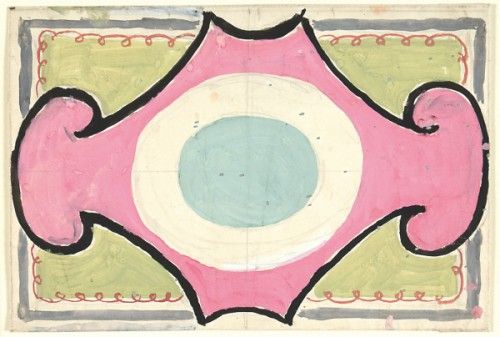
, , , , , , , , , ,

1 Comment

WALKS: What Would Bring Campaigning Women to Buckingham Street, Strand?

Ever since the decision was made for the Women’s Library to move to LSE (now open as the Women’s Library @ LSE) I have been writing posts that draw attention to the many locations associated with the women’s movement in the area around Aldwych and the Strand. My hope is that researchers in the Women’s Library, when taking a break from their labours, will welcome some information that will allow them to see the surrounding area with fresh eyes. Or even, as in the case of Buckingham Street, draw them to an area they may never have thought of visiting.

Buckingham Street, Strand, by John Edmund Niemann, 1854. From the Museum of London Collection, courtesy of the Public Catalogue foundation Buckingham Street, Strand, by John Edmund Niemann, 1854. From the Museum of London Collection, courtesy of the Public Catalogue foundation

Buckingham Street runs south from the Strand, parallel with Villiers Street, close to Charing Cross Station. In this picture Niemann positions us with our backs to the Strand, viewing the length of the street down towards the 17th-century Watergate which, before the building of the Embankment, marked the northern bank of the Thames. In the distance, looming over the Watergate, we can see the towers of Brunel’s Hungerford Suspension bridge, demolished in 1863. This view had, therefore, changed by the beginning of the 20th century, but from it we can glean an idea of the busy-ness of the narrow street,. There is probably less traffic now – at the moment, as London perpetually renews itself, this consists mainly of builders’ trucks – but the street  still ends at the Watergate, by the side of which steps lead down into the Embankment Gardens.

The Survey of London, published in 1937, gives a thorough building history of the street and today’s  London guides – such as this one– mention that Pepys lived at number 12 and Dickens at number 15 (his house now bombed and replaced), but campaigning women, too, have a claim to the street’s history.

18 Buckingham Street, Strand, first home of the WFL, 1907-08 18 Buckingham Street, Strand, first home of the WFL, 1907-08

It was here – at no 18 (at the quieter, river-end of Buckingham Street) that in the autumn of 1907, after the dramatic break with Mrs Pankhurst’s Women’s Social and Political Union, the newly formed Women’s Freedom League opened its office. This was always probably only intended as a temporary solution – the WFL moved  to larger premises in nearby Robert Street the following year. I have always wondered whether billiards was not the reason for alighting on no 18 –  which at this time also housed the office of the Billiards Association. Teresa Billington-Greig, one of those leading the break with the WSPU, had that year married Frederick Greig, a manufacturer of billiard tables – so, perhaps,  when it was clear that they would have to depart Clement’s Inn in a hurry,  it was through him that the rebels heard of an office for rent. I’ve not, however, been able to find any proof for this – doubtlessly wild – supposition. Perhaps, rather, the Strand Liberal and Radical Association, also tenants of number 18, effected the introduction to Buckingham Street.

The WFL lost no time in advertising their existence – issuing several photographic cards during the few months they were operating from number 18.

WSL card published from 18 Buckingham Street WSL card published from 18 Buckingham Street
13 Buckingham Street, Strand, office of the Men's Political Union for Women's Enfranchisement 13 Buckingham Street, Strand, office of the Men’s Political Union for Women’s Enfranchisement

On the other side of the street the Men’s Political Union for Women’s Enfranchisement was based at number 13. The MPU had been founded at a meeting held at the Eustace Miles Restaurant (just the other side of the Strand) in 1910. One of the founders – and the hon. organising secretary of the MPU – was Victor Duval. The premises were also, I think, the offices of his family firm, Duval & Co.  Victor’s mother, Emily Duval, had been one of those who transferred allegiance from the WSPU to the WFL and would doubtless have been a regular visitor to number 18.

19 Buckingham Street, Strand 19 Buckingham Street, Strand

Back on the eastern side of the street, number 19, now under scaffolding as it is remodelled as ‘luxury apartments’, is a considerably larger building than its neighbour, no 18. Among its many tenants was the Emerson Club which in 1908 was described as a ‘Ladies’ Club’ but from 1911 welcomed both men and women members. This was still rather unusual. The Emerson remained at this address until 1925 and numbered among its members the WFL activists Elizabeth Knight, Amy Hicks and Alison Neilans, as well as Mrs Pankhurst’s brother, Walter, and Margaret Bondfield, the future Labour cabinet minister. Sarah Bennet, the WFL’s treasurer, was one of the Emerson’s early shareholders.

By 1908 number 19 also housed the office of the architect Basil Champneys, while Thackeray Turner and Eustace Balfour (the latter the husband of the suffragist Lady Frances Balfour) had their architectural practice next door at number 20. All three architects brought to fruition – mainly in Queen-Anne style red brick – the dreams of campaigning women. Champneys was the long-time architect of Newnham College and In the 1890s Turner and Balfour designed the York Street Ladies’ Residential Chambers – one of Agnes Garrett’s projects  (for which see much more in Crawford, Enterprising Women). Thackeray Turner was also secretary to the Society for the Protection of Ancient Buildings, at this time also based at number 20.  The architects were working out of the type of late-17th/early-18th-century houses so much admired by Agnes and Rhoda Garrett in House Decoration.

Opposite, at number 12, were the offices of the Incorporated Society of Trained Masseuses, the premises of the Midwives’ Institute and Trained Nurses’ Club and the Association of Clerks and Secretaries.

So, a 100 years ago, many different types of women would have had many reasons to make their way down Buckingham Street, stopping off at any one of these addresses. Some might, of course, have carried on down the steps at the end of the street and into the Victoria Embankment Gardens – where two major heroes of the suffrage movement are commemorated.

Mill Tribute

The WFL, based on the south side of the Strand, was very well placed to honour, as they did every year, their particular hero, John Stuart Mill, whose statue is one of several in the Embankment Gardens. (Incidentally you will note from the caption to this card that the WFL had moved into the new Robert Street office by May 1908.) Well into the 1920s women laid tribute before the statue – one 1927 photograph in the Women’s Library collection shows Millicent Fawcett present on such an occasion.

Henry Fawcett's memorial, erected 1886 Henry Fawcett’s memorial, erected 1886

And it is Millicent’s husband, Henry Fawcett, who is the other hero memorialised in the Embankment Gardens. The sculptor of the bronze bust was a woman – Mary Grant,  the fountain’s designer was Basil Champneys and the whole was funded, as the inscription testifies, by Henry Fawcett’s  ‘grateful countrywomen’.

For more information about the people and societies mentioned see Crawford: The Women’s Suffrage Movement: a reference guide.

And do consult the Women’s Library @ LSE online catalogue for details of primary source material.

, , , , ,

Leave a comment

Kate Frye’s Suffrage Diary: The Suffrage Shop in Hythe High Street

Site of the Hythe Suffrage Shop – was 83 High Street and now, after renumbering, no 164.

In mid-1912 this shop at what was, before renumbering, 83 High Street, Hythe- now, rather suitably an animal welfare charity shop, opened as the local Suffrage Shop and Club, run by Miss Georgina Cheffins and Miss Eva Lewis, who, although members of the WSPU, were Kate Frye’s most active supporters in the area as she went about her business of organizing meetings for the New Constitutional Society for Women’s Suffrage. I visited it myself in the summer of 2011 and found that the shop is quite large and, as Kate Frye describes, has a room at the back in which the Suffrage Club held its meetings.

Georgina Cheffins (1863-1932) was the daughter of a Portland cement manufacturer. and In the 1901 census, when she was living with Eva Lewis in the St James’s Mission, Temple Street, Sedgley, Cheshire, they are both described as ‘lay sisters’. Eva (Evangeline) Lewis (1863-1928) had been born in Ontario, Canada, the daughter of John Lewis, Lord Bishop of Ontario. She lived with Georgina Cheffins, who was very much the wealthier of the two, from some time before 1901 until her death.

Both women successfully evaded the 1911 census and in 1912 Miss Cheffins was sentenced to four months’ imprisonment after taking part in a WSPU window-smashing raid in London – breaking windows in Gorringes’ store. In court she declared she was a suffragist by conviction, having worked amongst the poor for 20 years.

When Kate first met them the two women lived at ‘Dunedin’, Seabrook Road, the long road connecting Hythe and Folkestone, but in early 1912 they moved to ‘Cravenhurst’, Napier Gardens, Hythe. When I visited Hythe in 2011 I did not know which house in Napier Gardens had been ‘Cravenhurst’ – and it is only today that I have found a piece of information that links the name of the house to a number – 24 – which is ,I think, opposite the house below – one of several in the street that I photographed at random. Anyway, I think no 24 was at the more secluded end of the cul-de-sac that is Napier Gardens .

Napier Gardens, Hythe

In the summer of 1912 Votes for Women, the WSPU newspaper, reported that the Hythe Suffrage Shop had been visited by many WSPU members on holiday in the area – and that many volunteers had been out selling copies of the paper.

Campaigning for the Vote: Kate Parry Frye’s Suffrage Diary is full of details of the delights – and tribulations – of spreading the ‘Votes for Women’ message in Hythe.  Although Miss Cheffins and Miss Lewis could on occasion be prickly, Kate kept in touch with them well into the 1920s.

See here for much more about Campaigning for the Vote

PS. Update – Thanks to Betty Black for information on the renumbering of Hythe High Street. Nothing beats local knowledge.

Copyright

All the articles on Woman and Her Sphere and are my copyright. An article may not be reproduced in any medium without my permission and full acknowledgement. You are welcome to cite or quote from an article provided you give full acknowledgement

, , , , , ,

6 Comments

Suffrage Stories: Marjorie Hamilton: An Unknown Suffrage Artist

Procession-Pic-for-Clive2 I have long admired this image, created to advertise the 1911 ‘Women’s Coronation Procession’. This particular item was carefully laid by Kate Frye between the pages of her diary. She was proud to be marching that day in the Actresses’ Franchise League contingent.

However I have only just discovered the name of the artist of this appealing flyer was and have immediately set about trying to find out what I can about her.

The name was delivered to me by Ken Florey who, in his superb Women’s Suffrage Memorabilia: an illustrated Historical Study, mentions the image, naming the artist as ‘Marjorie Hamilton’. The US suffrage society, the Women’s Political Union, had clearly recognised an appealing design when they saw it and used it to advertise a meeting held by Mrs Pankhurst in New York’s Carnegie Hall (see Votes for Women, 5 January 1912). Marjorie Hamilton’s name doesn’t appears in Lisa Tickner’s Spectacle of Women – and I must admit that I had not come across it in my own researches into women suffrage artists.

However, now that I have looked into the matter, I see that on 9 June 1911, in the issue that immediately preceded the Procession, the cartoon that appears the front page of  Votes for Women was drawn by Marjorie Hamilton. Moreover, I actually hold a copy of the front page of this issue in my bookseller’s stock – I just hadn’t looked sufficiently closely at the image to notice the signature.

Front page of 9 June 1911 issue of 'Votes for Women'

Front page of 9 June 1911 issue of ‘Votes for Women’

To have been given this position on the front page of Votes for Women was, indeed, something of an accolade – the paper’s usual artist, ‘A Patriot’ [Alfred Pease], had made way for her. Marjorie Hamilton’s ‘cartoon’ is, in fact, an advertisement for the Procession, with the lead character in her drawing dressed in the same way as the suffragette on the flyer. The latter, however, makes a very much bolder impression – the image greatly strengthened by the use of colour.  While the Votes for Women front-page picture is signed with her full name –  that is, ‘Marjorie Hamilton’ – the flyer carries only initials –  but these do appear to read ‘MH’. When describing the artist responsible for the image on the cover of the lavish Programme produced for the occasion of the Procession, Votes for Women  is rather coy – referring to her only as ‘an artist member of the WSPU’.  So who was Marjorie Hamilton?

My research indicates that she was born in Derbyshire in 1882. Her father, Arthur Hamilton, was a banker – a partner in S.Smith & Co’s Bank, Derby. Her mother, Georgina (nee Stokes) had been born in South Africa.  Marjorie had a slightly younger sister, Vera, and in 1891 the family lived, presumably in considerable comfort, with three servants and a live-in (young) governess, at The Mount, Duffield Road, Derby. Ten years later, in 1901, the family was living above the bank premises at 7 Market Head, Market Place, Derby, along with six domestic servants and a bank clerk. However, less than a year later Arthur Hamilton, now described as of ‘The Grange’, Ewell, Surrey, died, leaving £10,800. It was in 1902 that Smith’s Bank lost its individual identity when it merged with the Union Bank of London.

Georgina Hamilton, with her daughters, may have moved to Canada c 1906. Certainly Marjorie noted on a subsequent Canadian immigration form that she had lived in Canada from 1906-1908. Her sister, Vera, married in Vancouver in 1908 and in 1911, when the Canadian census was taken, was living there with her mother, her husband and two young children. Even though she was a member of the WSPU, Marjorie Hamilton, luckily for us, did not boycott the 1911 UK census and can be found, describing herself as an ‘art student’, as a boarder at 4 Mills Buildings, Knightsbridge, an 18th-century court on the north side of Knightsbridge High Road, close to the Barracks. At this time Mills Buildings was a rather raffish address, although her fellow boarders all appear very respectable.

The census was taken on 2 April 1911 and it must have been very soon after, while Marjorie Hamilton was living here, that she was given the rather important ‘Coronation Procession’ commission. Marion Wallace-Dunlop and Edith Downing were in charge of the artistic design of the Procession, which was being executed at 12 Smith Street, Chelsea. Perhaps  it was they who spotted her talent for graphic design. Incidentally on the night of the 1911 census those resident at this address were Miss Dean, a 27-year-old artist’s model, together with a young secretary and a shop assistant whose surroundings, with 8 rooms, between the three of them, were rather more spacious than those of their neighbours. I wonder if they let out one or two of those 8 rooms to the WSPU? It is clear from the reports in Votes for Women that there was a great deal of activity going on at 12 Smith Street in May and June 1911.

Alas, however, that is about all I can discover of Marjorie Hamilton’s career as an artist – except that in 1913 she was advertising that she would be happy to take order for water-colour sketches of country homes.

I next catch sight of her in February 1917 at Liverpool, embarking on the SS Carmania for New York. Her address is given as ‘Cranleigh, Surrey’ and her occupation is ‘artist’. So, in the six years that had elapsed she had presumably had – or at least had attempted to pursue – art as a career.

I did wonder why, in the midst of a war that made Atlantic travel so dangerous, she was making this journey. And then I realised that her final destination was not New York but Victoria, British Columbia and that she must have been going out to be with her mother – who died a month or so after her arrival.

Another seven years go by until in 1924 I found her again, once more about to enter Canada. However this time it is not as an artist but as the prospective matron of the Waifs and Strays Society Receiving Home at 661 Huron Street, Toronto.  This was Elizabeth Rye House – a home to where girls were sent from England to be trained for domestic service. On the immigration form Marjorie Hamilton gave her present occupation as ‘matron’, which may, or may not, indicate that she had found that art did not pay and that she had to find an other means of earning her living.

And there the trail for the moment ends. I know that the Toronto home closed in 1931 – but don’t know if Marjorie Hamilton was still there then. Did she return to England – or remain in Canada. I know that her sister died in Sussex in 1943 – but can find no further trace of Marjorie.

And all this is what comes of wondering who was the artist responsible for a delightful purple, white and green flyer produced something over 100 years ago.

, , , , ,

2 Comments

WALKS: The Women’s Library @ LSE Now Open

Women's Library@LSEToday, 1 August 2013, is a red-letter day for women’s history researchers – for once again they have access to the magnificent Women’s Library archive and museum collections – now open at The Women’s Library @LSE. With research having, perforce, been put on hold for the last few months there was doubtless an impatient queue outside the doors  this morning.

As a long-time user of the Women’s Library – with fond memories of the Fawcett Library and its Tardis-like basement – I was delighted to find an interview with David Doughan – the Fawcett’s dedicated custodian – on the LSE Blog. It is so important that women historians remember their own historiography.

I must say that, when hearing that LSE, (as, of course, do so many other institutions) likes to reward those who give very large donations by attaching their name to a room or building – I regretted even more that Millicent Fawcett’s name has been detached from the Library inaugurated in her memory. The Women’s Library@LSE has a very bright future, but we mustn’t forget the past on which it is built.

When – or if –  those patient researchers now able to access the Women’s Library@LSE are able to tear themselves away from their papers, I have, over the last few months, created a series of posts on buildings in the area around LSE that relate to the Woman’s Cause. You will find links to them all under the Walks tab at the top of this blog.  I thought the information contained in these posts might bring the area to life while legs are stretched and fresh (?) air breathed  during strolls around the Aldwych area.


Courtesy of the International Institute for Social History

Police outside WSPU offices in Clement’s Inn, 1912. Image courtesy of the International Institute for Social History

Leave a comment

Suffrage Stories: ‘Laura Grey’: Suffragettes, Sex-Poison And Suicide

Lavendar Guthrie's Hunger Strike Medal and Votes for Women brooch, photo courtesy of Christie's
Lavender Guthrie’s Hunger Strike Medal and Votes for Women brooch, photo courtesy of Christie’s.

On the morning of Monday 8 June 1914 – a year to the day after the death of Emily Wilding Davison – a young woman was found lying unconscious on the floor of her flat at 111 Jermyn Street, close to Piccadilly Circus. She was discovered by her charwoman, Mrs Spicer,who called the police. They in turn called a doctor, who spent some time attempting resuscitation. But the young woman could not be revived. She had taken an overdose of veronal, a barbiturate to which she had apparently become addicted. Around her were scattered seven empty veronal bottles and by the side of one of them were 23 loose tablets. She had left a suicide note, dated 5 June, addressed to her mother and signed with the initials ‘J.L.G.’, although the young woman was known to her landlord, charwoman and a circle of relatively recently acquired friends as ‘Laura Grey’.

The story revealed by the inquest was one that might be thought too contrived if one read it in a novel, or watched it unfold on stage or film. In it we find all the tropes that concerned British society at that most febrile of times in the summer of 1914.

Laura Grey’s death. caused a brief but spectacular newspaper sensation. In this case the ‘ruin’ of a well-brought-up young woman was associated not only with the familiar evils of drugs, the stage and night clubs but also with the exotic addition of the very topical phenomenon of window-smashing, imprisonment and hunger striking – all that denoted involvement in the militant suffragette movement. On the day that her death was first reported the newspapers were full of reports of police raids on suffragette hide-outs and of suffragette bombing, arson and a hatchet attack on a painting by Romney in the Birmingham Art Gallery.

‘Laura Grey”s real name was Joan Lavender Baillie Guthrie. She had been born in 1889 to a well-off young couple – her father doesn’t appear to have had employment as such, but was involved with the Volunteers, the territorial army of its day. He was Cambridge-educated but had been born in South Africa. During the Boer War he returned there as an officer in the Imperial Yeomanry, dying of enteric fever on 16 May 1900. His wife must have been alerted to his condition because she set sail for Cape Town on 5 May. I don’t know if she arrived before he died, but she returned to Southampton on 14 June having, presumably, seen him to this grave.

In December 1900 Mrs Baillie Guthrie with her two daughters (Lavender and Lilias, as they were known) set off for the Continent. I don’t know how long they spent abroad, but there is no trace of any of them in the 1901 UK census. Lavender apparently received a good education – she was reported to be a proficient student of Latin and Greek – but where and how this was acquired I don’t know.

Mrs Baillie Guthrie first appears on the London local electoral register in 1909 which may indicate that the family had only recently returned from living abroad. It was, anyway, about this time that Lavender Guthrie first joined the Women’s Social and Political Union. As her mother remarked at the inquest, ‘She was not quite a normal girl. She studied very hard, and had ideas of Socialism and of giving her life and her all to her more unfortunate sisters.’ A picture was being painted at the inquest of an unbalanced mind – that Lavender, when about 16 years old, had damaged her face with a chemical. Indeed, the doctor who tended to her when she was dying remarked on a scarring to her face. However, as set out in the inquest report, this episode is directly linked by her mother to Lavender’s desire to do good in the world.

Her mother also said that Lavender was an obedient daughter and, although a member of the WSPU from the age of 18, did not take part in any militant activity until 1911 when she was 21 and had reached the age of majority.

One other aspect of Lavender Guthrie’s character that was considered by her mother as not quite normal was that ‘she thought we were too luxurious in our life. All her life she had been a very good and spiritual-minded girl, and had not cared for any of the ordinary pleasures of life or enjoyments of life. All her ideal was to work, and work very hard.’ She said that Lavender had tried hard to find work to support herself but ‘she found that the wages of unskilled women labour would not support life.’ It was only when she was successful in getting employment on the stage that she was able to earn sufficient to enable her to leave home, apparently, at the end of 1912.

However, for some months in the early part of 1912 Lavender had had no need to seek work as she was  a prisoner in Holloway Gaol  She had taken part in the March 1912 WSPU-organised window-smashing campaign. and was sentenced to six months’ imprisonment for wilful damage. The window she had broken was that of Garrards, the famous jewellers, perhaps targeted it as a protest against the luxurious lifestyle that she abhorred.

In Holloway she went on hunger strike, was forcibly fed and was released after serving about four months. During this time Holloway was packed with suffragette prisoners – among them Emily Wilding Davison – and Lavender Guthrie would have known and been known to these most committed members of the WSPU.

While in Holloway Lavender Guthrie wrote the following poem that was subsequently published in Holloway Jingles, an anthology collected and published by the Glasgow branch of the WSPU. The dedicatee, ‘D.R.’ is thought to be Dorothea Rock. The poem has been singled out by literary critics as having more merit than most of the other ‘Jingles’. (Another poem in the anthology is by Emily Wilding Davison.)

To D.R.

Beyond the bars I see her move,

A mystery of blue and green,

As though across the prison yard

The spirit of the spring had been.

And as she lifts her hands to press

The happy sunshine of her hair,

From the grey ground the pigeons rise,

And rustle upwards in the air,

As though her two hands held a key

To set the imprisoned spirits free.

Listen here to an atmospheric setting by Eva Kendrick of this poem sung by the Northern Arizona University Women’s Choir. (I love it.)

To this suffragette’s autograph album Lavender Guthrie contributed a few lines from Robert Louis Stevenson – ‘The conditions of conquest are easy; we have only to hope a while, endure a while, believe always and never turn back’. Below her given name she added in brackets her stage and suffragette name – Laura Grey. It was the name she used when arrested. Like some other women – particularly of the middle class – she did not want her real name to appear in the papers in order not to embarrass her family. It is likely, therefore, that it was first as a suffragette soubriquet that Lavender adopted the name ‘Laura Grey’, which then gave her a ready-made stage name.

It seems that Lavender Guthrie suffered  from the after effects of forcible feeding and there is the suggestion that it was after her release that she discovered that veronal could ease the ‘neuralgia’ from which she now suffered. Her mother said that Lavender was ‘very ill’ after her release from prison.

Lyceum Theatre
Lyceum Theatre

Lavender’s first stage engagement was in the Lyceum Theatre’s Christmas 1912 pantomime – The Forty Thieves – doubtless an excellent vehicle for displaying the thinly-veiled flesh of the ‘pantomime girls’. At the time the Lyceum was renowned for staging the best pantomimes in London.

Now able to leave the comfort of her Kensington home,  ‘Laura Grey’ lived at first in rooms in Handel Mansions, Brunswick Square, Bloomsbury. Bloomsbury then had a rather louche reputation. However it was not long before she moved to the flat in Jermyn Street, close to the bright lights of Piccadilly. A couple of years earlier (when the 1911 census was taken) the tenant of the flat was a 24-year-old American ‘dancer (artistic) not in work’, who declared that she was married with one child. However neither husband or child was living with her and I feel that here, too, is a story of quiet desperation waiting to be uncovered.

There is no indication in the inquest report of the other shows in which Laura Grey was engaged (although there must have been at least one or two because the Lyceum was described as the first).  The coroner did not disguise the curl of his lip when he referred to her as a ‘pantomime girl’. As such she represented all that was meretricious and sleazy in the eyes of right-thinking people. Pantomime Girl, a novel by Annie Louise Daniells published in 1913 ,did not allow the central figure a happy ending – even if she was not actually forced, unlike poor Laura Grey, to suffer the ultimate wages of sin.

For not only did Laura Grey die, but she died pregnant. How much further could a young middle-class woman fall? The coroner had no trouble at all in revealing the cause  – her involvement with the suffragettes. He read in full the letter that accompanied the award of her hunger-strike medal, sent to Lavender Guthrie by Mrs Mabel Tuke of the WSPU,  and commented ‘Could anything be more calculated to upset the mind of a young girl than receiving this document and this travesty of a medal. The effect was quite clear. She leaves her home, her sister, her mother, for a garret in order to earn her own living and probably devote herself to this cause. She is next on the stage as a pantomime girl. Next we find her in the company of men frequenting night clubs and taking money from them. There is no more about the suffragist movement. The girl seems to have been absolutely degraded, and from then her whole history is one of drink, drugs, immorality, and death from her own hand.’

The jury duly returned a verdict of suicide during temporary insanity. However, this is just what Lavender Guthrie had anticipated. In the note she left for her mother she wrote ‘Of course the kindly Coroner will call it temporary insanity, but as a matter of fact I think this is about the sanest thing I have yet done. I am simply very, very tired of things in general.’ In fact her mother had been so worried about her that she had called in two women doctors – Dr Helen Boyle, who specialised in mental disorders, and Dr Louisa Garrett Anderson, who had actually been imprisoned in Holloway at the same time as Lavender – hoping that they would be able to certify her as insane. Their visit to Jermyn Street, accompanied by two nurses  -so certain were they, from what they had been told by Mrs Guthrie, that they would need to remove Lavender – had taken place on 26 May. The doctors, however, had not found Lavender suffering from any delusions that warranted restraint.

It is difficult to know exactly what Laura Grey’s  Jermyn Street life had been like. She left over £1000 in her will, although this money might not have been easily accessible. According to her mother, although she had initially refused to accept an allowance, by the time of her death she had agreed to receive an annual allowance of £100. Was she receiving money from men, as the Coroner suggested – or assumed? Who knows? Her mother noted at the inquest that she ‘lived in a very self-sacrificing manner, denying herself everything.’ However, it would appear that she must have spent at least some of her money on drink and drugs. When asked by the Coroner if she knew that her daughter ‘had taken to drink’, Mrs Guthrie gave the immortal reply, ‘I had heard of absinthe: I do not know whether that is drink’. Laura Grey’s regular consumption of veronal was evident from the bottles found in the flat. In the touching letter she left for her mother she wrote, ‘I have been taking veronal for the last six months practically every night. I only lied to you about it because I knew you would worry if I told you the truth’.

In this letter Laura Grey also writes, ‘During this last year I have met some very dear souls, both men and women. If you ever come across them and they speak to you of me give them a welcome for my sake, even though I may have met them in bad and immoral ways’. In July Mrs Guthrie wrote a short letter in the Daily Mail, in which she thanked those who had got in touch to sympathise at her loss – and there is a hint that among these may have been some of the ‘dear souls’ to whom Lavender refers. In which case it appears a rather generous letter.

The night clubs frequented by Laura Grey were named as the Astor Club (already defunct by 1914), the Mimosa, the Leicester and the Albert Rooms. They were all doubtless of a transient nature and have vanished leaving no discernible trace.  newspaper reported that ‘she generally wore evening dress at these resorts, but lately she appeared in costumes of the futurist fashion

Betty May (courtesy of Kirsty McKenzie Design Facebook Page)

Betty May, exotic dancer, good-time girl and another frequenter of Soho haunts, in her racy memoir – Tiger-Woman – published in 1929, places Laura Grey in the bohemian Cafe Royal, alongside many better known figures, such as the futurist painter C.R.W. Nevinson. ‘I knew her well’, Betty May writes, ‘and the night before she was found dead she came over to me in the Café and gave me a book she had promised to lend me. We had a long chat and she seemed quite cheerful. She was tall and slim, with a very fine forehead. At one time she had been a militant suffragette.’ Whether or not this charming scene actually did take place I don’t know. Betty May’s memoir doesn’t strike me as totally reliable, but the fact that she chooses to mention Laura Grey at all 15 years after her death is interesting. If Laura Grey was in the Cafe Royal the night before she died, that fact was not mentioned at the inquest. Indeed there was a suggestion in the press that she may have taken the veronal on the Friday night and lain undiscovered all weekend until Mrs Spicer arrived on Monday morning.

Cafe Royal, by Willian Orpen, 1912

Betty May also mentions, as another of the bohemian haunters of the Cafe Royal, both William Orpen, the painter of the above picture, and the poet, Anna Wickham who’ always dressed very severely, and had a deep voice that used to frighten me a great deal’.

Anna Wickham
Anna Wickham

Whether or not Anna Wickham actually knew Laura Grey she was sufficiently moved by her fate to write a poem, Laura Grey, that was published in the Daily Herald (a left-wing newspaper) on 16 June 1914.

And Anna Wickham was not the only member of the literati to be inspired to poetry by Laura Grey’s death. On 14 June 1914 Gilbert Cannan, poet and essayist, wrote to Lady Ottoline Morrell,  ‘these last days I have been haunted and most passionately moved the story of the girl, Laura Grey. Her unassailable spirit thrust deliberately through the worst of life has shone splendidly for me and I wrote this poem which I send to you now..’His biographer, Diana Farr, commented ‘ Here was a girl that Gilbert would have loved to cherish and the poem he sent to Ottoline called simply Laura Grey was his response to a story which moved him deeply.’

But there were many others who were moved in a different direction. The novelist, E. W. Hornung, the author of Raffles, a brother-in-law of Arthur Conan Doyle, and a Kensington friend of the Guthrie family, wrote a letter to The Times, published on 13 June as an Appreciation of ‘Laura Grey’. Referring to her throughout as Lavender Guthrie, he described her as ‘a beautiful and gentle creature: one both gracious and unaffected, indeed as great-hearted and noble-minded and sweet-tempered a girl as ever looked like a Greek goddess and carried herself like a queen.’

This paragon, this icon of young British womanhood, did however have one fault – ‘Erratic and wilful she no doubt had always been.’ It was this fault, ‘observable outside her family circle’, that had caused her to associate with the militant suffragettes, whose ‘methods and practices both inside and outside prison’ oozed ‘slow and subtle sex-poison.’ It was this that had robbed Lavender Guthrie of her ‘bloom’ – ‘the thirst for sensation had become a passion and the craze for revolt had become a disease’. For this he laid the blame firmly on the leaders of the WSPU.

All the newspapers were awash with letters about the case. A few were sympathetic to Laura Grey’s fate but most, like a correspondent to the Daily Express, saw her as the ‘Victim of the Furies’. And you will have no difficulty in guessing who these were.

For their part, the WSPU put its own particular spin on the sad story, declaring that Laura Grey had long left their ranks and it was because she was no longer a suffragette that she had fallen in with the wrong sort of people. Why were the names of the men which whom she had associated – particularly the father of the child she was expecting – not publicised? It was the Government and the attitudes of society that were responsible for Laura Grey’s death. In fact her ‘ruin’  ideally illustrated Christabel Pankhurst’s slogan of the last couple of years – ‘Votes for Women and Chastity for Men’.

It was certainly not a good moment for the WSPU to be associated with drug-taking, for at this very time – amongst all the other newspaper reports of suffragette mayhem – was the story – sensationalised in the popular press – that a solicitor’s clerk had been discovered attempting to smuggle a drug to Grace Roe, one of the WSPU leaders, now on hunger strike in Holloway. The drug was actually an emetic – enabling her to be sick after forcible feeding – not a barbiturate – but the man and, indeed, woman in the street, could now even more easily associate ‘drugs’ with ‘suffragettes’.

If only Laura Grey/Lavender Guthrie had been able to hold out for a couple more months might the war have made a difference to her situation? With the great change that British society was about to undergo, the birth of baby to yet another unmarried young woman might have felt of little less consequence in general, although doubtless still fraught in the particular. In her farewell letter to her mother she sent ‘My love to Lilias, and I hope she will be very happy and marry some decent man whose children you could be proud of’. This strikes me as the saddest sentence in a long, sad letter. Lilias never married. If Mrs Baillie Guthrie had wanted only grandchildren of which she could be proud, she was to be disappointed.

Nearly 100 years after the sad event, Lavender Guthrie’s suicide still has the power to shock. Although I had known of the case in a general way it was only a week ago, when going through cuttings accumulated by my diarist, Kate Parry Frye (for all about Kate Frye’s diary click here), that I came across a copy of Hornung’s letter to The Times. Kate had clipped it and neatly folded it and I doubt anybody else had looked at it until I opened it out last week. I have checked and, although she was in London at the time, Kate makes no mention of the case of Laura Grey in her diary – but it had obviously not gone unremarked.

In another neat leap through the century, Lavender Guthrie’s hunger-strike medal that I illustrate at the head of this post is now held in the collection of Ken Florey, who illustrates it beautifully in his  Women’s Suffrage Memorabilia: An Illustrated Historical Study. So, the very hunger-strike medal that in 1914 was in the Jermyn Street room as poor Lavender Guthrie took her overdose of veronal, was taken away by the police and then held up to such contempt and ridicule by the Coroner, is, a century later, the prized and treasured possession of a dedicated collector of suffragette memorabilia.

Copyright All the articles on Woman and Her Sphere and are my copyright. An article may not be reproduced in any medium without my permission and full acknowledgement. You are welcome to cite or quote from an article provided you give full acknowledgement.
, , , , , , , , , , , , , ,

5 Comments

The Garretts And Their Circle: Annie Swynnerton’s ‘Crossing The Stream’

'Crossing the Stream' by Annie Swynnerton. Manchester City Art Gallery Coleciton. Photo courtesy of MCAG and BBC Your Paintings with the Public Catalogue Foundation

‘Crossing the Stream’ by Annie Swynnerton. Manchester City Art Gallery Collection. Photo courtesy of MCAG and ArtUK

Another of Annie Swynnerton’s paintings left to Manchester City Art Gallery by Louisa Garrett.

The way in which the Garrett circle did their best to ensure that Annie Swynnerton’s work was included in major public collections is discussed in my book –  Enterprising Women: the Garretts and their circle-  available online from me, or  Francis Boutle Publishers or from all good bookshops.

, , ,

Leave a comment

The Garretts And Their Circle: Annie Swynnerton’s ‘The Town of Siena’

'The Town of Siena' by Annie Swynnerton, Manchester City Art Gallery Collection, photo courtesy of MCAG, BBC Your Paintings and the Public Catalogue Foundation

‘The Town of Siena’ by Annie Swynnerton, Manchester City Art Gallery Collection, photo courtesy of MCAG, BBC Your Paintings and ArtUK

This is another of Annie Swynnerton’s paintings left to Manchester City Art Gallery by Louisa Garrett.

The way in which the Garrett circle did their best to ensure that Annie Swynnerton’s work was included in major public collections is discussed in my book –  Enterprising Women: the Garretts and their circle-  available online from me, or Francis Boutle Publishers or from all good bookshops..

, ,

Leave a comment

The Garretts And Their Circle: Annie Swynnerton’s ‘Illusions’

'Illusions' by Annie Swynnerton, Collection Manchester City Galleries, courtesy of BBC Your Paingints & the Public Catalogue Foundation

‘Illusions’ by Annie Swynnerton, Collection Manchester City Galleries, courtesy of BBC Your Paintings  & ArtUK

This painting was left to the City Art Gallery, Manchester, by Louisa Garrett (nee Wilkinson, sister-in-law to Elizabeth Garrett Anderson, Millicent Fawcett and Agnes Garrett.

‘Illusions’ would once have hung in Louisa’s home at Snape in Suffolk. Her house was named ‘Greenheys’ after the area of Manchester in which she and her sister, Fanny, grew up.

The way in which the Garrett circle did their best to ensure that Annie Swynnerton’s work was included in major public collections is discussed in my book –  Enterprising Women: the Garretts and their circle-  available online from me, or Francis Boutle Publishers or from all good bookshops..

, , , , ,

2 Comments

Kate Frye’s Suffrage Diary: In Bed – Photographed With Radio Headphones At The Ready – 1920s

Kate in bed


Working my way through Kate Frye’s extensive collection of photographs I have just come across this one. It is so unusual to see a photo of a woman lying in bed that I thought I must share it with you all. You’ll note the radio headphones hooked on the brass bedstead which probably dates the photo to the second half of the 1920s. The photo would have been taken by Kate’s husband, John Collins, who was a keen photographer. Kate, for her part, was a keen and early radio listener, delighting as she did in all forms of music and drama.

, ,

1 Comment