Yesterday was surreal – as I found myself at Buckingham Palace to receive an OBE for ‘Services to Education – in particular for promoting knowledge of the women’s suffrage movement’. This was an event so far removed from my expectations from life that to mention ‘wildest dreams’ would be to give it too firm a reality.
However it was a most interesting occasion – wonderfully orchestrated – ceremonial and yet convivial – and I was delighted that the history of the women’s movement should be honoured in this way..
After bidding farewell to the gilt, crystal, and red velvet, to the Beefeaters, the Gurkhas, and the Guards, to numerous paintings of the royal family through the ages, and, noted in passing, to a Jan Steen, a de Hooch, and a Vermeer, I and my family party of 12 enjoyed a merry, afternoon-long lunch.
This statue of Mrs Emmeline Pankhurst, erected by her admiring and loving followers, will remain THE memorial to her at Westminster.
I reported on 15 September the very welcome news that, as a result of a vigorous public protest, Sir Neil Thorne and the Emmeline Pankhurst Trust had withdrawn the planning applications they had made to Westminster Council to remove the existing statue of Emmeline Pankhurst and resite it in Regent’s Park.
They had made these applications in order to make way for a new statue of Mrs Pankhurst that they had commissioned, for reasons that are not entirely clear, and intended to place on Canning Green to the west of Parliament Square.
The planning application came up for consideration at a meeting held on 2 October 2018, the minutes of which were issued on 15 October 2018. Perhaps unsurprisingly the decision was:
That the application be refused on the grounds that it is contrary to the Council’s Saturation policy for the reasons set out on page 18 of the agenda and due to the presence of a second statue of Emmeline Pankhurst in the vicinity.
One of the many new books I have enjoyed in this suffrage centenary year is The Prison Diary of Annie Cobden-Sanderson, edited by Dr Marianne Tidcombe.
Annie Cobden-Sanderson, daughter of the eminent Liberal politician, Richard Cobden, and wife of Arts and Crafts bookbinder and printer, T.J. Sanderson, was one of the first suffragettes to go to prison in London. The diary covers her imprisonment, 1-23 November 1906. The fact that Cobden’s daughter was serving time in Holloway made the headlines and sent a frisson through the Liberal establishment.
The following year she went on a US speaking tour and her prison credentials engendered handsome publicity for her friend Harriot Stanton Blatch’s Equality League.
The book contains both a facsimile of the diary (the original is held at LSE) and a transcription, together with extensive notes by Dr Tidcombe on the characters and events mentioned and a biographical introduction giving a full description of Annie’s life.
Annie Cobden-Sanderson was arrested again in 1909 – on the occasion shown in the photograph above – but that time her fine was paid without her knowledge, depriving her of another short prison term.
This beautifully produced and illustrated book, published by Libanus Press, is available from all bookshops and from Amazon – https://tinyurl.com/y7asmw8g
A planning application has been made to Westminster Council to dismantle this statue of Mrs Pankhurst – which stands as close as possible to the Houses of Parliament.
The plan is to banish this statue to the grounds of Regent’s University, a private university, in Regent’s Park. See the planning application here.
The group behind the application calls itself ‘The Emmeline Pankhurst Trust’ but has no connection with the other Pankhurst Trust that is working to restore the Pankhursts’ home in Nelson Street, Manchester. Nor does it have any connection with the Pankhurst family. Rather, it is a mysterious group led by a former Conservative MP (for Ilford South), Sir Neil Thorne, whose wife, according to a newspaper report, was walking her dog through Victoria Tower Gardens when she encountered Mrs Pankhurst’s statue and, knowing nothing of its history, thought it might be better placed elsewhere.
This statue was funded by the Pankhurst Memorial Fund set up following Emmeline’s death in 1928 and championed by fellow suffragettes Kitty Marshall and Rosamund Massey. Flora Drummond was the chair of the group and Lady Rhondda the treasurer. A fund of £2500 was raised, the statue commissioned, and in 1930 it was unveiled by the prime minister, Stanley Baldwin, with Dame Ethel Smyth conducting the band. See Pathe newsreel of the occasion here.
In the 1950s works in Victoria Tower Gardens endangered the statue but, thanks to the dedication of her surviving friends, it was moved even closer to the Houses of Parliament, to the present site. Ever since 1930 it has been the scene of commemoration, not only by former suffrage campaigners, but by hundreds of thousands of members of the public who have invested their memories in this site. Here is a 1955 newsreel item of former suffragettes meeting by the statue (then in its original position in Victoria Tower Gardens) in celebration.
Sir Neil Thorne and his group propose to create a new statue of Mrs Pankhurst and site it on Canning Green, which is a rather forgotten stretch of grass separated from Parliament Square by a very busy road. Those campaigning for the statue to Millicent Fawcett were at least able to claim for her a site in Parliament Square itself. This proposed new statue to Mrs Pankhurst would be way in the background – separated from Parliament by two main roads and the whole of Parliament Square. What is the sense in that when at the moment she is closer than any figure (other than Oliver Cromwell!) and when photographs of the statue (and the memorial to Christabel Pankhurst at the base) also capture the Mother of Parliaments? If Sir Neil Thorne’s group had their way she would be very lonely, stranded with George Canning on a meaningless piece of grass and all the history invested in the original statue forgotten
Because, unsurprisingly, Westminster Council won’t countenance two statues to Mrs Pankhurst within a short distance of each other, Sir Neil Thorne’s group has had to find a way of removing the original statue, which at the moment is Grade 2 Listed.
There was an attempt to try and move it to her grave in Brompton Cemetery, but that came to nothing. So now their idea is to remove it to the grounds of Regent’s University in far off Regent’s Park, with which Mrs Pankhurst has no association whatsoever. Sir Neil Thorne, however, does – in that he is a member of the Steering Group Committee for the British Chinese Armed Forces Heritage project, a collaboration between the Ming-Ai (London) Institute and Regent’s University. Presumably this association is not unconnected to the offer by Regent’s University to remove the problem of the original statue. Who do you think will see it in the shrubberies of Regent’s Park?
Here is the planning application for the erection of the statue in the grounds of Regent’s University. It contains a spurious attempt to link the fact that the buildings now occupied by Regent’s University were erected by Bedford College – once a woman-only college – and that, therefore, this is a suitable home for Mrs Pankhurst’s statue. This is nonsense – as Mrs Pankhurst was never involved in any campaign to advance women’s education. Such a meretricious elision of historical truth.
Finally, you can read the planning application for the new statue here. You will note that when it was first presented in 2017 it received a number of comments in support. On reading them I think you will get the sense that those supporting the new statue don’t seem to know anything of suffrage history, far less the fact that Emmeline Pankhurst already has a statue.
Of course, if this ‘Pankhurst Trust’ had wanted to erect a new statue to Mrs Pankhurst that did not involve casting the original aside as though it was of no consequence, I would have no objection. But I feel very strongly that we should honour the intention and actions of those who committed their time and money to setting Mrs Pankhurst in such an excellent position next to Parliament. If the group behind these planning applications would like to honour the memory of Mrs Pankhurst they would do better to support the original ‘Pankhurst Trust’ , which is attempting to create a museum in the Pankhursts’ former Manchester home, rather than wasting hundreds of thousands of pounds on an unnecessary piece of statuary and in the process destroying a valuable site of suffrage history.
Time is running out. If you do not agree with these three plans:
to dismantle the existing statue of Mrs Pankhurst from its existing site – OBJECT
to re-erect the original statue in the forecourt of Regent’s University – OBJECT
erect a new statue of Mrs Pankhurst on Canning Green – OBJECT
Updates: 22 August 2018
1. A couple of online petitions have been started – and one, hosted by 38 Degrees – see here – has attracted thousands of signatures. This is pleasingly popularist but, if you live in the UK, is NO SUBSTITUTE for making comments on the 3 planning applications that are being put to Westminster Council. It is imperative in planning matters to go through the proper channels. I have asked the originator of the petition to include links to the planning applications, but nothing has yet been done. UPDATE: A LINK HAS NOW BEEN INCLUDED
The Westminster officer in charge of the case has a responsibility to read all comments made and take notice of them when writing his/her report to the Planning Committee. Even if he/she knows of a petition there is no obligation to take any notice of it.
I am worried that those who only sign the petition will feel they have ‘done their bit’ but will actually have wasted a very real opportunity of making their views known to the Planning Committee.
There is no difficulty in registering objections to the planning applications – hundreds have already done so. No suffragette would have been deterred!
2) The Curator’s Office at the Palace of Westminster has commissioned a very thorough report into the plan to remove Mrs Pankhurst’s statue from Victoria Tower Gardens – published today (22 Aug 2018). Read it here. It makes extremely interesting reading but, to cut to the chase, the verdict is definite. ‘The proposal to move the memorial, therefore, should not be granted planning permission or listed building consent.’ (Page 37)
UPDATE 15 SEPTEMBER 2018
The proposals to remove Mrs Pankhurst’s statue and re-erect it in the grounds of Regent’s University have just been WITHDRAWN.
The planning application to erect a new statue of her on Canning Green is still ‘Pending’.
Hoowever, we would be wise not to be too complacent…this may be some kind of tactical move. Be vigilant.
Copyright
All the articles on Woman and Her Sphere and are my copyright. An article may not be reproduced in any medium without my permission and full acknowledgement. You are welcome to cite or quote from an article provided you give full acknowledgement.
My new catalogue – No 198 – will contain a large collection of suffrage ephemera kept all their lives by three sisters, Edith Lizzie (1881-1958), Florence Emily (1882-1967), and Grace Margaret (1887-1966) Hodgson.
Women of the Hodgson family. With mother, Jemima, in the centre it is thought that Grace is on her right, with Mabel back left, next to Florence and with Edith on the right (Photo courtesy of Mabel’s descendants)
They were the daughters of Edward Hodgson (1857-1919) who was, successively, a linen draper, by 1901 a dairy manager and in 1911 was a ‘dairyman, unemployed’. The 1901 census found Florence, who is described as a ‘telegraphist’ (she worked for the Post Office), staying as a boarder, with a fourth sister, Mabel, at the Sunday School Union Home of Rest in Wykeham Road, Hastings. This would suggest that these sisters, at least, had possibly been teachers at Sunday School. Edith and Grace were back home with their parents, living at 31 Lawford Road, Kentish Town – Grace was a schoolgirl and Edith was working as a pupil teacher.
When the next census was taken, in 1911, Grace, who is now a teacher working for the LCC, and Mabel, a telegraphist, were at home with their parents at 39 Estelle Road, Gospel Oak, Hampstead – but there is no trace of Edith and Florence. There are two ‘Census Resistance’ badges in the collection – perhaps once owned by Edith and Florence. By now they, together with Grace, had been active for some time in the Women’s Freedom League and, as they can be found nowhere else on the census, it is to be presumed that they were following the call to boycott. For by this time all the sisters, except Mabel (who married in 1914), were active members of the Women’s Freedom League. It is likely – because there are items of WSPU ephemera in the collection – that they had originally joined the WSPU, but had then moved over to the WFL.
The collection also contains two very rare badges referring to the right of the subject to petition the King. These are associated with the WFL picket of the House of Commons organised by the WFL between July and October 1909. A postcard to ‘Miss Hodgson’ from Mrs Bettina Borrmann Wells, who organised the picket, makes clear that Edith, at least, took part in the picket.
The collection contains many other badges, as well as sashes worn by the sisters, ribbons that may have been worn as neckties, a miniature WFL pennant representing Holloway Prison, and a home-made ‘dolly bag’ – a green drawstring bag with gold carrying straps, on the front of which is sewn a WFL cloth shield badge. It is very unusual to find items of suffrage dress that have a clear provenance. The sisters’ intense interest in suffrage personalities is demonstrated in the large number of real photographic portrait postcards that they bought – and kept. These include members of the WSPU as well as of the WFL.
The sisters continued supporting the WFL with financial donations until at least 1932. They continued to live together for the rest of their lives – latterly at 39 Laurier Road, Dartmouth Park, NW5. Family memory has it that the sisters had one each of the house’s three floors.
The sisters were obviously keen to see something of the world – and in 1930 all three travelled to Tangier and two years later Edith and Grace visited Japan. They probably had other adventures – but these are the only ones that survive in the records.
As with the Stevenson Sisters, about whom I wrote last week, no family memory remained of the involvement of Edith, Florence and Grace in the suffrage movement – nor, indeed, anything else of their lives – the fate, as I’ve mentioned before, of the maiden aunt. It is only since one of Mabel’s descendants took the Collection to an auction house that something of their story has slowly been revealed.
If you would like to receive a copy of the catalogue containing the Hodgson Collection, email me elizabeth.crawford2017@outlook.com
Copyright
All the articles on Woman and Her Sphere and are my copyright. An article may not be reproduced in any medium without my permission and full acknowledgement. You are welcome to cite or quote from an article provided you give full acknowledgement.
Place is important to me and sometimes my attention is caught by an incident occurring somewhere I’ve known well. And so it was that four years ago I noticed that a suffragette ‘outrage’ had taken place at the Richmond Post Office. Ella Stevenson, a WSPU member, was charged with placing a packet containing two tubes of phosphorous in the post box attached to the main Richmond Post Office. In my youth I knew this Post Office very well – it is a rather fine building – 70 George Street – but was long ago abandoned by the PO and is currently a branch of Anthropologie. Quite coincidentally, very soon after I had become aware of this incident and had pictured it in my mind, I was asked to value two hunger-strike medals – one awarded to Ella Stevenson and the other to her sister, Geraldine. Other matters have intervened, but now, four years later, here is something of their story.
Ella and Geraldine Stevenson were two daughters in the large family (12 children, I think) of Leader (1826-1907) and Louisa Stevenson (1828-1913). Leader Stevenson, who was an ‘Australia merchant’, was born in London of non-conformist parents, his wife in Tasmania. In the first decade of the 20th century the family was living at 10 Cumberland Road, Kew.
Both Ella [Ellen] (c. 1860-1934] and Geraldine Stevenson (1866-1949) were financial supporters, in a smallish way, of Mrs Pankhurst’s militant suffrage organisation, the Women’s Social and Political Union (WSPU) and until October 1910 Ella was Literary Secretary of the Richmond and Kew WSPU.
Ella’s first militant action seems to have taken place on 4 December 1909 when, as ‘Ethel Slade’, she was arrested in Rawtenstall, Lancashire, after breaking windows in the local Liberal Club. She had gone north to protest at a meeting held by a government minister, Lewis Harcourt, but had been barred from the theatre where it was being held. She refused to pay a fine and was sentenced to 14 days’ imprisonment. It doesn’t appear that the police had yet discovered her real identity.
The following year, in November 1910, as ‘Ethel Slade’, Ella Stevenson was sentenced to 14 days’ imprisonment after taking part in demonstrations surrounding the ‘Black Friday’ riot in Parliament Square.
Neither Ella nor Geraldine Stevenson was at home on census night in April 1911 and we may presume they were following the WSPU boycott call. Later in the year, again as ‘Ethel Slade’ Ella was charged with breaking windows in Parliament Street on 21 November – as part of an organised WSPU demonstration (because the government was proposing to bring in a Manhood Suffrage Bill – excluding women). ‘Ethel Slade’ was sentenced to 14 days’ imprisonment.
Now, although I know that Geraldine Stevenson earned a hunger-strike medal, I can find no trace of her among suffragettes arrested by the police nor does her name appear in any news reports. However, when she was breaking windows in Parliament Street ‘Ethel Slade’ was accompanied by a ‘Grace Stuart’, who was, in fact, Geraldine Stevenson, using a pseudonym, but keeping her own initials.
Both ‘Ethel Slade’ and ‘Grace Stuart’ were released from prison on 12 February 1912. At the ‘Welcome Breakfast’ ‘Ethel Slade’ said it was a great honour for women to go to prison and mentioned that she was going to volunteer for the next deputation.
A month later, in March 1912, Grace Stuart was sentenced to 6 months’ imprisonment after taking part in an organised WSPU window-smashing campaign – and I suspect it was during this term in Holloway that she earned her hunger-strike medal.
On 5 November 1912, as ‘Ethel Slade’, Ella, with another women, broke 9 plate-glass windows in New Bond Street – and was sentenced to 4 months’ imprisonment. They were protesting against the fact that an amendment to the Irish Home Rule bill that would have allowed for a measure of female suffrage was lost. She went on hunger strike, was forcibly fed, and was released after two weeks.
The former Richmond Post Office
On 5 March 1913 Ella Stevenson was sentenced at the Old Bailey to 9 months’ imprisonment for placing a packet containing two glass tubes of phosphorous in the post box attached to the main Richmond Post Office. It had burst into flames. It is more than likely that she had been given the phosphorous by Edwy Clayton, an analytical chemist of ‘Glengariff’, Kew Road, Kew, whose wife was honorary secretary of the Richmond and Kew WSPU. Around the time of Ella’s sentence, Clayton was charged with conspiracy to commit damage (supplying bomb-making information and materials) and sentenced to 21 months’ imprisonment. He went on hunger strike, was released under the ‘Cat and Mouse’ Act and eluded re-arrest.
When sentencing Ella Stevenson the Recorder said that ‘it was impossible for people to be allowed to go about defying the law because they require some change made in it. Such a condition of affairs would lead to a state of barbarism’. Defendant replied that she would go to prison to carry on the fight as she had carried it on outside’.
No women were allowed in court during her trial and Ella specifically asked for a ‘lady reporter’ to be allowed in court and had also asked for her sister [Geraldine?] to be present. But the Recorder was adamant – ‘No women’. There was something of an outcry about the exclusion of women, and the Commissioners of the Central Criminal Court quickly decided that this would not happen in future.
Ella Stevenson went on hunger strike as soon as she got to Holloway and was forcibly fed. ‘Extraordinary vitality is a splendid thing to have outside prison, it is tiresome inside. I am not downhearted’ she is reported as saying. A report in Votes for Women, 11 April 1913, described how her nostrils were severely injured by forcible feeding and one of her teeth had been knocked out when members of the prison staff were trying to force her mouth open. The Governor reported: ‘the task has been very difficult and disagreeable one owing to her violent resistance; but the medical officer reports that though she exhausts herself by her resistance, there are no serious ill-effects. As to her teeth, the facts are that on one occasion she bit the rubber shield over the doctor’s finger and broke a tooth which was a mere shell owing to decay .Her lip has been sore from an attack of herpes but is now better. These details are distressing and I should be glad to advise a remission of sentence if it were not almost certain that she would on her release commit further offences. I need not say that a strict watch is kept over her condition and every care taken to prevent her injuring herself.’ It is clear, from a letter written to the Home Office by Geraldine Stevenson, that it was one of Ella’s front teeth that was broken – a rather distressing thing to happen to a middle-aged woman in Edwardian Britain
A 17 April 1913 report from Holloway Prison shows that she was given 2.5 pints of ‘Horlicks, Brand’s Essence, Allenbury’s Milk and egg – fed twice by oesophageal tube. Violently resistive the whole time.’
Ella was eventually released from prison on 28 April under the ‘Cat and Mouse’ Act – the Temporary Discharge of Prisoners Act, one of the first four prisoners released under the Act. She did not return to Holloway on 12 May as required – but was re-arrested on 7 August 1913, while selling The Suffragette in Richmond, and was taken back to Holloway to continue her sentence. Her mother had died at home in Kew just over two weeks earlier – on 19 July 1913.
Ella again went on hunger strike and was released on 14 August under the terms of the ‘Cat and Mouse’ Act. While in prison she broke windows and her conduct was deemed ‘Bad’. A Report from the prison’s medical officer (13 August) mentioned that she ‘has forsaken sleep owing to constantly recurring dreams that she has swallowed a drop of water by mistake. Feels extreme satisfaction on finding it is only a dream.’
A ‘Wanted’ Notice for Ella Stevenson appeared in the Supplement to the Police Gazette 2 January 1914. ‘Wanted – for failing to return to Holloway Prison on 22 Aug 1913, as required by the conditions of her discharge under the Prisoners’ Temporary Discharged Act (1913), Ella Stevenson, alias Ethel Slade CRO No S/165568, age refused (about 45), height 5ft 6in; complexion sallow; hair light brown turning grey, and eyes grey.’
Perhaps as a result of this publicity, on 23 January 1914 Ella Stevenson was re-arrested, was once again taken to Holloway, where once again she adopted a hunger-and-thirst strike and was released a few days later (under the ‘Cat and Mouse’). She was arrested again on 17 March, released on 19 March, and re-arrested 23 June, and released 27 June. She described this last occasion: ‘I was arrested in Richmond very early on Tuesday morning, June 23. I attempted to strike the man who arrested me, but was taken to Richmond Police Station where I was held until 2 o’clock and then taken through the streets of Richmond firmly grasped by two men in uniform. Finding the procession was to be of this very public nature, I decided to make the most of the opportunity to get the people to understand, if possible, what was happening. I resisted the whole way telling the people that I was resisting an iniquitous Act on principle. I gave them as much information as I could in the time, and at the railway station and afterwards in the carriage, when several people got in with us, I was able to appeal to them and reason with them without interruption….’The Suffragette, 10 July 1914. Once back in Holloway she again went on a hunger-and-thirst strike, was released on 27 June and does not appear to have been re-arrested before the outbreak of war on 4 August brought the WSPU campaign to an end.
Picturing Ella Stevenson’s activity in George Street and, eventually, that enforced march through Richmond certainly enlivened my rather tedious wait at the bus stop opposite the station as I was on my to the National Archives last week. And, once there, I met her again in files describing her treatment in Holloway and her resistance to it. No real knowledge of the part she and her sister played in the fight for the vote – or, indeed, anything else at all of their lives – has survived within her family. Such is the fate, noted time and time again, of the maiden aunt.
P.S. For a Museum of London surveillance photograph of Ella Stevenson, probably taken when she was in Holloway – see here.
And, quite coincidentally, the Museum of London was earlier this year given the illuminated scroll awarded to Ella Stevenson by the WSPU after one of her imprisonments. All the pieces of the Stevenson jigsaw are falling into place.
Copyright
All the articles on Woman and Her Sphere and are my copyright. An article may not be reproduced in any medium without my permission and full acknowledgement. You are welcome to cite or quote from an article provided you give full acknowledgement.
As part of Bloom! – a festival celebrating horticulture and flowers in York – I was invited give a talk yesterday about Fanny Wilkinson, Britain’s first professional woman landscape gardener, in Middlethorpe Hall, the home of her youth.
Middlethorpe Hall, now owned by the National Trust and run by the Historic House Hotels, is utterly lovely – from its panelled interiors, delicious food, kind staff – to its interesting and well-kept – and extensive – grounds. It retains an appealingly domestic atmosphere and it wasn’t difficult to think of Fanny Wilkinson living there in the 1880s with her mother and sisters.
Yet Fanny was not content with being a ‘daughter-at-home’ and enjoying these beautiful surroundings (although letters show she was delighted to return to Middlethorpe for short breaks) and it was while living here that she developed the ambition of becoming a landscape gardener. Wasting no time, she set off for London and enrolled at the Crystal Palace School of Gardening, run by Edward Milner who had been a pupil of Joseph Paxton. She was the only woman student- and an upper-middle class woman at that. All the others were male artisans – for whom the School was intended.
If you are interested in discovering just how many of London’s open spaces were designed by this one determined woman, you can read all about Fanny Wilkinson’s extremely successful career – and discover how it was intertwined with those of Elizabeth Garrett Anderson, Millicent Fawcett and Agnes Garrett, in Enterprising Women:the Garretts and their circle see https://francisboutle.co.uk/products/enterprising-women/
Copyright
All the articles on Woman and Her Sphere and are my copyright. An article may not be reproduced in any medium without my permission and full acknowledgement. You are welcome to cite or quote from an article provided you give full acknowledgement.
If you are one of my readers interested in the history of the women’s suffrage movement, you will be pleased to know that, in this centennial year, Women’s History Review is allowing free access to a number of past-published articles dealing with all aspects of the campaign. Here is the link to the collection. This should be particularly useful to Early Stage Researchers specialising in suffrage history who may be finding it difficult to grasp of the scope of previously published work in the field.
Grace Roe walking out of Lincoln’s Inn House – under arrest – May 1914. She was held in prison from 23 May, on hunger strike and forcibly fed, until finally released on 10 August, under the government amnesty
I’m particularly pleased that an article I wrote that was published in 2008 – Police, Prisons and Prisoners: the view from the Home Office – is now easily accessible. It is based on Home Office papers held in the National Archives, viewing suffragette militancy through the eyes of the authorities rather, than as been more usual, through the writings of the suffragettes. The article concludes by demonstrating how, in the weeks before the outbreak of war in August 1914, the authorities were tightening their grip on the WSPU. The final paragraph of the article reads:
‘As a final thought, rather than asking the usual question “Did militancy achieve votes for women?”, I would like to pose the question “Could the government have been successful in suppressing the WSPU?” By the summer of 1914 it certainly appeared to have every intention of doing so. The impression has remained, fostered very effectively in their lifetimes by the members of the Suffragette Fellowship, women who, of course, never saw the files that the state had compiled on them, that the WSPU was set on a winning trajectory and that only their patriotism brought the campaign to a conclusion. But is this a true picture of the battle between the Home Office and the suffragettes when the shutter snapped in August 1914? I would suggest that the position of the WSPU as seen from the Home Office was altogether more precarious.’
This is not a conclusion from which, in the ten years since the article was published, I’ve had any reason to differ.
Copyright
All the articles on Woman and Her Sphere and are my copyright. An article may not be reproduced in any medium without my permission and full acknowledgement. You are welcome to cite or quote from an article provided you give full acknowledgement.
Ethel Moorhead is one of my favourite militant suffragettes. Not on account of the reality of her campaign of damage and arson,which was extensive, but because of the way she later wrote about it.
Ethel Moorhead’s militant suffrage career is well known – or, at least, well known to those who take the trouble to read about it in The Women’s Suffrage Movement: a reference guide or in Leah Leneman’s entry on her in The Oxford Dictionary of National Biography – for she was one of the most turbulent of the Scottish suffragettes. In 1913 Ethel was a ‘Mouse’ – on the run from the police, let out of prison after hunger striking. Over a period of months, until she was rearrested, caught redhanded about to create further mayhem, she left a trail of destruction as she roamed Perthshire and Renfrewshire, setting fire to buildings. Her close companion on this jaunt was Fanny Parker (about whom you can also read in The Reference Guide).
Fanny Parker
So far, so not an entirely unusual way of life for a militant suffragette. But it is the life that she lived after the war that is so intriguing. She and Fanny remained close until the latter’s death in 1924 – in Bordeaux. She was living there with Ethel and Ernest Walsh, a young American poet and Ethel’s protege. With money left to her by Fanny, Ethel and Ernest then launched This Quarter, the most Modernist of little magazines, publishing in the first issue work by Ezra Pound and in the second work by James Joyce and Djuna Barnes.
This Quarter, Vol 1: 2 – the ‘Incendaries’ issue (courtesy of University of South Carolina Libraries)
No editorial modesty prevented Ethel from including in the first issue four of her paintings (oh, yes, she had had a thorough art training in ‘Greydoom’ as, in a Modernist way, she referenced Edinburgh) and, in the second issue, Incendaries (Work in Progress) a moving, autobiographical account of her early life and suffragette activities. Incidentally, ‘Work in Progress’ was a phrase attached to the title of work by at least one other contributor to This Quarter – suggesting that the writer is still grappling with his/her material – is still thinking it through. – in an acceptably Modernist stream-of-consciousness manner. Alas, however, Ethel did not produce any further installments of Incendaries. She and Ernest Walsh co-edited those first two issues and after his death in 1926 she continued as sole editor for two more delightfully idiosyncratic issues, until spring 1929. The magazine continued until 1932, but Ethel had bowed out.
I don’t feel able to pontificate on the relationship between Ethel and Ernest Walsh. Her Wikipedia entry says that they were married, which they were certainly not. Another website states that she had a child by him, which she did not. Walsh did have a daughter with Kay Boyle, an American novelist, who made clear that she replaced Ethel in Ernest’s affections.
Incidentally, Kay Boyle left a description of Ethel –‘ short bobbed hair, with only a little grey in it, and the pince-nez she wore gave her an air of authority; but there was at the same time something like shyness, or wariness in her small uneasy brown eyes and her tense mouth.’ This was slightly more flattering than that issued by the Criminal Record OFfice in 1914 – ‘aged 44, 5’6″ tall, with brown eyes (‘wears pinze-nez’), oblong face, receding chin, slim build, stooping shoulders’. Kay was, of course, a far more glamorous creature.
But back in 1913 there is no doubt of the affection Ethel and Fanny (‘Fan’) Parker felt for each other. As Ethel wrote in Incendaries – ‘They snatched friendship as they rushed past on mad quests’. And in Incendaries she describes one particular ‘mad quest’ – the burning of a church.
‘Fan had on a jaunty dress, a coloured sweater and a knitted cap to match and was gracefully padded with the necessities of the job. The Mouse was wearing the blue dress Fan had borrowed from the Glasgow doctor’s wife and which she was always clamouring for, – she was uncomfortably padded with the necessities of the job, they filled out the blue suit and made it fit better. She had on the Rufus wig [it was red], and blue earrings, and a red hat and veil. They looked queer and men ogled them. They both carried harmless looking housewife bags, but which were heavy with paraffin and there were even small lumps of coal in the bottom. They were on a journey, – when it got dark there were eight miles to walk. They were not gay and jaunty.
About midnight they got to the outskirts of the village. All was dark and quiet. They went into a field to wait until all was quieter. They put down their packs and were afraid of falling asleep..The day before they had scouted the pagan temple, – all had been memorized, they wouldn’t have to think now. They were cold as black granite, their minds were black granite..They reached the old churchyard as the bells rang out twice. They made their way through the tombstones to the church. On a tombstone with pedestals, under a small window, they put down their stuff. They took it off their persons and laid it down carefully.
The window was a small ventilating window like a skylight. The Mouse could reach it by standing on Fan’s shoulders. It was held open by a fixed iron bar. The iron bar did not give. She had to squeeze through the narrow space between one side of the iron bar and the wall. She squeezed through and let go and fell amongst pews. She got up and made her way to a little Gothic doorway. She knew where to find it. It was on the same side as the window. She found it easily, – she ran her hands over the oak door feeling for the key, she hoped the key would be in the lock – she pulled something with a spring and the door opened..Then Fan (who was in a frenzy to get in by the skylight window, and nearly got in) came in the Gothic doorway.
They carried in the stuff from the tombstone, they carried in the oil, the candles, the wadding, into the pagan temple for the last rites. They shut the oak door behind them. They knew where to go. They piled a heap of firelighters and on the top they put small lumps of coal and broken candles. At a little distance off they placed two candles for lighting, they connected them with the firelighters by long strips of wadding, they soaked the wadding with paraffin, they poured paraffin on the firelighters, they poured paraffin on the woodwork, they emptied a tube of inflammable stuff, they lit the candles, they walked out by the Gothic doorway.’
This is as dramatic a retelling as any of an episode of suffragette militancy. There is no doubt that Ethel was the Mouse and that, therefore, the arson attack was likely to have been made while she was on the run between October 1913 and February 1914 – or between her release from prison later in February 1914 and the outbreak of war. But which church was it that they fired? So far I’ve been unable to identify it. UPDATE. While researching something else I believe I’ve found the answer. The church was Carmichael Parish Church (now Cairngryffe Parish Church) in Lanarkshire. An arson attempt was made on it at the beginning of July 1914.
The following is from the Church’s website:
‘ In 1914 a group of women suffragettes broke into the Church and attempted to set it on fire. Beyond some scorching of the gallery carving no structural damage was done however and the Church is believed to have been saved by its hard oak furnishings. The Kirk Session entry recording this event reads as follows :-
“8th July 1914. The Kirk Session offer to Almighty God their heartfelt thanks for the preservation of their dear and beautiful Church from destruction by fire on a night between Sunday28th June and 1st July, 1914. Some person or persons unknown entered the Church by breaking the vestry window and piled chairs, bibles etc on the pews underneath the Carmichael gallery and, after sprinkling these with inflammable material, set fire to them. The damage was trifling considering what might have been done if the flames had taken hold of Carmichael gallery. The Kirk Session are grieved that any person could have allowed such sacrilegious intentions to enter into his or her heart.”
Fanny Parker was arrested a few days later on 8 July, while she and Ethel were attempting to place two bombs at Burns’ cottage at Alloway – about 45 miles from Carmichael. Ethel escaped and was not recaptured by the time war was declared on 4 August.
Ethel Moorhead has most definitely not been forgotten. Apart from all that has been written about her – and she was even the subject of a short film – ‘Ethel Moorhead Place’ forms a little suffragette enclave (close to ‘Frances Gordon Road’ – she was another militant) in a new development on the outskirts of Perth. I wonder what she would have made of this as a memorial?
Copyright
All the articles on Woman and Her Sphere and are my copyright. An article may not be reproduced in any medium without my permission and full acknowledgement. You are welcome to cite or quote from an article provided you give full acknowledgement.
BBC Three Counties Radio have broadcast an hour-long programme about the suffrage campaign – suffragist and suffragette – in the area that they cover. Kate Frye, who lived at Bourne End, was selected as Buckinghamshire’s representative – and the programme includes several quotations from her diaries.
An alert to all those interested in suffrage history.
Now available on iPlayer – a brand-new, hour-long programme based around the invaluable recordings made in the 1970s by Professor Sir Brian Harrison of former suffragists and suffragettes.
Called ‘The Lost World of the Suffragettes’, the programme is presented by Jane Garvey and, alongside the many strong and evocative voices of the suffrage protagonists, features the voice of Professor Sir Brian Harrison, interviews with Jad Adams, Diane Atkinson, Helen Pankhurst and myself – and music making by Naomi Paxton and Clare Mooney. The programme covers a wide range of subjects – from the political situation, violent militancy, prison and forcible feeding, to the comic representations of suffragettes by their contemporaries.
The programme is a Made-in-Manchester production for which I acted as co-producer with Ashley Byrne.
For those of you who might be interested in stamp collecting – I’ll just mention that I was commissioned to write the material that accompanies the Royal Mail’s Special ‘Votes for Women’ Stamps – issued on 16 February. My intention was to convey to an audience that probably knows little of the subject a fair slice of suffrage history, giving due prominence to both the suffragists and the suffragettes. I wasn’t involved in selecting the images used on the stamps, but do think they look good, giving a balanced view of the movement.
To commemorate the centenary of the Representation of the People Act 1918, 100 Banners are being created by communities across London to feature in various events in the capital to mark the anniversary of women first getting the vote. The brainchild of Digital Drama – you can discover more about the project here.
I acted as a historical consultant to ‘100 Banners’ and speak about suffrage banners and their makers in ‘ Silk, Satin and Suffrage’ – the film made by Digital Drama to give context to the project.
Well, 6 February 2018 was well and truly celebrated. I’m not sure if I ever remember the media getting behind another political anniversary with such verve – the coverage was akin to that of a royal wedding. All the talking heads that could talk, talked.
You can catch me talking about the suffrage campaign on Woman’s Hour
And talking about my new book, Art and Suffrage: a biographical dictionary of suffrage artists on the Robert Elms Show on Radio London (starting at c. 2hrs 37 mins)
Kate Frye also featured in yesterday’s special suffrage edition of Stylist. She would have been amazed and thrilled to think of her daily round being immortalised in this way.
I also gave interviews to Radio Stoke, Radio Northampton, Radio Bristol, Radio Sheffield, Radio Lincolnshire, and Radio Derby – talking about suffrage activists in their areas.
Clare Balding’s programmeSecrets of a Suffragette – about Emily Wilding Davison – in which I make an appearance – was shown again last night on Channel 4 and is available for 29 days on catch-up.
Art and Suffrage: a biographical dictionary of suffrage artists discusses the lives and work of over 100 artists, each of whom made a positive contribution to the women’s suffrage campaign. Most, but not all, the artists were women, many belonging to the two suffrage artists’ societies – the Artists’ Suffrage League and the Suffrage Atelier. Working in a variety of media –producing cartoons, posters, banners, postcards, china, and jewellery – the artists promoted the suffrage message in such a way as to make the campaign the most visual of all those conducted by contemporary pressure groups.
In the hundred plus years since it was created, the artwork of the suffrage movement has never been so widely disseminated and accessible as it is today, the designs as appealing as they were during the years before the First World War when the suffrage campaign was at its height. Yet hitherto little has been known about most of the artists who produced such popular images. Art and Suffrage remedies this lack and sets their artistic contribution to the suffrage cause within the context of their reanimated lives, giving biographical details, including addresses, together with information on where their work may be seen.
With over 100 illustrations, in black-and-white and in colour. 248pp. Soft covers £20
ISBN 978 1 9999037 3 2
Published by Francis Boutle. You can order directly from me – by emailing elizabeth.crawford2017@outlook.com
As she embarked on her novel medical career Elizabeth Garrett gave some thought as to how she should dress. In September 1860, while working as a nurse at the Middlesex Hospital, she wrote to Emily Davies:
‘Experience is modifying my notions about the most suitable style of dress for me to wear at the hospital. I feel confident now that one is helped rather than hindered by being as much like a lady as lies in one’s power. When my student life begins, I shall try to get very serviceable, rich, whole-coloured dressed that will do without trimmings and not require renewing often.’
Three years later, still trying to piece together her medical training, she spent the autumn of 1863 fulfilling the ‘clinical practice’ requirement for the London Society of Apothecaries’ qualification, by attending clinics at the London Dispensary in Spitalfields. As Jo Manton writes in her biography of Elizabeth, the London Dispensary was ‘charity at its bleakest’, 2000 outpatients from the surrounding slums passing through its doors each year. Thanks to the following brief comment in a letter to Harriet Cook, 23 December 1863, we, too, can picture Elizabeth Garrett as she travelled through sordid Whitechapel from her lodgings at 8 Philpot Street and then helped to treat patients in the Dispensary at 21 Church Street, Spitalfields (now 27 Fournier Street). Had she seen the Millais painting and thought ‘That is just the effect a tyro female doctor must create’?
’ I think your critical eyes would be satisfied if they could see me in my working dress. I was fortunate enough to find a delightful gown of bright pre-Raphaelite brown which has stood 9 weeks of hard and constant wear without losing its colour or freshness of look. So you can fancy me in it. The colour resembles that in Millais’ “Trust Me” tho’ the material is less magnificent than that was.’
27 Fournier Street, Spitalfields, formerly the London Dispensary
Copyright
All the articles on Woman and Her Sphere and are my copyright. An article may not be reproduced in any medium without my permission and full acknowledgement. You are welcome to cite or quote from an article provided you give full acknowledgement.
and a clip from a filmed interview with me about Millicent Fawcett can be seen here . The EGA/MGF package begins at 46.45 mins. Aldeburgh looks lovely – but please do overlook the fact that while the voiceover discusses EGA and her hospital the BBC showed footage of the massive columned and pedimented University College…with the implication that this was the hospital. Nothing to do with me!
Fabian stained glass panel, by Caroline Townsend, 1911
When I gave a keynote talk -‘ Surrounded by Suffrage: Situating Shaw, Wells and the LSE in Suffrage Sites’ – at the joint H.G. Wells Society/Shaw Society’/ LSE Language Centre conference at LSE on 23 September 2017 the constraints of time meant that I was unable to include all that I would have liked to have said about this stained glass panel. I am, therefore, taking the opportunity my blog affords of relaying a little more of my research into this most interesting artefact.
The panel may be construed as a political allegory on the early years of the Fabian Society. Its artist was Caroline Townshend (1878-1944).
Received opinion has it that it was Bernard Shaw who designed the panel and I can find no original evidence one way or the other to back or disprove the claim. Received opinion – such as the article about the window on the LSE website – also has it that Caroline Townshend was commissioned to make it by GBS. However, I have discovered an item in the London Daily News, 8 November 1911, that explicitly states ‘The political allegory in stained glass which Miss Caroline Townshend, the well-known artist, has just completed for Mrs G.B. Shaw, conveys a good deal of humour and not a little kindly satire’.
It would hardly be surprising if it were Mrs Charlotte Shaw who had commissioned the work. The artist, Caroline Townshend, was not only a fellow Fabian but her own first cousin. Charlotte’s father, Horace Payne-Townshend, was half-brother to Caroline’s father, Chambrey Corker Townshend. Horace, as the first born, had inherited the greater part of the Townshend estate – allowing his daughters to be brought up in considerable comfort – while the family of Chambrey Townshend were very much less financially secure.
Both these fathers seem to have been rather ineffectual characters, married to very much more assertive wives. However, while Horace’s wife, Charlotte’s mother, was a frivolous termagant, Caroline’s mother, Emily Townshend, was much- admired, intellectually curious, and socially conscious. As Emily Gibson she had been one of the Girton Pioneers – one of the five first students at the college at Hitchen that later became Girton. One of her fellow Pioneers was Isabella Townshend, whose brother, Chambrey, Emily married in 1873. She had left Hitchin the year before without completing her degree course.
My researches (see here) indicate that Isabella Townshend had left Hitchen at the same time and then set up as an interior decorator with a Mrs Hartley Brown (whom I’ve so far been unable to identify). Emily Faithfull, when discussing new trade opportunities that were opening for women, mentioned in Three Visits to America (1884) that ‘Mrs Hartley Brown and Miss Townshend, soon after entering into partnership, were appropriately employed in decorating Merton College, and devised with much success some new stuffs for the chairs and sofas for the use of Cambridge girl graduates.’ (‘Merton College’ was an early manifestation of what became Newnham.)
Another of Chambrey Townshend’s sisters, Anne, was involved from 1888, when she was its first secretary, until 1910 with the Ladies’ Residential Chambers Company (the founders of which included Agnes Garrett and Millicent Fawcett – for more on the LRC see here). She had trained as a nurse, been a matron at the Hospital for Hip Disease in Childhood before by 1882 moving into philanthropic administration as secretary of the Metropolitan Association for Befriending Young Servants (MABYs).
These interesting women were cousins to Charlotte Payne-Townshend, the future Mrs GBS, although there is nothing about them in her biography by Janet Dunbar or, as far as I can discover, in any of the many biographies of Bernard Shaw. Charlotte fervently lamented the sterility of her early life and one wonders if she knew anything of the enterprises undertaken by her cousins. If she had, one imagines she would have rather envied them.
In the 1870s Isabella and Chambrey Townshend moved in artistic socialist circles, as close friends of Walter and Lucy Crane. Chambrey was an architect of whom his wife later wrote ‘Chambrey Townshend had little push and no business ability to back up his remarkable artistic abilities.’ He worked as an assistant for George Edmund Street but never set up his own practice. Emily eventually decided that the family could live cheaper abroad and this they did – in France and Switzerland – from 1886 until 1893.
Caroline was born in 1878, the fourth of Emily and Chambrey’s five children. After the family’s return from Europe she was for a time a pupil at Wycombe Abbey School before, by 1901, becoming a pupil to the leading stained-glass artist, Christopher Whall.
Caroline Townshend (courtesy of LSE Archives)
Charlotte Shaw was twenty years older than Caroline Townshend and had been brought up in very much more financially secure circumstances – yet she, Caroline, and Emily came to share the same social and political philosophy. Whether or not there had been earlier contact it is certain that in the early years of the 20th century their paths most certainly did cross – all being early members of the Fabian Society. Even so, the names of Emily and Caroline Townshend do not occur in Shaw’s published letters, although the LSE archives holds a few photographs showing Caroline’s sister, Rachel, on holiday in Wales with Charlotte Shaw (see, for instance, here).
So, if the Shaws were thinking of commissioning a stained glass panel, they knew they had an artist in the family who could accomplish it. Or, could it have been the other way round? Perhaps having a stained-glass artist in the family was too good an opportunity to miss. Perhaps Charlotte Shaw thought she must put her cousin’s talent to use. Did she discuss with GBS how this might be achieved? And did he then sketch out that political allegory? There are so many mysteries surrounding the panel. What was the purpose behind the commission? Where had they intended to place it? In their London apartment at 10 Adelphi Terrace –or at their country home Ayot St Lawrence – or in the Fabian Office? Whatever the intention, the panel was still in Caroline Townshend’s possession at the time of her death in 1944. It seems very odd that it should have been discussed in the press in 1911 – and yet wasn’t claimed by one or other of the Shaws. Was Caroline paid for it?
Caroline also retained the original design for the panel – the cartoon – which in 1954 was given by Joan Howson, her artistic and life partner (they traded as Townshend and Howson) to Wimbledon’s William Morris House in memory of Emily and Caroline Townshend. Emily Townshend had lived in Wimbledon and, with Caroline, was a shareholder in Wimbledon Labour Halls Co-operative Society Limited – also known as William Morris House.
Information on the William Morris House website (see here) states that the Fabian Society panel was made at the William Morris Works at Merton. I think this is probably mistaken. Emily and Caroline Townshend had in 1931 given WMH two Burne-Jones windows. These had been given by Burne-Jones to Chambrey Townshend and would have been made at the William Morris Works, but Caroline Townshend’s panel was almost certainly made at the Glass House, Lettice Street, Fulham, where she had a studio from c 1910 until the 1920s.
The Glass House had been set up in 1906 by a stained glass craftswoman, Mary Lowndes, to provide facilities for other stained glass artists and had proved most successful in attracting young women to the craft. Mary Lowndes was one of the founders of the Artists’ Suffrage League but I’ve found no clear evidence that Caroline Townshend was a member. The ASL records (held in the Women’s Library@LSE) are scanty but, as Mary Lowndes’ involvement with preparations for suffrage events was at times overwhelming, Caroline Townshend must have been only too well aware of all that activity and it would seem likely that, even if she were not a formal member, she would have lent a hand on occasion. Anyway, if she wasn’t an active suffrage supporter, her mother and sister certainly were. In 1907, Emily Townshend, then aged 57, spent two weeks in Holloway after being involved in a suffragette protest and in 1909 was followed by Rachel, who spent two months in prison. Caroline was living at home during this time and could not but help be swept up in the drama. So, by the time Caroline Townshend received the Fabian commission in 1910, she was surrounded by suffrage talk and activity at home and at work.
Of the kneeling female figures that on the far right is Caroline Townshend and two of the other figures demonstrate a strong connection between Fabianism and suffrage. The figure third from the right is Mary Hankinson, who was a very active suffragette – and from 1905 until 1948 a member of the Fabian Society. A teacher of physical education, she was hired in 1907 to give instruction in Swedish drill and country dancing at the first Fabian Summer School – funded by Charlotte Shaw – and from then until 1938 she was general manager of all Fabian summer schools. She was also a member of the Women’s Freedom League, one of the militant suffrage societies, and was president of the Gymnastic Teachers’ Suffrage Society. Her brother was Unitarian chaplain to Holloway prison and was used by Christabel Pankhurst as a conduit of information to and from suffragette prisoners. The suffrage collection he amassed includes a copy of Saint Joan presented to Mary Hankinson by Shaw, who wrote in it a very Shavian inscription ‘To Mary Hankinson, the only woman I know who does not believe she was a model for Joan, but also the only woman who actually was.’
On the stained glass panel between Mary Hankinson and Charlotte Townshend is the figure of Mabel Atkinson, who was a postgraduate student at LSE, a member of the executive committee of the Fabian Society from 1909 until 1915 and chairman of the Suffrage Section of the Fabian Women’s Group when it was formed in 1911. She was involved with Mary Hankinson in the development of the Summer School and was also a donor to and speaker for the WSPU.
In passing it’s worth noting a little remarked fact – that Charlotte Shaw was one of the WSPU’s most generous benefactors: for instance in March 1908 she gave them £100 and on 21 June took part in a spectacular WSPU procession – walking with the Fabians under the Society’s banner, which was carried by Maud Pember Reeves. Shaw watched from the pavement as she passed.
You can read more here about the iconography of the Fabian stained glass panel and of its rather idiosyncratic history between 1944 and 2006, when it finally came to rest in the care of LSE. There it has most appropriately been installed in the Shaw Library, a room that commemorates not GBS, but Charlotte Shaw, who was a most generous benefactor to the LSE.
Charlotte Shaw was a very interesting woman – who evaded the limelight. At the Shaw/Wells/LSE conference we were treated to an excerpt from ‘Mrs Shaw Herself’ – a one-woman show – with musical accompaniment- about her. I thoroughly enjoyed this and thought I must let you all know that there will be a full perfomance next Saturday (30 Sept 2017) in St Lawrence Church in Ayot St Lawrence, the village where she and GBS made their home.
Copyright
All the articles on Woman and Her Sphere and are my copyright. An article may not be reproduced in any medium without my permission and full acknowledgement. You are welcome to cite or quote from an article provided you give full acknowledgement.
A couple of months ago I was astounded to spot the appearance of this banner in the catalogue of a Leeds auction house. It seemed impossible that such an important item of suffrage memorabilia should suddenly surface in this way.
Having been in the business of dealing in books and ephemera for well over 30 years I have a deeply-rooted suspicion of anything that looks too good to be true. It probably is. It seemed unlikely that anyone would go to the lengths of faking this banner..but one never knows. But if it was ‘right’, what a fantastic survival.
Everything did look ‘right’ – see the wonderfully period lettering – and the banner is documented. The Manchester Courier, Monday, 22 June 1908, describes its first unfurling – on the previous Saturday in Stevenson Square, Manchester. The report describes the banner as having the words ‘”The Women’s Social and Political Union” printed in a white border flanking a purple centre where the motto is “Manchester First in the Fight” and “Founded by Mrs Pankhurst’. Although by 1908 WSPU headquarters was centred in London, here was Manchester claiming its rightful place as ‘First in the Fight’. For it was at a meeting at Mrs Pankhurst’s house at 62 Nelson Street, Manchester, that the idea for the new society had emerged on 10 October 1903.
The banner was unfurled to the skirl of bagpipes and received eulogia from Rona Robinson and Mary Gawthorpe. The woman who was given the honour of unfurling the banner is noted merely as ‘Mrs Scott’. I think this must be the Mrs Rachel Scott who had been present at the first meeting of the WSPU – and subsequently was appointed secretary – rather than Mrs Rachel Scott, wife of C.P. Scott, editor of The Manchester Guardian…..but more investigation is needed here. And then, to add a final flourish to the occasion, Victor Grayson MP made a speech, declaring that ‘he was prepared to sacrifice himself on the altar of woman’s ideal’.
Of course I toyed with the idea of bidding for the banner. Such an item is incredibly scarce – the last one I know to have been for sale on the open market was auctioned in the early 1980s. It went to a very knowledgeable American collector and is now in the collection of a US university . But it was obvious that the perfect home for Manchester’s WSPU banner would be the People’s History Museum in Manchester. Surely it was really much more sensible, even if not the most smart business decision, to alert them to its existence in the hope that they would be able to bid for it themselves?
The People’s History Museum had known nothing of the forthcoming auction and were thrilled at the prospect of the possibility of acquiring the banner. Thus, on the day of the auction, representatives from the Museum went over to Leeds and, when viewing the banner, discovered, not only did it look and feel ‘right’, but that it still had attached the label of the maker, Thomas Brown, a well-known Manchester banner maker of the period.
The story that slowly emerged about the recent history of the banner is the stuff of dreams.
It had been given to a small independent charity shop in Leeds about ten years ago and had been in a cupboard ever since. The charity looks after elderly people in the local area and apparently it had been left to them, along with the other contents of his house, by an old man with no family. His mother had come to Leeds from Manchester in the 1930s. Her name was believed to be ‘Edna White’, but it isn’t known how she came to have the banner.
I watched the auction on-line and was horribly disappointed when it became clear that the PHM had reached their upper bidding limit and that the banner had been bought by another party for £13,600 (plus all the auctioneer’s premiums, VAT etc).
However, all was not lost and that ‘other party’ was prepared to sell the banner to the PHM for a sum that gave him a not entirely unreasonable profit. The museum was awarded funds from various bodies to cover a substantial part of this sum, and Crowdfunded to raise a further £5000 to complete the purchase.
The money was raised within a few days – and the ‘First in the Fight’ banner is now in the care of the People’s History Museum, where it will take pride of place in an exhibition next year to mark the centenary of the Representation of the People Act.
Update June 2018: The Manchester WSPU banner, full conserved, now takes pride of place in the People’s History Museum new exhibition ‘Represent: Voices 100 Years On!’
Copyright
All the articles on Woman and Her Sphere and are my copyright. An article may not be reproduced in any medium without my permission and full acknowledgement. You are welcome to cite or quote from an article provided you give full acknowledgement.
A couple of months ago I was astounded to spot the appearance of this banner in the catalogue of a Leeds auction house. It seemed impossible that such an important item of suffrage memorabilia should suddenly surface in this way.
Having been in the business of dealing in books and ephemera for well over 30 years I have a deeply-rooted suspicion of anything that looks too good to be true. It probably is. It seemed unlikely that anyone would go to the lengths of faking this banner..but one never knows. But if it was ‘right’, what a fantastic survival.
Everything did look ‘right’ – see the wonderfully period lettering – and the banner is documented. The Manchester Courier, Monday, 22 June 1908, describes its first unfurling – on the previous Saturday in Stevenson Square, Manchester. The report describes the banner as having the words ‘”The Women’s Social and Political Union” printed in a white border flanking a purple centre where the motto is “Manchester First in the Fight” and “Founded by Mrs Pankhurst’. Although by 1908 WSPU headquarters was centred in London, here was Manchester claiming its rightful place as ‘First in the Fight’. For it was at a meeting at Mrs Pankhurst’s house at 62 Nelson Street, Manchester, that the idea for the new society had emerged on 10 October 1903.
The banner was unfurled to the skirl of bagpipes and received eulogia from Rona Robinson and Mary Gawthorpe. The woman who was given the honour of unfurling the banner is noted merely as ‘Mrs Scott’. I think this must be the Mrs Rachel Scott who had been present at the first meeting of the WSPU – and subsequently was appointed secretary – rather than Mrs Rachel Scott, wife of C.P. Scott, editor of The Manchester Guardian…..but more investigation is needed here. And then, to add a final flourish to the occasion, Victor Grayson MP made a speech, declaring that ‘he was prepared to sacrifice himself on the altar of woman’s ideal’.
Of course I toyed with the idea of bidding for the banner. Such an item is incredibly scarce – the last one I know to have been for sale on the open market was auctioned in the early 1980s. It went to a very knowledgeable American collector and is now in the collection of a US university . But it was obvious that the perfect home for Manchester’s WSPU banner would be the People’s History Museum in Manchester. Surely it was really much more sensible, even if not the most smart business decision, to alert them to its existence in the hope that they would be able to bid for it themselves?
The People’s History Museum had known nothing of the forthcoming auction and were thrilled at the prospect of the possibility of acquiring the banner. Thus, on the day of the auction, representatives from the Museum went over to Leeds and, when viewing the banner, discovered, not only did it look and feel ‘right’, but that it still had attached the label of the maker, Thomas Brown, a well-known Manchester banner maker of the period.
The story that slowly emerged about the recent history of the banner is the stuff of dreams.
It had been given to a small independent charity shop in Leeds about ten years ago and had been in a cupboard ever since. The charity looks after elderly people in the local area and apparently it had been left to them, along with the other contents of his house, by an old man with no family. His mother had come to Leeds from Manchester in the 1930s. Her name was believed to be ‘Edna White’, but it isn’t known how she came to have the banner.
I followed the auction on-line and was horribly disappointed when it became clear that the PHM had reached their upper bidding limit and that the banner had been bought by another party for £13,600 (plus all the auctioneer’s premiums, VAT etc).
However, all is not lost and that ‘other party’ is prepared to sell the banner to the PHM for a sum that gives him a not entirely unreasonable profit. The museum has been awarded funds from various bodies to cover a substantial part of this sum, but needs to raise a further £5000 to be able to complete the purchase.
As a result The People’s History Museum is Crowdfunding to ‘Bring Manchester’s Suffragette Banner Home’ – see here for details. I’ve made a contribution. Will you?
Sarah Parker Remond c. 1865 (Courtesy Peabody Essex Museum Collection)
When the film ‘The Suffragette’ was released in 2015 there was a minor furore over the fact that no black and minority ethnic women were represented in the story. As one of the consultants on the film, I was asked to comment on this and, indeed, at the event held at LSE at which the director and one of the producers talked about the film, the first question from the floor was on this point. For a podcast of this event click here.
My message then was that the film was indeed a true representation of the ethnic demographic of the British women’s suffrage movement, which overwhelmimgly was comprised of white women. However, finding the subject so interesting, over the last couple of years I’ve done more research on the subject and, although I have nothing startlingly new to report, thought it might be interesting to set out my findings.
There’s no doubt that the birth of the women’s suffrage campaign is closely linked with the anti-slavery campaign, and hence with race. The first spark that ignited the American suffrage campaign, which pre-dated the British one, was actually struck in London, in the entrance hall of the British Museum. For more information on this aspect of the campaign, do read an article I wrote for the BBC website – From Abolition to the Vote. For my extended article on the subject see here.
When the British suffrage campaign was launched in 1866, as far as we know only one woman of colour signed the first suffrage petition. She was Sarah Remond, an African-American who lectured on anti-slavery and women’s rights. There is, however, little evidence of the subsequent involvement of black and minority ethnic women in the suffrage campaign. This is really not surprising since, although people of colour had long settled in Britain, they constituted a very small percentage of the population until after the end of the Second World War. Moreover during the period of the suffrage campaign men were disproportionately represented in this community, by, in particular, Chinese, West Indian, and African seamen who settled in London and other port cities and were then absorbed into British society. Women of their families tended not to travel with them.
It may be that black and minority ethnic men and women did support the women’s suffrage campaign but, because it is difficult to discover an individual’s ethnic origin, they are now ‘hidden from history’. At the time of the suffrage campaign census records only documented a person’s place of birth and this is no guide to ethnic origin because so many white British men and women were born in Africa, India, or the West Indies. It is necessary to search for other clues, such as the form of a person’s name. However no suffrage campaigner with, say, an obviously African or Chinese name has been noted and research is complicated because migrants from the Caribbean had, for reasons associated with the unhappy history of the islands, acquired surnames that made them indistinguishable from white British men and women. Only in newspaper reports might an individual’s ethnic origin be mentioned and, although the suffrage campaign occupied so much newsprint over the years, no such comments have been uncovered.
The only individuals of (part) Caribbean heritage whom one could say were to some degree supportive of the suffrage campaign were two men, Donald Adolphus Knight and John Richard Archer. Both were born in England to black sailor fathers and white British mothers.
In 1906 Knight stood by his wife, Adelaide, when she went to prison for demonstrating outside a politician’s house. Adelaide was white British and a member of the Canning Town branch of the WSPU. See here for a photograph of Donald and Adelaide Knight.
John R. Archer, mayor of Battersea
Twelve years later Archer, elected mayor of Battersea in 1913, the first black person to hold such a position in London, acted as election agent for Charlotte Despard, the leader of the WFL, when she stood as the Labour candidate for North Battersea in the 1918 general election. Actually I’m pretty certain that his support was more for Mrs Despard as a Labour party member than for her as a suffrage campaigner. I can find no evidence of Archer or his wife, Bertha (who was a Canadian of African descent) attending any suffrage meeting in Battersea nor is Archer mentioned in either of Mrs Despard’s biographies. It may be, however, that close scrutiny of local papers around Battersea just might uncover some direct connection between Archer and the suffrage campaign. I understand that a researcher, commissioned relatively recently to comb through Despard’s diaries by an author interested in Archer, found no mention of him. What a pity.
It is likely that Archer did come into contact with another suffragette – Mrs Beatrice Sanders, the WSPU’s financial secretary. She lived with her husband at 18 Brynmaer Road, Battersea; Archer at no 55. Beatrice’s husband, William Sanders, was a LCC radical alderman and would surely have known Archer, with whom he worked closely in the Battersea Labour party many years later.
Historians have searched for visual evidence of the presence of black or minority ethnic men and women in the many hundreds of photographs that chronicle the suffrage campaign. Of these only a handful, featuring a few Indian women, demonstrate such an involvement. Of the women whose names we know all were of high social status. One, Princess Sophia Duleep Singh, was an active member of the WSPU, and is now the subject of a biography. The others, who were probably members of the WFL, include Mrs P.L. Roy (Lolita Roy), the wife of Piera Lal Roy, the director of public prosecutions in Calcutta, and her daughter, Mrs Leila Mukerjea.
The India section of the 1911 ‘Coronation Procession’. It is likely that of the women in the photograph are members of the Roy family – Mrs Roy, Mrs Leilavati Mukerjea, and her younger sisters, Miravati (aged 21) and Hiravati (aged 15).
Mrs Roy had come to London with her six children in 1901, apparently for the sake of their education, and lived at 77 Brook Green, Hammersmith, close to St Paul’s School, where her sons were pupils. Her eldest daughter, Leilavati, married Satya W. Mukerjea in 1910. Both women, along with Mrs Bhagwati Bhola Nauth, are definitely known to have taken part in the Indian section of the 1911 ‘Coronation Procession’. Indeed Mrs Roy was one of its organisers. It is likely that the other two young women in the photograph are Mrs Roy’s younger daughters, Miravati (aged 21) and Hiravati (aged 15).
In 1910 Mrs Roy was president of the London Indian Union Society (an Indian Nationalist organisation) and ‘Mrs Mukerjea’, presumably Leilavati, succeeded her in 1911. Mrs Jane Cobden Unwin, who was a co-organiser with Mrs Roy of the Indian section of the ‘Coronation Procession, also attended Indian Union Society functions.
At the end of the 19th century another Indian, Dadabhai Naoroji, elected in 1892 as Britain’s first ethnic minority MP, had been wholly supportive of women’s suffrage and was a member of the council of the Women’s Franchise League. Conversely, many British suffrage campaigners, like Jane Cobden Unwin, supported the nationalist movements in India and Africa.
Apart from this photograph and those in which Princess Sophia Duleep Singh appears I have seen no evidence of the presence of BAME women in attendance at any suffrage event – either as protagonists or as onlookers. However, I hope that, as the spotlight is shone more intensely on local histories of the suffrage campaign, something more of the involvement of BAME women and men will be revealed. Do let me know of anything you uncover.
All the articles on Woman and Her Sphere and are my copyright. An article may not be reproduced in any medium without my permission and full acknowledgement. You are welcome to cite or quote from an article provided you give full acknowledgement.
A few months ago I was pleased to be asked by Comma Press to provide an Afterword to a short story by Michelle Green to be published in this most interesting collection of short stories. The premise behind the book is that each story highlights an episode of protest in Britain’s history and that each story is then, in an Afterword, set in its historical context. The result is a most satisfying volume – fuelling the imagination while also throwing light on the circumstances that led the characters, both real and fictional, to act in the way that they did.
For instance, Michelle Green’s story, There Are Five Ways Out of this Room, has as its central character a hunger-striking suffragette based, to a degree, on the figure of Annie Kenney. Michelle’s lyrical prose enters so perceptively the suffragette’s mind, capturing the surreal atmosphere produced by starving incarceration. I was bowled over by it. My task was merely to provide the historical backdrop – setting out the sequence of events that led such women to undergo such terrible suffering.
The historians include Prof Sally Alexande, on ‘Women’s Liberation in the 1970s’, an Afterword to Maggie Gee’s story on ‘May Hobbs’, leader of the Night Cleaners’ Strike; Lyn Barlow on Greenham Common, an Afterword to Joanna Quinn’s Story The Stars are in the Sky; Prof David Waddington on The Battle of Orgreave, an Afterword to Withen by Martyn Bedford; Dr Gordon Pentland on The Scottish Insurrection, April 1820, as an Afterword to Laura Hiind’s story Spun; Dr Katrina Navickas on The Pentrich Rising, 1871, an Afterword to Trying Lydia by Andy Hedgecock; Dr Ariel Hessayon on Venner’s Rising, 1817, as an Afterword to A Fiery Flag Unfurled on Coleman Street by Frank Cottrell-Boyce; Russ Hickman on The Grosvenor Square Demo, 1968, an Afterword to Banner Bright, by Alexei Sayle; Dr John Drury on The Poll Tax Riot, 1990 as an Afterword to That Right to Be There by Courtia Newland, and Prof Laleh Khalili on The Anti-Iraq War Demo, 2003 as an Afterword to The Turd Tree by Kate Clanchy.
All the stories are memorably engaging and the Afterwords free of academic jargon.
Published by Comma Press – for full details see here
Comma Press were last week declared Northern Publisher of the Year at the Northern Soul awards and in the same week were awarded funding by Arts Council England.
A suffragette, a chain, railings. What does it mean?
Having had occasion recently to study this photograph, I felt compelled to attempt to deconstruct its meaning. Why should a young woman, chained to a row of railings, be photographed in an otherwise empty street?
I know, of course, that suffragettes, chains, and railings are a well-known trope – although that ploy was actually rarely used during the Edwardian suffragette campaign. But why was this woman photographed in this particular place? If she was actively protesting one might expect her to be surrounded by policemen or, at the least, crowds of onlookers.
I believe that this is, in fact, a staged event, re-enacting an earlier chaining that took place when there was no photographer to capture the scene. An artist did, however, reconstruct the protest.
Muriel Matters chained to the grille in the Ladies’ Gallery. (Image from the ‘Illustrated London News’, courtesy of the House of Commons Library)
Some time ago someone – and I can’t remember who – mentioned to me that they thought the woman was Helen Fox, a member of the Women’s Freedom League, who, with the intrepid Muriel Matters, chained herself to the grille in the Ladies’ Gallery in the House of Commons on 28 October 1908. You can read about the incident here.
Moreover, my informant suggested that the photograph may have been taken very close to the Women’s Freedom League office at 1 Robert Street, just south of the Strand. I had a hazy memory that the person who might have told me this was Naomi Paxton, whose research centres on the Actresses’ Franchise League, which had its office at 2 Robert Street. When I put my query to Naomi she replied that she doubted that she was the source of my information but most kindly suggested that, as she was working in the Strand, she’d take a detour to Robert Street. And this is the result.
Railings at the corner of Robert Street and John Adam Street (photo courtesy of Naomi Paxton)
I think that there is no doubt that it was at this street corner that Helen Fox stood in order to have her photograph taken. Photographs, interior shots, also exist of her sitting with the chains wrapped round her waist; presumably the purpose of this street photograph was to demonstrate more clearly what could be done with a length of chain and a padlock. As well as, by association, immortalising Helen Fox’s action in the House of Commons. I imagine that, as the site was adjacent to their office, the Women’s Freedom League had arranged for this photograph to be taken as fuel for their propaganda campaign.
Copyright
All the articles on Woman and Her Sphere and are my copyright. An article may not be reproduced in any medium without my permission and full acknowledgement. You are welcome to cite or quote from an article provided you give full acknowledgement.
A curious incident that occurred – or, rather, didn’t occur – a couple of days ago reminded me of a past link I effected between Persephone Books and English women writing about Italy. For, many years ago, I gave a talk on this subject at a symposium organised by Persephone at Newnham College. I have in the past posted a few articles on my website amplifying some of the material covered – but here below is the fons et origo.
Drawing room at Casa Guidi, courtesy of The Landmark Trust
We have to imagine the subject of one of Persephone’s latest books [Flush] curled up on the sofa alongside his mistress in the drawing room at Casa Guidi in Florence. It’s early evening and the long shutters have been opened, letting dusky light into the somewhat cavernous drawing room. Flush is startled by a sudden movement as his mistress puts aside her book, raises herself from a reclining position and takes a few steps over to the open window. They both venture out onto the narrow balcony, facing the imposing wall of the church, opposite across the narrow road. While Flush is involved with Flush business, Elizabeth cranes over the railing, to catch a glimpse of a young boy as he passes, singing, along the street below. It is the essence of his song that I have lifted to name this talk. This is how Elizabeth Barrett Browning put into words her experience that evening:
‘I heard last night a little child go singing
‘Neath Casa Guidi windows, by the church,
O bella libertà, O bella – stringing
The same words still on notes he went in search
So high for, you concluded the upspringing
Of such a nimble bird to sky from perch
Must leave the whole bush in a tremble green,
And that the heart of Italy must beat,
While such a voice had leave to rise serene
‘Twixt church and palace of a Florence street’
Thus in Under Casa Guidi Windows, Elizabeth Barrett Browning, one of England’s most famous exports to Italy, extolled ‘La Bella Libertà’, the freedom that was Italy’s due. However it takes only a cursory reading to realise that ‘sweet freedom’ was what above all Italy gave to the many English women writers who have, over the last two centuries, flocked there.
As we can recognize, ‘freedom’ is not synonymous with ‘bliss’, but in Italy English women have felt free to fail as well as succeed – to be unhappy as well as happy – at least to be unhappy in their own way. They have felt able in that country, far from home, the Alps a psychological as well as a physical barrier, to construct a life for themselves, untramelled by the conventions that controlled society in England. One would think that nowadays such escape would no longer seem necessary. But nobody can fail to have noticed the recent spate of books by women – not only British women, but also Americans and Australians – describing new lives forged in Italy. These are merely the latest in a line of such love affairs with Italy that stretches way back into at least the 18th century. Indeed, Italian-American women (that is women whose parents or grandparents left the mother country – usually the poor south – for the US) have produced so many works recounting their return that a school of literary criticism is being developed to discuss the phenomenon. And guess what these writers call themselves? – yes, Persephone’s daughters. Persephone, whom the myth relates was snatched from the fields of Enna in Sicily, has become a particularly appropriate symbol for such women who travel in order to reconnect with their ancestral heritage and discover a new identity. Because of patterns of emigration English women are far less likely to have this experience of searching for Italian roots. Rather, individually, they set forth for Italy to root themselves. I know – my own daughter has done so.
What follows is a series of vignettes of the lives of English women writers shaped by Italy. Apart from marvelling at the bella libertà these women, in a myriad of ways, found, I have no particular thesis but have allowed myself – and I hope – you -the pleasure of glimpsing a diverting eclectic range of women and of experiences in Italy.
There are two early books by women that piqued my interest. The first, Travels in Italy between the years 1792 and 1798, (published in 1802) is by Mariana Starke, who when she began her Italian travels was 30 years old. Travels in Italy evolved into the first modern guide to the country or, indeed, at least in English, to anywhere. For those who had previously undertaken and written of the Grand Tour had not burdened themselves of the precise – or, doubtless, even a vague – knowledge of the price to be paid for washing petticoats in Pisa, buying wax candles in Venice, asses milk in Tuscany, or hiring carriages in Florence. It took a woman, and a woman conscious of value for money, to gather and set out all these – and a thousand more fascinating details – of life as a traveller. She gives a very lengthy list of the equipment it is necessary to take – from a chamber pot that could be fitted into the well of a coach to a nutmeg grater – and goes into considerable detail about how to get across the Alps – this at a time before Napoleon for his own purposes had constructed a manageable road. She describes what type of coach was suitable and how it had to be taken apart, laden onto mules and its passengers then carried in sedan chairs over the mountain pass by porters. The book covers all the major towns of Italy, giving details of the best lodging houses, restaurants, doctors, dentists, provision merchants, dress makers and tailors, and details of all the principal sights.
Mariana Starke introduced an innovation into travel writing, annotating particular buildings and paintings with exclamation marks to indicate merit – five, I think, for the best. She wanted the visitor, if pressed for time, to select only the best – and set out a daily itinerary in order to ‘prevent Travellers from wasting their time and burdening their memory by a minute survey of what is not particularly interesting, and thereby, perhaps, depriving themselves of leisure to examine what really deserves the closest attention.’ Doesn’t that sound the advice of one who knew what it was to have been dragged around one gallery too many?
In the late 1820s Mariana Starke was taken up by John Murray and wrote for him a guide to the whole Continent – her exclamation mark system being now exchanged for a system of stars. So when you next consult your Egon Ronay or Good Food Guide, it is Mariana Starke you have to thank for inventing the tools of discrimination. [For more on Mariana Starke see here].
My second book is a novel – Anne Radcliffe’s Mysteries of Udolpho, published in 1794, at a time when Mariana Starke was well into her travels, and which captivated the British reading public – particularly its female portion – painting Italy as picturesquely gothic. The irony is that this romantic view of Italy was shaped by a woman whose continental travels never extended further than Holland and Germany, and then only after the success of her Italian novels. Her landscape descriptions were drawn from travel literature and from the work of mid-17th century Rome-based painters such as Claude Lorraine, Poussin and Salvator Rosa. Her descriptions in turn had an overwhelming influence on the way that Italy was seen by later travellers. Northanger Abbey, published in 1817, is, of course, a delicious parody of her subject matter and style.
Whereas Mariana Starke, having detailed the nitty gritty of passing across the Alps, gives us no description of the scenery, Mrs Radcliffe in Udolpho more than makes up for this. ‘The snow was not yet melted on the summit of Mount Cenis, over which the travellers passed; but Emily [our heroine], as she looked upon its clear lake and extended plain, surrounded by broken cliffs, saw, in imagination, the verdant beauty it would exhibit’ – .’ who may describe her rapture, when, having passed through a sea of vapour, she caught a first view of Italy; when from the ridge of one of those tremendous precipices that hang upon Mount Cenis and guard the entrance of that enchanting country, she looked down through the lower clouds, and, as they floated away, saw the grassy vales of Piedmont at her feet.’ This is Arcadia.’
Whereas Mariana Starke said of Venice only that ‘from its singularity alone [it] highly merits notice’ and that ‘it is less strikingly magnificent than many other cities of Italy‘, in Udolpho ‘nothing could exceed Emily’s admiration on her first view of Venice, with its islets, palaces, and towers rising out of the sea, whose clear surface reflected the tremulous picture in all its colours…the sounds seemed to grow on the air; for so smoothly did the barge glide along, that its motion was not perceivable, and the fairy city appeared approaching to welcome the strangers.’ It was Mrs Radcliffe’s view of Italy as arcadia and fairyland, albeit with a gothic tinge, that inspired the dreams of so many English women travellers in the early 19th century – and it is those who wrote who have immortalized their dreams. However, if these women held Mrs Radcliffe in one metaphorical hand, they held Mariana Starke’s guide book in the other. It was her details, perhaps prosaic then, but utterly fascinating now, that gave a reality to the dream – women could work out how, and how to afford to, to travel to arcadia.
All these features –an appreciation of the gothic and the arcadian and fairyland nature of Italy– resonated through the work and lives of the English women I shall discuss.
Lady Elizabeth Foster
My first vignette is of a woman whose early Italian travels, undertaken in the last quarter of the 18th century, are the stuff of the gothic novel and whose later, 19th-century life, was devoted to uncovering the arcadia of classical Italy. Her whole life is something of a fairy tale. While not a published writer, Lady Elizabeth Foster commended her daily experience to 128 volumes of journals, excerpts of which have been used in recreating both her life and that of her dearest friend, Georgiana, Duchess of Devonshire. A biography of Georgiana has in recent years received almost as much media hype as did the works of Mrs Radcliffe at the end of the 18th century, so some of you may well know something about her life. However, its dramas and excesses pale into insignificance beside those of her ‘Dearest Bess’. Lady Elizabeth’s ‘sweet freedom’ lay in being her loveable, incalcitrant, self-indulgent self and Italy allowed her to be so. She married young but after five years separated from her husband who consequently forbade her to see their two sons, whom she didn’t meet again for a further fourteen years – but who still remained devoted. Returning to England from the marital home in Ireland, she cast her spell on the Devonshire House circle. In fact the circle became a triangle when Lady Elizabeth, while remaining the Duchess’s most intimate friend, in the autumn of 1784 also became the lover of the Duke. Unsurprisingly she soon became pregnant; surprisingly there was no hint of any scandal as she took herself off to Italy, from whence she had only very recently returned. By April 1785, keeping up her diary, which served as a confessional, Lady Elizabeth was in Pisa, Florence, and then Rome, where she wrote ‘Sometimes I look at myself in the glass with pity. Youth, beauty, I see I have; friends I know I have; reputation I still have; and perhaps in two months, friends, fame, life and all future peace may be destroyed and lost for ever to me. If so, my proud soul will never, never return to England –But it was not his fault. Passion has led us both awry – his heart suffers for me I know’. Entries such as this – and there are very many more – would not disgrace a gothic novel.
After a stay in Naples, at the end of June she was accompanied to Ischia by her brother, Jack Hervey, himself something of a rake, who was living a racketty life at the Naples court and, like everybody else, was quite oblivious of her condition. She had thought the island suitably remote and settled there to await the birth, but after a couple of weeks discovered that friends from Naples were coming to the island and that she would no longer be able to conceal her condition – and disgrace. She now revealed her predicament in a letter to her brother, who hastily returned to Ischia and appears to have been entirely supportive, although ‘I could not – dared not name the dear Author of my child’s existence’ Jack told her she would have to leave Ischia and, with her faithful servant, Louis, they set sail for the mainland in an open boat. ‘How calm the Sea is – it scarce is heard as it beats against the rocks, the air is perfum’d with herbs, the sky is clear, at a distance blazes Vesuvius – oh were I happy’.
They landed at Salerno and then travelled to nearby Vietri, a little town now swallowed up in greater Salerno. When, many years ago, I read the following entry from her journal – written over 200 years before that – it made an impression such that I have never forgotten it . ‘With no woman at hand, encumbered by the weight of my child, enfeebled by long ill health, fearing every person I met, and, for the first time in my life, wishing only to hide myself, I arrived at last.’ The place to which brother Jack directed her appears to have been at best a kind of baby farm, at worst a brothel – perhaps a bit of both. Her description of the ‘seraglio’, as she called it, is gothic –run by ‘The Arch-Priest of Lovers, his woman-servant, a coarse, ugly and filthy creature, the doctor (his brother) and his wife, two young girls, pretty enough but weeping all day, the nurse who was to take charge of my child; and some babies which cried from morning to night.’ One wonders quite how it was that it was her brother knew of this place. She passed as Louis’ wife, as a servant’s wife dishonoured by Jack Hervey. A few days later a daughter was born and, as so often in gothic novels, the heroine now showed resilience in a time of extremity. Thinking her attendants quite ignorant, she immediately took care of the new-born baby but then, instead of the usual lying-in period of a month or so, which she had enjoyed after the birth of her previous children, was back on the road after six days, leaving the baby behind, eventually arriving at her brother’s house at Naples. Louis later fetched the baby, Caroline, from Vietri and brought her to Naples – where she was looked after by foster parents. I always thought this a memorably Italian episode.
Georgiana died in 1806 and in 1809 Lady Elizabeth married the Duke. He died in 1811 and in 1815, after peace had returned to Europe, Elizabeth, now Dowager Duchess of Devonshire returned to Italy, living in Rome until her death in 1824, keeping a very elegant salon, packed with diplomats, painters and sculptors. During her earliest visit to Italy in 1784 she had described in her journal, with impressive diligence, the paintings and antiquities she had seen. Now, in this new stage of life, she really did become a lady of letters, commissioning de luxe editions of Virgil and of Horace. She took up antiquities, under the guidance of Cardinal Consalvi, her last love, secretary of state and spy master to Pius VII. Of her excavating, Lady Spencer, the sister-in-law of the first Duchess, wrote ‘That Witch of Endor the Duchess of Devon has been doing mischief of another kind to what she has been doing all her life by pretending to dig for the public good in the Forum’. Mrs Charlotte Ann Eaton, who had travelled to Italy with her brother and sister and published her observations in 1820 as Rome in the Nineteenth Century, commented apropos the reclamation of the Forum, ‘the English, as far as I see, are at present the most active excavators. There is the Duchess of D— at work in one corner, and the Pope, moved by a spirit of emulation, digging away in another’. Italy had certainly allowed Lady Elizabeth the freedom to develop in ways she found unconventionally satisfying.
Charlotte Eaton’s sister, Jane Waldie, also published her description of their journey, albeit with a different publisher, and her enthusiasm still leaps off the page – when ‘the dome of St Peter’s burst on our view in the midst of the Campagna. Unable any longer to restrain ourselves, we leaped out of the carriage and ran up a bank by the road-side. Never, oh, never, shall I forget the emotions with which I gazed on this prospect! That Rome itself should really be before me seemed so incredible, that my mind could scarcely take in the fact.’ She and Charlotte stayed first at the Hotel de Paris in the Via della Croce, which runs off the Piazza di Spagna in the heart of the ‘English’ quarter, but didn’t remain there long – on the second night of their stay the chimney of one of their apartments took fire and they moved to lodgings in the Corso. [For more about Charlotte Eaton see here and here.]
In fact the Hotel de Paris, or Villa di Parigi or Albergo di Parigi as they variously term it, provided shelter to a series of our English women writers over the next 20 years. [For more about the Hotel see here.] It is slightly surreal to see their shades slipping into bed, one after the other, under this one Roman roof. Amusingly all commented on the indifference of its facilities. It was at the Villa di Parigi in the summer of 1819, while the Duchess of Devonshire, the sole survivor of her menage à trois, was still digging in the Forum, that another interesting trio took up abode in Rome. Percy Bysshe Shelley and his wife, Mary, daughter of Mary Wollstonecraft, were accompanied by Mary’s step-sister, Claire Clairmont. All three sought inspiration from Italy and freedom from censure and their past –which was already gothic both in life (Mary’s half-sister, Fanny, and Shelley’s wife, Harriet, had both recently committed suicide) – and literature – Mary Shelley had just published Frankenstein. The drama of their stay in Italy was to be remorseless.
Curran, Amelia; Claire Clairmont (1798-1879); Newstead Abbey. http://www.artuk.org/art. works/claire-clairmont-17981879-47805. Amelia Curran was a friend of Marianna Starke.
Claire Clairemont, who had devoured Mrs Radcliffe in her exhaustingly wide-ranging reading, wrote in her journal of the descent from Mont Cenis that ‘The primroses are scattered everywhere. The fruit trees covered with the richest blossoms which scented the air as we passed. A sky without one cloud – everything bright and serene – the cloudless Sky of Italy – the bright and the beautiful’. Thus she entered Arcadia. But with Shelley and Mary, and their two young children, William and Clara, she was travelling to hand over her daughter, born the previous year when she was 19, to the child’s father, Lord Byron. This was done in April 1818, at Venice, and in August she received permission from Byron to visit the child. She persuaded Shelley and Mary to accompany her, although Mary was very reluctant because baby Clara was unwell, To Mary’s great grief, as soon as they arrived in Venice, Clara died. ‘Sweet freedom’ was not without its dangers – the story of English women in Italy is littered with lost or dead babies. The mother with a secret and – often related – the orphan – are recurring themes in gothic novels.
The Shelley party later travelled to Rome and the Villa di Parigi. Claire appears, like all good travellers, to have been planning a book about Rome. Mary, who in the 1840s did publish a book on her later Italian travels, also at this time recorded her impressions of the city, ‘The other night we visited the Pantheon by moon light and saw the lovely sight of the moon appearing through the round aperture above and Lighting the columns of the Rotunda with its rays…’ But there was little time for sight seeing – tragedy had not done with them. On 7 June, despite having moved from the Villa di Parigi to an apartment at the top of the Spanish Steps, where the air was thought to be less malarial, the Shelleys’ two-year old son, William, died of Roman fever and was subsequently buried in the Protestant cemetery. He is a doubly lost English baby because when, all too soon, his grave was unearthed in order to bury him near his father, the grave marked as his was found to contain not a baby but the remains of an adult. The year after William’s death Mary wrote a verse drama for children, heartrending when one knows what she had recently suffered. It is, what else, but Proserpine’ – filled with Ceres’ anguished search – ‘Where is my daughter? Have I aught to dread? Where does she stray..I fear my child is lost’. Two years later Claire’s daughter, Allegra, died, a five- year old banished by her father to a convent, bereft of her mother’s care – and a couple of months after that Shelley was drowned off the Ligurian coast.
Anna Murphy – later jameson
Mary remained in Italy until 1823 but was back in England when, in 1826, she proposed writing a review article based on a handful of books that had recently been published by English writers about Italy. One of the books she reviewed was The Diary of an Ennuyée, published anonymously and purporting to be the diary of a young governess, travelling in Italy with her charge, but broken-hearted, having left a shattered romance behind in England. Indeed so broken-hearted was she that at the end she goes to her grave. However, although there was much that was true in the book, its author, then Anna Murphy, but who, soon after her return to England, became Mrs Anna Jameson, had not in fact died, but was at the very beginning of a long and distinguished writing career, in which Italy played a central part. Indeed the Diary of an Ennuyée, in the intervals between anguished breast-beatings, serves as a very detailed guidebook to Italy, particularly Rome. A guidebook, admittedly, that veers more towards Mrs Radcliffe than Mariana Starke. It contains little in the way of practical details, such as routes and prices, but her descriptions do have the merit of being based on personal observation.
Anna Murphy’s first day in Rome strikes as true a note as did Jane Waldie’s description of her arrival: ‘The day arose as beautiful, as brilliant, as cloudless, as I could have desired for the first day in Rome. About seven o’clock, and before any one was ready for breakfast, I walked out; and directed my steps by mere chance to the left, found myself in the Piazza di Spagna and opposite to a gigantic flight of marble stairs leading to the top of a hill. I was at the summit in a moment; and breathless and agitated by a thousand feelings, I leaned against the obelisk, and looked over the whole city.’ She was here standing a few yards away from where young William Shelley had died barely five years previously. And, yes, her party was staying at the Albergo di Parigi.
Elizabeth Barratt Browning
Having spent an adventurous 20 or so years – she travelled extensively around north America and Canada, having ditched her alcoholic husband, and earning a living through her writing – Anna Jameson returned to Italy in 1846 under rather romantic circumstances. It was she who conducted Mr and Mrs Browning from Paris to Pisa. She was as surprised as the rest of the world at the Browning marriage. When she was contacted in Paris she had only a few days previously bade farewell to her friend Elizabeth Barrett in Wimpole Street, having no inkling of the planned elopement. Anna was on her way to Italy to research a new book, Sacred and Legendary Art, and was delighted to act as courier for the impractical pair. From Paris she wrote to her sister ‘I have also here a poet and a poetess – two celebrities who have run away and married under circumstances peculiarly interesting, and such as render imprudence the height of prudence. Both excellent; but God help them! for I know not how the two poet heads and poet hearts will get on through this prosaic world.’. She later commented that the elopement ‘was as delightful as unexpected, and gave an excitement to our journey which was already like a journey into the old world of enchantment – a revival of fairyland.’
Italy indeed had a magical effect on Elizabeth Browning. While on the journey Mrs Jameson wrote to her sister from Avignon ‘Our poor invalid has suffered greatly, often fainting and often so tired that we have been obliged to remain a whole day to rest at some wretched place..’ But as Flush noted (courtesy of Virginia Woolf), after their arrival in Pisa ‘she was a different person altogether. Now, for instance, instead of sipping a thimbleful of port and complaining of the headache, she tossed off a tumbler of Chianti and slept the sounder..Then instead of driving in a barouche landau to Regent’s Park she pulled on her thick boots and scrambled over rocks. Instead of sitting in a carriage and rumbling along Oxford street, they rattled off in a ramshackle fly to the borders of a lake and looked at mountains…Here in Italy was freedom and life and the joy that the sun breeds.’ Indeed, breeding began as soon as she reached Pisa, although she miscarried five months later. Rather than lamenting this loss, she was very proud of having been pregnant at all. After a recuperating stay in Pisa, a city that had for many years been host to an interesting, rather Bohemian English set, all escaping one thing or another, the Brownings travelled on to Florence in the summer of 1847, eventually moving into an apartment in Casa Guidi.
It was here in Florence, having never previously been particularly interested in national politics – although she had long been concerned with social reform – that Elizabeth took up the cause of Italian freedom. On a more prosaic level for the first time she was able to experience other aspects of her freedom – she furnished her first home and in 1849, following a second miscarriage – and when she was 43 years old – she gave birth to a son.
This is the view I remember from the Casa Guidi balcony. I no longer have a photo of my own so this is taken from mildaysboudoir blogspot – with thanks.
Two years later, in 1851, she published Under Casa Guidi Windows, in which she charts her initial optimism that the newly awakened liberal movements would result in the freedom and unification of the Italian states and, then, her disillusionment when the movement was crushed. Biographers have suggested that she equated the oppression of the Italian people (most of Italy was then under Austrian rule) with that of her father against her. Whether or not there is any truth in this analogy – it has a rather depressingly contrived feel – there were other English women – some of whom had certainly grown up happily in the bosom of supportive families – who were also intensely interested in the cause of Italian freedom.
Jessie White Mario
One such was Jessie White, born in Gosport in Hampshire where her father had a ship building firm, and who i 1854, when she was 22, met Garibaldi in London. She was no conventional young lady, having already studied for a time in Paris and was at this time writing for Eliza Cook’s Journal, a London-based feminist publication. Garibaldi fired her with enthusiasm and she travelled to Italy, where she met Mazzini and became a disciple.
Mazzini appears to have had this effect on women –at least on English women. Another of his devotees was Emilia Ashurst, known at this stage of her life as Mrs Sidney Hawkes, a member of a London family all of whom involved themselves in the radical causes of the day. When Jessie White returned to England in 1855, she met Emilie, who had already had many Italian adventures. Besides acting as his secret agent Emilie wrote a memoir of Mazzini and translated his works into English. She was also an artist and a copy of her portrait of Mazzini, enigmatically labelled as by ‘E. Hawkes’, is on display in the Museo di Risorgimento, housed inside the Victor Emmanuel monument in Rome. It struck me when I saw it that, as visitors drifted past it year after year, there could hardly be among them anybody who would realize that behind this painting lay an Englishwoman’s deep commitment to Italy. Emilie separated from Hawkes and later married Carlo Venturi, a Venetian patriot, who proved an altogether more satisfying husband.
Jessie White, too, wished to give practical aid to Italy. She thought she would train as a doctor in England, but, as a woman, she was refused admittance to medical school, and she settled on offering herself as a nurse to the Italians and also, as had Emilie Venturi, concentrated on translating Italian works of propaganda and writing articles for the English press. In 1857 she took part in an uprising led by Mazzini and was arrested and imprisoned. In prison she met Alberto Mario, like Venturi a handsome Venetian, whom, on their release, she married. In the early 1860s, with her husband, she followed Garibaldi and his men, nursing the sick – for most of the time the only woman attached to the campaign. From 1866 until her death in 1906 Jessie White Mario, as Italian correspondent of the Nation, analysed Italy for American and English readers. She travelled all round Italy in search of material for articles and is now esteemed in Italy as one of the first of its investigative reporters, writing about economic developments and social conditions – especially in the south –her writing forceful in detail, vivid and vigorous. When she died in 1906 one paper connected two Anglo-Italian patriots, specifically remarking that her funeral procession in Florence, ‘passed the Casa Guidi, which was decorated in honour of the centenary of Elizabeth Barrett Browning’.
Charlotte Cushman (sitting) with Matilda Hays (courtesy of Harvard Theatre Collection)
Amongst the artefacts now displayed in Casa Guidi is a cast of the clasped hands of Robert and Elizabeth Browning. The sculptor of this incarnation of romance was a young American woman, Harriet Hosmer. Harriet had lived and worked in Rome since 1852, part of a group of ‘jolly female bachelors’ that clustered around the overpowering personality of the American actress, Charlotte Cushman. After meeting Charlotte with her companion, Matilda Hays, Elizabeth Barrett Browning had written to her sisters ‘I understand that she and Miss Hays have made vows of celibacy and of eternal attachment to each other – they live together, dress alike …it is a female marriage’. A photograph of the two women certainly shows them dressed alike, skirts topped by tailored shirts and jackets. Matilda, who preferred to be known as ‘Max’, is lean and saturnine. She was a novelist, who in 1847 had, with Emilie Venturi’s elder sister, Eliza Ashurst, embarked on the daring project of translating the works of George Sand. When she and Charlotte arrived in Rome they were looking for freedom from the social constraints imposed in America and England. Charlotte wrote that in Rome ‘the Mrs Grundies [are] so scarce, [and] the artist society ..so nice, that it is hard to choose or find any other place so attractive’. They spent most of the next five years or so in Rome – during the winter and spring of 1856 to 1857 Anna Jameson was part of their circle. But the Hays/Cushman female marriage was volatile and in 1857 came to a violent end – swearing certainly and, fisticuffs, possibly, were involved – and Matilda was forced to leave Rome.
Nine years later she published a novel, Adrienne Hope, in which she painted a very lifelike picture of Roman life as experienced by the expatriate English. Her main protagonists live in what was clearly the apartment in the via Gregoriana, along from the top of the Spanish Steps, in which she had lived with Charlotte: ‘a suite of rooms on the fourth piano, beneath the windows of which Rome lay extended like a panorama… There lies the Queen City of the World, with its quaint, irregular, grey roofs, its 364 churches, its noble pagan temples and imperial palaces, noble in their ruin and decay, basking through the day in the undimmed lustre of an Italian sun, to be glorified by its setting rays of gold, and crimson, and purple, the depth and richness of whose hues none who have not seen can by any means imagine, and none who have seen can ever forget.’ [For more about Matilda Hays and Adrienne Hope see here.]
Ouida photographed by George Gardner Rockwood
Although Rome was at this time the centre for artistic training there was from the mid-19th century a revived interest in medieval Italy as inspiration for both art and literature. Tuscany in general and Florence in particular was the mecca for English devotees. One such arrival was Louise de la Ramée, who wrote under the pen name Ouida. She had already had considerable success and had made a considerable amount of money from her sensational novels. Having found her life in Bury St Edmunds insufficiently exciting she left England for Florence, where she quickly fell in love with a neighbour, the Marchese della Stuffa, for whom she felt all the passion that she had previously only been able to allow to her heroines. However, what she didn’t for a long time realise was that the Marchese was already spoken for – he had for several years been the ‘cavalier servante’ of Mrs Janet Ross – queen bee of the English circle in Florence. As her biographer put it. ‘Soon there was open enmity between Ouida and Mrs Ross, each fiercely resenting what she considered the other’s preposterous tendency to behave as if della Stufa were her property. Both were women of strong character, Mrs Ross the more domineering, Ouida the more impassioned’.
Janet Ross
Ouida took up what she considered was her best weapon – her pen -and wrote a roman a clef based on this intriguing triangle – entitling it with the mot just – ‘Friendship’. When one knows something of the background, it makes a very good read. She describes Mrs Ross in the character of Lady Joan as ‘ a faggot of contradictions; extraordinarily ignorant, but naturally intelligent; audacious yet timid; a bully, but a coward; full of hot passions, but with cold fits of prudence.. She had a bright, firm, imposing way of declaring her opinions infallible that went far towards making others believe them so .’ Her own character was quite the reverse – all modesty and balm, ‘She gave him a yellow rose from a cluster that she had been placing in water as he had entered; there was tea standing near her on a little Japanese stand; she poured him out a cup, and brought it to him by the hearth; he followed all her movements with a sense of content and peace. As she tendered him the little cup, his fingers caressed hers, and as he drew the cup away, his lips lingered on her wrist. She coloured and left him.’
Her friends begged her not to publish it – the Ross side threatened a libel suit. Eight years later a reviewer wrote: ‘Italy was destined to do more for Ouida, as an artist, in a larger sense of the word, than to satisfy her ideal of the beautiful in landscape. An experience was reserved for her there, or more probably, a series of experiences, which vastly enlarged her knowledge of living men and women’.
Janet Ross was a member of a family of strong-minded women. In 1888 she and her husband bought a castle near Settignagno. In her memoirs she recounts her investigation of its history and its reclamation, describing for instance ‘having hateful French wallpaper scraped off the walls and having them washed a light grey stone colour – to the dismay of the workmen’ – so like all the villas in Tuscany idylls, where the jarring contemporary is erased in order to reclaim the peace of the past. Forging the path that so many later have followed she wrote a cookery book, Leaves from our Tuscan Kitchen. Those intimate with the Ross household later made clear that, of course Mrs Ross never needed to concern herself with the workings of the kitchen – and her cook, who prided himself on being able to produce more than the cookery of the region, had provided her with recipes that were, as a result, by no means authentically Tuscan. The commission for the book had, in the first instance, come from J.M. Dent to Janet Ross’s young niece, Lina, who, however, thought a cookery book dull work and preferred another commission, The Story Of Assissi. For the same ‘Medieval Towns’ series Janet Ross wrote The Story of Pisa and Lina’s friend, Margaret Symonds, The Story of Perugia.
Lina Duff Gordon (later Waterfield) painted by G.F. Watts
Lina married an artist, Aubrey Waterfield, and in 1905 they bought their own castle, Fortezza della Brunella, near Carrara. Three years later Lina wrote Home Life in Italy, describing, in her turn, how they had made their castle habitable, and writing about their servants and local customs. The castle sounds magical: ‘As the evening draws in, wisps of clouds become suffused with a lustre of rose-purple and gold, to fade with the light to the colour of a Florentine iris. How often have I not returned home dazed by it all, and reached the drawbridge just as the birds were settling to rest with a great flutter and commotion among the ilexes in the moat..’ In 1917 she was one of the founders of the British Institute at Florence, which has subsequently served as an easy escape route into Italy for England’s well-heeled youth. From 1921 until 1939 Lina Waterfield was Italian correspondent for the Observer, speaking out firmly against Mussolini. That life at Fortezza della Brunella was for a child the embodiment of arcadia is set out in the memoir, A Tuscan Childhood, written by Lina’s daughter, Kinta Beevor, and published in the 1980s. Thus three English women of one family have between them recorded 100 years of Tuscan life.
At the same time as the Waterfields were restoring their castle, another English woman, Georgina Graham was living near Carrara, enjoying life in Italy and writing of it In a Tuscan Garden. Rather than a horticultural treatise this was in essence a guide for those wishing to move to Italy. ‘The ideal condition of residence is to have the home in England, and to be able to leave it for the winter or spring months… But when that ideal is beyond attainment, and when one has to choose a place of exile, Italy appears to me, taking it all round, to afford greater compensations than any other country..Before settling in Tuscany, I had heard the remark that English society in Florence was for the most part so unpleasant, that every one did his best to keep out of it, and that if you wished to make a mortal enemy, you had only to offer to introduce one person to another.’. Doubtless the standoff between Mrs Ross and Ouida had many lesser emulators.
Mrs Graham continues, evoking the Florence of A Room with a View: ‘Nowadays Florence may be said to be one vast pension, it was totally different when I first knew it in the sixties; such places hardly existed then, and if they had, the class of English visitors of that day would not have gone into them. Many of them were badly off –; but it would not have occurred to them to herd with other people.’ Describing how easy it is to rent rooms for the long term, she comments: ‘It is astonishing how many Englishwomen of small means there are living here in respectability, and comfort in their own small etage, who, if in London, would be in comfortless suburban lodgings, in two rooms in one of those “ladies’ flats” to which all sorts of drawbacks and restrictions are attached. In Florence everything lends itself to their independence.’ Georgina Graham relates that she was seized with ‘Italy Fever’ back in the 1860s but that as time has passed ‘a long residence in Italy gives an intimate knowledge of her people, her standards, and her morale generally, under the influence of which the poetry becomes less prominent, and what may be called the seamy side is apt to be painfully to the front. But in spite of all, to those who have once yielded to its charm, it ever remains the enchanted land.’
Plaque at Via Foscola, 32, in Florence
This ‘Italy Fever’ had doubtless seized many of the women who were not so fortunate as Mrs Graham in finding themselves enjoying a large Tuscan villa and garden but, as she describes, happily occupied a room or two in Florence, with or without a view. I have been struck by the number of books that were published about Tuscany by women writers at the turn of the 20th century, including a couple by a woman of whom I had never before heard. One was Scenes and Shrines, written by Dorothy Nevile Lees, who had been born in Wolverhampton to a reasonably prosperous family. In 1903, aged 23, gripped by Italian fever, inspired by the poetry of Byron and Shelley, she left Wolverhampton and travelled alone to Florence. At the opening of Scenes and Shrines she recounts how ‘ I passed the great mountain gates which bar the way to Italy, the enchanted land of my childish imaginings, the Mecca of my dreams.’ In order to learn Italian as quickly as possible she chose to board with a middle-class Florentine family and plunged with a will into Italian life.
Both Scenes and Shrines and a second book, Tuscan Feasts and Tuscan Friends, were published in the same year, 1907, and were probably the result of collecting together articles that she had already had published in the English press. Tuscan Feasts opens with a hymn to her new land ‘ O Italy, my land of Heart’s Desire/No Paradise could be more fair than thou’, and the finding of her dream villa. ‘The Villa strictly speaking, was not beautiful; its time-stained plastered walls, its lofty height, its heavily-barred windows were a little gaunt and forbidding; and yet, as I stepped down from the carriage, I felt instinctively that I had found the place of dreams and peace’. If Dorothy Nevile Lees had been of our time she would have been a participant in ‘A Place in the Sun’ – making a television programme about her new Tuscan life.
I then discovered that in 1907 Dorothy Nevile Lees met Edward Gordon Craig, theatrical director, stage designer, son of Ellen Terry, married man and father, and, clearly, a great charmer, and that from 1908 until it folded in 1929 she was the editorial mainstay of his theatrical magazine, The Mask. She lived all this time in Florence – while Craig travelled the world – he went through a couple of marriages, and several affairs – including one with Isadora Duncan (by whom he had two children). In 1917 Dorothy herself had a son, David, by him, the existence of whom Craig was very keen to keep quiet – so quiet indeed that his entry in the new ODNB makes no mention whatsoever of Dorothy Nevile Lees or her son (although conceding that Craig had many children). It is clear Craig did what he could to ensure that David Lees, who in fact became an internationally-renowned photographer, would become another of England’s children lost in Italy. In 1935 Dorothy heard that Craig had denied that he was David’s father. When she commented on this, by way of reply he counselled her ‘not to blab’.
Dorothy Nevile Lees, clearly a woman of independent spirit, remained in Florence during the Second World War, shielding Craig’s archive from the Nazis, despite an office raid, and eventually giving the British Institute in Florence a collection of his theatrical material. One cannot know what she had really expected when she arrived as she had put it, in ‘the Mecca of my dreams’, but she had certainly carved out for herself an interesting life, one unlikely to have been her fate in Wolverhampton. [For more about Dorothy Lees see here.]
Life in a Tuscan villa in the years before the Second World War and then in wartime Florence falls to the lot of Fenny, the creation of Lettice Cooper, whose eponymous novel, Fenny, was published in 1953. I don’t know enough of Lettice Cooper to know what part Italy played in her life, but the loving description of her heroine’s enjoyment of her surroundings at least suggest that the author relished her research. Fenny is not the chatelaine of the villa – that character is a spoilt and wilful Englishwoman – but Ellen Fenwick, who until shortly before the opening of the novel, which begins in 1933, is a teacher in an English girls’ high school and is then invited to Tuscany as a governess. One can imagine her background as not unlike that of Dorothy Nevile Lees. When she arrived at the villa Fenny considered life within its grounds as paradise –she really does say ‘When I first arrived her I thought I’d got into a house in a fairy-tale’ – a very suitable romance follows but it is stifled by the lady of the house – Fenny later copes with the war – and ensures that her much loved pupil will not suffer as she suffered. A conventional enough plot, lovingly told against the backdrop of Italian life and landscape. The novel ends with Fenny saying to the young boy she has rescued from the disasters of war, ‘All right, Dino! We’ll go to Rome.’
Elizabeth Bowen
And it was to Rome in the year of Fenny’s publication that the novelist Elizabeth Bowen went, sponsored by the British Council. She had made many previous visits, but her husband had recently died and she made this extended stay the occasion of specific research for her book, A Time in Rome. I love this book. I love the way she explains how she got to grips with the city –‘My object was to walk it into my head and (this time) keep it there.’ I love the way she is alone as she does this (or at least appears to be alone) – I like the idea of the solitary walker –the observer. And I love this sentence she wrote early on in the book; ‘To talk of “entering” the past is nonsense, but one can be entered by it, to a degree.’ The book’s final sentences even on re-reading are still affecting. ‘Only from the train as it moved out did I look at Rome. Backs of houses I had not ever seen before wavered into mists, stinging my eyes. My darling, my darling, my darling. Here we have no abiding city.’
Through the second half of the 20th and into the 21st century women have still relished the challenge of reshaping a life in Italy. And as in the 18th and 19th centuries, writing still offers the possibility of earning a living and a new and interesting locality provides possible material for the writing. Detective fiction, blending social observation and deduction/intuition, has proved a successful genre for women writers; an exotic locality gilds the lily. The best-known woman writer of English-language Italian detective fiction is Donna Leon, whose policeman, Guido Brunetti, is the epitome of Venetian suavity and good humour. However Donna Leon, although an intriguing woman, is an American and doesn’t qualify for discussion today.
Sarah Cockburn (‘Sarah Caudwell’)
But while thinking of women writers and detection in Venice I must mention in passing Sarah Caudwell – the pen name of Sarah Cockburn –now, alas, dead – who led a life of bella libertà. She was a charming and scatty, pipe-smoking lawyer who wrote four witty detective novels, the first, Thus Was Adonis Murdered, set in Venice. While I am sure Sarah enjoyed complete freedom at all times and didn’t need to go to Venice to find it, it was assumed by those who knew her that an opportunity to foster close acquaintance with young Venetian men made her research all the sweeter.
Magdalen Nabb
Magdalen Nabb, an English writer of detective fiction, has, like Donna Leon, created an Italian policeman. Her central character is Marshal Guarnaccia and she has posted him in Florence, close to the Pitti Palace. All I know of Magdalen Nabb is what is revealed on her book jackets – but in its bare outline it is the epitome of the ideal life of the English women writer in Italy. ‘She was born in Lancashire in 1947 and trained as a potter. In 1975 she abandoned pottery, sold her home and her car, and went to Florence with her son, knowing nobody and speaking no Italian’. When she wrote the first of what are now 12 books in her detective series she was living in an apartment in Casa Guidi. Indeed I first came across her novels while staying there myself, in the Brownings’ drawing room, in the Library supplied by the Landmark Trust.
Another English writer, who has written at least one thriller with an Italian setting, and who has also taken root in Florence, is Sarah Dunant. She has described in an interview how, after the break up of a relationship, she thought life needed a radical change – and so bought a flat in Florence. She holds the city responsible for her own personal renaissance and it, naturally, became the setting for The Birth of Venus, a novel that I am sure is selling very well and ensuring her a comfortable Florentine life. [The Birth of Venus was the only one of Sarah Dunant’s Italian novels published when I gave the talk – but she has written more since – see here.]
As well as being the setting for detective stories, which I could perhaps tie into my gothic theme, Italy has also provided the setting for a number of contemporary arcadian or fairyland novels. In these authors have gathered together a group of disparate characters and allowed enchantment of one kind or another to work on them. In Enchanted April, published in 1923, Elizabeth von Arnim describes in loving detail (detail so easily translated into a gentle film) how four women, previously unknown to each other, rent a castle on Italy’s Ligurian coast, overlooking the bay where Shelley drowned, and find themselves and happiness.
Amanda Craig’s Love in Idleness cleverly and amusingly reworks A Midsummer’s Night’s Dream in the setting of a houseparty in a Tuscan villa, effortlessly evoking the magic suspension of reality that overtakes her characters. ‘The heat intensified. At night the house creaked and whispered, so that they woke to confusion, climbing out of their dreams on the ladder of light cast by the shutters, excited, ashamed, frustrated. During the day each person became more and more enervated, yet also more relaxed.’
A similar atmosphere of shimmering heat and long shuttered siestas, interspersed with bursts of uncharacteristic behaviour, is what I remember of The Italian Lesson, a 1985 novel by Janice Elliott. Again a group, most previously unknown to each other, gathers for a holiday – this time in a restored castle a few miles outside Florence. William, one of the central characters, has for years been researching a monograph on E.M. Forster and Italy and the novel is intertwined with Forsterian allusions. His wife is recovering from a still birth and in the course of the novel another baby is carelessly lost to death, its fate an echo of the bronzed baby in Forster’s Where Angels Fear to Tread, and an echo of all those others that have been lost in Italy – in both fact and fiction.
I shall end this talk in Venice, Mrs Radcliffe’s ‘fairy city’, with Julia Garnet, the creation of Salley Vickers, who will give the First Persephone Annual lecture on the 5th October, discussing Miss Garnet alongside Persephone’s Miss Pettigrew and Miss Ranskill. I am very fond of Miss Garnet, who is the epitome of all the women whom we have encountered today. One can, in fact, imagine that Julia Garnet is what Fenny would have become if she had not been transported to Tuscany in her youth. For Julia Garnet came to Venice only on her retirement from teaching and there found the angel that was to guide her to the next world. Like Elizabeth Bowen, she walks the city into her head, transformed by it – ‘Venice has changed me’ she thought. We can see that Julia Garnet, while remaining essentially herself, has changed – her emotions and understanding expanded, Venice and the people she found there, Anglo-American as well as Italians, having worked their magic. As in so many novels that centre on Venice the cast of characters includes art historians and art restorers and I will leave you with a glimpse of this –the handwritten diary of a young Englishwoman, which details a three-month stay in Venice, where she was taking an art history course [Note: this diary was an item that I had in my book dealing stock at the time]. This was in 1986 – exactly 200 years after Lady Elizabeth Forster wrote up her Italian diary. What this young woman puts on paper is equally self-regarding, sprawling and observant – it could be raw material for a novel – a romance, a romantic comedy, a detective novel, or even, perhaps, a tragedy. The writer is anonymous –– although I suppose there are sufficient clues scattered throughout that would enable her identity to be discovered. But let her remain anonymous, her experience in Italy in the mid 1980s merely a contemporary version – factor in drugs, sex and rock and roll – of the bella libertà enjoyed by all our English women writing in Italy – her refrain, like that of all the others, is: ‘I never want to go back to England.’
Copyright
All the articles on Woman and Her Sphere and are my copyright. An article may not be reproduced in any medium without my permission and full acknowledgement. You are welcome to cite or quote from an article provided you give full acknowledgement.
In Suffrage Stories: ‘Home Art Decorator’ To The Queen – And The ‘Human Letter’ – I told the story of Charlotte Robinson, her sister, Epsey McClelland, and her niece, Elspeth McClelland. I have now been alerted to the existence of another of Charlotte’s sisters, Mrs Anne Atherton, who also worked in the art world – as the co-founder of the Society of Artists. In my rummaging around I had come across mention of this ‘Society’, which operated from premises in New Bond Street, London, but had not made the connection to Charlotte Robinson and Epsey McClelland.
Anne Elizabeth Robinson was born in Settle, Yorkshire, in 1849. Known as ‘Annie’, she was the fourth child of Henry Robinson and his wife, Elspet, two years younger than Epsey and nearly ten years older than Charlotte. I can discover nothing of her life before her marriage in 1870 to Francis Henry Atherton. The son of a solicitor, he had been born in Wiltshire in 1840 and was, therefore, about ten years her elder. I presume that until her marriage Anne had lived at home in Yorkshire, but after their marriage the couple disappear. I cannot find them on the 1871 census and have only caught up again with Annie Atherton in 1881 when she was living at 103 Warwick Road, Paddington, with her sister Epsey McClelland, her brother-in-law (John McClelland, an accountant) and a visitor, Kate Thornbury. Epsey and Anne are each described as ‘Artist (Painter)’ and Kate Thornbury is ‘Secretary’. In fact Kate Thornbury was secretary to the Central Committee of the National Society for Women’s Suffrage from 1877-c. April 1881.
I don’t know when the Atherton marriage broke down. From later evidence I know that Francis Atherton was a mining prospector and it may be that he and Anne were living abroad in 1871, hence their absence from the census. But at some point Annie Atherton returned to England (if she had indeed been away) and entered into a close friendship with Kate Thornbury that was to last the rest of their lives.
According to Annie Atherton’s obituary (The Suffragette, 28 November 1913), she and Kate Thornbury had founded the Society of Artists thirty-two years earlier –that is, in 1881 – perhaps around the time that Kate left her position as secretary to the suffrage society. However in 1887 (in a letter published in the Pall Mall Gazette – see below) Kate dated the formation of the Society to 1883 and it would, perhaps, be sensible to accept this as the correct date. The couple took premises for the business at a very good Mayfair address – 53 New Bond Street – and remained there – and then at no. 52 -until 1914. No. 53 is now occupied by Dolce and Gabbana – and, from the look of it, the façade of the building may well be much the same now as it was in the 1880s. In 1886 Kate Thornbury was also working as secretary to the Froebel Society from no. 53.
It is difficult to discover the exact nature of the Society of Artists. It doesn’t appear to have been a Society in the sense of having members, rather it offered premises in which artists could exhibit. All the reports of exhibitions that I can find are of work by women. Moreover the ‘work’ was usually of a ‘craft’ nature, not fine art. It would also appear that the Society of Artists operated, at some level, as a house decorating business, competing in the same field as Annie’s sisters, Charlotte Robinson and Epsey McClelland.
I sense that the relationship between the two establishments, the Society of Artists and that of Charlotte Robinson, was, for a time at least, not entirely harmonious – for the 27 December 1887 issue of the Pall Mall Gazette carries a letter from Kate Thornbury in response to ‘Ladies as Shopkeepers’, the article by Emily Faithfull that had appeared in the previous week’s issue (for more on this article see Suffrage Stories: ‘Home Art Decorator’ To The Queen – And The ‘Human Letter‘). Kate Thornbury expresses her ’great astonishment [that she found in this article] no mention whatever of Miss Robinson’s elder sister Mrs Atherton, who, as Miss Faithfull is well aware, had started a large business under her own superintendence in New Bond Street, London, under the title of the Society of Artists, for the sale of all kinds of artistic work, house decoration &, in the year 1883. Mrs Atherton it was who first braved ‘that bugbear which terrifies most women – the loss of social status’ and the great success which attended (and still attends) her venue induced Miss Robinson twelve months afterwards to open a similar business in Manchester, under the same name. In Miss Faithfull’s zeal for the prestige of the younger sister with whose success she is identified , she has shown a strange forgetfulness of Mrs Atherton’s claim as the originator of the movement which finds such merit in Miss Faithfull’s eyes.’
Armed with the information that Charlotte Robinson’s business in Manchester traded, at least initially, under the name the ‘Society of Artists’, I have now found corroboration in the form of a report (Manchester Courier, 30 March 1886) which, when referring to the fact that Charlotte Robinson was setting up a type-writing office in the city, mentions that she was ‘well known in connection with the Society of Artists’. One would have thought that there must have been some agreement with Annie Atherton and Kate Thornbury that allowed Charlotte to use their business name, but, three years or so later, the letter betrays a distinct note of rancour, aimed perhaps more at Emily Faithfull than at Annie’s younger sister.
Descriptions of the actual work exhibited by the Society of Artists are rather scant. This, from The St James’ Gazette, 7 April 1898, is one of the more forthcoming, describing how poker-work photograph frames ‘in straight bands of vivid colours – red, yellow and green – set amidst the dark poker-work..and beaten pewter and copper frames make much pleasanter Easter gifts than the usual flimsy eccentricities sold for such. The society has also the most delightful green ware to match its green furniture. It’s very pleasant to house one’s frocks, one’s candles, one’s flowers and plants all in the same harmonious tone of green.’ Well, there’s not much to choose between this artless prose and that of today’s house magazines (which, incidentally, I love, while laughing at their writing style). A report of an exhibition organised by the Society of Artists in Aberdeen in 1888 described their wares as ‘decorative novelties’, which seems a fair summary.
I have found only two clear indications that the Society of Artists was involved in house decoration. In its issue of 19 December 1904 the Derby Daily Telegraph mentioned that Elspeth McClelland was, most unusually for a young woman, studying architecture at the Polytechnic in London and that ‘she has occupied a post as a designer at a large firm of decorators, known as the Society of Artists.’ So, any rancour that may have existed between the Robinson sisters in the 1880s had long since been forgotten and in the new century the Society of Artists had welcomed Annie Atherton’s niece, Elspeth, as a member of its team.
The second reference comes nine years later when the Pall Mall Gazette (10 November 1913) reported that ‘a well-known Princess who is fitting up a “lordly pleasure-house” for herself in the neighbourhood of the Bois de Boulogne, has given the internal decoration into the hands of the Society of Artists. The society has an excellent habit of collecting ancient beams and panelling, and the Princess’s Parisian mansion is being transformed into an old English manor-house, after the fashion of Haddon House. In the Princess’s house there are to be great open fireplaces, panelled walls, and an entirely new wooden staircase is being put in.’ The next paragraph refers to the work of a woman architect, Mrs Elspeth Spencer (née McClelland), this juxtaposition making me wonder if she could have been involved with the Parisian project. Annie Atherton had just died and Kate Thornbury was 65 years old – was the younger generation now directing the work of the Society of Artists?
For years Annie and Kate had a London address, 12 Horbury Crescent, Kensington, and for a time had a country cottage at Peaslake in Surrey – the 1891 census found them living there in the quaintly named ‘Jottel [??] Hutte’. Annie Atherton is ‘head of household, Kate is ‘Friend’ and they had a young local girl as a servant. However by 1901 they had left arts-and-craftsy Peaslake for a house in Shire Lane, Chorleywood. This house was, rather charmingly, named ‘Chums’, which might speak something of how they saw their relationship. In the 1901 census Anne is given as ‘head of household’ and Kate as ‘joint owner’, while they are both described as ‘artists’. Their next-door-but- one neighbour on one side was Charles Voysey, who lived until 1906 in ‘The Orchard’, the arts-and-crafts house that he had built in 1899 for his family, while on their other side lived another architect, Charles Simmonds. At the very least Annie and Kate must have known Voysey on a social level but I wonder if their ‘decorative novelties’, while ‘craft’, would have appealed to his spare ‘Arts and Crafts’ sensibility.
In 1911 both Annie and Kate boycotted the census. The Registrar completed their form, recording their relationship as ‘sisters’ and knowing enough to describe Annie’s occupation as ‘Society of Artists’. Across the form is written ‘No Votes No Census. When women become citizens they will fulfill the duties of citizens.’
On the 1881 and 1891 censuses Annie Atherton gives her status as ‘married’ and by 1901 as ‘widowed’. However on her death in 1913 the Probate Register describes her as ‘wife of Frank Atherton’ – and that seems to have been her true status for there is no evidence that she was divorced. In fact Francis Henry Atherton appears on the 1911 census, aged 70, mining prospector, living with his ‘wife’ , Julia, and five of the seven children born to them, at Langhurst, Witley, Surrey. [Incidentally, for more about the house, which Atherton presumably leased from the publisher Edward Arnold who had built it in 1908, see here.] The children, who had all been born in Queensland, Australia, ranged in age from 19 to 10 and Atherton stated on the form that he and Julia had been married for 25 years. In fact this was an untruth twice over. Not only was he, apparently, still married to Annie Atherton, but a marriage ceremony between him and Julia had taken place at St Pauls, Covent Garden as recently as 10 September 1907. It seems inconceivable that Annie Atherton did not know that her husband and his family were living in Surrey and that, as it appears, he had committed bigamy. One can read on-line the oath he swore that there was no legal impediment to this marriage and, incidentally, that his bride, Julia Walford, was a widow. This, again, was another untruth as ‘Walford’ was her maiden name; their Australian-born children were registered with Francis Atherton as their father and Julia Walford as their mother. Perhaps it was felt that back in England propriety demanded that the liaison should appear more regular. Had he asked Annie Atherton for a divorce and been refused? I wonder if any reader of this post will know the answer.
When Annie died in 1913 the executor of her will was, naturally enough, Kate Thornbury. Kate died in 1920 (incidentally leaving £100 to the National Union of Societies for Equal Citizenship) having appointed Clara Garrett her executor. The latter was the wife of Samuel Garrett, brother of Elizabeth Garrett Anderson, Millicent Fawcett, and Agnes Garrett – and, guess what, I’ve just put two and two together and realised that Clara was Kate’s sister. Of course it’s a small world but I wonder if this overlap between the Robinson and Garrett family circles extended to an overlap in house decorating taste. Could Annie Atherton and Kate Thornbury have initially been inspired by the example set by the firm of R & A Garrett? Clara Thornbury drew her sister into the Garrett Circle when she married Samuel in 1882. Could conversations with Agnes and Rhoda have given Kate and Annie the idea of launching the Society of Artists a year later? At the very least the two couples must have had many interests in common – suffrage and applied art being the most obvious. Were Annie and Kate entertained at 2 Gower Street by Rhoda and Agnes and, later, by Agnes and Millicent? Were their decorating tastes similar? Did they visit each other’s shops? Buy each other’s wares? Who knows.
It is a pity that for a post concerned with the visual I have no illustrations to use. I know of no likenesses of Annie Atherton or Kate Thornbury, have no images of rooms they decorated, or the goods they sold. Despite the longevity of their business they seem to have left a fainter mark on history than Charlotte Robinson, who had Emily Faithful as her promoter.
I am most grateful to Thamar McIver who is researching suffragettes in Pinner (where Elspeth McClelland lived) and first brought Anne Atherton to my attention. The rest is – a sort – of history.
Copyright
All the articles on Woman and Her Sphere and are my copyright. An article may not be reproduced in any medium without my permission and full acknowledgement. You are welcome to cite or quote from an article provided you give full acknowledgement.
Last autumn, under the title, Something A Little Different: Furrowed Middlebrow Books , I wrote about a commission I had been given to write forewords to several novels by Rachel Ferguson and Winifred Peck, reprinted by Dean Street Press.
It was a pleasure to be invited back by the publishers to write a foreword introducing six novels by Elizabeth Fair, an author who, after achieving a degree of popularity in the 1950s, had become all but unknown. I very much enjoyed uncovering something of the author and reading her novels, well-written, charming, and redolent of a world that has most certainly past.
I love the detective work involved and was very fortunate that, having read the author’s will, I was able to make contact with someone who had known her well. On a cold, wet day in January I went to Cambridge (fortuitously combining this research visit with taking possession of some items I had just bought at a Cambridge auction house) and had a most interesting conversation about Elizabeth Fair. Moreover, I was shown the author’s diary dating from around the time her first novel was first published which gave a brief glimpse into her life and, incidentally, revealed something of the way that tyro authors were treated by publishers in those days – rather well was my conclusion. The diary revealed that Hutchinson, her publisher, had booked her a session with Angus McBean, a most highly regarded portrait photographer and it is his photograph that appears on the dustwrappers of the original editions of her books. My hostess had inherited furniture and pictures from Elizabeth Fair and these went some way to furnish in my mind the homes that she had lived in.
The novels have been given very stylish covers – five of them are based on Eric Ravilious illustrations, but one, The Native Heath, uses the artwork that appeared on the dustwrapper of the original edition – early work of a very young Shirley Hughes.
You can find details of all Elizabeth Fair’s novels, with my Introduction, here.
Copyright
All the articles on Woman and Her Sphere and are my copyright. An article may not be reproduced in any medium without my permission and full acknowledgement. You are welcome to cite or quote from an article provided you give full acknowledgement.
One of the businesses that over a number of years advertised very regularly in Votes for Women, the newspaper of the Women’s Social and Political Union, was that of the Violet Nurseries run by ‘The Misses Allen-Brown, F.R.H.S.’ at Henfield in Sussex. I was intrigued by the idea of the intensive farming of violets – that most Edwardian of flowers – and the fact that the women apparently also manufactured violet-scented unguents and perfume and thought I’d do a little delving.
When skimreading through Votes for Women I had just assumed that the ‘Misses Allen-Brown’ were sisters but once I began researching I quickly discovered that they were, separately, a ‘Miss Allen’ and a ‘Miss Brown’.
Ada Eugenie Brown (1856-1915) was born in Liverpool, one of the six children of Aaron (1814-1883) and Lydia Brown. Her father was a ‘provision merchant’ – a ship’s store dealer and ship’s chandler -working from premises in Chapel Street, Liverpool. The family lived in ‘Hartfield’, a large Italianate house in Allerton that still stands, now incorporated into Calderstones School. By 1871 the family was sufficiently prosperous to be tended by at least five servants, including a butler and a footman, and probably also kept a coachman. By the time he died in 1883 Aaron Brown had moved from Allerton to the very smart area of Princes Park. He left over £22,000 but I haven’t investigated his will and don’t know what share of this went to Ada. By 1899 she was living in ‘Holmgarth’ (now known as ‘Providence Cottage’) on Henfield Common North Road in Henfield, Sussex.
Decima Mary Katherine Allen (1869 – 1951) was born at Burnham in Somerset, one of the eleven children born to Elizabeth Allen. When the 1871 census was taken her mother was a recent widow and described herself as ‘a farmer’. As her name would suggest, Decima was the tenth child born of her parent’s marriage. However on her 1911 census form Elizabeth Allen states that she had given birth to eleven children (of whom seven were by then dead). Her 11th child, Sybil, would appear to have been born in London in 1873 and, if so, it seems impossible that her late husband, John Allen, could have been the baby’s father. From birth onwards a cloak of mystery covers much of Sybil’s life. She became a writer, known as Sybil Campbell Lethbridge – you can read about her here. In 1871, when Decima was still the youngest child, the Allen family lived on their farm at Charlinch in Somerset, together with five house servants plus a German governess and a farm bailiff. By 1901 Decima was living with Ada Brown at ‘Holmgarth’ – there is no information as to how they met.
Initially Ada and Decima ran a small general plant nursery but around 1905 sold this and, instead, began farming violets on an acre of land around their house. An April 1907 article in The Graphic headlined ‘A ladies’ violet farm’, reported that: ‘The two ladies who farm the Henfield acre will tell you that no manner of earning a living, or of adding to a slender income, is more delightful than theirs. They work all the year round, planting, transplanting, rearing, tending, weeding, picking, doing all the skilled labour themselves. A little hard digging, only a fortnight’s in the twelvemonth, is done by men…
Here at Henfield are no stream-margins, no banks whereon the violets grow to please themselves. They have to be made to grow to please others. Picking and sending to the English markets goes on from October to April ..All this means the two ladies have to spend long hours in the open air. They are up at five every summer morning, and at seven in the winter. The morning’s harvest is taken to the house for packing and despatch to all parts of the world. You can see violets from Henfield in Egypt and India. The demand for the beautiful long-stemmed Henfield violets is increasing, though all the old blue china pots in England might be filled from there already.’
Other reports make clear that, apart from the short-term hired male labour, Ada Brown and Decima Allen did not do all this work alone but that throughout the year they employed other women to whom they gave a training in horticulture. They even gave some thought as to the best outfit to be worn by these young women while working out-of-doors: ‘We think our students have accomplished the feat of clothing themselves both suitably and picturesquely. A short, straight skirt of some stout material, a green baize or brown leather apron with capacious pocket , a woollen jersey and waterproof Wellington boots; add to this a sou’-wester and a sailor’s mackintosh, and the worst winter weather may be defied.’
Readers will not be surprised to learn that there is no trace of Ada Brown and Decima Allen in the 1911 census. This would suggest that they were willing to support the Women’s Social and Political Union by committing an act of civil disobedience as well as by placing regular advertisements in Votes for Women. The women were friends with the actress and novelist Elizabeth Robins, to whom they dedicated their Violet Book. A prominent WSPU supporter and activist, she lived nearby at Backset (sometimes Backsett) Farm, Henfield. She, too, boycotted the census – it has been possible to track down the census form on which she refused to give information. However I have not yet found a form for ‘Holmgarth’. Elizabeth Robins’ 1923 novel, Time is Whispering features an estate that is devoted to the training of women horticulturalists, a theme that Angela Johns, Elizabeth’s biographer, suggests was inspired by the way of life led by the ‘Misses Allen-Brown’.
That way of life encompassed both visits from royalty, for Ada Brown and Decima Allen prided themselves on their royal patrons such as Queen Alexandra and Queen Mary, and from the less exalted – such as Alfred Carpenter who wrote to his brother, Edward, from Henfield on 3 July 1916 that ‘It is interesting to learn that Kate & Lina were here on the Violet-farm working hard – Miss Allen is still going strong & has many happy pupils – many of them are worshippers of yours & hailed my arrival (before they met me!) with joy – Their carnations are certainly a wonder & they seem to have a great demand for them notwithstanding the War.’ It is good to have evidence that the workers amongst the violets and carnations were followers of Edward Carpenter, socialist poet, philosopher, and advocate of sexual freedom.
The violets were packed and soaps and perfumes were manufactured in Lavender Cottage, an ancient building adjacent to Homgarth, although I am no further forward as to how they actually made soap and perfume in these presumably somewhat primitive premises.
After Ada Brown died in 1915 Decima Allen went into partnership with Ellen Rachel Dyce Sharp. The Violet Nurseries expanded and around 1929 the women bought another 3.5 acres which lay a short distance away from the main plot. You can watch a short 1935 Pathé film about the Violet Nurseries here. It looks as though by then they were giving employment to more men.
The nursery was eventually sold to Allwood Brothers of Wivelsfield, a nursery that had long specialised in growing carnations. Ellen Sharp died in 1950 aged 64 and Decima Allen in 1951 aged 81.
Copyright
All the articles on Woman and Her Sphere and are my copyright. An article may not be reproduced in any medium without my permission and full acknowledgement. You are welcome to cite or quote from an article provided you give full acknowledgement.
I expect most of my readers will be familiar with pictures such as this, showing Emily Wilding Davison’s flower-laden hearse, accompanied by WSPU members carrying wreaths and lilies, that made its way through London, from Victoria Station to Kings Cross Station on 14 June 1913. I wonder, however, who else has ever wondered who supplied all those flowers and wreaths? This is the kind of prosaic question that appeals to me – so I thought I’d try and find out.
The answer is that some, if not all, were supplied by Robert Green Ltd, florists, of 28-29 Crawford Street, Marylebone. I know this because the firm capitalised on this commission by subsequently advertising its involvement in that most spectacular of funerals in The Suffragette, the WSPU paper. They also described their firm as ‘London’s Cheapest Florist’. Perhaps that was the reason they received the order – certainly a vast quantity of flowers were required.
Robert Green Ltd was owned by Harry Ernest Green (1872-1940), who was born on the firm’s Crawford Street premises and eventually inherited the business from his father, the eponymous Robert Green. One might deduce that Harry Green was a modern businessman – his family’s 1911 census form is the only one I’ve come across that is typed. He had been married in 1898 and had a son, but his wife had died and in 1909 he had married for a second time – so that in 1911 he was living with his new wife and his nine-year-old son, together with one servant, at 28 Crawford Street.
Presumably they lived above the shop and workshop in which the Robert Green Ltd business was conducted. We know how this ground floor was arranged because it was described in some detail in a court case, Hoare v Robert Green Ltd. In fact it was as a result of this case that a ‘workshop’ under the terms of the Factory and Workshop Act (1901) was defined. The report in The Times , 29 April 1907, reveals that the firm was prosecuted for not displaying a relevant notice from the Factory and Workshop Act 1901. Their defence, that the room behind the shop was not a ‘workshop’ under the terms of the Act, necessitated a description of the room and the women who worked in it.
The firm employed ten young women (aged 17-23) as florist’s assistants, who were selected for their artistic taste, and eight girls (15-17) as beginners. The firm was at pains to point out that the women were paid throughout the year although it was only in May-July that there was sufficient work to occupy them fully. That, of course, was the period known as ‘The Season’ when business did, indeed, boom. And business could be good – The Portsmouth Evening News, 18 January 1904, reporting that ‘Mr Harry Green, manager of Robert Green Ltd the well-known society florists, states that £1000 is quite an ordinary price for West End Society people to lay out for the embellishment of their rooms on the night of a ball.’
During the 1907 seminal court case it was explained that the assistants, and beginners attended retail customers in the shop, went to private homes and hotels to arrange flowers, and were also engaged in the workroom’, producing bouquets, wreaths and crosses and arranging floral decorations. The firm contended that such work was not ‘manual labour’ and that the room in which the women worked was not, therefore, a workshop.
The artistic assistants and the beginners must have been hard at work in the day or two before Emily Davison’s funeral, preparing the wreaths and the decorations that were draped over the hearse.
And perhaps the ‘Madonna Lily’ carried at Emily Wilding Davison’s funeral – and now held in the Women’s Library@ LSE collection ( 7EWD/M/28) – passed through that workshop, to be made ready for its appearance in the hand of one of those women in white escorting the coffin.
Copyright
All the articles on Woman and Her Sphere and are my copyright. An article may not be reproduced in any medium without my permission and full acknowledgement. You are welcome to cite or quote from an article provided you give full acknowledgement.
This image (courtesy of The Women’s Library@LSE) will appear, among 100 or so others, in my new book, Art and Suffrage: a biographical dictionary of suffrage artists, to be published by Francis Boutle Publishers on 10 January 2018.
The artist of this lovely card was previously unknown, but I have managed to identify her, which pleases me immensely as I have loved this image for many years – ever since I once, and only once, found – and sold – it in the form of a calendar for 1913 issued by the Artists’ Suffrage League.
The typescript is all ready to go to the publisher when the world reawakens on Tuesday 3 January 2017. It’s not too early to let me know if you would be interested in buying a copy of the published work. I can start taking orders now!
Those of you who might happen to be passing through the Atrium of Parliament’s Portcullis House between now and early November can view a compact display that I have curated there. The subject is Millicent Garrett Fawcett and the Early Women’s Suffrage Movement: 1867-1897.
There is also an online version of the exhibition – which you can view here.
Back in the summer I was delighted to receive a commission from a small reprint publisher, the Dean Street Press, to write an introduction to three novels by Rachel Ferguson that they were planning to reissue. I guessed why they had asked me… I had written the entry on her in the New Oxford Dictionary of National Biography. But I was especially pleased to have the opportunity to set out more about her life and to tease out links with the novels because she had spent her early years in Teddington, the suburb adjoining Twickenham, where I had spent my youth, and the road where she had lived was familiar to me. Two of the reissued novels, Evenfield and a
Harp in Lowndes Square, in whole or in part conjure up life in late-Victorian Teddington as seen through her idiosyncratic eyes and, knowing from her autobiographies, that Rachel Ferguson was somewhat haunted by memories of her childhood, as I read the novels I could add another wraith, my teenaged self, to those wandering the path from the station or walking over the bridge to the more sophisticated Kingston shops. Needless to say this solipsistic reading is mine only.
The third of the reissued Ferguson novels is
A Footman for a Peacock, a fantastical tale set in the early years of the Second World War.
After I had delivered the Ferguson Introduction Dean Street then asked me to write one for another novel in this tranche of reissues, Winifred Peck’s Bewildering Cares.
I had read the author’s autobiographies some years ago and, as it happens, had very recently read a biography of her niece, Penelope Fitzgerald, which includes good background information on Winifred’s family – the Knoxes. Growing up, alongside her decidedly idiosyncratic brothers, in a clerical household, provided Winifred with plenty of material for her novels and, again, I was able to make links between her life and her fiction. Bewildering Cares covers a week in the life of a vicar’s wife in the early stages of the Second World War.
These novels are only three of nine that Dean Street Press have released this month (October 2016) under the ‘Furrowed Middlebrow’ imprint. Isn’t that a great name? It comes from the eponymous blog conducted by Scott, a Californian enthusiast for novels by British women writers (particularly those from the 20th-c inter-war years). Do have a read of the blog – click here. His enthusiasm convinced Dean Street Press to reissue his chosen titles – and more Furrowed Middlebrow reissues are planned.
I love the covers of all the new ‘Furrowed Middlebrow’ titles – and am delighted to be associated, even in this most distant way, with Eric Ravilious. They are all available in paperback – for details (and a view of all the other covers) – click here. They can be ordered direct from the publisher, or from Amazon, or the Book Depository, or from any bookshop. They are all also available as ebooks.
Update
For some unfathomable reason this series of reprints has been the target of a rather ridiculously vindictive Amazon reviewer who has spent a good deal of time in constantly rewriting the ill-conceived ‘thoughts’ that accompany her award of ‘one-star’ to all the ‘Furrowed Middlebrow’ books, which she clearly hasn’t even bothered to read. One blogger, ‘Stuck in a Book’, has called (click here to read his call to arms) for the sensible and interested to do what they can by asking readers of the books to give their own Amazon review (of course most readers would probably normally never think of doing any such thing) so that, if they like the books, they can improve the star rating. Such is Amazon nonsense.
Just before Christmas last year I visited an excellent exhibition – ‘The Fallen Woman’ – at the Foundling Museum in Coram Fields in Bloomsbury. I have now been alerted to a short film based on the exhibition made by Lily Ford, a recent PhD graduate from Birkbeck, and thought my ‘followers’ might find it of interest.
This is the description that accompanies the film:
‘Little is known about the unmarried mothers who had their babies taken in by London’s Foundling Hospital in the nineteenth century. This short film explores the predicament of these ‘blank mothers’, drawing on documents and images from ‘The Fallen Woman’, a recent exhibition at the Foundling Museum curated by Birkbeck’s Professor Lynda Nead. Using views of the historic interiors of the museum, contemporary accounts and the words of the mothers that were recorded by the Hospital committee, it seeks to reimagine the experience of these women. The film was made by Lily Ford during an AHRC Cultural Engagement Fellowship at Birkbeck.’
Although I am no longer the guardian of Kate’s diaries, I am still able walk in her footsteps. The hottest day of the year earlier this week found me in Rye in Sussex. I was recovering from a short, sharp illness but the overnight visit had been booked ages ago and I really didn’t want to forfeit the outing. However, rather than wafting around Rye as I had envisaged, I managed only to place myself for a brief moment outside the digs in which Kate Frye had stayed in April 1911 and take in the scene before retiring to enjoy a lady-like recline.
Kate had been sent by the New Constitutional Society for Women’s Suffrage to rouse Rye to the Cause. She had booked two rooms in the digs – the other was for one of the NCSWS ‘s founders – and Kate’s ‘sort-of’ friend – Alexandra Wright.
Their landlady was a widow, Mrs Jane Harvey, who lived in the house with her 23-year-old daughter, Lilian, who worked as a clerk.
Like the Rev Llewellyn Smith we were staying at the Mermaid Inn. I doubt it has changed much since Kate escorted him there 105 years ago. If you have a feel for these things – that time is only a thin layer – you might sense the Rye of Kate Frye merging with that of Mapp and Lucia.
13 Market Street Rye (there is always a car in the foreground of this type of pic nowadays)
Wednesday April 19th 1911
Did not stop before Ashford and changed there for Rye. Got a porter to bring up my Trunk and walked to Mrs Harvey, 13 Market St. What will happen to me with such a number?
Real lodgings – but nice and clean and two nice large bed-rooms – much larger than the sitting-rooms. I went out for a few minutes stroll – came in about 7. Unpacked my bag – had supper at 7.30 – then my box and arrived so I went up and unpacked that – then wrote letters & diary till 10 o’clock. Felt rather tired – and very on Tour – the Sunday night feeling in a strange town being intensified by the Church Bells being practised.
[The last comment harks back to Kate’s days as an actress – on tour].
Thursday April 20th 1911
Up in good time to breakfast – wrote a little then out the shops – and then back to fetch Bills, which had been sent in last night – and to start my canvassing. Did all up and down the High St and Mint as a beginning. Didn’t feel very impressed with my work but suppose it is alright. In to lunch at 1 – then at 2.30 out to Playden where I had some addresses and found a lot more. It was a good way so I stuck to that district. No real success – so many people out. In to tea at 5.30.
A little more Bill distributing – then to the station to meet Alexandra, who arrived at 6.30. We walked straight up and a man came up with the box. She unpacked and we chatted. Had dinner at 7.30. Talked till 11 o’clock, then to bed. A lovely day.
Friday April 21st 1911
Breakfast at 8.30 – a little writing then Alexandra and I went out to the shops and bought lunch. She came in to do some writing for the rest of the morning and I went paying calls. Met with some success. Got in the Nonconformist set and kept on till 1 o’clock. Alexandra went out again from 2.30 till 3.30 – then came back and a Miss Harris, Winchelsea, and Miss Spalding, the nurse, here came to tea. Out at 5.30 till 7 again – more calls. A lot of people out but we got hold of the Vicar who promised to come. It was very windy all day and rather cold but the view was nice.
[Miss Margaret Spalding was the district nurse, who lived at Church Cottage. She joined the NCSWS.]
Saturday April 22nd 1911
A glorious day – really beautiful. Breakfast 8.30. Some writing – then I went out. Did the marketing – some canvassing – set Alexandra’s feet in the right direction for Playden and continued my canvassing unto past 1.
Came in very tired. Alexandra did not get in till past 1.30. At 3.30, having changed, we went out on business to station & Hotel etc – then tea at a Mrs Clements and her two daughters at 4.30. 4 other ladies were there to meet us. It was rather appalling – but I think I was given a gift. More calls after shopping. Tea at 7. Supper. Talk & writing.
[Mrs Elizabeth Clements, 56 year old widow of a leading Rye estate agent and valuer . One daughter, Katherine (Kitty), was a teacher of music. They lived at 6 High Street.]
Monday April 24th 1911
Alexandra had some writing to do – so I did the shopping and then more calls all the morning about town. After lunch, to Playden more calls, more success, and one fearful & furious Anti. It was a lovely day. A few more calls after tea with Alexandra and bearded one very notorious lady but found her quite nice. Then to tidy ourselves and to have our supper. More letters afterwards. Met and had a long chat with Miss Spalding
Tuesday April 25th 1911
Another nice day. To the shops in the morning and then canvassing again. But we are getting to the end of our list, and I really had to slack in a bit. I began to feel very tired – yesterday I was at it all day long. So after lunch I did not go out but had all the Literature to see to.
In the evening Alexandra and I went out together. A few successful calls – especially good with the school master. I think Alexandra converted him. Both awfully tired but in to change to go and have supper with Miss Spalding. There was another lady there. We talked all ‘Suffrage’ and came away at 10 – a little warm over our fire and then to bed.
Wednesday April 26th 1911
Alexandra was very nervous all the evening as to the result of the meeting but I felt sure it would be alright. Showers in the morning but the day was fine. Alexandra & I went out, bought dinner, paid Bills etc and did some jobs. After lunch Alexandra lay down on her bed and went to sleep and I did some of my packing up etc.
To the Hall at 4 o’clock to get it settled to our taste – a long job – to put out Literature etc. Back at 5.30. Miss Ogston had arrived and we began on the arrangements. She had had some tea – so we had ours – an egg. Then to change – leaving Miss Ogston to have some dinner at 7. Alexandra and I went to meet the Rev Llewellyn-Smith at 6.30 and take him to the Mermaid Inn. A chubby, cheerful young clergyman who seemed quite ridiculous when he spoke, as he constantly did, of ‘my wife’.
Leaving him to dine, we went on to the hall soon after 7. A Mrs Harrison and a Miss Mac Munn had arrived from Hastings so Alexandra took them back to Market St to have a rest – while I waited. [I] received the Stewards – two Miss Harrisons of Winchelsea, Miss Spalding and Miss Clements. They sold Literature and the Misses Harrison and I took the collection – £1-3-7. Lady Brassey took the Chair and her daughter came with her in a lovely car – they had to drive 50 miles so it was awfully decent of her, but she is very keen. A Lieut Col A Savile came to assist Lady Brassey take the Chair and spoke after her. Then Miss Ogston – then Mr Smith.
I didn’t hear the speeches as I was outside with the boys – then in amongst some rather troublesome youths. But nothing happened and we had an excellent meeting – quite full and overflowing. The Vicar came, bringing Miss Proctor, who had vowed she would not come. I was very glad when it was over. Every one congratulated us and seemed to think it was a record for Rye. Miss Ogston went off with the Harrisons of Winchelsea. Mr Smith and Miss Spalding walked up with us – then went on to their respective houses. Alexandra and I had an egg each and some bread & butter. Then I went through the Literature and collection and we did accounts til midnight. Then to bed.
[Mrs Darent Harrison and Miss Lettice MacMunn were both member of the committee of the Hastings and St Leonard’sW.S. Propaganda League.]
Thursday April 27th 1911
We woke to a pouring wet day and it kept on till after 12. The Rev Mr Smith appeared before breakfast was over – buoyant as ever. Then Miss Spalding came in and we all talked. She did not wait long, but he did not go till 11.30 or after and then we had to drive him forth. I went out about 10.30 to buy the dinner after I had packed up the Literature Box, and then we sat talking. Alexandra and I at last got upstairs to finish our packing – and left our boxes to come by Advance Luggage. Had lunch at 12. Then to the station for the 12.55 train – after parting with Mrs Harvey, our most kind and moderate landlady.
Kate was sent back to Rye later in the year but unfortunately Mrs Harvey’s digs were unavailable and the new ones not nearly so agreeable. Amongst all the other details of this second visit, she did record one incident in Market Street – outside the Guildhall. The ‘hot penny’ ceremony is associated with that of the election of the new mayor – and is still carried out today.
Rye Guildhall, Market Street
Thursday November 9th 1911
Did my shopping and met Miss White. We were just against the Guildhall and saw the Mayor & Corporation come forth. It was so funny. I laughed till I cried – such frock coats and top hats on such heads. Then we watched the ancient custom of throwing pennies from the Hotel Balcony to the crowds below – such a scramble as good many got hard bumped. A good many pounds must have been thrown away like that – some of the coppers were thrown out hot on a shovel. Then out 3 till 5.30 to Playden. Met two very violent ladies – one good Christian woman, entertaining a working party for the Church, pushed me out.
‘Campaigning for the Vote’ – Front and back cover of wrappers
For more about Kate Frye’s suffrage campaigning see here
All the articles on Woman and Her Sphere and are my copyright. An article may not be reproduced in any medium without my permission and full acknowledgement. You are welcome to cite or quote from an article provided you give full acknowledgement.
The entry in Kate’s diary for ‘Black Friday’ – the suffrage ‘battle’ in Parliament Square on 18 November 1910.
Today is the day that I part company with Kate Frye – at least in a physical sense.
Waiting collection in the hall are the 18 boxes that hold her extensive diary that runs from the late 1890s to 1958, her notebooks containing lists of all the plays she saw and concerts she attended (at least from the 1890s to 1914), the books in which, as a teenager, she wrote at length her critique of books read, her notebook listing the names of all her dolls – and there were very many – and who had given each one to her, her photographs – covering the 1880s to the 1950s – her family letters, flyers relating to her father’s parliamentary career, and the numerous plays she wrote.
After 7 years in my care Kate is finding a new – and, I hope, permanent – home in the Archive of Royal Holloway College. There her diaries and associated archive will be available to anyone who wants to understand what it was like to be a woman living through the last couple of decades of the 19th century and the first half of the 20th. I am sure Kate would be delighted to rest in a seat of higher learning. One of her great regrets was that she did not receive a decent education: ‘I do not understand why I was born if I wasn’t to be educated’ she wrote in her diary in 1914.
When I brought home a carload of dripping wet boxes packed with Kate’s life-long diary and laid them out on the kitchen floor to dry (for they had been stored in an extremely damp cellar) I had no idea that she would take over my life. From associated ephemera I could see that this diarist, Kate Parry Frye, had had some association with the suffrage campaign but it was only once I started reading that I realised what a unique view she gave. Unsullied by hindsight this was a contemporary account like no other of what it was like to work as an organiser for the constitutional suffrage campaign.
And out of this came a book Campaigning for the Vote: Kate Parry Frye’s Suffrage Diary (see here for details). It is a salutary corrective to a popularly-held idea that the suffrage campaign was all chaining oneself to railings, throwing stones, falling under horses, or being forcibly fed. Kate’s account is equally heroic in its way – travelling from town to town with no cheerful companion to share the adventure, having to find yet another set of digs and then fitting in with the peculiarities of each, braving the locals to find a chairman/woman for a meeting, organizing a printer, a bill poster, possibly the police if the meeting was likely to be rowdy. And then worrying if the speaker would turn up, would be heard if she did, if an audience would turn out, and worrying what to do if the local youth disrupted the meeting. And so it went on, month after month. Kate relates it all, day by day. We can be there with her.
Obviously I read far more of the diary than the suffrage years in order to get the background to Kate’s campaigning years and was then delighted to be given the opportunity by ITV to write the story of Kate’s entire life. For Kate, played by Romola Garai (whose voice I now hear as I read Kate’s words), had played a small part in an ITV feature to mark the 100th anniversary of the beginning of the First World War – The Great War: The People’s Story. The result was Kate Parry Frye: the long life of an Edwardian actress and suffragette (see here for details – you can read Kate’s life for a mere £1.19 – what good value!). For, yes, in her ’20s Kate had fulfilled her ambition and taken to the stage.. ..another story to be told among so many others packed into one life…the cradle to grave story. Indeed I’ve stalked Kate’s life and seen the place where she was born, the the house where she grew up, the digs she stayed in, and have stood by her grave.
Way back in the 1960s, while I was at university studying history and politics, there was no kind of book I liked better than an autobiography whose subject had had a Victorian or Edwardian upbringing. Books such as Gwen Raverat’s Period Piece, or Emily Lutyens’ Blessed Girl, or Mary Clive, Christmas with the Savages, or Molly Hughes, A London Child of the 1870s. It’s extraordinary to think that we are as far away – or as close – now to the 1960s as the 1960s were to the Edwardian period. For surely there is less difference between a 1960s and a 2010s childhood (apart from electronic gadgetry) than there was between 1910 and 1960?
Kate Frye photographed in 1896
Anyway, Kate’s diary gives a peephole into a late-Victorian childhood – in a family that was hoping to be upwardly socially mobile. Kate, even as a young girl, innocently comments on what we can see as gradations of the class system within her extended family. The Fryes finances proved to be desperately insecure – and so Kate experienced both what appears to be careless wealth and then grinding poverty – all the while having to keep up appearances. As the years go by, the lines harden. As an elderly woman she returns to All Saints Road in north Kensington and marvels that as a child she lived there, in a flat above her father’s shop.
And so it goes on ….I hope Kate’s life will provide a wealth of interest to some fortunate researchers. And, by the way, her published play, Cease Fire! – is set on the Western Front in the hour before the Armistice on 11 November 1918. Wouldn’t it be just the thing to include in a centenary commemoration?
Copyright
All the articles on Woman and Her Sphere and are my copyright. An article may not be reproduced in any medium without my permission and full acknowledgement. You are welcome to cite or quote from an article provided you give full acknowledgement.
Each year on 2 July the Fawcett Society holds a short service and lays a red, white, and green wreath in remembrance of Millicent Fawcett in St George’s Chapel, Westminster Abbey.
For it is in this small chapel, which now also holds the Coronation Chair, that the joint memorial to Henry and Millicent Fawcett is sited.
It was originally erected in 1887 in memory of Henry Fawcett, who had died in 1884, and was the work of the sculptor Alfred Gilbert. Ironically Gilbert’s daughter, Caprina Fahey, was later a very active member of the Women’s Social and Political Union, rather than of Mrs Fawcett’s National Union of Women’s Suffrage Societies. For after Millicent Fawcett’s death a commemoration of her life and work was in 1932 added to her husband’s memorial – in the shape of two roundels, one of which contains the insignia of the NUWSS.
Fawcett Memorial in St George’s Chapel, Westminster Abbey
This year I was honoured to have been asked to speak a few words about Millicent Fawcett during the Service – and below is the text of my address.
I imagine I’ve been asked to give the address today because over the last 20 years I’ve researched and written about the various enterprises and campaigns that Millicent Fawcett – and her immediate circle – conducted through the second half of the 19th century and the first two decades of the 20th. But I first made direct physical contact – as it were – with Millicent Fawcett some years before I began my research –back in the mid-1980s – when, as a book dealer – because I sell books about women as well as write them, I braved the closing-down sale of a Bloomsbury bookshop. I say ‘braved’ because it was owned by an elderly irascible gentlemen who barked at any potential customer ‘what do you want’? Well the joy of such bookshops is that you don’t know what you want until you find it – so after one such encounter I’d never been back. But closing down was different and customers were given the run of the shop.
Down in the cellar I found the floor covered with a heap of books – splayed open, piled on top of each other – and – serendipity – when I picked out one I found it to be a short popular biography of Henry Fawcett –not, actually, very interesting in itself – but – and my heart leapt – with Millicent Fawcett’s bookplate pasted inside the front cover. I believe this book had lain in the bookshop ever since Philippa Fawcett finally gave up the family home at 2 Gower Street to move to a more manageable flat just before the Second World War. It is only too likely that books surplus to her requirements had been sent to this nearby bookseller. There seemed a very thin veil separating me from the past when I held that book in my hand.
So this bookplate is the first of four images I want to recreate for you this evening. It probably dates from the 1880s – it has very much the flavour of the Aesthetic movement. Millicent’s full name – Millicent Garrett Fawcett – takes centre place. To the right is a woman in a loose fitting gown, with bare feet, head turned towards the rising sun. To the left rises a lily, so much of its period, and beneath the name are scattered books and an inkwell and quill pen. The caption is ‘Truth is the Light’.
‘Light’ – the image of the rising sun, of hope, of the New Dawn – was one that permeated all the campaigns for women’s rights – not just for the vote – but for emancipation in all spheres of life. ‘Truth’ was the leitmotif running through Millicent Fawcett’s life. In an article her cousin Edmund Garrett, a boy she had helped bring up after the early death of his parents, wrote: ‘More even than by her writings or her speeches, she has helped the cause by her influence, her tone, her personality. The impression which she has made upon public men who have come in contact with her has been, perhaps, her most valuable service to it. The one thing that she cannot be doing with is doubleness. Anything the least ‘shady’ in quite small matters of money or of conduct damns a man at once.’ Edmund Garrett goes on to mention the Ibsen-esque quality of Millicent’s novel Janet Doncaster which, as well as giving a delightful portrait of a thinly-disguised Aldeburgh, does, I think, reveal more of her character than she disclosed in her autobiography. It is well worth a read.
So – Millicent Fawcett was guided by her principles. These at times, especially in attempts to effect an equal moral standard between men and women, could put her at odds with other campaigners, even members of her family. For instance, she and her sister Elizabeth held opposite views as to whether the Contagious Diseases Acts should be repealed – Millicent for and Elizabeth against.
Millicent Fawcett – woman of principle
But strong principles – an adherence to Truth –and being true to oneself – don’t necessarily make for any easy life. My second image recreates a scene that is not one you’ll find in either Millicent’s autobiography or in Ray Strachey’s fond biography – it is very trivial, but I think, revealing. One summer afternoon Millicent was taking tea in Lady Maude Parry’s garden in Rustington in Sussex. Lady Maude was the wife of Hubert Parry, whose music has, of course, echoed so often within this Abbey –and it was Hubert, rather than his wife, who was a close friend of Agnes Garrett and Millicent Fawcett. Indeed he’d built a house in Rustington to be close to one that Agnes Garrett had rented there for years.
Anyway, as they were taking tea Lady Maude was stung by a wasp and that evening confided to her diary that Millicent hadn’t been very sympathetic – penning the immortal phrase ‘There’s something hard about the Garretts’. Perhaps I’m perverse but I like that comment. I think it is true – the Garretts were hard – in that they had enjoyed a robust upbringing – encouraged to think for themselves and be self-reliant – Lady Maude was very much more conventional – and although Lady Maude may have meant the comment pejoratively – we shouldn’t take it as such. In her biography Ray Strachey felt compelled to dispute the notion that Millicent was ‘compounded only of “thrift, industry and self-control without any of the gentler virtues”’, stressing that it was Millicent’s great ability for practical friendship that made her such a popular and effective leader. She didn’t wear her heart on her sleeve, she didn’t waste time on emoting; she did things. I’m sure Millicent would have ensured that Maude was treated with a blue bag or whatever was the current remedy for a wasp sting, but wouldn’t have seen it as an occasion for high drama. As Edmund Garrettt wrote ‘She is, above everything, ‘sensible’. She never stickles for unessentials’.The success of a principled, disciplined woman such as Millicent Fawcett was due to her ability to focus on what was important, dismissing the setbacks – the wasp stings –that punctuated all the various campaigns with which she was associated during a career of over 60 years.
Millicent Fawcett – NUWSS president
Above all Millicent Fawcett was – in her conduct of the constitutional suffrage campaign – calm and diplomatic. As Ray Strachey wrote, ‘Her task was to provide convenient ladders down which opponents might climb, and to help them to save their faces while they changed their minds.’ It was this skill that finally allowed women over 30 to be given the vote in 1918. Although Millicent Fawcett recognised that this age discrimination was quite logically indefensible she knew that once they’d won this measure – full equality would follow. By letting anti-suffrage MPs appear to have retained some control, she had at last manoeuvred women onto the electoral register. As she said, ‘We should greatly prefer an imperfect scheme that can pass, to the most perfect scheme in the world that could not pass.’
The third image takes us into Millicent’s home, 2 Gower Street. From standing in that Bloomsbury bookshop basement, holding a book that had once been on a shelf in the house, fast forward about 30 years to 2014 when I spent some happy hours with a colleague inside the house as we tried to work out how it was used when Millicent, her daughter Philippa, and her sister Agnes lived there. Agnes and her cousin Rhoda had taken on the lease in 1875 –running their pioneering interior design business from the house –Rhoda had died in 1882 and Millicent and Philippa had moved there after the death of Henry Fawcett in 1884. So Garretts had lived in 2 Gower Street for roughly 65 years. We know that Millicent conducted her campaigns from the first floor drawing room – which runs across the front overlooking Gower Street – sitting under a lovely ceiling, painted by Rhoda and Agnes – pale green, pink and yellow prettiness – featuring hummingbirds and swags and flowers, with portraits of four great artists in the corners. Do look up and give her a thought if you go past. The National Portrait Gallery holds a photograph of Millicent (see here) working at her desk in that room in 1910.
The desk, a tall bureau, is tucked into the alcove to the side of the fireplace and Millicent is sitting there working through a pile of letters, looking up for a moment to turn to the photographer. This domestic scene was the power house that fuelled the 20th-century constitutional suffrage campaign. In addition – from that desk Millicent Fawcett involved herself in a wide range of disparate, though interconnected campaigns – for instance, the international women’s suffrage campaign, the campaigns for opening up university education to women, for raising the age of consent, for opening up horticulture as an employment for women, for criminalising incest, for providing homes for middle-class working women, and even for offering a new German ‘open-air treatment’ to men and women suffering from TB. This last was prompted by the fate of her cousin Edmund who had contracted the disease – but rather than wringing her hands Millicent, with her friend Dr Jane Walker, just went ahead and built a sanatorium in Suffolk where the new treatment might be carried out.
A corner of the former East Anglian Sanatorium
Sitting at that desk Millicent is neat in a tailored costume, but my last image is of her standing in the St John’s Wood studio of a very well-known photographer – Lena Connell – dressed for a more formal portrait. She is posing, but, as ever, conveys an air of subtle reticence. I think we can be pretty certain she didn’t make her appointment with Lena Connell because she wanted more photographs for her own album – but, rather, was prepared to endure the process for the sake of the Cause. For, thanks to a lucky discovery a few weeks ago – in a locked drawer in a Fawcett Society desk – we are now able to deconstruct that photograph and realise that she is presenting herself as the president of the National Union of Women’s Suffrage Societies.
For on her breast she is wearing a beautiful pendant given to her by the NUWSS in 1913. Presumably after Millicent’s death Philippa Fawcett had returned the pendant to the London Society for Women’s Service, the precursor of the Fawcett Society, and as time went by its existence and meaning had been forgotten. But that photograph speaks to us now – for engraved on the reverse of the pendant are the words that sum up the values that her co-workers appreciated in Millicent Fawcett – ‘Steadfastness and Courage’.
Pendant presented by the NUWSS to Millicent Fawcett in 1913 (image courtesy of the Fawcett Society)
Copyright
All the articles on Woman and Her Sphere and are my copyright. An article may not be reproduced in any medium without my permission and full acknowledgement. You are welcome to cite or quote from an article provided you give full acknowledgement.
Here is the podcast of the ‘Endless Endeavours’ talks that Ann Dingsdale, Jane Grant and I gave at LSE on 21 June 2016
Last year I was delighted when The Women’s Library@LSE asked if I would help to shape an exhibition planned to celebrate the 150th anniversary of the presentation of the first women’s suffrage petition on 7 June 1866. Ever since discovering a printed copy of that petition on a stall in the Portobello Road over 25 years ago I have been very fond of all it represented and of the treasury of names it contains, so it was a particular pleasure to be asked to suggest ways of highlighting its importance.
The LSE team (Indy Bhullar, Heather Dawson, Gillian Murphy and Eleanor Payne) and I had several very enjoyable and productive meetings during which we selected items to include in the exhibition and brainstormed ideas for the moving background to the main showcase and for wallboards. It is a real pleasure to be able to show items of what we now know to call ‘material culture’ – such as Lydia Becker’s dress and Millicent Fawcett’s gladstone bag – alongside the very letters in which the idea for the petition developed. The personal adds particularity to the political.
This is the petition exhibited in ‘Endless Endeavours’.
In addition, the descendants of the couple to whom I sold that printed copy of the petition have been kind enough to lend it to the exhibition. It is the only known copy other than that held in Girton Archives. The latter was Emily Davies’ own copy and it was she who had organised its printing. What became of the hundreds of others that Miss Davies arranged to be sent to all newspaper editiors, MPs and members of the House of Lords? Straight into the wastepaper basket I shouldn’t wonder.
Two sample pages from the Petition
The LSE designer has done an excellent job of translating our ideas for demonstrating the range both geographically and socially of the women who signed the petition and of giving a clear rendering of the complicated ‘family tree’ of suffrage societies that carried the campaign from 1866 to 1928 and then, in the shape of the Fawcett Society, on into 2016.
For the ‘1866 petition’ part of the exhibition morphs into a celebration of the Fawcett Society, which traces its foundation back to 1866 and is, therefore, this year celebrating its 150th anniversary. To mark the occasion Jane Grant has written a history of the Fawcett Society, In the Steps of Exceptional Women – for full details see here.
To accompany ‘Endless Endeavours’ The Women’s Library@LSE has launched a Flickr Album, which includes scans of many of the letters that flew backwards and forwards as the idea for the petition gathered momentum, as well as of the personalities attracted to the campaign and artefacts produced over the years.
Brooch presented by the NUWSS to Millicent Fawcett in 1913 (image courtesy of the Fawcett Society)
One of the most beautiful of the latter is a brooch that recently surfaced in the Fawcett Society office. It was presented to Millicent Fawcett in 1913 and is rendered in the NUWSS colours of red, white and green. For a lively account of why, where and how the brooch was presented see here. This is a real piece of ‘suffrage jewellery’ – to put all the spurious examples so catalogued by auction houses, Ebay etc in the shade. [For my gripe about the mis-cataloguing of suffragette jewellery see here.]
For full details of the ‘Endless Endeavours’ exhibition see here.
STOP PRESS 7 June 2016 I have just discovered a studio photograph by the celebrated photograper Lena Connell that shows Millicent Fawcett wearing the Fawcett Society ‘brooch’ as a pendant. She was making her ass ociation with the NUWSS visible.
In the week that marked the 150th anniversary of the presentation of the first women’s suffrage petition, Woman’s Hour invited June Purvis and me to ‘debate’ the issue of whether the vote was won by the constitutional Suffragist campaign or by that of the millitant Suffragettes.
I spoke for the Suffragists.
You can listen to the conversation here (at c 28 min).
While undertaking some research for a talk I gave a couple of weeks ago at the Royal College of Nursing I encountered an intriguing mystery. What happened to Nurse Pine’s ‘suffragette medal’.
Nurse Catherine Pine
Nurse Catherine Pine (1864-1941) was the Pankhurst family’s special nursing attendant – she had cared for Mrs Pankhurst’s son, Harry, who died in her nursing home in 1910. She ran the nursing home at 9 Pembridge Gardens, Notting Hill, and it was here that many suffragettes were taken after release from prison after hunger striking.
Nurse Catherine Pine ran her nursing home in this large Kensington villa
Mrs Pankhurst was among the many who recovered from imprisonment in the care of Nurse Pine. Although the authorities never dared force feed Mrs Pankhurst, she was desperately weakened by successive hunger strikes. See here for a photograph of Nurse Pine tending Mrs Pankhurst.
In her will Nurse Pine left what she described as her ‘suffragette medal’ to ‘the History Section of the British College of Nursing.’. Now the term ‘suffragette medal’ is usually used to describe a medal given by the WSPU to those who went on hunger strike – and I knew that there was no evidence that Nurse Pine was ever imprisoned – so began to wonder ‘what did she mean by her “suffragette medal”?’
Delving a little further I came across a note in a March 1942 issue of the British Journal of Nursing that tells us that ‘A few months ago we announced that the late Sister Catherine Pine had bequeathed to the British College of Nurses the priceless historic Medal and Bars bestowed upon her by the late Mrs. Emmeline Pankhurst, for her devoted services to her when released from durance vile. As time goes on this gift we may hope will be valued at its true worth by women all over the world.’
Could this have been a medal specially struck for Nurse Pine? Perhaps it was. If so, I wonder what the ‘Bars’ represented? Did they commemorate the number of times she admitted to Mrs Pankhurst to her nursing home? That really does seem very fanciful.
In terms of the suffragette campaign, the description ‘Medal and bars’ usually refers to a ‘hunger strike medal’, with bars added for each subsequent hunger strike.
The only explanation I could think of was that it was Mrs Pankhurst’s own medal – given to Nurse Pine in thanks. Noting that the British College of Nurses (an organisation that was not the Royal College of Nursing) closed in 1956, I wondered what had happened to Nurse Pine’s bequest.
Now, in the same 1942 issue, the British Journal of Nursing recorded that:
Miss Mary Hilliard, a gentle, very valiant suffragette, has bestowed as a gift to the College the fine linen handkerchief, signed by and embroidered by all the gallant women who suffered imprisonment for conscience sake, in support of the enfranchisement of women in Holloway prison in March 1912. It displays 67 signatures embroidered in various colours, and all that remains is to offer a warm vote of thanks to Miss Mary Hilliard, R.B.N.A., and to await the time when this historic gift can he suitably framed and placed in the History Section of the British College of Nurses, where its unique value will be appreciated.’
In fact I know that that embroidered handkerchief is now housed in Priest House, the museum of the Sussex Archaeological Society in West Hoathly, Sussex, and so I emailed the Custodian to enquire how it had arrived with them. He was able to tell me that it had surfaced at a West Hoathly jumble sale around 1970 where, in fact, nobody had bought it and it was rescued off a bonfire at the last minute. I must say I can’t see such an artefact being a jumble sale wallflower nowadays. However, nobody knows by what means the handkerchief ended up in West Hoathly after the closure of the British College of Nurses.
The archive of the British College of Nurses is held by King’s College University of London and their archivist has kindly checked for me and nothing resembling Nurse Pine’s’ suffragette medal’ is held by them.
So were the contents of its ‘History Section’ scattered when the British College of Nurses closed? What happened to Nurse Pine’s medal? Is it, in fact, one of the two medals presented to Mrs Pankhurst that are now held in public collections – one in the Houses of Parliament and one in the Museum of London?
This also doesn’t seem to be the answer. Neither of the medals has added ‘bars’. The one held by the Museum of London was given to Mrs Pankhurst in recognition of her hunger strike in Holloway beginning on 1 March 1912 and Beverley Cook, the Museum’s curator, tells me that, although the provenance is a little unclear, it is likely to have arrived at the Museum in 1950 along with the rest of the Suffragette Fellowship archive.
The other medal awarded to Mrs Pankhurst is not a ‘hunger strike’ medal – it predates the employment of the hunger strike – but commemorates her imprisonment in Holloway in October 1908 after being convicted for inciting crowds to ‘Rush the House of Commons’. It is now held by the Parliamentary Art Collection in the House of Commons – see here.
Could there have been a third medal awarded by the WSPU to Mrs Pankhurst? She certainly went on more than one hunger strike and would have merited ‘bars’, which the Museum of London medal doesn’t have. Could she then have ‘bestowed’ this on Nurse Pine? Or did she, indeed, have a medal made specially for Nurse Pine? As I said, it’s all a bit of a mystery. If anyone knows the answer I shall be delighted to hear from them.
Whatever the truth, it is rather sad that the British College of Nurses does not seem, in the event, to have taken care of the gift that they hoped ‘will be valued at its true worth by women all over the world.’ However, Nurse Pine’s collection of photographs, now held in the Museum of London, most definitely is treasured.
All the articles on Woman and Her Sphere and are my copyright. An article may not be reproduced in any medium without my permission and full acknowledgement. You are welcome to cite or quote from an article provided you give full acknowledgement.
Yesterday I was intrigued to notice from Twitter that Caroline Criado-Perez has launched a petition to put a statue of a suffragette in Parliament Square.
Fair enough. Even though there are already campaigns to put Sylvia Pankhurst on College Green (see here) and Emily Davison inside the House of Commons (see here) there’s no harm in some more lobbying.
I could see, because she had gone to the trouble of having a photograph taken of Mrs Pankhurst’s statue, with herself on one side and the House of Lords looming on the other, that Caroline Criado- Perez knew about that icon of commemoration. But did she, I wondered, know about the Suffragette Fellowship memorial on Victoria Street – the other side of Parliament Square from Mrs P’s statue in Victoria Gardens?
I asked in a tweet if she had visited that memorial and when she replied that she hadn’t I sent her a link to a piece on it that I had written for my website. See here for the history of the Suffragette Fellowship memorial, unveiled in Christchurch Gardens, Victoria Street, in 1970 to commemorate not any one Great Woman but the foot-soldiers of the suffrage campaign.
Incidentally it is interesting that in 1970 the Suffragette Fellowship commissioned an abstract, symbolic memorial rather than a representation of any one figure. The current petition doesn’t suggest who might be so honoured as to stand alongside the random collection of gentlemen, of various shapes and sizes, on the Parliament Square roundabout. It strikes me that Mrs Pankhurst is far more enviably placed, with Richard I and Oliver Cromwell, right alongside Parliament. In fact it was lobbying by former suffragettes that ensured that her statue was positioned as close as it could be to Parliament, not separated from it by a stream of traffic.
If I were to put my head above the parapet I would suggest that if anybody is to be honoured in 2018 it should be Millicent Garrett Fawcett. But I suspect that her style of steady, clever, wry, non-militant campaigning, culminating in the final behind-the-scenes wartime lobbying that finally gained some women the vote, has little contemporary popular appeal. But I shall be interested to see how this campaign progresses.
STOP PRESS: Excellent news. Millicent Garrett Fawcett has, indeed, been selected as the woman whom this campaign, backed by the Fawcett Society, will propose should stand in Parliament Square.
With Ann Dingsdale and Jane Grant I shall be talking suffrage at LSE today – entry free, unticketed – just come along – see here for details.
Last year I was delighted when The Women’s Library@LSE asked if I would help to shape an exhibition planned to celebrate the 150th anniversary of the presentation of the first women’s suffrage petition on 7 June 1866. Ever since discovering a printed copy of that petition on a stall in the Portobello Road over 25 years ago I have been very fond of all it represented and of the treasury of names it contains, so it was a particular pleasure to be asked to suggest ways of highlighting its importance.
The LSE team (Indy Bhullar, Heather Dawson, Gillian Murphy and Eleanor Payne) and I had several very enjoyable and productive meetings during which we selected items to include in the exhibition and brainstormed ideas for the moving background to the main showcase and for wallboards. It is a real pleasure to be able to show items of what we now know to call ‘material culture’ – such as Lydia Becker’s dress and Millicent Fawcett’s gladstone bag – alongside the very letters in which the idea for the petition developed. The personal adds particularity to the political.
This is the petition exhibited in ‘Endless Endeavours’.
In addition, the descendants of the couple to whom I sold that printed copy of the petition have been kind enough to lend it to the exhibition. It is the only known copy other than that held in Girton Archives. The latter was Emily Davies’ own copy and it was she who had organised its printing. What became of the hundreds of others that Miss Davies arranged to be sent to all newspaper editiors, MPs and members of the House of Lords? Straight into the wastepaper basket I shouldn’t wonder.
Two sample pages from the Petition
The LSE designer has done an excellent job of translating our ideas for demonstrating the range both geographically and socially of the women who signed the petition and of giving a clear rendering of the complicated ‘family tree’ of suffrage societies that carried the campaign from 1866 to 1928 and then, in the shape of the Fawcett Society, on into 2016.
For the ‘1866 petition’ part of the exhibition morphs into a celebration of the Fawcett Society, which traces its foundation back to 1866 and is, therefore, this year celebrating its 150th anniversary. To mark the occasion Jane Grant has written a history of the Fawcett Society, In the Steps of Exceptional Women – for full details see here.
To accompany ‘Endless Endeavours’ The Women’s Library@LSE has launched a Flickr Album, which includes scans of many of the letters that flew backwards and forwards as the idea for the petition gathered momentum, as well as of the personalities attracted to the campaign and artefacts produced over the years.
Brooch presented by the NUWSS to Millicent Fawcett in 1913 (image courtesy of the Fawcett Society)
One of the most beautiful of the latter is a brooch that recently surfaced in the Fawcett Society office. It was presented to Millicent Fawcett in 1913 and is rendered in the NUWSS colours of red, white and green. For a lively account of why, where and how the brooch was presented see here. This is a real piece of ‘suffrage jewellery’ – to put all the spurious examples so catalogued by auction houses, Ebay etc in the shade. [For my gripe about the mis-cataloguing of suffragette jewellery see here.]
For full details of the ‘Endless Endeavours’ exhibition see here.
STOP PRESS 7 June 2016 I have just discovered a studio photograph by the celebrated photograper Lena Connell that shows Millicent Fawcett wearing the Fawcett Society ‘brooch’ as a pendant. She was making her ass ociation with the NUWSS visible.
On 4 April 2016 I gave a talk in the House of Commons at the Regional Suffrage Conference – one of the activities organised by Vote100 in the lead up to the 100th anniversary of (partial) women’s enfranchisement in 2018. I had been asked to speak on the methods that we can all use to recover something of the lives of hitherto unknown suffrage campaigners – the foot soldiers of the movement. I called the talk ‘Hidden from History?: using genealogical data to recover the lives of suffragettes’.
As a demonstration of what can be done – and the techniques used – I picked at random a few names from those who appeared in the Contributors’ List in Votes for Women, the newspaper published by the Women’s Social and Political Union, in the weeks of 7 and 14 April 1911. Over the next few days I will post their stories.
The first name I discussed was Sybil Campion and the second was Miss Susan Cunnington – who each donated 5 shillings to the Cause. The third was Yevonde Cumbers, who turned out to be less hidden from history than most, and the fourth was ‘Miss S.A. Turle’ whose sister, Caroline, was, I saw, also a generous donor. The fifth and sixth were twins, Florence and Beatrice Sotheran.
The final name that I picked at random from the 7 April issue of Votes for Women was that of Mrs Augustine Watkins who donated £1 2s 6d. Some digging through the late-19thc marriage index and censuses showed that in 1877, as a 22-year-old, she had married a man more than twice her age, (George) Herbert Watkins, a photographer.
Further digging revealed Augustine was Herbert Watkins’ second wife. He had opened a studio in Regent Street in the 1850s and took portraits of celebrities such as Dickens – in fact the National Portrait Gallery holds 260 of his photographs – for details see here. His first marriage had taken place in 1853 and the ever helpful Ancestry Hints threw up the fact that it had ended in divorce in 1877. Thanks to Ancestry I was able to read all the details of how Watkins sued for divorce on the grounds of his wife’s adultery. He and Augustine must have married as soon as the decree nisi was granted.
In 1891 he and Augustine and a young daughter (Florence, born 1879) were living in King Street, Hammersmith.
Kensington Workhouse (courtesy RBKC Library)
But to my surprise I found that ten years later Herbert Watkins was an inmate of the Kensington Workhouse – while Augustine with their daughter lived in Rowan Road, a pretty street in Hammersmith. The Workhouse records – very helpfully available on Ancestry – seem to show that Watkins had been an inmate since 1898.
Looking at the record for 1912 his previous occupation was indeed given as ‘photographer’, that by way of ‘Religious Persuasion’ he was a Baptist, and that, tellingly, he was allocated a diet appropriate for ‘Feeble Men’. He was also classed as ‘Aged and Infirm’.
So while the Workhouse authorities were filling out details of Herbert Watkins on their registers, Augustine was making her quite generous donation to the WSPU – and entering herself on the 1911 census as a widow. Of course you can’t necessarily believe everything you read on a census form – her husband is described as ‘married’ on his 1911 census form. Indeed he did not die until 1916, presumably still in the Workhouse, having lived there for about 18 years. What a sad story.
In fact I can see from various websites that Herbert Watkins’ fate has eluded those interested in his photographic career so I hope these few facts about his later life will prove useful in providing information about his sad end. I’ll alert the National Portrait Gallery. And all this comes of wondering who was the Mrs Augustine Watkins who gave £1 2s 6d to the WSPU in April 1911.
Copyright
All the articles on Woman and Her Sphere and are my copyright. An article may not be reproduced in any medium without my permission and full acknowledgement. You are welcome to cite or quote from an article provided you give full acknowledgement.
On 4 April 2016 I gave a talk in the House of Commons at the Regional Suffrage Conference – one of the activities organised by Vote100 in the lead up to the 100th anniversary of (partial) women’s enfranchisement in 2018. I had been asked to speak on the methods that we can all use to recover something of the lives of hitherto unknown suffrage campaigners – the foot soldiers of the movement. I called the talk ‘Hidden from History?: using genealogical data to recover the lives of suffragettes’.
As a demonstration of what can be done – and the techniques used – I picked at random a few names from those who appeared in the Contributors’ List in Votes for Women, the newspaper published by the Women’s Social and Political Union, in the weeks of 7 and 14 April 1911. Over the next few days I will post their stories.
The first name I discussed was Sybil Campion and the second was Miss Susan Cunnington – who each donated 5 shillings to the Cause. The third was Yevonde Cumbers, who turned out to be less hidden from history than most, and the fourth was ‘Miss S.A. Turle’ whose sister, Caroline, was, I saw, also a generous donor.
Two others, grouped together on the 7 April list, appeared to be sisters – Florence and Beatrice Sotheran. Being a bookseller the name ‘Sotheran’ means something to me – Henry Sotheran’s is a very long-established bookshop in Sackville Street – off Piccadilly. And sure enough when I checked I found they were the twin daughters – at least I assume they were twins as they were both born in 1866 – of Henry Sotheran.
At first I thought that they were missing from the 1911 census – but one does have to check – and I found them in the Welsh census – on holiday in Barmouth. A Google search revealed the fact that both sisters were included on the Suffragette Roll of Honour – a list of suffragette prisoners that was compiled in the 1950s by the Suffragette Fellowship.
Armed with that information I then turned to one of the newer sources of information that is now available on Ancestry – the National Archives file that contains police records of suffragettes arrested.
Entry for the Sotheran sisters in the ‘England – Suffragettes Arrested 1906-1914’ (courtesy of The National Archives and Ancestry.co.uk)
I used to study this on my visits to the National Archives and think how wonderfully useful it was. And now it is available to all of us. Well, five months or so before they gave their April 1911 donations both sisters had been arrested and appeared at Bow Street Magistrates Court. The file gives the date – 19 November 1910– so I turned to look at the relevant copy of Votes for Women – and sure enough in the 25 November 1910 issue the WSPU had included brief biographies of all those arrested. That for the Sotherans tells us that ‘they are two constitutional suffragists who have been morally forced to take up militancy through the utter failure of quiet, Law-abiding methods of agitation’.
They had been arrested in the aftermath of Black Friday – when women went en masse to Downing Street. The Aberdeen Journal – found in the Findmypast collection of British Library newspapers – contains a vivid account of the scene and lists Beatrice and Florence Sotheran amongst those arrested.
So here, again, is an insight into the mindset of a couple of WSPU foot-soldiers. They were reasonably well-off, they neither needed to or – apparently – wanted to work for a living (although they may have devoted themselves to ‘good works’), but they were quite prepared to flout the law in pursuit of the parliamentary vote.
Sadly I see that Florence died in September 1918 and would never have had the opportunity to exercise her parliamentary vote. Beatrice, however, lived for another 20 years and would have been able to vote on numerous occasions.
Copyright
All the articles on Woman and Her Sphere and are my copyright. An article may not be reproduced in any medium without my permission and full acknowledgement. You are welcome to cite or quote from an article provided you give full acknowledgement.
On 4 April 2016 I gave a talk in the House of Commons at the Regional Suffrage Conference – one of the activities organised by Vote100 in the lead up to the 100th anniversary of (partial) women’s enfranchisement in 2018. I had been asked to speak on the methods that we can all use to recover something of the lives of hitherto unknown suffrage campaigners – the foot soldiers of the movement. I called the talk ‘Hidden from History?: using genealogical data to recover the lives of suffragettes’.
As a demonstration of what can be done – and the techniques used – I picked at random a few names from those who appeared in the Contributors’ List in Votes for Women, the newspaper published by the Women’s Social and Political Union, in the weeks of 7 and 14 April 1911. Over the next few days I will post their stories.
The first name I discussed was Sybil Campion and the second was Miss Susan Cunnington – who each donated 5 shillings to the Cause. The third was Yevonde Cumbers, who turned out to be less hidden from history than most, and when I put the fourth name, ‘Miss S.A. Turle’, into GoogleI managed straightaway to identify her as Miss Sophia Adelaide Turle, a literary editor and musician whose personal papers are now at Girton.
The Girton archive listing gives brief background information on Sophia and her family – her father was at one time organist at Westminster Abbey -and mentions that she was a supporter of a range of women’s educational institutions and of the suffrage movement. To quote from the archive listing ‘Miss Turle gave a small donation from her dress allowance to Girton in very early days. Though not rich, she was generous and gave money unasked and without ostentation to women’s causes.’
The Girton archive holds her diaries from 1877 to 1889 and the catalogue specifically mentions that Sophia attended numerous women’s suffrage meetings (both public meetings and smaller committee meetings), made regular payments of subscriptions to the Women’s Suffrage Society, and helped with the getting of names for petitions in favour of the franchise for women’.So here was the woman who is listed in the 7 April 1911 issue of Votes for Women as giving £4 3s 6d to the WSPU.
I then had a look at the 1911 census with no very great expectations of finding anything particularly interesting – Sophia was now 70 years old – and when Jill Liddington and I researched the census we did tend to find it was younger women who protested. But there in the listing was ‘S.A. Turle’ – it’s always a hopeful sign for the researcher of census boycotters to see initials rather than a full name. But there would have been no way of identifying her as a census resister without knowing her name to look up – she is what I called an ‘unknown unknown’
1911 census form for Miss Sophia Adelaide Turle (courtesy of The National Archives and Ancestry.co.uk)
But when I clicked on the form I was gratified to find that she had written across it ‘As it has been legally pronounced, so far as the parliamentary vote is concerned, that a woman is not a ‘person’, I decline to fill in this census’. So here was a woman who had been involved with the suffrage campaign throughout the last quarter of the 19th century and was now taking militant action in the 20th. Details for Sophia Turle and her maid had then been filled in by the enumerator.
In the same week her sister, Caroline, who had moved out of London to Dorset, gave £20 to the WSPU – and £2 the following week. She, too, is missing from the 1911 census – and died just over a month later (for short pieces about her see issues of Votes for Women for 2 and 30 June 1911). So behind those brief listings of donations, chosen at random, lies the story of a lifetime of support for women’s causes.
Copyright
All the articles on Woman and Her Sphere and are my copyright. An article may not be reproduced in any medium without my permission and full acknowledgement. You are welcome to cite or quote from an article provided you give full acknowledgement.
On 4 April 2016 I gave a talk in the House of Commons at the Regional Suffrage Conference – one of the activities organised by Vote100 in the lead up to the 100th anniversary of (partial) women’s enfranchisement in 2018. I had been asked to speak on the methods that we can all use to recover something of the lives of hitherto unknown suffrage campaigners – the foot soldiers of the movement. I called the talk ‘Hidden from History?: using genealogical data to recover the lives of suffragettes’.
As a demonstration of what can be done – and the techniques used – I picked at random a few names from those who appeared in the Contributors’ List in Votes for Women, the newspaper published by the Women’s Social and Political Union, in the weeks of 7 and 14 April 1911. Over the next few days I will post their stories.
The next name on the list that I selected is one of the kind I like to come across – ‘Yevonde Cumbers’ –there can’t have been too many of women of that name around.
I looked for her on the 1911 census – nothing. I then looked on the 1901 census and there she was – born in 1893, living with her parents and younger sister, Verena, in Margate. He father was a manufacturer of printing ink. It’s interesting that she’s missing from the 1911 census. Did she evade? I found her mother and father on the 1911 census – by now they were living in a house with two servants in Bromley. But there is no trace anywhere in the country of Yevonde and Verena. At 18 and 16 they were quite young to be taking part in a census party – but I think we can probably add them to our list of census boycotters.
I discovered that Yevonde Cumbers married in 1920. From the Ancestry website I discovered that when she travelled back from the US after a visit in the mid-1930s the ship’s manifest revealed her occupation as that of ‘press photographer’ – and that is when the penny dropped.
Madame Yevonde – Self Portrait with image of Hecate
I realised that she was none other than the one and only ‘Madame Yevonde’ – a starry portrait photographer whose autobiography, In Camera, published by the Woman’s Book Club in 1940, I once sold. I don’t know why I didn’t think of her as soon as I saw her name – but ‘Yevonde Cumbers’ really didn’t ring any bells.
Well ‘Madame Yevonde’ most certainly is not ‘hidden from history’ – here is a website all about her and her work. Sure enough it stresses that in her teens ‘Madame Yevonde’ had ‘discovered the suffragette movement and had devoted her efforts to the cause’. The article mentions that she was very strong and determined and was only 21 when she opened her own photographic studio.
The 1939 Register finds Yevonde Middleton, as she now is, in Frobisher House, Dolphin Square, a widow – and a ‘Portrait Photographer’. There are masses of references to Yevonde in the Findmypast newspaper search facility.
But here in the 7 April 1911 issue of Votes for Women we have young Yevonde Cumbers – freeze-framed, as it were – handing over money she had collected – 4s 9d – to the WSPU. She didn’t yet know how famous she would become, but she did know that ‘Votes for Women’ was in her interest.
Copyright
All the articles on Woman and Her Sphere and are my copyright. An article may not be reproduced in any medium without my permission and full acknowledgement. You are welcome to cite or quote from an article provided you give full acknowledgement.
On 4 April 2016 I gave a talk in the House of Commons at the Regional Suffrage Conference – one of the activities organised by Vote100 in the lead up to the 100th anniversary of (partial) women’s enfranchisement in 2018. I had been asked to speak on the methods that we can all use to recover something of the lives of hitherto unknown suffrage campaigners – the foot soldiers of the movement. I called the talk ‘Hidden from History?: using genealogical data to recover the lives of suffragettes’.
As a demonstration of what can be done – and the techniques used – I picked at random a few names from those who appeared in the Contributors’ List in Votes for Women, the newspaper published by the Women’s Social and Political Union, in the weeks of 7 and 14 April 1911. Over the next few days I will post their stories.
The first name I discussed Sybil Campion – the next name on the contributors’ list is that of Miss Susan Cunnington, who also donated 5 shillings to the Cause.
Looking at that name I felt it might be difficult to identify the correct woman. But in fact on the 1911 census only three Susan Cunningtons showed up – one was married, so that counted her out – and of the other two one was a dressmaker, living with her widowed father, a woodman in Lincolnshire. Looking at their form it didn’t strike me that she would have been able to spare 5 shillings. The third Miss Susan looked rather more of a fit as a financial supporter of the WSPU – although, from the very fact that I’d identified her it was clear that she was not so sufficiently militant as to boycott the census.
According to the census form she was born in 1858 – and was now in her 50s – and was the joint principal of a private girls’ day school – Wistons School, Dyke Road, Brighton. My belief that this Miss Susan Cunnington might well have been the WSPU contributor was given credence when I spotted that on 14 April list one of the contributors was Miss Millicent Lawrence, one of the sisters who had founded and ran Roedean school, not far from Brighton. Did these headmistresses discuss their support for the WSPU? Millicent Lawrence gave £6, while Miss Cunnington gave 5 shillings.
According to the 1891 census Susan Cunnington had been born in 1858 and in 1891 was mathematics mistress at a school in Worcester Park, Surrey. A little Googling uncovered that by 1894 she was the principal of a girls’ school at Waterloo, near Liverpool, and that in 1904 she was assistant mistress at Brighton and Hove High School. Between then and 1911 she had either founded or taken over the running of Wistons School.
You would think a headmistress whose school was in existence for many years would be easy to trace. But I’ve found it difficult to uncover her background. Susan Cunnington’s 1911 census form says she was born in the district of St George’s Hanover Square – but I can find no birth there for a Susan Cunnington around 1858. I tried approaching her from the end of her life and found a likely probate entry for a Susan Cunnington who died in Aldeburgh in 1950. Sure enough Ancestry provided a useful hint in the shape of a cutting from a local Suffolk newspaper – a notification of her death, revealing that this Susan Cunnington was 94 years old – well that’s a reasonable approximation to a birth circa 1858. Moreover the cutting revealed that she was ‘MA (Cantab)’. A quick look at Google nailed it. There is a wonderful website – Mathematical Women in the British Isles compiled by Dr A.E.L. Davis – listing all women mathematical graduates between 1878 and 1940 – that instantly told me that Susan Cunnington had been a student at Newnham and had graduated in 1885 with a third class degree in mathematics.
In fact I do have on my shelf a copy of the Newnham College Register and so was now able to look her up. Her entry tells me that she was born on 10 February 1859, was educated by ‘private tuition’, matriculated in 1882, taught at King Edward VI School, Birmingham, 1885-6, at [as we’ve seen] Worcester Park School Surrey 1886-94, [she refrains from mentioning the Waterloo school – an unpleasant experience, perhaps?], vice- principal Norwich Diocesan Training College, 1895-6, [again, as we’ve seen] assistant mistress Brighton and Hove High School, 1897-1906, vice-principal Edgehill Training College, Liverpool 1906-07, co-principal Wiston’s School, Brighton 1907-13, correspondence teacher and lecturer 1914-36. Examiner for Catholic Social Guild 1920-36 – and mentions publishing editions of Ruskin.
Another Google search uncovered a letter in the archives of Trinity College, Cambridge, dated 1902, from Susan Cunnington to Nora Sidgwick, principal of Newnham, in which she reveals that at that time of writing she had been ‘Maths Mistress in the Brighton and Hove High School’ for five years. She adds that she lives with one of her colleagues, who is a friend of hers and mentions that she had applied for most of the jobs that had become vacant in the ‘Company’s Schools’, but has had no success so far. [That refers to the Girls’ Public Day School Trust Schools, of which Brighton High was one.] Then, interestingly, she mentions that she will send Nora Sidgwick a copy of the ‘Arithmetic’ when it comes out and that she has asked the publisher George Allen to let her annotate Ruskin’s Queen of the Air.
I immediately turned to another stalwart source of information – the British Library catalogue – and sure enough found that Susan Cunnington had in 1904 published The Story of Arithmetic and, over the years, not only editions of Ruskin and a wide range of other books mainly aimed at youngish people, but, in 1910, Home and State: an introduction to the study of economics and civics. So here on that Contributors’ list we find a Cambridge graduate who has managed, probably with difficulty, to find the means to run her own girls’ school and who is also taking an active interest in way that society and the economy is ordered – so much so that she is writing textbooks on the subject. Obviously if this was more than an exercise for this one occasion I would be off to the British Library to study Susan Cunnington’s published work.
A little more Googling revealed an entry in the 1924 Catholic Year Book giving her father’s name as John Cunnington. I then found, in Ancestry’s London Parish Registers file, that on 6 April 1856 a Susan Cunnington had been christened at Christ Church, Lancaster Gate. Her birth date in the register is given as 8 February – but I think we can accept that, with only two days difference, this is the right ‘Susan Cunnington’. Her parents’ names were John and Susannah Cunnington. They lived at 2 Cleveland Mews – and her father’s occupation is given as ‘coachman’. Moreover, her brother, Arthur, who had been born in 1853 was christened at the same time. Could these be her parents? It doesn’t look very likely – but I can find no census entry for a suitable Susan Cunnington before 1891 – so for the time being her origins will have to remain shrouded in mystery….
At least that was how I left it when doing the research for my talk. But now as I came to the end of writing up this post I thought I’d have one last delve.
During the initial research I hadn’t been able to find ‘our’ Susan Cunnington on the Findmypast 1939 Register. But now I decided to try once again. This time I omitted a first name, put ‘Cunnington’ into the search box and filtered the search to show only women. Eureka. Amongst all the other female Cunningtons was a most unlikely ‘Susdia’ born in 1856. Sure enough when I clicked on this I could see that this was a mistranscription for ‘Susan’ and that moreover she was ‘tutor and author retired’. At the time she was living in the house of a shipping clerk and his wife, presumably as a boarder, in Merilies Gardens, Westcliffe-on-Sea, Southend. The obituary notice had associated her in the past with Storrington (West Sussex) and Thorpe Bay, which isn’t far from Westcliffe – so I am sure she is ‘our’ Susan Cunnington.
The entry on the 1939 Register gives her exact birth date – 10 February 1856 – which ties up exactly with her being 94 when she died in 1950. The date in the Newnham Register is three years awry – but the specific day and month are indisputably ‘right’. Certainty is helped by the fact that no Susan Cunnington was born in 1859. So I am now certain that she is the daughter born to the coachman in the first quarter of 1856.
Thinking that Cleveland Mews was in Fitzrovia, south of the Euston Road, I was a little puzzled as to why she had been born in Kensington and christened at Lancaster Gate. But another Google search found a useful website which lists changes of names that have been made to London streets. On this I found that one ‘Cleveland Mews’ was now ‘Leinster Mews’, close to Lancaster Gate. Street View shows me it is still a mews, though the coachman’s horses have long gone. So we can picture baby Susan Cunnington being carried back from Christ Church to her mews home on an April Sunday in 1856 (and, yes, I know it was a Sunday, because another quick Google allows one to discover the day of the week of any date). But what happened to her after that?
Her mother may be the Susannah Cunnington, wife of John Cunnington of 180 Buckingham Palace Road, Pimlico, who died in 1886, leaving £78. If so, I found that she, too, worked at least some of the time in service – as a maid. So was ‘our’ Susan Cunnington the five-year-old of that name who was staying with her uncle, a blacksmith, at Babraham in Cambridgeshire, when the 1861 census was taken? The census form says that she was born in Paddington but whoever gave the information to the enumerator may not have been very well informed about the exact place of her birth but did know that she lived in the Paddington area, which I suppose Bayswater is. The Susannah Cunnington who died in 1886 had been born in Balsham, which is only a few miles from Babraham and could well have been a sister of either the blacksmith or his wife. It might be possible, with a great deal more delving, to prove this.
After spotting young Susan on the 1871 census there seems to be little trace of the family until Susanna Cunnington’s death in 1886 and Susan’s appearance on the 1891 census. Even young Arthur has vanished. I expect names have been mistranscribed and with a good deal more searching they might be winkled out.
But there is no getting away from the fact that a girl born to a Bayswater coachman did matriculate at Newnham in 1882 and did go on to hold a variety of teaching posts, run her own school, write a mathematical text book, edit Ruskin, and support the Women’s Social and Political Union. What is the story that lies behind this life?
Copyright
All the articles on Woman and Her Sphere and are my copyright. An article may not be reproduced in any medium without my permission and full acknowledgement. You are welcome to cite or quote from an article provided you give full acknowledgement.
Yesterday (4 April 2016) in the House of Commons I gave a talk at the Regional Suffrage Conference – one of the activities organised by Vote100 in the lead up to the 100th anniversary of (partial) women’s enfranchisement in 2018. I had been asked to speak on the methods that we can all use to recover something of the lives of hitherto unknown suffrage campaigners – the foot soldiers of the movement. I called the talk ‘Hidden from History?: using genealogical data to recover the lives of suffragettes’.
As a demonstration of what can be done – and the techniques used – I picked at random a few names from those who appeared in the Contributors’ List in Votes for Women, the newspaper published by the Women’s Social and Political Union, in the weeks of 7 and 14 April 1911. Over the next few days I will post their stories.
Here is the first:
In the issue of 14 April 1911 the list is headed by Elizabeth Garrett Anderson who gave £200. Well I don’t think we need to find out more about her – and there are many other names in the lists that will also be familiar to suffrage historians – many of them with entries in my Reference Guide. But what about the next on the list after Mrs Garrett Anderson. Who was Miss Sybil Campion who gave 5 shillings?
Looking at the 1911 census on the Ancestry.com website there is a young woman of that name who fits the bill. She is a shorthand typist who works for a metal merchant and is living in what was described as a Ladies Residential Club – Hopkinson House – in Vauxhall Bridge Road.
Hopkinson House – as it is today, little changed since 1911.
She was one of 96 boarders – parish workers, secretaries, students, photographers, teachers – mostly, but not all, in their twenties. What was Sybil’s background? I easily found her – thanks to the Ancestry Hints – on the 1891 and 1901 censuses. In both cases she was living with her mother and Caroline, her slightly older sister – but there was no trace of a father. Her mother is enumerated as married and living on private means. On the first occasion, that is in 1891, when Sybil was under 1 year old and her mother was 42, they were living in Belmont Street, Bognor Regis. Another search showed that Sybil had been born at nearby Felpham between April and June 1890. By 1901 mother and daughters were living in Hastings.
But I then took a look back at the mother – Eva Campion’s 1881 census form showed that far from being a relatively elderly mother of only two daughters – she was in fact the wife of an ex- army officer who was now an indigo planter – and by 1881 she already had two young sons.
After I had completed my initial Ancestry and Findmypast searching on the family I then put Sybil Campion’s name into Google and was directed to an Ancestry members’ board thread where a query had been made about the family. And this revealed that Sybil’s father was Thomas Arthur Campion, superintendent of a plantation in ‘east India’ – I think we can take that as meaning ‘the East Indies’. In fact I then substantiated this by accessing yet another Genealogical site – ‘Family Search’ run by the Mormons – the Latter Day Saints. Access to this is free, but it offers more limited sources of information. However it was here that I found the record of Sybil Campion’s christening at Felpham on 20 May 1890. This gives her full name – Sybil Constance Burney Campion – and the full names of both her parents – Thomas Arthur Campion and Evelina Ross Campion.
Noting that her mother’s name was ‘Evelina’ I momentarily mused about the inclusion of ‘Burney’ in Sybil’s name. Could there be a family connection to Fanny Burney, author of Evelina? Well, I did quickly establish that her mother had been born Evelina Ross Burney in 1848 and that her mother’s married name was Frances Burney – though let me stress that was her married name. Evelina’s father was a major in an East Indies regiment and she had clearly followed him out east – for in 1867 – aged 18 – she had married William Henry Adley at Barrackpore in Bengal. Back in England the following year she had given birth to a son and buried him a few days later. And then 3 years later in India she and Adley had had a daughter, Lilian Maud.
And now the story gets rather murky. For there is no doubt that this Evelina is the same Evelina who ten years later was living in Bognor with two young Campion sons. She had probably not been divorced from Adley, who, in his turn, when he appeared in the 1891 Welsh census as retired surgeon-general of the India army, described himself as a widower – although as we know Eva was very much still alive. Living with him then was 20-year-old Lilian. Had Evelina left her husband to live with Thomas Campion, and produce 4 further children, including Sybil? Had she lost contact with her first-born daughter?
Following up Thomas Arthur Campion in the Findmypast newspaper archive, I discovered that he had retired from the Army – the 5th Foot Regiment – as a lieutenant in 1876 and resigned his commission as a reserve officer in 1885. There is a suggestion that as a young lieutenant his role had been that of interpreter. An entry for ‘Sybil Campion’ in the same newspaper search engine yielded the fact that a girl of that name – and it must have been our Sybil Campion – was a pupil at Kenilworth College, a girls’ school in Hastings, passing the Preparatory class of the Royal Drawing Society in 1900 and taking part in a ‘pretty tambourine dance’ during a conversazione in 1902. Her sister, whom I can see was known as ‘Carrie’, is also mentioned as a pupil at the school. At this time the 1901 census shows that Sybil, her mother and sister lived in ‘Stewart Lodge’, Baldslow Road in Hastings. In 1901 all the houses in the road had names and not numbers and unfortunately house names such as this have now vanished from usage and without a good deal of local searching it is difficult to identify exactly which house ‘Stewart Lodge’ was in a long road of large houses – even if it is still standing – –Street View shows me that there has been some redevelopment. The Campions shared the house with the family of an artist – named Herbert Sparks..but I’ll resist getting sucked into his family’s rather interesting-looking history.
Another quick search showed that Evelina Campion, described as the wife of Thomas Campion, died in Bournemouth in 1908. However probate was not given to her husband but to one of her own relatives, Charles Burney. Her estate amounted to a rather pathetic £41.
But where was her putative husband – Thomas Arthur Campion? Following all leads, a Google search led me to another Ancestry forum members’ thread that suggested that the younger son, George, might have emigrated to Canada. So I turned to Ancestry’s selection of Canadian records and there in those of Canadian soldiers of the First World War I discovered the answer to Thomas Arthur’s whereabouts. For when he joined up in 1916 George gave his father’s address as ‘Rose Bay, New South Wales, Australia’. A quick jump to Ancestry’s Australian records found the death of a Thomas A. Campion in Sydney in 1914. Rose Bay is a suburb of Sydney – is this the correct Thomas A Campion? In 1916 did George not know of his father’s death two years earlier? It seems to me quite probable – but obviously more hard evidence would be required.
The army records afford a good deal of information – for instance, in answering a question about previous military experience George cited membership of the Hurstpierpoint Cadet Corps. I knew of Hurstpierpoint College in Sussex, but interested in further details I read online that it had moved to its present site in 1853 thanks to its local benefactors – the Campion family. What is one to make of that? I see that the East Sussex Archives hold Campion family papers – mentioning connections to army service in India in the 19th century. More paths to follow? Well – not at the moment. Incidentally, on the army form George described himself as a farm labourer – not exactly the rank in society that might have been expected of one who had been educated at Hurstpierpoint. A little more Ancestry searching led me to discover that Arthur, the elder of the Campions’ sons had joined a Royal Navy Training ship when he was a teenager.
So I had now uncovered something of Sybil’s apparently rather unstable background. I had discovered where she had lived and where she was educated, and had established that by the age of 18 she was to all intents and purposes a penniless orphan. It was time now to forge on into her adult life.
Well, I couldn’t find any obvious death date or will for her but I did see that when her sister, Caroline, died in 1965 her birth date on the death register was given as 1885 rather than the correct date of 1889, which suggested to me that when she died she was not in the company of anybody who knew her full details. She didn’t leave a will.
Giving up on a death date for Sybil I looked at the London electoral register and I saw that between 1922 and 1925 she was living in shared premises at 18 Endsleigh Terrace – just off the Euston Road. There are more entries for ‘Sybil Campions’ on the local London electoral register but one has to beware of red herrings – a Sybil Campion who pops up in the late 1940s in Wandsworth is living with a James Campion, ie they are likely to be a married couple and not our Sybil. I had, of course checked Ancestry’s marriage records – but there was no evidence that our Sybil had married. I then looked at the 1939 Register on Findmypast but there was no trace of her there. I must explain that the 1939 Register is just that – a register taken in 1939 at the outbreak of the Second World War. It is useful in giving the most basic data – such as an address – and also does give an exact date of birth and an occupation. However, for women – particularly women involved in the suffrage campaign who by 1939 were necessarily no longer young –this ‘occupation’ designation can be rather opaque – ‘Unpaid Household Duties’ being the most common. But occasionally the subject will be a little more forthcoming and allow themselves to be enumerated as ‘Artist’ or ‘Headmistress (Retired).
Anyway back to Sybil Campion. I then checked the Ancestry Travel files and lo and behold there she was – on 6 May 1927 Miss Sybil C. Burney Campion had embarked from Southampton to Auckland, New Zealand, sailing on the ‘Remuera’. She was 37 years old and gave her occupation as ‘Household Duties’. The address she left behind didn’t give much away either – just care of the National Provincial Bank in London’s Victoria Street. And there we must take leave of her – I can’t find her death in New Zealand – probably because the available records only go up to 1964 and she may have been as long lived as her sister.
From all this we can get something of a picture of that young woman who sent off her 5 shillings to the WSPU in April 1911. She came from a family where the father was mostly absent – indeed where her parents may not have been formally married – where her two considerably older brothers from an early age made their own way in the world, where her mother coped alone with bringing up her two daughters, living in towns along the south coast of England. Did Sybil know of the existence of her half-sister, Lilian – who, incidentally, married the professor of civil engineering at Birmingham University. Sybil probably did not stay at her genteel girls’ day school past 16, then trained as a typist and found work in a London office, living for a time in a hostel and then in a series of shared flats.
She didn’t have an opportunity of boycotting the 1911 census –even if she had intended to – because the form for the hostel was filled in by the superintendent and not by the individual boarders. But now that we see the forces that shaped her life it was little wonder that she was a WSPU supporter. The 5 shillings she gave was likely to have been the equivalent of a day’s pay – working on the basis that a clerical wage was about £2 a week (for instance, that was the amount that suffrage organizers were paid). She could see that she would have to fend for herself through life. She could have had little faith in relying on men for support. In her late-30s Sybil shook the dust of old England off her feet and set sail for a new adventure – as had many of her ancestors. I wonder what became of her?
Copyright
All the articles on Woman and Her Sphere and are my copyright. An article may not be reproduced in any medium without my permission and full acknowledgement. You are welcome to cite or quote from an article provided you give full acknowledgement.
When we booked to stay for a few days at a Landmark Trust apartment (see here) at the top of a venerable building in The Close in Salisbury I was relishing a brief immersion in the world of Trollope and had entirely forgotten that even here I would be treading on the heels, as I do in London, of one of my heroines – Millicent Garrett Fawcett.
But I soon remembered that at the end of 2013 (a lot has happened in between) I had travelled down to Salisbury to give a talk on the Garretts to the Salisbury Local History Group. I had come and gone in the dark and had seen nothing of Salisbury. But now, in February 2016, armed with my research for that talk, I was able to follow a brief Garrett/Fawcett trail around the city.
27 The Close, Salisbury
For this is the house in which 23-year-old Millicent Fawcett was staying on the night of 2 April 1871. The census records her here, together with her husband, Henry, his sister, Sarah Maria, and her parents-in-law, William and Mary Fawcett. The household was supported by one 16-year-old housemaid. William Fawcett is described as ‘J.P. and Alderman’ and Henry as ‘Professor of Political Economy’; the women have no occupation. Millicent and Henry’s daughter, Philippa, who would have been nearly three years old, is not visiting her grandparents on this occasion. She had been left at home in London in the care of three servants.
Nor, ten years later, did she join her parents when, on 3 April 1881, Millicent and Henry are once again paying a visit to Salisbury and staying in this house with his parents. Philippa, now a 12-year-old schoolgirl, is back home at 51 The Lawn, Vauxhall. Henry is now ‘Postmaster General and MP’, Millicent is ‘Authoress’ and the elderly Fawcetts now have two servants.
These sightings on the census forms demonstrate that Millicent was no stranger to Salisbury and its Cathedral. The Close is a quiet world, dominated by the soaring building at its centre – a building that would all too soon have a poignant association for her. For Henry did not live to feature in another census, dying in 1884.
Here is the memorial tablet placed on the interior Cathedral wall, together with one to his sister, with whom Millicent was always on friendly terms.
Henry’s parents did not long outlive him.
Besides his tablet inside the Cathedral Henry was given a very much more prominent memorial – a statue in Salisbury’s Market Place. It so happened that his back was at the centre of my view as I ate a celebratory meal at a restaurant in Ox Row overlooking the Market Place – clearly I am fated never to be far from the world of the Garretts. Rather oddly, however, Henry Fawcett is positioned on the edge of the large open space and appears to be addressing a crowd waiting at the bus stop outside Debenhams. One might have imagined that he could have been placed facing the other way, into the Market Place where crowds might have gathered to listen to him. But I did note that the elucidatory plaque at the foot of the statue (which is also written in Braille) does include mention of his wife, Millicent, as leader of the National Union of Women’s Suffrage Societies.
Another Garrett associate – the sculptor Ellen Rope – has a work in Salisbury Cathedral – although you’d be hard pressed to find it if you didn’t know it was there.
Here it is. Although they knew nothing of it by name, the Cathedral staff have access to a list of the building’s memorials and were very helpful in taking me to find it. The rectangular plaque is the work of Ellen Rope and is dedicated to the memory of Mrs Moberly, wife of George Moberly, bishop of Salisbury. As you see, it is hidden behind a cupboard (in the Vestry). I wonder if there are pieces by any other woman sculptor in the Cathedral? Is it just fate that it is a woman’s work that is hidden in this way?
You might also be interested in reading my book – Enterprising Women: the Garretts and their circle – for details see here.
Copyright
All the articles on Woman and Her Sphere are my copyright. An article may not be reproduced in any medium without my permission and full acknowledgement. You are welcome to cite or quote from an article provided you give full acknowledgement.
On 28 September 1865 Elizabeth Garrett succeded in qualifying as a doctor and as such is hailed as the first woman in Britain to do so. That is, she was first woman qua woman (ie not, as Miranda Barry, in the guise of a man) and she was the first woman to gain British medical qualifications (ie not, as her mentor Elizabeth Blackwell, by qualifying in the US).
Elizabeth Garrett Anderson when young
To celebrate this auspicious event I was asked, along with Professor Neil McIntyre, to gave a talk at the Royal Society of Medicine. That there is still a great deal of interest in Elizabeth Garrett and her fellow pioneers was evident as we surveyed the packed house.
The video of my talk, Elizabeth Garrett Anderson and her Hospital, is now available to view here. Professor McIntyre’s talk, Elizabeth Garrett Anderson and her Medical Schools, can be viewed here.
For those interested in learning more about Elizabeth Garrett’s medical career do visit the ‘Elizabeth Garrett Anderson Gallery at the UNISON Centre – for more details see here.
The main gallery
You might also be interested in reading my book – Enterprising Women: the Garretts and their circle – for details see here.
Copyright
All the articles on Woman and Her Sphere are my copyright. An article may not be reproduced in any medium without my permission and full acknowledgement. You are welcome to cite or quote from an article provided you give full acknowledgement.
Last year – 2015 – was such a ‘suffragette year’ that my various other interests were sadly overlooked. Now, at the very beginning of 2016, I would like to make amends and bring once more to the fore Mariana Starke, my favourite lady of the late-18th/early-19th centuries.
For at the very end of 2014 I had the great good fortune to meet Gerlof Janzen, who had just published a most interesting collection of letters written in the mid-1820s by Mariana to a Surrey gentleman, Edgell Wyatt Edgell. We know of Mariana as the ‘celebrated traveller’, the author of Letters from Italy, which over the years transformed itself into Travels on the Continent –the guidebook to Italy – and to Europe – but the newly-discovered letters to Edgell Wyatt Edgell reveal her in another light entirely – as a businesswoman.
Travels on the Continent was revered – and sometimes mocked – for the painstaking detail with which Mariana itemised the cost of travels – from washing petticoats in Venice to sending out for a meal in Rome. In the Edgell letters we see how such preoccupation with practical details was second-nature to her, although, in this instance, her concern was the business of acquiring copies of celebrated paintings, suitably modified in size and shape, to adorn the home of a Surrey gentleman. Thus we find her busy with measurements, with artists and framers, and with the cost and method of arranging for the safe carriage of the goods from Rome to England.
Among the paintings that she shipped to Edgell were copies of ‘Schidone’s Charity, Titian’s sacred & profame Love, & the Battle of Constantine; all of which will be properly stretched, varnished, packed, & sent by sea to Leghorn…'[p57]. She detailed how, to save money, she would be ‘packing the pictures myself, by the aid of the carpenter employed to make the packing-case & then consigning them to the care of Lowe – the Wine Merchant – to be, by him, conveyed to the Ripa Grande; thence to Leghorn; & thence to Messrs Calrow, London…’. She then accounted, in a most complicated fashion, for all the costs.
In addition to her labours on Edgell’s behalf a letter to him of 13 April 1825 recounts how, at the last minute, she had included in the shipment one other painting destined not for Edgell but for ‘Mrs Shelley’. This was ‘a small portrait of Mr Shelley, Lord Byron’s great Friend, who was drowned near Pisa…’ She explained that ‘the extreme anxiety expressed by Mrs Shelley to have this picture sent to England, has induced me to give you this trouble, instead of waiting to take it myself.’ This portrait of Percy Bysshe Shelley was that painted in Rome in 1819 by Mariana’s friend, Amelia Curran. Mary Shelley was desperate to have this only likeness of her beloved husband – even though the artist herself was less than satisfied with it. This painting, the only one done in his lifetime, now hangs in the National Portrait Gallery in London and, when you stand and view, give a thought to Mariana Starke labouring with the carpenter to fit it into the packing case. What a subject for a student of ‘material culture’.
Edgell Wyatt Edgell was clearly a friend of Mariana’s; she had known his wife in Surrey in the early 1790s, before their marriage. So – was the service she provided in finding copies to decorate Edgell’s mansion peculiar to this friendship, or did she do so for others? I suspect that she did act as an informal agent general, capitalizing on her knowledge of the Roman art scene and on her reputation as a practical woman of the world. Just as the Edgell Wyatt Edgell letters eventually hove into public view, nearly 200 years after they were written, perhaps there is another cache of ‘Mariana’ letters yet waiting discovery which will throw further light on her activities.
Gerlof Janzen’s edition of these Mariana letters – published as Buy a Copy – is wonderfully readable, bringing Mariana to life and, in his essays and notes, illuminating her world – Rome, Sorrento and Exmouth.
The book – with numerous illustrations – can be obtained from its publisher,
Robert Schreuder
Nieuwe Spiegelstraat 48
1017 DG Amserdam
The Netherlands
email: info@robertschreuder.nl
Copyright
All the articles on Woman and Her Sphere are my copyright. An article may not be reproduced in any medium without my permission and full acknowledgement. You are welcome to cite or quote from an article provided you give full acknowledgement.
By the summer of 1897 alterations had been made to The Plat, the house leased by Frederick Frye on the banks of the river Thames at Bourne End. It was substantially expanded, acquiring two circular-roofed turrets which housed additional reception and bed rooms. Now, for the first time, the family – Frederick, his wife, Kezia, and their daughters, Agnes and Kate – were to spend Christmas there. In past years they had come down from London to stay for Christmas at the much grander home of Aunt Agnes Gilbey at Wooburn – a short distance from Bourne End. On these occasions Kate Frye had moaned in her diary about the boredom she had endured but now, in 1897, she was at last able to enjoy a Christmas untrammelled by another family’s conventions.
Kate Frye photographed in 1896
From Kate Frye’s diary
Wednesday December 22nd 1897
I have bought Mother a jolly purse and today I have bought Agnes a silver thimble in a case – a thing she very much wants. Daddie a splendid pocket book – a real beauty and a pair of braces. The servants – Cook a purse – Emily a writing case – Alice a work case and Lotty Grey, the new microbe [such was the epithet Kate used at this time for the ‘tweenie’ maid] a silk neck handkerchief. Mother has bought Agnes a gilt chain purse by special request and me by desire a travelling case holding boot cleaning appliances, brown and white cream and brushes and leather. [We have bought] 10 shillings’ worth of toys from Aunt Anne’s [charity] bazaar for our Tree – a fairy for the top – glass balls amd birds – drums – trumpets and penny toys of all kinds and many more little things. Small hampers and drums filled with cottons, needles etc for the Servants as extras.
Thursday December 23rd 1897
Directly after lunch Agnes and I started on the Christmas Tree. It is such a beauty and touches the Drawing Room ceiling. We did up part of the presents – the principal ones in coloured papers. Just as we were in the midst of it Constance and Katie [daughters of Aunt Agnes Gilbey] arrived down – we just let them peep in the room which was in a fine muddle. .. Aunt Agnes’ presents arrived in the evening – a huge lampshade for Mother and two pairs of silk stockings each for Agnes and I – such beauties – couldn’t have chosen anything nicer. We were obliged to look at them – then wrapped them up for the Tree. We allowed Mother in the room but she didn’t assist but Daddie we couldn’t allow in much to his annoyance really. The Tree looks lovely – it ought to be a huge success. I have never seen one look nicer and it is simply crammed with things.
Friday December 24th 1897
Christmas Eve
It was a beautiful morning though still most bitterly cold – ever so many degrees of frost – and we went out – the three of us – to try to get warm – the house is icy. It was very foggy early but the sun broke through and it was lovely..Then went up to Cores End for Mother to go and see old Mrs Nicholls and leave her Christmas present. Directly after lunch the three of us started decorating till four o’clock. Pratt [the gardener] cut up the Holly and we put it and lots of mistletoe up everywhere – except Daddie’s room – he is most disagreeable just now. Our turkeys haven’t arrived – they were to come from Leverett and Fryes at Finchley with lots of other foods. [Leverett and Frye was Frederick Frye’s grocery firm.]
[The Fryes’ rather glamorous friends, Norman and Stella Richardson, arrived from London to stay for the festivities.] Norman has brought us two lovely boxes of Fuller’s sweets and also presented his and Stella’s Christmas present to us in the evening. His is a silver backed manicure rubber each to Agnes and I and Stella’s a work bag made by herself each – such nice ones. Of course we won’t let them see the Tree – they are very funny over it and pretend to be very curious. We were all very jolly in the evening except Daddie.
Saturday December 25th 1897
Christmas Day
Agnes and I were called at a quarter to seven and got up and went to early service at St Mark’s Church. There were not many people. It was bitterly cold and very foggy. We didn’t have breakfast till about 9.30 as Mother and Daddie were late. Norman was down before we got in and Emi soon after but Stella of course had her breakfast in bed and had a fire to get up by. Mother, Emi and I walked to Wooburn Church for morning service – Agnes would have liked to go with us but went for a walk to Maidenhead with Stella and Norman – they were to see Mrs Quare and came back to lunch in a fly.
We met Katie just as we were going in Church so she made us go up to Aunt Agnes’ pew as only she, Aunt Agnes and Constance came to Church. I did enjoy the service – it was so bright and I think the Vicar is so nice. It was quite like old times and I felt we must be staying with them – especially as we walked up the hill with them after Church. It was simply lovely up there – no fog and perfect sunshine – quite thawing the frost on the treees it was so hot. We saw Southard and Gilbert [Gilbey] who has not been at all well – then Aunt Anne [a sister of Agnes Gilbey and Kezia Frye, Kate’s mother] came in – we had already met her on her way to Chapple [sic]. Then after a chat and inspection of everyone’s presents we came away home. Met Mrs Southard & Henry and Lola and her maid walking up the Hill. They had just got back from Marlow where they drive to church.
We had a quiet afternoon round the fire in the Morning Room – can’t let anyone in the Drawing Room as the Tree is there. I slipped off after tea to finish it all off. We have got up fair fun and excitement over it – and made them all curious. We were all very merry at dinner – except Daddie who is still seedy – although we had no Turkey. Had a pair of our own fowls killed as they have not arrived – I don’t like Christmas dinner without Turkeys – but we had the Pudding, mince pies and crackers alright. Then came the Christmas Tree which was a huge success and we all went quite mad.
The Drawing Room at the Plat. I wonder where the Christmas Tree stood in 1897?
We had the servants in at the beginning and gave them their presents – Pratt has had a splendid knife off it. We played all the musical instruments and with all the toys. Then after we had carted our things away we went in the Morning Room again in the warm. Daddie went to his room and went early to bed – he has given the servants each a present of money. We had snap dragon later on but I got most fearfully tired and was glad to go to bed. We all went off about 11.30.
The Plat – the cosy Morning Room
Sunday December 26th 1897
We sat in the Morning Room round the fire – the Drawing Room is such a cold room and looks so miserable with the huge Christmas Tree stripped of all its glory. After tea Norman read ‘Alice In Wonderland’ aloud nearly through to us and we sat round and roared – it is a lovely book I think – most awfully clever.
**
With this depiction of a true Victorian Christmas I wish my readers – in the words of the Fryes –
a
‘Hearty Christmas Greeting
and Best Wishes
For a Happy & Prosperous New Year’
from
Elizabeth
For the whole story of Kate’s life – as told in her diary – download this e-book from iTunes – : http://bit.ly/PSeBKPFITVal or from Amazon. It would make a good read over the Christmas period.
Kate Frye’s work as a suffrage campaigner in later years is fully covered in Campaigning for the Vote: Kate Parry Frye’s suffrage diary. – for full details see here. UPDATE Now out of print, alas
Copyright
All the articles on Woman and Her Sphere are my copyright. An article may not be reproduced in any medium without my permission and full acknowledgement. You are welcome to cite or quote from an article provided you give full acknowledgement
You can listen here as Anne McElvoy and I recreate the NUWSS’s February 1907 ‘Mud March’ in an episode of the BBC Radio 4 series ‘British Liberalism: The Grand Tour’.
Anne McElvoy retraces a votes for women march, led by the non-violent Suffragist movement, to rediscover the story of its liberal leader, Millicent Fawcett.
With Elizabeth Crawford and Ben Griffin.
Producer: Phil Tinline.
For Kate Parry Frye’s description of the ‘Mud March’ see here
Broadcaster and historian Dan Snow presents an examination of the role his great, great grandfather David Lloyd George played in the First World War in a 3 part series for the BBC produced by Made in Manchester in association with LJD Productions, Cardiff.
Dan Snow
David Lloyd George was the last Liberal to be Prime Minister and took Britain and its then Empire to victory over the Germans in 1918.
Lloyd George’s War charts how Dan’s great, great grandfather went from being ‘anti war’ to become Britain’s biggest recruiting sergeant – persuading millions of men to sign up to fight and rallying millions of women to work in the munitions factories. His sparkling oratory won over a generation and he gradually became the most important figure in the wartime Government. By December 1916 he was Prime Minister and by November 1918 he was being hailed a hero and ‘the man who won the war’ all over the world.
Producer Ashley Byrne says: ‘People think of Winston Churchill and the Second World War but rarely talk about Lloyd George and the First World War. Yet arguably he had a more difficult war. We’d never fought a war like it.
‘Lloyd George also had to deal with the Easter Rising in Ireland, the Russian revolution and trouble in the Middle East. The decisions he made 100 years ago – good or bad – are still being felt today. To tell the history of the modern world you really can’t do it properly without mentioning David Lloyd George,’ Ashley adds.’
The series also looks at Lloyd George’s influence on a young Winston Churchill, on his clash with the Generals and at how in his memoirs, published years later, he appeared to regret the conflict which killed so many people.
‘When LG died,’ says Ashley ‘Winston Churchill called him the Greatest Welshman since the Tudors.
As part of the programme Dan looks through his great, great grandfathers papers and letters and tries to assess why he made the decisions he did.
Dyfan Rees brings to life the voice of Lloyd George
The programme sees Pobol Y Cwm actor Dyfan Rees (who recently won a mental health award for his portrayal of someone with OCD) plays David Lloyd George and veteran character actor Christopher Strauli (Edward VII and Only When I Laugh) is Winston Churchill.
Actor Christopher Strauli
The first episode of Lloyd George’s War on BBC Radio Wales is available on the BBC iplayer – here with Episode 2 and 3 to be broadcast on the 9th and 16th December. It includes a special title theme composed by the musician Rebecca Applin.
On 5 November I took part in a discussion with director, Sarah Gavron, and producer, Faye Ward, about the making of the film Suffragette.. The event washosted by the Women’s Library@LSE – and addressed a packed audience.
You can now listen to a podcast of the event – Suffragette: the making of the film –here.
In the interests of accuracy, I should point out that I was only one of several historical consultants associated with the making of the film.
This post is based on a talk I gave – under the title ‘Shooting Suffrage’- at the Women’s Library on 13 October 2005 – the hundredth anniversary of the first militant act carried out by suffragettes. Now that suffragettes are once more on the big screen – with the general release this week of ‘Suffragette’ – I thought it might be timely to reprise my research on the films that suffrage activists themselves would have seen.
‘It is 100 years to the day since Christabel Pankhurst and Annie Kenney heckled Sir Edward Grey in the Free Trade Hall in Manchester and were arrested and sentenced to a week’s imprisonment. It is remarkably appropriate that this new stage in the suffrage campaign– a campaign that had already been running for nearly 40 years – should be commemorated by a discussion of the part played by film in its development. We shall see how the new methods that the WSPU brought to the campaign were peculiarly suited to the camera – both moving and still.
We can divide films associated with the suffrage campaign into two types -newsreel/actuality films and feature films. I’ll begin by looking at the actuality films and by way of introduction let’s look at the earliest surviving suffrage newsreel film. It was shot in Newcastle, on the occasion of a visit to the city by Lloyd George on 8 October 1909, a year that saw the beginning of a cinema boom. By the end of the year Britain had between 600 and 1000 cinemas; by 1914 the number was closer to 4500. The newsreel, of which this film would have been one item amongst several, formed part of the cinema programme – usually a prelude to the feature film. Newsreels showed for 3 or 4 days at each cinema and each reel would then circulate for several weeks. ‘News’ was, thus, not hot news – for that there were newspapers. And newsreel was limited to the peculiarity of the medium. It could never be just a filmed version of a newspaper story; it had to have its own filmically interesting subject.
You can view many- but by no means all – of the incidents – from the suffragette campaign here – as presented by Pathé in a compilation. Alas, the company did not attempt to put their films in chronological order – a test for all of you interested in the suffragette campaign. To help you out, when I’ve used them in this piece I’ve given a rough timing on the video as reference. But for most of the films I have linked in to the BFIPlayer which allows us to view a wide range of ‘suffrage silents’.
Obviously the ability to show movement was the most significant advantage that the cinematograph had over the still photograph – thus parades were made for newsreel – encapsulating news, spectacle and movement.
In the Newcastle film we can see that the procession includes not only women who supported the militant WSPU, seen wearing their ‘Votes for Women’ sashes, – even one man is prepared to proclaim his support – but also many members of the NUWSS societies –who are carrying banners from, for instance, Darlington, Gateshead and Tyneside.. This is a visual record of the fact that at this stage of the campaign both suffragettes and suffragists were prepared to make common cause in their peaceful demonstrations.
This film was produced by the Warwick Trading Company, which had been founded at the very end of the 19th century by Charles Urban, an American who came to England and concentrated on making reality films. The company’s offices were in Warwick Court, Chancery Lane (close to the WSPU offices in Clements Inn) and its cameramen travelled all around the country.
Two years before the shooting of the Newcastle film Charles Urban had produced his manifesto, The Cinematograph in Science, Education, and Matters of State. In this he wrote of the importance of cinematograph film in the study of history, noting that ‘affairs of state, royal movements, naval and military demonstrations .. are all depicted as they are actually seen by the accurate and truthful eye of the camera, and the day has arrived when motion pictures of current events should be treasured as vital documents among the historical archives of our museums. Animated pictures of almost daily happenings, which possess no more than a passing interest now, will rank as matters of national importance to future students, and it behoves our public authorities.. to see that the institutions under their control become possessed of these important moving records of present events. Books, pamphlets, prints, and the like, are perforce kept for reference, but films depicting important movements with a detail verbally impossible are lost to the nation for want of a little forethought.’
Unfortunately for us, Charles Urban’s plea was not heeded and only a handful of the actuality films that were made of the suffrage campaign have survived – but I have included links to many of them in this post.
I am sure that the Newcastle demonstration was not the first suffrage event to be filmed. For instance the previous year – on 18 June 1908 – a representative of the Graphic Cinematographic Company of 154 Charing Cross Road wrote to Minnie Baldock, one of the London-based WSPU speakers, confirming arrangements to ‘cinematograph’ her meeting to be held the next day during the dinner hour outside Waterlows factory in Shoreditch. Doubtless many more such informal scenes were filmed but, not being dramatic set pieces, have failed to survive.
The fact that the WSPU’s early organised militancy was made for the moving camera has clearly occurred to at least one pot-boiling novelist. John Jakes has a set piece at the beginning of his 1998 novel, American Dreams, in which one of his main characters, a US film cameraman working in London in early 1907, is one of three cinematographers filming a deputation led by Mrs Pankhurst to the Houses of Parliament. He describes how the cameraman sighted his camera and then cranked it ‘with a practiced, steady rhythm, one, two, three; one, two, three’ as Mrs Pankhurst ‘bore down on a cordon of policemen blocking the doors’.
In the period before the 1909 cinema boom it is likely that, rather than being intended for showing in picture palaces, such early films as that of Mrs Baldock’s meeting, were used by the WSPU for propaganda purposes. The WSPU was quick to adopt such new means of communication, for instance we know that in 1908 it projected cinematographic advertisements onto sheets displayed in its shop windows, inviting people to demonstrations and showing short scenes from the suffrage campaign. Later newsreels, such as those made by Pathé, were, of course, shown in public. They were seen not only by the casual cinema-goer, but by suffrage campaigners around the country, who could take the viewing as another opportunity to demonstrate their commitment to the cause.
For instance, on 29 March 1914 Dr Alice Ker, a leading member of the Liverpool WSPU, recorded in her diary that she went with some other WSPU activists ‘to the Picture House to see Sylvia Pankhurst leading East End women to Westminster Abbey’. This was a film of a demonstration that had taken place on 22 March – ‘Mothering Sunday’ – an event that Sylvia Pankhurst later recorded was ‘greatly minimized by the press’. Thus, although we now have no record of it, we know that the film cameras were there. It is unlikely that Dr Ker went often to the Picture Palace – cinema-going still had infradig associations – a hangover from its early gestation in the fairground and music hall.
In the 19th century the suffrage campaign could not rely on such powerful visual images – either moving or still. The only contemporary memento of what we take as the starting point of the campaign – the presentation, in 1866, of the first petition to Parliament calling for the enfranchisement of women on the same terms as men – is a printed version of the petition itself.
Although the women taking part in this early stage of the campaign were merely ciphers – signers of petitions – it took only two years for women to emerge from the privacy of their homes onto the public platform. Once in the public domain it was possible for their images on occasion to be captured in line engravings by the illustrators working for the national press. However, for most of the 19th century, the campaign was depicted in words rather than by pictures. This paucity of visual image has resulted in a lack of public awareness of the existence of this early part of the campaign – both then and now. We do, of course, have images of some the leading 19th -century campaigners – but these tend to be posed studio portraits unconnected to the promotion of the campaign itself. Perhaps the surviving type of image that comes closest to indicating an involvement in public affairs is the caricature.
Cartoon (courtesy of Manchester Archives + Partnership Blov)
Here is Lydia Becker, the campaign’s prime mover for much of the 19th century, with Jacob Bright, the campaign’s most supportive MP. Similarly, none of the events staged by the 19th-century campaigners were recorded in photographs – and they did hold hundreds and hundreds of very large public meetings throughout the country .
Besides the millions of words contained in newspaper reports, the only images left to us from this period are the occasional printed survival –such as this –
Rhoda Garrett speaking at a suffrage meeting at the Hanover Rooms, London, 1870 – an illustration from The Graphic
However, after the turn of the century, as photography became to be used to illustrate such new popular papers as The Daily Mirror – which, coincidentally, was launched in November 1903, a mere three weeks after the founding of the WSPU – so the suffrage movement adapted in order to present itself in such a way that its message would reach the public – and parliament – by means of these pictures.
A newspaper photographer from the Daily Mirror was first called out to record a suffrage demonstration in February 1906, on the occasion of the first WSPU march to Caxton Hall. And in the following months the Daily Mirror was there to record suffragettes, such as Dora Montefiore and Teresa Billington, doorstepping.the prime minister at 10 Downing Street and Asquith at his house in Cavendish Square. From then on we have a full record of the suffrage street theatre – the publicity- conscious processions and parades – that in the years before the First World War was performed not only in London but throughout the country. In the years between 1906 and 1914 hundreds of photographic images deriving from the women’s suffrage movement were published on postcards, outnumbering those relating to any other contemporary campaign.
The history of this political campaign can also be viewed as a history of how women presented themselves – and were represented. The idealization of woman as an agent of social reform, in particular her responsibility for the welfare of children, runs as a theme throughout the campaign.
In 1906 the plight of women such as these – the so-called ‘Sweated Workers’, women working from home for a pittance, making matchboxes or sewing shirts, was, thanks to an exhibition sponsored by a newspaper, at the forefront of the nation’s consciousness at the time when the cry ‘votes for women’ really made itself heard in the nation’s capital. And middle-class suffrage campaigners explained that if they received the vote on the same terms as men they would use it to protect their disadvantaged sisters.
However with the beginning of WSPU militancy women were also to be seen as they had never been seen before.
This was an image so contrary to what was to be expected of a well-brought up middle-class girl that it necessarily had a startling effect.
The women engaged in the suffrage campaign were not only aware of the necessity of themselves creating images that would influence their contemporaries, they also understood that images drawn from the past could shape perceptions of woman’s position in society and in political life. In 1910 Bertha Mason, a member of the executive committee of the NUWSS, converted into lantern slides numerous images of women from history and of the suffrage pioneers, adding others of ‘the present day workers’ and ‘election incidents’ to illustrate a ‘limelight lecture’ that she delivered to suffrage societies around the country.
WSPU lecturers, such as Rose Lamartine Yates and Florence Haig, also used photographs as the basis of their very popular lantern lectures. In a similar fashion, for display at their grand 1909 Knightsbridge Bazaar, members of the WSPU put together a ‘Photographic Exhibit’, depicting a history of the suffrage movement as seen through the eyes of press photographers.
The WSPU campaign moved to London in early 1906 and Christabel and Emmeline Pankhurst were joined by Emmeline and Frederick Pethick-Lawrence, wealthy philanthropists who proved adept at all aspects of propaganda. It is Emmeline Pethick-Lawrence who is credited with organizing the extremely successful demonstration held by the WSPU in Hyde Park on 21 June 1908. Both the WSPU and the NUWSS had previously marched through London, but it was only on this occasion that co-ordinated spectacle really made its mark and that the colours purple, white and green became synonymous with the WSPU.
The Artists’ Suffrage League, under the direction of Mary Lowndes, produced for this occasion many of the banners that were to be such a strong feature of suffrage processions. Banners were made to laud eminent women of the arts, science and the feminist pioneers – showing what women could achieve and to advertise the contemporary suffrage societies.
In June 1910 another in the long succession of bills to enfranchise women was introduced into parliament. Prepared by a committee representing all parties, it became known as the Conciliation Bill. The WSPU was rather optimistic that the end of the struggle might be in sight and suspended hostilities. For by this time the militant campaign had escalated dramatically and hundreds of women had already been imprisoned, many going on hunger strike and being forcibly fed. On 18 June 1910, in co-operation with the Women’s Freedom League, the WSPU staged a major demonstration in support of the bill. You can watch elements of the procession here.
Of the occasion Annie Kenney wrote: ‘The procession was six miles long and took three hours to pass a given point. We had every imprisonment represented. Hundreds of ex-prisoners in prison dress carried broad arrows mounted on sticks covered with silver paper. Representatives came from all over the world, the saying in other countries being: “once British women have won, we also shall win.” We had almost a thousand women graduates. Women graduates always, I noticed, awed the public. A woman in cap and gown roused great admiration. Forty bands played triumphant music. Banners made the procession gay and bright..’
Amongst the women marching in cap and gown near the head of the graduates’ procession look out for one of the pioneers of the suffrage movement – Elizabeth Garrett Anderson, now elderly, wearing a bonnet and carrying a stick. Also in the film look out for Mrs Pankhurst’s banner, carrying the date of the founding of the WSPU, 1903, and the ‘Prison to Citizenship’ banner, designed by Laurence Housman. Among other banners is that of the Wimbledon WSPU.
The leading section of the procession consisted of the WSPU fife and drum band, led by Mary Leigh. It had been formed the previous year.
As Annie described, we could see at the centre of the procession the contingent of 617 women, looking very dignified, dressed in white and carrying the long silver staves tipped with the broad arrow, representing all those who had been imprisoned. Imprisonment in the suffrage cause was now rewarded by the presentation of brooches and badges – in the film one of the prisoners who passes close to the camera can be seen wearing her hunger strike medal. Imprisonment and the hunger strike had become symbolic of the martyrdom women were prepared to endure in the pursuit of their goal. The film shows that many of the marchers carried flowers; and the Daily Express noted that ‘the air was fragrant with the scent of iris and lily’
You can see that this spectacle was intended to present women as dignified martyrs. The final shots, filmed in a side street, are more feisty – showing Flora Drummond, who, as Votes for Women recorded was in ‘supreme command’, posing for the camera, together with an inseparable pair of horsewomen, Evelina Haverfield and Vera Holme, who had acted as marshals.
As Annie Kenney noted, the image of the woman as university graduate was one that was treasured by the suffrage societies, representing as it did the intellectual and – in a way – the moral heights that women could reach while still being unrepresented in parliament. The lot of the ‘sweet girl graduate’ was commonly contrasted with that of the convict or the ‘lunatic’, who suffered a similar disenfranchisement. One postcard issued by a suffrage society made the point that while such noble women as nurses, mayors, doctors and teachers didn’t have the vote, men, even if they were drunkards or physically unfit to serve their country – or even if they had in the past been convicted or classified as lunatics – could be directly represented in parliament.
Stressing its interest in using constitutional methods to achieve suffrage for women, the NUWSS was keen to influence the male electorate to join them in lobbying parliament. For a NUWSS demonstration held in Trafalgar Square on 9 July 1910, headquarters requested that banners should be made carrying the number of local electors who at the January 1910 general election had signed a petition organised by the NUWSS. Watch the demonstration here.
In this short film we can glimpse the wording of these banners – such as that shown here to the camera by the women of the Dundee NUWSS. Pathé labels the film ‘Mass Meeting of Suffragettes’ – although this meeting was that of the suffragists. At the time the popular usage of the names was interchangeable. However, I do think the BBC TV programme ‘Suffragettes Forever’, which concentrated on the militant campaign, should not have included this clip, pretending it was the work of the WSPU rather than the NUWSS. Could it be that the makers of the TV series didn’t recognise the difference? Yet again the NUWSS campaign is eclipsed even when it has staged a popular demonstration – and has taken the trouble to ensure the cameras are there to film it.
However, despite the staging of many more rallies, both in London and in towns around the country, it became clear, at the beginning of the new parliamentary session in mid-November, that the government was not prepared to give time to the bill. In July Christabel Pankhurst had promised that if the government’s veto of the Conciliation Bill was not overturned at the opening of Parliament: ‘a great concourse of women will, immediately after Parliament reassembles in the Autumn, proceed to Westminster to demand of the Government that the Suffrage Bill be forthwith carried into law.’[Votes for Women 29 July 1910]
Thus, massed ranks of the WSPU met in Caxton Hall on 18 November, the day of the opening of parliament, only to hear that because of the battle for supremacy that was raging between the House of Commons and the House of Lords, parliament was in fact going to be dissolved to allow for another general election. There was, of course, no suggestion that women were to be enfranchised before then – and so Christabel’s promise was put into effect. Once this news had reached Caxton Hall a deputation of 300 women set out, in groups of ten, to walk the short distance to the House of Commons and met with vicious treatment from large crowds of police and bystanders. You can watch it happening here.
Sylvia Pankhurst, who with Annie Kenney, was riding around Parliament Square in a taxicab, described the scene: ’as we stood up we could see that a body of men were hustling and jostling the deputation so roughly that we feared that it would never be able to reach the House. Our taxi passed slowly right on the outside of the railings that enclose the Abbey & St Margaret’s and we stopped a little to the right of the Strangers’ entrance. As soon as we left the cab we were struck in the chest and pulled this way and that by the police and by a number of men who were evidently detectives in plain clothes’.
What is clear from the film is that, in what is captioned as ‘Suffragette Riots at Westminster’, men are in the overwhelming majority. The two placards that we see rising and falling in the midst of the crowd were presumably carried by women. They are clearly being mobbed. The day, known to the suffragettes as ‘Black Friday’, became notorious for the brutality with which women were treated, both by the police and by men who clearly thought that women demonstrators were fair game for physical molestation.
The Liberals were again returned to government after the general election at the end of 1910. The Conciliation Committee redrafted its bill, which in May 1911 passed its second reading in the House of Commons. In June the government promised that time would be made for further consideration of the bill in the next session of parliament. In a spirit of optimism and co-operation all 28 suffrage societies, militant and constitutional, combined to stage on 17 June 1911 a spectacular procession to mark the coronation of George V. This ‘Coronation Procession can be seen here.
The Historical Pageant, as described in the film’s caption, related to only one small part of the long procession. Its purpose was ‘to illustrate the great political power held by women in the past history of these Isles – beginning with Abbess Hilda and attendant nuns’.
These are the wimpled figures (looking rather like nurses) that we see in the first few seconds of the film.
The procession also included a Prisoners’ contingent – here we see them carrying their pennants, – a section representing musicians and actresses and an elaborate Empire pageant, in which women from around the world were represented.
The ‘Empire Car’ – Suffrage Coronation Procession, 1911
The message at the meeting held in the Albert Hall at the culmination of the procession was that, although it was still necessary to be vigilant, victory was within grasp.
It was the near certainty that the cause was about to be won that made an announcement from the prime minister on 7 November 1911 such a bitter blow. In this he revealed that, rather than considering the Conciliation Bill further, the government intended to introduce a bill to widen the franchise for men, and that this just might then be amended to include women. As Millicent Fawcett put it ‘If it had been the Prime Minister’s intention to enrage every woman suffragist to the point of frenzy, he could not have acted with greater perspicacity’.
Despite a joint deputation from all the suffrage societies to Asquith and Lloyd George it became quite clear that the government was adamant. The WSPU’s response was swift – Mrs Pankhurst declared ‘The argument of the broken pane of glass is the most valuable argument in modern politics ‘. On 21 November, while Mrs Pethick-Lawrence led a deputation from Caxton Hall to the House of Commons, another body of women, armed with bags of stones, set about breaking the windows of government offices and business and shop premises. On 1 March 1912 150 members of the WSPU, armed with hammers, broke the windows of West End shops and offices.
Over the next few days 220 arrests were made and on 5 March Emmeline and Christabel Pankhurst, together with both Emmeline and Frederick Pethick-Lawrence, were charged with conspiracy to commit damage. Christabel evaded arrest and escaped to Paris, where she was to remain until the outbreak of the First World War. At a meeting held in the Albert Hall Emmeline Pankhurst now announced the new WSPU policy of destruction of property, declaring, ‘I incite this meeting to rebellion’.
At the same time as resuming militancy the WSPU, together with the NUWSS, continued to campaign at by-elections. Tactics at the short, sharp Bolton by-election in 1912 were typical. It was reported that a remarkable number of press photographers covered this by-election – among whom we can now see was a Pathé cinematographer. You can watch his film here.
Both the Liberal candidate, Tom Taylor, and the Conservative, Arthur Brooks, gave their pledge, albeit somewhat half-heartedly, in favour of a limited extension of the parliamentary franchise to women. In a speech the Liberal contestant, Tom Taylor, was reported as saying that ‘During the last days the ladies had been like bees around him asking his views on the question. They had been at the mill, at the Liberal offices, at the Reform Club and sometimes some of them at two places at the same time (Laughter)’.
In the run-up to polling day the Bolton NUWSS society ran a non-party campaign, concentrating on highlighting the suffrage cause. The WSPU also opened an office in the town – their tactics were, however, rather different. Under the leadership of Mary Phillips, one of the most experienced of their organizers, they campaigned to ‘Keep the Liberal Out’.
A reporter from one of the local newspapers made particular mention of the campaigning that took place in the dinner hour in the neighbourhood of Kay Street, a part of the town packed with mills and foundries, writing, ‘..on no occasion can it be recalled when the battle of orators was so keenly fought as during the present contest. Today hundreds of workers had dined and returned to this fighting field by one o’clock and they were at once offered the choice of Unionist, Tariff Reform, Liberal, Free Trade, Socialist and Suffragette speakers.’
A couple of days later mention was again made of this ‘cockpit of the electoral battle. Prominent amongst the propagandists were the ladies, who got together a fair crowd. They were of the non-militant methods, but the workers see no difference between the two. They tar all with the same brush. They thought of all the awkward questions, but generally speaking the plucky soul who was up against them quite held her own.’
It is, as we now realize, quite as likely that the women speaking to the crowd were in fact suffragists as suffragettes. They were as the reporter candidly admitted ‘All tarred with the same brush’.
Besides campaigning at by-elections, the NUWSS was involved in complicated lobbying in order to ensure the best possible outcome to amendments to the Franchise and Registration Bill – the government’s bill that was before parliament. Asquith had pledged that this bill would be drafted so as to be capable of amendment to include women. However on 27 January 1913 the Speaker ruled the women’s suffrage amendment out of order. Asquith said that the government had been taken by surprise, but thanked the Speaker for saving the House from a waste of valuable time. One can see why the WSPU nicknamed him ‘Two-faced Asquith’.
At the very moment when the government was extracting itself from its pledge, suffragist protesters paraded outside Parliament, their billboards calling MPs to ‘Put Honour First’. Watch here. The man you see leaving the House of Commons, looking very dapper in his top hat, is Sir Edward Grey who, it was rumoured, had threatened to resign from the cabinet if the suffrage amendment was defeated. As it was, because the amendment had been ruled inadmissible, he was not put to the test.
The immediate effect was that all the suffrage societies united in demanding a government bill to give women the franchise, this being now regarded as the only possible solution. The WSPU had been on a truce while the suffrage amendments were being considered. However as soon as news of the Speaker’s ruling became known, Mrs Pankhurst made clear that this was at an end. ‘It is guerilla warfare that we declare this afternoon’.
Wargrave church badly damaged by suffragette arson
And guerilla warfare was what followed. Besides the firing of pillar boxes and damage to such ‘masculine’ property as golfing greens and cricket pitches, individual members of the WSPU pursued a policy of arson. Parliament passed what was called the ‘Cat and Mouse Bill’. Under these new regulations prisoners on hunger strike, rather than being forcibly fed, could be temporarily released from prison, without any remission of their sentence and then recalled a little later when they had recovered their strength. Needless to say very few of the ‘mice’ were so obliging – and by enacting the Bill the government actually encouraged the most desperate –or adventurous – members of the WSPU to create a sub-culture of terrorism. As long as the ‘mice’ were not thought to be involved in further militant activity, the police made no serious attempts to recapture them. .
However, some very active ‘mice’ managed to evade capture, using their freedom to carry out what they called their ‘work’. You can see what here what happened to, Levetleigh, at St Leonards in Sussex, the home of the local MP, Arthur du Cros, which was set on fire on 13 April 1913.
Kitty Marion
The arsonist was ‘Kitty Marion’, a variety actress, or, as she was billed, ‘A Refined Vocal Comedienne’, who, although German born, had lived in England since 1886 and was a long-standing member of the WSPU and of the Actresses’ Franchise League.
She was only captured after committing her 5th arson raid. This last one was a spectacular. In June, two months after burning down Levetleigh, she and another suffragette destroyed the Grand Stand at Hurst Park race course, apparently as a tribute to Emily Wilding Davison, who had died earlier that month at nearby Epsom. In an unpublished memoir Kitty Marion gives a detailed description of the arson at Hurst Park, remarking ‘We both regretted that there was no movie camera to immortalise the comedy of it’.
For, on 4 June 1913 the suffragette movement had gained its first real martyr when Emily Wilding Davison stepped onto the Derby racecourse and attempted to hold the bridle of Anmer, the King’s horse.
The camera was, of course, set up to record the race – with no knowledge that such a dramatic event was to be enacted in front of it. Was it possible that Emily Davison chose to position herself at that point at Tattenham Corner so that the camera, which would have been obvious to her, set as it was at a level well raised above the crowd, could not fail to capture her action? You can watch the race here. There are other views of the incident to be found on Youtube.
As you see Emily Davison was thrown to the ground, suffering a serious head injury. She never regained consciousness, and died on 8 June. On 14 June she was accorded a martyr’s funeral. The long, impressive procession made its way through the streets of London to St George’s Church in Bloomsbury, where the service was conducted by the vicar, a supporter of the Church League for Women’s Suffrage. From there the coffin was taken to King’s Cross, and on by train to her home town, Morpeth in Northumberland. You can watch both funeral processions here.
Here is a still of the cortege at St George’s Bloomsbury. I pass the church several times a week – and often wait at the bus stop just beside it – picturing the scene as shown in the film – with the figure in white with her back to us saluting the coffin.
Shortly after the WSPU staged this display of mourning and spirituality, the NUWSS began their ‘Women’s Suffrage Pilgrimage’. Their organization was by now so effective that it had taken only a couple of months to plan. The idea was to gain public support by launching a concerted nationwide demonstration. The NUWSS organized their members to walk to London from all parts of the country, along set routes, carrying banners and holding meetings as they went – in order to meet for a rally in Hyde Park on 26 July.
Here we see the start of the Pilgrimage from the south-west –walking, and bicycling, from Land’s End to London. The women were urged to wear a uniform for the occasion – a white, grey, black or navy- blue coat and skirt or dress. Hats were to be simple and in one of the main designated colours. For 3d headquarters supplied a compulsory raffia badge, a ‘cockle shell’, the traditional symbol of a pilgrimage, to be worn pinned to the hat. One of those taking part later recorded that she felt ‘very self conscious in sash and cockade’, NUWSS members were not so used to public parade as were those of the WSPU. Although the news camera was there in Hyde Park, if they did film anything of the pilgrims and platform speeches these have disappeared. All we see in this surviving film is the interest of chaps in seeing themselves on film.
A couple of weeks after this, the cameras were back to film another demonstration in London. On 10 August 1913 Sylvia Pankhurst appeared as a speaker at a rally in Trafalgar Square. By now she was out of sympathy with many aspects of WSPU policy, in particular she was not in favour of the arson campaign. Her idea was that pressure should be brought on the government by the working-class, in particular the women of the East End, where she was building her power base. Sylvia was at this time a ‘mouse’, on the run from the police.
She described how ‘Eluding the police I drove to the Square and sprang from a taxi into the East End procession as it came swinging round from the Strand. The marchers hoisted me to the plinth, and a crowd of them jumped up beside me as a body-guard’. She then led a crowd to Downing Street.
In spite of the ‘rushes’ made by the crowd to protect her, she was rearrested in Downing Street and returned to Holloway. You can watch the film of this scene on here.
Through the first few months of 1914 the damage escalated – suffragettes attacked churches, mansions, grandstands, golflinks, and even paintings in the National Gallery and Royal Academy. But in contrast with all this violence the WSPU was still able to stage an attractive spectacle to pass through the streets of London. There is film of this May Day Pageant, which took place on 1st May 1914 and aimed to promote sales of the WSPU paper, the Suffragette. Although it was organized at very short notice and police permission had not been sought – because they knew it would be refused – the WSPU had obviously, however, had the foresight to alert the Pathé film crew
A month later, on 21 May, Mrs Pankhurst was rearrested while leading a deputation to Buckingham Palace. She had hoped that the King would receive them. Needless to say the palace gates were kept firmly closed. You can watch the scene here.
This was no staged spectacle. Outside the palace women, armed with clubs, battled with the police. Scenes such as these – and those previous ones of Black Friday and of Sylvia Pankhurst being arrested in Trafalgar Square – must surely have seemed scandalous to the viewing public. The palace battle was headline news and the next day the police raided the WSPU headquarters and closed it down.
The battle at the Palace is the last extant reality film of the pre-war suffrage campaign. The days of spectacle and of organised demonstration were past. The WSPU now had no fixed headquarters and its organisers were harried by the police from office to office around London. The NUWSS, while still growing steadily, was devoting itself to political negotiations, a strategy that had little appeal for the camera. And with the outbreak of war on 4 August 1914 this stage of the suffrage campaign came to an end.
The WSPU suspended its activities in order to support the war effort and in 1915 organised, with Lloyd George, a ‘Right to Work’ rally – a demand that women should be allowed to undertake war work. You can watch the women marching here. Kate Frye (actually by now Mrs John Collins) was one of the company.
During the war leading members of the WSPU travelled extensively both in Britain and abroad as government emmisaries, explaining the Allies’ war policy. In the Pathé compilaton (at 11mins 46 secs), filmed on 8 November 1916, we see Mrs Pankhurst speaking in Trafalgar Square, telling her audience about the government’s policy in Greece and Rumania. She is the second of the speakers shown – the first is Norah Dacre Fox.
On 4 November 1917, by which time it could be seen that women’s enfranchisement was at last about to be realised, a cameraman was on hand to witness the launch of a new organization. See here as the former leaders of the WSPU, Emmeline and Christabel Pankhurst, Annie Kenney and Flora Drummond, arrive at the Queen’s Hall, north of Oxford Street for the occasion.
However, after Christabel was unsuccessful when she stood as MP for Smethwick at the general election in 1918, the Women’s Party lost momentum. But even so the erstwhile members of the WSPU continued to be well aware of the power of publicity. They ensured that Emmeline Pankhurst was honoured with a statue. You can watch here as Stanley Baldwin unveils it in 1930.
That statue became the focus of a reunion held each year on 14 July – Mrs Pankhurst’s official birthday. Even in the years after the Second World War the increasingly elderly suffragettes – who had formed themselves into the Suffragette Fellowship – came to pay homage to their former leader. Watch a filmed suffragette reunion here.
The publicity given to their cause by the actuality films – whether enhancing their dignity as they marched in symbolic procession or broadcasting their ability to commit acts of terrorism – surely played its part in shifting the perception of what a woman could be and made more possible – at last – her involvement in the constitutional political life of the country.’
The second part of this talk will discuss the comic ‘Suffrage’ feature films.
Copyright
All the articles on Woman and Her Sphere are my copyright. An article may not be reproduced in any medium without my permission and full acknowledgement. You are welcome to cite or quote from an article provided you give full acknowledgement
On Sunday I went along to the BFI to see Make More Noise: Suffragettes in Silent Film. This collection of short films – both newsreels and comic features – has been compiled and released to complement Sarah Gavron’s Suffragette, which is now on general release.
In fact many of the films were very familiar to me because some thirteen years ago I was commissioned by the BFI to produce a script for a DVD which would tell the history of the suffrage movement – 1866-1928 – through the use of images – both still and moving. The latter included many of the newsreels that you can now see in ‘Make More Noise’.
Alas, although I wrote the script and work had actually begun on recording the ‘voice over’, the DVD idea fell by the wayside as events (doubtless financial) took over.
‘Make More Noise’ includes:
newsreel of a 1909 suffrage procession in Newcastle
a mass meeting of National Union of Women’s Suffrage Societies in Trafalgar Square in 1910
the amazing scenes in Parliament Square on ‘Black Friday’ in November 1910
the Bolton Election in 1910, with a brief glimpse of suffragettes speaking to a crowd
George Lansbury fighting his by-election on a ‘Votes for Women’ ticket in November 1912
scenes outside the House of Commons, 28 January 1913
a film of the 1913 Derby, from a viewpoint completely new to me, showing the build-up to the race and then the sight of Emily Wilding Davison struck down
Emily Wilding’s funeral – both in Bloomsbury and the next day at Morpeth, 1913
Trafalgar Square Riot, showing Sylvia Pankhurst arrested, August 1913
Palace Pandemonium – Mrs Pankhurst at Buckingham Palace, May 1914
The Women’s Right to Work March Through London, 21 July 1915
A Day in the Life of a Munition Worker, 1917
A Scottish Women’s Hospital Unit at work abroad during the First World War
Founding of the Women’s Party, 10 November 1917
Interspersed with these factual reports ‘Make More Noise’ includes short comic feature films, the earliest dating from 1899, demonstrating various ‘takes’ on the public perception of the position of women. The most well-known of these is ‘Milling the Militants’.
On the one hand these films include the tropes depicted in the comic postcards of the time – woman, especially ‘women righters’ as nag and virago – but there are others that revel in bringing to the Edwardian screen pretty young women only too happy to enjoy hoydenish larks while creating mayhem around them.
I heartily recommend a viewing of ‘Make More Noise’ to anyone interested in the women’s suffrage movement
All the articles on Woman and Her Sphere are my copyright. An article may not be reproduced in any medium without my permission and full acknowledgement. You are welcome to cite or quote from an article provided you give full acknowledgement
After all that counting down – the day has arrived when all in the UK can see ‘Suffragette’. See here to find where it is showing in a cinema near you.
I’m one of four people who appears at the end of the credits as an ‘historical consultant’ – there is also an ‘historical adviser’ – and very much enjoyed answering questions that were put to me during – and after – the making of the film. The production company also bought from me some ‘suffragette’ postcards – both commercial comic and real photographic ones – to give as presents to members of the cast.
The production team had kindly invited me to be an extra during the filming – but, for one reason or another – not least because I’d already once before been a ‘suffragette’ extra in a TV programme – I thought I’d prefer the alternative – which was an invitation to watch an evening’s shooting of a crucial scene in the film.
By complete coincidence the scene took place about two minutes’ walk from my house – and about two minutes the other way from the production company’s office. Thus, one rather chilly March evening in 2014, I set out after dinner to take my seat in a tent on the roadside in Myddleton Square, opposite the house where, the previous evening, Meryl Streep as Mrs Pankhurst had appeared on a balcony to address her devoted followers.
I wondered about inserting here a ‘Spoiler Alert’ – but decided against it as the scene I mention appears in the trailer.
This evening’s shooting was to recount the aftermath of that speech. The police are closing in, intending to arrest Mrs Pankhurst, who is ‘on the run’ after having been released from prison under the ‘Cat and Mouse’ Act. A decoy – a woman dressed as Mrs Pankhurst – comes out of the front door and is set upon by the police. When they discover their mistake the chase resumes – featuring all the main female leads – Carey Mulligan, Anne-Marie Duff, Helena Bonham-Carter and, of course, Meryl Streep.(The other lead, Romola Garai, who played ‘my’ Kate Frye last year in ITV’s The Great War: The People’s Story, didn’t, I think, feature in this particular scene.)
I watched as the scene was shot over and over again – from different angles – all to be spliced together in one short, sharp vignette. ‘Maud Watts’, ‘Violet Miller’ and ‘Edith Ellyn’ ensure that ‘Mrs Pankhurst’ reaches the safety of her motor car and, as she climbs in, turns to tell ‘Maud Watts’ ‘Never surrender, never give up the fight.’
I was very struck by the kindness of the production team towards me, the director’s assistant taking particular care to explain to me what was happening. In the tent at various stages of the evening were the film’s writer, Abi Morgan, one of its producers, Faye Ward, and Don Gummer, Meryl Streep’s husband. How very supportive of him, I thought.
In between these numerous takes, as the evening advanced and the cold seeped into bones there was one ultra-surreal moment as, to keep warm, the four actresses linked arms and did high kicks on the doorstep. So appealing.
I say that was ‘ultra-surreal’ only because the whole experience had a surreality of its own. I have researched the suffrage movement in depth – in all its variety – for the past 20 years and during the last 25 have walked on innumerable occasions past the very spot where now I was watching Mrs Pankhurst being brought back, fleetingly, to life.
When I eventually left, with the filming winding down, I walked out of the past into the present, turning the corner from Myddleton Square into Chadwell Street, leaving that ghostly parallel world behind.
Copyright
All the articles on Woman and Her Sphere are my copyright. An article may not be reproduced in any medium without my permission and full acknowledgement. You are welcome to cite or quote from an article provided you give full acknowledgement.
To celebrate the release on 12 October of the film ‘Suffragette’ (for which I was an historical consultant) I will post each day an image of a suffrage item that has passed through my hands.
For my current catalogue – No 189 – which contains a good deal of suffrage material – as well as general books and ephemera by and about women – see here.
Today’s image:
Emmeline Pankhurst, Emmeline Pethick-Lawrence and Annie Kenney
Most of the previous items that I have described in the daily ‘Countdown to the Release of the Film “Suffragette”‘ posts over the past month have already been sold – but for this final week I shall describe items that are currently for sale.
All three women are wearing motor scarves to protect their hats.
The card was published by Sandle Bros and the type face used for the caption is the same as that for the ‘Rush the House of Commons’ postcards that date from October 1909 – so I would deduce that this card was published around the same time.
Copyright
All the articles on Woman and Her Sphere are my copyright. An article may not be reproduced in any medium without my permission and full acknowledgement. You are welcome to cite or quote from an article provided you give full acknowledgement.
To celebrate the release on 12 October of the film ‘Suffragette’ (for which I was an historical consultant) I will post each day an image of a suffrage item that has passed through my hands.
For my current catalogue – No 189 – which contains a good deal of suffrage material – as well as general books and ephemera by and about women – see here.
Today’s image:
The ‘Empire Car’ – Suffrage Coronation Procession, 1911
Most of the previous items that I have described in the daily ‘Countdown to the Release of the Film “Suffragette”‘ posts over the past month have already been sold – but for this final week I shall describe items that are currently for sale.
This is a stereoscope photograph of ‘The Empire Car’ – one of the elements of the ‘Pageant of Empire’ that was included in the procession staged by the suffrage societies on 17 June 1911 to mark the Coronation of George V.
To stage the procession the Women’s Social and Political Union, the Women’s Freedom League and the National Union of Women’s Suffrage Societies worked together, alongside a wide range of smaller societies – bringing together militants and constitutionalists in one grand, consciousness-raising display.
This particular image is interesting, for with the imminent release of ‘Suffragette’ there has been a minor flurry on Twitter deprecating the lack of inclusion of women of colour in the film and particularly citing a couple of images, such as this, as evidence that supporters of the movement did include women from India.
That is true. However the handful of wealthy, aristocratic Indian ladies who were supporters lived lives far removed from that of Maud, the East End laundry worker whose story is central to the film, and there is no plausible reason why their paths should have overlapped.
Indeed, there are thousands of women – including all the members of the NUWSS – whose stories do not feature in the film. This in no way detracts from the engrossing story of Maud Watts, whose fictional life makes explicit to us just why it was that women did need the vote.
Copyright
All the articles on Woman and Her Sphere are my copyright. An article may not be reproduced in any medium without my permission and full acknowledgement. You are welcome to cite or quote from an article provided you give full acknowledgement.
To celebrate the release on 12 October of the film ‘Suffragette’ (for which I was an historical consultant) I will post each day an image of a suffrage item that has passed through my hands.
For my current catalogue – No 189 – which contains a good deal of suffrage material – as well as general books and ephemera by and about women – see here.
Today’s image:
Selling ‘The Suffragette’
All the previous items that I have described in the daily ‘Countdown to the Release of the Film “Suffragette”‘ posts over the past month have already been sold – but for this final week I shall describe items that are currently for sale.
Thus I begin with this photographic postcard depicting a small, smart cart carrying an advertising hoarding for The Suffragette, the paper published by the Women’s Social and Political Union (WSPU) and edited by Christabel Pankhurst.
The cart is stationary, the horse waiting patiently as his lady driver poses for a photograph, piles of the newspaper at her feet.
My observations leave me to think that the photograph was taken in Kingsway – close to the WSPU office in Lincoln’s Inn House – opposite the entrance to Wild Court. The building on the corner of that street (now a Belgo) has changed little since 1913 when this photograph would have been taken.
The postcard is in very good condition, despite having been posted, on 11 November 1913, to South Africa. It carried no message – proving that, as the hoarding proclaims, it appealed to ‘Suffragettes Everywhere’.
The card is for sale – £150. To buy email me: e.crawford@sphere20.freeserve.co.uk
Copyright
All the articles on Woman and Her Sphere are my copyright. An article may not be reproduced in any medium without my permission and full acknowledgement. You are welcome to cite or quote from an article provided you give full acknowledgement.
To celebrate the release on 12 October of the film ‘Suffragette’ (for which I was an historical consultant) I will post each day an image of a suffrage item that has passed through my hands.
For my current catalogue – No 189 – which contains a good deal of suffrage material – as well as general books and ephemera by and about women – see here.
Today’s image:
Christabel Pankhurst photographed in her office in Clement’s Inn
The postcard was published by H. Sergeant of Ladbroke Grove and the photograph would have been taken on the occasion of his visit to Clement’s Inn in 1910/1911 when he also photographed Mrs Pankhurst in her office.
Christabel’s room – or at least that section of it in shot – betrays little of the homeliness that her mother had added to hers – although there is a vase of flowers on the desk. Behind her is a bookcase filled with serious-looking books – as befits a lawyer – with a page from Votes for Women pinned to it.
While Christabel looks directly at the camera, her young secretary keeps working, bent over her notebook, pen in hand.
Copyright
All the articles on Woman and Her Sphere are my copyright. An article may not be reproduced in any medium without my permission and full acknowledgement. You are welcome to cite or quote from an article provided you give full acknowledgement.
To celebrate the release on 12 October of the film ‘Suffragette’ (for which I was an historical consultant) I will post each day an image of a suffrage item that has passed through my hands.
For my current catalogue – No 189 – which contains a good deal of suffrage material – as well as general books and ephemera by and about women – see here.
Today’s image:
Mrs Emmeline Pankhurst and Mrs Mabel Tuke photographed in Mrs Pankhurst’s office in Clements Inn – probably in 1910/11.
Mrs Pankhurst and Mrs Tuke are sitting at a paper-laden desk. Mabel Tuke was honorary secretary of the Women’s Social and Political Union. Very pretty – as we can see – her nickname was ‘Pansy’.
This photograph gives us an opportunity to deconstruct the surroundings. What pictures did Mrs P. have on the walls? Well there is a poster for a Suffrage Fair and above that a portrait sketch that looks very like that of Christabel Pankhurst by Richard Mathews that is now in the National Portrait Gallery.
There is at least one photograph and one sculptured bust of a child – probably by Desiderio da Settignano. And a small vase of flowers on the mantlepiece. A wonderful picture.
The publisher of the card was H. Sergeant, 159 Ladbroke Grove – who took many photographs for the WSPU.
Copyright
All the articles on Woman and Her Sphere are my copyright. An article may not be reproduced in any medium without my permission and full acknowledgement. You are welcome to cite or quote from an article provided you give full acknowledgement.
To celebrate the release on 12 October of the film ‘Suffragette’ (for which I was an historical consultant) I will post each day an image of a suffrage item that has passed through my hands.
For my current catalogue – No 189 – which contains a good deal of suffrage material – as well as general books and ephemera by and about women – see here.
Today’s image:
Poster designed by Dora Meeson Coates
In 1907, with this design, Dora Meeson Coates (c 1870-1955), an Australian artist living with her husband in Chelsea, won a competition organised by the National Union of Women’s Suffrage Societies and the Artists’ Suffrage League.
The poster shows ‘Mrs John Bull’ holding an empty dish labelled ‘Votes for Women’ while six boys – ‘Primrose League’, Trade Unions’, ‘Liberal Federation’, ‘Women’s Liberal Association’, ‘S.D.F’ and ‘I.L.P’ – clamour for more soup from a large bowl labelled ‘Political Help’. She says: “Now you greedy boys I shall not give you any more until I have helped myself.”
It was one of three exceedingly rare posters that I bought at auction a few years ago,
Dora continued to work closely with leading members of the Artists’ Suffrage League, such as Mary Lowndes and C. Hedley Charlton as well as designing the ‘Commonwealth Australia’ banner that was carried in the 1911 suffrage ‘Coronation Procession’. That banner is now on display in Parliament House, Canberra.
All the articles on Woman and Her Sphere are my copyright. An article may not be reproduced in any medium without my permission and full acknowledgement. You are welcome to cite or quote from an article provided you give full acknowledgement
To celebrate the release on 12 October of the film ‘Suffragette’ (for which I was an historical consultant) I will post each day an image of a suffrage item that has passed through my hands.
For my current catalogue – No 189 – which contains a good deal of suffrage material – as well as general books and ephemera by and about women – see here.
Today’s image:
WSPU invitation to demonstrate outside the House of Commons on Tuesday 21 Nov 1911
As Emmeline Pethick-Lawrence mentions in this leaflet, she – with Christabel Pankhurst, Annie Kenney, Mabel Tuke, Lady Constance Lytton and Elizabeth Robins – had represented the WSPU in a joint deputation from all suffrage societies to Asquith and Lloyd George to protest against the government’s intention to introduce a manhood suffrage bill, which just might, if the House of Commons desired, be amended to include women. This had been a bitter blow to suffrage campaigners who had pinned their hopes on putting before Parliament a Conciliation Bill – which would have enfranchised a proportion of women.
The deputation had received no comfort from Lloyd George and Asquith and this flyer was the WSPU’s response.
Kate Frye, whose diary I have edited as Campaigning for the Vote: Kate Parry Frye’s suffrage diary (click here for details),went along to Parliament Square that Tuesday evening. In fact it was she who laid this very flyer between the pages of her diary and thus preserved it. She was an organiser for the New Constitutional Society for Women’s Suffrage [NCSWS] but rather sympathetic to the WSPU – and always liked to be on the scene of any dramatic action.
This is what she wrote of the evening in her diary:
‘I went in to Lyons and had coffee and a sandwich. Who should I happen to sit next but Miss Ada Moore [an actress and active member of the WSPU] and 2 ladies – ready for the fray. I wonder I wasn’t arrested as one – for I soon realised I was dressed for the part to the life. Long cloth ulster or coat, light hat and veil was the correct costume – no bag purse – umbrella or any extra. I only had enough money to get home with in my coat pocket – the rest I had put in the suit case – the latch key was slung round my neck. It was awfully exciting – one felt like a red revolutionist.
Miss Moore & party left at 7.30 – her work lay in Whitehall, she told me – but she looked very white and strained and we did not talk much. I began to feel pretty green with all the force of strife in the air – I felt I too should only be in my rightful place when officially performing.
I left Lyons at 7.45 and strolled about. At the stroke of eight there was smashing of glass at some government office – the War Office I took it for – and I saw several – 8 or 9 or more – ladies led off – all very quietly done – no rough usage – no struggling. I followed them down Whitehall to Canon Row. More arrests – more broken glass – more crowds, a little jostling – people being moved on this way or that way – for the most part silent crowds – growing bigger and bigger – a rush to see another arrest – a bigger crowd surging up the street following the policeman with the arrested women but oh! what a different scene from last year when the women were so brutally knocked about.
I suppose the crowd was worse over the other side of Parliament Square but I was too timid to wander far, and I met Mrs Hartley [a founder of the NCSWS], her daughter, 2 friends and Miss Green and we all kept together, and we shouted whenever a prisoner was led along – “Bravo” “Well Done”. People took it up – but for the most part stood and watched silently. As far as I could see there no ill feeling whatever from the crowd to the women – the men stared solemnly at the proceedings.
We met Mrs Chapman and Miss Forsyth. Mrs Chapman [president of the NCSWS] was anxious as her daughter, Mrs Mansel, was ‘in’ it. We stood talking and got a crowd round us so had to “move on”.
We saw Mrs Pethick Lawrence led into Canon Row. There was a good deal of excitement then a huge crowd pushing along with her and other ladies. It was awfully cold and it was all very dreadful but I have never seen work better done – nearly every window in Whitehall with a large round hole right in the centre. Downing St was guarded. No one was allowed near.
Then people seemed drifting away so I made my way to Charing Cross – got my suitcase from the cloak room.’
This demonstration was the first to use mass window-smashing tactics – a later, similar, event is shown near the beginning of the film ‘Suffragette’. On 21 November 1911 220 women and 3 men were arrested and the next day around 150 of these were sentenced to period of between five days’ and two months’ imprisonment.
Copyright
All the articles on Woman and Her Sphere are my copyright. An article may not be reproduced in any medium without my permission and full acknowledgement. You are welcome to cite or quote from an article provided you give full acknowledgement
To celebrate the release on 12 October of the film ‘Suffragette’ (for which I was an historical consultant) I will post each day an image of a suffrage item that has passed through my hands.
For my current catalogue – No 189 – which contains a good deal of suffrage material – as well as general books and ephemera by and about women – see here.
Today’s image:
‘Woman’s Rights 1861/1981 And What Came Of It’
This is a white cotton kerchief ,measuring 22.5″ x 24″. It dates – presumably – from 1861 (the Design Registration No is 364805) and the very stylish illustrations printed on it show what the world would be like 120 years into the future – ie in 1981 – when women had won their Rights.
Thus women appear as barristers and judges, as admirals, captains and sailors, as athletes, as telegraph girls, as astronomers, scientists and – and who can now restrain their laughter – as politicians. The men, meanwhile, mind the babies, do the tatting and are parlour maids and house maids.
The kerchief – designed four years before the presentation of the first suffrage petition – contains all the tropes – the embodiment of light-hearted, but deeply-rooted prejudice – that are now so familiar to us through the comic postcards that were produced in response to the suffragette campaign in the years before the First World War.
Copyright
All the articles on Woman and Her Sphere are my copyright. An article may not be reproduced in any medium without my permission and full acknowledgement. You are welcome to cite or quote from an article provided you give full acknowledgement
To celebrate the release on 12 October of the film ‘Suffragette’ (for which I was an historical consultant) I will post each day an image of a suffrage item that has passed through my hands.
For my current catalogue – No 189 – wfor which I was an historical consultanthich contains a good deal of suffrage material – as well as general books and ephemera by and about women – see here.
Today’s image:
A WSPU Flag
The flag is 68.5cm ( 27 “) wide x 132cm (52”) long and comprises three linen sections, stitched together very neatly – one each of purple, white and green (from the top in that order).
This item would not, I have thought, been free flying – but rather pinned up at a WSPU meeting or in a shop or at a bazaar.
One can see such flags draped here behind the platform where Mrs Pankhurst, Christabel and Mrs Pethick-Lawrence are addressing a suffrage meeting (with Elizabeth Garrett Anderson sitting immediately to Mrs Pankhurst’s right).
Presumably after it had had its day, the flag was neatly folded up and consigned to an attic – to reappear 100 years later. This is the only example of a WSPU flag that – in over 30 years of dealing – I have ever had for sale and I’m pleased to report that it went to a very good home – the House of Commons.
Copyright
All the articles on Woman and Her Sphere are my copyright. An article may not be reproduced in any medium without my permission and full acknowledgement. You are welcome to cite or quote from an article provided you give full acknowledgement
To celebrate the release on 12 October of the film ‘Suffragette’ (for which I was an historical consultant) I will post each day an image of a suffrage item that has passed through my hands.
For my current catalogue – No 189 – which contains a good deal of suffrage material – as well as general books and ephemera by and about women – see here.
Today’s image:
Yesterday I was invited to the cast and crew screening of ‘Suffragette’ and had my second opportunity to see the film. It gets better each time. Travelling home on the bus I realised that today’s post just had to be about a 1913 film coincidentally – although perhaps not surprisingly – called ‘The Suffragette’.
Above is a still from the film – one of a sequence in a photograph album that I discovered.
On the front cover of the album was the remains of a printed label for ‘Britannia Films’. This film company was set up by Pathé at the end of 1911 to produce British feature films, while Pathé continued to produce newsreels.
At the end of 1913 ‘The Suffragette’ was one of the films released by Britannia Films. The description given of the film by the British Film Institute – which I faithfully recorded in the list of ‘suffragette films’ in The Women’s Suffrage Movement: a reference guide– is of the vaguest – ‘A disowned schoolmistress’s uncle destroys her father’s amended will ‘ And yet this hokum plot can be followed through the first 17 film stills in this ‘Britannia Films’ album.
The scene shown above is set in a suffragette office, its walls lined with (real) newspaper posters – such as one recording the death of Emily Davison at the 1913 Derby. In another the heroine is setting light to a fuse leading inside a house – suffragette arson.
Another still shows two women lighting a fuse that trails back into a house. I don’t think it’s giving too much away to say that there is a rather similar scene in ‘our’ ‘Suffragette’.
The International Movie Data Base (see here for details) names the actress playing the heroine as Agnes Glynne and a male lead as James Carew (who was, or had been, the very much younger husband of Ellen Terry).
As there is no extant copy of the film and the British Film Institute holds no archival stills – these images are the only known surviving record of this once topical film. As so few records survive of the spate of films that featured suffragette themes this one, clearly filmed between June 1913 (because it features the Derby poster) and December 1913 (its release), is an important survivor.
To celebrate the release on 12 October of the film ‘Suffragette’ (for which I was an historical consultant) I will post each day an image of a suffrage item that has passed through my hands.
For my current catalogue – No 189 – which contains a good deal of suffrage material – as well as general books and ephemera by and about women – see here.
Today’s image:
The Suffragette Puzzle
Yet another game based on the difficulties encountered by suffrage campaigners.
‘The Suffragette Puzzle’ was produced by F.H. Ayres Ltd, 111 Aldersgate Street, London and was launched in 1908. It required considerable dexterity ‘To get the Women’s Suffrage Bill through the Houses of Parliament’ – although rather less than the real-life effort demanded of the suffrage societies;
This game is extremely scarce – I’ve only had this one example for sale in over thirty years of dealing in suffrage ephemera.
Copyright
All the articles on Woman and Her Sphere are my copyright. An article may not be reproduced in any medium without my permission and full acknowledgement. You are welcome to cite or quote from an article provided you give full acknowledgement
In four programmes shown on BBC 2 Dr Amanda Foreman has roamed the globe and travelled through the millenia to uncover stories of women who have made and changed human history from 10,000 BC to the present day.
You can – for a short time – view all four programmes on the BBC iPlayer – click here.
Episode 4 – ‘Revolution’ – includes a section in which I talk to Amanda about Millicent Fawcett – highlighting her work as a champion of women’s education.
The filming was done in my drawing room – and it was an interesting and enjoyable way to spend a morning – talking about such an agreeable subject with someone so passionate and knowledgeable. Especially so as barely a month previously I had been lying on an operating theatre table. It was good to get back to ‘work’.
All the articles on Woman and Her Sphere are my copyright. An article may not be reproduced in any medium without my permission and full acknowledgement. You are welcome to cite or quote from an article provided you give full acknowledgement
To celebrate the release on 12 October of the film ‘Suffragette’ (with which I had a slight association) I will post each day an image of a suffrage item that has passed through my hands.
For my current catalogue – No 189 – which contains a good deal of suffrage material – as well as general books and ephemera by and about women – see here.
Today’s image:
Panko
Panko was a card game, published by Messrs Peter Gurney Ltd. The cards were designed by E.T. Reed, a Punch cartoonist.
Panko was first advertised in the issue of Votes for Women for 10 December 1909, claiming ‘Not only is each picture in itself an interesting memento, but the game produces intense excitement without the slightest taint of bitterness’.
Mary Blathwayt – the ardent Bath suffragette – gave her mother a pack as her Christmas present and I’ve no doubt that Panko was in many another suffragette’s Christmas stocking that year.
Copyright
All the articles on Woman and Her Sphere are my copyright. An article may not be reproduced in any medium without my permission and full acknowledgement. You are welcome to cite or quote from an article provided you give full acknowledgement
To celebrate the release on 12 October of the film ‘Suffragette’ (for which I was an historical consultant) I will post each day an image of a suffrage item that has passed through my hands.
For my current catalogue – No 189 – which contains a good deal of suffrage material – as well as general books and ephemera by and about women – see here.
Today’s image:
Elusive Christabel
‘Elusive Christabel’ is an optical toy produced by the Flashograph Co in 1912. It alludes to Christabel Pankhurst’s escape to France in March 1912 as the police closed in on Clement’s Inn and arrested the other leaders of the Women’s Social and Political Union and charged them with conspiracy to commit criminal damage.
When – as commanded – you move the paper control ‘up and down gently’ the scene changes to this:
The WSPU had a lot of fun at the expense of the police, publishing photographs of Christabel in Votes for Women and asking readers to guess where she might be. The Flashograph Co clearly had an eye for topicality.
Needless to say ‘Elusive Christabel’ lives up to its name and is exceptionally elusive nowadays. I’ve only ever had one pass through my hands in over thirty years of dealing in suffragette material.
Copyright
All the articles on Woman and Her Sphere are my copyright. An article may not be reproduced in any medium without my permission and full acknowledgement. You are welcome to cite or quote from an article provided you give full acknowledgement
To celebrate the release on 12 October of the film ‘Suffragette’ (for which I was an historical consultant) I will post each day an image of a suffrage item that has passed through my hands.
For my current catalogue – No 189 – which contains a good deal of suffrage material – as well as general books and ephemera by and about women – see here.
Today’s image:
Pank-A-Squith
Pank-A-Squith was a board game, first advertised in Votes for Women, 22 October 1909.
The board is green and purple and the spiral track illustrates the difficulties encountered by Mrs Pankhurst and her supporters. It is played by throwing a die to move figures around the board – like Snakes and Ladders.
As issued the board was square but this particular board was altered at some point in order to set it within a circular wooden frame.
All too often the figures that were issued with the game – and were moved around the board – are missing.
In December 1909 Mary Blathwayt, a keen WSPU supporter from Bath, recorded in her diary that she had bought a game of Pank-A-Squith and in July 1910 that she and Annie Kenney played it together as they passed an anxious time while Annie’s sister, Jennie Kenney, was being operated on at Mary’s home, Eagle House, Batheaston.
Copyright
All the articles on Woman and Her Sphere are my copyright. An article may not be reproduced in any medium without my permission and full acknowledgement. You are welcome to cite or quote from an article provided you give full acknowledgement
To celebrate the release on 12 October of the film ‘Suffragette’ (for which I was an historical consultant) I will post each day an image of a suffrage item that has passed through my hands.
Today’s image:
Women’s Freedom League ‘Holloway’ brooch
This is the award that was given by the Women’s Freedom League to its members who had been imprisoned. The brooch is in silver with the reverse engraved with the name of the prisoner and the date of arrest. The one in the picture was presented to Elsie Cummin upon her release from Holloway in July 1909.
Elsie Cummin had been born in 1877, one of the large family of Rev Joseph Cummin and his wife, Elizabeth. By 1901 the family had moved into Easebourne Vicarage, where Joseph Cummin was vicar. Mrs Cummin, who died in 1910, had been a suffrage supporter and gave the West Sussex branch of the Women’s Freedom League its velvet banner. Elsie Cummin was both honorary sec and honorary treasurer of the branch, which had been founded in 1908. She spoke at local WFL meetings and held WFL ‘At Homes’ at Easebourne Vicarage.
The Times, July 13, 1909
‘Four members of the Women’s Freedom League were charged on remand with obstruction. [Among] the defendants were ….Elsie Cummin, 32, Easebourne Vicarage, Midhurst….
Chief Inspector Rolfe said that on Friday afternoon he saw the defendants Hicks and Cummin standing by the doorway of the Prime Minister’s residence in Downing-street. They were carrying a roll of paper bearing the word ‘Petition’ and they said that they wished to present their petition personally to Mr Asquith. They were afterwards joined by the other two defendants. Meanwhile Miss Hicks had handed her petition personally to Mr Asquith when he alighted from a motor-car at his residence. At one time there were 300 people in Downing-street, and considerable obstruction was caused. After seeing Mr Asquith’s private secretary the witness told the defendants that Mr Asquith could tell them nothing further, but would send them an acknowledgment in due course. The defendants said that they wanted a date and time fixed for the reply; otherwise they would wait until they got it..
Police Constable 109A said that when Mr Asquith drove up one of the defendants said, ‘We have a petition, will you receive it?’. Mr Asquith asked her to hand it to his messenger, and Miss Hicks replied, ‘No, we want to hand it to you personally.’ Mr Asquith then said, ‘Very well, hand it to me,’ and he then received the petition from Miss Hicks.
[Defence counsel] submitted that the defendants did nothing but stand upon the pavement in a perfectly orderly manner.
The magistrate said that if the defendants would undertake that there should be no kind of disturbance of any description until the appeal in the somewhat similar case of Mrs Pankhurst had been decided he would adjourn the case sine die.
[Defence counsel] said that he could not give any undertaking on behalf of the defendants.
The defendants, on oath, denied that they caused any obstruction.
The magistrate imposed a fine of £3 in each case, with the alternative of three weeks’ imprisonment in the second division.’
Elsie Cummin and her three co-defendants refused to pay the fine and went to Holloway – and it was on her release that she was presented with the ‘Holloway’ brooch.
The reverse of Elsie Cummin’s Holloway brooch
Elsie continued her association with the WFL for at least two more years. On the night of the 1911 census she was at home with her father and one sister. However, the census enumerator recorded two other of the sisters, who were not present, as ‘Suffragettes wandering about all night’. Elsie Cummin reported that seven members of the branch had boycotted the census. Clearly the Cummin family took the question of women’s suffrage seriously.
The Women’s Freedom League had first presented these brooches as early as December 1908 when Muriel Matters and Mrs Emily Duval received theirs from Mrs Despard at a ceremony in St James’s Hall, Piccadilly. The Women’s Social and Political Union copied the idea and in April 1909 instituted a Sylvia Pankhurst-designed ‘Holloway’ brooch to reward their members who had been to prison. As so often, however, it is the WSPU’s insignia which has had the wider publicity.
Sarah Benett, sometime treasurer of the WFL, photographed by Lena Connell wearing her WFL ‘Holloway’ brooch
Copyright
All the articles on Woman and Her Sphere are my copyright. An article may not be reproduced in any medium without my permission and full acknowledgement. You are welcome to cite or quote from an article provided you give full acknowledgement
To celebrate the release on 12 October of the film ‘Suffragette’ (with which I had a slight association) I will post each day an image of a suffrage item that has passed through my hands.
For my current catalogue – No 189 – which contains a good deal of suffrage material – as well as general books and ephemera by and about women – see here.
Today’s image:
An enamelled WSPU brooch – in the shape of a purple, white and green flag.
Unusually, it’s possible to date this brooch pretty accurately. It is marked on the back with the maker’s name ‘Toye’, which was in usage between 1898 and 1909 when the passing of a new Companies’ Act meant that henceforward it was known as ‘Toye & Co. Toye produced much of the WSPU merchandise, including the hunger-strike medals. The company is still in business and re-produced the hunger-strike medals that you will able to see being worn in the film ‘Suffragette’.
The 31 December 1908 issue of Votes for Women lists all merchandise that the WSPU was selling at that time – and the flag design is not listed.
However we can see from the 14 May 1909 issue, dating from the time that the WSPU was about to launch its big fund-raising event – the Exhibition at Prince’s Skating Rink in Knightsbridge -, that the number of items the WSPU was selling had increased – and now included this brooch.
It is described as ‘Flag (words “Votes for Women”) 1/- each.’ I fear that over the last 108 years the brooch has rather risen in value. But I think we can be pretty certain that this design was manufactured no later than the Spring of 1909.
Copyright
All the articles on Woman and Her Sphere are my copyright. An article may not be reproduced in any medium without my permission and full acknowledgement. You are welcome to cite or quote from an article provided you give full acknowledgement.
To celebrate the release on 12 October of the film ‘Suffragette’ (for which I was an historical consultant) I will post each day an image of a suffrage item that has passed through my hands.
For my current catalogue – No 189 – which contains a good deal of suffrage material – as well as general books and ephemera by and about women – see here.
Today’s image:
My visit yesterday to the exhibition of photographs by Christina Broom at the Museum of London (which I highly recommend – for details see here) reminded me of an intriguing page of photographs that passed through my hands a little while ago.
The key that unlocks the story behind the photographs is the postcard of the Putney and Fulham WSPU shop, positioned in the bottom right-hand corner. This photograph, taken by Mrs Broom, is shown in the exhibition and is discussed in detail by Diane Atkinson in Joannou & Purvis (eds), Women’s Suffrage Movement: feminist perspectives.
The photograph shows a young mother holding her baby, standing outside the shop, which opened at 905 Fulham Road in February 1910. The baby looks to be about 9 or 10 months old. I have identified the copy of Votes for Women that is displayed in the window as the issue for 9 September 1910. The shop windows are packed with WSPU propaganda items – much of which, especially the postcards – such as ones of Christabel Pankhurst, Lady Constance Lytton, Charlotte Marsh and Mary Gawthorpe – are readily recognisable. A poster advertises a meeting to be held by Lady Constance in the Queen’s Hall on 3 October 1910 and there are items of merchandise, such as WSPU scarves and stationery, together with the more homely items, such as eggs and jam that the local branch reported it was pleased to accept to sell for the Cause.
You can see into the shop (the door is open) and there in the background is the banner ‘Taxation Without Representation.is Tyranny’, just as described in the 18 February 1910 Votes for Women issue.
Adjacent on the sheet to the photograph of the shop is a loving shot of the same mother with her baby – annotated ‘5 months’ – photographed, I would think, in a bedroom. Above that is the same woman and baby, photographed, I think, outside and annotated ‘4 months’. The other three photos are of the baby alone, photographed at 3, 4 and 5 months. Although the photos are glued to the page I’ve peered into their backs and think they were sent to the baby’s grandfather.
The sheet is captioned ‘Joan Morris’ in the same hand as the annotations of the baby’s age, Or, at least, I think it is ‘Joan Morris’. The last two letters of the surname read more like ‘ei’ or ‘el’ than ‘is’ – but there was no ‘Joan ‘born in the baby’s timeframe with a name such as ‘Morrel’, which might be a reading.
There was, however, a Joan Morris born in Fulham on 6 January 1910. In April 1911 she was living with her parents at 19 Arundel Mansions, Fulham Road. If my identification is correct, they are an interesting couple.
The baby’s father was Geoffrey Bright Morris, son of William Bright Morris, the artist (not to be confused with the other William Morris) and his first wife, who was a grand-daughter of Leigh Hunt and who may well have died at his birth.
Baby Joan’s mother was Helen Kathleen Morris (née Macleod), who in the 1901 census, was an actress boarding with William Bright Morris and his family. She would have been about 31 years old in 1910, which, again, accords with the apparent age of the woman standing outside the WSPU shop. The couple had married in January 1909; they had clearly known each other for a long time for William Bright Morris’s second wife was Helen’s aunt. Helen McLeod’s father was a paymaster in the Royal Navy. William Bright Morris died in 1912 – so could have been the grandfather to whom the snaps were sent.
I wish I had been able to find a mention of Helen Morris in the reports for the Putney & Fulham branch of the WSPU – but I must admit that I cannot. She does seem just the kind of person to have taken an interest in suffrage – but, with a young baby to care for, may not in 1910-1911 have been able to devote much of her time to it. However, as Diane mentions in her discussion of the photo, the woman – without coat or hat – and the baby, dressed in a light frock, do seem to have come out from the shop specifically to have been photographed.
In ‘Votes for Women’ the co-organiser of the branch and the shop is given as ‘Mrs H. Roberts’, although no further information about her activities is, as far as I can see from reading through successive copies, ever given and I have been able to find out nothing about her.
So, all in all, an interesting story to be deduced from what might at first glance have appeared to have been an anonymous sheet of photographs. Mrs Broom’s photograph is, of course, the prize. Photographs of suffrage shops are always delightful and this image – taken on an early autumn day more or less exactly 105 years ago – is both artfully arranged and very crisp and clear.
Copyright
All the articles on Woman and Her Sphere are my copyright. An article may not be reproduced in any medium without my permission and full acknowledgement. You are welcome to cite or quote from an article provided you give full acknowledgement.
To celebrate the release on 12 October of the film ‘Suffragette’ (for which I was an historical consultant) I will post each day an image of a suffrage item that has passed through my hands.
For my current catalogue – No 189 – which contains a good deal of suffrage material – as well as general books and ephemera by and about women – see here.
Today’s image:
A close-up photograph by Mrs Albert Broom of a section of the 1911 suffrage Coronation Procession showing the tail-end of the ‘Pageant of Queens’. Immediately behind, as decreed in the plan for the day, is the banner of the New Constitutional Society for Women’s Suffrage, one of only two images of it that I have ever seen.
The queens are, mainly, dressed in medieval costume and the photograph allows a clear image of faces, dresses and jewellery. At the head of the New Constitutional contingent can be seen a couple of figures in graduate dress – and I wonder if they are Alexandra and Gladys Wright – for more of whom see Campaigning for the Vote: Kate Parry Frye’s suffrage diary.
I am going this very day to visit the Museum of London Docklands exhibition ‘Suffragettes and Soldiers: The Photography of Christina Broom’. See here for details.
Copyright
All the articles on Woman and Her Sphere are my copyright. An article may not be reproduced in any medium without my permission and full acknowledgement. You are welcome to cite or quote from an article provided you give full acknowledgement.
Today – 7 June 2016 – marks the 150th anniversary of the first petition presented in Parliament in support of an attempt to gain for women the parliamentary vote.
I have just attended an event sponsored by the Fawcett Society to celebrate this anniversary – held in the Speaker’s House in Parliament. At this event it was announced that efforts would be made to erect a statue to Millicent Fawcett in Parliament Square. See also my post published some time ago – Make Millicent Fawcett Visible – http://wp.me/p2AEiO-qD
Below is a short article I published earlier setting out the facts behind the petition.
First page of the 1866 women’s suffrage petition
This is – I think – the most important document of the women’s suffrage campaign. It was the foundation for all that came after.
Back in the days when the world was young, there was no internet, and antiquarian booksellers – as well as the layman/woman book-buyer – had to search their quarry among the stacks of brick and mortar bookshops, my time, when not engaged in child care, was spent touring London and the market towns of southern England in search of the books and ephemera with which I and my customers might resurrect the women that were famously ‘hidden from history’.
These days have long passed away – now we need only sit at home and search internet book-selling sites, trawling through the print-on-demand dross in the increasingly forlorn hope of finding the odd nugget of treasure. The corollary, of course, is that there are now precious few brick and mortar bookshops selling second-hand/antiquarian books.
In those olden days I even thought it occasionally worthwhile to take a tour down Portobello Road on a Saturday morning, not something I have done for a long time, now that Portobello’s landlords are handing the antiques arcades over to fashion chain stores. But that particular Saturday-morning visit was memorable because it was in a bookselling alcove in the warrens that stretch behind Portobello Road that I came across one of the most interesting finds of my bookselling career – a copy of the pamphlet edition of the 1866 women’s suffrage petition.
The petition itself comprised a long scroll onto which were pasted the signatures of the (circa) 1500 women who, in the spring of 1866, were prepared to put their names to a request (it was certainly not yet a demand) that women who met the requisite property qualifications , as set out in the Reform bill then under discussion, should be able to cast a parliamentary vote alongside men. The petition had been organised by a group of women who formed themselves into a small informal committee – among their number being Barbara Bodichon, Bessie Rayner Parkes, Elizabeth Garrett, and Emily Davies. John Stuart Mill, for whom they had campaigned when he had contested – and won – the Westminster parliamentary seat the previous year, had agreed to present the petition.
Emily Davies was the businesswoman of the group and it was she who decided that the names of those who had signed the petition should be printed in pamphlet form and sent to the weekly papers so that, as she wrote on 18 July 1866 to Helen Taylor (Mill’s step-daughter), ‘ in case they take any notice, they make know what they are commenting on.’ Copies of the petition pamphlet were also sent to members of the House of Commons and the House of Lords.
The copy of ‘my’ 1866 petition pamphlet is, as you see, addressed to Earl Cathcart – the 3rd Earl, Alan Frederick Cathcart. I suspect he was not overly interested in the rights of women.
I did sell the pamphlet almost as soon as I found it but, before parting with it, had the sense to take a photocopy. That sounds nothing extraordinary, but back in those days photocopiers were not the casual desk accessory that they are today and in order to process the petition’s 38 pages I had to visit the machine in the local library. How glad I am that I bothered to do so. For having easy access to those 1499 names allowed me not only to build up the pattern of political and friendship networks supporting the suffrage campaign that lies at the heart of The Women’s Suffrage Movement: a reference guide, but also provided a starting-point for researching The Women’s Suffrage Movement: a regional survey, in which the part each region, county and town played in the campaign is detailed.
You can see, if your mind works along the same way as mine, what pleasure can be had in attempting to identify all these women. For instance, on this page – chosen at random:
Mrs Kenrick of 9 Dorset Square in 1873 was a member of the executive committee of the Ladies’ Association for the Education of Women for the Medical Association.
Gertrude King of 18 Carlton Hill East, was a member of the Kensington Society (a group of women who met and corresponded in order to discuss the position and prospects for women) and by 1874 was secretary of the Society for the Employment of Women.
Fanny and Jane King, 9 Eden Grove, Holloway, were the wife and daughter of John King, a pianoforte maker, who was one of the oldest acquaintances of William Lovett, the Chartist leader (one of King’s sons had ‘Lovett’ as a middle name). King was a long-standing member of Lovett’s National Association for Promoting the Political and Social Improvement of the People. Artisan radicals such as the Kings were one of the groups contacted by the organisers of the 1866 women’s suffrage petition.
Notice that appeared in the Alexandria Magazine, May 1st, 1864. NB Isa Craig as member of the committee
Isa Craig Knox of 14 Clyde Terrace, New Cross – a close friend of Bessie Rayer Parkes – was assistant secretary of the National Association for the Promotion of Social Science, a founder of the Kensington Society and a leading member of the Society for the Employment of Women. For more on Isa Craig see her entry in my Women’s Suffrage Movement: a reference guide.
Fanny Aiken Kortright of 21 Eldon Road, Kensington, was a writer of sensational novels. She must quite soon have regretted signing this petition, for in 1869 she printed for private circulation a pamphlet AGAINST the Woman’s Right movement, entitled Pro Aris et Focis, which won the approval of Queen Victoria and the sympathy of the then Prime Minister. Eliza and Harriet were her older sisters. Another, married, sister also signed the petition.
Miss Kunz (Miss Mina Kunz) of 19 Royal Circus, Edinburgh was in 1868 on the executive committee of the Edinburgh Ladies’ Educational Association and by 1874 was a member of the Edinburgh Ladies’ Debating Society.
Philippine Kyllman, Fallowfield, Manchester, was the wife of Max Kyllman, a wealthy young Manchester businessman interested in Co-operative matters. Kyllmann provided capital for a mill established in Manchester by George Holyoake and Edward Owen Greening on a profit-sharing basis – though it quickly failed. For more about Philippine Kyllman see her entry in my Women’s Suffrage Movement: a reference guide.
As for Sarah Kersey of Aldeburgh you can find a little more about her in an earlier post I published about Aldeburgh and the petition.
And for many of the others on these two pages – as on all the others that comprise the petition – something can be discovered about the lives of most of the women who were sufficiently bold as to sign it.
As far as I know the only printed copy of the Petition held in a public collection is that which resides in the Emily Davies Papers in the Girton Archive.
The Parliamentary Archives have now digitised the petion – using my ancient photocopy – see http://www.parliament.uk/documents/parliamentary-archives/1866SuffragePetitionNamesWebJune16.pdf > Many happy hours can now be sent searching to see who the women were who were prepared to put their name to this revolutionay document.
STOP PRESS: THE COPY THAT I SOLD HAS BEEN LENT TO THE ‘ENDLESS ENDEAVOURS’ EXHIBITION SHOWING AT LSE – http://www.lse.ac.uk/library/exhibitions/home.aspx.
Copyright
All the articles on Woman and Her Sphere are my copyright. An article may not be reproduced in any medium without my permission and full acknowledgement. You are welcome to cite or quote from an article provided you give full acknowledgement
To celebrate the release on 12 October of the film ‘Suffragette’ (with which I had a slight association) I will post each day an image of a suffrage item that has passed through my hands in the very many years that I have been dealing in suffrage-related books and ephemera.
For my current catalogue – No 189 – which contains a good deal of suffrage material – as well as general books and ephemera by and about women – see here.
Today’s image:
Edith Downing’s Hunger Strike Medal
Edith Downing was a sculptor, living in Tite Street, Chelsea, who joined the Women’s Social and Political Union in 1908. Earlier, certainly as early as 1903 – if not before – she had been a member of the London society associated with the non-militant National Union of Suffrage Societies.
Edith Downing in her studio
She put her artistic talent to the suffrage cause and in June 1910 she was one of the organisers of the WSPU/WFL’s spectacular ‘Prison to Citizenship’ Procession. As well as the hunger strike medal I also once, quite coincidentally, acquired a small statuette that she had sold at a suffrage bazaar held to raise money for the WSPU.
Edith Downing was, however, equally prepared to take militant action and in March 1912 took part in the WSPU’s West-End window-smashing raid. As a result she was imprisoned and while in Holloway took part in the hunger-strike and was forcibly fed.
She was awarded the WSPU’s hunger strike medal on her release. For more details of Edith Downing’s involvement with the suffrage cause see her entry in my The Women’s Suffrage Movement: a reference guide.
Scenes of both the window-smashing raid and of forcible feeding are shown very effectively in the film ‘Suffragette’. And I don’t think it’s giving too much away to say that a hunger strike medal plays a small part in the lead character’s conversion to the cause.
The hunger strike medal awarded to Edith’s sister, Caroline Lowder Downing, is now held in the Houses of Parliament collection – see here. For details about the Suffragette Season of talks and tours (which will, I’m sure, include a chance to see Caroline Downing’s medal) that Parliament has launched to coincide with the release of ‘Suffragette’ see here.
Copyright
All the articles on Woman and Her Sphere are my copyright. An article may not be reproduced in any medium without my permission and full acknowledgement. You are welcome to cite or quote from an article provided you give full acknowledgement
December was always a good month for fund-raising suffrage parties.
For the suffrage movement was not all about militancy and processions. Money had to be raised to pay for the campaigning and for the management of the rapidly-developing organisations – and much of it was done in the time-honoured way of bazaars and balls. Here is a flyer for a Café Chantant organised by the London Society for Women’s Suffrage in December 1909.
The flyer comes from the collection of Kate Parry Frye, where it lay between the pages of her diary in which she describes the event itself.
She was living at home in North Kensington and had already had some experience as a reader of palms at earlier suffrage fund-raising events. On 6 December 1909 Kate wrote:
‘Agnes [her sister] and Katie [Finch-Smith – neé Gilbey -her cousin] arrived about 12.30. I had lent Katie a white dress as she had not got one and she had brought up the regulation white cap and apron and I also supplied the colours. I wore my best. We started off just before 2.30. One bus to the Grove [that is, Westbourne Grove] and another to Kensington and to the Town Hall for the Café Chantant got up for the Funds of the London Society and National Union.
It began at 3 o’clock. Katie left her things in the cloak room and we all went upstairs together. Agnes had to pay her 3/- to go in and for tea but Katie and I went in free. I found Mrs Rowan Hamilton who had charge of the Palmists and she hadn’t got me a table and I would not begin till she had one brought. I had told her two chairs and a table would be required. I had a little spot close by screens – my name up – ‘Katharine Parry’ – spelt wrong of course. I was just beside the tea tables so I could be near Katie till the fun began. We introduced her to lots of people. I hoped she enjoyed it but I think she got very tired.
Miss Lockyer [she had been housekeeper to the murdered storekeeper, William Whiteley] with a friend came very early and I am afraid did not enjoy herself much. I just spoke to her but could not leave my corner and she thought 2/6 too much to consult me – it was a lot. There was another Palmist ‘Ravario’ and my crystal gazer – Clare Crystal. Agnes and Katie consulted her and found her rather poor. The Wrights were there, of course. Alexandra only a simple ‘Tea Girl’ but she selected Agnes to have tea with her – such an honour for Agnes. Miss Carl Hentschel was a Tea Girl and her Mother helping everywhere and lots of people I know.
At first I could not get any clients – no-one knew me. The first was a man about 3.30 – a funny sort of thing – then a lady, who was so delighted she went out to boom me and she did – for, for the rest of the day, I was besieged. I could have gone on all night. It was hard work but I enjoyed it. I had such nice interesting people – a few made me feel miserable, they were so unhappy – but some were charming – two insisted upon having my address. One said she would try and get me some engagements – a Miss May Oakley. I kept on till 20 minutes to 6 when Agnes dragged me out to have some tea – and John [Collins, her fiancé] came upstairs – he had been taking tickets from 2.30.
So I had some tea and he had a second tea. We had it from Miss Doake’s table as Katie was away. I had promised to go back at 6 o’clock and there was already a client sitting in the retreat. I kept on till 6.30 when the affair was over for the afternoon and we all four went home feeling very tired. John had to be back before 8 o’clock and we were not back till after 7 – so had to rush about and he had a meal as quickly as it could be got and go off.
Leaving Agnes behind, Katie and I left again at 8 o’clock and went by bus to Kensington. It was all in full swing again. The entertainment going on as before and more theatrical and Ju Jitsu displays and heaps of people. John was taking tickets again as happy as a cricket. I had said I would be back 9 till 10 – but I was pounced upon straight away. I had a horrid few moments when I missed my muff but John found it for me.
We worked till I was nearly done and told about 14 or 16 – and 17 to 20 in the afternoon. I had to refuse more as it was 10.30 and I was so tired – though the people came and begged me to go on. Gladys herself honoured me – and she told me that people were giving up their tickets for the other Palmists to come to me. John seemed playing about all the evening and Katie was serving coffee and cakes. There was an auction of cakes – and I bought a lovely Fullers cake. All the cakes had been given and were simply lovely ones. It was pouring with rain and we had to have a cab to the flat. Got in about 11.30.’
Interesting to see that Edith Garrud was happy to give jujitsu displays for the non-militant society.
For more about Kate Frye and the suffrage movement see here:
For more about the entirety of Kate Frye’s life see here
Kate was very sympathetic towards the Women’s Social and Political Union and was, briefly, a member. She was particularly concerned about improving the life of her poorer sisters and without a doubt would have loved the film ‘Suffragette’.
Copyright
All the articles on Woman and Her Sphere are my copyright. An article may not be reproduced in any medium without my permission and full acknowledgement. You are welcome to cite or quote from an article provided you give full acknowledgement
To celebrate the release on 12 October of the film ‘Suffragette’ (for which I was an historical consultant) I will post each day an image of a suffrage item – or, in the case of today, items – that have passed through my hands.
For my current catalogue – No 189 – which contains a good deal of suffrage material – as well as general books and ephemera by and about women – see here.
Today’s images: The Morrison Suffrage Collection.
The Morrisons’ WSPU regalia
Evelyn Mary Fanny Matilda Murray was born in New South Wales, Australia, c 1850. She was the daughter of Sir Terence Murray, (President of the NSW Legislative Council) by his first wife. She was, therefore, half-sister to Sir Gilbert Murray, later to become Regius Professor of Greek at Oxford, who was a son of the father’s second marriage. [Gilbert Murray’s wife was a daughter of Lady Carlisle and for many years president of the Oxford Women’s Liberal Association.]
By the mid-1870s Evelyn Murray was married to a Robert Morrison. They had a daughter, also named Evelyn Morrison, born c 1881. At some point Robert Morrison died and it was as a widow that Mrs Morrison, with her daughter, Evelyn, arrived in Britain sometime between 1891 and 1901. Mrs Morrison ‘worked’ for the Liberal Party before becoming involved with the WSPU.
Her daughter, Evelyn, was a university graduate (possibly of Bedford College, but I am not sure. Certainly she was not a graduate of an Oxford or Cambridge college because she was able to style herself ‘BA.’)
The younger Evelyn was a WSPU speaker and in February 1910 was elected joint honorary secretary of the Kensington WSPU.
Miss Evelyn Morrison was a ‘Group Captain’ in charge of Section One of the WSPU’s spectacular procession to Hyde Park on 21 June 1908.
It would be for this that she made the ‘Group Captain’ sash.
I am pretty sure that the ‘Votes for Women’ sash also belonged to her.
Here is Miss Evelyn Morrison wearing just such a sash – in a procession alongside Mrs Pankhurst.
This is the ticket issued to Mrs Morrison for a 22 November 1910 WSPU meeting in Caxton Hall. However, as we can see from the hand alterations to the ticket, the date was brought forward. The collection included two telegrams to Mrs Morrison, dated 15 Nov 1910, rescheduling the date of deputation to Parliament in which she was to take part.
The new date of Friday 18 November became notorious in suffragette history as ‘Black Friday’ when Parliament Square became the scene of a near riot and many women were assaulted by the police. Mrs Morrison was there, wearing the ‘Deputation’ silk insignia that appears in the first photograph. Incidentally, the film’ Suffragette’ includes a scene of frantic suffragette protest immediately outside Parliament
Mrs Morrison was arrested and the collection included the order issued by the Metropolitan Police, ordering her the appear the next day at Bow Street Police Court. The charge was one of ‘wilfully obstructing Police whilst in the due execution of their duty’. The charge against her, as against all the other women arrested on Black Friday was dropped and Mrs Morrison was discharged.
Another telegram was included in the collection, sent from Mrs Morrison to her daughter from Southampton Street close to Bow Street court, dated 19 November, to say that she and all the others arrested with her the previous day had been discharged. The Home Office had decided it was not politic to charge so many women – 220 had been arrested on ‘Black Friday’.
On 4 July 1912, in the genteel setting of Church Street, Kensington, Mrs Morrison was issued with a gun licence. Why should she require to carry a pistol? At this time WSPU militancy was reaching fever pitch – with Mrs Pankhurst being regularly arrested and then released after hunger striking. It is interesting that this particular piece of paper has survived alongside the other, solely suffrage, material. The inference is that the issuing of the licence was not unconnected with Mrs Morrison’s involvement in the suffrage movement.
Copyright
All the articles on Woman and Her Sphere are my copyright. An article may not be reproduced in any medium without my permission and full acknowledgement. You are welcome to cite or quote from an article provided you give full acknowledgement.
Letter from Evelyn Sharp to Miss Morrison, dated 21 March 1909 thanking her for organising a WSPU meeting (at which Christabel Pankhurst had been the main speaker)
Cyclostyled letter from Christabel Pankhurst – probably to Mrs Morrison – it dates from November 1910 and refers to meetings being held at the beginning of the week after the deputation in which she took part.
Gun Licence issued to Mrs Morrison on 4 July 1912. This was at a time when WSPU militancy was reaching fever pitch – with Mrs Pankhurst being regularly arrested and then released after hunger striking. It is interesting that this particular piece of paper has survived alongside the suffrage material. The inference is that the issuing of the licence was not unconnected with Mrs Morrison’s involvement in the suffrage movement.
Framed items
1) Together in one frame – three telegrams
Two telegrams to Mrs Morrison, dated 15 Nov 1910, rescheduling date of deputation to Parliament in which she was to take part. This was to become notorious as ‘Black Friday’ when there was a near riot in Parliament Square and many women were assaulted by the police.
The third telegram (the one in the centre) is from Mrs Morrison to her daughter, sent from Southampton St close to Bow Street court, dated 19 November, to say that she and all the others arrested with her the previous day had been discharged. (The Home Office had decided it was not politic to charge so many women – 220 had been arrested on ‘Black Friday’.
In the second frame
The order issued by the Metropolitan Police when Mrs Morrison was arrested in the course of ‘Black Friday’, ordering her the appear the next day at Bow Street Police Court. The charge was one of ‘wilfully obstructing Police whilst in the due execution of their duty’. As we have seen the charge was dropped and Mrs Morrison was discharged. NB Inspector Crocker, who signed the charge sheet, was involved for many years in pursuing suffragettes.
To celebrate the release on 12 October of the film ‘Suffragette’ (for which I was an historical consultant) I will post each day an image of a suffrage item that has passed through my hands.
For my current catalogue – No 189 – which contains a good deal of suffrage material – as well as general books and ephemera by and about women – see here.
Today’s image:
This image (courtesy of Schlesinger Library) is of an English poster. I was fortunate enough to buy one of the originals of this poster at auction some years ago. This was before the days of digital cameras, which is why I, alas, don’t have my own record of it.
The poster was issued by the Brighton and Hove Women’s Franchise Society c 1908. This society had been founded – or re-founded, because there had been an earlier suffrage society in the town in the late 19th century – in 1906. The Brighton and Hove Women’s Franchise Soceity was a local committee of the non-militant London Society for Women’s Suffrage – that is, a member of Mrs Fawcett’s National Society for Women’s Suffrage.
The artist of the poster is not recorded – but there were no shortage of women artists living in and around Brighton. It was printed by Weiners Ltd of Acton, who also printed posters for the Artists’ Suffrage League.
The message that the poster conveys – that middle-class women were campaigning alongside and on behalf of their poorer sisters – is a theme developed in the film, ‘Suffragette’.
All the articles on Woman and Her Sphere are my copyright. An article may not be reproduced in any medium without my permission and full acknowledgement. You are welcome to cite or quote from an article provided you give full acknowledgement.
To celebrate the release on 12 October of the film ‘Suffragette’ (for which I was an historical consultant) I will post each day an image of a suffrage item that has passed through my hands.
For my current catalogue – No 189 – which contains a good deal of suffrage material – as well as general books and ephemera by and about women – see here.
Today’s image:
A 9 ct gold bracelet, very pretty, the outer engraved on one side with decorative scrolls. But it is what is engraved inside that is the secret of the bracelet’s significance..
On one arc of the circle:
‘To dearest Annie with all my love & in recollection of our great day out’
and, on the other,
‘Christabel Pankhurst, Hyde Park June 21st 1908’.
Annie Kenney was Christabel’s most faithful follower, her love and admiration for Christabel – and Christabel’s acceptance and acknowledgment of this loyalty – made clear in letters and in Annie’s autobiography. But this bangle is, as far as I know, the only object that testifies to the peculiar bond between the two young women.
Annie, who had worked in a mill from the age of 10, had first come under Christabel’s spell in the spring of 1905 and a few months later, in October, spent a week in prison with her after they had heckled a Liberal meeting in Manchester. This imprisonment marks the beginning of the WSPU’s militant campaign.
Annie’s life was changed for ever. As she wrote, ‘My pleasure came from seeing Christabel’s face light up with a light that later in life I discovered meant victory. Her confidence in me gave me confidence in myself.’ And when they were together in prison – ‘I remember going to Church and sitting next to Christabel who looked very coy and pretty in her prison cap. She took my hand tenderly and just held it, as though I were a lost child.’
Nevertheless that ‘lost child’, backed by Christabel’s confidence, became one of the WSPU’s leading organisers. Indeed, after Christabel left for Paris, Annie acted as her deputy, putting into effect the absent leader’s commands.
But before that, for the ‘great day out’, ‘Women’s Sunday’, the first great WSPU rally, held in Hyde Park on 21 June 1908, Annie bought a hat from Liberty’s (£1/2/6) and led the procession that started at Paddington – being at the time WSPU organiser in the West of England. Once in the Park she was the principal speaker on Platform 3.
Christabel’s gift of the bracelet recognises the significance of the ‘great day out’, marking the WSPU’s entry into a world of polished performance and Annie as one of its stars.
As Annie wrote many years later in her memoir, ‘There is a cord between Christabel and me that nothing can break – the cord of love. Distance or absence makes no difference.’ Here is a tangible – and unique -emblem of that affection.
Copyright
All the articles on Woman and Her Sphere are my copyright. An article may not be reproduced in any medium without my permission and full acknowledgement. You are welcome to cite or quote from an article provided you give full acknowledgement.
To celebrate the release on 12 October of the film ‘Suffragette’ (for which I was an historical consultant) I will post each day an image of a suffrage item that has passed through my hands.
For my current catalogue – No 189 – which contains a good deal of suffrage material – as well as general books and ephemera by and about women – see here.
Today’s image:
A ‘close-up’ photograph by Mrs Albert Broom of women from the Women’s Freedom League section of the suffragette ‘Coronation Procession’ held on 17 June 1911. The image is very crisp and clear. Many of the women are wearing academic robes – one is carrying a satchel from which to sell WFL badges and postcards of the WFL leader, Mrs Despard. I think that the figures in the lead (to the left of the picture) are carrying a banner, doubtless that of the WFL, and other smaller banners are also there in the picture.
For details of the exhibition ‘Soldiers and Suffragettes’ featuring the photography of Mrs Albert Broom see here.
Copyright
All the articles on Woman and Her Sphere are my copyright. An article may not be reproduced in any medium without my permission and full acknowledgement. You are welcome to cite or quote from an article provided you give full acknowledgement.
One day last week, while thunder raged outside, I spent some time researching an archive at the William Morris Society premises in Upper Mall, Hammersmith. Just before I left I remembered that close by was the home of Thomas and Anne Cobden Sanderson – the former a renowned Arts and Crafts bookbinder and the latter a campaigner for women’s suffrage, constitutional in the 19th and militant in the 20th century.
The rain had stopped by the time I emerged from the William Morris basement, but the sky was lowering and the Thames was high and rushing fast the other side of the embankment wall as I walked towards the alley onto which the Cobden Sandersons’ house fronts. Passing the Dove – the pub which gave its name to the Doves Bindery and later the Doves Press – I came to 15 Upper Mall and the gate through which so many radical worthies have passed.
Anne Cobden Sanderson was born in 1853 into a leading Liberal family – her father was Richard Cobden, founder of the Anti-Corn Law League – but by the end of the 19th century she had joined the Independent Labour party.
She supported the women’s suffrage cause from an early age but, in 1906, after Annie Kenney and the Women’s Social and Political Union had arrived in London, she joined the militants. She received her first term of imprisonment – two months – in October 1906 after organising a protest meeting in the Lobby of the House of Commons. At her trial she declaimed that ‘I am a law breaker because I want to be a law maker’.
However in 1907, perhaps dismayed by Pankhurst autocracy, Anne joined Charlotte Despard in the breakaway Women’s Freedom League. In January 1909 she and her husband did, however, present Emmeline Pankhurst with an address written on white vellum in purple and green ink and bound by the Doves Bindery to celebrate her release from prison.
Anne Cobden Sanderson proved to be one of the WFL’s most tireless campaigners, speaking at outdoor meetings and continuing to take part in militant protests.
She was arrested in August 1909 while picketing the door of No 10 Downing Street in order to present a petition to Asquith. During the ‘Black Friday’ demonstration in Parliament Square in November 1910 Winston Churchill, who knew Anne Cobden Sanderson well, encountering her during the fracas called a policeman and ordered, ‘Drive that woman away’!’. The structure of society must indeed have seemed perilously close to crumbling when such an action was deemed necessary against a friend of one’s family and erstwhile hostess.
Anne Cobden Sanderson continued to campaign for women’s causes for the rest of her life – and in the 1918 General Election supported Charlotte Despard when she stood as the Labour candidate for North Battersea. In 1926 she was present, a few days before she died, at a dinner given to celebrate the silver wedding anniversary of Frederick and Emmeline Pethick Lawrence.
Copyright
All the articles on Woman and Her Sphere are my copyright. An article may not be reproduced in any medium without my permission and full acknowledgement. You are welcome to cite or quote from an article provided you give full acknowledgement.
I dedicated Kate Parry Frye: the long life of an Edwardian actress and suffragette to all those women who, in the words of George Eliot, have ‘lived faithfully a hidden life, and rest in unvisited tombs’. Since then I’ve done a little to ensure that Kate’s life is no longer hidden and (with Helen Nicholson, Berghers Hill resident and Royal Holloway professor of theatre) that her tomb need not be unvisited – I stood by it myself at the beginning of the year.
Grave of Kate (nee Frye) and John Collins – Holtspur Cemetery, Buckinghamshire
However there are others who feature prominently in her story whose tombs are most definitely unvisited. Finding myself this week in Ditchling, Sussex, where I knew Abbie Frye, Kate’s cousin and dearest friend, had been buried, I thought, by finding her grave, I’d do something to remark her existence.
However, when we arrived at Ditchling Church – dedicated to St Margaret of Antioch – and I saw the large, well-tended graveyard I did doubt that we’d have any chance of stumbling across Abbie’s grave. But, as luck would have it, after enjoying the calm interior of the church and the scent of lilies, on the way out I spotted on the ‘literature’ table a typed list of ‘Monumental Inscriptions in St Margaret’s Churchyard’. What a find. My most grateful thanks to the Ditchling History Project – for there, in the index appears Abbie’s married name – ‘Hargrave’.
Page from ‘Monumental Inscriptions in St Margaret’s Churchyard’ – note the top line
As you see, Abbie – and her husband, Basil – lie in an unmarked grave. Without the reference to its position in this guide (see also its website here) there would be no possibility of identifying it. As it is, you’ll doubtless be thrilled to know that I can show you the very patch of springy turf under which they lie.
Grave of Basil and Abbie Hargrave in Ditchling Churchyard
But who was Abbie Frye/Hargrave? Although she has left a considerable body of published work, unlike Kate she left no diary- but through Kate’s words we can glimpse something of her world and her life.
At the Fryes’ home, The Plat at Bourne End. Abbie is standing on the left. Kate sits at her feet.
She was born Gertrude A. Frye c 1871 in Calcutta, the daughter of Charles Frye, a brother of Kate Frye’s grandfather. Abbie’ s mother, Marguerite Maria Frye, had died by 1881 for in that year’s census Charles Frye is described as a widower – and a professor of music (I think he taught at King’s College, London). His address was 4 Buckingham Road, Tottenham, but his daughters, Abbie (aged 10) and Maggie (8), were by now in the care of his sister, Caroline, and her husband, Basil Hargrave, and living at 3 Havilland Terrace, Defoe Road, Tooting.
The latter, born in 1849, had married Caroline Frye in 1873 and was a clerk in an insurance office. Charles Frye died in 1886, orphaning Abbie and Maggie who by 1891 were still living with the Hargraves – now at 20 Castlewood Road, Stamford Hill, close to Caroline’s mother.
In the 1890s Abbie was working as a daily governess but at the same time was beginning her career as a writer of magazine stories, publishing them under her own name. One of the journals in which her stories appeared was Cycling World. On Monday December 15th 1896 Kate wrote in her diary: ‘I heard this morning that the Cycling World has just accepted another of Abbie’s Stories – I am more delighted than I can say and so is she I know. She got £2 10s for the other which is splendid pay I consider. I hope she will do as well by this.’ That £2 10s was very important for Abbie had no money of her own and her aunt and uncle had little to spare.
Kate’s diary is full of Abbie in whose literary career she took a keen interest. Her diary entry for Monday February 14th 1898 describes a visit with Abbie to Paternoster Row – to an agent ‘Mr Burghes who has Abbie’s two tales to send about. She wanted to see him to ask him about them – so had asked me to go with her. We were shown into his office where he was sitting writing and he was awfully nice. I don’t know that we did much good by going to see him – but it can do no harm and it may possibly wake him up a bit. He spoke so nicely and was very polite – I thought him very charming – he might have been most snappy one does hear such awful tales of publishers and those kind of people.’
Abbie’s home life was not at all happy. She and the Hargraves were by 1898 living in Sutton, where on Friday 1 July Kate paid a visit. ‘Mr Hargrave came in just before we left – him I cannot do with – such a surly sort of man – I didn’t even want to be nice to him – Aunt Carry I don’t so dislike though no doubt she is a bit of a vixen – but her good man I should soon fall out with. The girls seem just like visitors there and have to be awfully careful what they say.’
Mind you this visit came only a couple of months before Caroline Hargrave was diagnosed with cancer and underwent an operation on at Guy’s Hospital – so there might well have been a reason for the miserable atmosphere Kate experienced.
Abbie continued to live with the Hargraves, nursing Caroline while making a determined effort to progress as an author. In February 1902 Kate wrote that Abbie ‘has been having rather excitements lately. She sent the “The Poet and Penelope” to Fisher Unwin who won’t publish it at their own risk but for £50. Her Uncle has offered to lend her £25 and I have offered her the other £25 – my last money almost in the Bank – but I am glad for her to have it. Of course she will never get it out of this book but it is the only chance for the future I can see for her. I do hope it will be a success for her sake. Of course I don’t expect to see my £25 back and I do think it is good of her Uncle out of his small means to lend her the money.’
The Poet and Penelope was published in May 1902 by T. Fisher Unwin in the UK and by G.P. Putnam’s Sons in the US, Abbie using the pseudonym of ‘L. Parry Truscott’. It must have been a sufficient of a success because, in 1903, 1904 and 1905, Fisher Unwin published three more of her novels. With Basil Hargrave, Kate had been instrumental in launching Abbie’s career and, less than a year later, her second novel, ‘When the Tree Falls’, bore the printed dedication ‘To Kate Parry Dear Cousin and Dearer Friend This Book’.
Over the next couple of decades Abbie published a total of thirteen novels but, although in her heyday quite successful, her pseudonym has proved all but impenetrable. A dictionary of pseudonymous writers ascribes ‘L. Parry Truscott’ to some other woman and the Oxford Companion to Edwardian Fiction mis-states her dates andmerely notes that ‘little is known about this writer’. It is only through reading Kate’s diary that her identity and the pattern of her life has been revealed.
Caroline Hargrave died in 1904 and in May 1905 there was a new development. Kate ‘broke the news first to Mother then to Agnes about Abbie. Mother wasn’t a bit surprised but Agnes was astounded. If I am disappointed it is no use showing it – it is for the general happiness to make the best of it and as I only wish for the best for Abbie I will honestly do any little thing I can to bring about the best.’ ‘The news’ was that the man who, echoing Abbie, Kate always referred to as ‘Uncle’, wished to make his niece his wife.
Although Basil Hargrave was uncle to Abbie only by marriage, he had brought her up since she was a young child. Thinking him dull and despotic, Kate had never cared for ‘Uncle’ but, for Abbie’s sake, was prepared to do everything she could to ensure the marriage was accepted with good grace by the family. She went down to Broadstairs, where Abbie was staying, finding her ‘looking uncommonly well and very cheerful’. From now on Kate dropped the pointed use of ‘Uncle’, commenting ‘Abbie writes to Basil every day and gets Volumes in return. She is going to say “yes” to him when he comes for his answer at Whitsun. I am very pleased people are taking it well for both their sakes. He must be very fond of her and that he appreciates her writing is the greatest possible point in his favour. Now the thing is where can the marriage take place?.’
Marriage between uncle and niece was then prohibited under the laws of consanguinity (and would still be illegal if Basil Hargrave had been Abbie’s formal adoptive father) so advice was sought as to where the couple could go to enter into a legal marriage. On 13 June Kate was at Bourne End when she ‘heard from Abbie that she has given her word to marry Basil but they cannot find out where the ceremony can take place to make it legal. Jersey won’t do, where the deceased wife’s sisters go. In the evening I told Daddie and was fearfully amused at the way he took it. He was pulling up onions at the time and all the while seemed much more interested in onions than Abbie. He said he wasn’t surprised and of course I knew he would not be likely to object and he is going to find out “where” if possible.’
The answer was Brussels, where the wedding between Abbie Frye and Basil Hargrave took place on 2 August 1905. But before then Kate took Abbie shopping for her trousseau, lending her £16 to pay for indulgences, such as new underwear, that were the right of any bride. The cousins thoroughly enjoyed their scamper through the West End and Westbourne Grove shops and Abbie duly repaid the money out of her earnings from her next novel, “Motherhood”.
Chichester House, 11 High Street, Ditchling
By 1909 the Hargraves had moved from the dreary Sutton house to the very much more agreeable village of Ditchling. In this pretty village, nestling in the South Downs, Abbie, as a novelist, was in her element amongst the bohemian artists and craftsmen who had begun to make it their home. Their first home in the village was Chichester House in the High Street, where in 1910 Kate paid them a visit and in their drawing room listened to a talk by Eric Gill on ‘Arts and Crafts in the Home’. You can read my post about this visit here.
In August 1911 Abbie had a son, Basil Truscott Hargrave. When, in the autumn, Kate paid another visit to Chichester House she wrote ‘This is a most exciting visit, it seems so wonderful to see Abbie with her Babe – and Basil as a Papa for the first time at his age.’ Abbie was now 40 years old and Basil 62.
Basil Hargrave’s was the first coffin in that grave under the churchyard turf. He died in 1919, leaving very little money. Abbie was faced with the prospect of keeping herself and raising her son, now barely eight years old, on the proceeds of her writing. Sales of her novels were now negligible and it was difficult to interest publishers in new work. In the 1920s she managed to place two novels, one under the pseudonym ‘Anna Hurst’ and another under her own name – ‘Abbie Hargrave’.
Abbie and Truscott continued to live in Ditchling, latterly in ‘Oldways Cottage’. It was on 16 November 1936 that Kate received a letter from Truscott telling her of Abbie’s death on the 14th. The next day Kate wrote of ‘a dreadful feeling of sorrow and blankness. If my sense of loss is wide and deep what must Truscott’s be – and what of his future. But one feels it could not have gone on – that mounting load of debt and Abbie’s ill health. But my life-long friend – and such a loving one – I shall miss that affectionate interest so very much.’ Kate ‘bought a black hat and some grey stockings’ and on 19 November travelled by train and bus to Abbie’s burial, alongside her husband, in Ditchling churchyard. Dr Habberton Lulham, a Ditchling medical practitioner and photographer (you can read more about him here) was the only Ditchling resident present at the funeral whom Kate remarks. She had met him on her previous visits and there may have been others there whom she did not know and so doesn’t mention.
The following day Kate ‘sent a cheque for £5 to Truscott to begin to pay his mother’s funeral expenses’. However, this gift clearly did not cover the cost of a headstone.
Truscott Hargrave continued to live in Ditchling for a few more years, working for some of that time as secretary to the Saint Dominic’s Press, which had been founded by Eric Gill. He later ran a grocery shop at Upper Dicker
All the articles on Woman and Her Sphere are my copyright. An article may not be reproduced in any medium without my permission and full acknowledgement. You are welcome to cite or quote from an article provided you give full acknowledgement.
This summer is passing so quickly that I realise that I’ve missed – by two weeks or so- the 100th anniversary of Kate Frye’s final involvement with the New Constitutional Society for Women’s Suffrage. Still – better late than never -it would be a pity not to record an eye-witness account of the final ‘suffrage’ procession, which had morphed into one claiming for women a ‘Right to Work’ for the war effort.
Kate has been married for six months and is now ‘Mrs John Collins’ – but ever since the wedding John has been based at army camps on the east coast so she is, as before, living alone in her digs at 49 Claverton Street, Pimlico.
You can read about Kate Frye’s work as an organiser with the New Constitutional Society for Women’s Suffrage in Campaigning for the Vote: Kate Parry Frye’s suffrage diary. – for full details see here.
Saturday July 17th 1915
A very dull morning and it just started to rain as I went out. I was prepared for wild weather as the wind too was very fierce – a short grey linen dress – a woollen coat to keep me warm – Aquascutum – boots and rubbers – a small cap tied on – and an umbrella. It was fortunate I was so prepared as it turned out a wicked day and rained till 4 o’clock.
I went by bus to Westminster and walked along the Embankment to see if there were any signs of preparation but it was pouring by then so there was nothing. I went to Slaters in the Strand and had some lunch and back on the Embankment by one. There from the paving stones sprang up marshalls and assistant marshalls (I was a marshall with a broad red sash) all like me hurrying to posts. Mine was 101 and only 100 were given out – so I claimed mine and stood behind the last soldier with 101 until nearly 3.30.
But the rain kept the people away who would have filled the last of the 125 sections and we marshalls and assistant marshalls had very little to do. Our section commander never came along at all so we had to organise ourselves. Miss Barnes of the Knitting Dept came along to be in my section. She is a thoroughly good sort. Just before 3.30 we discovered if we were to march we must arrange ourselves – so a few people did one thing – a few another. I ran down the line telling people to come along and so we caught up with the front.
Banners and bannerettes were hastily pulled out of carts and we were off. I went up and down giving directions and making us as trim as possible. We were a motley crew but we had some fine banner bearers and the greater number of us looked very neat in rainproof coats. And so off again on the great Women’s Patriotic Procession organised by Mrs Pankhurst and led by her. Mr Lloyd George received a deputation of women concering Munitions. Mrs Chapman [president of the New Constitutional Society for Women’s Suffrage] walked all the way in the first section and went in with the deputation.
It was a long and interesting procession but would have been longer had the weather been better. But the rain stopped about 4 o’clock and actually just as I got back to the Embankment at 6 o’clock the sun came out. The procession started off at 3.30 sharp. There were no end of Bands and they helped one tremendously. The route was long – Embankment, Whitehall, Cockspur St, Pall Mall, St James, Piccadilly, Park Lane, Oxford St, Regent’s St, Haymarket, Northumberland Avenue on to the Embankment again when we gave up banners and those who could went along on to hear Mr Lloyd George speak from a balcony looking over the Embankment. I saw him watching the whole thing from there as we went along.
Such a crowd to watch us all along the route and the Clubs packed with people. At intervals tables with ladies taking signatures of women ready to do munition work. It was very inspiring and invigorating and though I felt very tired and seedy before I think the walk did me good. I was a bit stiff and glad to sit down. I made my way to the Strand and had some tea.
Kate Frye (1878-1959) – was resurrected by ITV who put her (played by Romola Garai) in a series – The Great War: The People’s Story – and commissioned me to write her life. This story of an ordinary Englishwoman will appeal to all those interested in a real life lived – from the palmy days of Victoria to the New Elizabethan age. For more details read here.
All the articles on Woman and Her Sphere are my copyright. An article may not be reproduced in any medium without my permission and full acknowledgement. You are welcome to cite or quote from an article provided you give full acknowledgement.
In May I attended a very interesting seminar – ‘”I am a part of all who I have met”:Why Social NetworksMattered for SuffragetteMilitancy‘ – given at the Institute of Historical Research by Dr Gemma Edwards of Manchester University. In the course of this Gemma demonstrated how social network theory could be used to re-construct the networks that formed around individual suffragettes and how these networks could then be analysed to demonstrate the subject’s primary relationships and the influences likely to have been exerted on and by them. For an illuminating article by Gemma on the subject see here.
For her paper at the IHR Gemma concentrated on two known suffragettes – Mary Blathwayt and Helen Watts – and related that she had a particular connection with the latter because it was thanks to her own father that papers relating to Helen Watts’ suffragette activities are now held in Nottinghamshire Archives. I little realised when I sat there reading through the Watts’ papers in the late 1990s that they had such a romantic past (or at least romantic to an historical detective).
For, Gemma explained, in the 1980s her father, a Bristol history teacher, had set project work for his class and that one pupil had chosen as her subject the local women’s suffrage movement. She had then been sufficiently enterprising as to place an advertisement in a local paper asking for any new information. Rather amazingly a reply was received from a worker at Avonmouth Docks to say that a quantity of suffrage-related papers were held in a trunk that lay, apparently unclaimed, in a warehouse. The papers related to the suffrage activity of Nottingham-based Helen Kirkpatrick Watts. Gemma’s father was permitted to borrow and photocopy them, subsequently depositing the copies in the Nottinghamshire Archives.
Helen Watts photographed by Col Blathwayt (photo courtesy of Bath In Time website)
Knowing nothing of this rather bizarre provenance I duly wrote an entry on Helen Watts for The Women’s Suffrage Movement: a reference guide, recounting her suffragette life.I discovered, from an issue of Calling All Women, the newsletter published by the Suffragette Fellowship, that Helen had emigrated to Canada – to Vancouver – in 1965, the wording suggesting that this was a permanent move. I did like to anchor my subjects’ earthly existence with firm birth and death dates but in those pre-internet days I assumed that was as far as I could follow her – having no way then of discovering dates of death in Canada.
However, after Gemma’s seminar I pondered on the mystery of how the trunk could have lain apparently abandoned at Avonmouth. Even though she had flown to Canada and organised for her belonging to have followed her by sea Helen Watts would surely have been on tenterhooks to ensure their safe arrival. Thus it seemed doubtful that the trunk could have failed to leave Avonmouth in 1965.
In the days of my Reference Guide research all tracking of births, marriages and deaths had to be done by working through the hefty volumes held in the Family Record Office and its predecessors. Now, however, I can sit at my computer and at a click find dates in a second. So it was that, after Gemma’s talk, I entered details for Helen Watts and discovered that she had not died in Canada but in England – in Chilcompton, Somerset, aged 91 – on 18 August 1972 . Her permanent address at the time was 36 York Avenue, Hove. Her ’emigration’ had clearly not been permanent. However, one of her sisters, Ethelinda, a teacher, does seem to have taken up permanent residence in Canada, and in 1965 it was presumably Helen’s intention to live with her. Ethelinda Watts died in Vancouver three months after Helen – in November 1972.
Helen Watts’ suffragette memorabilia (courtesy of Christie’s website)
My suggestion is, therefore, that the trunk had actually completed its return journey from Canada when it lay forgotten at Avonmouth. Possibly by then Helen Watts was too infirm to keep track of her possessions – however treasured. It is not known what has happened to the trunk and the originals of the papers – perhaps Helen Watts’ wider family (Nevile Watts has numerous descendants) were eventually made aware of them. What must have been her most valuable suffragette mementoes – her hunger-strike medal and Holloway brooch – did resurface – for they were sold at auction in London in 1999. However it is more than likely that Helen Watts carried such an iconic item with her on her journey home rather than consigning it to the trunk.
A little more investigation revealed something more of Helen Watts’ life after her brief and dramatic involvement with the Women’s Social and Political Union than was available when I wrote her Reference Guide biography. By 1911 she had left Nottingham and was living with her brother, Nevile, in Chilcompton in Somerset. He had rebelled in his own way against his family’s Anglican tradition (Helen and Nevile’s father was vicar of Lenton, on the outskirts of Nottingham), was now a classics teacher at Downside College, a renowned Roman Catholic school, and later converted to Roman Catholicism. You can read a short autobiographical article by Nevile Watts here.
Nevile Watts married, fathered five sons, published several books and continued to live in Chilcompton. Helen probably remained in the area for some years – possibly joined by her other sister, Alice. Certainly in the 1950s the ‘Misses Watts’ are listed in the phone book as living at Crosslands, Wells Road, Chilcompton.
The moral of this tale is that papers related to the suffrage movement can turn up in the most unexpected places. If you come across any do let me know…
Copyright
All the articles on Woman and Her Sphere are my copyright. An article may not be reproduced in any medium without my permission and full acknowledgement. You are welcome to cite or quote from an article provided you give full acknowledgement.
Kate is living in Pimlico and still working at the office of the New Constitutional Society for Women’s Suffrage in Knightsbridge. The society is now devoting itself to supporting the war effort.
‘Tuesday 1 June 1915
To office and a very busy day. News of a raid on London last night – Zepps – and bombs have been dropped – some deaths. No places mentioned but I know they went to the East End. So it’s come at last. It is a horrible feeling.
I had a quick lunch with Constance [Constance Gilbey, her cousin] at Tudor. had to go back before 2 o’clock though everything was ready for the meeting and it was a packed one. We had it in our Hall – and the speakers were Miss Damer Dawson – on the Women Police Service and Alexandra [Wright] on the Canteen [set up by the New Constitutional Society at the Enfield Lock Small Arms Factory]. I thought the latter did very well for her, but of course she could not be other than herself and a sort of unpleasingness creeps in and after Miss Dawson who was just delightful – well there it was. But the meeting was a great success – though as I told Mrs Hartley it was a Women’s Police audience and not ours.
Cleared up as much as I could – then as Alexandra and Mrs Fausset waited we ended by walking across the park together. We saw A. to her turning and then went on and had some dinner at Arthur’s Stores. Mrs Faussett’s husband is down with scarlet fever and she is very lonely. We walked together to Royal Oak where she got a bus and I continued my ramble to Marble Arch. Stopped on my way to send Post Cards to Mother, and John to let them know I was safe. Of course all our talk was of Zepps – everyone feverish with the subject and none of us too comfortable about the matter.
Two buses back. A little writing then bed. I couldn’t sleep at first – so read. It been much warmer but a very heavy day.’
For more information on the first London Zeppelin raid see here
Margaret Damer Dawson was one of the founders, in 1915, of the Women’s Police Service.
You can read about Kate Frye’s work as an organiser with the New Constitutional Society for Women’s Suffrage in Campaigning for the Vote: Kate Parry Frye’s suffrage diary. – for full details see here.
For much more about Kate’s life – as told in her biography, based entirely on her own diary, – see here.
Copyright
All the articles on Woman and Her Sphere are my copyright. An article may not be reproduced in any medium without my permission and full acknowledgement. You are welcome to cite or quote from an article provided you give full acknowledgement.
Caroline Anna de Cherois Crommelin (c 1854-1910) was born in Co Down, Ireland, one of the many children of Samuel de la Cherois Crommelin of Carrowdore Castle.
Carrowdore Castle
Although of gentle birth, the family had little money. Political unrest in Ulster forced a move to England and after their father’s death in 1885 Caroline Crommelin and her sisters found it necessary to work to support themselves.
May Crommelin
Caroline’s elder sister, May, became a novelist and enjoyed a measure of popular success. In 1903 another sister, Constance, married John Masefield (who was very much her junior).
In 1886 another of the sisters, Florence, married a solicitor, Rhys Goring Thomas, and in the late 1880s with Caroline, who seems to have been the driving force, embarked on a career as a ‘lady decorator’. The pair were able to travel easily along the path blazed for them a decade earlier by Rhoda and Agnes Garrett.
Unlike the Garretts, Caroline and Florence do not appear to have had any specific training, although years later Caroline wrote that an apprenticeship was essential. Rather, they relied on what was assumed to be a natural taste absorbed from their early surroundings. In a later interview Caroline described how their father had given the two of them a room in Carrowdore Castle to do with as they wished and from painting and papering this room they had learned their trade. Whereas Rhoda and Agnes Garrett were happy to deal with drains and internal structures, I doubt that such practicalities fell within the Crommelin sisters’ remit.
It was ‘beautifying’ that was the word most often used to describe Caroline Crommelin’s work. An article by Mary Frances Billington in The Woman’s World, 1890, describes how in 1888 Caroline Crommelin set up a depot at 12 Buckingham Palace Road for the ‘sale of distressed Irish ladies’ work’ and then ‘saw a wider market as a house-decorator, so she wrote ‘Art at Home’ on her door-plate, took into partnership her sister, Mrs Goring Thomas..and boldly set forth to hunt for old oak, rare Chippendale, beautiful Sheraton and Louis Seize furniture’. She attended auctions in all parts of the country and, in case there was any doubt as to the propriety of this involvement with trade, reported that she had no difficulty doing business with dealers, meeting only with civility.
Noting the popularity of old, carved oak, the sisters’ bought old plain oak pieces and then had them carved by their own craftsmen. There was always a stock of such pieces in their showroom.
The ‘Arts at Home Premises’ were opened in Victoria Street, London, in early 1891. I think their house was at 167a Victoria Street – certainly by 1898 this was Caroline Crommelin’s work premises, but it’s possible that in the late 1880s she was working from 143 Victoria Street. Of the ‘Arts at Home’ premises The Sheffield Telegraph (9 March 1891) described how’charmingly arranged rooms, stored with delightful old oak, Sheraton, and Chippendale furniture, quaint brass ornaments, old silver, beautiful tapestries, and old china were crowded all afternoon with the many friends of the clever hostesses.’..The oak room featured a delightful ‘cosy corner’ in dark oak with blue china arranged on the top ledge against the pink walls. May Billington’s article includes a line-drawing of a corner of the ‘Arts at Home’ showroom.
In its 23 November 1895 issue the York Herald commented of Caroline Crommelin that‘Her house in Victoria St is conspicuous to the passer by for the pretty arrangement of its curtains, and inside the artistic element is even more apparent. Miss Crommelin has been very successful as a house beautifier and her opinion has been much sought after and esteemed by those who like the home to be dainty and harmonious.’
In 1891 the sisters also displayed their wares at the Women’s Handicrafts Exhibition at Westminster Town Hall. The Manchester Times singled them (‘two of our cleverest art decorators’) out for praise. ‘These ladies have shown that… old oak furniture need not be gloomy and dusty and that new furniture may be made to look as good as old, even if the old be Chippendale or Sheraton, Queen Anne or Dutch marqueterie.’
One of Caroline Crommelin’s first ‘beautifying’ commissions was carried out for Lord and Lady Dufferin on the British Embassy in Rome in 1890/1891. The Manchester Guardian (8 Oct 1889) reported that she redecorated the entire embassy. Doubtless this plum commission was not unconnected to the fact that the Dufferin estate in Co Down was a mere 10 miles from Carrowdore Castle; the families were presumably known to each other. Rather more surprising is the claim made in an interview with her in the Women’s Penny Paper, 23 Nov 1889, that she had ‘supplied nearly all the furniture to Lord Cholmondeley’s old place at Houton [sic]. Houghton Hall was let to tenants during the 19th century so, perhaps, there is a kernel of truth buried in this statement – but I don’t think we need go looking at Houghton as it is today for evidence of Caroline Crommelin’s involvement in its decoration.
In interviews Caroline Crommelin also made clear that she ‘undertakes, when required, to furnish a whole or any part of a house, either going with the customer to different firms or selecting for them’ and ‘does not confine herself to decorative work alone, and will put up blinds or attend to the whitewashing of a ceiling with the most professional alacrity’.
Both Caroline and Florence were supporters of the campaign to give the vote to women householders and were keen to see women’s advancements in the professions – particularly as architects.
In 1895 Caroline Crommelin married Robert Barton Shaw, nephew of a former Recorder of Dublin, who in the 1901 census return is described as an estate agent. I wonder if his wife helped in ‘beautifying’ houses he had for sale? In 1901 they were living at 50 Morpeth Mansions, Morpeth Terrace. Caroline in this census return is described as an ’employer’. Florence lived close by -in 1891 at 3 Morpeth Terrace. However hers was to be a short-lived career – she died in 1895, aged only 37, a few months before her sister’s marriage. In the 1889 Penny Paper interview Florence was quoted as saying ‘I believe everybody is happier for working. It carries one into a new life, and one does not have time to think of being ill’. In the light of her early death this has a certain poignancy, suggesting she may have had a chronic illness to overcome.
Caroline carried on the business on her own and in 1903 teamed up with her sister, May, to write a chapter on ‘Furniture and Decoration’ in Some Arts and Crafts (ed Ethel Mckenna), published in The Woman’s Library series by Chapman & Hall. In this they ran through the various periods of furniture and room design but did not bother to disguise their support for one style in particular. ‘Anyone of artistic feeling is sensible of a singular sense of well-being on entering a genuine Queen Anne sitting-room. If analysed, the sensation will be found to arise from an instantaneous inner perception that all is in just proportion. The height and size of the room obey accurate laws. Its ceiling is relieved by geometrical designs. The walls are half-wainscoted; the polished floor shows up the tapestry-like carpet in the centre. The ornaments of furniture and general decoration are neither profuse, grotesque, nor severe. In all, the fatal “too much” is avoided.’
Caroline Crommelin (or, rather, Mrs Barton Shaw) died at 18 Albion Place, Ramsgate on 1 February 1910.
Copyright
All the articles on Woman and Her Sphere are my copyright. An article may not be reproduced in any medium without my permission and full acknowledgement. You are welcome to cite or quote from an article provided you give full acknowledgement.
Last week I visited two small exhibitions – both centring on the theme of ‘Campaigning’.
The first was a temporary exhibition (alas, it ends tomorrow, Friday 22 May, so hurry to catch it) – Blackguards in Bonnets – at the impressive Jewish Museum in Camden Town. This tells the story of the involvement of Jewish women and men in the struggle for emancipation. It centres particularly on the 20th-century campaign for women’s suffrage in which many members of the Jewish community took leading roles.
Israel Zangwill at the WSPU’s June 1908 demonstration with, on the far left, Emmeline Pethick Lawrence and on his right Christabel Pankhurst
The writer, Israel Zangwill, a noted speaker on behalf of the movement, is represented by this image. In March 1912 Kate Frye attended a meeting addressed by him and wrote of it in her diary:
‘”I turned to Mrs Mansel, just before he finished, saying ‘Doesn’t he make one think of – and isn’t he like – Spring’” That word concluded his speech, and it was like the Spring in its freshness and gaiety, life and hope, and so deliciously witty. I have never heard a large audience laugh so quickly and as gladly as this audience, the response was almost before the spoken word, in fact there was not a dull flash of the eye all the evening.’
Also on display are a number of items that related to the involvement in the WSPU and Jewish League for Women’s Suffrage campaigns of the wealthy Lowy family. Henrietta Lowy and four of her daughters had joined the WSPU in 1908.
76 Holland Park – once the Lowys’ home – and one from which they were all absent on Census Night, 1911, following the WSPU boycott call
Here, too, you can see Gertrude Lowy’s hunger-strike medal. She was imprisoned after taking part in the March 1912 window-smashing raid.
But it wasn’t only wealthy members of the established Jewish community whom suffrage campaigners were keen to convert to their cause. In the autumn of 1913 the New Constitutional Society for Women’s Suffrage took their message down to the sweatshops of Whitechapel.
This leaflet, printed in Yiddish, was saved by Kate Frye from the quantity she delivered and is on display, together with her diary open at the entry for 27 September 1913, in which she describes a tea party the NCS gave for the local woman and girls, writing:
‘I chatted and handed round. The girls were so nice – nearly all Jewesses. The pitiful tales they tell of the sweated work is awful – and they are so intelligent – and quite well dressed. The Jews are an example to the gentile in that way.’
Later in the week I went to the LSE Library to view their new exhibition space – and the first exhibition to be shown in it.
The theme is ‘Campaigning’ – covering the suffrage movement (a slight nod to male enfranchisement with the greater emphasis placed on the women’s campaign), Liberations – Gay and Female – and campaigns for Peace. One wall of the exhibition space allows for the display of images, moving on a loop – with space in front devoted to a static display of CND badges, a couple of 19th-century documents, an Artists’ Suffrage League poster and a ‘Votes for Women’ scarf. These advertise, as it were, the themes of the three types of campaign.
This poster – focussing on the plight of the unenfranchised woman graduate – should appeal to at least 50% of LSE students. For my post on the artist see here
In the centre of the space is a single display case in which neatly chosen documents highlight the different ways in which the campaigns were organised – and, most importantly in my eyes, stresses the rifts and divisions that are a sine qua non, it would appear, of all pressure groups.
Although small, the exhibition makes its points very well. They stick in the mind. It’s presumably intended to catch the eye of LSE students as they pass in and out of the Library entrance and is not intended to deliver in-depth information. Small and simple is no bad thing.
But, oh dear, I did wish that some acknowledgement of Millicent Fawcett and the National Union of Women’s Suffrage Societies had been included in the display. ‘Suffrage’ yet again was only represented by Mrs Pankhurst and the WSPU, whereas the Women’s Library@LSE contains a wealth of material inherited from the NUWSS. As I viewed ‘Campaigning’ it occurred to me that it would be rather a good idea if a future exhibition could, in the same simple manner, by making reference to the NUWSS and the Women’s Freedom League (and, perhaps, some of the smaller societies), demonstrate that the women’s suffrage campaign was more complicated and multifaceted than it is popularly presented.
Copyright
All the articles on Woman and Her Sphere are my copyright. An article may not be reproduced in any medium without my permission and full acknowledgement. You are welcome to cite or quote from an article provided you give full acknowledgement.
In a previous post I recorded something of how the 1866 women’s suffrage petition came into being. Comprising 1499 names, it was presented to John Stuart Mill, MP for Westminster, by Emily Davies and Elizabeth Garrett.
Names on the printed form of the petition are listed in alphabetical order, usually accompanied by some form of geographical address. Reading through it one notes that, while some towns have mustered only one or two signatures, others have attracted many more.
That a clutch of signatories to the petition lived in Aldeburgh, a small coastal town (1991 inhabitants in 1871) in Suffolk, had everything to do with the fact that Elizabeth Garrett LSA was one of the principal organizers of the petition. Aldeburgh was home to her family, her father, Newson Garrett, a driving force in its development.
Elizabeth Garrett c 1866 (courtesy of Wellcome Images)
Just a few months earlier Elizabeth Garrett had qualified as a doctor, the first woman to do so in Britain, and signed from her London home, 20 Upper Berkeley Street, the premises of her nascent practice and the headquarters of the petition committee. She ensured that the women of Aldeburgh, her home town, were canvassed. It is likely that it was her younger sisters, Agnes and Millicent, both too young to sign, who took petition forms round to their neighbours.
I have extracted the Aldeburgh names from the petition and below give such details as can now be gleaned of these women, none of whom, as far as I can tell, ever again took part in any political protest.
BEGBIE, MRS HAMILTON
Anna Eliza Begbie (courtesy of Ancestry.co.uk website)
She was Anna Eliza Begbie, née Swiney (1839-1915). She married Mars Hamilton Begbie in Cheltenham in 1858; despite his warlike name he had been ordained. By 1866 they were living in Aldeburgh where, according to the Cambridge Alumni List he was headmaster from 1865 to 1869 of ‘Aldborough School’ – a grammar school. They lived at Crespigny House, a late-18th-century mansion.
Although Anna Eliza Begbie doesn’t appear to have taken any further part in the suffrage campaign, it was surely a subject of discussion among her extended family after her brother, John, married in 1871. His wife, [Rosa] Frances Swiney, who lived in Cheltenham, was an influential campaigner for suffrage – and for Theosophy – in the late 19th and early 20th centuries.
CRESY, MRS THEODORE GRANT [or Cressy]
She was born Hannah Jane Spencer (1837 -1896) in Wrotham, Kent. She married Theodore Grant Cresy, a surgeon, in 1859 and by the time she signed the petition was the mother of 4 sons; another was born four months later. The family lived in Aldeburgh from 1860 – 1868. During their time in Aldeburgh (1860-1868) the family lived at The Uplands, the house that had been the Garretts’ first home after they returned from London when Elizabeth was a young girl.
Uplands House, which carries two blue plaques – one for Elizabeth Garrett Anderson and the other for Millicent Fawcett. One plaque can just be glimpsed in the photo
Hannah Cresy’s mother-in-law, Eliza Cresy [or Cressy], who lived at Riverhead in Kent, and her sister-in-law, Mary Cresy, who lived in Norwood, also signed the petition, suggesting that the organizers had asked for names of family members likely to be sympathetic to the petition.
CULVER, MRS HENRY
Probably a misreading of ‘Mrs Henry Calver’. She was Mary Anne (1819-?). who lived with her husband, a plumber, painter and glazier master, in the High Street.
DANCE, MARGARET
Something of a mystery – I can’t find any trace of a Margaret Dance, whether in Aldeburgh or elsewhere. However the signature may have been that of Mary E Dance, daughter of James Dance, Aldeburgh’s parish clerk. It is entirely possible that her signature was mis-transcribed as ‘Margaret’ and she would have been just old enough to sign.
DOWLER, MRS H.T.
There is, however, no doubt about this signatory. She was Frances Harriett Emma Dowler (1812-1899), wife of Henry Turner Dowler, who for 35 years was Aldeburgh’s vicar. The couple had married in 1838. In her autobiography Millicent Fawcett describes how Newson Garrett frequently engaged in very public quarrels with Dowler who besides being vicar was also the town bailiff and a capital burgess. On these occasions Garrett would insist that his family attended church services at the dissenting chapel rather than at Dowler’s church. Relations with Mrs Dowler were unaffected by these rows.
In May 1867 the Rev Dowler performed the wedding service at marriage of Millicent Garrett and Henry Fawcett.
GARRARD, MRS WILLIAM
She was Mary Anne (née Knights) (1819-1870), wife of William Garrard, brewer, maltster and secretary to the Aldeburgh gas company – one of Newson Garrett’s pet projects. In the 1840s William Garrard had been known as ‘the Ipswich Chartist’ and was one of the founders of the Ipswich Working Men’s Association. In the 1860s the couple lived on Church Hill in Aldeburgh.
GARRETT, MRS NEWSON
Louisa and Newson Garrett in old age
She was Louisa Garrett (nee Dunnell) ( 1814-1903), wife to Newson Garrett and mother to Louisa (later Smith), Elizabeth (later Garrett Anderson), Newson, Edmund, Alice (later Cowell), Agnes, Millicent (later Fawcett), Samuel, Josephine (later Salmon), and George (another son died in infancy). Although Louisa Garrett was of a far more conservative temperament than her husband she was always supportive of her daughters’ enterprises. She had initially opposed Elizabeth’s desire to become a doctor but, having come round to the idea, was the weekly recipient of letters telling of, at first, the difficulties encountered and later of the success in the medical world achieved as her daughter developed her practice and set up her hospital. Louisa would have signed the petition in the family home, Alde House.
GARRETT, MRS E. Snape Bridge
She was Gertrude Mary Littlewood (c1840-1924) who had married Elizabeth Garrett’s brother, Edmund, in 1862. Unlike his brother, Samuel, Edmund Garrett was not supportive of women’s advancement. In fact he opposed the suggestion that his sister Alice might work in the family business’s counting house. Edmund Garrett and his wife were then living in a house built by Newson Garret next to his maltings at Snape. At the moment (May 2015) it’s for sale – see here for details.
GARRETT, MRS N.D. Calcutta
She was Kate Bruff, who in 1860 had married Elizabeth’s brother, Newson. He was the black sheep of the Garrett family – at this time he was serving with the army in India – a man whose enterprises (unlike those of his sisters) always went awry. Kate’s father, Peter Bruff, was a civil engineer who was involved in several of Newson Garrett (senior)’s plans for improving Aldeburgh. Newson (junior’s) sisters were always rather sorry for Kate.
Despite being so close to Elizabeth Garrett Anderson and Millicent Fawcett, none of this clutch of Aldeburgh-based Garrett women took any further part in the suffrage campaign.
GREEN, HARRIET
She was probably Harriet Green (b 1824) a widow living at Beach Cottage. She is listed in the 1869 Aldeburgh trade directory as being a lodging house keeper.
HAWKESWORTH, MRS WALTER
She was Florence, the daughter of the Rev Dowler, who in 1865 had married John Walter Hawkesworth.
HELE, MRS FENWICK
She was Harriet Shute (1838-1907) who had married Nicholas Fenwick Hele in 1859. She gave birth to her third daughter, Ida, a couple of months after signing the petition. Her husband was a surgeon and the author of Notes and Jottings About Aldeburgh, In 1866 the family lived in Aldeburgh’s High Street. Harriet continued to live in the town after her husband’s death in 1892 – but died in 1907 at St Johns, Newfoundland.
HUNT, MRS
She could have been either Harriet Hunt (1806- 1884), wife of William Hunt, or Cecilia Hunt (1824- 1868), wife of Edward Hunt. Both men were boat builders. Perhaps the younger woman is the more likely candidate.
JAMES, MRS RHODES
She was Caroline James, a widow by the time she signed the petition. She lived with several servants in a large late-18th-century house in Victoria Road – Wyndham House. She was the grandmother of M.R. James, the author of many Suffolk-based ghost stories.
KERSEY, SARAH, ELIZABETH AND MARIA
Sarah Kersey (1811-1886) in 1865 had a lodging house in the High Street. Maria and Elizabeth were her younger sisters. All three were unmarried.
MANNALL, SARAH
Sarah Mannall (1797-1869) was the wife of John Mannall. He had run the Crown and Castle Hotel in Orford for many years before eventually handing it over to his daughter and son-in-law
MARTIN, MRS
Crag Path, Aldeburgh. Brudenell Terrace, the row of tall houses on left, were built by Newson Garrett . Their red-brick gloom has now been transformed by pastel paints
She was probably Mrs Mary Anne Martin, who in 1865 ran a ladies’ school in a house in Brudenell Terrace.
THELLUSSON, MRS
She was Henrietta Vernon-Wentworth who in 1859 had married Arthur Bethell Thellusson. She died in 1873 – on the same day as one of her young daughters. She had seven children and by the time she signed the petition she had already lost two infant daughters and was to lose another three months before her own death. The family lived at Thellusson Lodge. I seem to remember that Millicent Fawcett described the Thellussons as the ‘aristocracy of Aldeburgh’; for the local canvassers for the petition it must have been something of a coup to have Henrietta Thellusson’s signature on the petition.
WOODWARD, SUSANNAH
Alas, I can find no clue at all as to who this final Aldeburgh signatory to the petition could have been.
After having made this initial bid for emancipation it doesn’t appear that the women of Aldeburgh could be tempted to join the suffrage campaign that followed. During the remainder of the 19th century there is no record of a suffrage meeting being held in the town – described by one contemporary Suffolk author as lying in this ‘quiet, grave, sleepy, Conservative region’.
Elizabeth Crawford, The Women’s Suffrage Movement: a regional survey, published by Routledge, surveys the entire suffrage campaign in Suffolk – and in the rest of England, Scotland, Wales and Ireland.
Copyright
All the articles on Woman and Her Sphere are my copyright. An article may not be reproduced in any medium without my permission and full acknowledgement. You are welcome to cite or quote from an article provided you give full acknowledgement.
In a previous post that I wrote about the 1866 women’s suffrage petition I recorded something of how the petition came into being and investigated the connections that had led an erstwhile near neighbour of mine, Fanny Maughan of Goswell Road, to be a signatory. I deduced that Fanny – or I suppose more especially her husband – were members of a working-class circle supportive of John Stuart Mill who, as MP for Westminster, was to present the petition in Parliament.
Over the years I have researched many of the names on the petition – and thought I’d bring to your attention three other women who caught my eye simply because they lived in another place I know well – south Hackney.
For instance, why was Mrs John Plummer of 4 Homer Terrace, Hackney Wick a signatory to the petition? And who was she?
Mary Ann Jenkinson had been born in Kettering c 1839 and as a young woman earned her living as a milliner. In 1860 she married John Plummer, who worked in a staymaking factory in the town. He had been born in London, an illness in infancy rendering him deaf and lame. His family had been too poor to provide him with any education; he had educated himself. After moving with his family to Kettering he made a name locally as a labourr campaigner and versifier and in 1859 published his first book, Freedom of Labour.
By 1866 the Plummers had moved to London, to Homer Terrace in south Hackney, at the east end of Victoria Park, close to Hackney Wick. In the 1871 census John Plummer described himself as a ‘newspaper editor’; he worked on a wide range of magazines, almanacs, and trade journals and founded the London Figaro.
Political economy was John Plummer’s principal interest and for some years he had been in touch with John Stuart Mill, who in 1862 described him as one of the ‘most inspiring examples of mental cultivation and high principle in a self-instructed working man.’
Therefore it is not at all surprising that in June 1866 Mary Ann Plummer was approached by Mill’s step-daughter, Helen Taylor, and asked to add her signature to the petition – as well as any she could obtain from her friends. (See LSE Archive Mill/Taylor Papers/13 ff 242 for a letter from Mary Ann Plummer to Helen Taylor, 5 June 1866).
At this time – as well as involvement with the suffrage – John Plummer was leading a campaign, supported by Mill, to preserve and extend Victoria Park – in particular to prevent the erection of a large gas works at the Hackney Wick end.
Working alongside Plummer on the Victoria Park Preservation Committee was George Dornbusch, of 11 Grove Villas, South Hackney, whose wife and daughter also signed the suffrage petition.
George Dornbusch (photo courtesy of Ancestry website)
George Dornbusch was a native of Trieste and had been described by George Holyoake as ‘a fugitive German communist’. He had arrived in England from Hamburg in 1845 and became a leading figure in the early vegetarian movement in London, naming his house in Malvern Road, Dalston – ‘Vegetarian Cottage’. He lived there with his first wife, Amalie, who was also involved with the vegetarian movement (see Gregory Of Victorians and Vegetarians: The Victorian Movement in Victorian Britain). Dornbusch, who was described by Richard Cobden as ‘a most unsafe and excitable person’ was also an activist in the anti-vaccination and the peace movements.
In 1863 Dornbusch was a member of the general committee of the Emancipation Society – along with John Stuart Mill, P.A. Taylor, Dr Richard Pankhurst and many others who were shortly to support the emancipation of women – as well as of slaves.
By 1866 Dornbusch had moved from Dalston to Grove Villas, Hackney Wick and by 1870 he was a vestryman in Homerton Ward.
The Mrs George Dornbusch who signed the 1866 petition was not Amalie but Emma, 20 years Dornbusch’s junior, who in 1861 had been his housekeeper. I presume that Amalie had died although I haven’t found a record of her death – nor can I find any trace of his marriage to Emma. Ada, who also signed the petition, was Dornbusch’s daughter by Amalie.
Although there is no evidence that Emma or Ada Dornbusch continued to be active in the suffrage movement after 1866, George Dornbusch did give his support – as a member of the National Society for Women’s Suffrage in 1867 and 1868 and of the Central Committee of the National Society for Women’s Suffrage in 1871/72 shortly before his death in 1873.He is buried in Abney Park Cemetery.
In 1880 Emma Dornbusch remarried. Her new husband, George Tompsitt, was an Australian shipper ten years her junior and in 1881 they sailed to Australia, together with their young son, George, and Ernest and Conrad Dornbusch, the sons from Emma’s first marriage. Emma kept a delightful diary of the voyage which was published as a pamphlet in Melbourne on their arrival. She died in 1890, in Queanbeyan, New South Wales.
Ada Dornbusch married in 1878 and continued to live in south Hackney with her husband, William Beurle, a dealer in precious stones. She had three children and died in 1909.
There are two other women from Grove Villas whose names are on the petiton – Mrs C.A. Dawson and Mrs A. Young, who both give number 4 as their address. The latter was probably Mary, the wife of Alexander Young, a retired baker and confectioner, who the 1871 census shows living at number 7.
Mary Ann Plummer had taken Helen Taylor’s request seriously and had approached likely signatories amongst her friends in her immediate south Hackney neighbourhood. There were other Hackney women who also signed the petition – but the little group of working-class women, living at the east end of Victoria Park, are linked by their close association with John Stuart Mill.
In 1879 John and Mary Ann Plummer and their family emigrated to Australia, where he enjoyed a successful career as a journalist, continuing to support labour reform. He died in 1914, survived by Mary Ann.
Copyright
All the articles on Woman and Her Sphere are my copyright. An article may not be reproduced in any medium without my permission and full acknowledgement. You are welcome to cite or quote from an article provided you give full acknowledgement.
In April 1915 Kate Frye was still working with the New Constitutional Society for Women’s Suffrage when it was announced that an International Congress of Women would convene at The Hague. Around 1200 delegates from 12 countries attended the Congress hoping that the women of the warring countries could be organized to exert a moral force for peace. The British government, however, prevented interested British women from attending by refusing them passports and suspending the ferry service across the Channel. The Peace Conference led to the founding of the Women’s International League for Peace and Freedom but, as Kate relates, the issue divided suffragists.
‘Tuesday April 20th 1915
Some office work then to finish off the Hall – put things out for Sale etc. I arranged a stall of Workroom things – haberdashery etc. Meeting at 3 o’clock. Afterwards there was a great disturbance. Mrs Cecil Chapman from the Chair condemned the Peace Conference which is to take place at The Hague. I agree with her. How can English Women at the moment go and prattle with German Women of peace when there will and can be no peace until Germany has withdrawn her hosts from Belgium, France and Poland?
At the moment when thousands are laying down their lives for women to talk like that is to my mind showing a tremendous lack of nationalism. We didn’t want to fight – we were totally unprepared – the more credit in one way to us – and if German women want peace let them begin to preach it in Germany. I very much suspect this talk.
However to go back. Miss Wiskemann, who is half German, didn’t like it – and, instead of publicly protesting, she was heard saying things to people by several of our members who are most fiery the other way and told Mrs Hartley we had a traitor in our midst, and Mrs Hartley, never too cool in an emergency, went for Gladys, whose friend Miss W. is – and I’m not sure didn’t go for Miss W. herself. Anyhow Miss W. is not coming amongst us again but going over heart and soul to the United Suffragists who I think are utterly mad and will do our cause much harm by pressing the question of ‘Votes’ at this minute. How can they – in this life and death struggle? If the NCS took that line I should have to leave them. I couldn’t bear it – it’s wicked and selfish and small – nothing matters except we beat Germany – but people are leaving us because we do not press Votes. It is a mad world.’
‘Miss Wiskemann’ was Eugenie Wiskemann, elder sister of the future historian, Elizabeth Wiskemann; Mrs Beatrice Hartley was one of the founders of the NCS, as was Gladys Wright.
Click here to see a short documentary, ‘These Dangerous Women’, about the 1300 women who held a Peace Conference at The Hague in April 1915. These were the women whom Kate condemned as prattlers for peace.
You can read about Kate Frye’s work as an organiser with the New Constitutional Society for Women’s Suffrage in Campaigning for the Vote: Kate Parry Frye’s suffrage diary. – for full details see here.
Copyright
All the articles on Woman and Her Sphere are my copyright. An article may not be reproduced in any medium without my permission and full acknowledgement. You are welcome to cite or quote from an article provided you give full acknowledgement.
Most posts on this blog tell of campaigners for women’s rights. However among them I have already included two of more general interest that relate to the history of my own family. One – ‘Glad Were They To Rest on Australia’s Shore’ – is a story of emigration, telling of the perilous journey to Australia undertaken by my great, great, great, great grandfather and several of his children. The other – ‘War: 4 August 1914: And What The War Held For My Family’ – tells of my grandfather’s involvement in the First World War, his death on the Italian Front and the repercussions it had for his immediate family.
In that latter post I mention how his wife, my grandmother, never seemed to recover from his death. As a child I was always conscious of her sadness. What I did not know then and, indeed, have only discovered in the last few months, is how this (enforced) ‘desertion’ by her husband – when she was in her ’20s – echoed an entirely voluntary desertion by her father when she was not yet three years old.
The following story demonstrates a woman’s helplessness in the late 19th century. How could a deserted wife, with two very young children, possibly prevail on a husband for maintenance if he chose not to provide it and made a new life for himself on the other side of the world? Of course, I may be maligning him and he may have sent money back, but nothing gets away from the fact that his children were denied their father.
Some years ago I had looked briefly at this branch of my family’s history and had noted the birth of my grandmother, Margaret Dowie, in 1887, and of her brother, William, in 1888. The latter’s birth was registered by his father, William Shillinglaw Dowie (a grandson of the intrepid Australian emigrant) – but, rather to my surprise, that was the last trace I could find of this great-grandfather.
Margaret and William Dowie – the deserted children – c 1893. Did their father ever see – or want to see – photographs of his children?
By the time the 1891 census was taken young Margaret and William Dowie were living with their mother back in the Falkland (Fife) home of her parents. Although their mother described herself as ‘Married’ there is no husband at home – nor was he there at the time of the following two censuses – in 1901 and in 1911. Nor could I find him anywhere else in Scotland, England or Ireland. To be absent from his family on each census day over three decades seemed to be more than a coincidence.
When my grandmother married in 1912 her father’s name appeared on her wedding certificate as though he were still alive; by the time her brother, William, married in 1918, his father is described as ‘deceased’. But, search as I might, I could find no trace of his death in Scotland, England or Ireland in the years between 1912 and 1918. I even spent some time hunting for his will in both the English and Scottish jurisdictions – but to no avail.
This is the kind of ‘absence’ that would until recently have gone unremarked. Unless it was part of a handed-down family story how could one spot such an absence? My mother never mentioned that she had an ‘absent’ grandfather – and when she was alive it never occurred to me to ask specific questions about generations that far back in time. Did she know what had happened to him? I don’t know.
It was only at the beginning of this year that a contact researching another branch of the Shillinglaw family pointed me in the right direction – across the Atlantic..
I had long since ceased looking for William Shillinglaw Dowie but, coincidentally, had by now acquired a subscription to ‘Ancestry’ that extended beyond the UK and Ireland. And, lo and behold, the absent great-grandfather was absent no longer.
I can now see that he arrived in the US in November 1889, barely a year after registering the birth of his son. He applied for naturalization in August 1904, while living in New York and working as a packer. Back in Scotland, like several generations of his family before him, he had worked as an estate or market gardener.
By the time of the 1910 Federal Census William Shillinglaw Dowie was living in Tacoma, Pierce County, Washington State. It was hardly possible to have moved further from the Scottish village in which his first family was living. He was now working as a US customs inspector and was living with May, his wife of 15 years.
In 1920 the couple were still living in Tacoma and William Dowie was in the same occupation – but the household had been augmented by the arrival of a nephew, William P. Dowie, from Glasgow and a ‘foster son’, William M. Dowie. The latter was 8 years old and had been born in Washington State. On the census form, under the columns for place of birth of ‘Father’and ‘Mother’ is written ‘Don’t Know’.
However by the time of the 1930 Federal Census all such doubts had dissipated and William M Dowie was firmly acknowledged by William and May Dowie as ‘Son’ and the place of birth of his Father and Mother are the same as their own. I can find no trace of a marriage between May and William Shillinglaw Dowie – so presumably he was not, at least, a bigamist. [Update: 2020: I have now found evidence of this marriage, which took place in Bayonne, New Jersey on 14 October 1894. So, could he have been divorced from his first wife, or was he, indeed, a bigamist?] But what effrontery to give the son of the second liaison the same name (his own, of course) as that he had given to his first-born son. He really had written that Scottish-born boy – and his sister – out of his history.
Did his ‘first family’ back home in Falkland know anything of the whereabouts of their husband and father? Did they know of the existence of this second family? The second William Dowie was only one year old when his half-sister, Margaret Dowie, my grandmother, was married and the information that her father was alive (and a ‘market gardener’) was stated on her marriage certificate.
They probably did know – for William Shillinglaw Dowie had not cut himself off from his siblings. As we saw, in 1920 one of his Glasgow nephews was living with him and that boy’s father, Donald Dowie, had moved his family from Glasgow to Seattle – quite close to Tacoma. Back in Falkland William Dowie’s wife must, over the years, surely have been able to make contact with her husband’s Glasgow family and garner some information as to his whereabouts.
Back in November 1889 did William Shillinglaw Dowie set off for America with a promise that when he had settled and found work he would send for his wife and two children? Or – and this seems more likely – had there been a marriage breakdown and – because he could – he set off for pastures new? Whatever the reason the result was a deserted wife, forced to return to her parents’ home, and two children left fatherless.
William Shillinglaw Dowie died in 1946, a few months after I was born. But he had presumably been ‘dead’ to his first family since 1918 when his son described him as such when giving the information to be included on his wedding certificate. His American son died in 1973. Did he know about this father’s other family? He does not seem to have left any children to carry on that line – allowing no possibility of interrogating that particular strand of the past.
It takes little imagination to guess the heartache that lies behind this family story. The deserted wife died in 1927, still living in what had been her parents’ home, now home to her own widowed daughter (my grandmother) and her two children. The pattern of a single mother left alone to bring up her children was repeating itself.
And how bizarre to think that although his wife and children probably knew next to nothing about the life of William Shillinglaw Dowie once he had crossed the Atlantic, nowadays not only am I able to uncover all this hidden history with the click of a few computer keys but I can even view a photograph of this errant great-grandfather’s grave.
Copyright
All the articles on Woman and Her Sphere are my copyright. An article may not be reproduced in any medium without my permission and full acknowledgement. You are welcome to cite or quote from an article provided you give full acknowledgement
Pretend you are taking a GCSE paper. One of questions states that this picture shows Christabel Pankhurst casting her first parliamentary vote. You have to decide whether this statement is true or false.
What clues might you find to point you in the right direction?
Actually there is one so glaring that I am amazed that it can be overlooked. Have a look at her attire.
Q.When were women of Christabel’s age able to vote for the first time?
A. December 1918.
Q. Does that dress and hat look like an outfit suitable for going to the ballot in December of any year?
A. Hardly.
Q. Are the hat and dress of a style worn in 1918?
A. Most definitely not.
Q. So – if not 1918 when might that flowing gown and flower-bedecked bonnet have been in the mainstream of fashion?
A. Spring 1909.
Yes, that is the correct answer.
In fact the photograph shows Christabel casting a vote in a ballot box that was one of the main features of the WSPU Fair at the Prince’s Skating Rink, Knightsbridge, that ran between 13-26 May 1909. As Votes for Women, 23 April 1909, stated ‘A unique feature of the Exhibition.. will be the polling booth which will occupy one of the corners of the great hall. At this booth women as well as men will cast their votes upon many of the most interesting questions of the day.’ And that is what we see Christabel doing.
And as for that hat? It does strike one as a little incongruous. She isn’t usually seen in anything so maidenly frivolous. And so it is interesting to know that the hat was a gift to her from Frederick Pethick-Lawrence. Moreover when, in the late 1950s, after Christabel’s death, he came to prepare her autobiographical manuscript for publication (Unshackled:the story of how we won the vote) it was a photograph of her wearing his hat that he used for the frontispiece.
I have been amazed how this photograph, described as Christabel casting her first parliamentary vote, has been tweeted and retweeted. It was even used in Amanda Vickery’s ‘Suffragettes Forever’ BBC 2 programme to accompany the voice over telling us that women first voted in December 1918. How this thoughtless use of an incorrect image (by no means the only one) jarred.
Click here to see what Christabel looked like as she campaigned in Smethwick in late 1918 – for she was, of course, both a candidate and a voter. She is centre left in the photo – and you’ll be relieved to see that she is sensibly dressed – complete with muff – to combat the winter chill.
Copyright
All the articles on Woman and Her Sphere are my copyright. An article may not be reproduced in any medium without my permission and full acknowledgement. You are welcome to cite or quote from an article provided you give full acknowledgement.
In a chapter on ‘Decorative Art in England (Travels in South Kensington, 1882) Moncure Conway commended Rhoda and Agnes Garrett for their ‘admirable treatment of the new female colleges connected with English Universities’. It has always been a niggle that neither I – or anyone else – as far as I know – has ever been able to find any evidence that the Garretts did work on the interior of any women’s college.
As one member of the Garrett family, Elizabeth, was a close friend and supporter of Emily Davies, founder of Girton, another, Millicent, was a founder of Newnham, and Rhoda and Agnes had received their training in the office of J.M. Brydon, sharing an office with Newnham’s architect, Basil Champneys, it would not have been at all surprising if they had been involved with the interior decoration of one or other of the colleges. But neither in Garrett family letters nor in the press is there any mention of Rhoda and Agnes working on the interior of Newnham – or of Girton.
Merton Hall, Cambridge. (Photo courtesy of Cambridge 2000)
In fact the only mention of work being done by women interior decorators on a Cambridge women’s college relates to furnishings for an early incarnation of Newnham – when, between October 1871 and 1874, it was housed in an ancient, rambling house, Merton Hall. The house belonged (and still belongs) to St John’s College, whose Master was very sympathetic to the Lectures for Ladies’ scheme that had been instigated in Cambridge by Millicent Fawcett, Henry Sidgwick and Jemima Anne Clough.
Merton Hall is first mentioned by Moncure Conway in ‘Decorative Art and Architecture in England’, an article published in Harpers New Monthly Magazine, November 1874. In this, after discussing the work of Rhoda and Agnes Garrett, he tells us that Mrs Hartley Brown and Miss Townshend had set up in the same business as the Garretts, in premises at 12 Bulstrode Street. He then goes on to say that ‘These ladies, who have been employed to decorate the new ladies’ College (Merton) at Cambridge, have not only devised new stuffs for chairs, sofas and wall panels, but also for ladies’ dresses.’ The fact that he uses the past tense seems to indicate that the work was already complete.
A further allusion to this partnership is made by Emily Faithfull when discussing new trade opportunities that have been opening for women. In Three Visits to America (1884) she mentions that ‘Mrs Hartley Brown and Miss Townshend, soon after entering into partnership, were appropriately employed in decorating Merton College, and devised with much success some new stuffs for the chairs and sofas for the use of Cambridge girl graduates.’
That seems quite clear: Mrs Hartley Brown and Miss Townshend had been involved with furnishing Merton Hall (later Newnham) and neither Conway or Faithfull, although discussing the Garretts’ work, made any mention of the Garrtts being similarly employed.
However, when Moncure Conway came to publish Travels in South Kensington in 1882 the Garretts were going from strength to strength and, if the silence in the press is anything to go by, Mrs Hartley Brown and Miss Townshend had gone out of business. One construction might be that, while making no mention of the latter two, Conway lauds the success of the Garretts and, carelessly assigns to them the ‘admirable treatment of female Colleges’. It may be that only one firm of female interior decorators worked on the furnishings of a female college – and that was the partnership of Mrs Hartley Brown and Miss Townshend.
But who were Mrs Hartley Brown and Miss Townshend? I have to confess to drawing a blank on Mrs Hartley Brown – but can make an educated guess at the identity of Miss Townshend.
In his Harper’s 1874 article Conway (who, as we see was prone to getting things a bit muddled) mistakenly describes Mrs Hartley Brown as ‘a sister of Chambray Brown, Esq – a very distinguished architect’. In fact what he meant was that ‘Miss Townshend was a sister of Chambray Townshend…’. The latter was indeed an architect, although not even his wife – indeed particularly not his wife – would have called him distinguished. Unfortunately for us Chambray Townshend had eight sisters. And the question is ‘which one went into business as an interior decorator?’
Well three can be discounted, being in 1874 already married. Of the remaining five, very little is known of the lives of three, although Alicia, who didn’t marry until 1880, is known to have studied art at the Slade and is I suppose a possibility. However I suspect that the two strongest candidates of the five are Isabella (1847-1882) and Anne (1842-1929).
Anne certainly seems to have the most productive work record. According to family information she trained as a nurse at London’s Foundling Hospital and was later Matron at the Hospital for Hip Disease in Childhood (Queen’s Square). When and for how long she was engaged in nursing I don’t know. By 1882 she had moved into philanthropic administration and was secretary of the Metropolitan Association for Befriending Young Servants (MABYs).
Then in 1888 she became the first secretary of the Ladies’ Residential Chambers Co (the founders of which included Agnes Garrett and Millicent Fawcett) and remained involved with the company until 1910. In 1890, when the company was planning a new set of chambers in York Street, Marylebone, it was Anne Townshend who was deputed to consult with Thackeray Turner, the architect, over the company’s specifications for the new building. However nowhere in the minutes of the Ladies’ Residential Co is there any suggestion that she was ever involved with the interior design of either of the buildings.
Isabella Townshend is the more artistic candidate – and she does have a very clear Cambridge connection- being one of the Girton Pioneers. In 1869 she was one of the first five to join Emily Davies at her new college at Hitchin (it was not yet ‘Girton’). She left without taking a Tripos at Easter 1872. Could she then have gone into the interior decorating business?
In Girton College, Barbara Stephen comments that ‘Miss Townshend was not striking in either appearance or manner‘, while reporting Barbara Bodichon’s opinion that [Isabella’s] ‘interests were wide and her mind original’ Barbara Stephen was too young ever to have met Isabella; perhaps she made her rather harsh judgement on the basis of this photograph she included in her book
However, Isabella certainly made a very strong impression on her fellow Pioneers – particularly on Emily Gibson. When Isabella left Hitchin in the 1872 without taking a Tripos (perhaps it was this high-handed approach to all that Miss Davies had to offer that attracted Barbara Stephen’s disapproval) Emily followed suit and the following year married Isabella’s brother, Chambray Townshend.
In Some Memories for Her Friends., Emily wrote of Isabella: ‘She was more mature than many of us, and in quite a different stage of development, but the sort of position she held among us, the sort of influence she exercised over me was chiefly due to her having been swept over by a very early wave of that current of aestheticism which was then just beginning to gather force. The sort of doctrine she taught, or rather that she gave living expression to, was, that the most valuable means of culture was to be found in the enjoyment of the beautiful in nature and art, that a beautiful combination of colours, a delicate bit of decorative work seen and cared for in a reverent and appreciative spirit, could do more for us in the way of training and development than much steady grinding away at mathematics and classics.’
‘She had considerable ability, indeed, many of us gave her credit for a touch of genius, yet she never accomplished much definite work of any kind.’..Isabel took the utmost pains to live from hand to mouth. She would work hard now and again when she felt the subject in hand to be worth working at, but she scorned to tie herself down to do things against inclination for the sake of obtaining some definite mundane good.’
Isabella Townshend, self-portrait, (c) Girton College, University of Cambridge. Supplied by The Public Catalogue Foundation
Isabella Townshend was undoubtedly ‘artistic’. Isn’t this a wonderful self-portrait – bequeathed to Girton by Emily Townshend? It wouldn’t at all surprise me if Isabella had not ‘devised new stuff’ for her dress and designed it herself. But did she have the stamina to set up in business? Emily Gibson mentions that in the period between leaving Cambridge and her marriage to Chambray Townshend, he and Isabella were particularly friendly with Walter and Lucy Crane – so she was certainly moving in art design circles.
There is no doubt that interior decorating ran in the family veins. In his Harper’s article Moncure Conway wrote ‘I have become convinced by a visit to a beautiful house which Chambrey Townshend arranged at Wimbledon, that there can be nothing so suitable for somewhat dark corridors and staircases as a faint rose tint. In Mr Townshend’s house, however cold and cheerless the day may be, there is always a glow of morning light. This gentleman has shown that a sage-gray paper with simple small squares (such as Messrs Marshall & Morris make) furnishes a good dado to support the light tints upon walls not papered.’
The house may well have been the Townshend family home at 12 Ridgway Place, Wimbledon, where the unmarried sisters lived with their mother.
Unfortunately Chambray Townshend took the same laissez-faire approach to work as did Isabella. Of him Emily, his wife, later wrote ‘Chambrey Townshend had little push and no business ability to back up his remarkable artistic abilities.’ After his death she regretted she hadn’t devised some opening for his remarkable talent for house decoration ‘when architectural work was not forthcoming’.
If the interior decoration business was run by Mrs Hartley Brown and Isabella Townshend, it may be that Isabella soon lost interest. In the early 1880s she went to Italy to study painting and died in 1882. The Girton Register has it that she died in Italy, ‘of typhoid fever contracted at Capri’. It may well be that she became ill in Italy, but the Probate Register shows that she died on 20 July 1882 at Ealing and was buried at Perivale on 25 July 1882.
So, although Anne Townsend had the stamina and application to run a business, I’m inclined to think that it was Isabella Townshend who, for a brief period, was in partnership as an interior decorator with Mrs Hartley Brown and who provided the furnishings for Merton Hall, the early incarnation of Newnham.
For more about the interior decoration business run by Rhoda and Agnes Garrett see here.
Copyright
All the articles on Woman and Her Sphere are my copyright. An article may not be reproduced in any medium without my permission and full acknowledgement. You are welcome to cite or quote from an article provided you give full acknowledgement.
For some time I have been meaning to investigate Charlotte Robinson, ‘Home Art Decorator’ to Queen Victoria, mention of whom I came across years ago while researching the interior design career of Rhoda and Agnes Garrett. Now that I have done so, I’ve discovered, as an added bonus, her family link with one of the WSPU’s more imaginative publicity stunts.
Charlotte Robinson was born c 1859 in Settle in Yorkshire, one of the younger children in the large family of a Yorkshire solicitor. He died in 1870, leaving an estate of c £20,000. A later biographical piece about Charlotte noted that she (as presumably were all the children) was left a share of his property and it was this that gave her the freedom to develop a career.
By 1871 Charlotte had been sent as a boarder to a small school in Bolton but was later moved to the rather more prestigious Queen’s College in London. Education complete she returned home for a time – the 1881 census finds her living with her brother, William, a solicitor, in Keighley. She then spent some time travelling abroad.
Emily Faithfull
For some of that time, certainly in 1883, Charlotte was travelling in America with Emily Faithfull – described on the manifest of the ship on which they travelled to New York as ‘Secretary’. You can read a very interesting article about Emily Faithfull here. It would seem, from remarks recorded by Emily that she had met Charlotte when the latter was still a pupil at Queen’s College.
Emily Faithfull was, of course, a fierce advocate of work for middle-class women so it’s unsurprising that, when interviewed in the 1890s for Manchester Faces and Places, Charlotte described how on her return from her travels ‘she resolved to invest her money in a business which she could control herself instead of returning to the usual round of gaieties, varied by intermittent charitable enterprises.’ The journalist then elaborated – ‘Having always been interested in decorative art, friends who knew her marvellous deftness of touch and infallible sense of colour, strongly advised her to turn these special gifts to account.’
In an interview that appeared in the Women’s Penny Paper, 9 February 1889, Charlotte went into more detail. ‘The idea of house decoration as a profession came to me while travelling through America. I was much struck with the interiors of some of the magnificent houses to which I was invited in some of the principal cities between New York and San Francisco, and on my return to England began to supplement previous artistic study. My first professional business was in furnishing houses, now I decorate them through, as well as working in conjunction with my sister, Mrs McClelland, who presides over the studio from which come the beautiful friezes you have just been admiring.’ So that is how Charlotte Robinson came to become a ‘house decorator.
She was setting up in the house decoration business ten years after the trail had been blazed for women by Agnes and Rhoda Garrett and, like them, she stressed the necessity of undergoing a training. However, although we know that the Garretts were pupils of the architect John Brydon, I’ve been unable to discover where or with whom Charlotte Robinson trained. All that is revealed in the Manchester Faces interview is that she ‘went through the necessary course of study and thoroughly qualified herself for the work.’ As Emily Faithfull put it in a later article Charlotte studied ‘house decoration from hearth tiles to frieze painting’.
According to Emily Faithfull, Charlotte Robinson first went into business in London. This must, I think, have been immediately on their return from America – and was probably by way of dipping a toe in the water. But very soon – probably in late 1884/early 1885 – the two women moved to Manchester and, as Emily wrote, ‘regardless of that bugbear which terrifies most women – she [Charlotte] put up her own name over the door.’
That door gave entrance to 20 South King Street, in the central Manchester shopping district, the premises serving primarily as a shop. It would seem from other remarks that Charlotte’s design work was done at home – 10 Plymouth Grove – the house she shared with Emily Faithfull. By 1886 a part of 20 South King Street had been given over to a ‘Typewriting Office’, run by a Miss Giles. As the Manchester Courier remarked when reporting this ‘Doubtless the typewriter will soon become as popular here as in America’. One can imagine that this was a development of which Emily Faithfull was fully supportive.
It is clear from every description that Charlotte Robinson’s ideas of interior design were the antithesis of those of Rhoda and Agnes Garrett. It is impossible to imagine the latter displaying mirrors such as one to be found in Charlotte Robinson’s establishment – for on it was painted ‘a pool fringed with rushes in which a wild duck and her brood were swimming, while the old mallard was taking wing to enjoy the pleasures of the world beyond – after his kind – leaving to the mother the care of the little fluffy yellow ducks, whose very feathers seemed to move with the passing wind’. (Manchester Courier, 6 February 1885).
Items such as this were produced not in Manchester but in London, in the studio of Charlotte’s sister, Mrs McClelland (33 Warwick Avenue, Paddington). Epsey McClelland was twelve years older than Charlotte – in the 1891 census she is described as a widow, a ‘decorative artist’, living with her daughter at the Warwick Avenue address. In an article on ‘Ladies as Shopkeepers’, reprinted in Pall Mall Gazette, (23 December 1887), Emily Faithfull extolled Charlotte’s taste – ‘Her furniture designs are simple and unique; she has dainty and quaint arrangements for cosy nooks and odd corners, and has good reason to be proud of the work of the artists employed in in the studio over which her clever sister, Mrs McClelland is the presiding genius.’
In 1887 Charlotte Robinson took stands at two exhibitions. In Saltaire in June she showed ‘..beautiful painted screens, brackets, plaques, a corner cabinet richly decorated with painted flowers and an excellently painted frieze.’ (Leeds Mercury 3 June 1887).
Of the Manchester Jubilee Exhibition, June/July 1887, the Cabinet Maker and Art Furnisher wrote:- ‘Miss Charlotte Robinson showed a frieze, corner sideboard, overmantel, draught screen, fire screens, Tuckaway tables, and other knickknacks, all, more or less decorated with the light and fanciful painting for which she had made a name. It is in some aspects too “pretty” for our taste, but it is none the less skilful. This lady is happy in the sprightly woodwork forming the foundation of her paintings. The corner sideboard is particularly pleasing.’
We can get a clearer picture of the ‘light and fanciful painting’ from a description given of Charlotte’s stand at the Glasgow Exhibition the following year. ‘Visitors to this stand ought to note the billet-doux writing table, a facsimile of that purchased by the Princess of Wales, and invented and patented by Miss Robinson. Beside this is the ‘Interloper’ chair purchased by the Countess of Rosebery. Both are painted with white French enamel, and decorated with blue tom tits. There are two friezes, specially designed for drawing rooms bearing groups of roses and chrysanthemums and one for a smoking room, with a design of wild ducks in flight.’ (Glasgow Herald 25 May 1888).
Blue tom tits for the ladies and wild ducks for the gentlemen – an aesthetic very different from that of the Garretts, whom Sir Hubert Parry commended – writing in his diary while staying in their house – ‘The quiet and soothing colour of the walls and decoration and the admirable taste of all things acts upon the mind in the most comforting manner. I was quite excised of the vulgar idea that everything ought to be light & gaudy & covered with gilt in London.‘
In late 1888 Charlotte received the accolade of being appointed ‘Home Art Decorator’ to Queen Victoria. Over 20 years earlier Emily Faithfull had been appointed publisher and printer in ordinary to the Queen, her brushes with scandal having apparently done nothing to dent her reputation in the eyes of the royal family. On 9 October 1889 the Leeds Mercury reported that‘Miss Charlotte Robinson has had the honour of submitting to her Majesty some dessert d’oyleys painted on silk, from sketches taken near Palé as mementoes of Her Majesty’s visit to Wales’ and, as we have seen the Princess of Wales had already bought one of her writing tables’.
By October 1888 business was sufficiently prosperous for Charlotte to open a London showroom – in Mayfair – at 20 Brook Street – and in the same month was appointed as editor of ‘the decorative department’ on the magazine, The Queen, in succession to Mrs Talbot Coke. She was now in a position both to dictate taste and to supply the means of achieving it. She held her position on The Queen for the rest of her life. A small measure of this power was the fact that in an advertisement a Gloucester furnishing store, Messrs Matthews, regularly mentioned that their stock was approved by the leading Art Critics of the Day – such as Charlotte Robinson, Mrs Talbot Coke and Mrs Panton.
The interview given to the journalist from the Women’s Penny Paper took place in the Brook Street showroom, among the ‘cream coloured music racks, dainty billet doux tables, LouisSeize screens etc which provide an artistic public with useful as well as beautiful wedding and birthday gifts’. Charlotte commented that ‘I spend a great deal of time in Manchester, where I have a large business to control, and much is taken up in travelling “back and forth” as we say in the north, between the various houses I have to decorate and furnish in London and the country.Through The Queen I have to advise about houses in every part of the world.’
However for all the reports of how busy she was with her commissions – ‘She can drape a room in less time than it takes most people to think of it’ – there is no information now available to tell us who her clients were or which were the houses she decorated. In the case of the Garretts I was able, from a variety of sources, to piece together a short list of their clients, but I can find no trace at all of Charlotte Robinson’s private clients. There is mention that in in June 1892 she was commissioned to decorate a hotel being erected in Manchester for the Manchester, Sheffield and Lincolnshire Railway, that she did some work for Cunard, and that she was called upon to redecorate the Lord Mayor’s Parlour in Manchester Town Hall. The latter is a superbly Gothic creation and certainly no place for tom tits and wild ducks.
Emily Faithfull died in 1895, leaving all her property to Charlotte. In her will, which had been written in 1893, she wrote that’ I feel sure that any loving members of my family, who may survive me, will appreciate my desire that the few possessions I have should be retained for the exclusive use, and as the absolute property, of my beloved friend Charlotte Robinson, as some little indication of my gratitude for the countless services for which I am indebted to her, as well as for the affectionate tenderness and care which made the last five years of my life the happiest I ever spent.’
After Emily’s death Charlotte Robinson continued to cut a dash in Manchester society. The local newspapers record her attendance at numerous balls and conversaziones – for instance, in July 1899 dressed in white brocaded silk and heliotrope velvet. On these occasions she is often in the company of Julia Dux, who lived close by in Plymouth Grove.
Charlotte Robinson’s career was brought to a premature end, however, by her death at home, in October 1901. She left £3100 – and the executors of her will were her sister, Epsey, and her niece Elspeth McClelland.
The latter, then aged 22, continued along the path that her aunt had, to a degree, forged and, with the changing times, was able to become more fully a professional and practise as an architect. You can read an account of her career here. and a 1905 article (issue 32, p, 114) about her in a Spanish architectural journal here She, like her aunt Charlotte, was clearly a woman of independent thinking and, not unsurprisingly, was swept into the Edwardian suffragette movement, achieving a certain notoriety in 1909 when she was one of the ‘Human Letters’ sent as a publicity stunt to 10 Downing Street. You can see a photograph here of Elspeth posing for the camera – with Daisy Solomon, her fellow ‘Letter’, on the left and Annie Kenney in support on the right. Under her married name – Mrs Elspeth Douglas Spencer – she has an entry in the Suffrage Annual and Woman’s Who’s Who.
Thus, by way of Charlotte Robinson’s ‘home art decoration’ , we can trace a line of endeavour that stretches from Emily Faithfull’s involvement in the 1860s with the Langham Place Group (middle-class women intent on improving work opportunities for their sisters) to a woman architect who, in her short life, managed to design and build several houses – as well as giving birth to three children. It was, apparently, that third birth that in 1920 killed her – putting an end to another interesting career.
All the articles on Woman and Her Sphere are my copyright. An article may not be reproduced in any medium without my permission and full acknowledgement. You are welcome to cite or quote from an article provided you give full acknowledgement.
Kate Frye and her family were never ones to miss an ‘Occasion’ and as occasions went few were more important in the nation’s eyes than the funeral of Queen Victoria.
Kate went by tube with her mother and sister, Agnes, to Lancaster Gate and remarked on the vast numbers of people pouring into Hyde Park. They then walked to Edgware Road, near Burwood Place, to a Leverett and Frye grocery store – one in the chain owned and run by Kate’s father.
Saturday February 2nd 1901
It [the shop] had all been boarded in – the big round step and the two skylights in front and at the side so there was lots of room and it was quite private. The window had been let to a party – Mr Hunt’s friends took the two skylights – we and another lady had the step – till the five chance customers who had bought the only seats sold turned up then they had the front behind the barrier. Much to our surprise who should walk in but Annie and Guy Gold and later Amy – Mrs Watney – and her son Jack. We all saw most perfectly .
[Kate sat or stood on a box on the high step from 9.15 to 1.15 – it was cold]. Miles and miles of soldiers – a regal soldier’s funeral truly and the most impressive one possible. We could see them coming half the length of the Edgware Road – from the Marble Arch and they looked like some long long wave. The brass helmets then the banners. I never took my eyes off the coffin whilst it was in sight – as if I couldn’t let our Queen go. Before the body had gone a band playing Chopin’s Funeral March and now ever will the scene come back to me when I hear those sad strains – that to me is the only Funeral March.
Some of the uniforms were magnificent – but the German Emperor had a Field Marshall’s uniform as had the King. I do love the Emperor’s face – he is so striking – I am glad to have seen him. The King looked round our way – so I saw him well – he looked very pale and puffy but nicer than I expected.
The funeral procession was making its way to Paddington Station, from where the coffin journeyed on to Windsor – which explains why it was travelling up the Edgware Road. Kate, along with the rest of Britain, was not to be so impressed by the German Emperor in later years. I suppose Kate was surprised to see Annie and Guy Gold because they were members of higher-status branch of the family and would not, perhaps, have been expected to choose a grocer’s shop as their grandstand.
Queen Victoria’s funeral
For much more about Kate’s life – as told in her biography, based entirely on her own diary, – see here.
Copyright
All the articles on Woman and Her Sphere are my copyright. An article may not be reproduced in any medium without my permission and full acknowledgement. You are welcome to cite or quote from an article provided you give full acknowledgement.
Kate, who had just celebrated her 23rd birthday, is living with her family in middle-class comfort at 25 Arundel Gardens, north Kensington.
Tuesday January 22nd 1901
The Queen is Dead. We heard the paper boys in the street about nine o’clock. As I write the bells are tolling. The earth will be a very black place for a few weeks. I am about to undress for bed but stopped to write these few lines first.
Kate’s friend Stella would most certainly have ensured that her mourning outfits were as glamorous as these. Kate had to make do with what she had. (Image courtesy of Cult Nation website)
Wednesday January 23rd 1901
I looked out a black coat and skirt of Agnes’ to send to Abbie [an impoverished cousin] as I know she has not black at all – and of course could not buy any, poor girl – and one would feel it so much now.
Stella [an older, glamorous, friend, reported that at Whiteleys] the people were standing 8 and 10 deep at the glove counter waiting to be served [with black gloves].
What a blessing we all have a few black garments – it would be a terrible rush to get any made. Last night I took some coloured ribbon from an otherwise all black hat & pinned in a black feather I had by me –so with my black coat and skirt and a black silk front to a blouse I was quite alright.
It seemed a funny sort of day – between a bank holiday and a Sunday. [Went with Stella to tea at the Empress Club – new premises] which really are magnificent – a most gorgeous place. [For more about the Empress Club see here.]
[Afterwards they walked along Bond Street and Oxford Street to Marble Arch tube station] I never saw such a sight as the shop windows – everything black in them – even the fancy shops and as for the Drapers it looks too awful. Everyone is dressed in mourning – men with the deepest of hat bands etc – not a piece of colour anywhere – and of course black shutters to all the shops. [A fancy dress party that Kate had been so looking forward to – she had her Nell Gwynn costume ready – was cancelled.] Our future is a blank. All theatres still shut.
Tuesday January 29th 1901
They were selling little crape rosettes in the streets – as they sell red, white and blue ones on festive occasions – they looked very horrid.
For much more about Kate’s life – as told in her biography, based entirely on her own diary, – see here.
Copyright
All the articles on Woman and Her Sphere and are my copyright. An article may not be reproduced in any medium without my permission and full acknowledgement. You are welcome to cite or quote from an article provided you give full acknowledgement.
In the Introduction to my The Women’s Suffrage Movement: a reference guide I wrote:
‘Although women may be “hidden from history” they are not, on the whole, hidden from the Registrar of Births, Marriages, and Deaths nor from the Principal Registry of the Family Division (in England and Wales) or the General Register Office in Scotland.’
However there is no getting away from the fact that, despite one’s best efforts, there are some women who resist all attempts at discovery. One such is the rather mysterious ‘Mrs Alice Green’ who we come across in the intertwined stories of Emily Wilding Davison and Kitty Marion.
For instance, in The Life and Death of Emily Wilding Davison (p 131-32) Liz Stanley and Ann Morley tell us that for some months in 1913 Emily Davison was staying with Mrs Green at 133 Clapham Road. We assume that it was from here that on 4 June she set out for the WSPU office and then the Derby. They also note The Suffragette (13 June 1913) as mentioning that a Mrs Green was at Emily’s bedside in the Epsom Cottage Hospital. However, although Stanley and Morley do so much to reveal other branches of Emily’s friendship network they pass Mrs Green by without comment.
And I’m not surprised – because ‘Mrs Alice Green’ is more resistant than most to the historian’s intrusive gaze. But, lifting the dusty Victorian curtain, the earliest sighting I have of her is at the Dover Register Office on 11 June 1898 where, as ‘Alice Kellie’, spinster, 26 years old, she married Edward Basil Green. The couple each gave their address as 4 Eastbrook Place, Dover.
But who was ‘Alice Kellie’? From searching through all the resources of Ancestry and FindmyPast I could find no suitable candidate and was sufficiently intrigued to order a copy of the marriage certificate in the hope it might offer a clue. Well, the only extra information it gave me about ‘Alice Kellie’ was that she was the daughter of ‘James Kellie (deceased), boot (or book?) dealer’. That actually didn’t get me any further because I couldn’t find a trace in any census of a suitable James Kellie. Who is to know if Registrars are given the true facts? I can find sufficient evidence in my own family history to know that they often are not.
On the other hand I had no difficulty in uncovering the background of the bridegroom. Edward Basil Green had been born in 1873 in Folkestone, the youngest son of Samuel Richard Green ( 1837-1882), a mechanical engineer, and the grandson of Edward Green, a Yorkshire ironmaster and founder of E. Green and Son. At the time of the marriage he would have been 25 years old – yet the certificate has his age as 27. The bride’s age is given as 26. If the bridegroom felt compelled to add a couple of years could this mean that the bride was perhaps rather older. Who’s to know!
What the marriage certificate did tell me was that no member from either family was there to witness the marriage. The certificate is signed by the wife of the Registrar and by either the wife or the daughter (they both had the same name) of the tobacconist whose shop was next to the Register Office. This lack of family support may be explained by the next sighting I have of the happy couple – as they became parents of a son (Edward Basil Green) on 27 August 1898. It looks as though Alice Kellie was about seven months pregnant when she married Edward Green.
And that is the last I time I catch sight of Alice Green before she appears 15 years or so later as a friend and supporter of Emily Wilding Davison. I cannot see that either she or her husband were on the electoral roll as inhabitants of 133 Clapham Road and, indeed, cannot spot them in London until they appear on the 1921 electoral roll (with their son) living at Powis Terrace in north Kensington. From 1930 until 1939 Alice and Basil (as her husband was known) continued to live in this area – now at 13 Colville Mansions.
In the meantime Mrs Green, as well as supporting Emily Davison, had also helped Kitty Marion, being one of three (Dr Violet Jones and Mary Leigh were the others) who took her to Paris on 31 May 1914 to show Christabel Pankhurst the result of the treatment that she had suffered in prison. As Kitty Marion was on the run at the time as a ‘mouse’, Alice Green was taking something of a risk in accompanying her.
In 1915 Mrs Alice Green was secretary of the Emily Davison Club that Mary Leigh had formed to perpetuate their friend’s memory. In October 1915 Mrs Green was one of those who contributed towards Kitty Marion’s fare to the US – the party to bid her farewell was held at the Emily Davison Club. Meetings of the Club were held in 144 High Holborn, which housed the offices of the Women’s Freedom League and the WFL’s Minerva Cafe. Over a period of years, from the 1920s until at least 1938, the Greens were also, with others, such as Charlotte Despard, Elizabeth Knight, Octavia Lewin, leaseholders of 144 High Holborn.
From her involvement with the suffrage movement I get the impression that Mrs Green was reasonably well off, although I cannot discover how her husband was employed. The family does not appear in the 1911 census – presumably they followed the WFL/WSPU boycott. As a mechanical engineer did he, perhaps, work for the family firm?
Any difficulties there may have been over the shotgun wedding had long since been forgotten. In 1923 Edward Basil Green was left £10,000 in the will of his uncle, Sir Edward Green, and many years later his son was the executor of the will of one of his Green aunts.
It’s not only Alice Green’s birth that is obscure, but, very surprisingly, I cannot even discover when she died. Her husband was living at Minehead when he died in 1958 – but probate was granted to a solicitor (and not, rather surprisingly, to his son) and I haven’t gone so far as to investigate his will.
The career of Alice and Basil Green’s son is rather easier to follow – he became chairman of Doulton, retiring in 1963. I wonder if his descendants have any information about ‘Mrs Alice Green’ – or are aware of the part she played in supporting two of the most militant of the suffragettes?
In over 30 years spent hunting for and selling objects related to the women’s suffrage campaign, this little box is the only example I have ever found of ‘Votes for Women’ Hooks and Eyes. Although I had it photographed in black and white back in the 1990s, the box in reality is tricked out in the WSPU colours of purple, white and green.
The manufacturer registering ‘Votes for Women’ as its trademark was not the only maker of hooks and eyes to discern a market for its goods among the supporters of the suffrage cause. Votes for Women (eg issue for 23 April 1909, p 26) carried advertisements for ‘Smart’s invisible hooks and eyes ‘ which were the’ patented invention and property of two members and supporters of the Women’s Social and Political Union.’
These items might well have been found amongst the stock of the suffrage shops opened by the various suffrage societies.
As well as being campaigners, the majority of suffragettes and suffragists were, of necessity, also needlewomen. So here was an opportunity to back the Cause while sewing fastenings onto their skirt plackets or bodices.
Copyright
All the articles on Woman and Her Sphere and are my copyright. An article may not be reproduced in any medium without my permission and full acknowledgement. You are welcome to cite or quote from an article provided you give full acknowledgement.


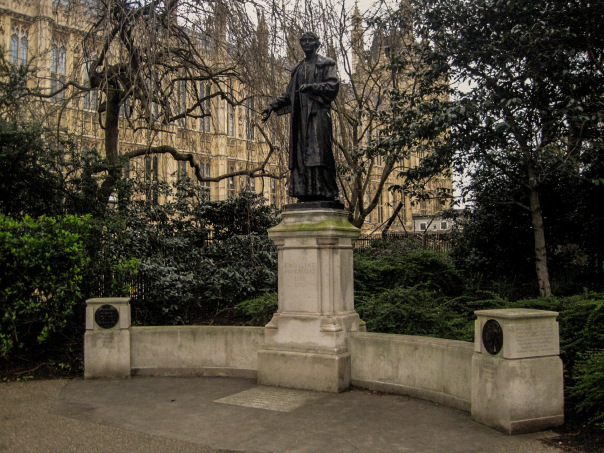
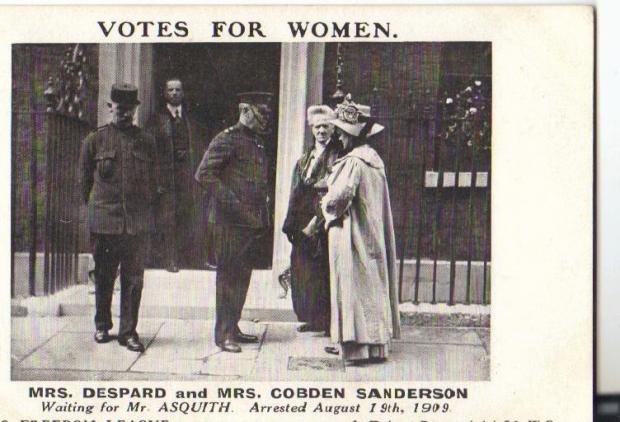 This postcard is for sale – item 153 in my Catalogue 198 https://wp.me/p2AEiO-1qO. Item 154 is another, unusual, photographic card of Annie Cobden Sanderson, published by the Women’s Freedom League.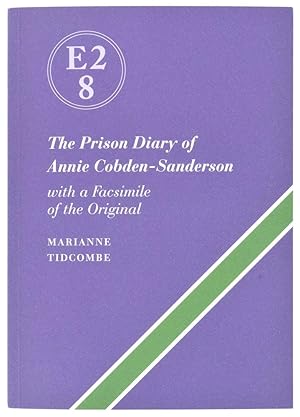
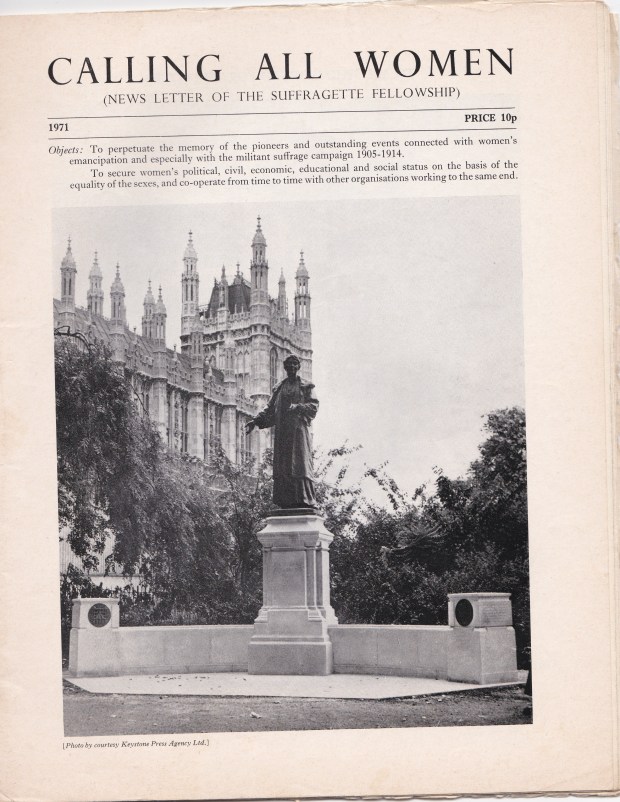
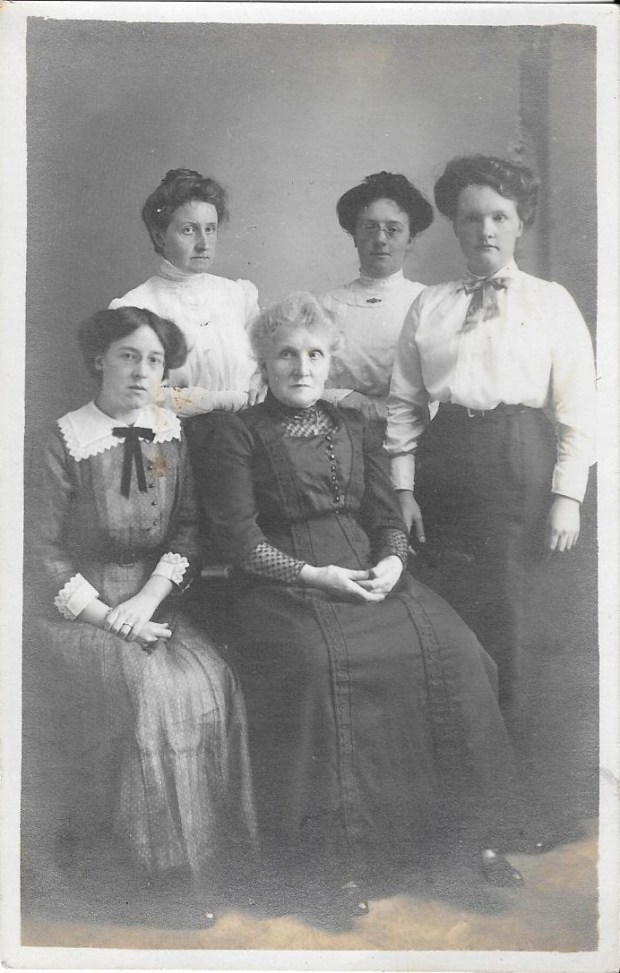
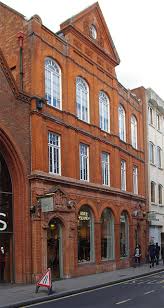
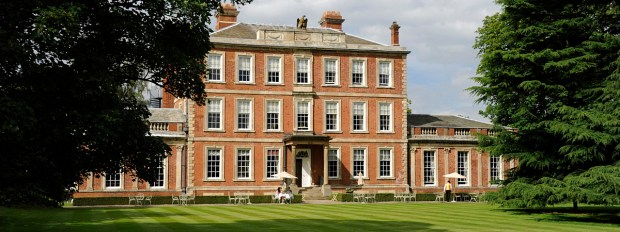
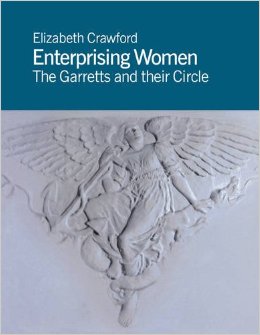
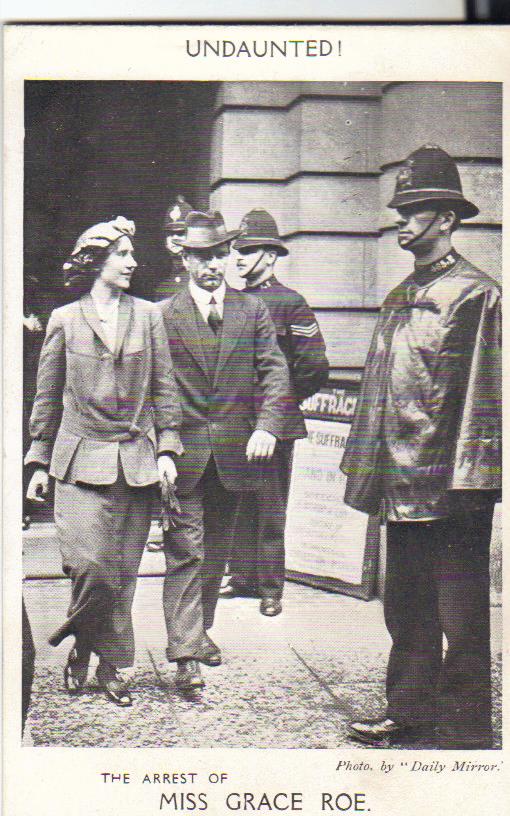
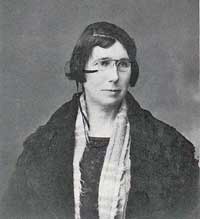
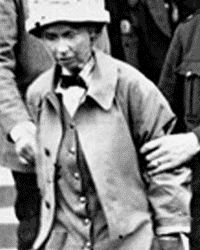
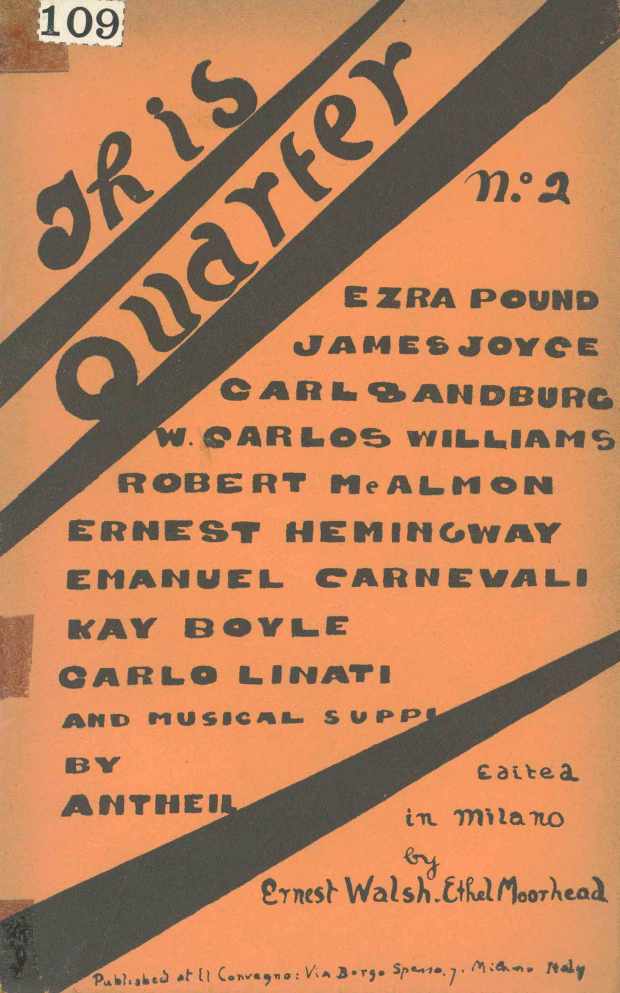
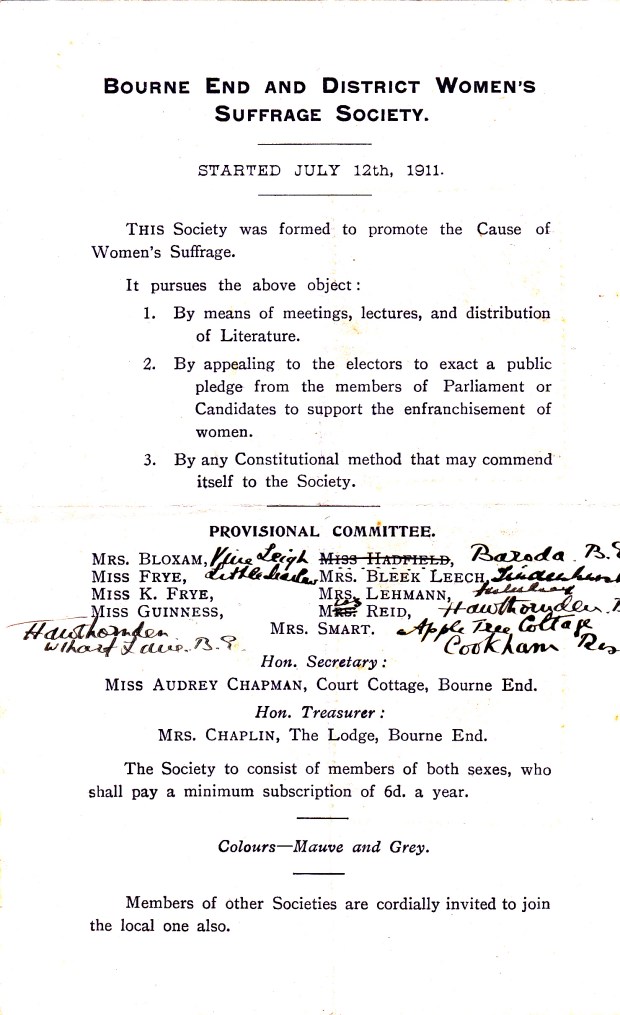
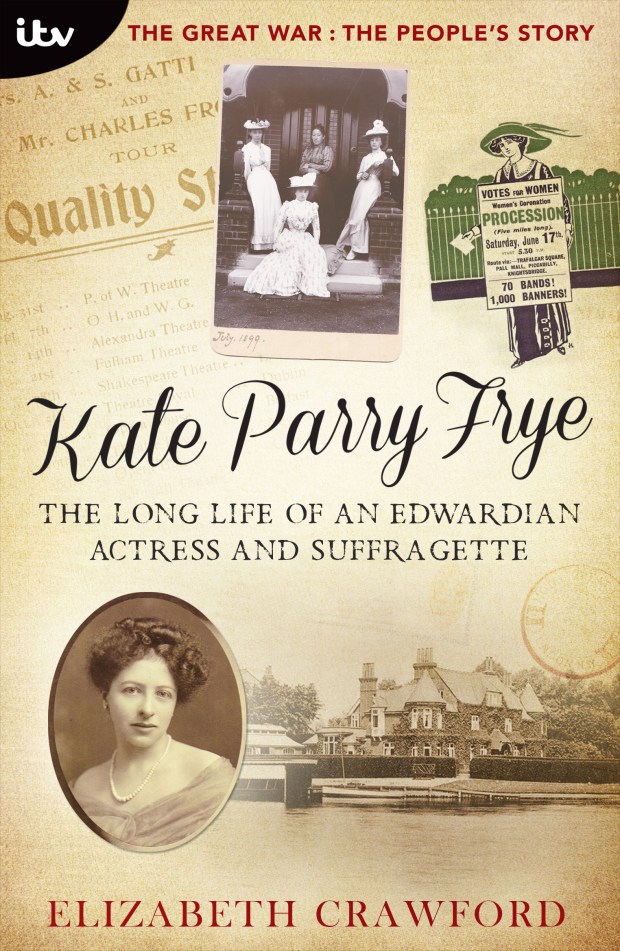 See here for details –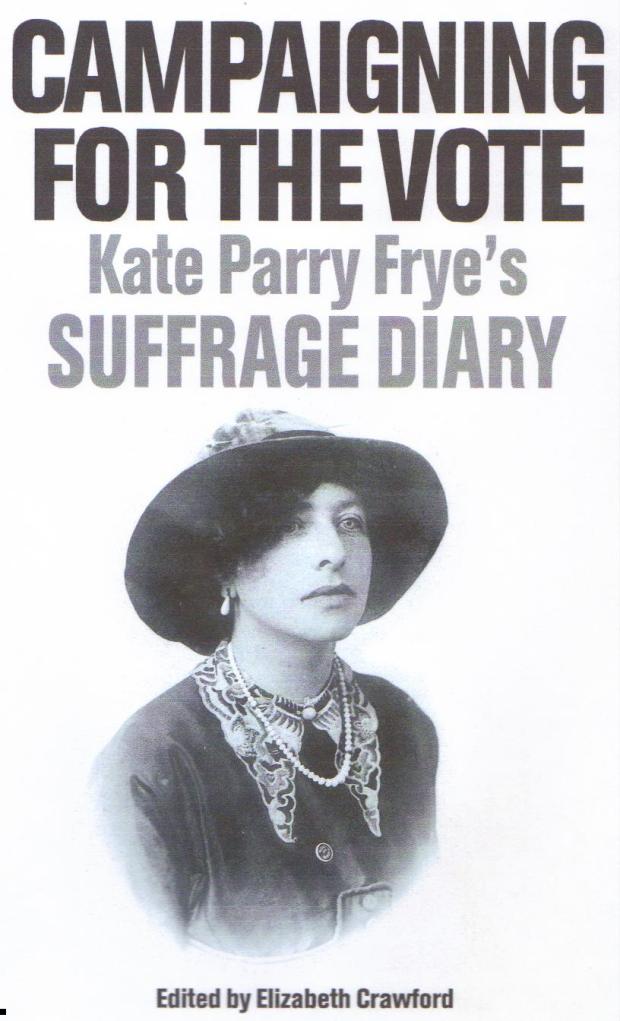
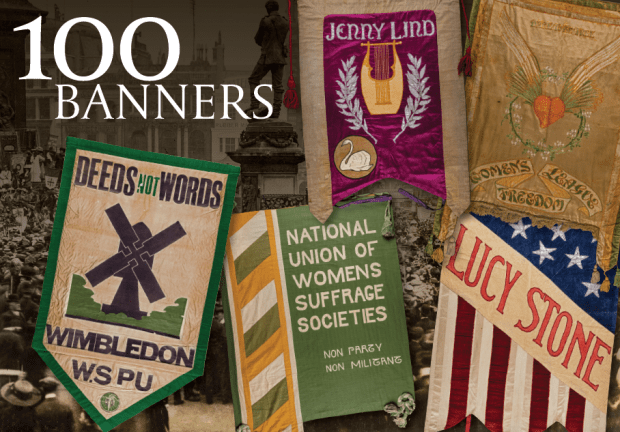
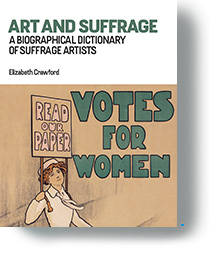
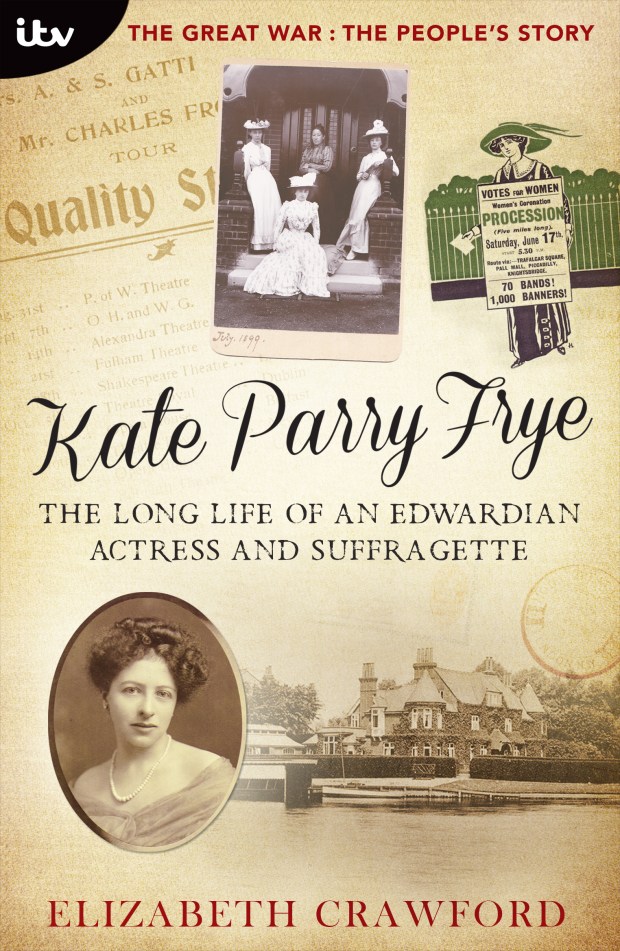

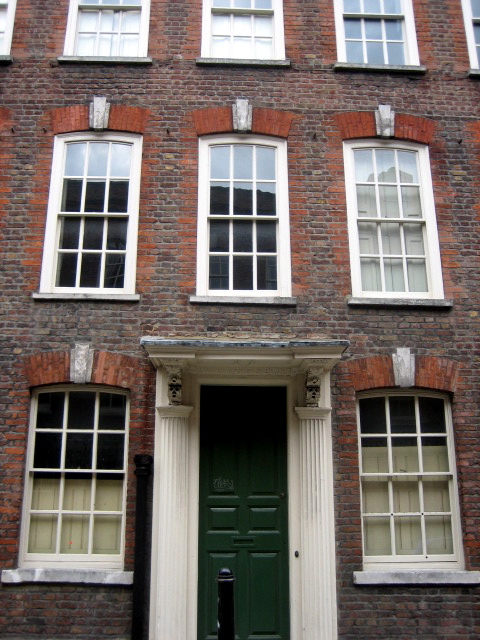

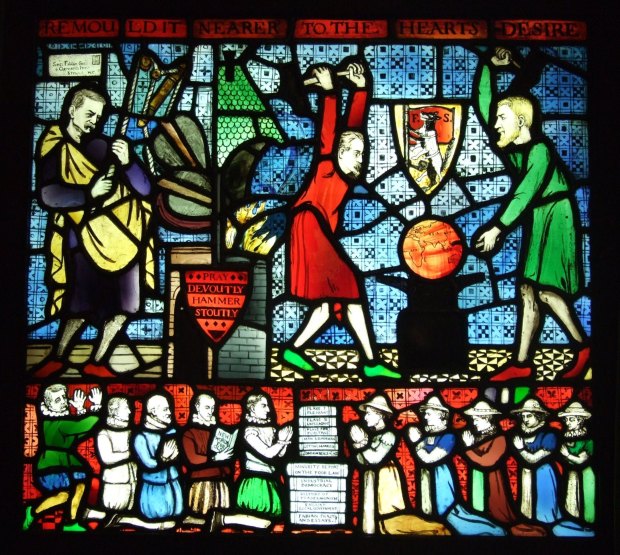
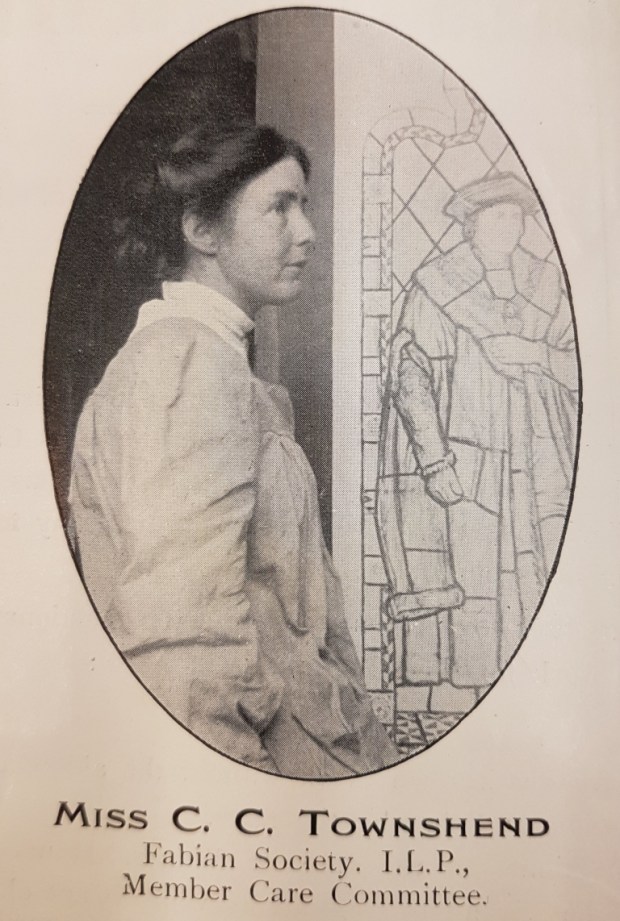
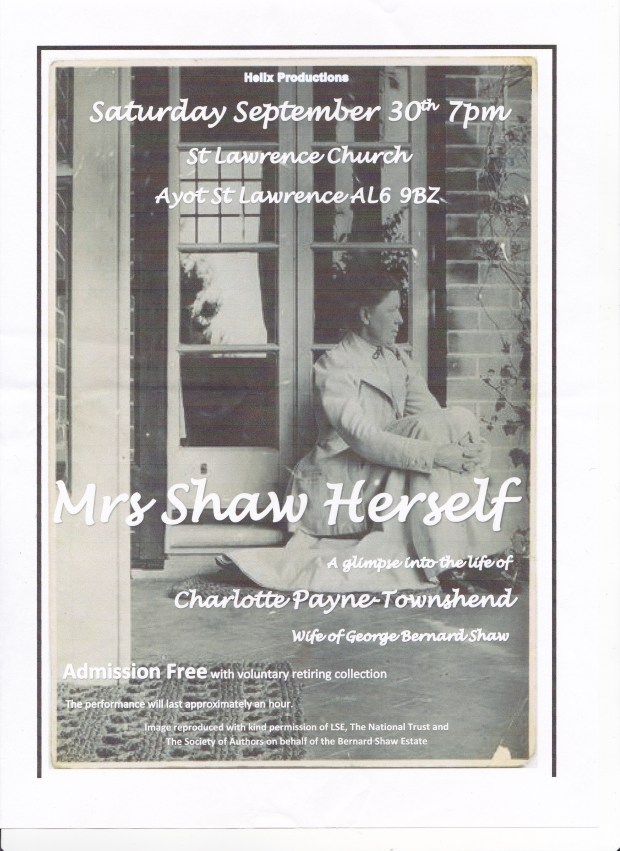
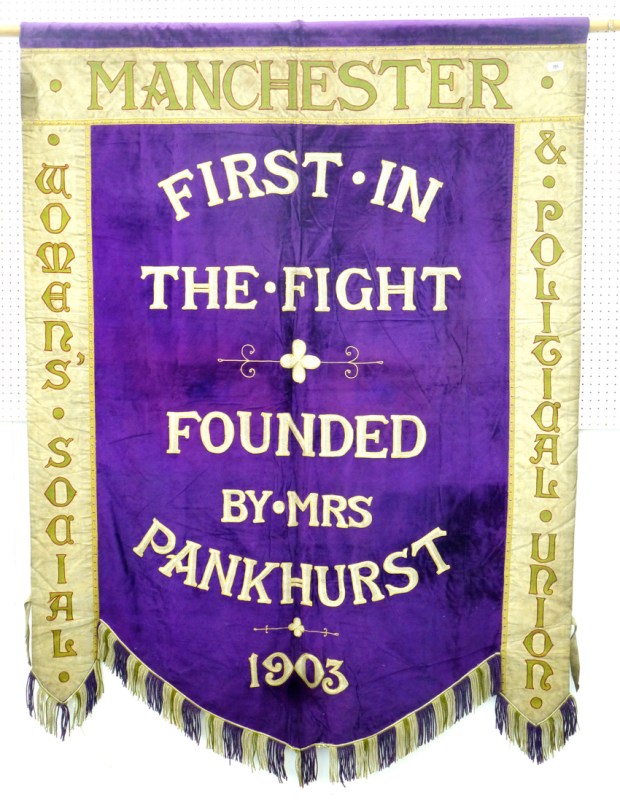


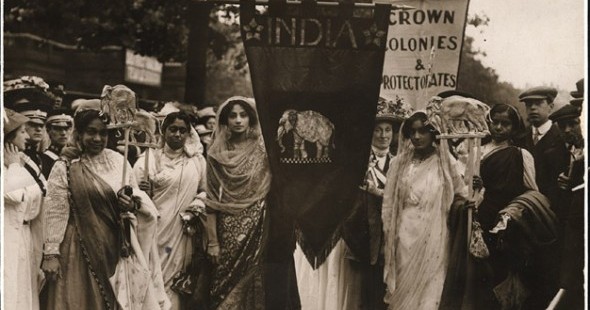
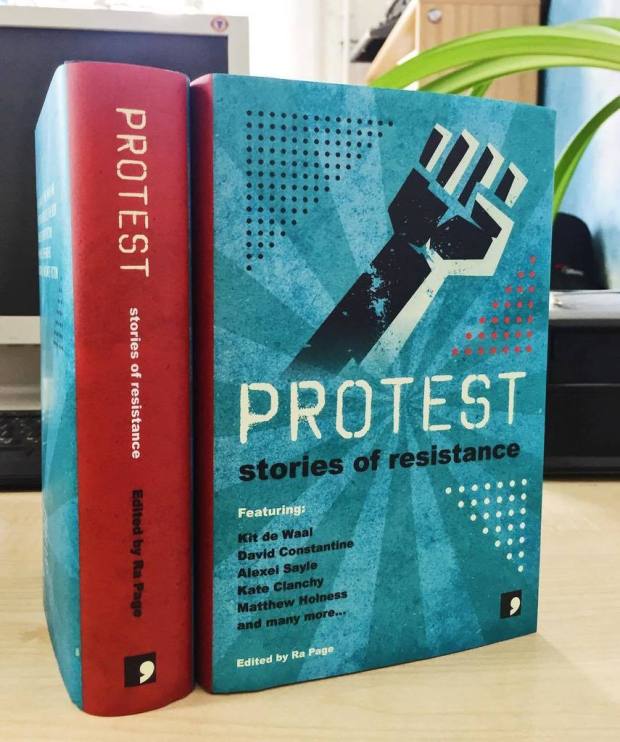
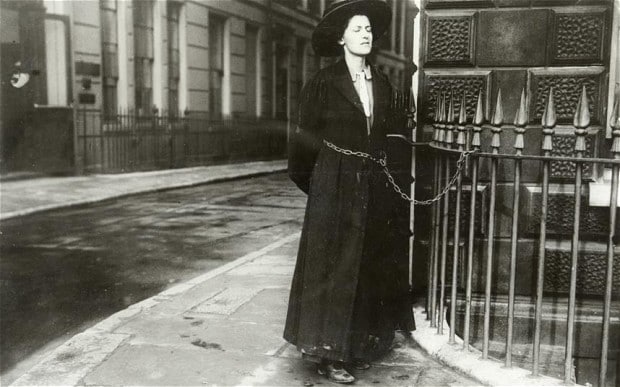
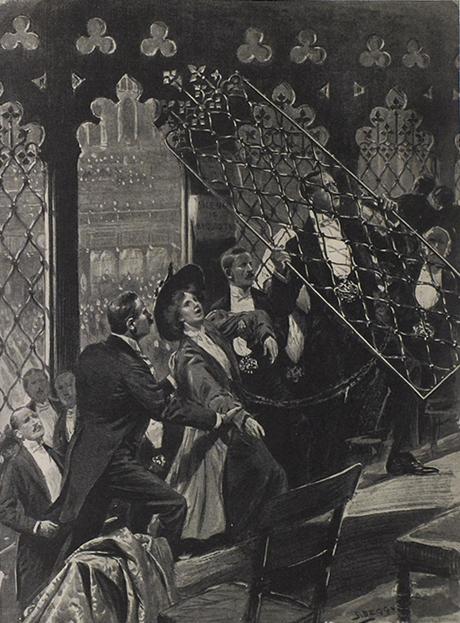
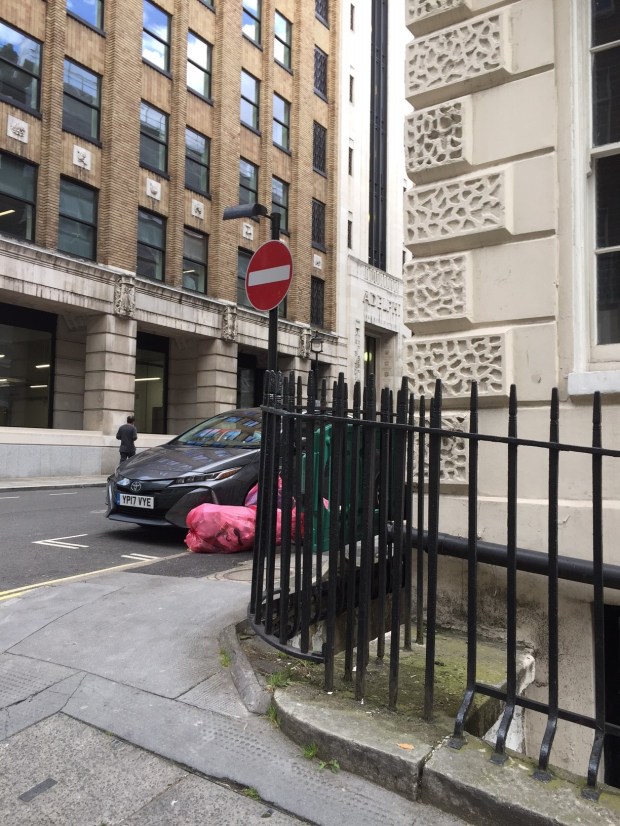
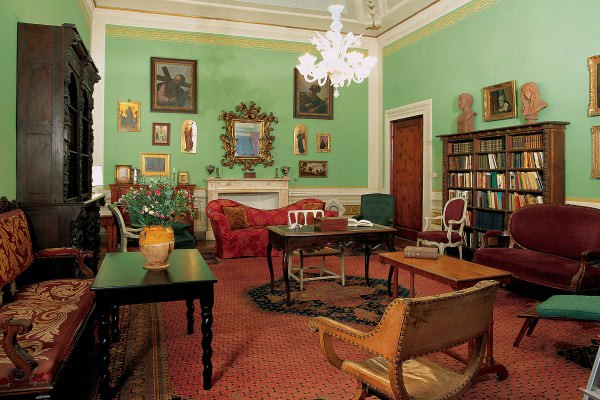

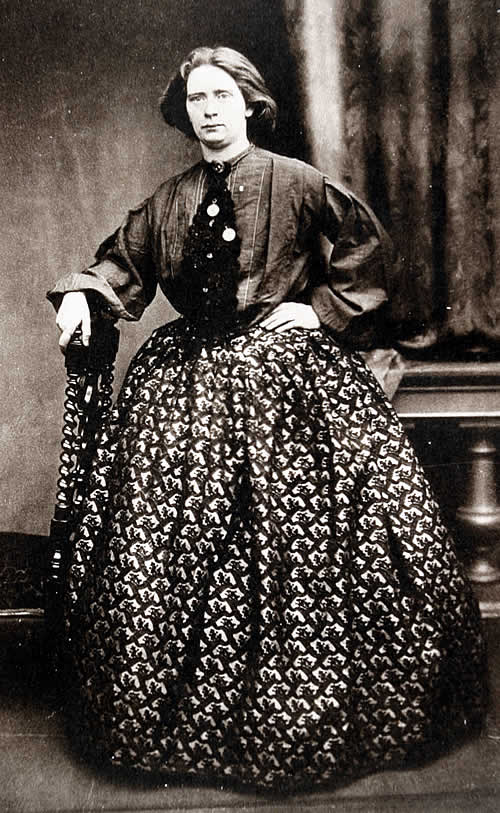


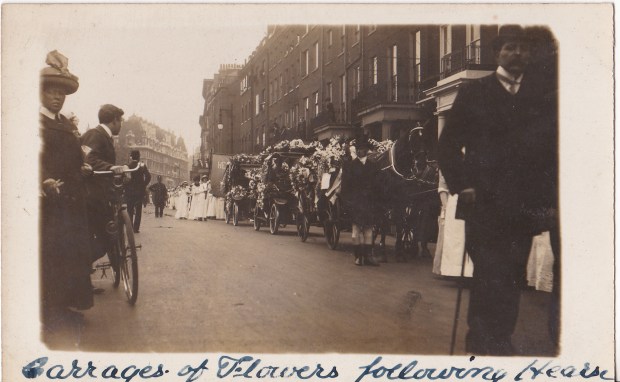
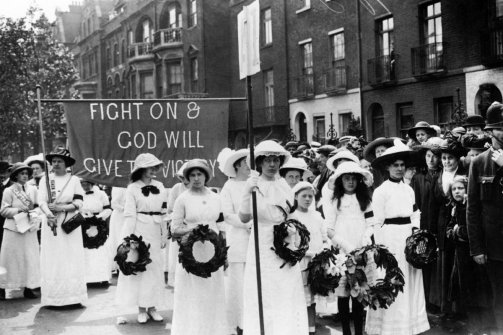
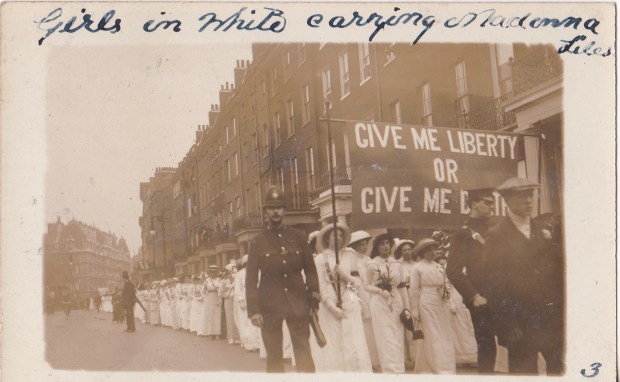

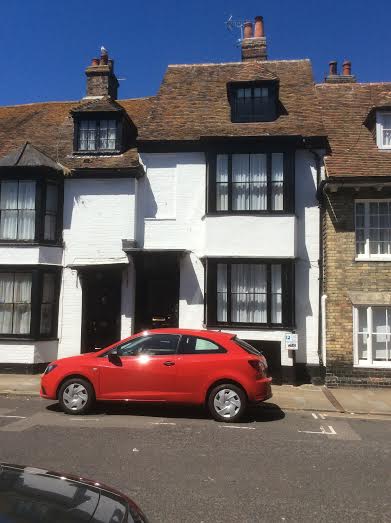
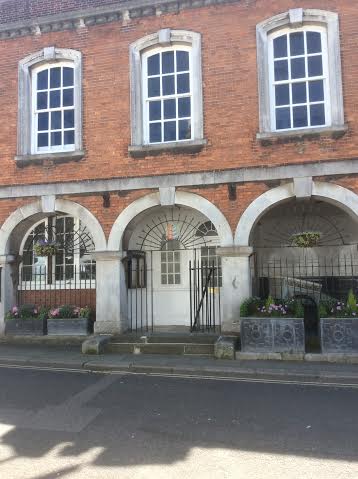

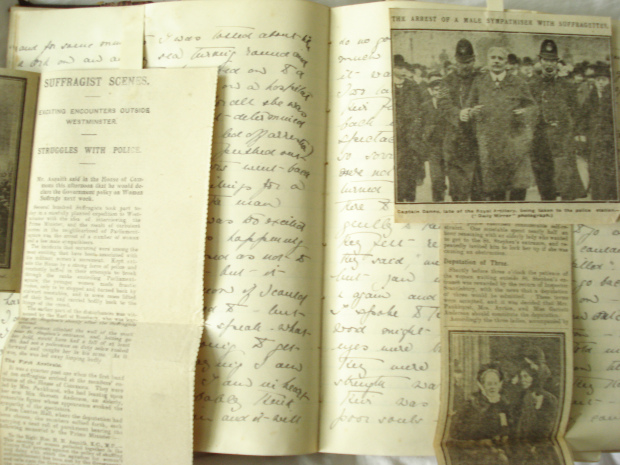
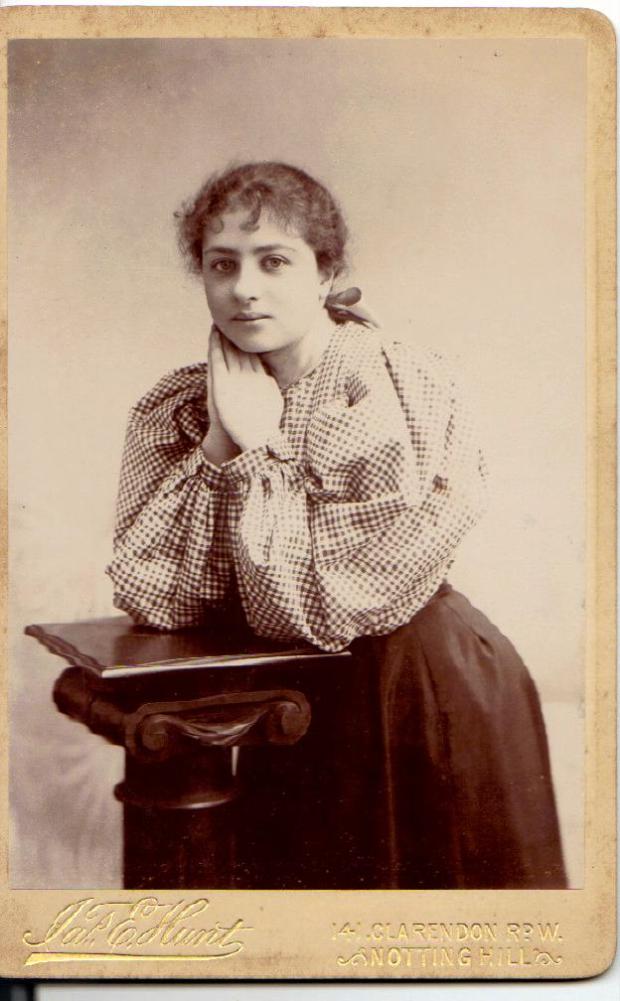
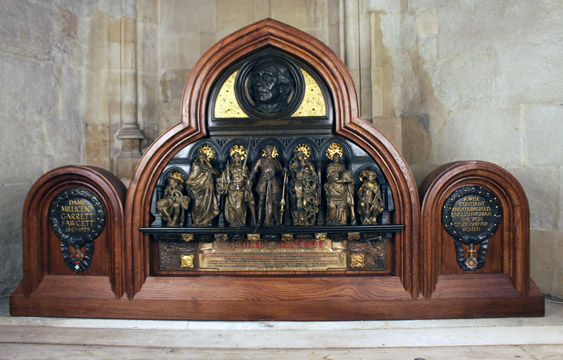
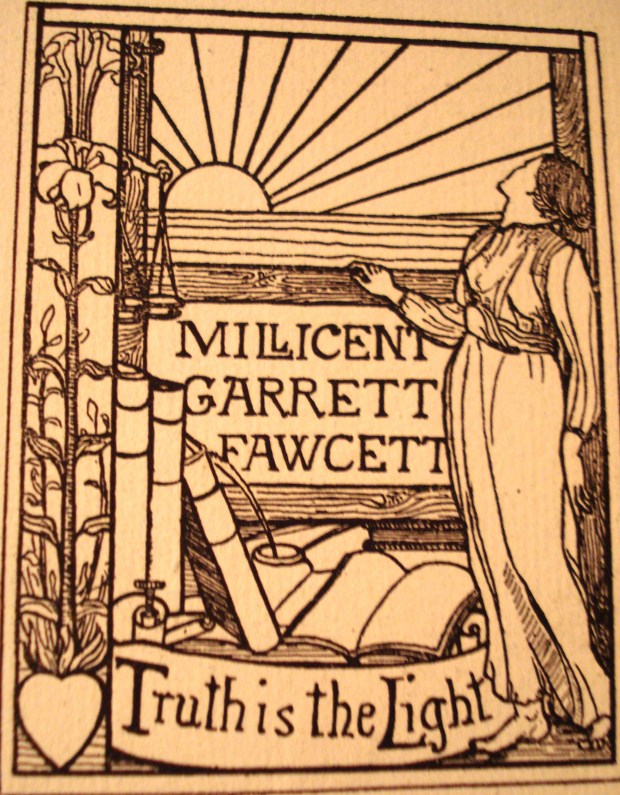
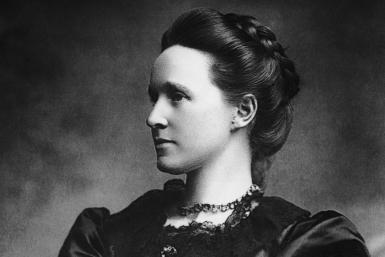
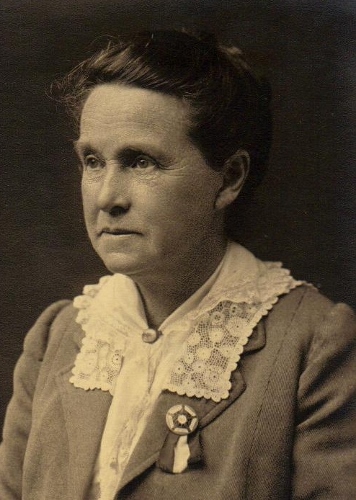
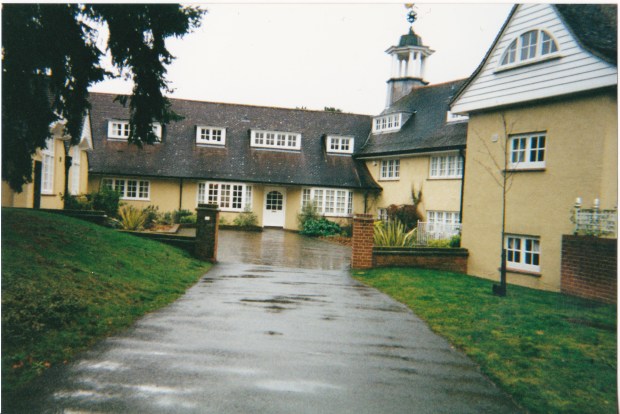
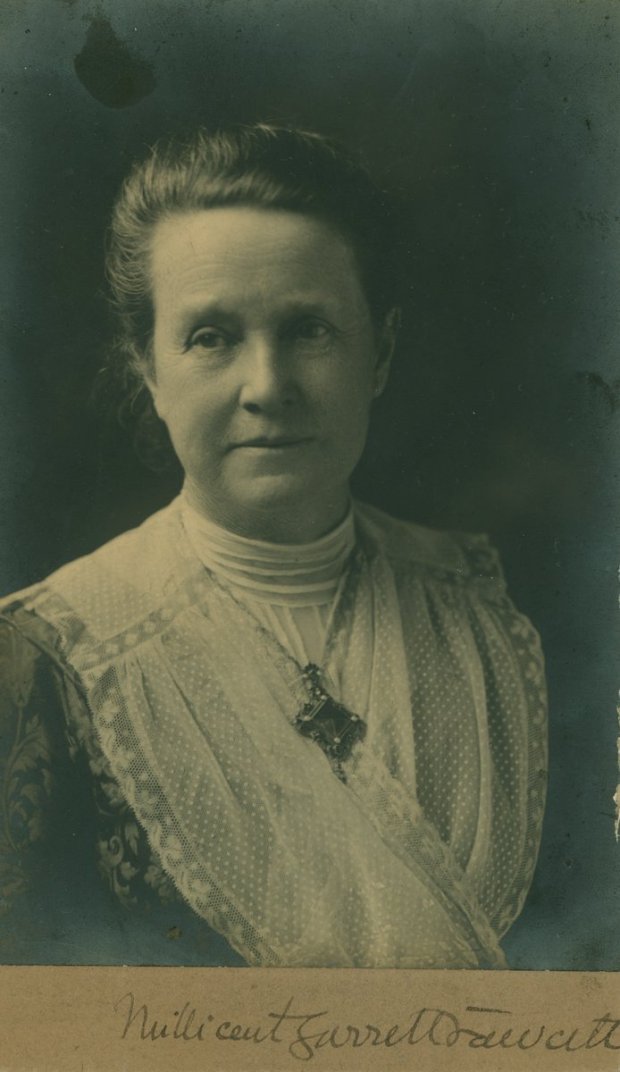
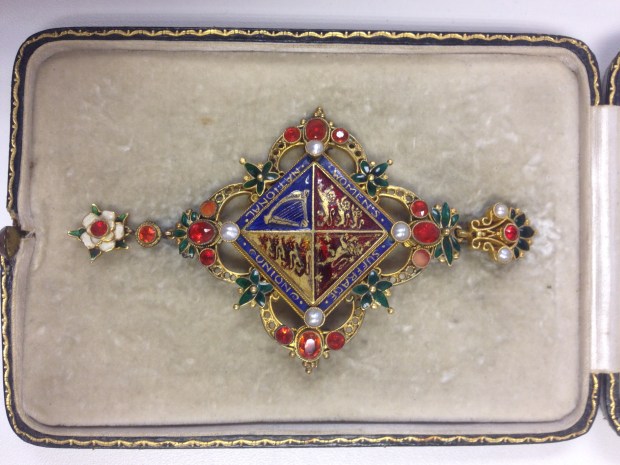
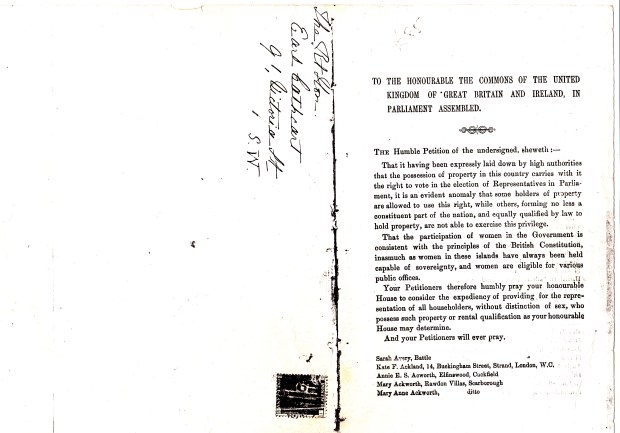
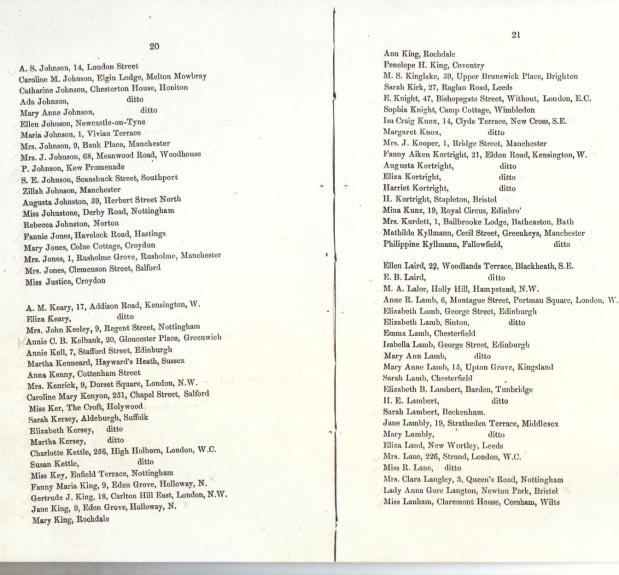
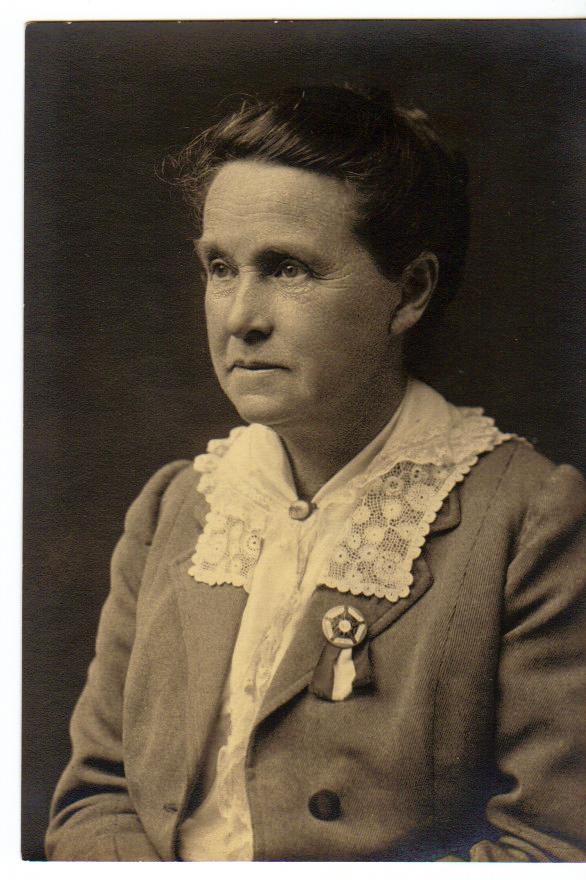
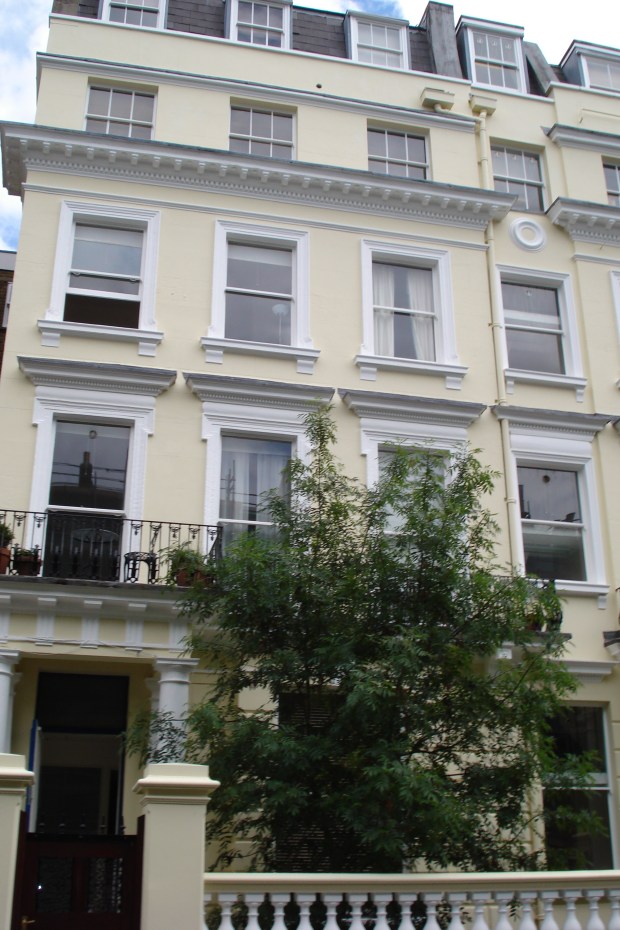

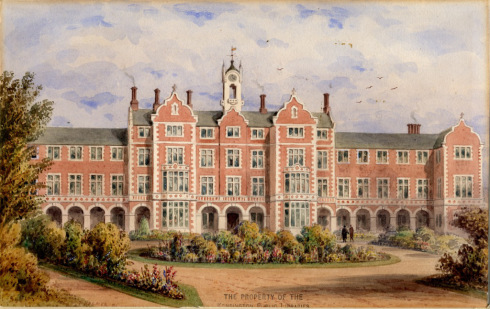
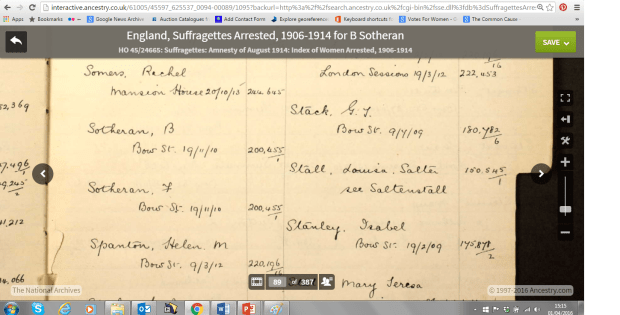
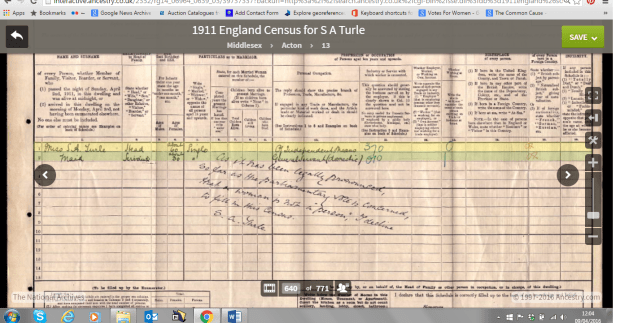
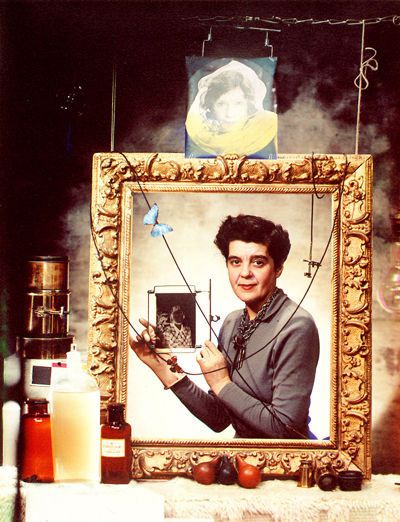
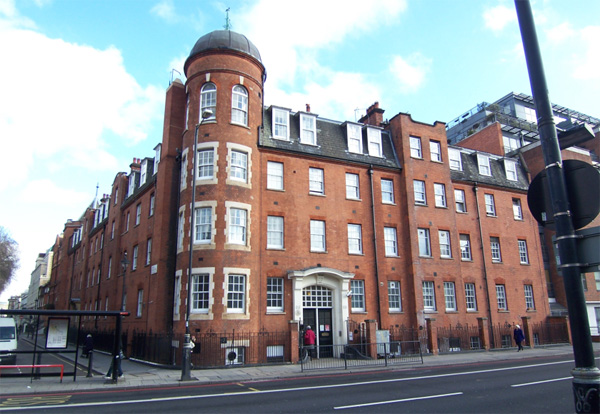


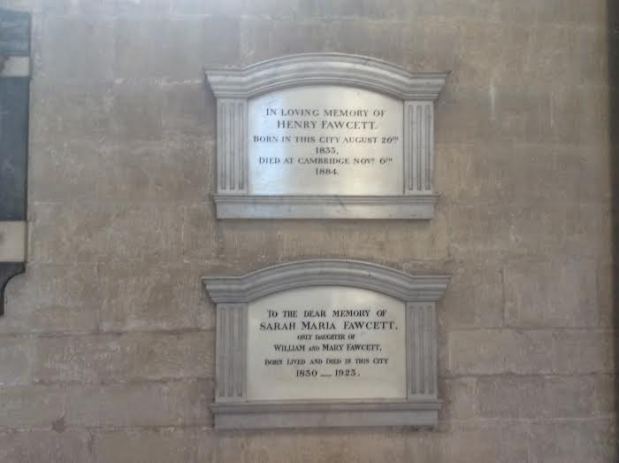
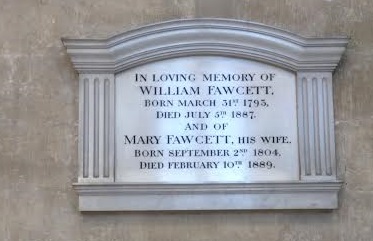
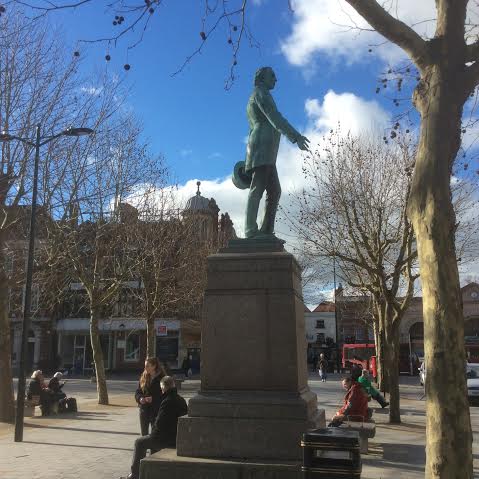
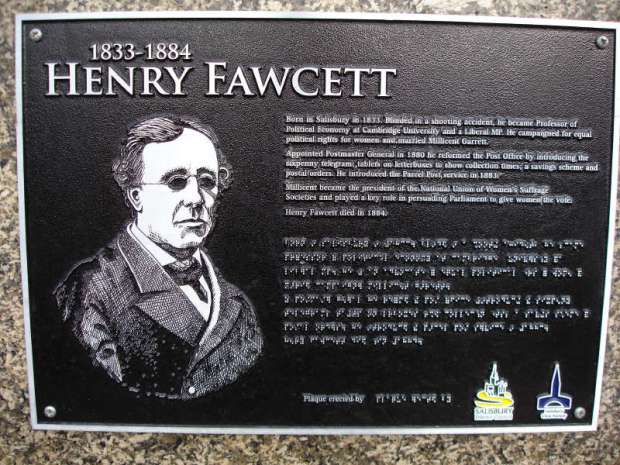
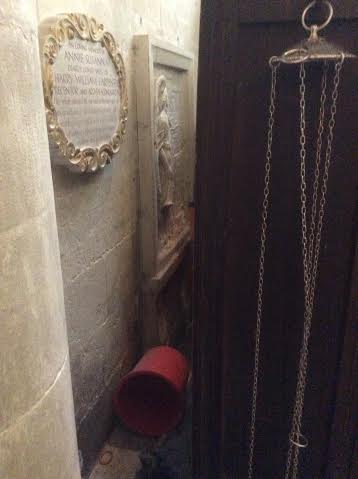



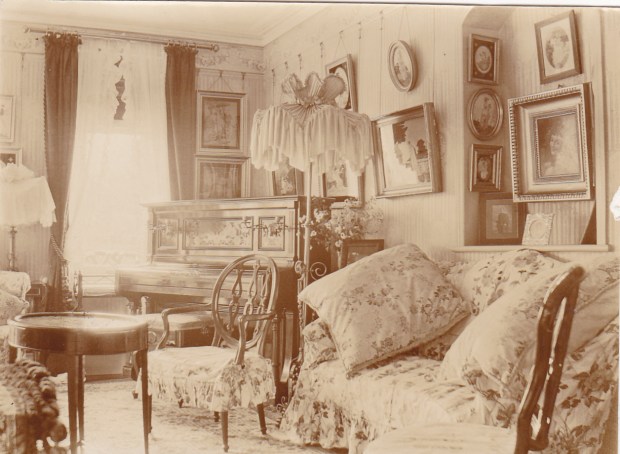
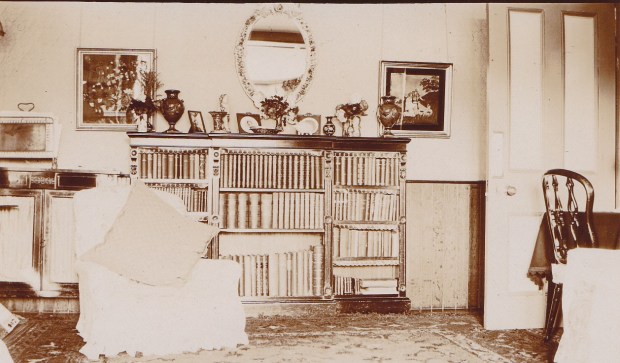
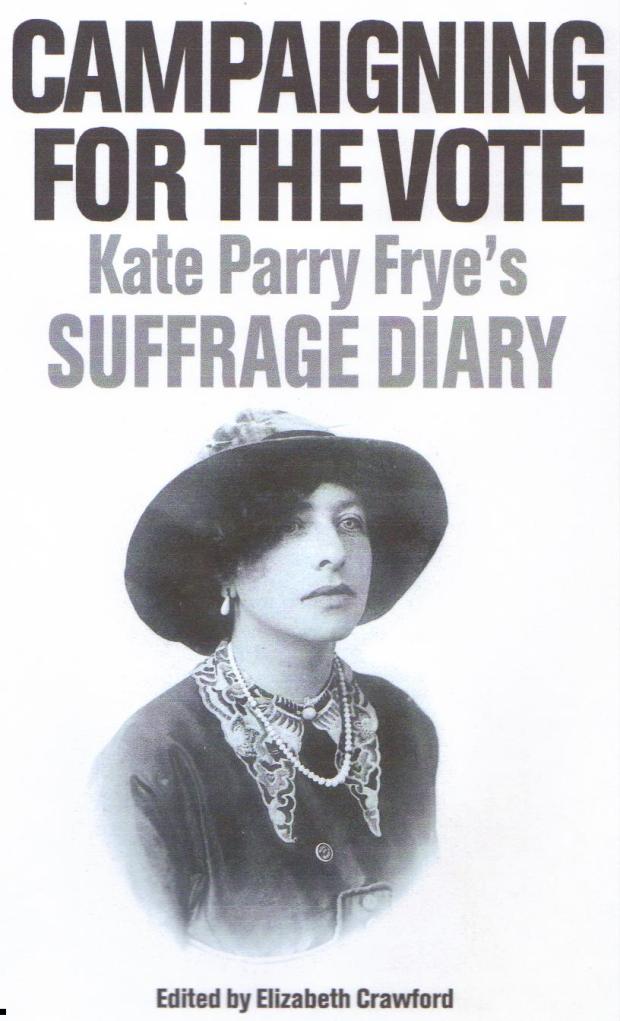
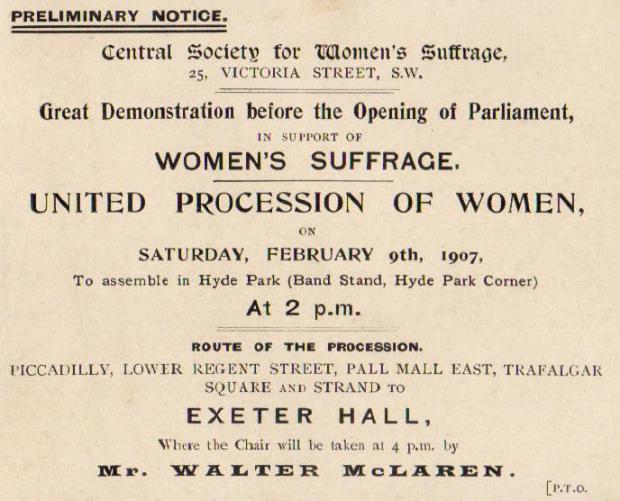


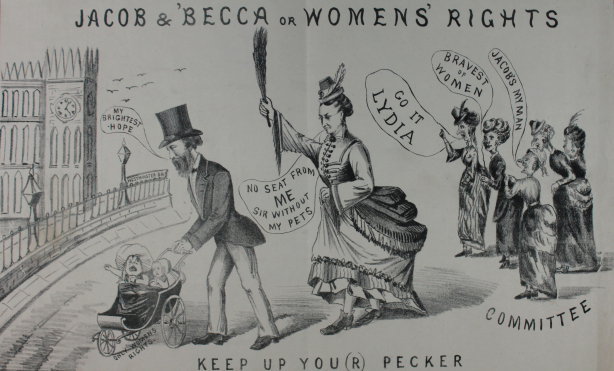
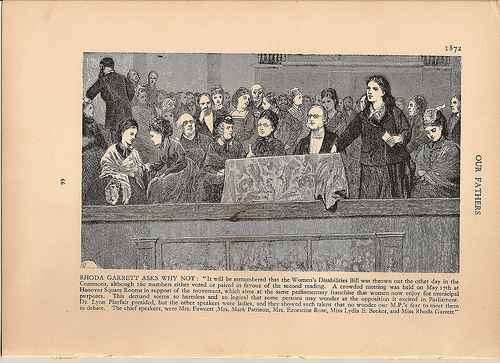
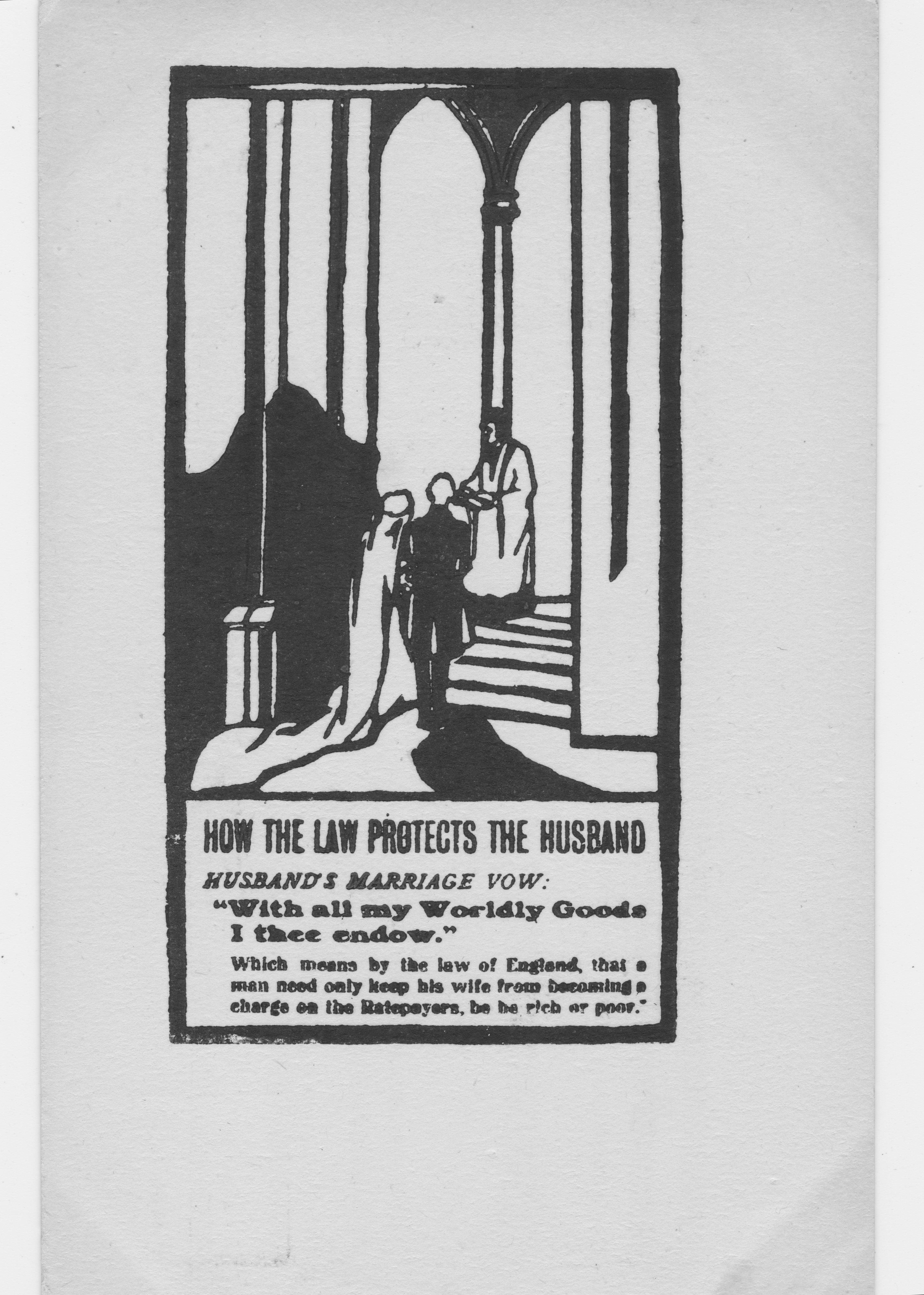
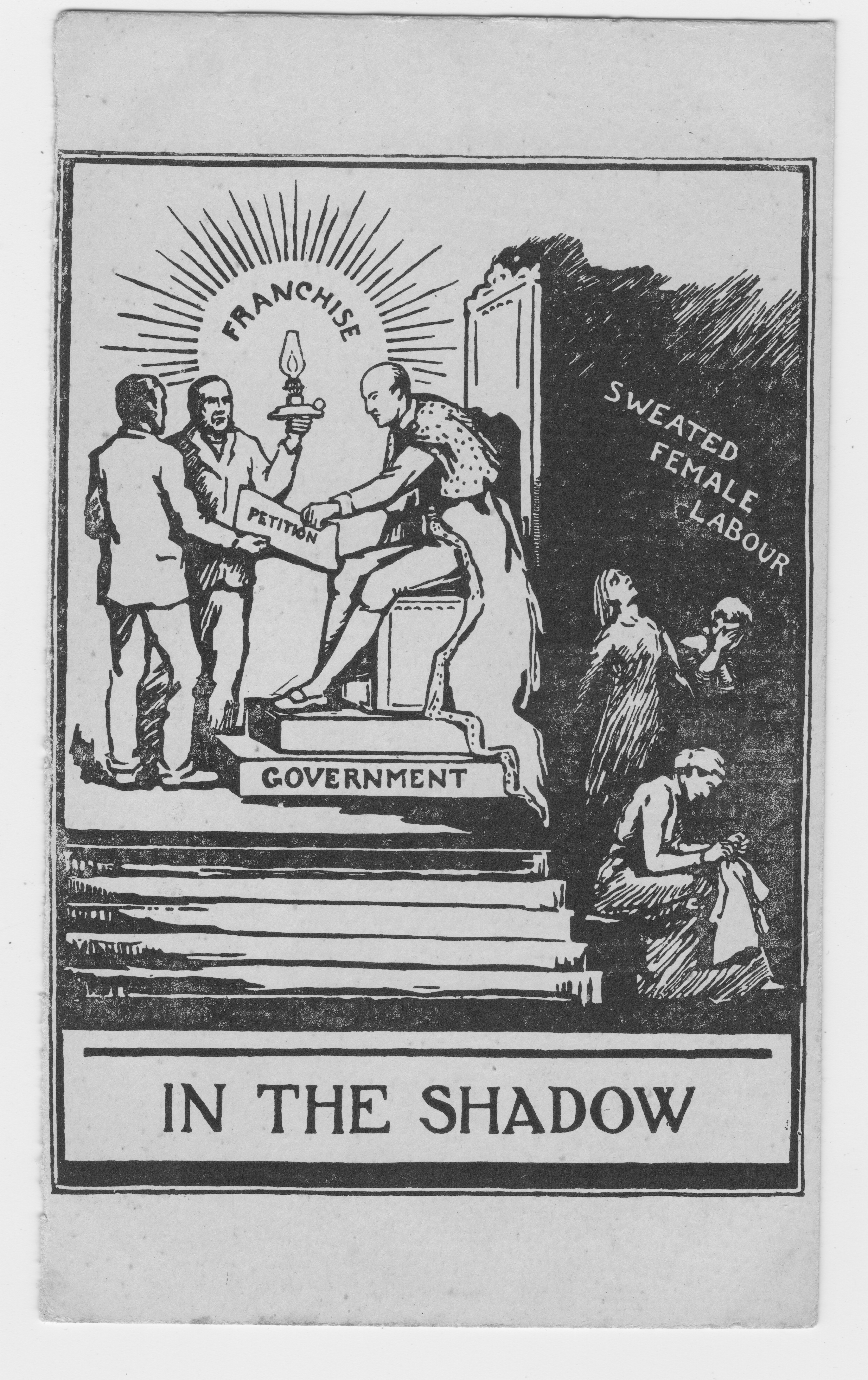
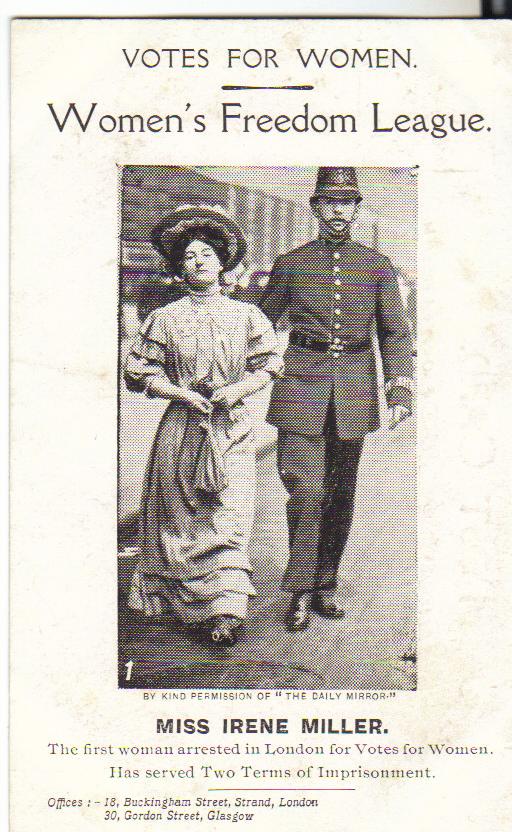
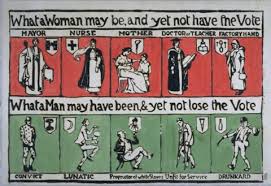
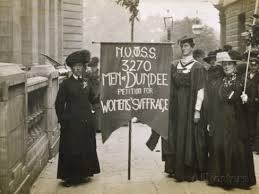
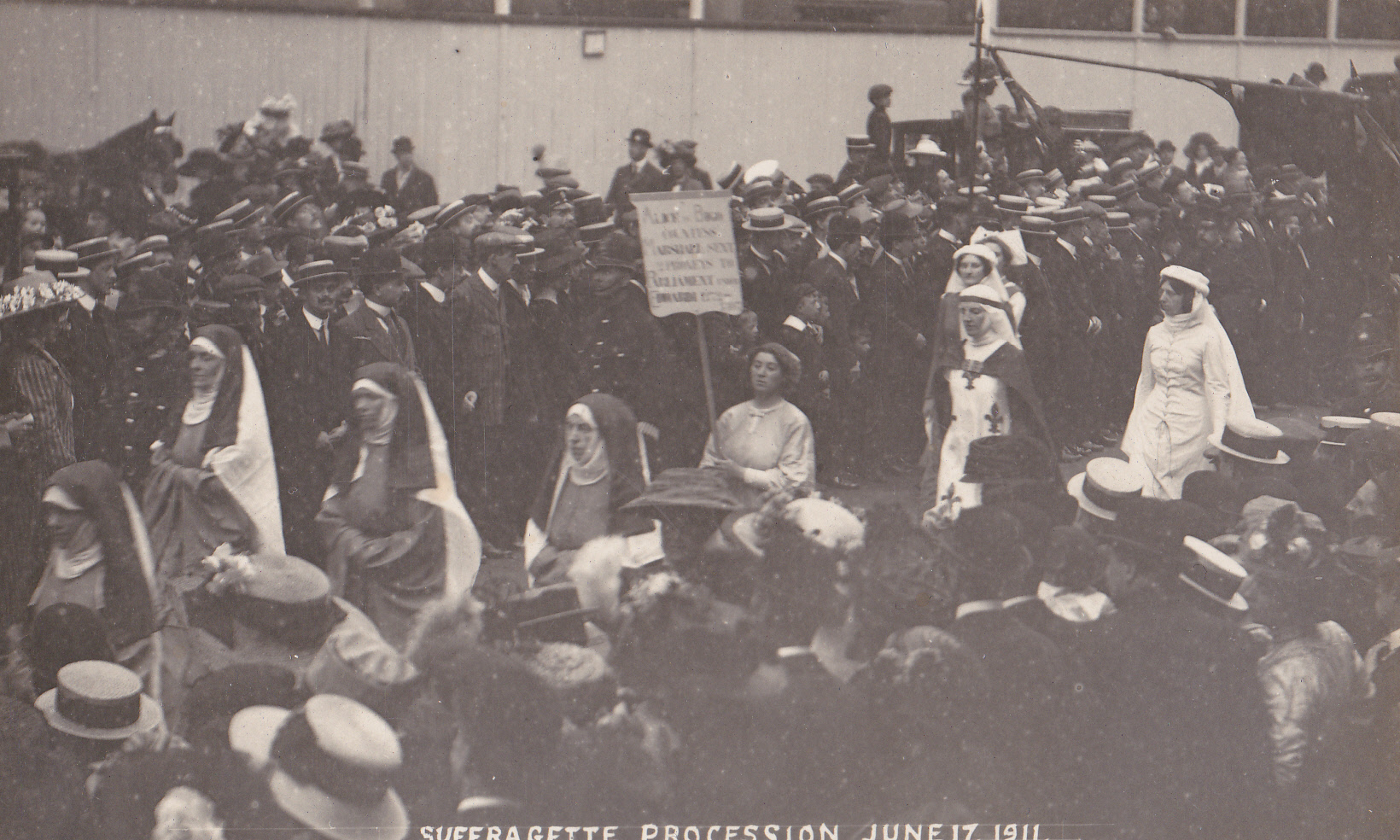
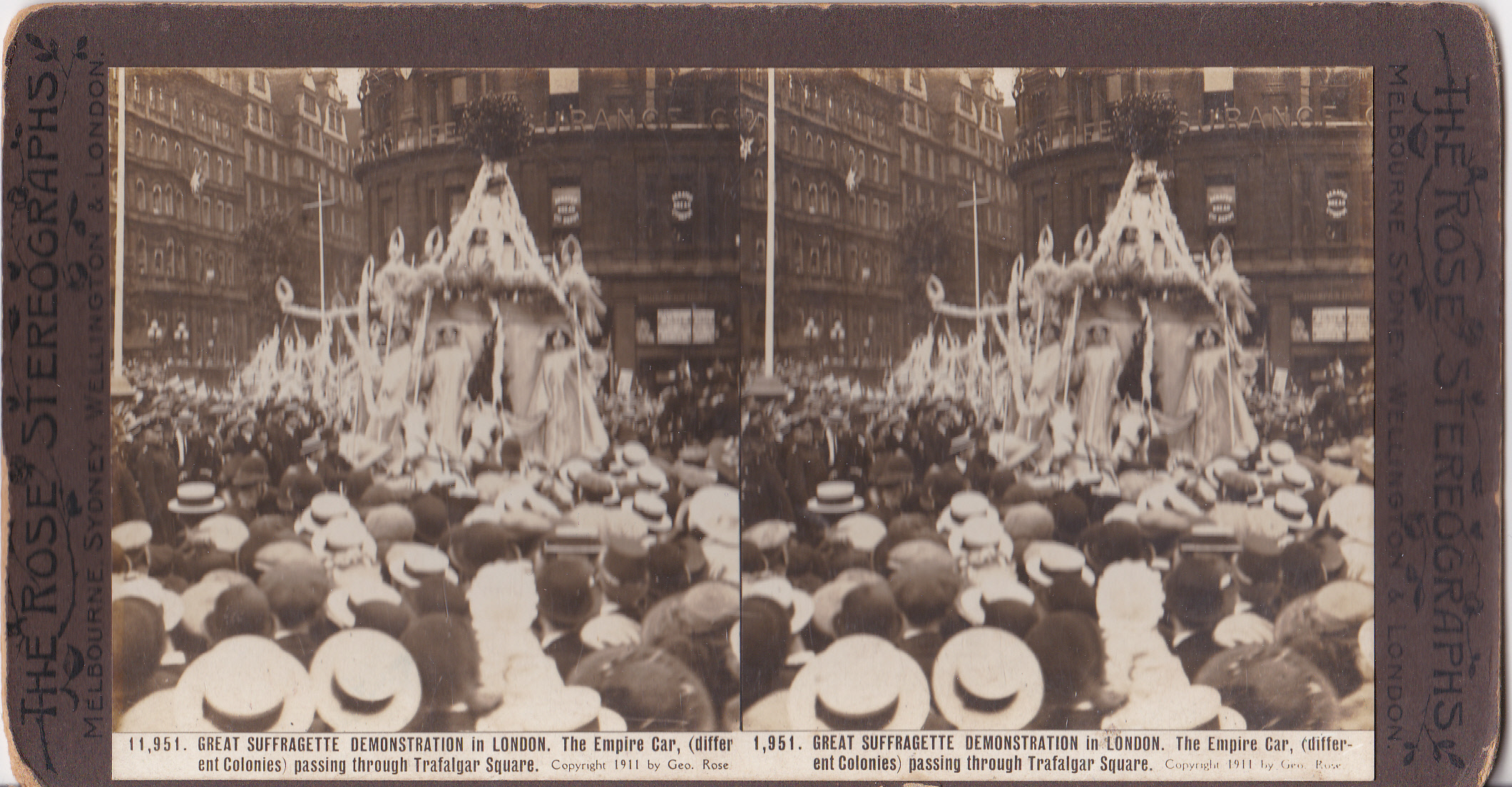


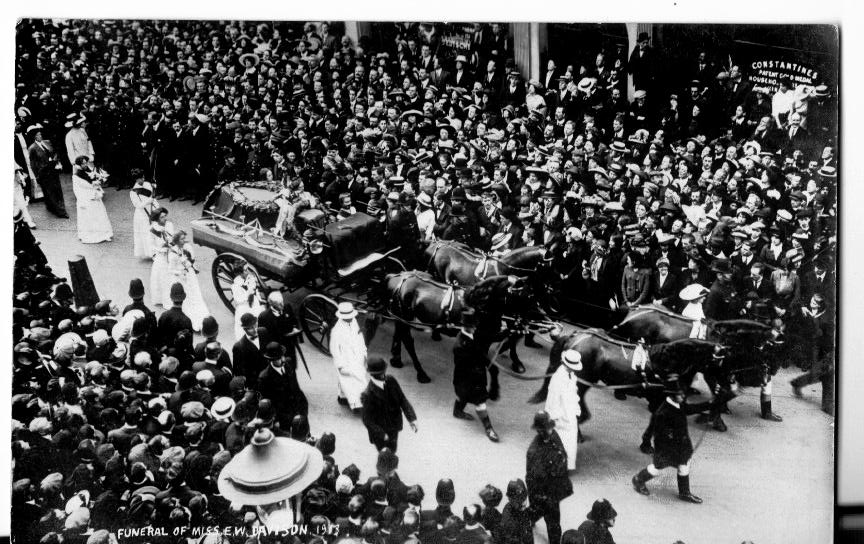

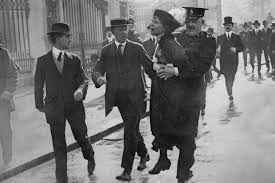
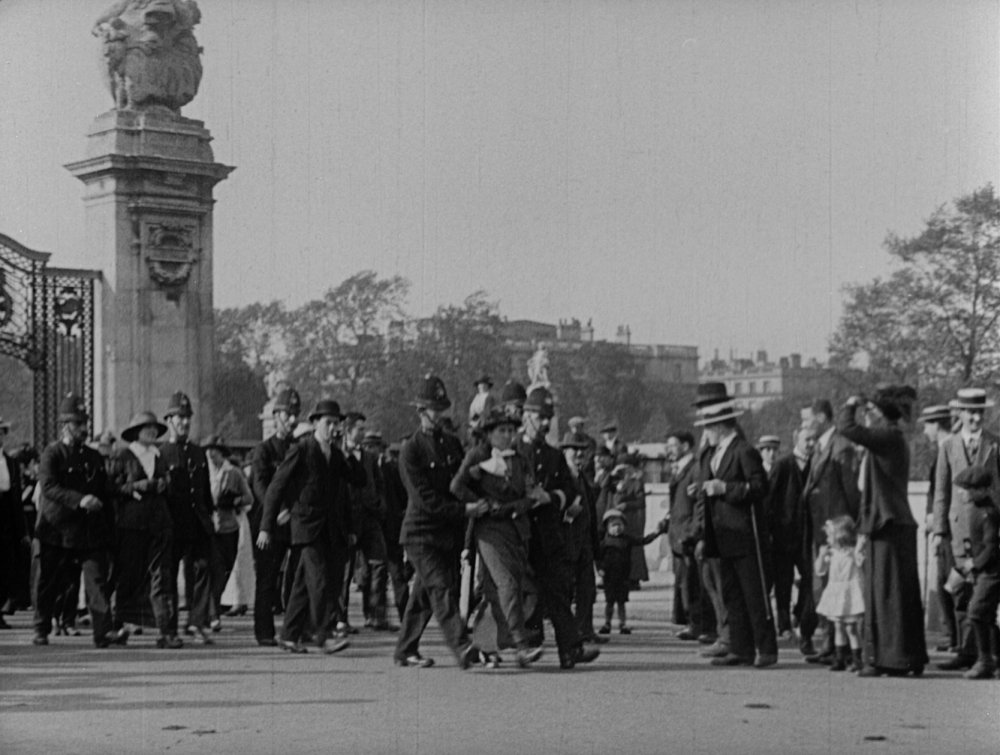
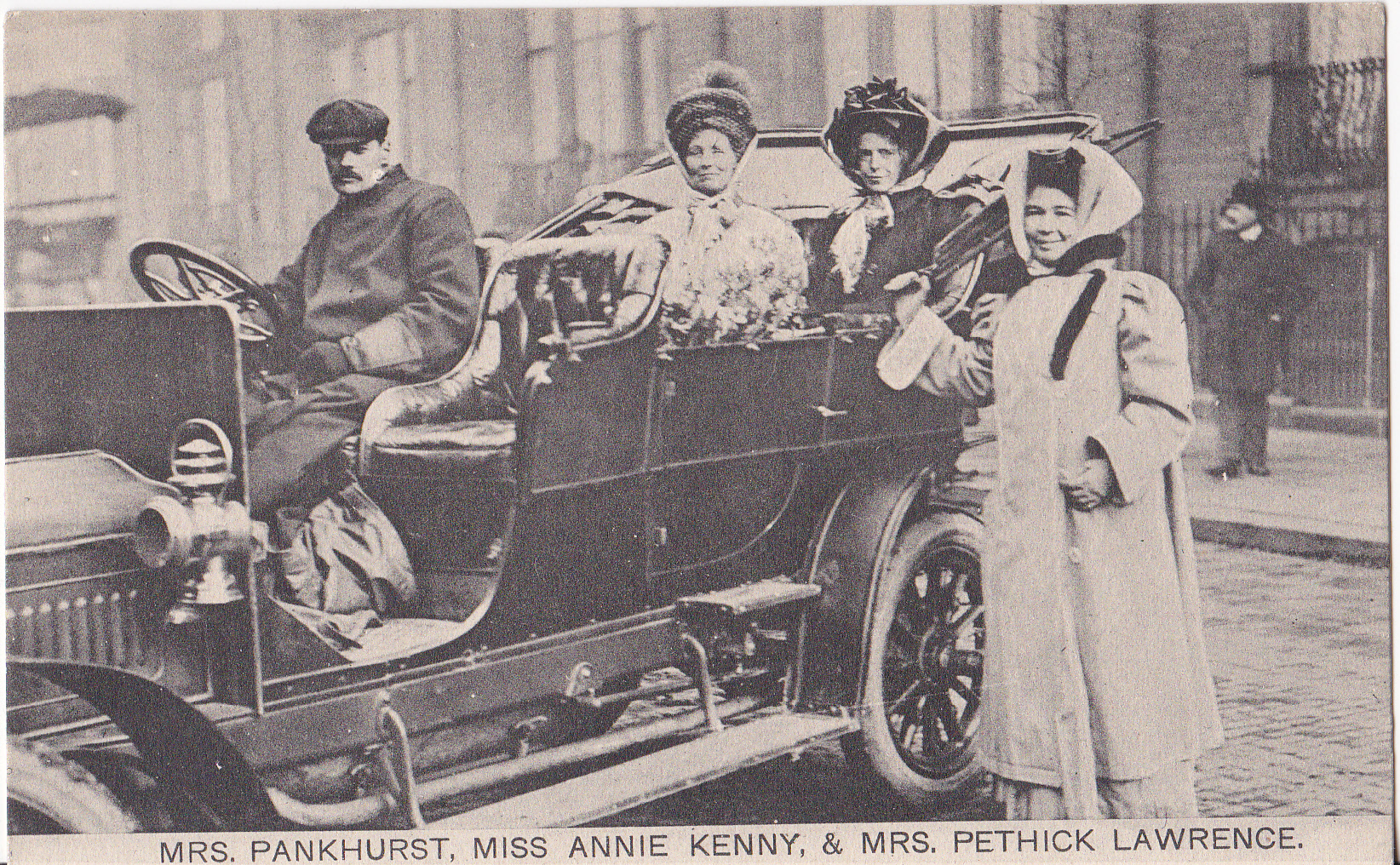
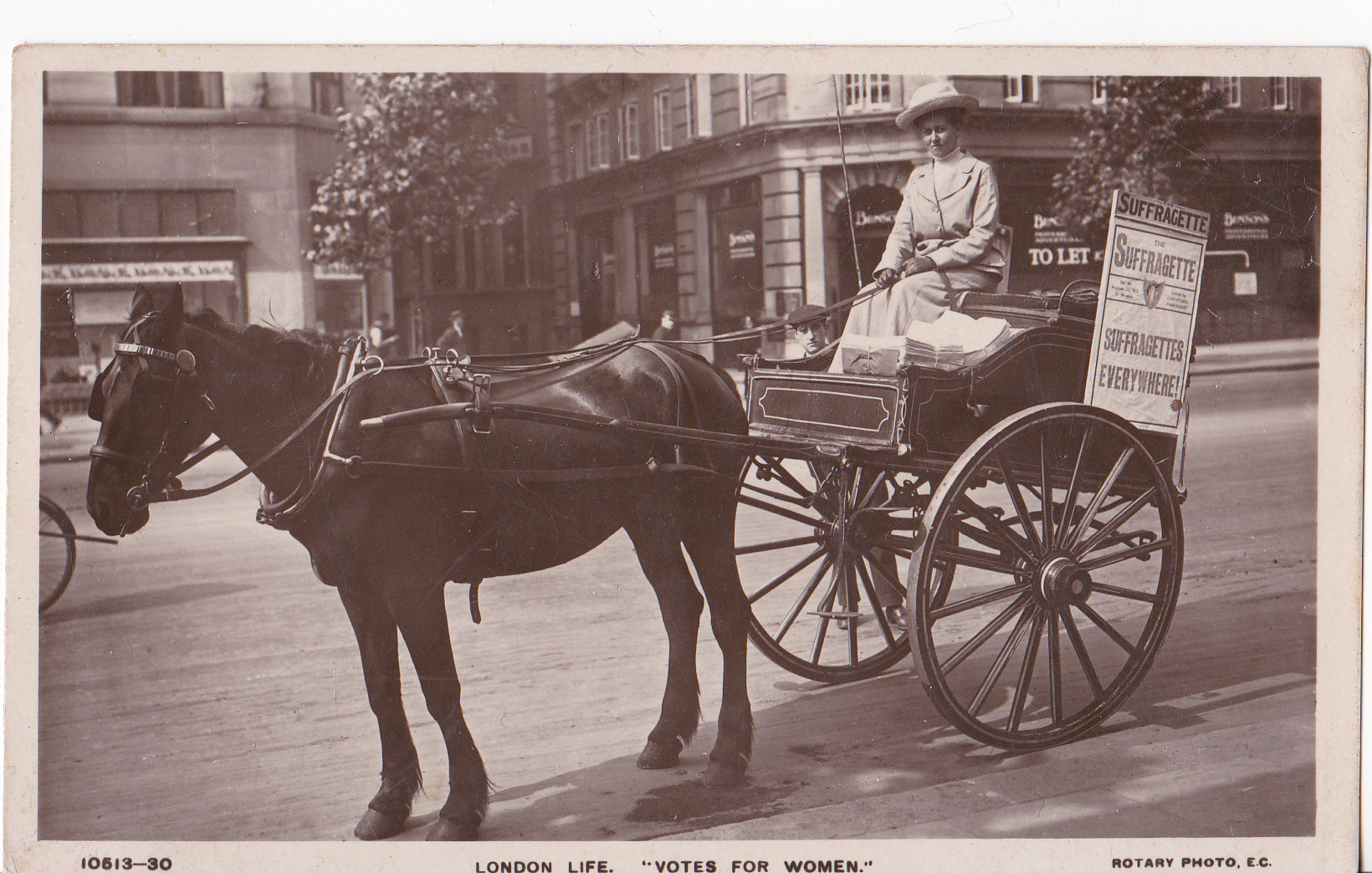
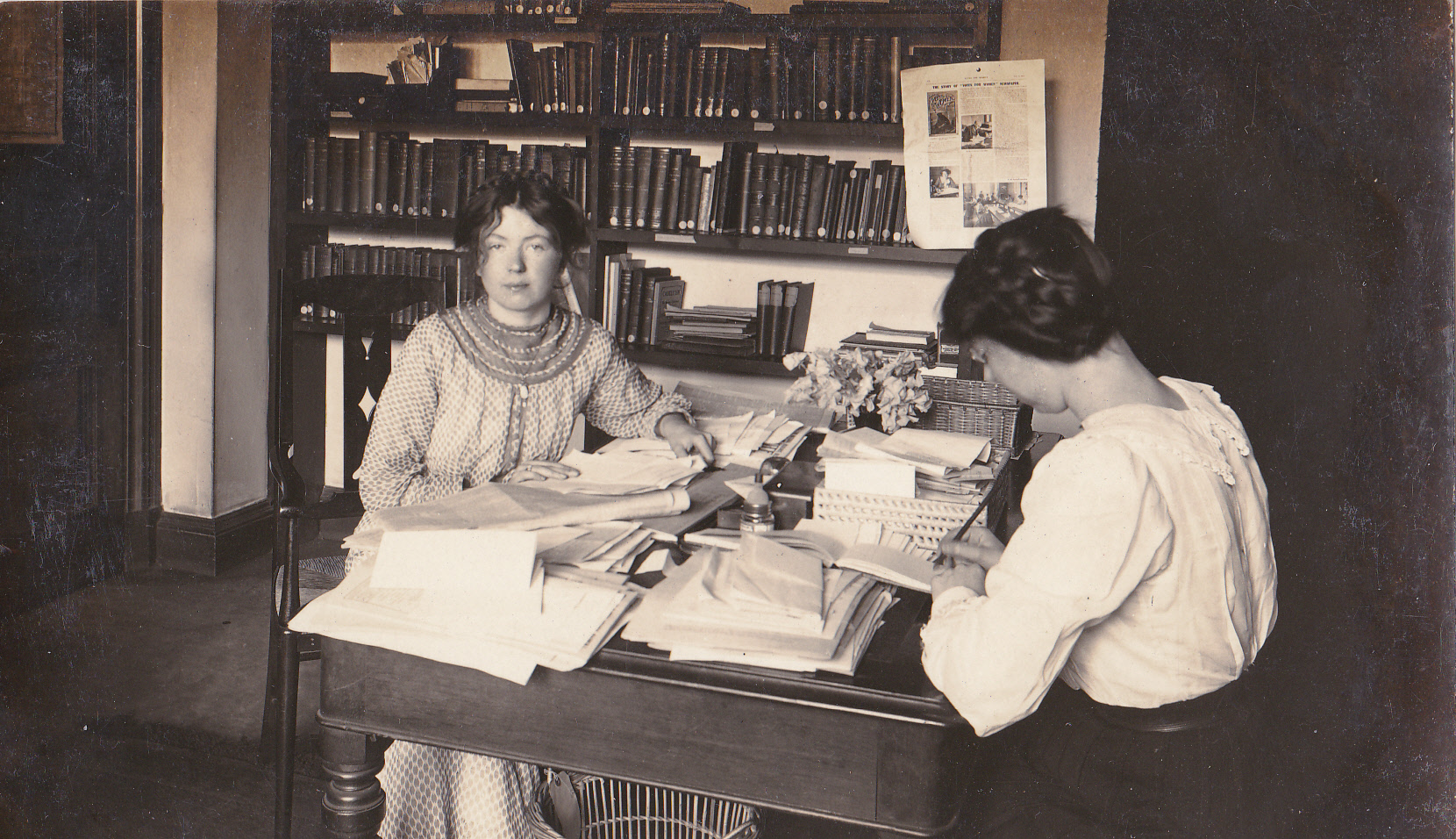


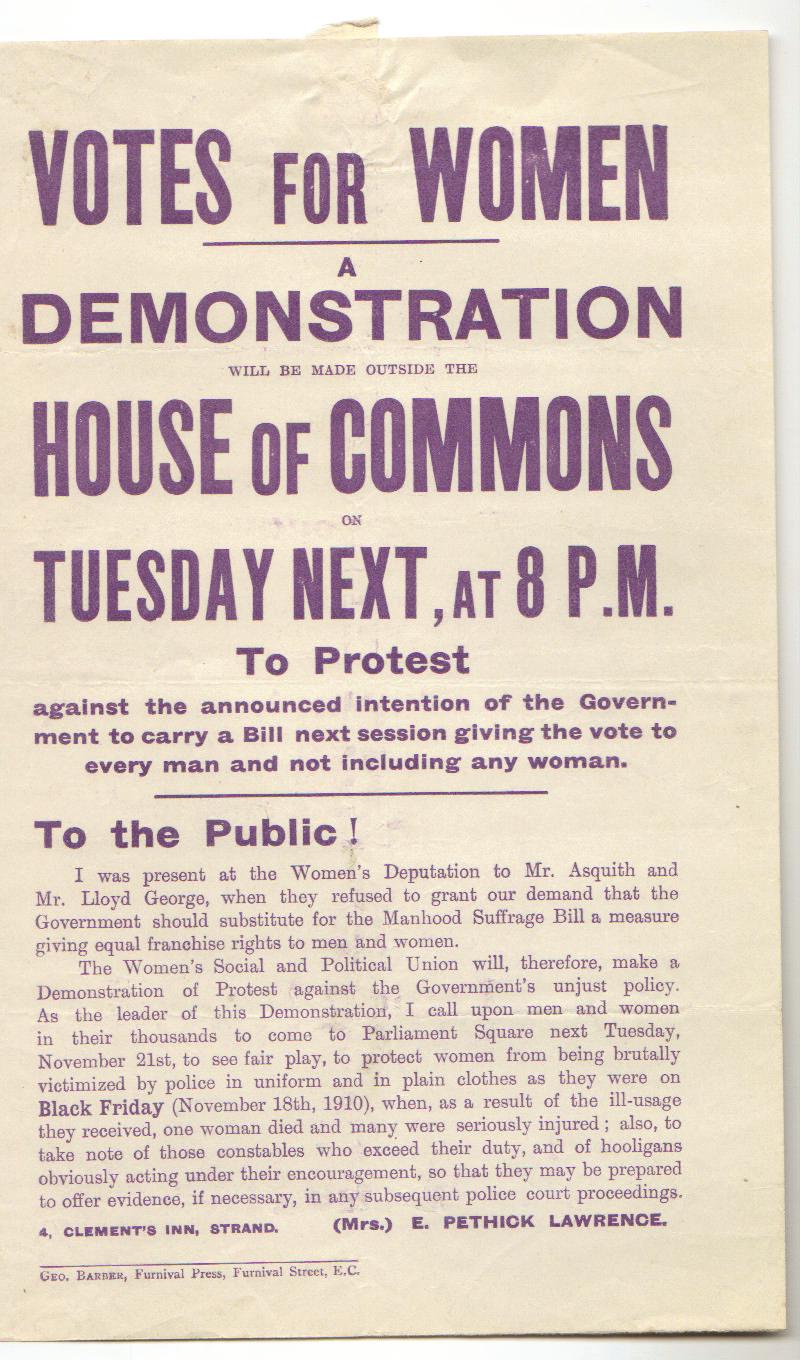

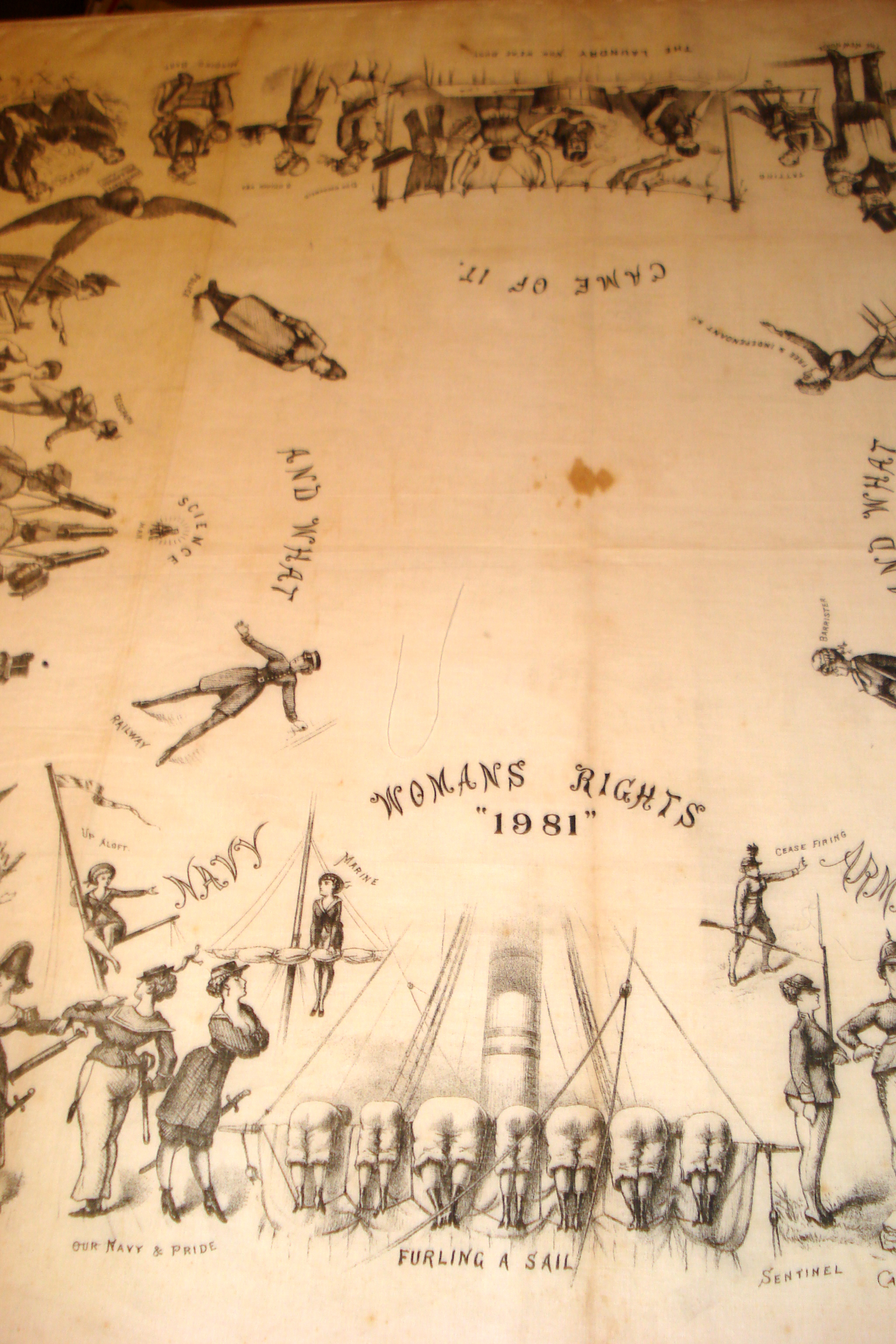
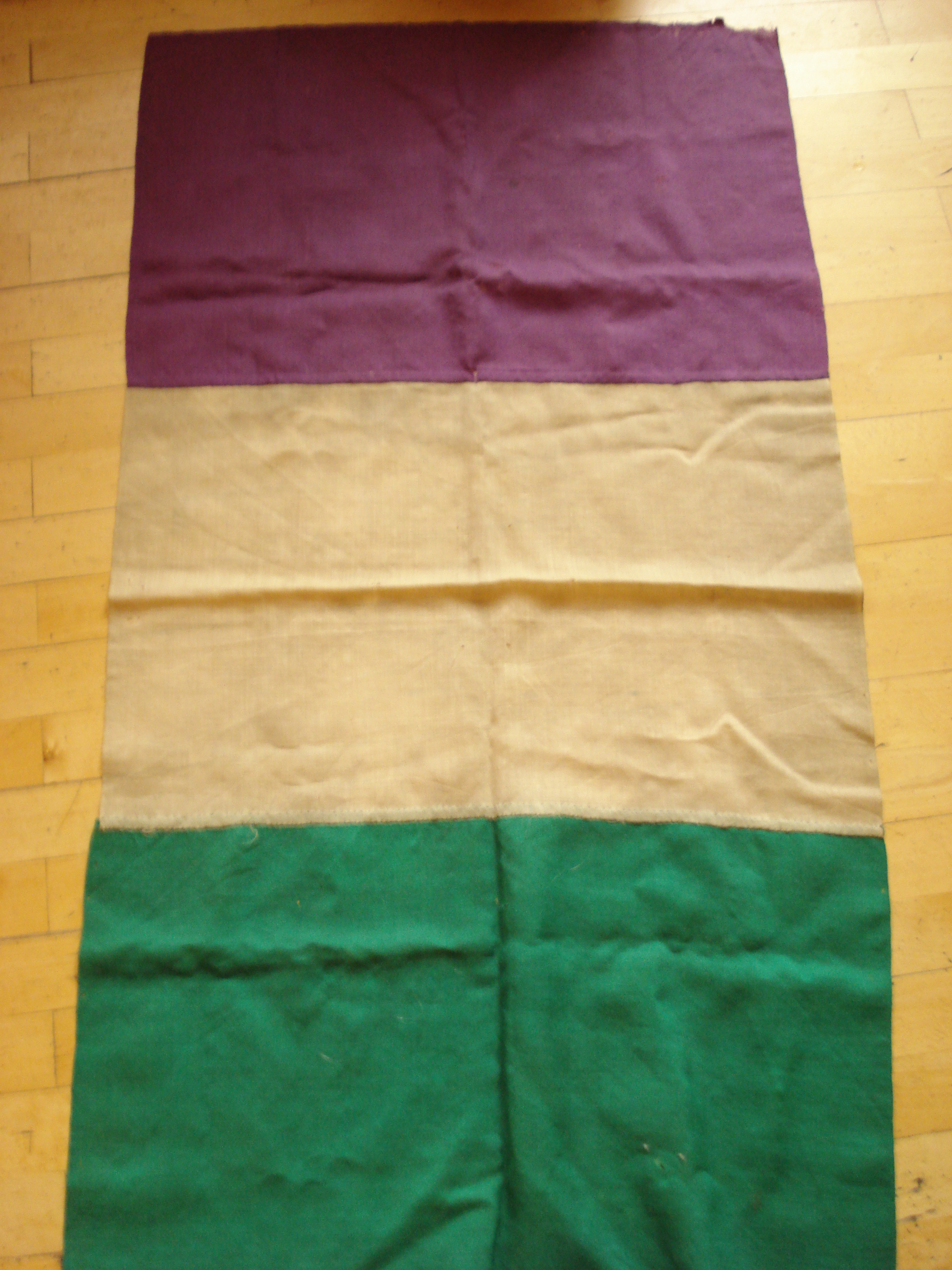
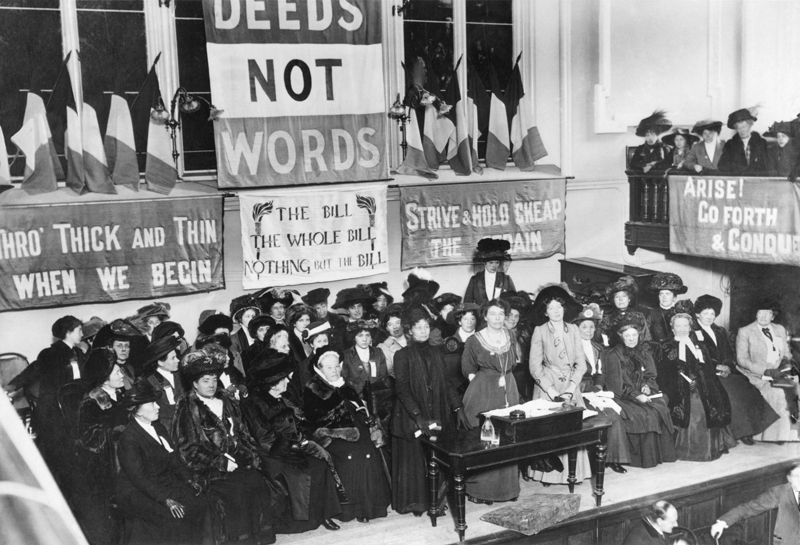
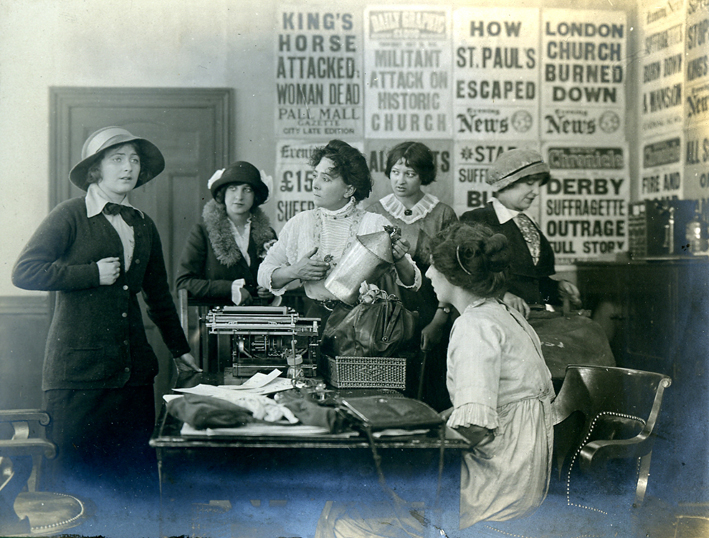

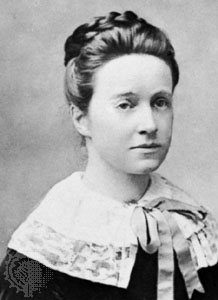
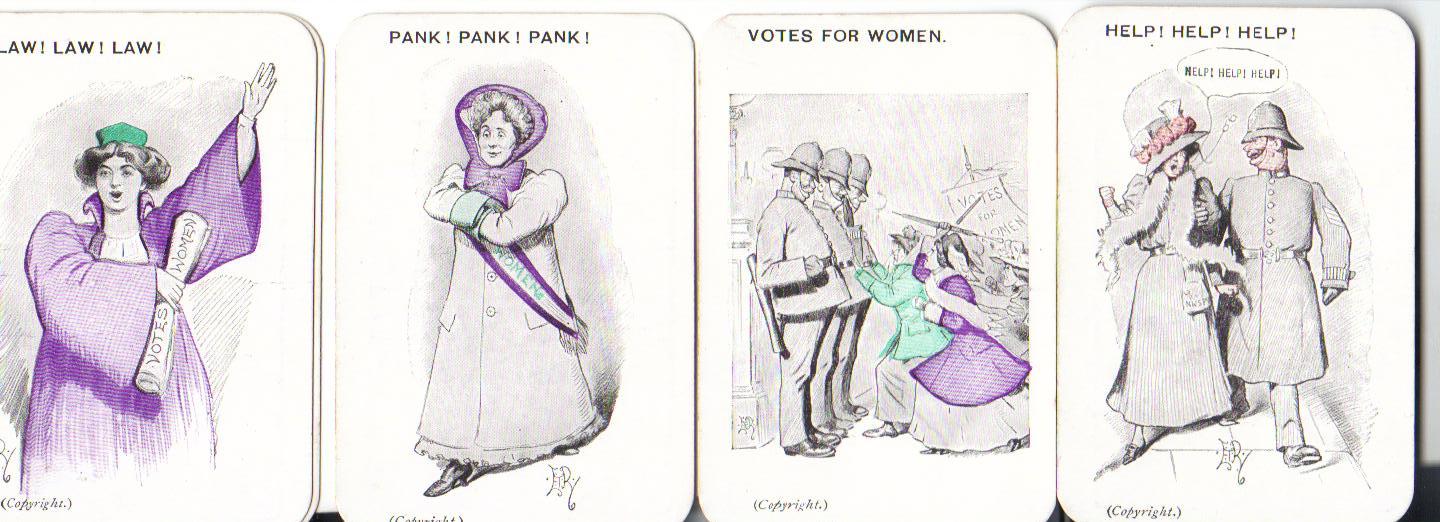
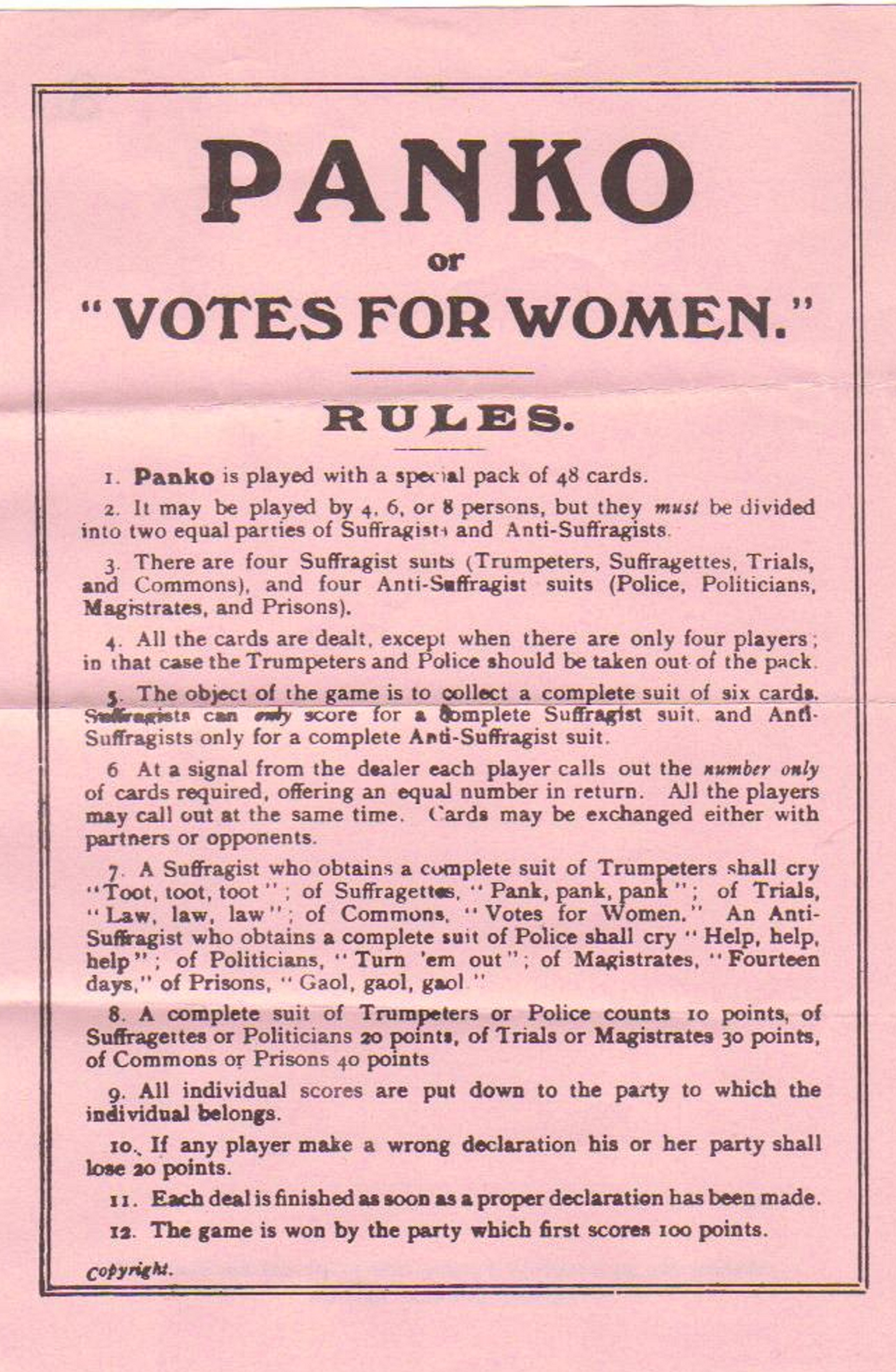

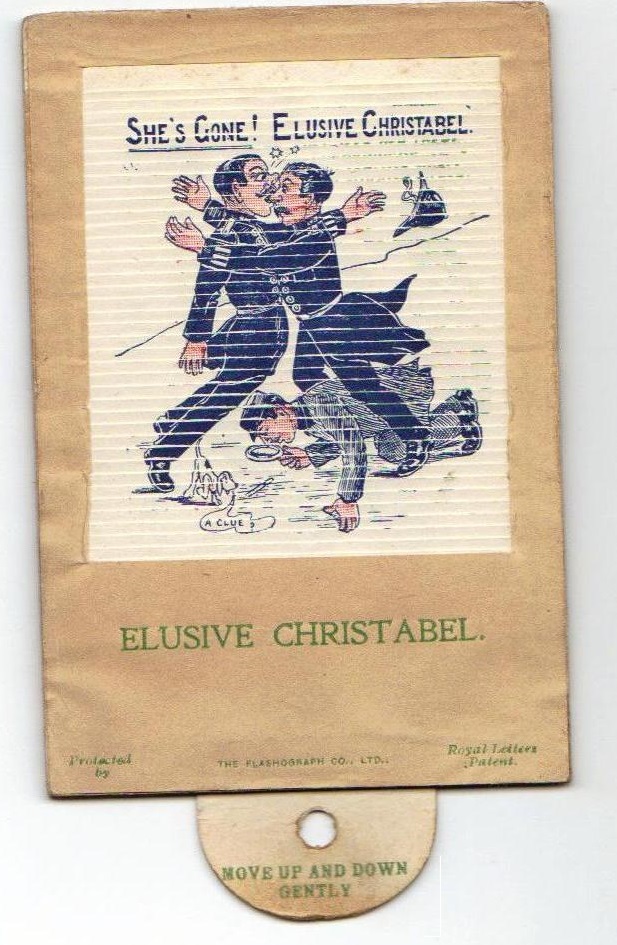
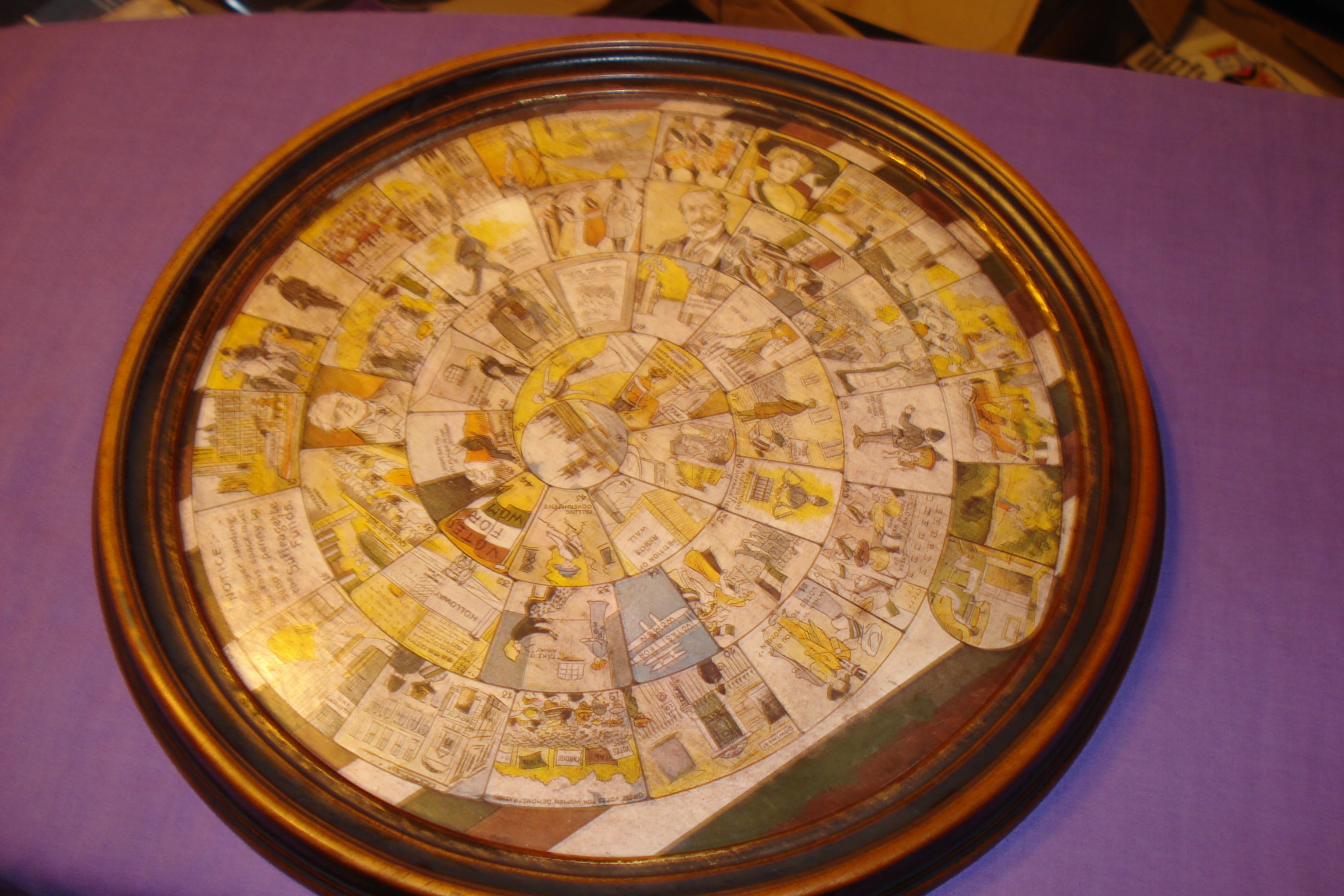
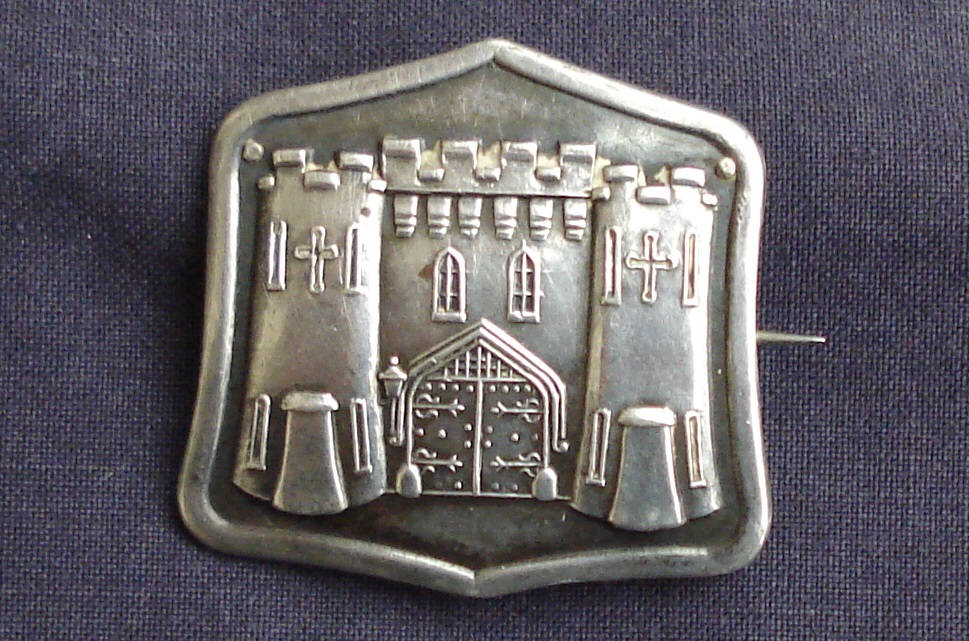
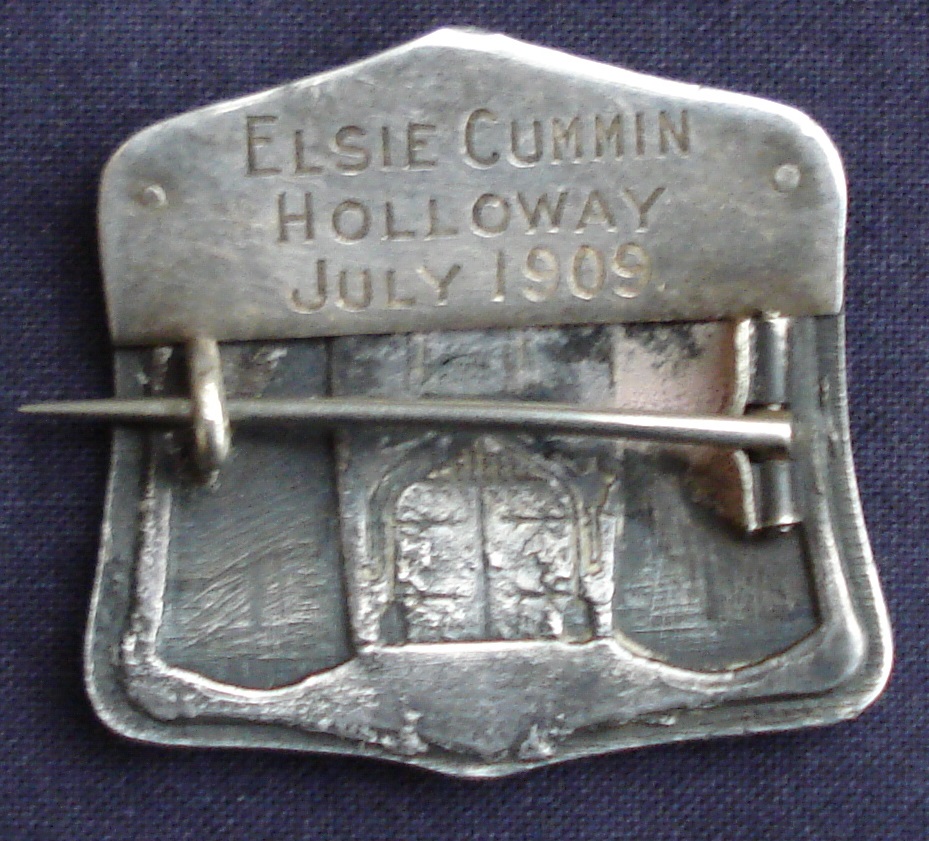

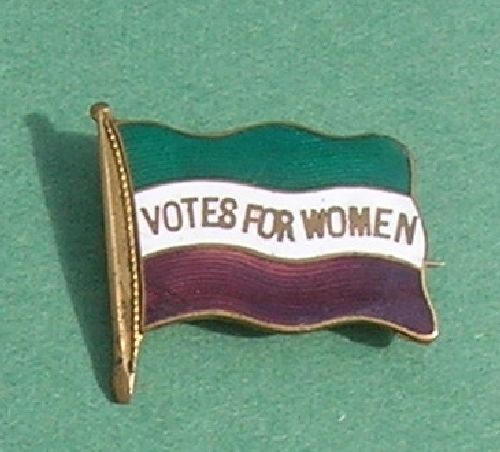
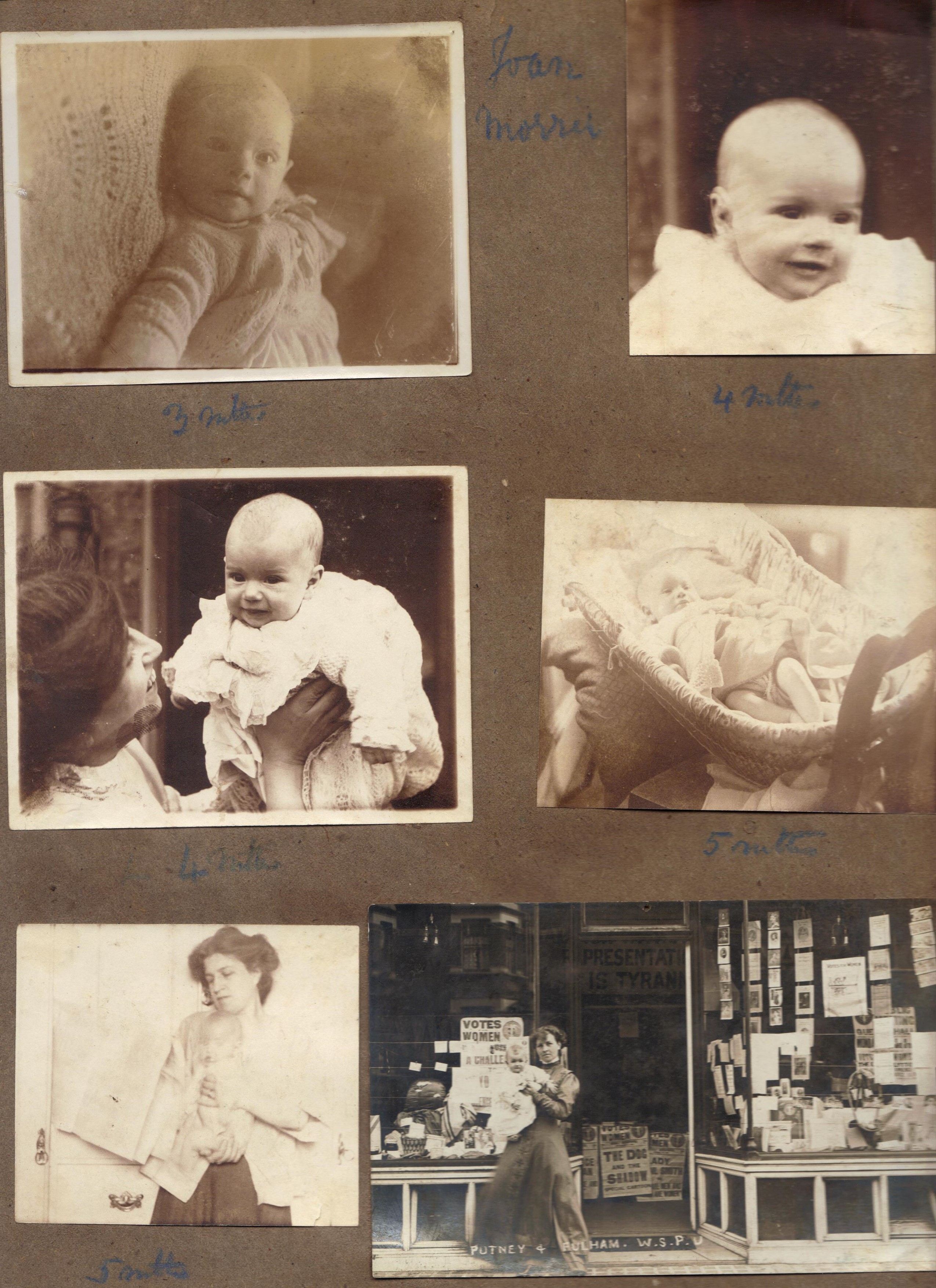
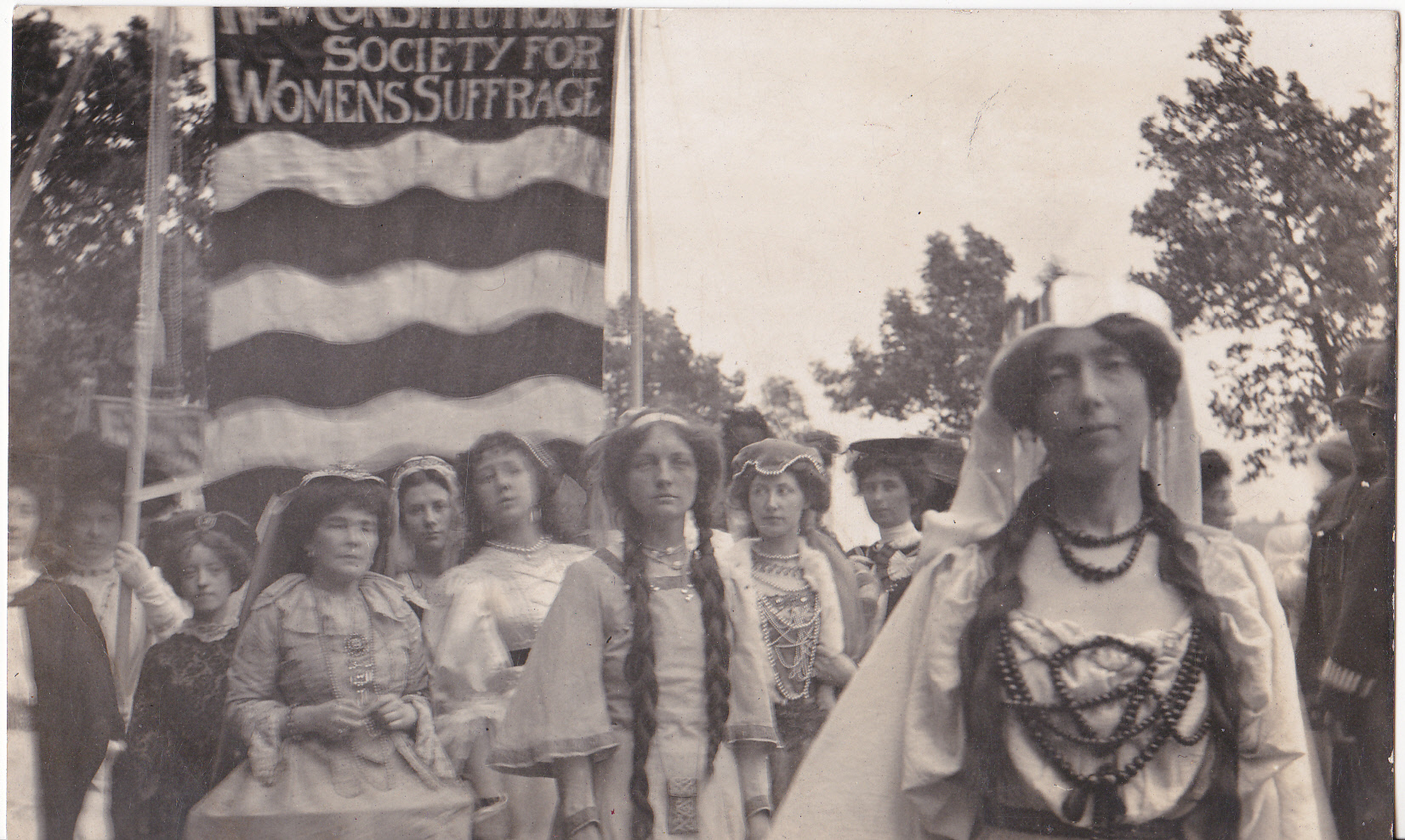
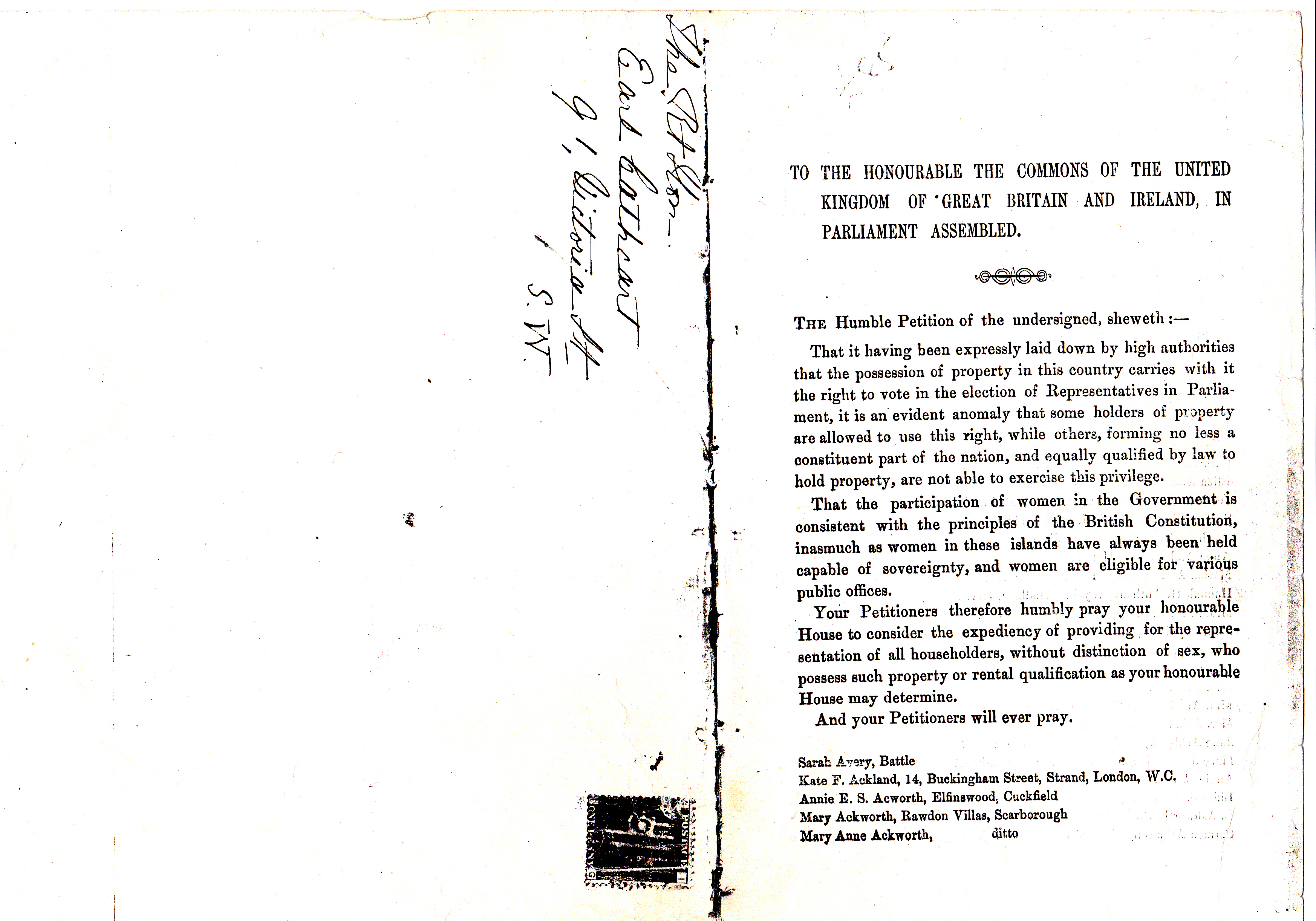

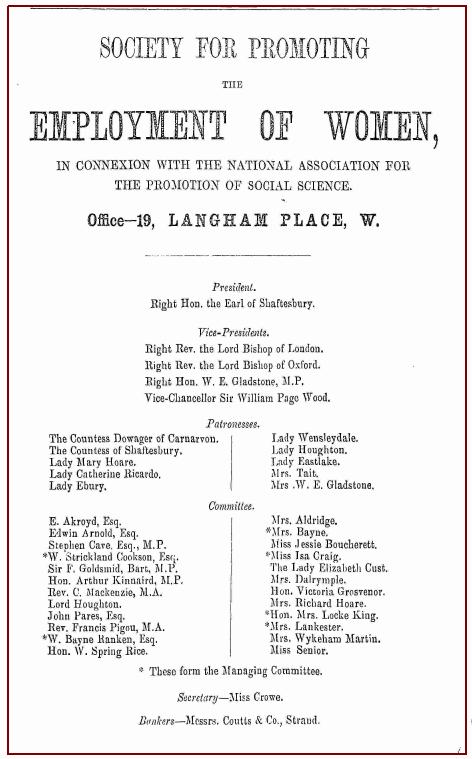
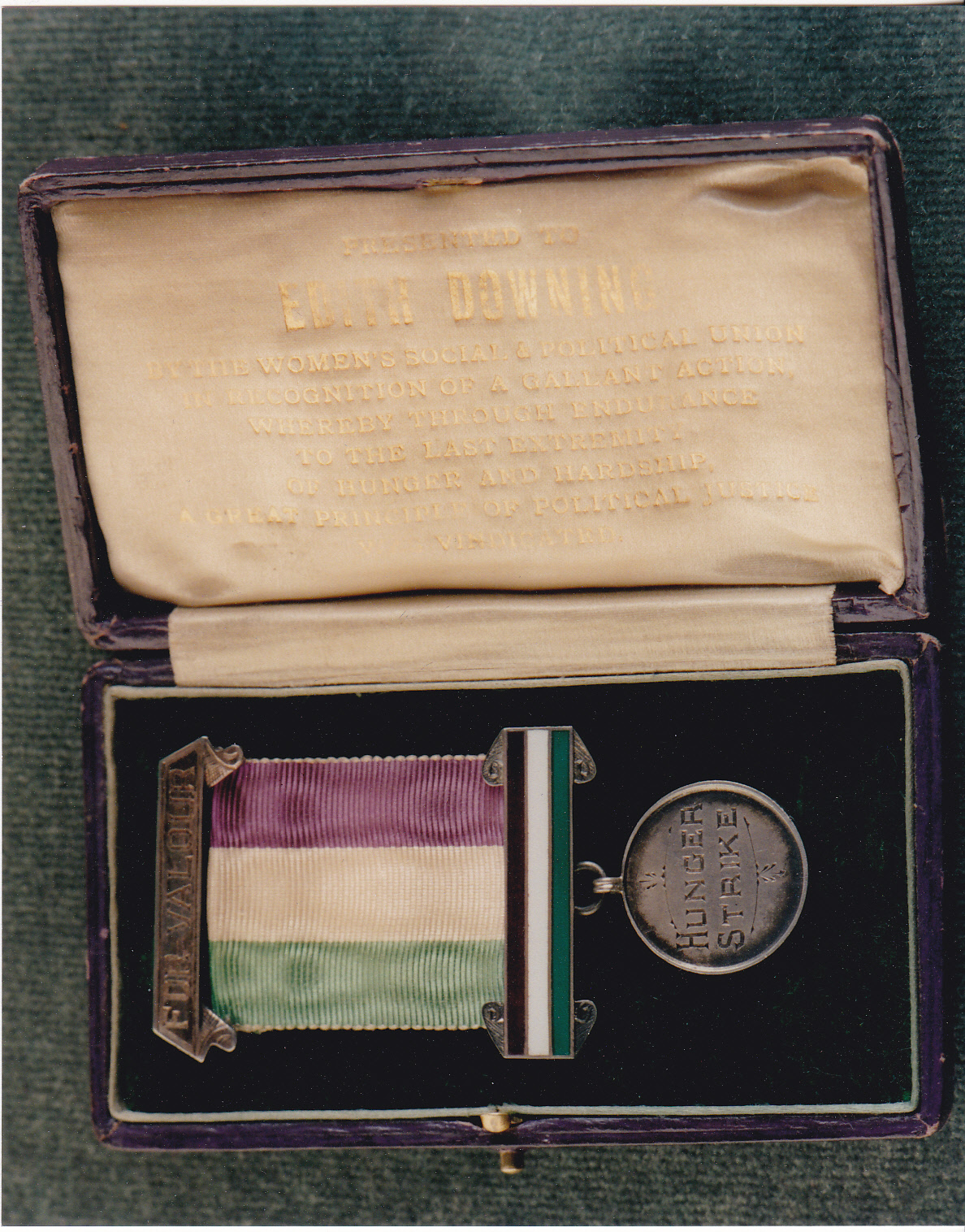
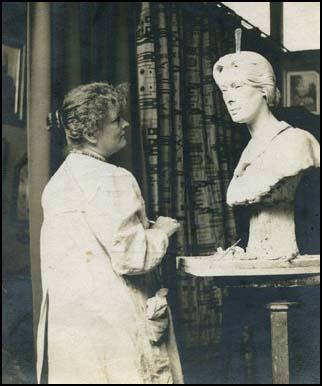

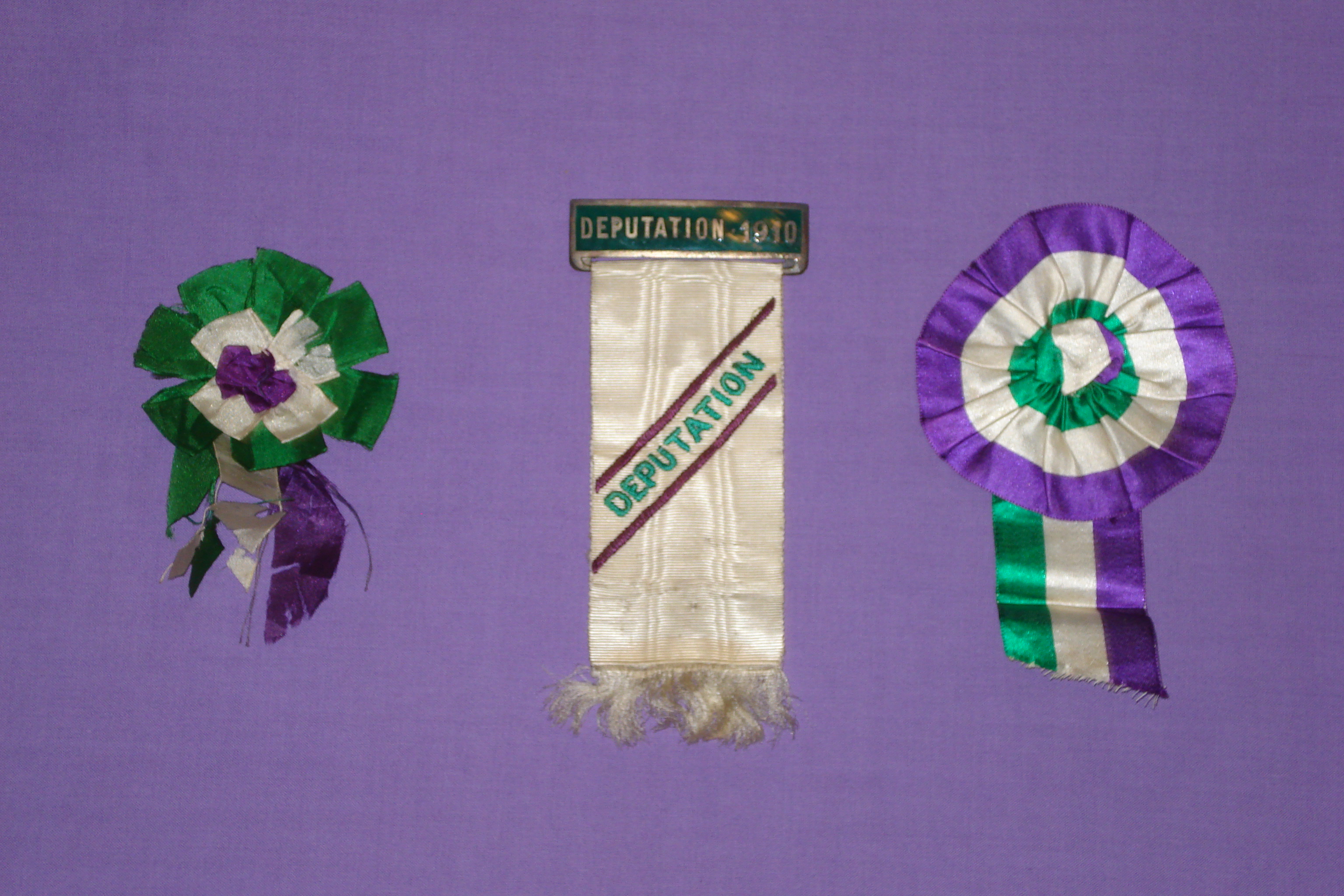
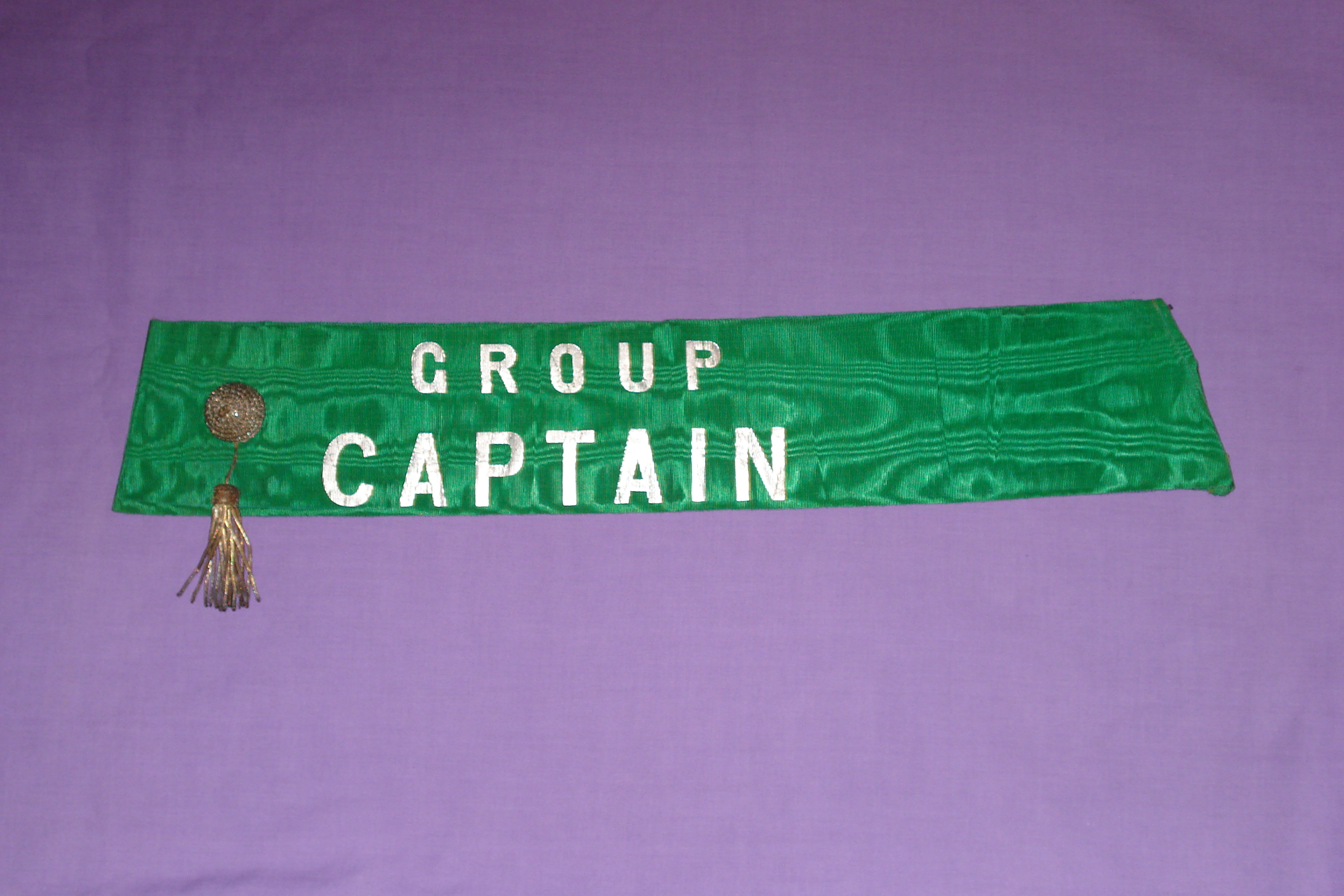
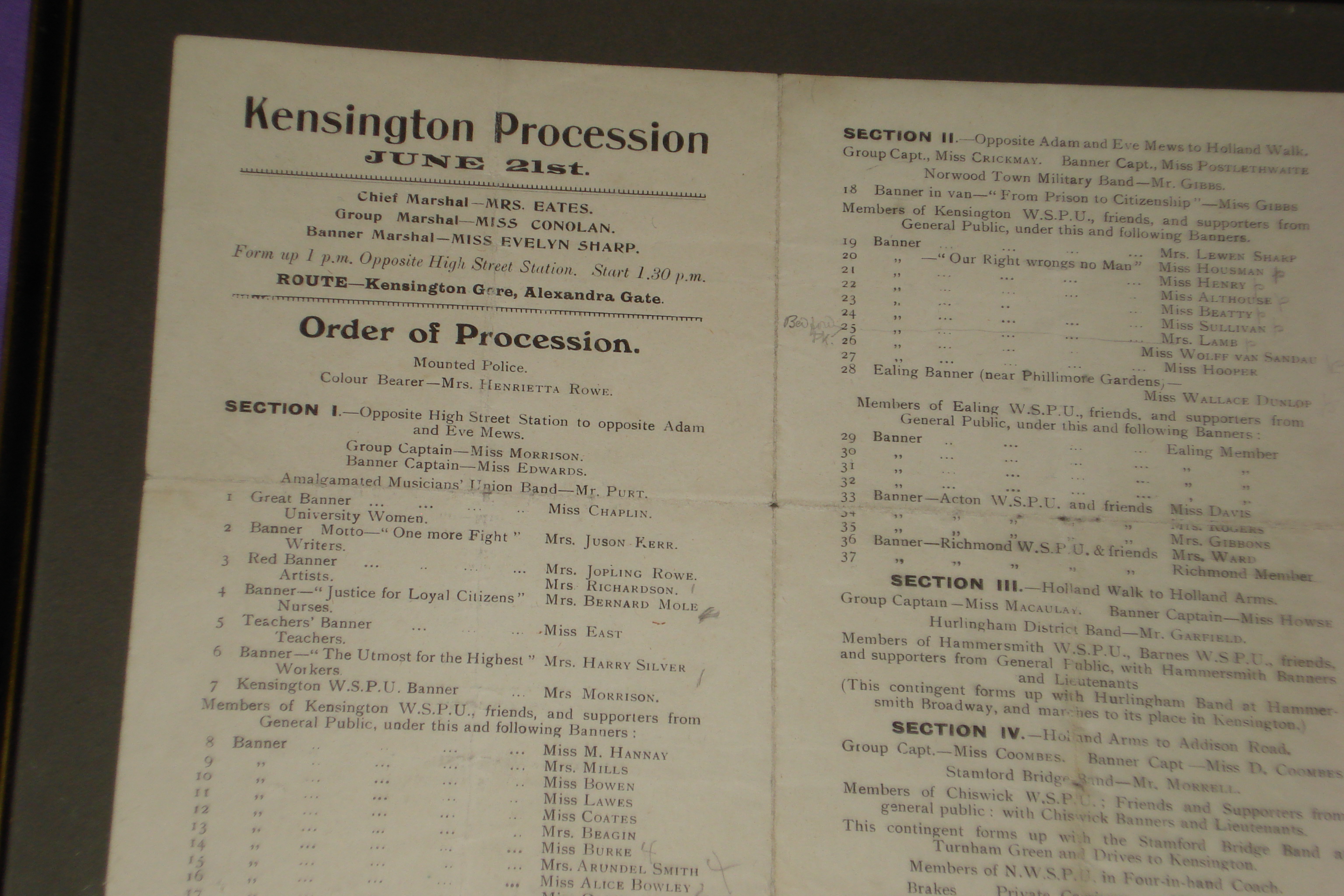

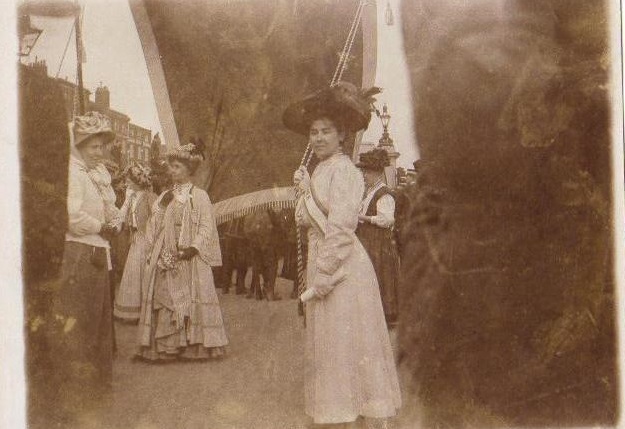
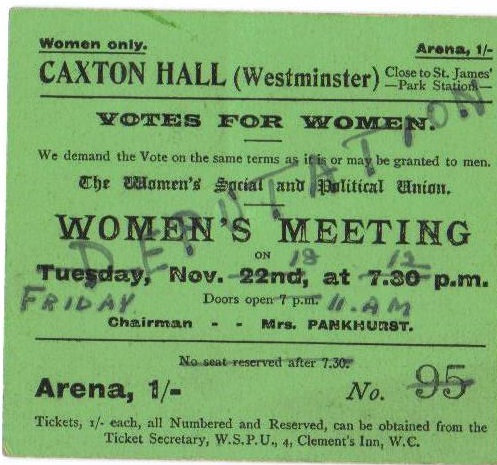
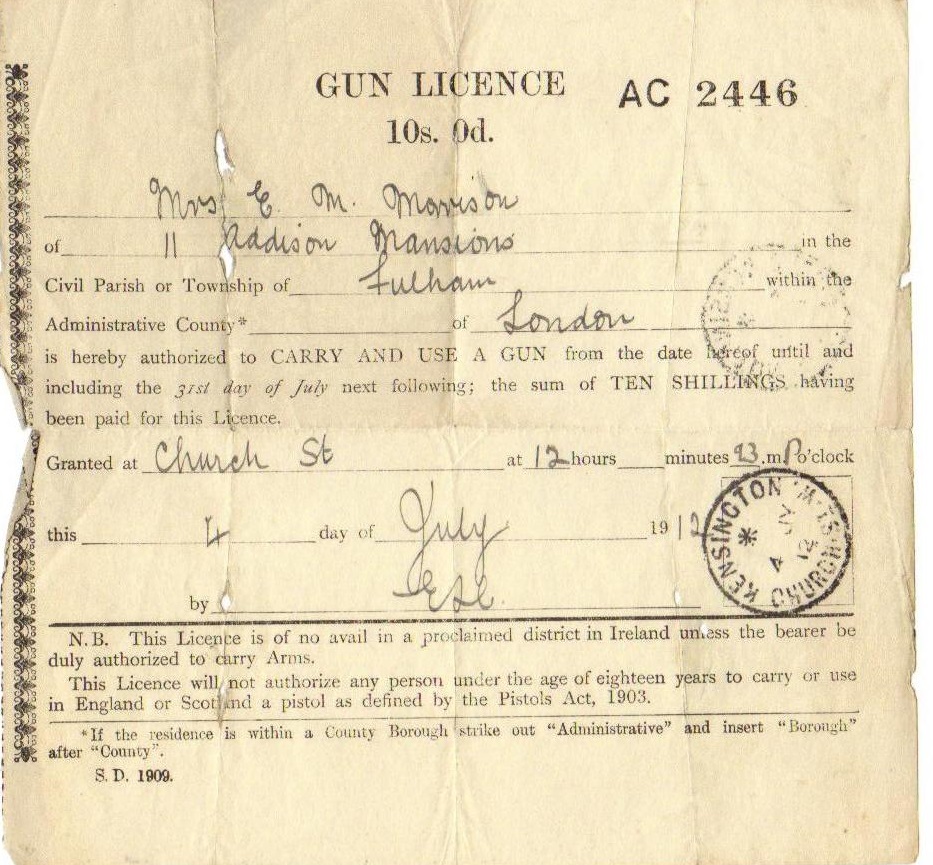
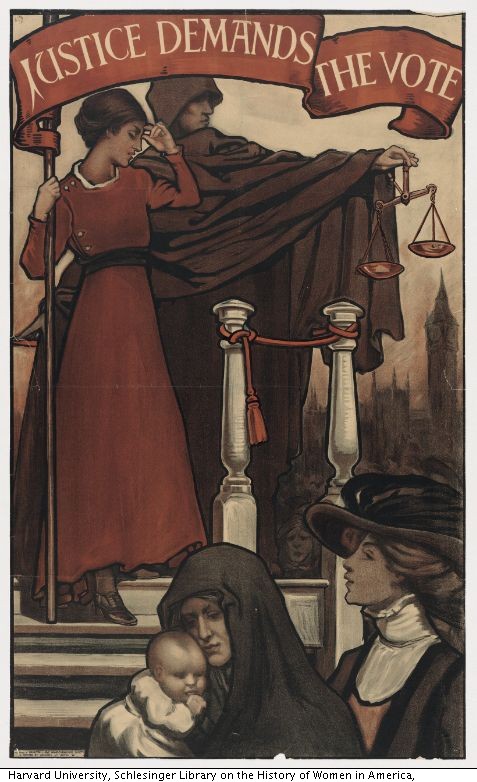
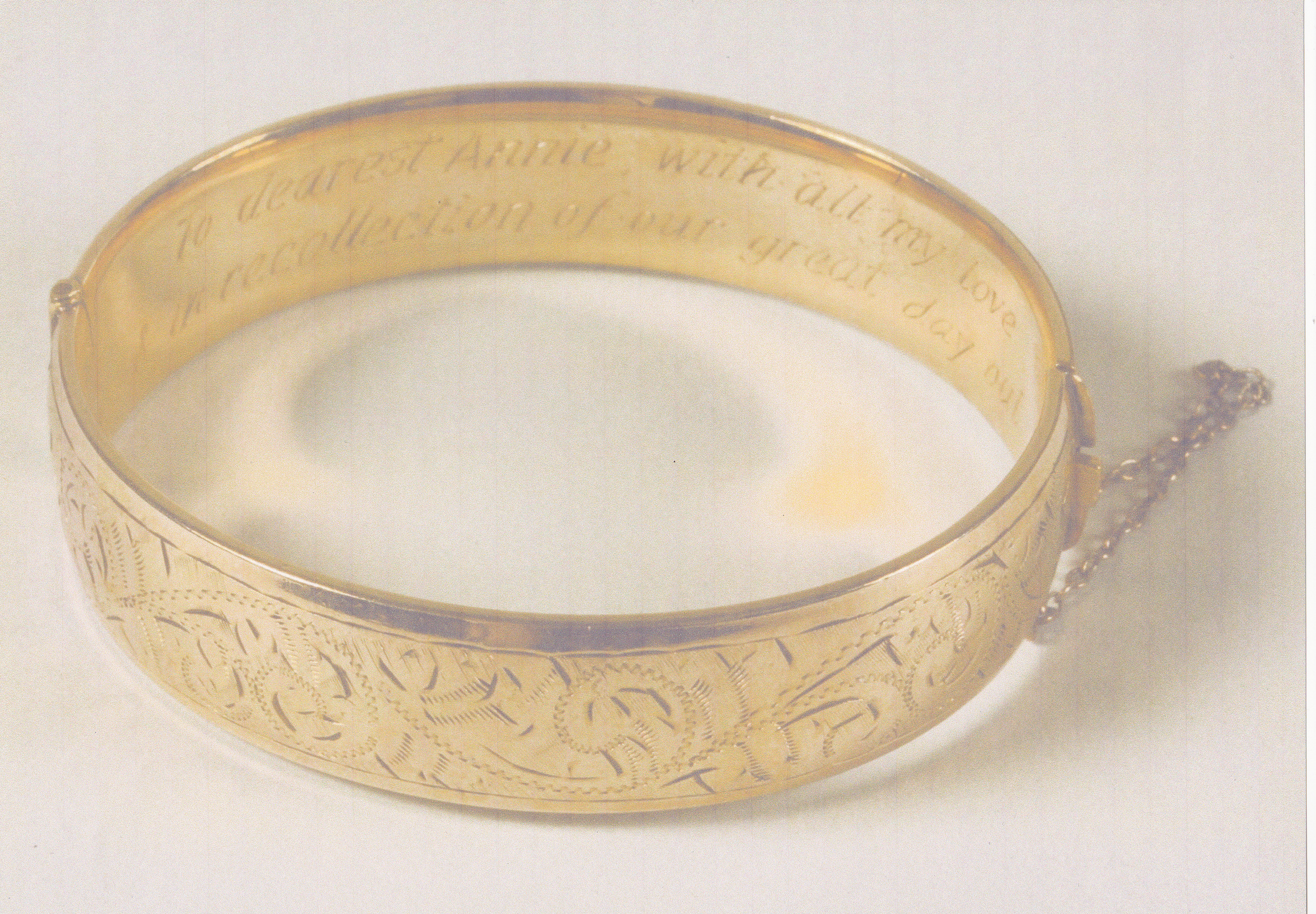
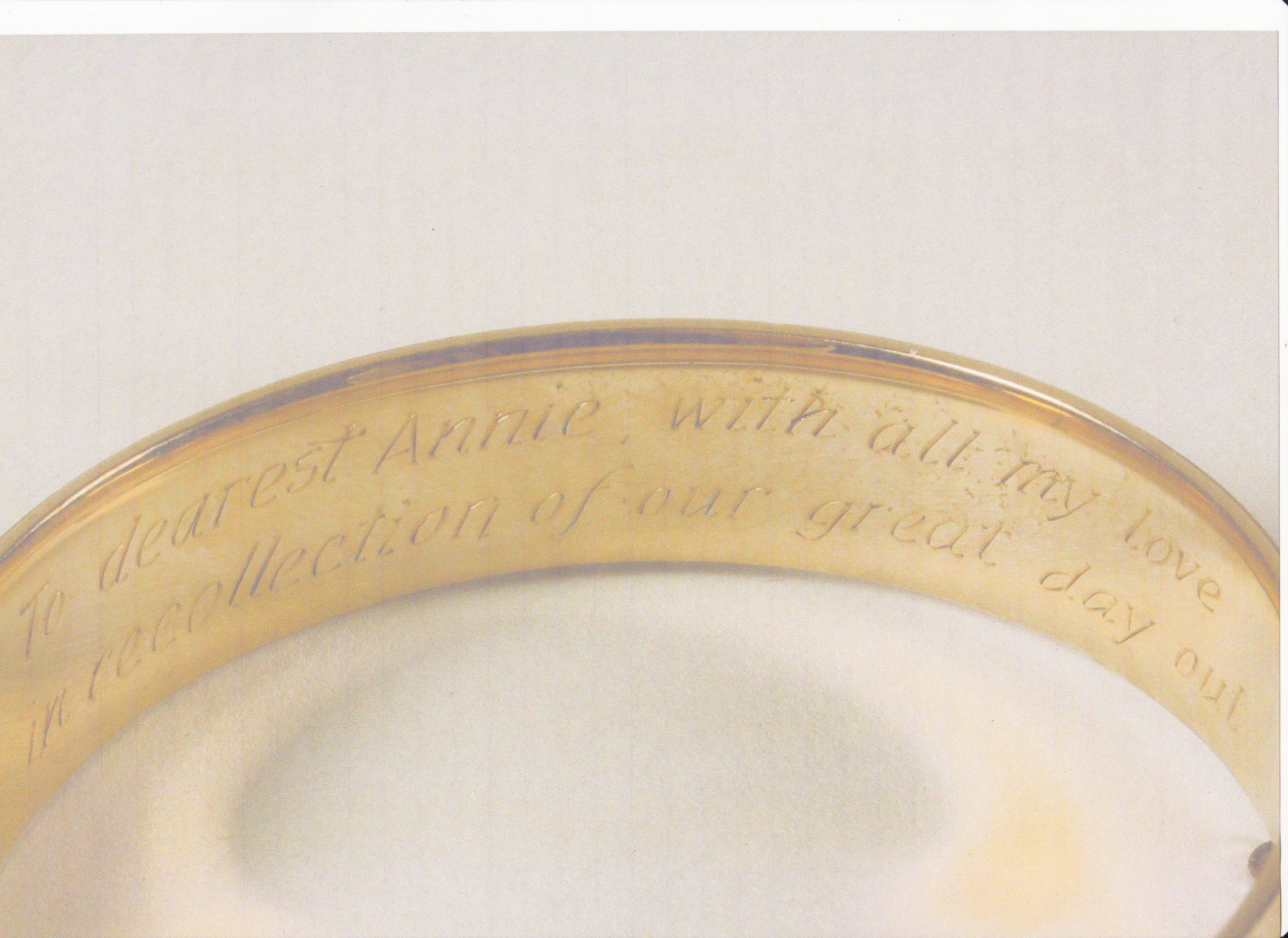
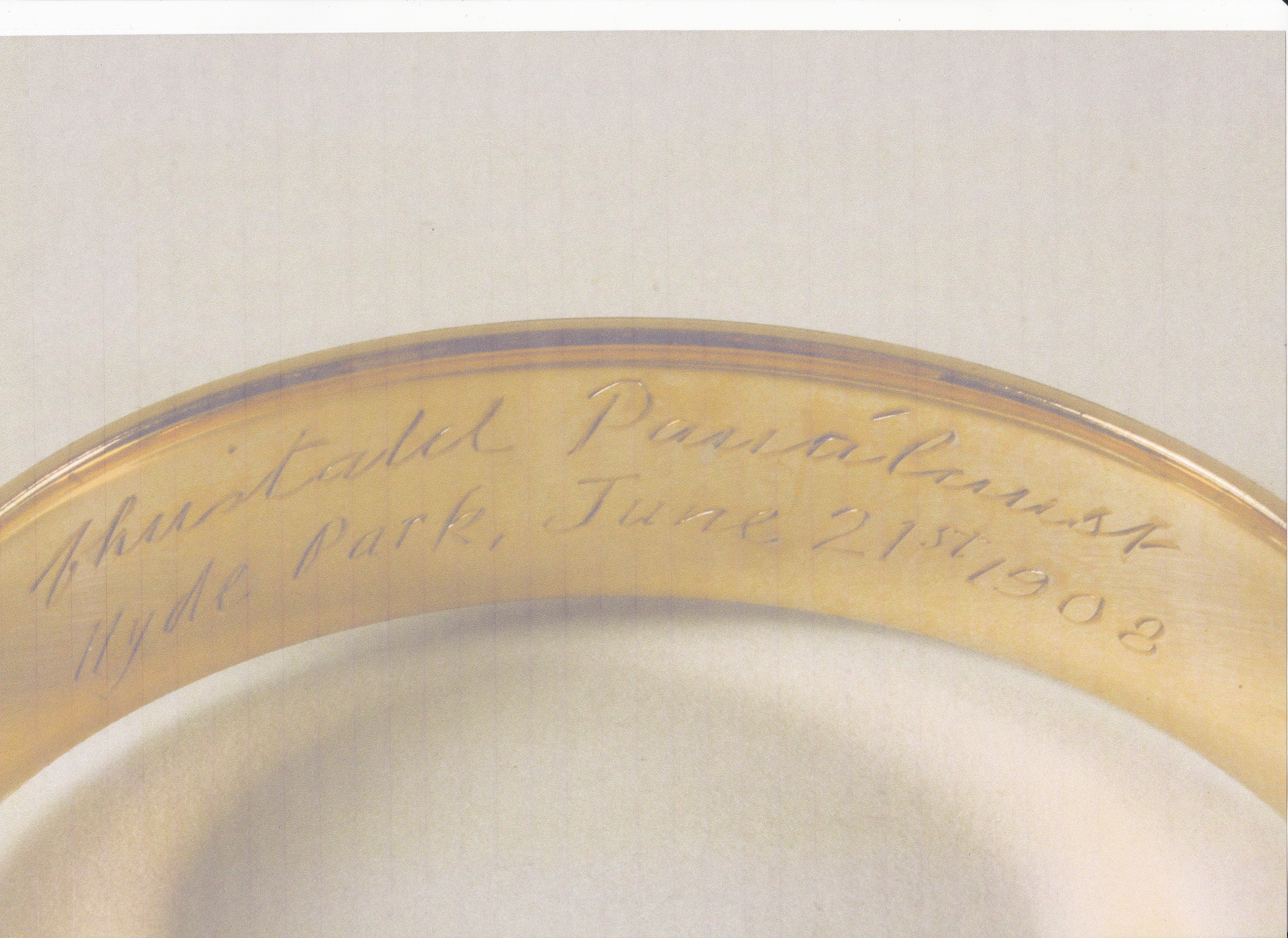
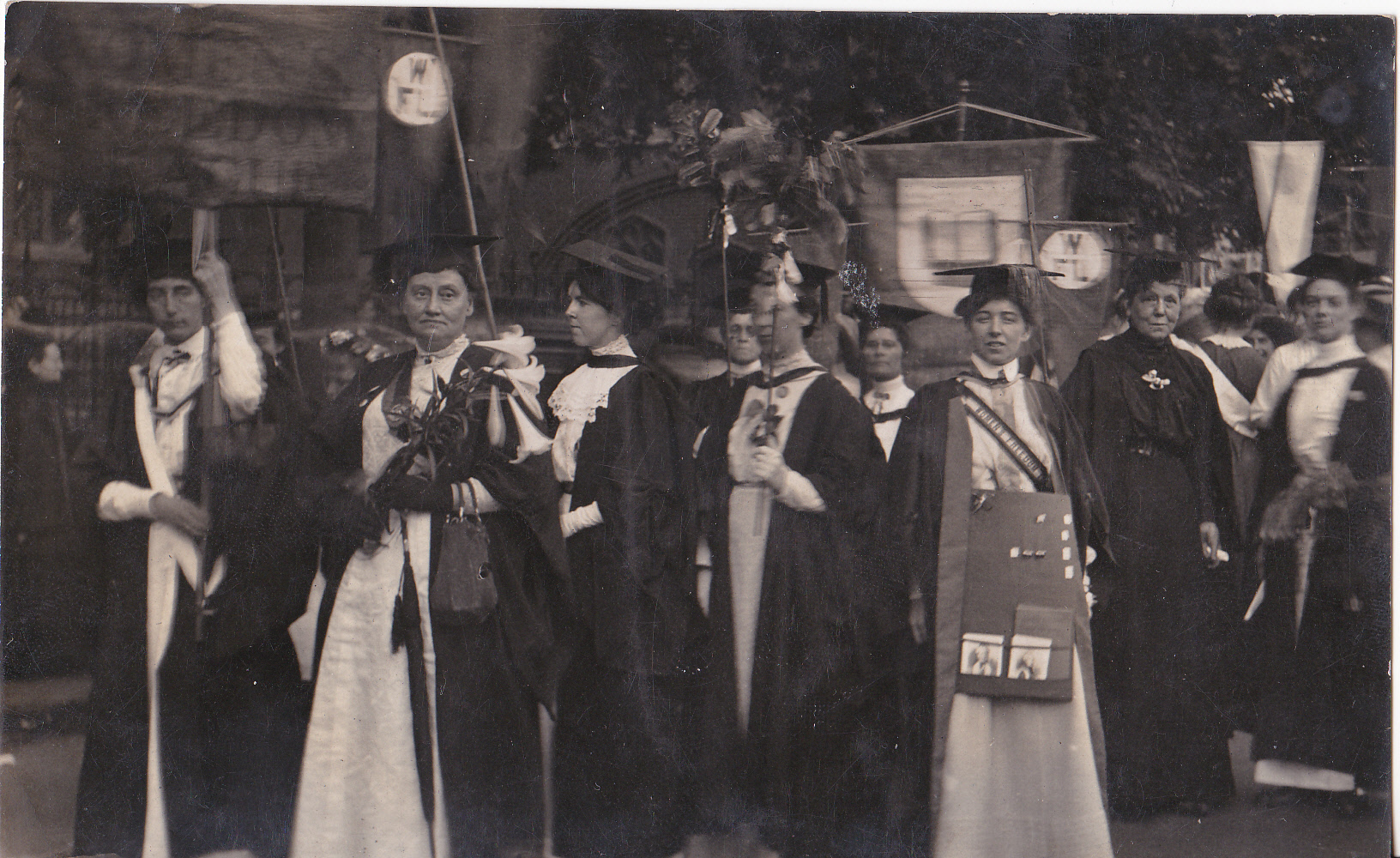
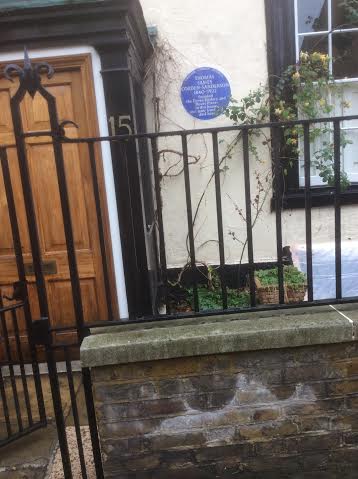
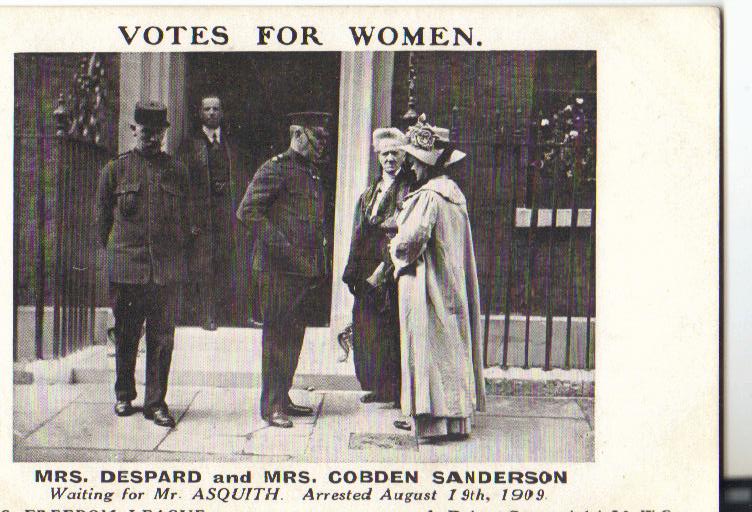


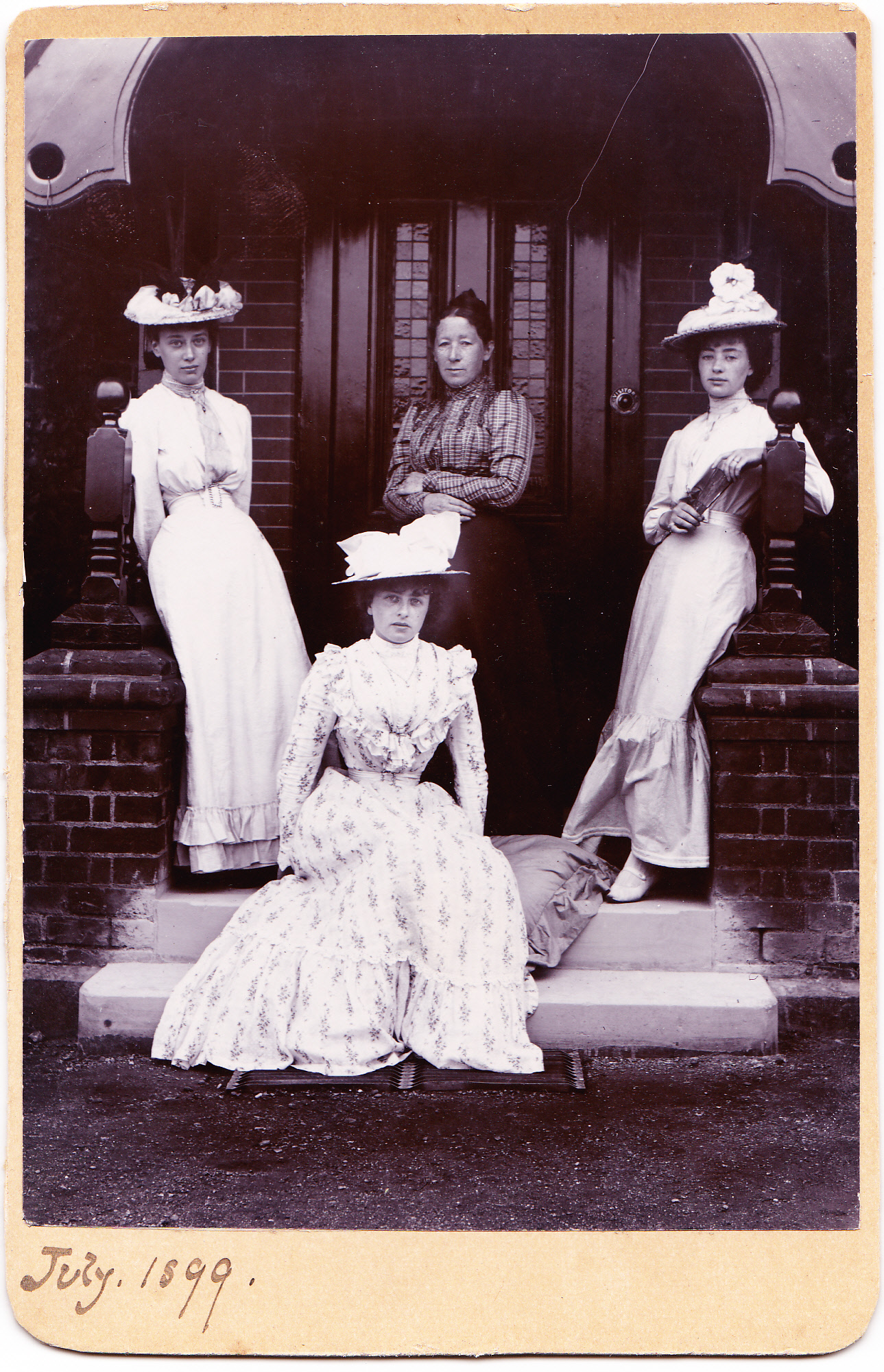
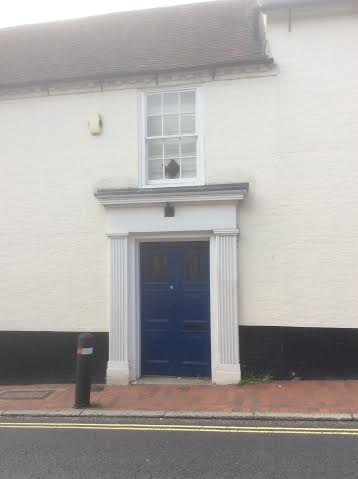
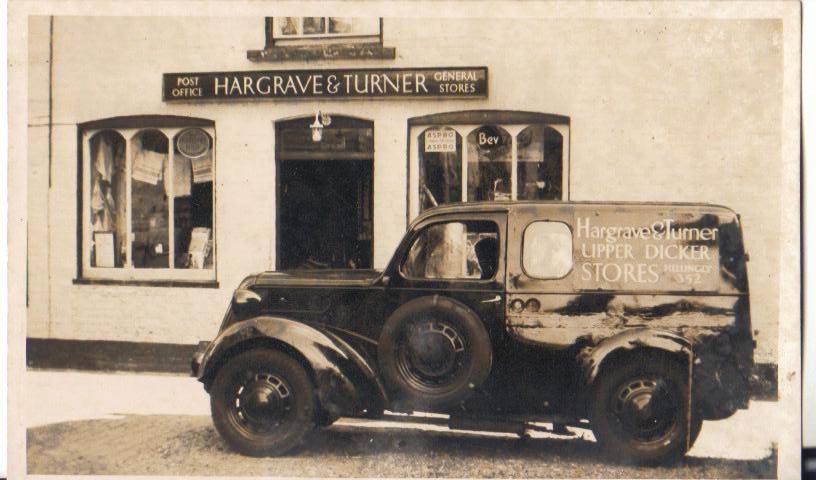


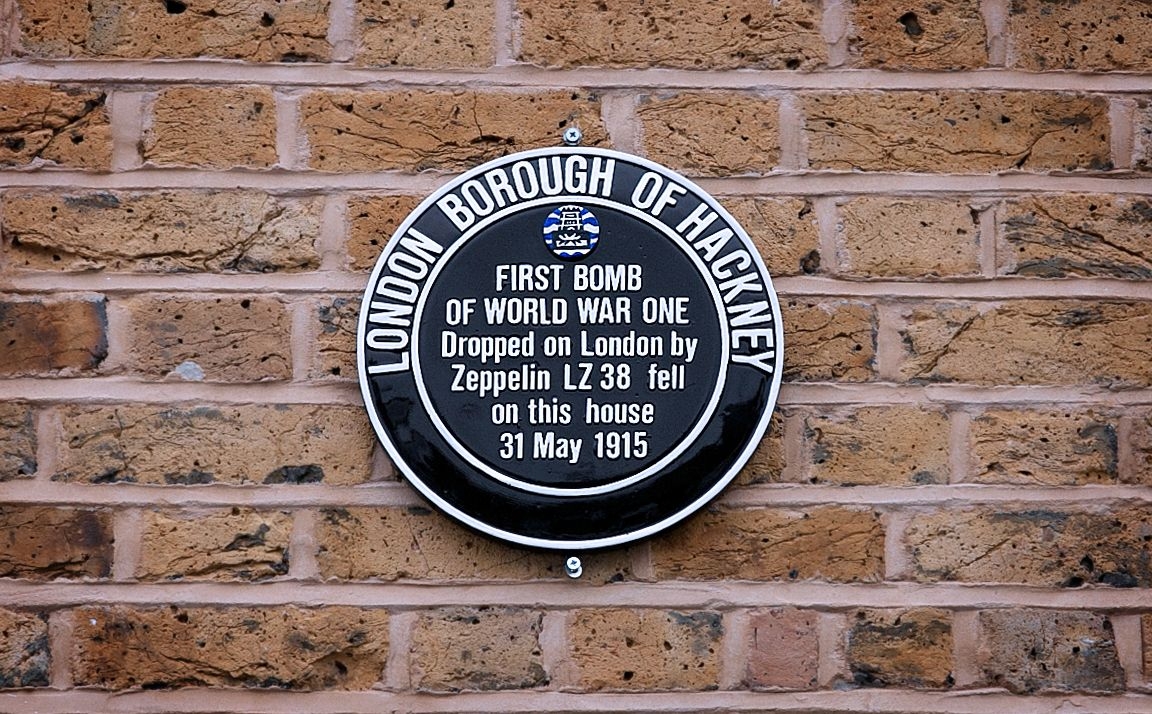
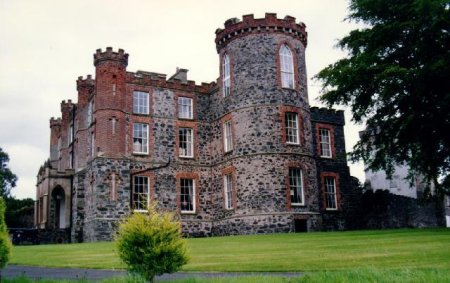

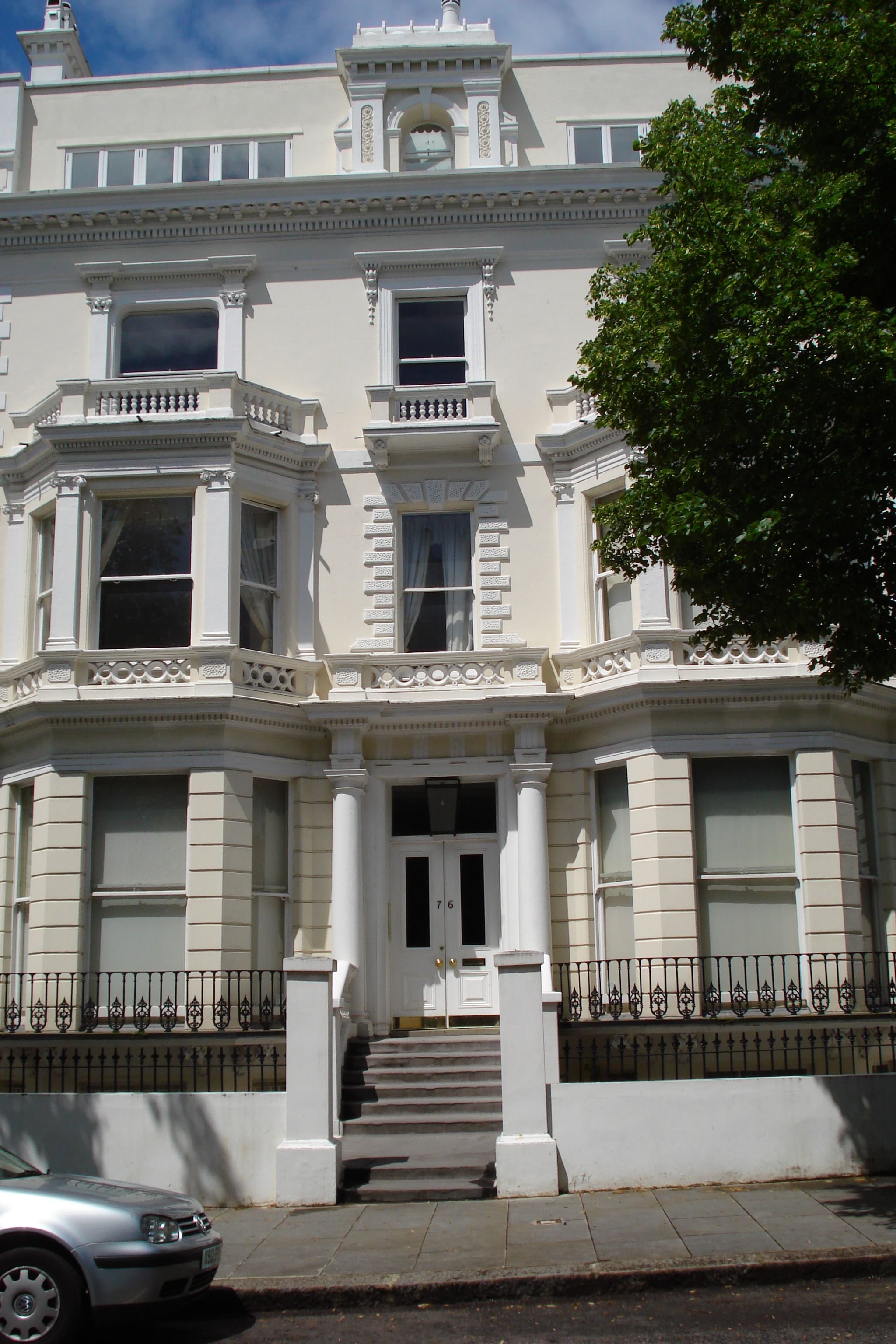
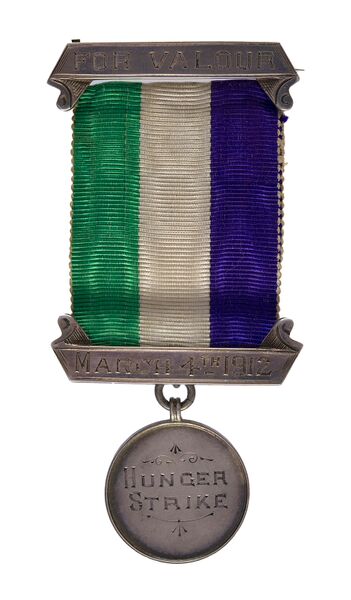
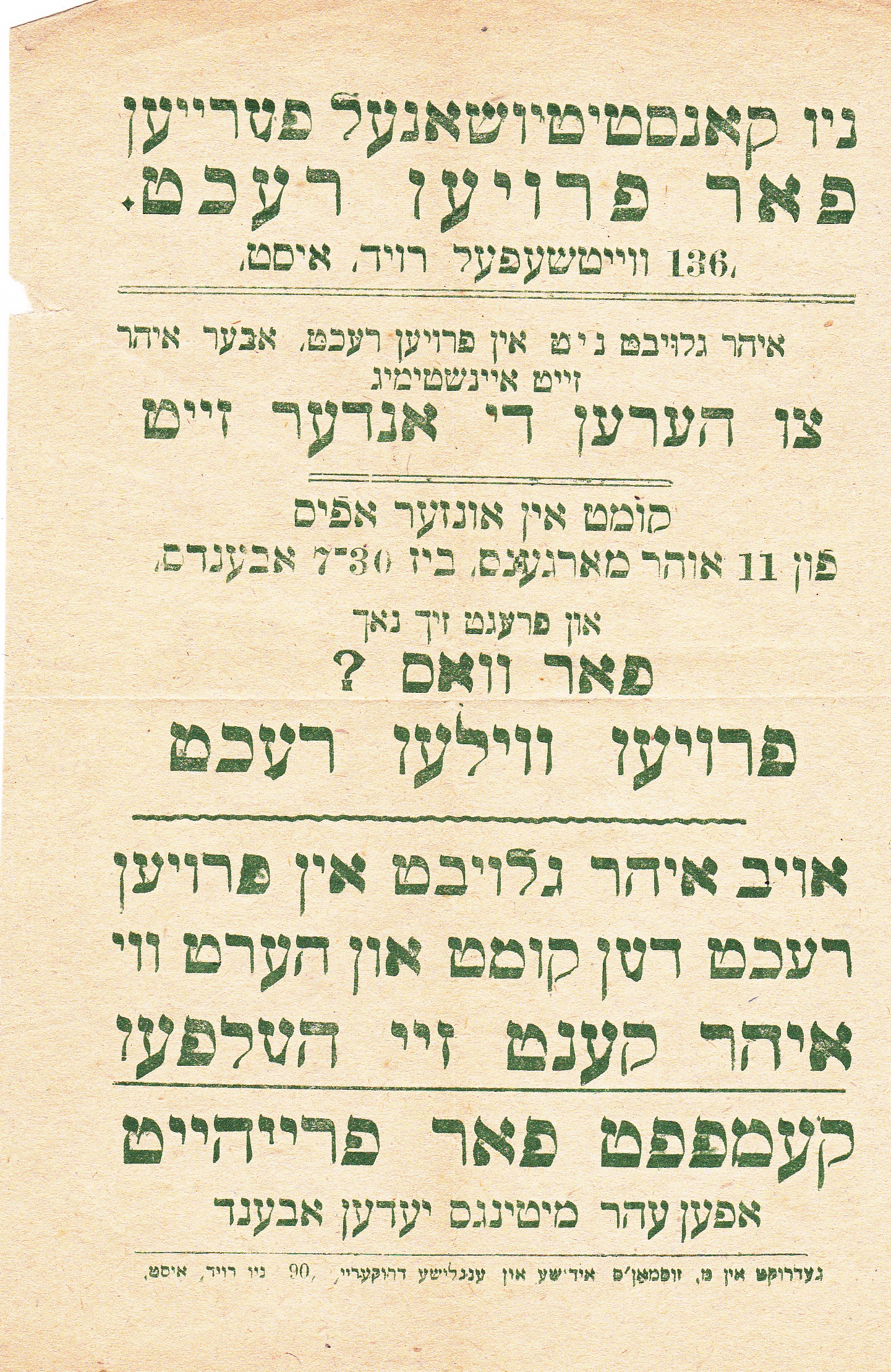
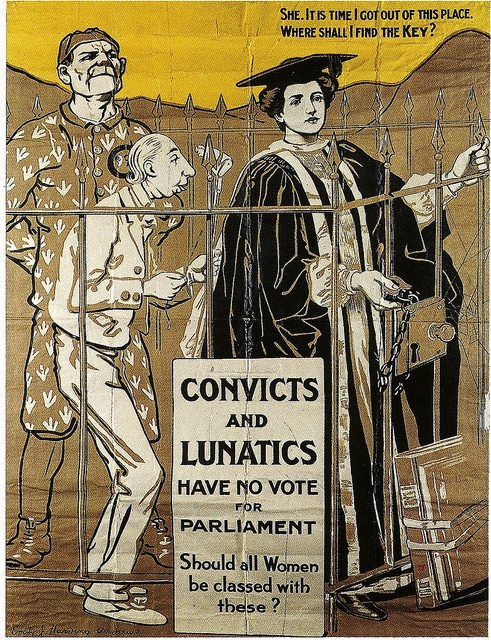
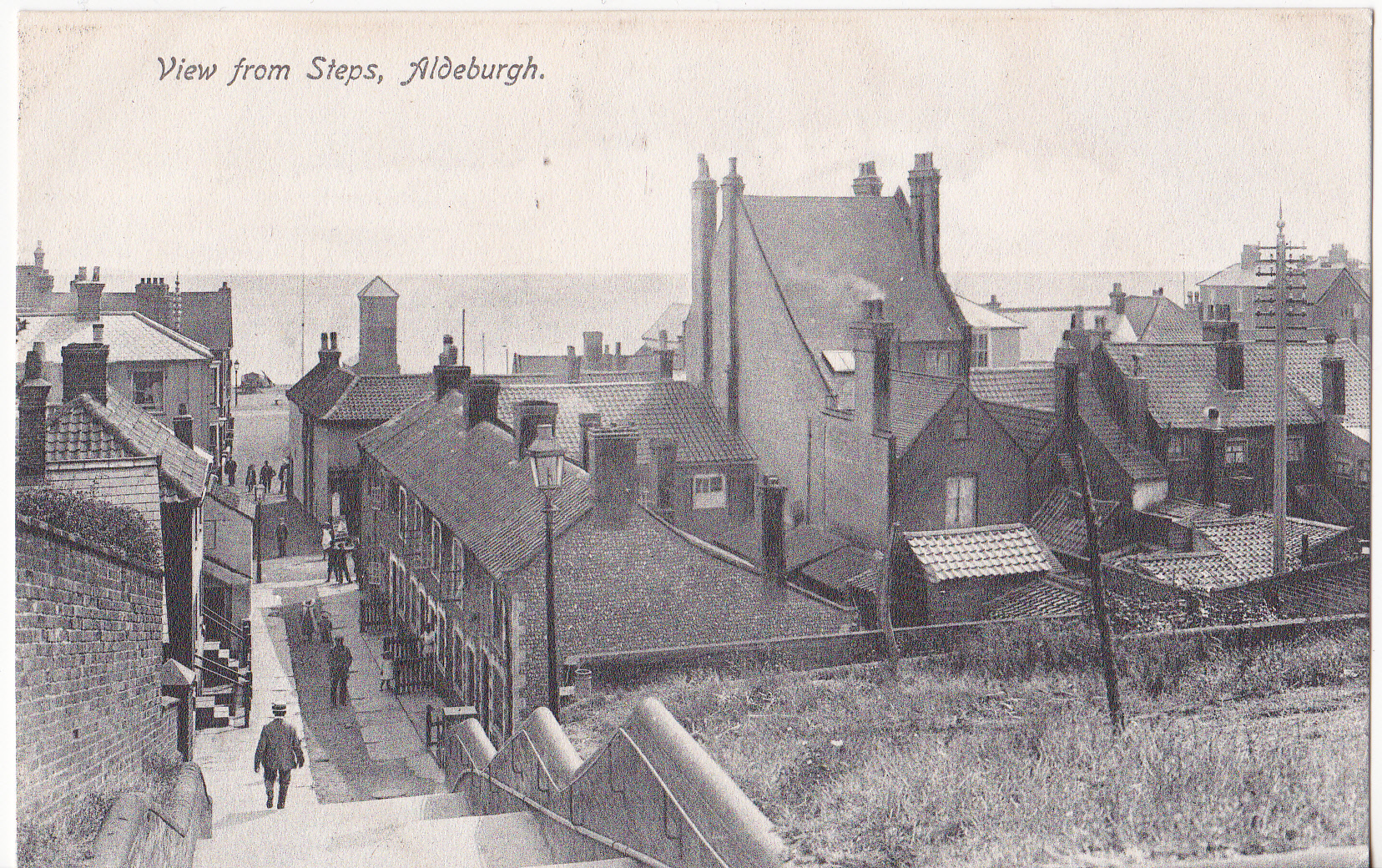

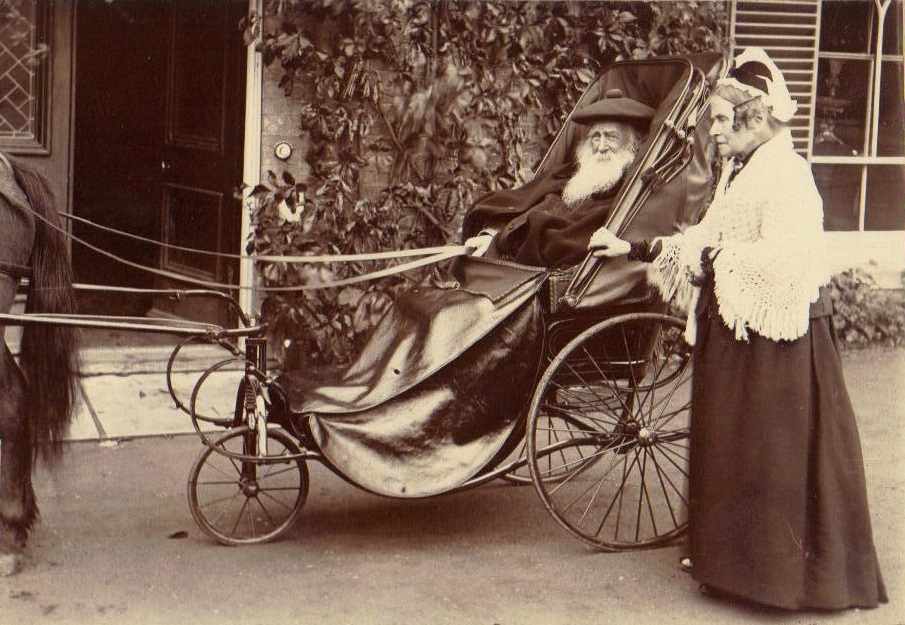
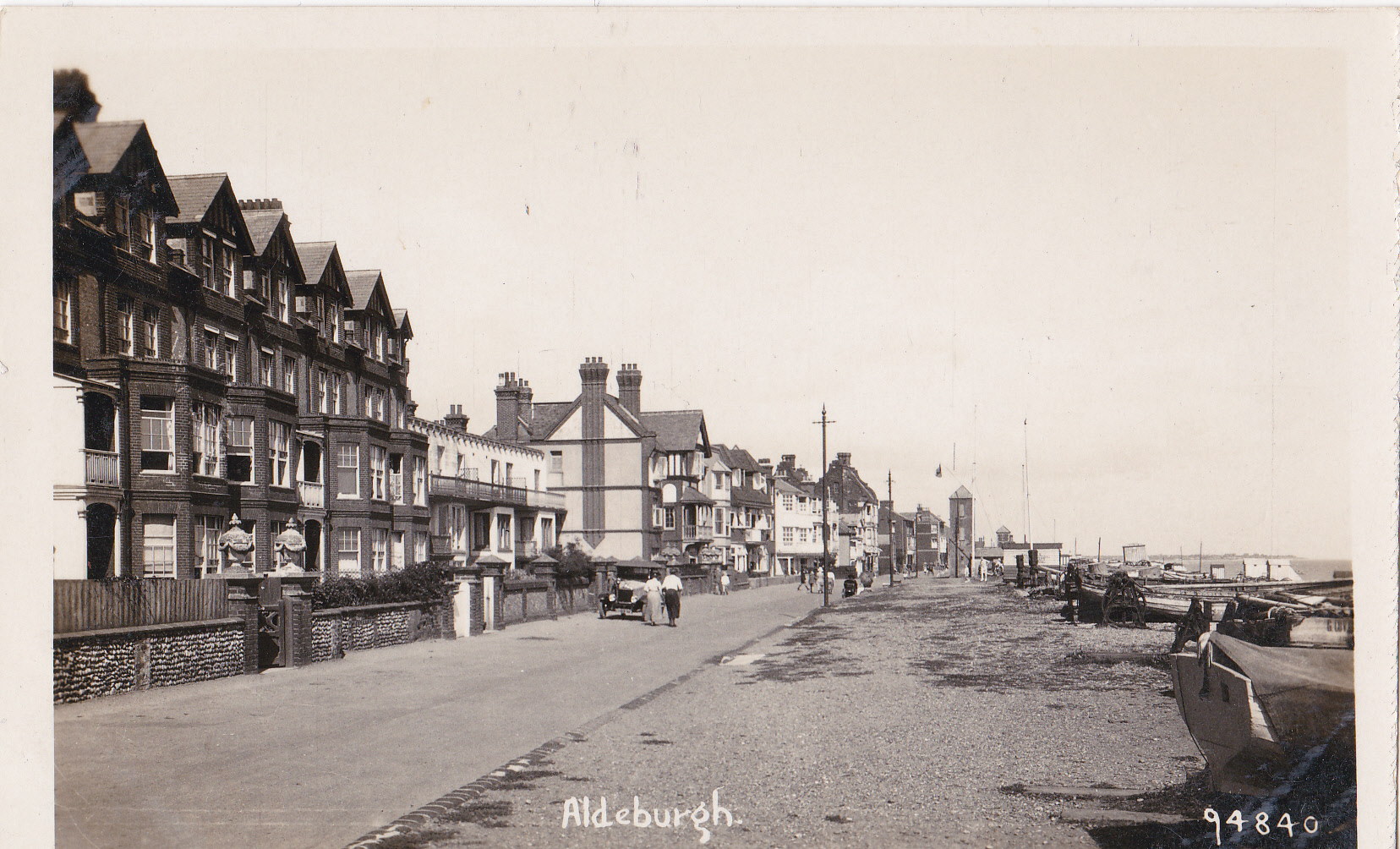
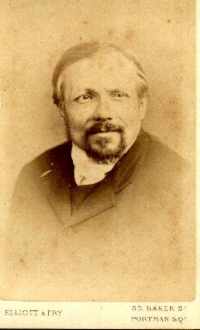
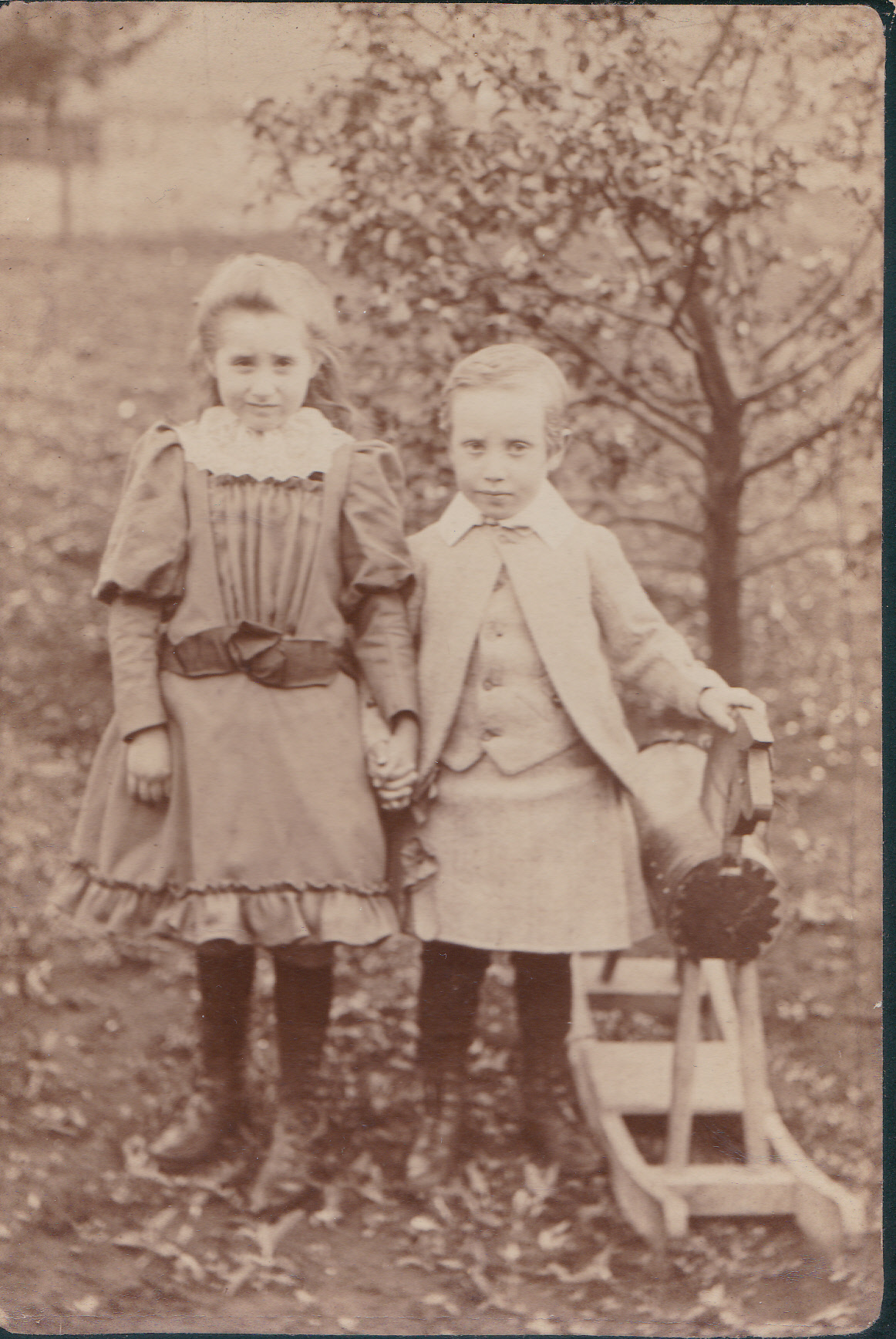
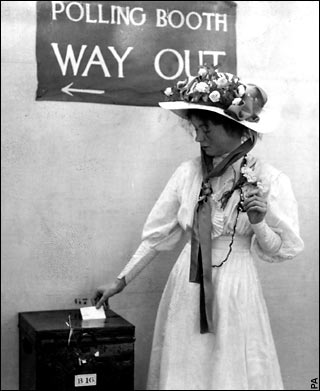

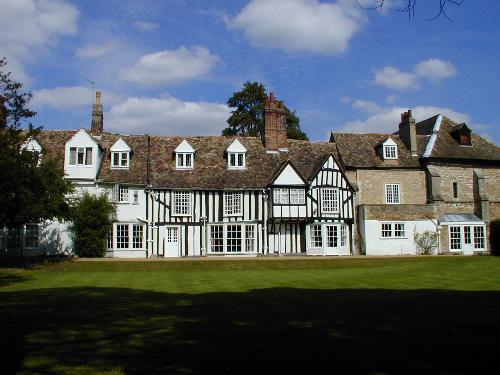


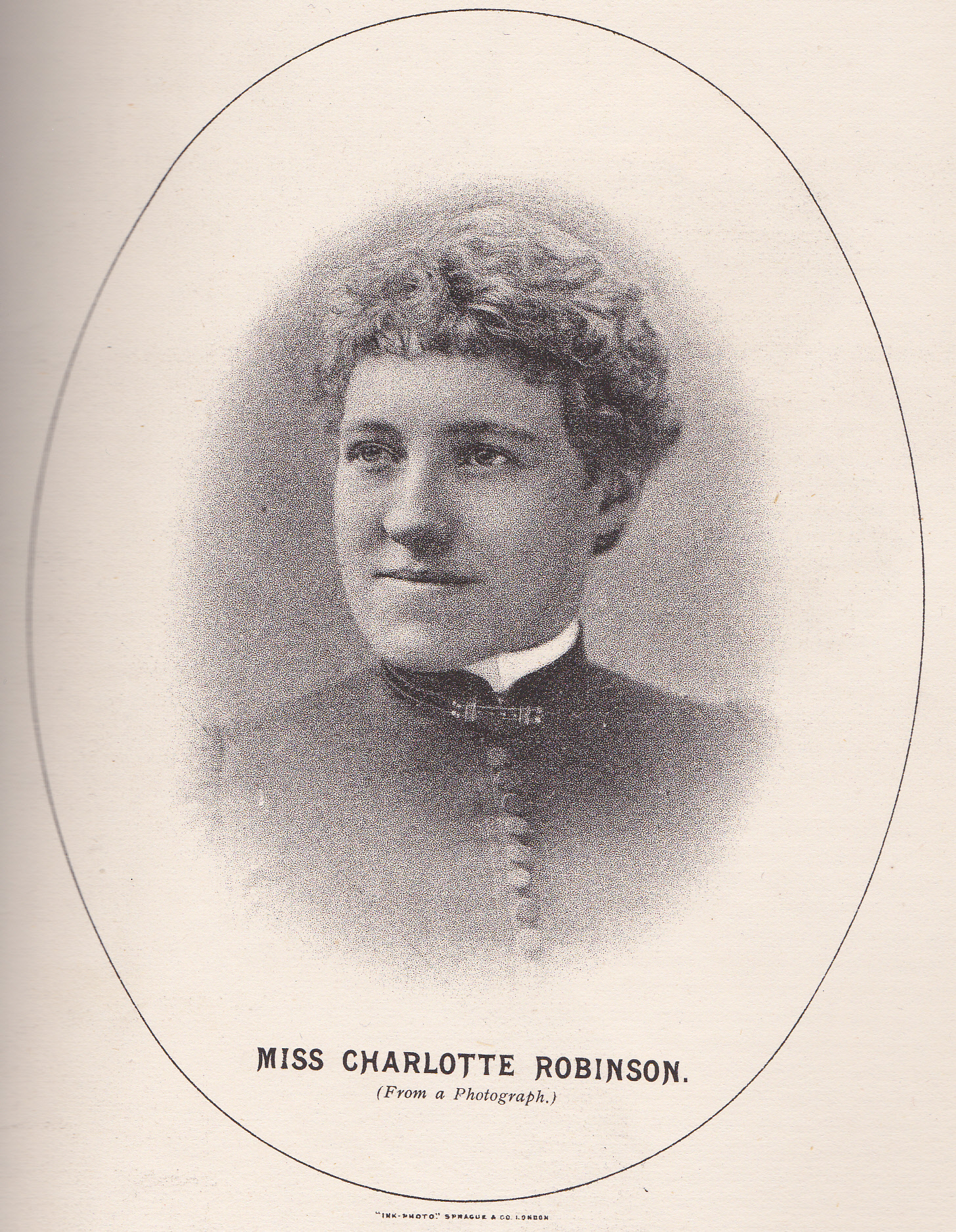


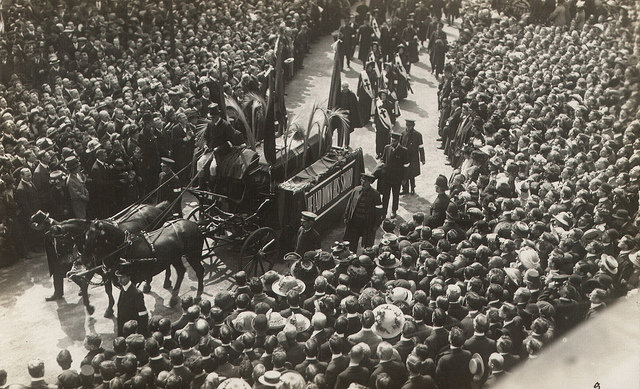
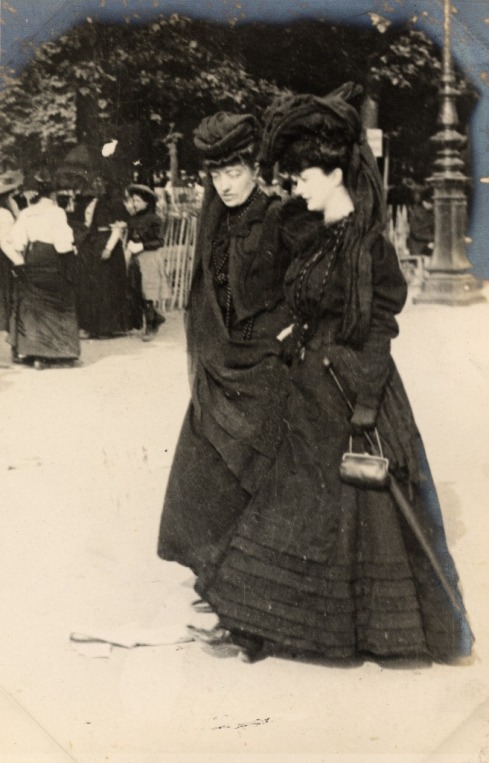

 Woman and her Sphere