Posts Tagged emily wilding davison; funeral; Robert Green Ltd florist; The Women’s Library@LSE Madonna Lily
WOMEN’S SUFFRAGE, THE WOMEN’S LIBRARY AND ME: A TALK AT LSE ON 2 DEC
Posted by womanandhersphere in 100 Suffrage Objects -NEW BOOK on November 9, 2026

On 2 December – 6-8pm I will be giving a talk at LSE
For full details and to register for the free talk see
https://www.lse.ac.uk/library/whats-on/events/womens-suffrage-the-womens-library-and-me-1
Women’s Suffrage, the Women’s Library and me
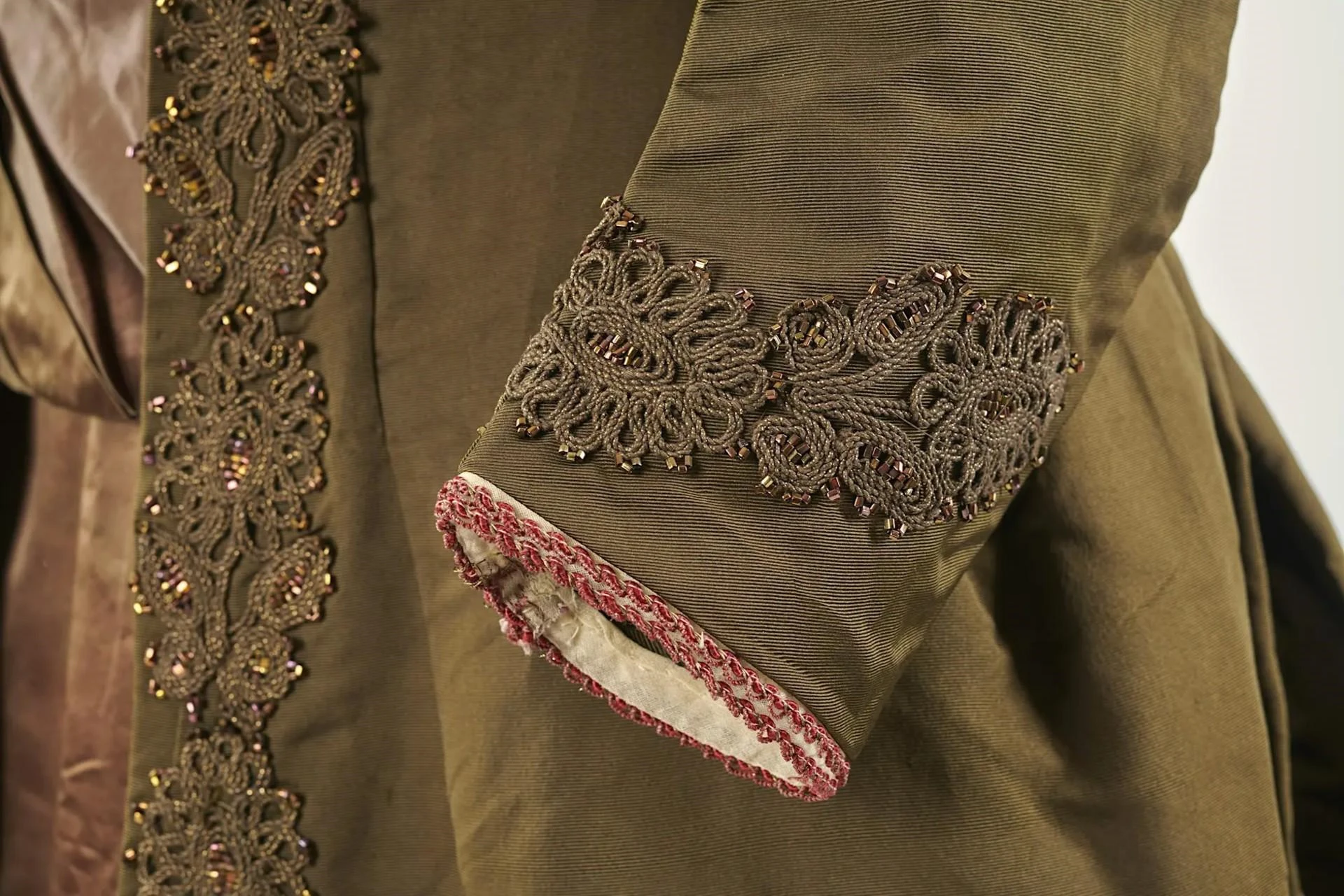
One of my favourite things in the Women’s Library collection: Lydia Becker’s dress (Object 2 in The British Women’s Suffrage Movement in 100 Objects)
Hosted by LSE Library
In-person public event (LSE campus, venue tbc to ticketholders)
Wednesday 2 December 2026 6pm – 8pm
Join us in the final celebration of The Women’s Library’s centennial year!
To mark the end of The Women’s Library centenary year, Elizabeth Crawford will talk about her association with The Women’s Library as both a researcher, author and dealer in books and ephemera.
Elizabeth first became acquainted with the collection in the 1990s, when she was researching the 400 biographies and 800 societies discussed in The Women’s Suffrage Movement: a reference guide (1999).
Subsequently, the Library has been crucial to her research for numerous talks, articles, chapters and books. For her latest book, The British Women’s Suffrage Campaign in 100 Objects: a material history (2026), the collection has been central to the selection of many of the ‘objects’ through which she narrates the history of the suffrage movement.
With a new edition of the Reference Guide commissioned for publication in 2028, she will be returning for further research in The Women’s Library to discuss some of the items that passed through her hands on their way into the collection
There will be a reception and an opportunity to purchase a copy of Elizabeth’s latest book.
Speaker
Elizabeth Crawford is an independent researcher and for decades ran a business selling antiquarian books and ephemera by and about women, specialising in the suffrage movement. She is the author of The Women’s Suffrage Movement: A Reference Guide, 1866-1928 (1999), Enterprising Women: The Garretts and Their Circle (2002), The Women’s Suffrage Movement in Britain and Ireland: A Regional Survey (2005), and Art and Suffrage: a biographical dictionary of suffrage artists (2018). Elizabeth received an OBE in 2018 for ‘services to education’ and is a Fellow of the Royal Historical Society.
Chair
Ellie Whittingdale is a Fellow in Law and joined LSE Law School in 2025. Prior to this, Ellie was a Postdoctoral Researcher at the Centre for Socio-Legal Studies (CSLS), University of Oxford. There, she worked with Linda Mulcahy on an oral history of the English and Welsh Rape Crisis movement. This was a partnership project between CSLS, Rape Crisis England & Wales, and National Life Stories at the British Library, and was funded by The National Lottery Heritage Fund
Suffrage Stories: Who Did The Flowers?: Material Culture And Emily Wilding Davison’s Funeral
Posted by womanandhersphere in Suffrage Stories on January 30, 2017
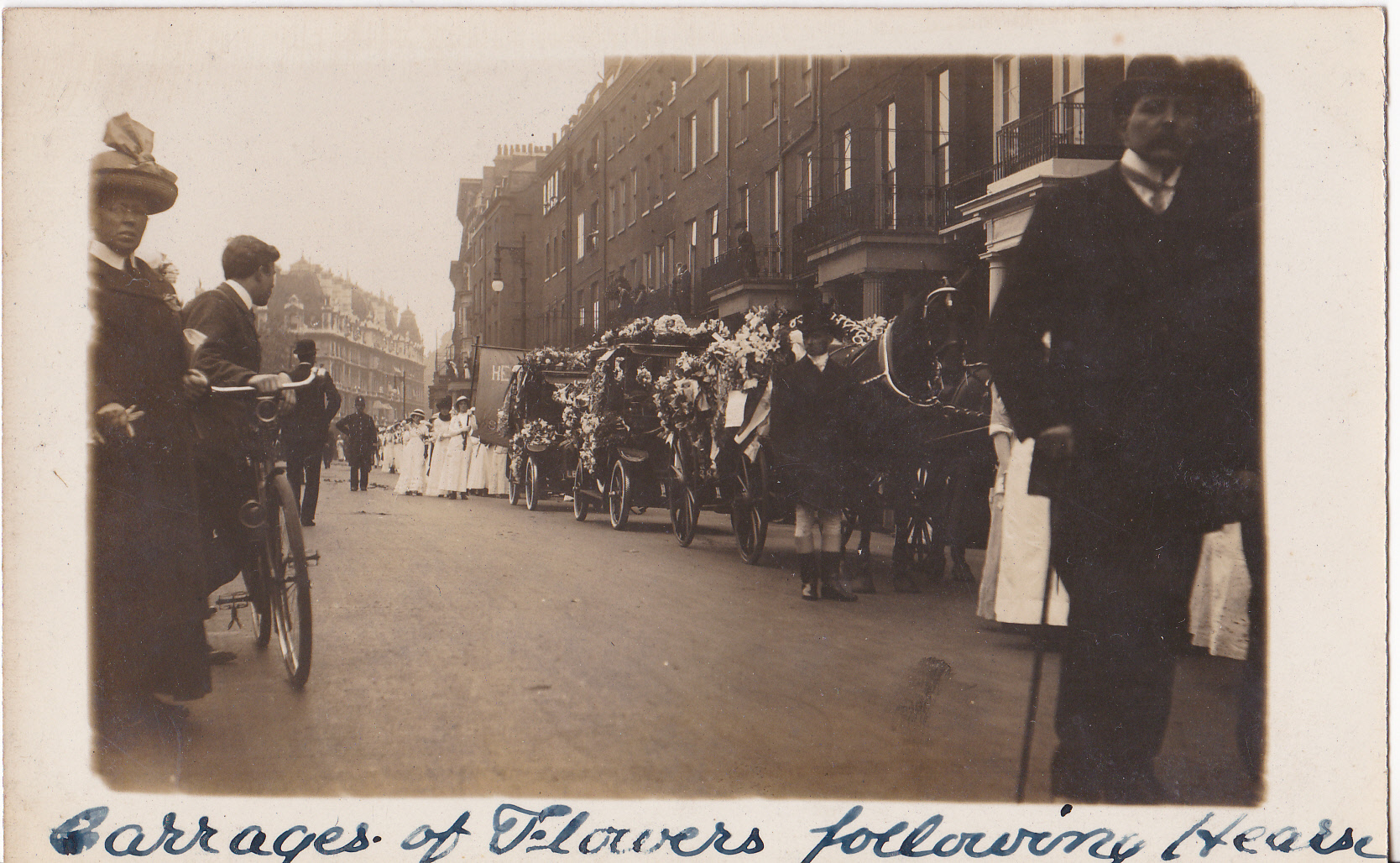
Emily Wilding Davison Funeral Procession
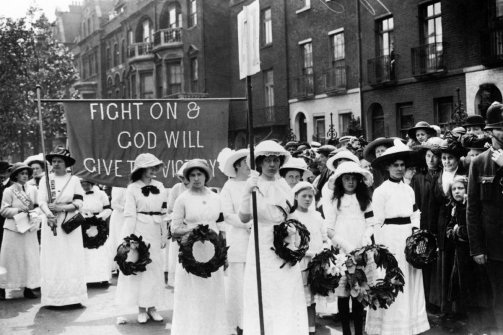
I expect most of my readers will be familiar with pictures such as this, showing Emily Wilding Davison’s flower-laden hearse, accompanied by WSPU members carrying wreaths and lilies, that made its way through London, from Victoria Station to Kings Cross Station on 14 June 1913. I wonder, however, who else has ever wondered who supplied all those flowers and wreaths? This is the kind of prosaic question that appeals to me – so I thought I’d try and find out.
The answer is that some, if not all, were supplied by Robert Green Ltd, florists, of 28-29 Crawford Street, Marylebone. I know this because the firm capitalised on this commission by subsequently advertising its involvement in that most spectacular of funerals in The Suffragette, the WSPU paper. They also described their firm as ‘London’s Cheapest Florist’. Perhaps that was the reason they received the order – certainly a vast quantity of flowers were required.
Robert Green Ltd was owned by Harry Ernest Green (1872-1940), who was born on the firm’s Crawford Street premises and eventually inherited the business from his father, the eponymous Robert Green. One might deduce that Harry Green was a modern businessman – his family’s 1911 census form is the only one I’ve come across that is typed. He had been married in 1898 and had a son, but his wife had died and in 1909 he had married for a second time – so that in 1911 he was living with his new wife and his nine-year-old son, together with one servant, at 28 Crawford Street.
Presumably they lived above the shop and workshop in which the Robert Green Ltd business was conducted. We know how this ground floor was arranged because it was described in some detail in a court case, Hoare v Robert Green Ltd. In fact it was as a result of this case that a ‘workshop’ under the terms of the Factory and Workshop Act (1901) was defined. The report in The Times , 29 April 1907, reveals that the firm was prosecuted for not displaying a relevant notice from the Factory and Workshop Act 1901. Their defence, that the room behind the shop was not a ‘workshop’ under the terms of the Act, necessitated a description of the room and the women who worked in it.
The firm employed ten young women (aged 17-23) as florist’s assistants, who were selected for their artistic taste, and eight girls (15-17) as beginners. The firm was at pains to point out that the women were paid throughout the year although it was only in May-July that there was sufficient work to occupy them fully. That, of course, was the period known as ‘The Season’ when business did, indeed, boom. And business could be good – The Portsmouth Evening News, 18 January 1904, reporting that ‘Mr Harry Green, manager of Robert Green Ltd the well-known society florists, states that £1000 is quite an ordinary price for West End Society people to lay out for the embellishment of their rooms on the night of a ball.’
During the 1907 seminal court case it was explained that the assistants, and beginners attended retail customers in the shop, went to private homes and hotels to arrange flowers, and were also engaged in the workroom’, producing bouquets, wreaths and crosses and arranging floral decorations. The firm contended that such work was not ‘manual labour’ and that the room in which the women worked was not, therefore, a workshop.
The artistic assistants and the beginners must have been hard at work in the day or two before Emily Davison’s funeral, preparing the wreaths and the decorations that were draped over the hearse.

And perhaps the ‘Madonna Lily’ carried at Emily Wilding Davison’s funeral – and now held in the Women’s Library@ LSE collection ( 7EWD/M/28) – passed through that workshop, to be made ready for its appearance in the hand of one of those women in white escorting the coffin.
Copyright

