Posts Tagged votes for women
The British Women’s Suffrage Movement in 100 Objects: a material history – FORTHCOMING IN JULY
Posted by womanandhersphere in British Women's Suffrage Campaign in 100 Objects on February 9, 2026
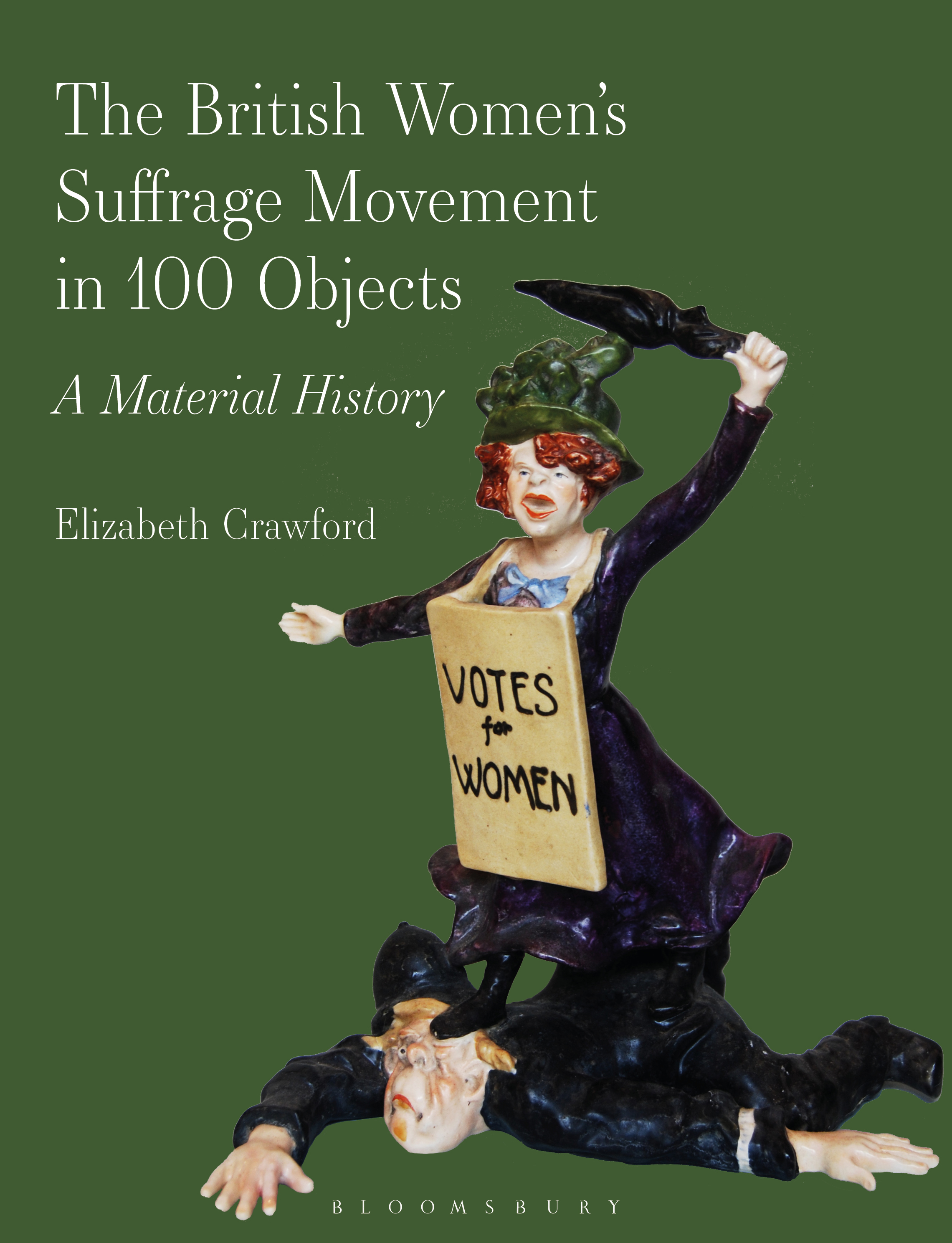
TO BE PUBLISHED ON 23 JULY – IN PAPERBACK (£24.99), HARDBACK AND AS AN EBOOK
You can pre-order from Bloomsbury at a reduced price here – or from Amazon here – or from your local bookshop.
I had no thought of producing another book when, one day in October 2023, I opened up my laptop, ready to watch an online auction mounted by Bonhams. This Votes for Women sale was devoted to suffrage memorabilia from the collection put together by a couple I’ve known ever since I began dealing in books and ephemera in the mid-1980s. I had no intention of bidding for anything in the auction as by 2023 the prices reached for suffrage material at such auctions had soared into the stratosphere. But, naturally, I took a professional interest in seeing what was up for sale – and the prices they would achieve. And I had a personal interest in that some of the items were ones I had myself sold to the vendors many years ago.
Watching the bidding was absorbing, but as the sale progressed I realised I was experiencing a niggling conflict between what might be termed my instinct as a trader and my instinct as an historian. Bonhams had organised the lots in the sale in a way as to appeal to bidders, grouping together items of a similar type, such as textile rosettes or china or badges or books – but this arrangement by no means coincided with what I knew to be the dates of their production. In my mind I was itching to reorder the lots into an historically coherent order. Well, there lay the germ of an idea …and it slowly gained traction..and, in due course, a publishing contract with Bloomsbury Academic. The result of my labours will be published in July.
For the book tells the story of the British ‘votes for women’ campaign in a sequence of 100 objects. From the beginning of the campaign in 1866 until all women were granted the vote on the same terms as men in 1928, women used every means in their power to persuade the government to allow them the right to elect members of parliament. Through the analysis of an astonishing array of objects – including books, bags, petitions, posters, plays, photographs, china, leaflets, newspapers, games, jewellery, sashes, films, and figurines – all of which are illustrated – The British Women’s Suffrage Movement in 100 Objects explores the role that material culture played in this vital struggle. Each of the 100 objects is illustrated, the accompanying text setting it in its context to explain the campaign’s politics and the part played by key personalities.
I must say that when I began work on the book it had not occurred to me that the suggestion could be voiced in any western democracy that women should be relieved of the right to the vote. But, that day having come (see here), although not yet here, there is all the more reason for understanding why and how British women won that right.
The book will be published in July in paperback at £24.99. To discover more details – as set out on the Bloomsbury website – including a special pre-order price and some most heart-warming reviews from readers who have viewed the text of the book in advance – see here.
My cup overflows – in that Bloomsbury will only accommodate six endorsements on their webpage – and nine readers were kind enough to give feedback on the book. I, as blushingly as self-promotion permits, set out below the final three to arrive. As you may imagine, I am immensely heartened – and hopeful that the 100 Objects will give a new clarity to the chronology, politics and personalities of the women’s suffrage campaign.
‘Drawing on a lifetime of groundbreaking scholarship on the British Suffrage movement and its materiality, Crawford’s new book is an essential read for anyone interested in the history of women’s campaigns for the vote. The British Women’s Suffrage Movement in 100 Objects brings to life in unprecedented detail the material world in which campaigners strove for social and political change, conveying this to new audiences with a lightness of erudition and a treasure trove of vivid detail. The extraordinary creativity and complexity of women’s activism during this era is made tangible through Crawford’s expert guidance.’ Dr Zoë Thomas, Associate Professor of Modern History, University of Birmingham
‘Beautifully illustrated and exceptionally curated, Crawford’s The British Women’s Suffrage Movement in 100 Objects is an essential and defining resource for the ways technological advances, community building, and popular culture played in the British campaign for “Votes for Women.” In clearly written and focused essays on everything from the intersection of the automobile and women’s rights to the ubiquity of comic suffragette ceramics, Crawford’s book will be of interest to scholars and general public alike.’ Heidi Herr Librarian for English, Philosophy, The Writing Seminars, & Student Engagement for Special Collections The Johns Hopkins University
‘The British Women’s Suffrage Movement in 100 Objects powerfully demonstrates the richness that material culture brings to the study of women’s histories. By centring objects, it reveals the political struggle as something lived, worn, exchanged, and displayed, rather than simply written or spoken. Together, the 100 objects offer an engaging, vivid and very human perspective on the suffrage movement, recovering voices and experiences that often remain muted in conventional narratives.’ Dr Miranda Garrett
‘Votes for Women: Everywhere – 1866-1928’ – an Online talk for the British Association of Local Historians – This Evening – 8 October
Posted by womanandhersphere in Suffrage Stories on October 8, 2025
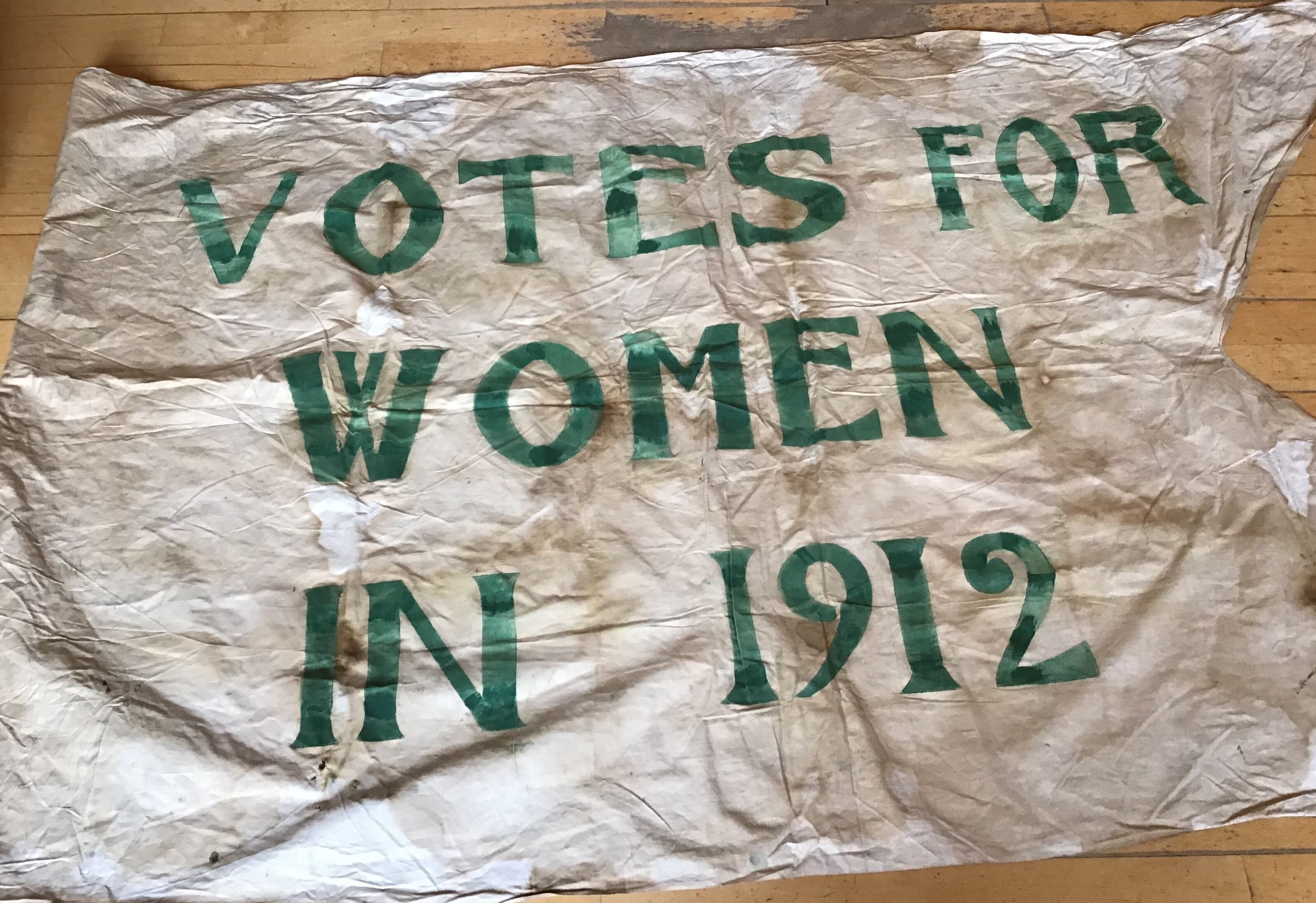
I will be giving an online talk this evening (Wednesday 8 October) at 7pm for the British Association of Local Historians – offering ideas about how to discover the history of the women’s suffrage movement – and its activists – in your locality.
See here for details https://www.balh.org.uk/event-balh-votes-for-women-everywhere-1866-1928-2025-10-08
Suffrage Stories: The Mystery of Nurse Pine’s Medal – Solved
Posted by womanandhersphere in Suffrage Stories on April 27, 2024
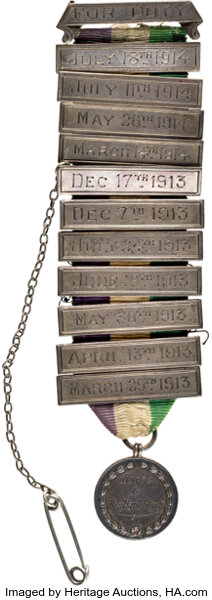
Nurse Pine’s Medal ‘For Duty’ sold at auction on 26 April 2024
Very nearly 8 years ago – on 26 May 2016 – I published a post titled The Mystery of Nurse Pine’s Medal. I knew that Nurse Catherine Pine, who had for many years attended Emmeline Pankhurst, had been given a medal by the Women’s Social and Political Union and I knew that she had bequeathed it to a now defunct nursing organisation but, as my post makes clear, I didn’t know what the medal looked like or what had happened to it.
Most satisfactorily, the mystery is now solved. The medal, resplendent with its bars, was given to Nurse Pine ‘For Duty’ (rather than ‘For Valour’, as denoted on the Hunger-Strike Medals). She did indeed leave it in her will to the ‘History Section’ of the British College of Nursing, who had it in their possession until the BCN, a charity, dissolved in chaos in 1956. It would seem that the contents of the ‘History Section’, along with the furniture and fittings of the BCN building, were sold off to any member interested – perhaps at a valuation set by Harrods, who had been appointed as valuers.
The medal resurfaced in 1990 when put up for sale at Sothebys, where it failed to sell, reappearing at a specialist medal sale in 2008 when it was bought by an American dealer. He sold it to an American collector of suffrage memorabilia, who has since died and whose collection was auctioned yesterday in Dallas, Texas, by Heritage Auctions.
I have known since the beginning of this year that the medal was coming up for sale and tried to interest various institutions in this country, but none had sufficient funds to consider acquiring it. However, for the last couple or so years I have been in touch with a US academic, Hope Elizabeth May, who has taken a legal, philosophical, and personal interest in the fate of Nurse Pine’s medal. She and I recorded a podcast about Nurse Pine and her medal a few days ago – on 21 April. You can listen to it here:
I am pleased to say that Hope Elizabeth May is now the ‘steward’, as she rather delightfully terms it, of Nurse Pine’s medal. She has interesting plans to use it for educational purposes, not only to promote interest in suffrage history but also to discuss philosophical questions about autonomy and its implications for estate law. I think we can be assured that the intention behind Nurse Pine’s bequest to the BCN will now be honoured.
Since being able to view the medal so clearly (thanks to the auctioneer’s image) I researched the dates on all the bars and established (thanks to the information contained in the entry on Emmeline Pankhurst in my The Women’s Suffrage Movement: A Reference Guide, in which I had carefully noted from the Home Office papers the precise dates on which she was released from prison) that all except the first represented a date in which Nurse Pine had taken over the care of Mrs Pankhurst. Hope Elizabeth May suggested, and I am sure she is correct, that the first bar – engraved ’25 March 1913′ – refers to care taken of Sylvia Pankhurst, who was released from Holloway on 21 March after being forcibly fed for several weeks while on hunger-and thirst-strike.
For an article about Nurse Pine, written in the centenary year of 2018, see the City University’s City Magazine Although the nature of the medal was still then unknown to the writer – and to me – it does tell something of the life of Nurse Catherine Pine.
Copyright
All the articles on Woman and Her Sphere and are my copyright. An article may not be reproduced in any medium without my permission and full acknowledgement. You are welcome to cite or quote from an article provided you give full acknowledgement.
Suffrage Stories: An English Heritage ‘Blue Plaque’ For The Women’s Freedom League
Posted by womanandhersphere in Suffrage Stories on September 20, 2023
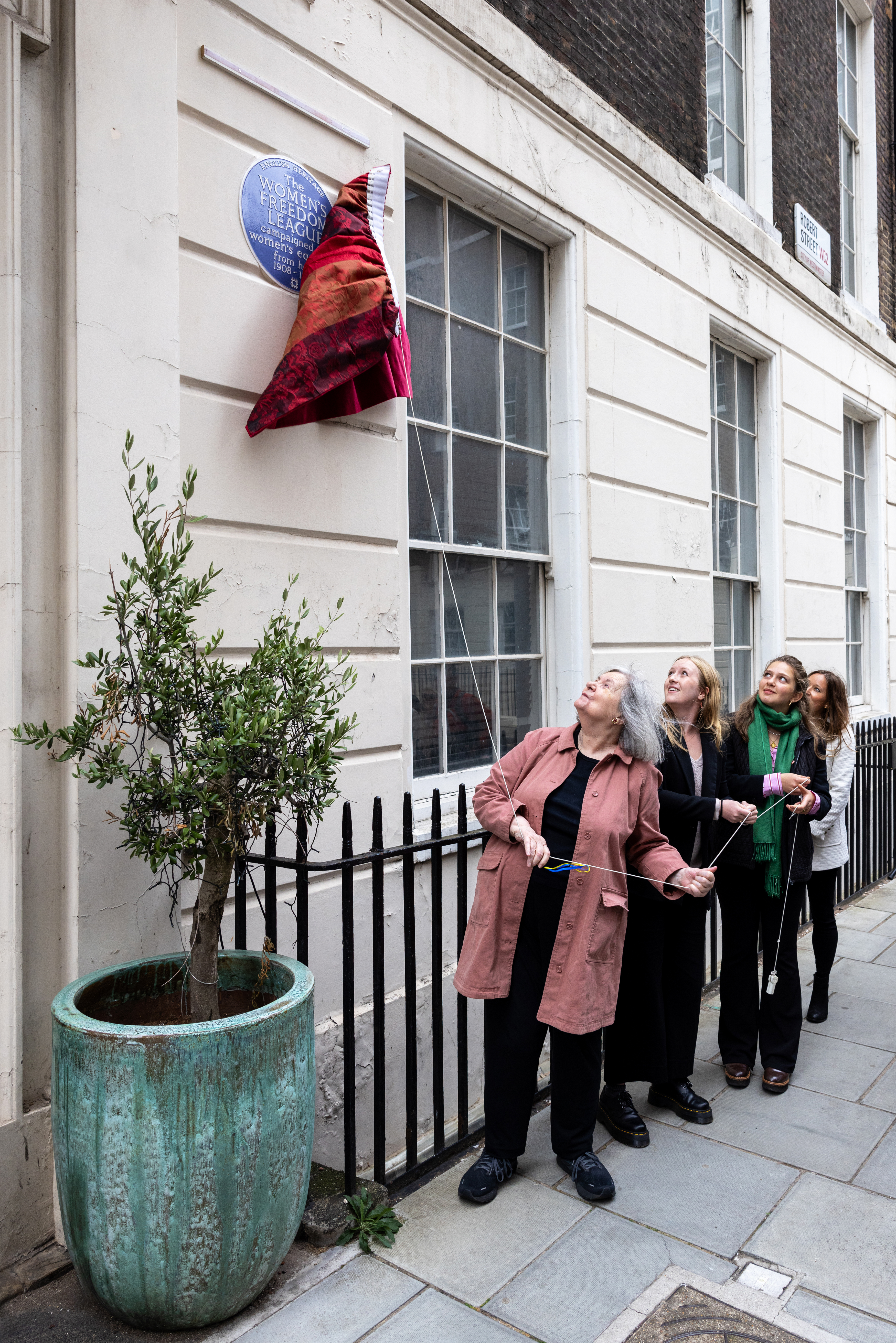
Photo courtesy of English Heritage
On 19 September 2023, together with members of the Feminist Society of Ibstock Place School, I unveiled the 1000th English Heritage Blue Plaque. It commemorates the Women’s Freedom League and is mounted on the wall of their sometime headquarters, 1 Robert Street, Strand.
This was 116 years and 5 days after the Women’s Freedom League (WFL) was formed at a meeting held close by – in the very popular Eustace Miles vegetarian restaurant. Vegetarianism was very much a WFL ‘thing’.
The meeting had been called by some women, erstwhile members of the Women’s Social and Political Union, who had protested Mrs Pankhurst’s unilateral action in abolishing the WSPU constitution and cancelling their annual conference. They did not care for the fact that the Pankhursts intended, in effect, to rule the WSPU by dictat.
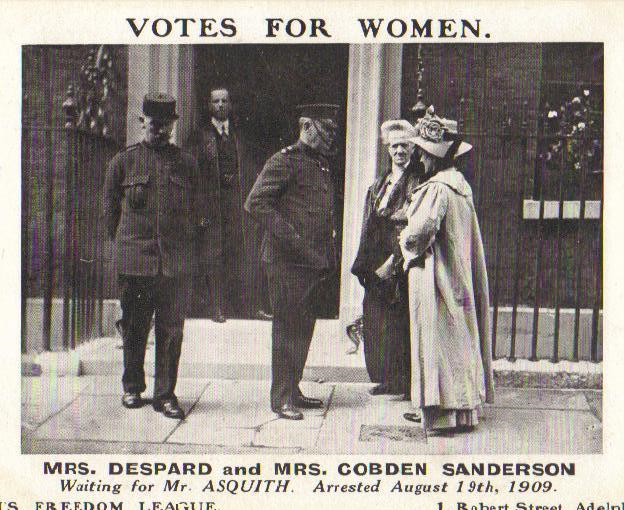
Mrs Charlotte Despard was voted into the chair and among others present at that first meeting were Teresa Billington (later Billington-Greig) and Edith How-Martyn – all strong individuals –with strong views – believing particularly in democracy and socialism.
Charlotte Despard, born into an Anglo-Irish family and long a widow, had since the 1890s devoted herself to social work with women and children in an impoverished area of Battersea, hemmed in by the Thames and railways. Most unusually, she chose to live there – at least during the week – only returning to her country home at Esher at the weekend. Teresa Billington-Greig – the WFL’s political theorist – had been a teacher before devoting herself to the WSPU suffrage campaign – while Mrs Edith How-Martyn, a young science graduate – was an effective and practical campaign organiser.
The three leaders were all supporters of the Independent Labour party and had been particularly troubled by the Pankhursts’ decision, announced earlier in 1907, not to support Labour candidates at elections. They were not women who took kindly to autocracy and were all to give a lifetime commitment to the WFL – and to its campaigns for social justice for women.
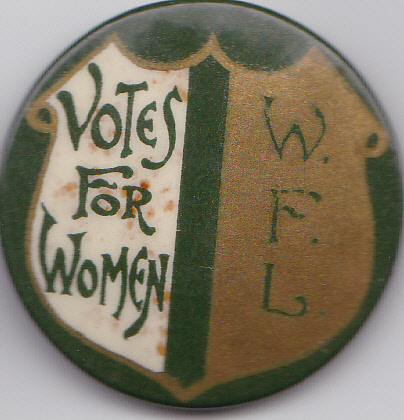
It took a little time for matters to resolve themselves, but in November 1907 the new society was given a new name –the Women’s Freedom League – chosen democratically by a referendum to members. The other suggested names were all associated with emancipation and rights – but Women’s Freedom League was good choice. It was not a name tied only to suffrage, but encompassed all kinds of freedom – appropriate to an agenda that changed over time to meet changing conditions. The thread running through the WFL’s long active life was – Equal citizenship, equal pay, equal opportunity, and equality under the law.
After a year in a temporary office, the WFL moved to 1 Robert Street in September 1908 – into 4 rooms on the first floor – staying until 1915, when they moved to High Holborn. Their presence there is marked by a plaque, although not the esteemed ‘Blue’ one.
Although considered a militant society, unlike the WSPU the WFL didn’t carry out acts of physical protest. Its members were not arsonists or bombers but, influenced by the teachings of Gandhi, they conducted campaigns of passive resistance, such as protesting in Police Courts that women were tried by laws made only by men, and in 1909 conducting a 5-month continuous picket of the House of Commons, ‘The Great Watch’.

One WFL tactic was to attempt to present petitions to the King.

It was WFL members, Helen Fox and Australian Muriel Matters, who attracted publicity in 1908 by chaining themselves to the grille in the Ladies’ Gallery in the House of Commons – and Muriel Matters, again, who hired an airship from which to drop leaflets over London. It was the WFL who first had the idea of boycotting the 1911 census, and whose members set up the Tax Resistance League, refusing to pay taxes and then creating publicity when their goods were seized and auctioned.

Local branches were set up throughout the country – the WFL was notably strong in Wales and in Scotland – but at both a local and a national level the WFL always struggled financially. To support their work the WFL relied on generous donors and on their own, time-consuming, fund-raising activities. Seen as of particular importance was raising enough money to ensure the publication of their weekly paper, The Vote, in which they were very successful as it ran from 1909 until 1933 and is an invaluable source of information on the changing nature of feminism in the first three decades of the 20th century. As well as its newspaper, the WFL’s main archive is held just across the Strand from Robert Street in the Women’s Library @LSE.
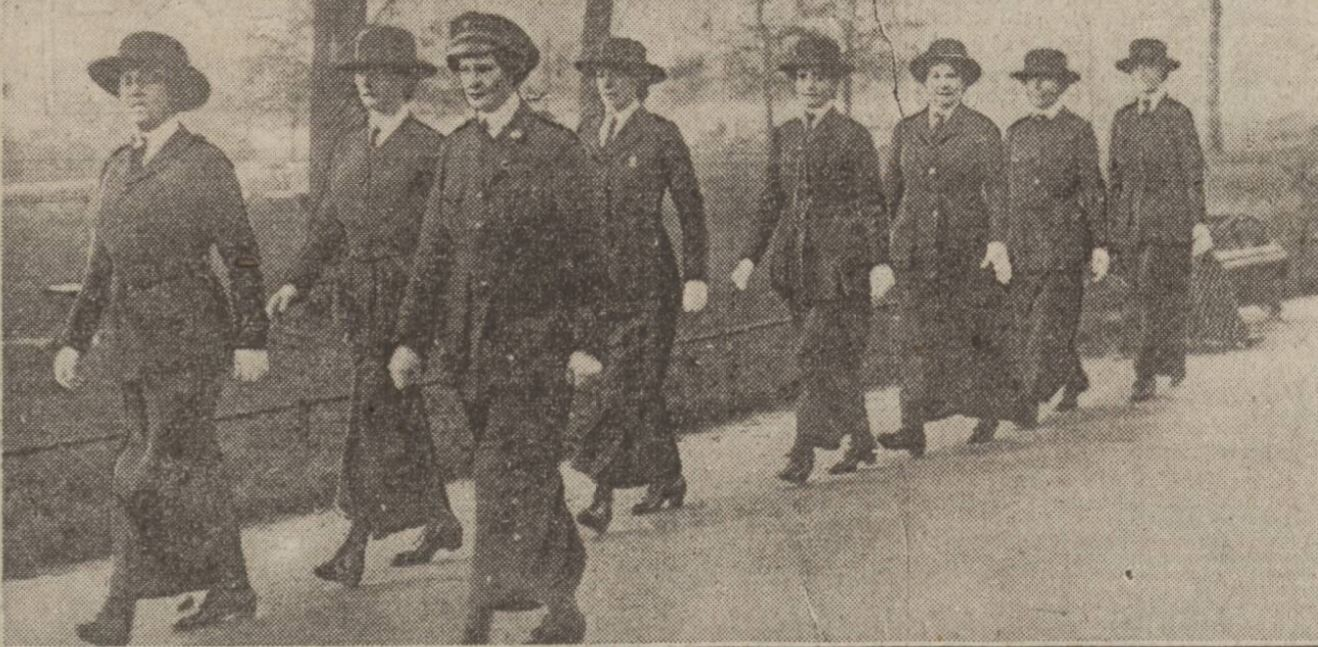
Women Police Volunteers, December 1914
Although they called a halt to militant protests during the First World War, the WFL continued to campaign for women’s rights – for instance, its members were associated with the founding of the first women’s police force.
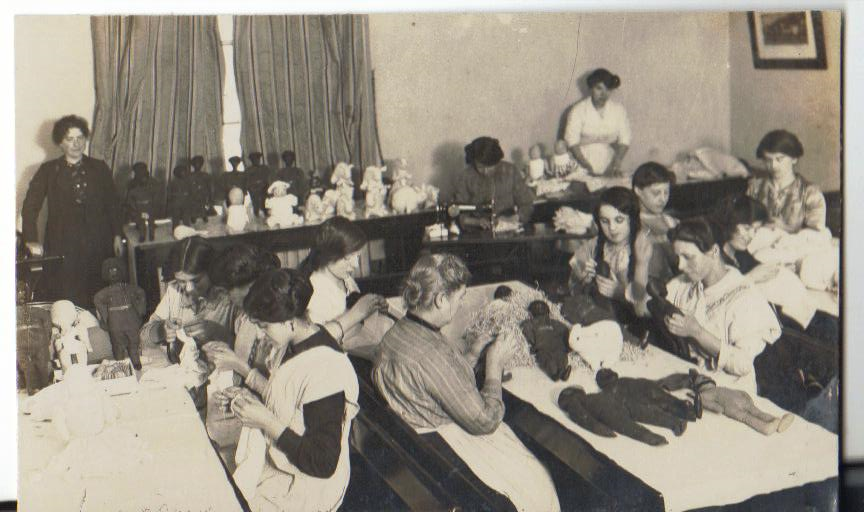
In the early years of the war the WFL ran a toy factory in Hackney, providing work for women, particularly those who had hitherto been employed in the garment trade.
Although most members of the WFL were pacifists the organisation managed to avoid a schism on the subject, such as beset the National Union of Women’s Suffrage Societies. Indeed, WFL members were generally adept at putting aside differences –including party differences – and instead concentrating on working for their shared causes.
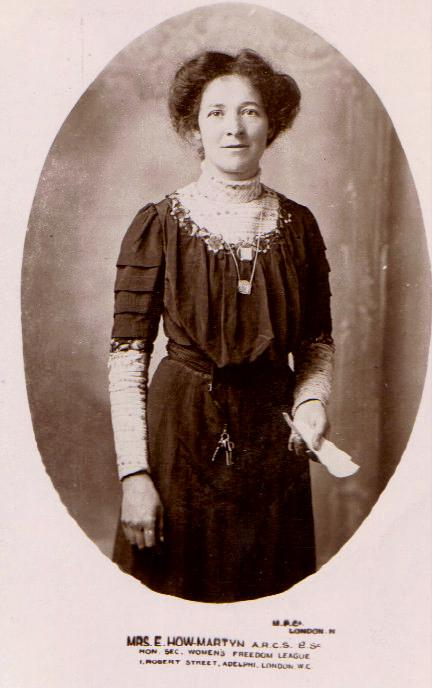
Mrs Edith How-Martyn
Several members of the WFL were candidates in the November 1918 general election, the first in which women over 30 could vote and at which women could stand for Parliament Charlotte Despard, who stood for Labour in Battersea, was one and Edith How-Martyn, who stood as an Independent in Hendon, was another – but all were unsuccessful. In one way the fact that not all women were granted the vote in 1918 had a positive effect in that it gave a society such as the WFL the impetus to continue the campaign – for an equal franchise was an obvious goal– while also working for gender equality across all aspects of political, educational, work, and social life.
During the interwar years new WFL branches were formed, while old ones maintained a loyal following – many members who had held posts in the pre-war years continuing to do so right through the 1920s. One such was Mrs Sarah Whetton , honorary secretary of the Portsmouth branch, where the WFL was particularly active as a pressure group, influencing local government on housing, education and health – all areas of special concern to women.
The WFL spanned the lifetime of its early members, only dissolving itself in 1961 after the death of its president, Marian Reeves, who had joined the organisation as a young woman in 1909. The WFL had run its course. Back in 1907 the founders had announced ‘we hope to fight to the finish as members of the Women’s Freedom League’ – and we were there in 2023 to vindicate their hope.
With many thanks to English Heritage for arranging such an engaging event – and commiserations to Dr Claire Eustace, who would have been my fellow speaker but who was prevented by illness from attending.
If you have a BBC account already, or sign up to one, you can listen to me speaking, very briefly, about the WFL on the Radio 4 Today programme (at 50 mins in). There was also a well-researched piece on the BBC 1 Local News.
Copyright
All the articles on Woman and Her Sphere and are my copyright. An article may not be reproduced in any medium without my permission and full acknowledgement. You are welcome to cite or quote from an article provided you give full acknowledgement.
Suffrage Stories/Collecting Suffrage: The Evolution Of The Hunger-Strike Medal
Posted by womanandhersphere in Collecting Suffrage, Suffrage Stories on June 30, 2023
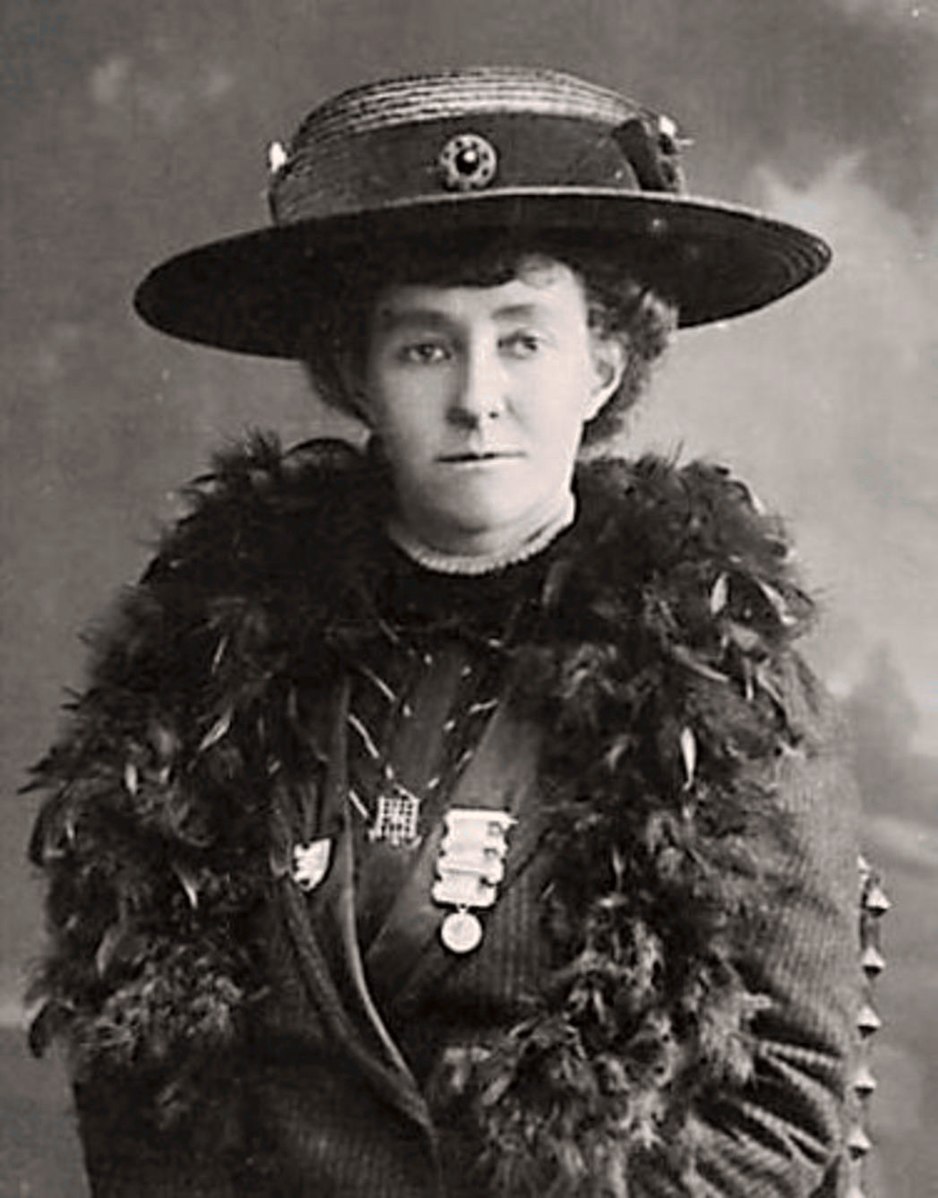
Here we see Emily Wilding Davison, one of the most famous suffragettes, wearing her Hunger Strike Medal c. 1912. Now, well over a century later, these medals are a familiar sight, appearing surprisingly often at auction, as the price they attract tempts descendants to sell. But the history of the WSPU Hunger-Strike Medal is not uncomplicated.
My research would indicate that the first WSPU members to be awarded medals as a reward for hunger striking stood in the dock at Bow Street Police Court on 30 June 1909, 114 years ago today. The previous evening they had been arrested when taking part in a deputation to the Houses of Parliament, led by Mrs Pankhurst, who was carrying a petition from a large WSPU meeting in Caxton Hall.

WSPU flyer advertising the 29 June deputation (from my collection)
The case was adjourned and on 12 July thirteen women were found guilty of stone-throwing – breaking windows in Whitehall. They duly served their sentence in Holloway and, following the example of Marion Wallace-Dunlop, who had recently been imprisoned for a a different offence, went on hunger strike. Like Wallace-Dunlop, the 13 hunger strikers were released without being forcibly fed. The authorities had not yet arrived at the solution to that particular problem.
I will now take you back to an event that took place a few weeks earlier, on 16 June 1909, when WSPU member Patricia Woodlock, who had been imprisoned for three months in Holloway – but had not been on hunger strike – was presented with a ‘For Valour’ medal at a ceremony described in Votes for Women (18 June 1909, p. 810). I think that this was the very first medal presented to a WSPU ‘foot soldier’ and, although there is now no trace of it, I assume that it took its name from ‘For Valour’ engraved on the medal’s top bar.
Although I can find no contemporary reference to the sequence of events, my thinking is that when the women who had taken part in the 29 June 1909 deputation were eventually released, after their hunger strike, the WSPU chose to honour them with medals identical to that designed for Patricia Woodlock.
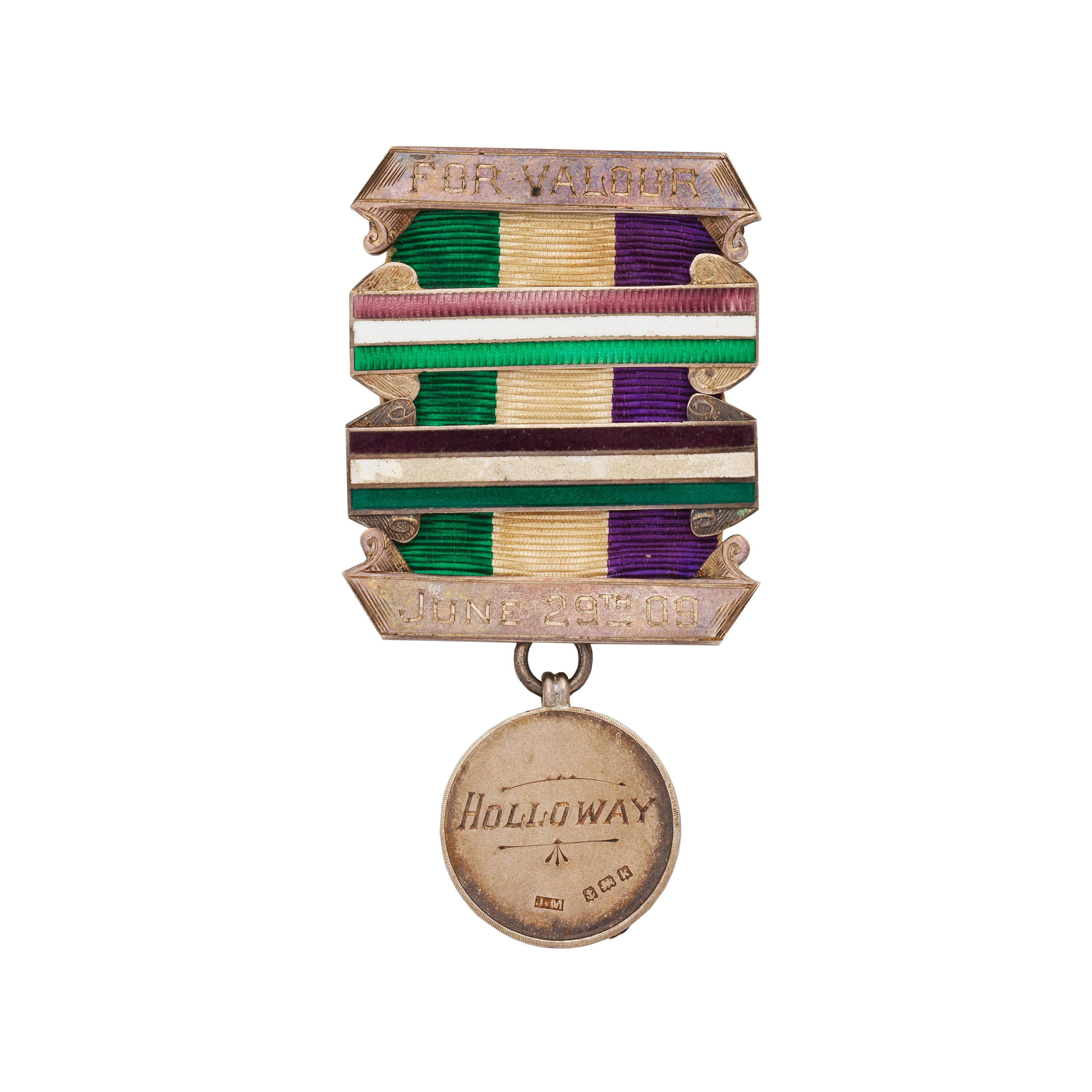
Ada Wright’s ‘Holloway’ medal (Image courtesy of Bonhams)
These medals were presented by Mrs Pankhurst at a ceremony at St James’ Hall, Great Portland Street, as reported in Votes for Women, 6 August 1909. Two of the medals have resurfaced. That awarded to Theresa Garnett is held by the Museum of London and that to Ada Wright was recently sold at auction. This batch of medals makes no mention of the hunger-strike (unlike the later, more common, more famous version); instead, the roundel depending from the bottom bar is engraved with the word ‘Holloway’. The fact that the recipients had been on hunger strike was not yet commemorated in the medal wording.
However, in early November 1909 another medal presentation ceremony took place, held in Birmingham Town Hall (see Votes for Women 5 Nov 1909, p 84) . As far as I can discover this was only the second such medal presentation. The recipients were WSPU members who had protested at the meeting held by Asquith in Bingley Hall in September, had been arrested, sentenced and had gone on hunger strike and been forcibly fed in Winson Green Prison.
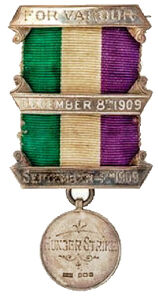
Mabel Capper’s medal, commemorating her hunger strike, presented to her in Birmingham in November 1909
Although the medal is described in Votes for Women as the ‘For Valour’ medal, I am sure this was the first occasion on which the medal with the ‘Hunger Strike’ roundel was presented – for research reveals a photo of the medal presented on this occasion to Mabel Capper, with the ‘Hunger Strike’ inscription on the roundel.
By the way, if you wonder what happened to Emily Wilding Davison’s hunger-strike medal, you might like to read a piece I wrote about it a while ago
And be very careful to research for authenticity any hunger-strike medal offered for sale.
Copyright
All the articles on Woman and Her Sphere are my copyright. An article may not be reproduced in any medium without my permission and full acknowledgement. You are welcome to cite or quote from an article provided you give full acknowledgement
Collecting Suffrage: Fake Flags – Or Why Researching Material Culture Matters
Posted by womanandhersphere in Collecting Suffrage on June 19, 2023

Led by Miss Kerr, who is carrying a WSPU flag, suffragettes parade outside the WSPU offices in Clement’s Inn (image courtesy of Women’s Library@LSE)
When I started in business nearly 40 years ago as a dealer in books and ephemera, specialising in the lives of women, there was little need to think twice about the authenticity of any appealing object. I do remember being very careful to check that a signature on, say, a photograph of Mrs Pankhurst was penned rather than printed but, in those days, ‘women’ as a class had not attracted the attention of scammers. How times have changed. And that change is particularly manifest in objects associated with the suffragette movement.
Nowadays I take extreme care, perhaps bordering on paranoia, to check the authenticity and provenance of any object before I add it to stock. For unscrupulous dealers are now ridiculing the suffragette movement by creating and selling objects that claim to be associated with the WSPU. Perhaps, unsurprisingly, the NUWSS has not attracted this attention, scammers knowing where lies the popular appeal.
This trade disturbs me on several levels. I am upset to see those with no knowledge or interest in the suffrage movement traducing the historical record, I am upset to see buyers disappointed when, thinking they have acquired an original object, they discover they have not, and I am particularly worried when, as has happened, a public collection acquires a spurious suffrage artefact.
It may be useful to present the history of one element of suffragette material culture that currently concerns me: the phenomenon of the WSPU flag currently flooding the market.
It was probably three or four years ago that a purple, white, and green flag first appeared on an eBay site. Along the white side selvedge strip was printed the legend ‘WPSU 3 & 4 Clement’s Inn, Strand W.C.’. I have not kept a record of the price this object fetched, but it was, if memory serves, several hundred pounds. Another book dealer contacted the seller to point out that this flag was unlikely to be original, as the initials were incorrect – ie ‘WPSU’ rather than ‘WSPU’. He did not receive a reply, but answer was made in kind as another flag then appeared – with the middle two letters cut out – leaving only the ‘W’ and the ‘U’ – and the (correct) address. Laughable, really. In fact, at the moment (June 2023) one of these flags is available for sale on eBay – for £260 – although now the whole of ‘WPSU’ has been raggedly removed, leaving only the address.
Most of the flags now boast a ‘Votes for Women’ slogan across the central white stripe and have a variety of marks on the white webbing at the side. Currently (June 2023) there are 7 WSPU flags for sale on eBay: one is marked with ‘1912’, two with ‘London 1908’, one with ‘London 1910’, and two with ‘1910 WSPU’ (both of these listed by the same dealer). The flags are priced at between £149 and £895.
Between March and June 2023 27 ‘original’ WSPU flags were sold on eBay– their prices ranging from £58 to £310. Again, they are printed on the selvedge with dates and places – such as ‘Bath 1912’, ‘London 1914’ etc. They variously claim to have been found in ‘a box at an antiques fair’ or from ‘a deceased estate’.
A number of these flags have moved from eBay to terrestrial auctions and, on the whole, auctioneers do remove them from a sale once doubts are expressed as to their originality. I note that one auctioneer who initially refused to withdraw one of the flags from sale – and has since sold several more – does at least now note that their authenticity cannot be guaranteed. The flags have, of course, moved out of salerooms and are now to be found at antiques markets and fairs and I accept that, as they move further from their source, vendors may well not realise that they are selling fakes.
I have not inspected any of these flags in person – my reasons for knowing that they are not ‘right’ is based on my many years of archival research and on my hard-acquired knowledge of the trade in suffrage ephemera. At the most basic level, if you study the Flickr account of the Women’s Library@LSE, perhaps the most extensive photographic record of the suffrage movement available to view on the internet, you will note that there is no evidence of the WSPU flag as is currently being traded. At the head of this post is one of the few photographs to show a WSPU flag (we presume it is purple, white, and green but, of course, the photograph is in black and white). However, you will note that the orientation of the stripes is such that one of the colours (purple or green?) lies against the carrying pole, whereas on that of the fake flag all the colours meet the pole. That is to say, the stripes on the flags currently being sold are lying horizontally, whereas they should be positioned vertically. In addition, I do not remember seeing a ‘Votes for Women’ slogan imposed on a purple, white and green flag; they are invariably plain. I suspect that any analysis of the material and method of manufacture would indicate a 21st rather than early-20th century provenance.
The Women’s Library photographs do, of course, contain innumerable images of all manner of other banners and it was exactly because I am always so worried about fakery that when, in 2017, I spotted an amazing Manchester banner coming up for sale at a little-known auction house, I alerted first the Working Class Library and, through their archivist, the People’s History Museum because I thought it essential for a textile expert to inspect it in person in case somebody had taken it upon themselves to fake it. Fortunately, it was ‘right’ and now hangs in pride of place in the PHM.
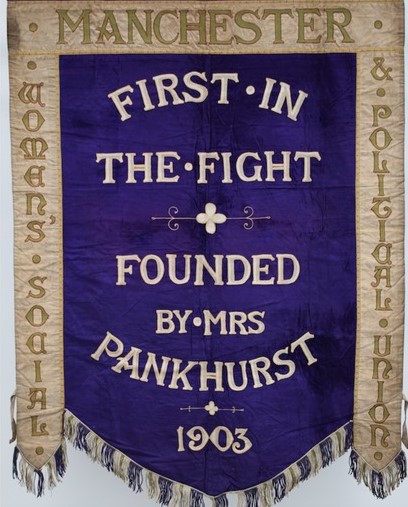
The Manchester WSPU banner (image courtesy of the People’s History Museum)
And that is why I hope that no well-meaning donor will think of presenting their local museum with one of the spurious ‘Votes for Women’ flags for, by allowing the scammers to muscle in on our history, we are demeaning everything that is ‘right’.
Cynic that I am in such matters, I only hope this post does not encourage scammers to create more accurate reproductions.
Copyright
All the articles on Woman and Her Sphere are my copyright. An article may not be reproduced in any medium without my permission and full acknowledgement. You are welcome to cite or quote from an article provided you give full acknowledgement
ANNIE SWYNNERTON: My Podcast for the Pre-Raphaelite Society
Posted by womanandhersphere in Art and Suffrage, The Garretts and their Circle on March 8, 2023

Louisa Wilkinson by Annie Swynnerton
Following on from my previous post on Annie Swynnerton – ‘New Revelations’ – the Pre-Raphaelite Society have released, for International Women’s Day, my podcast talk on Annie – and Isabel Dacre.
The podcast is in two parts and you can listen here:
For International Women’s Day: ‘Shout, Shout, Up with your Song’
Posted by womanandhersphere in Books And Ephemera For Sale on March 8, 2023
A few rousing items for sale to mark International Women’s Day 2023
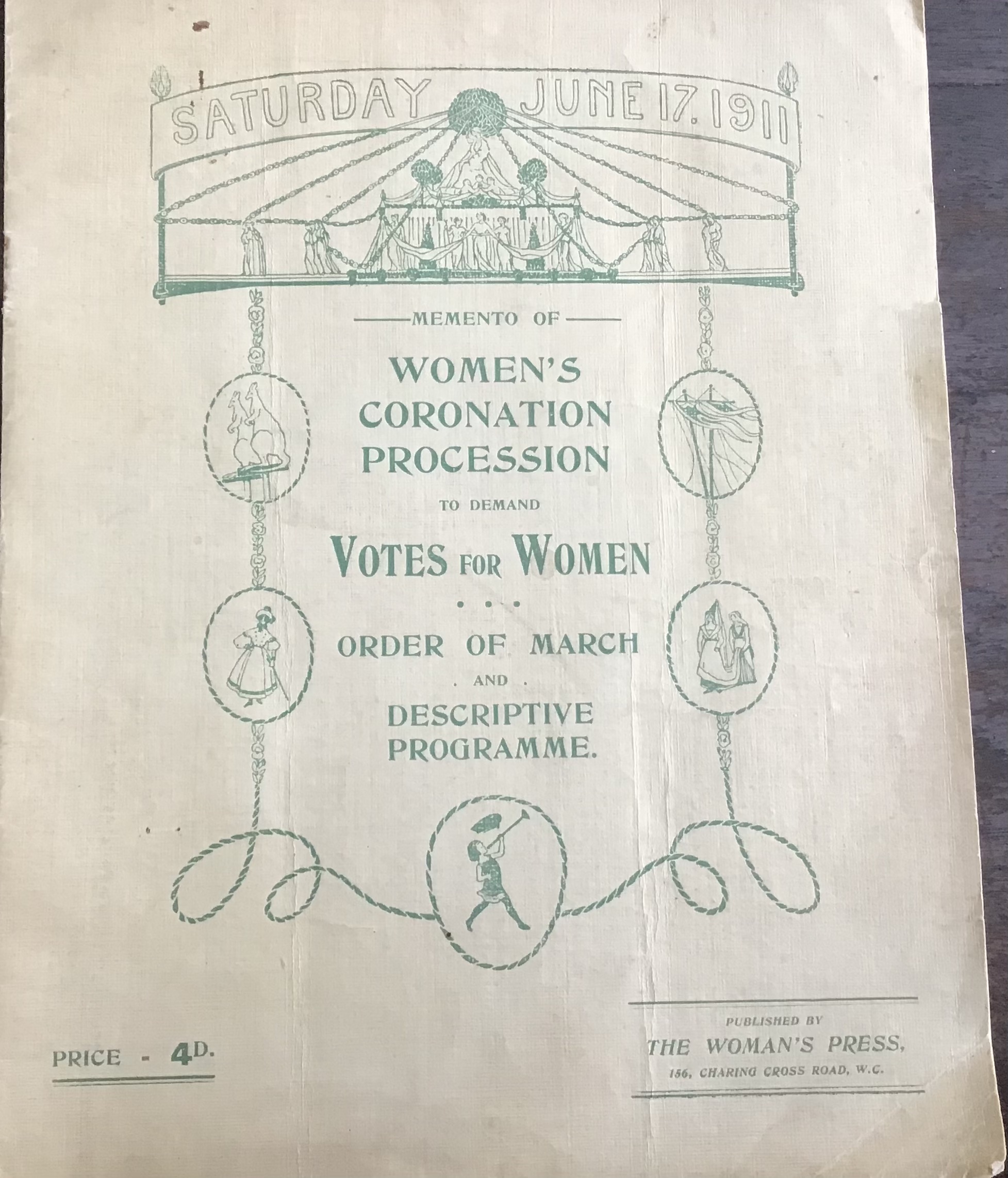
- MEMENTO OF WOMEN’S CORONATION PROCESSION TO DEMAND VOTES FOR WOMEN: Order of March and Descriptive Programme The Women’s Press 1911
This is the official programme for the spectacular march that was held in London on Saturday June 17 1911. ‘From the Introduction: ‘The March through London of 40,000 women has been arranged to show the strength of the deman to win Votes for Women in Coronaton year. The Procession will form up on Westminster Embankment, starting at 5.30pm and marching seven abreast in a line some five miles long, through Trafalgar Square, Pall Mall, Piccadilly, Knightsbridge, to Kensington. At the close of the march a great meeting will be held by the Women’s Social and Political Union in the Albert Hall…’ The programme lists all the suffrage societies taking part and describes in detail the different sections – such as the Prisoners’ Pageant and the Historical Pageant. The ‘Order of March’ is inset. The decorative cover is printed in greeen on good quality thick paper, In good condition – with a little rusting at the staples- a very scarce item.
[15320] £700
2. THAT RAGTIME SUFFRAGETTE SHEET MUSIC B. Feldman & Co c 1913
written by Harry Williams and Nat D. Ayer and originally heard in the 1913 Ziegfeld Follies. It was recorded c 1913/14 by Warwick Green – a British comic singer – to very great effect, although I think he omits the second verse, which is printed in this sheet music. You can hear Warwick Green singing ‘That Ragtime Suffragette’ on youtube. I think it’s wonderful – so evocative- ‘Ragging with bombshells and ragging with bricks/ Hagging and nagging in politics’. The 4-pp of sheet music is printed ‘Professional Copy’ – in good condition, a little rubbed and scuffed; I’m sure it has been well played. Very scarce.
[15319] £120
3. THE MARCH OF THE WOMEN
‘Dedicated to the Women’s Social and Political Union’ by its composer, Ethel Smyth. This is an example of the ‘Popular Edition in F. (For meetings and processions, to be sung in unison)’. The 4-page song sheet, containing both music and the words, the latter written by Cicely Hamilton, was published by Breitkopf & Hartel of 54 Great Marlborough Stree, London W and was ‘To be had of The Woman’s Press, 156 Charing Cross Road, London, W.C.’ Price Threepence. ‘The March of the Women’ was premiered at a WSPU meeting, held on 21 Jan 1911 to celebrate the release from prison of WSPU militants. The back cover lists ‘Works by Ethel Smyth, Mus. Doc.’. The song-sheet has been folded and is a little rubbed and marked, having presumably been put to its intended use at some WSPU rally, but is in generally good condition. Very scarce £250
4. ‘THE WOMEN’S MARSEILLAISE’
Written by Florence Macaulay (1862-1945), one-time student at Somerville College, Oxford, and an organiser for the WSPU. ‘The Women’s Marseillaise’, a marching song, was written in 1909 and begins ‘Arise, ye daughters of a land/That vaunts its liberty’. This single sheet is headed ‘The National Women’s Social & Political Union 4 Clement’s Inn, Strand, W.C.’ and was printed by ‘Geo. Barber,The Furnival Press, E.C.’ The sheet was clearly used for the purpose intended, has been folded, with a slight split at the edges of the fold. In good condition – very scarce
[15314] £120
5. ‘VOTES FOR WOMEN’ to be sung to the tune of ‘Bonnie Dundee’
Songsheet, – the words of a song adapted from a poem by Sir Walter Scott, to be sung to the tune of ‘Bonnie Dundee’. It begins ‘To the Lords of Westminster ’twas the suffragette spoke:-/Put us in the King’s Speech, and give us the Vote,/Let each mother’s son who loves freedom to see,/Cry ‘Votes for the Women’ let Britons be free!’. No publisher or society is credited as issuing of the songsheet, which was in circulation by April 1908.(because Campbell-Bannerman is cited, still prime minister). So quite an early example of a suffrage songsheet. Good -single sheet – some foxing
[15309] £120
6. WOMEN’S SOCIAL AND POLITICAL UNION ‘VOTES FOR WOMEN’ LEAFLET NO. 61
This double-sided leaflet is devoted to publishing Laurence Housman’s ditty ‘Woman This, and Woman That’, an ‘Echo of a ‘Barrack-room Ballad, with acknowledgments to Mr Rudyard Kipling’. It begins ‘We went up to Saint Stephens, with petitions year by year;/’Get out!’ the politicians cried, ‘we want no women here!’/ and was avery popular party-piece at WSPU gatherings. Perhaps its most famous rendition was by actress Decima Moore on the night of the 1911 census, when her audience comprised c 500 suffragettes evading the enumerator in the Aldwych Skating Rink. This leaflet is headed with full details of the WSPU office and leading personnel and was printed by the St Clement’s Press, Portugal Street (now the site of the LSE Library). Like many such ephemeral pieces, it has been folded – presumably in use at a WSPU gathering – with a slight split along a fold – but no loss of text. Although fragile, it is actually in quite good condition, considering its age and purpose
[15317] £150
**
If interested in buying any of these ephemeral items – do email me – elizabeth.crawford2017@outlook.com . You can pay me by bank transfer (preferred method), cheque or (if from overseas) at www.Paypal.com, using my email address as the payee account.
**
Suffrage Stories and The Garretts and their Circle: Millicent Garrett Fawcett: Selected Writings – Zoom Talk
Posted by womanandhersphere in Suffrage Stories, The Garretts and their Circle on October 5, 2022

Here is a link to the recording of the Zoom Book Launch of Millicent Garrett Fawcett: Selected Writings.
My co-editor, Prof Melissa Terras, and I discuss, in some detail, Millicent Fawcett’s life, work, and writings – and the importance of the digital to the archival as a means of undertaking this act of feminist interpretation and exposition. There are pictures!
We are in conversation with Prof Fiona Mackay (University of Edinburgh School of Political Science), the event hosted by the University of Edinburgh Centre for Data, Culture and Society.
Millicent Garrett Fawcett: Selected Writings is published by UCL Press and is available to download, with free open access, or to buy in hard copy – for details see here.
The Garretts And Their Circle: Quite A Week: ‘Millicent Fawcett: Selected Writings’ And Two Plaques For Fanny Wilkinson
Posted by womanandhersphere in The Garretts and their Circle on June 13, 2022
THIS POST SEEMS TO BE OF HISTORIC INTEREST – in that I’ve just discovered it in this website’s Draft folder – written in June 2002 but never, apparently, published. But, as Fanny Wilkinson is having a ‘moment’ in the press, I thought it still worth giving an airing.
It’s been quite a week for members of the Garrett Circle – a week that included the 186th birthday of Elizabeth Garrett Anderson on 9 June and the 175th birthday of Millicent Garrett Fawcett on the 11th.
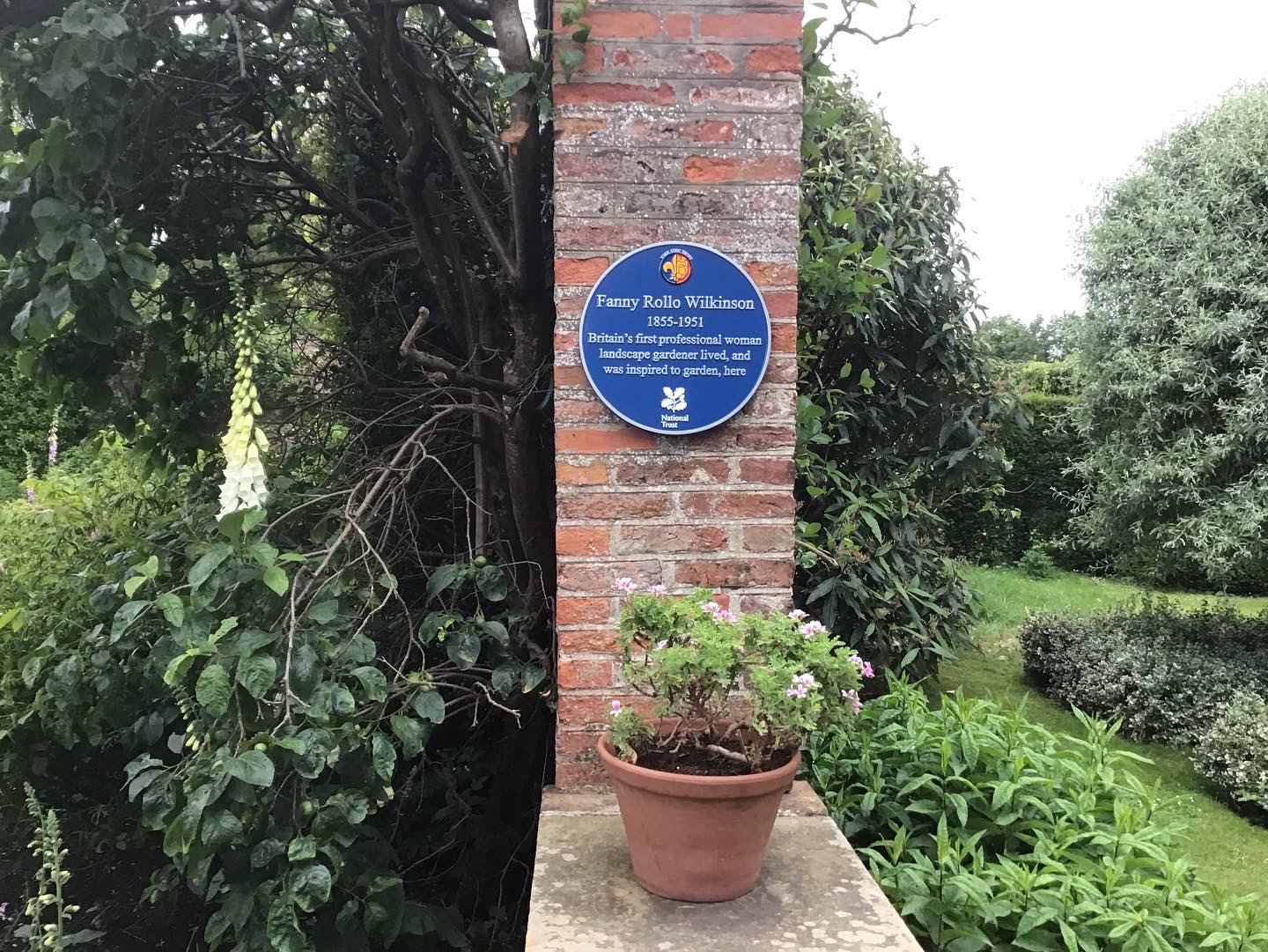
In addition, on Thursday 9 June 2022 a plaque to Fanny Wilkinson was unveiled in the Walled Garden at Middlethorpe Hall, which had once been her home and where she first, as she said, began to take a practical interest in gardening. This plaque was sponsored by both York Civic Trust and the National Trust and was unveiled by York’s Sheriff and heralded by the ringing tones of the York Town Crier – and his bell. As you can see, the plaque is placed in the idyllic surroundings of Middlethorpe Hall’s Walled Garden
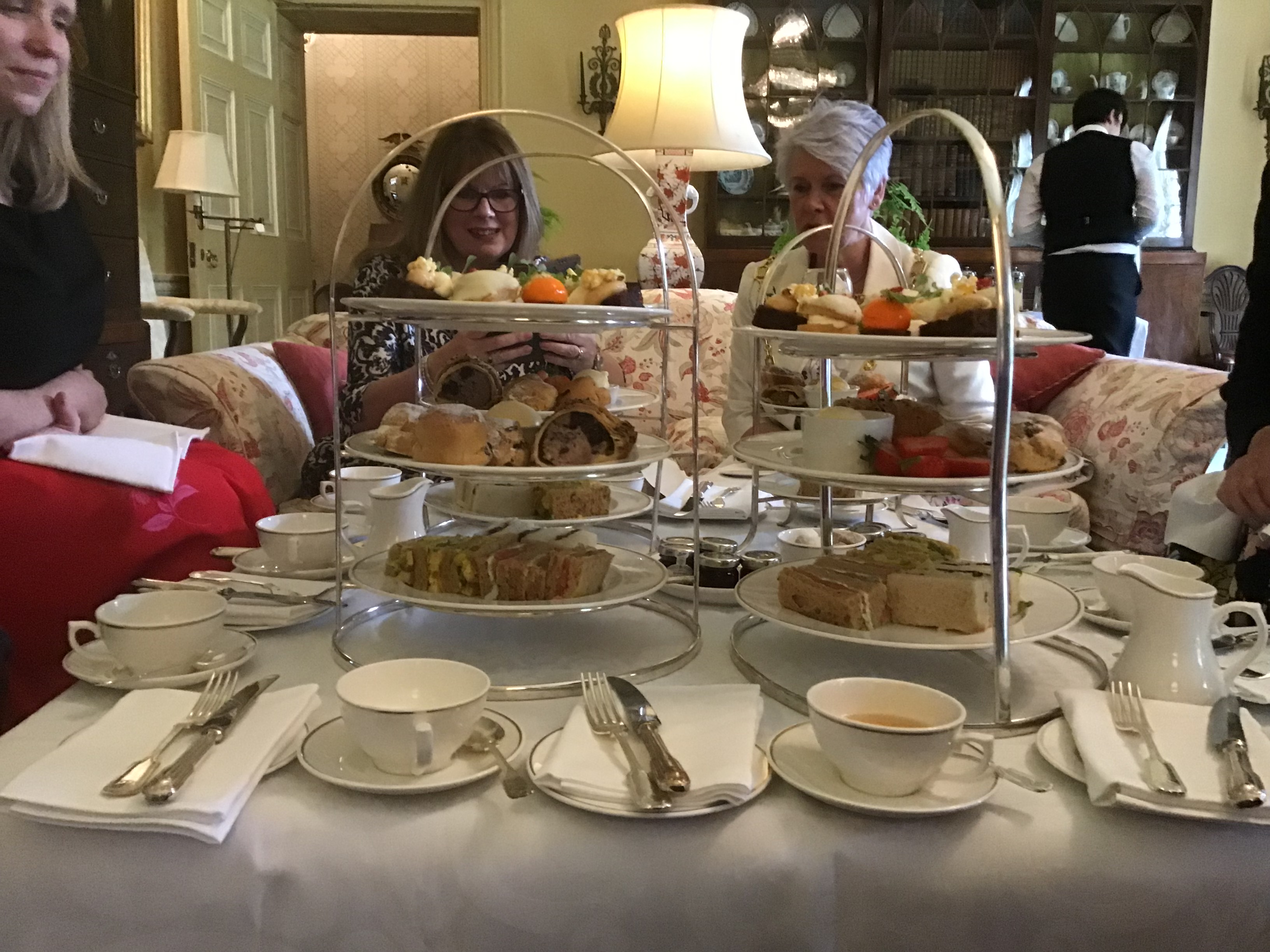
As part of the launch event I was delighted to be invited to give a talk about Fanny and her work and then we – a large party – all enjoyed, courtesy of the Middlethorpe Hall team, a sumptuous tea – which I can’t resist showing
This was, in fact, the second plaque in remembrance of Fanny Wilkinson to be unveiled this week – for on Tuesday, 7 June, an English Heritage Blue Plaque was ‘launched’ on the building in Bloomsbury – now 239/241 Shaftesbury Avenue – where she once lived.
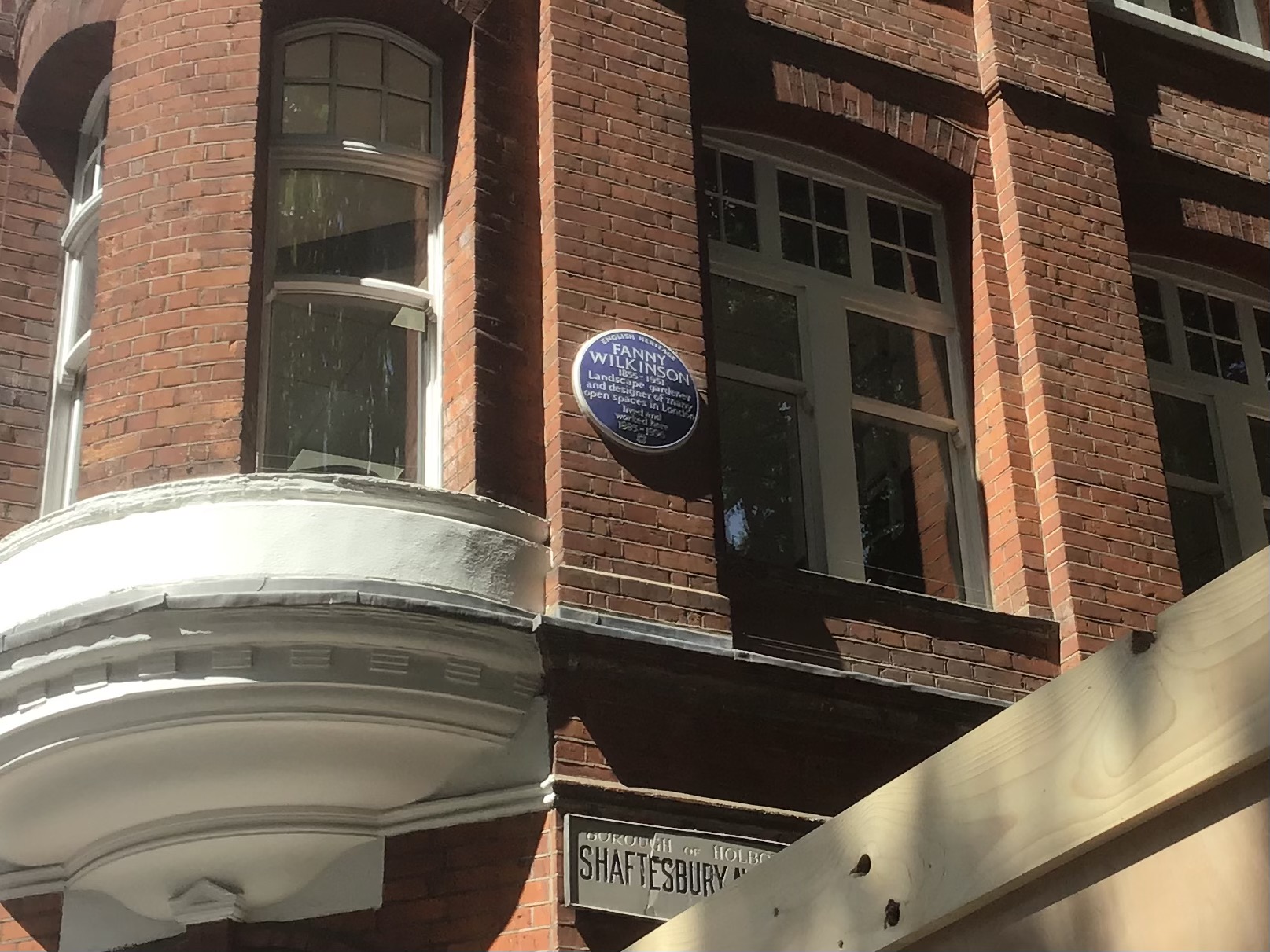
The hoarding you can see in this picture hides the work-in-progress now underway to transform a rather forlorn patch into what promises to be a rejuvenated green space, known as the Northern Triangle. Mind you, in her day, when gardener to the Metropolitan Gardens Association, Fanny, too, attempted to make this little area more attractive. It is likely she was responsible for the trees planted there, but the benches she added had soon to be removed – because they quickly become a trysting place for ‘ladies of the night’. Fanny also reordered an even smaller patch of land down the road, now known as the Southern Triangle, one that Camden Council are also at the moment in the midst of improving. For details of both these works see here.
And, to crown this really remarkable few days, on 9 June, as a slightly early birthday present to her, UCL Press published Millicent Garrett Fawcett: Selected Writings – edited by Prof Melissa Terras and myself. The book comprises 35 of Fawcett’s speeches and articles revealing, in her own words, her contribution to modern society over a span of 61 years. The topics she covered centred upon the campaign for the Vote for Women, but also the provision of education for women; feminist history; her love of literature (and her own attempt at fiction); purity and temperance; the campaign against employment of children; the British Army’s approach to the South African War; the Unionist cause against Home Rule for Ireland; and the role of suffrage organisations during the First World War. Each article has been fully annotated in order to provide the modern reader with easy access to Fawcett’s world view. Alongside the words, 22 artworks and photographs, fully identified and dated, depict Fawcett at various stages of her career. This is the first full-length scholarly study of Millicent Fawcett since the publication of David Rubinstein’s excellent 1991 biography and we hope it will give intellectual substance to the bronze representation of her now standing in Parliament Square. And, by the way, we fully explain the context of ‘Courage Calls to Courage Everywhere’, the aphorism with which now Fawcett is now most closely associated.
The 476-page book is ‘Open Access’ – free to read or download online – although paperback and hardback print copies are also available to buy. For full details see here .

You can read much more about all members of the Garrett Circle in Enterprising Women: the Garretts and their circle. (And buy a copy from me, if you so wish.)
Collecting Suffrage: Suffragette Fakery
Posted by womanandhersphere in Collecting Suffrage on December 2, 2021
Over the years I have expressed concern about the practice of dealers and auctioneers in labelling as ‘suffragette’ any piece of jewellery that combines stones approximating to suffragette colours of purple, white and green. I explained in another post [see https://wp.me/p2AEiO-nd] that such jewellery would have had no association with the suffragette movement, the colours were merely harmonious and fashionable, which was why they had been chosen by the Women’s Social and Political Union as their ‘brand’. This practice is, I am afraid, still rife, but at least I have tried to warn the trade and the public.
However, I am now increasingly worried by the number of deliberately faked suffragette objects that are being sold both on eBay and by British auction houses, often for high prices. Fake ‘suffragette’ flags, watches, cigarette cases, car badges, defaced coins, and woven cloth badges are the latest items to appear in auction house sales. Having specialised in suffrage ephemera – as an historian and a dealer – for over 35 years I can assure my readers that most of these objects either never existed in the ‘suffrage’ years and are being dreamed up – and manufactured – by unscrupulous sellers, or are modern copies. I do occasionally protest to terrestrial auction houses about individual items and they then invariably withdraw them from sale – but I cannot hope to stem the tide alone.
While I hate the idea of private buyers being duped, not only by spending large sums but also by thinking, erroneously, that they own an artefact with a real connection to the suffrage movement, my principal fear is that such objects will end up in public collections; indeed, I know this to have happened. If the institution is made aware of its mistake and removes the object from display, it has lost money; if the object passes into the collection unchallenged, it is legitimising a fiction. I would ask potential buyers to think carefully – and even consult an expert – before spending money on artefacts labelled as ‘suffragette’. Better still, research the movement carefully so that you can exercise your own judgment. There are still plenty of ‘right’ objects to be found but, as ever, this maxim holds: ‘If an item looks too good to be true, it probably is’.
Caveat Emptor
To see something of the marvellous range of suffrage artefacts that were actually produced by suffrage societies do consult Ken Florey’s site. Although treating, in the main, items produced to publicise the US suffrage movement, he also includes a wide range of British items.
My website also includes a number of articles that may prove useful – under the ‘Collecting Suffrage’ heading. And, if you would like advice about an item you are thinking of buying, you can always ask for my opinion.
Suffrage Stories: Suffrage in South Devon – Watch My Zoom Talk
Posted by womanandhersphere in Suffrage Stories on September 29, 2021
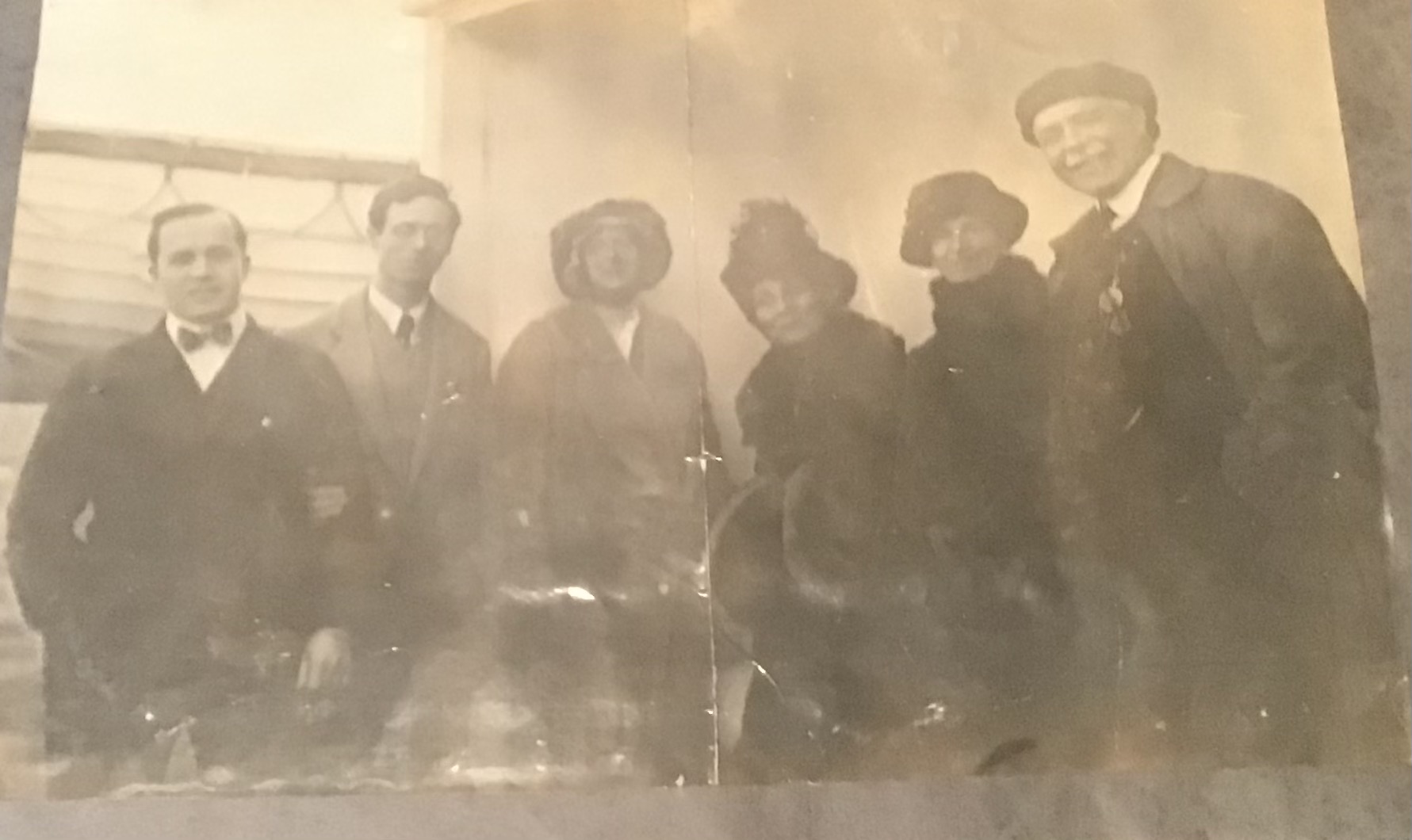
Here is a link to the Zoom talk on the women’s suffrage campaign in South Devon that I gave on 25 September as part of Torbay’s Heritage Lecture Day. The fully-illustrated talk traces suffrage activity in the area from its beginnings in 1866 – through the 19th and 20th centuries.
Collecting Suffrage: 1907 Programme For ‘Votes for Women’, Play By Elizabeth Robins
Posted by womanandhersphere in Collecting Suffrage on August 19, 2020
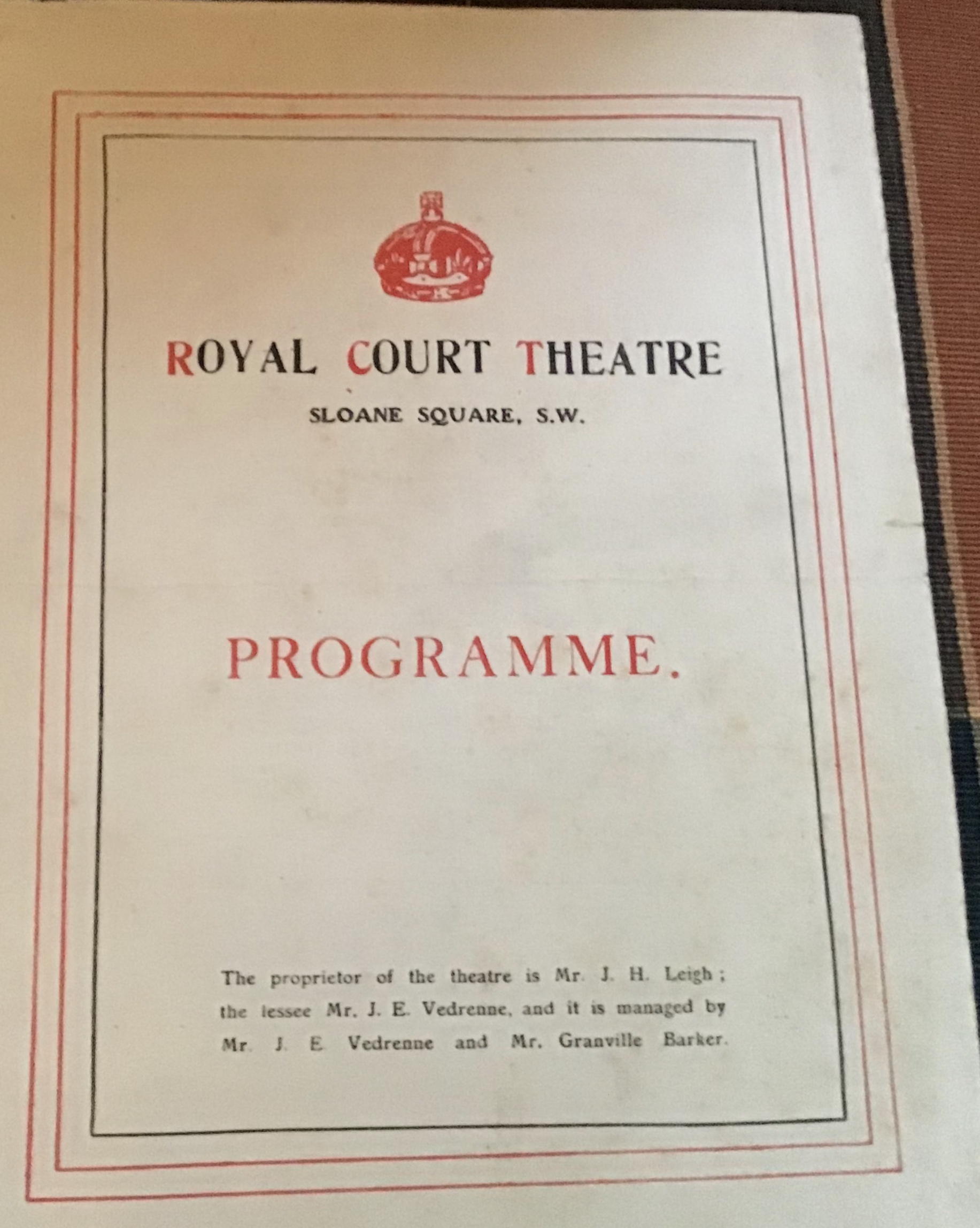
4-page programme for one of the 8 matinée performances of this so-popular play, staged in April and May 1907 at the Royal Court Theatre, Sloane Square, under the joint management of John Vedrenne and Harley Granville Barker.
The programme includes the cast list, of course, and a notice that ‘At these Matinées, Ladies are earnestly requested to remove Hats, Bonnets, or any kind of head dress. This rule is framed for the benefit of the audience…’
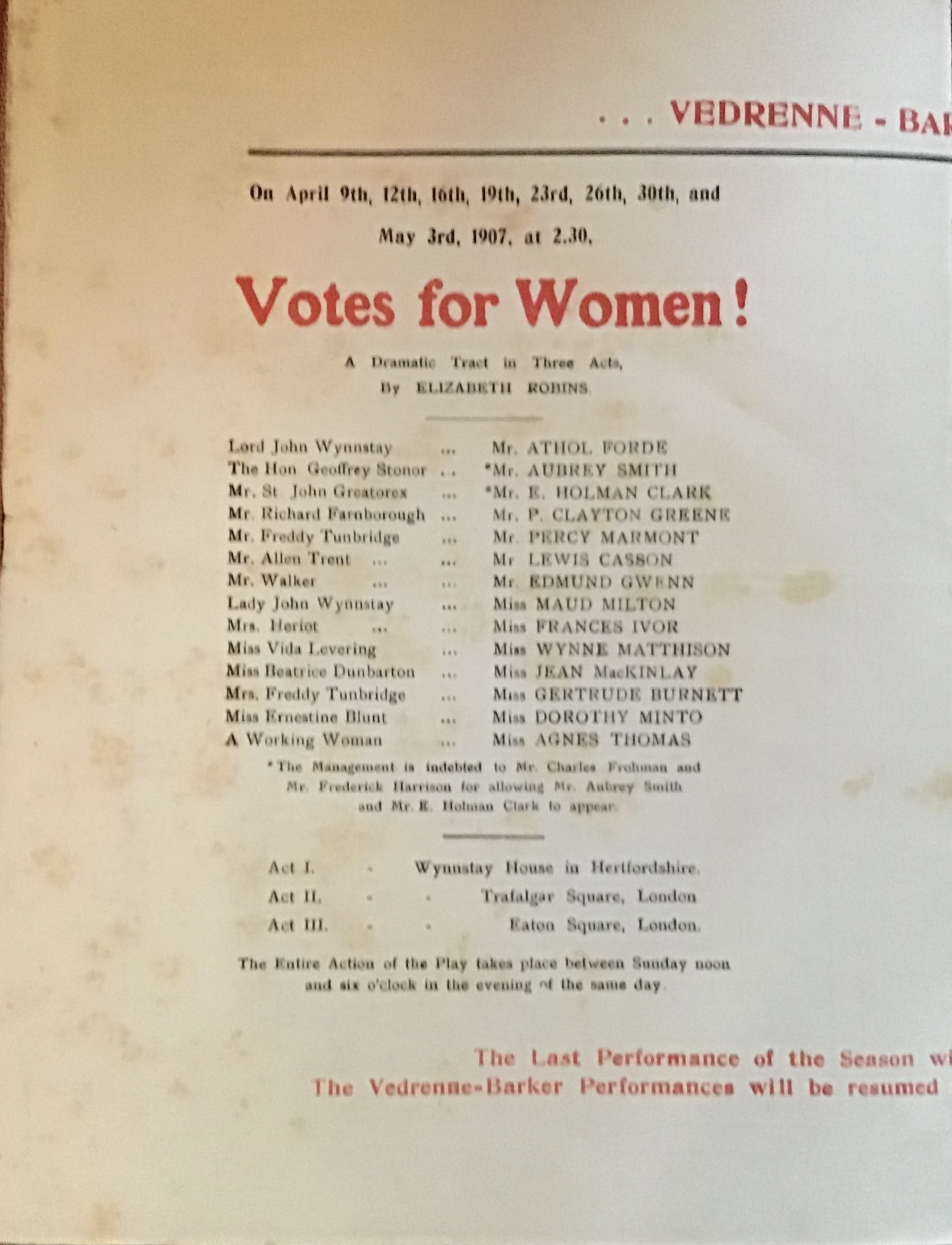
Kate Frye (suffrage diarist) saw the play on 16 April and wrote a long entry that night in her diary where, including, amongst other comments, ‘I loved the piece – it is quite fine – most cleverly written and the characters are so well drawn. Needless to say the acting was perfection as it generally is at the Court Theatre and the second act – the meeting in Trafalgar Square – ought to draw the whole of London. I was besides myself with excitement over it ‘
This programme belonged to Isabel Seymour, an early worker in the WSPU Clement’s Inn office, She folded the programme into her pocket or handbag and then kept it for the rest of her life.
In good condition – extremely scarce £500
Email me if interested in buying – elizabeth.crawford2017@outlook.com
THIS ARTICLE AND PHOTOGRAPHS ARE MY COPYRIGHT.
PLEASE CONTACT ME IF YOU WISH TO USE ANYTHING POSTED HERE.
Suffrage Stories: Sussex Violets And ‘Votes For Women’
Posted by womanandhersphere in Suffrage Stories on March 3, 2017
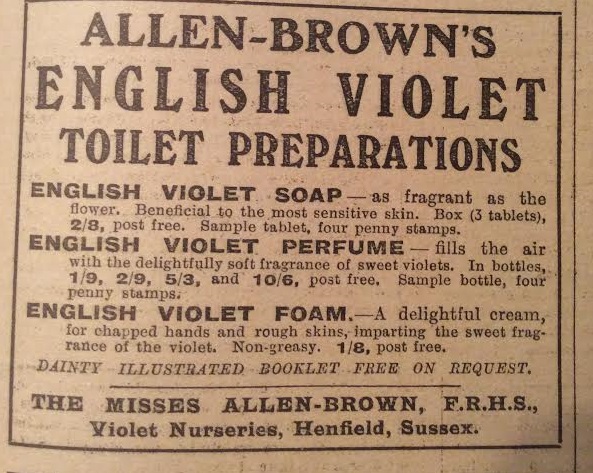 One of the businesses that over a number of years advertised very regularly in Votes for Women, the newspaper of the Women’s Social and Political Union, was that of the Violet Nurseries run by ‘The Misses Allen-Brown, F.R.H.S.’ at Henfield in Sussex. I was intrigued by the idea of the intensive farming of violets – that most Edwardian of flowers – and the fact that the women apparently also manufactured violet-scented unguents and perfume and thought I’d do a little delving.
When skimreading through Votes for Women I had just assumed that the ‘Misses Allen-Brown’ were sisters but once I began researching I quickly discovered that they were, separately, a ‘Miss Allen’ and a ‘Miss Brown’.
Ada Eugenie Brown (1856-1915) was born in Liverpool, one of the six children of Aaron (1814-1883) and Lydia Brown. Her father was a ‘provision merchant’ – a ship’s store dealer and ship’s chandler -working from premises in Chapel Street, Liverpool. The family lived in ‘Hartfield’, a large Italianate house in Allerton that still stands, now incorporated into Calderstones School. By 1871 the family was sufficiently prosperous to be tended by at least five servants, including a butler and a footman, and probably also kept a coachman. By the time he died in 1883 Aaron Brown had moved from Allerton to the very smart area of Princes Park. He left over £22,000 but I haven’t investigated his will and don’t know what share of this went to Ada. By 1899 she was living in ‘Holmgarth’ (now known as ‘Providence Cottage’) on Henfield Common North Road in Henfield, Sussex.
Decima Mary Katherine Allen (1869 – 1951) was born at Burnham in Somerset, one of the eleven children born to Elizabeth Allen. When the 1871 census was taken her mother was a recent widow and described herself as ‘a farmer’. As her name would suggest, Decima was the tenth child born of her parent’s marriage. However on her 1911 census form Elizabeth Allen states that she had given birth to eleven children (of whom seven were by then dead). Her 11th child, Sybil, would appear to have been born in London in 1873 and, if so, it seems impossible that her late husband, John Allen, could have been the baby’s father. From birth onwards a cloak of mystery covers much of Sybil’s life. She became a writer, known as Sybil Campbell Lethbridge – you can read about her here. In 1871, when Decima was still the youngest child, the Allen family lived on their farm at Charlinch in Somerset, together with five house servants plus a German governess and a farm bailiff. By 1901 Decima was living with Ada Brown at ‘Holmgarth’ – there is no information as to how they met.
Initially Ada and Decima ran a small general plant nursery but around 1905 sold this and, instead, began farming violets on an acre of land around their house. An April 1907 article in The Graphic headlined ‘A ladies’ violet farm’, reported that: ‘The two ladies who farm the Henfield acre will tell you that no manner of earning a living, or of adding to a slender income, is more delightful than theirs. They work all the year round, planting, transplanting, rearing, tending, weeding, picking, doing all the skilled labour themselves. A little hard digging, only a fortnight’s in the twelvemonth, is done by men…
Here at Henfield are no stream-margins, no banks whereon the violets grow to please themselves. They have to be made to grow to please others. Picking and sending to the English markets goes on from October to April ..All this means the two ladies have to spend long hours in the open air. They are up at five every summer morning, and at seven in the winter. The morning’s harvest is taken to the house for packing and despatch to all parts of the world. You can see violets from Henfield in Egypt and India. The demand for the beautiful long-stemmed Henfield violets is increasing, though all the old blue china pots in England might be filled from there already.’
Other reports make clear that, apart from the short-term hired male labour, Ada Brown and Decima Allen did not do all this work alone but that throughout the year they employed other women to whom they gave a training in horticulture. They even gave some thought as to the best outfit to be worn by these young women while working out-of-doors: ‘We think our students have accomplished the feat of clothing themselves both suitably and picturesquely. A short, straight skirt of some stout material, a green baize or brown leather apron with capacious pocket , a woollen jersey and waterproof Wellington boots; add to this a sou’-wester and a sailor’s mackintosh, and the worst winter weather may be defied.’
Readers will not be surprised to learn that there is no trace of Ada Brown and Decima Allen in the 1911 census. This would suggest that they were willing to support the Women’s Social and Political Union by committing an act of civil disobedience as well as by placing regular advertisements in Votes for Women. The women were friends with the actress and novelist Elizabeth Robins, to whom they dedicated their Violet Book. A prominent WSPU supporter and activist, she lived nearby at Backset (sometimes Backsett) Farm, Henfield. She, too, boycotted the census – it has been possible to track down the census form on which she refused to give information. However I have not yet found a form for ‘Holmgarth’. Elizabeth Robins’ 1923 novel, Time is Whispering features an estate that is devoted to the training of women horticulturalists, a theme that Angela Johns, Elizabeth’s biographer, suggests was inspired by the way of life led by the ‘Misses Allen-Brown’.
That way of life encompassed both visits from royalty, for Ada Brown and Decima Allen prided themselves on their royal patrons such as Queen Alexandra and Queen Mary, and from the less exalted – such as Alfred Carpenter who wrote to his brother, Edward, from Henfield on 3 July 1916 that ‘It is interesting to learn that Kate & Lina were here on the Violet-farm working hard – Miss Allen is still going strong & has many happy pupils – many of them are worshippers of yours & hailed my arrival (before they met me!) with joy – Their carnations are certainly a wonder & they seem to have a great demand for them notwithstanding the War.’ It is good to have evidence that the workers amongst the violets and carnations were followers of Edward Carpenter, socialist poet, philosopher, and advocate of sexual freedom.
The violets were packed and soaps and perfumes were manufactured in Lavender Cottage, an ancient building adjacent to Homgarth, although I am no further forward as to how they actually made soap and perfume in these presumably somewhat primitive premises.
After Ada Brown died in 1915 Decima Allen went into partnership with Ellen Rachel Dyce Sharp. The Violet Nurseries expanded and around 1929 the women bought another 3.5 acres which lay a short distance away from the main plot. You can watch a short 1935 Pathé film about the Violet Nurseries here. It looks as though by then they were giving employment to more men.
The nursery was eventually sold to Allwood Brothers of Wivelsfield, a nursery that had long specialised in growing carnations. Ellen Sharp died in 1950 aged 64 and Decima Allen in 1951 aged 81.
Copyright
Kate Frye’s Suffrage Diary: Following In Kate’s Footsteps: Norfolk
Posted by womanandhersphere in Kate Frye's suffrage diary, Suffrage Stories on October 14, 2013
It was in this house, 65 Commercial Road, East Dereham, that on Thursday 16 March 1911 Kate Frye embarked on her career as an organizer for the New Constitutional Society for Women’s Suffrage
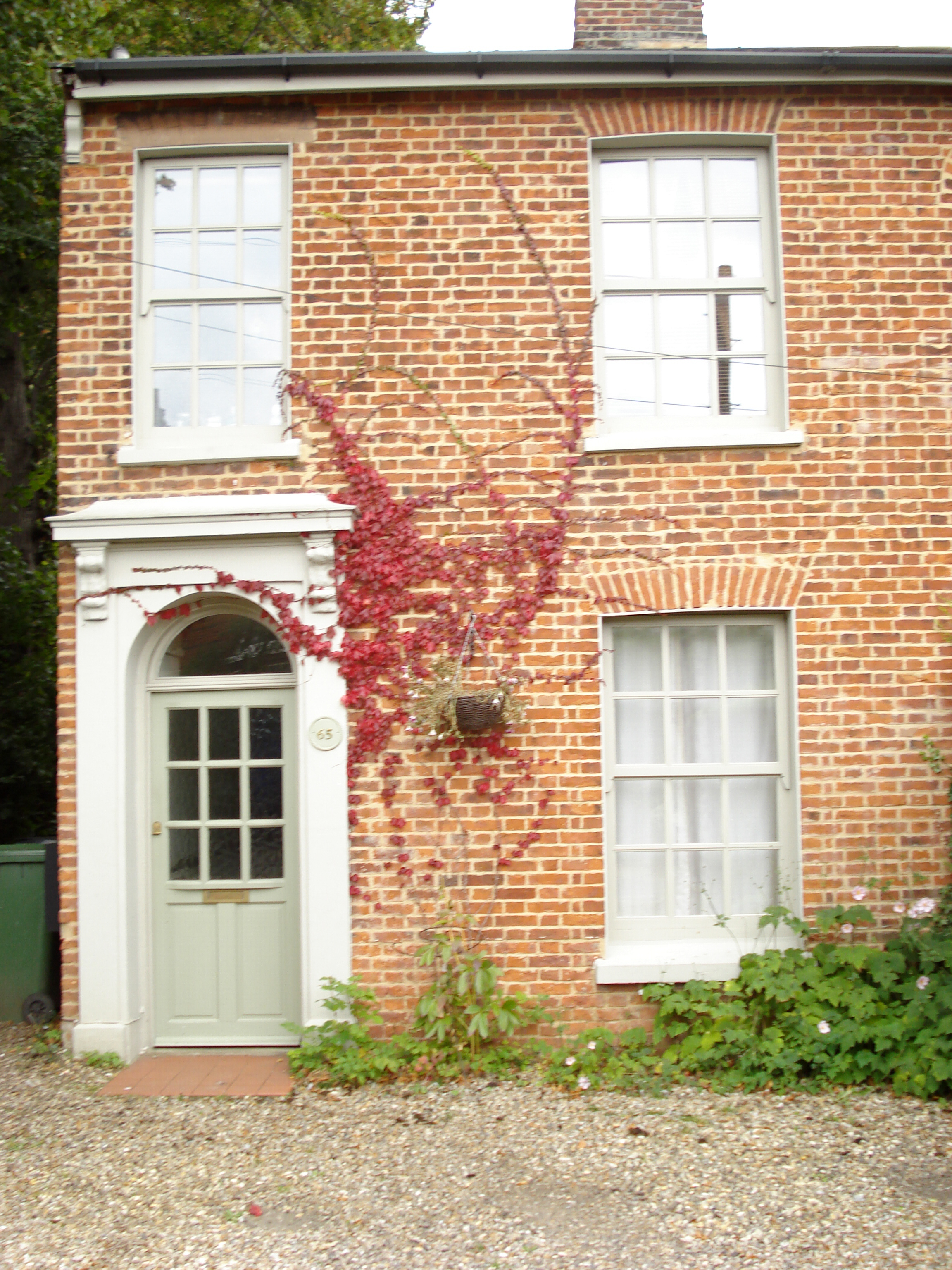
65 Commercial Road, East Dereham
In 1911 this was the home of Mrs Alice West, a widow, who lived here with her young daughter, Hilda, and was able to accommodate at least two paying guests. Over the next couple of years Kate was to be a frequent lodger, describing the rooms on that first night as ‘So nice – comfortable and so clean and a fire in my room to unpack by.’
I was paying a flying visit to Norfolk (to view ‘Houghton Revisited’, the once-in-a-lifetime rehang of Walpole’s pictures at Houghton Hall) and took the opportunity to follow Kate Frye around Dereham, Fakenham and Burnham Market. These were all places in which, between 1911 and 1913, she worked hard to spread the suffrage message.
During the several months that she spent, on and off, in Dereham, there were occasions when it was not possible for her to stay with Mrs West and she then took up residence around the corner from Commercial Road – at 63 Norwich Street, the home of another widow, Mrs Martha Cox. Kate gives the impression that this house was in a poorer condition and caused Mrs Cox, who was most well-meaning and attentive, a great deal of hard work to keep clean and in good order.
For instance, from Kate’s diary: ‘9 May 1912 I am really comfortable here, Mrs Cox is ever so good, too good and I hate to think of her work all day long in this rotten old house.’ I, therefore, wasn’t much surprised, as we walked down Norwich Street, to find that Mrs Cox’s house has been demolished.
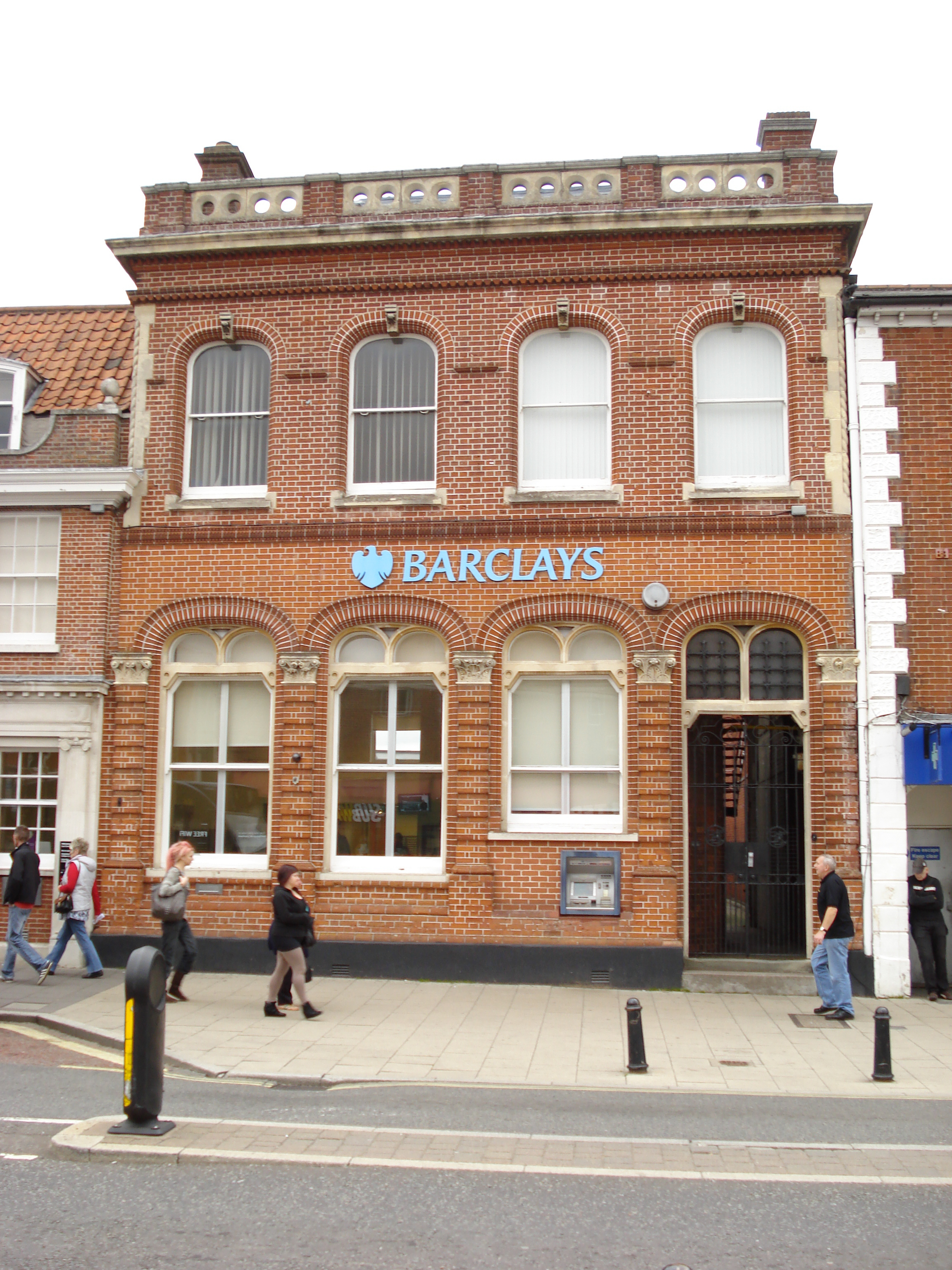
Formerly the Dereham branch of the London and Provincial Bank
On the day that Kate commented on Mrs Cox’s ‘rotten old house’, this is where she had spent the afternoon – in the apartment above this bank – then the London and Provincial. Here lived the most reliable suffrage sympathisers that Kate encountered in Dereham – the family of the bank manager, Charles Cory. And, on that afternoon – 9 May 1912 – it was in their drawing room that Kate succeeded in setting up the Dereham branch of the New Constitutional Society. The Corys’ daughter, Violet, was honorary secretary. When compiling The Women’s Suffrage Movement: a reference guide I had wondered why this small Norfolk market town was one of the few places to boast a branch of the NCS.. Kate’s diary provides the answer. It was to Dereham that she was sent and so it was here that she went to work. Why, out of the whole of England, Dereham was selected by the NCS still remains a mystery.
A year earlier, less than a week after arriving in Dereham, Kate organised her first public ‘Votes for Women’ meeting. It was held in Dereham’s 18th-century Assembly Rooms. On 22 March 1911 Kate wrote in her diary: ‘I was over at the hall at 7. We opened the doors at 7.20 and in very little time the place was full. I had to stand at the door and kept the youths and maidens out till the police officer arrived and then went up to sell Literature.
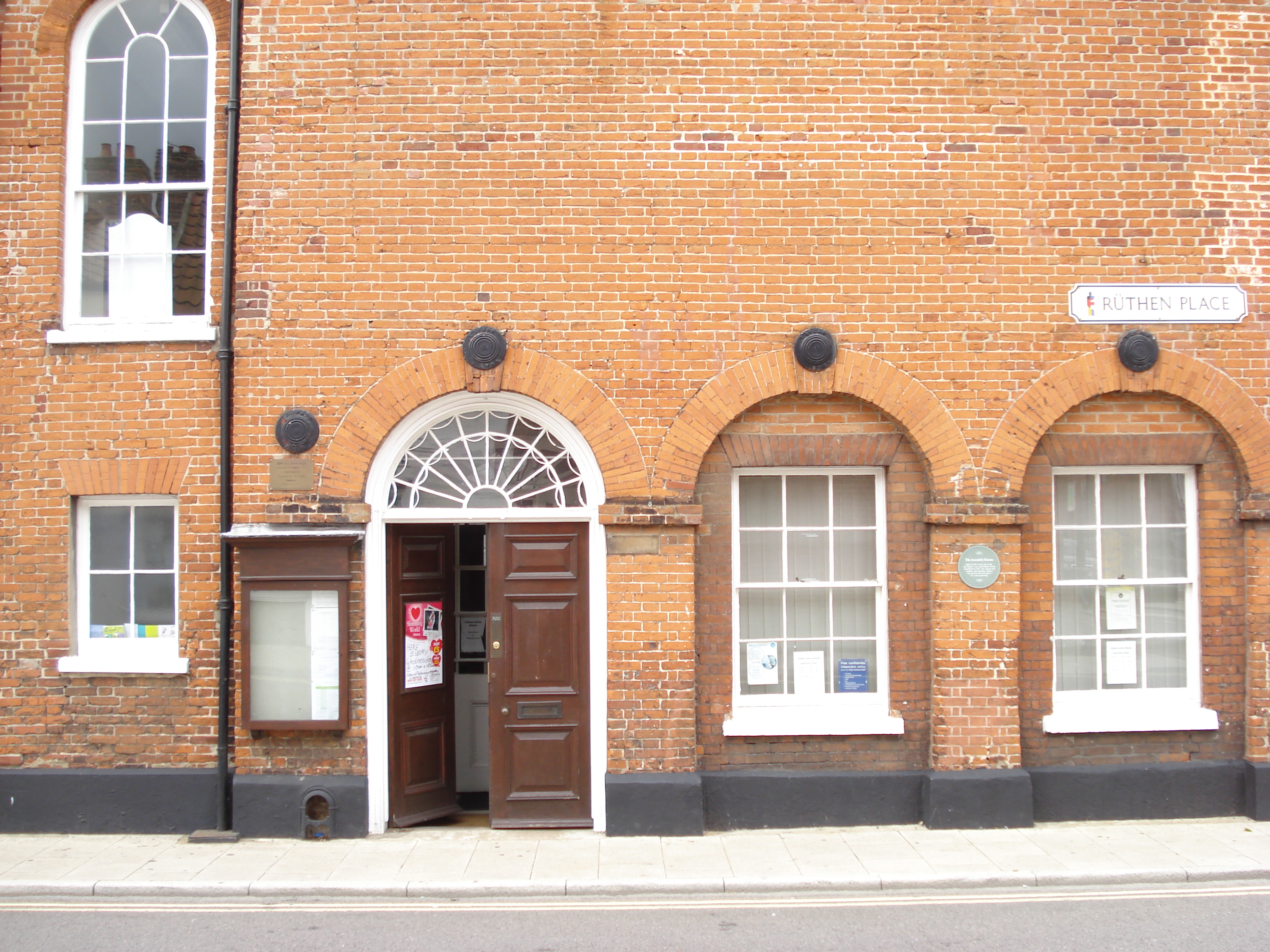
Entrance to the Assembly Rooms, Dereham
Here is the door outside which Kate stood that evening in March 1911.
Having formalised the presence of the NCS in Dereham by setting up its branch, Kate lost no time in arranging another public meeting. The evening of Wednesday 12 June 1912 turned out to be one of the most personally exciting she ever enjoyed – she certainly kept evidence of it and occasionally referred to it in diary entries many years later.
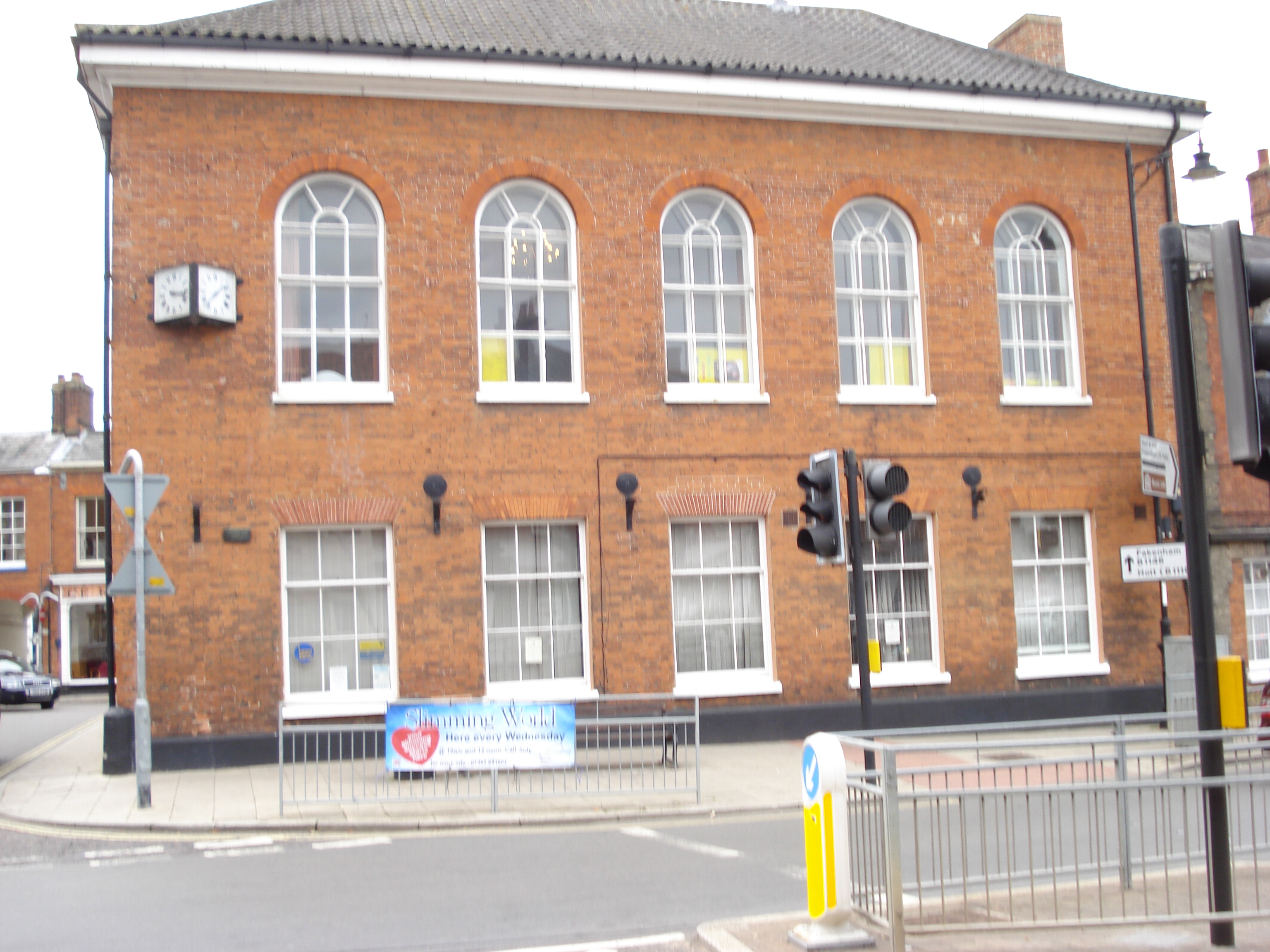
Assembly Rooms, Dereham – front view
It was only by visiting the Assembly Rooms that I made proper sense of Kate’s description. Of that evening she remarks that ‘Miss Cory sold tickets downstairs and I was the doorkeeper and spoke to everyone coming in.’ I now realise that the main hall is upstairs – behind the windows in the first floor in this photograph. (A slimming club was using the hall when I visited and, in the circumstances, I didn’t like to take a photograph of the interior!). That evening Kate was probably stationed upstairs – welcoming the audience and waiting with bated breath for the arrival of the main speaker, the Rev Hugh Chapman. She had already met him at the station and taken him to the King’s Head in Norwich Street, where he was to stay, and had been swept off her feet (as she had in the past) by the apparent fervour of his greeting.
Chapman eventually arrived – brought along from the King’s Head by a fellow clergyman.. The two were friends – the Rev Harold Davidson, rector of nearby Stiffkey, was to become notorious in later years when, after having been defrocked, he met his death at Skegness when a lion turned on him while he was performing as ‘Daniel in the Lion’s Den’. It would appear that Kate could spot a wrong ‘un, describing Davidson, after this one brief meeting, as ‘a frivolous clergyman with a frivolous wife and a beyond-all whopping frivolous young lady – destined for the stage – the whole party seemed quite mad.’ Clearly an apt summation. Anyway that was just the beginning of what was to be for Kate a memorable evening in Dereham.
A month previously – in May 1912 – Kate had lived for a few weeks in Fakenham, campaigning for the NCS at a by-election. She stayed in digs at 1 Carlton Villas, Queen’s Road – an address that I wasn’t able to identify with certainty when I visited. The 1911 census is not very helpful – the Queen’s Road enumerator having failed to give addresses on the cover of the forms in his area.
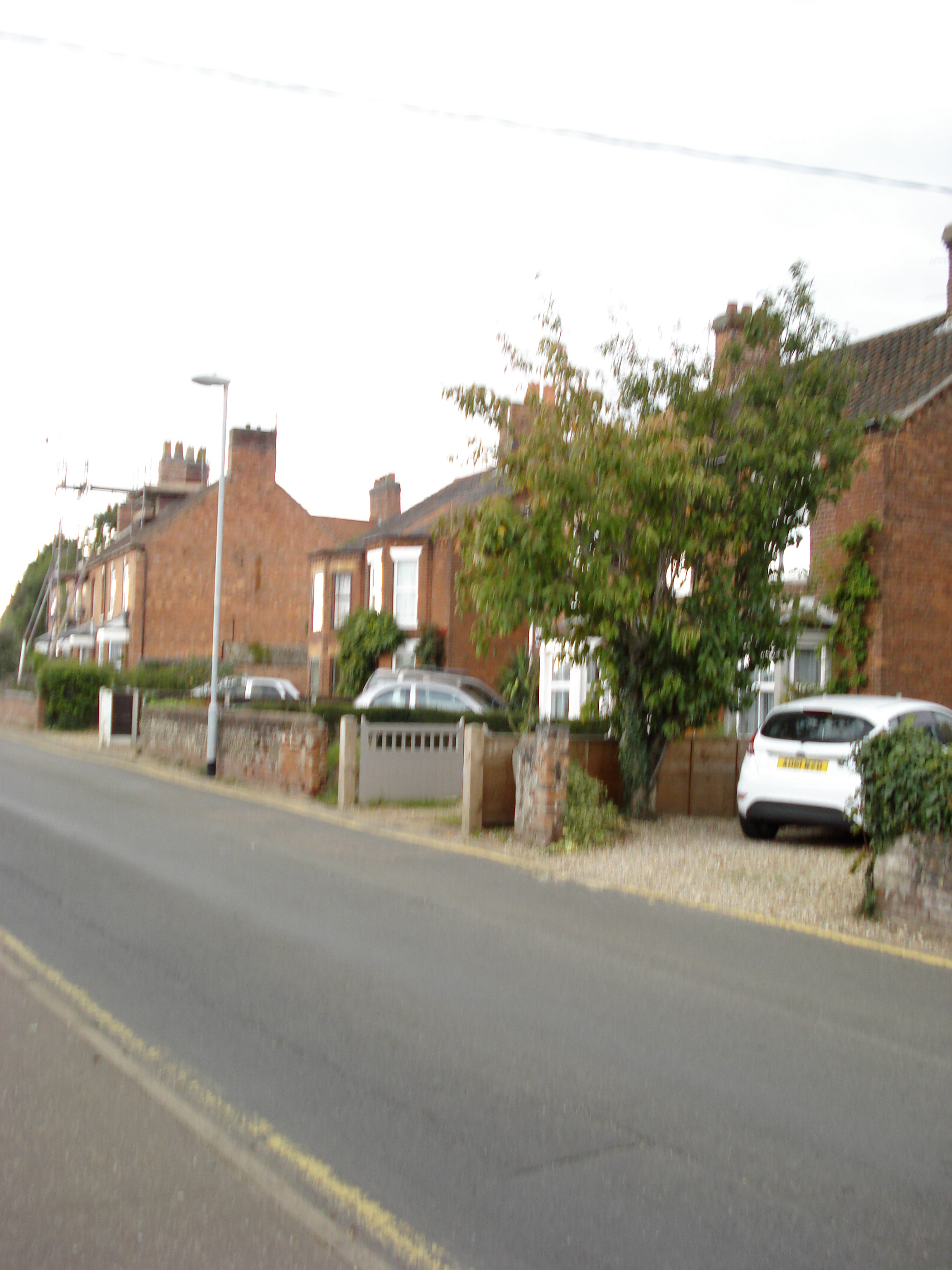
Queen’s Road, Fakenham
But if I don’t know exactly where in Queen’s Road she stayed, I do know that she must have passed this jeweller’s shop – still here a hundred years later – as she walked to and from the centre of Fakenham each day.
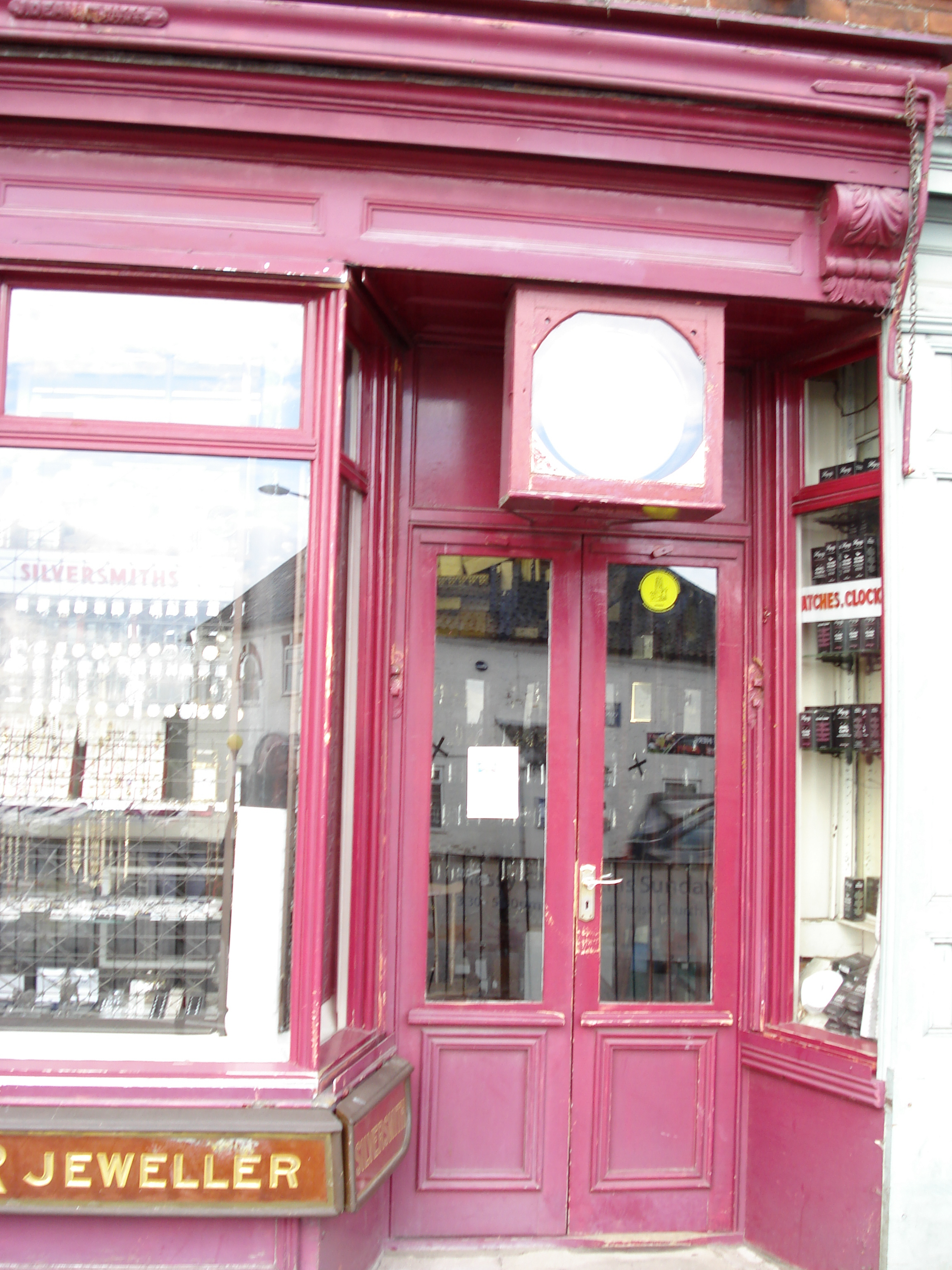
W. Parker and Son, Norwich Street, Fakenham
The shop’s owner told me that the clock, too, has been there all that time -the only difference being that it now runs on a battery.
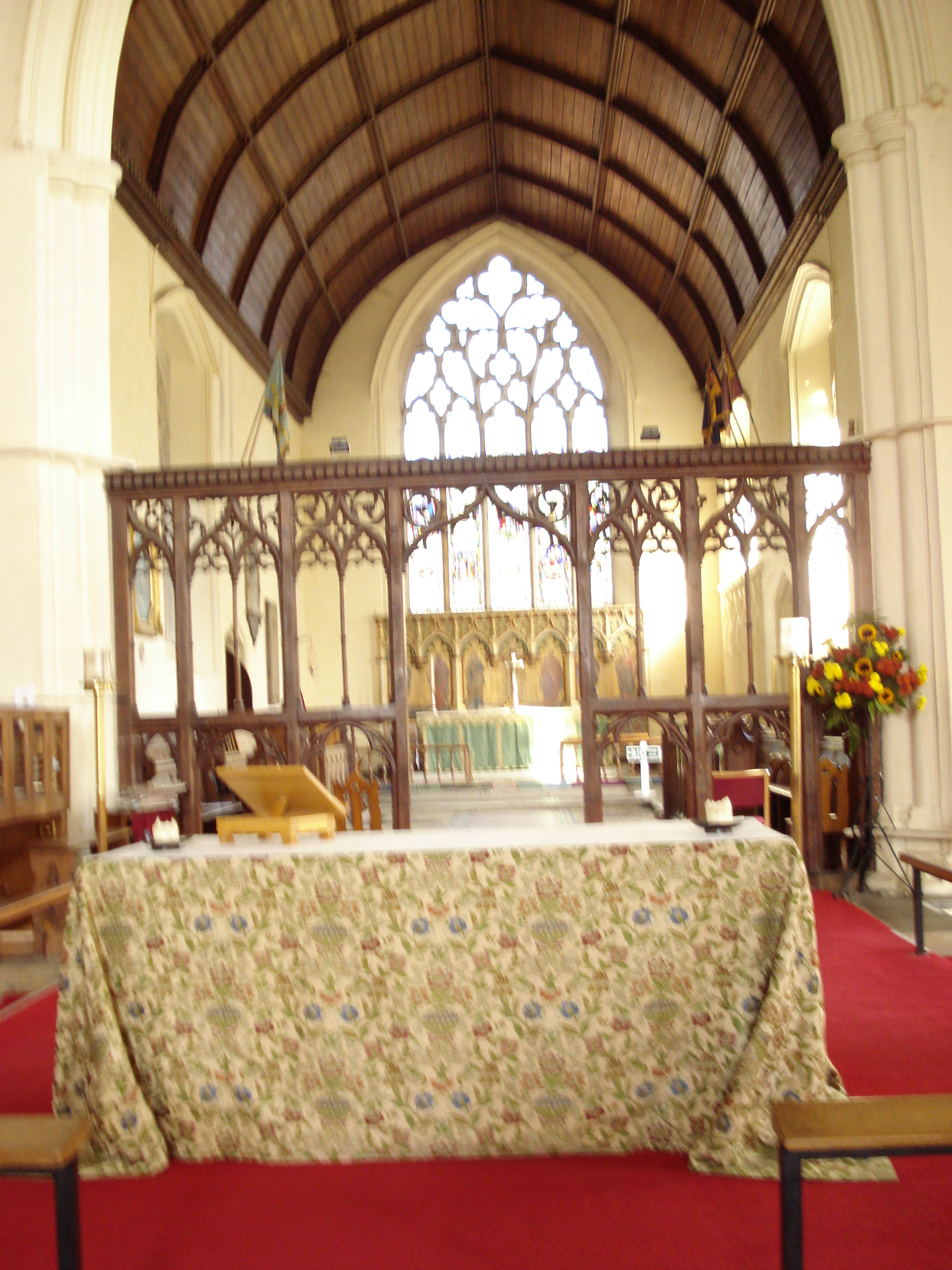
Fakenham Church
On Sunday 19 May 1912, while lodging at Carlton Villas, Kate wrote in her diary ‘Had a great scramble to get to Church by 11 o’clock but I did it. I always think Suffragettes look such heathens if no one goes. I was the only representative. ‘
A few days earlier Kate had made a recce visit to Burnham Market – finding it ‘Such a quaint pretty spot’. She did all the things that a good organiser should do – identifying a room available for hire, the name of the local policeman, the name of likely supporters etc. These included Mr Hammill, the local doctor, who lived in this lovely house, and whom she described as ‘political’.
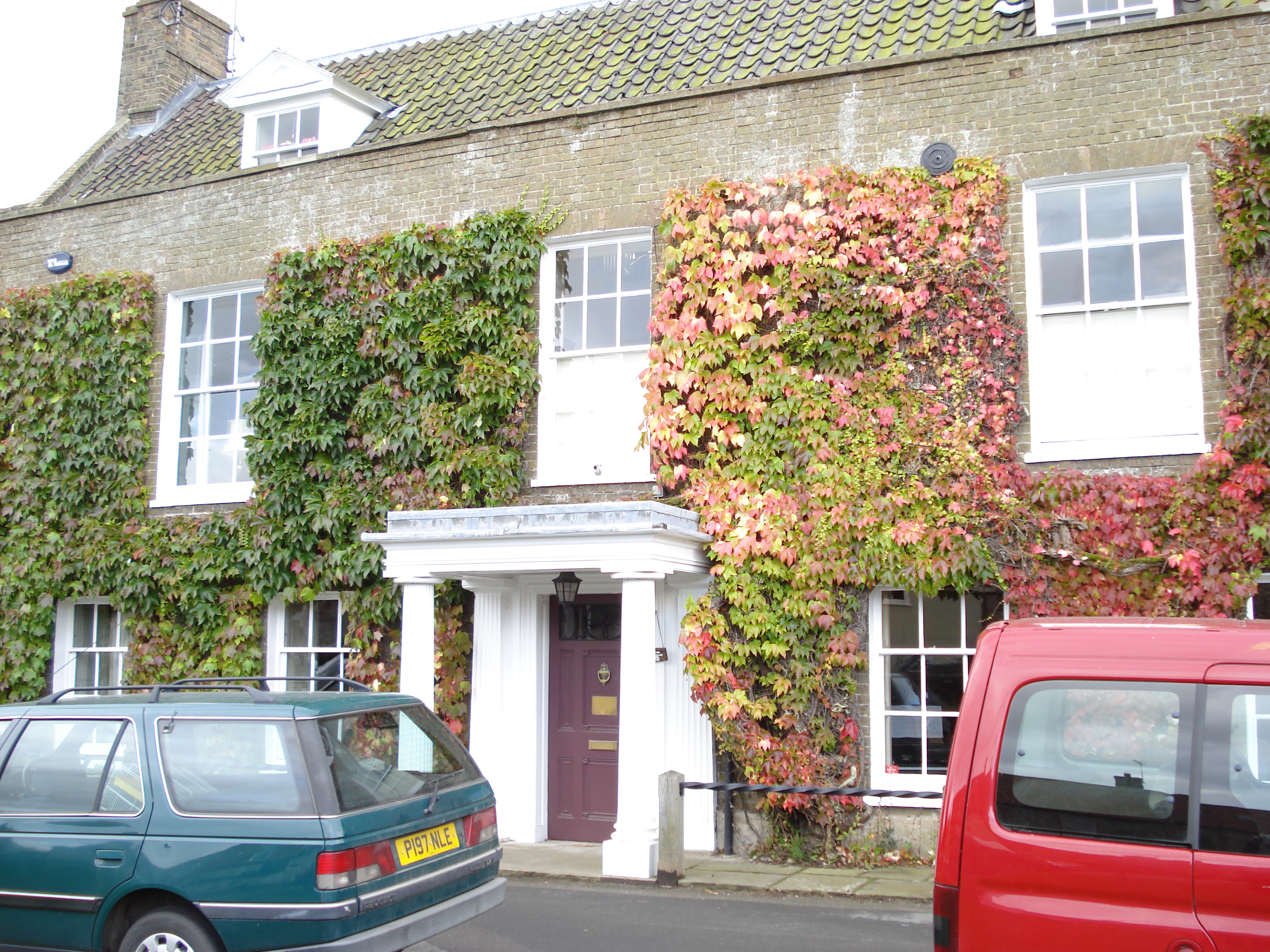
Burnham House, Burnham Market
Burnham House is just over the way from the Hoste Arms, where we stayed the night – most comfortably.
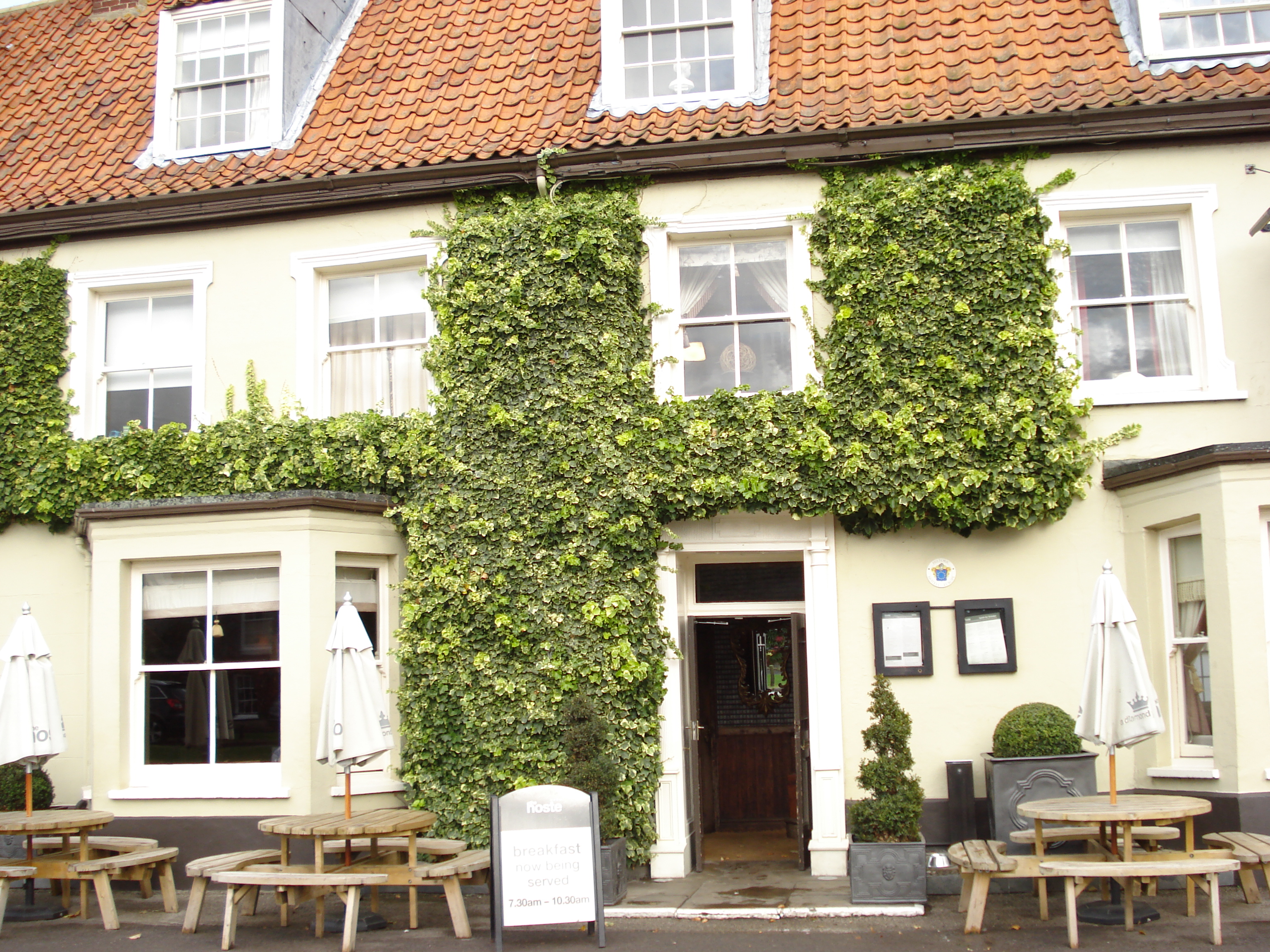
Hoste Arms, 2013
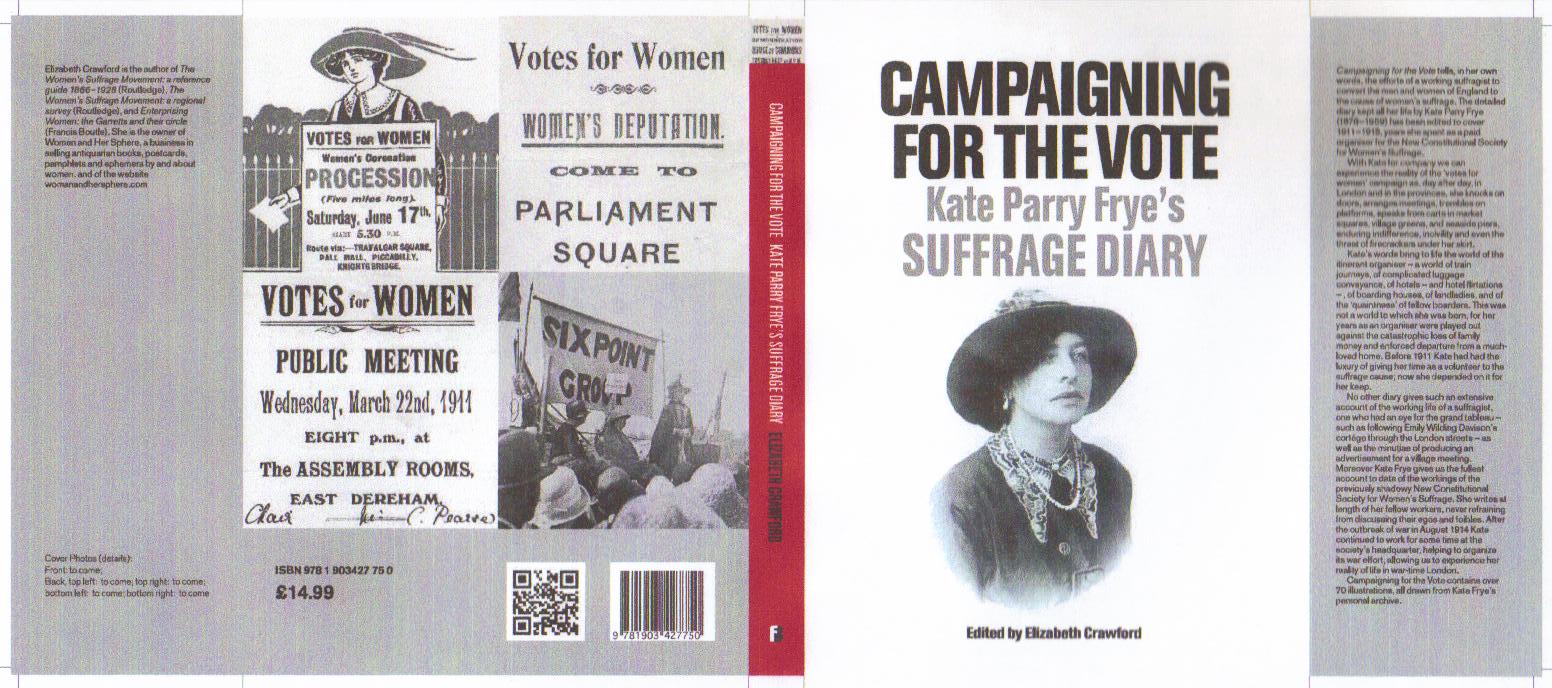
And It was in the Hoste Arms- on 23 May 1912 that Kate enjoyed a brief flirtation with a couple of Irish politicians – anti-Home Rulers. You can read more of this in a previous post – Campaigning for the Vote: Kate Wrestles With North Norfolk, 1912 and much more about Kate Frye in Campaigning for the Vote: Kate Parry Frye’s Suffrage Diary edited by Elizabeth Crawford. For a full description of the book click here Wrap-around paper covers, 226 pp, over 70 illustrations, all drawn from Kate Frye’s personal archive. ISBN 978 1903427 75 0 £14.99. Copies available from Francis Boutle Publishers, or from Elizabeth Crawford – e.crawford@sphere20.freeserve.co.uk or from all good bookshops.
Armed with Campaigning for the Vote you, too, can follow in Kate’s footsteps – not only in Norfolk, but also in London, Suffolk, Essex, Kent, Berkshire and Buckinghamshire.

- ‘Campaigning for the Vote’ – Front and back cover of wrappers
Suffrage Stories: Marjorie Hamilton: An Unknown Suffrage Artist
Posted by womanandhersphere in Suffrage Stories on August 6, 2013
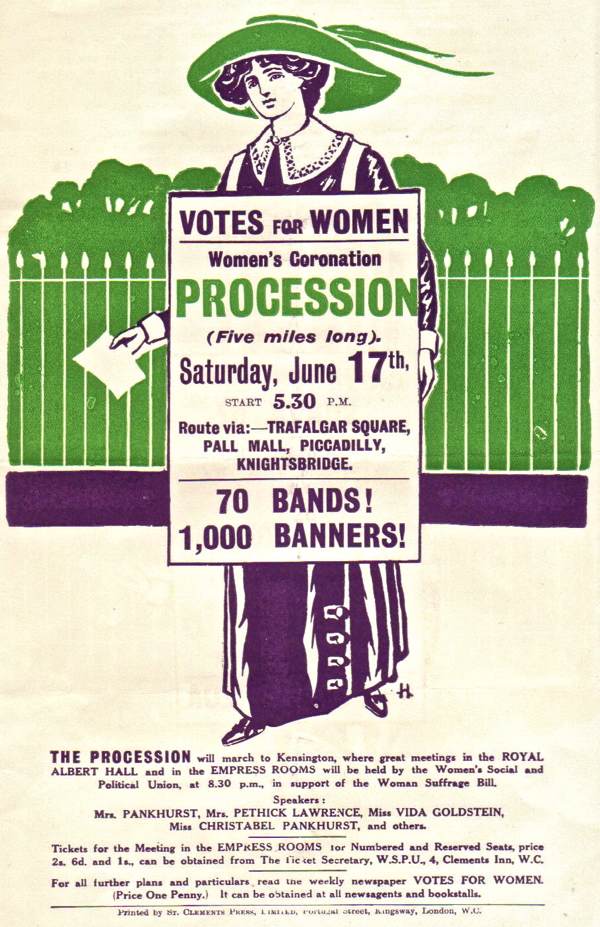 I have long admired this image, created to advertise the 1911 ‘Women’s Coronation Procession’. This particular item was carefully laid by Kate Frye between the pages of her diary. She was proud to be marching that day in the Actresses’ Franchise League contingent.
However I have only just discovered the name of the artist of this appealing flyer was and have immediately set about trying to find out what I can about her.
The name was delivered to me by Ken Florey who, in his superb Women’s Suffrage Memorabilia: an illustrated Historical Study, mentions the image, naming the artist as ‘Marjorie Hamilton’. The US suffrage society, the Women’s Political Union, had clearly recognised an appealing design when they saw it and used it to advertise a meeting held by Mrs Pankhurst in New York’s Carnegie Hall (see Votes for Women, 5 January 1912). Marjorie Hamilton’s name doesn’t appears in Lisa Tickner’s Spectacle of Women – and I must admit that I had not come across it in my own researches into women suffrage artists.
However, now that I have looked into the matter, I see that on 9 June 1911, in the issue that immediately preceded the Procession, the cartoon that appears the front page of Votes for Women was drawn by Marjorie Hamilton. Moreover, I actually hold a copy of the front page of this issue in my bookseller’s stock – I just hadn’t looked sufficiently closely at the image to notice the signature.
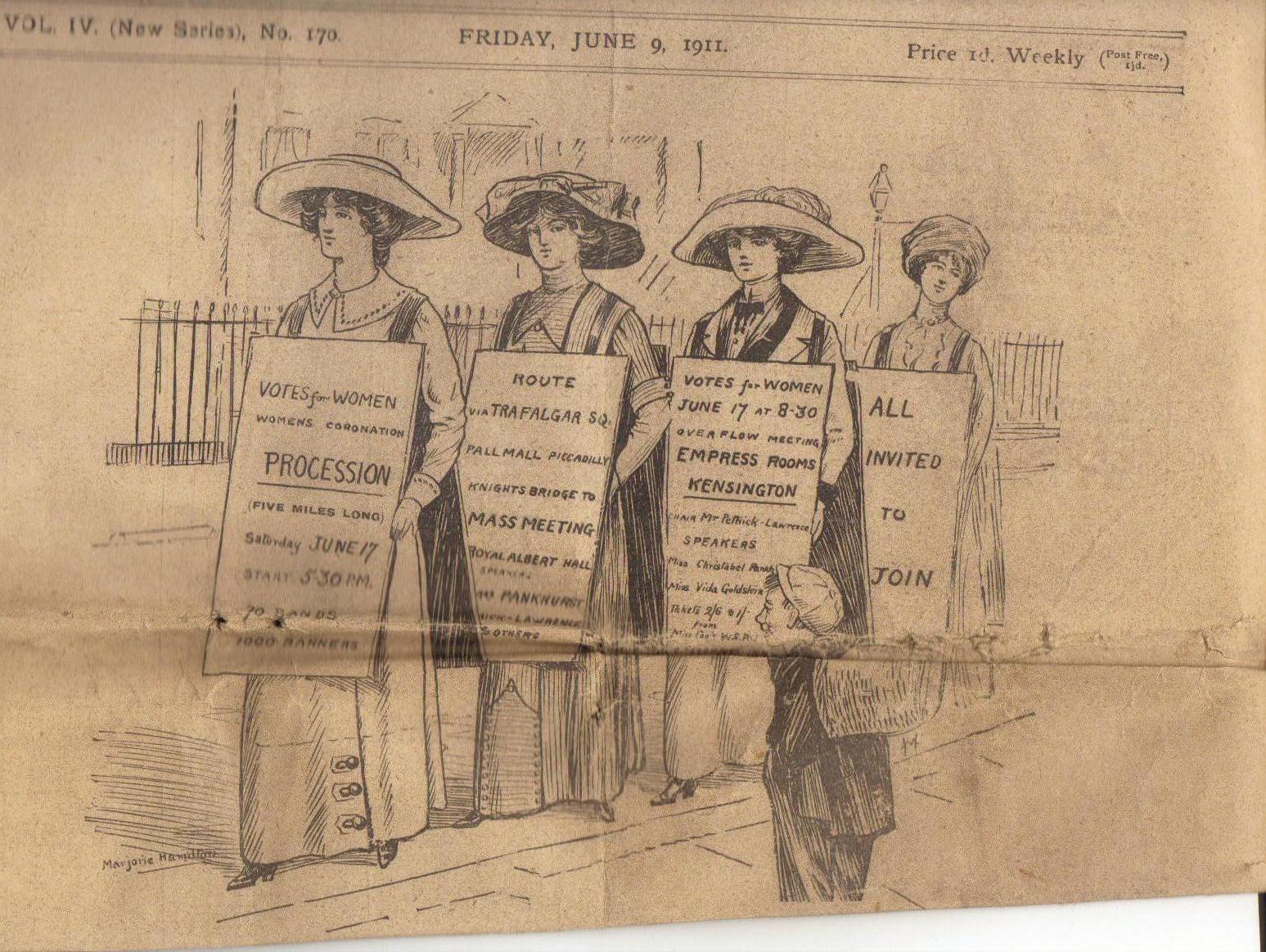
Front page of 9 June 1911 issue of ‘Votes for Women’
To have been given this position on the front page of Votes for Women was, indeed, something of an accolade – the paper’s usual artist, ‘A Patriot’ [Alfred Pease], had made way for her. Marjorie Hamilton’s ‘cartoon’ is, in fact, an advertisement for the Procession, with the lead character in her drawing dressed in the same way as the suffragette on the flyer. The latter, however, makes a very much bolder impression – the image greatly strengthened by the use of colour. While the Votes for Women front-page picture is signed with her full name – that is, ‘Marjorie Hamilton’ – the flyer carries only initials – but these do appear to read ‘MH’. When describing the artist responsible for the image on the cover of the lavish Programme produced for the occasion of the Procession, Votes for Women is rather coy – referring to her only as ‘an artist member of the WSPU’. So who was Marjorie Hamilton?
My research indicates that she was born in Derbyshire in 1882. Her father, Arthur Hamilton, was a banker – a partner in S.Smith & Co’s Bank, Derby. Her mother, Georgina (nee Stokes) had been born in South Africa. Marjorie had a slightly younger sister, Vera, and in 1891 the family lived, presumably in considerable comfort, with three servants and a live-in (young) governess, at The Mount, Duffield Road, Derby. Ten years later, in 1901, the family was living above the bank premises at 7 Market Head, Market Place, Derby, along with six domestic servants and a bank clerk. However, less than a year later Arthur Hamilton, now described as of ‘The Grange’, Ewell, Surrey, died, leaving £10,800. It was in 1902 that Smith’s Bank lost its individual identity when it merged with the Union Bank of London.
Georgina Hamilton, with her daughters, may have moved to Canada c 1906. Certainly Marjorie noted on a subsequent Canadian immigration form that she had lived in Canada from 1906-1908. Her sister, Vera, married in Vancouver in 1908 and in 1911, when the Canadian census was taken, was living there with her mother, her husband and two young children. Even though she was a member of the WSPU, Marjorie Hamilton, luckily for us, did not boycott the 1911 UK census and can be found, describing herself as an ‘art student’, as a boarder at 4 Mills Buildings, Knightsbridge, an 18th-century court on the north side of Knightsbridge High Road, close to the Barracks. At this time Mills Buildings was a rather raffish address, although her fellow boarders all appear very respectable.
The census was taken on 2 April 1911 and it must have been very soon after, while Marjorie Hamilton was living here, that she was given the rather important ‘Coronation Procession’ commission. Marion Wallace-Dunlop and Edith Downing were in charge of the artistic design of the Procession, which was being executed at 12 Smith Street, Chelsea. Perhaps it was they who spotted her talent for graphic design. Incidentally on the night of the 1911 census those resident at this address were Miss Dean, a 27-year-old artist’s model, together with a young secretary and a shop assistant whose surroundings, with 8 rooms, between the three of them, were rather more spacious than those of their neighbours. I wonder if they let out one or two of those 8 rooms to the WSPU? It is clear from the reports in Votes for Women that there was a great deal of activity going on at 12 Smith Street in May and June 1911.
Alas, however, that is about all I can discover of Marjorie Hamilton’s career as an artist – except that in 1913 she was advertising that she would be happy to take order for water-colour sketches of country homes.
I next catch sight of her in February 1917 at Liverpool, embarking on the SS Carmania for New York. Her address is given as ‘Cranleigh, Surrey’ and her occupation is ‘artist’. So, in the six years that had elapsed she had presumably had – or at least had attempted to pursue – art as a career.
I did wonder why, in the midst of a war that made Atlantic travel so dangerous, she was making this journey. And then I realised that her final destination was not New York but Victoria, British Columbia and that she must have been going out to be with her mother – who died a month or so after her arrival.
Another seven years go by until in 1924 I found her again, once more about to enter Canada. However this time it is not as an artist but as the prospective matron of the Waifs and Strays Society Receiving Home at 661 Huron Street, Toronto. This was Elizabeth Rye House – a home to where girls were sent from England to be trained for domestic service. On the immigration form Marjorie Hamilton gave her present occupation as ‘matron’, which may, or may not, indicate that she had found that art did not pay and that she had to find an other means of earning her living.
And there the trail for the moment ends. I know that the Toronto home closed in 1931 – but don’t know if Marjorie Hamilton was still there then. Did she return to England – or remain in Canada. I know that her sister died in Sussex in 1943 – but can find no further trace of Marjorie.
And all this is what comes of wondering who was the artist responsible for a delightful purple, white and green flyer produced something over 100 years ago.
Suffrage Stories: Radio 4 ‘Document’: Votes For Victorian Women
Posted by womanandhersphere in Suffrage Stories on March 19, 2013
On Monday, 18 March 2013 Radio 4 broadcast, in the series ‘Document, an interesting programme to which I made a small contribution. Below is the description of the programme that appears on the BBC website. The programme is available on iPlayer for a year – that is until March 2014 – click here to listen.
‘Votes for Victorian Women
- Duration:
- 28 minutes
- First broadcast:
Monday 18 March 2013
Popular history tells us that women did not get the vote until 1918.
Though they could technically vote in local elections before that, many historians have argued that in practice they had no vote until the 1860s at the earliest. And evidence that they ever did vote has proved almost impossible to find.
But now a poll book, discovered in a box of papers in a local record office, clearly shows 25 women voting in elections for important local posts in Lichfield in 1843.
In this week’s Document, the historian Sarah Richardson follows the trail of these women, to reveal a picture of Victorian women’s involvement in politics which challenges many of our assumptions.
She discovers that they represented a surprising cross-section of society – old and young, poor and prosperous – and attempts to trace their descendants today.
She finds out how, when even universal manhood suffrage was seen as a radical, dangerous idea, these women may have been just a few of many more who could vote at a local level.
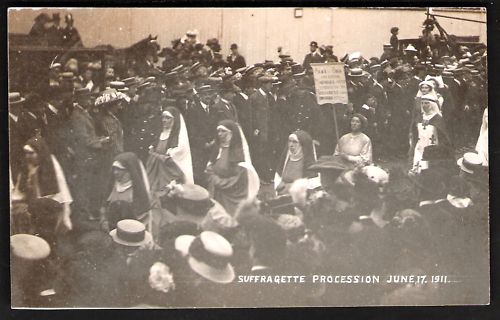
Coronation Procession 1911: The Historical Pageant
And she explores how, decades later, campaigners for Votes for Women at the Westminster level had to contend with this complex legacy.’
[Left – the photograph that Sarah and I are looking at when discussing the way in which 20th-century suffrage campaigners were keen to legitimise their claim to the franchise by looking to the power, occasionally electoral, exercised by women in the past.]
WALKS/Suffrage Stories: Where And What Was ‘The Votes For Women Fellowship’?
Posted by womanandhersphere in Suffrage Stories on November 12, 2012

Red Lion Court. The site (on the left) of the offices of the Votes for Women Fellowship
To mark the very welcome co-operation planned for the future between the Women’s Library and the London School of Economics the next few ‘Suffrage Stories’ will demonstrate the past importance to the women’s movement of streets and buildings in the vicinity of Houghton Street.
In previous posts I described how the Women’s Social and Political Union came to have its offices in Clement’s Inn and to have its campaign publicised in the weekly paper owned and edited by Frederick and Emmeline Pethick-Lawrence – Votes for Women – which was printed close by at the St Clement’s Press In October 1912 the Pethick-Lawrences, who had been recuperating abroad after enduring a term of hunger-striking imprisonment, returned to England to be told by Emmeline and Christabel Pankhurst that they, as Emmeline Pethick-Lawrence herself put it, had ‘no further use for them’. In her autobiography Emmeline Pethick-Lawrence records that she never saw or heard from Emmeline Pankhurst again.
During the Pethick-Lawrences’ absence Mrs Pankhurst had moved the WSPU from Clement’s Inn to Lincoln’s Inn House on Kingsway (about which I will write in a later post). In fact I rather think, from studying the relevant rate book, that the WSPU may actually have been evicted from Clement’s Inn. After their expulsion from the WSPU the Pethick-Lawrences took back their paper, Votes for Women, and continued to publish it, on their own account, from a new office. Again, it may have been that after their imprisonment they were no longer welcome to the Clement’s Inn management company.
For whatever reason, the Pethick-Lawrences moved a little to the east of Clement’s Inn and set up office in 4-7 Red Lion Court, one of the quaint passages off the north side of Fleet Street. Despite the redevelopment that has swept away their office, the narrow court is still atmospheric. The office was close to Votes for Women‘s new printer in Whitefriars Street, off the south side of Fleet Street. The first issue of Votes for Women published from this address was that of 25 October 1912.
In addition, in Red Lion Court, on 1 November 1912, the Pethick-Lawrences made their paper the centre of another suffrage society, the Votes for Women Fellowship. This group, made up of former members of the WSPU who were no longer in sympathy with the Pankhursts’ tactics, aimed to promote the paper and its policies rather than stand as a new militant organisation. In Emmeline Pethick-Lawrence’s words the Fellowship was ‘giving full expression to the awakened militant spirit of womanhood, that they should associated themselves in various plans for carrying the message far and wide, until in every town and village of this land women realise that they are a living part of a spiritually militant sisterhood that is at war under the triple banner of liberty, compassion, and purity against every form of evil dominance. (Votes for Women, 8 November 1912). The Fellowship’s emblem was of a lady with a lamp and its motto was ‘To spread the Light’.
Without the backing of the WSPU, Votes for Women had a greatly diminished circulation and in 1914 the Pethick-Lawrences gave the paper to the newly-founded United Suffragists. Although there was an overlap of membership, it would be a mistake to construe the United Suffragists as a direct descendant of the Votes for Women Fellowship. Despite being for most of the time in dire financial straits, Votes for Women continued to be published throughout the First World War only ceasing publication in February 1918 when the vote was (partially) won.
WALKS/Suffrage Stories: St Clement’s Press
Posted by womanandhersphere in Suffrage Stories, Walks on October 22, 2012
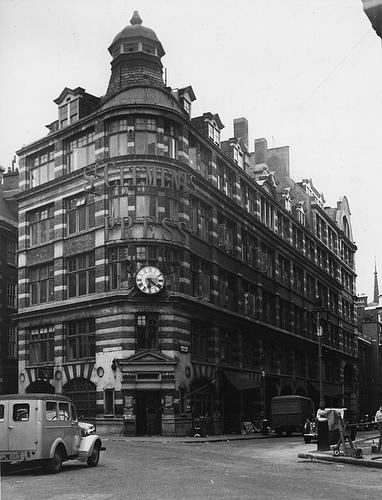
St Clement’s Press, c. 1959, courtesy of LSE Library
To mark the very welcome co-operation planned for the future between the Women’s Library and the London School of Economics the next few ‘Suffrage Stories’ will demonstrate the past importance to the women’s movement of streets and buildings in the vicinity of Houghton Street.
In the last ‘Suffrage Story’ I described why and how, from the autumn of 1906, the Women’s Social and Political Union came to have its offices at Clement’s Inn, a few hundred yards from the London School of Economics which, since 1902, had taken up residence in premises in Clare Market and Houghton Street.
In the previous post I also mentioned that Frederick Pethick Lawrence had had some experience as a newspaper proprietor and editor. It was, therefore, natural that he and his wife, Emmeline, should consider it useful for the suffrage society with which they were now so closely associated to have its own proselytizing organ. This would both broadcast the aims and actions of the WSPU and serve as a point of focus for its swiftly expanding membership.
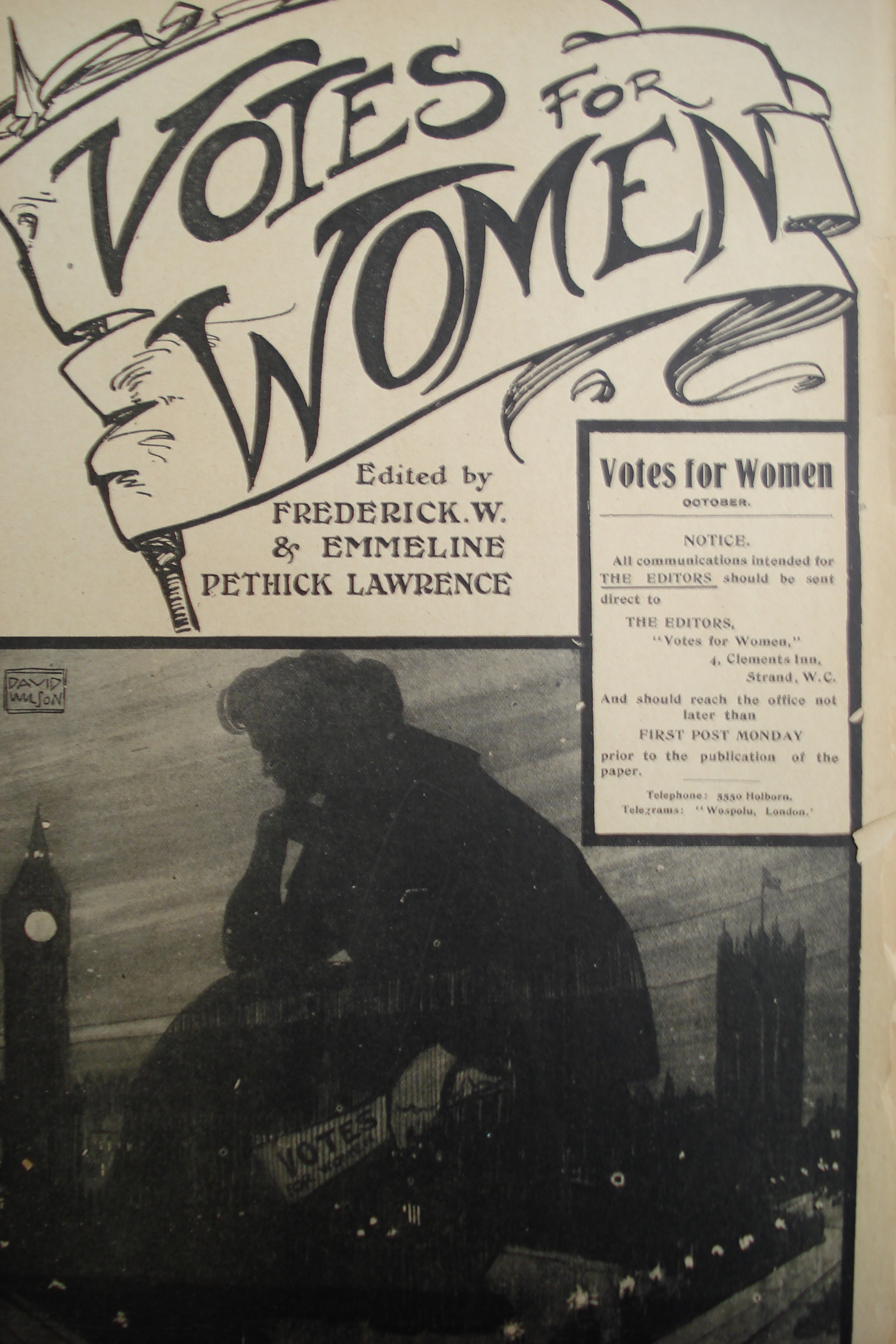
The first issue of ‘Votes for Women’
The first issue of Votes for Women, as the new paper was unequivocally named, appeared on 16 October 1907. It was financed and edited by Emmeline and Frederick Pethick Lawrence and published from the WSPU office at 4 Clement’s Inn.
The Pethick Lawrences had not had to look far for a printer for their new paper. Housed in ‘Newspaper Buildings’, at the junction of Clare Market and Portugal Street, opposite the end of Clement’s Inn Passage (now St Clement’s Lane), the late-19th-century bulk of St Clement’s Press towered over the maze of narrow streets bounded by the Strand and the swathe of Kingsway, still a raw building site. The Press had begun business in 1889 and was to be printer to a variety of other organisations sympathetic to the suffrage cause – from 1909, for instance, responsible for the Anti-Vivisectionist Review.
Votes for Women was published monthly until April 1908, after which it took on a larger format and became a weekly. This increase in frequency and size was a direct reflection of the WSPU’s great success in attracting members and creating interest in its campaign. By early 1910 Votes for Women had a weekly print run of c. 30,000 copies.

Grace Chappelow, a WSPU member from Essex, selling ‘Votes for Women’. Courtesy of Chelmsford Museum
The paper was sold in newsagents but also by members of the WSPU who were prepared to stand in the gutter (to stand on the pavement counted as obstruction) and sell it to passers by. St Clement’s not only printed Votes for Women but also a variety of posters to advertise the paper – such as this one, held in the Women’s Library collection.
This arrangement continued for three and a half years until March 1912. At the beginning of that month WSPU members embarked on a dramatic window-smashing campaign, attacking shops and offices in London’s West End. As a result Emmeline Pankhurst and Frederick and Emmeline Pethick Lawrence were all arrested on the charge of conspiracy to commit criminal damage. Christabel Pankhurst escaped from Clement’s Inn and fled to Paris. The first issue of Votes for Women to be issued after the arrests – the number for 8 March – appeared with blanks in the text. There was a note on the front page:”The Editors who are responsible for “Votes for Women” in the absence of Mr and Mrs Pethick Lawrence beg to inform their readers that the blank spaces in this week’s issue do not represent lack of interesting matter for publication, but mark the suppression by the printers of articles, comments, and historical facts considered by them to be of an inflammatory nature.’
Whether it was because the temporary editors considered it impossible to continue working with a printer who felt unable to print all the material supplied, or whether it was that St Clement’s Press declined to be associated with a publication that might bring them into direct conflict with the law – for whatever reason the 15 March 1912 and subsequent issues of Votes for Women were no longer printed by the St Clement’s Press but by Walbrook & Co of 14 & 15 Whitefriars Street, off Fleet Street.
After the Pethick Lawrences were ousted from the WSPU in the autumn of 1912 they retained ownership of Votes for Women, still printed by Walbrook, making the paper the focus of their new organisation, the Votes for Women Fellowship. I will discuss this organisation in a subsequent post.
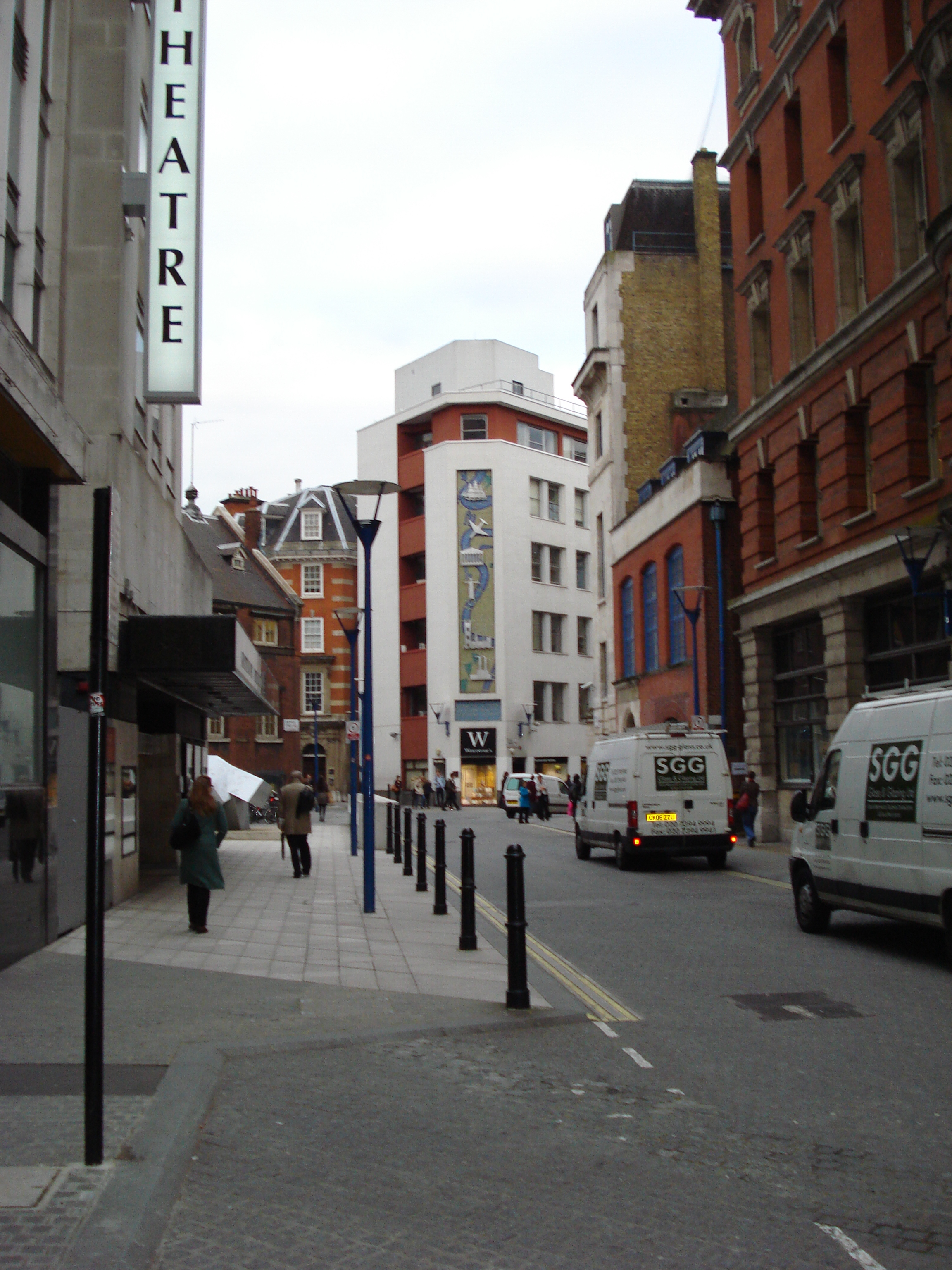
The Economists’ Bookshop, viewed from Kingsway
The site of the St Clement’s Press was occupied by Waterstone’s Economists’ Bookshop, very much an LSE institution – now itself history.
WALKS/Suffrage Stories: Where And What Was Clements Inn?
Posted by womanandhersphere in Suffrage Stories on October 15, 2012
To mark the very welcome co-operation that now exists between the Women’s Library and the London School of Economics the next few ‘Suffrage Stories’ will demonstrate the past importance to the women’s movement of streets and buildings in the vicinity of Houghton Street.
In previous posts I have described the Tea Cup Inn, which was in Portugal Street in the building which, for the time being at least, houses the LSE Chaplaincy, and the Aldwych Skating Rink, in which the WSPU organized its grand 1911 census boycott meeting. In the latter post I remarked that, all but abutting onto the back of the Skating Rink, were the offices of the WSPU at 3 & 4 Clement’s Inn.
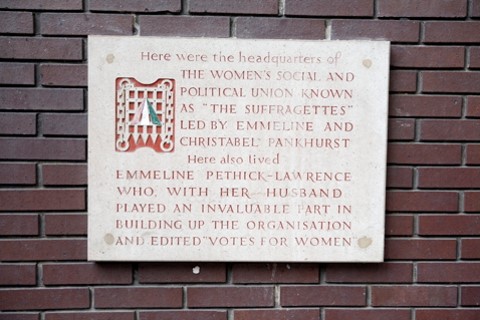
A commemorative plaque, placed on a building now occupied by LSE. marks the site, citing the words of Christabel Pankhurst: ”Clement’s Inn, our headquarters, was a hive seething with activity… As department was added to department, Clement’s Inn seemed always to have one more room to offer.’ [9 February 1907]
But what was ‘Clements Inn’?
The history of the late-19th-century Clement’s Inn buildings are surprisingly sketchy – although I daresay that archival research would uncover more detail. In its original incarnation Clement’s Inn had been one of the original Inns of Chancery, but its purpose and its buildings were swept away sometime during the second half of the 19th century. The exact date of its removal is vague; Pevsner merely puts it between 1868 and 1891, presumably meaning that it was demolished in stages. Suffice it to say that towards the end of the 19th century – probably in the 1880s – large blocks designed for both office and residential use were built on the site of the old Inn. They stretched in a line, just west of the Royal Courts of Justice – and on the west side of Clements Inn Passage – north from the Strand up to Clare Market. These blocks were given the name ‘Clement’s Inn’ and housed a medley of solicitors, architects, chartered accountants, surveyors, publishers and even, at 5 & 6 the Uruguayan Legation and Consulate. The southern-most blocks were numbered ‘1 & 2 Clement’s Inn’ and were still standing in 1977. By then the more northerly blocks – 3 & 4 – had already been demolished.
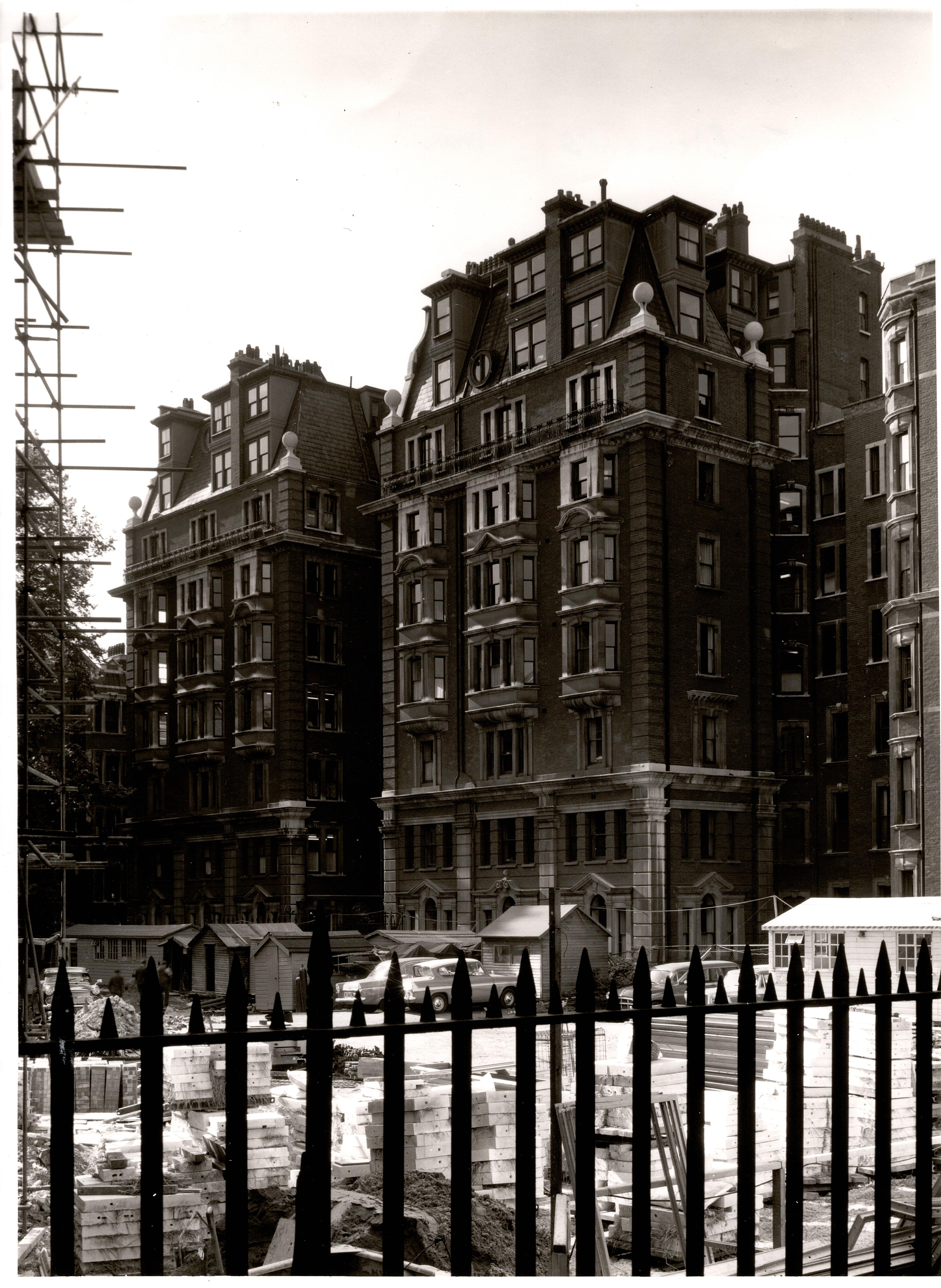
Extraordinary as it seems, photographs of the exterior of 3 & 4 Clement’s Inn seem all but non-existent, the one above one of very few I’ve been able to track down.
The photograph shows the Clement’s Inn buildings to have been rather imposing – five storeys high, rising in places to seven. They were built of brick – presumably once red, doubtless very quickly blackened in the London atmosphere, with facings of stone around the windows and doors. Detailing was gothic, doubtless a nod to the adjacent Royal College of Justice buildings. The ‘look’ was not unlike that of nearby Old Square, Lincolns Inn, where in later years Frederick and Emmeline Pethick-Lawrence, who are specifically noted on the WSPU plaque, had a flat.
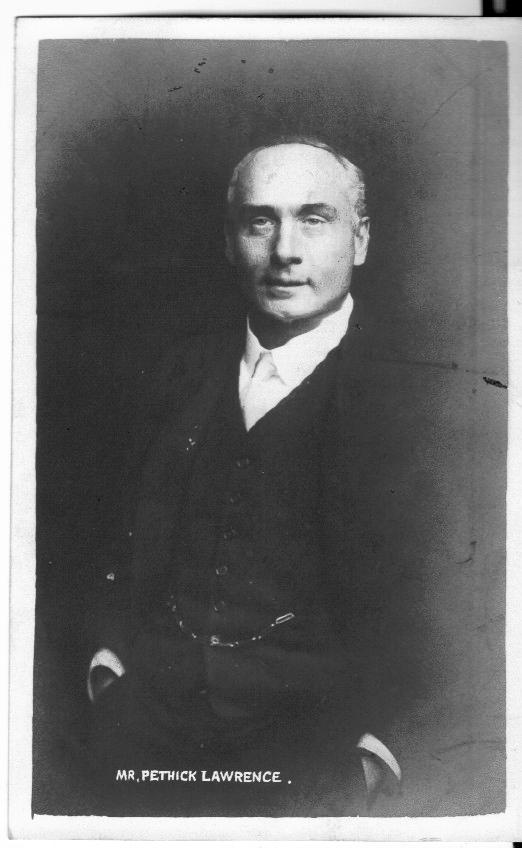
For it was entirely due to the Pethick Lawrences that the WSPU office came to be sited at 3 & 4 Clement’s Inn. Frederick Pethick Lawrence first appears on the London electoral register at 3 & 4 Clement’s Inn in 1904. He and Emmeline – they had married in 1901 -were living in what is termed in the rate book as ‘a residential suite’ – to differentiate this type of apartment from the offices that were also available for rent. The apartments were serviced; the Clement’s Inn building included a servants’ hall, servants’ dormitories and a kitchen in which meals were cooked for delivery to the tenants. This, I would imagine, was a style of living that entirely suited the Pethick Lawrences whose many interests surely precluded any time for domesticity.
The Pethick Lawrences had presumably chosen Clement’s Inn as their London address – they did also have a house in Surrey – because it was close to the office, at 19 St Bride Street, of The Echo, a newspaper bought by Frederick Pethick Lawrence c 1902. It had been a Liberal paper – with a bias towards the Liberal Unionist section of the party- but, under Pethick Lawrence was re-directed towards the Labour movement, with Ramsay MacDonald among its contributors. However The Echo ran at a loss and in 1905 Pethick Lawrence closed it and in May launched a new monthly publication, the Labour Record and Review. Pethick Lawrence was also the publisher of the Reformers’ Yearbook (called, before 1905, the Labour Annual and Reformers’ Yearbook). In the 1905 edition of the Yearbook, printed from information supplied in 1904, the ‘Directory of Useful Addresses’ lists the ‘Women’s Union’ , the secretary of which is Mrs Rachel Scott of Woodbine, Flixton, Manchester. This was the recently formed Women’s Social and Political Union. Its founders, Mrs E. Pankhurst and Miss C Pankhurst, of 62 Nelson St, Manchester, are also listed as ‘Useful’.

In her autobiography Emmeline Pethick Lawrence records that it was from her roof garden in Clement’s Inn that in January 1906 she saw the general election results ‘as they were thrown by a lantern-slide on the elevated-whitened board in the Strand’. This new technology was displaying a Liberal landslide. But it was, however, the success of Keir Hardie and the Labour Party that particularly pleased the Pethick Lawrences. A month later Hardie introduced Emmeline Pethic -Lawrence to Emmeline Pankhurst as ‘a practical and useful colleague who could develop in London the new society she had founded in Manchester’ – the WSPU.
Later that year the embryonic London campaign, which had been spearheaded by Annie Kenney and which for several months had held its business meetings around kitchen tables in various hospitable London homes, was given office premises by Frederick Pethick Lawrence in 3 & 4 Clement’s Inn. In the relevant rate book the WSPU is shown as taking up its tenancy at Michaelmas (29 September) 1906 in rooms 68,69 and 70.
This apartment was separate from number 119 shared jointly by the Pethick Lawrences; Frederick had given Emmeline the luxury of ‘a room of her own’.
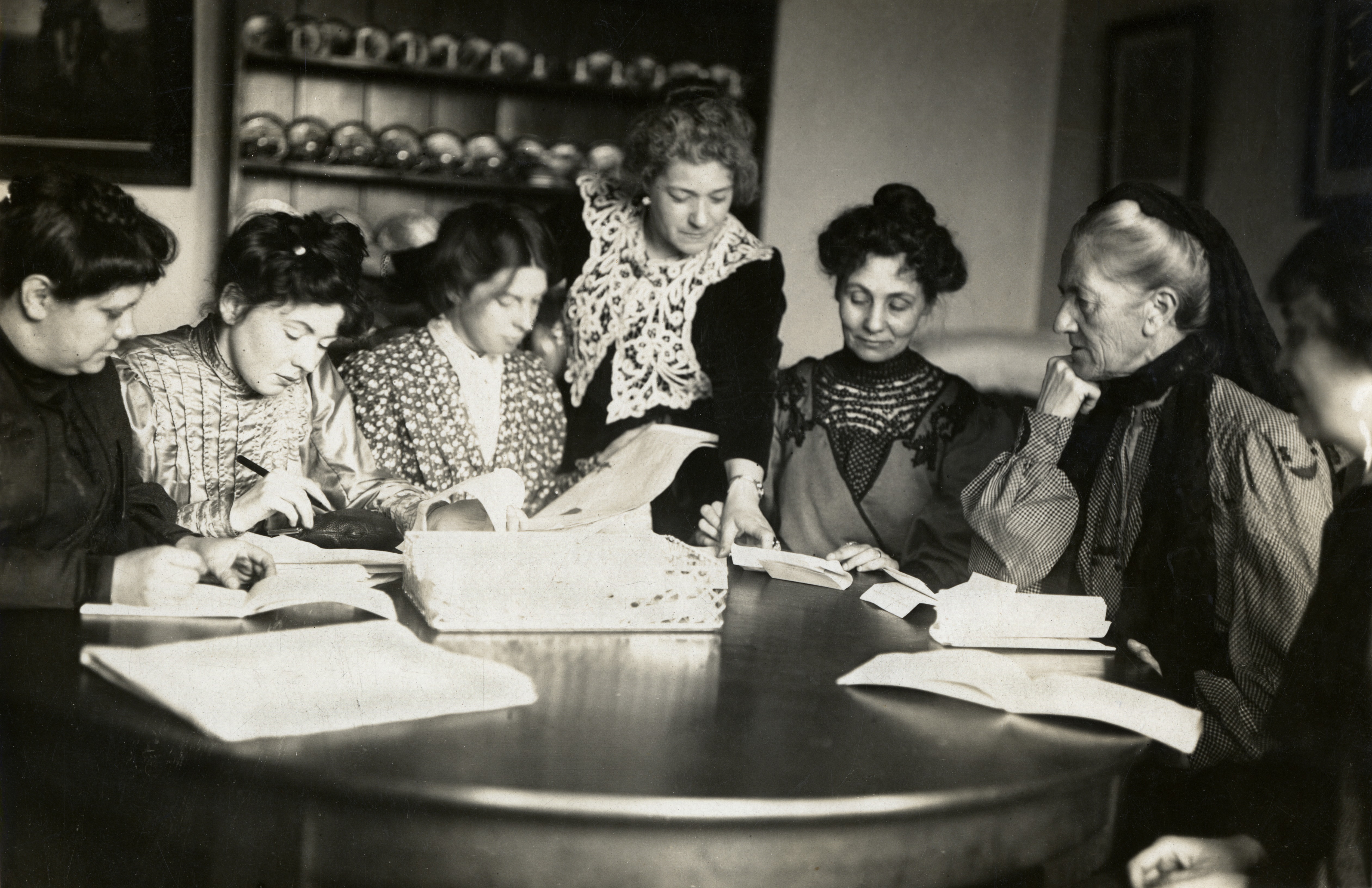
When, in July 1906, Christabel Pankhurst came to London, after gaining her first-class law degree in Manchester, she lived with the Pethick Lawrences – perhaps in Emmeline’s separate apartment. The rate books show that over the years the Pethick Lawrences occupied several different sets of rooms, the quantities and configuration varying from year to year.
When, in October 1908, warrants were issued for the arrest of Christabel and Emmeline Pankhurst after the WSPU had urged Londoners to ‘Rush the House of Commons’, the pair were photographed hiding from the police on Emmeline Pethick Lawrence’s roof terrace.
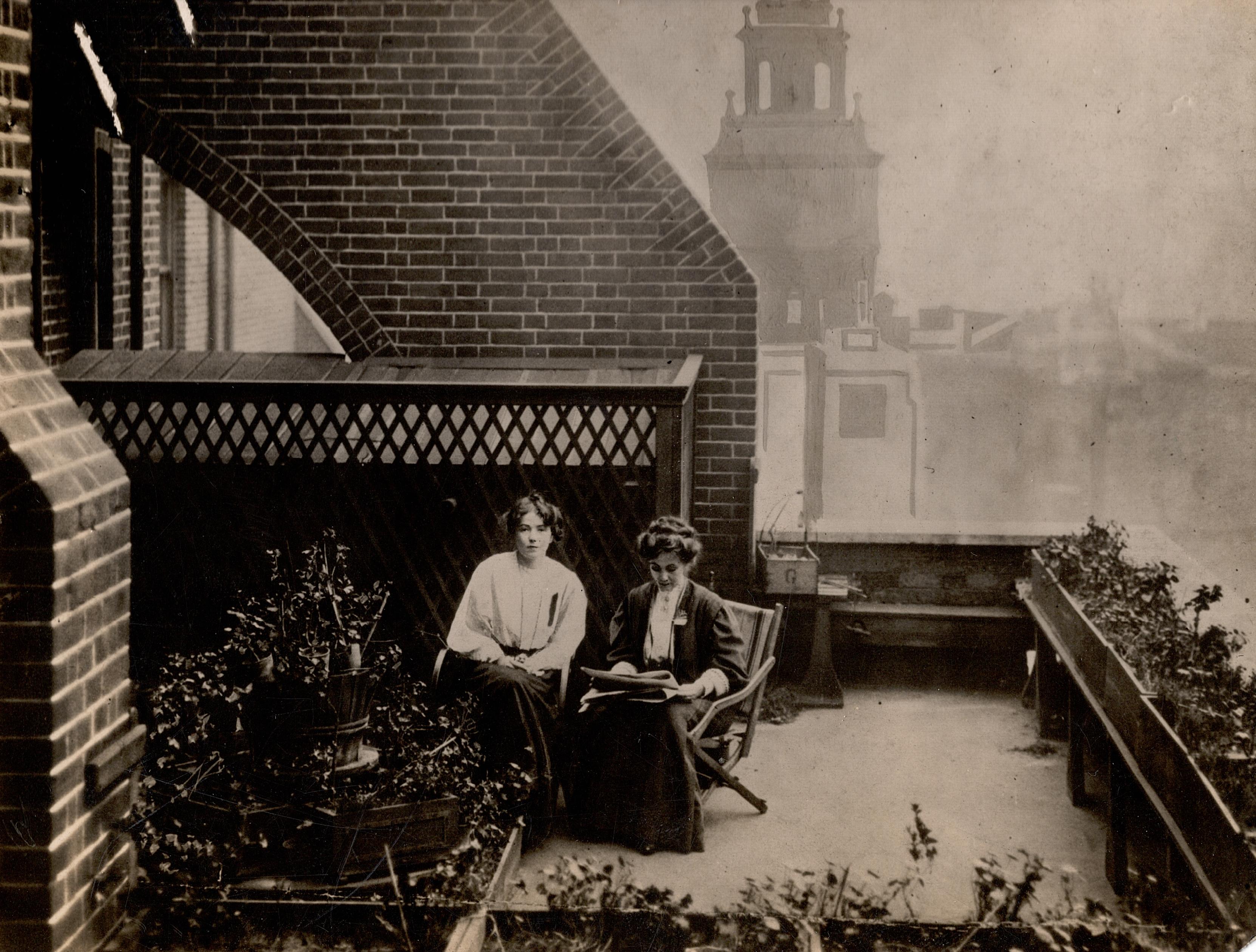
Emmeline and Christabel Pankhurst photographed on Clement’s Inn roof terrace, 1908 (courtesy of LSE Library)
After ensuring that their evasion had been captured on camera, they then went downstairs and were photographed in the course of being arrested by Inspector Jarvis.
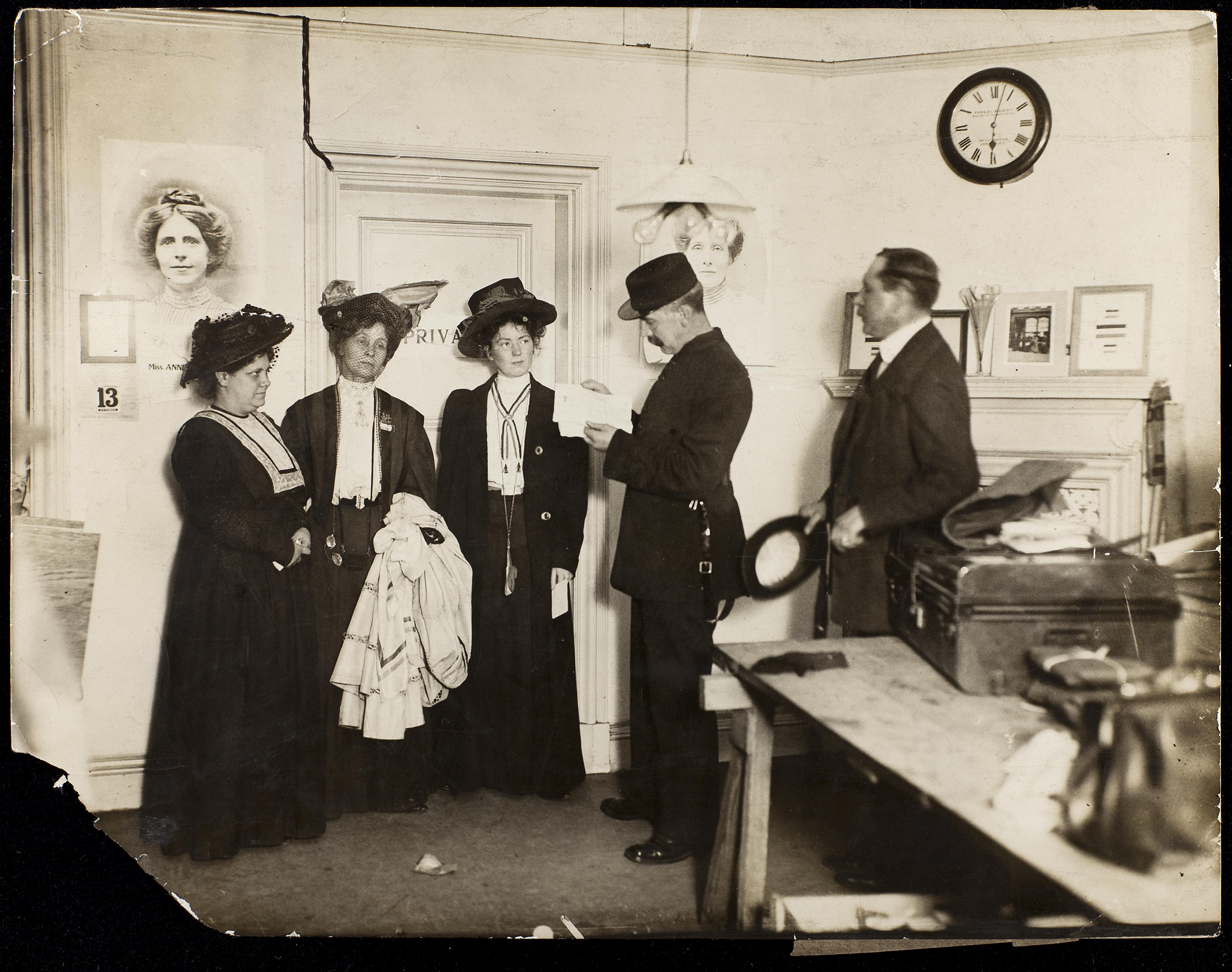
Other WSPU offices were photographed on other occasions. Here is Mrs Pankhurst’s. Note the pictures, posters, flowers, and mantlepiece items.

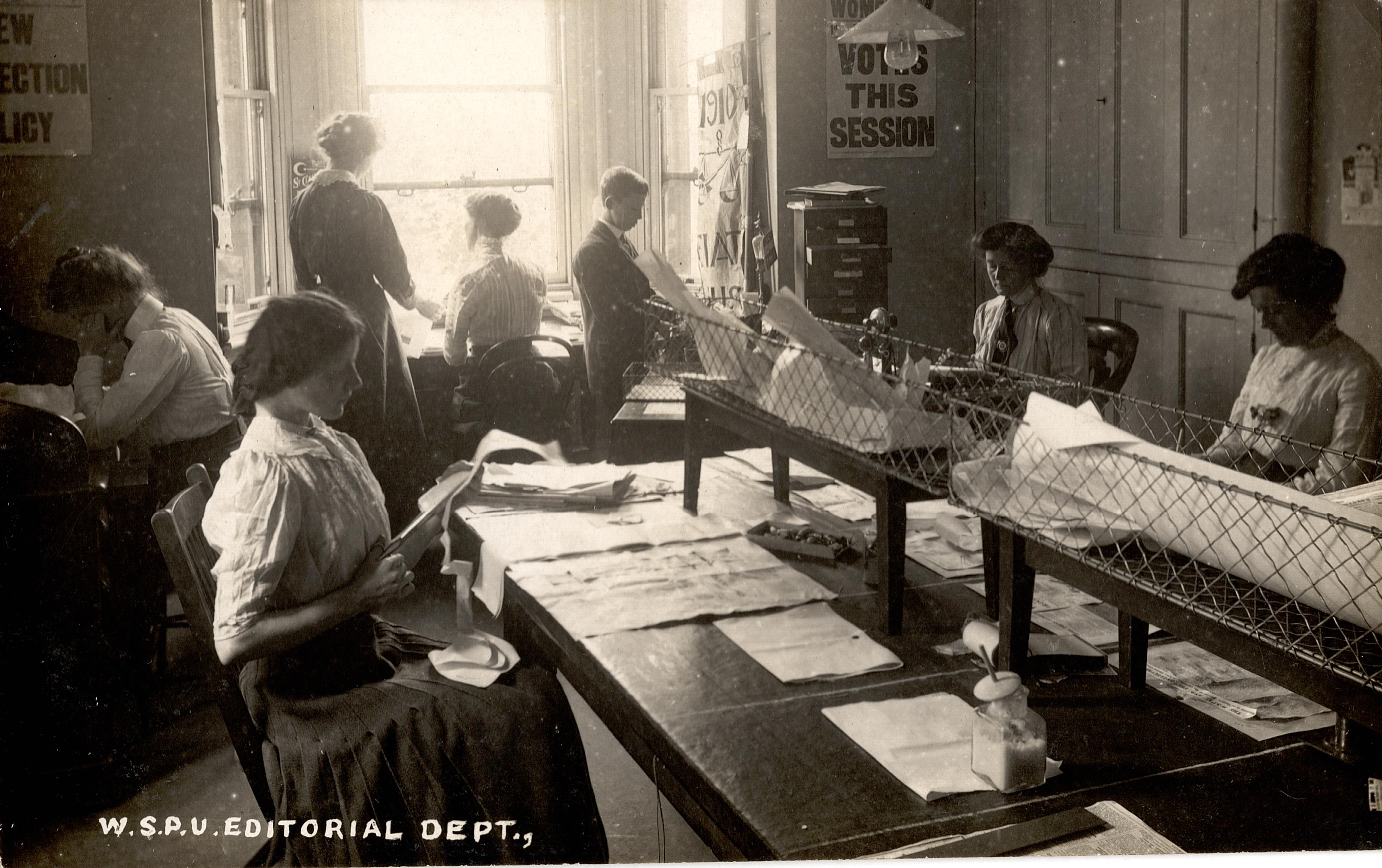
This ‘seething hive of activity’ is pictured in at least one contemporary novel. For in Ann Veronica, published in 1909, H.G. Wells furnishes the offices of the Woman’s Bond of Freedom – the suffrage society that sweeps his heroine off her feet and into prison – with ‘notice boards bearing clusters of newspaper slips, three or four posters of monster meetings..and a series of announcements in purple copying ink, and in one corner …a pile of banners’. Wells had no need to rely on photographs for his information; during the years when the WSPU was working from Clement’s Inn, it was doing so in close physical proximity to the Fabian Society, of which Wells was a leading member and which had been responsible for the founding of the LSE. Knowing from the rate book that the WSPU’s basement office was next door to that of the Fabian Society, it requires little stretch of the imagination to envisage Wells finding a reason to combine a visit to one with a brief sortie into the other, the result being good ‘copy’ for his novel.
It would be surprising if there had not been some tension between the two offices – the one campaigning for votes for some, not all, women while the other backed the cause of adult suffrage. For although, when they agreed to support the WSPU, the Pethick Lawrences were still committed to the Labour cause, as the women’s suffrage campaign developed its tactics changed and the association with Labour was considered by the Pankhursts no longer to be advantageous. Despite this, there were many connections between the WSPU, the Labour Party and the Fabian Society. For instance, Beatrice Sanders, working from an office in Clement’s Inn as financial secretary to the WSPU, was the wife of William Sanders, a Fabian Society lecturer, LCC alderman and Labour parliamentary candidate. Mrs Sanders was herself a member of the Fabian Women’s Group. However, William Sanders was one of what Wells termed the ‘Old Gang’ that ranged itself against him when he attempted to reform the Fabian Society and, in retaliation, probably took Sanders as his prototype for ‘Alderman Dunstable’ in Ann Veronica. Wells certainly found plenty to mock in the WSPU and its activities and, unsurprisingly, although Ann Veronica was listed among ‘Books Received’ in the WSPU newspaper, Votes for Women, it never received the accolade of a review.
A very powerful propaganda tool for the WSPU, Votes for Women was brought to life each week in a building even closer to Houghton Street than Clement’s Inn and will be the subject of the next of my ‘Suffrage Stories’.
Copyright All the articles on Woman and Her Sphere and are my copyright. An article may not be reproduced in any medium without my permission and full acknowledgement. You are welcome to cite or quote from an article provided you give full acknowledgement.Kate Frye’s Diary: Learning the ‘Two Step’ for Suffrage
Posted by womanandhersphere in Kate Frye's suffrage diary on September 19, 2012
Another extract from Kate Frye’s manuscript diary. An edited edition of later entries (from 1911), recording her work as a suffrage organiser, is published as Campaigning for the Vote: Kate Parry Frye’s suffrage diary.
Working for women’s suffrage involved taking part in many different kinds of social activities. In the first month of 1908 Kate danced, stewarded and was lectured by Ford Madox Hueffer – all in the suffrage cause.
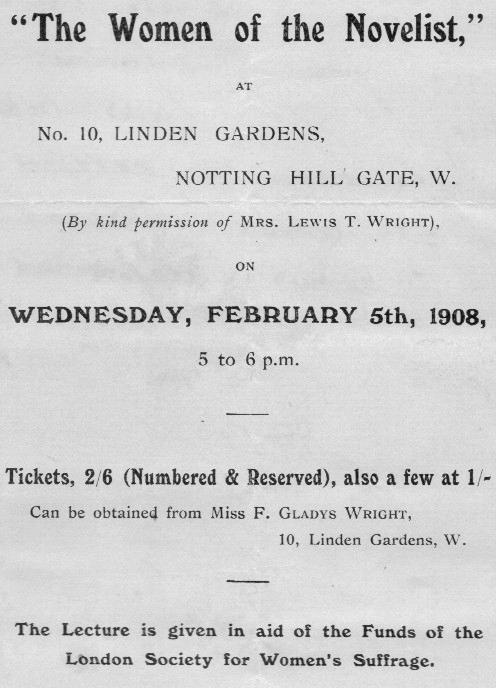
The flyer produced – presumably by the Wrights – for the lecture that Ford Madox Hueffer gave in their house. I wonder if the error in the spelling of his middle name was pointed out to them?
Dramatis personae for these entries:
‘Mrs Wright and the girls’: Mrs Lewis Wright and her daughters, Alexandra and Gladys, who then lived at 10 Linden Gardens. It was under their influence that Kate had joined the London Society for Women’s Suffrage, a constitutional suffrage society.
Geoffrey Stanger: the son of H.Y. Stanger, Liberal MP for North Kensington, who had introduced a women’s suffrage bill into the House of Commons.
Miss Mason: Bertha Mason, honorary treasurer of the National Union of Women’s Suffrage Socities – a suffragist of long-standing.
Miss Frances Sterling: joint honorary secretary of the NUWSS.
Ford Madox Hueffer (later Ford Madox Ford): author, then living in Kensington with Violet Hunt.
Friday January 10th 1908 [London: 25 Arundel Gardens, North Kensington]
I sat over the fire and had another little rest and got dressed early in my white satin dress. It is pretty – a charming frock – the nicest I have ever had, it seems to me. I did my hair Greek fashion with a silver and turquoise band round it which I have made myself – and though it’s me what says it and shouldn’t ‘I did look nice’. Even Mother said I did, I heard after from Agnes. Agnes’s dress was pretty too. And Mother has made hers beautifully but it hadn’t on a trace of style and she really did not look very nice……We had a private omnibus to the Grafton Galleries and got there about 9.15. Met Mrs Wright and her party just inside but by the time our four men had helped themselves we hadn’t many dances left. The girls introduced me to a few but I thought theirs rather a scratch lot – one boy wasn’t bad and Geoffrey Stanger, but one or two others I had I lost as soon as possible. It was a great pack – too many people for dancing in comfort somewhere about 300 and they have made for the London Society of Women’s Suffrage about £70…We stayed to the bitter end and I danced every dance except a few extra at supper time .. I learnt to do the Two Step with Mr Stanger and loved it. We reached home at 3.20 and were able to stir the fire into a blaze. John went off before 4 o’clock but we four sat over the fire talking till 4.30 and it was 5 o’clock before I was in bed as I always like to put some of my things away and tidy the room.
Thursday January 16th 1908
Changed at 6.30 and Agnes and I went off at 7.30 to Miss Mason’s (9 Hyde Park Place) for a Drawing-room Suffrage Meeting at which we had promised to Steward and get there at 8 o’clock for 8.30. We started to walk but we were all in our best and it started to drizzle and we took a cab from the top of the hill. The speakers were the Hon Bertrand Russell, Mr Mitchell Morton and Miss Frances Sterling. She made a most excellent speech and it was a most successful meeting. We did much good work in the way of getting members for the Society and it was all most encouraging and enthusiastic. They had a meeting here last night too – 70 people – but Alexandra said they were a most cold unenthusiastic audience – they could not do anything with them. She has paid Agnes and me a great compliment in saying ‘ I always like to see Agnes and you come into a room – then I know the thing will “go”’. I suppose we have a lot of personality and a lot of electrical excitement and it does help. John is quite in the movement now – though still apt to go back on us in the society of his own sex. .. These meetings are so exciting. I never feel like settling off after them.
Friday January 24th 1908
Changed after tea and at 5.30 Agnes and I went by motor bus from Notting Hill Gate to Oxford Circus and to the Queen’s Hall for the Liberal Federation Woman’s Suffrage Meeting. As we had been asked to act as Stewards and had to be there at 6 o’clock. We stewarded up in the Balcony but there was very little to be done. A good meeting, but not very full. But the audience was a very enthusiastic one and the speeches went well. Mrs Eva McLaren in the chair. Miss Balgarnie, Mrs Conybeare, Mrs Booth and the usual Liberal Women’s Federation people. It was a meeting for women only but there were a number of men stewards. The doors were opened at 7 o’clock and it commenced at 8 o’clock. Mother was there and we met at Oxford Circus and the three of us came home together by bus.
Wednesday February 5th 1908
They had quite a dozen awful Hampstead females there [at home] so we slipped quietly away and hurried to Notting Hill Gate so as to be at the Wrights (10 Linden Gardens) punctually at 4.45. Gladys had asked us to help them I stood in the hall and looked at tickets and sold others etc and later went up to hear the lecture from 5 to 6 by Mr Ford Maddox [sic] Heuffer on the Women of the Classical Novelist of England. It was most interesting and a breezy discussion followed. We got in at 6.30 .. I was very tired but I worked till 11 o’clock directing envelopes for the South Kensington Committee of the L.S.W.S. for a meeting to be held at the Town Hall on the 25th inst.
Campaigning for the Vote: Kate Parry Frye’s Suffrage Diary edited by Elizabeth Crawford
For a full description of the book click here
Wrap-around paper covers, 226 pp, over 70 illustrations, all drawn from Kate Frye’s personal archive.
ISBN 978 1903427 75 0
Copies available from Francis Boutle Publishers, or from Elizabeth Crawford – e.crawford@sphere20.freeserve.co.uk (£14.99 +UK postage £3. Please ask for international postage cost), or from all good bookshops. In stock at London Review of Books Bookshop, Foyles, National Archives Bookshop.
- ‘Campaigning for the Vote’ – Front and back cover of wrappers
Collecting Suffrage: The Game of ‘Suffragette’
Posted by womanandhersphere in Collecting Suffrage on September 17, 2012
I will shortly be issuing a new book and ephemera catalogue – number 175. It will comprise books and ephemera by and about women – with special sections on Women’s Suffrage and Women in the First World War. If you would like a copy of the printed or email version please let me know. A short time after these have been sent out, I shall post the catalogue on this website.

The Rules of the Game. ‘The Haunted House’ appears on the reverse of every card
Amongst several rare items that I shall be including in the ‘Women’s Suffrage’ section is ‘The Game of “Suffragette”‘.
This card game was invented by the Kensington branch of the WSPU, probably in the late summer of 1907, and, as such, is, I think, the earliest of the games that were marketed as a tool of suffragette propaganda. It was described in the second issue of ‘Votes for Women’, November 1907.
The first issue of ‘Votes for Women’, October 1907, had on its cover the picture of the ‘Haunted House’ by David Wilson, which had first appeared in the ‘Daily Chronicle’ in April 1907. Depicting a seated woman brooding over the Houses of Parliament, a demand for ‘Votes for Women’ in her hand, this image appears on the reverse of every card in this game – and on the base of the box. David Wilson (1873-1935) was an Irish-born illustrator, soon to become chief cartoonist for ‘The Graphic’.
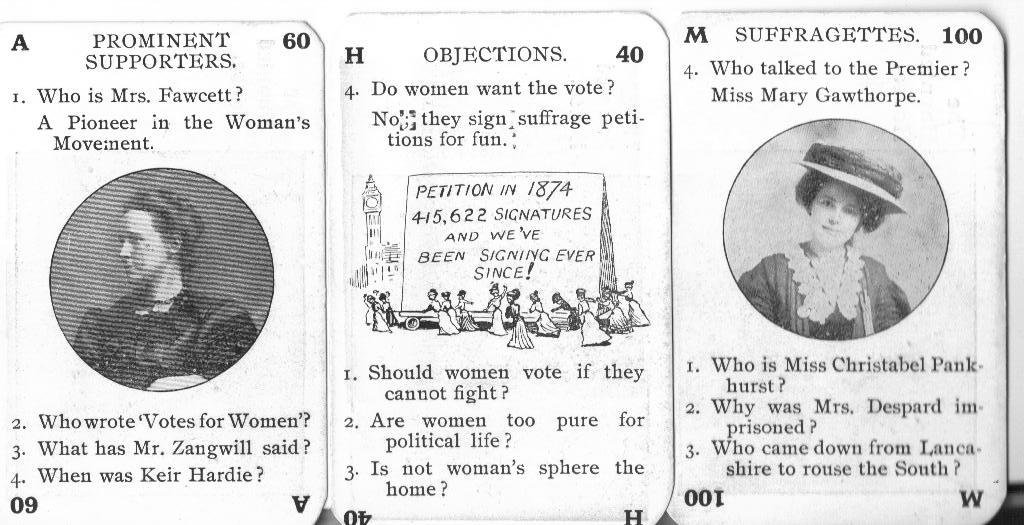 The game comprises 54 cards (all present) divided into 13 sets of 4 cards each – one of the odd ones being known as ‘The Bill’ – and the other a spare which has been used to record the score of a game played long ago by 6 people, designated by their initials. All the sets have names: eg. Prominent Supporters, Arguments, Freewomen, Voteless Women etc – and each card poses a series of questions. Some of the cards also carry photographs – of Christabel Pankhurst, Annie Kenney, Mrs Fawcett, Elizabeth Robins, Israel Zangwill, and Mary Gawthorpe.
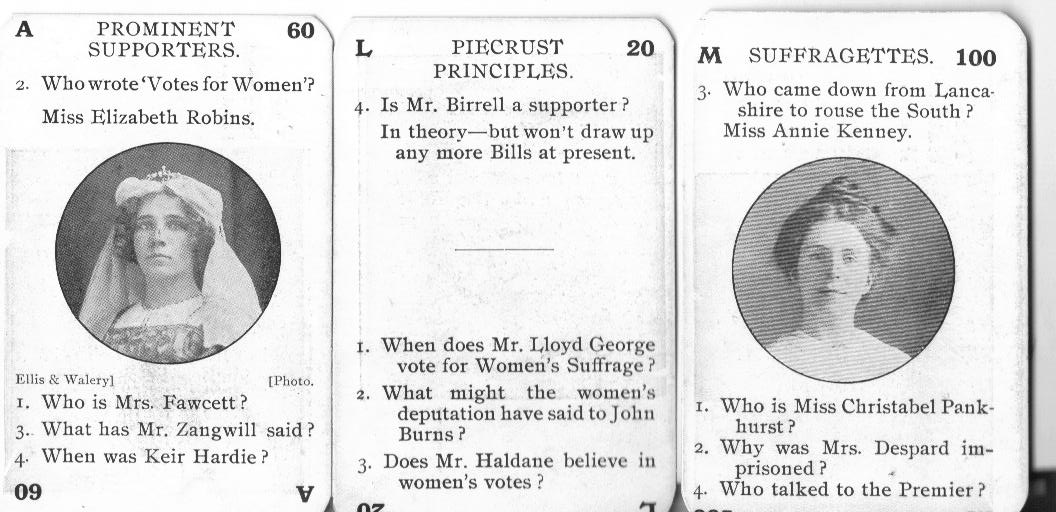 Along with the cards – and the original box – is the original, all-important, set of rules. These describe in detail the various ways in which the game can be played – it seems very inventive.
This is an incredibly scarce item. Although I wrote of it in The Women’s Suffrage Movement: a reference guide, this is the first set I have ever seen. An amazing survival.
Book of the Week: A Nest of Suffragettes in Somerset
Posted by womanandhersphere in Book of the Week, Collecting Suffrage on September 12, 2012
A Nest of Suffragettes in Somerset: Eagle House, Batheaston by B.M. Willmott Dobbie for The Batheaston Society, 1979. Soft covers – very good condition (with a newspaper cutting of an obituary of Bristol suffragette, Victoria Lidiard, laid in). £26 (plus postage) For sale – from my stock of books and ephemera about the suffrage movement. To buy – email e.crawford@sphere20.freeserve.co.uk
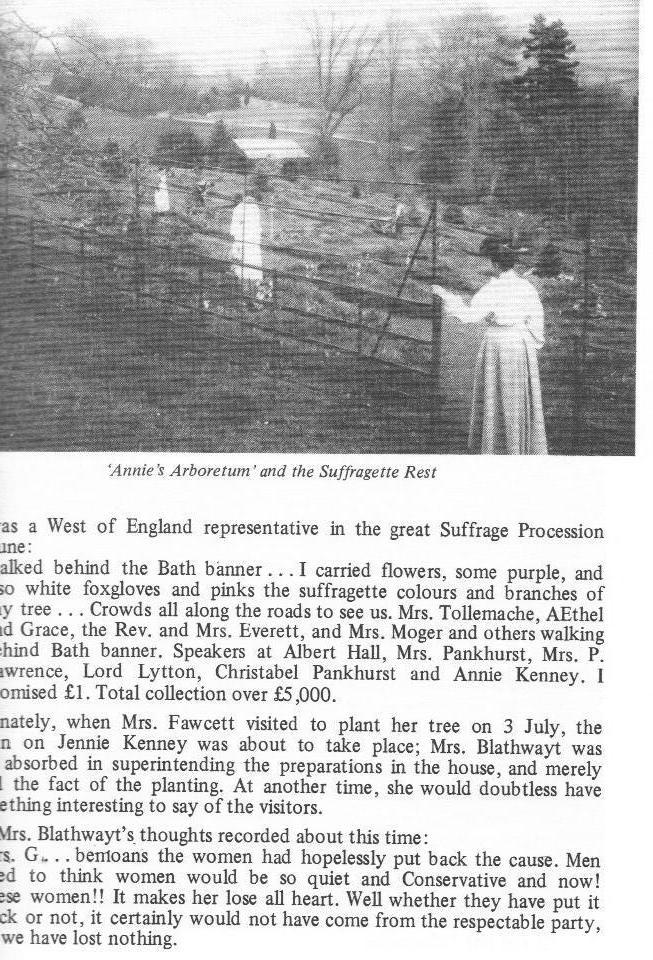
‘Annie’s Arboretuem’ and the Suffragette Rest
The story of the Blathwayt family – Col Linley Blathwayt, his wife Emily and daughter Mary -who lived at Eagle House, Batheaston, where for some years they offered a haven to WSPU activists. Annie Kenney – and her sisters – were particular favourites.
Col Blathwayt organised the planting of trees to commemorate visits by both suffragists and suffragettes – such as Lady Constance Lytton.
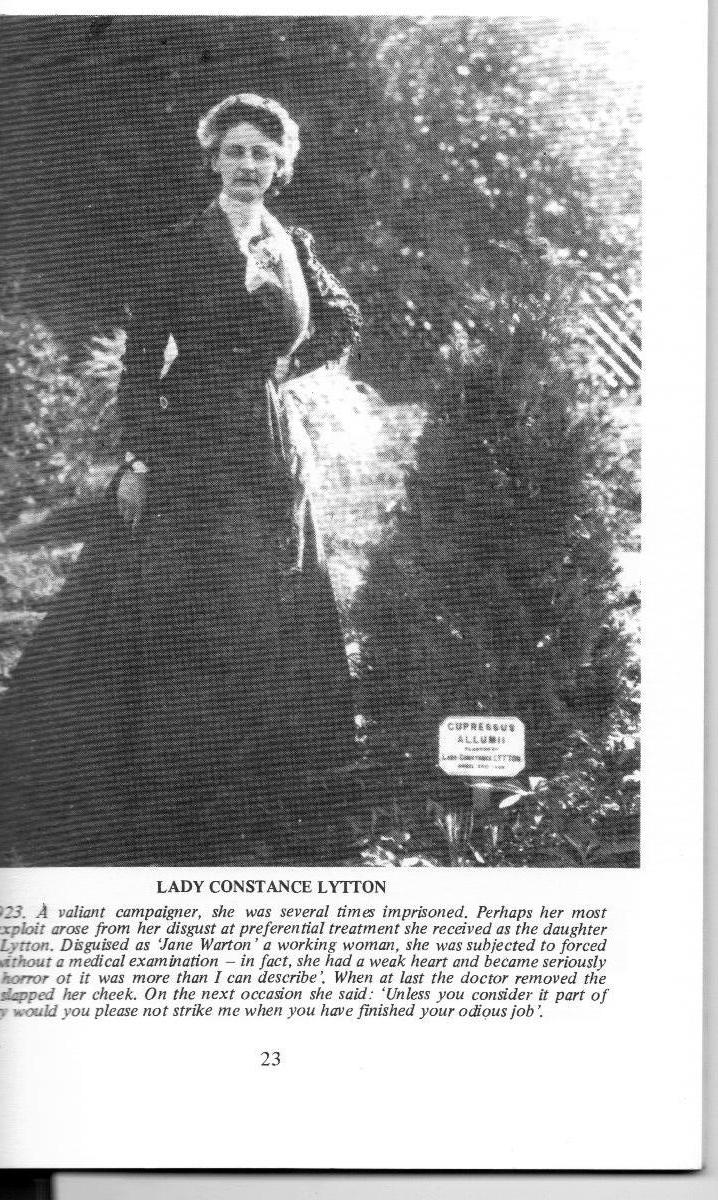
Lady Constance Lytton photographed by Col Blathwayt
‘Annie’s Arboreteum’ and ‘Pankhurst Pond’ were just two of the features created on the estate. Col Blathwayt was a keen photographer and many of the photographs he took of visiting suffragettes are included in this book. The text includes extracts from the diaries that the Blathwayts kept and which provide us with such a disingenuous view of some of the leading suffragette personalities
For more about Eagle House (and a little about Rose Lamartine Yates and Dorset Hall, Merton, of whom, coincidentally, I wrote in yesterday’s post) see here. For ‘Suffragettes in Bath’ see here. The diaries of Col. Blathwayt, Mrs Emily Blathwayt, and dear Mary Blathwayt, who I describe in the Women’s Suffrage Movement: a reference guide, as the ‘Mr Pooter of the suffrage movement’, are held in Gloucestershire Archives.
Suffrage Stories: Suffragettes and Tea Rooms: Suffragette Tea from Suffragette China
Posted by womanandhersphere in Collecting Suffrage, Suffrage Stories on September 11, 2012
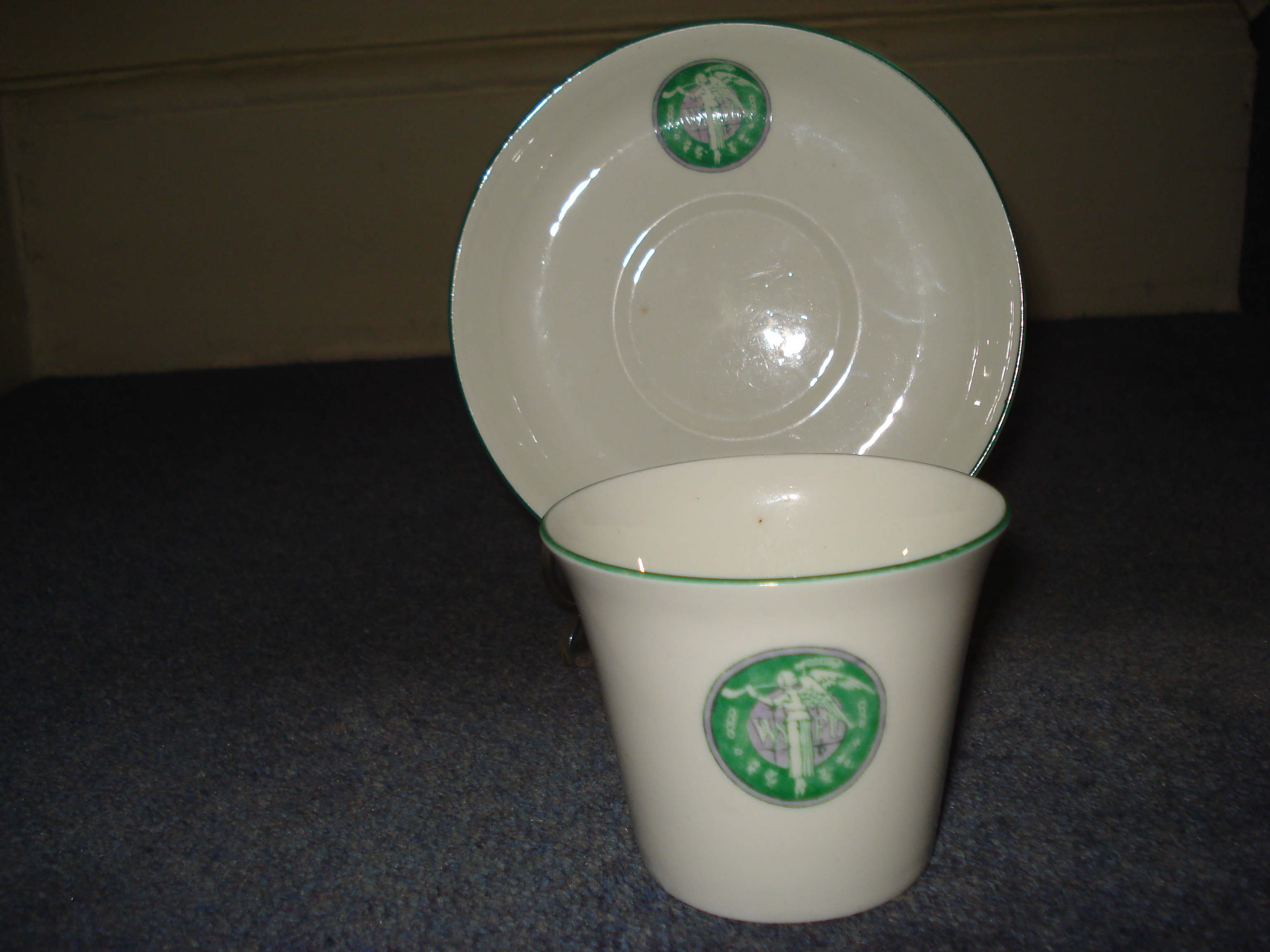 WSPU china – ‘Angel of Freedom’ design, 1909
A week of posts on ‘Suffragettes and Tea Rooms’ cannot end without looking at the tea rooms that the suffragette societies themselves ran – in their shops and at their fund-raising bazaars – and the china they commissioned in which to serve that tea .
The best known of the fund-raising events is probably the WSPU exhibition held at the Prince’s Skating Rink at Knightsbridge in May 1909. There the tea room was run by Mrs Henrietta Lowy, with help from her four daughters and another young upper-class suffragette, Una Dugdale. In the spirit of exuberance and professionalism that marked this the first of the WSPU’s fund-raising bazaars, a decision was taken – presumably reasonably well in advance of the Exhibition – to commission a Staffordshire pottery – H.M. Williamson of Longton – to make the china from which the tea would be served in the Exhibition’s Tea Room.
The white china has strikingly clean, straight lines, rimmed in dark green and with angular green handles. The shape is, I am sure, a Williamson standard – but how very different the WSPU pieces look from, say, Williamson’s Rosary design–in which pink and grey ribbons and roses are applied to the same shape and every edge is gilded. In contrast, the WSPU china design is pared back, almost stark.
It is more than likely that, from the range offered by Williamson, Sylvia Pankhurst chose this shape, keeping the design simple so that the ‘angel of freedom’ motif that she had designed specifically for the Exhibition should be shown to best effect. Each piece of the tea service carries this motif; behind the angel and accompanying banner and trumpet, are the initials ‘WSPU’ set against dark prison bars, surrounded by thistle, shamrock, rose – and dangling chains. At the end of the Exhibition, the china – tea pots, cups, saucers, tea plates, sugar bowls etc – was offered for sale, made up into sets of 22 pieces. Many years ago, early in my ephemera-dealing days I bought – and, of course, immediately sold – a comprehensive service. Although I have subsequently sold individual pieces of the china, I have never again seen such a complete set. Ah well.
Pieces of this design are held in archives such as the Museum of London and the Women’s Library – but one variation design is not, as far as I know, represented in any public collection.
 This cup – its design based on Sylvia Pankhurst’s ‘portcullis’ motif which, used on the WSPU’s ‘Holloway brooch’, can be dated to the spring of 1909 – came from a collection that also contained items of the ‘angel of freedom’ china. I bought this wonderful haul some years ago at auction and, although the provenance was not divulged by the auctioneer, I am pretty sure that the china had once been belonged to Mrs Rose Lamartine Yates who held fund-raising teas for the Wimbledon WSPU on the lawn of Dorset Hall, her 18th-century Merton house. This ‘portcullis’ cup does not carry any maker’s mark but, as the shape is identical to the Williamson pieces, I think we can be pretty certain that they probably also made this. As, in the early 19th-century, when women set their tea trays with ‘anti-slavery’ china, so in the early 20th, suffragettes who bought these tea services could – like Mrs Lamartine Yates – use them as propaganda tools -promoting the movement, most elegantly, in a bid to convert their ‘anti’ neighbours.
 I have only ever had in stock – and that only fleetingly – this cup and saucer (see left), part of the third identifiable range of WSPU-commissioned china. I believe, however, that the People’s Palace in Glasgow holds a similar two pieces . They formed part of the Scottish version of the Prince’s Rink tea service, commissioned from the Diamond China Co, another Longton pottery, for use at the refreshment stall at the Scottish WSPU Exhibition held in Glasgow at the end of April 1910. Here the ‘angel of freedom’ is allied, on white china, with the Scottish thistle, handpainted, in purple and green, inside transfer outlines. After the exhibition this china, too, was sold – Votes for Women, 18 May 1910, noting that ‘a breakfast set for two, 11s; small tea set 15s , whole tea set £2, or pieces may be had singly’. It will hardly surprise readers to learn that WSPU china – now so very rare – commands a very high price. But what a wonderful addition a piece would make to any suffrage collection.
Although the china they used was probably more basic, some of the shops and offices run by both suffragette and suffragist societies offered their members – and the general public – a tea room. For instance, the Birmingham NUWSS office at 10 Easy Row included a shop at which tea could be taken and suffrage papers read. And the Glasgow WFL shop, at 302 Sauchiehall Street, as befitting the city in which Miss Cranston perfected the art of the tea room, served tea in its ‘artistic hall’, decorated in the WFL colours. (By the way, when in Glasgow do not fail to visit the De Luxe Room in The Willow Tea Rooms, also on Sauchiehall Street, originally designed by Charles Rennie Mackintosh for Miss Cranston – it may be a reconstruction, but it’s lovely).
As a final thought, the WSPU not only sold their own china, but also their own tea – much advertised in Votes for Women. Unfortunately, the only reference I have ever come across to anyone buying the tea was an aside by Mary Blathwayt, who noted in her diary that she had had to return a bag that was ‘off’ to the Bath WSPU shop. But I am sure that merely reflects the fact that the hundreds of satisfied customers had no need to comment and I will end this sequence of posts by conjuring up the image of a WSPU tea party, cucumber sandwiches sitting delicately on the elegant WSPU plates, as the assembled company receive WSPU tea into their WSPU cups from the WSPU pot. How, then, could the ensuing conversation be of anything other than ‘Votes for Women’?
Suffrage Stories: Suffragettes and Tea Rooms: From ‘Sheltered Anonymity’ to Sites of Protest
Posted by womanandhersphere in Kate Frye's suffrage diary, Suffrage Stories on September 10, 2012
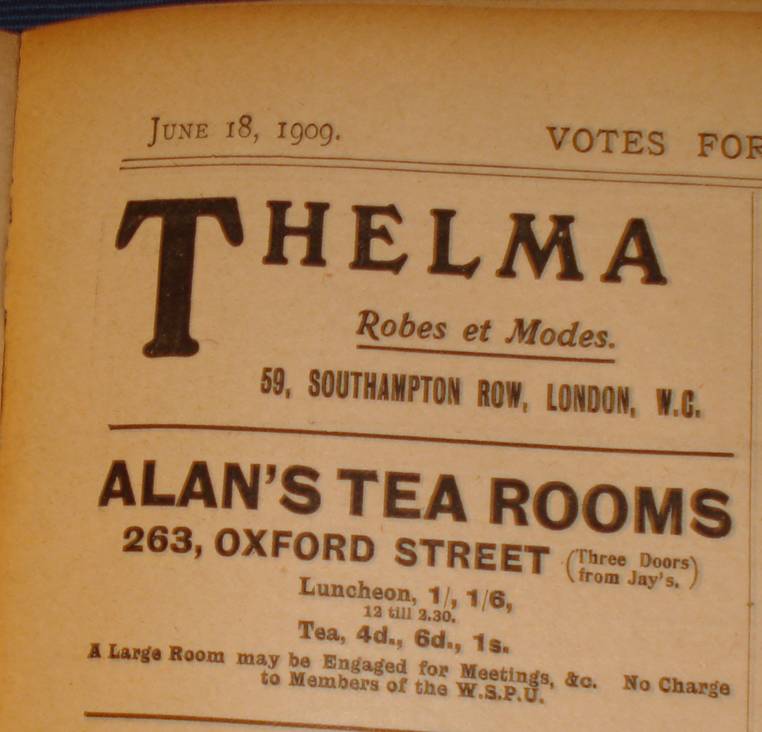
Advertisement for Alan’s Tea Rooms in ‘Votes for Women’.
Last week’s posts on ‘Suffragettes and Tea Rooms’ were based on the research I had done for the item that aired on Woman’s Hour on 4 September. The posts gave details of a few of the London tea rooms and restaurants – – some of them vegetarian – that we know were favoured by suffragettes. I had been curious to know more about the reality – the geographical position and the look of the interiors – of the cafes whose names are scattered through the columns of the suffragette newspapers. I had wondered ‘Why were suffragettes attracted to one place rather than another?’ ‘Whose businesses were they?’ – and hope that in last week’s posts I have, at least partially, answered these questions. In the absence of any other information, I was pleasantly surprised by how much detail could be gleaned from such superficially dull sources as rate books and the files of liquidated companies. I now have a much clearer image in my mind – as I walk around London – of the places in which militant activity was discussed – and indeed practised – by suffragettes a hundred years ago.

Corner of Alan’s Tea Rooms – as pictured in ‘The Idler’, 1910
For political movements need sheltering spaces – of all sizes – in which those involved can exchange views. In the 19th century women could attend the hundreds of formal suffrage meetings and conscious-raising talks that were held in Britain’s town halls and assembly halls – or, if suitably couth, the ‘drawing-room’ meetings held in the houses of the better-off. But until the late 1880s there were very few places outside the home in which respectable women could congregate – for refreshment – to meet their friends – or to discuss politics. The coffee houses, chop houses, ale houses and public houses that had for centuries enabled men to congregate, do business and eat and drink – had been socially barred to respectable women. It was only towards the end of the century that middle-class women were able to move independently– without any vestige of social censure – out of the home and around the streets of the metropolis. One practical element lining the path to freedom was a new type of business – the café, tea room or restaurant designed with women in mind. These were places that women could visit – either alone or in company – where their presence was not seen as an invitation to molestation – where they could eat and drink – and, most importantly, use the lavatory – without breaking any social taboos.

Kate Frye – suffrage organizer and frequenter of restaurants and tea rooms
That there were indeed still taboos around the presence of a woman in some places of public refreshment, even as late as 1911, is evident in one of the entries from Kate Frye’s diary. (My edition of her suffrage diary, Campaigning for the Vote, will be published in the autumn). She is staying in a hotel in a small Norfolk market town, while organising meetings for a suffrage society. :
22 March 1911 ‘Came in, had my lunch [in the hotel dining room] in company with four motorists. It is funny the way men come in here and, seeing me, shoot out again and I hear whispered conversations outside on the landing with the waitress. Then they come in very subdued and make conversation one to another and try not to look at me. Awfully funny – they might never have seen a woman before – but I suppose it does seem a strange place to find one.’
For, by the 1900s, the situation in larger towns and cities had changed. When not out organising meetings in the provinces, Kate lived and worked in London and there she paid daily visits to cafes, restaurants and tea rooms where she never felt out of place. Aimed particularly at the woman shopper – or woman clerical worker – here she could feel comfortable – both physically and mentally. Some of the cafes were part of chains – such as the ABC, founded in the 1880s, and Lyons in 1894. For a rare photograph of a Lyons interior – dating from the 1920s -see here. These chains catered for upper-working-class and lower- middle-class women who could enter their premises with equanimity and sit in sheltered anonymity at separate tables – and be served, not by waiters, but by waitresses. Kate Frye, belonging to a slightly higher strata of society, favoured rather smarter chain restaurants – such as Slaters’ – or tea rooms such as Fullers’. However it was in a Lyons tea room close to Parliament Square that she sat on the evening of 21 November 1911 with a group of suffragettes who were poised to embark on the smashing of the windows of government offices.
And quite apart from the chains, the first decade of the 20thcentury saw a proliferation of small refreshment rooms – ‘Tea Rooms’ – that were even more closely aimed at a female clientele. These were likely to be run – as were Alan’s Tea Rooms and the Tea
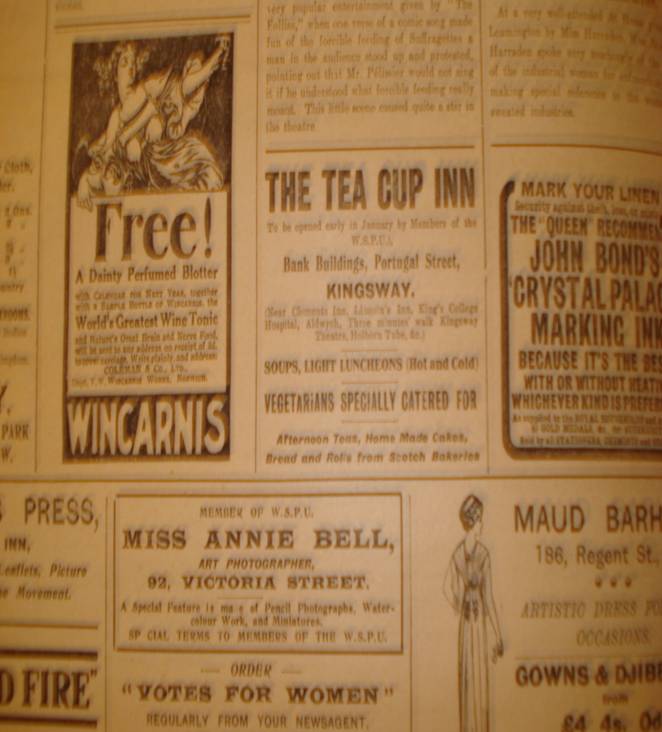
Advertisement for The Tea Cup Inn in ‘Votes for Women’.
Cup Inn – by a woman or a couple of women friends – and allowed women, who may have had no training in anything other than ‘home responsibilities’, the possibility of running a business, while at the same time allowing other women the ability to enjoy the freedom of moving around the city – or town – by providing a space in which they could pause for refreshment.
As we have seen, a few London tea rooms and restaurants were particularly favoured by suffragettes – as, similarly, were they in provincial towns. In Newcastle, Fenwick’s cafe was the venue of choice of the group of women, including Dr Ethel Bentham and Lisbeth Simm, set up the ‘Drawing-Room Cafe’ meetings where women could meet to discuss discuss politics. In Nottingham the WSPU held meetings at Morley’s Cafe, a teetotal establishment, originally opened to provide an alternative to the pub. In Edinburgh the Cafe Vegetaria was particularly favoured by the local Women’s Freedom League society – and it was on its premises on the night of 2 April 1911 that suffragettes gathered – as they did at the vegetarian Gardenia in London – to evade the census enumerator
A year later, however, although so popular with women, tea rooms were not immune from the effects of the 1 March 1912 WSPU window-smashing campaign. Two ABC shops were attacked – one in The Strand and one in Bond Street – here is the photographic evidence.
When, from the end of 1913, the WSPU campaign became ever more desperate, the tea rooms and restaurants that women had made their own themselves became sites of protest. On December 20th a suffragette dining at the vegetarian, suffrage-sympathising, Eustace Miles restaurant was able to make a long speech castigating the government’s treatment of suffragette prisoners – and was, so The Suffragette reported, listened to with eager attention, while her companion distributed leaflets. And althougb the management did eventually ask the speaker to stop she was allowed to continue with her ‘meeting’ and, afterwards, to remain in the restaurant. However, most cafes were not so amenable. When, on the same day, at Fullers’ in Regent Street, a woman began to address the crowded restaurant from the gallery and her two companions showered down leaflets, they were very quickly asked to leave. The newspaper report reveals that the subject of the woman’s address was a comparison of the treatment by the government of Sir Edward Carson and Ulster rebels with that meted on suffragettes. A few days later, when another interruption took place at Fullers’, the management had their answering tactic in place; the orchestra immediately struck up to drown out the speaker.
Soon after, The Suffragette reported an incident at a Lyons Corner House when a woman rose and spoke for a few moments – amid both applause and criticism. When two uniformed Lyons men tried to drag her roughly from the building they met with determined opposition and she finally left, the paper reported, with quiet dignity- escorted to the exit –to murmurs of ‘Isn’t she plucky’.
These protests carried on all through the spring and summer of 1914. Although similar interruptions were made in churches and theatres, it is singularly apposite that customers in tea rooms and restaurants, as they ate their lunch or tea, should have had their attention drawn to the forcible feeding of suffragette prisoners. In fact one of the very last militant action came at the end of July 1914 when women interrupted lunch at the Criterion Restaurant, imploring customers to attend a meeting to be held by Mrs Pankhurst in Holland Park. That, I think, was the final WSPU rally, before the outbreak of war in early August put an end to militancy.
Even as restaurants came under attack there were still some establishments that felt it worthwhile to advertise in The Suffragette. One such was one I had not come across before – Molinari’s Restaurant at 25 Frith Street in Soho., which advertised (January 1914) that they would ‘donate 5 % of their takings to the Cause for suffragists who wear the badge.’ Molinari’s was still advertising in suffrage papers in 1915 and I was amused to discover that in the 1920s the Home Office reported that its proprietor, Angelo Molinari, was the proprietor of ‘doubtful’ restaurants – suspected of running brothels in upstairs rooms. Thus, although the credentials of such suffrage-sympathising refreshment rooms as Alan’s Tea Rooms, the Eustace Miles and the Gardenia are beyond reproach, there were always those commercial operators prepared to take advantage of trusting suffragettes. I suspect, though, that the atmosphere of Molinari’s was not that of Alan’s Tea Rooms Angelo Molinari was not often called to donate any percentage of their profits to the Cause.
.Here is link to Woman’s Hour ‘Suffragettes and Tea Rooms’ item aired on 4 September. It begins at c 27 mins – and is available for 2 more days only.
WALKS/Suffrage Stories: Suffragettes and Tea Rooms: The Eustace Miles Restaurant – and the Tea Cup Inn
Posted by womanandhersphere in Suffrage Stories on September 7, 2012
The Gardenia Restaurant, subject of yesterday’s post, was by no means the only vegetarian restaurant favoured by suffragettes. Close by, at 40-42 Chandos Place, at the western end of Covent Garden, was the rather more famous – and successful – Eustace Miles Restaurant.
Eustace Miles was a Cambridge-educated health guru – a real tennis player – prolific author – and vegetarian. He opened the restaurant, with his wife, Hallie, – as a ‘Food Reform’ restaurant – in May 1906, a few months after their marriage. Among the restaurant’s shareholders were his close friend, the writer E.F. Benson, the headmaster of Eton, Bernard Shaw and his wife, Dr Helen Wilson, a Sheffield-based doctor and suffragist, and Mrs Ennis Richmond, a suffragette who ran West Heath, a progressive school in Hampstead.
Ellen Terry’s daughter, Edith Craig, who lived nearby in Bedford Street, sold Votes for Women from a pitch outside the Eustace Miles. It was a sensible spot to choose; vegetariansm and suffragism went hand in hand for those whom H.G. Wells characterized – caricatured – in Ann Veronica as ‘a small but energetic minority, the Children of Light’, for whom ‘ everything…was “working up”.. “coming on” – ‘the Higher Thought, the Simple Life, Socialism, Humanitarianism’.
Opening just as the WSPU arrived in London, the Eustace Miles grew up alongside the suffragette movement. In March 1907 the WSPU chose it as the venue for a breakfast celebrating the release from Holloway of the prisoners who had been arrested when taking part in the deputation from the first Women’s Parliament. Similar breakfasts were also held there– including, a year later, one for women who had taken part in the pantechnicon raid on Parliament. (another suffragette episode hijacked by Wells for use in Ann Veronica – see my article, ‘The Woman’s Bond of Freedom’: H.G. Wells, Ann Veronica and the suffragettes, published in the 2011 edition of The Wellsian, the journal of the H.G. Wells Society.)
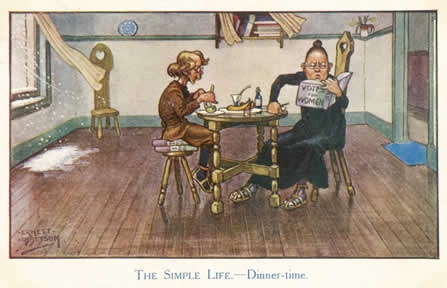
Comic card – one of a series – poking gentle fun at the ‘Simple Life’ suffragettes
As with Alan’s Tea Rooms and the Gardenia, so the Eustace Miles had a space to rent – an offer taken up, on occasion, by those giving women-related talks. The Eustace Miles, however, went one better than the other two, offering their ‘Simple Life’ audiences ‘ozonized air’ to breathe as they listened to, for example in 1912, Miss Hoskyns-Abrahall lecture on ‘The Religion of the Great Mother’, to the accompaniment of a lantern show operated by Vera Holme. In January 1910 the Men’s Political Union for Women’s Enfranchisement held its inaugural meeting at the Eustace Miles – the owner surely being a member of the MPU – and in October 1914 it was the venue for committee meetings of the United Suffragists.
The Eustace Miles was by all accounts an attractive place in which to lunch or dine; Kate Frye – by no stretch of the imagination a vegetarian – often ate there – as readers of my Campaigning for the Vote: Kate Parry Frye’s Suffrage Diary will discover. The restaurant did very well during the First World War – when meatless cookery was more or less a necessity – staying in business for over 30 years.
Alas, Hallie Miles’ Untold Tales of Wartime London, the source of the words spoken by Alison Steadman in The Great War: The People’s Story, is out-of-print. But for much more about the life and times of Kate Frye do read Kate Parry Frye: the long life of an Edwardian actress and suffragette. In this I tell the whole story of Kate – and of John Collins, her soldier husband. For details see here. I hope you will find it a Good Read.
Teacup Inn
While not specifically a vegetarian café, the Teacup Inn, much frequented by suffragettes, made sure that its vegetarian credentials were mentioned in its advertisements in the WSPU paper, Votes for Women – ‘Dainty luncheons and Afternoon teas at moderate charges. Home cookery. Vegeterian dishes and sandwiches. Entirely staffed and managed by women.’ The café was opened in January 1910 in Bank Buildings, Portugal Street, just off Kingsway, in a new building in area that was, as I have stressed in recent posts, still under development
The Tea Cup Inn occupied a ground-floor shop and basement in the building – then, as it name suggests – mainly given over to a bank – and now occupied by the Chaplaincy of LSE. In this photograph, taken c 1915, I am sure, after peering at it with a magnifying glass, that a sign ‘Tea Cup Inn’ is visible, hanging just above the smart open-topped car.
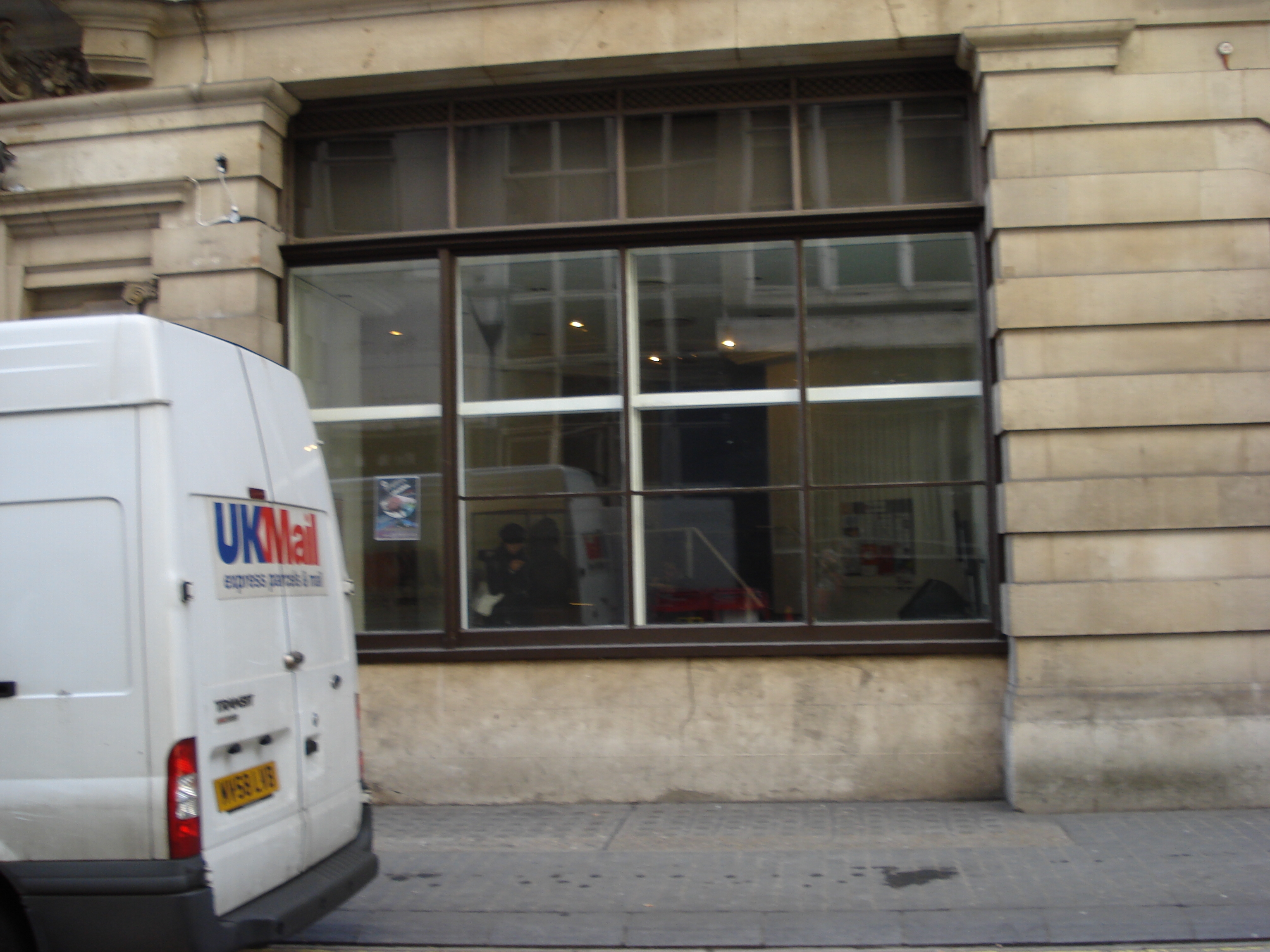
The site today of the Tea Cup inn
When it opened its owners were Mrs Alice Mary Hansell (c 1859-1923) and Miss Marion Shallard. However Miss Shallard quickly disappears and the rate books from then on show Mrs Hansell as sole proprietor. She had been born in Yorkshire, was about 52, and long a childless widow when she opened the café. Her husband, a traveller for a coal factor, had died in 1897, leaving only £87. I do not know what Mrs Hansell was doing in the intervening years – the 1901 shows her a visitor, with ‘no occupation, in a household in the Lake District..
Once the cafe was opened – certainly by April 1910- Mrs Hansell lost no time in advertising the Tea Cup Inn in Votes for Women – taking care to mention its proximity to the WSPU office in Clement’s Inn. In 1912 the WSPU moved to Lincoln’s Inn House in Kingsway, making the Teacup Inn probably the nearest place of refreshment. I am pretty certain that Mrs Hansell was a member of the WSPU; in 1909 someone of that name advertised in Votes for Women a cottage to let in Henley, but I have not been able to find conclusive evidence. Unfortunately I cannot trace her on the 1911 census – perhaps this is an indication that she was taking part in the boycott, but it may just be that her name has been mistranscribed. After the 1912 Peth-Pank split, the Teacup Inn advertised at least once in the Pankhurst paper, The Suffragette – in June 1914 – stressing: ‘Kitchens open for inspection’.
Across Portugal Street, the Tea Cup Inn faced the London Opera House (now the site of the Peacock Theatre). This theatre had opened in November 1911 and, again, handily situated for the WSPU office, was the scene of many suffrage meetings. One can imagine that the Tea Cup Inn may well have benefited from the thirsts engendered by a rousing rally.
Mrs Hansell continued running the Tea Cup Inn until her death in 1923. Her estate amounted to £2098 – which might suggest that, as her husband had left so little, she had made some money from her business. It would be good to think so.
More ‘Suffragettes and Tea Rooms’ posts to come….
Here is the link to Woman’s Hour (4 Sept) podcast that includes the item on ‘Suffragettes and Tea Rooms’ (starts c 27 mins).
WALKS/Suffrage Stories: Suffragettes and Tea Rooms: The Gardenia Restaurant
Posted by womanandhersphere in Suffrage Stories on September 6, 2012
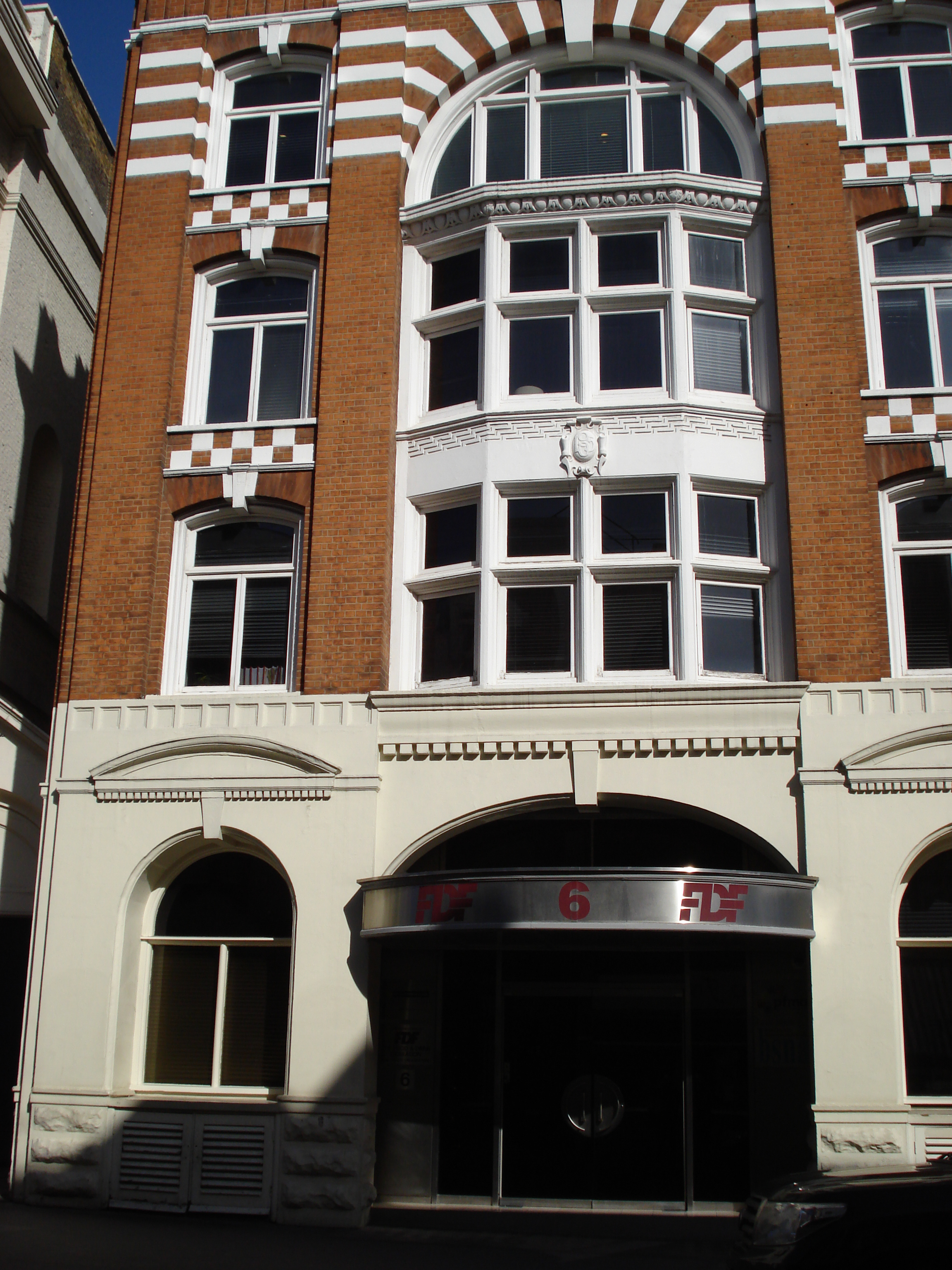 6 Catherine Street – home of the Gardenia Restaurant c 1908-13
The Gardenia Restaurant, at 6 Catherine Street, Covent Garden – off the north-western curve of the Aldwych – was, between c 1908 and 1913, a vegetarian cafe much frequented by suffragettes. Unlike Alan’s Tea Rooms – in Oxford Street – and the Criterion – at Piccadilly Circus – the Gardenia was situated in the heart of militant suffrage territory. The Women’s Freedom League headquarters lay just south of the Strand in Robert Street and those of the WSPU just to the east of Aldwych in Clement’s Inn.
The Gardenia was opened c 1908 by Thomas Smith, a young man from Morpeth, who lived with his wife and two children in rooms above the restaurant. By early 1910 it would seem that the Gardenia was in some financial difficulty because it was then formed into a limited company with three additional directors. Two of these were from the Newcastle area – and were presumably known to Smith. One was Herbert Joseph Armstrong – a chartered accountant. The other, the major shareholder, was Godfrey Hastings, a photographer from Tynemouth, a member of a Quaker family, educated at Ackworth, the Quaker boarding school in Yorkshire. The third director was Richard James, who published – and sold – temperance and vegetarian books from the Central Temperance Rooms in Paternoster Row. It would, therefore, seem safe to deduce that those running the Gardenia were advocates of vegetarianism and temperance in particular – and of social reform in general.
As I emphasise in my post on the part played by the Aldwych Skating Rink in the 1911 census boycott, this area of London was undergoing extensive redevelopment at the beginning of the 20th century. No 6 Catherine Street, a tall, rather dramatic, building, had been erected in 1905 and it is likely that the Gardenia was one of its first tenants. Its frontage of stone-banded red brick echoes that used in the construction of no 2 – which was designed in 1902 by the editor of the Builder, as offices for the journal. By now this corner of Covent Garden was taking on a rather Arts and Craftsy look – making it just the place for a vegetarian restuarant.
Unlike the Criterion – or even Alan’s Tea Rooms – I have been unable to find any image to tell us what the interior of the Gardenia looked like. However the file in the National Archives giving details of the 1913 winding up of the company does contain a list of the company’s assets – including the restaurant’s fittings. From this I think it would be safe to say that the general impression of the interior was of mahogany and mirrors. – long mahogany serving counters and quantities of mirrors. The rooms were lit with electroliers – some four-branched and others three. Customers sat at tables, marble-topped on metal stands – rather like those used today by Pizza Express.
Having noted that the Gardenia’s financial situation was somewhat precarious, one imagines that the company’s directors would have been keen to develop a niche clientele to boost passing trade. And so it was; the company accounts reveal that they hired out upper rooms in the building to societies whoe interests would seem to coincide with their own – for instance, to the Syndicalists, to a Vegetarian Club, to the National Union of Shop Assistants, and to the University Fabian Society.
The militant suffrage societies also figure regularly in the Gardenia’s accounts as customers for the hired rooms. In her autobiography, My Own Story, Mrs Pankhurst refers to the Gardenia as a place where many WSPU breakfasts and teas were held – and the accounts show specific hirings of rooms by the WFL (for instance,7 March 1912, 5 guineas). In fact the Gardenia seems to have been a particular favourite with the WFL, which did its best to advertise the delights of the restaurant. The Gardenia was included in The Vote Directory –the WFL newspaper’s list of recommended retailers – and was written up in the 6 May 1911 issue when – in the course of a suffragists’ shopping day – the author has tea at the Gardenia – ’a fragrant cup of tea and some cress sandwiches made with Hovis bread’ – [Hovis was also advertised in The Vote]’ –reporting that ‘she would eat no other.’In 1912 the WFL rented a room in the Gardenia in which to hold its weekly discussions – on such subjects as ‘Jane Eyre and its relation to the Woman’s Movement’ and Mrs Brownlow on ‘Local Government’ and on 17 February 1912 three of the Gardenia’s floors were hired by the WFL for a fundraising sit-down supper, with dancing and performances by the Actresses’ Franchise League.
It was doubtless no hardship for suffragettes to attend such suppers; a vegetarian restaurant would have been particularly popular with suffragettes – many of whom had embraced this cause – and the associated anti-vivesectionist campaign – along with that of women’s rights. For Leah Leneman’s excellent article on the subject – ‘The Awakened Instinct; vegetarianism and the women’s suffrage movement in Britain’ – see here.
For its part the Gardenia management was clearly committed to the suffragette cause over and above its use as a source of income. The directors were prepared on occasion, to turn a blind eye to the use to which the WSPU put its rooms. Thus, on 2 April 1911 – census night – the Gardenia’s management allowed the restaurant to be used by suffragettes attempting to evade the enumerator. One census schedule for 6 Catherine Street shows Thomas Smith, the manager, in his flat there that night with his wife and two children, together with the restaurant manageress, two waitresses, a male chef, female cook, a male baker and a kitchen maid. But a separate Gardenia schedule, completed by the Census Office from information supplied by the police, shows that the restaurant was packed with 200 women and 30 men. These defiant evaders had moved to the Gardenia at c 3.30 am for breakfast, having spent the earlier part of the night in the Aldwych Skating Rink.
A year later the Gardenia again played its part in a dramatic WSPU publicity campaign when, on the night of 4 March 1912, women taking part in a WSPU-organinised window-smashing campaign gathered there. In her autobiography Mrs Pankhurst notes that the police thought that about 150 women went to the Gardenia that evening, arriving in twos and threes from a large meeting at the London Pavilion at Piccadilly Circus. They were followed to the restaurant by a number of detectives who then waited around outside in Catherine Street And what was it that the women were doing in the Gardenia?
At the ensuing trial Miss Jessie McPherson, a still-room maid, testifed that on the following day, 5 March, she found a dozen on so stones – on one of which was written ‘Votes for Women’ – lying in a grate in a big room on the second-floor. Godfrey Hastings, the Gardenia’s major shareholder, gave evidence that the room had been engaged by the WSPU for the afternoon and evening of 29 February and 1 and 4 March – at a charge of 45 shillings on each occasion.
The evidence pointed to the Gardenia as the WSPU’s ammunition arming station. Once they had received their supply of stones, the suffragettes led the police a merry dance.
One policeman testified that he followed Miss Wolff van Sandau and Miss Katie Mills as they left the Gardenia, went to an ironmonger’ shop in Covent Garden and then walked to Westminster, along Victoria Street to the Howick Street Post Office, where the former broke a window with a hammer and the latter with stones. It transpired in court that it was at the Covent Garden ironmongers, with the policeman in tow, that they had bought the hammer.
Another policeman reported that on 4 March he waited outside the Gardenia Restaurant for three women [Nellie Crocker, Miss Roberts and Miss Taylor]. When they emerged he followed along the Strand, to Charing Cross and then on District Line to Royal Court Theatre. A few minutes after the performance began they left and went along to 9 King’s Road – a post office – where they smashed the plate glass windows with three hammers.
Another policeman followed Elizabeth Thompson and another woman from the Gardenia to Parliament Square,where Miss Thompson threw a stone at a window of Home Office.
There does not appear to have been any legal repercussions for the Gardenia but, sadly, despite support from the suffrage movement, the business could not be made to pay and the restaurant closed in March 1913.
However 6 Catherine Street today still has a primary connection to the food trade – as the home of the Food and Drink Federation. The FDF were very generous in allowing access to their building in order to record a section of the Woman’s Hour item on ‘Suffragettes and Tea Rooms’ in the rooms where the WSPU plotted their militancy over tea and brown rice.
WALKS/Suffrage Stories: Suffragettes and Tea Rooms: The Criterion Restaurant, Kate Frye, and the Actresses’ Franchise League
Posted by womanandhersphere in Kate Frye's suffrage diary, Suffrage Stories on September 5, 2012
 Criterion Restaurant and Piccadilly Circus c 1910
The glamorous Criterion Restaurant lies at the heart of theatreland, facing onto Piccadilly Circus. Owned by Spiers and Pond, it had been built, together with the adjoining theatre, in 1874 and during the last century and a quarter has undergone many changes – although now restored to glory. Before the First World War Spiers and Pond’s empire encompassed railway refreshment rooms as well as other large London restaurants, such as the Holborn, at the north end of Kingsway, the setting for many breakfasts held by the WSPU to celebrate the release of their prisoners from Holloway.
 The Criterion today
Although the Criterion has now only one restaurant – on the ground floor – in its Edwardian heyday it offered many more spaces – not only in which to dine – but also for hire; the Victoria Hall and the Grand Hall, on the first floor, were two such spaces. The Grand Hall, magnificently decorated, ran across the front of the building, overlooking Piccadilly Circus. The lavish interiors were very much a hallmark of the Spiers and Pond establishments – renowned especially for the high standard of their ladies’ cloakrooms – a point, I would imagine, our suffagists and suffragettes would have appreciated.
The Actresses’ Franchise League was founded at the end of 1908 and by the spring of 1909 began to hold its meetings at the Criterion, which was conveniently placed so as to allow its members to spend the afternoon listening to rousing speeches and yet be close at hand to give their own performances in the evening. By all accounts the meetings were extremely well attended, the AFL having no trouble in filling either of the two main halls.
 Kate Frye on tour in J.M. Barrie’s ‘Quality Street’.
Kate Frye (whose post-1911 suffrage diary, Campaigning for the Vote, is published by Francis Boutle ), was a proud member of the AFL, having spent two or three years treading the boards of provincial theatres. Her diary entries allow us to eavesdrop on some of those Criterion meetings.
‘Friday April 2nd 1909
Out at 2 o’clock – bus to Piccadilly Cicus and to the Actresses’ Franchise League meeting at the Criterion Restaurant. Miss Eva Moore was receiving and gave me a gracious handshake and Ada Moore was there. Also Eve, Mr Stanger [a sympathetic Liberal MP] and Miss [Frances] Sterling I heard speak. Lady Strachey was in the Chair and Lady Grove had spoken. I also heard Miss [Lillah] McCarthy, the Treasurer, speak and Miss Adeline Bourne, the Secretary, and I went up and spoke to Mr Stanger after the meeting.. His wife was also there. It was a huge meeting – no end of the profession there and they seemed enthusiastic but I have never got much faith in them. …
Friday February 4th 1910
Started off about 1.45 for the Victoria Hall Criterion Restaurant – went by bus. We went early as we wanted a good seat to see Miss Pankhurst. The place was packed before they began at 3 o’clock. Miss Granville took the chair and Miss Adeline Bourne as Secretary and Miss Maud Hoffman as Treasurer spoke in a more or less business-like fashion and Lt Col Sir something Turner spoke – an old dodderer. I could hardly keep my face straight he looked in such a loving fashion at the ladies but of course the thing of the afternoon was Christabel Pankhurst. She is a little wonder. So young and girlish looking – I suppose she is only 22 or 23 with such a charming way with her. She spoke very nicely too. It was not a brilliant speech but she was suiting herself to her audience I have no doubt – but it was so sincere and so fair. I have only heard her once before – at the Albert Hall – and one cannot judge like that – so I am glad to have been at such close quarters with her. She is not really pretty – has a crooked mouth and bad chin but her eyes are nice and she has a pretty forehead. Her hair was very untidy and I think would suit her so much better done low than on top in an ugly little knob. But though so faulty her face lights up so when she speaks and she has such a charming way with her that is very superior to mere prettiness….
Friday November 4th 1910
A bitterly cold day –had lunch then left at 1.15 – took a bus to Oxford Circus and went to steward at The Actresses’ Franchise League meeting at The Grand Hall Criterion. It was great fun.. A Mrs Fagan was in the Chair, Lady Constance Lytton, Mrs Pertwee , Mr Cecil Chapman and Mr M Campbell-Johnston were the speakers.. Then, amongst the audience, Hilda Fletcher – an old Ben Greet companion – the girl who helped me with the Banner at the second march and I chatted to lots of people – made 17/6 and had great fun. Two old gentlemen who were very taken with the Actresses and attending their first Suffrage meeting were most amusing.
Friday December 16th 1910
Changed my dress – at 2.15 bus to Oxford Circus and walked to the Criterion – to the Birthday Tea of the Actresses’ Franchise League. It was packed – a huge success. Eva Moore recited, Bertha Moore and daughter sang.’
The Criterion was used by women’s societies other than those campaigning for suffrage. Here is a photograph of a Women Writers’ Dinner held in the Grand Hall in 1900. Of the suffrage societies, it would seem that the AFL was the most regular user of the Criterion, although in April 1909 the WSPU held a breakfast there for released prisoners and in February 1910 and June 1911 the Women Writers’ Suffrage League held meetings in the Victoria Hall. It is interesting to note that on 26 October 1911, when the International Women’s Franchise Club held a dinner at the Criterion, a vegetarian option was chosen by a fairly high proportion of the guests – 25 out of the 130 who attended.
Although the suffrage sympathisers who attended such meetings were overwhelmingly middle class, one would like to imagine (as one can in a blog) that, through their association with, perhaps, the AFL, less well-off women would have had the opportunity to luxuriate in the splendid surroundings of the Criterion, enjoy a wash and brush up in the opulent Ladies’, and fill up on the tea that brought the afternoon to a close.
Based on her diary, I published Campaigning for the Vote: Kate Parry Frye’s suffrage diary. This is now out of print. The complete collection of Kate’s diaries is now held by Royal Holloway College Archive.
WALKS/Suffrage Stories: The Suffragette 1911 Census Boycott: Where and What Was the Aldwych Skating Rink?
Posted by womanandhersphere in 1911 Census, Suffrage Stories on September 3, 2012
 Roller skating was one of Edwardian Britain’s ‘crazes’ – to be enjoyed, as this comic card shows us, by all the family. One could, of course, as I did as a child in the 1950s, roller skate in the streets, but in the years before the First World War entrepreneurs hoping to cash in on the craze ventured to erect roller skating rinks in towns the length and breadth of Britain.
While I am sure that many individual suffragettes and suffragists enjoyed a spin around their local rink, there was one episode of suffragette history that centred on a specific London roller skating rink. For on census night 1911 – 2 April – it was at the Aldwych Skating Rink that the militant suffrage societies – the Women’s Social and Political Union and the Women’s Freedom League, together with related societies such as the Tax Resistance League – urged their supporters to muster. Here, out of their homes, they would escape detailed enumeration.
When interviewed in the 1970s by Sir Brian Harrison (Women’s Library 8 SUF/B/024), Marie Lawson, an important figure in the Women’s Freedom League, remembered that ‘We formed immediately a census resistance group – women who said ‘we don’t count; we won’t be counted’ – that they would stay out somehow – out of a house or roof during the period when you had to be recorded. Our group took the Aldwych skating rink for the night – we hired it. Nobody was supposed to be sleeping there. We had roller skates and we spent the night on roller skates and there was no-one to declare us and when we went away in the morning we were very weary, very tired with our roller skating but we felt we had done the government out of so many names on the census resistance. It wasn’t very useful really but it was something to do. We used to grab at every little thing, you know, that we could make a protest about. It was advertising really.’
So it was that, after a late-evening rally in Trafalgar Square, the suffragettes promenaded down the Strand to the Aldwych where it was estimated by the Census Office that 500 women and 70 men gathered at the Skating Rink. Although the numbers were recorded, the identity of most of that 570 is lost – only those whose names are mentioned in the Votes for Women report (7 April 1911) can be placed there with certainty. These included Mrs Pankhurst, Ethel Smyth and, among members of the Actresses’ Franchise League who provided the entertainment, Decima Moore and her sister, Ada, Adeline Bourne, Winifred Mayo, Inez Bensusan, Rosa Leo, Sidney Keith, Miss Laing and Natalia de Meix. Emmeline Pethick-Lawrence was also there. She certainly did her bit to disrupt the census, being enumerated in three separate places- once in her Clement’s Inn flat, once in her Surrey country cottage and, again, here at the Aldwych. By way of contrast, no trace of a census paper for Christabel Pankhurst has been found – but she was there in the Skating Rink, bringing the entertainments to a rousing conclusion at 3.30 am.
Here is Decima Moore photographed that night inside the Skating Rink. I am pretty certain that she is captured doing her party piece -Laurence Housman’s ‘Women This and Women That’. In the photograph we can see, behind the audience and the NWSPU ‘No Vote No Census’ banner, the walls of the skating rink – rather bare as one might expect. ‘What kind of structure was it?’, I wondered and, moreover, ‘where was it?’ ‘Aldwych’ was a rather vague address.
I discovered that the Aldwych Skating Rink was first listed in the rate books in 1911, provisionally numbered 10 Aldwych. The Kingsway/Aldwych area that to us today looks so solidly Edwardian was, in 1911, still in a state of flux.
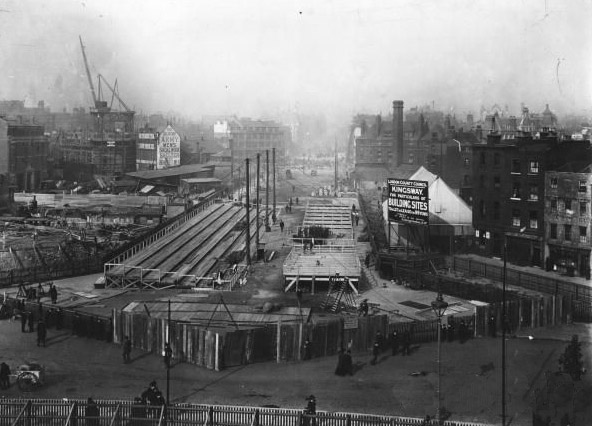
Looking up Kingsway from the Aldwych, 1905
Kingsway had been driven through – it was formally opened in 1905 – and the curve of the Aldwych formed, but it was not until well into the 1920s that all the plots were sold and developed. Thus, from the rate book, I could see that no 10 Aldwych was surrounded by vacant lots enclosed in advertising hoardings, the hoarding company paying a rent for their advertisements.
But I was still unclear as to precisely where no 10 was. However, the rate book came to the rescue, recording that on one side of no 10 the lot was owned by the London County Council and was ‘used for advertising station on frontage line from Houghton Street to roller skating rink. On its other side –provisionally numbered no 8 – was an advertising station north-east on the frontage line east of the roller skating rink. So this seemed to establish that the skating rink was on the north-east curve of Aldwych, to the east of Houghton Street. Clement’s Inn, the WSPU headquarters, virtually abutted the rear of the plot. What more suitable venue to book for such an evening than this, probably the nearest large hall?
The owner of the skating rink was Edward Johnson Wilson who had formed his company, ‘Rinkeries’, in 1909. In 1911 the company also ran ‘ideal skating palaces’ on the Holloway Road, as well as in Exeter, Plymouth and St Leonards. Like many other roller-skating rink companies, whose liquidations, as recorded in the London Gazette, are a sad testament to so many lost hopes, ‘Rinkeries’ does not appear to have been very successful; Edward Wilson was doubtless glad of the windfall of a night’s rent from the WSPU.
But I still did not know what the skating rink looked like. It is difficult now to conjure up the appearance of that A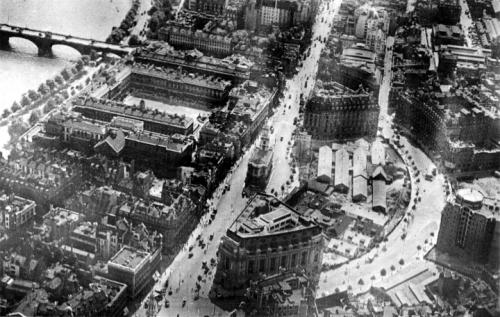 ldwych curve before the arrival of the imperial solidity of the buildings we see today. From looking at contemporary photographs of Kingsway, dominated by empty plots and high advertising hoardings, I could imagine that the area must have felt strange and impermanent. The old higgledy-piggledy rookery streets around Holywell Street and Houghton Street – that many of the suffragettes would have remembered – had been swept away, but the new order had not yet arrived. In this aerial photograph, probably taken c 1918 after the completion of Australia House (in the centre foreground), the Aldwych Skating Rink would have been – and perhaps still was – one of the low buildings in the bottom right of the picture.
But in 1911 the southern side of the road had not been developed at all. With few buildings to throw out light, the area was doubtless rather dark. What kind of building was it that the suffragettes waited outside that night – surrounded by, in effect, a building site – while posses of hooligans attempted to storm the rink’s doors?
I have not been able to locate a photograph, but, as luck would have it, I found the answer in the ‘Rinkeries’ file in the National Archives – its presence there a consequence of the company’s eventual liquidation. There, as a heading to ‘Rinkeries’ notepaper, was an engraving of the Aldwych Skating Rink. I could now see that it comprised four linked, gabled structures –chalet-type – single storey. The effect, for all the panache of many flying union flags, was somewhat temporary – as it was no doubt in reality. What a contrast to its successors.
During the First World War the Aldwych Skating Rink was used as a clearing house for Belgian refugees. This watercolour, in the Imperial War Museum collection, shows the building after it was hit in a Zeppelin raid on 13 October 1915. The church in the background is St Clement Danes. The Rink must have been swept away by the end of the war, to make way for the monumental buildings that still occupy the central section of that Aldwych curve. It takes an effort to reimagine its former appearance – but to do so helps us to enter the 1911 worldview of the census evaders.
To listen to a talk I gave on the suffragette boycott at a National Archives conference on the 1911 census click here
Copyright
Suffrage Stories/Collecting Suffrage: Suffragette Jewellery
Posted by womanandhersphere in Collecting Suffrage, Suffrage Stories on August 27, 2012
 Pendant made for Margaret Murphy by Ernestine Mills
‘Prison to Citizenship’ – Three pendants earned by two Irish suffragettes
In previous posts I have mentioned how necessary it is to observe the provenance of an item of jewellery in order to be able to label it with certainty as ‘suffrage’. In that way the collector is less likely of falling into the trap of buying an item – vaguely Edwardian with vaguely purple, white and green stones – that an auction house or dealer has chosen to label ‘suffragette’ In this post I will bring to your attention three items of jewellery – made for two Dublin sisters – that are indisputably ‘suffrage’.
‘Margaret’ and ‘Jane Murphy’ were the pseudonyms of two middle-class women from Dublin – whose real names were Leila (b. 1887) and Rosalind Cadiz (b. 1886). They were members of the Irish Women’s Franchise League. They both took part in the window-smashing campaign in London in March 1912 and were sentenced to two months in Holloway. They went on hunger strike (c 16 April) and were forcibly fed. They were released c 15 May. The pendant above is engraved – “Holloway Prison No. 15474, Maggie Murphy, 2 months hard Labour, E.4 Cell.12., Hunger Strike 16th April 1912, Forcibly Fed – and was made by the suffragist and enameller, Ernestine Mills. As you can see the lily motif is rendered in purple, white and green – in this case a ‘true’ use of the colours.
 Margaret and Jane Murphy, top row far right and second from right, pictured in Votes for Women, 25 June 1912.
A couple of months later the Murphy sisters took part in the first window-smashing campaign in Dublin and were again sentenced to two months’ imprisonment – but in Dublin they were given the status of political prisoners.
Margaret Murphy requested to be treated by her own doctor, Kathleen Maguire, ‘as I am undergoing treatment owing to having been forcibly fed in Holloway,… Dr Maguire understands my constitution.’ To this the Medical Officer in Mountjoy replied (5 July 1912) ‘I beg to report that I regard her [Margaret Murphy] as a woman of neurotic temperament who suffers from indigestion, an ailment frequently complained of by women of this type.’
The Murphys eventually succeeded in not only getting a suffragist doctor, Kathleen Maguire, to treat them, but also in getting their own dentist. ‘Miss Jane Murphy will attend her own dentist at her own expense’ (July 1912).
The Murphys clearly had a way about them for ‘with reference to Margaret Murphy’s complaints of the possible effect of the whitewashed walls of her cell on her eyes, the governor agreed to have the walls recoloured, and to have a new gas burner fitted in lieu of the existing one, and her request for a special kind of disinfectant to be used in her cell was referred to the Medical Officer.’ 25 July 1912 Minutes of Mountjoy Prison.
Finally the sisters went on hunger strike for the last 92 hours of their sentence (along with 2 other Irish suffragettes) in sympathy with three English suffragettes (Mary Leigh, Gladys Evans and Jennie Baines) who had received harsh prison sentences in Dublin and who had not been given political prisoner status. The Murphys were not forcibly fed – the end of their sentence arriving before this became necessary. They were released, together, from Mountjoy Prison on 19 August, welcomed by members of the Irish Women’s Franchise League.
Here are the pendants that the sisters either commissioned for themselves or, more likely, with which they were presented after their release. Each pendant is of shield shape, surmounted by a green enamelled shamrock, hallmarked Dublin, Hopper and Hannay, 1912. One is engraved on the obverse “From Prison to Citizenship” and on reverse “J. Murphy 20.6.12 to 19.8.12” and the other “M. Murphy 20.6.12 to 19.8.12”. Thus do three items of jewellery commemorate the efforts of two Irish sisters to win ‘Votes for Women’.
Kate Frye’s Diary: ‘Paddington Pandemonium’
Posted by womanandhersphere in Kate Frye's suffrage diary on August 23, 2012
In the following diary entry Kate describes the pandemonium that occurred at a December 1907 suffrage meeting organised by the North Kensington Local Committee of the Central Society for Women’s Suffrage – the non-militant London NUWSS society – chaired by Mrs Millicent Fawcett. From Kate’s account the main culprits were medical students from nearby St Mary’s Hospital and from University College Hospital in Bloomsbury, such student having had, through the ages, a reputation for unruly behaviour. From Kate’s observation, the stories of stinkbombs and the release of mice, specifically intended to upset the genteel female audience at suffrage meetings, were all too true.
Lady Grove (1862 -1926) was a leading Liberal suffragist and author of The Human Woman, 1908. The Paddington Baths, in Queen’s Road, Bayswater, were soon to be demolished to make way for an enlarged Whiteley’s department store.
Thursday 5th December 1907 [25 Arundel Gardens, North Kensington]
‘ At 2 o’clock Agnes and I started off to Linden Gardens and called for Alexandra Wright and several of her helpers and we all walked to the Paddington Baths to help arrange the room for the meeting in the evening. There was a good bit to do – numbering the chairs – partitioning them off and hanging up banners and posters etc. Left [home again] just before 7 o’clock in a bus to Royal Oak and went to the Paddington Baths for the London (Central) Society’s meeting for Women’s Suffrage. Gladys and Alexandra have been weeks getting it up and I did no end of clerical work for it at Bourne End. We were the first Stewards to arrive after Gladys and Alexandra and were decorated with rosettes and given our directions. Lots of the women were very nervous of a row. My department was the gallery, to look after people up there and give invitations for a private meeting next week.
The people came in thick and fast and the doors were opened at 7.30 and with the first group of young men below in the free seats I knew what would happen. The place was soon hot, bubbling over with excitement, and I had my work cut out keeping gangways clear and looking after people and telling them they would be safe. We had expected an exciting evening but this realised our worst expectations. It was Bedlam let loose. A couple of hundred students from St Mary’s and University College Hospitals arrived and insisted on sitting together and never ceased all the evening singing, shouting, blowing tin trumpets, letting off crackers, letting loose mice and, what is worse, scenting the floor with a most terrible-smelling chemical.
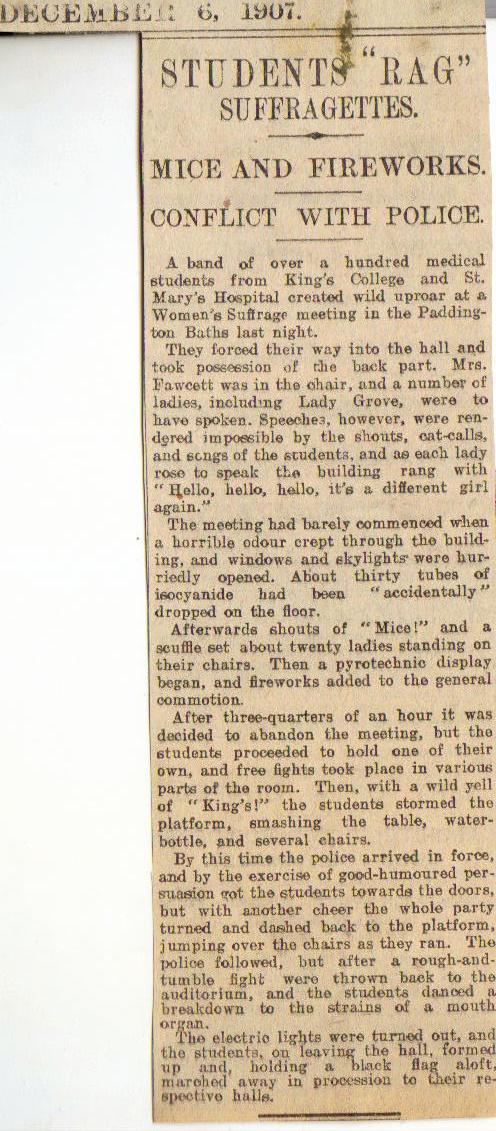
Report from the ‘Daily Mail’ 6 December 1907, clipped by Kate and laid in her diary
From the very start they never gave a single speaker a moments hearing. Mrs Fawcett was in the Chair and Lady Groveand others spoke and they went on with the meeting to the bitter end – and bitter it must have been to the speakers. I never heard a word. I felt too angry to be frightened though I must own I did not like the fireworks and saw the most appalling possibilities in that frantic howling mob of mad animals. Agnes owns to being terrified – all the more credit to her for sticking to her place amongst them and she was with them all the evening. I felt mad at not being there in the midst of them. When I could leave I just went down and spoke to John, who I saw standing near Agnes. She had decorated him as a Steward to help in case the worst happened.
I went back to my post until I was no longer any good there and then I went into the very midst of the seething mass and talked to any of them I could get at. Just to silence them, as I did for a few minutes at a time, was a triumph. Cries of ‘Oh I think I like Suffragettes’ as I went amongst them and, then, ‘He is flirting with a Suffragette’ taken up and sung by them all. I spoke like a Mother to several and smiled at them. If they had only known my true feelings I don’t think they would have been so polite to me. Great credit to all the women in the building is due – not only the Stewards – but the audience there. There was never any excitement or panic amongst them and only one Stewardess failed us. She, poor thing, was so terrified she bolted without waiting for hat or coat – but of course we keep that dark. The men Stewards were very good but quite powerless to stop the noise and hubbub. And what could four policemen do? It was an organised ‘Rag’ and nothing but a force of police to outnumber them could have stopped them. They longed for a fight and said so – and no end of them had most terrible looking clubbed sticks which they brandished. We did the only possible thing, I consider. Kept as much order as we could and tried to avoid bloodshed. We had a little unfortunately when, after the meeting was over, they charged for the Platform, sweeping everyone before them. Very fortunately there were large exit doors each side of the platform and most of the people got out of them. I was flung aside and then followed them up. They tore down as many banners as they could and stole one and tore down all the posters. They were like wild cats. The policemen chased them round a little but we would not allow any arrests to be made. The firework ringleader was caught but allowed to go. I spoke to Mrs Wright – red with rage. Poor things, we were all either red or white. Mr Willis, Mrs and Miss Doake and several others. Mr Percy Harris was Stewarding. One man Steward got a most awful crack on the ear and was considerably blooded – he looked awful. Several of the boys had their collars torn off and became very proud in consequence. It was a great wonder and a still greater mercy that more damage was not done. I felt so responsible for the ordinary public who had paid their money. I could only hope to get over the evening safely for their sakes. Personally I wished and still wish to smash the Boys, though at times I could not help laughing. They were not nice boys – all plain and common looking – mostly undersized and no gentlemanly looking one amongst them. I was glad to notice that as I hope they are not the best we can show in our hospitals.
After the general public had gone the police sent word that it was impossible to clear the hall while there was a woman left in it so we left with Mrs and Miss Doake and all came back in the bus with Mrs Willis. Miss Doake said she had never enjoyed a night so much in her life before. I cannot say the same. It was a terrible experience. We could not lose that terrible smell from our noses and mouths. I could taste it through everything at supper. John came home with us and did not leave till after 12o’clock. Agnes and I were too excited to go to bed and sat talking of our experiences. Lots of people will be made all the keener through it, but a great many will be very disgusted I fear.’
 As you can see from this note, carefully preserved by Kate, Mrs Fawcett’s meeting was re-arranged for early 1908 – to be held in the safety of Bertha Mason’s house in nearby Hyde Park Square.
Campaigning for the Vote: Kate Parry Frye’s Suffrage Diary edited by Elizabeth Crawford
For a full description of the book click here
Wrap-around paper covers, 226 pp, over 70 illustrations, all drawn from Kate Frye’s personal archive.
ISBN 978 1903427 75 0
NOW OUT OF PRINT, ALAS
KATE’S DIARIES AND ASSOCIATED PAPERS ARE NOW HELD BY ROYAL HOLLOWAY COLLEGE ARCHIVE
- ‘Campaigning for the Vote’ – Front and back cover of wrappers
Suffrage Stories: ‘The Putney Caravans’
Posted by womanandhersphere in 1911 Census, Suffrage Stories on August 20, 2012
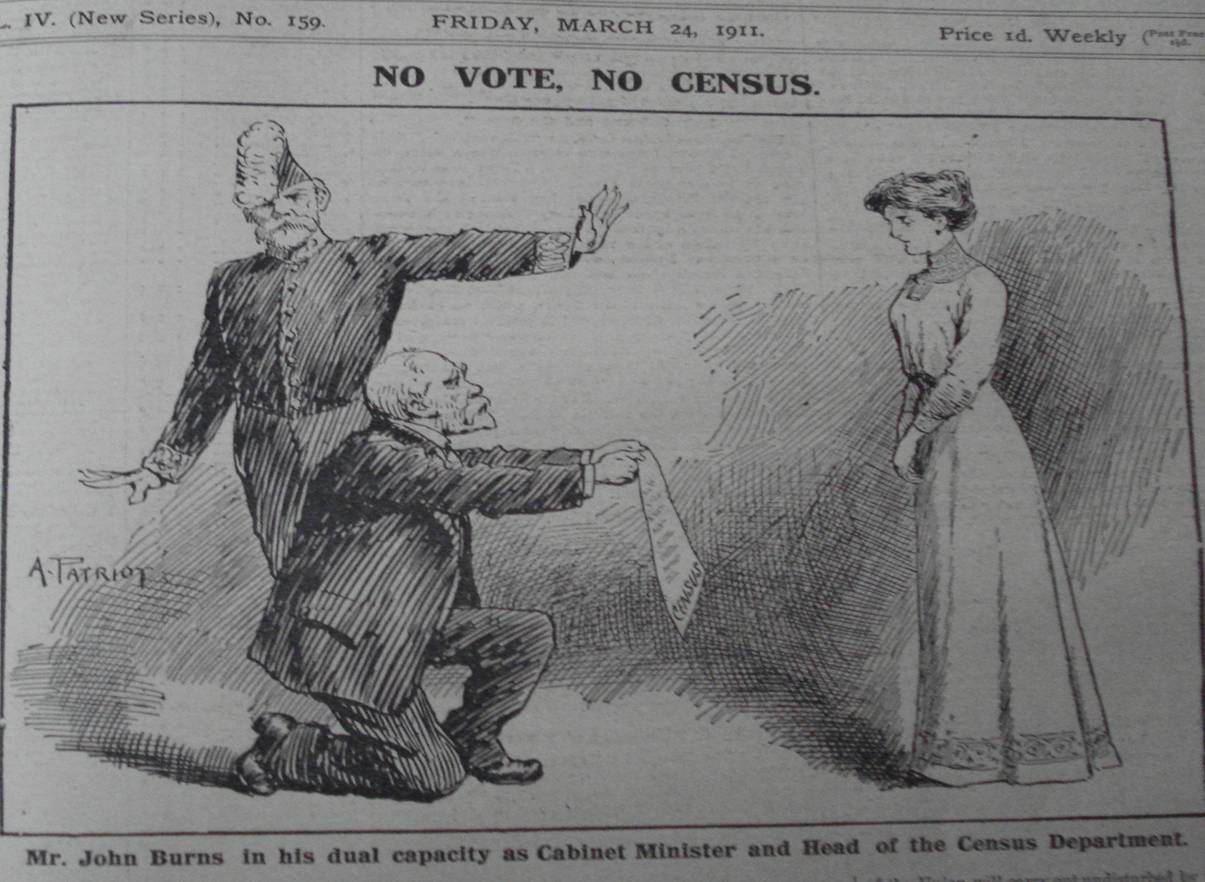
John Burns, the suffragettes and the census boycott
As I have already described here, one of the most inclusive acts of civic resistance undertaken by the militant suffrage societies was the boycott of the 1911 census. The argument was that, if the government was not prepared to grant them full rights of citizenship, women would not fulfill the duties of a citizen. On the night of the census – 2 April – those who obeyed the call either went to considerable lengths to evade the enumerator – or, like ‘Madame Mantalini’, refused to supply the required details on their census paper.
There are many stories to be told, but one of the more flamboyant adventures was that of Arthur Marshall, the WSPU’s solicitor, who with his wife, Kitty and nine other rented from a Paddington firm, Rickards, what were described as ‘smart Pullman caravans’. The caravans, horse-drawn, of course, were then driven in the dark from Paddington and into and round Trafalgar Square, where the main suffragette protest was taking place – and then down Whitehall and out to the west, eventually coming to a halt on Putney Common.
As the journalist Henry Nevinson, writing in the suffragette newspaper, Votes for Women, wrote, ‘I had noticed three gypsy caravans….they were driven by women, who whispered me the names of woodland regions not very far off in Surrey. Whether statistics will add them to Surrey’s glorious army of vagrants I don’t know, but they vanished silently down the road, past the decorated windows of the Home Office and the Local Government Board.’ The last office was singled out for mention because it was the LGB – under its minister, John Burns – that was charged with organising the census.
Once they had arrived at Putney Common, not exactly deepest Surrey, the women – and Arthur Marshall – all appeared to have had a jolly dinner and reported that they had refused all information to the police who turned up to take their particulars. In the morning they decorated their caravans with placards saying – ‘If we don’t count we shall not be counted.’ and, thus adorned, travelled back into London.
Although this excursion doubtless attracted publicity, the police knew quite well who the leaders of that ‘suffragette party’, as they described it, were – and the Marshalls’ details were duly entered on a census form. The other nine women did, however, manage to remain anonymous.
It may be that Henry Nevinson was embroidering reality a little – and that it was not the women themselves who were driving the caravans – because a week or so later three men – presumably Rickards drivers – were charged with driving the caravans unlawfully on the turf of Putney Common. This was one of the very few prosecutions brought that related to the census boycott; women who had evaded or resisted were not charged, the government realising there was little to be gained by giving the protest the oxygen of publicity. However, the local Putney magistrate clearly thought the case a nonsense and it was dismissed with the defendants merely having to pay 2s in costs. And the image painted by Nevinson of the caravans with their bohemian crew remains in the memory.
Suffrage Stories/Collecting Suffrage: Mrs Pankhurst’s portrait
Posted by womanandhersphere in Collecting Suffrage, Suffrage Stories on August 13, 2012
In a previous post on Suffragette Jewellery I commented on the danger of assuming that any piece of jewellery that a dealer described as ‘suffragette’ had, in fact, anything to do with the suffragette movement. However it is still possible to discover items the provenance of which cannot be doubted.
Below is one such.
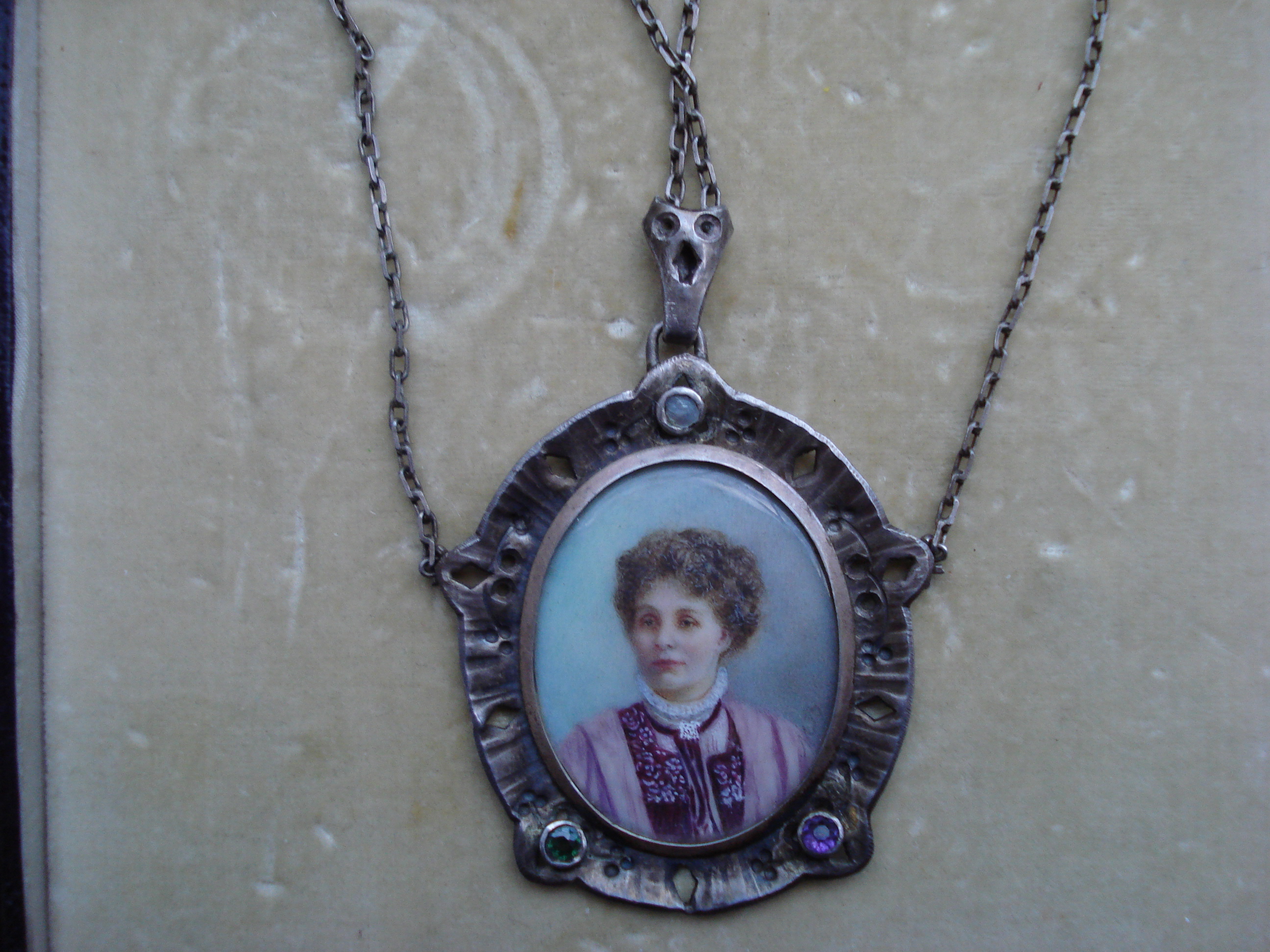
PENDANT – MRS PANKHURST – ICONIC PAINTED PORTRAIT MINIATURE -presented to Mary Leigh, leader of the WSPU Drum and Fife Band, devoted friend of Emily Wilding Davison, and ardent suffragette.
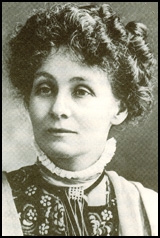
The image for this original painted miniature portrait of Mrs Pankhurst is derived from the photograph of her by the Kensington photographer, Martin Jacolette (see above). In it she is wearing a Holloway brooch, which dates the photograph to no earlier than April 1909.
The portrait miniature is very pleasingly painted and, although no artist’s signature is visible, I did wonder if it might not be by one of the Brackenbury sisters (Georgiana’s much later portrait of Mrs Pankhurst is in the National Portrait Gallery). The portrait is set in a metal pendant, on the back of which is inscribed ‘Presented to Mrs Marie Leigh Drum Major by the N.W.S.P.U. Drum and Fife Band in memory of her courageous fight for woman’s freedom December 1909’.
In the autumn of 1909 Mary Leigh had been forcibly fed while serving sentences in Winson Green and Strangeways prisons and in December an action for damages was brought on her behalf by the WSPU against the Home Secretary. The WSPU newspaper, Votes for Women, reported that, on 16 December 1909, ‘Ushered to the strains of “See the Conquering Hero Comes” , played by the WSPU Band, Mrs Leigh, the Drum Major received a royal welcome at St James’s Hall. Looking rather pale but as determined as ever, she delivered a stirring address.’ As Christabel Pankhurst, who was presiding, commented, ‘The Government did not know with whom they were dealing.’ The pendant was probably presented on this occasion.
The pendant, which has its original chain, has set around its edge three little stones – one white, one purple and one green. In this case the choice of stones clearly did have WSPU relevance. The pendant is in its original box – similar in material to that used for the hunger strike medals. Contemporary painted portraits of Mrs Pankhurst are exceedingly rare and with this particular provenance – unique. I have never seen another pendant like this, but wonder whether Mary Leigh was the only recipient of such an object. Might there be others waiting to be discovered?
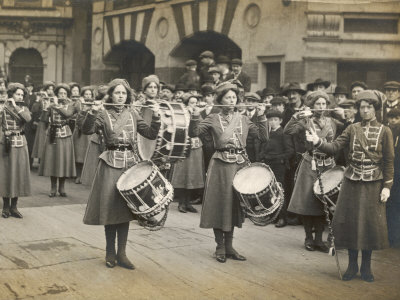
Collecting Suffrage: The Hunger Strike Medal
Posted by womanandhersphere in Collecting Suffrage on August 11, 2012
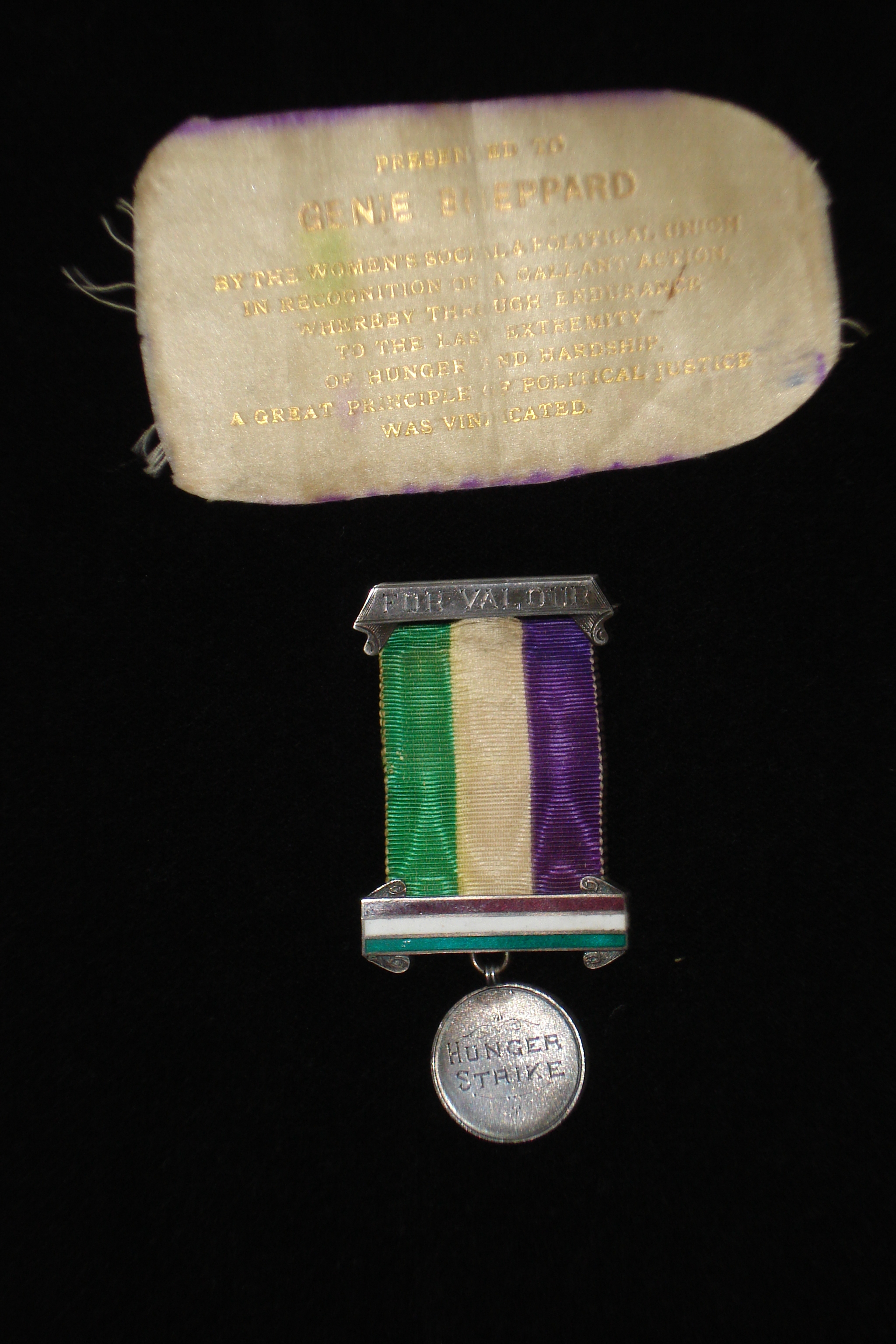 One of the most iconic items to add to a suffrage collection is a WSPU hunger-strike medal.
These medals were first presented by the WSPU at a ceremony in early August 1909, given to women who had gone on hunger strike while serving a prison sentence handed down as punishment for an act of suffrage militancy.
The medals comprise a silver pin bar engraved ‘For Valour’, a hanging length of ribbon in the purple, white and green colours, and either a silver or a striped enamel bar, from which hangs a silver circle with the name of the presentee on one side and ‘Hunger striker’ on the other. If the ribbon terminates in a silver bar, this is engraved with a date denoting the day of the owner’s arrest. The enamelled purple, white and green bars are engraved on the reverse, for example sculptor Edith Downing’s medal that I once sold is engraved with ‘Fed by Force 1/3/12’. This was the date of her imprisonment that resulted in a hunger strike and forcible feeding.
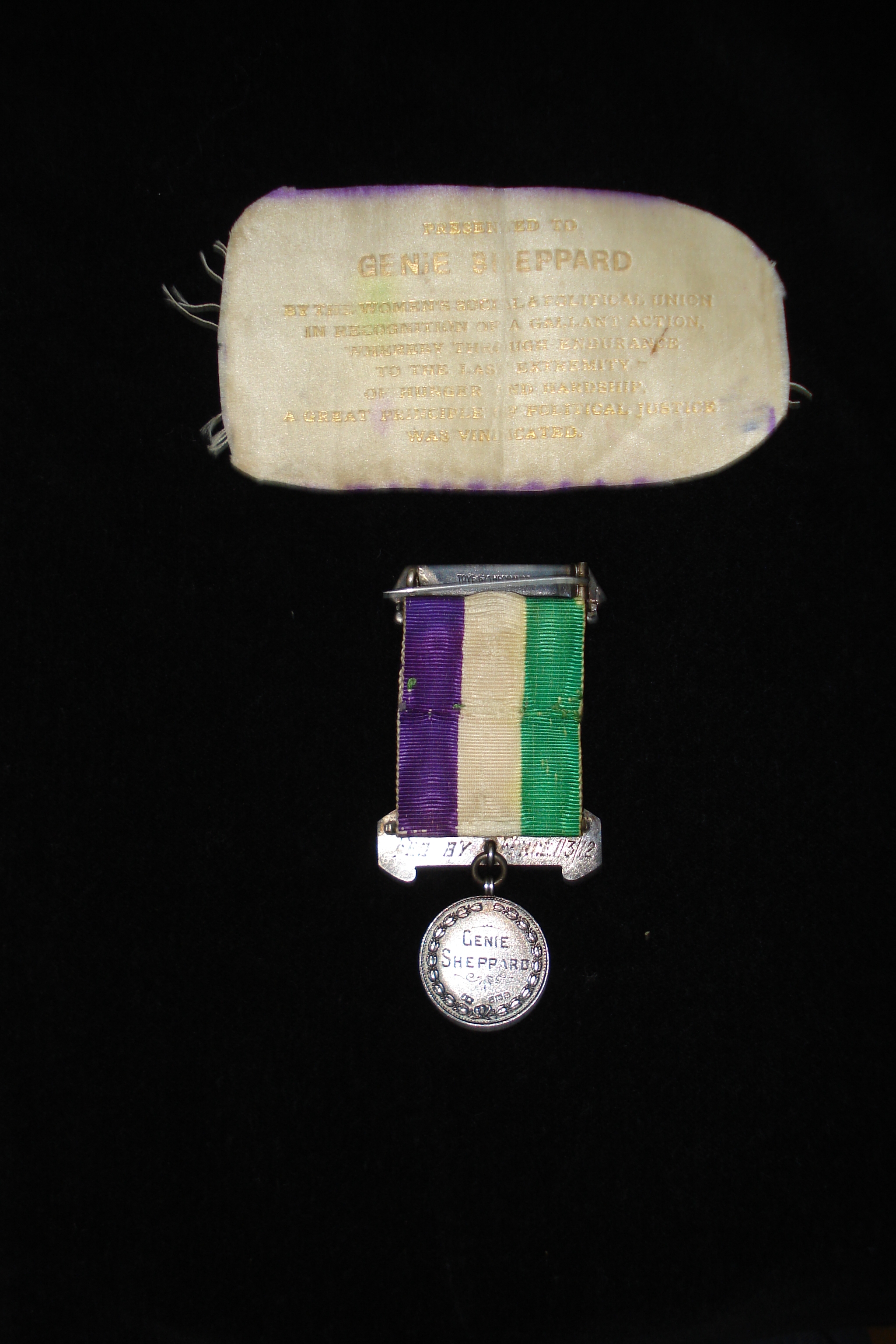
The reverse side of the medal
Some medals, such as the one Emily Wilding Davison is wearing in my 6 August ‘Suffrage Stories’ post, carry more than one bar, indicating multiple hungerstrikes.
Each medal was presented in a purple box, with a green velvet lining. As can be seen in the photograph, a piece of white silk that originally went inside the lid was printed in gold with: ‘Presented to [name] by the Women’s Social and Political Union in recognition of a gallant action, whereby through endurance to the last extremity of hunger and hardship a great principle of political justice was vindicated’.
These medals were made by Toye, a well-known Clerkenwell firm, and cost the WSPU £1 each – the medals now sell for thousands of pounds. They were treasured by their recipients who , in their old age, still proudly wore them on suffrage occasions; they are treasured today by collectors who recognise the bravery of the women to whom they were awarded.
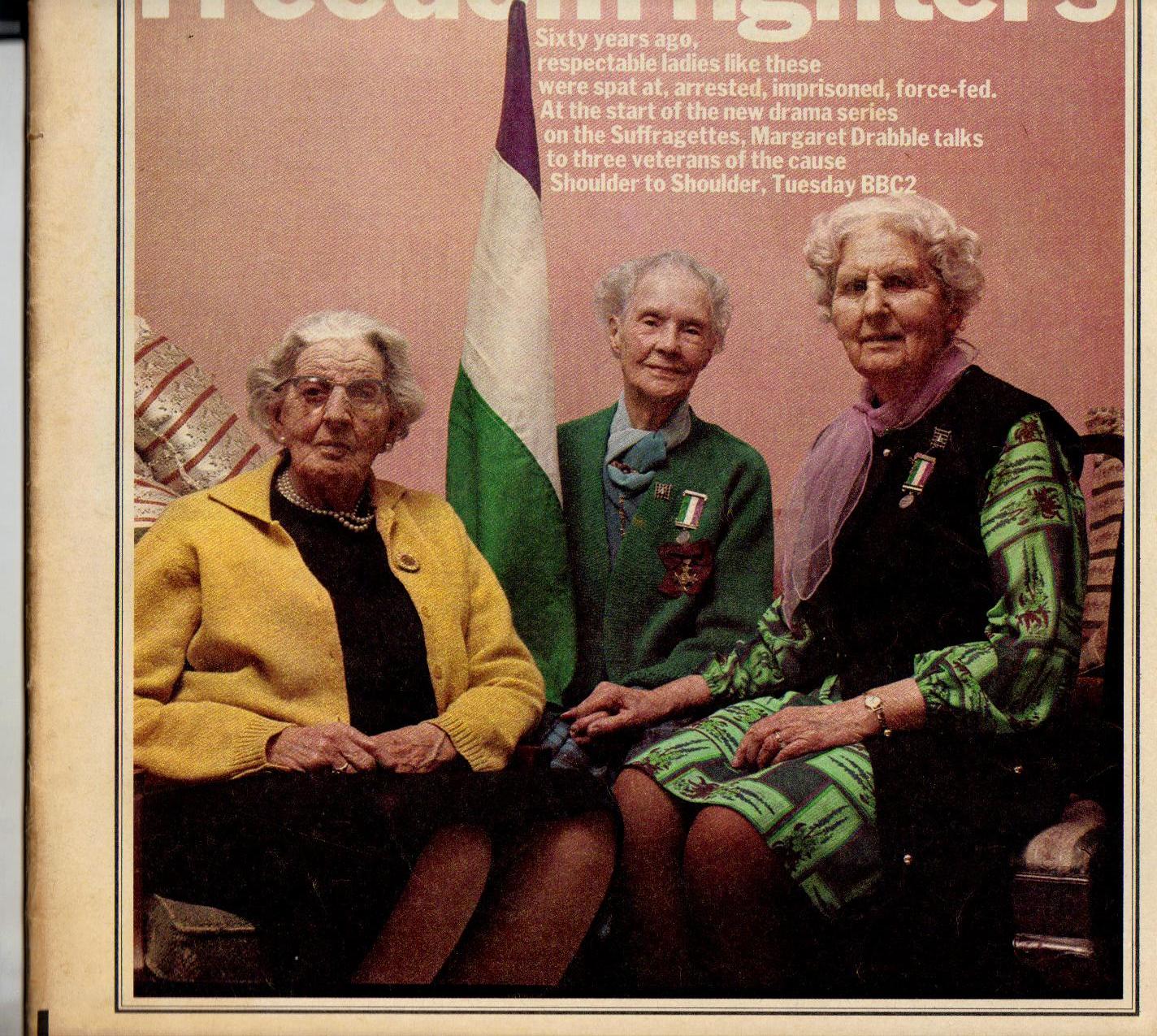
Grace Roe (right) and Leonora Cohen (centre)wearing their hunger strike medals in 1974
Collecting Suffrage: Punch cartoon: Ulysses and the Steam Sirens
Posted by womanandhersphere in Collecting Suffrage on August 10, 2012
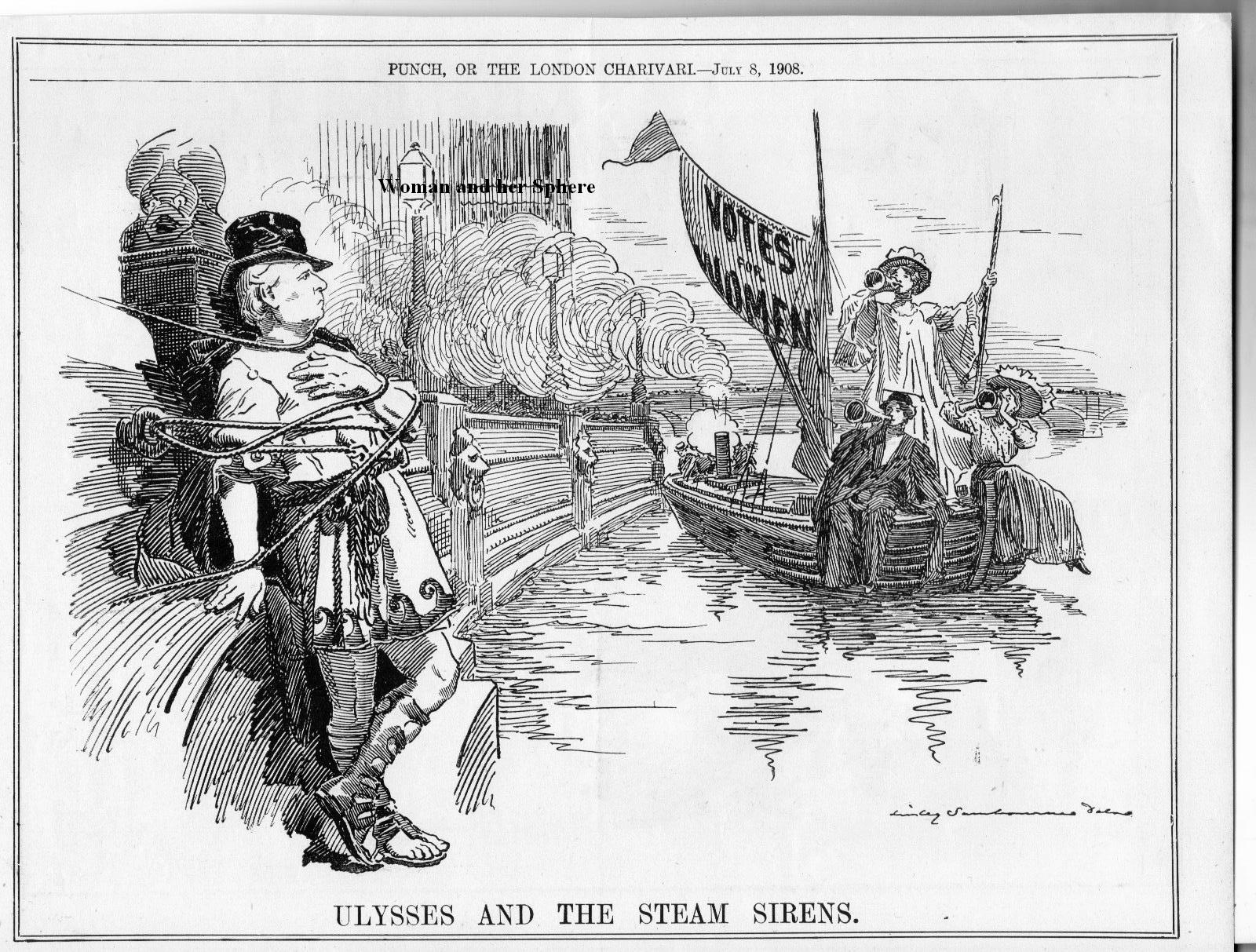 ULYSSES AND THE STEAM SIRENS -full page from 8 July 1908 issue of Punch.
Asquith is tied to the Embankment as a tug bearing suffragettes with loudhailers and a ‘Votes for Women’ saild approaches. The reference is to the boat the WSPU used to announce to the House of Commons, from the river, their forthcoming Hyde Park demonstration.
Very good condition – £12 post free. NOW SOLD
To buy contact e.crawford@sphere20.freeserve.co.uk
Kate Frye’s Suffrage Diary: first canvassing
Posted by womanandhersphere in Kate Frye's suffrage diary on August 9, 2012
Kate lived in Arundel Gardens, North Kensington
Another extract from Kate Parry Frye’s manuscript diary. These entries dates from the period two years before Campaigning for the Vote – the edited version of her diary published by Francis Boutle Publishers – begins. This episode marks the first time Kate is involved in active doorstep – or, at least, letterbox – campaigning. She was to do a great deal more of it over the next few years.
Gladys Wright was a university-educated young woman, a fellow Kensington resident, and already an active suffragist, working for the London NUWSS – non-militant – society.
‘The Grove’ was Westbourne Grove, the local shopping mecca, home of Whiteleys, the Universal Provider.
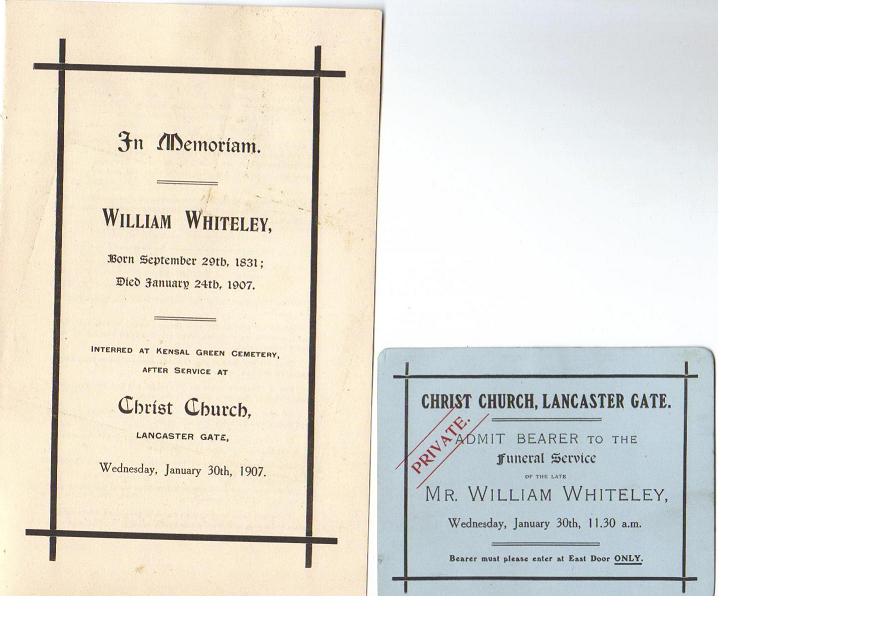
Kate preserved mementoes of Whiteley’s funeral
The Fryes were – or had been – very friendly with William Whiteley, who had been gunned down in his own store just two months earlier.
Monday 19 March 1907 [25 ArundelGardens, Notting Hill]
Up to breakfast and found a letter from Gladys Wright asking me to do some work with them for the Suffrage. A Motor Bus to Strakers in the Edgware Road where I bought 500 envelopes. Changed my things and wrote letters till dinner time – then after dinner started addressing my envelopes and did about half until 11.30 when I went to bed very tired.
Thursday March 19th 1907
Changed my dress after lunch then wrote some letters till tea time. Our At Home day but no visitors arrived. After tea I sat and finished directing my envelopes.
Thursday March 20th 1907
Up at 11.30. The notices had come for the envelopes so I filled Lansdowne Road and Lansdowne Crescent. Sent Agnes [her sister] out with them. I took out ArundelGardens and Powis Square – a most awful place – high flats – and Powis something else. After lunch Agnes and I went out again delivering – more Powis and Colvilles. Colville Mansions nearly killed us the stairs were awful. We got in about 4 o’clock feeling very tired.
Thursday March 21st 1907
Mother went to Committee [Liberal] meeting in the afternoon. Agnes and I went out at 3 o’clock and delivered the last two streets of the meeting notices – then went to the Grove and did a little shopping.
Campaigning for the Vote: Kate Parry Frye’s Suffrage Diary edited by Elizabeth Crawford
For a full description of the book click here
Wrap-around paper covers, 226 pp, over 70 illustrations, all drawn from Kate Frye’s personal archive.
ISBN 978 1903427 75 0
Copies available from Francis Boutle Publishers, or from Elizabeth Crawford – e.crawford@sphere20.freeserve.co.uk (£14.99 +UK postage £3. Please ask for international postage cost), or from all good bookshops. In stock at London Review of Books Bookshop, Foyles, National Archives Bookshop.
- ‘Campaigning for the Vote’ – Front and back cover of wrappers
Collecting Suffrage: Punch cartoon
Posted by womanandhersphere in Collecting Suffrage on August 8, 2012
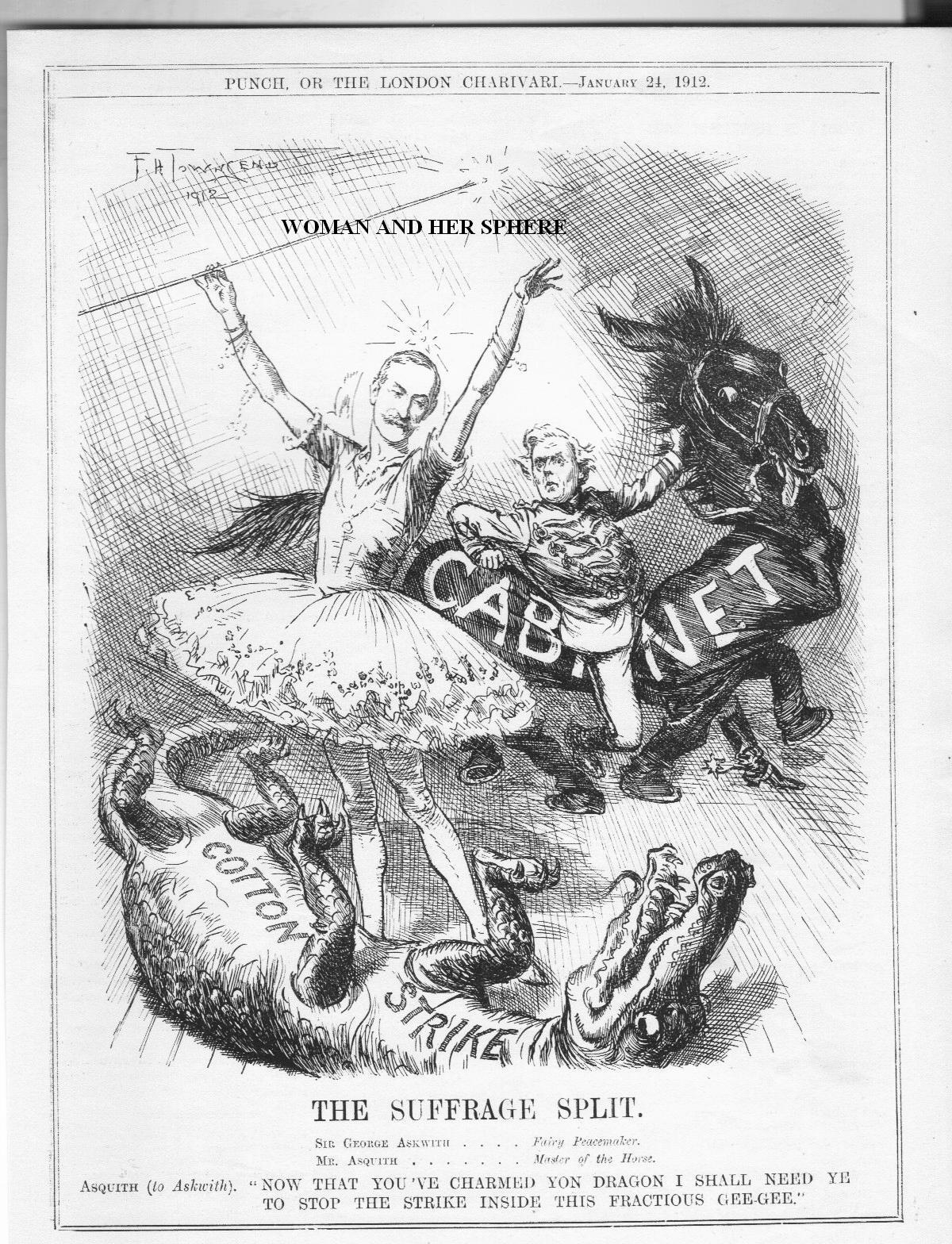 21 January 1912 – full page – ‘The Suffrage Split’. Sir George Askwith (the charismatic industrial conciliator), as ‘Fairy Peacemaker’, has tamed the dragon of the Cotton Strike – and Asquith, wrestling to keep a seat on the Cabinet horse turns to him ‘Now that you’ve charmed yon dragon I shall need ye to stop the strike inside this fractious gee-gee.’
In very good condition £10 plus £1 postage.
To buy contact: e.crawford@sphere20.freeserve.co.uk
Collecting Suffrage: Punch cartoon
Posted by womanandhersphere in Collecting Suffrage on August 7, 2012
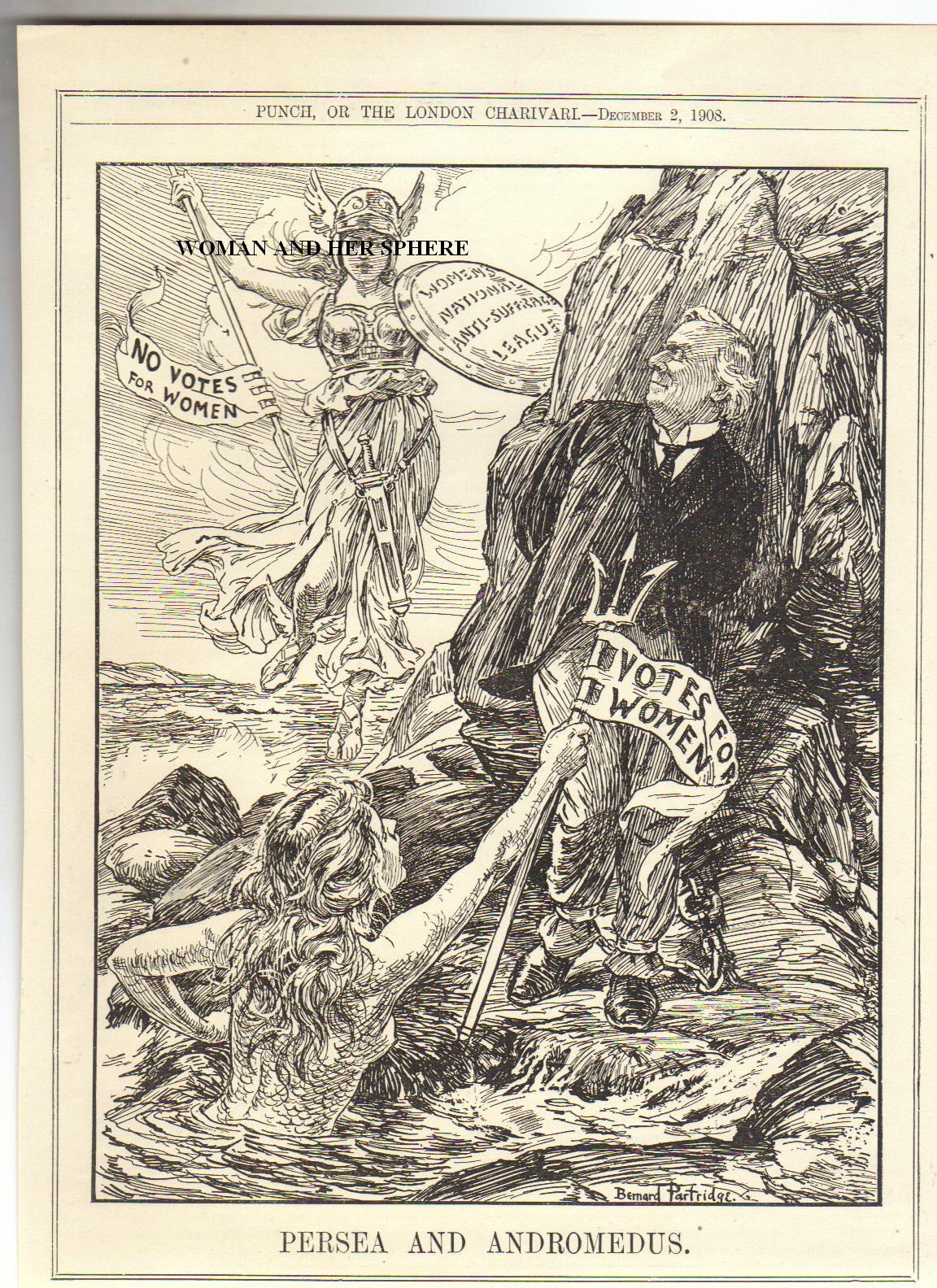 PUNCH CARTOOON – 2 December 1908 – a Bernard Partridge full-length illustration shows Asquith (Andromedus) chained to his rock – beset by the sea monster taunting him with her Votes for Women triton and searching for salvation from Persea – the Women’s National Anti-Suffrage League.
In very good condition £12 post free
To buy: contact e.crawford@sphere20.freeserve.co.uk
[The Women and her Sphere logo is not, of course, on the original]
Suffragette postcards: When Women Vote: Washing Day
Posted by womanandhersphere in Collecting Suffrage on August 6, 2012
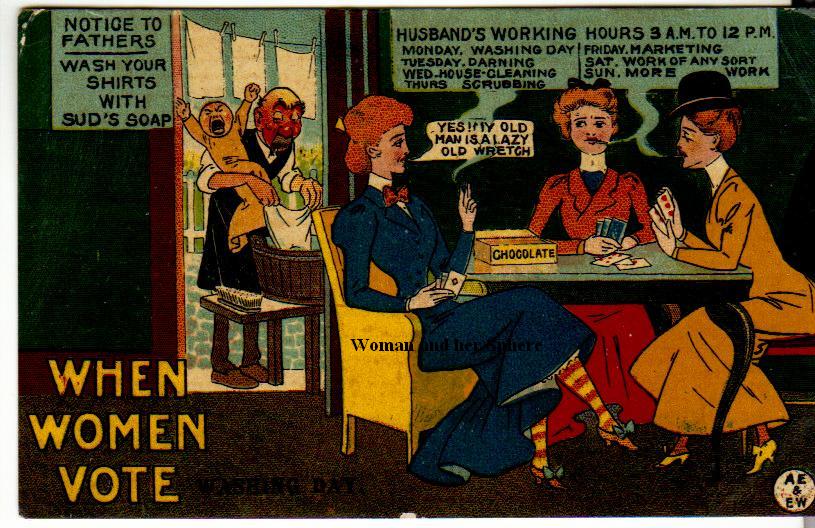 WHEN WOMEN VOTE
Father is in the kitchen bathing baby, while his wife and her friends sit in the parlour playing cards and eating chocolates – commenting ‘Yes, my old man is a lazy old wretch’.
And that’s what will happen when women have the vote.
The card was published by Mitchell & Watkins, who had been producing postcards – both topographical photographic and artist-drawn – from c 1906.
This card was posted – on 10 September 1907 – to Miss Ida Currell – who had been born in 1882 and was one of 4 surviving children of the 10 born to a Hertfordshire farmer and his wife. The Currells farm, at 2 Ware Road, Hertford, was called ‘The Chaplains’.
The card is in very good condition and is £45 post free.
To buy: contact e.crawford@sphere20.freeserve.co.uk
Suffrage Stories: What else is in Emily Wilding Davison’s grave?
Posted by womanandhersphere in Suffrage Stories on August 6, 2012
 A while ago I acquired a small collection of items that had once belonged to Mrs Mary Leigh, the leader of the WSPU fife and drum band and close friend and life-long supporter of Emily Wilding Davison. Among these was a copy of Walt Whitman, Song of the Open Road, published by the Arden Press, Letchworth (1912), containing a lengthy inscription by Mary Leigh on the free front endpaper.
From studying the handwriting I deduced that her comments had been made at two different times – probably decades apart. At the top of the page is an ink inscription ‘From E.W.D. 1912’.- which, I think, was not a presentation inscription from Emily Wilding Davison, but a note by Mary Leigh to commemorate the gift to her. The Emily Wilding Davison archive held by the Women’s Library contains another volume of Whitman’s verse, given by ‘Comrade Davison to Comrade Leigh’. Whitman was clearly a favourite, a poet who spoke to the women – eulogising their bond of close comradeship – and in The Song of the Road Mary Leigh, as in the Whitman in the Women’s Library, has annotated particular verses with some vehemence. The little book itself had clearly been well used; laid in the title-page fold of this copy was a pressed flower.
However it is another piece of information that Mary Leigh added to her endpaper writings that particularly interested me. She wrote: ‘I placed one [i.e. a book] like this from L C. Lytton in E.W.D.’s hand. ‘ In biro, at a later date, as though giving a fuller explanation, she has amplified these details – so that the whole now reads: ‘1913 June 14 in her coffin at Epsom Mortuary I placed one like this (Walt Whitman) from L C. Lytton (Lady Constance Lytton) in E.W.D’s hand open at the page she loved so well. I also placed her Hunger Strike Medals and the 8 Bars of Forcible Feeding also the Medal of Jeanne D’Arc to Fight on God will give the Victory’. 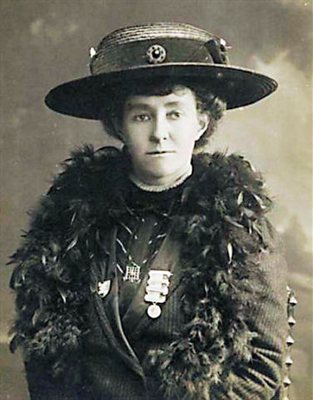
‘Fight on God will give Victory’, Joan of Arc’s assurance, given at her trial, is the message emblazoned on the banner carried at Emily Wilding Davison’s funeral, both in London and then draping the grave in Morpeth.
Here is Emily Wilding Davison wearing her Hunger Strike Medal, with still, I think, four bars, each commemorating a hunger strike and consequent episode of forcible feeding. Further imprisonment lay in the future. It is interesting that Mary Leigh specifically writes of ‘Medals’ in the plural. As well as the Hunger Strike Medal, with its 8 bars, she may have been referring to the ‘Holloway’ badge, received for an earlier imprisonment, that Emily is wearing in the photograph. In addition, I suspect, but cannot be sure, that she may also have, pinned on her other lapel, a WSPU ‘Boadicea’ brooch.
However I have not yet been able to deconstruct Mary Leigh’s mention of the ‘Jeanne d’Arc’ Medal’. As far as I know there was no WSPU medal directly associated with Joan of Arc – although, 1912 having been the 500th anniversary of her death, she loomed large in the popular – particularly suffragette – imagination, Elsie Howey rode as ‘Joan of Arc’ in Emily Wilding Davison’s funeral procession. It may have been that EWD particularly treasured a medal – there were many issued – acquired in the quincentenary year.
Mary Leigh remained Emily Wilding Davison’s champion for the remainder of her life. Out of a meagre income she arranged each year for a Morpeth florist to supply an expensive bouquet of flowers and travelled north every June- even well into old age – to lay them at EWD’s grave in St Mary’s Churchyard. The rather pathetic correspondence concerning these arrangements may be read in the Mary Leigh Papers at the Women’s Library. The florist was a credit to her profession, entirely kind and helpful.
Little would Mary Leigh have expected – although she may well have approved (you can never be sure – she was a contrary character) – that into the 21st century EWD’s grave would have become a shrine – the plot now immaculately restored. So many myths have accrued to the memory of Emily Wilding Davison that it is something of a relief to be able to produce a piece of primary evidence, in the form of this copy of Song of the Road, that allows the visitor standing in front of the Morpeth obelisk to picture, with some assurance, the moment in the Epsom Mortuary as Mary Leigh laid in the open coffin Lady Constance Lytton’s copy of this small volume of verse, together with the hard-earned Hunger Strike Medal.
Suffragette Jewellery
Posted by womanandhersphere in Collecting Suffrage on August 4, 2012
 One of my bêtes noires is the misnaming of any vaguely Edwardian piece of jewellery that comprises stones approximating to some shade of purple (or pink or red), white and green as ‘suffragette’. I have long ago ceased remonstrating with reputable auction houses – they should know better. Ebay, of which one cannot expect very much, is, of course, rife with a lack of historical awareness.
While such pieces may be decorative and even of some intrinsic value, I would be very sorry if anyone paid over the odds for a piece of such jewellery thinking that they were buying an association with the suffrage movement. There are plenty of unscrupulous or ignorant dealers who peddle such notions. I think the term ‘suffragette jewellery’ should be reserved for pieces that have a provenance associated with a suffrage society or an individual who either made or wore it with ‘suffrage’ intent.
Above is an example of what I mean – a ‘true’ piece of suffragette jewellery – a silver and enamel pendant, bearing the ‘Angel of Freedom’ device designed in 1908 by Sylvia Pankhurst. I bought – and sold it – some years ago – and have never found another. As second best to owning the real thing, I have ever since used the image on my trade cards.
I will tell the stories of some other pieces of ‘true’ suffragette jewellery in future ‘Collecting Suffrage’ posts.
Here and here are two articles that attempt to demistify the subject of ‘suffragette jewellery’. Or you can read the entry on ‘Jewllery and Badges’ in my The Women’s Suffrage Movement: a reference guide.
Suffragette postcards: ‘Who said Votes for Women!!!’
Posted by womanandhersphere in Collecting Suffrage on August 3, 2012
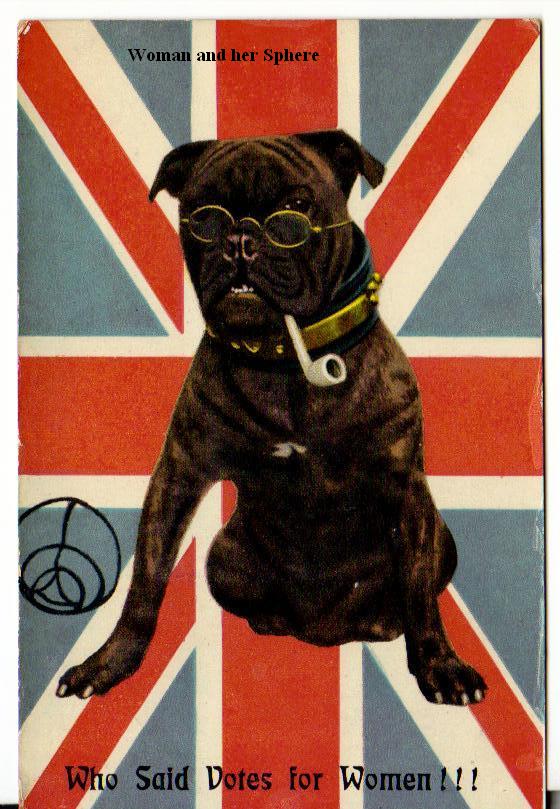 Very British Bulldog – with specs and a pipe – sits foursquare against a background of the Union Jack. It doesn’t look as though he would be interested in allowing women to vote.
The handwritten message on the reverse – from Will – begins ‘Dear Alf, I think the back of this card describers the question of the age.’ Good – posted from Cowes to Rotherhithe in February 1909.
In very good condition. £12 post free. [The ‘Woman and her Sphere’ logo does not, of course, appear on the original.]
To buy: contact e.crawford@sphere20.freeserve.co.uk
Kate Frye’s Suffrage Diary: 14 March 1907
Posted by womanandhersphere in Kate Frye's suffrage diary on August 2, 2012
 Kate is now being swept up into general suffrage enthusiasm – as a member of the NUWSS London society. The hostess of this meeting at 60 Onslow Gardens was Mariana (c 1853-1933), wife of Hylton Dale, a coke and coal merchant.. She was a University of London graduate, a member of the Fabian Society, author of Child Labour under Capitalism and active in many causes, such as the National Association of Women’s Lodging Houses, as well as the suffrage movement. As Kate mentions, one of the purposes of the meeting was to gather signatures for ‘Miss Black’s Declaration’.
  Clementina Black [left], journalist and author and, like Mrs Dale, always concerned for the working woman, had formed a Women’s Franchise Declaration Committee four months earlier, in November 1906, in one of the many, alas futile, attempts to disprove the statement that women did not really want the vote. It sent out forms to women engaged in business and the professions and at the time of Kate’s contribution the Committee had already gathered nearly 31,000 signatures – drawn particularly from the fields of education, social work, office work, trade, and art. Needless to say, the resulting Declaration, with its 257,000 signatures, was brushed aside by the government, as had so many other attempts to reason made by suffrage societies over the previous 40 years. It is little wonder that the call to militancy met with such success.
Of the speakers, Mrs Stanbury was a member of the Fabian Women’s Group and an organiser for NUWSS; Frances Sterling, another Kensington resident, was joint honorary secretary of the NUWSS.
Thursday March 14th 1907 [25 Arundel Gardens, North Kensington]
Changed my dress after lunch and soon after 3 o’clock Agnes and I walked to Notting Hill Gate and went by train to South Kensington and went to Mrs Hylton Dale’s house in Onslow Gardens to a Woman’s Suffrage Meeting. Alexandra and Gladys Wright were to have done all the work of getting it up and asked us to act as Stewards. So we had to get there punctually at 3.45 to receive instructions, leave our coats, put on badges etc and get some tea. Tea was at 4 o’clock, the meeting at 4.30. Such a lovely house, a beautiful tea – everything so nice – and a glorious room upstairs for the meeting and it was packed. One of the doors had to be taken out and the people sat up and down the stairs and crowded the landings. Such a rich, fashionable, beautifully-dressed audience for the most part. I was busy getting signatures before the meeting began and after it was over and Gladys and I collected. It really didn’t seem to matter asking those rich people to give. We collected £3 3s and got signatures to Miss Black’s Declaration. They want a million names to it. At present there are only about the first hundred thousand. It was a most interesting meeting – such an unusual class of people and I loved working. A Mrs Stanbury was in the Chair. She was fine. Miss Clementina Black, Miss Sterling and Mr Walter McLaren MP were amongst the speakers and the questions asked and answered afterwards were most amusing. One girl I was very taken with – she really did look beautiful and her sister was most fascinating – I got them to sign and found the one was Lilias Waldegrave the actress. Agnes and I didn’t realise how tired we were till we came away – we had been standing all the time and getting so excited. We were not in till after 7 o’clock.
Campaigning for the Vote: Kate Parry Frye’s Suffrage Diary edited by Elizabeth Crawford
For a full description of the book click here
Wrap-around paper covers, 226 pp, over 70 illustrations, all drawn from Kate Frye’s personal archive
NOW, ALAS, OUT OF PRINT
- ‘Campaigning for the Vote’ – Front and back cover of wrappers
Suffragette postcards: What Women Want
Posted by womanandhersphere in Collecting Suffrage on July 31, 2012
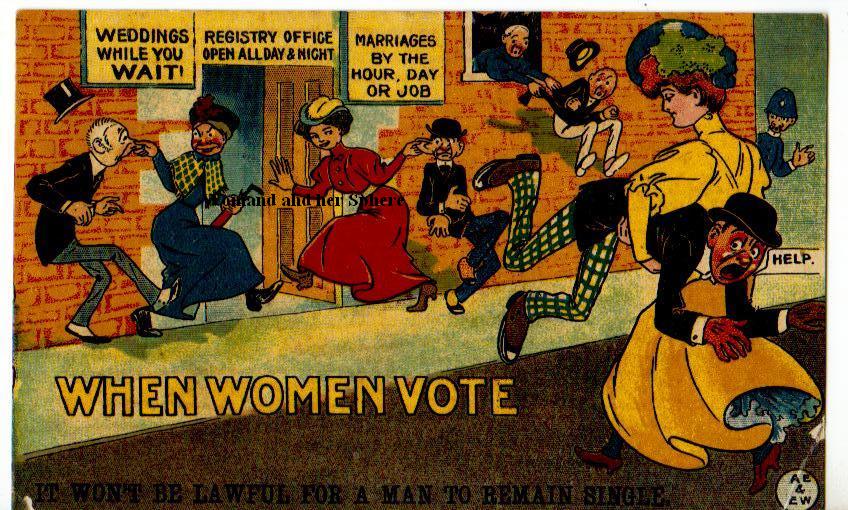 ‘WHEN WOMEN VOTE It won’t be lawful for a man to remain single’. All the men are being rushed into marriage – tweaked by the nose and carried under the arms of women – and all because they have a vote!
The card was published by Mitchell & Watkins, who had been producing postcards – both topographical photographic and artist-drawn – from c 1906.
This card was posted – in, I think, 1913 (the postmark is obscured) – to Miss Ida Currell – who had been born in 1882 and was one of 4 surviving children of the 10 born to a Hertfordshire farmer and his wife. The Currells farm, at 2 Ware Road, Hertford, was called ‘The Chaplains’.
The card is in very good condition and is £45 post free.
To buy: email e.crawford@sphere20.freeserve.co.uk
Suffragette postcards: real photographic portrait
Posted by womanandhersphere in Collecting Suffrage on July 28, 2012
 Here is an example of a real photographic postcard issued by a suffrage society – in this case by the Women’s Freedom League. Its subject is Mrs Lilian Hicks (1853-1924) who, with her daughter, Amy, was at that time of its publication a leading member of the WFL – as well as a supporter of the Church League for Women’s Suffrage, the New Constitutional Society for Women’s Suffrage and the Tax Resistance League. Both mother and daughter, by then members of the Women’s Social and Political Union, heeded the call to boycott the 1911 census.
The Hicks’ association with a wide range of suffrage societies, of which I had written a few years earlier in their joint entry in my Women’s Suffrage Movement: a reference guide, was made manifest in the magnificent collection of badges and awards – including a hunger-strike medal – that many years ago I acquired from a woman to whom they had been indirectly bequeathed. They are now held in a private collection.
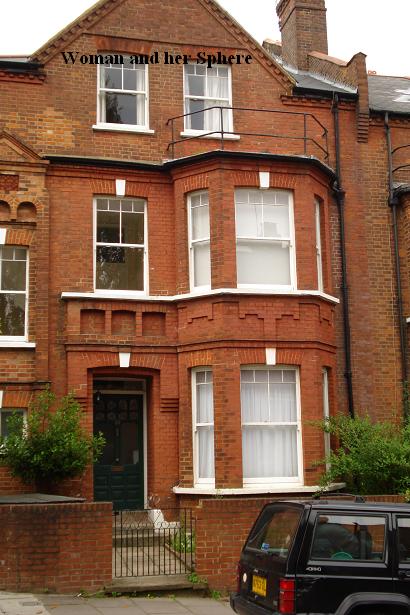 Lilian and Amy Hicks lived here, at 33 Downside Crescent, Hampstead. At the other end of the street was the home – probably the rather unhappy home – of Margaret Wynne Nevinson, a fellow member of the Women’s Freedom League. I realised that a bond of friendship existed between the two women when, all those years ago, I recognised – hanging on the wall of the sitting-room in the small cottage of the woman from whom I was buying the collection of Hicks’ memorabilia – a large painting by Margaret’s son, C.R. Nevinson. It was in the guise of ‘the mother of the Futurists’ that Margaret went when she attended a dinner given by the Women Writers’ Suffrage League at the Hotel Cecil on 29 June 1914. Unfortunately there is no record of the form of dress that this witty allusion took.
The photograph of Mrs Hicks on this official Women’s Freedom League postcard was taken by Lena Connell and probably issued around 1909/10.
Mrs Lilian Hicks was a member of the Women’s Freedom League
Suffragette postcards: suffragettes and policemen 3
Posted by womanandhersphere in Collecting Suffrage on July 27, 2012
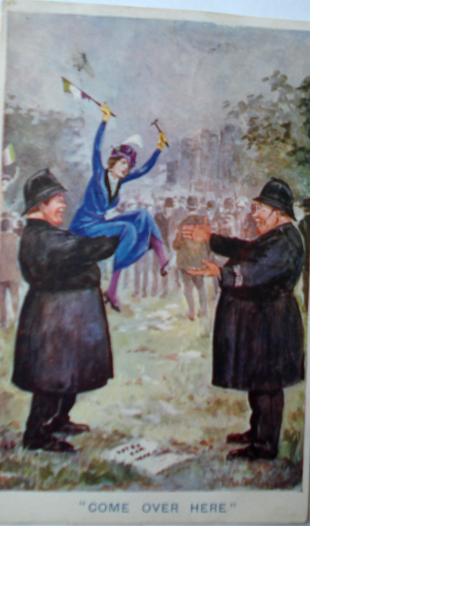 Another in this week’s theme of ‘suffragettes and policemen’.
Two burly policeman are playing games with tiny (elegant, for a change) suffragette. Waving the tools of her trade – a hammer and flags, she is held aloft by one who looks as though he intends to lob her over to the other, who is waiting with outstretched arms. A ‘Votes for Women’ placard lies on the ground between them. Published by Inter-Art Co., Red Lion Sq, London WC. Good – slightly rubbed at edges – posted in 1913. £35 post free.
Kate Frye’s Suffrage Diary: 3 December 1906
Posted by womanandhersphere in Kate Frye's suffrage diary on July 26, 2012
Kate’s family had always taken an interest in politics; her father had been Liberal MP for North Kensington in the 1890s and into the 20th century her mother was the president of the North Kensington Women’s Liberal Association. However, the meeting described below is the first occasion that Kate mentions in her diary her attendance at a specifically ‘suffrage’ meeting and of the disturbances that had been caused by the WSPU’s ‘rowdy attacks’.
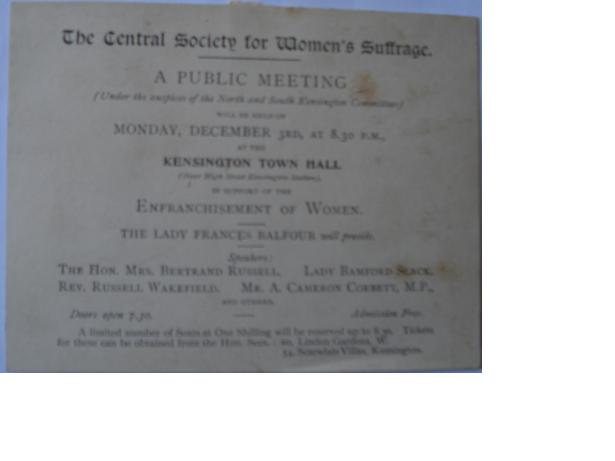 Monday 3 December 1906
At 8 o’clock [evening] Agnes [Kate’s elder sister] and I went off to KensingtonTown Hall to a Woman’s Suffrage meeting – got up by the Central Society. Lady Frances Balfour was presiding. We went by bus – when we got there the large hall was packed. Alexandra Wright was at the top of the stairs and directed us up to the overflow meeting and that was packed too. After a bit the speakers came in to us – the Hon Mrs Bertrand Russell, Miss Gore Booth, Lady Frances Balfour and Mr Cameron Corbett M.P. I heard excellent speeches all of them – they really did put the case in a nutshell and were most instructive and interesting.
Then Gladys Wright came and fetched me out and came and asked me to act as a Steward and collect – then later she went in for Agnes – and we both did what we could. We collected in the Gallery first – then later I was stationed to get the people as they came out. It was very amusing really – and I got so hot and excited – off my head with it – we certainly are in the thick of things always. Some of the people gave a lot – others shook their heads and frowned. One man said I wanted too much – to marry as well as a Vote. I had quite a flirtation on the stairs with a big smart young man – who stopped to ask me a question – he didn’t seem to know anything about anything and when he said the speaker had referred to Earl Percy as ‘half asleep’ – I said ‘That is true about a great many people’ – he did laugh.
I am afraid I felt I was more like a helper at a Bazaar than at so grave a thing as a Woman’s Suffrage Meeting – but then it is so hard for me to be serious about anything – but I am in earnest – I really do feel a great belief in the need of the Vote for Women if only as a means of Education. I feel my prayer for Women in the words of George Meredith ‘More brains, Oh Lord, more brains.’ But we are coming along and not slowly by any means. Of course all these rowdy attacks on the Ministers and these imprisonments have sounded coarse and unpleasant and the jokery made of it most bad for the cause – but women have waited patiently for so long the sort of women who have gone for the matter in this rowdy method are not the best educated or most refined amongst our members.
At this meeting every thing passed off in a most orderly dignified spirit – and the speeches from the women were delightful and must have come as a revelation to many of the audience. There was a declaration there for any working woman there who cared to sign – a number did – I did – as I have a profession [Kate was a rather unsuccessful actress]. Naturally they don’t want crowds of names without any meaning or strength in them. We came home after hearing the amount collected nearly £20 – about the cost of getting up a meeting – the reason for the collection. Bus to Notting Hill – got in soon after 10.30 – in a frenzy of excitement.
Campaigning for the Vote: Kate Parry Frye’s Suffrage Diary edited by Elizabeth Crawford
For a full description of the book click here
Wrap-around paper covers, 226 pp, over 70 illustrations, all drawn from Kate Frye’s personal archive.
ISBN 978 1903427 75 0
Copies available from Francis Boutle Publishers, or from Elizabeth Crawford – elizabeth.crawford2017@outlook.com (£14.99 +UK postage £3. Please ask for international postage cost), or from all good bookshops – and Amazon.
- ‘Campaigning for the Vote’ – Front and back cover of wrappers
 Woman and her Sphere

