Archive for July, 2018
Suffrage Stories: The Hodgson Sisters And Their Suffrage Souvenirs
Posted by womanandhersphere in Suffrage Stories on July 30, 2018
My new catalogue – No 198 – will contain a large collection of suffrage ephemera kept all their lives by three sisters, Edith Lizzie (1881-1958), Florence Emily (1882-1967), and Grace Margaret (1887-1966) Hodgson.
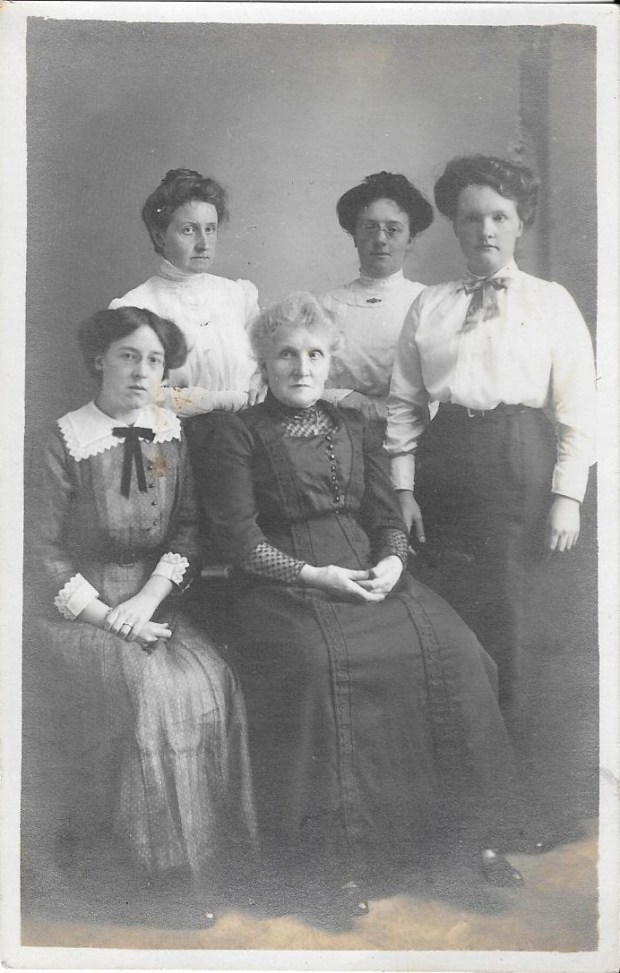
Women of the Hodgson family. With mother, Jemima, in the centre it is thought that Grace is on her right, with Mabel back left, next to Florence and with Edith on the right (Photo courtesy of Mabel’s descendants)
They were the daughters of Edward Hodgson (1857-1919) who was, successively, a linen draper, by 1901 a dairy manager and in 1911 was a ‘dairyman, unemployed’. The 1901 census found Florence, who is described as a ‘telegraphist’ (she worked for the Post Office), staying as a boarder, with a fourth sister, Mabel, at the Sunday School Union Home of Rest in Wykeham Road, Hastings. This would suggest that these sisters, at least, had possibly been teachers at Sunday School. Edith and Grace were back home with their parents, living at 31 Lawford Road, Kentish Town – Grace was a schoolgirl and Edith was working as a pupil teacher.
When the next census was taken, in 1911, Grace, who is now a teacher working for the LCC, and Mabel, a telegraphist, were at home with their parents at 39 Estelle Road, Gospel Oak, Hampstead – but there is no trace of Edith and Florence. There are two ‘Census Resistance’ badges in the collection – perhaps once owned by Edith and Florence. By now they, together with Grace, had been active for some time in the Women’s Freedom League and, as they can be found nowhere else on the census, it is to be presumed that they were following the call to boycott. For by this time all the sisters, except Mabel (who married in 1914), were active members of the Women’s Freedom League. It is likely – because there are items of WSPU ephemera in the collection – that they had originally joined the WSPU, but had then moved over to the WFL.
The collection also contains two very rare badges referring to the right of the subject to petition the King. These are associated with the WFL picket of the House of Commons organised by the WFL between July and October 1909. A postcard to ‘Miss Hodgson’ from Mrs Bettina Borrmann Wells, who organised the picket, makes clear that Edith, at least, took part in the picket.
The collection contains many other badges, as well as sashes worn by the sisters, ribbons that may have been worn as neckties, a miniature WFL pennant representing Holloway Prison, and a home-made ‘dolly bag’ – a green drawstring bag with gold carrying straps, on the front of which is sewn a WFL cloth shield badge. It is very unusual to find items of suffrage dress that have a clear provenance. The sisters’ intense interest in suffrage personalities is demonstrated in the large number of real photographic portrait postcards that they bought – and kept. These include members of the WSPU as well as of the WFL.
The sisters continued supporting the WFL with financial donations until at least 1932. They continued to live together for the rest of their lives – latterly at 39 Laurier Road, Dartmouth Park, NW5. Family memory has it that the sisters had one each of the house’s three floors.
The sisters were obviously keen to see something of the world – and in 1930 all three travelled to Tangier and two years later Edith and Grace visited Japan. They probably had other adventures – but these are the only ones that survive in the records.
As with the Stevenson Sisters, about whom I wrote last week, no family memory remained of the involvement of Edith, Florence and Grace in the suffrage movement – nor, indeed, anything else of their lives – the fate, as I’ve mentioned before, of the maiden aunt. It is only since one of Mabel’s descendants took the Collection to an auction house that something of their story has slowly been revealed.
If you would like to receive a copy of the catalogue containing the Hodgson Collection, email me elizabeth.crawford2017@outlook.com
Copyright
Suffrage Stories: Ella And Geraldine Stevenson, Suffragette Sisters
Posted by womanandhersphere in Suffrage Stories on July 23, 2018
Place is important to me and sometimes my attention is caught by an incident occurring somewhere I’ve known well. And so it was that four years ago I noticed that a suffragette ‘outrage’ had taken place at the Richmond Post Office. Ella Stevenson, a WSPU member, was charged with placing a packet containing two tubes of phosphorous in the post box attached to the main Richmond Post Office. In my youth I knew this Post Office very well – it is a rather fine building – 70 George Street – but was long ago abandoned by the PO and is currently a branch of Anthropologie. Quite coincidentally, very soon after I had become aware of this incident and had pictured it in my mind, I was asked to value two hunger-strike medals – one awarded to Ella Stevenson and the other to her sister, Geraldine. Other matters have intervened, but now, four years later, here is something of their story.
Ella and Geraldine Stevenson were two daughters in the large family (12 children, I think) of Leader (1826-1907) and Louisa Stevenson (1828-1913). Leader Stevenson, who was an ‘Australia merchant’, was born in London of non-conformist parents, his wife in Tasmania. In the first decade of the 20th century the family was living at 10 Cumberland Road, Kew.
Both Ella [Ellen] (c. 1860-1934] and Geraldine Stevenson (1866-1949) were financial supporters, in a smallish way, of Mrs Pankhurst’s militant suffrage organisation, the Women’s Social and Political Union (WSPU) and until October 1910 Ella was Literary Secretary of the Richmond and Kew WSPU.
Ella’s first militant action seems to have taken place on 4 December 1909 when, as ‘Ethel Slade’, she was arrested in Rawtenstall, Lancashire, after breaking windows in the local Liberal Club. She had gone north to protest at a meeting held by a government minister, Lewis Harcourt, but had been barred from the theatre where it was being held. She refused to pay a fine and was sentenced to 14 days’ imprisonment. It doesn’t appear that the police had yet discovered her real identity.
The following year, in November 1910, as ‘Ethel Slade’, Ella Stevenson was sentenced to 14 days’ imprisonment after taking part in demonstrations surrounding the ‘Black Friday’ riot in Parliament Square.
Neither Ella nor Geraldine Stevenson was at home on census night in April 1911 and we may presume they were following the WSPU boycott call. Later in the year, again as ‘Ethel Slade’ Ella was charged with breaking windows in Parliament Street on 21 November – as part of an organised WSPU demonstration (because the government was proposing to bring in a Manhood Suffrage Bill – excluding women). ‘Ethel Slade’ was sentenced to 14 days’ imprisonment.
Now, although I know that Geraldine Stevenson earned a hunger-strike medal, I can find no trace of her among suffragettes arrested by the police nor does her name appear in any news reports. However, when she was breaking windows in Parliament Street ‘Ethel Slade’ was accompanied by a ‘Grace Stuart’, who was, in fact, Geraldine Stevenson, using a pseudonym, but keeping her own initials.
Both ‘Ethel Slade’ and ‘Grace Stuart’ were released from prison on 12 February 1912. At the ‘Welcome Breakfast’ ‘Ethel Slade’ said it was a great honour for women to go to prison and mentioned that she was going to volunteer for the next deputation.
A month later, in March 1912, Grace Stuart was sentenced to 6 months’ imprisonment after taking part in an organised WSPU window-smashing campaign – and I suspect it was during this term in Holloway that she earned her hunger-strike medal.
On 5 November 1912, as ‘Ethel Slade’, Ella, with another women, broke 9 plate-glass windows in New Bond Street – and was sentenced to 4 months’ imprisonment. They were protesting against the fact that an amendment to the Irish Home Rule bill that would have allowed for a measure of female suffrage was lost. She went on hunger strike, was forcibly fed, and was released after two weeks.
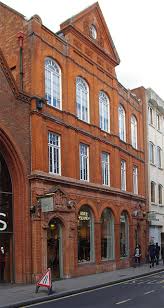 The former Richmond Post Office
On 5 March 1913 Ella Stevenson was sentenced at the Old Bailey to 9 months’ imprisonment for placing a packet containing two glass tubes of phosphorous in the post box attached to the main Richmond Post Office. It had burst into flames. It is more than likely that she had been given the phosphorous by Edwy Clayton, an analytical chemist of ‘Glengariff’, Kew Road, Kew, whose wife was honorary secretary of the Richmond and Kew WSPU. Around the time of Ella’s sentence, Clayton was charged with conspiracy to commit damage (supplying bomb-making information and materials) and sentenced to 21 months’ imprisonment. He went on hunger strike, was released under the ‘Cat and Mouse’ Act and eluded re-arrest.
When sentencing Ella Stevenson the Recorder said that ‘it was impossible for people to be allowed to go about defying the law because they require some change made in it. Such a condition of affairs would lead to a state of barbarism’. Defendant replied that she would go to prison to carry on the fight as she had carried it on outside’.
No women were allowed in court during her trial and Ella specifically asked for a ‘lady reporter’ to be allowed in court and had also asked for her sister [Geraldine?] to be present. But the Recorder was adamant – ‘No women’. There was something of an outcry about the exclusion of women, and the Commissioners of the Central Criminal Court quickly decided that this would not happen in future.
Ella Stevenson went on hunger strike as soon as she got to Holloway and was forcibly fed. ‘Extraordinary vitality is a splendid thing to have outside prison, it is tiresome inside. I am not downhearted’ she is reported as saying. A report in Votes for Women, 11 April 1913, described how her nostrils were severely injured by forcible feeding and one of her teeth had been knocked out when members of the prison staff were trying to force her mouth open. The Governor reported: ‘the task has been very difficult and disagreeable one owing to her violent resistance; but the medical officer reports that though she exhausts herself by her resistance, there are no serious ill-effects. As to her teeth, the facts are that on one occasion she bit the rubber shield over the doctor’s finger and broke a tooth which was a mere shell owing to decay .Her lip has been sore from an attack of herpes but is now better. These details are distressing and I should be glad to advise a remission of sentence if it were not almost certain that she would on her release commit further offences. I need not say that a strict watch is kept over her condition and every care taken to prevent her injuring herself.’ It is clear, from a letter written to the Home Office by Geraldine Stevenson, that it was one of Ella’s front teeth that was broken – a rather distressing thing to happen to a middle-aged woman in Edwardian Britain
A 17 April 1913 report from Holloway Prison shows that she was given 2.5 pints of ‘Horlicks, Brand’s Essence, Allenbury’s Milk and egg – fed twice by oesophageal tube. Violently resistive the whole time.’
Ella was eventually released from prison on 28 April under the ‘Cat and Mouse’ Act – the Temporary Discharge of Prisoners Act, one of the first four prisoners released under the Act. She did not return to Holloway on 12 May as required – but was re-arrested on 7 August 1913, while selling The Suffragette in Richmond, and was taken back to Holloway to continue her sentence. Her mother had died at home in Kew just over two weeks earlier – on 19 July 1913.
Ella again went on hunger strike and was released on 14 August under the terms of the ‘Cat and Mouse’ Act. While in prison she broke windows and her conduct was deemed ‘Bad’. A Report from the prison’s medical officer (13 August) mentioned that she ‘has forsaken sleep owing to constantly recurring dreams that she has swallowed a drop of water by mistake. Feels extreme satisfaction on finding it is only a dream.’
A ‘Wanted’ Notice for Ella Stevenson appeared in the Supplement to the Police Gazette 2 January 1914. ‘Wanted – for failing to return to Holloway Prison on 22 Aug 1913, as required by the conditions of her discharge under the Prisoners’ Temporary Discharged Act (1913), Ella Stevenson, alias Ethel Slade CRO No S/165568, age refused (about 45), height 5ft 6in; complexion sallow; hair light brown turning grey, and eyes grey.’
Perhaps as a result of this publicity, on 23 January 1914 Ella Stevenson was re-arrested, was once again taken to Holloway, where once again she adopted a hunger-and-thirst strike and was released a few days later (under the ‘Cat and Mouse’). She was arrested again on 17 March, released on 19 March, and re-arrested 23 June, and released 27 June. She described this last occasion: ‘I was arrested in Richmond very early on Tuesday morning, June 23. I attempted to strike the man who arrested me, but was taken to Richmond Police Station where I was held until 2 o’clock and then taken through the streets of Richmond firmly grasped by two men in uniform. Finding the procession was to be of this very public nature, I decided to make the most of the opportunity to get the people to understand, if possible, what was happening. I resisted the whole way telling the people that I was resisting an iniquitous Act on principle. I gave them as much information as I could in the time, and at the railway station and afterwards in the carriage, when several people got in with us, I was able to appeal to them and reason with them without interruption….’The Suffragette, 10 July 1914. Once back in Holloway she again went on a hunger-and-thirst strike, was released on 27 June and does not appear to have been re-arrested before the outbreak of war on 4 August brought the WSPU campaign to an end.
Picturing Ella Stevenson’s activity in George Street and, eventually, that enforced march through Richmond certainly enlivened my rather tedious wait at the bus stop opposite the station as I was on my to the National Archives last week. And, once there, I met her again in files describing her treatment in Holloway and her resistance to it. No real knowledge of the part she and her sister played in the fight for the vote – or, indeed, anything else at all of their lives – has survived within her family. Such is the fate, noted time and time again, of the maiden aunt.
P.S. For a Museum of London surveillance photograph of Ella Stevenson, probably taken when she was in Holloway – see here.
And, quite coincidentally, the Museum of London was earlier this year given the illuminated scroll awarded to Ella Stevenson by the WSPU after one of her imprisonments. All the pieces of the Stevenson jigsaw are falling into place.
Copyright
The Garretts And Their Circle: Fanny Wilkinson And Middlethorpe Hall
Posted by womanandhersphere in The Garretts and their Circle on July 9, 2018
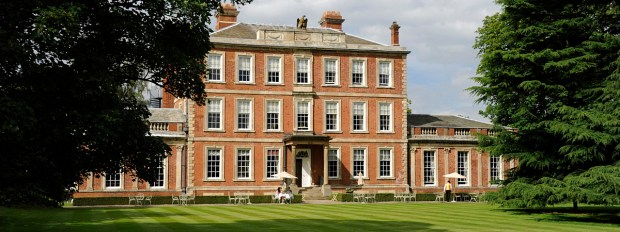
Middlethorpe Hall, York
As part of Bloom! – a festival celebrating horticulture and flowers in York – I was invited give a talk yesterday about Fanny Wilkinson, Britain’s first professional woman landscape gardener, in Middlethorpe Hall, the home of her youth.
Middlethorpe Hall, now owned by the National Trust and run by the Historic House Hotels, is utterly lovely – from its panelled interiors, delicious food, kind staff – to its interesting and well-kept – and extensive – grounds. It retains an appealingly domestic atmosphere and it wasn’t difficult to think of Fanny Wilkinson living there in the 1880s with her mother and sisters.
Yet Fanny was not content with being a ‘daughter-at-home’ and enjoying these beautiful surroundings (although letters show she was delighted to return to Middlethorpe for short breaks) and it was while living here that she developed the ambition of becoming a landscape gardener. Wasting no time, she set off for London and enrolled at the Crystal Palace School of Gardening, run by Edward Milner who had been a pupil of Joseph Paxton. She was the only woman student- and an upper-middle class woman at that. All the others were male artisans – for whom the School was intended.
If you are interested in discovering just how many of London’s open spaces were designed by this one determined woman, you can read all about Fanny Wilkinson’s extremely successful career – and discover how it was intertwined with those of Elizabeth Garrett Anderson, Millicent Fawcett and Agnes Garrett, in Enterprising Women:the Garretts and their circle see https://francisboutle.co.uk/products/enterprising-women/
Copyright
 Woman and her Sphere