Posts Tagged english heritage
Suffrage Stories: An English Heritage ‘Blue Plaque’ For The Women’s Freedom League
Posted by womanandhersphere in Suffrage Stories on September 20, 2023
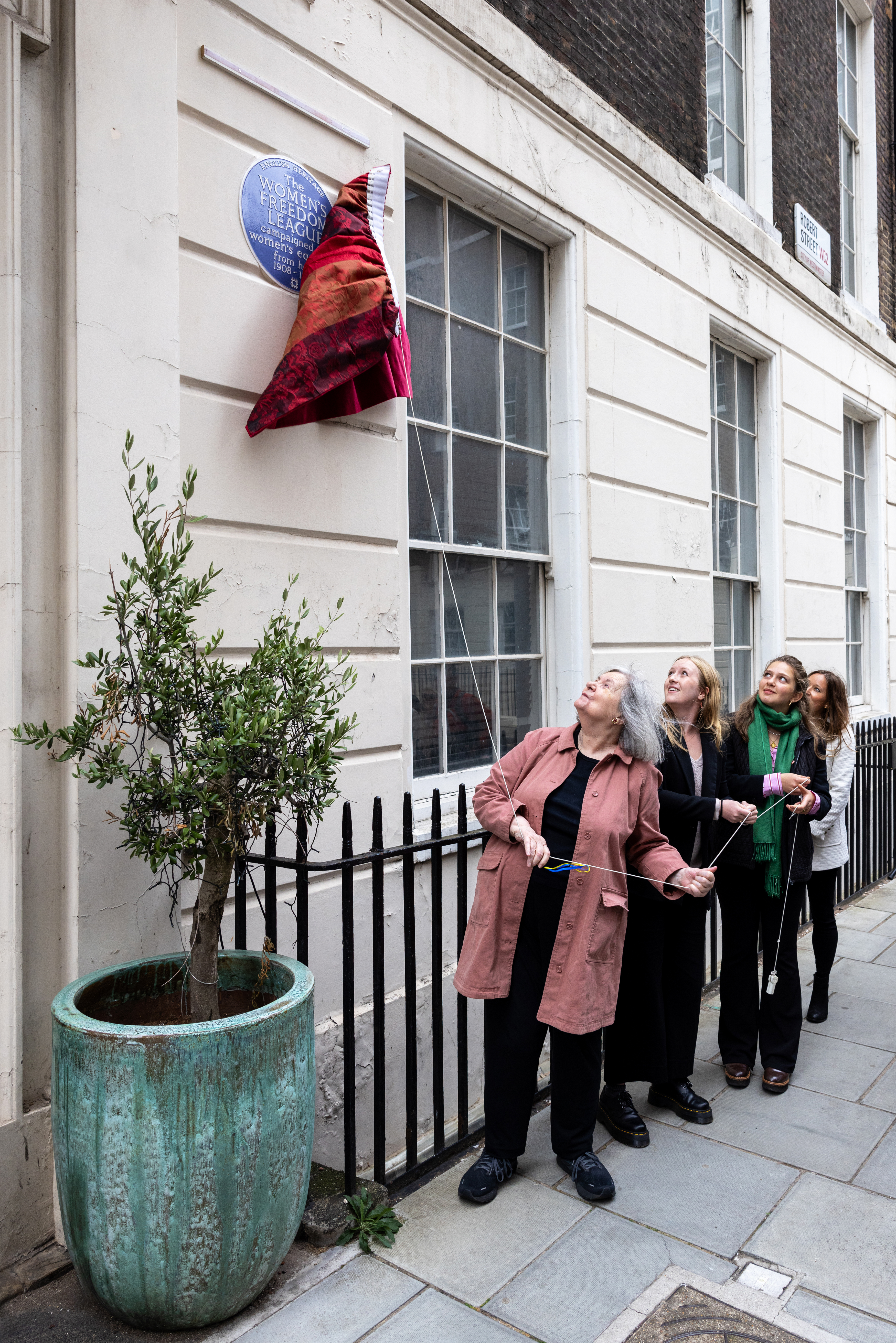
Photo courtesy of English Heritage
On 19 September 2023, together with members of the Feminist Society of Ibstock Place School, I unveiled the 1000th English Heritage Blue Plaque. It commemorates the Women’s Freedom League and is mounted on the wall of their sometime headquarters, 1 Robert Street, Strand.
This was 116 years and 5 days after the Women’s Freedom League (WFL) was formed at a meeting held close by – in the very popular Eustace Miles vegetarian restaurant. Vegetarianism was very much a WFL ‘thing’.
The meeting had been called by some women, erstwhile members of the Women’s Social and Political Union, who had protested Mrs Pankhurst’s unilateral action in abolishing the WSPU constitution and cancelling their annual conference. They did not care for the fact that the Pankhursts intended, in effect, to rule the WSPU by dictat.
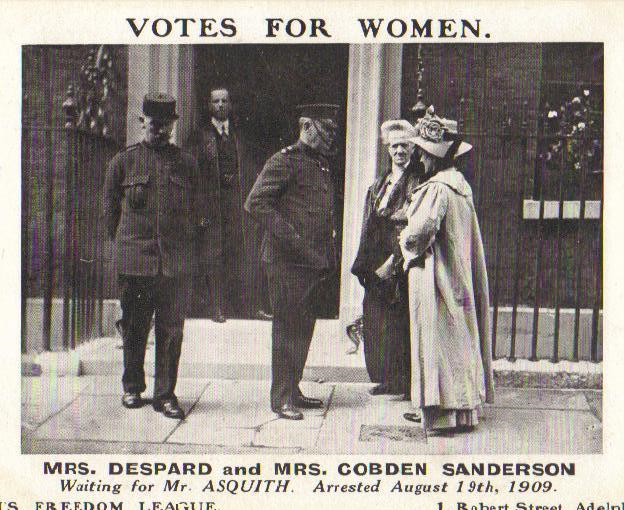
Mrs Charlotte Despard was voted into the chair and among others present at that first meeting were Teresa Billington (later Billington-Greig) and Edith How-Martyn – all strong individuals –with strong views – believing particularly in democracy and socialism.
Charlotte Despard, born into an Anglo-Irish family and long a widow, had since the 1890s devoted herself to social work with women and children in an impoverished area of Battersea, hemmed in by the Thames and railways. Most unusually, she chose to live there – at least during the week – only returning to her country home at Esher at the weekend. Teresa Billington-Greig – the WFL’s political theorist – had been a teacher before devoting herself to the WSPU suffrage campaign – while Mrs Edith How-Martyn, a young science graduate – was an effective and practical campaign organiser.
The three leaders were all supporters of the Independent Labour party and had been particularly troubled by the Pankhursts’ decision, announced earlier in 1907, not to support Labour candidates at elections. They were not women who took kindly to autocracy and were all to give a lifetime commitment to the WFL – and to its campaigns for social justice for women.
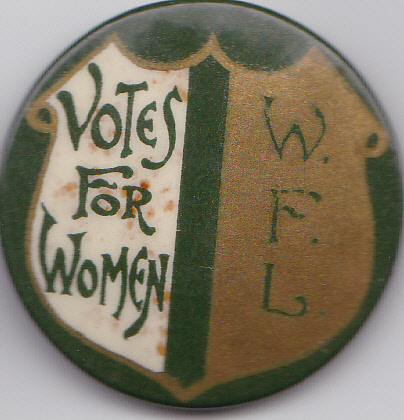
It took a little time for matters to resolve themselves, but in November 1907 the new society was given a new name –the Women’s Freedom League – chosen democratically by a referendum to members. The other suggested names were all associated with emancipation and rights – but Women’s Freedom League was good choice. It was not a name tied only to suffrage, but encompassed all kinds of freedom – appropriate to an agenda that changed over time to meet changing conditions. The thread running through the WFL’s long active life was – Equal citizenship, equal pay, equal opportunity, and equality under the law.
After a year in a temporary office, the WFL moved to 1 Robert Street in September 1908 – into 4 rooms on the first floor – staying until 1915, when they moved to High Holborn. Their presence there is marked by a plaque, although not the esteemed ‘Blue’ one.
Although considered a militant society, unlike the WSPU the WFL didn’t carry out acts of physical protest. Its members were not arsonists or bombers but, influenced by the teachings of Gandhi, they conducted campaigns of passive resistance, such as protesting in Police Courts that women were tried by laws made only by men, and in 1909 conducting a 5-month continuous picket of the House of Commons, ‘The Great Watch’.

One WFL tactic was to attempt to present petitions to the King.

It was WFL members, Helen Fox and Australian Muriel Matters, who attracted publicity in 1908 by chaining themselves to the grille in the Ladies’ Gallery in the House of Commons – and Muriel Matters, again, who hired an airship from which to drop leaflets over London. It was the WFL who first had the idea of boycotting the 1911 census, and whose members set up the Tax Resistance League, refusing to pay taxes and then creating publicity when their goods were seized and auctioned.

Local branches were set up throughout the country – the WFL was notably strong in Wales and in Scotland – but at both a local and a national level the WFL always struggled financially. To support their work the WFL relied on generous donors and on their own, time-consuming, fund-raising activities. Seen as of particular importance was raising enough money to ensure the publication of their weekly paper, The Vote, in which they were very successful as it ran from 1909 until 1933 and is an invaluable source of information on the changing nature of feminism in the first three decades of the 20th century. As well as its newspaper, the WFL’s main archive is held just across the Strand from Robert Street in the Women’s Library @LSE.
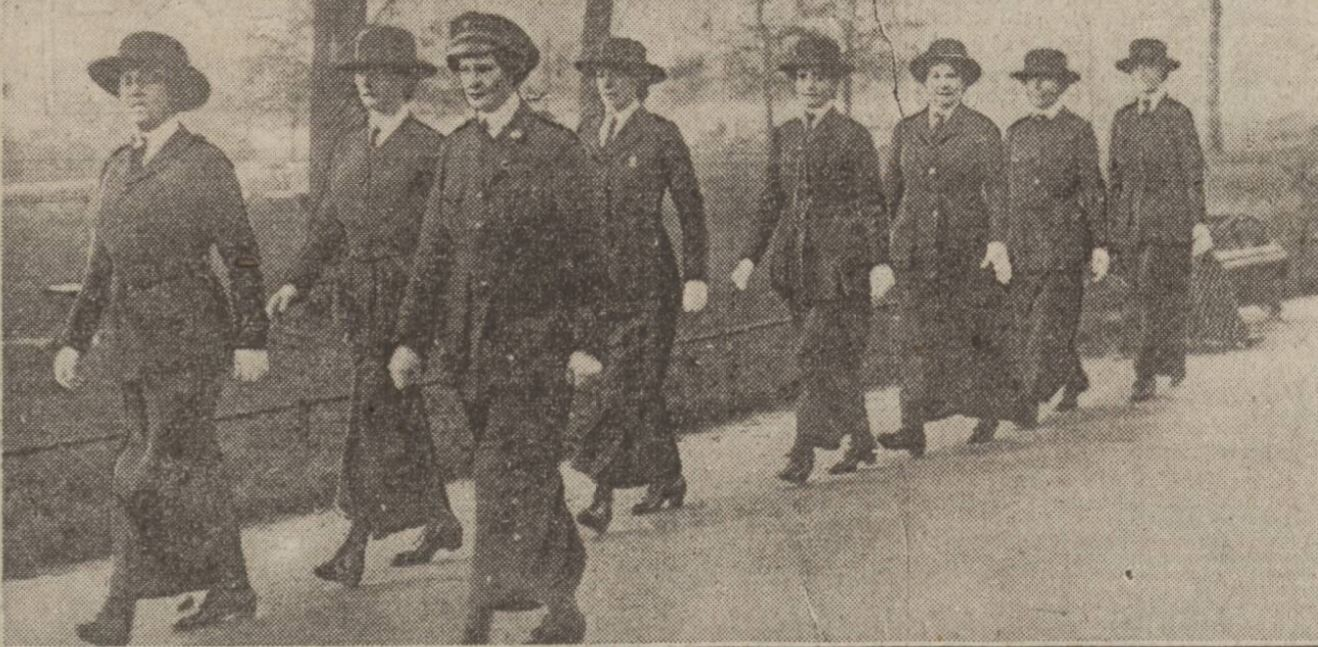
Women Police Volunteers, December 1914
Although they called a halt to militant protests during the First World War, the WFL continued to campaign for women’s rights – for instance, its members were associated with the founding of the first women’s police force.
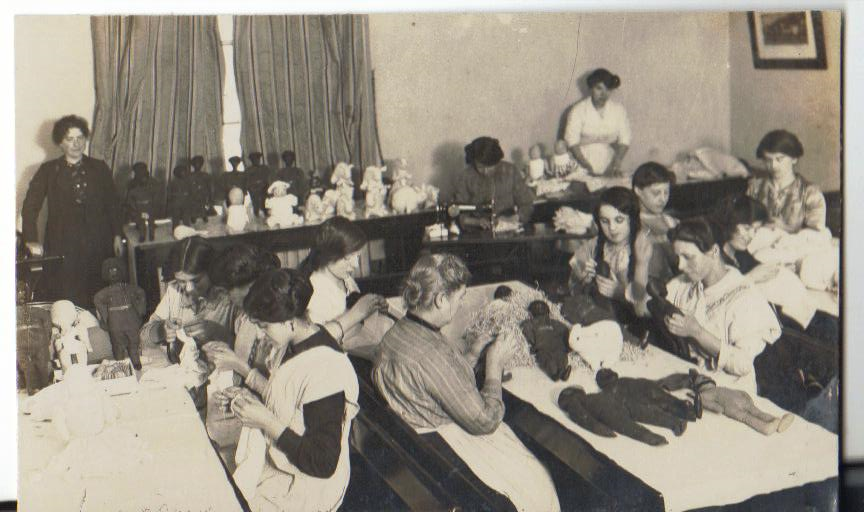
In the early years of the war the WFL ran a toy factory in Hackney, providing work for women, particularly those who had hitherto been employed in the garment trade.
Although most members of the WFL were pacifists the organisation managed to avoid a schism on the subject, such as beset the National Union of Women’s Suffrage Societies. Indeed, WFL members were generally adept at putting aside differences –including party differences – and instead concentrating on working for their shared causes.
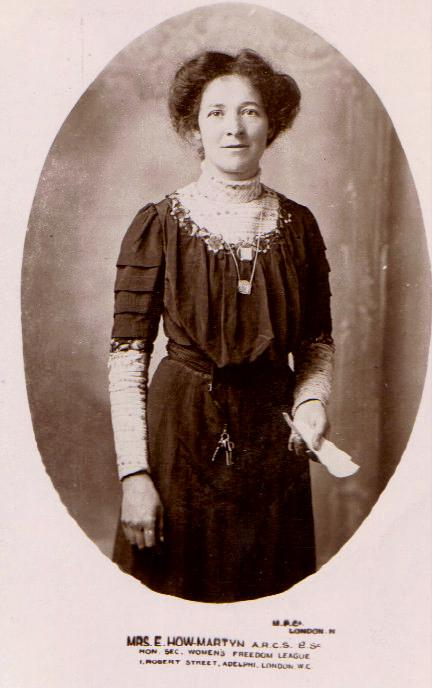
Mrs Edith How-Martyn
Several members of the WFL were candidates in the November 1918 general election, the first in which women over 30 could vote and at which women could stand for Parliament Charlotte Despard, who stood for Labour in Battersea, was one and Edith How-Martyn, who stood as an Independent in Hendon, was another – but all were unsuccessful. In one way the fact that not all women were granted the vote in 1918 had a positive effect in that it gave a society such as the WFL the impetus to continue the campaign – for an equal franchise was an obvious goal– while also working for gender equality across all aspects of political, educational, work, and social life.
During the interwar years new WFL branches were formed, while old ones maintained a loyal following – many members who had held posts in the pre-war years continuing to do so right through the 1920s. One such was Mrs Sarah Whetton , honorary secretary of the Portsmouth branch, where the WFL was particularly active as a pressure group, influencing local government on housing, education and health – all areas of special concern to women.
The WFL spanned the lifetime of its early members, only dissolving itself in 1961 after the death of its president, Marian Reeves, who had joined the organisation as a young woman in 1909. The WFL had run its course. Back in 1907 the founders had announced ‘we hope to fight to the finish as members of the Women’s Freedom League’ – and we were there in 2023 to vindicate their hope.
With many thanks to English Heritage for arranging such an engaging event – and commiserations to Dr Claire Eustace, who would have been my fellow speaker but who was prevented by illness from attending.
If you have a BBC account already, or sign up to one, you can listen to me speaking, very briefly, about the WFL on the Radio 4 Today programme (at 50 mins in). There was also a well-researched piece on the BBC 1 Local News.
Copyright
All the articles on Woman and Her Sphere and are my copyright. An article may not be reproduced in any medium without my permission and full acknowledgement. You are welcome to cite or quote from an article provided you give full acknowledgement.
The Garretts And Their Circle: Quite A Week: ‘Millicent Fawcett: Selected Writings’ And Two Plaques For Fanny Wilkinson
Posted by womanandhersphere in The Garretts and their Circle on June 13, 2022
THIS POST SEEMS TO BE OF HISTORIC INTEREST – in that I’ve just discovered it in this website’s Draft folder – written in June 2002 but never, apparently, published. But, as Fanny Wilkinson is having a ‘moment’ in the press, I thought it still worth giving an airing.
It’s been quite a week for members of the Garrett Circle – a week that included the 186th birthday of Elizabeth Garrett Anderson on 9 June and the 175th birthday of Millicent Garrett Fawcett on the 11th.
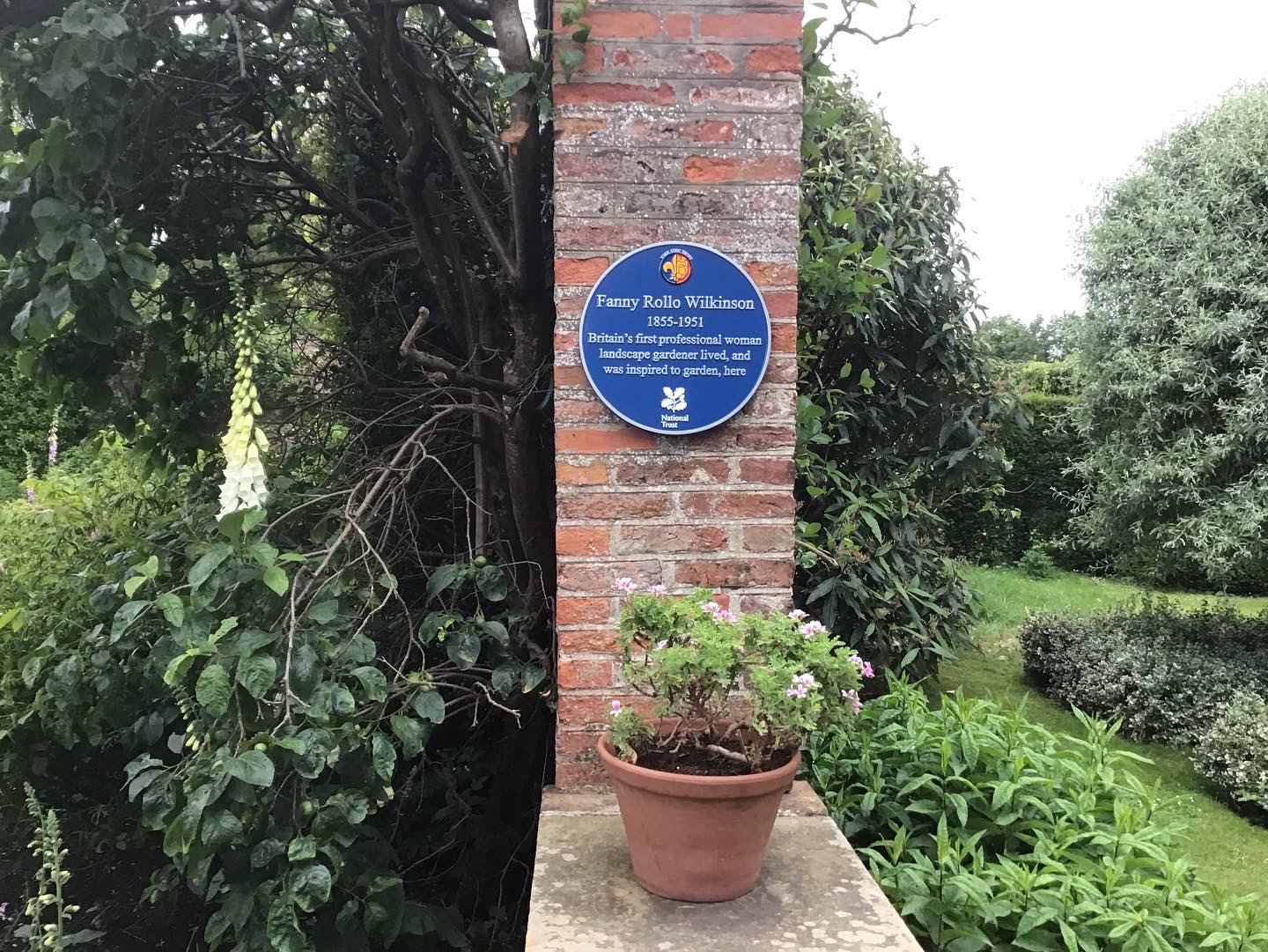
In addition, on Thursday 9 June 2022 a plaque to Fanny Wilkinson was unveiled in the Walled Garden at Middlethorpe Hall, which had once been her home and where she first, as she said, began to take a practical interest in gardening. This plaque was sponsored by both York Civic Trust and the National Trust and was unveiled by York’s Sheriff and heralded by the ringing tones of the York Town Crier – and his bell. As you can see, the plaque is placed in the idyllic surroundings of Middlethorpe Hall’s Walled Garden
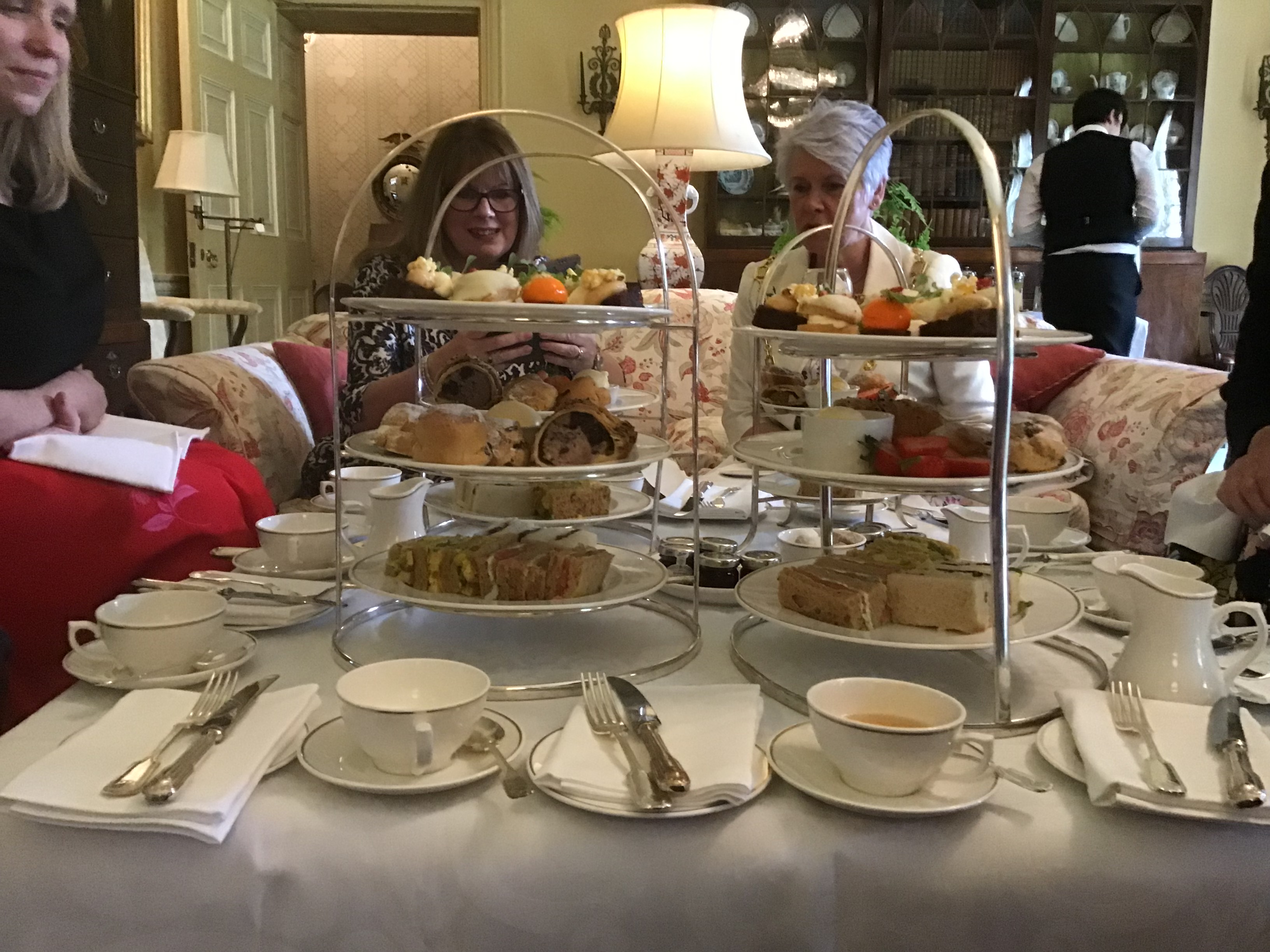
As part of the launch event I was delighted to be invited to give a talk about Fanny and her work and then we – a large party – all enjoyed, courtesy of the Middlethorpe Hall team, a sumptuous tea – which I can’t resist showing
This was, in fact, the second plaque in remembrance of Fanny Wilkinson to be unveiled this week – for on Tuesday, 7 June, an English Heritage Blue Plaque was ‘launched’ on the building in Bloomsbury – now 239/241 Shaftesbury Avenue – where she once lived.
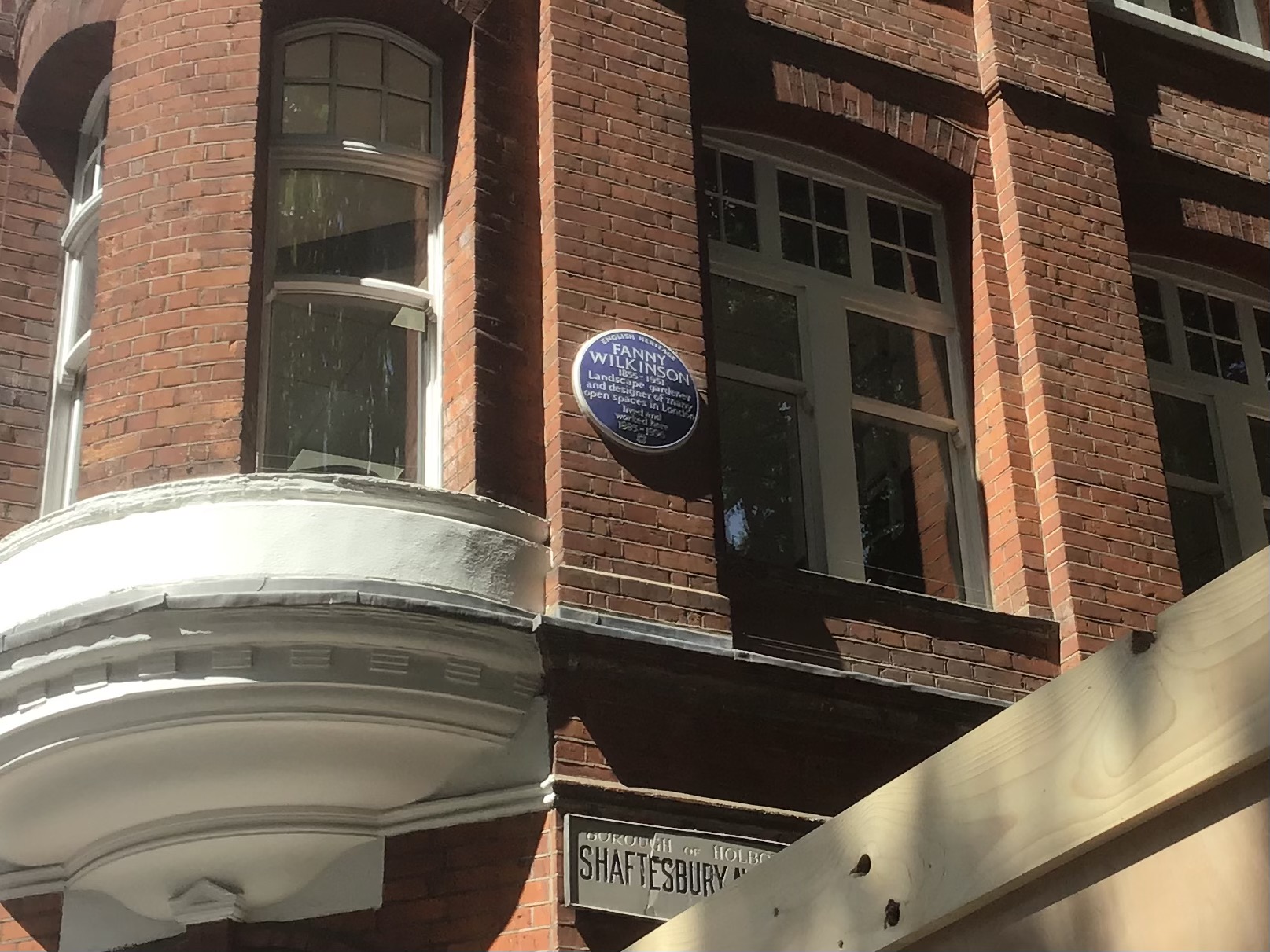
The hoarding you can see in this picture hides the work-in-progress now underway to transform a rather forlorn patch into what promises to be a rejuvenated green space, known as the Northern Triangle. Mind you, in her day, when gardener to the Metropolitan Gardens Association, Fanny, too, attempted to make this little area more attractive. It is likely she was responsible for the trees planted there, but the benches she added had soon to be removed – because they quickly become a trysting place for ‘ladies of the night’. Fanny also reordered an even smaller patch of land down the road, now known as the Southern Triangle, one that Camden Council are also at the moment in the midst of improving. For details of both these works see here.

And, to crown this really remarkable few days, on 9 June, as a slightly early birthday present to her, UCL Press published Millicent Garrett Fawcett: Selected Writings – edited by Prof Melissa Terras and myself. The book comprises 35 of Fawcett’s speeches and articles revealing, in her own words, her contribution to modern society over a span of 61 years. The topics she covered centred upon the campaign for the Vote for Women, but also the provision of education for women; feminist history; her love of literature (and her own attempt at fiction); purity and temperance; the campaign against employment of children; the British Army’s approach to the South African War; the Unionist cause against Home Rule for Ireland; and the role of suffrage organisations during the First World War. Each article has been fully annotated in order to provide the modern reader with easy access to Fawcett’s world view. Alongside the words, 22 artworks and photographs, fully identified and dated, depict Fawcett at various stages of her career. This is the first full-length scholarly study of Millicent Fawcett since the publication of David Rubinstein’s excellent 1991 biography and we hope it will give intellectual substance to the bronze representation of her now standing in Parliament Square. And, by the way, we fully explain the context of ‘Courage Calls to Courage Everywhere’, the aphorism with which now Fawcett is now most closely associated.
The 476-page book is ‘Open Access’ – free to read or download online – although paperback and hardback print copies are also available to buy. For full details see here .

You can read much more about all members of the Garrett Circle in Enterprising Women: the Garretts and their circle. (And buy a copy from me, if you so wish.)
 Woman and her Sphere