Archive for August, 2014
Suffrage Stories: Bloomsbury Links in Life And Literature (Part 4)
Posted by womanandhersphere in Suffrage Stories on August 28, 2014
For my first two posts on the links between ‘Bloomsbury’ and women’s suffrage see here and here. In ‘Bloomsbury Links’ (Part 3) I mentioned that in 1916 Ray Strachey took over the post of parliamentary secretary to the National Union of Women’s Suffrage Societies and moved to Westminster to be close to the NUWSS office. From 1916 until 1934 she was also chairman of the Women’s Service Bureau, which originated in the war work of the London Society for Women’s Service. In 1925, when the financial position of the latter society (now called the London Society for Women’s Service) was critical, funds were raised by the presentation at the Scala Theatre of two specially-staged charity performances of The Son of Heaven, a play written by Ray’s brother-in-law, Lytton Strachey.
The play – a’tragic melodrama’ -was set in China at the time of the 1900 Boxer Rebellion. It’s director was Alec Penrose, whose (first) wife was the production’s wardrobe mistress, Ralph Partridge played ‘The Executioner’, Geoffrey Webb, later Slade professor of Fine Art at Cambridge, played ‘Wang Fu’ and Gerald Brennan was among the extras. Gertrude Kingston -now elderly and a one-time member of the Actresses’ Franchise League, was the only ‘professional’ member of the cast.
The accompanying music was composed and conducted by William Walton – his first commission for the stage. Of it Constant Lambert (who played the timpany in the production’s orchestra) commented – ‘So great was [Walton’s] obsession with ragtime that he was unable to prevent some unmistakeable touches of Gershwin from entering the score!). The critic from The Stage described the music as ‘ambitious and decidedly heavy’.
Duncan Grant designed the costumes and sets. These included an Omega Workshop screen and a carpet designed by Vanessa Bell, who was also responsible for the cover of the programme.
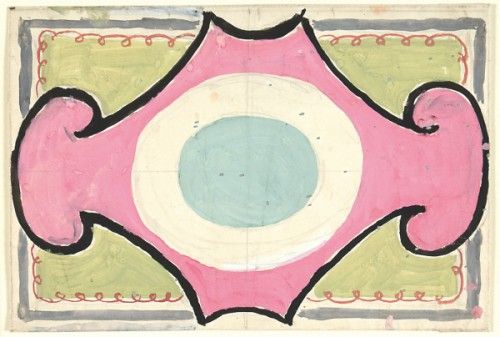
Vanessa Bell, Original design for carpet for ‘Son of Heaven’ c 1924 (courtesy of Henry Sotheran Fine Prints)
Robert Medley, a painter and member of the cast, remembered the colours used – ‘clear ochres and greys, offset by pinks, oranges and emerald greens’ (Frances Spalding, Duncan Grant). The costumes were painted in a decidedly Omega style by Duncan Grant and Vanessa Bell and proved all too much for Gertrude Kingston. She refused to wear her costume and the designers were forced to dress her instead in a black brocade ‘Manchu’ robe belonging to Lady Strachey. All in all it seems to have been a rather entertaining venture, although I cannot tell you how much money it raised for the LSWS.
 In 1930, when the London and National Society for Women’s Service (as it had confusingly been renamed in 1926) wished to publicise not only its existence but also that of their new purpose-built hall , ‘Although very doubtful of success, Miss [Philippa] Strachey undertook to approach Virginia Woolf, to ask if she would be willing to give a talk on ‘Literature’. In the event Virginia Woolf did agree to speak and on the appointed evening, 21 January 1931, shared the platform with her new friend, Dame Ethel Smyth, who spoke on ‘Music’.
The hall, with a library, restaurant and offices, was part of Women’s Service House, the LNSWS’s new Westminster premises. Millicent Fawcett laid the foundation stone on 29 April 1929, barely three months before her death; the hall was intended as her memorial – rather more useful than a statue but, alas, without a statue’s popular appeal (on this bee in my bonnet see more here). Known as the Millicent Fawcett Hall, it still stands at 31 Marsham Street, now put to good use by Westminster School as its drama centre.
Back in January 1931 the sub-committee of the London Society responsible for arranging the evening’s entertainment felt obliged to install a microphone for Mrs Woolf – at the cost of £8; there was no suggestion that Dame Ethel required amplification.
The speakers attracted one of the society’s largest audiences and Virginia Woolf received a review in The Woman’s Leader (now, incidentally, edited by a niece of Mrs Pankhurst): ‘She “was with us, but not of us”. Her eyes are on the stars, as though she listens to some far-off song – but a song of which even an audience of modern and practical minded young women can catch an echo when Mrs Woolf speaks.’
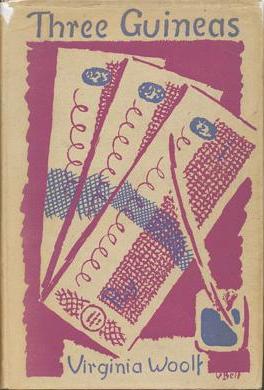 The ‘song’ proved to be the genesis for Three Guineas, and it was to the LNSWS’s library, adjacent to the hall, and to its librarian, Vera Douie, that Virginia Woolf turned when seeking verification of the facts, gathered into footnotes, that fuelled the book’s anger.
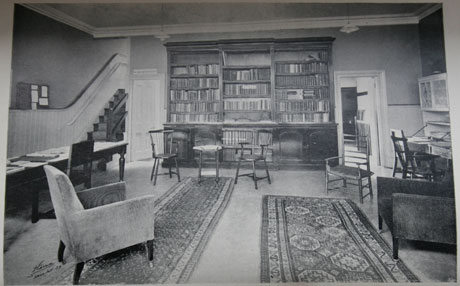
The Library at Women’s Service House, 1924
© & source The Women’s Library
In March 1938, for instance, she wrote enquiring about peace organisations and the numbers of women involved in working for peace. Vera Douie sent her a full reply, enclosing Mrs Fawcett’s pamphlet on ‘What the Vote Has Done’. A couple of months later , in gratitude for the help she had received, Virginia Woolf offered to supply the library with any books, new or antiquarian that it required. The offer was gratefully accepted; in 1938, for example, Virginia Woolf gave to the library both volumes of the newly published Miss Weeton. Journal of a Governess, a text from which she had copied quotations into her Three Guineas Reading Notebook, and in July 1940 paid for two books by Mary Carpenter, Juvenile Delinquents (1853) and Our Convicts (1864), that had appeared in the catalogue of an antiquarian bookseller. Both the latter are still part of the Cavendish Bentinck collection in the Women’s Library@LSE – although the name of their donor is not noted in the catalogue entry.
On 26 March 1941 Vera Douie wrote to Mrs Woolf to say how much she had enjoyed reading her biography of Roger Fry and asking, in her usual delicate manner, for two more books. This time, however, her request was in vain. Virginia Woolf was dead by the time the letter was delivered to Monks’s House.
Copyright
Suffrage Stories: ‘A Song Of Their Own’ – Ipswich Suffrage- And Ada Ridley In Particular
Posted by womanandhersphere in Suffrage Stories on August 21, 2014
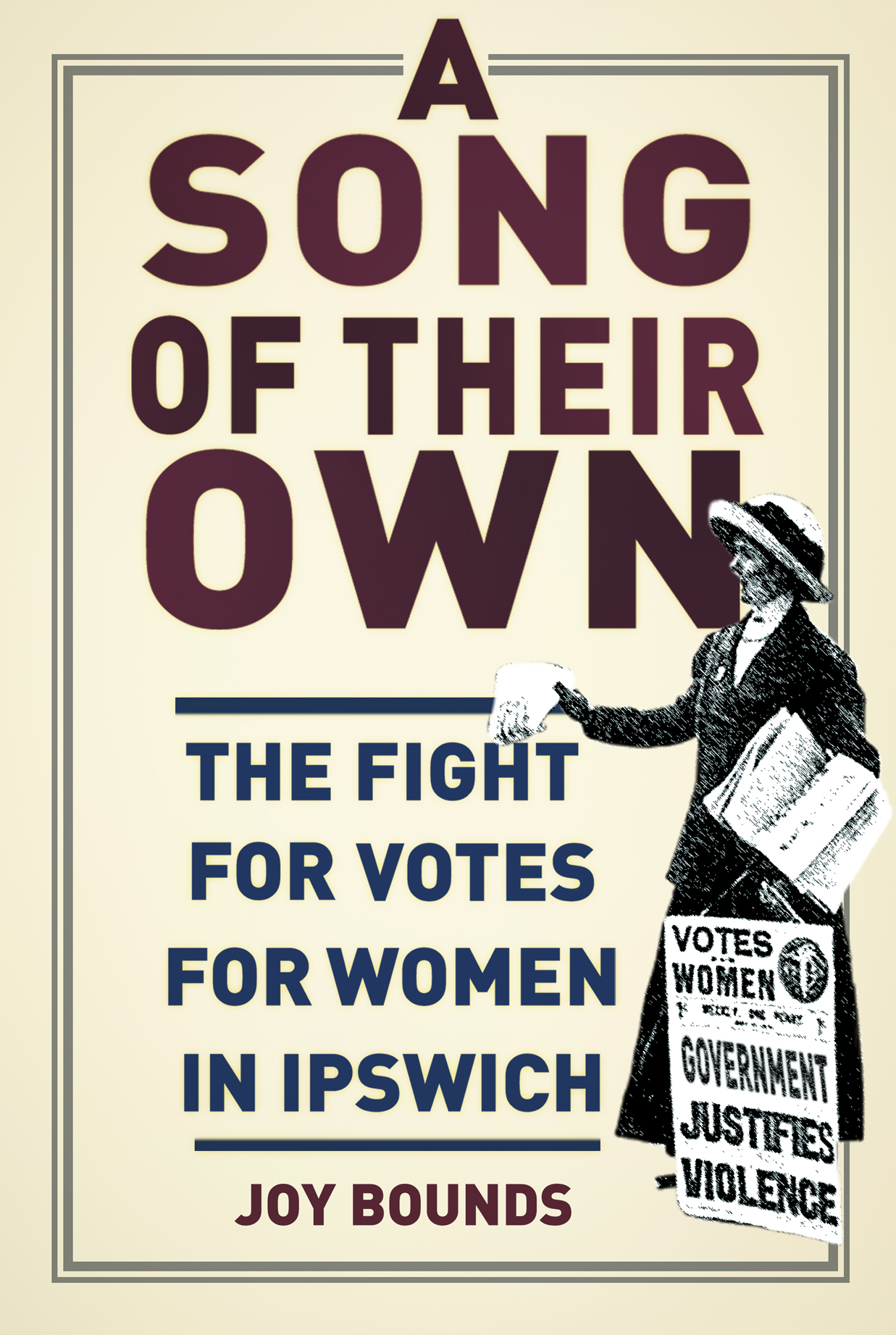
I do enjoy reading studies of the work of local suffrage societies – and this is a good one. Without over explaining the national campaign Joy Bounds neatly describes the particular work of Ipswich suffrage campaigners, setting their efforts in the wider context. Her research on Constance Andrews, the leading light of the Ipswich branch of the Women’s Freedom League, is particularly welcome – and useful.
The delight of such studies is that names hitherto little known are brought to our attention. While it was outside the scope of Joy Bounds’ study to dwell in depth on the many individuals whom she highlights, it is now possible – in a blog such as this – to pick up the baton, as it were, and attempt to discover more about these women. Their engagement with the suffrage movement is, in a way, only an excuse. I am still so curious about women’s lives.
In particular I am interested in women who put their artistic skills to work for the suffrage cause and was keen therefore to discover more about the life of Ada Paul Ridley,who is mentioned in A Song of Their Own. She either designed or sewed (or perhaps designed and helped sew) the banner (‘Be Just and Fear Not’) that the Ipswich contingent carried in the WSPU’s 1911 Coronation Procession. There is a suggestion that ‘her women’ worked it – I wonder who they were? The banner, alas, has long since disappeared.
Lisa Tickner includes Ada Ridley in her list of suffrage artists in an appendix to The Spectacle of Women, but mentions only her work on this banner and the fact that she had exhibited at the ‘London Salon’ in 1908. This was the first exhibition organized for the progressive Allied Artists’ Association Exhibition by Frank Rutter (a devout suffragist) – and held at the Albert Hall. I doubt that Ada Ridley was amongst the more progressive element, but she was keeping interesting company.
So who was Ada Ridley?
Well, she was born c 1864 and her sister, Elizabeth (Bessie), whom Joy Bounds mentions as also being involved with Ipswich suffrage, was born in 1867. They were two of the four daughters (there were also two sons) of Albert Cowell Ridley, one of Ipswich’s leading businessmen. He was a wholesale druggist – in partnership with Edward Grimwade (sometime mayor of Ipswich), trading as Grimwade, Ridley & Co. The firm’s premises were in Princes Street – and have long since made way for the iconic Willis building.
The Ridley family was non-conformist – Baptist. In the 1870s Albert Ridley was a member of the Ipswich Board of Guardians and in the 1880s, a Liberal, was elected to the Ipswich Town Council.
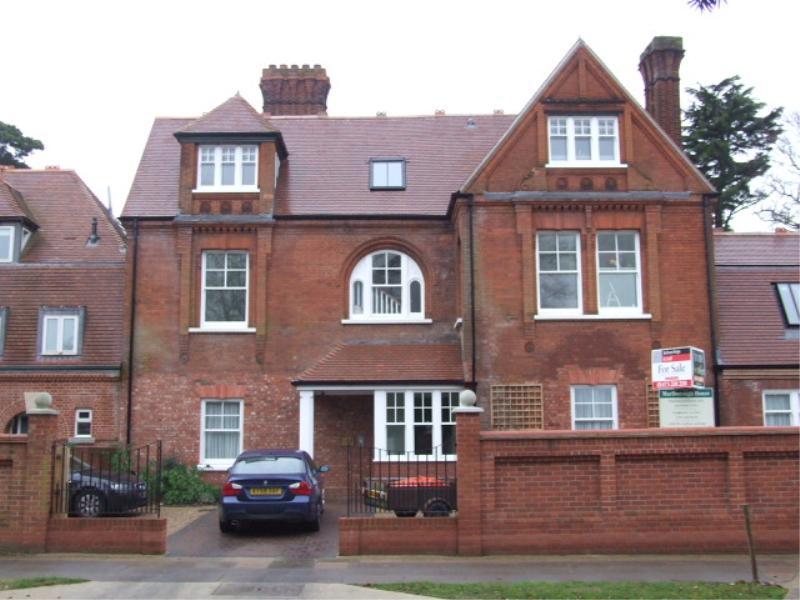
Formerly Helenscote, 73 Henley Road, Ipswich9
The Ridleys lived at Helenscote, 73 Henley Road, Ipswich – a large, gabled house. (The house, now known as Marlborough House was until relatively recently The Marlborough Hotel, but is now divided into flats.)
In the 1870s Edward Grimwade and his family lived close by – at 1 Henley Road. In April 1871 Grimwade chaired a meeting in Ipswich at which Rhoda Garrett was the main speaker, with her cousin, Millicent Garrett Fawcett, and her uncle, Newson Garrett, sitting beside her on the platform. The Ipswich Journal – not a supporter of the woman’s cause – gives a lengthy, somewhat jaundiced account of the meeting – but it is clear that it was actually rather successful.
Grimwade’s daughter, Harriet, became secretary of the Ipswich committee of the National Society for Women’s Suffrage that was set up in the wake of this meeting. This suffrage society doesn’t appear to have been very active – although Harriet Grimwade definitely was. She was a very active philanthropist as well as eventually, in 1883, being elected a member of the Ipswich School Board. When she first stood for the School Board, in 1880, the Ipswich Journal paid her the rather back-handed compliment of saying that it would be as well if she were not elected as it would be a pity to distract her from her all her charitable work.
There was no mention of Albert Ridley’s presence at the 1871 meeting- although he may well have been there. In fact there was a direct Garrett/Ridley relationship. Millicent’s sister, Alice, was married to Herbert Cowell, a cousin of Albert Cowell Ridley (Herbert’s father was brother to Albert’s mother). Despite Herbert’s expressed distaste for the women’s movement, Alice more or less defied him to succeed her sister, Elizabeth Garrett Anderson, as the member of the London School Board for Marylebone. I imagine that Albert Ridley’s views on the Woman Question tended more towards those of Edward Grimwade than those of Herbert Cowell.
Whatever they were, Albert Ridley did ensure that Ada had a good education. She attended Ipswich High School for Girls and, while a pupil there, in 1879 passed the government examination in Freehand Drawing, taken at the Ipswich School of Science and Art , in 1880 she received the school prize for Needlework – a copy of In Memoriam – and in 1881 won a prize at the Art School (though still a pupil at the High School) for the best drawing of a plant. Her reward was to be given said plant – a begonia. In 1883 she matriculated from the High School – in the first division (University of London) and in 1884 moved to the Ipswich School of Science and Art, where she was awarded a first class certificate in Botany- Elementary Stage. Ada clearly remained close to Harriet Youngman, who was headmistress of the High School during the time she was there. When the 1901 census was taken Ada was staying with her as a visitor in the cottage near Saffron Walden to which she had moved on retiring as headmistress.
Although the only sightings I have of Ada during the next ten years are as a rather successful tennis player (mixed doubles matches at the Ipswich Lawn Tennis Club) and as a pianist at various local entertainments, she clearly maintained her interest in art, winning a second prize in a Studio competition in 1894. In 1893 she was the judge of ‘Plain Needlework’ at an Industrial and Art Exhibition held at the Gainsborough House headquarters of the YWCA.
Albert Ridley died in 1896, leaving c £25,000 – out of which Ada and her siblings were each to receive £1000 immediately. Her mother died in 1916, leaving £14,000 – so I think we can assume that the family lived reasonably comfortably.
In April 1911 a service at Llanaber Church near Barmouth was held to dedicate reredos that Ada Ridley had helped carve. They had been designed in the Celtic Arts and Crafts style by John Dickson Batten, who was an illustrator and one of the early members of the Society of Painters in Tempera. The founder of this society was Christiana Herringham, a suffragist who in 1908 had helped embroider banners for the Artists’ Suffrage League and the Women Writers’ Suffrage League, as well as one for the Cambridge Suffrage Society. The Battens must have known Christiana Herringham and as in 1904 their Kensington home was at 16 Edwardes Square, they must have known Laurence Housman, who lived with his sister, Clemence, writer and artist, at 1 Pembroke Cottages, on the corner of the Square. It’s not too wild a guess to suppose that Ada Ridley was brought into this circle.

Anti-suffrage Alphabet (courtesy of UCL Library Services)
There is no doubt that by 1911 Ada most certainly was well acquainted with Laurence Housman because in that year she was a contributor to a lovely book – An Anti Suffrage Alphabet – designed by Housman and which Leonora Tyson (of the Streatham WSPU) printed to order by hand. Earlier in the year, on census night (2 April), both Ada and Bessie Ridley had been absent from home. Their mother was enumerated at Helenscote with their unmarried brother and one of their nieces – but of her two resident daughters there was no trace. Were they spending the night at the Museum Rooms, taking part in the boycotting party that Joy Bounds describes so well?
But that is all I’ve been able to uncover. How did Ada spend the rest of her long life? I can find no trace of any further involvement with either art or the woman’s cause. She seems such a capable woman that I can’t believe she sat at home doing nothing for the next 40 or so years. She died in Ipswich in 1958 – leaving c £17,000 -one of her executors being the niece who was staying in the house while her aunts were out gallivanting on census night.
Copyright
o
Suffrage Stories: Bloomsbury Links (Part 3)
Posted by womanandhersphere in Suffrage Stories on August 18, 2014
I have written two previous posts about the Bloomsbury Group and Women’s Suffrage – see here and here, the latter one dealing with the involvement of Lady Strachey and her children. In this third Bloomsbury post I describe something of the importance of one of her daughters-in-law – Ray Strachey.
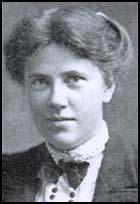
Ray Strachey
In 1911 Lady Strachey’s son, Oliver, married, as his second wife, Ray, the daughter of Mary Costelloe (later Mary Berenson) and granddaughter of Hannah Whitall Smith, a Philadelphian Quaker and feminist.
The Costelloes’ association with the Cause stretched well back into the 19th century. In 1889 both Mary Costelloe and her mother had signed the Declaration in Favour of Women’s Suffrage organized by the Central Committee of the National Society for Women’s Suffrage. In the 1890s Mary, with her parents, her husband, and her sister Alys (who was later to marry Bertrand Russell), subscribed to the Central National Society for Women’s Suffrage. In March 1890 Frank Costelloe, Ray’s father, was described as a ‘warm friend’ to the Women’s Franchise League. It is therefore not surprising to discover that Ray Costelloe while a student at Newnham (1905-08) was an active member of the Cambridge University Women’s Suffrage Society, probably to the detriment of her academic work.
In the summer of 1908 Ray and her friend Elinor Rendel conducted a suffrage caravan tour of the Lake District. While on this tour the young women stayed at Keswick, at Hawse End, the home of Frank and Caroline Marshall, who had founded the local branch of the NUWSS, and who were the uncle and aunt of Ray (later Garnett) and Frances (later Partridge).
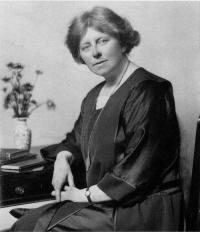
Catherine Marshall
The Marshalls’ daughter, Catherine, moved to London and became parliamentary secretary of the NUWSS, in 1912 masterminding that society’s alliance withe the Labour party. Through family association the suffrage campaign drew into is maw the least likely followers; Julia Strachey, Oliver’s daughter by his first marriage, led an NUWSS procession in Littlehampton on 19 July 1913.
By 1913 Ray Strachey was chairman of the LSWS and Philippa Strachey was its secretary, the two forming an extremely affectionate and close working relationship that lasted until Ray’s death in 1940. A fellow worker for the Cause described how Ray Strachey was ‘someone who takes up lost causes and then they are no longer lost’ and particularly remarked how Ray always sought Pippa’s advice.
In 1916 Ray Strachey succeeded Catherine Marshall as parliamentary secretary of the NUWSS and in this capacity was responsible for supervising the passage of the Reform Bill that in 1918 at last gave women (over 30) the vote. Ray moved her household from Bloomsbury to Marsham Street in Westminster in order to be close to the society’s office.
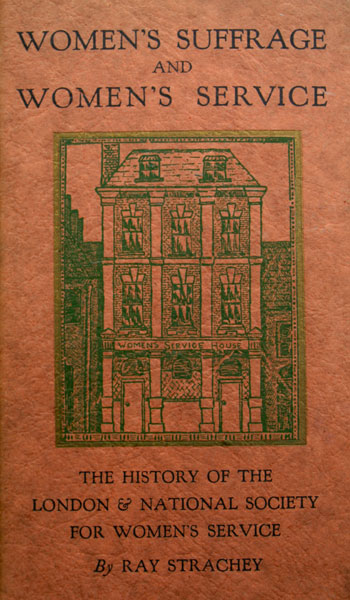
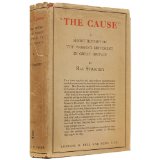 After the end of the First World War Ray Strachey was editor of The Common Cause and then of its successor, The Woman’s Leader, 1920-23, and acted as political private secretary to Lady Astor after the latter’s election as the first woman member of the House of Commons. Ray Strachey was the author The Cause (1928) which stood for very many years as the only history of the ‘constitutional’ suffrage movement, and of Women’s suffrage and Women’s service: the history of the London and National Society for Women’s Service, 1927.
In 1938 Virginia and Leonard Woolf’s Hogarth Press published Our Freedom and Its Results, a collection of essays edited by Ray Strachey, which charts the effect of women’s emancipation on politics, law, employment, morals and social life.
Copyright
All the articles on Woman and Her Sphere and are my copyright. An article may not be reproduced in any medium without my permission and full acknowledgement. You are welcome to cite or quote from an article provided you give full acknowledgement.
Kate Frye’s Diary: What Was Kate Doing One Hundred Years Ago Today – The Day She Appears On Our TV Screens?
Posted by womanandhersphere in First World War, Kate Frye's Diary on August 17, 2014
Tonight Kate Parry Frye – in the guise of Romola Garai – appears on our television screens (Sunday 17 August, ITV at 9pm). What was she doing on this day 100 years ago?
Kate was still on holiday from her work with the New Constitutional Society for Women’s Suffrage, spending the time with her sister and mother in their rented rooms at 10 Milton Street, Worthing. However, this was no summer idyll such as the Fryes had enjoyed in days gone by. Then they had rented a large house and travelled down from London with their four servants, to spend a season by the sea. Now that they were virtually penniless, these rented rooms were all they could call home. In the life of Kate and, more tragically in that of her sister, we see the jarring disconnect when young women, brought up to a life where marriage was to be their only trade, are left with insufficient money to support their social position and expectations. As such Kate’s life story is very much a tale of its time.
Monday August 17th 1914
Gorgeous day. Up and at house work. Out 12.30- just to the shops. Wrote all the afternoon and after tea to 6. Papers full of interest. Preparing for the biggest battle in the World’s History. There is no doubt the English have landed over there. I hear from John most days – that he is very busy but not a word of what his work is. Mickie [her Pomeranian] and I went out after tea. Agnes still a bit limp.
John Collins, Kate’s fiancé, who had long been an officer in the Territorial Army, had already been recalled to his barracks at Shoeburyness – leaving his engagement with a touring repertory theatre company. Kate’s sister, Agnes, at the first hint of the European trouble had taken to her bed, prostrate. Kate, a would-be playwright, was busy writing – although exactly what she was writing at this time she doesn’t divulge. On her death forty-five years later she left behind a box of unpublished scripts – and one that was published. She hoped one day to achieve fame and fortune. As it was she would soon be back at work at her suffrage society’s headquarters – with a new role as organizer of their War Work Work Room.
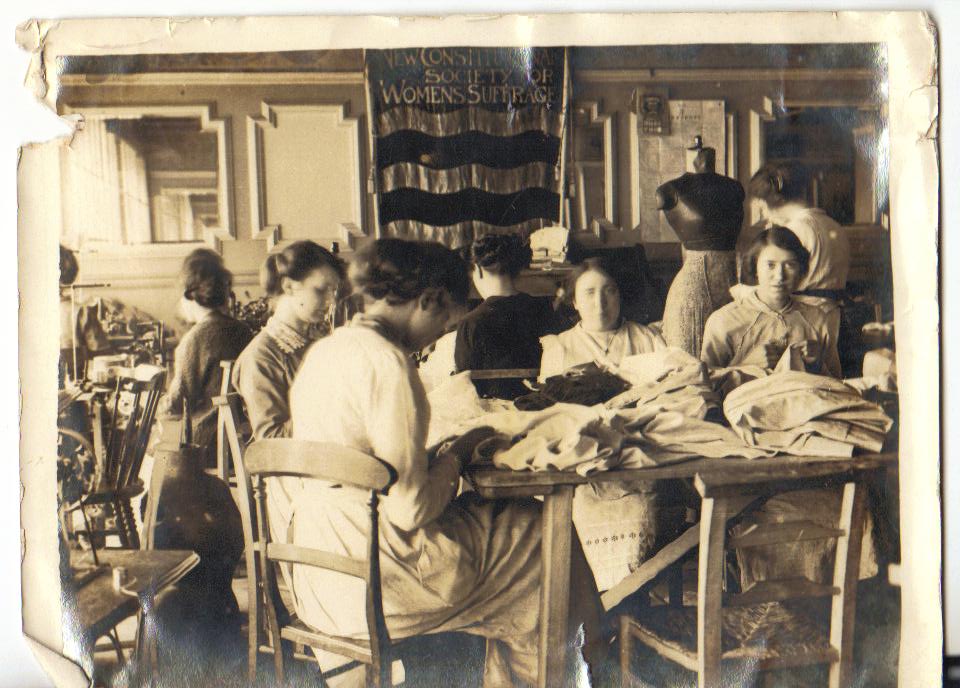
Work Room set up by the New Constitutional Society for Women’s Suffrage – of which Kate was in charge. Note the NCS flag in the background.

To discover more about the entirety of Kate’s life – her upbringing, her involvement with the suffrage movement, her marriage, her London flats, her life in a Buckinghamshire hamlet, her love of the theatre, her times as an actress, her efforts as a writer, her life on the Home Front during two world wars, her involvement with politics – and her view of the world from the 1890s until October 1958 – download the e-book – £4.99 – from iTunes – : http://bit.ly/PSeBKPFITVal. or £4.99 from Amazon.
I’d love to hear what you think of Kate and the life she lived.
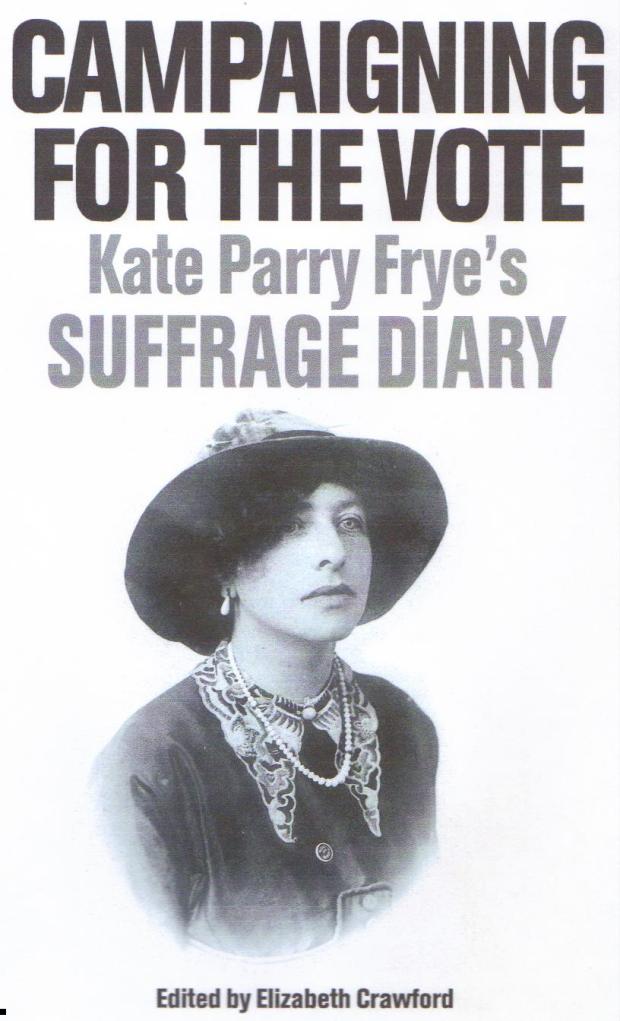
To read in detail about Kate’s involvement in the women’s suffrage campaign – in a beautifully-produced, highly illustrated, conventional paper book – see Campaigning for the Vote: Kate Parry Frye’s Suffrage Diary.
Copyright
NOW PUBLISHED: Kate Parry Frye: The Long Life Of An Edwardian Actress And Suffragette
Posted by womanandhersphere in First World War, Kate Frye's Diary on August 8, 2014
Based on her prodigious diary, this e-book is my account of Kate Frye’s life and is a tie-in with the ITV series ‘The Great War: The People’s Story’, in which Romola Garai plays Kate. For details of the TV series and its accompanying books see here. Kate appeared in the second episode – which you can now watch here.
To discover more about the entirety of Kate’s life – her upbringing, her involvement with the suffrage movement, her London flats, her life in a Buckinghamshire hamlet, her love of the theatre, her times as an actress, her efforts as a writer, her life on the Home Front during two world wars, her involvement with politics – and her view of the world from the 1890s until October 1958 – download the e-book from iTunes – : http://bit.ly/PSeBKPFITVal. or from Amazon .
Writing up her diary in her miserable rented room in Worthing on 7 August 1914 Kate could not have thought – even in her wildest dreams – and she certainly did on occasion allow herself wild dreams of fame – that one hundred years later YOU would be able to read her life story.
It is something of a fairytale – from the discovery of the boxes of wringing-wet diaries in a north London cellar to the publication of Kate’s story, now available for the World to read at the click of a mouse. It is a dream realised, not only for the Kate I have got to know so well and who through her diary entries makes us privy to her hopes, but also for myself. To be given the chance to resurrect the story of an ‘ordinary’ woman (though she most certainly was not ordinary to herself) is the culmination of a lifetime of biographical reading. Moreover it is ‘hidden lives’ -such as Kate’s – that have been of abiding interest.
There is a certain fitness that at a time when the major publishing conglomerates tend, for safety’s sake, to concentrate on the lives of those whose names are already known – for whom a market already exists – that it is a television company, ITV, that is taking a bow at a venture and allowing you to read the life of an ordinary woman. Kate, I am sure, would have been most interested to watch The Great War: the People’s Story. For her entire life she was entranced by the telling of tales – in novels, on the stage, on film, on radio and, in her latter years, on television and it so happens that the one play she succeeded in getting published was set on the Western Front – in the final hour of the Great War.
When editing Kate’s suffrage years as Campaigning for the Vote: Kate Parry Frye’s suffrage diary I did briefly debate (and did so at much greater length in a post – Kate Frye and the Problem of the Diarist’s Multiple Roles) the ethics of mining a diary and presenting only one aspect of the subject’s life. I have now been able to reconcile any doubts I might have had. Kate’s suffrage diary undoubtedly adds to our understanding of the suffrage campaign and it is now with considerable satisfaction that I am able to present to you Kate’s life in its entirety.
Coincidentally yesterday I spotted a new blog review of Campaigning for the Vote that not only gives a delightfully long review of that book – but also reveals that the writer is longing to know more about Kate and – at the last moment – is pleased to have just downloaded the e-book and begin a deeper acquaintance.
Copyright
Kate Frye’s Diary: War: 7 August 1914
Posted by womanandhersphere in First World War, Kate Frye's Diary on August 7, 2014
TODAY’S THE DAY ITV is publishing Kate Parry Frye: The Long Life of an Edwardian Actress and Suffragette. Based on her prodigious diary, this e-book is my account of Kate Frye’s life and is a tie-in with the forthcoming ITV series ‘The Great War: The People’s Story’, in which Romola Garai plays Kate. For details of the TV series and its accompanying books see here. The first episode of the series can be seen on ITV at 9pm on Sunday 10 August – I think Kate makes her entrance in Episode 2 – 17 August.
Leading up to publication I’ve shared with you some entries from Kate’s diary from the month before the outbreak of war. Today’s in the last in this series. Writing up her diary in her miserable rented room in Worthing on 7 August 1914 Kate could not have thought – even in her wildest dreams – and she certainly did on occasion allow herself wild dreams of fame – that one hundred years later YOU would be able to read her life story.
To discover more about the entirety of Kate’s life – her upbringing, her involvement with the suffrage movement, her London flats, her life in a Buckinghamshire hamlet, her love of the theatre, her times as an actress, her efforts as a writer, her life on the Home Front during two world wars, her involvement with politics – and her view of the world from the 1890s until October 1958 – download the e-book – £4.99 – from iTunes – : http://bit.ly/PSeBKPFITVal. It will also be available -today – any moment now – on Amazon.
Through her day-to-day experience as recorded in her diary we can see how the war stole up on one Everywoman. Kate Frye was at this time 36 years old, living in a room at 49 Claverton Street in Pimlico and working in the Knightsbridge headquarters of the New Constitutional Society for Women’s Suffrage. It was now nine years since she had become engaged to (minor) actor John Collins. Her father died in March 1914 and her mother and sister, Agnes, now all but penniless, are living in rented rooms in Worthing. For the previous few weeks Kate’s fiancé, John Collins, had been renting a room in another house in Claverton Street but he has now left for the West Country, to take up a position with a touring repertory company. Kate is feeling rather bereft – but has now begun her summer holiday, staying with her mother and sister in Worthing.
‘Friday August 7th 1914
News of British steamer – the Queen Amphion – having been sunk by a German mine – some of them saved, but many including some German prisoners blown to bits. Nothing else official. Rumours of course of all kinds – some to make one’s heart ache. But the admiration of the World for plucky Belgium. A lovely day. Up and did my room – our landlady is so disorganized it is the only way of getting it done before night. Jobs.
Mother went out and did the shopping then I took Mickie out to the Beach 12.30 to 1. Had a Telegram from John when I got in asking me to meet him in London tomorrow. So after lunch I went off to find out about trains and send the answer – telling him to let me know where to meet.
Then on the Parade for a miserable walk until 4.45. Jobs in the evening and sat talking to Agnes. Mother out in the evening. I did not go but sat upstairs. Agnes still in bed and very weak. I felt dead tired. After supper there was a wild rumour so I rushed out to get a later paper. The Germans have asked for an Armistice at Liege. It says they have 25,000 dead and wounded. It seems impossible. The wonderful German army. There could only be an excuse for the Kaiser taking his country to War, and that would be that his army is invincible – that nothing could vanquish it and that he is prepared to conquer Europe. If not the man must be a fool.’
And with that decisive opinion we take our leave of Kate – at least for the time being.
To read in detail about Kate’s involvement in the women’s suffrage campaign – in a beautifully-produced, highly illustrated, conventional paper book – see Campaigning for the Vote: Kate Parry Frye’s Suffrage Diary.
Copyright
Kate Frye’s Diary: War: 6 August 1914
Posted by womanandhersphere in First World War, Kate Frye's Diary on August 6, 2014
Tomorrow – 7 August 2014 – ITV will publish an e-book, Kate Parry Frye: The Long Life of an Edwardian Actress and Suffragette. Based on her prodigious diary, this is my account of Kate Frye’s life and is a tie-in with the forthcoming ITV series ‘The Great War: The People’s Story’, in which Romola Garai plays Kate. For details of the TV series and its accompanying books see here.
To discover more about the entirety of Kate’s life – her upbringing, her involvement with the suffrage movement, her marriage, her London flats, her life in a Buckinghamshire hamlet, her love of the theatre, her times as an actress, her efforts as a writer, her life on the Home Front during two world wars, her involvement with politics – and her view of the world from the 1890s until October 1958 – download the e-book – £4.99 – from iTunes – : http://bit.ly/PSeBKPFITVal. or £4.99 from Amazon.
As a lead-up to publication I thought I’d share with you some entries from Kate’s diary from the month before the outbreak of war. Through her day-to-day experience we can see how the war stole up on one Everywoman. Kate was at this time 36 years old, living in a room at 49 Claverton Street in Pimlico and working in the Knightsbridge headquarters of the New Constitutional Society for Women’s Suffrage. It was now nine years since she had become engaged to (minor) actor John Collins. Her father died in March 1914 and her mother and sister, Agnes, now all but penniless, are living in rented rooms in Worthing. For the previous few weeks Kate’s fiancé, John Collins, had been renting a room in another house in Claverton Street but he has now left for the West Country, to take up a position with a touring repertory company. Kate is feeling rather bereft – but has now begun her summer holiday, staying with her mother and sister in Worthing.
Thursday August 6th 1914
A fearful wind all day. Up late and household jobs seeing after Agnes etc – out at 12 with dear love, bought a paper and sat in a shelter reading it until 1. There is very little official news, but I think there is no doubt they are arranging for an expeditionary force to go to help France and Belgium. Germany seems ruthlessly violating every treaty that was made and will soon end by not having a single friend in Europe or elsewhere. The Belgians area making a most spirited and heroic defence of their forts – and so far the Germans have had a set back which could never have calculated upon. They thought the Belgians would let them calmly walk through their country to attack France. A nice sense of honour they must have got themselves. We have the sinking of a German mine layer to our credit.
The reading of the paper and rushing out for the latest Editions has become a vice with me, but I can’t keep away from them. Read in the afternoon, and who should arrive but Stella Richardson at 3.30 till 4.45 and had tea with us. But I felt in no mood for her with her cheap opinions. I am afraid I flared out at her. Agnes was of course in bed all day, said she felt a bit better.
I had a card from John – he has his orders – has to report himself at Shoeburyness on Sunday. Oh dear!!! A letter from Constance full of War news – their men being called up – the younger generation volunteering etc – and Jack Gilbey off to the front. That pretty gay young lad. What a responsibility the Kaiser has taken upon himself to be sure. Oh if only someone could get at him and his precious son and do for them. John thinks banishment to Bacup the best punishment – we want to get him here and hammer him all over beginning with his feet. I have heard someone suggest cutting his head off and making it into sausages for the Germans to eat – and that she would willingly turn the handle. I wonder what history will make of him?

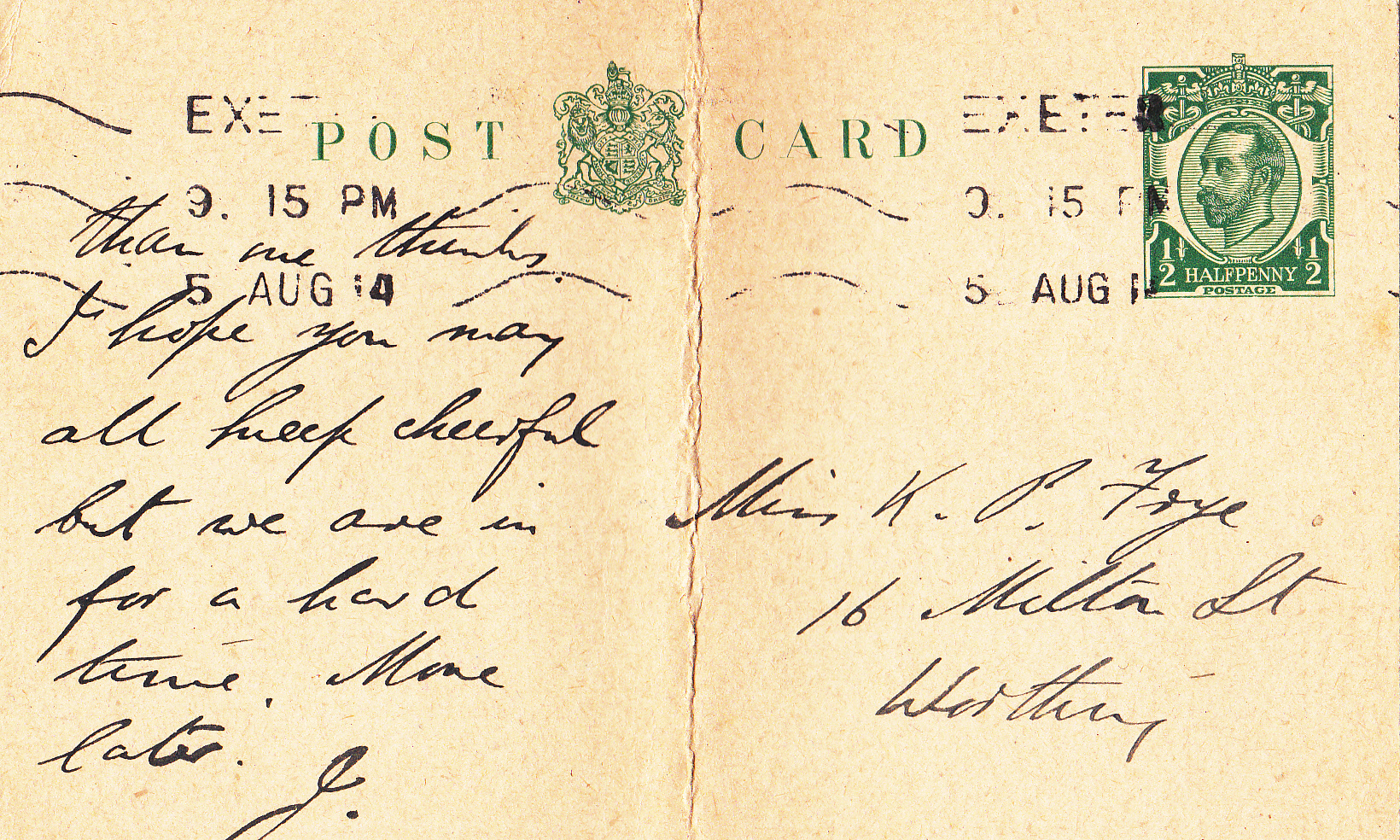
Johns’s card, written on Wed 4 August and posted on 5 August from Exeter, where he was playing with a touring theatre company
It was ironic that Stella Richardson should choose this moment to call. She was very much a representative of the ‘gay and reckless’ life that Kate had once enjoyed. You will be able to read about Stella – and her husband – and their relationship with Kate – in Kate Parry Frye: the long life of an Edwardian actress and suffragette.
Kate’s diary is certainly a faithful record of events. On the Today programme this morning a naval historian mentioned the sinking of that mine layer as being one of the first naval actions of the War.Moreover, I think it’s interesting that on a day such as this – with no knowledge of what lies ahead (perhaps, despite what John predicts, the war will be over by Christmas) – that Kate thinks, however fleetingly, in terms of the Kaiser’s place in history. While concerning herself with the quotidian, she is well able to appreciate that hers is but one moment in time. It is this self-awareness that gives the diary a measure of importance as a document of social history.
Copyright
Kate Frye’s Diary: War: 5 August 1914
Posted by womanandhersphere in First World War, Kate Frye's Diary on August 5, 2014
On 7 August 2014 ITV will publish an e-book, Kate Parry Frye: The Long Life of an Edwardian Actress and Suffragette. Based on her prodigious diary, this is my account of Kate Frye’s life and is a tie-in with the forthcoming ITV series ‘The Great War: The People’s Story’, in which Romola Garai plays Kate. For details of the TV series and its accompanying books see here.
For ITunes preview of the book see here.
As a lead-up to publication I thought I’d share with you some entries from Kate’s diary from the month before the outbreak of war. Through her day-to-day experience we can see how the war stole up on one Everywoman. Kate was at this time 36 years old, living in a room at 49 Claverton Street in Pimlico and working in the Knightsbridge headquarters of the New Constitutional Society for Women’s Suffrage. It was now nine years since she had become engaged to (minor) actor John Collins. Her father died in March 1914 and her mother and sister, Agnes, now all but penniless, are living in rented rooms in Worthing. For the previous few weeks Kate’s fiancé, John Collins, had been renting a room in another house in Claverton Street but he has now left for the West Country, to take up a position with a touring repertory company. Kate is feeling rather bereft – but has now begun her summer holiday, staying with her mother and sister in Worthing.
‘Wednesday 5th August 1914
Agnes in bed. I had slept in the dark hole and had a fearful night with the cats tramping in and out and fighting in the garden. I tidied Agnes and the doctor – Dr Hudson – came soon after 10. He didn’t say much but keep her in bed – no solid food – probably catarrh of the stomach and a chill – some inflammation. He was nice.
I had begun to think Mother would not have a comfortable journey to Wooburn as the government has taken over all railways and so many men are travelling to join their regiments – all reserves and Territorials called out – and she didn’t feel inclined to go with Agnes so seedy. I went up to the station to inquire and found as far as they knew trains were running fairly smoothly but they could not guarantee anything.
So I came back and she decided not to go – so Mick and I went off again to send a Telegram to Constance. They would not change a £5 note at the Post Office. Wrote some letters and then read all afternoon. A stroll in the evening – feeling utterly miserable. Heard again from John – has not had his orders yet but they must be on their way. England Mobilizing!!! What a thought. Could get to nothing that required concentration of thought – so greased Dear Love all the evening. A strange occupation with England going to War – but like life.’
Copyright
Kate Frye’s Diary: War: 4 August 1914: And What The War Held For My Family
Posted by womanandhersphere in First World War, Kate Frye's Diary on August 4, 2014
On 7 August 2014 ITV will publish an e-book, Kate Parry Frye: The Long Life of an Edwardian Actress and Suffragette. Based on her prodigious diary, this is my account of Kate Frye’s life and is a tie-in with the forthcoming ITV series ‘The Great War: The People’s Story’, in which Romola Garai plays Kate. For details of the TV series and its accompanying books see here.
To discover more about the entirety of Kate’s life – her upbringing, her involvement with the suffrage movement, her marriage, her London flats, her life in a Buckinghamshire hamlet, her love of the theatre, her times as an actress, her efforts as a writer, her life on the Home Front during two world wars, her involvement with politics – and her view of the world from the 1890s until October 1958 – download the e-book – £4.99 – from iTunes – : http://bit.ly/PSeBKPFITVal. or £4.99 from Amazon.

Kate Frye c 1906
As a lead-up to publication I thought I’d share with you some entries from Kate’s diary from the month before the outbreak of war. Through her day-to-day experience we can see how the war stole up on one Everywoman. Kate was at this time 36 years old, living in a room at 49 Claverton Street in Pimlico and working in the Knightsbridge headquarters of the New Constitutional Society for Women’s Suffrage. It was now nine years since she had become engaged to (minor) actor John Collins. Her father died in March 1914 and her mother and sister, Agnes, now all but penniless, are living in rented rooms in Worthing. For the previous few weeks Kate’s fiancé, John Collins, had been renting a room in another house in Claverton Street but he has now left for the West Country, to take up a position with a touring repertory company. Kate is feeling rather bereft – but has now begun her summer holiday, staying with her mother and sister in Worthing.
Tuesday August 4th 1914
A beautiful day as regards weather. Well it is settled England is to go in with France to protect her and Belgium. What a slap in the face for Germany !!! And as Italy won’t fight with Germany and Austria that is another set back. Germany expects to be allowed to walk over anywhere just as she pleases. What a brutal country – and what a Kaiser!!!
A letter from John from Exeter saying he is expecting a letter every minute giving him instructions to join his Unit. He writes in very low spirits. I think South Africa was enough for him. Agnes said she felt very ill – so I got up and arranged the room and got her up to my room and Mother went out for the doctor. He wasn’t in so she left a note. Agnes seemed better and not so low spirited when I had her in a cheerful room, but oh dear I don’t want the work of it. I feel so tired myself and disagreeable and overwrought I want to shriek.
I went out 12 to 1 with ‘Dear Love’. Read papers all the afternoon, writing and needlework in the evening waiting for the doctor – then as he didn’t come I went round and asked him to come early tomorrow morning if not tonight. He was still out so did not turn up.
This entry from Kate’s diary speaks for itself. That the day’s events – both national and domestic -have left her tired, disagreeable and overwrought seems entirely natural. Who wouldn’t want to shriek?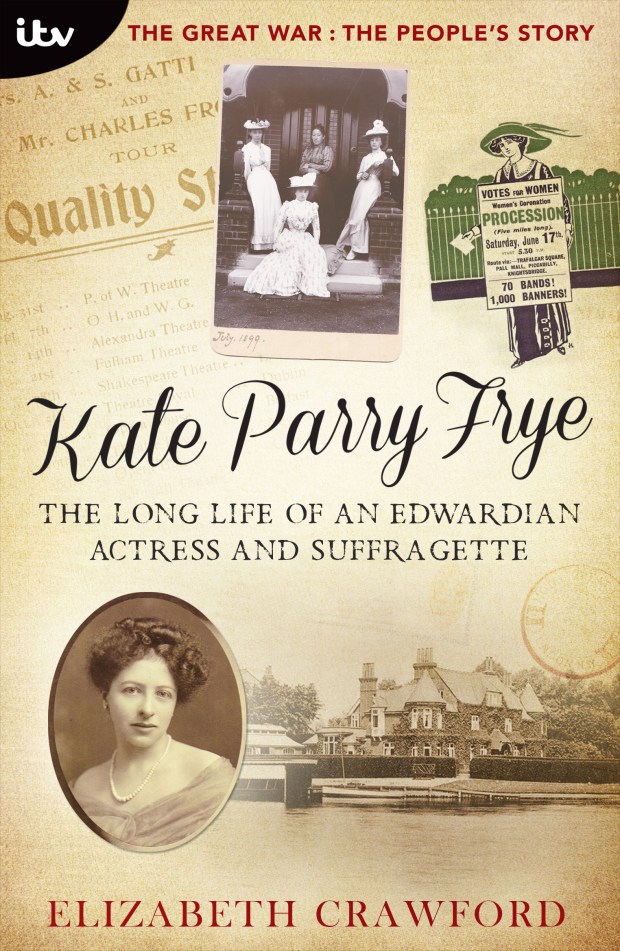
But what of those who did not keep diaries? Perhaps I’ll take the opportunity on this commemorative day to tell briefly how the War affected one other small family.

My mother, Christmas 1914. On the reverse of this postcard is written ‘With Best Wishes for a Merry Xmas From Meg, Tom and the ‘Wee Un’.
On 4 August 1914 my mother, Margaret Wallace, born on 5 October 1913, was one day short of ten months old. She was living with her parents in Edinburgh where her father, Thomas Wallace, was a cashier in a brewery. On 2 December 1915, a couple of months after her second birthday, he joined up, aged 27. He qualified as a signaller and telephonist (First class signalling certificate )with the Royal Garrison Artillery, was mobilized on 17 August 1916, setting sail from Plymouth for France.
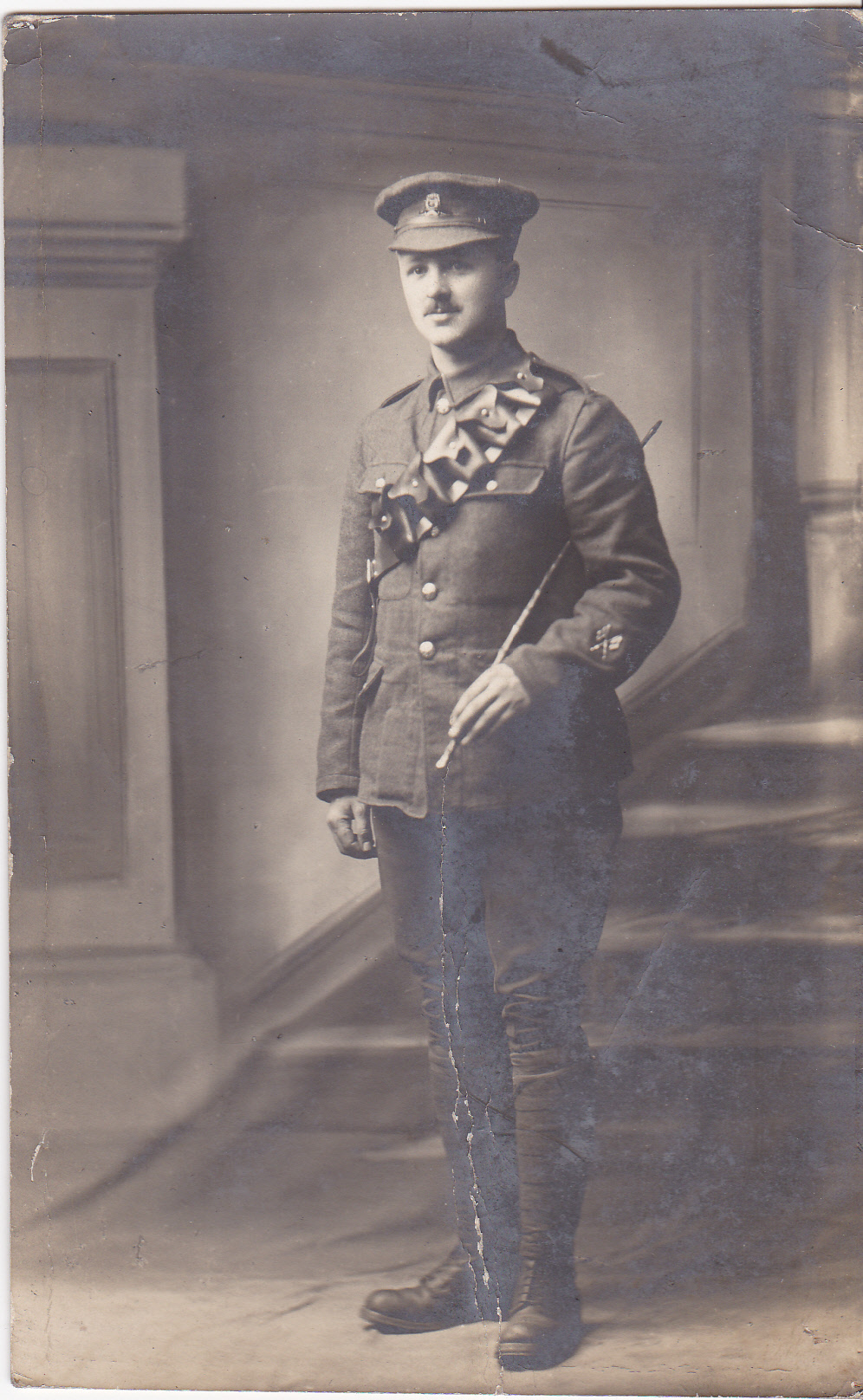
Thomas Livingston Wallace
He served in France until November 1917 when the 289th Siege Battery was redeployed to northern Italy. I have read 289 Siege Battery’s War Diary (held in the National Archives -WO 95/4205 289) which covers the period from Dec 1917 to May 1918 and gives a very interesting picture of army life up in the mountains above Vicenza. The officers seem to have enjoyed reasonably regular short breaks, allowing them visits to Rome.
Thomas Wallace’s army record seems uneventful. On 22 March 1918 he was admonished by the C.O. for turning up 85 minutes late to 9pm Roll Call, so I hope he had been having some fun. I doubt he ever got to Rome. On 19 April he was awarded First Class Proficiency Pay of ‘6d per diem’ and on 17 May was sent on a ‘Pigeon Course’ at General Headquarters, rejoining his Battery a week later. Three weeks later, on 15 June, during the first day of the battle of Asiago he was killed. Army records show that his effects – comprising photos, 21shillings, metal wrist watch (broken) and signaller’s certificate – were returned to his widow, my grandmother.
The story handed down in the family ran something along the lines that, as a signaller, Thomas Wallace had been alerted to the fact that the Austrians were about to make a surprise attack, that communications had been disrupted and that he was relaying this information by travelling down the Line in person when he was killed. One is naturally very wary of ‘family’ stories, knowing full well how they get corrupted in the telling but in records held in the National Archives, I did read, in a report of the battle of 15 June,
“289 Siege battery detached and section from them to engage suitable targets among the enemy’s advancing infantry
10.15 Runner and motor cyclists used because lines cut to brigade headquarters
Casualties in Brigade: 1 officer and 4 other ranks killed.’
The report of course doesn’t name the ‘other ranks’ but I wondered if Gunner Thomas Wallace was not one of those men.
He is buried at Magnaboschi Cemetery, a lovely tranquil spot, which when we visited some years ago we approached on foot through meadows. A fair proportion of the men buried in this small cemetery were also killed on 15 June 1918. The War Graves Commission information for Thomas Wallace is correct, whereas that created by the War Office is careless enough to have him killed in France. It just shows that one should never trust even the most official of records without corroborating evidence. Some years ago I did manage to get his entry corrected in the Roll of Honour of the Royal Garrison Artillery, contained in Scottish National War Memorial in Edinburgh Castle. Wasn’t it just typical, I thought, when you know something about anything ‘They’ would get it wrong.
 That cemetery was a world away from the life my grandmother knew – the villages and small towns of Fife. I doubt she ever saw a photograph of his grave. She never seemed to recover from his death. Life on a war widow’s pension was a struggle. She kept all the letters he sent from the War – and when I was about 12 years old I was allowed to read one or two. I particularly remember one that described his crossing of the Lombardy Plain on the way to Italy. Alas, those letters disappeared around the time of her death in a nursing home in the early 1960s.
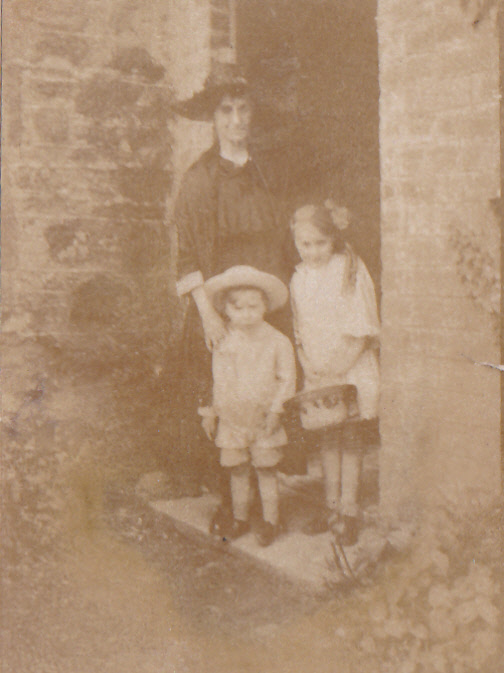
My widowed grandmother, with my mother and her brother, in the doorway of their Falkland cottage
Like so many other children of their generation my mother and her brother, who was born in December 1917, grew up without a father. That was all they had ever known.
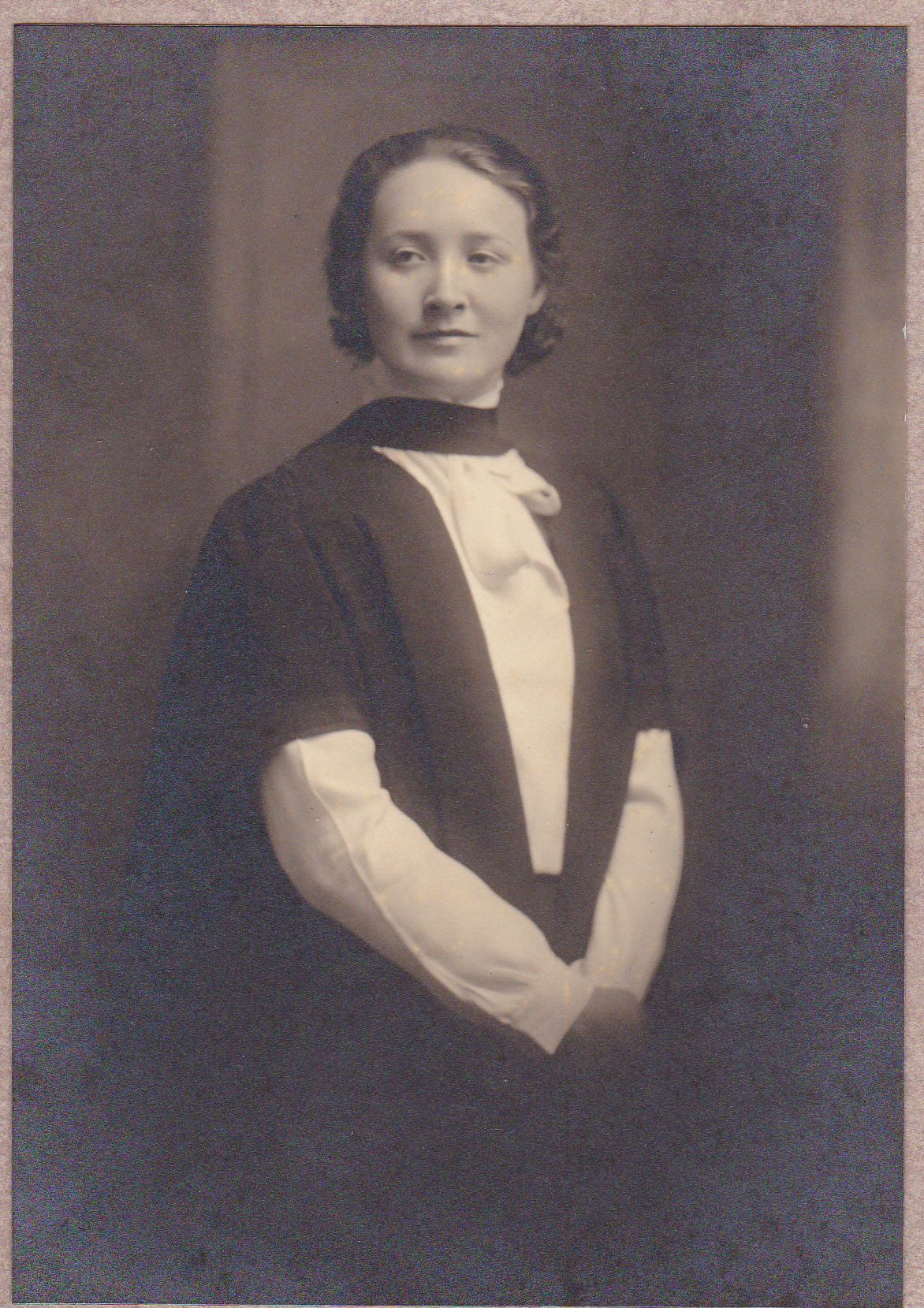
My mother in her University of St Andrews graduation gown
What were that young couple saying to each other as they discussed the news of War in their Edinburgh tenement on 4 August 1914? Until now they had surely been more content with life than had Kate Frye. Did they sense the cataclysm awaiting them? Alas, however well one may understand the situation of those close by ties of blood, without a written record it is impossible to know them in the way that a diarist – such as Kate – has determined that we should know her. It is Kate’s mood that I feel still reverberating this centennial Fourth of August.
Incidentally, although Thomas Wallace may not have seen much more of Italy than the Lombardy Plain and the Dolomites, one of his great-granddaughters is now exceptionally well-acquainted with Rome – find her at Understanding Rome. Isn’t it remarkable the pattern Life makes?
For more about Kate Frye see Campaigning for the Vote: Kate Parry Frye’s Suffrage Diary.
 Copyright
Kate Frye’s Diary: The Lead-Up To War: 3 August 1914
Posted by womanandhersphere in First World War, Kate Frye's Diary on August 3, 2014
On 7 August 2014 ITV will publish an e-book, Kate Parry Frye: The Long Life of an Edwardian Actress and Suffragette. Based on her prodigious diary, this is my account of Kate Frye’s life and is a tie-in with the forthcoming ITV series ‘The Great War: The People’s Story’, in which Romola Garai plays Kate.
To discover more about the entirety of Kate’s life – her upbringing, her involvement with the suffrage movement, her marriage, her London flats, her life in a Buckinghamshire hamlet, her love of the theatre, her times as an actress, her efforts as a writer, her life on the Home Front during two world wars, her involvement with politics – and her view of the world from the 1890s until October 1958 – download the e-book – £4.99 – from iTunes – : http://bit.ly/PSeBKPFITVal. or £4.99 from Amazon.
As a lead-up to publication I thought I’d share with you some entries from Kate’s diary from the month before the outbreak of war. Through her day-to-day experience we can see how the war stole up on one Everywoman. Kate was at this time 36 years old, living in a room at 49 Claverton Street in Pimlico and working in the Knightsbridge headquarters of the New Constitutional Society for Women’s Suffrage. It was now nine years since she had become engaged to (minor) actor John Collins. Her father died in March 1914 and her mother and sister, Agnes, now all but penniless, are living in rented rooms in Worthing. For the previous few weeks Kate’s fiancé, John Collins, had been renting a room in another house in Claverton Street but he has now left for the West Country, to take up a position with a touring repertory company. Kate is feeling rather bereft.
Kate has just begun her summer holiday – staying with her mother and sister in their rented rooms in Worthing.
Monday August 3rd 1914
I think the Blackest Bank Holiday that the world has ever known. What an appalling day – the most dire and awful depressio over everyone – like a pall shutting out the idea of holiday – jollity, sunshine and air – everything dead and dumb and yet one’s nerves turned up to a frightful pitch.
A European War and England must be drawn in. It is all rushing upon us now – a huge welter of realisation of what we are in for – what our navy means to us, and what the machines of death will bring to innocent men and their wives and families.
I am all for peace – always for peace, war is too repulsive, but I am for the honour of England too – and come what may we must link ourselves with France and help keep off the aggressive – brutal – nation that is at her doors. What an awful day. I shall never forget it.
Agnes in bed very seedy in that miserable dark hole of a room – would not even have the blind up all day. I went out in the morning and evening for strolls – not a smile on the face of anyone one met – simply a grim, hard, and quiet manner, but terror at our hearts. What will the war mean towards us?
Read the papers all the afternoon. The Bank Holidays are to continue for 3 more days to let the staff get things into order and issue £1 & 10/- notes to make up for the shortage of gold. Some people are getting panic stricken – taking out their money. Then some people are buying up huge quantities of food stuffs and stocking their houses as for a siege. How mean and beastly of them – the people with money trying to get some advantage over the poor who cannot hoard – and of course creating an artificial demand and raising prices needlessly. One lady bought 18 hams – besides a huge amount of other goods – some people giving orders of £75. I hope their foodstuffs will be chasing them round the house before they can eat it.
Travellers are getting stranded in Austria and Germany where they are mobilizing and using the railways for that purpose so that people cannot get home. Oh dear – oh dear. It’s awful.
I did not go out after tea but greased Mickie’s skin for 2 hours. He is in an awful state. I brought a small pot of my stock of grease when we left the Plat last September.
Well, Kate’s words speak for themselves. Hers was the experience of most of Britain – a month ago she would never have dreamed that the country was about to enter a European War. Then, on 3 July,after a morning of canvassing for ‘votes for women’ in Peckham, she and John had pottered down to Worthing for a short weekend-break. As unremarkable a couple of days by the seaside as one could imagine. Here she was in Worthing again – and the world she had known was turning upside down.
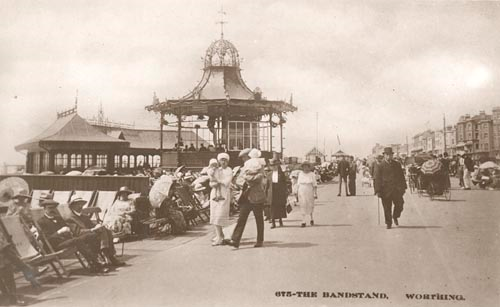
Worthing Parade, 1914
Do look at this article on Worthing History to read about the enticing range of entertainments Worthing had to offer on that Bank Holiday Monday while Agnes, typically, lay in her ‘dark hole of a room.’ Kate, although she may not have gone to listen to the illuminated concert on the Parade, at least went out to sample Worthing’s mood and when at home soaked up what information there was in the papers. Knowing how near to penury her family now was, we can recognise why she took a very personal interest in the reported selfishness of the wealthy.
NOW PUBLISHED (7 August) Kate Parry Frye: the long life of an Edwardian actress and suffragette – download the e-book – £4.99 – from iTunes – : http://bit.ly/PSeBKPFITVal. or £5. 14 from Amazon.
See also Campaigning for the Vote: Kate Parry Frye’s Suffrage Diary.
Copyright
Kate Frye’s Diary: The Lead-Up To War: 2 August 1914
Posted by womanandhersphere in First World War, Kate Frye's Diary on August 2, 2014
On 7 August 2014 ITV will publish an e-book, Kate Parry Frye: The Long Life of an Edwardian Actress and Suffragette. Based on her prodigious diary, this is my account of Kate Frye’s life and is a tie-in with the forthcoming ITV series ‘The Great War: The People’s Story’, in which Romola Garai plays Kate.
To discover more about the entirety of Kate’s life – her upbringing, her involvement with the suffrage movement, her marriage, her London flats, her life in a Buckinghamshire hamlet, her love of the theatre, her times as an actress, her efforts as a writer, her life on the Home Front during two world wars, her involvement with politics – and her view of the world from the 1890s until October 1958 – download the e-book – £4.99 – from iTunes – : http://bit.ly/PSeBKPFITVal. or £4.99 from Amazon.
As a lead-up to publication I thought I’d share with you some entries from Kate’s diary from the month before the outbreak of war. Through her day-to-day experience we can see how the war stole up on one Everywoman. Kate was at this time 36 years old, living in a room at 49 Claverton Street in Pimlico and working in the Knightsbridge headquarters of the New Constitutional Society for Women’s Suffrage. It was now nine years since she had become engaged to (minor) actor John Collins. Her father died in March 1914 and her mother and sister, Agnes, now all but penniless, are living in rented rooms in Worthing. For the previous few weeks Kate’s fiancé, John Collins, had been renting a room in another house in Claverton Street but he has now left for the West Country, to take up a position with a touring repertory company. Kate is feeling rather bereft.
Kate has just begun her summer holiday – staying with her mother and sister in their rented rooms in Worthing.
Sunday August 2nd 1914
Not out all day as furious wind, everything jangling and banging. I felt seedy and got up late. Agnes too was very queer – says she knows she is going to be ill. Read and dozed in the afternoon and did some writing in the evening.
Germany has declared war against Russia for interfering against Austria over Servia – and against France!!! Goodness alone knows why unless this is what she has been preparing for and planning for years. England must be drawn in – I don’t see in honour what else we can do. John may be called to a Fort at any minute. Oh the whole idea frightens me.
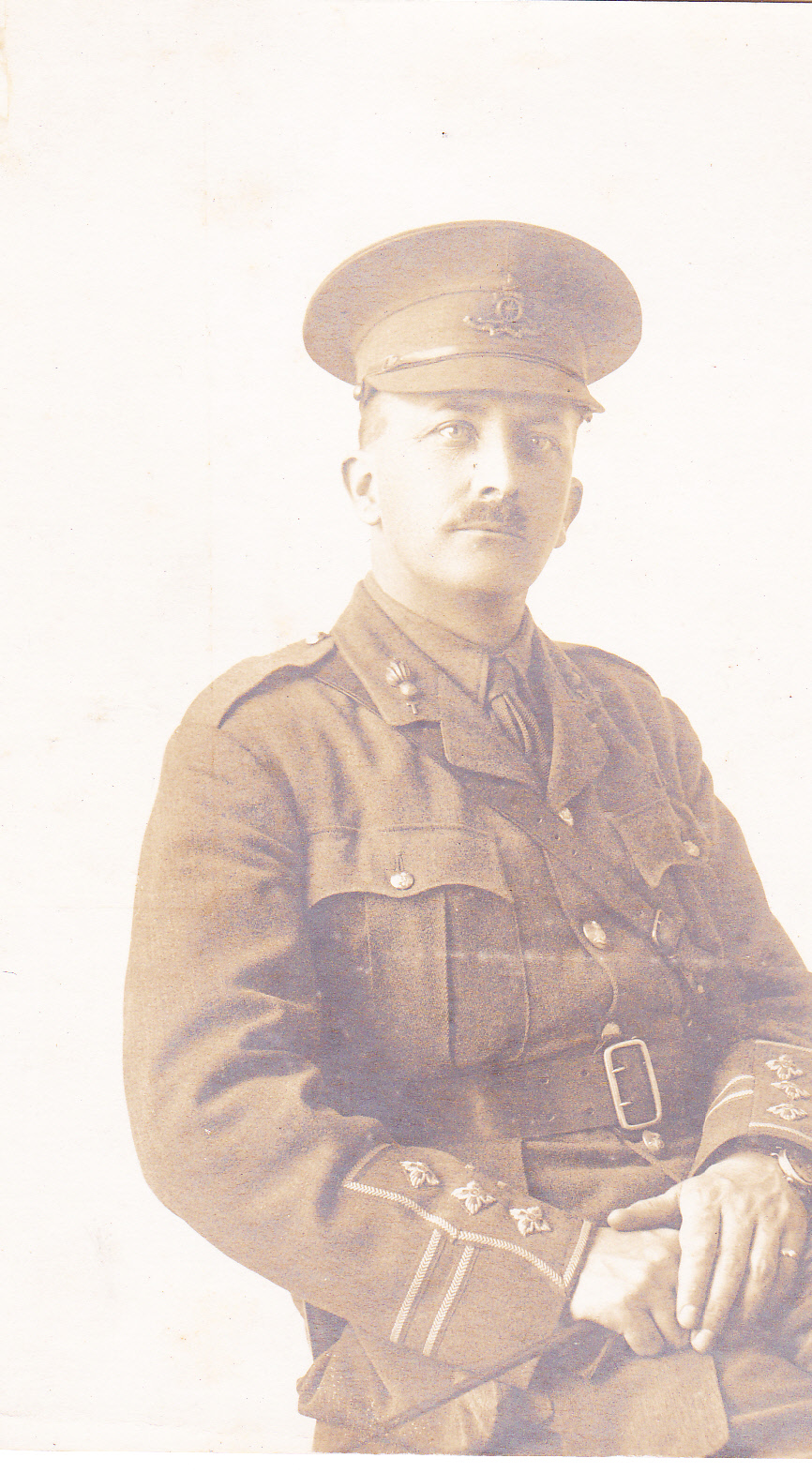
John Collins
John Collins, had been involved with the army all his life, despite being the most un-warlike of men. The Collins family had long been leading members of Knaresborough (Yorkshire) society. John’s father, however, had been a younger son, had not inherited any family wealth and had gone into the army, becoming a colonel. In 1900, after a brief spell as a student at Cambridge, John had served out in South Africa as a private with the Yeomanry Field Hospital, Bearers Company during the Boer War. Ever since returning he had worked in the theatre while continuing as a member of, first, a Volunteer brigade and then as an assiduous member of the Territorial Army. His theatrical career had been punctuated by length periods spent at training camps – on Salisbury Plain and at coastal forts such as Shoeburyness. So we can see why the thought of war caused Kate a particular fear.
See also Campaigning for the Vote: Kate Parry Frye’s Suffrage Diary.
Copyright
Kate Frye’s Diary: The Lead-Up To War: 1 August 1914
Posted by womanandhersphere in First World War, Kate Frye's Diary on August 1, 2014
On 7 August 2014 ITV will publish an e-book, Kate Parry Frye: The Long Life of an Edwardian Actress and Suffragette. Based on her prodigious diary, this is my account of Kate Frye’s life and is a tie-in with the forthcoming ITV series ‘The Great War: The People’s Story’, in which Romola Garai plays Kate.
To discover more about the entirety of Kate’s life – her upbringing, her involvement with the suffrage movement, her marriage, her London flats, her life in a Buckinghamshire hamlet, her love of the theatre, her times as an actress, her efforts as a writer, her life on the Home Front during two world wars, her involvement with politics – and her view of the world from the 1890s until October 1958 – download the e-book – £4.99 – from iTunes – : http://bit.ly/PSeBKPFITVal. or £4.99 from Amazon.
As a lead-up to publication I thought I’d share with you some entries from Kate’s diary from the month before the outbreak of war. Through her day-to-day experience we can see how the war stole up on one Everywoman. Kate was at this time 36 years old, living in a room at 49 Claverton Street in Pimlico and working in the Knightsbridge headquarters of the New Constitutional Society for Women’s Suffrage. It was now nine years since she had become engaged to (minor) actor John Collins. Her father died in March 1914 and her mother and sister, Agnes, now all but penniless, are living in rented rooms in Worthing. For the previous few weeks Kate’s fiancé, John Collins, had been renting a room in another house in Claverton Street but he has now left for the West Country, to take up a position with a touring repertory company. Kate is feeling rather bereft.
Kate has just begun her summer holiday – staying with her mother and sister in their rented rooms in Worthing.
Saturday August 1st 1914
Very warm. Up late. Agnes, Mickie and I to the Beach 12 to 1. Work in the afternoon. Rain in the evening so I went out by myself to the Library. But I can’t read – there is too much in the papers, and all this uncertainty makes one restless.
This must be one of the shortest entries in Kate’s entire life-time of diaries. As such, as she says ,it is an indication of the impossibility of concentrating on anything other than the hitherto inconceivable fact that a European war would not now be averted. It was merely a matter of waiting to see which countries would be involved.
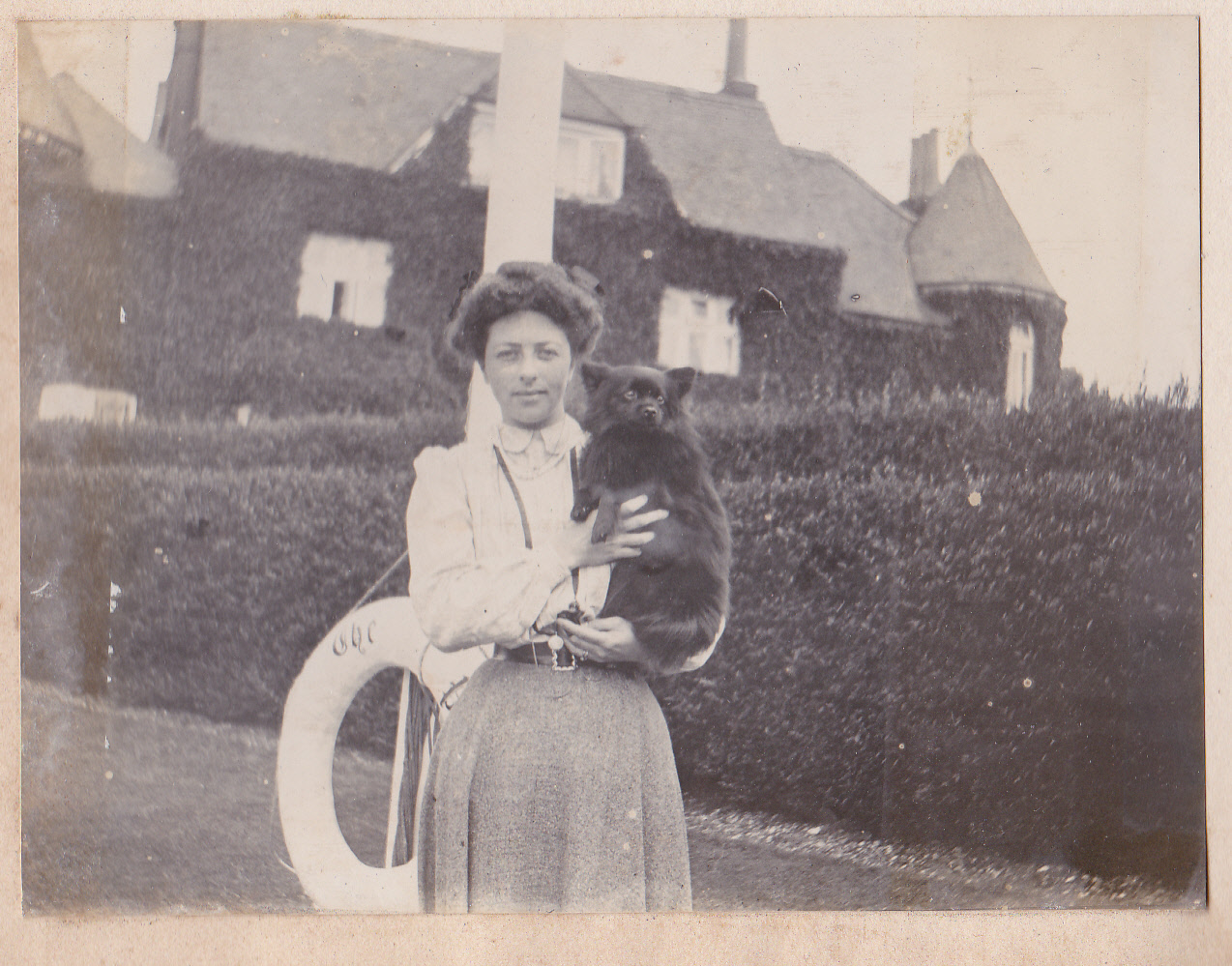
Kate with Mickie in happier days – beside the river Thames at The Plat, Bourne End
See also Campaigning for the Vote: Kate Parry Frye’s Suffrage Diary.
Copyright
 Woman and her Sphere