Archive for February, 2014
Suffrage Stories: 1911 Census: Vanishing For The Vote
Posted by womanandhersphere in 1911 Census, Suffrage Stories on February 14, 2014
TO BE PUBLISHED ON 6 MARCH 2014
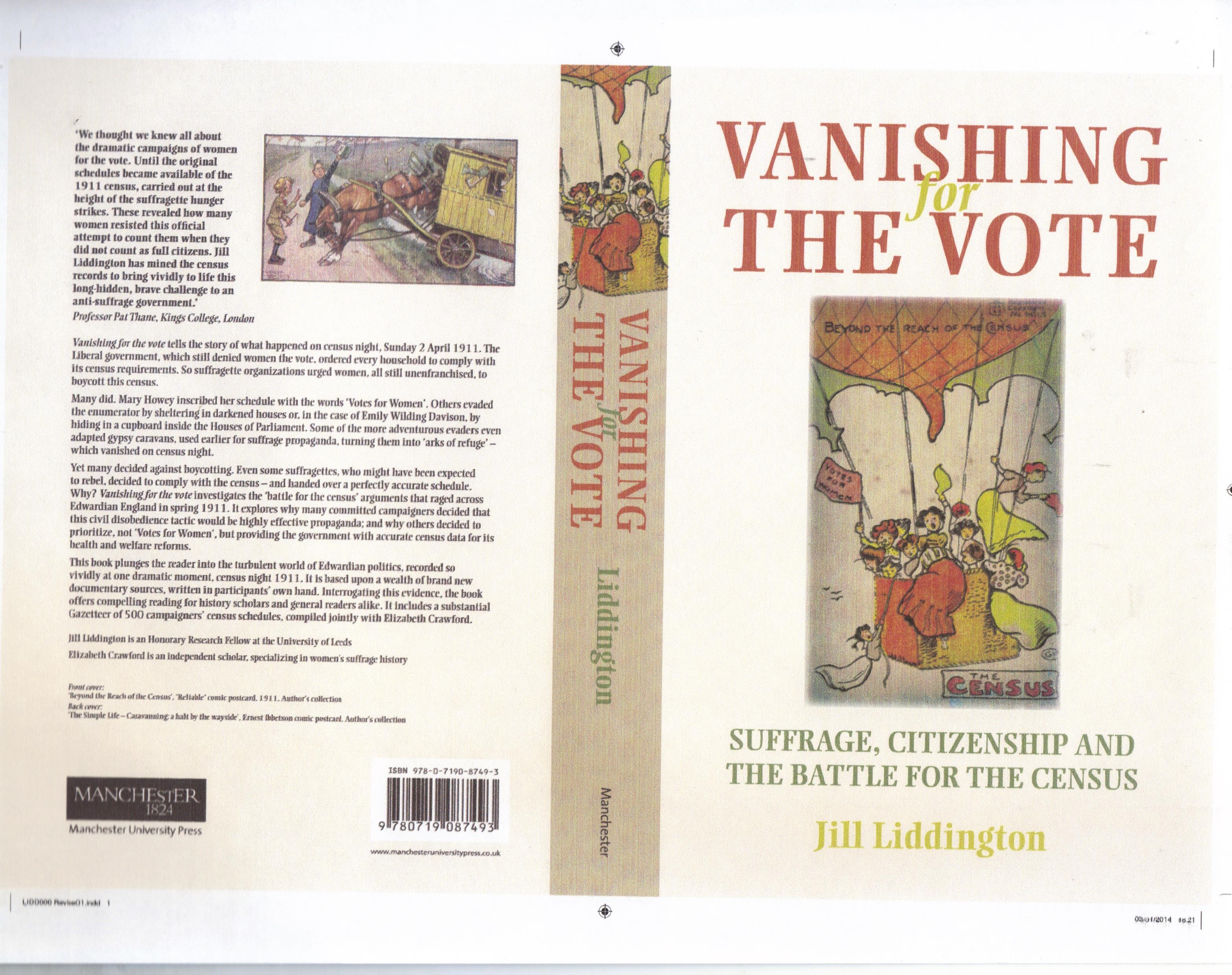
As readers of this blog will know, since 2009 I have been involved in research on the suffrage boycott of the 1911 census. With Dr Jill Liddington, I worked to uncover the women who followed the call to boycott the census. We studied the circumstances of those who did – and those who did not – refuse to complete the census form and produced, first, a paper for the Women’s History Network Conference, held in Oxford in September 2009, and then an article ,‘Women do not count, neither shall they be counted’: Suffrage, Citizenship and the Battle for the 1911 Census‘ published in the History Workshop Journal in 2011.
It was intended to develop this research into a book, but I decided to pursue other projects – such as the setting up of the Elizabeth Garrett Anderson Gallery and writing Campaigning for the Vote: Kate Parry Frye’s Suffrage Diary – as well, of course, as running my bookselling business,’ Woman and Her Sphere’ – while Jill turned the census research into Vanishing for the Vote.
I continued, however, to be very interested in uncovering 1911 census boycotters – and wondering about their lives – and, at odd moments, wrote up my discoveries for the Woman and Her Sphere blog – and gave a paper, ‘No Vote No Census’ ,at the National Archives Conference on the 1911 census, held in the autumn of 2011. You can listen to it here.
Jill later asked me to help compile the extensive Gazetteer of Suffragettes/Suffragists that constitutes the end section of Vanishing for the Vote. This is based on the original research we carried out, supplemented by details of many additional boycotters that prolonged acquaintance with the digitized census has now uncovered.
I am sure that all who are interested in the Edwardian suffrage campaign will be delighted to read Vanishing for the Vote – which takes us right into the lives of the women – and their families – who were prepared to defy the census enumerator in order to highlight their lack of citizenship.
Vanishing for the vote recounts what happened on one night, Sunday 2 April, 1911, when the Liberal government demanded every household comply with its census requirements. Suffragette organisations urged women, all still voteless, to boycott this census.
Many did. Some wrote ‘Votes for Women’ boldly across their schedules. Others hid in darkened houses or, in the case of Emily Wilding Davison, in a cupboard within the Houses of Parliament.
Yet many did not. Even some suffragettes who might be expected to boycott decided to comply – and completed a perfectly accurate schedule. Why?
Vanishing for the vote explores the ‘battle for the census’ arguments that raged across Edwardian England in spring 1911. It investigates why some committed campaigners decided against civil disobedience tactics, instead opting to provide the government with accurate data for its health and welfare reforms.
This book plunges the reader into the turbulent world of Edwardian politics, so vividly recorded on census night 1911. Based on a wealth of brand-new documentary evidence, it offers compelling reading for history scholars and general readers alike.
Sumptuously produced, with 50 illustrations and an invaluable Gazetteer of suffrage campaigners.
To be published by Manchester University Press:
Hardback £65
Paperback: £16.99

37 Lavender Gardens, Battersea -home of John Burns, minister in charge of the Census
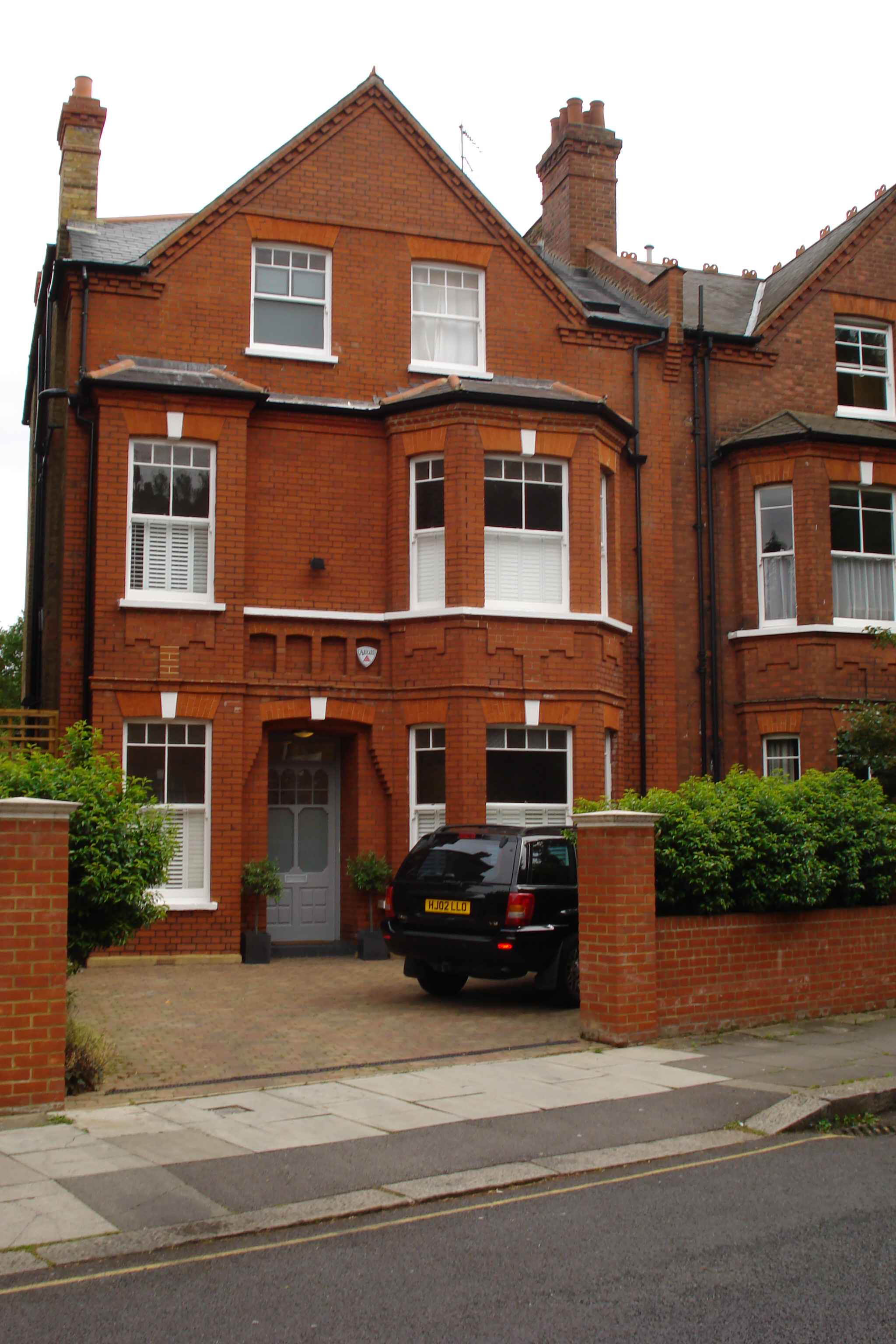
Burns’ house is remarkably similar in style to that of Henry Nevinson and his wife, Margaret, at 4 Downside Crescent, Hampstead. However, although sharing a similar attitude to architecture, Burns and the Nevinsons were poles apart as regards the Census. While Henry Nevinson was in the thick of the Census Night fun in central London, Margaret spent the night in this house with a group of women, all of whom refused to give details to the enumerator. It was not a happy marriage.
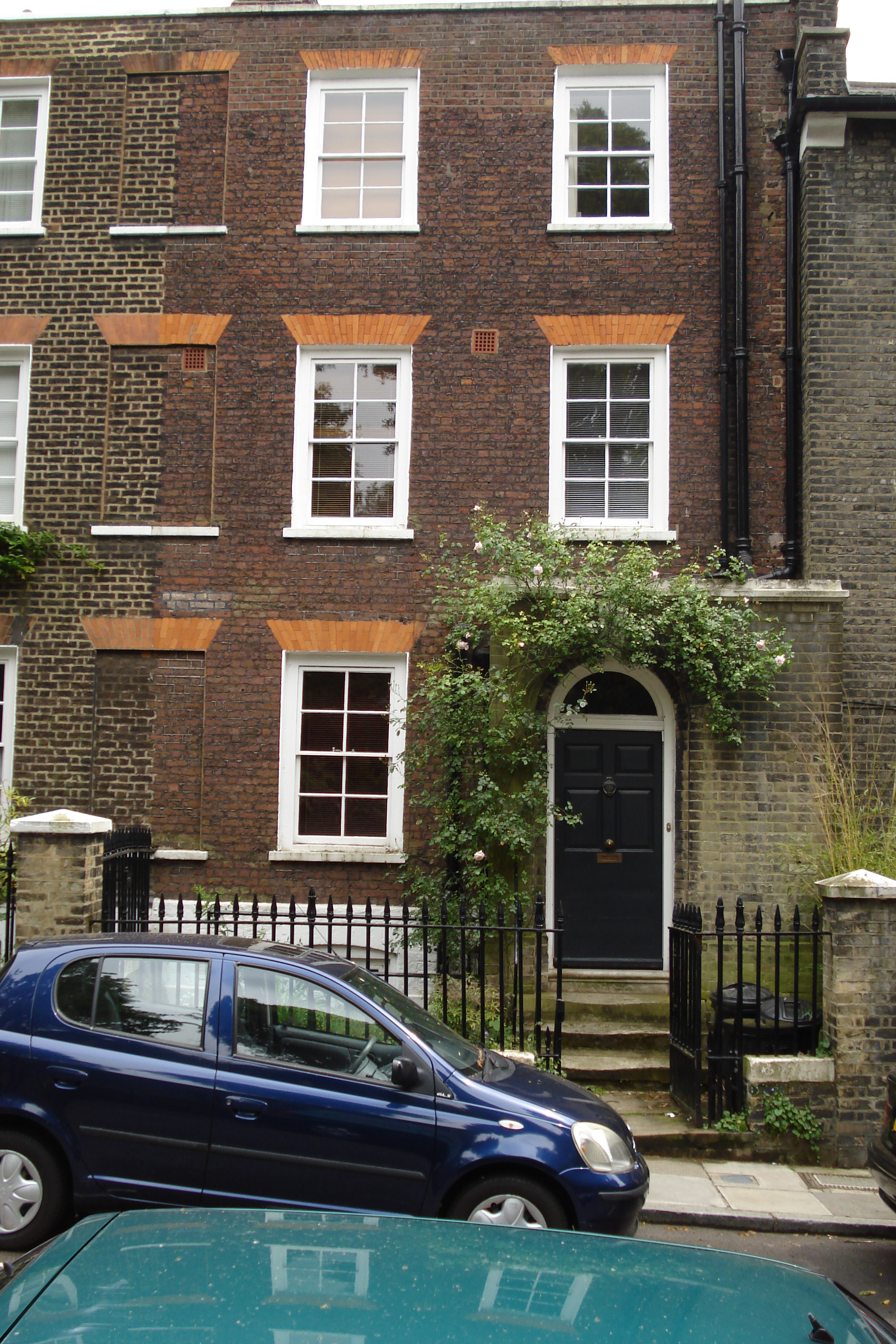
32 Well Walk, Hampstead. ‘Vanishing for the Vote’ reveals something of the domestic argument that went on behind this front door on Census night between Jane Brailsford and her husband, Henry. The Census had a knack of highlighting domestic disharmony.
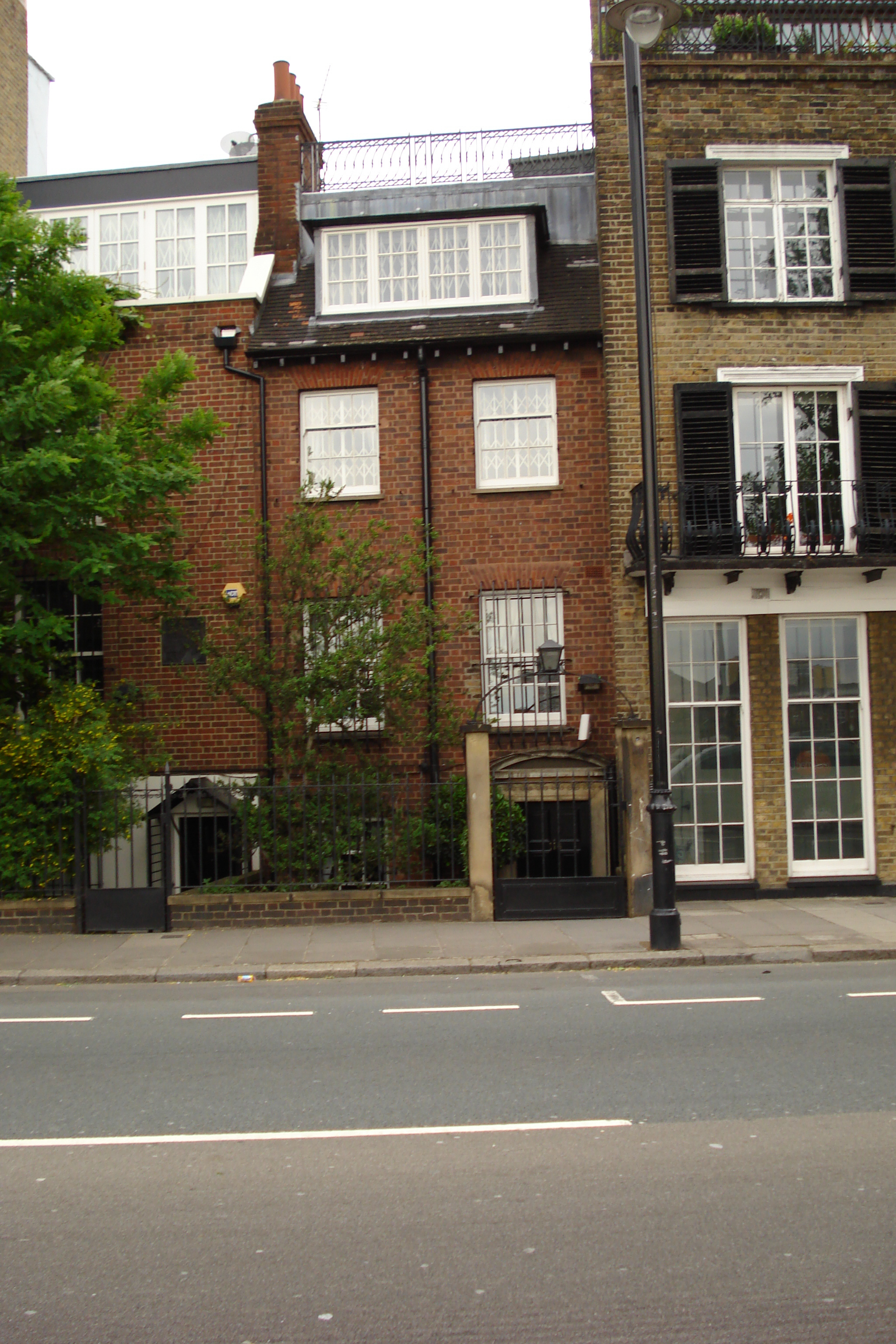
118 Cheyne Walk, Chelsea, home of WSPU activist, Maud Joachim. The census enumerator stood at this door and was refused all information

Clemence Housman resisted the Census as well as Tax. Her Census story is well told in ‘Vanishing for the Vote’.
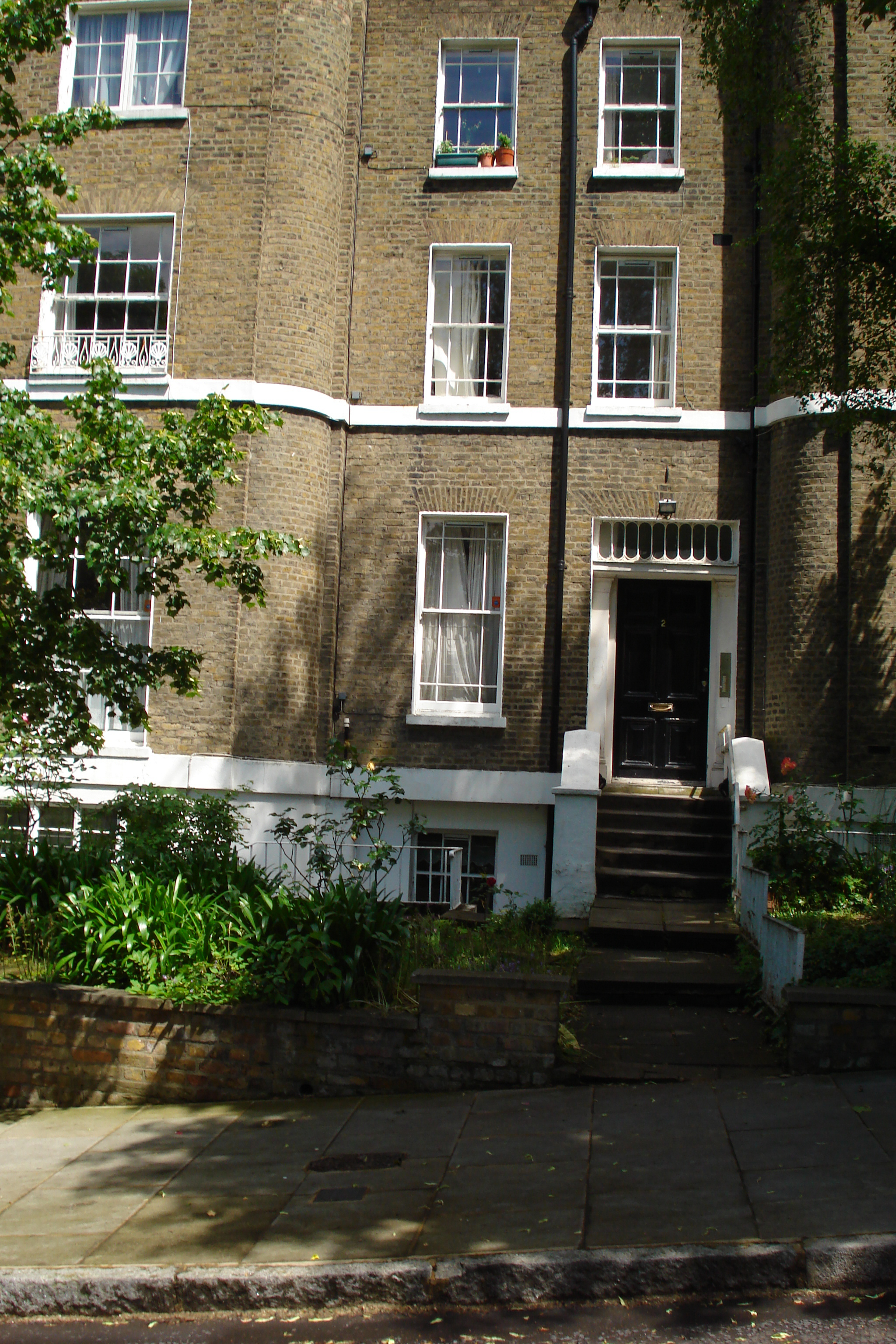
2 Campden Hill Square, home of the Brackenbury family, later became known as ‘Mouse Castle’ when escaping suffragettes found shelter under its roof. On Census Night it was home to an estimated 25 women and one man.
Kate Frye’s Diary: What Happened When The Thames Flooded At Bourne End?
Posted by womanandhersphere in Kate Frye's Diary on February 10, 2014
There is nothing new in Thames floods. Over 120 years ago (although from reading Kate Frye’s diary it seems like yesterday) the Thames overtopped the banks at Bourne End and flooded the garden of the Fryes’ home. Luckily the water did not enter the house, which is slightly raised from the lawn.
As Kate, then 13 years-old, noted –Saturday Oct 24th 1891. Woke to find the lawn flooded all over, right up to the bank. From ten until one we were on the water – which is quite deep – in canoes.
There was another flood in June 1903, when this photograph of Agnes (on the left) and Kate was taken. The image was used by Mr and Mrs Frye for their 1903 Christmas card.
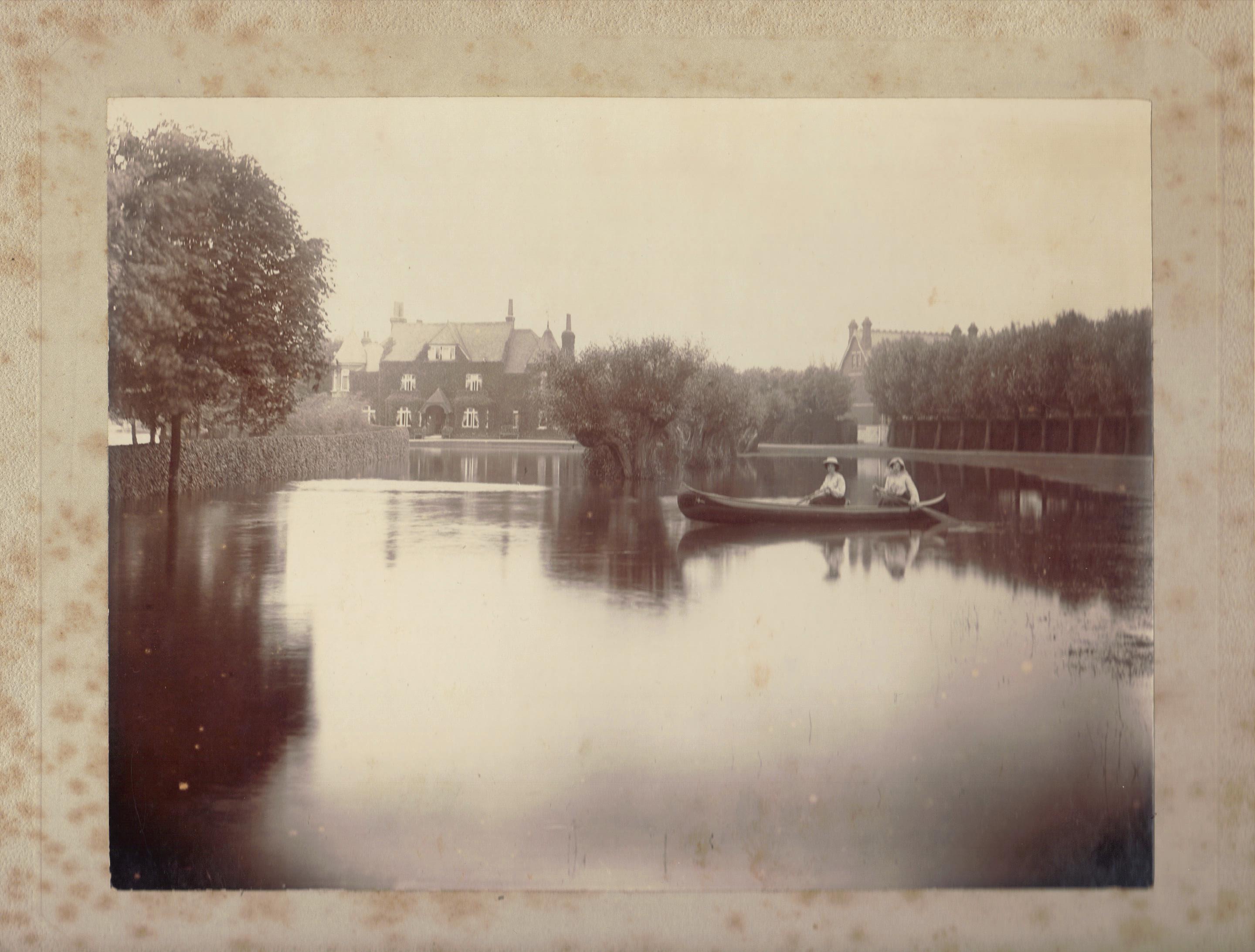 Kate Frye and her sister, Agnes, paddling a canoe on the lawn of their home, The Plat, at Bourne End, Buckinghamshire in June 1903. Photograph by A. Plummer, photographers, of 90 Queen Street, Maidenhead.
On 18 June 1903 Kate wrote in her diary: ‘Our lawn was covered and patches of water went nearly to the pigeon house. It came to the gate. It was so exciting. Agnes and I went to get to [Arthur] Wootten to get a canoe from Townsend’s for us – and we forthwith started. it was splendid sport – we were out all morning. Mrs Bird came along – then rushed back for her camera and photographed us – then Gilbert [Gilbey] arrived and did likewise – and then Plummers the photographer from Maidenhead who we had telegraphed for arrived and took several views.
The water is right in the Quarry Hotel now and up to the centre of the door at Bridge Bungalow. A day like this it is most picturesque but what a disastrous June. We have had to put off our Ascot party – the river won’t be in a fit state for weeks.’
Sunday 21 June 1903 ‘We went across to Cock Marsh in the afternoon and we had great fun. It was wonderful going down stream – we simply tore and going through the Bridge was like shooting the rapids. We had to go down to Mill House before we could get on to Cock Marsh.’
 You can discover much more about Kate Frye’s life in Bourne End (and, later, in the nearby hamlet of Berghers Hill) in The Great War: The People’s Story – Kate Parry Frye: the long life of an Edwardian actress and suffragette. This is an e-book published by ITV as a tie-in with the new series The Great War: The People’s Story. Kate Frye, played by Romola Garai, appears in episode 2 – to be shown on ITV at 9pm on 17 August. Download the e-book – £4.99 – from iTunes – : http://bit.ly/PSeBKPFITVal. or £5. 14 from Amazon.
Women Writers And Italy: Stalking Matilda Hays And ‘Adrienne Hope’
Posted by womanandhersphere in Women Writers and Italy on February 3, 2014

View up the Spanish Steps from the apartment
A brief visit to Rome last week – staying once again in the abidingly diverting Landmark Trust apartment at the side of the Spanish Steps – allowed me to retrace yet again the footsteps of some of the mid-19th-century women expatriates – British and American – who for a number of years made the city their home.
In the mid-1850s the intriguing Matilda Hays, journalist and novelist, was living in Rome – with her long-term partner, Charlotte Cushman, the American actress, who had now retired from the stage. For at least some of the time they lived, enjoying what Elizabeth Barrett Browning termed a ‘female marriage’, at 38 via Gregoriana, a road leading off to the right at the top of the Spanish Steps – as seen in the view above.

As the women walked down from their home – perhaps to have tea at the Caffe Inglese in the Piazza di Spagna – they presumably sometimes thought of John Keats, who had died in a room on their left (as seen in the above photo), on the floor with the terrace, just 30 years or so earlier. We were staying in the floor above.
Matilda Hays describes something of the life of her friends and acquaintances in her novel, Adrienne Hope, the story of a life, published by Newby in 1866. What the novel may lack in plot it makes up for in its ‘factional’ interest to those, like me, who are keen to repopulate the forestieri quarter of Rome with its mid-19th-century inhabitants. I must confess I know far more about their funny little ways than I do those of any Roman, ancient or modern.
So it interested me that Matilda Hays gives her leading characters, Lord Charles and Lady Charlotte Luttrell, ‘a suite of rooms in a large house at the southern end of the Via Gregoriana, rooms on the fourth piano [floor], beneath the windows of which Rome lay extended like a panorama, the turbid Tiber separating the Janiculum from its sister hills, and gliding like a monster sea-snake through the valley from its entrance into the city close to the Porta del Popolo to its exit south below the Aventino. There lies the Queen City of the World, with its quaint, irregular, grey roofs, its 364 churches, its noble pagan temples and imperial palaces, noble in their ruin and decay, asking through the day in the undimmed lustre of an Italian sun, to be glorified by its setting rays of gold, and crimson, and purple, the depth and richness of whose hues none who have not seen can by any means imagine, and none how have seen can ever forget.’
There has, of course, been much building – and rebuilding – in the course of the past 150 years and even from the topmost floor of a house at the southern end of the via Gregoriana I doubt that such a view could now be obtained – although that from the Piazza Trinita dei Monte, into which the street debouches, is still one of the most magnificent in Rome. Via Gregoriana has probably been renumbered since Hays lived there; but, for the record, number 38 is now towards the northern end, facing across over the city. Alas, I could not test whether or not the Tiber could be seen from the fourth piano.
The novel contains much visiting of artists’ studios in Rome. The comment is made that ‘Among all the different races of living sculptors Americans alone have shown a tendency to produce something new and original, and though none have been eminently successful – choosing for and the most part the wild Indian life of the North American continent for their subjects – yet this departure from the stereotyped classic form is welcome and refreshing..’ Alas, although it would have been neat, this observation probably comes too early to refer to the work of Edmonia Lewis, a young woman of African-American and Native-American parentage, who, from 1865, made her home in Rome, sculpting, among many other works, Hiawatha and his daughter (1868).

Hiawatha and Minnehaha, courtesy of Cincinatti Art Museum
Matilda Hays was commenting on the pagan sculpture that was very much the mode of the moment and was well acquainted with the English sculptor, John Gibson, who was leading the vanguard. In the novel, Sir Charles and Lady Charlotte visit Gibson’s studio in via Fontanella – close to the Piazza di Spagna.
‘The transition from the dirty unfragrant street to the cool large studio, filled with lovely statues and bassi rilievi, with a green vista of moss and fern and trickling water beyond, and a scent of the rich flowers of the south wafted on the breeze, was a pleasant surprise both to eyes and nose. The mellow sunlight poured down upon the verdant niche in the small garden – which constantly falling water of a fountain keeps cool and fresh through the burning heats of summer, – and streamed in at the open door, throwing a beautiful light upon the graceful limbs of ‘Hylas and the Water Nymphs’, ‘Psyche and the Zephyrs’, two of the fairest groups the cultivated meditative brain has created, and the cunning hand of the master has wrought.’
‘Hylas Surprised by the Naides’ is now in Tate Britain – click here for details – having been given to the nation in 1847. That sculpture had, therefore, left Gibson’s studio long before Matilda Hays knew him – she had presumably seen the work when it was publicly displayed or perhaps he did have a cast of it to be admired by studio visitors.

Hylas Surprised by the Naiades, courtesy of Tate Britain
Once inside Gibson’s studio Lady Charlotte Luttrell is shown his most infamous work – a statue of Venus, her skin tinted. Through her character Matilda Hays voices the popular controversy that surrounded the work – Lady Charlotte shows herself, politely, to be ambivalent about this use of colour on statuary.

John Gibson, Tinted Venus, c 1851-2, courtesy of Walker Gallery, Liverpool
Lady Charlotte is then taken to an upstairs studio to meet Gibson’s star pupil, the young American, Harriet Hosmer.

Harriet Hosmer c 1855
Bearing in mind that in the mid-1850s Matilda Hays had for a time left Charlotte Cushman for Harriet Hosmer, this is how she is described in Adrienne Hope:
’..there was something very winning in the fair, broad brow, with its clustering sunny brown curls, the inevitable velvet cap crowning them; the deep, earnest eyes, the compact nose, firm-set mouth, and square chin and jaw; the trim little figure, with its clothing of grey skirt and holland blouse, and as she addressed her visitors, the quaint short phrases, the peculiar sharp-cut of the words reminding them of her master (snap and bite, the wags called master and pupil) and the eyes and face danced and glowed with fun and fire. Lady Charles thought her as charming a sprite as the Puck she had modelled – and for which, before her visitors left, she received an order, accompanied by such kind expressions of admiration and good-will that the value of the order to the young artist must have been considerably enhanced.’
Gibson’s studio was at 4 via Fontanella – all trace of it, I am sure, long swept away. Via Fontanella is a continuation, across the via del Babuino, of via Margutta where Harriet Hosmer went on to have her own studios. The two addresses I know for her, at numbers 5 and 116 are, if the numbering is anything like it was in the mid-19th century, both at the via Fontanella end of the long via Margutta.

View into a via Margutta courtyard

The view from via Margutta down via Fontanella
The other characters in Adrienne Hope include a Miss Reay, a literary woman, who has seen a good deal of the world and is not very much in love with it. She was ‘engaged in editing a philanthropic journal, with which a great deal of practical work is connected, the chief burden of which falls upon myself and two or three others..’ ‘I made a fair start in early life in a literary career.. but cruel circumstances intervened..the best years of my life were utterly and uselessly sacrificed..’

Matilda Hays
Poor put-upon Miss Reay is, of course, Matilda Hays herself. She had been a co-founder of The English Woman’s Journal – Britain’s first feminist monthly magazine – and had for a time been its editor before falling out (‘cruel circumstances’) with her fellow workers, Barbara Bodichon and Bessie Rayner Parkes. Miss Reay was a solitary, intrepid woman: ‘ I confess that to this day, habitually as I have walked and travelled alone, I have never experienced the smallest annoyance, and I should not hesitate to set out alone tomorrow, for travels as protracted and solitary as those of Madame Ida Pfeiffer..’ [Ida Pfeiffer being one of the first woman explorers.]
Also making an appearance in Adrienne Hope is a Lady Morton, the widow of a peer, who probably bore a very close resemblance to the slightly mysterious Theodosia, Lady Monson, a benefactor of The English Woman’s Journal, with whom Hays later lived.
Matilda Hays left Rome on 20 April 1857 – two days after a violent row with Charlotte Cushman – a final break that, after a few years’ gestation, resulted in Adrienne Hope. She died 40 years later at 15 Sefton Drive, Toxteth Park, Liverpool and (thanks to Phil Williams for the information) is buried in Toxteth Cemetery where, I believe, her headstone can still be seen.
 Woman and her Sphere